



Abstract
Drawing on identity theory and self-complexity theory, this study examines whether parental identity centrality helps explain cross-national and gendered variation in parents’ subjective well-being. Using nationally representative data from the UK and Portugal of parents, we compare the centrality of different role identities and investigate how parental identity centrality relates to life satisfaction through positive and negative affect. Consistent with individualism–collectivism frameworks, parents in the UK reported more central parental identities, whereas Portuguese parents attributed greater importance to identities beyond the nuclear family. In both countries, higher parental identity centrality was associated with lower positive affect and life satisfaction. Positive affect consistently mediated the association between parental identity centrality and life satisfaction across countries. Negative affect, however, functioned as a mediator only among fathers in the UK. Overall, the findings suggest that when the parental role becomes overly central within the self-concept, it may limit engagement in other meaningful domains.
Parenthood is a multifaceted experience, offering both meaning and psychological challenges (Musick et al., 2016; Nomaguchi & Milkie, 2020; Sanders et al., 2022), with family relationships playing a key role in shaping well-being across the lifespan (Merz et al., 2009; Thomas et al., 2017). Research on the impact of parenthood on parents’ well-being has yielded mixed evidence, revealing a complex array of influences including fatigue, financial strain, and marital conflict (Nelson et al., 2014). The conflicting evidence on parents’ well-being points to the possibility that identity processes may help explain how parents interpret and deal with the demands of parenthood. As noted by Crocetti et al. (2022), identity organises human behaviour and well-being by connecting personal, social, and cultural aspects of life. Understanding parenthood through the lens of identity processes thus provides a framework to explain why the transition to and engagement in parental roles may increase or decrease well-being, depending on how individuals define and prioritise their parental identity (Fadjukoff et al., 2016; Hansen, 2012).
Identity is a central organiser of human experience and subjective well-being (Crocetti et al., 2022). Because it encompasses personal, social, and collective dimensions, the importance individuals place on different identities shapes their behaviours, emotions, and relationships (Del Palacio-Gonzalez & Berntsen, 2018; Meca et al., 2015). While prior studies have linked specific identities to well-being (Fadjukoff et al., 2016; Piotrowski et al., 2023), less is known about the processes that mediate these links, or about cross-cultural variations in the centrality of identities. Drawing on identity theory (Stryker & Burke, 2000), this study compares the centrality of different role identities across two national contexts and examines how they relate to subjective well-being. In this context, role identity may influence emotional experiences and overall life satisfaction (Stryker, 2008). This process can be understood by considering how the self is structured across different roles. According to Self-Complexity Theory (Linville, 1985, 1987) the self is organised into multiple role-based self-aspects that vary in their degree of differentiation. Where a single role occupies a particularly prominent place in the self-concept, boundaries between self-aspects tend to be weaker. Emotional experiences associated with that role are therefore less contained and more likely to colour other areas of the self. Over time, difficulties in the central role may come to shape more general self-evaluations, while other roles contribute less to the regulation of affect. When the parental role becomes excessively central, it can limit engagement in other meaningful domains, potentially increasing strain and reducing positive affect (Hansen, 2012; Simon, 1992). Additionally, affective experiences can be considered a key mechanism linking identity centrality to life satisfaction (see Diener et al., 1999).
To better establish the role of parental identity centrality in well-being and its underlying mechanisms, we conducted two nationally representative surveys of British and Portuguese parents. We propose that parents in more individualistic cultures (e.g. British) have a more central parental identity than those in collectivist cultures (e.g. Portuguese) (Hofstede, 2001). From a self-complexity perspective (Linville, 1985, 1987), a highly central parental identity is likely to be associated with lower levels of parental well-being. When parenting occupies a dominant position within the self-concept, emotional experiences arising in this role are less easily contained and more likely to influence parents’ overall affective states. On this basis, we propose that parents’ affect mediates the association between parental identity centrality and well-being. Finally, using a moderated mediation analysis, we explore whether gender moderates this mediation effect of affect in the associations between parental identity centrality and well-being. Given that the experience of parenthood differs according to social gender expectations, these expectations not only shape the meaning attributed to the parental role but also influence the implications for balancing other life domains. We further compare these processes between the British and Portuguese samples to examine cultural variations. This approach allows us to better understand how gender and cultural contexts shape the emotional implications of parental identity centrality.
Parenting: Costs and Rewards
Parenting can have a dual effect, being simultaneously role-straining (Goode, 1960; Moen et al., 1995; Sieber, 1974) and enhancing (Moen et al., 1995). Thus, parenthood can be viewed as a paradoxical experience, encompassing both stress and fulfilment. Role strain can be defined as limitations arising from the pressures of time and contradictory expectations that persist independent of temporal pressures (Sieber, 1974). On the other hand, role enhancement refers to the idea that participating in multiple social roles can have positive, beneficial effects on an individual’s well-being (Moen et al., 1995). Previous research shows that parents express higher levels of fatigue, and lower subjective well-being and life satisfaction than non-parents (Aassve et al., 2021; Hansen, 2012; Sanders et al., 2022). Evidence further suggests that parental strain varies across the life course, increasing into middle age and declining thereafter (Vilhjalmsson & Kristjansdottir, 2006). At the same time, strain tends to be especially pronounced among parents with dependent children, particularly when children are younger and psychological demands are higher (Nomaguchi et al., 2005; Nomaguchi & Milkie, 2020; Umberson et al., 2010). Research has also shown gender differences, with mothers experiencing more parental strain than fathers, and greater involvement in childcare being associated with lower well-being (Pinho, Gaunt, et al., 2025; Trumello et al., 2023; Viertiö et al., 2021).
Despite these strains, parenthood can also serve as a source of growth and emotional enrichment, by providing a sense of purpose and meaning in life (Nelson et al., 2013). Role enhancement can also occur in parenthood. For example, being a parent can improve social integration by strengthening emotional support, belonging, and purpose, with positive effects on well-being (Berkman et al., 2000). Adult children constitute a central component of parents’ social networks across the life course (Umberson et al., 2010), and their role in supporting parental health becomes increasingly critical in later life, as they often provide essential care (Seltzer & Bianchi, 2013). Expectations of filial obligation also function as social capital, allowing parents to access support when needed (Silverstein et al., 2006).
Identity Theory
Identity theory (Stryker, 1968, 2002, 2008) explains behaviour by linking the self with societal roles, offering a micro-sociological perspective on how individuals behave in relation to their roles. According to the theory, each social role carries specific expectations, and identities are the internalised expectations and the meanings individuals attach to them (Stryker & Burke, 2000; Stryker & Serpe, 1994). Role identities refer to the various self-ascribed positions people occupy in their lives, each carrying distinct meanings that reflect the different roles individuals assume (Stryker & Burke, 2000).
Identity theory also sheds light on why some roles are enacted more frequently than others (Merolla et al., 2012). It suggests that individuals possess multiple identities, which are organised hierarchically based on their significance. In this framework, identity centrality refers to how important an identity is to a person’s sense of self (Rosenberg, 1979). More central identities are believed to influence behaviour more strongly than less salient ones (Stryker & Burke, 2000; Stryker & Serpe, 1994). Consequently, even if two individuals share similar role identities, their behaviour may differ depending on how central those identities are to them. The theory posits that individuals devote more time and energy to identities that are more central.
Parental Identity Centrality and Life Satisfaction
Parental identity centrality refers to the extent to which the parenting role is embedded in an individual’s sense of self. When people view parenting as a meaningful and valued part of who they are, this sense of purpose can enhance life satisfaction (Baumeister et al., 2013; Hudde & Jacob, 2025). However, when parenting responsibilities become dominant and limit engagement in other aspects of self, the resulting imbalance may create strain and reduce well-being (Fadjukoff et al., 2016; Hansen, 2012; Piotrowski et al., 2023; Simon, 1992).
Moderated Mediation by Affect and Gender
Emotional experiences may clarify how identification with the parental role influences well-being. Parents who perceive their role as rewarding often experience more positive emotions and fewer negative ones, which can, in turn, increase life satisfaction. Conversely, when parenting becomes a source of stress or conflict, negative emotions tend to intensify and well-being to decline (Diener et al., 1999; Stryker, 2008). Furthermore, cultural norms surrounding gender and caregiving may shape how mothers and fathers experience their parental roles. Research consistently shows that mothers report higher levels of stress and less leisure satisfaction than fathers, reflecting the unequal distribution of childcare and household labour (Hochschild & Machung, 2012; Nomaguchi & Milkie, 2020). Fathers, on the other hand, tend to report greater well-being when caregiving responsibilities are shared more equally within the family (Pinho et al., 2025).
Portugal and the UK – Cultural Frameworks and Parental Identity
Markus and Kitayama (1991) argued that cultures vary in how the self is construed in relation to others. In individualistic settings, the self is treated as autonomous and defined through internal attributes and personal goals; in collectivistic settings, it is framed as relational and defined through social roles and group belonging. Complementing this view, Hofstede’s (1980; 2001) cultural dimensions theory places cultures along an individualism–collectivism spectrum, linking shared values to typical patterns of motivation, interaction, and family life. According to this theory, individualistic societies tend to promote loosely knit social structures in which individuals are expected to care primarily for themselves and their immediate family. Collectivistic societies, by contrast, emphasise tightly knit networks in which people act as members of cohesive groups (often extended families) and can expect mutual support and strong loyalty (Hofstede, 1980; 2001). Building on these frameworks, cultural contexts shape how identities are constructed and expressed, influencing how people interpret and perform social roles. These cultural orientations can also shape parenting norms and expectations. A recent cross-national study shows differences in levels of parental involvement between parents in the UK and Portugal (Pinho, Lourenço, et al., 2025). Such variation may reflect broader cultural values and has different implications for parental well-being. For instance, parental burnout tends to be more prevalent in individualistic than in collectivistic societies (Roskam et al., 2021).
The United Kingdom, with its strongly individualistic ethos (Arrindell, 2003; Hofstede, 2001; Markus & Kitayama, 1991), tends to promote independent and self-reliant identities, while Portugal, characterised by more collectivist values (Hofstede, 2001; Martinez et al., 2020), tends to foster identities closely tied to extended family, community, and social cohesion.
In individualist cultures such as the UK, the role of the parent is seen as one of support, guiding the child toward becoming a self-sufficient individual who is capable of making independent choices and contributing to society based on personal merit. This impacts how parents themselves perceive their roles; for instance, UK mothers may feel pressure to balance career aspirations with caregiving, a challenge that can sometimes create tension between their personal identity as a professional and as a parent. Despite the increasing trend toward dual-income households, UK mothers are still more likely to work part-time due to the economic realities of childcare (Chanfreau, 2023). This creates a tension in identity, as mothers might experience conflicting expectations: one that aligns with a professional, independent identity and another that emphasises caregiving and nurturing (Chung et al., 2021; Gaunt et al., 2024).
In contrast, a collectivist cultural framework like Portugal places a stronger emphasis on interdependence and familial identity. Here, identities are less likely to be defined in isolation and more in relation to family and community. In a society where family solidarity is central, Portuguese parents, particularly mothers, are encouraged to prioritise the collective well-being of the family over personal career advancement. To facilitate mothers’ continued labour market participation while fulfilling caregiving responsibilities, the state provides universal access to free childcare and pre-primary education (European Comission, 2024), which enables mothers to maintain a career while fulfilling their caregiving duties (European Commission, 2024). The emphasis in Portugal on communal child-rearing practices and the active involvement of extended family members in caregiving also contributes to a shared familial identity, respect for elders, and a sense of duty toward the group (Albuquerque, 2011; Martinez et al., 2020; Prioste et al., 2015).
Together, these cultural distinctions provide a theoretical foundation for understanding how parental identity and well-being may vary across contexts. Parents in individualistic cultures may experience more tension between personal and family roles, whereas those in collectivistic settings may integrate these roles more seamlessly within a shared family identity.
Drawing on identity theory (Stryker & Burke, 2000) and cross-cultural frameworks of individualism–collectivism (Hofstede, 2001; Markus & Kitayama, 1991), a set of hypotheses was formulated regarding how parental identity centrality is related to subjective well-being in the United Kingdom and Portugal, considering the mediating role of affect (positive and negative) and its further moderation by gender. Specifically, we predicted that parents in the United Kingdom would report more central parental identity than those in Portugal (H1a). In contrast, identities outside the nuclear family domain are expected to be less central among UK parents compared to Portuguese parents (H1b). This pattern reflects the stronger individualistic orientation in the UK, where self-definition tends to be more independent, and the collectivist orientation in Portugal, where social relationships and group belonging are more integrated into the self.
In line with self-complexity theory (Linville, 1985) and previous literature (Fadjukoff et al., 2016; Hansen, 2012; Piotrowski et al., 2023; Simon, 1992), when the parental role becomes overly central, it can limit engagement in other meaningful life domains, leading to increased strain and reduced overall life satisfaction. Therefore, parental identity centrality is expected to be negatively associated with subjective well-being – namely, with lower levels of life satisfaction (H2a) and positive affect (H2b), and higher levels of negative affect (H2c).
The association between parental identity centrality and life satisfaction is expected to be mediated by affect (H3). More central parental identity is expected to predict lower positive affect, which in turn is expected to predict lower life satisfaction (H3a). More central parental identity is also expected to predict higher negative affect, which in turn will predict lower life satisfaction (H3b). We further predicted that this mediation by affect would be moderated by gender (H4). Specifically, among fathers, more central parental identity is expected to be more strongly associated with negative affect which in turn will be associated with lower life satisfaction (H4a) due to potential conflicts with traditional provider roles and heightened work–family tension. Conversely, more central parental identity among mothers may be less detrimental or even emotionally normative, consistent with societal expectations that associate caregiving with fulfilment (H4b). Furthermore, the strength and direction of the associations among parental identity centrality, affect, and life satisfaction are expected to differ between the two cultural contexts (H5). Specifically, the negative implications of high parental identity centrality are expected to be stronger in the UK than in Portugal, as collectivist orientations and extended family support in Portugal may buffer the emotional costs of highly central parental identities. See Figure 1 for an overview of the study’s framework. Study framework. Note. Figures by authors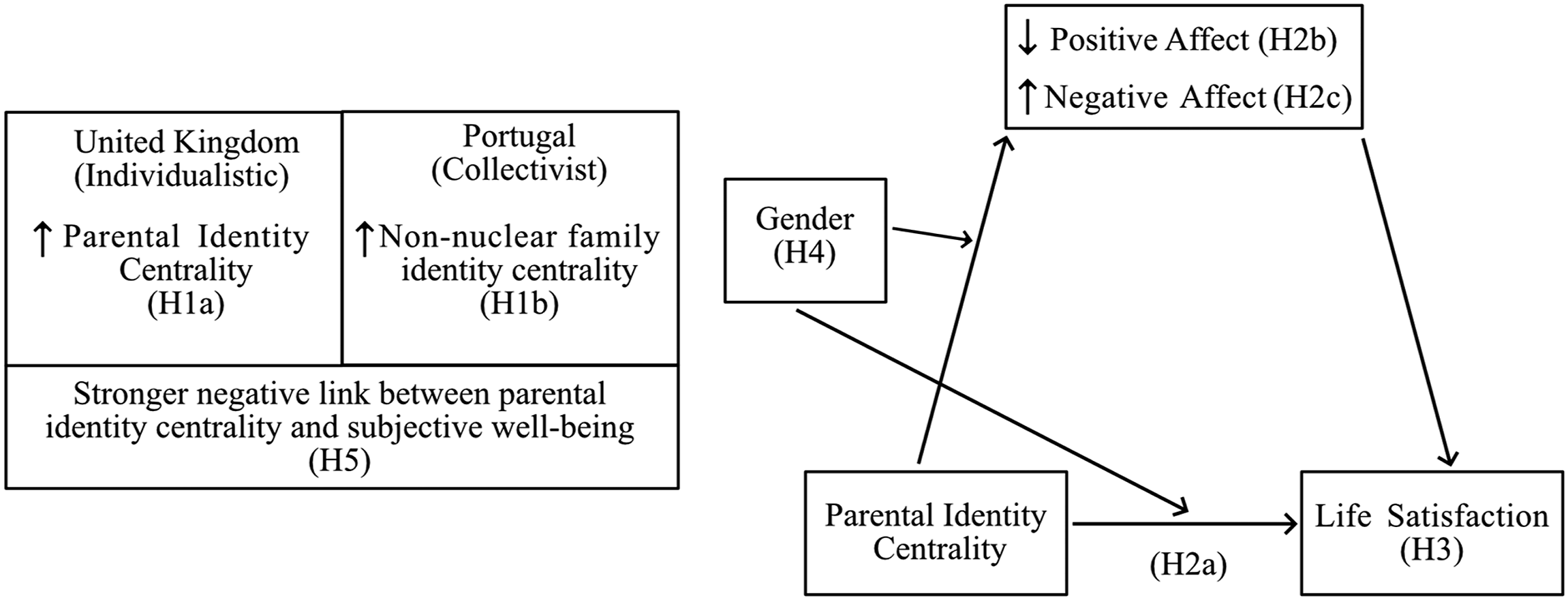
Method
Participants
The sample was comprised of 5,790 British parents (2,990 men and 2,800 women) and 1,062 Portuguese parents (526 men and 536 women). Most parents had a university degree (71.3% in the UK and 54.1% in Portugal) and were married or in a civil partnership (99.5% in the UK and 82.1% in Portugal). In the UK, more than half (54.6%) of participants were between 35–44 years old, while in Portugal, participants were older, with the majority (68.9%) being between 35–54 years old. Their personal monthly income mostly ranged from £1,451 to £3,160 (48.1%) in the UK and from €891 to €3,071 (71.3%) in Portugal. In both countries, the inclusion criteria of the study were being residents in the country and having at least one child aged 18 years or younger.
Procedure
Data in both countries were gathered using a questionnaire administered by leading survey companies (YouGov in the UK and Qdata in Portugal) on their panel members. The sample was weighted to match the profile based on census data, providing a representative reporting sample in both countries. Emails were sent to panellists to complete an online questionnaire that took on average 15 min to complete.
Measures
Identity Centrality
The psychological centrality of identities was assessed using Gaunt and Scott’s (2014) instrument. Participants were asked to distribute a total of 100% across a set of identities to indicate the relative importance of each in defining their sense of self. The list included eight predefined identities and offered the option to add other personally relevant identities. This approach allowed for the expression of equal centrality across identities by allocating identical percentages. The proportion assigned to the parental identity (as it was the one that scored the highest in both countries) was extracted and used to compute psychological centrality scores for this domain.
Subjective Well-Being
Subjective well-being was assessed using the Positive and Negative Affect Scale (PANAS) (Watson et al., 1988); Portuguese version – Galinha & Pais-Ribeiro (2012). This instrument includes two dimensions: Positive Affect (PA), which assesses the extent to which an individual feels enthusiastic, active, and alert (e.g. ‘Interested’); and Negative Affect (NA), which indicates subjective distress and displeasure (e.g. ‘Distressed’). PANAS consists of 20 items, with responses ranging from 1 = Very Slightly/Not at All to 5 = Extremely. Items for each dimension were averaged separately to derive scores for the PA subscale and the NA subscale indicated greater negative affect. Cronbach’s alpha for both dimensions was .90 for the UK sample, and .91 for PA and .92 NA in the Portuguese sample.
Life Satisfaction
The five-item Satisfaction with Life Scale (SWLS) developed by Diener et al. (1985) and validated for the Portuguese population by Neto (1993) was used to assess satisfaction with one’s life. Participants rated their agreement with each of the five statements on a 7-point scale, ranging from 1 = Strongly Disagree to 7 = Strongly Agree, and the extent to which they agreed with each statement (e.g. ‘In most ways my life is close to my ideal’). An average score across the items was calculated to determine each participant’s life satisfaction. Higher scores indicated greater levels of satisfaction. Cronbach’s alpha for this measure was .89 and .91 for the UK and Portugal samples, respectively.
Socio-Demographic Variables
Participants indicated their gender, age, occupation, level of education, marital status, monthly income, the number of children they had, and their ages.
Analytic Strategy
To test the first set of hypotheses, between-participants ANOVAs were conducted, analysing country and gender effects on the centrality of different identities. Then, a set of multiple regression analyses was performed to test the second set of hypotheses. To test and explore the third, fourth, and fifth hypotheses about the moderated mediation of positive and negative affect in the relationship between parental identity centrality and life satisfaction, methods developed by Preacher and Hayes (Hayes, 2022; Preacher & Hayes, 2004) were used to evaluate conditional indirect effects using the bootstrap procedure (Preacher & Hayes, 2004). Moderated mediation analyses were performed with Hayes’ (2022) PROCESS macro, employing 5,000 bootstrap resamples and bias-corrected 95% confidence intervals.
Results
Preliminary Analysis
Means, Standard Deviations and Correlations Among Study Variables
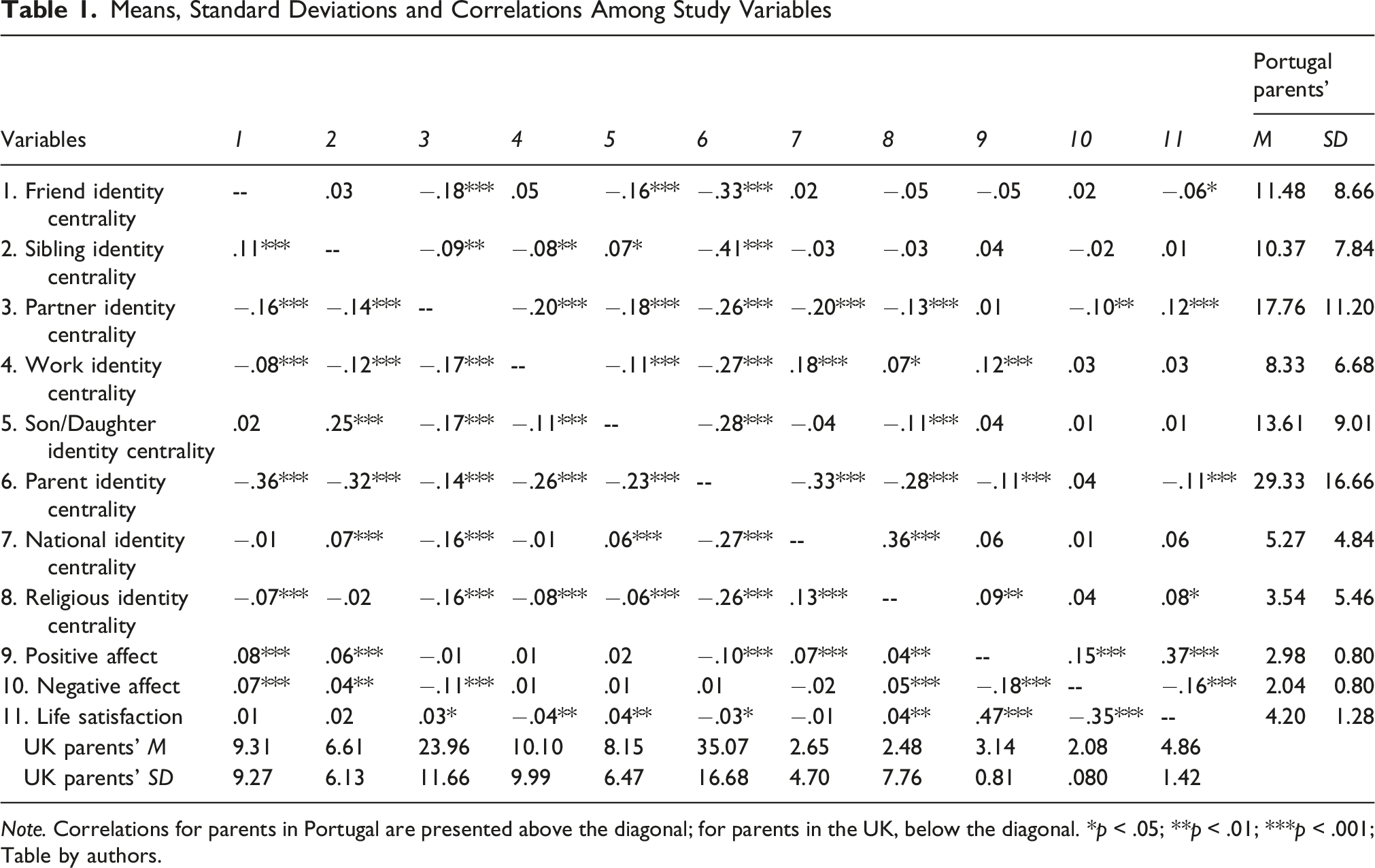
Note. Correlations for parents in Portugal are presented above the diagonal; for parents in the UK, below the diagonal. *p < .05; **p < .01; ***p < .001; Table by authors.
Country and Gender Effects on the Centrality of Different Role Identities
To analyse country and gender effects on the centrality of different identities, a set of 2 (Gender: Men vs. Women) × 2 (Country: UK vs. Portugal) between-participants analyses of variance (ANOVAs) was conducted, testing the first set of hypotheses. Significant main effects and interactions were followed up with simple-effects analysis. The results showed a significant main effect of country for partner/spouse (F (1, 6,689) = 258.36, p < .001), work (F (1, 6,689) = 30.16, p < .001), and parent (F (1, 6,689) = 116.97, p < .001) identity centrality. Post hoc Tukey tests indicated that parents in the UK reported higher centrality of partner (M = 23.96, SD = 11.66), work (M = 10.10, SD = 9.99) and parental (M = 35.07, SD = 29.33) identities compared to parents in Portugal (M = 17.76, SD = 11.20, t (6,828) = 16.04, p < .001; M = 29.33, SD = 16.66, t (6,828) = 10.30, p < .001; M = 8.33, SD = 6.47, t (2,054) = 7.28, p < .001, respectively) (see Figure 2). Mean centrality for different identities by country and gender. Note. Figures by authors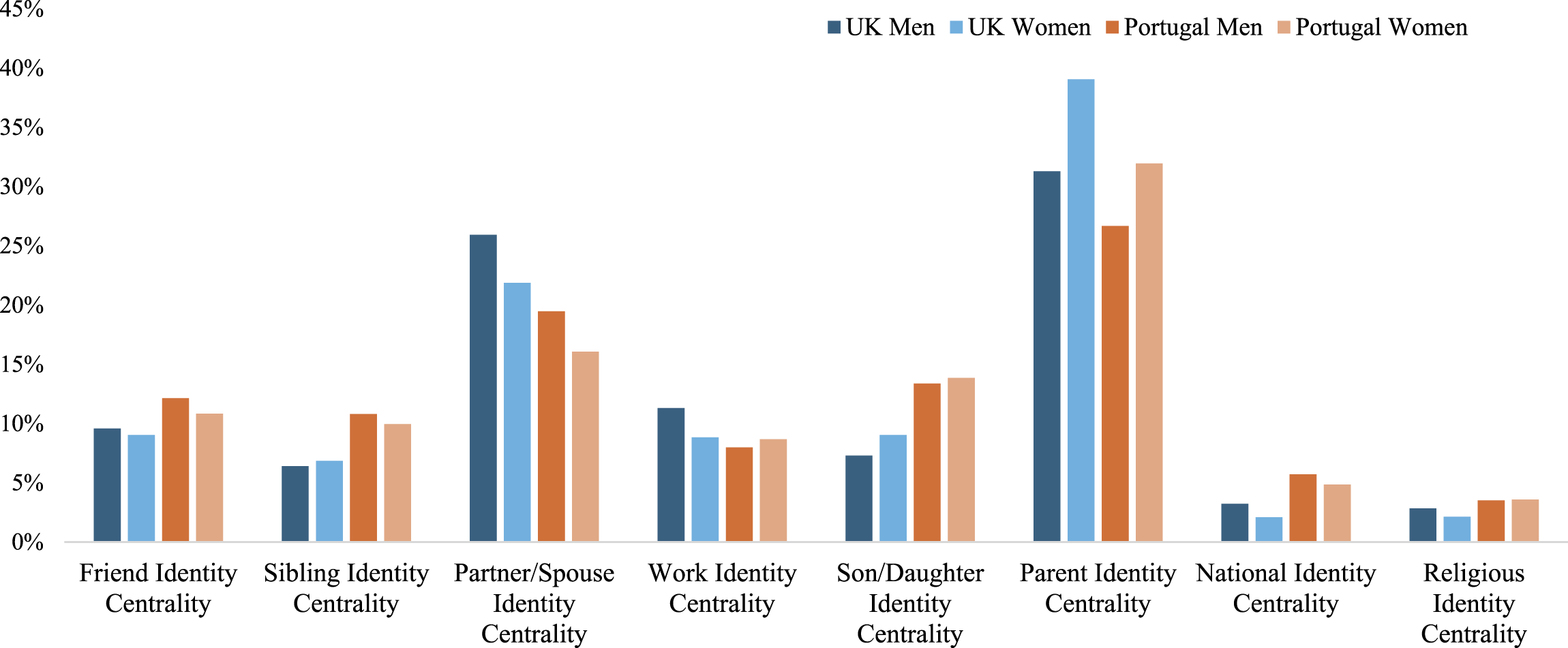
A significant main effect of country was also found for friend (F (1, 6,689) = 50.36, p < .001), sibling (F (1, 6,689) = 307.04, p < .001), son/daughter (F (1, 6,689) = 559.30, p < 001), national (F (1, 6,689) = 280.11, p < .001) and religious (F (1, 6,689) = 18.02, p < .001) identity centrality. Specifically, parents in Portugal expressed significantly higher identity centrality for being a friend (M = 11.48, SD = 8.66), sibling (M = 10.37, SD = 7.84), son/daughter (M = 13.61, SD = 9.01), national (M = 5.27, SD = 4.84), and religious (M = 3.54, SD = 7.76) than parents in the UK (M = 9.31, SD = 9.27, t (6,687) = −7.07, p < .001; M = 6.61, SD = 6.13, t (1,316) = −17.50, p < .001; M = 8.15, SD = 6.47, t (1,270) = −18.88, p < .001; M = 2.65, SD = 4.70, t (1,462) = −16.24, p < .001; M = 2.48, SD = 7.76, t (6,687) = −4.24, p < .001, respectively). Overall, the results were in line with Hypotheses 1a and 1b.
A significant main effect of gender was found for partner/spouse (F (1, 6,689) = 96.22, p < .001), friend (F (1, 6,689) = 9.08, p = .003), and national (F (1, 6,689) = 41.17, p < .001) identity centrality, suggesting fathers in both countries had higher centrality of partner (M = 24.96, SD = 12.39), friend (M = 9.98, SD = 10.22) and national identities (M = 3.61, SD = 5.39) when compared to mothers (M = 20.94, SD = 10.79, t (6,771) = 14.33, p < .001.; M = 9.32, SD = 8.05, t (6,351) = 2.92, p = .004; M = 2.52, SD = 4.08, t (6,243) = 9.33, p < .001, respectively). On the other hand, no significant main effect of gender was found for religious (F (1, 6,689) = 1.54, p = .22) or sibling identity centrality (F (1, 6,689) = .98, p = .323). Interestingly, a significant country × gender interaction was found for sibling identity centrality (F (1, 6,689) = 9.34, p = .002), wherein UK mothers had significantly higher sibling identity centrality than UK fathers, while Portuguese fathers had higher sibling identity centrality than mothers.
Results also demonstrated a significant main effect of gender on parental identity centrality (F (1, 6,689) = 144.16, p < .001). This was qualified by a significant country × gender interaction (F (1, 6,689) = 5.20, p = .023), suggesting that women in both countries expressed more central parental identities than men, although the gender gap was larger in the UK than in Portugal. Regarding work identity centrality, a significant main effect of gender (F (1, 6,689) = 8.02, p = .005) was found, being further characterised by a significant country × gender interaction (F (1, 6,689) = 25.11, p < .001). This reflects British men’s more central work-related identity compared to all the other parents (mothers in the UK and Portugal, and fathers in Portugal). Additionally, men and women in Portugal did not significantly differ in their work-related identity centrality.
On the other hand, a significant main effect of gender (F (1, 6,689) = 23.24, p < .001), was found for son/daughter identity centrality, being additionally qualified by a country × gender interaction (F (1, 6,689) = 7.51, p = .006). This interaction indicated that women in the UK expressed higher centrality of being daughters than men in the UK, while no significant difference was found between men and women in Portugal.
As in both countries being a parent was the most central identity to participants (35.07% and 29.33%, for the UK and Portugal, respectively), the next set of analysis focused solely on the centrality of parental identity.
Parental Identity Centrality and Subjective Well-Being
To test the second set of hypotheses regarding the role of parental identity centrality on subjective well-being, a set of multiple regression analyses was conducted, separately for parents in the UK and Portugal. The results of the multiple regression analyses showed that in both countries, parental identity centrality was a significant predictor of lower positive affect (β = −.10, p < .001; F (1, 5,635) = 61.80, p < .001, R2 = .01 for the UK and β = −.01, p < .001; F (1, 1,061) = 13.67, p < .001, R2 = .01 for Portugal) and life satisfaction (β = −.03, p = .02; F (1, 5,635) = 5.13, p = .02, R2 = .01 for the UK and β = −.11, p < .001; F (1, 1,061) = 14.06, p < .001, R2 = .01 for Portugal), but not for negative affect (β = .01, p = .99; F (1, 5,635) = .01, p = .99, R2 = .01; and β = .04, p = .26; F (1, 1,061) = 1.27, p = .26, R2 = .01, for the UK and Portugal, respectively). These results confirm H2a and H2b, but not H2c.
Moderated Mediation by Affect and Gender
We then tested our third set of hypotheses regarding the effect of parental identity centrality on life satisfaction and its mediation by positive (Figure 3) and negative affect (Figure 4), and our fourth hypothesis regarding the moderation by gender of these mediation effects. Model 8 of the PROCESS program was used to assess four moderated mediation models (through positive and negative affect, in the UK and Portugal). Table 2 shows bias-corrected bootstrap estimates and 95% confidence intervals of the indirect (mediated) effects and the overall moderated mediation models. Conditional indirect effects of parental identity centrality on life satisfaction through positive affect. Note. Figures by authors; *p < .05; ***p < .001 Conditional indirect effects of parental identity centrality on life satisfaction through negative affect. Note. Figures by authors; *p < .05; **p < .01; ***p < .001 Bias-Corrected Bootstrap Estimates for Mediation and Moderated Mediation Analyses Note. ***p < .001; Table by authors.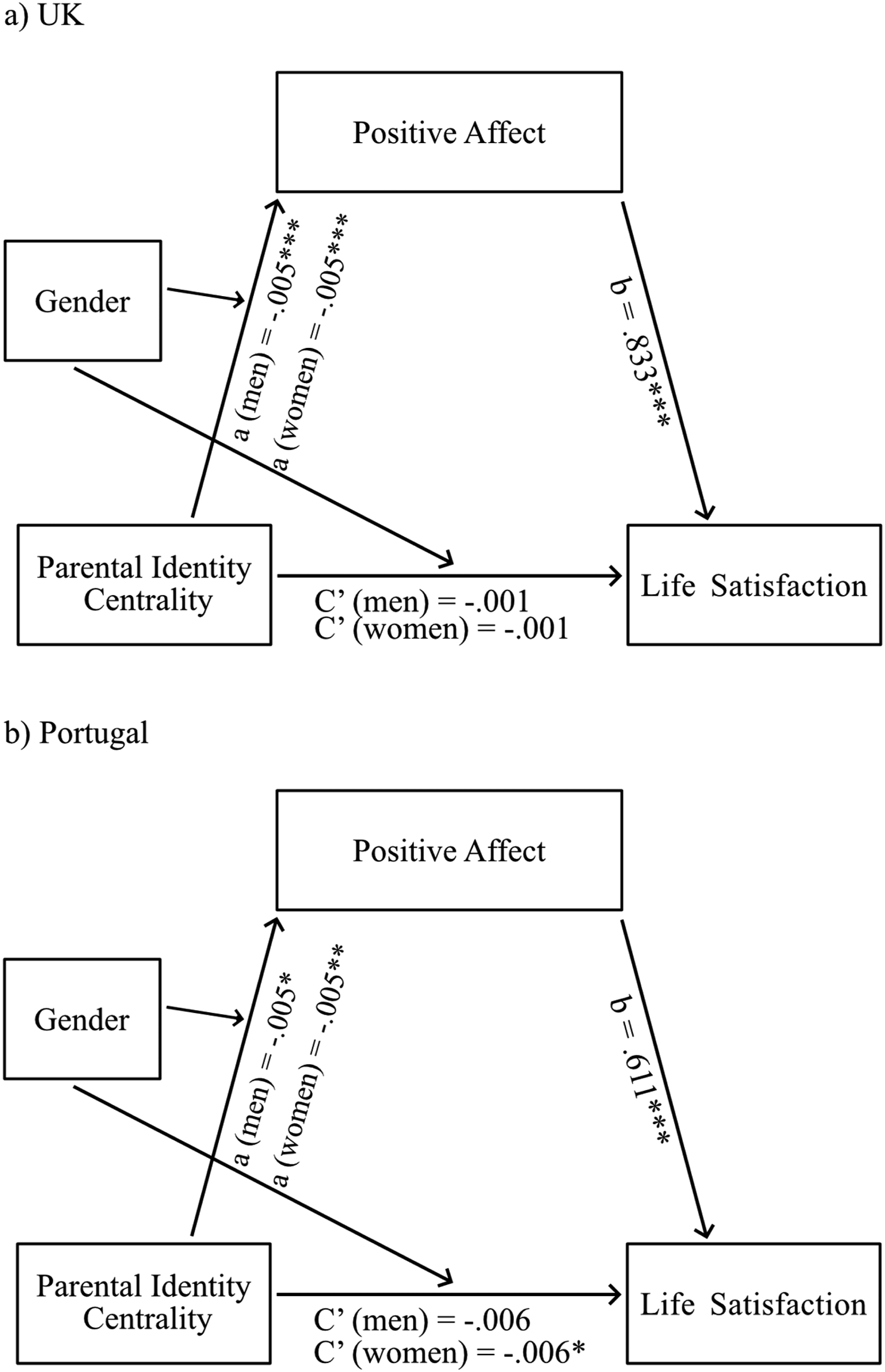
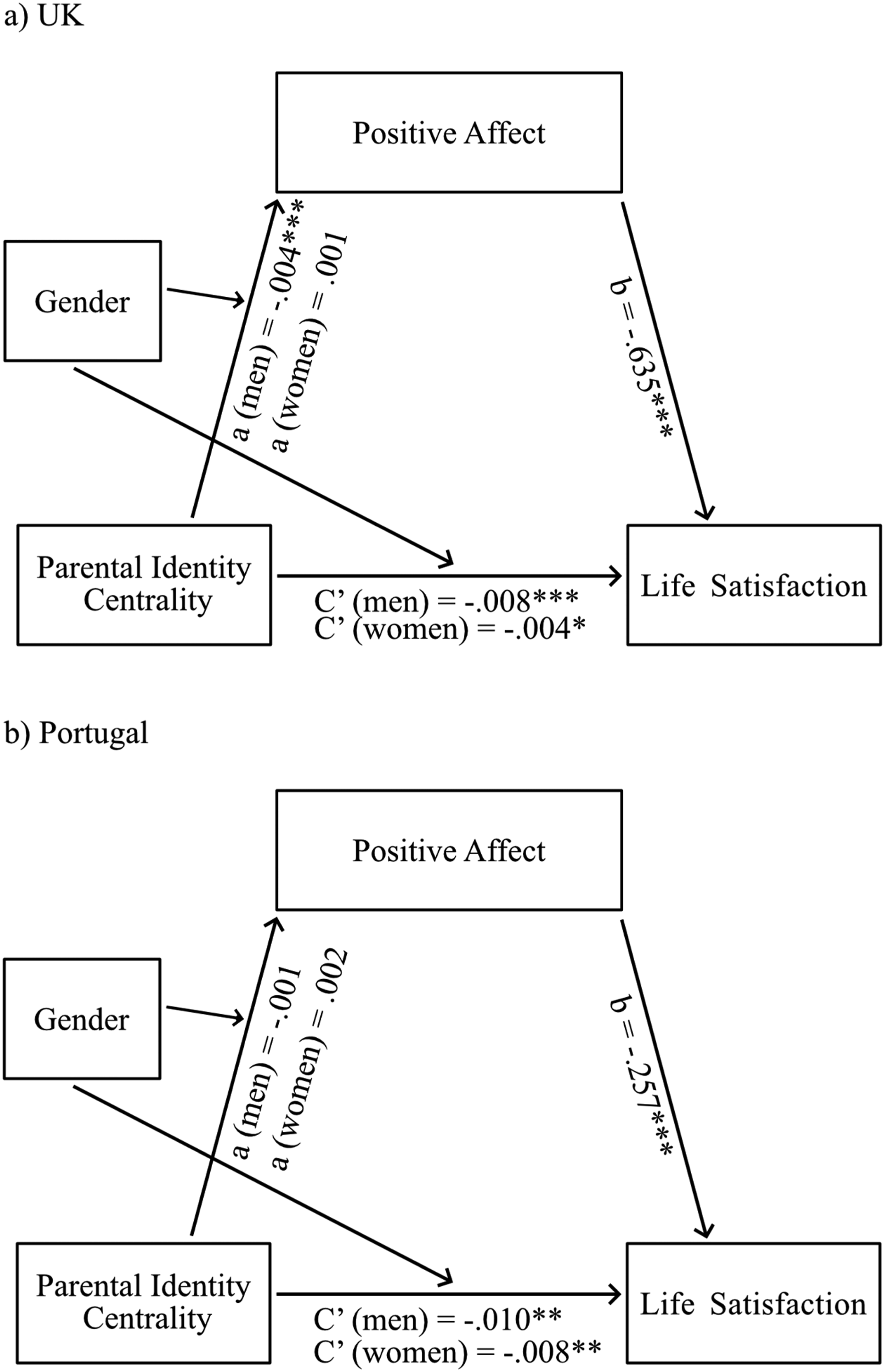
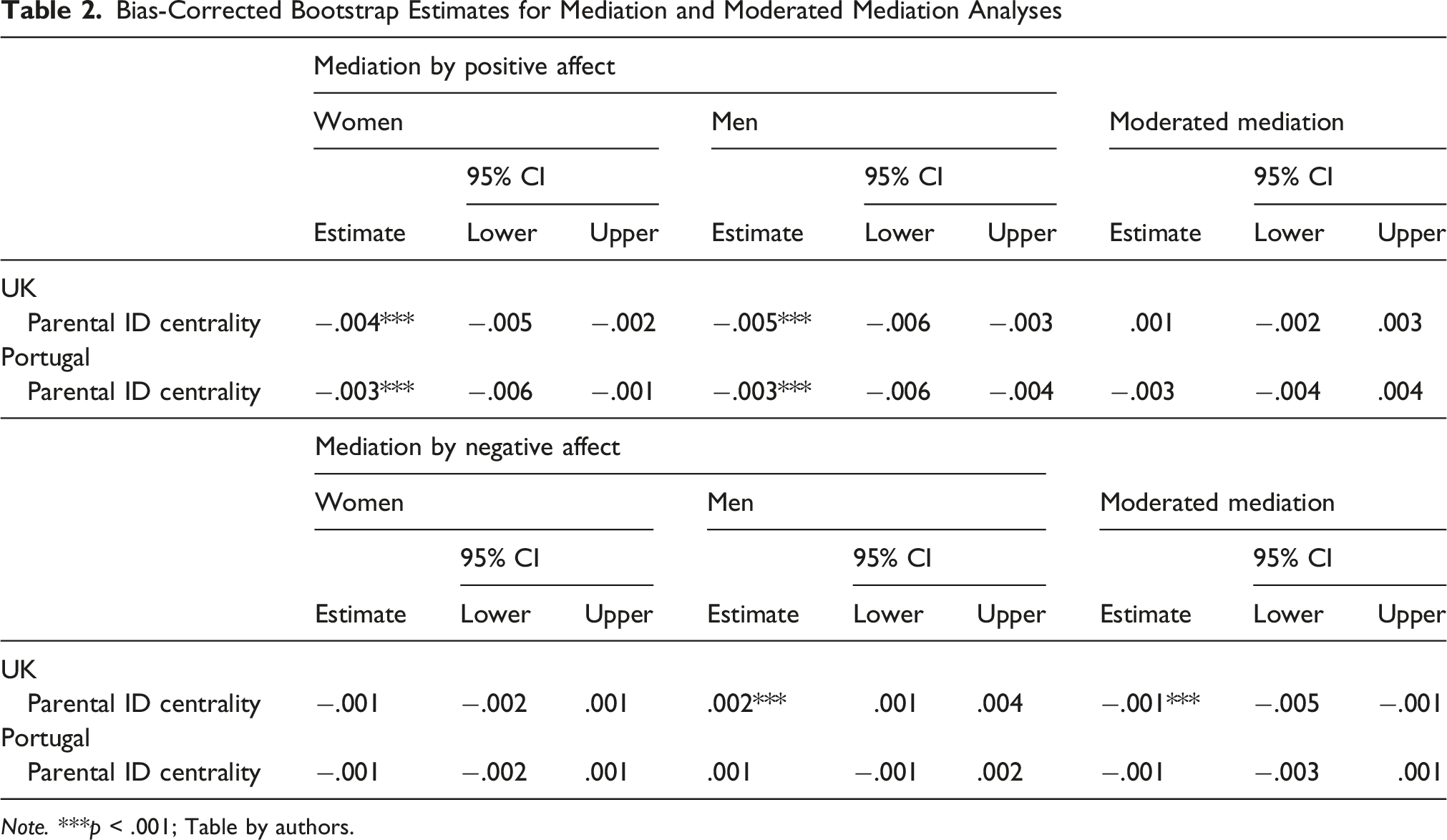
Figure 3 illustrates that higher parental identity centrality had a negative direct effect on positive affect in both countries for men and women (path a). In both countries, positive affect had a positive direct effect on life satisfaction (Figure 3, path b), while negative affect had a negative direct effect on life satisfaction (Figure 4, path b). For mothers in Portugal, higher parental centrality had a direct negative effect on life satisfaction (Figure 3, path c’).
As demonstrated in Table 2, positive affect was a significant mediator for parents in the UK and Portugal, showing a significant conditional indirect effect of parental identity centrality on life satisfaction, confirming hypothesis H3a. Interestingly, negative affect was only a significant mediator for fathers in the UK, showing a significant indirect effect of parental identity centrality on life satisfaction, partially confirming H3b (Table 2). Gender moderated this mediation effect of negative affect, as indexes of moderated mediation were negative with bootstrap confidence intervals entirely below zero for life satisfaction [−.005, −.001], confirming hypothesis H4.
Discussion
The current study compared the centrality of different role identities between the UK and Portugal and examined how they relate to parents’ subjective well-being. The findings revealed cross-national differences in identity centrality consistent with our hypotheses; UK parents reported more central nuclear family role identities, reflecting greater individualism, whereas parents in Portugal showed a more distributed pattern of role centrality indicative of greater collectivism.
Interestingly, fathers in both countries had higher centrality of partner, friend, and national identities when compared to mothers. This finding is consistent with proposals from several identity theory scholars (see Stryker & Burke, 2000; Thoits, 1992), who suggested that individuals organise multiple role identities hierarchically, with their salience reflecting culturally structured expectations that are, in turn, associated with gender. From this perspective, gender operates as a key social marker that delineates commonly defined ‘social roles’, such as those of worker or parent. For instance, studies such as that of Gaunt et al. (2024) demonstrate that men’s self-concept remains strongly linked to roles of social belonging and economic provision. Fathers, therefore, tend to attribute greater importance to identities that affirm autonomy, competence, and social connectedness, whereas mothers’ self-definitions are more strongly organised around caregiving and family responsibilities. These gender-differentiated patterns also align with cross-cultural models of individualism and collectivism (Hofstede, 2001; Markus & Kitayama, 1991), which suggest that in more individualistic contexts (such as the United Kingdom) men tend to emphasise autonomous and publicly oriented aspects of the self, while in more collectivistic cultures (such as Portugal) the self is constructed in a more relational and family-centred way.
Men in the UK reported significantly higher centrality of work-related identity among all other parents. Additionally, parents in Portugal did not significantly differ in their work-related identity centrality. In the United Kingdom, fathers’ higher centrality of work identity is consistent with a welfare regime and labour market system that continues to sustain a modified breadwinner model, in which men remain primarily responsible for economic provision, while mothers are more likely to reduce their working hours or engage in part-time employment following childbirth (Altintas & Sullivan, 2017; Gaunt et al., 2024). Within this framework, paid work represents a source of income and a socially expected marker of masculine competence and social worth. By contrast, in Portugal, the predominance of the dual-earner model and the widespread full-time participation of both parents in the labour market (Marques et al., 2021) suggest that employment is conceived as a shared, rather than gendered, domain. Taken together, these results illustrate how welfare regimes, labour structures, and cultural norms jointly shape the centrality of work-related identities within family life, reflecting different stages in the ongoing transformation of gender roles in contemporary societies (Edlund & Öun, 2023).
Moreover, higher parental identity centrality was generally associated with lower positive affect and life satisfaction in both the UK and Portugal, but the mechanisms through which these relationships operate differ across genders and countries, confirming our hypotheses. These results align with previous literature highlighting the potential costs of a highly central parental identity for subjective well-being (Hansen, 2012; Mikucka & Rizzi, 2020; Simon, 1992). In both countries, a more central parental identity was found to be a significant predictor of lower positive affect for both men and women. This finding suggests that individuals who strongly centralise their identity around their role as parents may experience reduced emotional well-being, particularly in terms of positive emotions. Research suggests that a strong parental identity can be emotionally taxing, as it can lead to stress and role strain (Nomaguchi & Milkie, 2020). When parents overly define themselves through their role, they may feel restricted in their ability to engage in fulfilling, non-parental activities that typically foster positive emotions. Interestingly, while parental identity centrality was negatively related to positive affect, it did not show a significant relationship with negative affect in either country. This absence of a direct relationship with negative affect suggests that while a strong parental identity may limit positive emotional experiences, it may not necessarily lead to an increase in negative emotions. This is in line with research suggesting that a highly central parental identity might create emotional dissonance; negative emotions may be buffered by other factors, such as the sense of duty or meaning derived from the parental role itself (Simon, 1992). While time pressures can heighten parental stress, and vitality may decline due to sleep deprivation and caregiving demands (Ruppanner et al., 2019; Venn et al., 2008), a fulfilling family life can enhance happiness (Nelson et al., 2013).
Both countries showed that positive affect has a strong and positive effect on life satisfaction, consistent with a large body of literature emphasising the role of positive emotions in enhancing overall well-being (Diener et al., 1999b). Positive affect was found to be a significant mediator between parental identity centrality and life satisfaction in both the UK and Portugal. This finding suggests that the reduction in positive emotional experiences partly explains the negative effects of higher parental identity centrality on life satisfaction. In other words, parents who centralise their identity around their parental role may experience lower positive affect, which in turn negatively influences their overall life satisfaction.
While positive affect consistently mediated the relationship between parental identity centrality and life satisfaction, the role of negative affect as a mediator was more complex. In the UK, negative affect emerged as a significant mediator for fathers, but not for mothers. This finding highlights the role of gender in shaping the emotional experiences of parents, particularly regarding how parental identity centrality influences their subjective well-being. Research has shown that fathers, particularly in individualistic societies like the UK, may experience higher levels of work-family conflict and stress due to societal pressures to fulfil traditional breadwinner roles while also participating in parenting (Cohen & Wills, 1985; Louie et al., 2023; Metzger & Gracia, 2023). These pressures may exacerbate negative emotional experiences when their identity is heavily tied to parenting, leading to lower life satisfaction. For mothers, however, the relationship between parental identity centrality and negative affect was not significant. One possible explanation is that mothers’ emotional responses differ; a central parental identity can be more normative or fulfilling, as they usually report higher levels of parental satisfaction, rather than a source of distress or buffering the negative effects (Hochschild & Machung, 2012; Oyarzún-Farías et al., 2021; Stets & Lee, 2021). The gender differences observed in the mediation of negative affect also highlight the importance of gender as a moderating factor in the relationship between parental identity centrality and life satisfaction.
Implications
The findings of this study suggest several important implications for both research and practice. First, the negative relationship between parental identity centrality and positive affect underscores the importance of addressing the emotional well-being of parents, particularly those who strongly identify with their parental role. Programs aimed at supporting parents may benefit from incorporating strategies to help individuals maintain a balance between their parental identity and other aspects of their lives, fostering positive emotional experiences that can enhance overall life satisfaction (Cowan & Cowan, 2000).
Second, the gender differences observed in the mediation of negative affect suggest that gender-specific interventions may be necessary to address the distinct emotional experiences of fathers and mothers. For fathers, particularly in the UK, interventions that focus on reducing work-family conflict and promoting positive fatherhood experiences could help mitigate the negative effects of parental identity centrality on life satisfaction. For mothers, the lack of a significant indirect effect of negative affect points to the need for further research to explore the factors that influence mothers’ emotional well-being in the context of highly central parental identities. Finally, while this study provides a valuable cross-cultural comparison, future research should explore additional cultural contexts to determine whether the relationships observed in the UK and Portugal hold across other societies. In particular, examining different cultural attitudes towards parenting could shed light on the broader applicability of the findings and help identify universal and culturally specific patterns in the relationship between parental identity and well-being.
Limitations
It is important to acknowledge some limitations of this study. The cross-sectional design limits causal inferences drawn from the findings. For example, it is possible that another extraneous factor, such as involvement in non-parental activities, may be associated with both lower parental identity centrality and greater well-being. For future research, it is necessary to work longitudinally with the data in order to explore how changes in parental identity centrality influence affective experiences and life satisfaction. In this way, over time, it will be possible to understand the dynamics of identity and parental subjective well-being.
In addition, the study included only two countries (the United Kingdom and Portugal) as representatives of individualist and collectivist cultures, and the results may not be generalisable to other cultural contexts. It is important to recognise this limitation regarding sample representativeness and cultural diversity, considering the broad range of different countries and societies.
Another limitation concerns the self-reported nature of the instruments, which may introduce social desirability bias. In this sense, different markers could be included to reduce the single method bias inherent in self-report measures, such as combining behavioural or physiological indicators.
Finally, the exclusive focus on different-gender couples restrict the generalisation of the results. Parental identity centrality may operate differently in same-sex or gender-diverse parenting contexts. For future research, it is necessary to include diverse family configurations beyond those used in this study. This inclusion would make it possible to understand other family arrangements and capture the plurality of contemporary parental experiences.
Conclusion
This study provides important insights into the ways in which parental identity centrality impacts subjective well-being and life satisfaction, revealing both shared patterns and gender-specific differences across cultures. The results underscore the importance of addressing positive affect as a key mediator in the relationship between parental identity and life satisfaction, while also highlighting the unique role of negative affect for fathers in the UK. By considering the gendered nature of these relationships, researchers and practitioners can better understand how to support parents in balancing their parental identity with overall well-being.
Footnotes

Ethical Considerations
This study was approved by the Ethics Committee at the University of Lincoln (UK). All participants provided written informed consent, and all methods were carried out following relevant guidelines and regulations.
Funding
The authors disclosed receipt of the following financial support for the research, authorship, and/or publication of this article: This research was funded by the ‘la Caixa’ Foundation (grant FP23-2B082) and the Nuffield Foundation (grant WEL/43623). The authors also thank the financial support from CESAM by FCT/MCTES (UIDP/50017/2020+UIDB/50017/2020+LA/P/0094/2020) and CECS by FCT (UIDP/00736/ 2020 + UIDB/00736/2020), through national funds.
Declaration of Conflicting Interests
The authors declared no potential conflicts of interest with respect to the research, authorship, and/or publication of this article.
Data Availability Statement
Due to the nature of the research, supporting data is not available.