




Abstract
Recently, striking numbers of U.S. professional athletes have protested social injustices during the customary pregame national anthem (e.g., not standing in protest to police brutality). Fans have met athletes’ protests with mixed reactions, thus calling into question whether fans’ national attachments might help explain their reactions. In this empirical study of emerging adults (N = 514), we posit and find that disapproval of athlete activism is related significantly to overall national attachment. Decomposing national attachment into its respective subdimensions, we also find that fans’ disapproval relates most strongly to uncritical patriotism followed by national identity, symbolic patriotism, and constructive patriotism. Leveraging partial least squares structural equation modeling (PLS-SEM) and importance-performance analyses, we offer a rare multifaceted look into how national attachments can shape fans’ reactions to athletes’ social protest behaviors.
Introduction
For much of its history, the U.S. sport community has witnessed examples of athlete activism. Paul Robeson, Jackie Robinson, and Muhammad Ali serve as historical examples, and even role models, of athlete activists within and beyond the arena for emerging adults (between 17 and 24 years of age; Bush, Martin, & Bush, 2004). In recent years, the public has observed a resurgence of athlete activism (Sorek & White, 2016). Many of today’s professional activist athletes have chosen to time their typically silent protests during the standard pregame performance of the national anthem (see Table 1); these symbolic expressions motivated by concerns about pressing social issues have been made by athletes of varied demographics—ethnic and racial minority men, gay women, first-generation immigrants, religious minorities, and others. According to Georgantopoulos and Griffin (2016) and Gartland (2016), many emerging adult athletes in college and high school have joined their professional counterparts, staging their own activist expressions of protest or solidarity. Relatedly, Jenkins (2013) asserts that sports institutions and events increasingly have become “forums for a type of large-scale, patriotic theater meant to promote a sense of national unity” (p. 247). Arguably, these forums might not only engender feelings of national pride but also possibly coerce “exhibitions” thereof whereby fans and athletes are expected to participate in conspicuous displays of patriotism (Butterworth, 2008; Silk, 2013).
Examples of U.S. Athletes Exhibiting Activist Behavior During Pregame National Anthem.

Source. Georgantopoulos and Griffin (2016), Gartland (2016), and (Sandritter, 2016).
Note. These are examples only. They are not intended to convey proportional representativeness by sport, league, or another factor.
According to SportBusiness Group’s (2014) Know the Fan report, emerging adults account for 22% of the nearly 169 million U.S. sport fans, a statistic slightly greater than the one in five fans aged 25 to 34 years. Unlike a team’s older fan base, this younger demographic has not had the opportunity to establish team loyalty based on bonding with a team through the ebbs and flow of good seasons and bad (Blatt, 2013). Emerging adults find in sports athletes myriad examples by which to model themselves in terms of sport-specific skills to develop, behaviors to practice, endorsed products to buy, and social issues to advocate (Arnett, 2000; Dix, Phau, & Pougnet, 2010). Thus, it is important for the overall sport community to understand perceptions of the young adult fan base in relation to athlete activism. In this empirical study, we provide timely research that considers whether social identity theory might influence how emerging adults respond to activist behaviors of athletes.
Issues related to the formation and expression of one’s social identity (e.g., national identity) are quite significant in the emerging adult stage of life (Arnett, 2000, 2003; Dix et al., 2010). Yet, important questions exist about whether national attachments actually incline people to react pointedly against publicly staged expressions intended to draw attention to the nation’s problems or shortcomings (De Figueiredo & Elkins, 2003).
As our empirical study speaks to present-day intersections of sport and society, it addresses a serious gap in the sociological literature on national identity, patriotism, and intergroup relations in the United States (Bonikowski & DiMaggio, 2016). Indeed, while patriotism is an important predictor of political-oriented attitudes and preferences, there remains no consensus regarding its complexity or simplicity (Huddy & Khatib, 2007; Parker, 2010). Situated in the world’s largest democracy, economy, and sport market, Americans interestingly have different, sometimes conflicting, views on what it means to be “a good American” (Schatz, 1995; Schildkraut, 2014; Sekerdej & Roccas, 2016), Demographics, such as age and race, can play a role in shaping these differences. Indeed, a recent Quinnipiac University poll found that Americans are mixed in their opinions about whether National Football League (NFL) athletes can be patriotic if they take a knee instead of standing for the national anthem (Quinnipiac, 2018). Furthermore, beyond patriotism, prior research has supported the notion of one overall national attachment as well as distinct national attachments (e.g., national identity, patriotism; Huddy & Khatib, 2007). Our work acknowledges both approaches, ultimately allowing us to leverage conceptual differences between the varieties of national attachment and, consequently, their differential influences on outcomes.
Types of National Attachments
Examining national attachments can prove useful in helping us better understand how emerging adults relate to the world around them (Huddy & Khatib, 2007). These attachments involve national identity and patriotism. Generally speaking, national identity is a subjective or internalized sense of belonging and affiliation with one’s nation (Huddy, 2001). Conover and Feldman (1987) define patriotism as “a deeply felt affective attachment to the nation” (p. 1); Kosterman and Feshbach (1989) define it as the “degree of love for and pride in one’s nation” (p. 271). National identity notably is less ideological than patriotism because of its subjective nature (Huddy & Khatib, 2007). It is essential to this study to delve into the three distinct but related varieties of patriotism (i.e., symbolic, uncritical, constructive; Schatz, Staub, & Lavine, 1999), with a particularized focus on the distinctions between constructive and uncritical patriotism.
Symbolic patriotism is synonymous with national pride (De Figueiredo & Elkins, 2003), while constructive patriotism refers to love for and critique of one’s country, essentially motivated by a common desire to precipitating positive change (Schatz et al., 1999; Sekerdej & Roccas, 2016). The nature of constructive patriotism might offset the tendency for positive national identification to engender feelings of national superiority. Furthermore, constructive patriotism is not significantly associated with a political ideology or political party and is “positively associated with political efficacy, political knowledge, political information gathering, and political activism” (p. 161), and is relatively statistically independent to nationalism. (Note: National identity is distinguished from nationalism. According to Kohn (1939), nationalism is not a natural phenomenon, meaning it is more than an affection for one’s birthplace. It requires creation of the nation state, thereby causing a continuous interdependence between the two.)
Uncritical patriotism, less flatteringly known as blind patriotism, to one’s nation is characterized by fierce loyalties, habitually positive assessments, and stern intolerance of threatening criticisms (Schatz & Staub, 1997). Uncritical patriotism and constructive patriotism share “a sense of positive identification with and feeling of affection of affective attachment to country” (p. 155), “share core patriotic sentiment” (p. 163), and are positively correlated (Feshbach, 1994); however, there are major distinctions. Generally, uncritical/blind patriotism is associated with political conservatism, noting not all conservatives are blind patriots (Huddy & Khatib, 2007; Schatz et al., 1999). Uncritical patriotism is associated with a notion that symbolic behaviors, like pledging allegiance and erecting national monuments, are more important than instrumental behaviors, like children learning about our system of government in school (Schatz et al., 1999). Uncritical patriotism is negatively related to political activism (Schatz et al., 1999) and positively related to nationalism (Sekerdej & Roccas, 2016).
Sport and Society
As we consider emerging adults’ national attachments, we also look for insights from scholarship in the sociology of sport, which sometimes centers on sport as an arena of social resistance (Hughson & Free, 2006). Across the globe and over the span of centuries, sport as entertainment ostensibly distracts from the harsh realities of everyday life; however, sporting events are not spaces free from the sociopolitical challenges of the broader community in which it exists. Hughson and Free (2006) note sport is a “defetishized commodity with deep communal significance and attachments” (p. 72). It is a microcosm of the larger society and, as such, is a place where “inequalities such as racism, sexism, economic stratification and other forms of oppression are reproduced, exacerbated and/or ignored” (Cooper, Macaulay, & Rodriguez, 2017; 151). Conversely, sport can be a vehicle for “progressive social change” (Kaufman, 2008). In addition, athletes, due to their high visibility, have the power to be activists for social change (Sanderson, Frederick, & Stocz, 2016). Curtin and McGarty (2016) define activists as “people who actively work for social or political causes and especially those who work to encourage other people to support those causes” (p. 228). Athletes who use their sport platforms to advance social justice are often referred to as athlete activists.
Perhaps the most recent and provocative instance of athlete activism in the United States was Colin Kaepernick’s refusal to stand for the national anthem during the 2016 football season (Wiedeman, 2017). Historically, athlete activists often stood alone, bearing the harsh consequences of their activism (Kaufman, 2008). Kaepernick was alone early on in his protest; however, he was gradually joined by teammates and other mostly Black players in the NFL (see Table 1; Sandritter, 2016). To understand the anti-American perception of Kaepernick’s taking a knee during the national anthem, we can turn our attention to what Kaufman (2008) described as a long-established relationship between sport and politics (p. 219).
In an interview with Tyler Tynes (2016) of SBNation.com, Jay Coakley, professor emeritus of sociology at the University of Colorado at Colorado Springs, stated, Any actions that disrupts the enjoyment and the fantasy that exists around the NFL and its games are going to be rejected by fans. The fans think of football as being separate from the rest of reality. If someone infuses reality into that experience, it’s jolting to the fans and they don’t like it. (p. 3)
A 2016 Quinnipiac University Poll appears to support Professor Coakley’s assertion (Schwartz, 2016). Among 1,391 adults polled nationwide, 54% disapproved of athletes’ refusal to stand during the national anthem as a protest against “perceived police” violence against the Black community. Upon closer examination by racial category, the poll reveals 63% of White Americans disapproved of the protests and 30% approved. By contrast, 74% of Black Americans approved of the protests and only 17% disapproved. This suggests a racial divide in how people perceive these protests exhibited during the national anthem.
The Quinnipiac University Poll also signals a generational divide. Fifty-two percent of Millennials (ages 18-35 years) approved of the protest, while 37% disapproved, compared with Americans aged 35 to 49 years, who approve at 40% and disapprove at 54%. Americans aged 50 to 64 years approve at 33% and disapprove at 60%. Finally, Americans older than 65 years approve at 25% and disapprove at 70%. The summary survey results paint a picture that most American adults disapprove of national anthem protests, but when the results are analyzed within the demographic breakdown of race and age, the results also suggest that social identity is at play.
Important social identities, like national attachment, develop during adolescence (Spencer, 2011). Notwithstanding broad exposure to American democratic ideals, feelings of national attachment are molded by concrete, micro-level interactions with family, peers, educational institutions, and community (Jahromi, 2011). Similarly, attachments to sport and sport teams develop from socialization to sport by family and peer groups (James, 2001). For these reasons, surveying emerging adults offers critical insights into fans’ perceptions of athlete activism at a time when national attachment identity is developed and reinforced.
As stated above, emerging adults’ social identities are influenced by their micro-level interactions with family, peers, and community institutions. This influence has also occurred in the sport arena, where for generations, emerging adults have been acculturated to nationalism and patriotism. For example, Gorn and Goldstein (1993) found that sport was used to Americanize European immigrants at the turn of the 20th century by teaching “duty, patriotism, honor and obedience” (p. 219). During World War I, sport was the tool used to instill a strong national pride in civilians and prepare troops for combat (Gorn & Goldstein, 1993). Immediately following the 9/11 terrorist attacks against the United States, several states quickly passed legislation mandating patriotic exercises at schools to ingrain a strong sense of national identity and pride (Westheimer, 2006). It begs the question, “How has mandated patriotism pervaded sports?”
As many people have an identity related to sports, as a participant, spectator, or both, it is predictable that politicians and military officials use sport analogies to capture the attention of their constituents about topics unrelated to sport (Jenkins, 2013). Sport and the military have a correlative relationship. Many sport contests grew out of military training or battle and sport imagery is ubiquitous in military history. As noted earlier, Jenkins (2013) argues that sport, anthem, and patriotism are thus intertwined significantly.
To understand fans’ patriotic and promilitary/veteran motivations for opposing Kaepernick’s refusal to stand for the national anthem, one can look to the role of military rituals at sporting events. Many of these rituals (i.e., singing/playing of the national anthem, on-field ceremonies honoring the military, moments of silence, flag ceremonies, flyovers) began during World War II and were paid for by the U.S. military (Koesters, Brown, & Nagel, 2017). Their original purpose was to arouse a sense of unity during times of national crises (Jenkins, 2013). Over time, one or more of these rituals would become mainstays in the prelude to major sport contests around the country at all levels of competition. As a result, the national anthem and related rituals are now securely installed reminders that nationalism, patriotism, and unquestioning loyalty form a nexus between sport and society in the United States (Jenkins, 2013; Westheimer, 2006). This study explores that nexus using social identity theory to determine whether fans’ reactions to athlete activism during the national anthem are related significantly to their national attachment.
Theoretical Underpinnings
Tajfel (1982) defined social identity as “that part of the individuals’ self-concept which derives from their knowledge of their membership of a social group (or groups) together with the value and emotional significance of that membership” (p. 24). According to Pearce (2013), social identity theory “bridges the gap between the psychology perspective of individual values and behavior and the sociology perspective of group behavior” (p. 499). It puts forward the notion that group behavior shapes both the unique personal identity and social identity of its group membership. Social identity theory asserts individuals move toward social circles whose traits align with their self-concept (Sanderson et al., 2016). Citing Tajfel (1982), Sanderson et al. (2016) state an individual’s social identity is associated with “demographic classifications or organization memberships” (p. 206). National attachment is one example of social identity. Political speeches and debates, the prominence of statutes and street named to honor national figures, museums dedicated to national culture, and flag exhibitions are a few examples of public rituals which serve to reinforce and strengthen national attachments (Bonikowski, 2016; Bonikowski & DiMaggio, 2016). Sports supports the development of national self-awareness both independent of and in collaboration with military rituals within the sports sphere (Lee, 2009). Military themes and rituals have been deeply embedded in sports for so long that it is nearly impossible to extricate one from the other.
Acknowledging King’s (2004) basic inquiry “What makes sport fans tick?” we look to national attachment to discover some possible answers. Our approach leverages existing literature from social identity theory. Following Huddy and Khatib (2007), we treat national attachment as a second-order construct comprised of national identity, symbolic patriotism, constructive patriotism, and uncritical patriotism. This construct is grounded in social identity theory and can help us understand how it affects emerging adults as observers of athletes and their activism. Our present empirical study of sport fans may be among the first to investigate national attachment in this way. In addition, our study may be among the first tracing national attachment’s influence on emerging adults’ reactions to athlete activism. This multidimensional approach to investigating an individual’s bond with a nation is consistent with social identity theory (Eagly & Chaiken, 1993; Pearce, 2013; Tajfel, 1982). From a psychological point of view, individuals’ sense of national attachment reflects their subjective, positive, and affirming identification/relationship with a nation (Bar-Tal & Staub, 1997; Festinger, 1954). Interestingly, national attachment does not require actual citizenship, only a desired affiliation, such as that exhibited by migrants living in a new home country (Schmidt & Weick, 1998).
Sport provides a unique context for observing intersections of identity with sociology, politics, and psychology. As alluded in our earlier discourse, sport attracts diverse athletes and fans who express themselves (e.g., performing, protesting, spectating, reacting) in myriad ways, personally and collectively, within and beyond the arena. In this study, we leverage general insights on self, nation, and identity (Arnett, 2003; Ashmore & Jussim, 1997; Citrin, Wong, & Duff, 2001; De la Garza, Falcon, & Garcia, 1996; Devos & Banaji, 2005; Huddy & Khatib, 2007), asserting that athlete activism provides a special “looking glass” for learning how national attachment might operate among emerging adults in a sport context. We focus on two general research questions:
Our stream of inquiry is timely given the recent wave of athlete activism in U.S. sports described earlier. In fact, support for and opposition to such activism sometimes treads along historically embedded racial lines, signaling that nationalism and patriotism remain significant topics in multicultural societies (Blank & Schmidt, 2003). The capacity for a person to love and critique their country was articulated poignantly by the American writer James Baldwin (1984): I love America more than any other country in the world, and, exactly for this reason, I insist on the right to criticize her perpetually (p. 72).
To date, there has been little empirical scholarship exploring the influences of national attachment on sport fans (Sorek & White, 2016). Yet, studies on the topic often have focused on the public’s manifestations of national identity appearing as support for their national football/soccer team; these studies are based largely on European contexts, such as England, Scotland, and Germany (Abell, Condor, Lowe, Gibson, & Stevenson, 2007; Blank & Schmidt, 2003; Brown, Richards, & Jones, 2014; Meier & Leinwather, 2013). Here, we target national attachment as a driver of emerging adults’ reactions to athlete activism, and acknowledge Underwood, Bond, and Baer (2001) who admonished, “the essence of social identity theory is that people do not conform to neatly ascribed categories (e.g., social class, VALS group), but instead take part in the creation of their own categories” (p. 3).
Hypotheses
The central objective of this study is to investigate relationships between emerging adults’ national attachments and their reactions to athlete activism during the pregame national anthem performance. As stated earlier, national attachments involve national identity and patriotism, the latter being more ideological than the former and manifested in three varieties (i.e., symbolic, uncritical and constructive). Huddy and Khatib (2007) suggest that individuals with strong national attachments will oppose views, behaviors, and expressions that draw attention to the nation’s faults or shortcomings. Informed by the preceding discourse on national attachment and its underlying dimensions, we expect the opposition to be strongest for uncritical patriotism due to the characteristics of fierce loyalty and stern intolerance of criticisms of one’s nation. Thus, we posit the following:
Athletes have been willing supporters, on-the-field and off-the-field, of initiatives related to breast cancer awareness, domestic violence prevention, adult literacy, and many other issues facing their nation. Those activities, perhaps seen as advocacy more than activism, generally have drawn favorable responses from the public. By contrast, the public’s response could be less favorable toward activities that challenge the nation’s reputation or intimate more doubt than pride in its purported values (Branscombe & Wann, 1994; Huddy & Khatib, 2007; Sanderson et al., 2016; Schmittel & Sanderson, 2015; Williams, Forgas, & Von Hippel, 2005). Social identity is the “anchor” of one’s self-definition, reflecting inherited and chosen affiliations (Fisher & Wakefield, 1997). As people defend vigorously their personal and collective identities, strong national attachments can precipitate derogation, out-casting, and rejection of acts or actors perceived as threatening or menacing to the nation (Gómez, Morales, Hart, Vázquez, & Swann, 2011; Hogg & Reid, 2006; Kaufman, 2008; Williams et al., 2005). According to Branscombe and Wann (1994), subgroups of individuals tend to derogate threat-relevant outgroups whose actions or statements could undermine the overall group’s identity (Schatz & Staub, 1997; Schatz et al., 1999). As is the case with social protest, only some individuals participate in the actual protest while others may observe and respond with support or opposition. In the case of strong national attachment, members of a majority group may be inclined to disparage a dissenting actor or minority; their solidarity in taking such action can yield added effect of increasing the dominant group’s collective self-esteem (Curtin & McGarty, 2016; Rodriguez, Schwartz, & Krauss Whitbourne, 2010). Consequently, we posit that emerging adults will react to athlete activism exhibited during the national anthem as a threat to their national affiliation and esteem (De Figueiredo & Elkins, 2003; Schatz & Staub, 1997):
As national attachment alone may not fully explain individuals’ degree of disappointment and inclination to boo/shun activist athletes, it is possible that acceptance/rejection of athlete activism plays a role. People’s attitudes and values may be persistent but are not entirely immutable across different situations or over time. For instance, the concept of “bracketed morality” is especially significant in sport contexts (Bredemeier & Shields, 1984, 1986), where fans might suspend temporarily their typical moral barometer by refraining from explicitly expressing their disappointment by booing and accept or tolerate acts such as vocalization that would be unacceptable, unprofessional, or impolite in other settings. As social and cultural standards shift from generation to generation, some emerging adults may be more open, tolerant, and/or emboldened in expressing their disappointment or disagreement with athlete activism vocally in responding to others’ behaviors that depart from traditions, even those involving expressions about the nation. Thus, we posit the following:
All hypotheses are presented in graphical form in Figure 1.
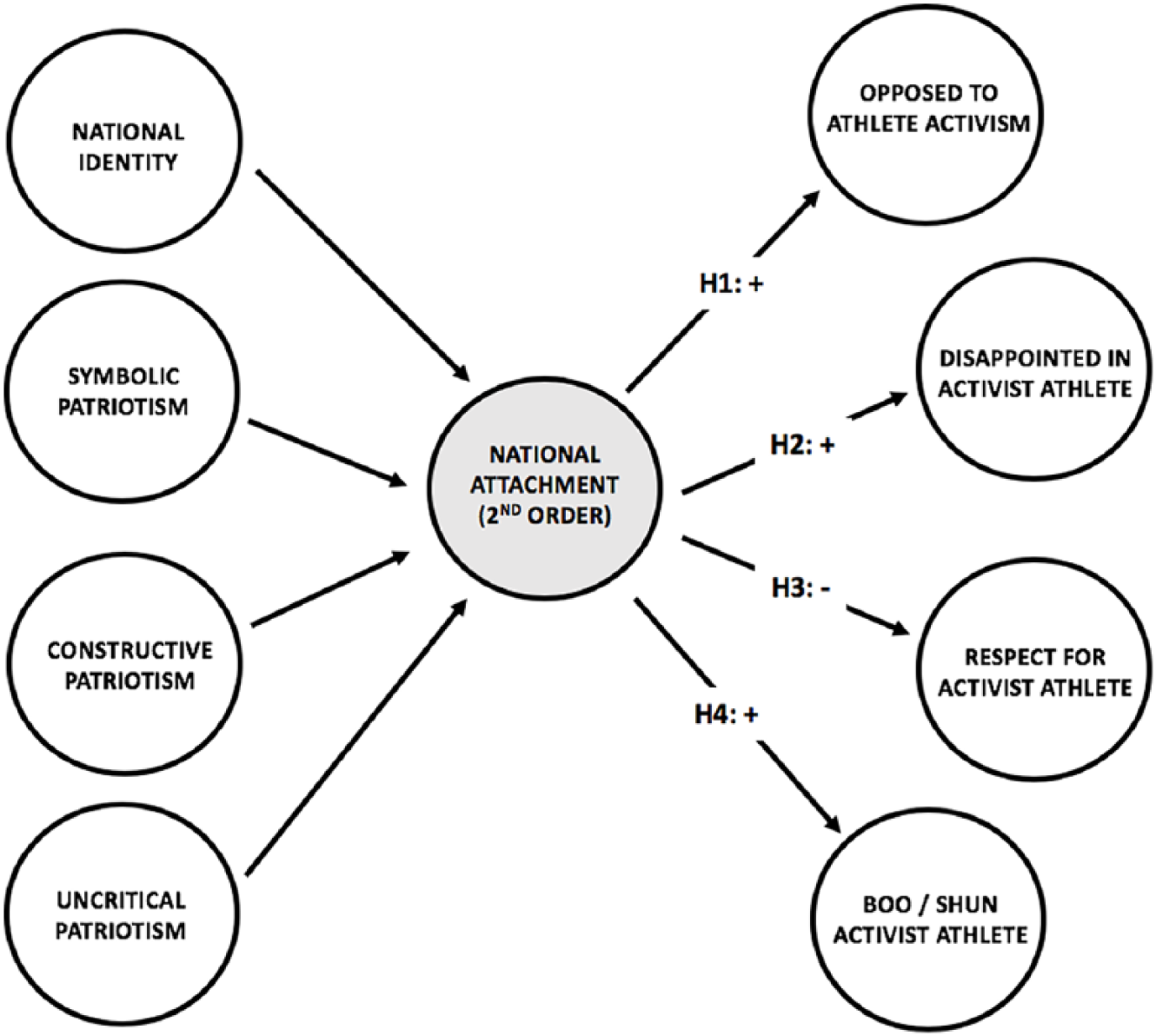
Path model showing constructs and hypothesized relationships.
Method
Sample Selection and Data Collection
A total of 514 respondents from a U.S. survey panel participated in the study. After providing their informed consent, all respondents confirmed that they were fans of at least one sport competed by athletes (e.g., baseball, soccer, American football, tennis). The sample represented 15 states and was comprised of the following demographic profile: age: M = 20, ≤19 = 62.7%, 20-21 = 30.3%, ≥22 = 7.0%; sex: male = 53.1%, female = 46.9%; race = 86.6% White, 5% Black, 4% Hispanic/Latino, 2% Asian, 2% Other.
Measures
Based on the empirical work of Huddy and Khatib (2007), we assessed national attachment as a second-order latent construct comprised of four dimensions, including (a) national identity (NATID), (b) symbolic patriotism (SYMPAT), (c) constructive patriotism (CONPAT), and (d) uncritical patriotism (UNCPAT). We used this composite scale for its solid grounding in social identity theory and its quality of being well-balanced and avoiding deleterious conflations with conservative, liberal, or other political ideologies on national identity or varieties of patriotism (Huddy & Khatib, 2007).
The survey also included four straightforward single-item measures that represent some common reactions directed at athlete activists, including sustained respect (RESPECT), feeling disappointment (DISAPP), booing/shunning (BOOSHUN), and opposing social protest before a game (ANTIPROT). These measures were assessed on 7-point Likert-type scales. Items for all measures are presented in the appendix.
Measurement Procedures and Evaluation of Outer Model
We evaluated our research model and all hypotheses using SmartPLS M3 (Ringle, Wende, & Becker, 2015), an application for conducting partial least squares structural equation modeling (PLS-SEM). PLS-SEM is a component-based technique for prediction and theory building (Chin, Marcolin, & Newsted, 2003; Lohmöller, 1989; Wold, 1982, 1985); it is especially well-suited for models like ours, as it maximizes variance within individual structural relationships (Fornell & Bookstein, 1982). We applied a path-weighting scheme to estimate parameters for the outer and inner models. All latent variables within the measurement model were assessed in reflective mode.
In terms of construct reliability and convergent validity (Tables 2 and 3), all constructs’ exhibited values for composite reliability (ρc) greater than .70 and average variance extracted (AVE) greater than .50, with most above .70 validity (Chin, 1998; Fornell & Larcker, 1981; Hulland, 1999). Composite reliability is less biased than and superior to Cronbach’s α for testing reflective structural equation models (Hair, Sarstedt, Ringle, & Gudergan, 2017; Peterson & Kim, 2013). In terms of discriminant validity, the square root of the AVE for each construct exceeds all bivariate correlations involving that construct (e.g., Chin, 1998).
Latent Constructs’ AVE, CR, and Correlations.
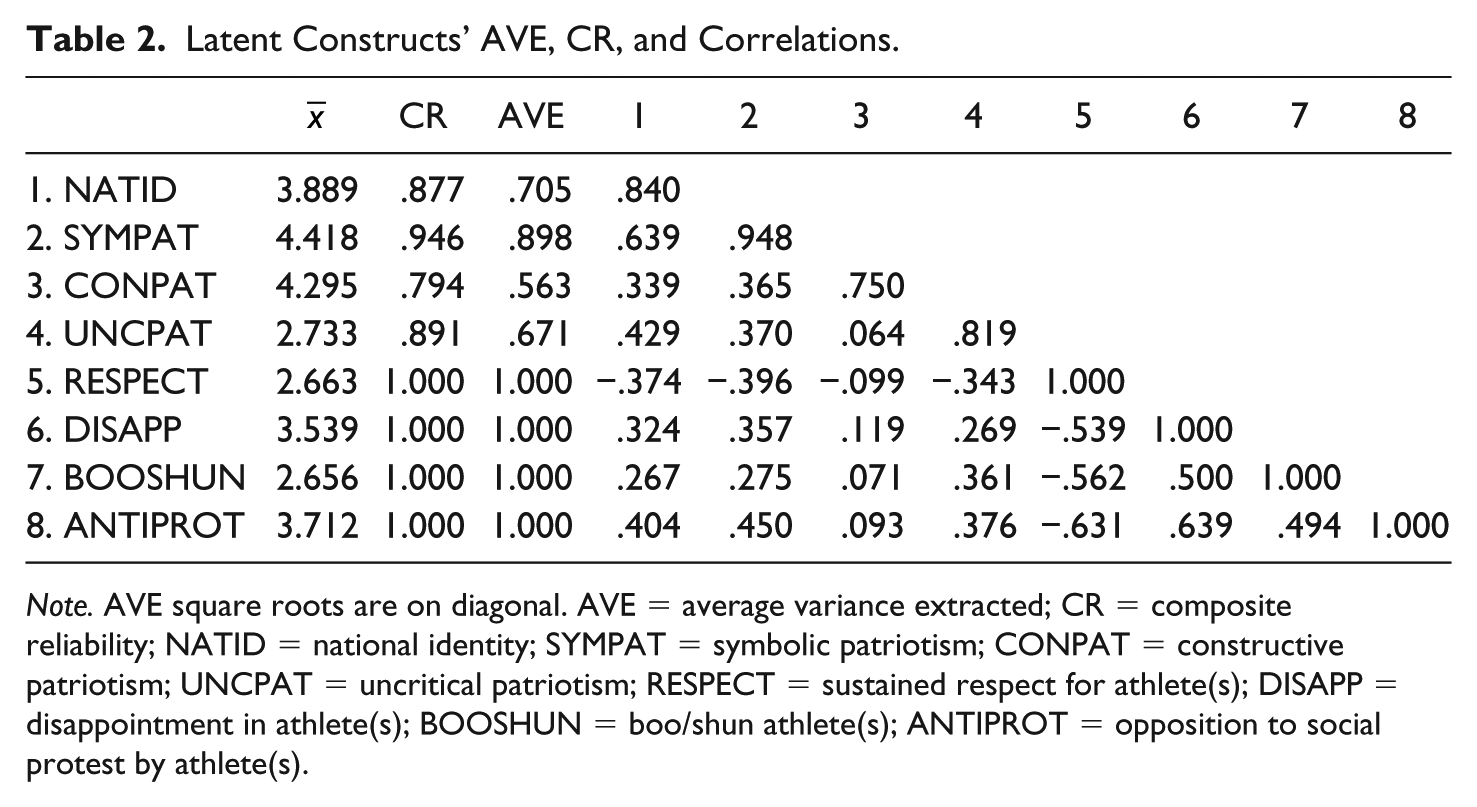
Note. AVE square roots are on diagonal. AVE = average variance extracted; CR = composite reliability; NATID = national identity; SYMPAT = symbolic patriotism; CONPAT = constructive patriotism; UNCPAT = uncritical patriotism; RESPECT = sustained respect for athlete(s); DISAPP = disappointment in athlete(s); BOOSHUN = boo/shun athlete(s); ANTIPROT = opposition to social protest by athlete(s).
Loadings and Cross-Loadings for Items Associated With Latent Constructs.
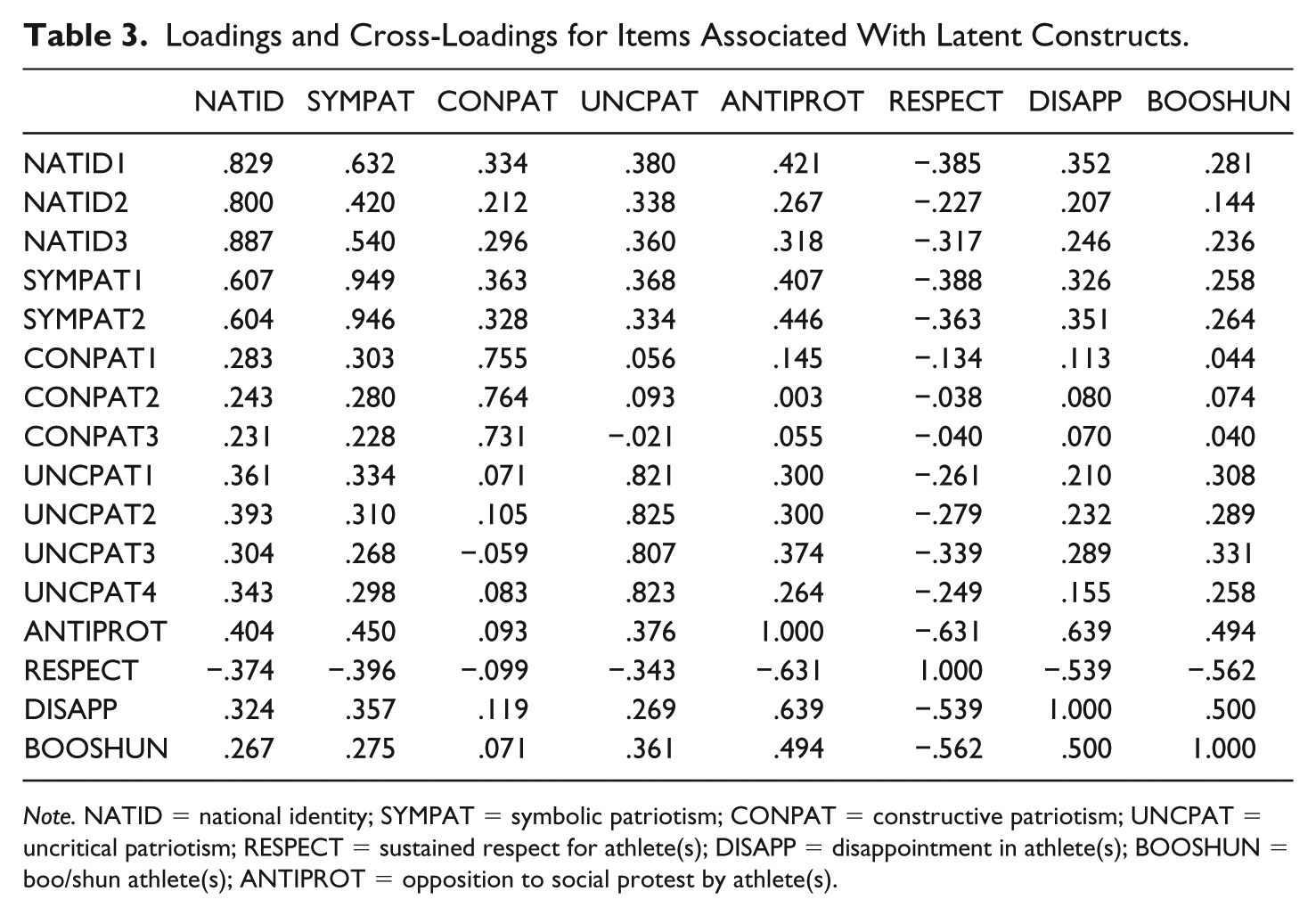
Note. NATID = national identity; SYMPAT = symbolic patriotism; CONPAT = constructive patriotism; UNCPAT = uncritical patriotism; RESPECT = sustained respect for athlete(s); DISAPP = disappointment in athlete(s); BOOSHUN = boo/shun athlete(s); ANTIPROT = opposition to social protest by athlete(s).
Evaluation of Inner Model and Research Hypotheses
Following evaluation of the outer model, we proceed to evaluate the research hypotheses within the inner model. As PLS-SEM aims to maximize explained variance, R2, the coefficient of determination, is its main criterion for evaluating a given structural model. Our structural model relationships exhibited satisfactory R2 values of .205 (RESPECT), .151 (DISAPP), .140 (BOOSHUN), and .248 (ANTIPROT; see Table 4).
Summary of Explained Variance (R2) and Predictive Relevance (Q2).

Path coefficients indicate the relative impact of each latent exogenous construct on a specific latent endogenous construct. Following Chin (1998), we conducted nonparametric bootstrapping using 5,000 samples (Hair, Ringle, & Sarstedt, 2011) to determine the statistical significance (t value) for each path coefficient (β). Furthermore, we tested the model’s predictive validity using the Stone-Geisser Q2 cross-validation redundancy measure (Geisser, 1974; M. Stone, 1974), ensuring sound PLS-SEM assessment of an inner model (Chin, 1998; Henseler, Ringle, & Sinkovics, 2009). Calculated Q2 values, per blindfolding procedures (Tenenhaus, Vinzi, Chatelin, & Lauro, 2005), exceeded zero (RESPECT = .199, DISAPP = .145, BOOSHUN = .136, and ANTIPROT = .240), indicating satisfactory levels of relative impact on predictive relevance (Chin, 1998; Henseler et al., 2009). Per Hair et al. (2017) and Kock (2015), inner variance inflation factors for the study constructs were below the threshold value of 3.3, thus indicating no harmful evidence of common method bias within the PLS-SEM model.
We found solid support for all of our hypotheses (see Table 5), as evidenced by path coefficients (β), t values, and effect sizes (f2) for each relationship between national attachment and the four outcome variables. Regarding the overall influence of national attachment, NATATT exhibited the following relationships with those variables:
Negative relationship with RESPECT (H1: β = –.453, t = 11.371, f2 = .258),
Positive relationship with DISAPP (H2: β = .388, t = 9.011, f2 = .177),
Positive relationship with BOOSHUN (H3: β = .375, t = 9.393, f2 = .163)
Positive relationship with ANTIPROT (H4: β = .498, t = 12.582, f2 = .330)
Summary of Hypothesis Test Results.
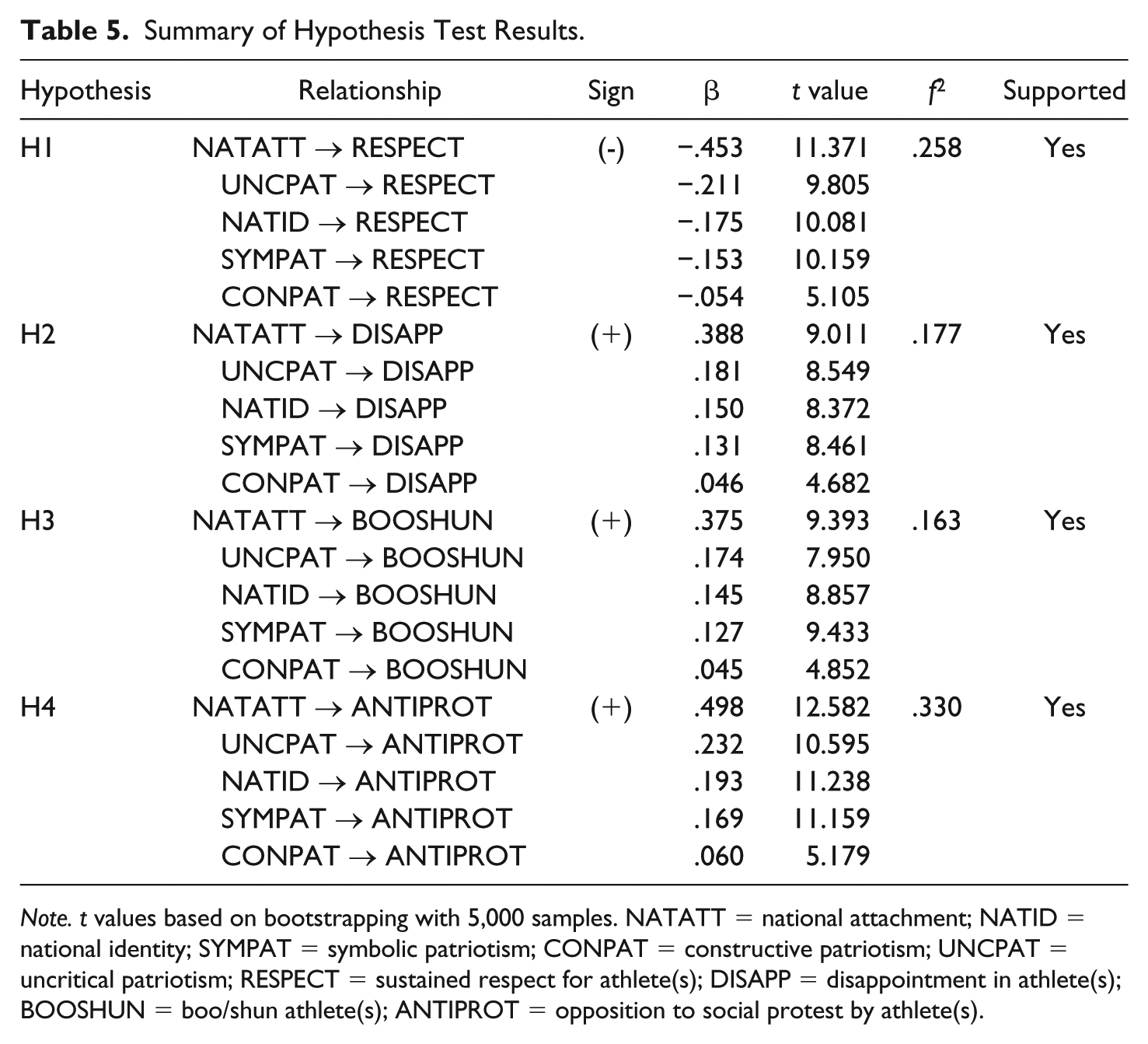
Note. t values based on bootstrapping with 5,000 samples. NATATT = national attachment; NATID = national identity; SYMPAT = symbolic patriotism; CONPAT = constructive patriotism; UNCPAT = uncritical patriotism; RESPECT = sustained respect for athlete(s); DISAPP = disappointment in athlete(s); BOOSHUN = boo/shun athlete(s); ANTIPROT = opposition to social protest by athlete(s).
According to Cohen (1988), f2 values of .02, .15, and .35, respectively, indicative small, moderate, and large effect sizes. Thus, our results showed that overall national attachment’s effect sizes range from moderate (i.e., BOOSHUN, DISAPP) to large (i.e., RESPECT, ANTIPROT).
Regarding the decomposition of national attachment into its four varieties, we also found support for our postulations of an ordered hierarchy of their relationships with the outcome variables. As specified in our four main hypotheses, results confirmed the following pattern of strongest to weakest relationships: uncritical patriotism (UNCPAT), national identity (NATID), symbolic patriotism (SYMPAT), and constructive patriotism (CONPAT). In sum, these results provide support for H1, H2, H3, and H4. In the next section, we present importance-performance analyses of national attachments to illuminate more granular aspects of their relationships with the outcome variables.
Importance-Performance Map Analyses (IPMAs)
As our standard PLS-SEM results confirmed significant effects from each predecessor variable (e.g., NATID, SYMPAT), we conducted IPMAs to produce even greater insights (Ringle & Sarstedt, 2016). For these procedures, total effects (e.g., path coefficients, outer weights) represented the importance dimension, while average rescaled latent variable scores represented the performance dimension. Thus, the PLS-SEM approach to IPMA allowed us to ascertain how different national attachments and their respective measurement indicators drive emerging adults’ reactions to activist athletes’ social protests. Retaining RESPECT, DISAPP, BOOSHUN, and ANTIPROT as the targeted outcomes, we ran the first of two IPMAs to explore their predecessors NATID, SYMPAT, CONPAT, and UNCPAT (Figure 2). For the second IPMA, we went a step further and explored all indicators for the aforementioned constructs (Figure 3).
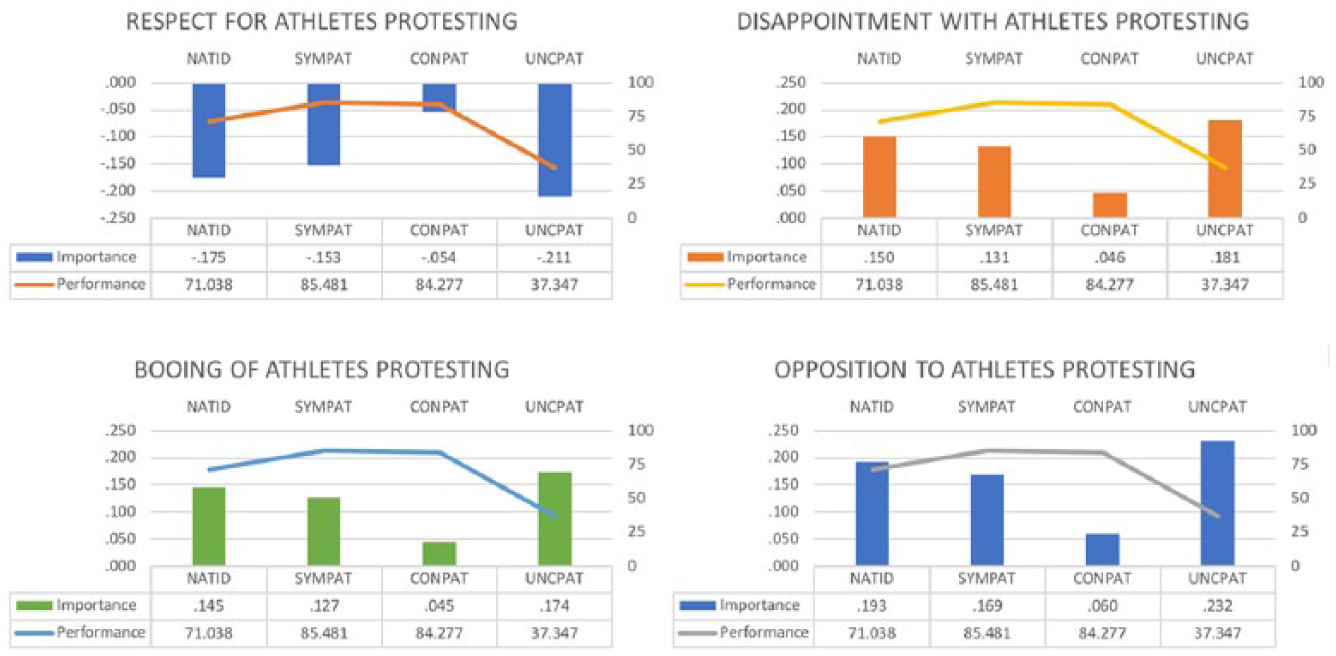
Importance-performance analyses: Varieties of national attachment.
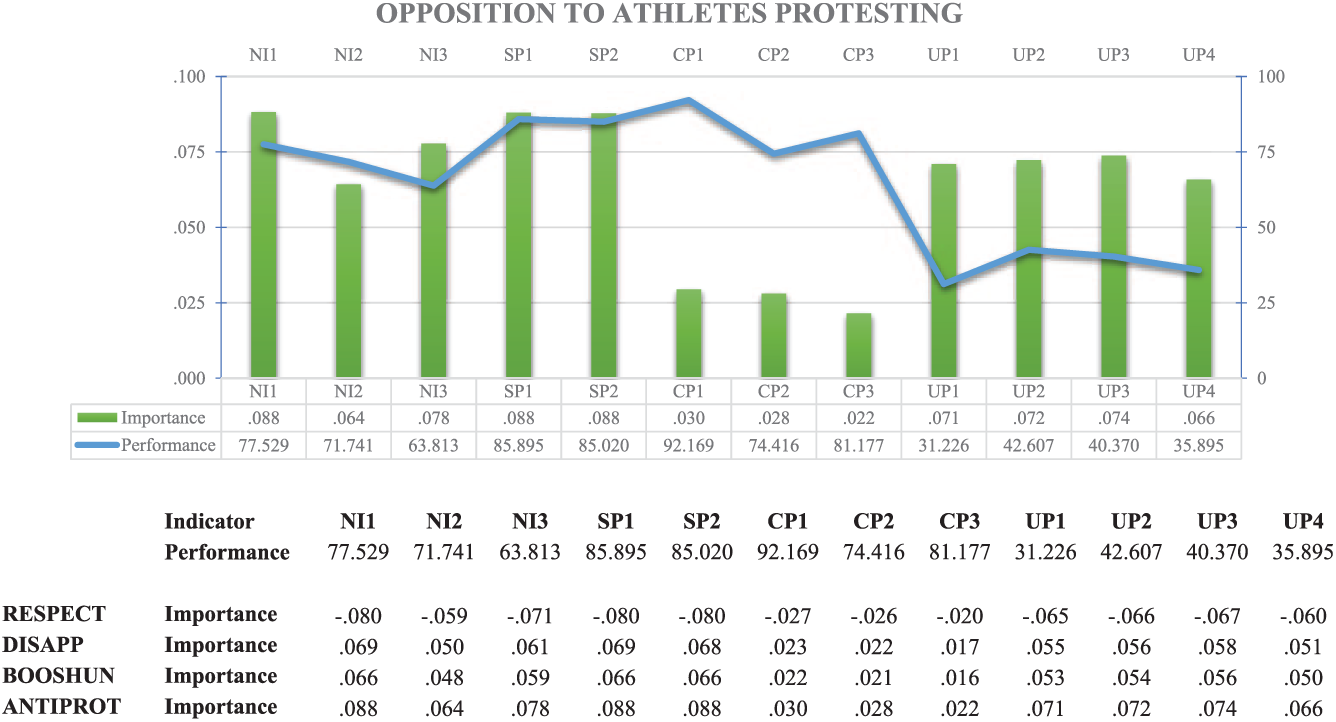
Importance-performance analyses (indicator-level): National attachment.
At the construct level, UNCPAT exhibits the greatest importance but substantively lower than average performance for all outcomes. Although standard results showed that UNCPAT and NATID were most strongly related to all outcomes, the indicator-level IPMA showed a different pattern, where the five most important indicators in order were NATID1, SYMPAT1, SYMPAT2, NATID3, and UNCPAT. In terms of performance, the same indicators in order were SYMPAT1 (85.895), SYMPAT2 (85.020), NATID1 (77.529), NATID3 (63.813), and UNCPAT3 (40.370). The latter two scores were below the average of 65.155. These analyses suggest, for example, that UNCPAT has significant potential for augmentation (owing to its low performance), which could, in turn, lead to even greater loss of respect for protesting athletes and opposition to athletes’ social protests in general. Of note, CONPAT exhibits only marginal importance despite its strong performances at the construct and indicator levels.
In sum, our construct-level IPMA revealed that emerging adults’ reactions to athletes’ anthem-related social protests are influenced in the same direction but to different degrees by UNCPAT, NATID, SYMPAT, and CONPAT. In addition, our indicator-level IPMA illuminates a point that influences from national attachments are spread mainly across NATID and SYMPAT. These results provide previously unavailable insights that can advance general discourse of national attachment as well as its contextual application in sport sociology research. Per the ongoing debates and recent Quinnipiac polls on the subject of athletes’ social protests (Quinnipiac, 2018; Schwartz, 2016), our IPMAs imply that scholars (and others) trying to address people’s support or opposition should focus on emphasizing uncritical patriotism, national identity, and symbolic patriotism over constructive patriotism.
Discussion
In this study, we provided an inaugural investigation into emerging adults’ national attachments and reactions to athletes expressing social protest during the national anthem. Regarding athletes social protests during the pregame national anthem, we found, as posited, that greater overall national attachment was associated with lesser respect for activist athletes (RESPECT), greater disappointment with activist athletes (DISAPP), and greater opposition to social protest (BOOSHUN and ANTIPROT). Evaluating national attachment as a second-order construct comprised of four distinct but related constructs—national identity (NATID), symbolic patriotism (SYMPAT), constructive patriotism (CONPAT), and uncritical patriotism (UNCPAT)—our PLS-SEM analysis provided solid support for all four of the hypotheses. Moreover, our results also showed that all first-order constructs exhibited significant relationships with the target variables RESPECT, DISAPP, BOOSHUN, and ANTIPROT. Key values for variance explained (R2), relationship strength and direction (β), effect size (f2), and predictive relevance (Q2) as well as our novel IPMAs reinforce the quality of our research model.
Our data make clear that many emerging adults have a strong sense of national attachment per national identity and three varieties of patriotism (i.e., symbolic, constructive, and uncritical). Our findings provide evidence that their overall national attachment plays an active role in influencing their general opposition to athlete activism expressed on the playing field, particularly during the national anthem. Although that may seem intuitive, our decomposition analyses and importance-performance analyses provide new insights into how specific varieties of national attachment actually explain opposition to activist athletes and social protest prior to a game.
This period leading into adulthood is a time when national identity develops significantly, along with psychological, physical, and social development (Spencer, 2011). As stated earlier, national identity is not developed solely from exposure to democratic ideals but is shaped within the contexts of family, peer groups, school, and community (Jahromi, 2011).
According to the Brookings Institution, today’s emerging adults are the most diverse group in the United States, representing 27% of the total minority population, 38% of voting age minorities, and 43% of primary working age minorities (Frey, 2016). Cultural, racial, ethnic, and other diversities certainly have an impact on American identity formation and national attachment. The athlete activism observed today may be an expression of the chasm between aspirational American democratic ideals and the lived experiences of these athlete activists.
Implications
There are many implications, both discrete and entwined, which arise from athlete activism during the national anthem (Sorek & White, 2016). Activism in which the athlete decides to kneel or sit during the national anthem have prompted scholars, social critics, and fans alike to scrutinize sport leagues’ rules and policies on the subject. The National Hockey League (NHL) has no rule mandating that the players must stand for the national anthem, only that the anthem must be played before the game. Major League Baseball has no documented rule requiring players to stand during the playing of the national anthem. The National Basketball Association (NBA) and Women’s National Basketball Association (WNBA) have rules requiring that “[p]layers coaches and trainers are to stand and line up in a dignified posture along the sidelines or on the foul line during the playing of the national anthem” (Seifert, 2018).
The NFL’s rules only require players to be on the field during the playing of the anthem; however, they stop short of mandating players to stand. The salient language of the NFL rule states, “. . . players on the field and bench area should [emphasis added] stand at attention . . . [f]ailure to be on the field by the start of the national anthem may [emphasis added] result in discipline . . .” (Seifert, 2017). The conditional nature of the NFL rules makes the NFL a fitting venue for understanding several implications of athletes’ social protests, given recent and continued attention focused on the national anthem protests since the 2016 preseason. Fans, players, owners, and the league have been vocal about their positions. Fans have been split in their views on the actual issues (e.g., social injustice, respect for military veterans, and the flag) and so to have the reactions from politicians (e.g., President Donald J. Trump’s vs. Senator John McCain contrasting views on athletes’ right to peaceful protest). Many on both sides of the controversy have advocated boycotts of league games and/or team merchandise (Novy-Williams, 2017). The NFL’s leadership and ownership found themselves reacting clumsily in attempting to “manage” key stakeholder relationships during waves of shifting opinion polls on athlete activism (Johnson, 2017). Fans and a curious general public would see NFL owners unclear about their position on the matter. They showed fragmented alliances over setting a rule versus policy for standing. They locked arms in solidarity with players against the President’s call to fire any athlete who would not stand for the national anthem (Payne, 2017). And one, Houston Texans’ owner Robert McNair, even urged, “[w]e can’t have the inmates running the prison,” words for which he would twice apologize (Bonesteel, 2017).
In addition to fan “protests,” the league must consider already existing declines in televisions ratings which could (further) impact its brand, corporate sponsorship, advertising rates, and value of broadcast rights in the current sociopolitical context of harsh divisiveness, particularly along entrenched racial lines (Baker, 2017; Berr, 2017; Lynch, 2017). In response to these concerns, on May 23, 2018, the NFL unilaterally implemented a new policy which requires any players on the field during the playing of the national anthem to “stand and show respect” for the flag or face team fines. Any players choosing not to stand for the anthem would be free to remain in the team locker room while the anthem is performed. Under the new policy, individual teams may impose their own policies regarding athlete protests during the national anthem (Beaton, 2018). In response, the National Football League Players Association (NFLPA) filed a grievance; however, the two sides entered into an agreement halting both the implementation of the new NFL policy and the NFLPA’s grievance, as they negotiate a solution (Maske, 2018). It is interesting to note that 5 days before the NFL’s new anthem policy was enacted, the WNBA announced its Take A Seat, Take A Stand empowerment program where a portion of the ticket price will be donated to organizations who are making a “change in the current woman’s movement” (WNBA, 2018).
At this time, the NFL and its 32 teams face a unique two-pronged challenge: (a) trying to appeal to the fans who shun athlete protests and (b) being sensitive to the perception of racial injustice as experienced by communities of color, if not the players themselves, the majority of whom are African American. With 68% of NFL players being African American, 83% of the NFL fan base being White, and 64% male (Benson, 2017), the NFL cannot afford to alienate either its athletes or its audience. Emerging adults are critical to growing the NFL’s fan base; therefore, the NFL must maintain good relationships with this demographic segment. Our IPMAs provide new insights for understanding how national attachments influence emerging adults’ reactions to athlete protests. These insights can help sport leagues and their team franchises develop proactive, positive brand management and reputation management strategies aligned with values of the young adult demographic during sociopolitical controversies. In addition, sports leagues and teams should pay attention to the impact of social media on Millennials and Gen Z as it relates to political socialization. It is unclear whether an increase in use of social media would have a positive or negative effect on emerging adults’ social identity. It is possible that increased use of social media could provide greater exposure to diversity or, instead, users could segregate themselves online in ways that mirror offline segregation (Maxwell & Schulte, 2018).
Now more than ever, sport leagues and franchises are expected to engage positively with their surrounding communities beyond the confines of the game, showing care for and cognizance of their myriad relationships with fan bases. The traditional focus of corporate social responsibility (CSR) activities involves educational initiatives for youth, community outreach, and health-related issues. Today, there is a push to include social justice issues into the realm of CSR activities. Before crafting CSR activities, however, NFL sport managers must understand the optics of their league within the current sociopolitical climate “as a kind of modern-day plantation system” (Benson, 2017, p. 320) where mostly Black players serve for the entertainment and profit of largely White, male audiences and owners (Benson, 2017). Or, perhaps NFL owner McNair’s comment demonstrates Nobel prize–awarded economist Milton Friedman’s position that social responsibility is “fundamentally subversive” asserting that “[f]ew trends could so thoroughly undermine the very foundations of our free society as the acceptance by corporate officials of a social responsibility other than to make as much money for their stockholders as possible” (Carroll, 1979; 133).
Conclusions, Limitations, and Future Research
To conclude, this study leverages existing literature regarding social identity to ascertain whether national attachment influences emerging adults’ reactions to athlete activism. We treat national attachment as a second-order construct comprised of national identity, symbolic patriotism, constructive patriotism, and uncritical patriotism. We learn that strong national attachment will cause emerging adults to oppose athlete activism during the national anthem, as it is perceived as threat to their national identity and collective self-esteem. National attachment will also engender the act of booing/shunning activist athletes. Perhaps, more importantly, it seems clear that fans’ reactions per national attachment are channeled most strongly via uncritical patriotism, national identity, and symbolic patriotism. Findings show a particularly strong impact made by uncritical patriotism and broad spread impact across manifestations of national identity and symbolic patriotism.
National attachment is hardly the sole determinant of how emerging adult fans will respond to athlete activists. For example, this study found a negative correlation in the four constructs that comprise national attachment. This study does not explain the disparate reactions of individuals with strong national attachments who “stand with” activist athletes (e.g., Megan Rapinoe, Chris Long). This result suggests that other relational factors, such as empathy, could be at play. Still, our findings provide clear evidence that many emerging adults’ fan-related behaviors are affected by significant national attachments vis-à-vis their sense of national identity and patriotism. The findings of this study provide clear evidence that the national attachment of emerging adult fans plays a vital role in affecting their general rejection of and disappointment with the activist athlete.
How might this change with the shifting demographics in the United States? As the country becomes more diverse, it stands to reason that so will the ideals of what it means to be American. The aftermath of the “Unite the Right” Rally turned deadly domestic terrorist attack in Charlottesville, Virginia, sparked more athlete activism (Brewer, 2017). There is no indication that this trend will diminish in the near future. White NFL athletes Justin Britt of the Seattle Seahawks and Derek Carr of the Oakland Raiders have joined Chris Long in standing for the national anthem, while also showing visible signs of solidarity with players who choose not to stand in protest (Boren, 2017; L. Stone, 2017). In somewhat surprising news, Frank Serpico, the former New York City Police Department (NYPD) officer who fought police corruption, memorialized in the 1973 film “Serpico,” has come out in support of Kaepernick’s cause. The 81-year-old joined a group of 75 police officers, all wearing T-shirts which read, #imwithkap, stating, “[Kaepernick’s] trying to hold up this government . . . to our Founding Fathers” (Bonestell, 2017). Further evidence of the continued growth of athlete activism came with Dr. Harry Edwards’s announcement of the building of an institute dedicated to the modern athlete activist (Rahim, 2017). Dr. Edwards is the scholar-activist credited with establishing the field of the “sociology of sport.”
Our study has limitations. First, the data are cross-sectional and involve self-reported measures. In addition, our sample is predominantly White in a proportion that somewhat resembles the NFL’s fan demographics (Benson, 2017), but we concede questions of race are nonetheless intriguing and might temper the generalizability of majority-segment findings to minority-segment fans. The manner in which race influences national attachment is not explored in this study. There are studies that demonstrate that Whites convey a stronger national attachment than non-Whites (Kunovich, 2009). Although there is a need for more studies of U.S. sport fans (as compared with fans elsewhere; Sorek & White, 2016), our current study may be limited per its exclusive focus on emerging adults in the United States. Still, we encourage future research that gives more attention to this demographic, delving more deeply into national attachments as they relate to sport fans across race, ethnicity, and gender—factors which might serve as categorical moderating variables. There are many opportunities for future research related to a fan’s national attachment and their perceptions of athlete activism. Although this study surveyed emerging U.S. adults regarding their perceptions of activism exhibited during the national anthem, it could be duplicated globally; such efforts could focus on athletes exhibiting a social protest before, during, or after a game. Naturally, the moments of protests might vary from our study, as some countries prohibit or outlaw any form of protest during their national anthem. An example could involve fans’ perceptions of a soccer team leaving the pitch in response to racist attacks on players. Of further global interest is the impact of alter-globalization on sports. Alterglobalization is “the large spectrum of global social movements that support new forms of globalization and that urge the values of democracy, justice, environmental protection, and human rights be put ahead of purely economic concerns” (Harvey, Horne, & Safai, 2009). The Sport for Development and Peace (SDP) initiatives and the United Nations Sustainable Development Goals (SDG) are examples of alter-globalization in sports (p. 383).
Analyzing fans’ perceptions of athlete activism as motivated by a range of topics (e.g., subject, event, issue) may be fruitful in building upon our research. Studies might deal with internal sport league issues like equal pay and prize money for female athletes, or external societal issues like improving gender and racial justice. Reflecting on the fan creation of #BoycottRams in response to the five NFL Rams players entering the field of play with the “Hands Up, Don’t Shoot” stance, it would be of value to sports sponsors to understand fans’ perception of sport teams and leagues that support athlete activism. This research could be expanded to examine perceptions of athlete activism held by teammates, coaches, athletic administration, front offices, sponsors, and media. Conversely, research could consider fans’ perceptions of punishments applied in response to athlete activism by sport governing bodies at the amateur or professional level. Such perceptions could be compared by race and gender of fan and athlete. Finally, given brand loyalty implications, understanding fans’ perception of brand activism (e.g., by Nike, Under Armor, sport leagues) with respect to social issues is essential for guiding brand management strategies.
Footnotes
Appendix
Scale Items.
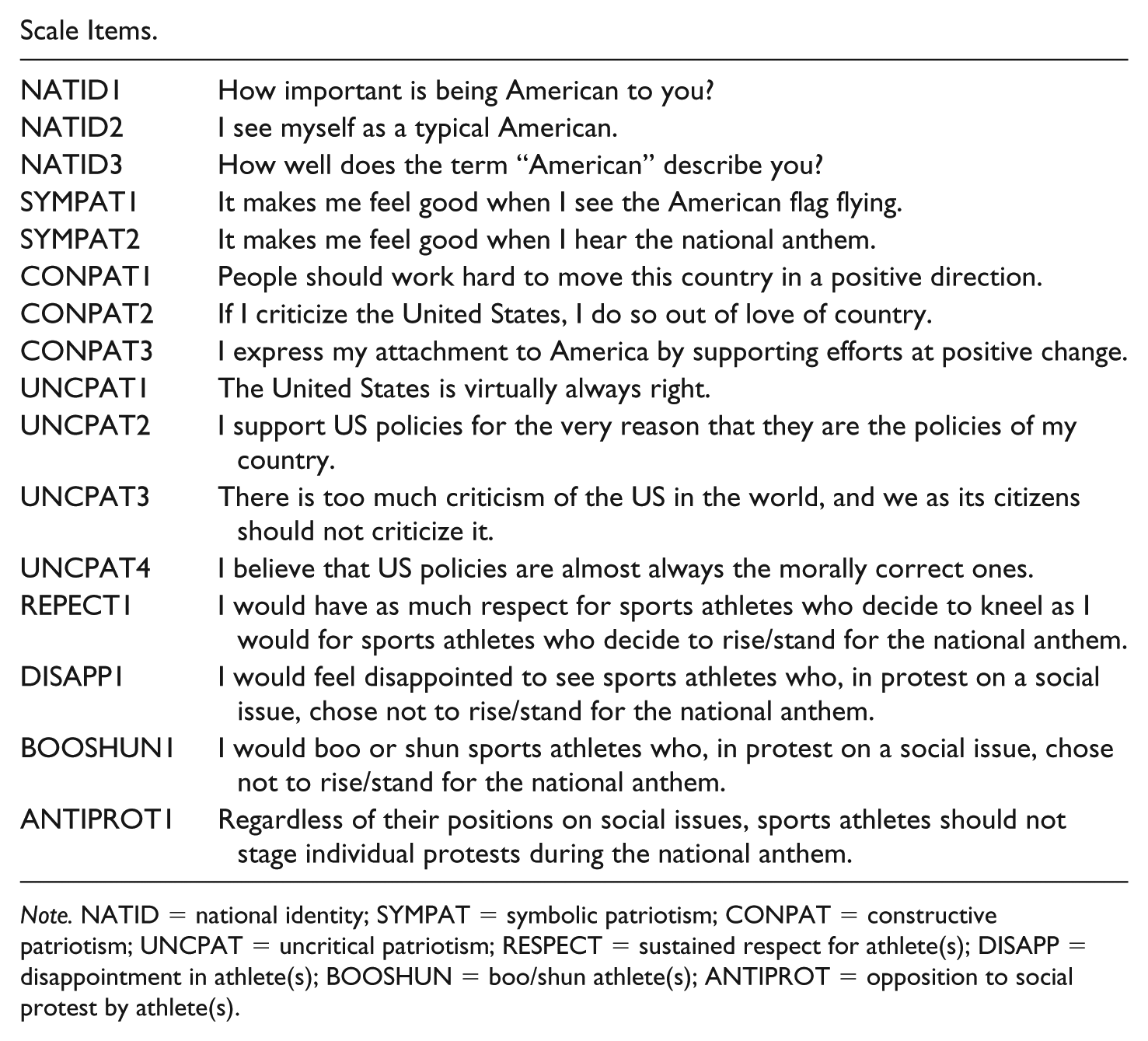
| NATID1 | How important is being American to you? |
| NATID2 | I see myself as a typical American. |
| NATID3 | How well does the term “American” describe you? |
| SYMPAT1 | It makes me feel good when I see the American flag flying. |
| SYMPAT2 | It makes me feel good when I hear the national anthem. |
| CONPAT1 | People should work hard to move this country in a positive direction. |
| CONPAT2 | If I criticize the United States, I do so out of love of country. |
| CONPAT3 | I express my attachment to America by supporting efforts at positive change. |
| UNCPAT1 | The United States is virtually always right. |
| UNCPAT2 | I support US policies for the very reason that they are the policies of my country. |
| UNCPAT3 | There is too much criticism of the US in the world, and we as its citizens should not criticize it. |
| UNCPAT4 | I believe that US policies are almost always the morally correct ones. |
| REPECT1 | I would have as much respect for sports athletes who decide to kneel as I would for sports athletes who decide to rise/stand for the national anthem. |
| DISAPP1 | I would feel disappointed to see sports athletes who, in protest on a social issue, chose not to rise/stand for the national anthem. |
| BOOSHUN1 | I would boo or shun sports athletes who, in protest on a social issue, chose not to rise/stand for the national anthem. |
| ANTIPROT1 | Regardless of their positions on social issues, sports athletes should not stage individual protests during the national anthem. |
Note. NATID = national identity; SYMPAT = symbolic patriotism; CONPAT = constructive patriotism; UNCPAT = uncritical patriotism; RESPECT = sustained respect for athlete(s); DISAPP = disappointment in athlete(s); BOOSHUN = boo/shun athlete(s); ANTIPROT = opposition to social protest by athlete(s).
Declaration of Conflicting Interests
The author(s) declared no potential conflicts of interest with respect to the research, authorship, and/or publication of this article.
Funding
The author(s) received no financial support for the research, authorship, and/or publication of this article.
