



Abstract
Technological innovation and its paradigm, that is, the Fourth Industrial Revolution-4IR, have shown strong impact on income levels of adopters across the globe. To this end, this analysis examines the impact of bank funding and institutional quality on technological advancement. This study adds additional variables such as high-technology exports and foreign direct investment (FDI) as control variable. Our study period spans from 2000 to 2018 on an annual frequency for E7 economies (Brazil, Indonesia, Mexico, India, Turkey, Russia, and China). This study leverages on cross-sectional ARDL, Augmented Mean Group (AMG), and Common Correlated Effects Mean Group Estimates (CCEMG) estimation techniques to examine long-run relationship between the outlined variables. Empirical findings show that institution quality, bank finance, income, high-technology exports, and foreign direct investments exert a positive effect on advancements in technology. Furthermore, the interaction between bank finance and institution quality on technological advancement is also positive and statistically significant. Based on the findings, it is concluded that large-scale funding is crucial for businesses to leverage revolutionary technology. Likewise, access to large capital sources if made easier encourages technology affordance as well as innovation and operational excellence. Thus, economies with established legal and financial systems stand to offer businesses such security, which encourages business innovation. Consequently, E7 economies ought to improve their financial and legal systems to boost financial security, creativity, and competitiveness of businesses.
Keywords
Introduction
The role of technical systems to facilitate efficiency and productivity of productive resource as well as revenue growth has largely been bolstered by the emergence of the industry 4.0 revolution. This situation is similar to the phenomenal transformations introduced by the robotics paradigm and the digital revolution that have fundamentally altered diverse sectors of many economies, including the financial sectors, manufacturing, and the general service industries (Su et al., 2020, Wang et al., 2020). According to expert assessment of these paradigms, the implementation of these emerging technological paradigms has tripled the world’s wealth (Wang et al., 2020). The Fourth Industrial Revolution like other technological advancements has introduced substantial disruptions and economic consequences extending into financial systems. By far, it introduces significant reduction in enforcement and implementation of policy and streamlines resource allocation and use, which has impacted the quality and efficiency of institutions such as banks (Schwab, 2017). These developments have made the issue of continuous technological progress a subject of great interest to all classes of researchers and practitioners. For instance, to economist, it is due to its economic development consequences and its potential to raise standards of human development.
While to the environmental economists, it is their ability to drive the allocation and efficient use of resources like energy to facilitate efficient production and sustainable environments (Anwar et al., 2021). In essence, technological advancements are crucial to development due to the ability to facilitate adjustments to resource use and allocation and drive the green development and sufficient energy conservation to achieve utilization and output efficiency (Miao et al., 2017; Sinha et al., 2022). This will achieve a leapfrog development toward the global objectives of clean energy economic growth. Adequate finances are important basis for the development of technologically inclined economies (Kirikkaleli & Adebayo, 2021). With the rapid rate of development and pressure to expand economically, the huge demand for energy and resources highlight the need for more efficiency and clean production mechanisms. However, not many economies, emerging economies in particular, have successfully innovated with technology nor achieved many of these developments with technology. Chen et al. (2021) argue that an inadequacy of funds presents a strong challenge that impacts the utilization of technologies and economic development. Further, beyond the challenge of funding for technological innovation, a strand of scholars further highlights circumstances, such as limited human resources and limited direct investment into research and development (Kochanova et al., 2016). While others also believe a solid institutional structure is a prerequisite for achieving the full benefits of technological innovations (Su, Cai et al., 2021), in essence, established and quality institutions possess the drive to incentivize investments in technology that can ultimately facilitate valuable benefits through innovation (Su et al., 2020). Some studies have explored the connection between quality of institutions and their impact on technological innovation (Bloom et al., 2016; Law et al., 2018), whereas a few others have extended this examination to include the role of financial system as a mechanism for facilitating both institutional quality and innovation and efficiency. Law et al. (2018) argue that a functioning financial structure offers productive units more capacity to expand investments in order to innovate. In our opinion, this link highlights a close link between funding efficiency and technological innovations. Despite this fact, it is still quite obvious that many exist which struggle with innovation. Thus, properly posed, some economies are still less innovative even in the face of the current technological revolution compared to others. It is imperative to understand how economic units can improve their utilization efficiency through reliance on technological innovation for green transformational development. At present, economic development and utilization efficiency of many countries is characterized by low efficiency levels and lower clean technology utilization levels (Chen et al., 2021, Yong et al., 2019). The World Bank report on innovation paradox indicates that adopting better firm managerial and organizational practices are overlooked components critical to innovating in products, processes, and quality upgrades (World Bank Report, 2017). Thus, weak institutional capabilities, weak enabling environments, and limited funding affect developing economies ability to recognize and adopt new technologies. This weakens the consideration for faster economic development using technological innovation (Chen et al., 2021). There is a paucity of understanding of the mechanisms underlying the effectiveness of institutional capabilities and technological innovation for development among specific developing or emerging economies like Brazil, India, and Indonesia, the E7 states (Khan et al., 2020; Owen et al., 2018).
Hence, this study seeks to empirically explore the impact of mechanisms as bank funding and institutional efficiency on technological innovation over the period 2000 to 2018 among the emerging 7 economies. Technological innovations create a competitive climate among economies, which can be further improved by the performance of banks (Adeleye et al., 2020, Morganti et al., 2014, Wang et al., 2020). Hicks (1969) positions that bank finance is essential to influencing technological development, for any forthcoming work in technological creativity nurturing. Hicks (1969), thus, concluded that new capital investment options demanded new technologies for innovation and costly innovation programs. Therefore, intentionality in financing bank operations can play an essential role in influencing technological development and productivity. Thus, it is concluded that the variations in technological innovation between institutions is the result of R&D and capability differences (Lucas & Moll, 2011).
Thus, institutional quality may drive innovation (Acemoglu & Johnson, 2005). It again offers institutions the opportunity to expand innovation. Moreover, institutions with established innovative structure guard their ownership privileges and thus have a healthy system that promotes innovation (Robinson & Acemoglu, 2012). In addition, institutional efficiency also promotes innovation (Moe, 2005). Another important factor differentiating the extent of innovation among countries is the consistency of policies. Contrasted to weak regimes, stable governance promotes the principle of continuity in policymaking and can facilitate innovation. Therefore, for effective innovation, institutional quality is crucial. Thus, the differences in innovation performance between countries exist in their legal system, organizational effectiveness, technology, and rights protection, an indication that economies with strong and consistent policy-making processes are more likely to innovate. Robust institutions empower nations to adopt sustainable institutional protection of property rights, which significantly minimizes imitation expenses. Therefore, good institutional property rights (IPR) security is also an essential factor in the promotion and protection of innovation (Falvey et al., 2006).
These findings, although not exhaustive, suggest quality institutions and bank funding have roles to play in the process of innovation. It is also worth noting that the direct relationship between bank funding and innovation as well as institutional effectiveness has mainly been assessed from an empirical perspective and has also sought the nonlinear effect of institutional effectiveness (Lucas & Moll, 2011). This current analysis however purposes to examine the impact of banking finance and institutional efficiency on technological advances for emerging E7 countries while controlling for other significant factors, such as high technology exports and income. These factors to the best of our review have been nascently explored in the literature. In addition, this analysis extends the literature by employing a new methodological design different from the existing trend of studies that have attempted similar examinations. This study applies second-generation estimations such as cross-sectional ARDL to assess the short-run and long-run relationship and an Augmented Mean Group (AMG) and Common Correlated Effect Mean Group (CCEMG) techniques for robustness checks. The correlation between financial and institutional quality will allow for the quantification of the joint impact of the two independent variables on technological innovation, for example, by how much positive impact of bank funding is exerted on technological innovation as institutional productivity increases. Further, in the face of the influence of the other factors, including export of high-tech technology and foreign direct investment, the current estimation procedure employed will offer a robust estimation of the impacts on technological innovation.
Literature Review
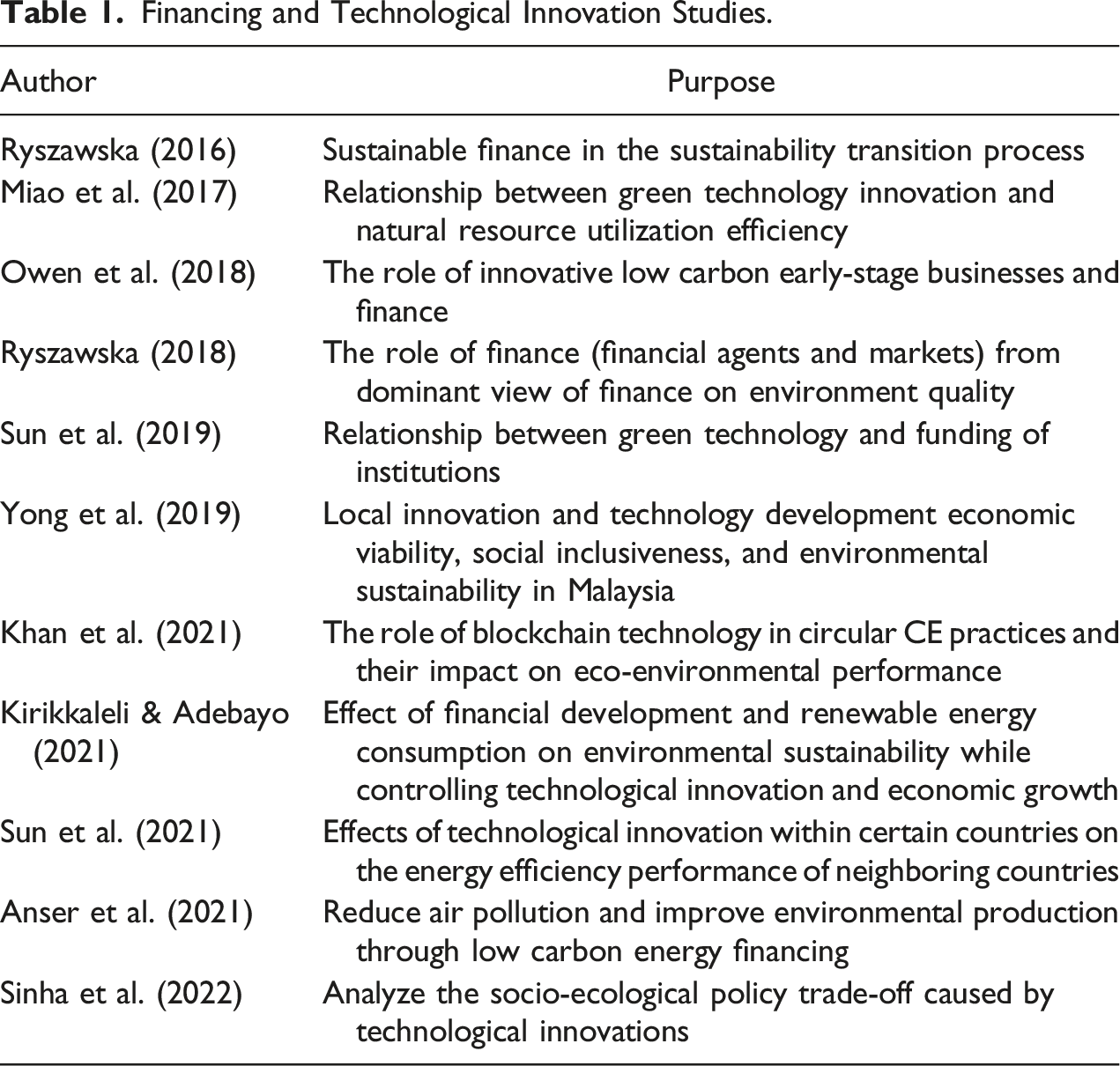
Financing and Technological Innovation Studies.
Proposed Framework and Technique for Analysis
Proposed Framework
Technological advancement relies significantly on social and systemic organization of a country. Rosenburg’s pioneering work laid a strong framework for successful work and effectively promoted technological progress. Rosenberg (1963) proposed that institutional changes will have to go through a development stage in the next few decades, and this stage will depend on a century of knowledge building. Perhaps more specifically, Schumpeter (1911) stressed a role for financial advancement in technical progress. Schumpeter’s hypothesis is founded on the notion that a mature banking sector promotes investment in innovation. Thus, therefore, bank loans further contribute to the development of inventions. Romer (1990) proposed that monopoly benefits interfere with the development of innovation by investigators. The theory suggests that as humanity’s wealth expands, the expense of acquiring fresh concepts continues to decrease. Besides, the analysis extends the theory of technological transformation, integrating the status of bank financing, institutional quality, and foreign direct investment. The modern development hypothesis shows that a professional and well-trained workforce creates resourcefulness (Aghion & Howitt, 2005). These professionals want to exchange ideas and solve problems that lead to the creation of creative proposals (Lucas, 2008). Nevertheless, these current principles of growth stress the participation in stimulating technical advancement of institutional structures. Moreover, by following the recent work of Wang et al. (2020), this study accesses the variables utilized by adding FDI to the model used as

Technique for Analysis
The cross-section ARDL model developed by Pesaran and Shin (1998) was used to examine the impact of independent coefficients on the dependent coefficient. This strategy has been chosen since a smaller sample size is a reasonable option for our research situation. Another advantage is that it may give both long as well as short balance relationship while also rectifying the associated forecast mistakes. It is reasonable to employ this technique for this investigation since the outcomes of this cross-sectional assessment are appropriate for evaluating long-term connections on panels that are complicated in character and contain heterogeneity. Furthermore, when compared to the ARDL method, the CS-ARDL technique includes a systematic type of approximations that allows not only for the recognition of models that have not been established but also for the recognition of faults and components that are sequentially related. Chudik et al. (2016) report that this strategy can be employed effectively in situations once T is not too great. Due to the low T for this investigation, CS-ARDL can be utilized in order to attain the desired results in this case. This approach is most beneficial for cointegration examination when the variables exhibit mixed order of integration features at I(0) or [I(1)]. Projections were established in general form utilizing a variety of methodologies. We utilized Pesaran (2007) as well as IPS (Im et al., 2003) produced CIPS to evaluate a unit root in order to ensure that coefficients hypotheses were not unreliable. Secondly, a likelihood for long run stabilizing relationships was confirmed by Westerlund (2007) cointegration test that included the possibility of cross-dependence. The ARDL (CS-ARDL) technique was used to estimate the long-term relationship among the coefficients because the coefficients were found to be co-incorporated in the analysis. The Augmented Mean Group (AMG) as well as the Common Correlated Effects Mean Group Estimates (CCEMG) recommended by Eberhardt (2012) and Pesaran (2006), respectively, were utilized to appraise the robustness of the long-lasting stability connection. Endogeneity, heterogeneity, cross-sectional dependency, and various measurement periods are some of the issues that the approach has to contend with. It is advantageous to utilize these approaches since their cross-sectional measurements and their stated explanatory variables are enhanced by the use of a less-quadratic methodology for supplementary projects, which is less complex. It exhibits the logarithmically stochastic nature of the model’s characteristics using this way (Pesaran, 2006). The major benefit of this study is that the sample sizes of the dataset are small and complex, yet the dataset as a whole is large and simple.
Empirical Results
Descriptive Statistics
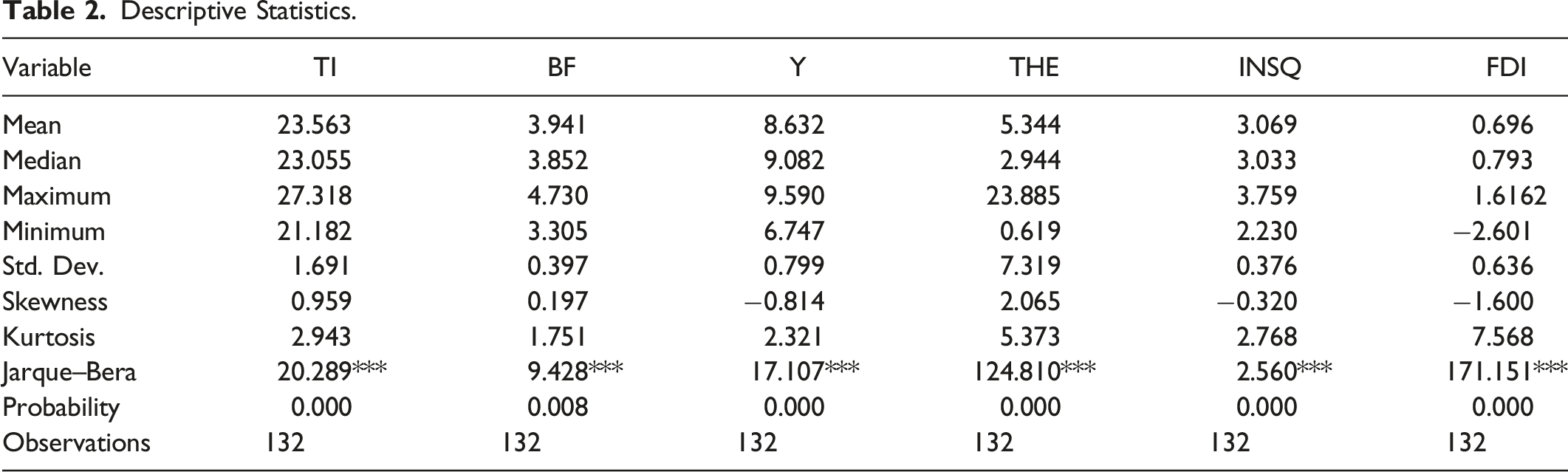
Descriptive Statistics.
Correlation Matrix.
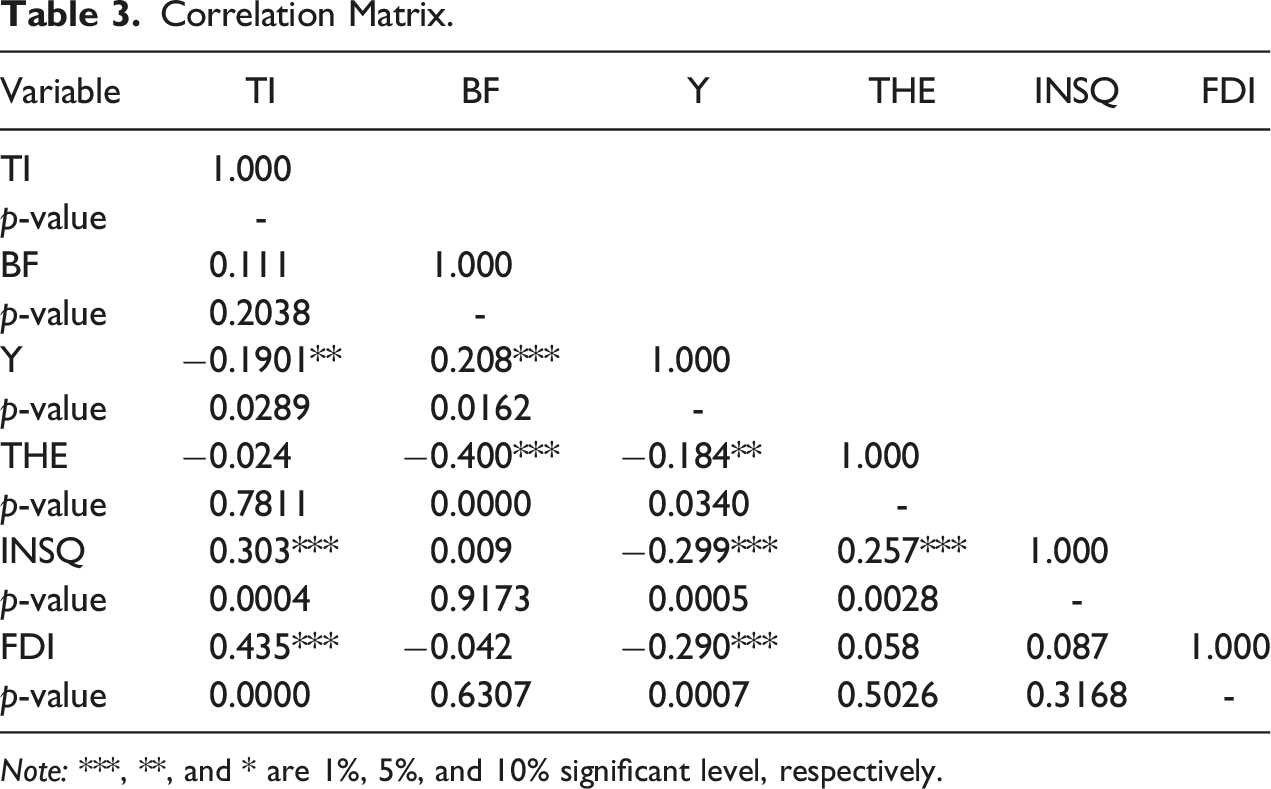
Note: ***, **, and * are 1%, 5%, and 10% significant level, respectively.
Stationary, Cross-Section Dependency (CD), and Slope Homogeneity Tests
When compared to the extensively employed conventional econometric technique, this review is based on analytical study that has been conducted before it. Before doing any unit root tests, cointegration assessments, or long-run prediction, it is vital to take into consideration all of the possible concerns. As a basis, our approach first created a regression equation that verified for homogeneity in cross-sectional results before proceeding. It is possible to obtain incorrect evaluation findings by ignoring the information contained in a long-term dataset (Khan et al., 2020, Su et al., 2020). This is the reason why we examined cross-sectional dependence using the Lagrangian multiplier (LM) assessment suggested by Pesaran (2015), the CD test suggested by Pesaran (2007), the LM techniques suggested by Breusch and Pagan (1980), and the slope homogeneity suggested by Pesaran and Yamagata (2008). Because of the increasing divergence of the global economy, the issues highlighted by cross-sectional reliance are a source of worry. Many countries are becoming lesser autonomous of one another and are becoming more vulnerable to linked shocks as a result (Hao et al., 2021; Su et al., 2020).
Cross-Sectional Dependency and Slope Homogeneity Analysis.
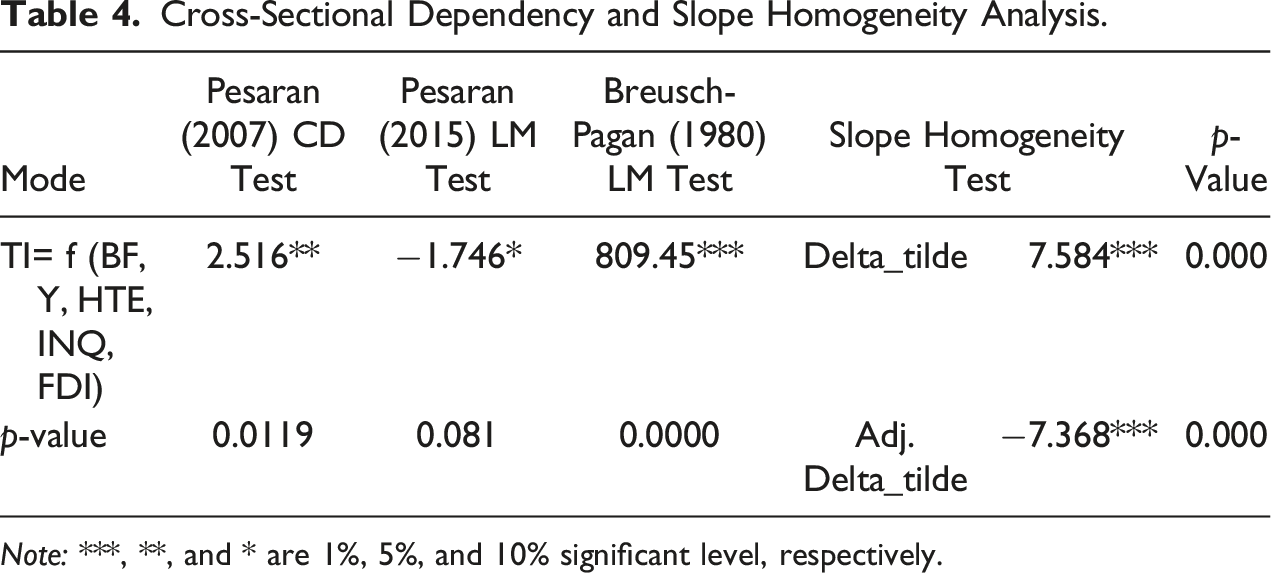
Note: ***, **, and * are 1%, 5%, and 10% significant level, respectively.
Stationarity Test


Unit Root Analysis.

Note: ***, **, and * are 1%, 5%, and 10% significant level, respectively.
Cointegration Analysis
Westerlund Cointegration Analysis.

Note: ***, **, and * are 1%, 5%, and 10% significant level, respectively.
Long-Run and Short-Run Relationship

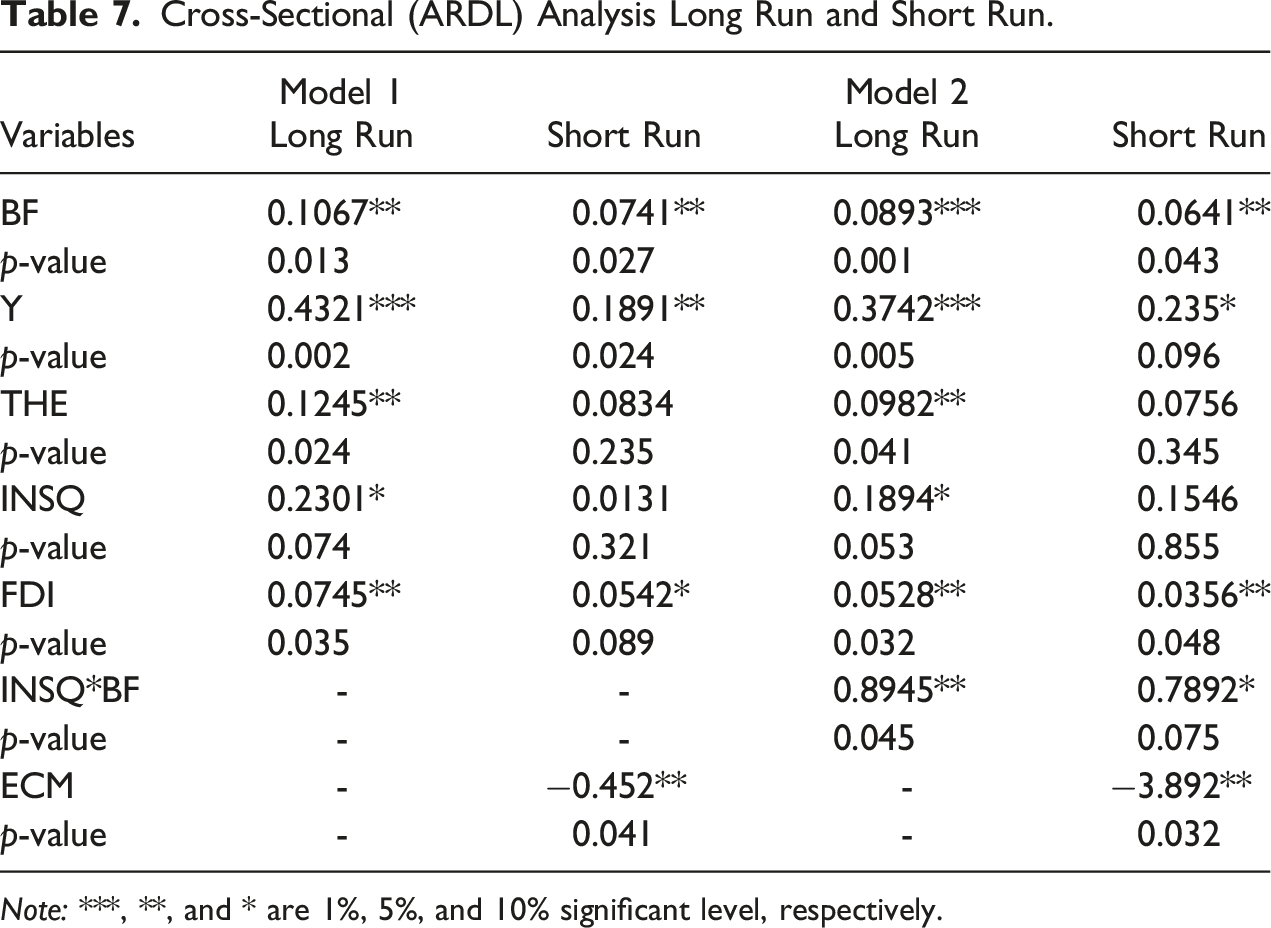
Cross-Sectional (ARDL) Analysis Long Run and Short Run.
Note: ***, **, and * are 1%, 5%, and 10% significant level, respectively.
Discussion of Findings
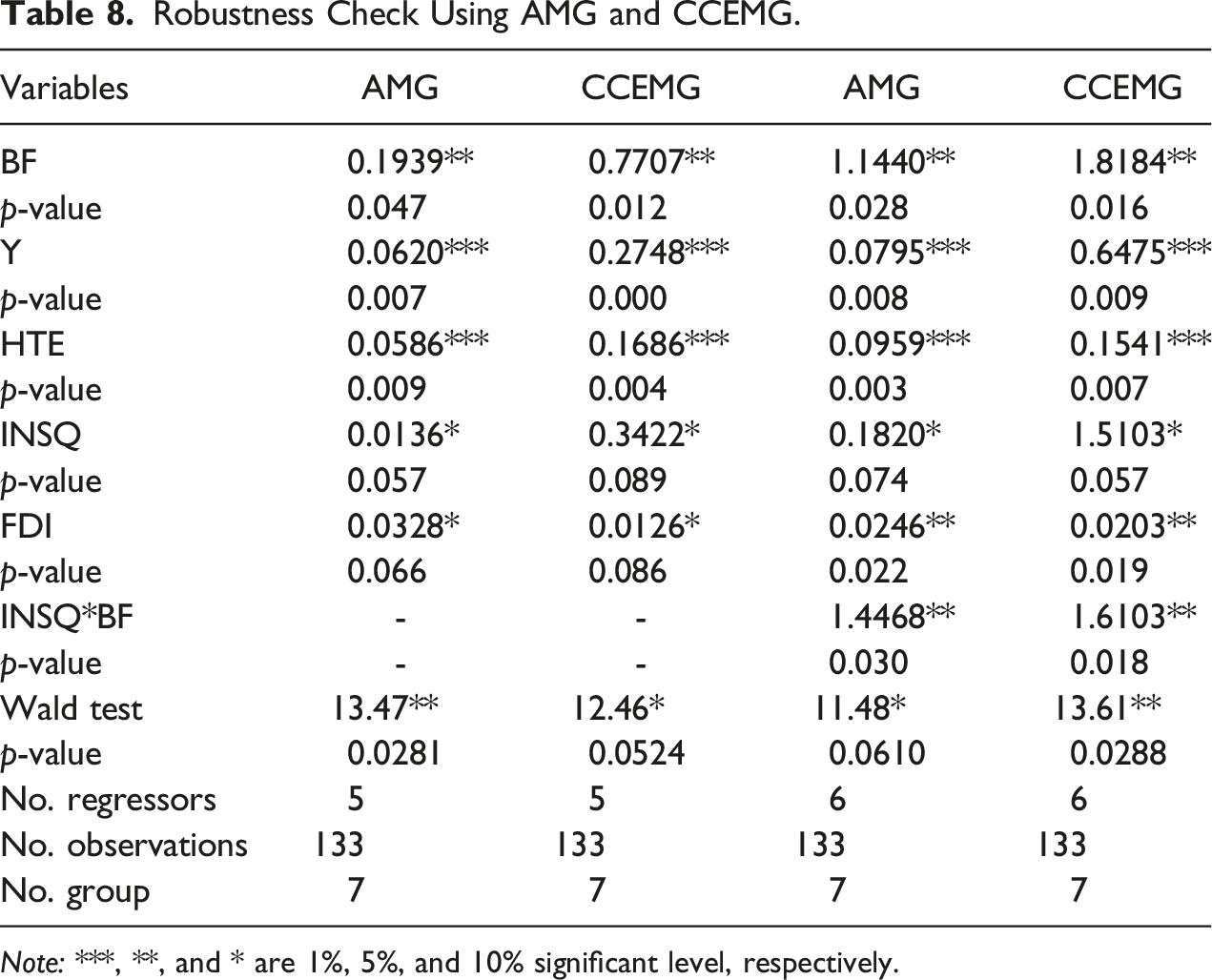
Robustness Check Using AMG and CCEMG.
Note: ***, **, and * are 1%, 5%, and 10% significant level, respectively.
Conclusion and Policy Recommendations
Concluding Remarks
The adoption of advanced technology and “internalization” in the Fourth Industrial Revolution provides opportunities for increased global profits. This paper explored the rippling effect that the current Industrial Revolution (ID 4.0) has on the financial industry. Bank financing emergent is highlighted as a crucial consideration to remember when assessing technical innovation. This is because bank financing contributes to the efficiency of the organizations and also assists an entire economy to effectively follow the steps of leading economies. Much of the academic literature on financial growth and innovation has examined the relationship between financial systems and innovation. More differently from this dimension, this study sought to discern how the availability of bank financing and institutional quality high-tech exports, investments abroad, and GDP expansion drive technological innovation. It employs the IPS, and the modern unit root testing approaches to assess the order of integration. Specifically, the CIPS test indicates that all factors combined were in a correct order. Subsequently, the results of CD test were used to reject the null hypothesis that there is no cross-sectional dependence. In other words, expected shocks are likely to spread through E7 member states in one intersection. However, this poses the problem of slope heterogeneity as evident in the important delta and adjusted slope homogeneity test parameters. This analysis utilized the Westerlund cointegration approach to analyze long-run connection between technical progress, as well as its predictors like bank financing, institutional efficiency, advanced technology exports, foreign direct investment, and gross domestic product. Regarding technical progress and its predictors, we identify a long-term link between them. This study used the CS-ARDL technique to approximate the long-term coefficient of independent variables. The findings indicate a positive correlation between bank funding and institutional efficiency and high-tech exports, foreign direct investment and GDP, and technological innovation which has also been verified by AMG and CCEMG as techniques for sensitivity. This study indicates that large-scale illiquid financial investment is a necessity to implement the revolutionary technologies. Access to finance will also allow economies and businesses to implement technological innovations and to track costly patterns. Thus, adequate bank finance is essential for enhancing industrial efficiency and innovation. Nonetheless, economies without quality institutions will be unable to stimulate an innovative and efficient industrial ecosystem, thus limiting effective innovation in such economies. For instance, we surmise that, nations with established institutions can safeguard the property rights of indigenous businesses which retrospectively drives a favorable atmosphere that promotes security and innovation. Thus, E7 member states should reinforce independent frameworks that create an environment that welcomes innovation and creativity.
Policy Recommendations
The E7 must create detailed and meaningful frameworks outlining the trajectory of the Fourth Industrial Revolution. For instance, they must insure that principles and ethics are ingrained in their individual and collective activities, particularly those involving economic and finance systems. Thus, they must progress above tolerance and reverence to sincere concern and empathy, with empowerment and openness being their central tenets. The E7’s policymakers must take steps to reorganize their economies, social structures, and systems of government. It is clear that the existing leadership systems and predominant wealth-creation mechanisms seem incapable of meeting internal or, more importantly, specific expectations. What is required now are systematic and creative structural transformations, not small-scale changes, or incremental amendments.
According to the findings of this study, large-scale illiquid capital investment is required for enterprises to embrace new technologies on a wide scale for the E7 economies. In order to facilitate the implementation of new technologies and the undertaking of costly endeavors of innovation, access to finance should be made more accessible. Bank funding would therefore play a significant role in increasing innovation and productivity in the economy. The course of the Fourth Industrial Revolution will be determined by people, society, and principles. Regardless of how impressive they appear, new innovations are essentially just resources designed by humans for humanity. They should take this into consideration and realize that creativity and technology continue to prioritize individuals, catapulting humanity into a more prosperous and equitable future. Though the study examine how banking finance, economic growth, FDI, institution quality and quality high-tech exports on innovational advancement in to the extant current, but there is still a vacuum left unexplored as a future guide for other researchers to advance the body of knowledge on this theme. However, there is still a vacuum left unexplored as a future guide for other researchers to advance the body of knowledge on this theme. Thus, the need to enhance other ICT structures helps in fast tracking banking activities and motivates our suggestion for further study in other emerging blocs like SSA, MENA, and G7 economies.
Footnotes
Declaration of Conflicting Interests
The author(s) declared no potential conflicts of interest with respect to the research, authorship, and/or publication of this article.
Funding
The author(s) received no financial support for the research, authorship, and/or publication of this article.
