



Abstract
Given the scarcity of comprehensive review studies in the literature, this bibliometric analysis thrives on taking a scientific approach to delivering quantitative and qualitative information on the ever-evolving field of ESG. Utilizing the performance analysis and science mapping techniques which includes citation analysis, co-word analysis, the study reports a holistic overview of 693 (ESG) papers from 1991 to 2020. The paper aims to provide a unified perspective on the evolution and further identify future research directions in this field. The findings point to the most important countries, authors, studies, and top journals in this field. Results show that published articles on ESG gained momentum after 2006; however, an exponential rise is being observed in the past 5 years, with research focusing on sustainable finance, sustainable development, ESG, and CSR with themes extending to risk management, stakeholder engagement, and portfolio construction, among others. Furthermore, the research identifies how the practice of ESG reporting affects many variables such as financial performance, social performance, environmental performance, and sustainability score. The findings also indicate that the field of ESG is still evolving, with numerous unexplored themes. The work is novel and relevant on the pretext that it uses the Scopus and Web of Science databases for bibliometric mapping, whereas previous studies have used the Scopus database but have lacked a robust methodology, so the findings of this study provided strong support for identifying emerging paradigms in the ESG literature.
Keywords
Research highlights
1. The study examined 693 works on ESG research published till 2020 using bibliometrics. 2. A comprehensive literature on ESG from the Web of Science and Scopus databases was collected. 3. An upward publication trend has been witnessed since the launch of the UNPRI in 2006. 4. The governing aspect has garnered the most attention. 5. Most of the cited countries were engaged in significant networking and collaboration with each other.
Introduction
Sustainability is defined as a company’s ability to adapt to changing conditions and originates in ecological and environmental systems (Seuring & Müller, 2008). Previously, the obligation of corporations was restricted to philanthropic aspects; however, because of unanticipated climatic threats, sustainable development emerged as a concern in the 1980s to preserve society and the environment. In 1987, the United Nations World Commission on Environment and Development produced the Brundtland Report and coined the term “sustainable development.” According to Varsei et al. (2014), the adoption of sustainability principles by corporations has given birth to the concept of corporate sustainability. The concept is described as “adopting business strategies and activities that meet the needs of the enterprise and its stakeholders today, while protecting, sustaining, and enhancing the human and natural resources that will be needed in the future” (Business Council for Sustainable Development, Deloitte & Touche, & International Institute for Sustainable Development, 1992, p. 1). However, social responsibility has attracted a wide range of viewpoints. While the classical economist Milton Friedman (1970) upheld an extremist view, contending that profit maximization was the sole social responsibility of business, Browne and Haas (1974) and Elkington (1998) firmly supported the opposing view of foregoing earnings in pursuit of social responsibility.
Aras and Crowther (2008) proposed a four-dimensional approach to corporate sustainability, namely, environmental impact, societal influence, organizational culture, and financial sustainability. Before 2010, most sustainability research (Chen et al., 2022; Dyllick & Hockerts, 2002) recognized only two dimensions—the environment and society. A few have recognized a third aspect (e.g., Spangenberg, 2004) linked to organizational behavior. There has been an increase in research on sustainability that takes a three-dimensional approach—environment, social, and governance. Girerd-Potin et al. (2013), however, divided sustainability into three categories: business, environment, and finance. This study dismissed the notion of keeping employees in a societal context and treating all people equally.
On examining the various international frameworks, such as the Global Reporting Initiatives, United Nations Commission on Sustainable Development Framework, Wuppertal Sustainability Indicators, and Sustainability Metrics of the Institution of Chemical Engineers, the measures of sustainability performance are witnessed as economic, environmental, and social (Rajesh, 2020; Zhao et al., 2022a). Governance is referred to as the Environment, Social, and Governance (ESG) concept of corporate sustainability (Docekalova & Kocmanova, 2015; Lau, 2019; Tamimi & Sebastianelli, 2017). ESG engagement is believed to aid organizations in their efficiency and sustainability (Piao et al., 2022).
The novel coronavirus (COVID-19) has also endorsed the exigencies of corporate responsibility in the contemporary, dynamic environment. It is indeed crucial to realize that in this globalized world, when a crisis occurs in one part of the world, the impact shakes faraway continents. Additionally, in the past, environmental disasters such as the Union Carbide gas leak (India) in 1984, the Chernobyl nuclear power plant explosion (Ukraine) in 1986, the oil-well fire during the Gulf War (Kuwait) in 1991, the Exxon Valdez oil spill (USA) in 1989, and the BP Deepwater Horizon oil spill (USA) in 2010 emphasized the urgency of demonstrating environmentally responsible behavior. The ill-famed accounting and governance failure scams, such as Enron, Satyam, Harshad Mehta, Maxwell, BCCI, Tyco fraud, WorldCom, Ponzi schemes such as Bernard Madoff, and the subprime mortgage crisis led to massive job losses, wiped out faith in regulatory bodies, and eradicated hard-earned retirement funds of employees (Christofi et al., 2012). Consequently, these incidents propelled distress and apprehension among stakeholders over the conduct of businesses and thereupon steered multi-fold development in the field of ESG (Rajesh, 2020). Recently, the ESG agenda has also advanced due to the adoption of initiatives such as the United Nations Principles of Responsible Investment (UNPRI) and Sustainable Development Goals (Linnenluecke, 2022).
Due to the growing importance of ESG, it is vital to compile and analyze previous studies. Bibliometric methods obtain bibliographic data from e-databases (Secinaro et al., 2020). The accessibility of bibliographic data and user-friendly software has resulted in an increase in the number of bibliometric studies in various fields (Ellegaard & Wallin, 2015; Zhao et al., 2022b). Thus, the primary motive of this paper is to present an overview on ESG through a bibliometric study. However, the first step in conducting a bibliometric analysis is to evaluate the relevant databases, their respective fits, and the consequences of adopting one over the other. The validity of any research is contingent on the selection of the base, which should adequately cover the area under investigation (Granda-Orive et al., 2013). Meanwhile, research comparing the popular databases Web of Science (WoS) and Scopus has concluded that both databases are improving, and there is no clear superiority of any over the other (Bakkalbasi et al., 2006). For comprehensive coverage, both databases were employed for this study.
The objective of this bibliometric analysis was to track the intellectual and theoretical evolution of the ESG domain. An advanced search of terms linked to ESG was conducted in both databases to identify publications in journals indexed in these databases. In this way, 693 papers published up to 2020 were chosen for the empirical investigation, which was carried out using the RStudio program, and the following research questions were addressed in this work (Zupic & Čater, 2014): Q1: What are the current publication volumes and trends related to the ESG field? Q2: What insights can be gained from this trend? Q3: Which nations have the most influential ESG publications? Q4: Which are the top journals publishing articles on ESG? Q5: Which themes under ESG have historically and currently been popular among scholars and which areas have future study potential?
To answer these research questions, the WoS and Scopus databases were searched for papers published on the topic of ESG. The numerous dimensions in which the studies were conducted, as well as the developing study areas, were determined using bibliometric analysis. RStudio and Biblioshiny software were used to obtain quantitative data and graphical visualization to demonstrate research hotspots, emerging prospects, and intelligent networks. This further enabled us to identify and evaluate leading journals extensively publishing on ESG, notable authors, and key nations in which research has been undertaken.
The remainder of this paper is organized as follows. Section 2 describes the research acquisition and methodology, which deals with the collection of studies and the selection of the final sample. Section 3 enumerates the findings of the bibliometric analysis. Finally, Section 4 concludes the study with future research implications.
Research Acquisition and Methodology
Research Acquisition
The Web of Science (WoS) and Scopus are the most comprehensive abstract and citation databases of peer-reviewed publications, including nearly all of the world’s most extensive and credible scientific literature (Zhang et al., 2020). Here, the literature on ESG from these two databases was collected and collated to conduct quantitative analysis with a set of bibliometric techniques, such as citation analysis, co-word analysis, and bibliographic coupling. These techniques are extensively employed in social science and management studies to display trends in research and to provide an understanding of the evolution of major themes (Jia et al., 2018).
Database choice
Before the creation of Scopus and Google Scholar in 2004, WoS was the exclusive citation analysis tool. However, the dubious quality of Google Scholar data raises questions regarding its validity. As a result, WoS and Scopus are the leading citation databases (Archambault et al., 2006; Mongeon & Paul-Hus, 2016). Multiple databases were used to gain a better grasp of the significance, scientific depth, and standing of the topic under exploration (Secinaro et al., 2020). Only one prior bibliometric literature review study on ESG (Gao et al., 2021) was found; this study included only the literature covered in the Scopus database. Thus, comprehensiveness, completeness, extensiveness, and interdisciplinary coverage of WoS and Scopus became the rationale for incorporating both databases.
Research Method
Search terms and data cleaning
The literature search included all the research articles that mentioned the terms “ESG” or “Environment Social Governance” in the title, abstracts, or keywords, using regular expressions wherever applicable. The “AND” and “OR” Boolean operators were used. On using these criteria, the original results showed that 2,943 documents were published in WoS and 5656 documents in Scopus. The study was limited to full articles and excluded book chapters, conference papers, editorials, etc., as these resources do not pass through the same rigorous review procedure (Singh et al., 2021). The “document types” were limited to articles or review articles for both the databases, while based on the area of interest for this study. The “discipline category” was limited to “Business Finance,” “Business,” “Management,” or “Economics” for WoS and “Business, Management, and Accounting” or “Economics, Econometrics, and Finance” for Scopus.
The remaining articles, 711 and 867, in WoS and Scopus, respectively, were further filtered by deleting the years 2021 and 2022 to limit the impact of the temporal component on statistical outcomes due to the unavailability of complete data for the publishing year (Gao et al., 2021). To avoid unwanted linguistic influence, the article language was likewise confined to English. Ultimately, the final export included 575 documents from each database, that is, a total of 1,150 documents with information on keywords, author data, citations, references, and article metadata. Documents were merged into a single file and redundancy removal was performed using RStudio. Data cleaning was necessary because these databases were not created expressly for bibliometric analysis and multiple inaccurate items had to be removed (Donthu et al., 2021). A total of 230 duplicates were eliminated, and 36 articles that first appeared in 2020 but were published in 2021 were manually removed. Articles not belonging to the subject domain were removed after scrutinizing the abstracts. After adequate refinement and post-filtration, 693 articles were left for final analysis. Figure 1 provides the overview of data retrieval process in a concise manner. Data retrieval process. Source: Author’s elaboration.
Bibliometric analysis is designed to handle large volumes of bibliometric data (Ramos-Rodríguez & Ruíz-Navarro, 2004), and if there are hundreds (e.g., 500 or more) or thousands of studies, the research field is deemed to be substantial enough to warrant the use of bibliometric analysis (Donthu et al., 2021). This also substantiates the rationale for conducting this bibliometric review.
The retrieval procedure was as follows:
WoS:
TI=ESG OR AK=ESG OR AB=ESG OR (TI = ENVIRONMENT* AND TI = SOCIAL* AND TI = GOVERN*) OR (AB = ENVIRONMENT AND AB= SOCIAL AND AB= GOVERNANCE) OR (AK = ENVIRONMENT AND AK=GOVERNANCE AND AK= SOCIAL) AND Articles or Review Articles (Document Types) AND Business Finance or Business or Management or Economics (Web of Science Categories) AND 2021 or 2022(Exclude – Publication) AND English (Language)
SCOPUS:
TITLE-ABS-KEY(esg) OR TITLE-ABS-KEY(ENVIRON*SOCIAL* GOVERN*) AND (LIMIT-TO (SUBJAREA,“BUSI”) OR LIMIT-TO (SUBJAREA,“ECON”)) AND (LIMIT-TO (DOCTYPE, “ar”) OR LIMIT-TO (DOCTYPE,“re”)) AND (LIMIT-TO (LANGUAGE, “English”)) AND (EXCLUDE (PUBYEAR,2022) OR EXCLUDE (PUBYEAR,2021))
Findings and Discussion
The analysis of the findings began with a preliminary summary of the bibliometric statistics. This study then looked at the number of articles, leading publishing nations, journals, notable authors, the most cited papers, and keyword evolution to identify trends. Various measures of performance analysis including publication-based metrics, citation-based metrics, and science mapping tools, such as citation analysis, bibliographic coupling, and co-word analysis (Donthu et al., 2021) were used. The contributions of research constituents (e.g., authors, institutions, countries, and journals) to a specific topic were investigated using performance analysis (Cobo et al., 2011; Ramos-Rodríguez & Ruíz-Navarro, 2004). This analysis is descriptive in scope and is the essence of bibliometric research (Donthu et al., 2021). However, science mapping examines the connections between research constituents (Baker et al., 2021; Cobo et al., 2011; Ramos-Rodríguez & Ruíz-Navarro, 2004). The volume of publications and citations each year or per research constituent are two noteworthy performance analysis indicators, where publication is a measure of productivity and citation is a yardstick for contribution and impact. Citation analysis, co-citation analysis, bibliographic coupling, co-word analysis, and co-authorship analysis are some of the tools used in science mapping. Such methodologies, when combined with network analysis, help establish a field’s bibliometric and intellectual structure (Baker et al., 2021; Tunger & Eulerich, 2018).
Descriptive Bibliometric Analysis
Descriptive bibliometric analysis provides a summary of the extant literature by quantifying different attributes of any research topic. It may also help determine what stage of research a topic is at, as well as how broad or narrow the area is, based on various factors, such as the period, number of researchers, and so on.
Main Information.

The first article related to ESG in the database was published in 1991 (Boeninger, 1991). Though clear and distinct dimensions of sustainability as “Environment, Social, and Governance” first appeared in the UN report “Who Cares Wins” in 2004, it was a matter of discussion previously under the Socially Responsible Investing (Rosen et al., 1991; Schueth, 2003; Van den Brink & van der Woerd, 2004), Global Reporting Initiative (Hedberg & von Malmborg, 2003), CSR (Clarkson, 1995; Griffin & Mahon, 1997), Governance (Aguilera & Jackson, 2003; Dalton et al., 1999; Wang & Coffey, 1992), and Triple Bottom Line (Elkington, 1998). The UNPRI
1
was launched in 2006, making way for responsible investing and ESG investing (Crifo & Forget, 2013; Richardson, 2009; Woods & Urwin, 2010). Consequently, an upward publication trend can be seen from 2006 (Figure 2). Another intriguing period was between 2016 and 2020 when there was a sharp increase in the number of publications. This indicates that ESG as a research field is gaining popularity in academia and is still in the embryonic stage. Annual scientific production.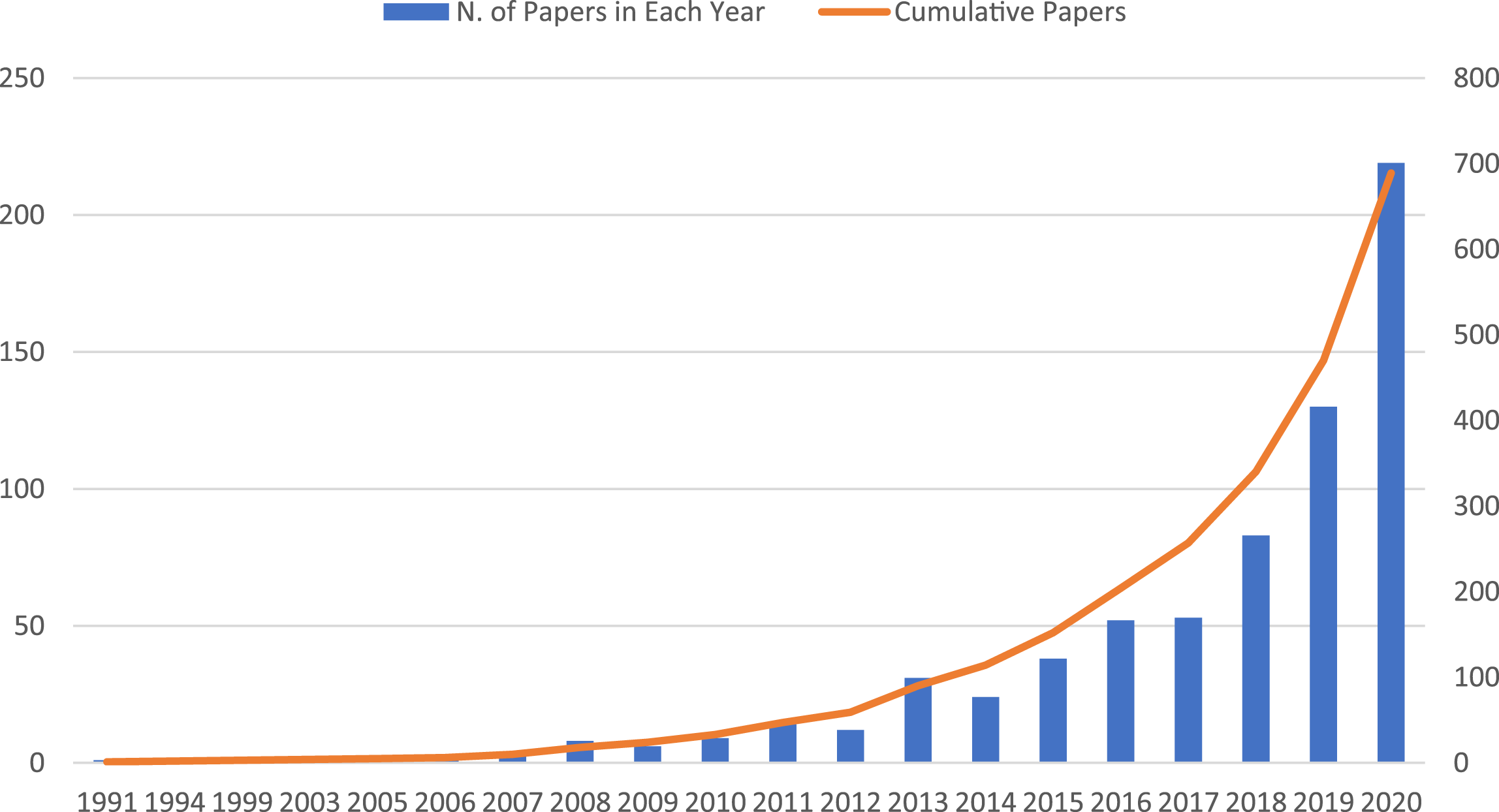
Country of Publication and Collaboration Network
This section analyses country-specific publications and their collaboration to show the geographies of the research. It includes all published documents, citations, and collaboration networks. Exploring research trends in different geographies can help us understand the nature and scope of a research problem and provide potential solutions. It describes the research priorities, goals, and perspectives of a country. In terms of the current topic, ESG and sustainability are primarily the focus of developed and developing countries, whereas underdeveloped countries in Africa and Latin America have not yet focused on ESG. A plausible explanation could be that they are more concerned with internal issues, such as food crises, energy crises, fewer benefits of globalization, security concerns, poverty, and poor education. Additionally, an assessment of the contribution of the country to the intellectual growth of any particular field can be made.
However, exploring the collaboration networks of countries is useful for determining shared beliefs, policy formulation, and the alignment of bilateral and multilateral projects as well as determining which countries are engaged in knowledge exchange.
Country Scientific Production.

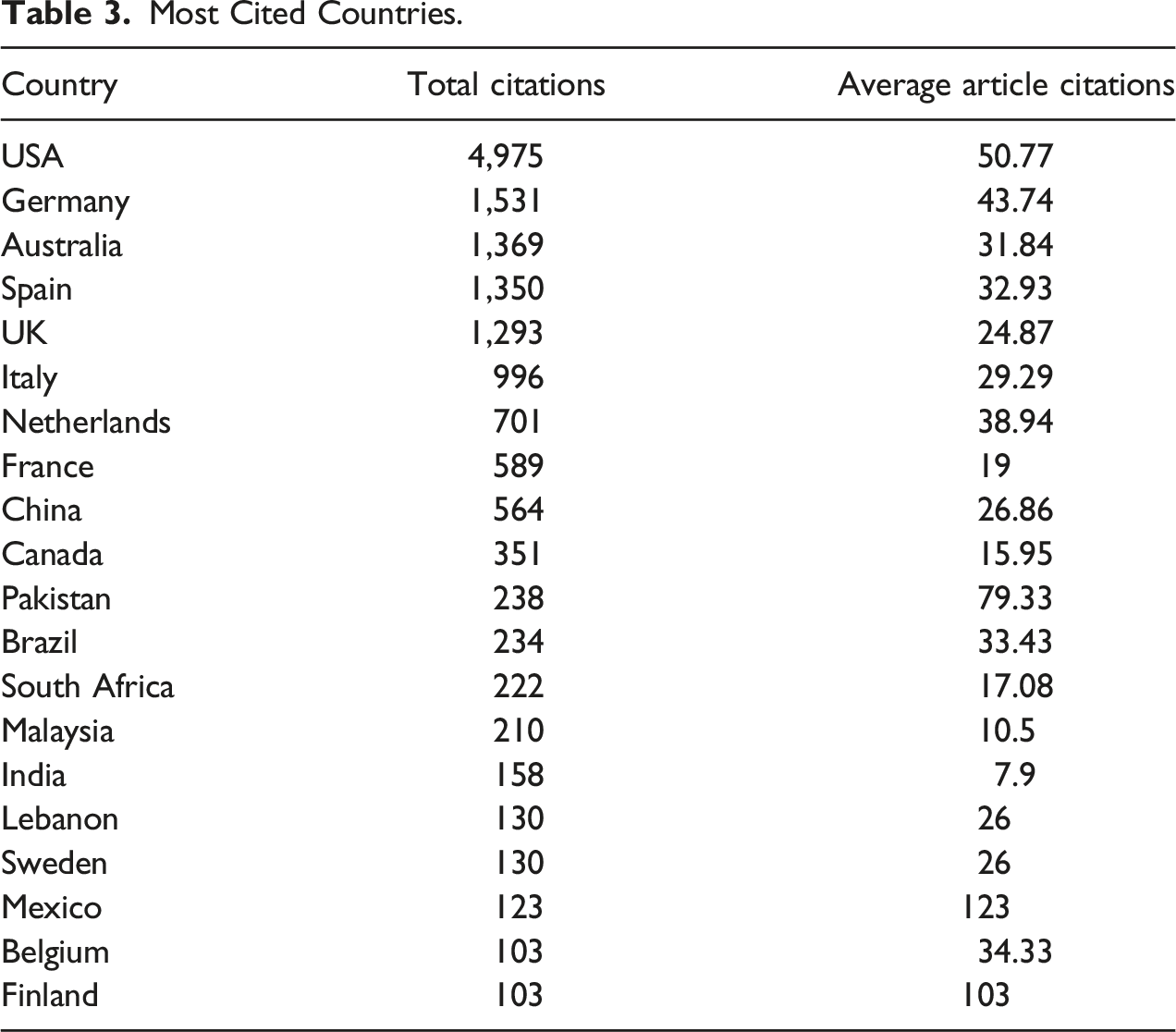
Most Cited Countries.
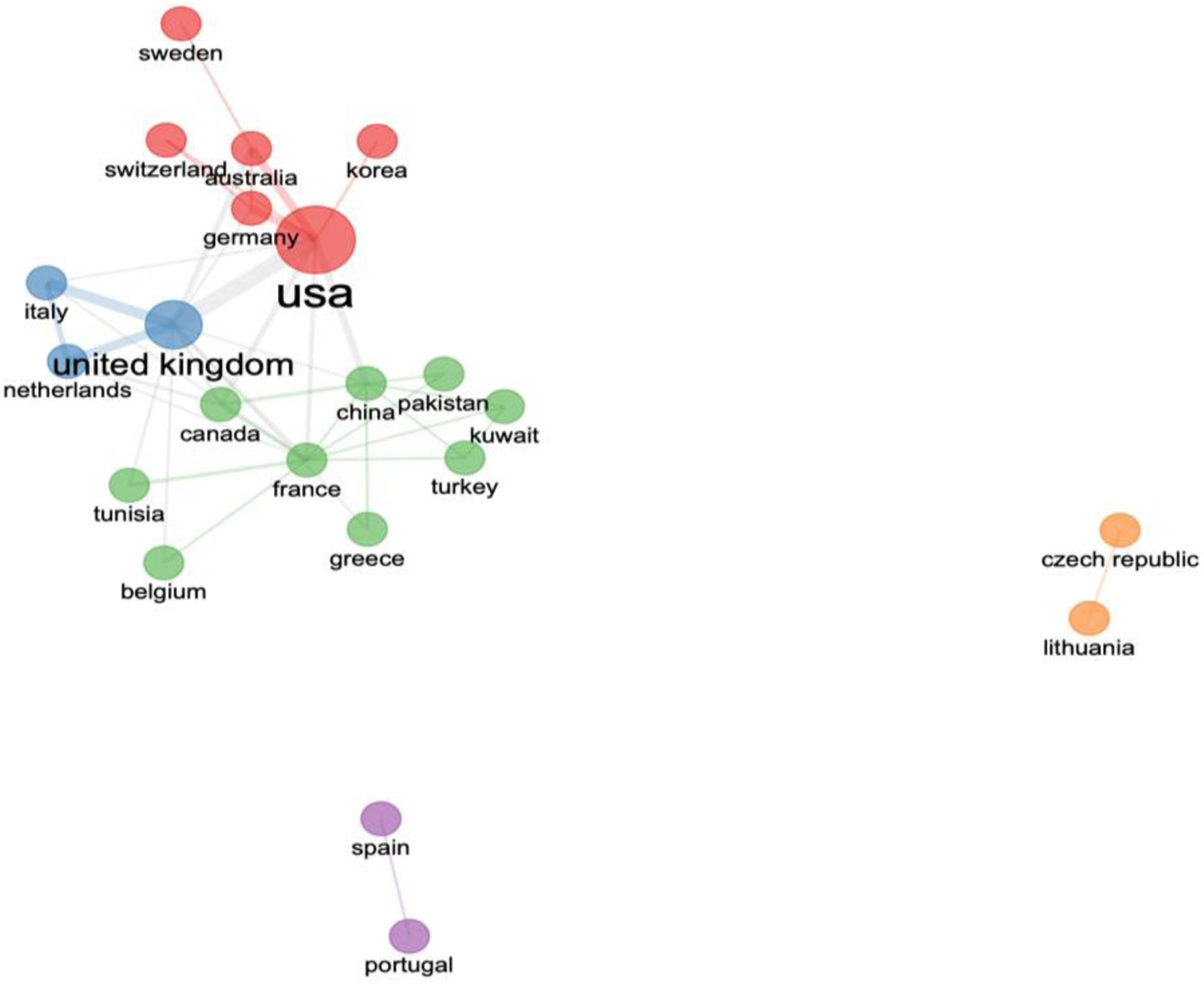
Collaboration network.
Figure 4 shows that many regions, such as Central Asia and Africa, are still not engaged in the scientific debate, and research has not developed on the ESG topic. Country and scientific production.
As a way forward, it would be preferable to undertake research in numerous countries, compare them, analyze other industries and sectors, and adopt a more international approach.
Core Journals in ESG and Journal Performance
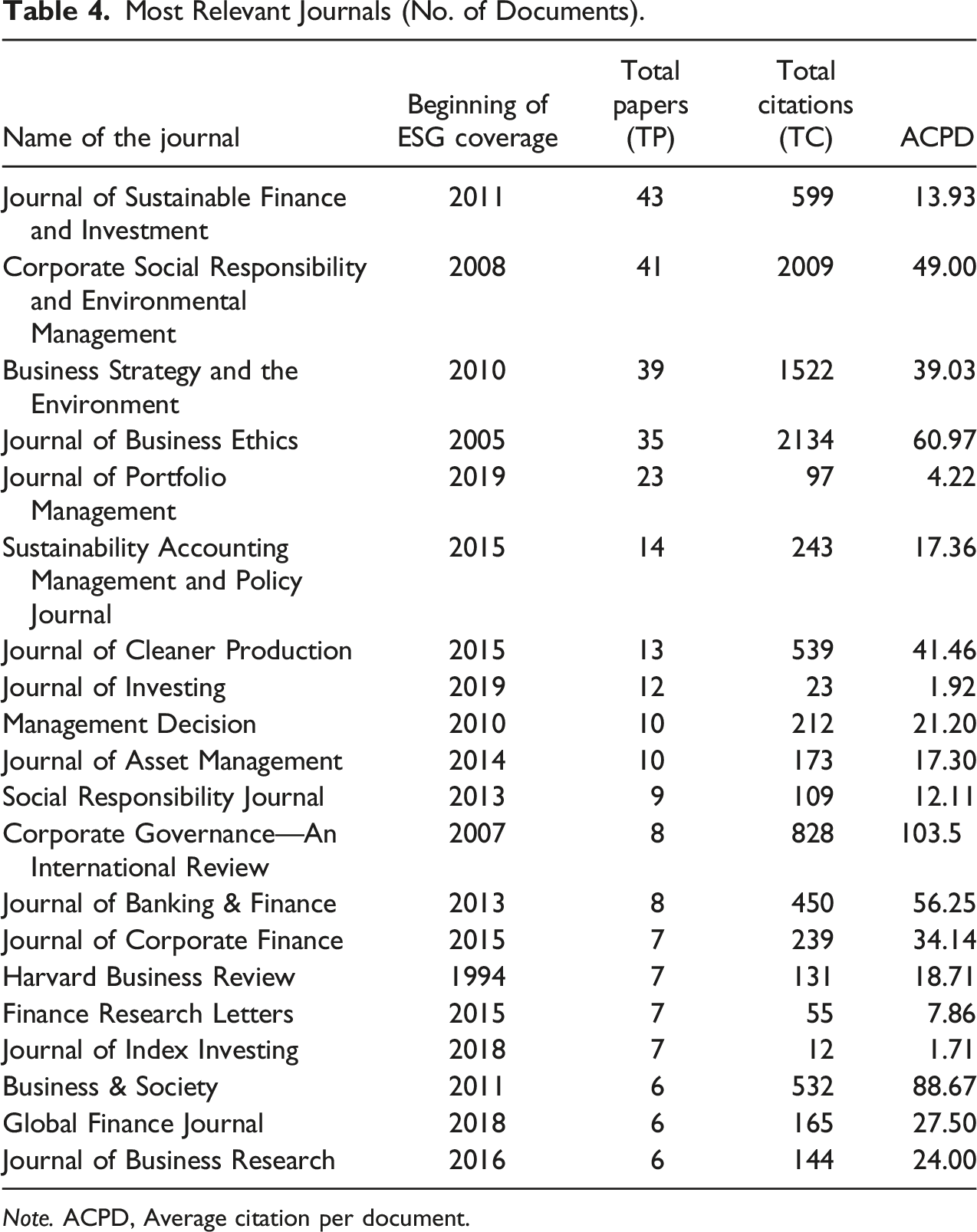
Most Relevant Journals (No. of Documents).
Note. ACPD, Average citation per document.
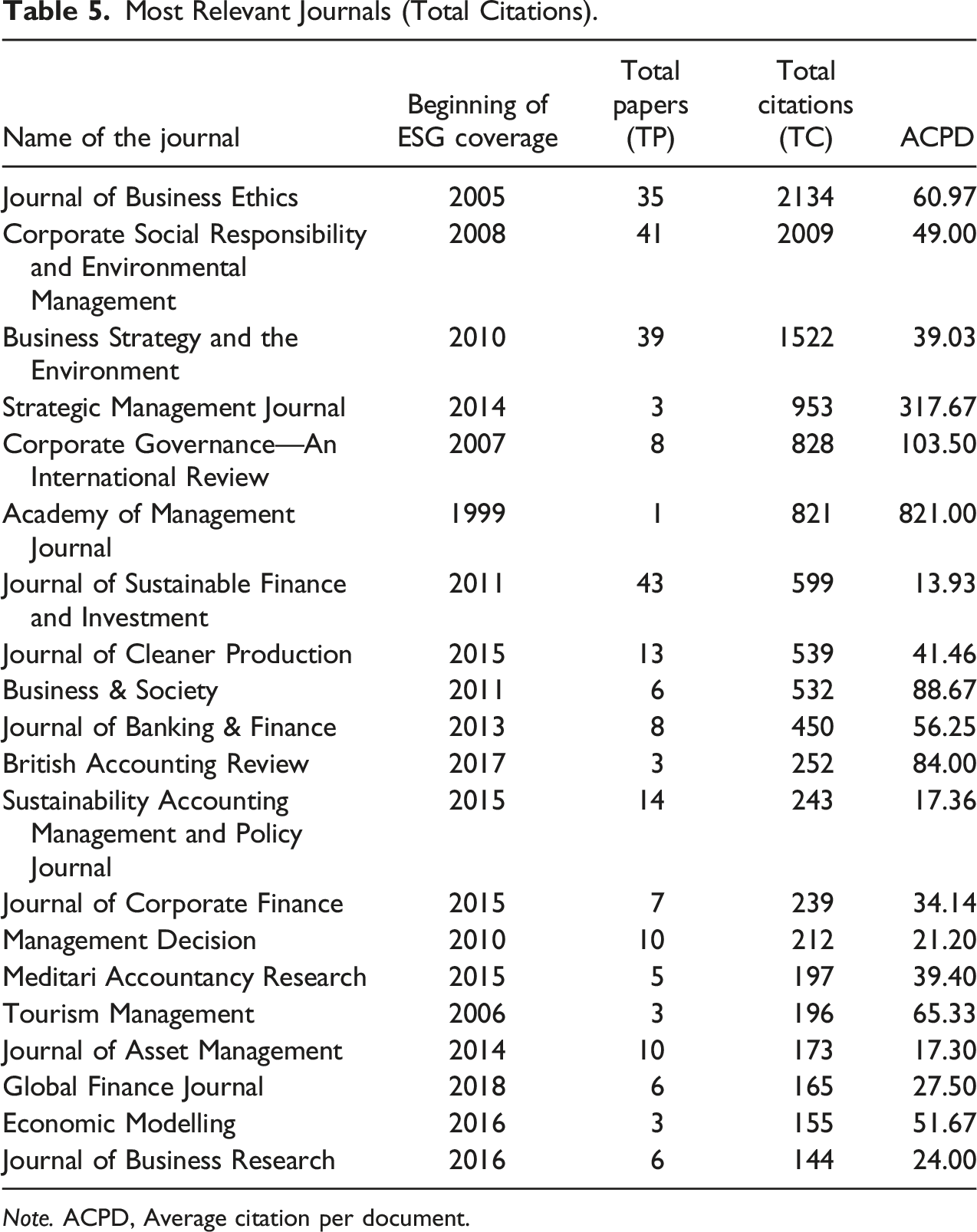
This ranking was followed by the Corporate Social Responsibility and Environmental Management Journal, with 41 publications. Next in line were the Business Strategy and the Environment, Journal of Business Ethics, and Journal of Portfolio Management, to name a few.
ESG research has been published in various journals dealing with portfolio management, investing, asset management, and business research. Most of the top 20 journals are published in the finance and investing disciplines, which also enables us to deduce that these are the prominent areas of research in the ESG domain.
Most Relevant Journals (Total Citations).
Note. ACPD, Average citation per document.
Co-Authors Analysis
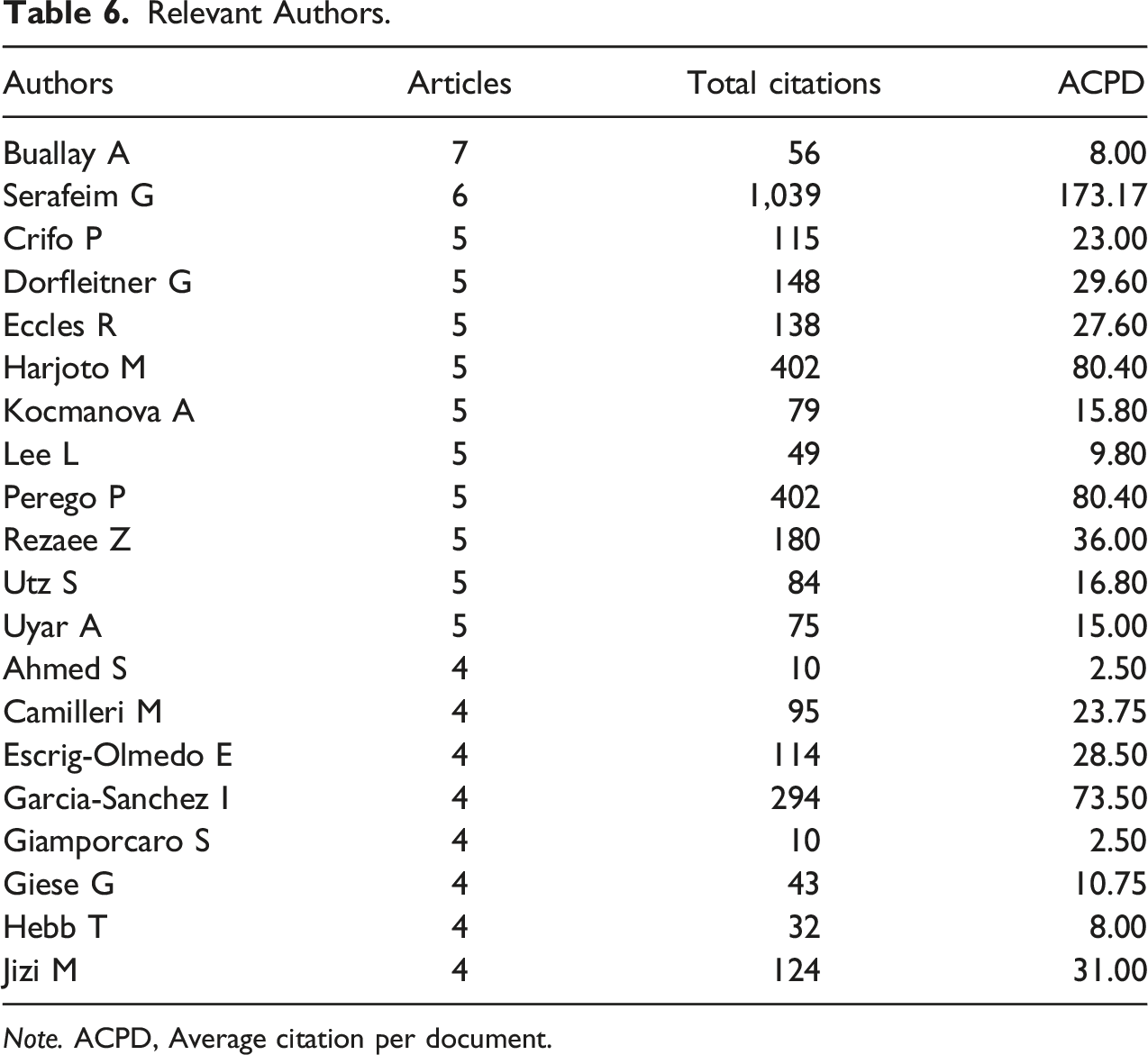
Relevant Authors.
Note. ACPD, Average citation per document.
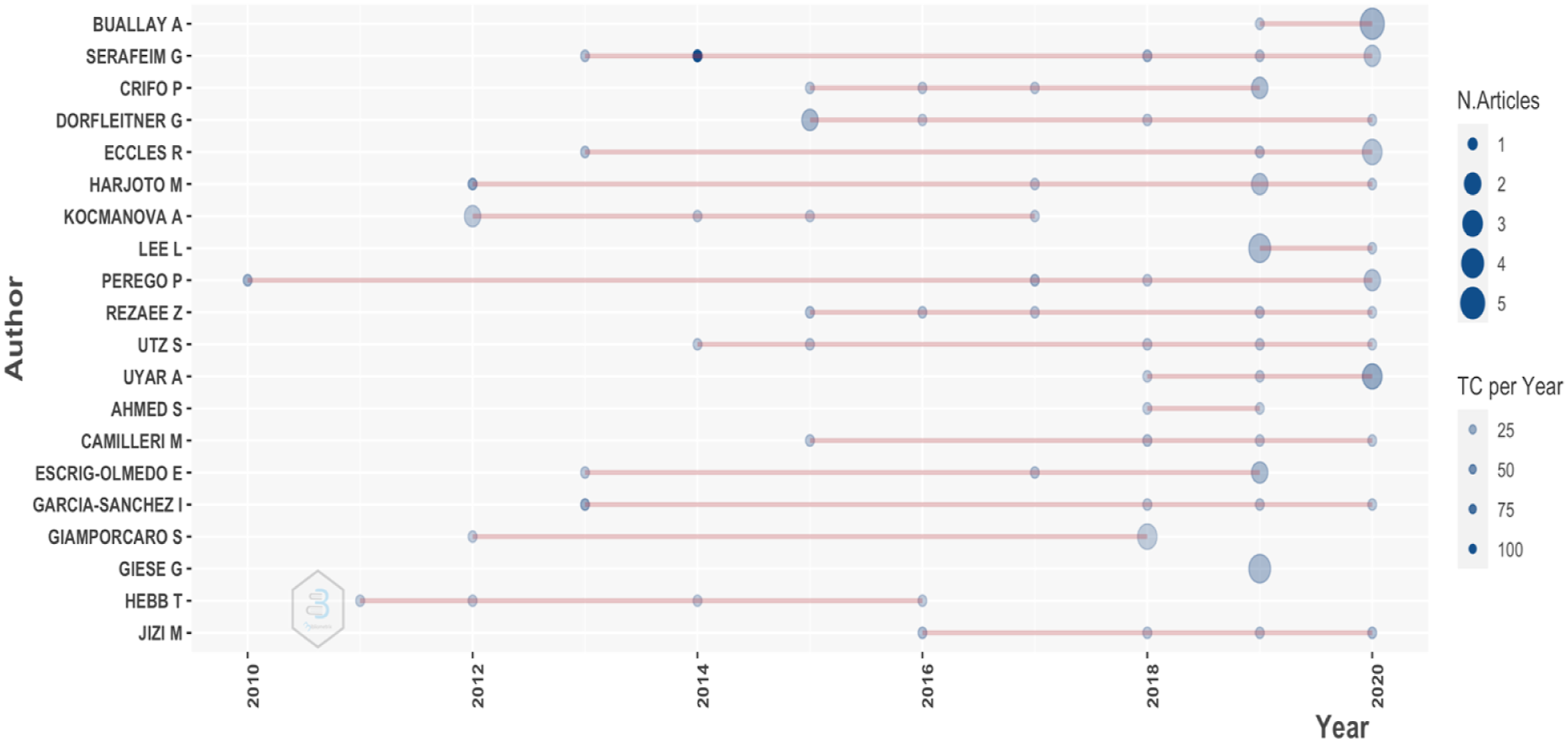
Top authors’ active years and production.
Buallay A., the author with the most published articles (7), focused on topics around performance and sustainability reporting in the banking sector (Buallay, 2019; Buallay et al., 2020a, 2020b). In contrast, the next in ranking, Serafeim G., whose articles have also received high citations in the field, touches a wide array of topics, such as corporate social responsibility, performance, ESG investing, and corporate sustainability (Amel-Zadeh & Serafeim, 2018; Cheng et al., 2013; Grewal & Serafeim, 2020).
It was observed that the most productive author is not the most impactful author; authors such as Harjoto M., Perego P., Rezaee Z., Crifo P., and many others have higher citations than Buallay A. A plausible reason for this could be that Buallay A. had begun research in the ESG area recently; the most impactful author, Serafeim G. (Total citations, 1039 & ACPD 173.17), had been contributing to the field since 2013, and other authors of influence also had comparatively longer active years (Figure 5). From Figure 5, it can be clearly deciphered that among the most productive and impactful authors, Perego P. and Harjoto M. were active in the ESG arena earlier than the others. Perego P. deals with sustainability audit assurance and integrated reporting (Caglio et al., 2019; Kolk & Perego, 2010), contrarily, Harjoto M.’s work revolves around corporate governance, ESG performance, corporate social performance, and CSR (Harjoto & Wang, 2020a, 2020b; Jo & Harjoto, 2011). Knowing the most active and influential academicians in their field of interest can help researchers in the development of collaborative projects that result in impactful and high-quality research.
The Evolution of Research Themes
To analyze the trends in research over the years, this study used the authors’ keywords and their frequency per year to map the trend topics plot. The graphical parameters were set to a minimum frequency of five keywords per year, and the number of words was set to five per year. The final plot is shown in Figure 6. The abscissa represents the year, the ordinate represents the keyword, and the graph represents the quartile range of the keyword frequency. Trend topics of authors’ keywords.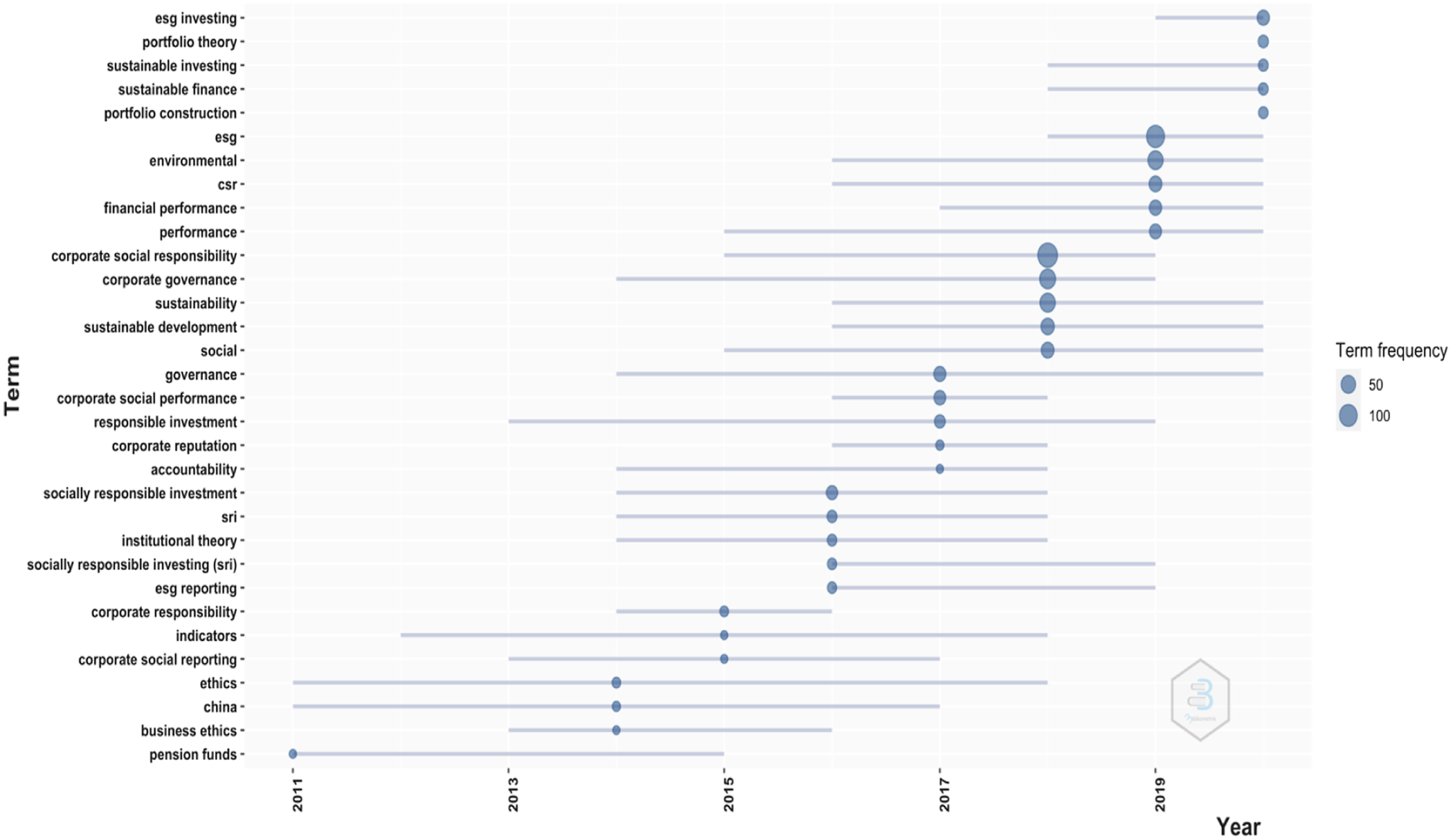
The length of the bar and size of the bubbles/nodes provide key information about the trends in the field. It illustrates what topics have been researched in the past and in which years extensive work has been done on these topics, as depicted by the size of the buzzle in any particular year. Moreover, information such as current trends offer directions for further research in this area. It can be inferred from Figure 6 that considerable research in the ESG field was conducted between 2011 and 2020.
As research on ESG picked up around 2010, topics related to responsible investment of pension funds (Bianchi et al., 2010; Sievänen et al., 2013; Woods & Urwin, 2010) and ethics (Eccles & Viviers, 2011; Richardson, 2009) became the trend. However, pension funds and institutional investors have recently become too large to diversify their systemic risks, forcing them to consider the environmental and social consequences of investment holdings. Other topics, such as CSR and corporate governance, have also been widely researched, considering the length of the bars and the size of the nodes in Figure 6. CSR and governance were the issues that stakeholders were most interested in before ESG became recognized as a corporate sustainability responsibility. ESG was also found to be of almost paramount importance to senior executives at 43 global institutional investing organizations according to a Harvard Business Review survey. As a result, CSR and governance are becoming less popular, while ESG is receiving increasing research focus. Therefore, a decline in these topics was observed after 2019.
The last half-decade (2015–2020) has seen an upsurge in the literature concentrating on sustainable investing, ESG investing, and company performance in response to the Paris Accord and the announcement of the Sustainable Development Goals (SDGs) in 2015 (Alessandrini & Jondeau, 2020; Kumar et al., 2022). To fulfill the SDGs, the United Nations forecasts a $5–$7 trillion investment (Craig, 2021). With the outbreak of the COVID-19 pandemic, the United Nations Development Programme (UNDP) created the SDG finance taxonomy to pave the way for managing the finance and transaction cost of SDG-aligned projects (Wang et al., 2020; Zhao et al., 2022c). Hence, research on ESG investing, sustainable investing, and sustainable finance is currently being conducted.
Additionally, some keywords, such as Portfolio theory and Portfolio construction, are new keywords with low frequency, implying that the topics represented by these keywords have gained attention but have not been fully researched. The ability to manage the performance costs of sustainable finance requires optimal portfolio construction modifications (Fu et al., 2020). Additionally, no noticeable performance difference between the portfolio of sustainable and traditional indices was found (Jain et al., 2019). Alessandrini and Jondeau (2020), however, argue that ESG score-based exclusion enhances the ratings of otherwise typical portfolios while maintaining their risk-adjusted performance.
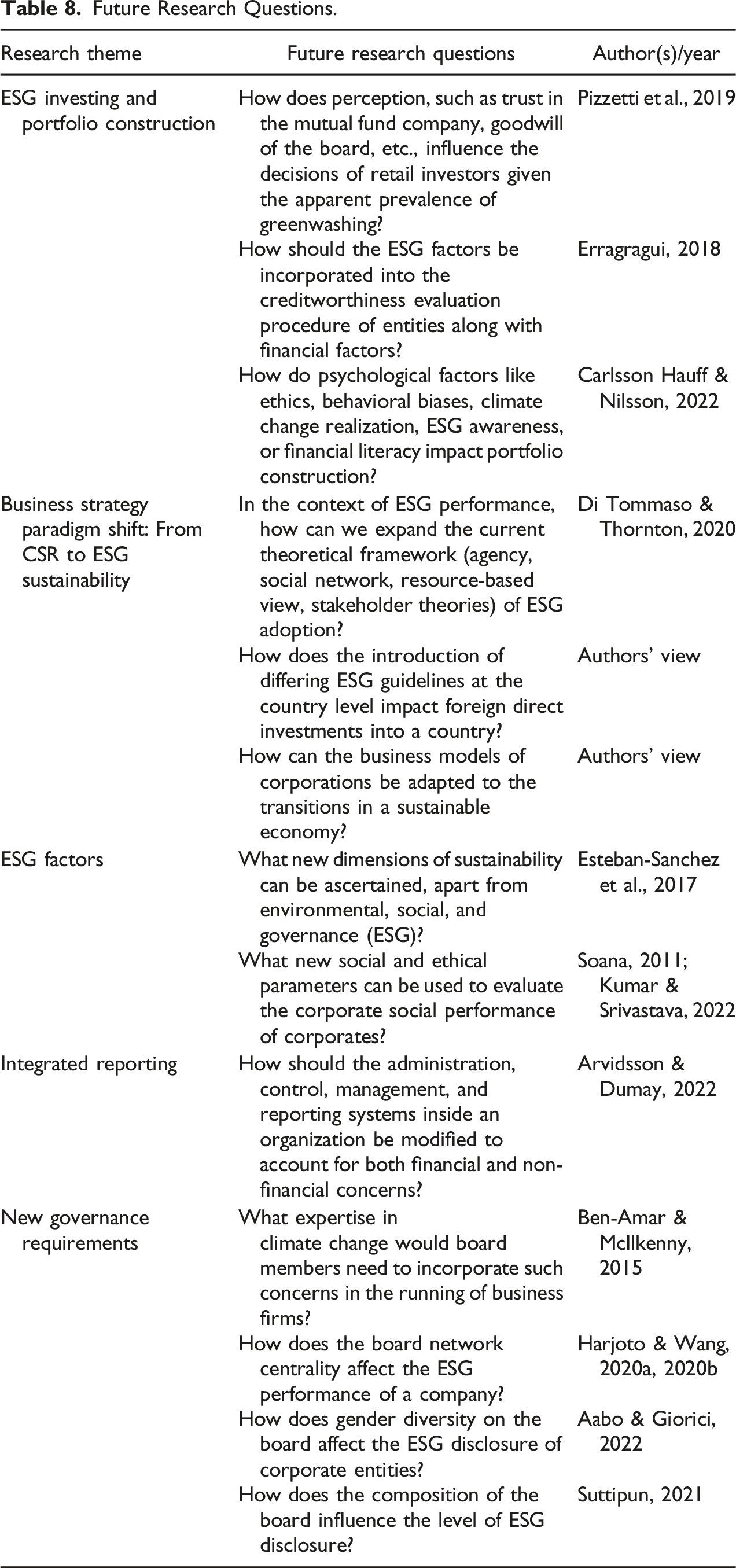
Based on the preceding discussion, it is recommended that future research be pursued in areas related to ESG investment, portfolios, firm performance, and sustainable finance to gain a better understanding of the underlying impact of sustainable finance and ESG investing by examining country-specific findings, cross-country comparisons, and contrasting regionally diverse outcomes.
Conceptual Analysis—Thematic Mapping
The thematic map is highly interpretable and lays the groundwork for the analysis of the four quadrants in which the themes are placed (Cobo et al., 2011; Jelvehgaran Esfahani et al., 2019). Grouping themes into quadrants aid in determining which topics within a field are more developed than others as well as which are emerging and essential and thus require more attention.
The themes were obtained from the clusters of keywords and their interconnections. Two variables identified all the research themes created in this process—“density” and “centrality.” To classify themes, central tendency measurements such as median and mean values for density and centrality could be utilized. The keywords and their linkages form a “thematic network” graph under a subject, with “centrality” on the horizontal axis and “density” on the vertical axis. If a node has a high density of connections with other nodes in the network, it has greater centrality and is important in the network. A node with greater density indicates more bonding or stronger internal correlation intensity between the nodes. The density of a field of study indicates its capacity to be sustained and evolve.
In Figure 7, a thematic map of the field of ESG, with four quadrants Q1–Q4, is provided; the upper right quadrant (Q1) represents driving/motor themes, the lower right quadrant (Q4) represents underlying/basic themes, the upper left quadrant (Q2) represents specialized/niche themes, and the lower left quadrant (Q3) represents emerging/disappearing themes (Agbo et al., 2021; Jelvehgaran Esfahani et al., 2019). The themes in Q1 are both well-matured and crucial for the structuring of the research field, including the obvious ESG, CSR, and SRI, considering that ESG was born out of Socially Responsible Investment (SRI) (Gao et al., 2021) and further evolved from CSR (Singhania & Saini, 2021). Themes in Q2 have well-matured internal links but insubstantial external links and are of minimal importance; themes such as ESG factors, idiosyncratic risk, and materiality fall under this category. Themes in the Q3 are both weakly developed and marginal, primarily constituting either emerging or declining themes, such as ESG Investing (Chen & Mussalli, 2020; Townsend, 2020), Portfolio Theory, Portfolio Construction (Alessandrini & Jondeau, 2020; Schmidt, 2020), etc. These seem to be the emerging themes and, therefore, relevant for future research. ESG issues have recently been successfully adopted in mainstream finance. ESG investing is a way to invest that combines social and/or environmental benefits with financial returns, linking together social, ethical, environmental, and economic concerns (Brzeszczyński & McIntosh, 2014). Consequently, publicly held firms are increasingly being evaluated for environmental, social, and governance factors and a considerable body of research has emerged to investigate the implications of such assessments on share performance and investments (Díaz & Escribano, 2021; Shanaev & Ghimire, 2022). Alessandrini and Jondeau (2020) found that ESG score-based exclusion improved the ratings of otherwise typical portfolios while leaving their risk-adjusted performance the same. According to Jain et al. (2019), there is no noticeable performance variation between a sustainable index portfolio and a traditional index portfolio, making the former a good substitute. ESG investing and portfolio construction based on sustainability concerns are gaining traction as investors demand long-term returns in harmony with the environment (OECD, 2021). Thematic mapping of authors’ keywords.
Themes in Q4 are essential for a research field but not developed; this quadrant comprises sustainability, environmental, and social issues. In the mapping, corporate social responsibility appeared under the basic theme, but it was so because numerous studies had used the acronym “CSR” as a keyword. Based on the mapping, the research focus could be directed to “Financial Performance,” “Integrated Reporting,” and “ESG disclosure” as these themes are slowly moving toward high centrality, high density, or both. “Sustainability” can also be a focus of research as it is an important topic in the field but has not been developed. The argument regarding sustainability metrics and performance is far from complete. Elkington (1998) states that sustainability at the firm or industry level is interpreted as CSR. Aras and Crowther (2008) outlined environmental effects, societal influence, organizational culture, and financial sustainability as the four dimensions of corporate sustainability. Before 2010, most sustainability studies (e.g., Dyllick & Hockerts, 2002) only recognized two dimensions—environment and society—but there has been an increase in sustainability research that takes a three-dimensional approach with respect to environmental, social, and governance aspects. The widely accepted Global Reporting Initiative framework, however, treats governance as a subset of economy with environmental and social factors being treated separately.
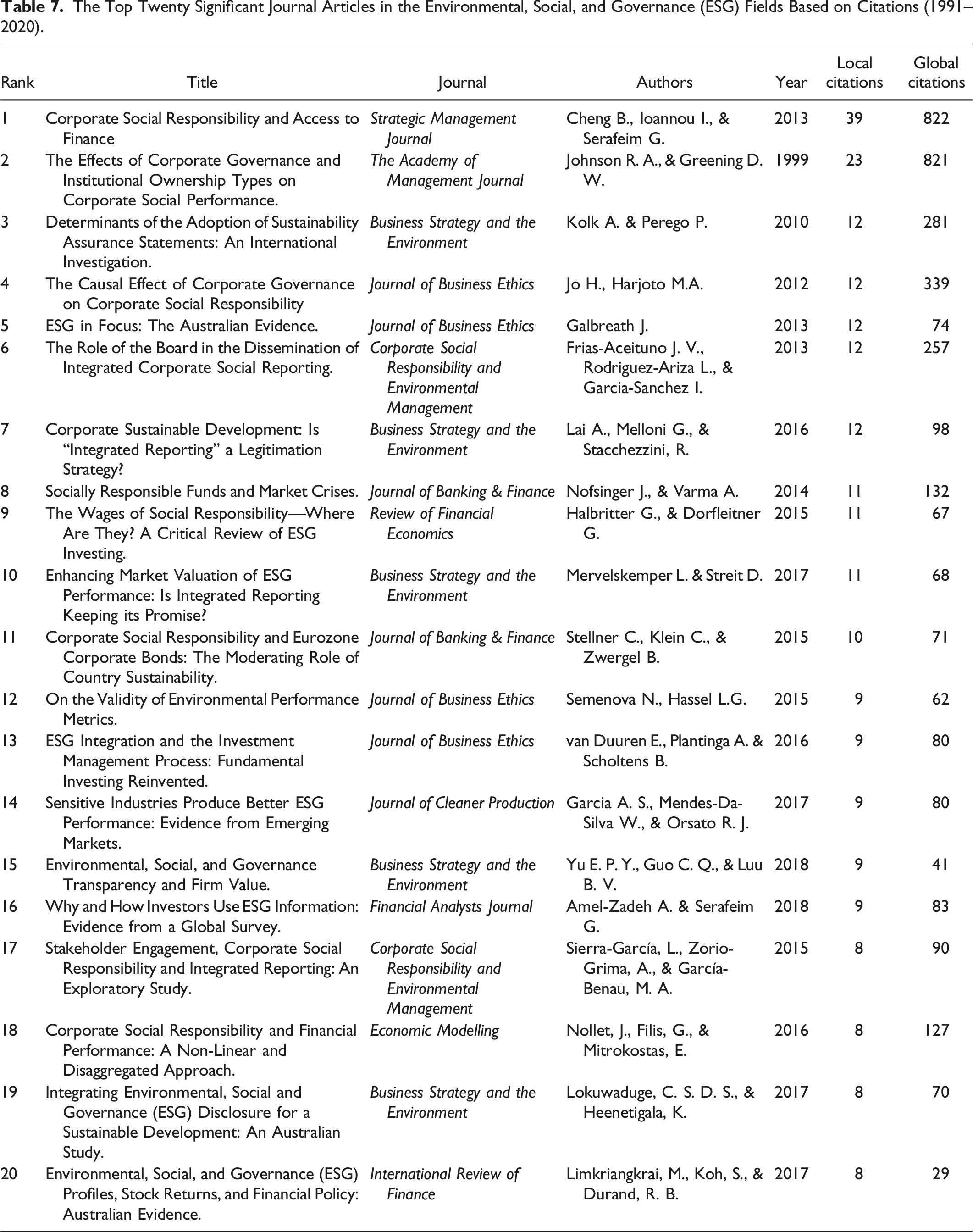
Most Influential Studies
The bibliometric analysis also assists in identifying research publications in databases that have had a substantial influence on a particular area or discipline under investigation. Citation analysis determined the influence of a work by counting how many times it had been quoted in other studies (Ding & Cronin, 2011).
The Top Twenty Significant Journal Articles in the Environmental, Social, and Governance (ESG) Fields Based on Citations (1991–2020).
Concluding Remarks and Future Research Directions
This study seeks to provide a bibliometric analysis of the evolution of ESG research and related fields. Although there was a large body of literature on this topic, this study found an absence of adequate bibliometric analysis. One prior bibliometric study employing the Scopus database was found, but its unsatisfactory data querying and cleaning process provided scope for further research. A manual review of abstracts while using bibliometric software is strongly recommended because its absence raises questions about the reliability of the results. The study revealed that the literature was diversified globally and spread across 61 countries on different continents; however, studies in developed nations, including the United States, France, the United Kingdom, Italy, Spain, Australia, Germany, and Canada, among others, were more common. A viable explanation for the same could be that since these developed nations were the pioneers of various mandatory and voluntary ESG-related laws and provisions, the outcome seemed justified (CarrotsandSticks.net). 2 There also appears to be more research emerging from developing economies, such as China, India, Malaysia, etc., post-adoption of mandatory and voluntary codes for business responsibility reports/sustainability reports/integrated reports.
Bibliometric analysis helps scholars identify academic subfields and similar areas as well as assists them in deciding on research topics and academic directions. It is likely that the research community will become increasingly dispersed globally, with more cross-border collaboration projected in the future. This study corroborates the claim that ESG research has become widespread worldwide. Additionally, unlike in many other fields, researchers from non-Western and Asian nations, such as China, India, South Korea, and Malaysia, seem to have a substantial share in this field. 3
Finally, based on these findings, this study provided an outline of the ESG field. This report provides a better understanding of the evolution of the field by examining the most important previous and contemporary research themes. Author citation analysis aided in identifying the significant academic participants in the domain. The insights gained from this work can help researchers identify subjects, agendas, research orientations, and future collaboration opportunities in this discipline.
Future Research Questions.
This study, like any other academic study, has certain limitations as well. First, to find and extract articles from databases, this research employed the keywords “ESG” and “Environmental Social Governance” alone. Other related studies that did not contain these keywords may have been overlooked. Additionally, only studies written in English were evaluated, and publications in all other languages were beyond the scope of this study. Furthermore, scientific databases such as the WoS and Scopus were not created solely for bibliometric studies and hence may hold inaccuracies, which will inevitably impair any analysis based on such data.
Footnotes

Declaration of Conflicting Interests
The author(s) declared no potential conflicts of interest with respect to the research, authorship, and/or publication of this article.
Funding
The author(s) received no financial support for the research, authorship, and/or publication of this article.