



Abstract
Bangladesh has recently pledged at the 26th Conference of Parties (COP26) to reduce its carbon dioxide emission figures by 22% at the end of 2030. However, since this South Asian country has always turned to fossil fuels for electricity generation purposes, achieving this emission reduction goal is a challenging task for the Bangladesh government. Nevertheless, considering the negative environmental implications associated with the generation and consumption of unclean energy, particularly electricity, it is critically important for Bangladesh to expedite the process of clean transformation of its traditional pollution-intensive power system. Hence, the objective of this study is to dissect the repercussions of hydroelectricity use on Bangladesh’s fossil fuel consumption-related carbon dioxide As opposed to the traditional method of quantifying environmental quality using total carbon dioxide emissions, this study considers Bangladesh’s annual carbon dioxide emissions generated from the combustion of gas, oil, and coal. Besides, novel Fourier-based econometric methods that effectively handle structural break problems in data are utilized in this study. Based on the results, it is found that up-scaling hydroelectricity consumption levels exert emission-inhibiting effects while greater economic globalization activities are witnessed to boost the emissions. More importantly, hydroelectricity consumption and economic globalization are observed to jointly curb fossil fuel consumption-based emissions of carbon dioxide. Additionally, the results verify the environmental Kuznets curve hypothesis for Bangladesh. Furthermore, financial sector development is found to be effective in reducing the natural gas consumption-related carbon dioxide emissions while urbanization is held responsible for amplifying emissions generated from all three types of fossil fuels. Therefore, considering these findings, the Bangladesh government needs to particularly emphasize scaling up production and consumption of hydroelectricity to decarbonize its economy.
Keywords
Introduction
In the modern day, pursuing economic activities without simultaneously controlling the negative environmental externalities is often discouraged. Consequently, isolating environmental degradation from economic growth, especially in the form of mitigating Carbon dioxide (CO2) emissions, has gained tremendous attention worldwide (Alam, 2022; Murshed, Mahmood, et al., 2022). As per the preconceived notion, the consumption of energy resources is the leading contributor to CO2 emissions (Alam et al., 2022; Manigandan et al., 2022); consequently, the global countries need to strategize relevant CO2 emission-inhibiting plans (IEA, 2019). Moreover, committing to control greenhouse gas emissions, most of the world economies have pitched to execute climate change tackling strategies by ratifying the Paris Accord (Khan, Murshed, et al., 2021; Doğan et al., 2020). As a result, from the perspective of complying with the commitments, the objective of minimizing the emissions generated from the consumption of unclean energy resources needs to be embedded within the economic development policies. In the same line, the United Nations had also laid out the 2030 Sustainable Development Goal (SDG) agenda to ensure simultaneity between environmental and economic well-being (Shahbaz et al., 2021; Guang-Wen et al., 2022). However, ensuring a harmonious relationship between economic growth and environmental improvement is a major challenge given the fact that most of the world economies still rely heavily on non-renewable energy supplies for meeting the persistently surging global energy demand. According to statistical estimates provided by the World Bank (2022), non-renewable energy on average accounts for more than 80% of the global final energy consumption level. This monotonic non-renewable energy dependency can be assumed to catalyze the global discharge of CO2 emissions and, ultimately, induce chronic climate adversities worldwide. Accordingly, for combating the environmental hardships, lessening reliance on unclean energy resources is assumed to be of prime importance (Hamid et al., 2021; Doğan et al., 2021).
Besides, it is also imperative to know that the power sector generates almost half of the global CO2 emission figures (World Bank, 2022). Hence, it is relevant to explore the channels through which CO2 emissions generated within the power sector can be contained. But firstly, before initiating an appropriate energy policy reform, it must be understood why the global power sector is such a high CO2-emitting sector. Notably, statistics portray that coal accounts for the highest share of primary energy inputs employed within the power sectors worldwide; close to 40% of the global electricity output is generated from coal while natural gas comprises an additional 20% of it (World Bank, 2022). Moreover, statistics also reveal that non-renewable energy use collectively generates over three-quarters of the aggregate electricity output produced worldwide (World Bank, 2022). Under such predominant non-renewable energy dependency across the world economies, the power sector has evolved as the major contributor to greenhouse gas emission-led atmospheric pollution. As a result, greening the global energy systems is of paramount importance so that the associated discharges of CO2 emissions can be contained. Among the different greening channels, the related literature often recommends substantial employment of renewable energy resources as primary inputs within the power sectors worldwide (Sinha et al., 2022; Nathaniel et al., 2021).
Against this background, this study attempts to evaluate the repercussions of renewable electricity (hydroelectric power) consumption on fossil fuel-based CO2 emissions in Bangladesh’s context using annual data spanning from 1972 to 2019. Besides, the analysis controls for other key macroeconomic variables such as economic globalization, financial development, urbanization, and economic growth. The decision of choosing Bangladesh as a case study is influenced by the fact that this major South Asian economy has always turned to both locally sourced and imported primary fossil fuels for producing electricity (Murshed & Alam, 2021). Hence, it can be said that fossil fuel-based electricity production and consumption have played significant roles in expanding the Bangladesh economy; however, the corresponding environmental impacts have largely been undesirable (Hasan et al., 2021). Although Bangladesh is regarded as one of the lowest CO2-emitting global economies, the robust economic growth trends of the nation, especially over the last couple of decades, suggest that the nation should proactively think of adopting policies to decouple environmental deterioration from its robust economic growth performances. Besides, the nation has ratified the Paris Accord and has agreed to mitigate its greenhouse gas emissions to collectively tackle the global climate change adversities. Moreover, at the recently concluded 26th Conference of Parties (COP26), which was held in 2021 in Glasgow, Bangladesh promised to reduce its CO2 emission figures by 22% by 2030 (The Business Standard, 2021). Furthermore, it is to be noted that the power sector of Bangladesh accounts for more than half of the nation’s total volume of CO2 emissions. Thus, mitigating energy consumption-based CO2 emissions is critical for this rapidly emerging South Asian country. Therefore, considering the national objective of curbing CO2 emissions by more than one-fifth by 2030 and the international commitments of the Paris Agreement, it is pertinent for Bangladesh to adopt policies that can effectively inhibit its energy use-based CO2 emission figures.
Several contributions to the literature can be associated with this current study. Firstly, this is the only study that estimates the determinants of disaggregated levels of energy consumption-related CO2 emissions, especially those resulting from the combustion of gas, coal, and oil. In contrast, the existing studies have mostly considered the aggregate level of CO2 emissions in Bangladesh (Murshed, Rashid, et al., 2022; Ali et al., 2020). Analyzing the determinants of disaggregated CO2 emissions is important for formulating comprehensive policies for energy diversification, fossil fuel dependency reduction, and environmental well-being enhancement from Bangladesh’s perspective. Besides, the Bangladesh government plans to reduce its CO2 emission levels particularly by integrating renewable energy into the national energy mix, improving energy efficiency levels, and avoiding depletion of the domestic fossil fuel reserves (The Business Standard 2021). Thus, it is imperative to know whether or not greater use of hydroelectricity and globalization exert heterogeneous impacts on CO2 emissions generated from the combustion of different fossil fuel sources in Bangladesh. Secondly, this study assesses the effects of economic globalization on Bangladesh’s disaggregated energy use-related CO2 emission figures while the previous studies have mostly evaluated the globalization-CO2 emissions nexus using the aggregate globalization index of Bangladesh (Islam et al., 2021). However, since globalization embodies several forms, it can be expected that different components of globalization exert heterogeneous environmental impacts. In this regard, as economic globalization considers both trade openness and Foreign Direct Investment (FDI) inflows, investigating the relationship between economic globalization and CO2 emissions would help policymakers understand the efficacies of the existing international trade and financial globalization policies in safeguarding the nation’s environmental attributes. Lastly, apart from evaluating the independent environmental effects of renewable energy use and economic globalization, this study also aims to unearth the interactive effects of these variables on disaggregated CO2 emission figures, as well. None of the previous studies has emphasized evaluating these joint impacts for environmental quality assessment purposes in the context of Bangladesh. However, relevant to the objectives of this study, it is pertinent to predict the possible joint effects since economic globalization in the form of intra-regional trade among the South Asian nations has been recognized as a means for Bangladesh to import hydroelectricity from the South Asian neighbors (Timilsina, 2018; Rahman and Alam 2021).
The next section provides an overview of the historical trends in energy consumption and CO2 emissions in Bangladesh. The review of relevant literature is presented in the subsequent section followed by the presentation of the empirical model, estimation strategy, findings, discussion of the results, and conclusion with potential policy recommendations.
Trends in Energy Consumption and CO2 Emissions in Bangladesh
It is known that Bangladesh has traditionally traded-off low environmental quality for stimulating the rapid growth of its economy. This phenomenon can be clearly understood from the corresponding trends in the country’s national income and energy consumption-based CO2 emission figures shown in Figure 1. It is evident that between 1972 and 2019, the annual per capita GDP figures of Bangladesh have almost quadrupled whereby the nation graduated from a low-income to a lower-middle-income status. Now, considering the corresponding rising trends in both the aggregate and disaggregated energy consumption-related CO2 emission figures, it can be asserted that the robust economic growth performances of Bangladesh were achieved at the expense of poor environmental quality. The aggregate annual CO2 emission per capita levels are observed to have risen by more than 10-fold over the 1972–2019 period. Correspondingly, the annual disaggregated CO2 emission per capita figures generated from the combustion of gas, coal, and oil have multiplied by around 35%, 15%, and 3%, respectively. Therefore, compared to coal and oil consumption-based CO2 emissions, the growth in the annual gas consumption-based CO2 emission per capita levels have been significantly higher; especially, from early 1980 onwards, the gas consumption-based CO2 emission figures took off particularly due to the government’s decision to gradually replace imported petroleum oils with local natural gas for electricity generation purposes (Murshed, 2020). Furthermore, the increasing aggregate and disaggregated energy-related CO2 emission trends portray the possible rise in Bangladesh’s fossil fuel dependency. Trends in per capita GDP and CO2 emission levels. Note: The per capita annual GDP figures are presented along the secondary (right) axis while the per capita CO2 emission figures are shown along with the primary (left) axis. Source: World Bank, 2022; Global Carbon Atlas (Andrew & Peters, 2021).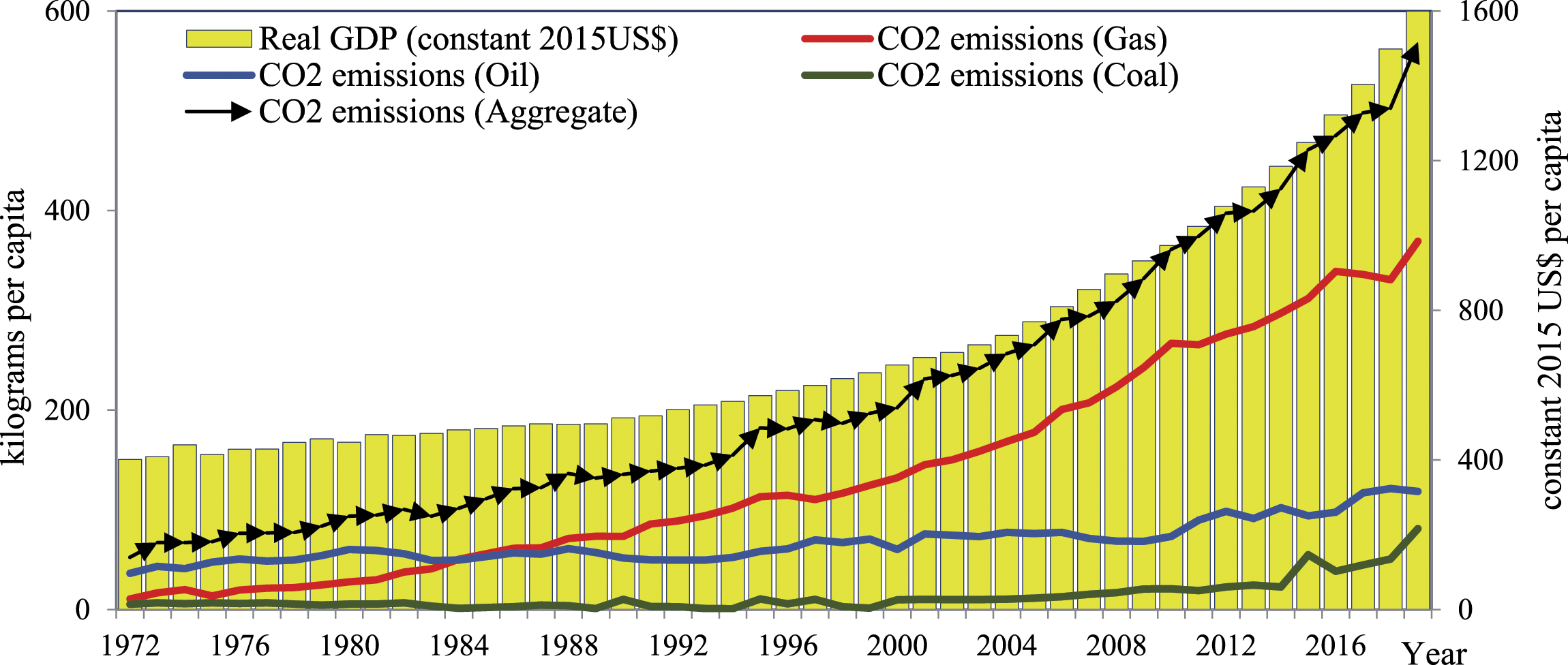
Figure 2 illustrates the trends in the shares of renewable and non-renewable electricity in the total electricity outputs of Bangladesh. Two distinct scenarios can be identified from this figure. First, the electricity sector of Bangladesh has always depended on primary fossil fuel sources whereby the share of non-renewable electricity output has traditionally been substantially larger than the corresponding renewable electricity output shares. Second, not only has the electricity sector of Bangladesh been fossil fuel-dependent, the dependency has risen over the last four decades or so. This claim is certified by the upward-sloping graph depicting the difference between non-renewable and renewable electricity shares in the total electricity outputs of Bangladesh. This is an alarming situation given the fact that the current government of Bangladesh is trying to diversify the national energy mix by replacing fossil fuels with renewable alternatives. The trends in renewable and non-renewable electricity in total electricity output. Note: The differences in the shares of non-renewable and renewable electricity output are presented along the secondary (right) axis; the figures are average figures in the respective time interval. Source: World Bank (2022).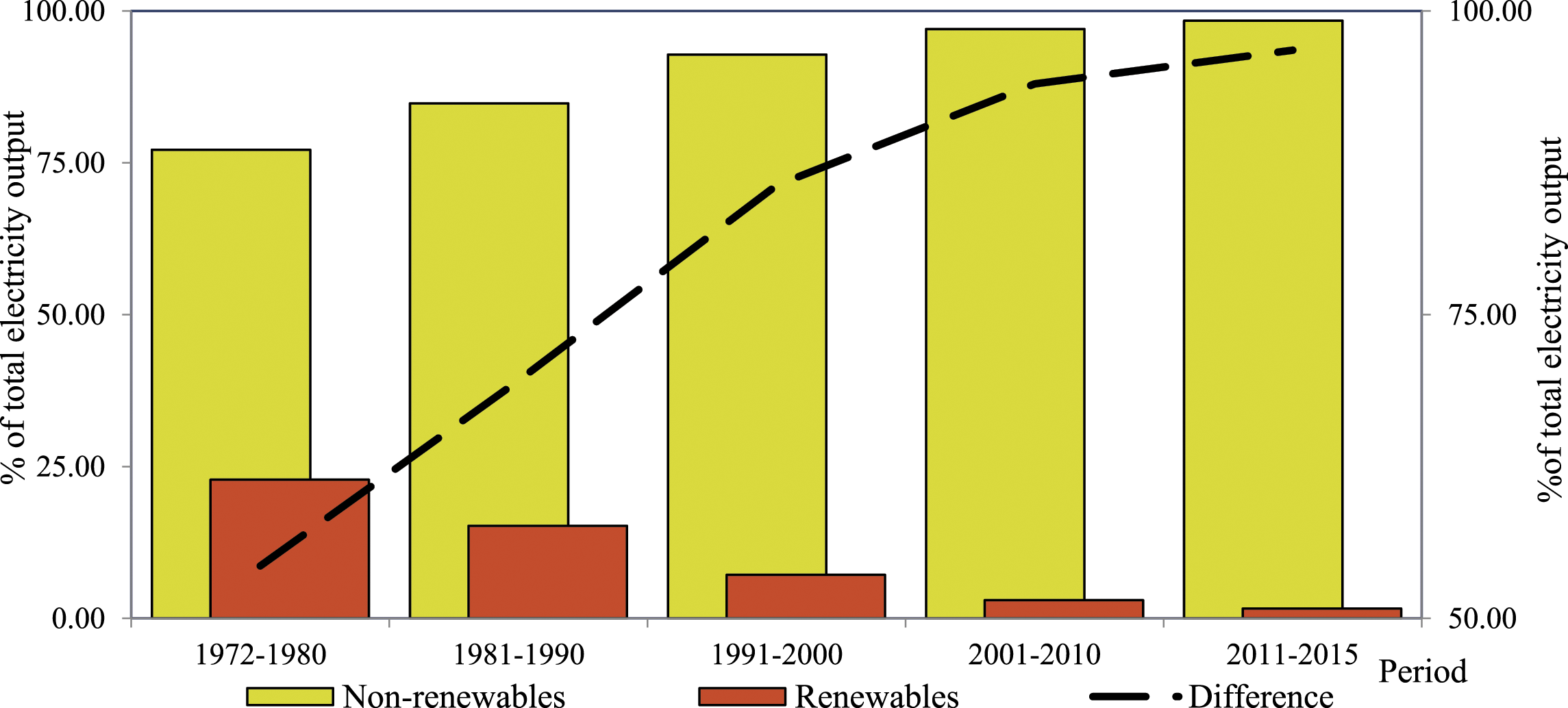
As far as the different primary energy sources employed to generate electricity in Bangladesh is concerned, Figure 3 shows a couple of concerning energy-related facts. First, it can be seen that Bangladesh has not been able to diversify its national energy mix before the 2000s. In the 1970s, 1980s, and 1990s, electricity in Bangladesh was generated using oils, natural gas, and renewables (especially hydroelectricity) while from the 2000s onwards coal made its way into the national energy mix. Therefore, despite managing to somewhat diversify the energy mix, the diversification was not done in an environmentally sustainable manner since coal is regarded as an unclean fossil fuel that releases hefty volumes of CO2 emissions when combusted, particularly, for producing electricity. Second, natural gas-based electricity is observed to account for a lion’s share in the total electricity output of Bangladesh from the 1980s onwards. Before that, oil-based electricity also held a significant share of Bangladesh’s aggregate electricity output. However, following the world oil price hikes during the early 1980s, the government turned to domestic natural gas supplies to replace oil for meeting the local energy demand. This justifies the relatively larger surge in Bangladesh’s gas-based CO2 emission figures as shown in Figure 2. Third, it can also be observed that rather than boosting renewable energy use, the share of renewable electricity outputs has rather declined. During the 1970s, the average share of renewables in the total electricity output was close to 23% (Murshed, Rashid, et al., 2022) which steadily dropped to reach a little more than 1.5% between the 2011–2015 period. Hence, it can be assumed that Bangladesh is not technologically and financially advanced enough to stimulate renewable energy transition within its electricity sector. The trends in the shares of different energy sources used for generating electricity. Note: The figures are average figures in the respective time interval. Source: World Bank (2022).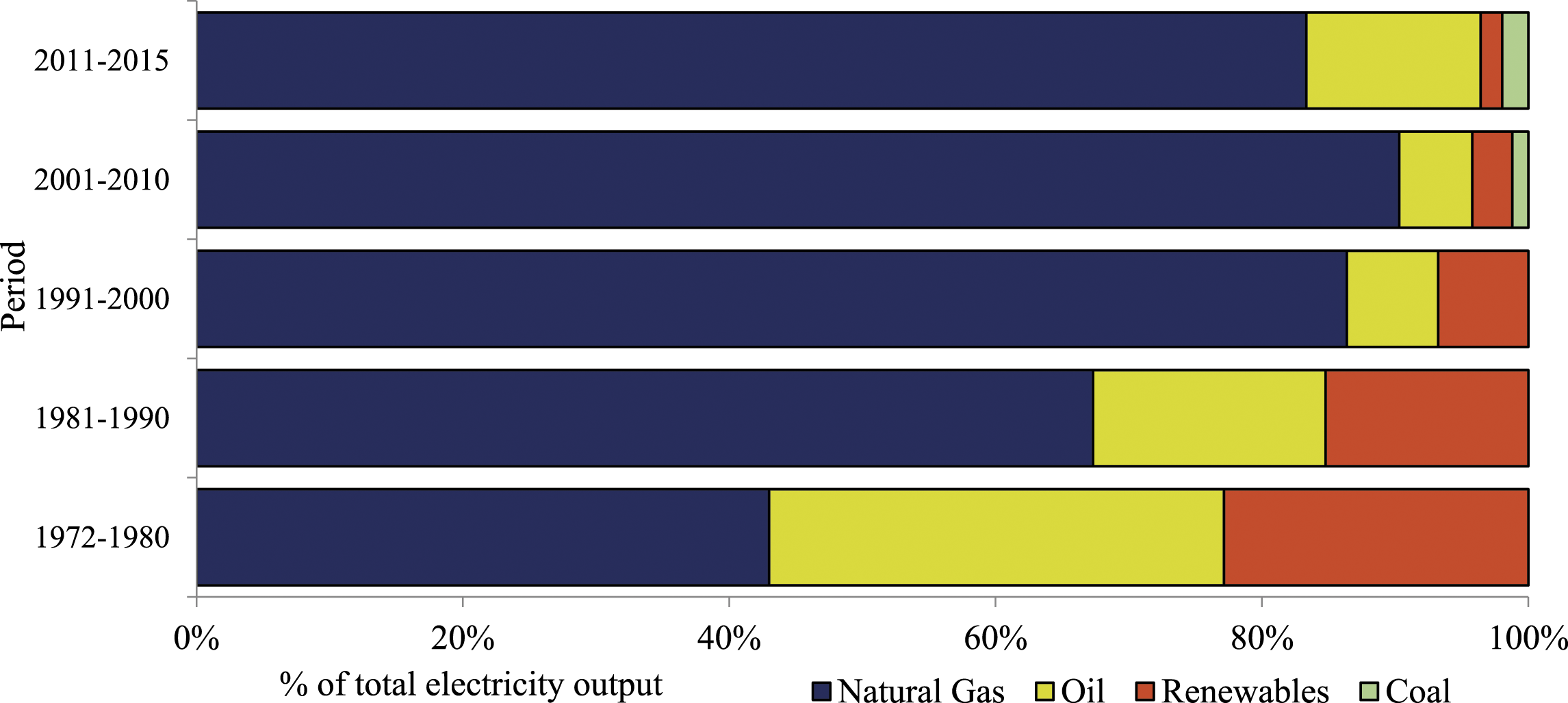
Review of Literature
In this section, we first provide the theoretical underpinnings relevant to our study followed by the summarization of the corresponding empirical findings documented in the literature.
Theoretical Framework
Economic activities have always been recognized as the major influencer of CO2 emissions across the globe. Since the traditional strategies of producing the national output have been largely unclean, greater expansion of the world economy has resulted in higher emissions of energy consumption-related CO2 (Murshed et al., 2021). Although economic growth is likely to degrade the environment by triggering CO2 emissions, it can be assumed that as the global economies become sufficiently large they can think of imposing regulations that can help them isolate economic growth from environmental degradation. For instance, economic affluence can be linked with a greater capacity to enact environmental protection litigations whereby the use of clean energy can be initiated. Consequently, higher economic growth may no longer be accompanied by higher energy-related CO2 emissions. These equivocal environmental impacts of economic growth are commonly described using the principles of the environmental Kuznets curve (EKC) hypothesis. This environmental theory asserts that economic growth imposes non-linear effects on the environment, initially increasing emissions and later on decreasing them (Al-Mulali et al., 2016). However, there are certain limitations of this study. Although many existing studies have supported the EKC hypothesis, the more recent ones have expressed disagreement with the theoretical foundations of this hypothesis. This is because the inverted U-shape of the EKC cannot be verified universally (Apergis & Ozturk, 2015). In the context of nations for which the EKC hypothesis does not hold, it can be assumed that these nations face constraints whereby they are unable to make replace unclean economic growth policies with cleaner alternatives. Besides, the EKC hypothesis is also criticized since it overlooks the impacts of non-economic growth factors on CO2 emission levels; the EKC hypothesis’s assumption of economic growth being the sole determinant of CO2 emissions is irrational.
Among the other macroeconomic factors, energy consumption is regarded as the most important influencer of CO2 emissions across the globe (Shakib et al., 2021). However, the environmental impacts are said to vary across the different forms of primary energy resources utilized, especially for generating electricity (Bento & Moutinho, 2016). For instance, since fossil fuels are rich in hydrocarbons, combustion of these primary energy sources within the power plants is likely to boost the energy-related CO2 emission levels (Ameyaw et al., 2019). Conversely, generating electricity from renewable sources, and simultaneously reducing fossil fuel employment levels in the power sector, is likely to control the growth in energy-related CO2 emissions (Belaïd & Zrelli, 2019). In line with these notions, enhancing the renewable electricity share is claimed to effectively mitigate the associated CO2 emission levels. However, achieving this clean energy transition is conditional on technological innovation and financial investments which can be expected to take place through the attraction of clean FDIs and local investments in the domestic energy infrastructure and renewable energy technology development-related projects (Murshed et al., 2021).
On the other hand, globalization is hypothesized to facilitate economic growth and influence CO2 emission levels as well. Although all forms of globalization (economic, social, and political) are acknowledged in the literature to influence the aggregate CO2 emission figures (Khan et al., 2019; Liu et al., 2020), economic globalization is believed to be more relevant in explaining the variations in the energy-related CO2 emission levels (You & Lv, 2018). According to Gygli et al. (2019), economic globalization comprises international trade, FDI, and portfolio investments, in particular. These indicators of economic globalization, especially international trade and FDI are theoretically postulated to affect the energy-related CO2 emission levels (Ahmed et al., 2017). As far as international trade is concerned, it has been mentioned under the Heckscher–Ohlin trade theory that is relatively cheaper for countries to specialize in the production of goods and services using locally abundant inputs. Hence, fossil fuel-abundant countries participating in trade are likely to specialize in the production of pollution-intensive commodities whereby utilization of fossil fuels to produce export items is likely to boost their energy-related CO2 emission figures. In contrast, renewable energy-abundant countries are more likely to specialize and export less pollution-intensive commodities; consequently, their energy-related CO2 emission figures can be controlled. Therefore, it is evident that economic globalization in the form of international trade can be expected to impose ambiguous environmental effects. Besides, referring to economic globalization in terms of attracting FDI, the Pollution Haven Hypothesis (PHH) postulates that inflows of dirty FDI can stimulate greater use of fossil fuels and, therefore, boost energy-based CO2 emissions (Duan & Jiang, 2021). On the other hand, cleaner FDI inflows can be anticipated to induce technological innovation to facilitate the renewable energy transition process, reduce fossil fuel dependency, and curb the associated CO2 emissions. This phenomenon is referred to as the pollution halo effect (Kisswani & Zaitouni, 2021).
The energy-related CO2 emissions are also influenced by urbanization within an economy since the global cities account for almost three-fourths of CO2 emissions generated from burning fossil fuels (Churkina, 2016). This is because as more people move from rural to urban areas, the energy demand tends to go up which is usually met by combusting fossil fuels. However, achieving sustainable urbanization is said to negate these adverse environmental consequences. In the same vein, SDG 12 aims at ensuring sustainable responsible consumption and production processes across the globe through sustainable management and the use of natural resources. Hence, linking this to urbanization, it is pertinent to control the urban demand for energy and also to meet this demand using non-fossil primary energy sources and renewable electricity. Lastly, financial development is also acknowledged as a crucial macroeconomic determinant of energy-based CO2 emissions (Li et al., 2021). However, financial development can increase the emissions and decrease them as well. For instance, financial development is likely to enhance the access to credit for the private sector whereby investment of these funds in the production processes can trigger the energy demand which, in turn, could go on to boost the energy consumption-based CO2 emission figures. In contrast, the greening of the financial sector is believed to facilitate cleaner energy use whereby the energy-related emissions can be inhibited to a large extent. Figure 4 presents the theoretical schema of the study. The theoretical framework of the study.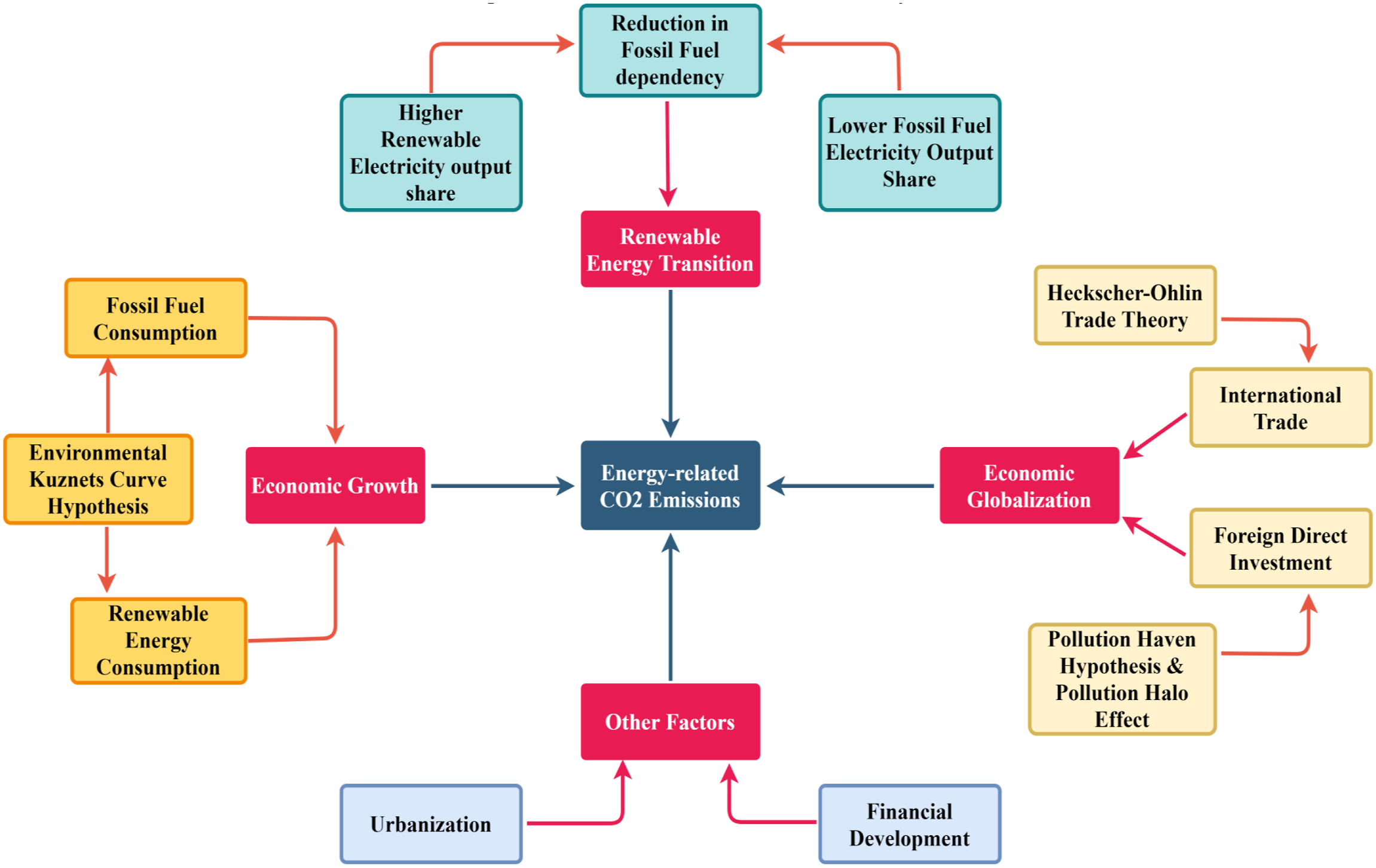
Empirical Evidence
Based on the theoretical settings discussed in the previous section, many preceding studies have attempted to empirically assess the relationships. In this section, we summarize the findings documented in these studies. In general, almost all previous studies, both in the context of Bangladesh and the rest of the world economies, have assessed the macroeconomic factors responsible for influencing the overall level of CO2 emissions. In contrast, only a handful of the preceding studies have shed light on the factors stimulating or inhibiting CO2 emissions generated from the consumption of different sources of energy. Hence, this section summarizes the relevant findings documented in the literature.
Firstly, economic growth is the most commonly examined macroeconomic determinant of CO2 emissions in the literature. Particularly for the case of Bangladesh, Islam et al. (2021) figured out that between 1972 and 2016 economic growth resulted in higher emissions of CO2 only in the short run. Similarly, utilizing annual data for the 1975–2013 period, Oh and Bhuyan (2018) asserted that the aggregate CO2 emission levels in Bangladesh are not influenced by the nation’s economic growth performances. Mehmood (2022), recently, tested the EKC hypothesis for CO2 emissions in the context of Bangladesh, controlling for renewable energy use, financial inclusion, and globalization. The results revealed that the EKC hypothesis holds only in the long run for the study period from 1990 to 2017. Therefore, the results confirmed that it is possible to isolate economic growth from total CO2 emissions in Bangladesh only in the long run. Similar empirical investigations related to the economic growth-CO2 emissions nexus have also been carried out in the context of other global economies. Pata (2018), accommodating issues of structural break, found evidence of the EKC hypothesis for total CO2 emissions in Turkey to be valid. In contrast, for the case of the developing economy of Kazakhstan, Hasanov et al. (2019) reported that the EKC hypothesis cannot be verified since economic growth although initially decreasing the total CO2 emission figures, ultimately results in higher emissions of CO2. Some recent studies have shed light on the impacts of economic growth on consumption-based CO2 emissions; however, these studies despite disaggregating total CO2 emissions do not emphasize the fuel-specific CO2 emission determinants. Among these, Mahmood (2022) remarked that for the Gulf Cooperation Council (GCC) nations, the EKC hypothesis for aggregate consumption-based CO2 emissions is valid.
Secondly, several past studies have emphasized the role of energy in influencing CO2 emissions. The earlier ones mostly evaluated the impacts of total energy consumption on aggregate CO2 emissions. Oh and Bhuyan (2018) asserted that higher consumption of energy in Bangladesh monotonically increases the nation’s total CO2 emission figures. Similarly for India, Usman et al. (2019) claimed that energy consumption is the stimulator of both the short- and long-run CO2 emission figures. Similarly, the positive energy consumption-CO2 emissions nexus was also verified by Shahbaz, Hye, et al. (2013) for Indonesia. However, in recent times, the focus has shifted from the effect of total energy to disaggregated energy on CO2 emissions. For instance, Murshed et al. (2021) evaluated the effects of both renewable and non-renewable energy consumption on aggregate CO2 emissions in Bangladesh. The results revealed that consumption of natural gas, liquefied petroleum gas, and hydropower curb CO2 emissions while greater use of coal and petroleum oil exert opposite impacts. In another related study for selected African countries, Mensah et al. (2019) concluded that fossil fuel consumption increases CO2 emissions only in the long run; in contrast, no short-run effect could be established. Similarly, Shahbaz, Kumar Tiwari, and Nasir (2013) and Tiwari et al. (2013) found evidence of environmental quality-inhibiting effects of coal consumption in South Africa and India, respectively. The authors found that higher consumption of coal is responsible for higher CO2 emissions in these nations. On the other hand, focusing on the use of cleaner energy, Bilgili et al. (2016) employed data from 17 Organization for Economic Cooperation and Development (OECD) nations and concluded that the utilization of renewable energy resources can be the panacea to mitigating CO2 emissions for these countries. In the same line, Kirikkaleli et al. (2021) also found higher renewable energy consumption to impede consumption-based CO2 emissions in Chile. Sahoo and Sahoo (2022) stated that although nuclear and total renewable energy consumption help to curb CO2 emissions in India, the consumption of hydropower cannot explain the variations in the nation’s annual CO2 emission figures.
Thirdly, regarding globalization, a wide pool of studies has shed light on the effects of globalization on CO2 emissions across the globe. Pata (2021) used data from Brazil, Russia, India, and China and found evidence of globalization exerting CO2 emissions in China and Brazil only. Similarly, Le and Ozturk (2020) stated that globalization is one of the major factors responsible for poor environmental quality in emerging markets and developing economies. The findings from that study unearthed that a rise in the globalization index resulted in higher emissions of CO2 in the long run. On the other hand, despite most of the previous studies exploring the linear globalization-CO2 emissions nexus, Shahbaz et al. (2019) used a non-linear model to test this relationship. The results showed that among 87 global economies, merely for 8% of these countries globalization led to lower CO2 emissions initially but later on contributed to higher emissions of CO2. Besides, not necessarily have all preceding studies labeled globalization as detrimental to the environment. Zaidi et al. (2019) used data from selected Asia Pacific Economic Cooperation countries and found evidence of higher globalization being responsible for lower CO2 emissions. Similarly, the results from the study conducted by Acheampong et al. (2019) certified globalization through the channel of international trade boosts CO2 emissions in Sub-Saharan African nations.
Fourthly, urbanization has also been identified as another important determinant of CO2 emissions. In the context of Bangladesh, Rahman and Alam (2021) utilized annual data from 1973 to 2014 and revealed evidence of urbanization being a catalyst for higher CO2 emissions. Likewise, Azam and Khan (2016) stated that urbanization imposed mixed environmental effects across South Asia. The results showed that urbanization drives higher CO2 emissions in Sri Lanka but reduces CO2 emissions in India and Bangladesh. In a study on another South Asian economy, Ali et al. (2019) remarked that urbanization boosts both the short- and long-run CO2 emission levels of Pakistan. Ngong et al. (2022) utilized data from the members of the Central African Economic and Monetary Community and found statistical evidence regarding greater urbanization triggering higher CO2 emissions. Besides, the authors also put forward that CO2 emission Granger causes urbanization. On the other hand, the heterogeneous effects of urbanization on CO2 emissions were highlighted in the study by Mehmood and Mansoor (2021). The authors utilized data from several East Asian and Pacific nations and discovered that urbanization impedes CO2 emissions in Japan, Hong Kong, China, and Mongolia while it stimulates higher CO2 emissions in Macao, South Korea, and Singapore.
Lastly, linking financial development to CO2 emissions, Khan, Hossain, and Chen (2021) employed Bangladeshi data from 1980 to 2016 and found evidence that developing the financial sector helps to inhibit the total CO2 emission figures both in the short- and long-run. In the context of India, Neog and Yadava (2020) stated that financial development initially reduces CO2 emissions but does not influence the long-run Indian CO2 emission levels. Similarly, Anwar et al. (2021) found statistical evidence of financial development aiding to reduce CO2 emissions in selected Asian countries. Among similar studies on non-Asian countries, Shahbaz et al. (2020) explored the financial development-CO2 emissions nexus for the United Arab Emirates and found that the development of the financial sector inflicts CO2 emission-boosting impacts. In contrast, using data from 88 global economies, Khan and Ozturk (2021) recently concluded that financial development is effective in inhibiting emissions of CO2. Furthermore, the authors also claimed that not only does financial development inhibit CO2 emissions directly but it also plays a key role in indirectly curbing CO2 emissions further. The corresponding results highlighted that the development of the financial sector helps to reduce the adverse environmental effects associated with economic growth and globalization. Likewise, Kirikkaleli et al. (2021) remarked that financial development mitigates consumption-based CO2 emissions in Chile.
Therefore, it is well understood from the review of the preceding studies that the environmental impacts of renewable energy use, globalization, economic growth, urbanization, and financial development in the context of Bangladesh were predominantly assessed using the nation’s total CO2 emission figures while little is known regarding the impacts of these macroeconomic aggregates on disaggregated levels of CO2 emission. Moreover, almost all preceding studies have used aggregate globalization figures on Bangladesh’s CO2 emission levels rather than emphasizing the possible heterogeneous environmental effects associated with different forms of globalization. Further, only the independent effects of renewable energy use and globalization on CO2 emissions were evaluated in the context of Bangladesh whereby the interactive effects of these variables on Bangladesh’s CO2 emission figures were largely overlooked in the literature. Therefore, this current study wishes to bridge these gaps in the literature.
Empirical Model and Estimation Strategy
Empirical Model
In line with the assumptions of the EKC hypothesis, and keeping into consideration the theoretical underpinnings discussed in the previous section, our baseline empirical model is expressed as:

Among the explanatory variables, HELECT refers to the annual level of hydroelectricity consumption in Bangladesh. Hydroelectricity consumption is used as a proxy for renewable electricity use in the country. On the other hand, the variable EGI refers to the economic globalization index which is constructed using the levels of trade openness and FDI inflows, in particular (Gygli et al., 2019). A higher value of this index is synonymous with a rise in the degree of Bangladesh’s economic globalization with the other world economies. The predicted sign of the corresponding elasticity parameter (
Further, keeping into consideration the prospects of Bangladesh to import hydroelectricity from the neighboring South Asian nations like Bhutan and Nepal, in particular, we also evaluate the possible joint impacts of hydroelectricity consumption and economic globalization on disaggregated fossil fuel consumption-based CO2 emissions. Hence, we augment an interaction term in Model 1 which can be shown as:

The Definitions, Units of Measurement, and Data Sources of the Variables.

Estimation Strategy
The estimation process commences with the unit root analysis which is important since the choice of regression techniques is conditional on the order of stationarity of the variables in the respective model. The traditional unit root estimators such as the Dickey–Fuller Generalized Least Squares (DF-GLS), Augmented Dickey–Fuller (ADF), Phillips–Perron (PP), and Kwiatkowski–Phillips–Schmidt–Shin (KPSS) are incapable of controlling for the potential structural break problems in the data (Qahtan et al., 2021). Therefore, these methods are likely to yield inconsistent unit root outcomes. Therefore, considering the limitations of these techniques, we utilize the recently developed Residual Augmented Least Squares-Lagrange Multiplier (RALS-LM) unit root estimation technique of Meng et al. (2017). This technique considers trend breaks and non-normal errors and predicts the unit root properties in the presence of up to two structural breaks in both the intercept and trend (Krištić et al., 2019). For robustness check, the Lee–Strazicich one break and the Narayan–Popp two break unit root estimation methods of Lee and Strazicich (2013) and Narayan and Popp (2013), respectively, are also utilized in this study. All these three methods predict test statistics to verify the alternative hypothesis of stationarity of the series at the level [I (0)] or the first difference [I (1)].
Following the conclusion of the unit root analysis, and given that the variables have a maximum order of integration at the first difference, the next step involves the application of the novel Fourier-Bootstrapped Autoregressive Distributed Lag (BARDL) bounds testing technique introduced by Solarin (2019). This method for predicting cointegration (long-run associations) among the variables is an extended and advanced variant of the conventionally used ARDL bounds testing approach introduced by Pesaran et al. (2001) and the advanced BARDL method of McNown et al. (2018). According to the method of Pesaran et al. (2001), our baseline model (i.e., Model 1) can be represented as an Error-Correction Model (ECM) as follows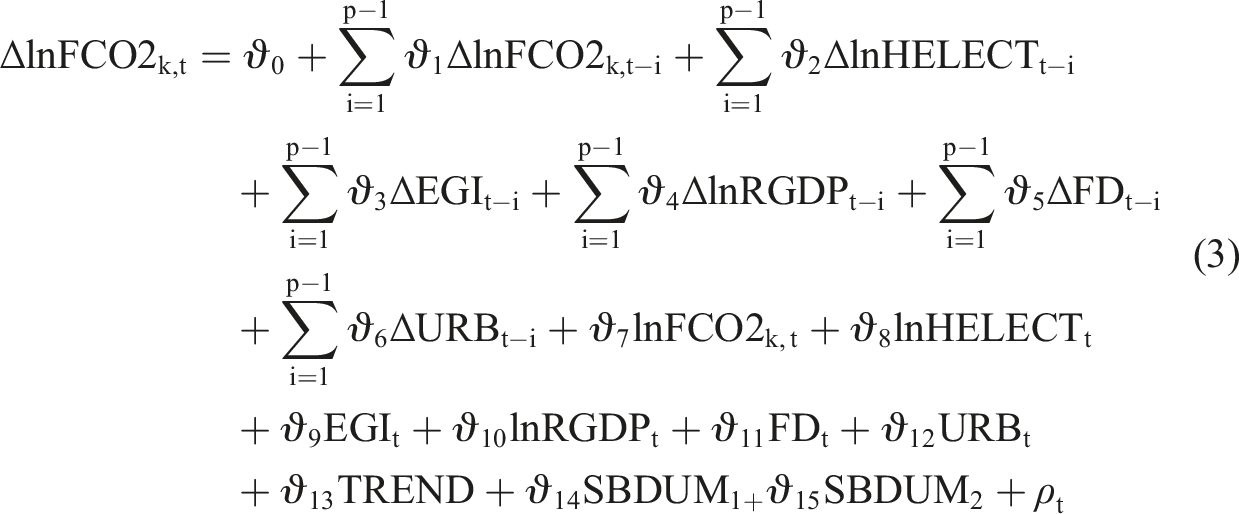


The conventional F-overall statistic considers lagged levels for both the dependent and independent variables within the ECM while the t-dependent statistic considers only the lagged level of the dependent variable (Alam et al., 2022). Under such circumstances, cointegration among the variables is affirmed if any of these test statistics are statistically significant. However, McNown et al. (2018) extended this cointegration analysis by presenting an additional F-statistic (i.e., the F-independent) which considers the lagged levels of only the independent variables within the ECM model. The corresponding null hypothesis of no cointegration can be shown as
For cointegration to exist, all these three test statistics (F-overall, t-dependent, and F-independent) have to be statistically significant; in simple terms, the absolute values of these statistics have to be greater than the corresponding bootstrapped critical values (Pata & Aydin, 2020). However, despite being superior to the conventional ARDL bounds test, the BARDL method has a limitation in terms of not being efficient in accounting for the smooth and sharp shifts/transitions in the cointegrating relationships among the variables (Solarin, 2019). Hence, Solarin (2019) extended the BARDL method of McNown et al. (2018) by introducing Fouriers into the ECM model. The inclusion of the Fourier is believed to capture the possible smooth transitions in cointegrating relationships (Pata & Aydin, 2020). Under the Fourier BARDL approach, the inclusion of Fouriers in equation (3) can be shown as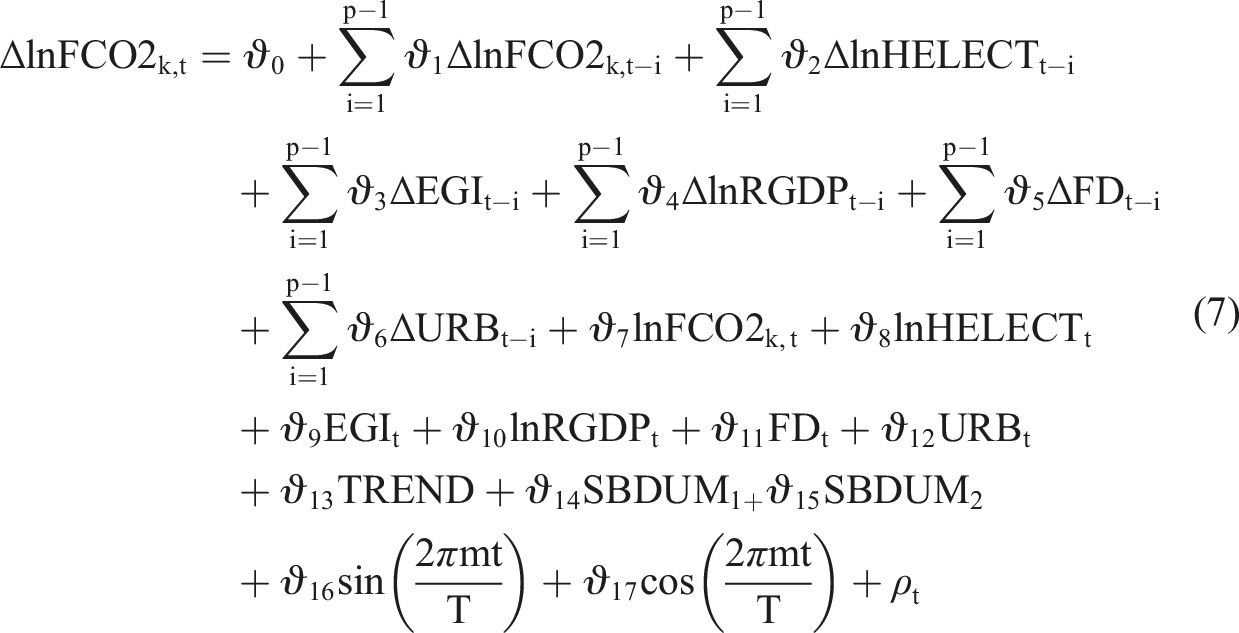
In the last stage of the analysis, the causal associations among the variables are ascertained. Conventionally, the Toda–Yamamoto causality estimation technique proposed by Toda and Yamamoto (1995) has been widely used in the literature. This technique predicts causal properties using a Vector Autoregressive (VAR) model. However, predicting causality using a VAR model may lead to inaccurate outcomes since the structural changes are not accounted for in this traditional approach (Enders & Jones, 2016). Therefore, to address this limitation, Nazlioglu et al. (2016) recently introduced the Fourier approximation within the Toda–Yamamoto approach. Consequently, the Fourier Toda–Yamamoto (FTY) causality estimator of Nazlioglu et al. (2016) emerged for conducting Granger causality analysis with (a) single Fourier frequency and (b) cumulative Fourier frequency (Pata & Aydin, 2020). In this study, we utilize the Fourier frequency version of the FTY method since its application is appropriate in the context of the number of observations being between 50 and 100. Since this study utilizes 48 years of data, the use of the single Fourier frequency version of the FTY is chosen. For comparison purposes, the non-Fourier Toda and Yamamoto (1995) method is also utilized to predict the causal properties of the variables.
Findings and Discussions
The Outcomes From the Unit Root Analysis.

Note: ∆ represents the first difference operator; the Schwarz Information Criterion (SIC) was used to determine the optimal number of lag; gas, oil, and coal denote fossil fuel consumption-related CO2 emissions generated from the combustion of gas, oil, and coal, respectively; the test statistics are predicted considering the null hypothesis of non-stationarity; *** and ** denote statistical significance at 1% and 5% level of significance, respectively.
The Results From the Fourier BARDL Cointegration Analysis.
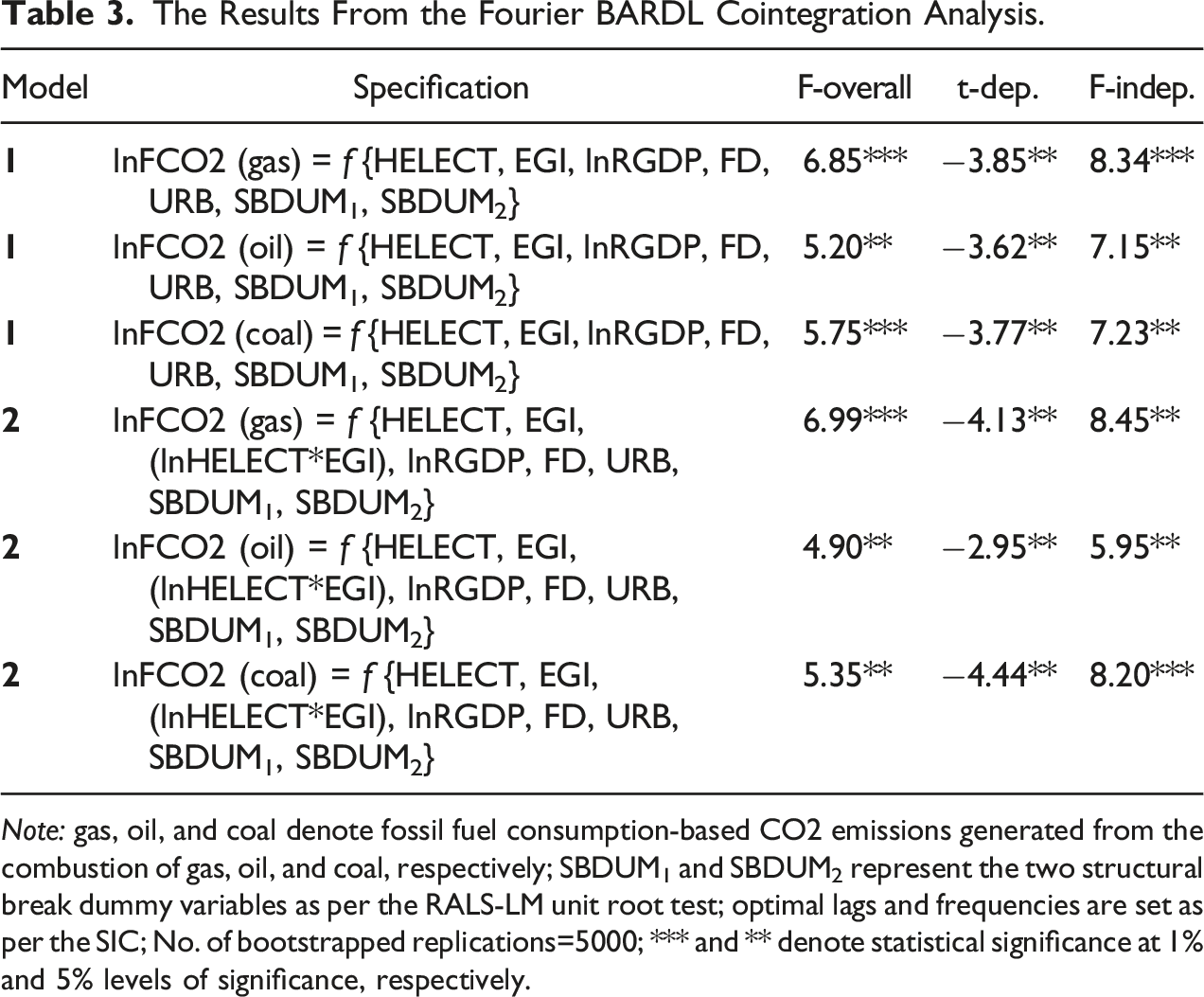
Note: gas, oil, and coal denote fossil fuel consumption-based CO2 emissions generated from the combustion of gas, oil, and coal, respectively; SBDUM1 and SBDUM2 represent the two structural break dummy variables as per the RALS-LM unit root test; optimal lags and frequencies are set as per the SIC; No. of bootstrapped replications=5000; *** and ** denote statistical significance at 1% and 5% levels of significance, respectively.
The Fourier BARDL Short- and Long-Run Results for Model 1.

Note: The optimal number of lags is based on the SIC; gas, oil, and coal denote fossil fuel consumption-based CO2 emissions generated from the combustion of gas, oil, and coal, respectively; SBDUM1 and SBDUM2 represent the two structural break dummy variables as per the RALS-LM unit root test; *** and ** denote statistical significance at 1% and 5% significance level, respectively; the standard errors are reported within the parentheses.
On the other hand, the results also indicate that the trade and financial globalization policies of Bangladesh are not favorable for the quality of the environment. This is because it can be witnessed that a 1% rise in the economic globalization index is associated with a rise in the levels of per capita CO2 emissions generated from combusting gas, oil, and coal on average by 0.631%, 0.539%, and 0.425%, respectively, in the short-run while reducing these emissions further by 0.703%, 0.696%, and 0.510%, respectively, in the long run. Hence, it can be clearly understood that the environmental adversities linked to higher degrees of economic globalization persistently go up with time. In the context of Bangladesh, this finding of economic globalization exerting negative environmental impacts is justified since it has been recognized in the literature that the environmental protection laws in Bangladesh are not strong enough to restrict environmental degradation (Rahman and Kashem 2017). In line with this notion, it can be expected that participation in international trade and FDI inflows foster the development of the unclean industries in Bangladesh; consequently, the expansion of these industries is likely to scale up the fossil fuel demand and, thereby, boost the CO2 emission levels as well. The finding of the positive correlation between the economic globalization index and disaggregated CO2 emission levels also validates the PHH in Bangladesh since a higher degree of economic globalization is synonymous with a rise in the influx of FDI. It is important to note that Islam et al. (2021) concluded that globalization is effective in curbing the total CO2 emission figures in Bangladesh. In contrast, the disaggregated fossil fuel consumption-based CO2 emission-stimulating effect of economic globalization found in this study implies that although globalization as a whole may be effective in improving Bangladesh’s environmental quality, the economic dimension of globalization does not facilitate the environmental development goals of the nation. Thus, the decision to evaluate the globalization-CO2 emissions nexus using disaggregated figures can be claimed to be justified from the perspective of designing comprehensive globalization policies in Bangladesh.
Among the other key findings reported in Table 4, the results certify the economic growth-environmental degradation trade-off scenario in Bangladesh. The short- and long-run elasticity estimates reveal that economic growth triggers higher emissions of fossil fuel consumption-based CO2 emissions. A rise in the per capita level of real GDP by 1% is evidenced to boost per capita CO2 emissions generated from combusting gas, oil, and coal on average by 2.336%, 2.771%, and 1.951%, respectively in the short run while reducing these emissions in the long run by 2.129%, 2.225%, and 1.390%. Therefore, considering the relatively smaller CO2 emission-boosting impacts in the long run, it can be said that the detrimental environmental impacts associated with economic growth are likely to decline over time. This trend is in line with the principles of the EKC hypothesis based on which this hypothesis can be claimed to hold in the context of Bangladesh. The EKC hypothesis, concerning total CO2 emissions, was also confirmed in the previous studies conducted by Murshed et al. (2021) for Bangladesh, Ahmed and Long (2013) for Pakistan, and Aydoğan and Vardar (2020) for the E7 countries. On the other hand, the results also indicate that financial development boosts CO2 emissions generated from the combustion of gas both in the short- and long run; however, financial development was evidenced to be ineffective in influencing the per capita levels of CO2 emissions stemming from oil and coal consumption. These findings indicate that as the private sector credit access is enhanced, it might trigger the electricity demand in Bangladesh. Since natural gas holds a lion’s share in the total electricity output of the country, the surge in electricity demand is likely to boost the gas consumption-based CO2 emissions as well. Pata (2018) also documented evidence of financial development being responsible for surging the total CO2 emission levels in Turkey. However, the findings of Khan, Hossain, and Chen (2021) can be linked with the results found in this paper regarding the ineffectiveness of financial development to affect CO2 emissions generated from using oil and coal.
The Fourier BARDL Short- and Long-Run Results for Model 2.

Note: The optimal number of lags is based on the SIC; gas, oil, and coal denote fossil fuel consumption-based CO2 emissions generated from the combustion of gas, oil, and coal, respectively; SBDUM1 and SBDUM2 represent the two structural break dummy variables as per the RALS-LM unit root test; *** and ** denote statistical significance at 1% and 5% significance level, respectively; the standard errors are reported within the parentheses.
Table 4 also shows that the error-correction terms predicted for all cases are negative and statistically significant at the 1% level of significance. These imply that these models converge to a long-run equilibrium level at a speed of around 70%–82.5%. Besides, the predicted adjusted R-squared values are seen to be quite high which indicated that around 78%–81% of total variations in Bangladesh’s per capita fossil fuel consumption-based CO2 emission figures can be explained by positive shocks to the nation’s levels of per capita hydroelectricity consumption, economic globalization index, per capita real national income, financial development, and urbanization rate. As far as the diagnostic tests are concerned, the corresponding results certify that the Fourier BARDL models are free from serial correlation, model misspecification, heteroscedasticity, and non-normality problems. Furthermore, the stability of the parametric estimations in these models is affirmed by the findings from the CUSUM and CUSUMSQ tests. 2
The Results From the DOLS Method (Robustness Analysis).
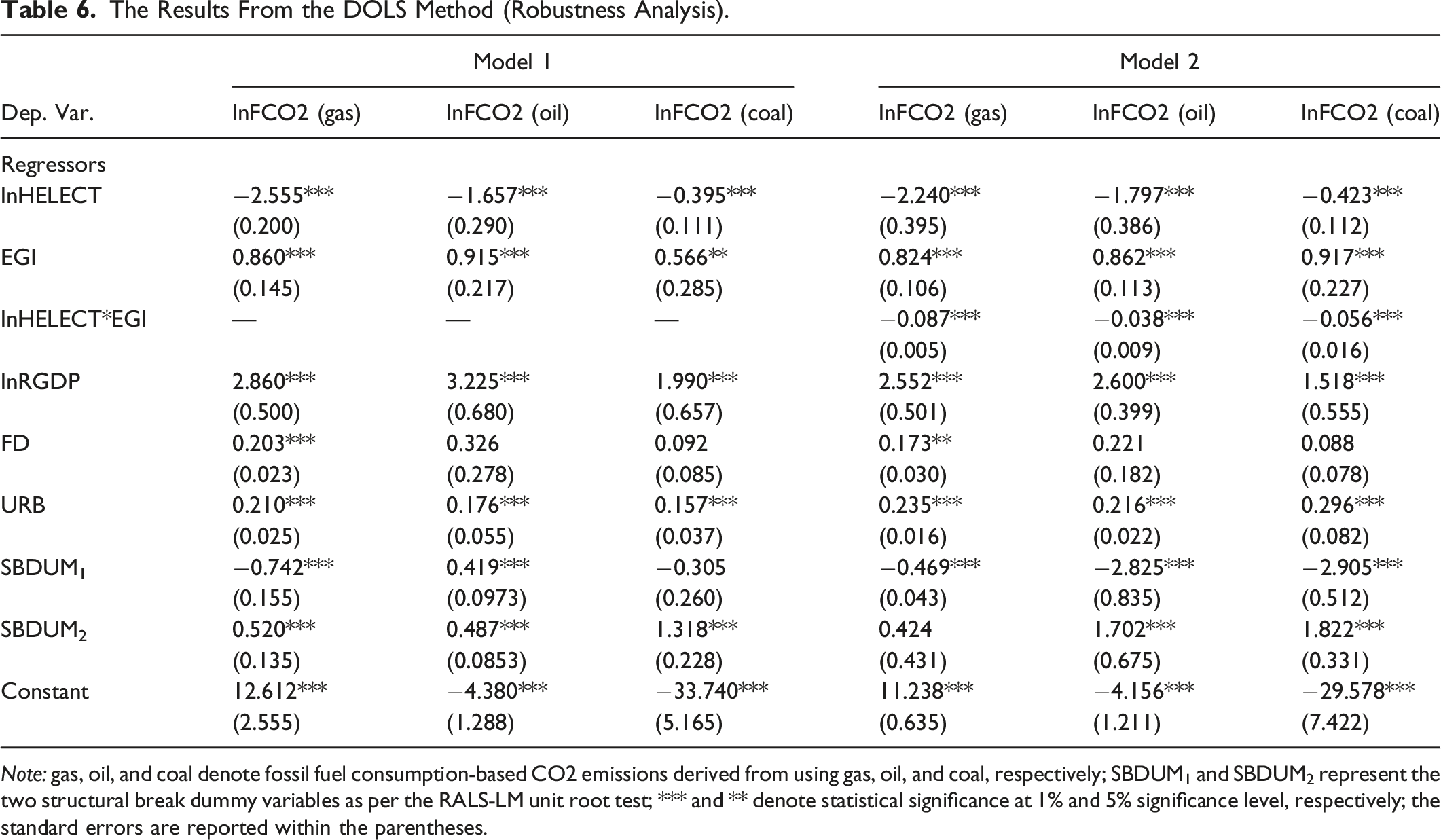
Note: gas, oil, and coal denote fossil fuel consumption-based CO2 emissions derived from using gas, oil, and coal, respectively; SBDUM1 and SBDUM2 represent the two structural break dummy variables as per the RALS-LM unit root test; *** and ** denote statistical significance at 1% and 5% significance level, respectively; the standard errors are reported within the parentheses.
The robustness of the long-run findings across alternative regression methods is assessed using the DOLS estimator. The DOLS elasticity estimates, for both Models 1 and 2, are reported in Table 6. It can be observed that DOLS elasticity estimates have similar signs as the signs of the corresponding Fourier BARDL elasticity estimates. However, the sizes of the DOLS elasticity estimates are relatively larger. Hence, upon comparing the relative magnitudes, it can be said that the Fourier BARDL estimator corrects for the overestimate bias of the DOLS estimator. The capacity of the Fourier BARDL method to incorporate variables of mixed order of integration, whereas the DOLS technique requires all variables to be commonly integrated at the first difference, could be the reason behind the differences in the sizes of the elasticity estimates across these two alternative methods. In addition, since the Fourier BARDL technique can assign different lag lengths to the variables, which is not the case for the DOLS technique, it can account for the overestimate bias of the DOLS analysis outcomes. Therefore, the robustness of the long-run findings across alternative regression techniques could not be established. Nevertheless, considering the relative advantages of the Fourier BARDL approach, the elasticity estimates predicted using this technique can be assumed to be more valid.
The Results From the Causality Analysis.
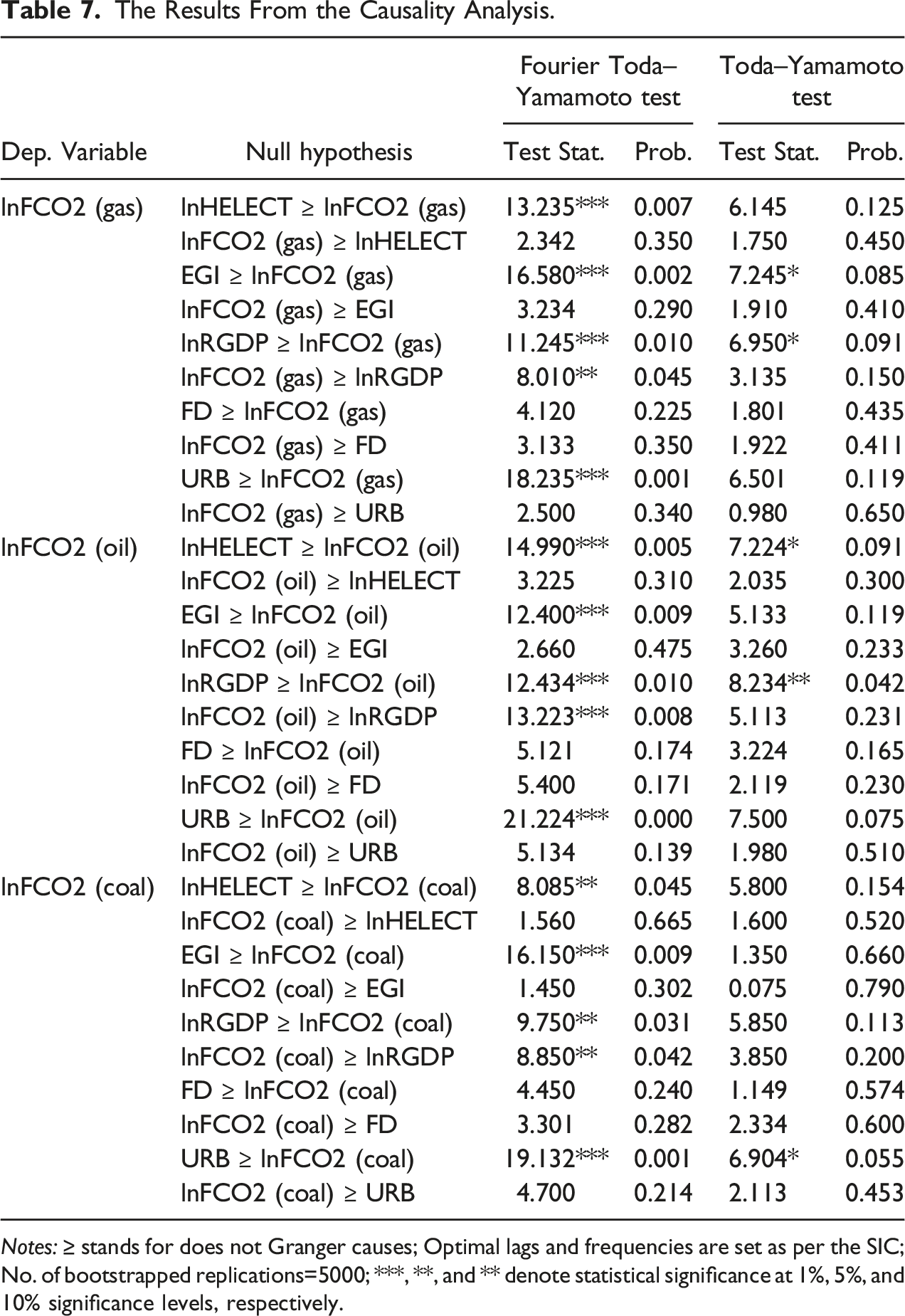
Notes:
Conclusion and Policy Recommendation
Bangladesh has traditionally pursued economic growth-enhancing policies without paying much heed to the environmental adversities that have accompanied the growth achievements. This is because much of Bangladesh’s economic expansion has been attained by utilizing both imported and locally sourced fossil fuels. However, in the contemporary era, Bangladesh is concerned regarding the aggravation of its environmental quality whereby the government has recently pledged at the COP26 to reduce CO2 emissions by more than one-fifth by the end of 2030. Thus, decarbonizing the economy has become imperative for the Bangladesh government especially by lessening the nation’s traditional fossil fuel dependency within the electricity sector, in particular, and greening its future globalization strategies. Against this backdrop, this study evaluated the effects of hydroelectricity consumption and economic globalization, controlling for economic growth, financial development, and urbanization, on disaggregated fossil fuel consumption-based CO2 emissions in Bangladesh over the 1972–2019 period. The results from the empirical analysis revealed long-run cointegrating relationships among CO2 emissions, generated specifically from combusting gas, oil, and coal, and the other macroeconomic variables of concern. Besides, hydroelectricity consumption was found to be associated with higher CO2 emissions while economic globalization was evidenced to induce CO2 emission-stimulating effects. However, both hydroelectricity consumption and economic globalization were found to jointly curb the disaggregated fossil fuel-based CO2 emission figures of Bangladesh. In addition, the findings validate the EKC hypothesis in the context of Bangladesh. Furthermore, financial development led was seen to boost CO2 emissions generated from the consumption of gaseous fuels. Lastly, the results indicated that urbanization boost all forms of fossil fuel consumption-based CO2 emissions only in the long run. Therefore, in line with these major findings, this study recommends several decarbonization policies for the Bangladesh government to consider.
Firstly, it is imperative for the nation to get over its fossil fuel dependency within its electricity sector by substantially enhancing the share of hydroelectricity and other types of renewable electricity in the total electricity output of Bangladesh. Achieving a renewable electricity transition would not only benefit the nation by curbing the fossil fuel consumption-related CO2 emissions but would also reduce the acute natural gas supply shortages faced by the nation to ensure energy security in Bangladesh. Therefore, overcoming the technological and financial constraints impeding renewable electricity transition in Bangladesh must be made a prioritized agenda of the government. This leads us to the second recommendation put forward in this study. Secondly, the traditional economic globalization policies pursued by Bangladesh need to be restructured. More precisely, Bangladesh should emphasize boosting international trade of relatively less pollution-intensive commodities and inhibit the influx of dirty FDI. In this regard, to undergo a renewable electricity transition, Bangladesh may think of boosting its intra-regional import of hydroelectricity from the neighboring hydroelectricity-surplus nations. Besides, liberalizing trade barriers imposed on primary inputs needed for generating solar power can also be an additional policy initiative. On the other hand, Bangladesh should also consider attracting clean FDI, especially to develop the latest technologies required for producing electricity using renewable energy sources. Accordingly, the fossil fuel consumption-based CO2 emissions associated with economic globalization can be expected to be controlled.
Thirdly, the nation must focus on adopting environmentally sustainable production and consumption policies to eliminate the traditional economic growth-environmental deterioration trade-off. This can be particularly achieved by greening the domestic financial sector of Bangladesh. In this regard, issuing green bonds can prove to be a mechanism for neutralizing the environmental adversities associated with financial development in Bangladesh. Besides, subsidizing the interest charged against credit extended to the private sectors, especially for financing green projects can further reduce the financial development-driven CO2 emission problems. Finally, aligning the urbanization policies with the decarbonization objectives of the nation is imperative to cut down the CO2 emission problems linked with unplanned urbanization in Bangladesh. In this regard, meeting the urban energy demand with renewable electricity is critically important which further justifies the importance of undergoing a renewable electricity transition in Bangladesh. Successful adoption and execution of these key environmental development policies can be expected to assist Bangladesh in significantly decarbonizing its economy.
The key limitation faced in this study was the lack of availability of sectoral CO2 emission figures for Bangladesh whereby a sector-specific analysis could not be done. Consequently, the findings and policy recommendations are more relevant for all sectors collectively but may not be homogeneously valid for each of the sectors of Bangladesh. Future studies can look to conduct extensive work in this area so that the findings from this study can be compared for further robustness checks.
Footnotes
Declaration of Conflicting Interests
The author(s) declared no potential conflicts of interest with respect to the research, authorship, and/or publication of this article.
Funding
This research is funded by the Ministry of Education of the People's Republic of China (Grant No. 202101361041).
