




Abstract
Government public relations are often viewed as propaganda. However, one’s own perspective has much to do with how the communications are perceived. One example of American propaganda is linked to World War I. While there has been research devoted to the patriotic posters and films of this era, other forms of media during this same time period have been largely overlooked. This article, therefore, presents research on the communications surrounding the “Knit Your Bit” campaign, which the American Red Cross conducted with help from the U.S. government-sponsored Committee on Public Information. The campaign persuaded knitters on the home front to knit for the troops using content in the major women’s magazine of the day: Ladies’ Home Journal. This article considers how the overlooked campaign contributed to efforts to generate patriotism during World War I and how social, political, and economic factors affected the communications.
Thanks, lady, for the socks you knit I used one for a hammock and one for a mitt And I pause, dear lady, to ask you this Where in the hell did you learn to knit?? —Poem by American Soldier, Macdonald (1988, p. 217)
Communicating Patriotism
A recent publication, Propaganda and American Democracy (Snow, 2014), provides an opportunity to place American propaganda efforts within a wider historical context. One of the chapters argues that propaganda surrounding the United States’ first declared war in the 20th century, World War I, should be reinterpreted as justifiable and successful given the era (M. Lee, 2014a). Kimble’s review of the book, however, questions such an assessment, contending that judgments of propaganda cannot escape the bias of the analyst (2015). Indeed, the propaganda of that war, typically associated with the posters and films of the Committee on Public Information (CPI), was mired in controversy even at the time. Assessing its true nature requires additional glimpses of the propaganda in question.
Only a week after the declaration of war, President Woodrow Wilson issued an executive order creating the CPI, an agency charged with portraying the “absolute justice of America’s cause” and “the absolute selflessness of America’s aims” (Zieger, 2001, p. 79). To head it, he chose George Creel, a newspaper editor and long-time Wilson supporter. Despite a Senate committee investigation claiming that the War Department had created a propaganda bureau, the CPI worked to generate patriotism in the American public.
Interestingly, the CPI directed the American Red Cross during World War I, and its communications provide a thought-provoking area of study. While the American Red Cross certainly utilized the familiar CPI-esque propaganda techniques, such as posters and films, the organization also found other ways to communicate patriotism. These are less obvious but equally important to contributing to the conversation about World War I propaganda. This article, therefore, presents research on the overlooked communications surrounding the “Knit Your Bit” campaign, which the American Red Cross conducted during World War I.
While the campaign aimed to persuade knitters on the home front to knit for the troops by using CPI-esque techniques, it also supplemented efforts with embedded content in the major women’s magazine of the day: Ladies’ Home Journal. This article, as a result, considers how the overlooked magazine content was affected by social, political, and economic factors during World War I. It finds that the content first used an indirect method of communication but adapted to a more direct approach as the war came to an end. The reason for such adaptation is based on the audience, largely White, middle-class women, the purpose, to generate patriotism on the home front, and the context of war, with its limited resources.
The American Red Cross and Ivy Lee in World War I
Although the Red Cross was a peacetime organization, President Wilson announced that an appointed War Council would take over its leadership shortly after U.S. involvement began overseas. Henry P. Davison, a partner of J. P. Morgan and Company, was named chairman with former President William Howard Taft and Eliot Wadsworth, peacetime heads of the Red Cross, as “official” members. Davison, while known only to a relatively small circle of persons, was quiet but eloquent and had become a leading figure at J. P. Morgan and Company. He had a vision for the Red Cross despite knowing relatively little about the workings of the agency (Hurd, 1959).
Davison chose Ivy Lee, a pioneer of public relations, to serve as his personal advisor. Since the Red Cross needed publicity, the office of the Assistant to the Chairman of the War Council was specifically created for Ivy Lee. Lee played a significant role in making the Red Cross a successful adjunct to the entire war effort.
Ivy Lee is described by his biographer, Hiebert (1966), as a courtier to the crowd, and despite him being dubbed the father of modern public relations relatively few studies have been published about him. While there is Hiebert’s (1966) biography, it has been criticized for its overly positive portrayal of Ivy Lee’s life work (L’Etang, 2008). Other references to him appear in general information sources, such as the Encyclopedia of Business Ethics and Society (Kolb, 2008). Most recently, Zoch, Supa, and VanTuyll (2014) examined public relations practice in the New York Times during Ivy Lee’s working lifetime to gauge sentiment toward the emerging field. However, research is lacking on how Ivy Lee applied his philosophy of public relations despite the big names he worked for, which includes J. D. Rockfeller, American Tobacco, and, as mentioned earlier, the American Red Cross.
Ivy Lee’s work in the American Red Cross often goes overlooked because of the other public relations pioneers involved with the war effort, such as George Creel and even the well-known Edward Bernays. In his autobiography, Bernays (1965) writes that all involved with the CPI were pioneers devoted to President Wilson. Both Bernays and Creel embraced publicity because “extremism in defense of a client is no vice. It could be a virtue, even if it entailed fighting dirty” (Pinsdorf, 1999, p. 315).
The CPI perspective on public relations, though, differed from Ivy Lee’s philosophy (Emery & Emery, 1988). He explained how propaganda during World War I was extreme and that the reaction against the word “is because it has been identified with so many indefensible methods and practices” (I. Lee, 1927, p. 14). The essential evil of propaganda, to Ivy Lee, was the failure to disclose the source of information. For more than a year, between July 1917 and August 1918, he applied his philosophy of public relations to create a powerful publicity effort within the American Red Cross. He brought specialists and professionals from a wide variety of fields, including a “first-class advertising man as head of our Advertising Bureau” and a top New York Tribune women’s reporter, Miss Anne Pierce, “to supervise what we say concerning the work of women” (Hiebert, 1966, p. 296). Additionally, Ivy Lee created a magazine bureau to handle relationships with magazines throughout the country. It helped, also, that Creel asked major advertisers and the publications to donate space for various government campaigns, the Red Cross, and other war-related activities.
Such communication efforts were important because Ivy Lee advised that a great deal of attention should be paid to carrying on a regular campaign of education among Red Cross workers. More specifically, If the Red Cross is to realize its mission, it must be not only a great relief organization but a great social and moral force, including the gospel of service and sacrifice and basing its program upon an appeal to the reason as well as the emotions of its workers and members. (Hiebert, 1966, p. 248)
The “Knit Your Bit” Campaign
Shortly after America entered the war, Mabel Boardman, a member of the American Red Cross Central Commission, surveyed the army’s stock of sweaters, knitted caps, socks, mittens, and wristlets. She concluded that they could not possibly sustain the soldiers in the coming winter months (Macdonald, 1988). Not only was the upcoming winter of 1917 to 1918 one of the harshest on record, but the U.S. Army was also growing with newly drafted men (Evans, 2001). In Figure 1, a chart illustrates the amount of estimated items the military needed and the available numbers of those same goods. Two of the most important items, woolen blankets and socks, are depicted as being in short supply. Interestingly, blankets are depicted as being in the greatest need, based on percentages, yet there was no call for those on the home front to weave or sew blankets. Instead, the “Knit Your Bit” campaign focused mainly on knitted items, such as socks. Furthermore, such knitted work was viewed as voluntary and unpaid, which differed from the government contracts for other types of goods purchased for the war effort, such as blankets.
A chart depicting needed items for the war effort (Ayres, 1919, p. 50).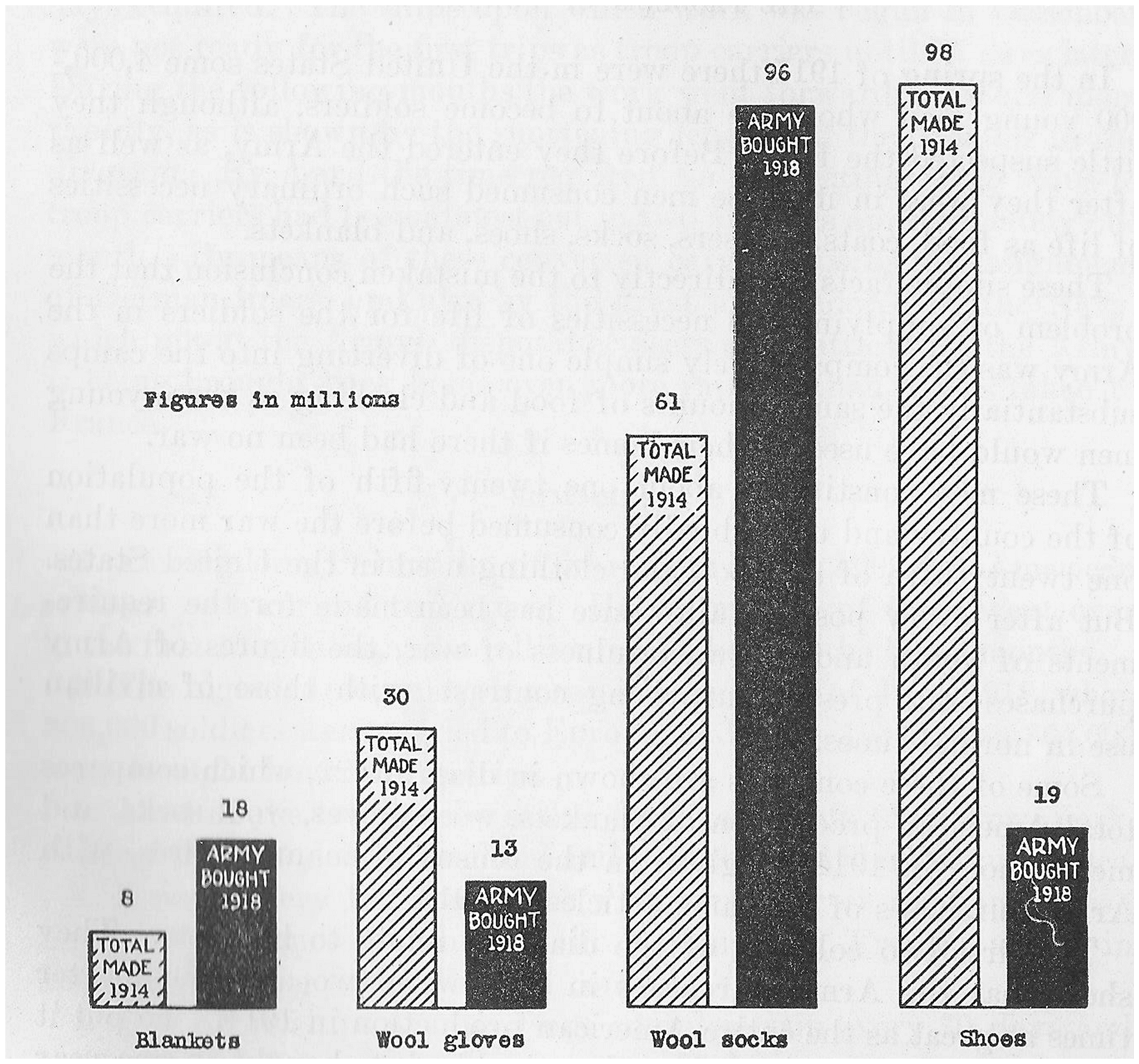
The American Red Cross call to “Knit Your Bit” helped spur a kind of “war knitting” fervor all over the country (see Figure 2). According to Strawn (2007), Society doyennes knit. The clergy sanctioned knitting during sermons. Young people promenaded city streets with oversized knitting bags, often carried with them to the theater. Young women were said to stop their motorcars to flirt with young men, drop their hands from the steering wheel, and pick up knitting needles. (p. 100)
A poster image illustrating the “Knit Your Bit” campaign (Strawn, 2007, p. 90).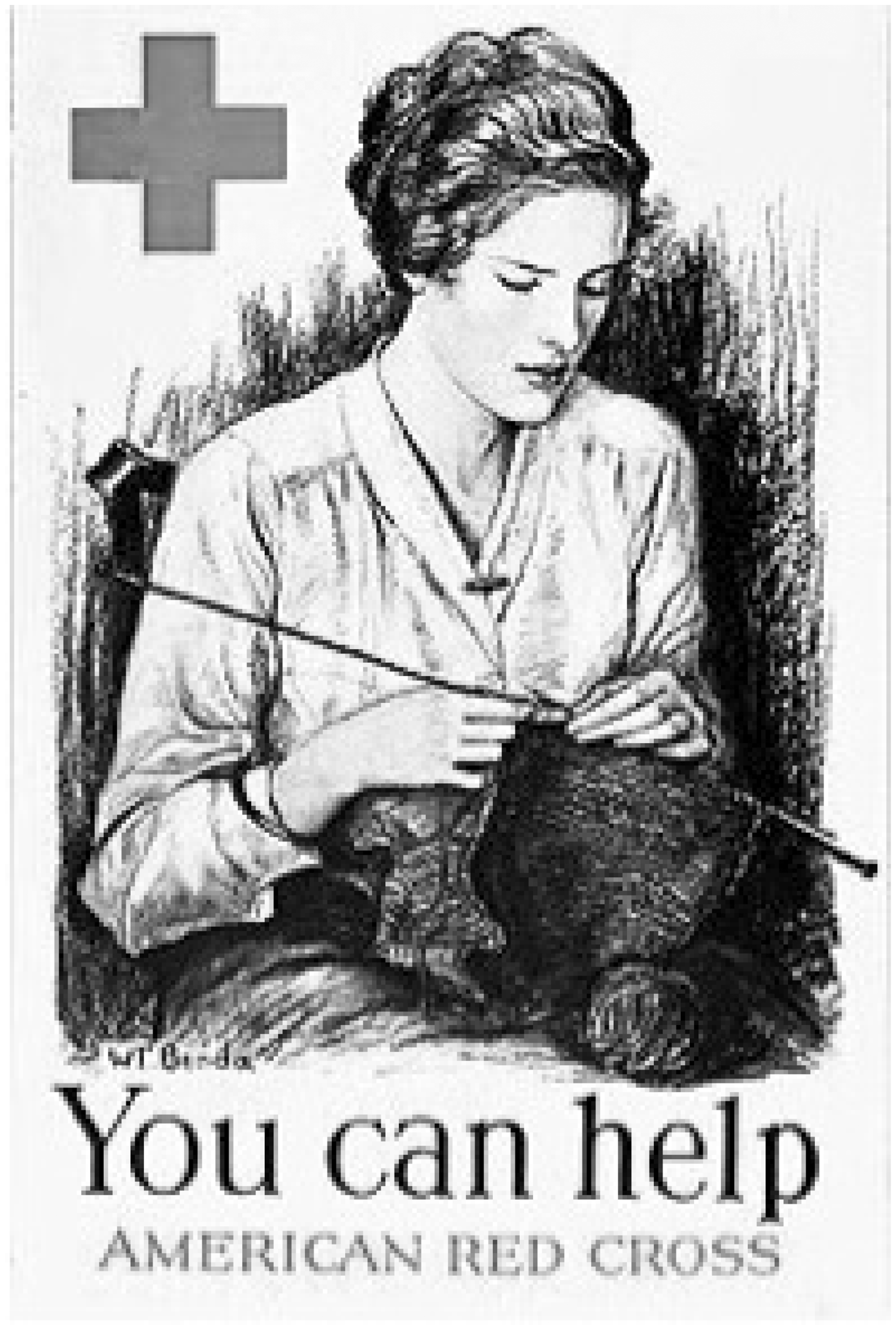
Essayist Richard Burton extolled the knitting of women in The Bellman magazine in 1917 as a quiet, domestic virtue carried out by “stay-at-homes” who make knitting “an experience of the soul, and blend it with ‘thoughts that do often lie too deep for tears’” (p. 261). Another man, according to Strawn (2007), wrote that women, driven by the “exigencies of war” had “quietly turned their backs on feminist movements . . . and set themselves to that least exciting, most old-fashion, most feminine of occupations, knitting” (p. 100). Knitting, it is implied, provided an opportunity to divert the anxieties of women as they sent their husbands, brothers, and sons off to war. For two and a half years, the American public was conscious of the war in Europe where in a single day, for instance, the British suffered 60,000 casualties in the Battle of the Somme (Middlebrook, 1972). It is no wonder, then, why American women would be anxious and why Burton’s writing was so timely. His article was published on September 8, 1917, which coincided with some of the first American troops arriving overseas but before the first U.S. soldiers were killed in November 1917 (Hoehling, 1960).
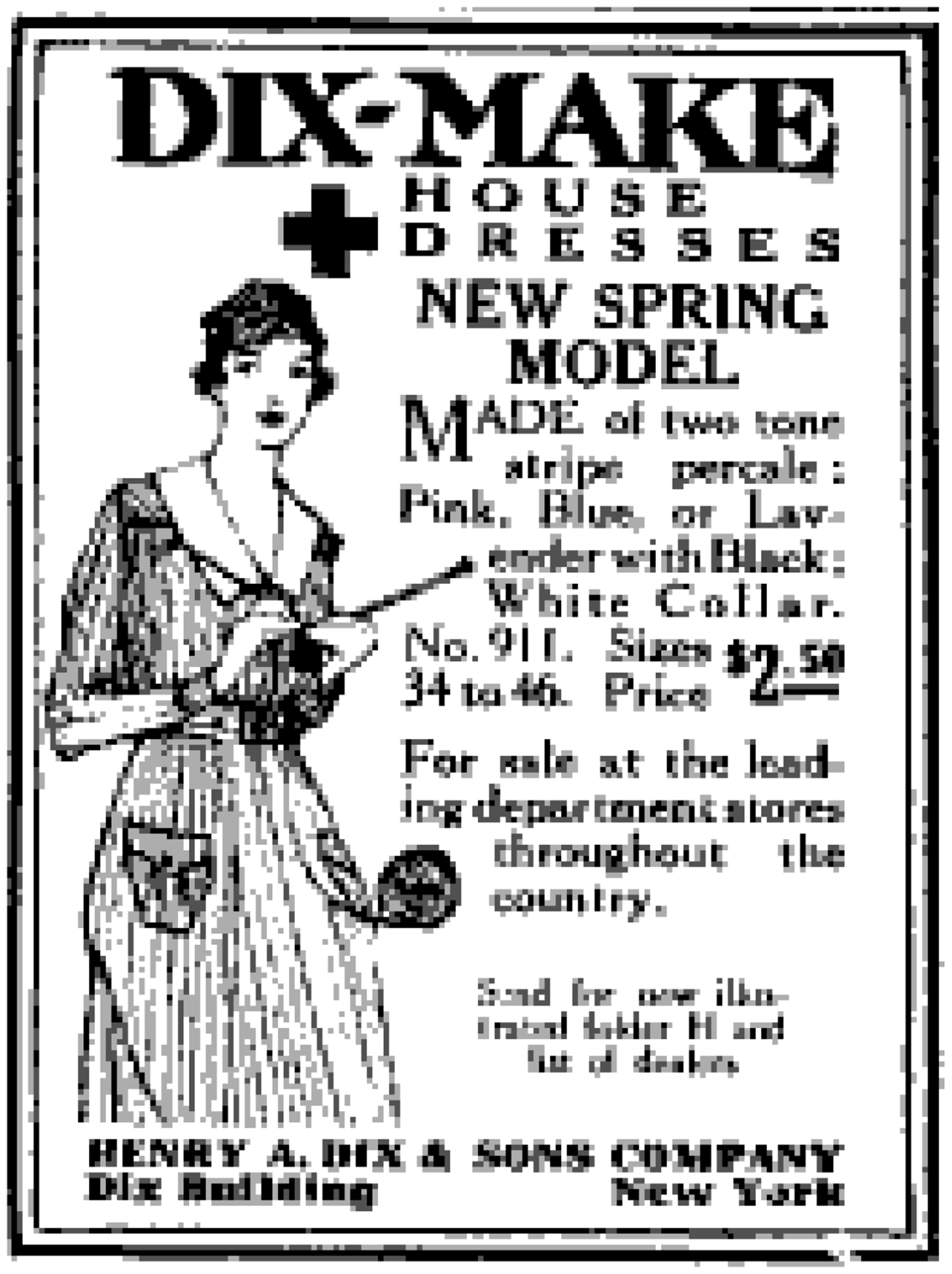
The importance of publications for women, such as magazines, helped to perpetuate the ideal image of the knitter during World War I. For instance, an advertisement in McCall’s Magazine for “Defender Yarn” overtly uses the symbolism of patriotism (see Figure 3) while an advertisement in Good Housekeeping for “Dix-Make House Dresses…” shows a woman holding her knitting project in a handy front pocket (see Figure 4). These examples of advertising illustrate how knitting was being used to promote social, political, and economic causes during World War I.
Advertisement for “Defender Yarn” in McCall’s Magazine, May 1918 issue, p. 58. Advertisement for “Dix-Make House Dresses…” in Good Housekeeping’s, February 1918 issue, p. 119.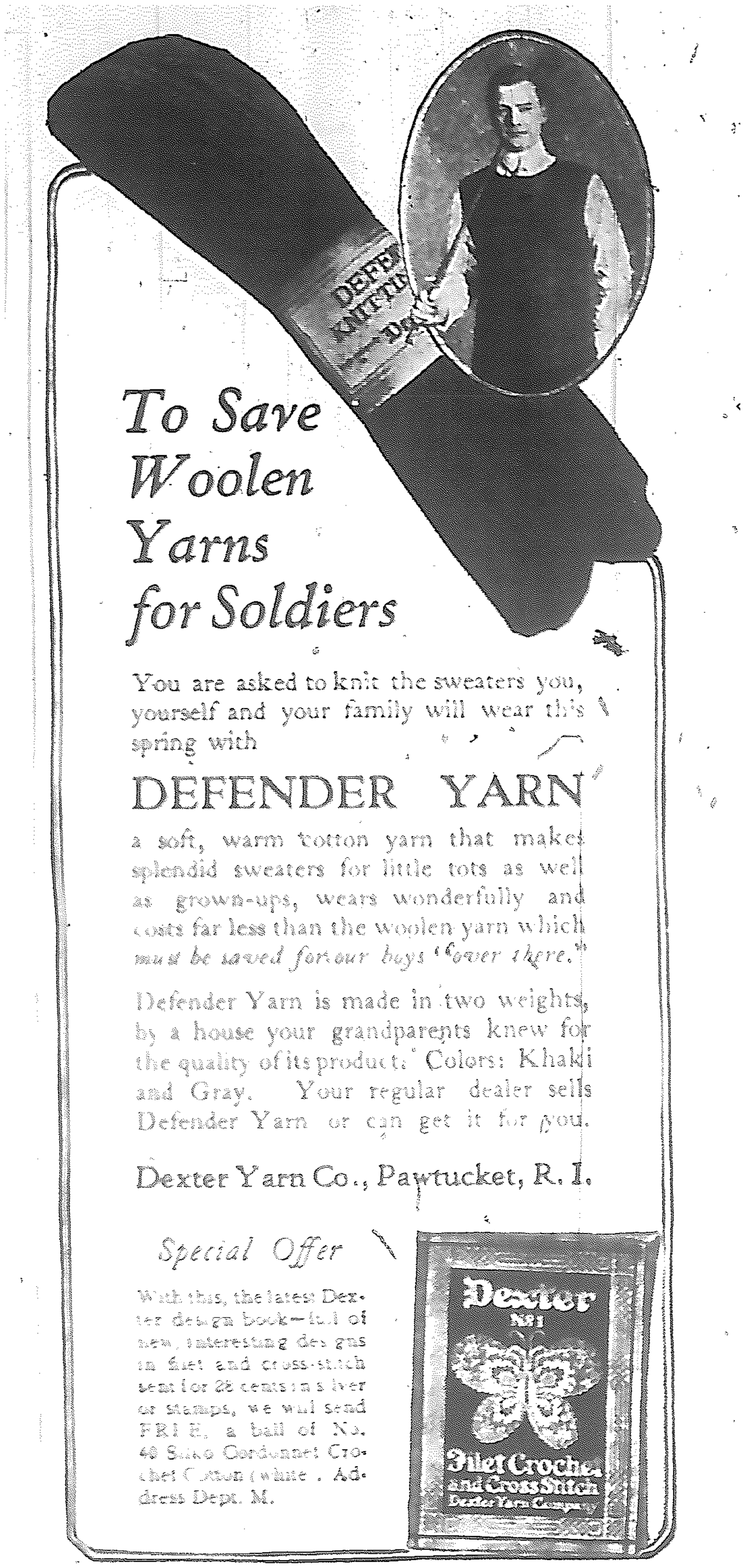
In addition to advertisements in women’s magazines, though, much editorial content was also related to knitting. For instance, William Frederick Bigelow, editor of Good Housekeeping, writes, “do all the helpful things you have been doing and add to them. Knit—the Red Cross says to” (1918, p. 4). Another issue from March 1918 includes an article titled: “Purls Are of Great Price Nowadays, and Here Is a Knitting Party to Make the World Amusing for Purlers.” The article begins, “Knitting has become second nature, so why not give a knitting party? The women and girls can do the knitting, and the men and children can wind the yarn, serve the refreshments, and do most of the entertaining” (p. 47). An excerpt from McCall’s Magazine also urges knitters to join the “Keep-Them-Warm” League (see Figure 5).
Advertisement for the “‘Keep Them Warm’ League” in McCall’s Magazine, February 1918 issue, p. 4.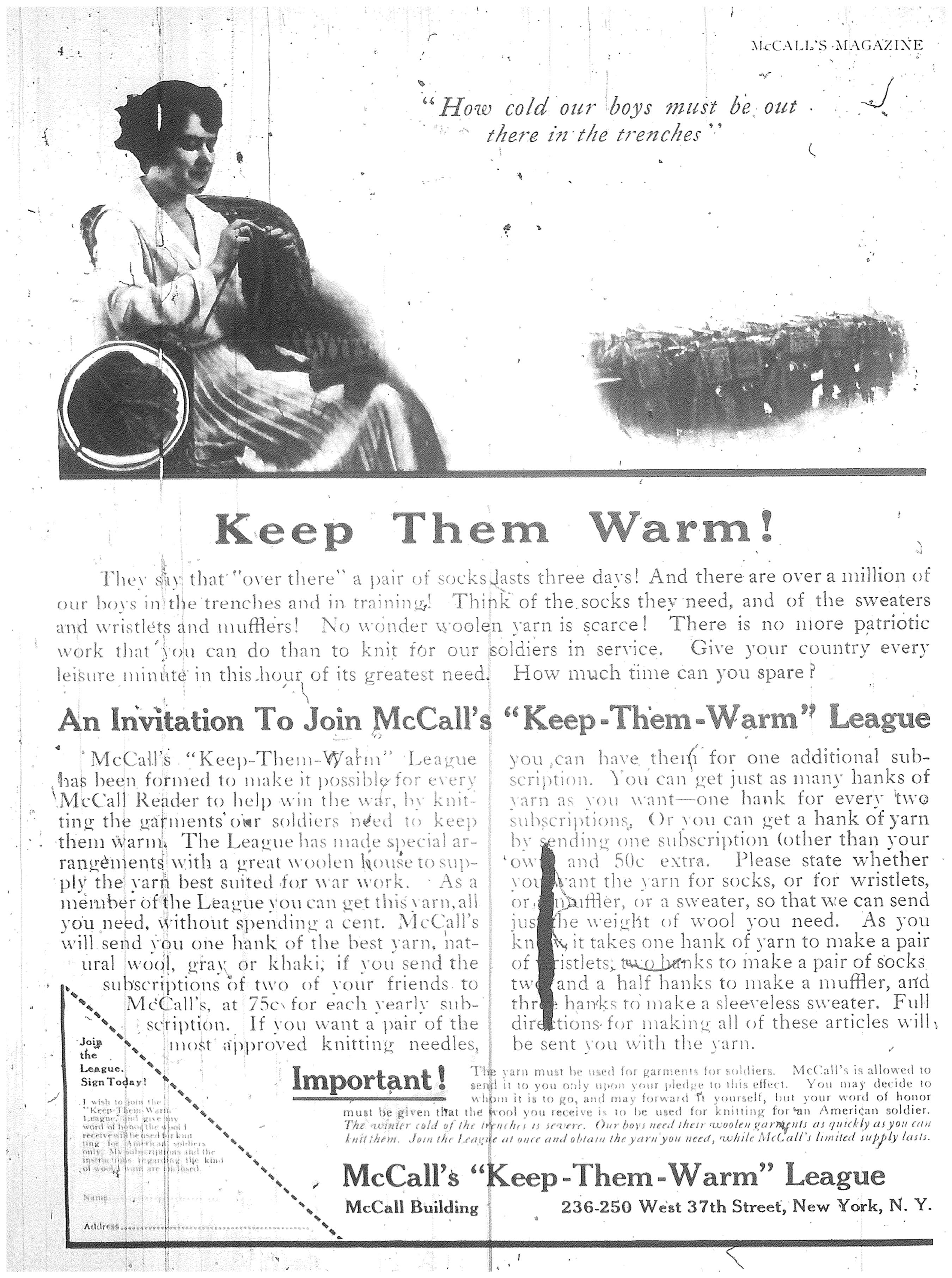
As advertisements and editorial content focused on the call to knit during World War I, it is no small wonder that the American public often thought publications, such as Good Housekeeping or McCall’s Magazine, were part of a government campaign. For instance, the November 1917 issue of McCall’s Magazine includes an article titled, “Knit for the Red Cross!” The editor notes, If our soldiers are to keep warm this winter, your knitting needles must do their share. The articles on this page have the official approval of the Red Cross, and it would like to receive any one of them or a dozen of each from you (p. 86). Not long ago an enthusiastic friend presented me to a lady with the remark by way of identification, that I am associated with Good Housekeeping. ‘Oh,’ she said knowingly, — ‘the magazine that is published by the government.’ [. . .] Our effort to work with the government, to work with those indefatigable women who are making American life, and fighting the war at home, has been sincere. It has been conscientious. It has been unselfish—so unselfish, in fact, that an impression has become current that Good Housekeeping is published by the government. [. . .] For years before the war Good Housekeeping prepared for just such an emergency. It has aimed to become a vital part of national life and it is this consistent endeavor which makes it possible for us today to aid, conspicuously, in our own field, in the great work of conservation and reconstruction. (Published by the Government, 1918, p. 102)
Researching the “Knit Your Bit” Campaign in the Ladies’ Home Journal
The monthly published Ladies’ Home Journal is used for this article’s research on the communication surrounding the “Knit Your Bit” campaign because it was the first magazine to boast a circulation of one million (Peterson, 1956, p. 11). The data sample begins with the date of U.S. involvement in World War I, April 1917, until its end with the Armistice, November 1918. As a result, 20 months’ worth of magazine issues were included in the data sample because the magazine was published monthly. Furthermore, every magazine issue included content from the American Red Cross communicating war work, which provided a consistent data sample for analysis. Such research on a campaign in a specific magazine is qualitative in nature and is defined as a case—”an argument that particular social behaviors demand our attention” (Heath, 2001, p. 383).
In addition to the Ladies’ Home Journal, other sources are used to provide historical context. Mordecai Lee (2014b) explains how a methodology that uses historical research techniques for public relations includes the following: (1) the research of official government publications, (2) archival documents, (3) media coverage, and (4) the extant academic and professional literature. Therefore, in addition to using the Ladies’ Home Journal, research is gathered from archived American Red Cross circulars and memos as well as various media coverage of the “Knit Your Bit” campaign from the New York Times.
Chalaby (1998) presents a heuristic for communications research by suggesting that researchers read texts in two directions. During the first step of this reading, a researcher relates and compares texts within a discursive class. The second reading attempts to explain some of the social and economic characteristics, which produce such texts. Chalaby is suggesting that a researcher first define the texts and then try to place them into larger cultural relationships used in their production.
By following Chalaby’s research heuristic, this article first describes the content in the Ladies’ Home Journal related to the “Knit Your Bit” campaign and then provides an explanation of the social, political, and economic relationships behind its use. The following research questions guided the analysis:
Did the American Red Cross content related to the “Knit Your Bit” campaign in the Ladies’ Home Journal (during 1917–1918) adapt and change in response to the United States’ involvement with World War I? If so, in what ways did external factors—social, political, and economic—as called for by Chalaby, affect the communication of the American Red Cross’ “Knit Your Bit” campaign in the Ladies’ Home Journal (during 1917–1918)?
The following section, then, includes the study’s results according to the analysis conducted with the above research questions. In the analysis, explanation of the content and the larger social, political, and economic factors are discussed.
Using Content in the Ladies’ Home Journal
Prior to America’s involvement in World War I, the Ladies’ Home Journal ran a regular column titled “My Government and I” edited by Dudley Harmon. This column, which appeared in the front part of the magazine, addressed national issues such as investing money and promoting wellness. Once America entered World War I, though, this column changed. Harmon writes about the page’s new object in the May issue: The best of all that the United States Government and the individual states are doing for the people will be chronicled as before, but in addition there will be given here a comprehensive idea of what organizations are projecting, and what we as a people are doing to develop ourselves as a nation and as individuals—in short, the page will bring to you month by month, the means of getting the best out of the world of active men, women and things. The services of the Washington Bureau of the Ladies’ Home Journal remain, as before, available for those who wish to make use of the Bureau as a medium for communicating with their Government or with other useful agencies. (Harmon, 1917, p. 4)
The American Red Cross used the “My Government and I” column as a way to form support for the war effort, and Taft was able to lend it presidential credibility (as its new editor). The June 1917 issue proudly displays the column with this headline: The American National Red Cross: An Official Department Edited and Conducted by William Howard Taft, Chairman of the Central Committee (Taft, 1917a, p. 22).
Changes in the Content: Social Factors
As the column adapted to the war effort, the June 1917 issue introduces the “Knit Your Bit” campaign. The column uses the headline “The New Red Cross Work” (see Figure 6) and explains how the photographed knitted articles seem to be “the greatest outlet for women’s energy in this line, hence the making of good warm garments as protection against changeable weather” (Taft, 1917a, p. 23). At the very end of the page are directions on how to obtain the patterns: “Note—read carefully: directions for the three piece set—muffler, sweater, and mittens—will be sent upon receipt of a stamped, addressed envelope.” Sending in for patterns would have seemed very normal to the public reading this column because readers would usually mail a self-addressed stamped envelope to request further information or materials.
The instructions for the knitted items depicted in this example could be requested via mail in the Ladies’ Home Journal, June 1917 issue, p. 22.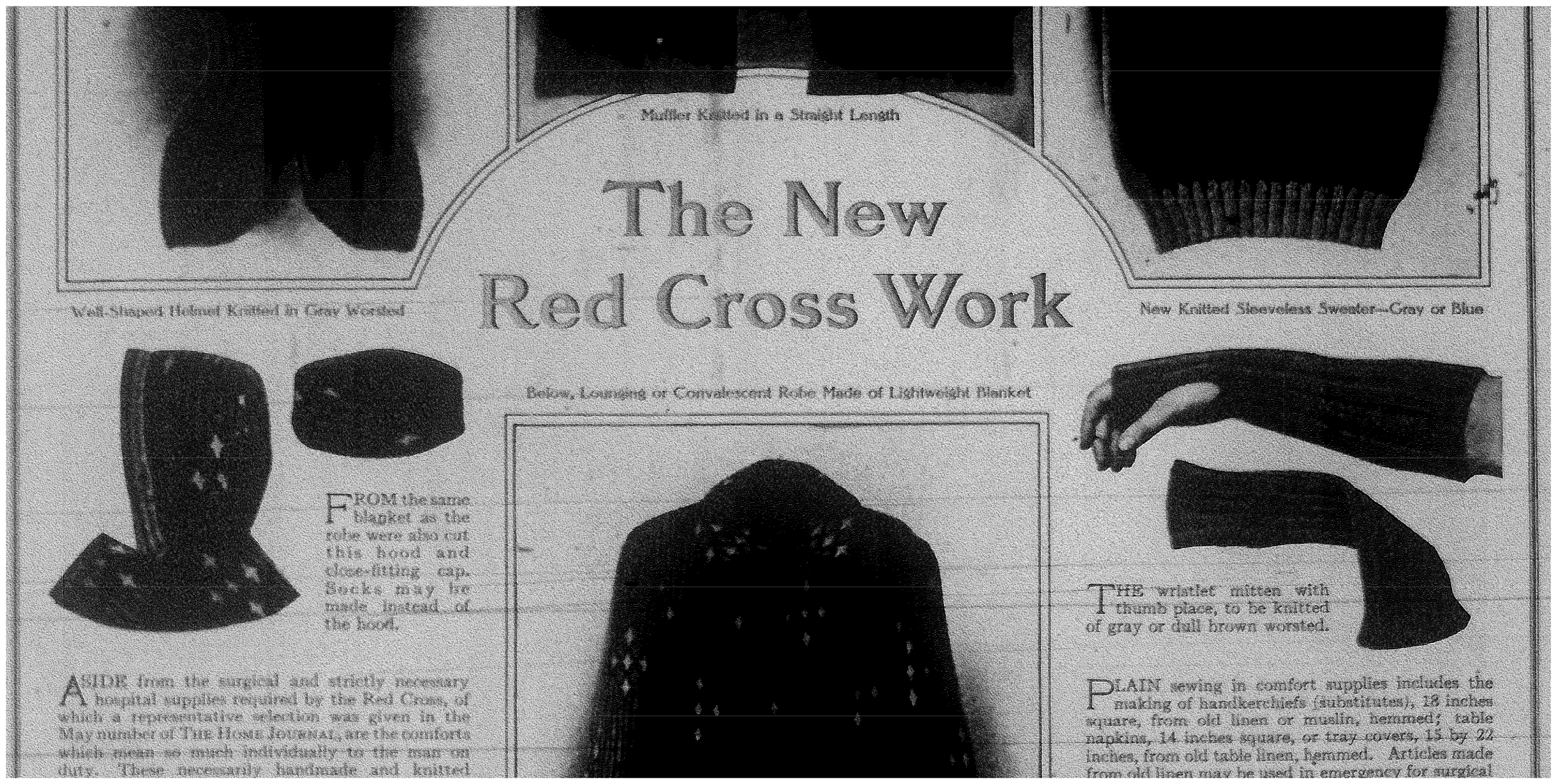
The need for knitted items was, as explained earlier, emphasized to the public reading the Ladies’ Home Journal. However, the kind of knitting the American Red Cross requested, such as socks, was not necessarily considered socially acceptable by the largely White, middle-class women reading the magazine. For instance, Ward (2009) explains how the publisher of the Ladies’ Home Journal, Curtis Publishing Company, stated to advertisers that its readers were not “negroes” nor “foreign born” (p. 213). Furthermore, an excerpt from an article in the New York Times published a couple years before the war states: Not long ago I was talking to a woman connected with the American Red Cross Society who said to me: “The trouble with American women is that so few of them know how to knit socks. Practically only the foreign-born women know how.” (Nicoll, 1914, p. X3)
Another example of making knitting socially acceptable is an article from the New York Times dated February 3, 1918, titled “Champion Red Cross Knitter of New York.” Mrs. David Kindelberger is the subject of the article and earned her title for knitting 50 sweaters within a 2-month time span. Yet, she admitted that when she got her yarn from the Red Cross office on November 21, she began her first knitting project since childhood. The article reads the following: “her hands have been busy in recent years with embroidery, but never with knitting. She began almost clumsily to go back to the stitches her mother had taught her years ago” (p. 58). Examples of knitting champions, like Mrs. David Kindelberger, helped to reinforce the American Red Cross’ call to “Knit Your Bit.” Even before Mrs. David Kindelberger, an earlier New York Times article tried to emphasize the need for knitted items.
On December 1, 1917, an article titled “All Women Urged to Knit” was published in the New York Times. The purpose of the article was to reinforce to women the need for knitted garments for soldiers and sailors. In it, Harvey D. Gibson, General Manager of the American Red Cross, released a statement to correct any misstatements regarding the need of knitted garments. He explains that, It is hoped that this general statement will satisfy the women of this country who have been devoting all their possible time to knitting for our men. We cannot too strongly urge all women who are now knitting to keep on knitting. (p. 13)
Changes in Content: Political Factors
By the October 1917 issue, Taft’s column begins with the following: “Fifteen thousand letters a day—That’s quite a bit of mail for one office to receive each twenty-four hours, isn’t it?” He continues to write: In fact, it’s more than the Red Cross headquarters at Washington could take care of, even though it has increased the number of its employees from 40 to 700. This enormous mail was the chief reason for the policy of decentralization decided on during the summer. This new system will mean better service to those who make inquiries of the Red Cross and will also enable the National Headquarters to do better work. (Taft, 1917b, p. 33)
The same issue’s column answers other questions such as “To Knit or Not to Knit?” Taft mentions the knitting instructions available at these newly created divisions in his response: The answer is, most emphatically, KNIT: Any doubt there may have been as to the value of knitting in this war has been completely dispelled by the appeal sent to Washington by the American Red Cross mission in France. The following list is what the mission cabled the Red Cross to send before snow flies if possible: One million mufflers, One million sleeveless sweaters, One million pairs of mitts. Any woman, anywhere, can knit any or all these articles. The Red Cross will send them to France as fast as received. To help you to knit these articles—and others, too—the Red Cross Woman’s Bureau has just prepared with the aid of knitting experts, new knitting instructions, complete in every detail. (Taft, 1917b, p. 33) Scanned image of an A.R.C. 400 circular for socks (American Red Cross, National Archives Administration).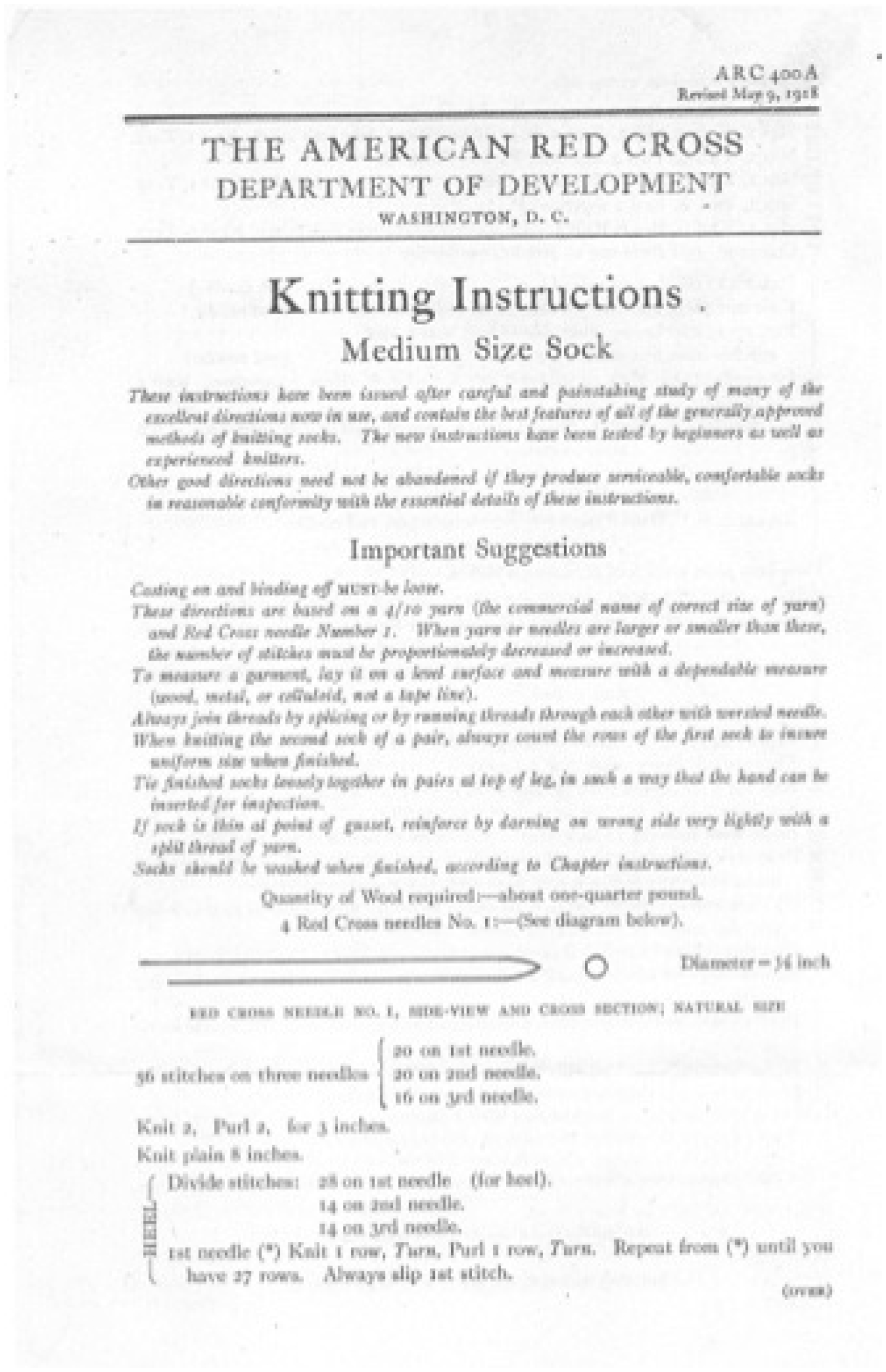
The introduction of a knitting instruction circular does signal an adaptation in how the American Red Cross was communicating in the Ladies’ Home Journal because it emphasized the need for home front knitters to connect with their local chapters. The connection between women and these American Red Cross Chapters also reinforced a sense of shared patriotism. Knitters connecting with each other provided an opportunity for a shared identity, as the act of knitting is often understood to be representative of both the life of the knitter and the life of the knitted object (Turney, 2009, p. 135).
The shared patriotism in communities across the United States was important for increasing public acceptance of the war. Initially, the American public was conflicted about entering the war, as evidenced by President Wilson’s 1916 successful reelection slogan: “He Kept Us Out of the War” (Seidman, 2008, p. 54). But, Brigadier General Henry J. Reilly wrote that the sentiment of the American people in 1917 became “more and more pro-ally, with the inevitable future consequence that we would enter the war on the allied side” (Reilly, 1936, p. 17). While U.S. involvement in the war might have seemed inevitable, the national attitude toward it remained conflicted. For example, only 23% of the U.S. Army was comprised of volunteers. The remaining 77% of the troops were drafted, which is very high when compared with other American conflicts (Ayres, 1919, p. 16).
Kennedy (1980) explains how President Wilson and the CPI continued to persuade the American public through communications by introducing the following: (a) overbearing concern for “correct” opinion, (b) creating an enormous propaganda apparatus to develop a desired state of mind in civilians and to dismiss dissenters, and (c) wearing a benign face for the propaganda because its creators genuinely believed it to be in the service of an altruistic cause. In the case of the American Red Cross, under the direction of Ivy Lee, the communications in the Ladies’ Home Journal certainly did paint a “correct” picture of a White, middle-class woman serenely knitting for the troops and, more importantly, for a renewed sense of patriotism in the wake of isolationism. Indeed, the head of the American Red Cross wrote, Woman’s classic part in war is to send her men away with a smile and then wait. Somewhere she must find the strength to bear that waiting; the women of the Great War found it in the countless workrooms of the Red Cross. (Davison, 1920, p. 25)
Changes in Content: Economic Factors
Even though the American Red Cross had divided itself up into manageable divisions across the country, it still could not manage all the requests, including those of home front knitters. By the next month, November 1917, Taft’s column begins rather bluntly: “Knit Only These for the Red Cross” (Taft, 1917c, p. 29). Here is where we see efforts to manage the readers have not completely worked and, as a result, the American Red Cross decides to change the content used to communicate with knitters. Most importantly, this issue prints the patterns within the column, something not seen before (see Figure 8). By printing the patterns in the column, the American Red Cross was trying to simplify the communication process with the American public, instead of relying on knitters to go to their local Red Cross chapters.
“Knit Only These for the Red Cross” clearly shows how the American Red Cross was trying to direct knitters in the Ladies’ Home Journal, November 1917 issue, p. 29.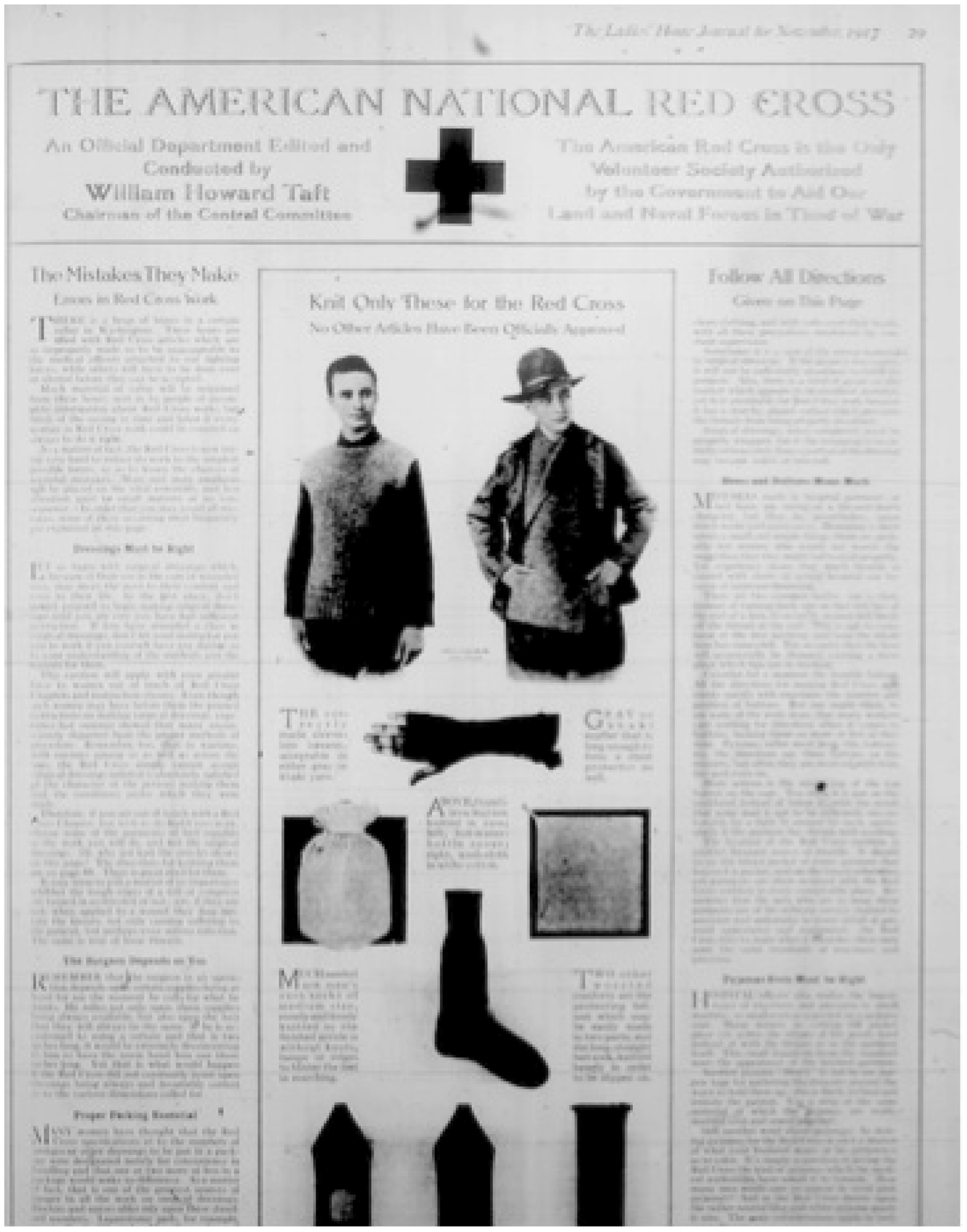
By February 1918, Taft writes a question and answer type column—most of the questions deal with knitting. For instance, “Will the Red Cross Accept Knitted Articles if They are Not Exactly Like Those Described in the Official Red Cross Knitting Instruction Book (A.R.C. 400)?” He answers, “more and better work will be done if everyone confines her knitting to the articles suggested and follows the directions given. Sweaters, socks, and wristlets are the articles most urgently needed” (Taft, 1918, p. 26). The emphasis of focusing on sweaters, socks, and wristlets corresponds with the Army’s rethinking of issued uniforms. The supply of uniforms, at first, seemed adequate to meet the Army’s demands. However, Crowell (1919) explains that later, “changes were made in the specifications for various cloths, uniform cloth being increased from 16 to 20 ounces in weight” (p. 456). Until the Army could issue these heavier wool uniforms, knitted goods helped provide additional warmth.
The redesigning of the uniform, though, also used more wool, an economic commodity. For instance, Crowell writes, The increases made it necessary for the Army to use grades of wool previously made only into coarse materials like carpet. […] This action explains why at the end of the period of hostilities some of the American soldiers’ uniforms looked rough and uneven in color. But the necessary cloth was provided, and it was warm. (p. 457)
As Dulles (1950) noted in his history of the American Red Cross, volunteer knitters during World War I made “whatever seemed to them best” (p. 169). As a result, the War Council realized the importance of chapter activity; however, they also started to rethink the whole program for efficiency. Part of this new efficiency, then, was that the national headquarters would buy supplies in bulk and then sell them to the American Red Cross chapters across the country.
The national headquarters would draw up production quotas based on careful consideration of needs and then arrange the transportation and warehousing of both raw materials and finished products. For instance, Dulles explains, “the value of the materials sold to the chapters during the twenty months ending February 28, 1919, was $61,000,000, and that of the finished products was estimated at nearly $94,000,000” (p. 169). Interestingly, then, the work of home front knitters was valued at $33,000,000, yet no money was ever exchanged for the finished goods. Furthermore, despite the volunteer labor used to produce the knit goods, Dulles reports that chapters were given instructions by national headquarters for the exact specifications of every requested item, which served to standardize the items received.
To allocate resources efficiently, the communications, under Ivy Lee’s direction in the Ladies’ Home Journal, needed to adapt. By printing the directions for needed items within the magazine and explaining why they were needed for the troops, he was using his philosophy of being open and transparent with the knitters. Additionally, it was inferred that knitters would better understand the standards of knitted items for the troops, for which they were often criticized. For instance, the editor of Textiles, a trade publication, exclaimed in a letter to the press, “‘For God’s sake, wake up and stop hand-knitting by which at least 20,000,000 pounds of scoured wool has already been wasted’” (Dulles, 1950, p. 170). Indeed, Dulles notes that both Secretary of War Baker and Secretary of the Navy Daniels were quoted as saying that the knitted gifts to members of the armed forces were “welcome but not necessary.”
If home front knitters were viewed as fulfilling a vital logistical role in equipping soldiers and sailors, then why were they not under the direction of the Quartermaster Corps instead of the CPI? The Quartermaster Corps was tasked with the logistics of acquiring materials and equipping the troops by arranging government contracts with private manufacturers. Furthermore, there is no mention of home front knitters in America’s Munitions, a primary source about the war’s production record. In fact, at one point, the book states: When it was found that the regular mills could not turn out all the woolen knit goods the Army required, numerous mills which had been turning out specialties exclusively, such as women’s underwear or men’s union suits, were converted into factories to knit garments according to the Army specifications. (Crowell, 1919, p. 464)
Implications and Future Research
In the previous sections, the communications surrounding the “Knit Your Bit” campaign in the Ladies’ Home Journal demonstrate a concerted effort to communicate patriotism on the home front. What makes it noteworthy is how the communications provide us with a different view of the CPI-esque propaganda methods.
The Department of Defense, according to Kuehl (2014), defined propaganda in 2006 as “any form of communication in support of national objectives designed to influence the opinions, emotions, attitudes, or behavior of any group in order to benefit the sponsor, either directly or indirectly” (p. 12) However, in 2010, the definition was changed to “any form of adversary communication, especially of a biased or misleading nature, designed to influence the opinions, emotions, attitudes, or behavior of any group in order to benefit the sponsor, either directly or indirectly” (p. 12). While the “Knit Your Bit” campaign was certainly not trying to be adversarial, it was attempting to influence the patriotic attitudes and behavior of knitters on the home front.
The effort of home front knitters is recorded in an American Red Cross memorandum that outlines a meeting held at the National Headquarters on December 13, 1918. It states, “Mr. James (Dept. of Military Relief) presented figures indicating that there are now in the camp warehouses in this country approximately 650,000 sweaters, and in the Division warehouses approximately 1,000,000 sweaters, at total of 1,650,000 sweaters” (American Red Cross, 1918b). The memorandum continues to explain how many socks were on hand: “Mr. James presented figures to the meeting showing 1,415,000 pairs of socks on hand in Division warehouses.” These numbers, of course, are total inventories and account for all home front knitters, not just those reached through popular women’s magazines with content from the American Red Cross.
The home front knitters did their “Bit to Knit”, as shown through the numbers above, which helped generate patriotism both on the home front and “Over There.” For instance, a poem of the time titled “Knitting Women” concludes: We are the women, keeping thought away By this new work of love, this eager gift Through which our men, facing bitter fight Under the stars of foreign lands Shall know that still a million women’s hands Uphold them in the darkness and the night. —Kathleen Norris, The Evening Independent, 1918 We promised them [the troops] everything and all they got was $1.25 a day and some knitted sweaters and sox. And after examining them, they wore the sox for sweaters and the sweaters for sox. They deserve a bonus just for trying to utilize what was sent to them. (Rogers, 1923, p. XX2)
How the American Red Cross content, under Ivy Lee’s direction, adapted and changed in response to external factors—social, political, and economic—answers both the first and second research questions. In the beginning of the campaign, the communications were indirect by asking home front knitters to request patterns. Requesting patterns by mail might seem inefficient, but it was the familiar way to obtain information from magazines during this time period. Socially, the communications initially helped to make the work socially acceptable for the largely White, middle-class women in its readership, too. As the war continued, though, the communication had to adapt and the American Red Cross told home front knitters to obtain knitting patterns at their local chapter. If women had to connect with a local chapter, a sense of shared patriotism and political acceptance of the war was reinforced. From an economic perspective, near the end of the war, patterns were printed directly within the magazine. This act of direct communication still helped generate a sense of shared purpose on the home front, but also attempted to minimize the waste of wool resources by providing specific patterns. Overall, these external factors—social, political, and economic—did affect the communication and help to put the “Knit Your Bit” campaign into historical perspective.
The examination of American Red Cross content in the Ladies’ Home Journal during the United States’ involvement in World War I provides a greater understanding of how the organization adapted to encourage knitting, and through it patriotism, on the home front. Perhaps, one day, further studies could be completed on other forms of CPI-esque communications other than the well-known posters and films of World War I. As the centennial anniversary of the war approaches, such research helps illuminate the impact of overlooked historical communications and their dynamic nature.
Footnotes
Declaration of Conflicting Interests
The author declared no potential conflicts of interest with respect to the research, authorship, and/or publication of this article.
Funding
The author received no financial support for the research, authorship, and/or publication of this article.