




Abstract
Physical restraint is an emergency procedure restricting the movement of an individual and is used in events where students pose an imminent threat of physical harm to themselves or others. Students with disabilities are subjected to these procedures seven times more than typically developing students. Over the past decade, there has been substantial policy reform on the use of restraint; however, policies still vary across the country. Additionally, research on experiences of the use of and policy on restraint in school settings is incredibly limited. The current study expands the body of literature by investigating teachers’ experiences, and factors associated with experiences, of restraint events and district policy utilizing a multiple-methods survey design. One hundred eighty Prekindergarten through 12th-grade teachers working in a variety of school settings across the country completed a self-report online survey. Results revealed variability in experiences of restraint events and school district policies. While most participants reported following the district policy as written, level of education significantly impacted teachers’ adhering to the policy, wherein those with higher levels of education were less likely to follow the policy. Implications for policy and practice are provided.
The reauthorization of the Individuals with Disabilities Education Improvement Act (IDEA) in 2004 and Every Student Succeeds Acts (ESSA) of 2015 prioritized including students with disabilities in general education classrooms (ESSA, 2015; IDEA, 2004). However, students, especially those with emotional, behavioral, or developmental disabilities like autism spectrum disorder (ASD) and intellectual disabilities, often exhibit challenging and sometimes dangerous or threatening, behaviors that affect the amount of time they spend in the general education classroom and put them at an increased risk of being subjected to physical restraint (Dunlap et al., 2010). Physical restraint is an emergency procedure restricting the movement of an individual and is often used in events where students pose an imminent threat of physical harm to themselves or others (U.S. Department of Education, 2012). Alarmingly, students with disabilities are subjected to these procedures at a much higher rate than typically developing students. In the 2017-2018 school year, 80% of reported restraint events involved students with disabilities (U.S. Department of Education, Office of Civil Rights, 2020).
Although physical restraint may be necessary in dangerous situations to keep all individuals safe, there are many ethical issues and concerns with its use. The use of restraint can cause a plethora of issues for both students and those implementing restraint procedures, including restricting access to education and the least restrictive environment, misuse, physical and psychological injury, and even death (Barnard-Brak et al., 2014; Fish & Culshaw, 2005; Marques & Barnard-Brak, 2022; McGill et al., 2009; Montreuil et al., 2020; Webber et al., 2011). Given the ethical issues and concerns that accompany the use of restraint on children and school staff, more research on the topic must be conducted to put appropriate, research-based protocols and policies in place to protect all involved in the process.
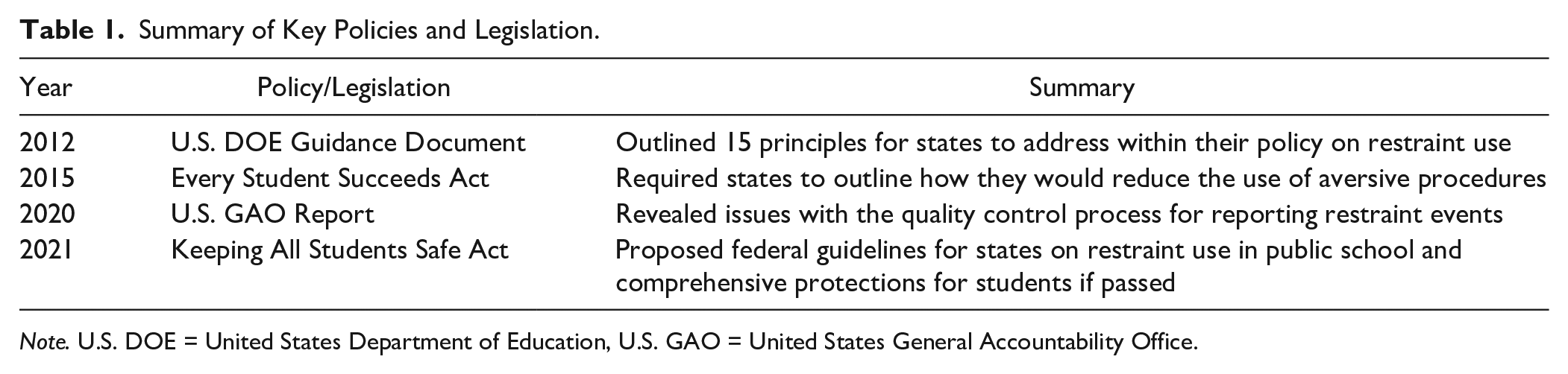
Over the past decade, there has been substantial policy reform on the use of restraint; yet policies still vary across the country (National Association of State Boards of Education, 2021). While the U.S. Department of Education issued a guidance document outlining 15 principles that should be addressed when creating policy on the use of restraint in 2012 and the Every Student Succeeds Act required states to address how they would reduce the use of aversive procedures in 2015 (Van Acker et al., 2021), states are still allowed to set their own policies on the use of restraint in publicly funded schools, which can lead to a multitude of issues concerning inconsistency. According to Marx and Baker (2017), policy and legislation varied in their adherence to the 15 principles suggested in the federal guidance document, yet states heeded more to the federal guidelines rather than state legislation. As of 2021, nearly all states and territories adopted policies addressing the use of restraint, with comprehensive protections for students outlined within the policy; however, there are still several states, like Arkansas and Missouri, where policies have limited protections for students. Moreover, some states, such as South Carolina, have no policies at all (National Association of State Boards of Education, 2021). Additionally, the Department of Education’s quality control process for reporting restraint and seclusion incidents is ineffective and inefficient, as there is currently no rule to identify potential underreporting, high rates of reporting, or cases of illogical data (i.e., reporting more students restrained than incidents occurred; U.S. General Accountability Office [GAO], 2020). In 2021, the Keeping All Students Safe Act (KASSA) was proposed to Congress. If passed, this Act would provide federal guidelines for states on the use of restraint in public schools as well as provide comprehensive protections for students subjected to restraint. Table 1 provides a summary of key policies and legislation.
Summary of Key Policies and Legislation.
Note. U.S. DOE = United States Department of Education, U.S. GAO = United States General Accountability Office.
Research on perceptions and experiences of policy and use of restraint is largely limited. Staff who work with individuals with mental health disorders residing in residential and hospital facilities and parents make up the majority of participants in studies examining perceptions of policy and use of restraint (e.g., Elford et al., 2010; Fish & Culshaw, 2005; Foxx et al., 1996; Hawkins et al., 2005; McDonnell & Sturmey, 2000; Montreuil et al., 2020; Rasnake et al., 1993; Tarnowski et al., 1990). Their experiences and attitudes toward the use of restraint are largely negative as are those who are subjected to restraint (Kontio et al., 2012; McKeown et al., 2020; Merineau-Cote & Morin, 2014; Montreuil et al., 2020; Salvatore et al., 2021). These overarching negative experiences support the ethical concerns surrounding the use of restraint (i.e., physical and psychological damage), as such, more research must be conducted to reduce and ultimately eliminate the use of restraint.
Moreover, the research on experiences of policy and use of restraint in school settings, especially from those implementing the procedure, is incredibly limited. To date, only one study analyzed teacher perceptions of the use of restraint (McDonnell & Sturmey, 2000). They found teachers and classroom assistants rated physical restraint procedures using a chair method as significantly less acceptable than staff employed at a residential facility did; teachers and classroom assistants, although statistically nonsignificant, rated physical restraint procedures involving sitting on top of a child to hold their arms and legs as less acceptable than high school students. This study contributed important findings to the field of research; however, being published in 2000, it is outdated. This study was also limited to perceptions of treatment acceptability of video vignettes, did not collect data on teachers’ experiences of policy implementing physical restraint, and did not examine experiences of actively implementing physical restraint in a school-based setting. Because teachers and other school personnel are typically the individuals performing restraint procedures in school settings, it is important to gather their perceptions and experiences regarding policy on the use of restraint as well as their experiences of restraint events. Gagnon and colleagues (2017) report the use of restraint practices is likely impacted by local policy and school culture. More research is needed to determine the school climates, which are impacted by school personnel and their experiences, where restraint practices occur (Gagnon et al., 2017). Conducting additional research on the perceptions of policies and the use of restraint will provide important findings to produce implications for policy (Gagnon et al., 2017) and practice and ultimately provide a safer environment for individuals who require substantial behavioral support needs. Thus, stems the present study.
The current study extends the body of literature on experiences of restraint, as it is the first of its kind to examine the experiences of P-12 teachers with (a) district policy on the use of restraint, (b) frequency of following district restraint policies, and (c) factors associated with following district policies. Specifically, the study addressed the following research questions:
Method
A multiple methods (Anguera et al., 2018; Leko et al., 2023) survey design was utilized to analyze teachers’ experiences of restraint events and school district policies on the use of restraint in prekindergarten through 12th grades. Both quantitative and qualitative items were embedded within the survey. Participants were required to agree to informed consent prior to the survey questions being revealed. One hundred eighty participants provided informed consent and agreed to participate in the study.
Participants
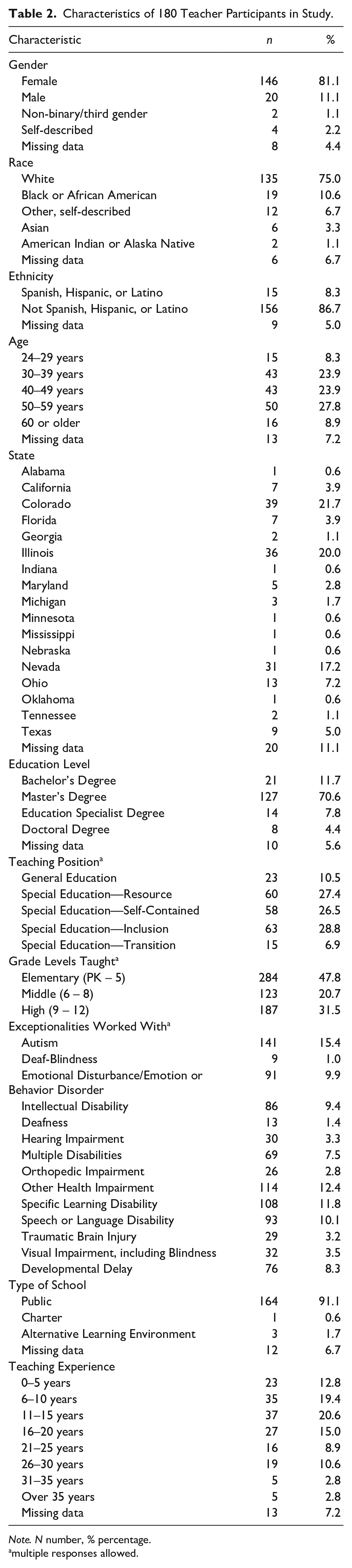
The majority of participants (n = 146; 81.1%) identified as female; 20 (11.1%) participants identified as male; 2 (1.1%) identified as non-binary/third gender; and four participants (2.2%) preferred to self-describe. Participant ages ranged from 24 to more than 60. Participants identified as White (n = 135; 75.0%), Black or African American (n = 19; 10.6%), Asian (n = 6; 3.3%), American Indian or Alaska Native (n = 2; 1.1%), and Other, self-describe (n = 12; 6.7%). Fifteen (8.3%) participants identified as Spanish, Hispanic, or Latino. Most participants (n = 127; 70.6%) held a master’s degree.
Nearly all participants worked at a traditional public school. Three participants (1.7%) worked at an alternative learning environment, and one (0.6%) participant worked at a charter school. Nearly 90% of participants were special education teachers; 23 (10.5%) were general education teachers (i.e., early childhood, elementary, English Language Arts, Math, History). Participants had a range of teaching experience, from less than 5 years’ experience to more than 35 years. Approximately half of the participants taught students in elementary grade levels. Participants worked with students of all exceptionalities outlined with IDEA (2004). Participants may have worked with students in multiple settings (i.e., special education inclusion and resource), as well as from multiple grade levels (i.e., elementary and middle school) and exceptionalities, which is why the total frequency exceeds the total number of participants included in the study. Table 2 provides a summary of participant details.
Characteristics of 180 Teacher Participants in Study.
Note. N number, % percentage.
multiple responses allowed.
Procedure
After approval from the Institutional Review Board was obtained, an email was sent to five thousand prekindergarten through 12th-grade teachers, which enhanced the reliability of the survey as this allowed more control over presentation parameters (Fielding et al., 2017). Participants were randomly selected from a database of teacher email addresses that a co-author compiled from the 2021-2023 school years via public record release from various states across the country. In this email, participants were also informed of the opportunity to enter a drawing for a chance to win a gift card upon survey completion. All recruited participants were given the opportunity to complete an online survey through Qualtrics, an electronic platform for surveys and questionnaires (Fielding et al., 2017). Participants were given 1 month to complete the survey. Three hundred forty-one participants started the survey. One hundred eighty provided informed consent and completed survey questions, resulting in a 52.8% response rate. After participants completed the survey, data analysis began.
Data Collection Instrument
Based on a review of the literature (e.g., Elford et al., 2010; Fish & Culshaw, 2005; Foxx et al., 1996; Hawkins et al., 2005; McDonnell & Sturmey, 2000; Montreuil et al., 2020; Rasnake et al., 1993; Tarnowski et al., 1990), a self-report online survey (Fielding et al., 2017), titled “Teacher Perceptions of Policy and Use of Restraint,” was developed to gather perceptions and attitudes of policies and practice of restraint. This instrument was designed to obtain a wealth of information on teacher perceptions of policies and the use of restraint in PreK–12 settings. In total, the survey took approximately 30 min to complete. Multiple-choice, short-answer, rank order, and 10-point Likert-type scale questions were dispersed throughout the instrument (Fielding et al., 2017). An Informed Consent form was embedded at the start of the survey; participants were required to agree to informed consent to take the survey.
The instrument was divided into four sections. The first section asked participants to answer 18 general demographic information about themselves (i.e., age, years of teaching experience, type of school). The second section consisted of four subsections: general policy, use of devices, alternative effects, and ethical ramifications. The third section was composed of four subsections, including frequency of use and documentation, factors affecting reporting the use of restraint, the effects of surveillance, and injury rates. The fourth and final section of the instrument was composed of three subsections. These included district training procedures for implementing and documenting the use of restraint and levels of support from administrators. When participants reached the end of the instrument, they were required to answer a qualifying question correctly to ensure the reliability of their responses (Fielding et al., 2017).
To test survey validity, an expert review was conducted by two university professors in special education; 13 professionals in the field of special education, consisting of teachers and administrators, across the United States also reviewed the survey. All professors and professionals provided feedback on wording, question type, and provided additional questions to ask. Additionally, another group of 20 special education teachers across the United States were asked to pilot the survey to determine ease of completion as well as clarity of survey items. Based on their collective feedback, additional questions were added to obtain information on the school’s location, student population (i.e., free/reduced lunch, English Language Learners), and surveillance system; how the school’s surveillance system affects their comfort level in regard to restraint; additional devices that may have been used to restrain a student (i.e., stroller, high chair); and a section on ethical ramifications of the use of restraint.
The ethical ramifications subsection of the survey, a matrix table of 12 statements related to the ethical use of restraint (i.e., the use of restraint restricts the student’s least restrictive environment) in which teachers rated the statements using a Likert scale, was the only subsection that analyzed questions of the same construct. Due to this reason, it was the only subsection of the survey for which internal consistency could be calculated (Creswell, 2009; Leavy, 2017). Using Cronbach’s alpha coefficient, the internal consistency of scores for the data obtained was calculated (Leavy, 2017). Results revealed a Cronbach’s alpha coefficient of 0.737, indicating an acceptable level of internal consistency (Creswell, 2009; Leavy, 2017).
Data Analysis
For the purposes of this study, 44 items were analyzed to address the proposed research questions. Due to the survey collecting data on multiple research questions simultaneously, the remaining items will be used for future research to extend the body of literature on the use of restraint with children with disabilities (Menon & Muraleedharan, 2016). An overview of the research questions of the current study is aligned with the corresponding survey questions in Figure 1.

Research Question Aligned With Corresponding Survey Questions.
Quantitative data were analyzed using IBM Statistical Package for the Social Sciences (SPSS) version 27.0, a data analysis program used for statistical testing in social science research (IBM Corp, 2020). Descriptive statistics, in the form of frequency tables and percentages, as well as an ordinal regression, were conducted to answer all three research questions.
Qualitative analysis was conducted in twofold: document analysis of district policies on the use of restraint and thematic analysis of participant responses. To provide a comparison of participant-reported experiences of school district policies on the use of restraint (RQ1), participants were asked within the survey to provide a copy of their district’s policy on the use of restraint. Policy naturally lends itself to document analysis, as it is a document containing text (Patton, 2015). Much like Rapley (2018), who compared data from newspaper articles to responses in interviews, data extracted from district policies on the use of restraint was compared with teacher responses to survey questions. Using recommendations from Flick (2018), each document submitted was screened prior to analysis to determine the document’s authenticity, credibility, representativeness, and meaning (e.g., a policy that addressed restraint use that was adopted from a legitimate school district). To extract data from district policies, a codesheet that mirrors the configuration of the survey questions was used. The first author extracted data from each district policy provided and inputted it into the codesheet. Once all data were extracted and compiled in the codesheet, a co-author independently verified the information. This allowed for written policies to be compared with teacher-reported data, which was then used to determine implications for policy reform on the use of restraint in PreK–12 settings. Further thematic analysis was used to determine similarities and differences across policies, continuing to utilize a coding reliability approach in which a co-author independently verified information the first author inputted in a codesheet (Braun et al., 2019). The second phase of qualitative analysis was conducted using participants’ responses to questions regarding “unofficial” policies on restraint (RQ1). These questions were examined using a combined approach to thematic analysis by mixing elements of the coding reliability approach and elements of descriptive and pattern coding, with a co-author independently verifying the information (Braun et al.; Miles & Huberman, 1994). Themes were then determined across participants.
Interrater Agreement
Using the total agreement method, interrater agreement was performed on the coding of documents and survey responses to ensure the reliability of extracted data prior to analysis. The first author independently summarized and coded responses and determined themes across documents and responses. A co-author independently verified 48.7% (n = 57) of responses to district restraint policy themes, reaching 89.5% agreement; 41.7% (n = 10) of responses to “unofficial” restraint policy themes, reaching 100% agreement; and 45.5% (n = 5) responses to district policies on the use of restraint, reaching 97.8% agreement. In regard to individual codes for responses to district restraint policy themes, the interrater agreement was 93.0% for the school district name provided, 98.2% for district policy number, link, or copy of policy provided and last resort/threat of harm to self or others, and 100% for the following: Crisis Intervention Program/trained or certified in crisis intervention, restraint not allowed, documentation required if restraint occurs, no policy available on the website, district follows state policy, unsure/do not know, not applicable, only if listed in Individualized Education Program (IEP); use allowed only with students who receive special education services, only used in more restricted settings, and only used by school resource officer. Agreement for individual codes on “unofficial” restraint policy themes reached 100% for the following: last resort, not allowed to touch student, trained in crisis intervention, reprimanded, sued, attempt not to injure a student, transporting students is a gray area, written in IEP, not reprimanded by administrators if illegal procedures are used, administrators investigate and call the police, teachers are not supported by administrators, unsure/unaware, and not applicable. Agreement for individual codes on district policies on the use of restraint was 80% for role of nurse and 100% for the following: duplicate district policy, unable to find link to policy, link to policy provided, number required to implement restraint, frequency of administrator involvement, role of administrator, frequency of nurse involvement, parent required to sign the consent form for use of restraint, how often parents are contacted after restraint events, how parents are to be contacted, and how soon after are they to be contacted. Discrepancies were resolved by the first author and co-author discussing discrepancies and coming to a consensus.
Results
The current study offers important findings on teacher perceptions of district policies on the use of restraint with children with disabilities.
Experiences of Restraint and District Restraint Policies
District Policy
When asked if they had any knowledge or training on managing a crisis or implementing physical restraint, most participants (n = 139) reported having knowledge or training on the matter. Nearly 17% of participants (n = 28) reported having no knowledge or training on managing a crisis or implementing physical restraint. Three-fourths of participants (n = 112) reported their district had a policy on the use of restraint, and 24 reported the policy being the same as the state policy on the use of restraint. Surprisingly, approximately 5% of participants (n = 8) were unaware of their district restraint policy, and three participants reported their district did not have a policy on the use of restraint.
One hundred seventeen participants provided more in-depth responses regarding district restraint policies by providing descriptive responses of the policy, lending itself to 13 themes. Some responses aligned with multiple themes. Seven participants stated restraint was not allowed in their district. Fifteen participants provided the school district name for researchers to further search for the district restraint policy; 21 provided a policy number, link, or copy of the district restraint policy; two reported their district followed the state policy. Twenty-seven participants were instructed to only use restraint as a last resort. Forty-four participants reported the district restraint policy as the crisis intervention training program used, and three responses indicated documentation was required if a restraint event occurred. One participant reported being unable to find the district policy on the website; eight were unsure or did not know the district policy on the use of restraint; one stated this question was not applicable. Four participants stated the use of restraint was only allowed if listed in the student’s Individualized Education Program or the student received special education services; one participant reported restraint only being used in more restricted settings (e.g., day center); one participant stated restraint was only used by the school resource officer. Table 3 summarizes participant responses of district policies on the use of restraint with students with disabilities.
Frequency Table of District Restraint Policy Responses.
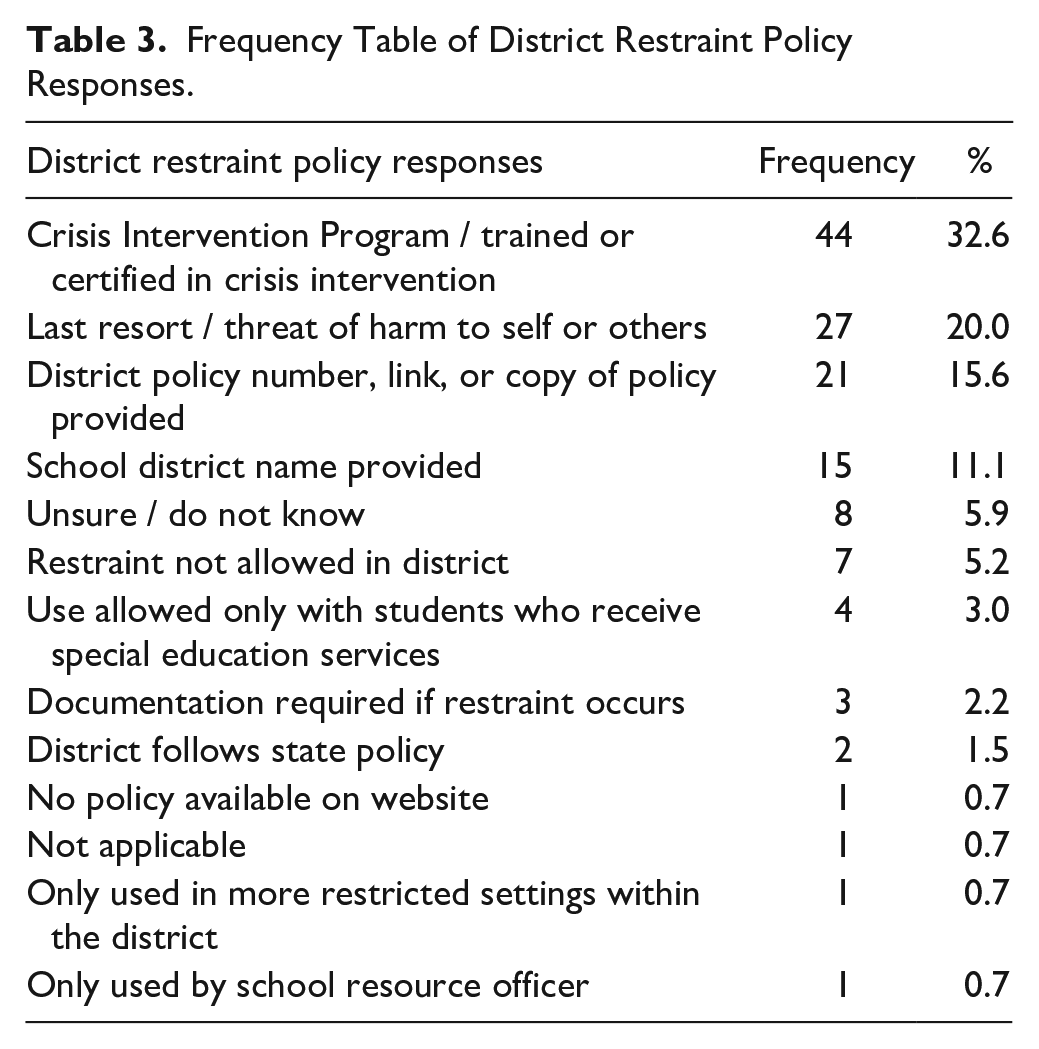
Several themes emerged from the thematic analysis of participant responses, the first of which being Training Programs. A pattern emerged among participant responses to district restraint policy responses, as the majority of participants cited a Crisis Intervention Program, such as “Crisis Prevention Institute,” “MANDS,” and “NCI Training,” as their district policy on the use of restraint. Last Resort was a second theme that emerged from responses. Participants stated things such as: “teachers will [not] restrain unless there is immediately danger, since the district will not protect or side with a teacher.”; “It is the last resort. . .”; “It can only be used in the case that immediate harm [will come] to [the] student or others or severe property damage is imminent”; and “Restraint as a last resort unless they are hurting, grabbing, or pinching themselves or another person.” Uncertainty was a third theme of responses, as participants stated “I am not sure, but they have a crisis management team. . .”; “I do not know”; “I’m not entirely sure. I’ve heard coworkers talk about CPI”; and “I’m not sure as only the aides are trained.” Reserved for Students with Disabilities was a final theme of responses. Participants stated: “Allowed on Spec. Ed. students only if they are a danger to themselves, other students, or severe equipment damage”; “Only if [listed] in IEP (Individualized Education Program)”; “Use. . .when indicated on IEP”; “Restraint of students identified as needing special education services may only be done if they are a danger to themselves or others. . .no such guidelines are in place for general education students”; and “Restricted to use in Affective Needs Centers (more restricted settings).”
District Policy Document Analysis
Twenty-one participants provided a policy number, link, and copy of their district restraint policy. Eight were duplicates; two were unable to be found. Eleven district policies were provided and coded. Seven policies provided information related to survey questions. One policy reported the number of people required to implement a crisis procedure, which was a five-member crisis team. Four policies require administrator involvement after each event of restraint. Their roles ranged from Investigate appropriateness of restraint (n = 1), report within 24 hours if violation is discovered (n = 1), potentially part of district physical restraint review committee (n = 2), sign documentation (n = 2), submit written report (n = 1), notify parents (n = 2), provide training if violation occurs (n = 1), identify members of crisis team (n = 1), and serve as school-wide resource to assist in proper administration (n = 1). One policy reported that nurses were only involved in events of mechanical restraint and provided medical attention after the event was over. One policy required parental consent to be provided for the use of restraint with students without disabilities; one policy provided parental consent to be provided if the use of restraint was written into the student’s IEP or BIP. Seven policies require parents to be contacted after each event of restraint. Various methods of required communication were reported: provided a copy of the incident report (n = 2), written notice of right to request a meeting (n = 1), provided a summary of the meeting if applicable (n = 1), oral or written notification (n = 2), verbally (n = 2), written report sent via mail, email, or fax (n = 2). Parents were to be contacted within one working day of the crisis event (n = 1), by the end of the school day the crisis event occurred (n = 4), within 24 hours of the event (n = 2). Written reports were to be provided within 36 hours (n = 1) and five calendar days (n = 1).
Unofficial District Policy
When asked about an “unofficial” district policy on restraint, the majority (n = 127) reported their district did not have one. Seven participants were unsure or unaware of any “unofficial” district policies on the use of restraint. One participant reported this was not applicable to their position. Unfortunately, 18 participants believed their district had an “unofficial” policy. Fifteen participants described their district’s “unofficial” restraint policy. Three participants reported restraint was only to be used as a last resort, three reported not being allowed to touch students or use restraint, and two reported restraint was only allowed if individuals were trained in crisis management. Participants also reported being reprimanded, sued, or having no consequences at all. Table 4 summarizes teacher-perceived “unofficial” district policies on the use of restraint with students with disabilities.
Frequency Table of “Unofficial” District Restraint Policies.

Thematic analysis also revealed common themes among most participant responses: Last Resort, Uncertainty, Reprimands and Insufficient Support, and Reserved for Students with Disabilities. Regarding Last Resort, participants stated: “[Restraint should be used] as a last resort,” “do not restrain,” “last possible resort if the child is unsafe toward themselves,” “Teachers are not allowed to use restraint,” and “The unofficial policy is. . .use of a physical restraint. . .is ‘the last resort.’” Uncertainty was also common among some participant responses, as participants stated: “Some teachers may not be informed on whether to use it or. . .not. . .and the risks that come from using it.,” “I am not sure,” “I’m honestly not sure,” “Not that I am aware of. . .[I am] a hands off teacher.,” and “Gray area—transporting kids.” Reprimands and Insufficient Support was another theme that emerged from the analysis. Participants stated: “If we touch the students at all, we are reprimanded”; “Touch a kid, get sued”; “attempt to not injure a student”; “[I have witnessed] some people pick up the smaller kids (no matter the age) and carry them. . .holding a student’s hand and the person pulling the arm while the student is resisting or trying to break free. . .Principal usually does not reprimand staff when that happens”; and “[Administration] stand[s] back and does not support the teacher. Usually, we tell the teacher to call a Union Rep[resentative] before making a statement.” Finally, responses that aligned with Reserved for Students with Disabilities stated “Restraint is needed in a student’s IEP (Individualized Education Program)/Behavior safety plan before anyone puts hands on a child.”
Personnel Required to Implement Restraint
Participants reported a range of the number of people required to be present in order to implement restraint procedures, from one to five people to as many as necessary. Most participants (n = 27) reported having to have two people present. Eighteen participants were unsure of the number of people required; two reported not restraining students, only de-escalating or clearing the room. Four participants stated the district policy does not specify the required number of personnel to implement restraint procedures.
Administrator and Nurse Involvement
Mixed findings occurred when examining administrator and nurse involvement in events of restraint. Involvement of administrators in events of restraint ranged from rarely (n = 26; 21.0%), sometimes (n = 38; 30.7%), often (n = 30; 24.2%), and always (n = 30; 24.2%). Table 5 summarizes the roles administrators take on in crisis management teams.
Frequency Table of Responses of Administrator Roles When Present in Crisis Events.

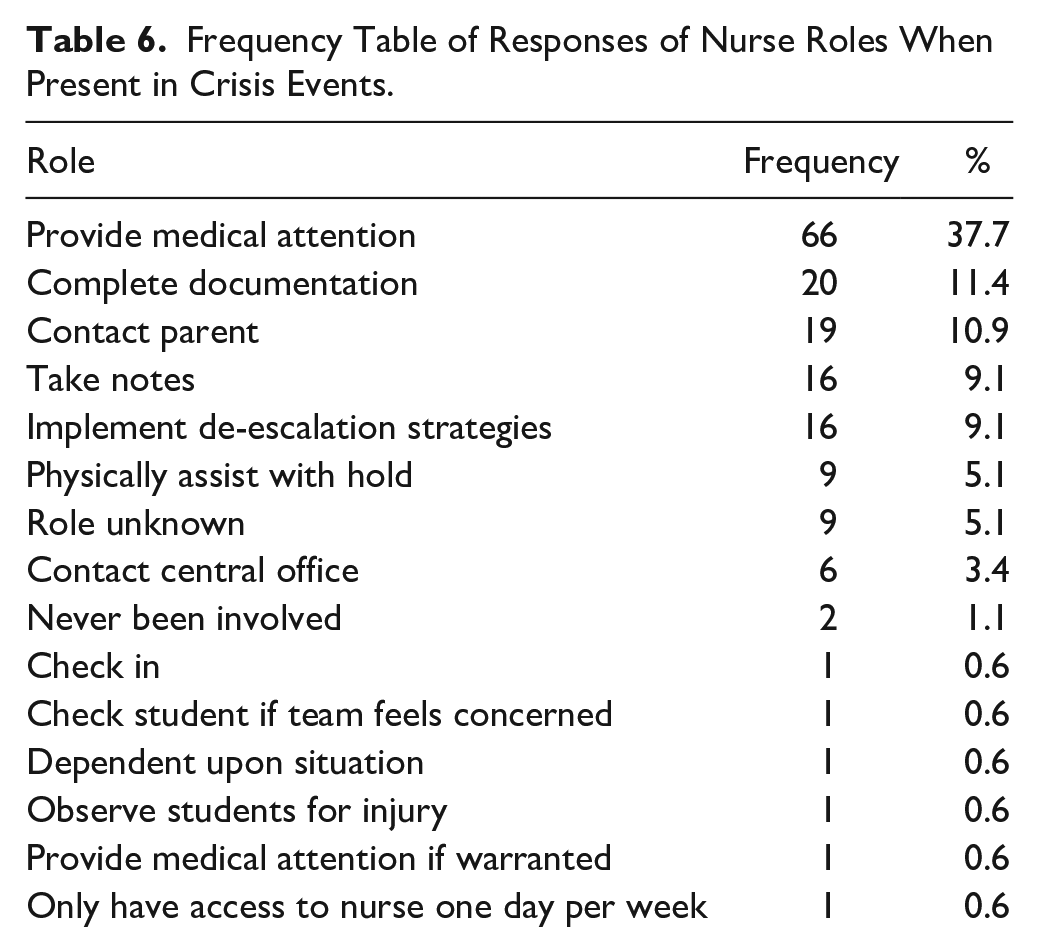
Based on participant responses, nurses were involved in events of restraint less than administrators. Two-thirds of participants stated nurses were rarely (n = 79) or sometimes involved in events of restraint (n = 20; 16.8%). Nearly 17% of participants stated nurses were often (n = 8) or always (n = 12) when restraint was used. Nurses predominantly provided medical attention when they were involved in events of crisis (n = 66; 37.7%). Table 6 provides a summary of the role of nurses on crisis management teams.
Frequency Table of Responses of Nurse Roles When Present in Crisis Events.
Parent Involvement
Participants were also asked about parent involvement when events of crisis occurred with their child. More than three-fourths of participants reported that parents were not required to sign a consent form for restraint to be used on their child (n = 86); however, 27 participants said otherwise, that a signed consent form must be on file for a child to be restrained. Participants reported a range of responses when asked how often parents were contacted after restraint was used on their child. The majority of participants reported the parent was always contacted (n = 98; 86.0%); however, some stated parents were often (n = 9; 7.9%) or sometimes (n = 7; 6.1%) contacted after restraint was used on their child. No participants reported rarely contacting parents after restraint was used on their child. Nearly 42% of participants reported contacting parents immediately (n = 48), 24.4% reported contacting them within an hour (n = 28), and 33.9% reported contacting parents within 24 hrs after restraint was used (n = 39). No participants reported contacting parents 2 days or more after restraint was used. Parents were most often contacted by phone call (n = 109; 48.2%), written letter (n = 53; 23.5%), asked to come in (n = 41; 18.1%), text message (n = 15; 6.6%), and email (n = 5; 2.5%). One participant reported being unsure how parents were contacted after events of restraint.
Frequency of Following District Restraint Policy
Most participants reported always following the district restraint policy as written (n = 108; 73.0%). However, 23 (15.5%) participants reported often following the policy as written, 11 (7.4%) reported sometimes following the policy, and 6 (4.1%) stated they rarely follow the district policy.
Factors Associated With Not Following District Policies
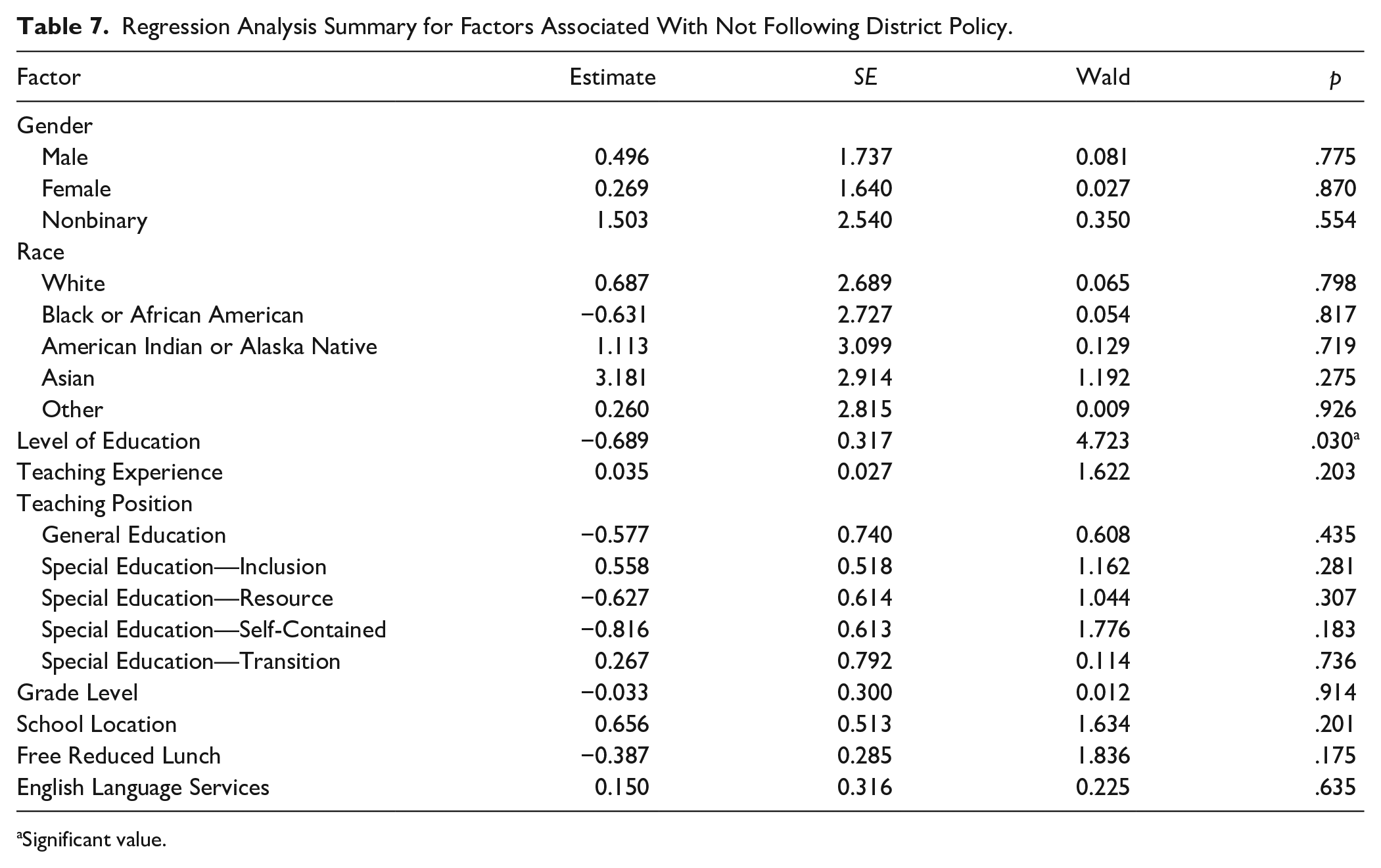
We analyzed the following factors to determine if any were associated with not following district policies: gender, race, level of education, years of teaching experience, teaching position (e.g., general education, special education—resource classroom), grade level, school location (e.g., rural, urban), percentage of the student population who qualified for free and reduced lunch, and percent of student population who qualified for English Language services. According to a Chi-Square Goodness-of-Fit Test, when considered together, factors did not have a nonsignificant relationship, χ2 (335, N=120) = 288.86, p = .986, with not following district restraint policies. The chi-square statistic however has been indicated as being sensitive to model complexity (Little, 2013). Pseudo R-Squared models resulted in the following: Cox and Snell, r2 = 0.149; Nagelkerke, r2 = 0.183; McFadden, r2 = 0.097. However, the level of education was found to be significant, p = .030, when analyzed at the factor level. Table 7 provides a summary of results by factor.
Regression Analysis Summary for Factors Associated With Not Following District Policy.
Significant value.
Discussion
The present study offers several important implications, especially in relation to teachers’ experiences of restraint and district restraint policies, and factors associated with not following district policy.
Experiences of Restraint and District Restraint Policies
First, nearly half of the participants had no knowledge or training regarding crisis management. Additionally, there was some variability when asked what their district policy was in regard to restraint. Many participants reported that their district had a policy that outlined the use of physical restraint, which aligns with previous research (Van Acker et al., 2021). However, more than 30% of participants reported a crisis intervention training program as the district’s restraint policy, and only 19 participants provided a district policy number, link, or copy of the policy. Upon further inspection, seven of the district policies provided information related to the current study; yet much like Van Acker and colleagues (2021), many of the provided district policies did not address federally recommended guidelines, such as prohibiting restraint use and restricting a child’s breathing, procedures for review of strategies and interventions in place for students who are frequently subjected to restraint, applying policies to both students with disabilities and typically developing children (U.S. Department of Education, 2012). There was also variability in the present study when examining the number of personnel required to implement restraint procedures, with responses ranging from one to five personnel. Given that teachers are often on the front lines of crisis management, this could indicate a need for improvement on the part of school districts to provide more training in crisis management and de-escalation, as well as provide better access to district policies (Schonfeld & Newgass, 2003). This is particularly important to consider given what some teachers report experiencing when implementing current district policies on the use of restraint.
The presence of administrators can give support to those implementing initiatives and programs (Domitrovich et al., 2008), yet their presence is largely absent during events of crisis based on the results of the current study. Furthermore, some teachers felt that they were reprimanded and unsupported by the administration when restraint was used, while others reported others using illegal procedures and not being reprimanded by the administration. These were also a common thread of experiences of restraint use in previous research of support staff in residential treatment facilities (Fish & Culshaw, 2005; Hawkins et al., 2005; Montreuil et al., 2020). Administrators may be able to provide additional support for those implementing restraint by leading debriefing meetings or providing time for crisis intervention members to self-debrief prior to returning to class, as debriefing has been found to increase residential facility staff’s perceived levels of support following crisis events (Fish & Culshaw, 2005; Hawkins et al., 2005).). More research must be conducted to determine the perceived levels of support teachers receive from administrators to determine how administrators can better support teachers in crisis management events in public community school settings (i.e., general education class, special education self-contained class, alternative learning environment).
Another main finding of the current study is the level of inclusion and methods of contacting parents after restraint procedures were implemented. Over three-fourths of participants reported parents were not required to provide consent for restraint to be used on their child. Additionally, 16 participants reported often or sometimes contacting parents after an event of restraint. Moreover, nearly 10% of participants communicated via text message or email when parents were contacted. The findings of the present study are concerning, as corresponding parent-teacher communication can increase student outcomes (Garbacz et al., 2015). Previous literature supports the use of positive parent involvement, as those who were asked for their consent and provided with positive communication had more positive experiences with service providers when restraint was used (Okanli et al., 2016; Saloviita et al., 2016). Given the sensitivity of the topic, as well as the confidentiality required, it is important to provide practitioners with training on the importance of positive methods of parent communication (American Federation of Teachers, 2007; Gustafson et al., 2021).
Frequency of Following District Restraint Policy
In the present study, many teachers reported following district policy on the use of restraint as it is written; however, nearly 30% of teachers did not. Some teachers reported their district’s policy on restraint as difficult to follow as written during restraint events, primarily due to a lack of or not provided with sufficient training, the strictness of the policy, unfeasibility of the policy, gray areas in the way the policy is written, aggression levels of students, and the need for self-preservation. These findings are also consistent with the findings of Webber and colleagues (2011), as those implementing restraint are often subjected to violence and injury themselves. Like participants in Fish and Culshaw (2005), implementing restraint policies and procedures can make practitioners feel uncomfortable and worried (Eskandari et al., 2017; McKeown et al., 2020; Okanli et al., 2016). More research on district restraint policies is needed to determine more appropriate recommendations for policy revision, which could lead to increased levels of following district policy.
Factors Associated With Not Following District Policies
Literature on factors affecting policy implementation is scant (Viennet & Pont, 2017). In the present study, several factors were analyzed to determine which factors affected teachers following district policy; yet education level was the only significant factor. As education level increased, following district policy decreased. These findings are similar to previous research in which education levels of staff members impacted acceptability ratings of the use of restraint (Rasnake et al., 1993; Tarnowski et al., 1990). This may be due to teachers with higher education levels being more knowledgeable about the ethical ramifications of the use of restraint, better understanding of the logistics involved in restraint procedures, and being less supportive of the use of restraint procedures (Jansen & Hanssen, 2016; Rasnake et al., 1993; Wynn et al., 2011). Another potential hypothesis is that teachers who have higher levels of education could also be more scrutinous of policy, which leads to unlikely implementation (Viennet & Pont, 2017). Furthermore, effective practice is not a guaranteed outcome of policy, which may make teachers with higher education levels more apprehensive (Walshaw, 2012). Given these implications, policy makers are encouraged to ask for teacher input when creating and amending district policy (Viennet & Pont, 2017). Yet, more research must be conducted to flesh out these hypotheses.
Limitations
While the current study offers important implications, there are several limitations. First, multimethod research has limitations, like monomethod research (Adu et al., 2022). Unfortunately, the qualitative data collected is not robust enough to lend itself to more integration with the qualitative data, which makes it difficult to draw conclusions and generalizations between the two methods (Adu et al., 2022). The sample of participants was largely homogenous, as most participants were female, white, special education teachers working in a traditional public school. The homogenous nature of the sample may make the survey findings difficult to generalize (Fielding et al., 2017; Leavy, 2017), especially for teachers of different genders, races, and ethnicities; teaching positions; and school settings (e.g., alternative learning environments). Thus, replication studies may be necessary to better understand perceptions held by a more diverse group of teachers.
Additionally, the data collection instrument was a self-report measure. Unfortunately, some participants may not have answered survey questions honestly due to the sensitivity of the topic under investigation and self-preservation. To gain more accurate responses, participants were reminded throughout the survey that their responses were anonymous and confidential. The option for neutrality was removed in an attempt to control social desirability bias (Krumpal, 2013).
Furthermore, potentially due to the sensitivity of the topic, there was missing data from the data set, as participants could skip questions that they did not feel comfortable answering. Missing data for survey questions ranged from 9.2% to 91.8%. The most frequently skipped questions were those that asked participants to elaborate on their responses or experiences via text description (e.g., elaborate on the unofficial district policy, 91.8% missing responses; number of people required for restraint, 35.9% missing responses; provide the district restraint policy, 26.6% missing responses). This missing data could have impacted the results. As such, replications of this study may be conducted to continue to gain a better understanding of teachers’ perceptions and experiences of restraint events and school district policies on the use of restraint.
Recommendations for Future Research
The current study offers several areas of future research to better understand teachers’ perceptions of policy and the use of restraint in public community school settings. First and foremost, as many participants only provided short responses to qualitative items in the current study, more robust qualitative studies, such as interviews or focus groups, could result in interesting findings and implications for policy and practice. Future research should include more qualitative studies to determine teacher perceptions of the use of restraint. Additionally, more research should be conducted to determine the perceived levels of support teachers receive from administrators. Frequency of the use of restraint and documentation of those procedures, as well as factors affecting reporting these events is another important area of future research, given that the Civil Rights Data Collection is a self-report measure submitted by district administrators (U.S. Department of Education, Office of Civil Rights, 2021; Yang et al., 2017). Future research may also investigate injury rates of students and staff in relation to the use of restraint in public community school settings, as those who utilize restraint in more restrictive settings (i.e., mental health centers) experience injury (Webber et al., 2011). Researchers may also examine district training procedures for implementing and documenting the use of restraint given the recent push for providing sufficient training to those on crisis management teams (KASSA, 2021).
Recommendations for Practice and Policy
While there were limitations to the study, important recommendations for practice and policy still emerged. Based on participant responses to district restraint policies and parent communication methods, it is recommended that administrators provide more training to teachers, particularly in the area of the sensitivity and confidentiality required when restraint events occur. Administrators should also reflect on the levels of support they provide teachers of minorities, as well as teachers in various types of schools and positions, and revise their practices to be more inclusive of all teachers. These suggestions may result in restraint practice reform, potentially also increasing outcomes for students with disabilities who are subjected to restraint procedures.
There are also several recommendations for policy based on the results of the present study. First, there is a clear need for the U.S. Department of Education to establish federal policy, with comprehensive involvement from researchers and leaders in special education (i.e., CEC-CASE leaders). The U.S. Department of Education needs to heed the advice from the GAO (2020) regarding reporting, with comprehensive reform closely tied to this policy development. At the local level, districts should provide a copy of the policy on the use of restraint with children with disabilities to teachers. If the policy does not outline methods for parent communication following crisis events, the policy may need to be revised to include these important considerations. Districts could also create and distribute a condensed, “snapshot,” version of the restraint policy that teachers may reference or study to refresh their memory. See Matlach (2015) for an example of a policy snapshot. When examining factors affecting implementation of district policies, a review of policy may seem warranted. When creating, reviewing, and revising district restraint policies, administrators and policy makers should consider the practicality of policy implementation and solicit teacher feedback (Hudson et al., 2019). Adopting some of these recommendations may be a promising step toward policy reform regarding the use of restraint with students with disabilities in public community school settings.
Footnotes
Declaration of Conflicting Interests
The author(s) declared no potential conflicts of interest with respect to the research, authorship, and/or publication of this article.
Funding
The author(s) received no financial support for the research, authorship, and/or publication of this article.
