




Abstract
Background:
Children in conflict with law (CICL) is an emerging issue in the contemporary world. Children between the ages of 12 years and 18 years are the most productive age group, but some children may develop behaviors that are undesirable to society by violating laws. The mental health and associated psychosocial factors of such children are lacking in India. It is of utmost importance to understand the mental health aspects of CICL for their rehabilitation, reintegration, and a better society for tomorrow.
Aim:
This study aimed to compare the psychosocial factors such as psychological adjustment, level of substance abuse, aggression, sensation seeking, self-esteem, and perceived parenting style between CICL and non-CICL.
Methods:
After obtaining the Institute’s Ethics Committee approval (Letter No. IEC/CIP/2020-2021/1207, dated March 22, 2022), 70 CICL were selected from Ranchi district of Jharkhand. To compare, 55 non-CICL were selected with the same gender within the age range of 12–18 years, using a cross-sectional comparative survey research design. A semistructured interview schedule was used to assess the basic demographic and legal history of the children. The Strength and Difficulty Questionnaire, Adolescent Alcohol and Drug Involvement Scale, Buss and Perry Aggression Questionnaire, Arnett Inventory of Sensation Seeking, Rosenberg Self-Esteem Scale, and Parental Style Index were used to compare the psychosocial factors between CICL and non-CICL.
Results:
The Pearson chi-square test indicated that CICL participants were significantly (P = .001) more likely to be from urban areas, have a history of school dropout and truancy, and come from broken families compared with non-CICL participants. The Mann–Whitney U test & indicated significant differences between CICL and non-CICL in the years of education (P = .001) for both children and their parents. The Mann–Whitney U test found that CICL participants showed significantly higher levels (P = .001) in emotional problems, internalizing attributes, prosocial behavior, level of alcohol/drug involvement, self-esteem, and strictness compared with non-CICL.
Conclusion:
These findings have significant implications for the field of juvenile justice, highlighting the need for targeted interventions and support systems. Prevention, promotional mental health aspects, and comprehensive rehabilitation plans are crucial for the successful social integration of CICL.
Keywords
In a country where research on CICL is notably scarce, this study stands out for its potential to significantly enhance the existing body of literature. By offering a comparative analysis, it sheds light on the unique mental health issues and psychosocial contexts of CICL children. Key sociodemographic characteristics such as urban domicile, low socioeconomic status, poor parental scholastic experience, broken families, negative peer influences, family history of crime, history of abuse, and poor parenting practices emerged as significant contributors to CICL, underscoring the complex interplay of factors in this context. The study highlighted the need for additional mental health interventions with the CICL and their family members for their reintegration and rehabilitationKey Messages:
Children in conflict with law (CICL) represent a significant public health concern in contemporary society. The rate of delinquent offenses among adolescents is increasing at an alarming rate both in India and globally. 1 Understanding the psychosocial issues associated with CICL is complex and multidimensional. 2 According to the National Crime Records Bureau report in Jharkhand, crimes committed by juveniles as per the Indian Penal Code (IPC) and special and local laws (SLLs) were 59 cases in 2020 and increased to 123 by 2022. In this state, the rate of total crime by juveniles was 0.9 in 2022. At the national level, 30,555 children committed crimes, accounting for 6.9% of total crime, with the majority of heinous crimes committed by boys. 3 Consistent with global trends, Indian juvenile boys are more likely to commit delinquent acts than adolescent girls. 4
Indian studies on children residing in observation homes have identified several risk factors for delinquency, including low socioeconomic status, substance abuse, poor parental supervision, permissive parenting styles, advanced paternal age, parental smoking, maternal employment, jailed family members, and broken families.5,6 Additional factors such as child labor, 7 early exposure to substance abuse, family history of crime and substance use, domestic violence, parental fighting behavior, 8 and aggression 5 also increase the propensity for criminal behavior among children from these backgrounds. Disinterest in schooling, irregular attendance, poor school environment, and dropping out of school are significant risk factors for juvenile illegal activities, making children more likely to engage in criminal offenses.9,10 In contrast, international studies have highlighted mental health concerns among CICL,11-13 including emotional dysregulation, 14 moral disengagements, 15 future recidivism, 16 adolescent aggression, 17 and low self-esteem. 13
In India, previous research has primarily focused on social science perspectives, with limited studies addressing the behavioral or mental health aspects of CICL. 18 To address children’s behavioral problems in conflict with the law, it is crucial to outline the psychosocial factors associated with such problems to intervene and help these children become acceptable members of society. Given the limited literature on the mental health aspects of CICL in India and the importance of addressing these factors in future studies, this study aimed to explore psychosocial factors such as psychological adjustment, substance abuse, sensation seeking, aggression, self-esteem, and perceived parenting style associated with children residing in an observation home in Ranchi city, Jharkhand. Comparing CICL with non-CICL children provides a comprehensive understanding of the associated psychosocial factors. The findings can help develop psychosocial promotional programs in schools and families and inform curative and rehabilitative measures in observation homes.
Methodology
Participants and Sampling Procedures
The sample for this comparative cross-sectional survey comprised two groups: 70 adolescent boys aged 12–18 years residing in the district observation home in Ranchi city constituted the CICL group, and 55 adolescents from the same district who were not in conflict with the law formed the non-CICL group. Participants were selected using a purposive nonprobability sampling technique. Initially, the CICL sample was collected from the Ranchi observation home; later, the non-CICL sample was selected to match the CICL group based on age and gender.
Inclusion criteria were as follows: male gender, age between 12 and 18 years, ability to read and write in English or Hindi with a minimum education level of fifth grade, and the absence of severe physical and mental illnesses. Exclusion criteria included severe physical or mental illness that would hinder participation in the recruitment process. Written assent and consent forms were obtained from all participants and their guardians. For the CICL group, permission was obtained from the Ranchi District Social Welfare Officer. After receiving permission, 70 children who met the inclusion criteria were recruited. Clear instructions were provided to participants before the study began. Culturally appropriate and validated tools were selected, ensuring clear and comprehensible language. Anonymity and confidentiality were assured to encourage accurate responses. Self-reported questionnaires were administered individually in a private room to ensure confidentiality. Data safety measures were taken with a protected password on a personal computer. The information about available mental health services was shared with observation home counselors as needed. The study was reviewed and approved by the Institutional Ethical Committee (Letter No. IEC/CIP/2020-21/1207, dated March 22, 2022). Data were collected over four months, from September to December 2021. The study focused on mental health issues and psychosocial contexts, examining individual, family, and social factors such as psychological adjustment, level of substance abuse, aggression, sensation seeking, self-esteem, and perceived parenting styles. Confidentiality was maintained throughout data collection, processing, and analysis.
Tools for Data Collection
Both groups were assessed using the same data collection tools, except for the semistructured interview schedule, which included questions related to legal history specific to the CICL group. The study aimed to assess psychosocial factors to understand differences between the groups and inform future interventions.
Semistructured Interview Schedule
The semistructured interview schedule was specifically designed for this study by the research team on the basis of a thorough literature review and consultations with experts in the field. Some questions related to CICL were adapted from the National Commission for Protection of Child Rights’ study on “Gap Analysis in Mental Health Care Services in Child Care Institutions: A Delhi-Based Study.” 19 The schedule included sections on sociodemographic data, living arrangements, family information, and case-related details. The sociodemographic questionnaire was modified to suit the needs of the comparison population.
The Strength and Difficulty Questionnaire (Adolescent Version)
The Strength and Difficulty Questionnaire (SDQ) (adolescent version) 20 consists of 25 items divided into 5 subscales: Prosocial Behavior, Hyperactivity, Emotional Symptoms, Conduct Problems, and Peer Relationship Problems. It measures the psychological adjustment of adolescents and has been validated across different cultures. The total difficulties score is calculated by summing the scores of the four subscales excluding prosocial behavior. The SDQ demonstrates good reliability, with alpha coefficients ranging from .51 to .75 for the subscales.
Adolescent Alcohol and Drug Involvement Scale
The Adolescent Alcohol and Drug Involvement Scale (AADIS) 21 is a 14-item scale used to measure the level of drug involvement in adolescents. It is an adaptation of the Mayer and Filstead Adolescent Alcohol Involvement Scale. Higher total scores indicate more severe alcohol or drug involvement. The AADIS has shown acceptable internal consistency (Cronbach’s a = .85) and strong validity correlations with self-reported drug use levels, perceived severity of drug use problems, and clinical assessments.
Buss and Perry Aggression Questionnaire
The Buss and Perry Aggression Questionnaire (BPAQ) 22 is a self-report inventory with 29 items measuring physical aggression, verbal aggression, anger, and hostility. Each item is rated on a 5-point scale from uncharacteristic to characteristic. The BPAQ has been validated across different cultures, with test–retest reliability ranging from .72 to .80 and internal consistency coefficients for the subscales and total scores ranging from .72 to .89.
Arnett Inventory of Sensation Seeking
The Arnett Inventory of Sensation Seeking (AISS) 23 is a 4-point rating scale designed to assess sensation seeking, with subscales of Novelty and Intensity. Higher scores indicate higher sensation seeking. The AISS has shown an internal validity of 0.70 for the total scale and 0.64 and 0.50 for the Intensity and Novelty subscales, respectively.
Rosenberg Self-Esteem Scale
The Rosenberg Self-Esteem Scale (RSES) 24 is a widely used measure of global self-esteem. Participants respond on a 3-point scale from strongly agree to strongly disagree, with higher scores indicating higher self-esteem. The RSES has a 1-week test–retest reliability of 0.82 and an internal consistency coefficient alpha of .88. Convergent validity is reported as .44.
Parental Style Index
The Parental Style Index (PSI) 25 is a 26-item inventory measuring perceived parental involvement (PSI-PI), psychological autonomy-granting, strictness, and supervision. The first 18 items alternate between involvement and psychological autonomy-granting scales, while the last 8 items assess strictness and supervision. Test–retest reliability coefficients and Cronbach’s alpha for the dimensions are as follows: acceptance/involvement (.82, .70), firm control (.88, .69), and psychological autonomy (.76, .66).
Statistical Analysis
SPSS (version 25 for Windows) was used for statistical analysis. The Shapiro–Wilk test was conducted to test the normality of the data. Based on the normality results, an appropriate nonparametric test, Mann–Whitney U test, was selected. The chi-square test was used to compare categorical variables. Descriptive statistics (mean, median, standard deviation, and interquartile range) were calculated for all variables. Since psychosocial variables such as psychological adjustment, substance use, sensation seeking, aggression, self-esteem, and perceived parenting style were not normally distributed, the Mann–Whitney U test was used to compare these variables between the groups. Values were replaced with mean imputation for missing data, and a 95% confidence interval was used for all statistical analyses.
Results
Sociodemographic Characteristics
The sociodemographic characteristics outlined in Table 1 and 2, a total of 125 children aged 12–18 years participated in the study, with 70 CICL (mean age = 15.98, SD = 1.23) and 55 non-CICL (mean age = 15.80, SD = 1.23). Most CICL participants were Hindu (77.1%), from urban areas (61.4%), and came from broken families (31.4%).
The Pearson chi-square test indicated that CICL participants were significantly more likely to be Hindu, from urban areas, have a history of school dropout and truancy, and came from broken families compared with non-CICL participants (Table 1).
Comparison of Sociodemographic Profile (Discrete Variables) Between CICL and Non-CICL.
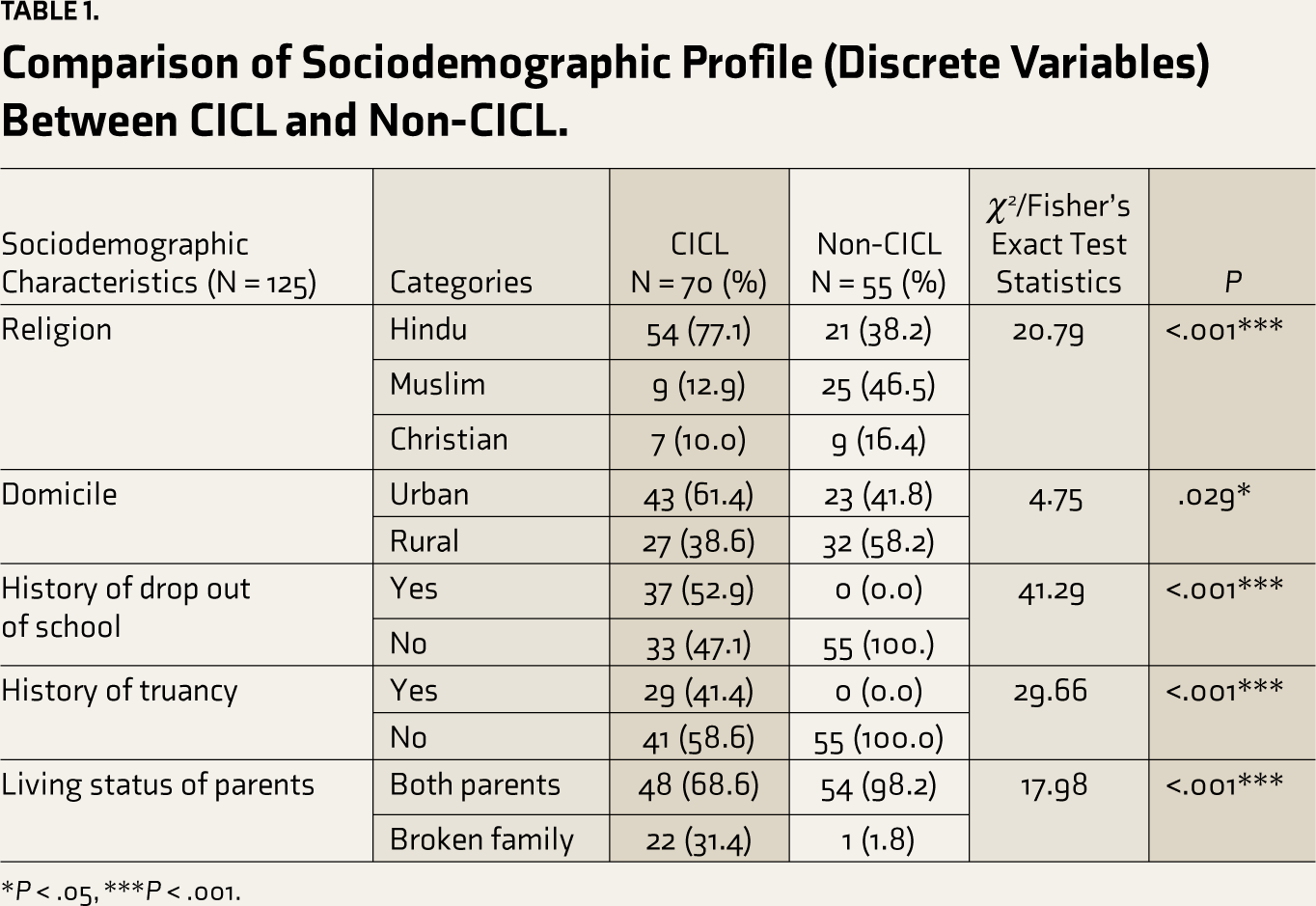
*P < .05, ***P < .001.
In Table 2, the Mann–Whitney U test indicated significant differences between CICL and non-CICL groups in the total monthly income, the age at which education started, and the years of education for both children and their parents.
Comparison of Sociodemographic Profile (Continuous Variables) Between CICL and Non-CICL.
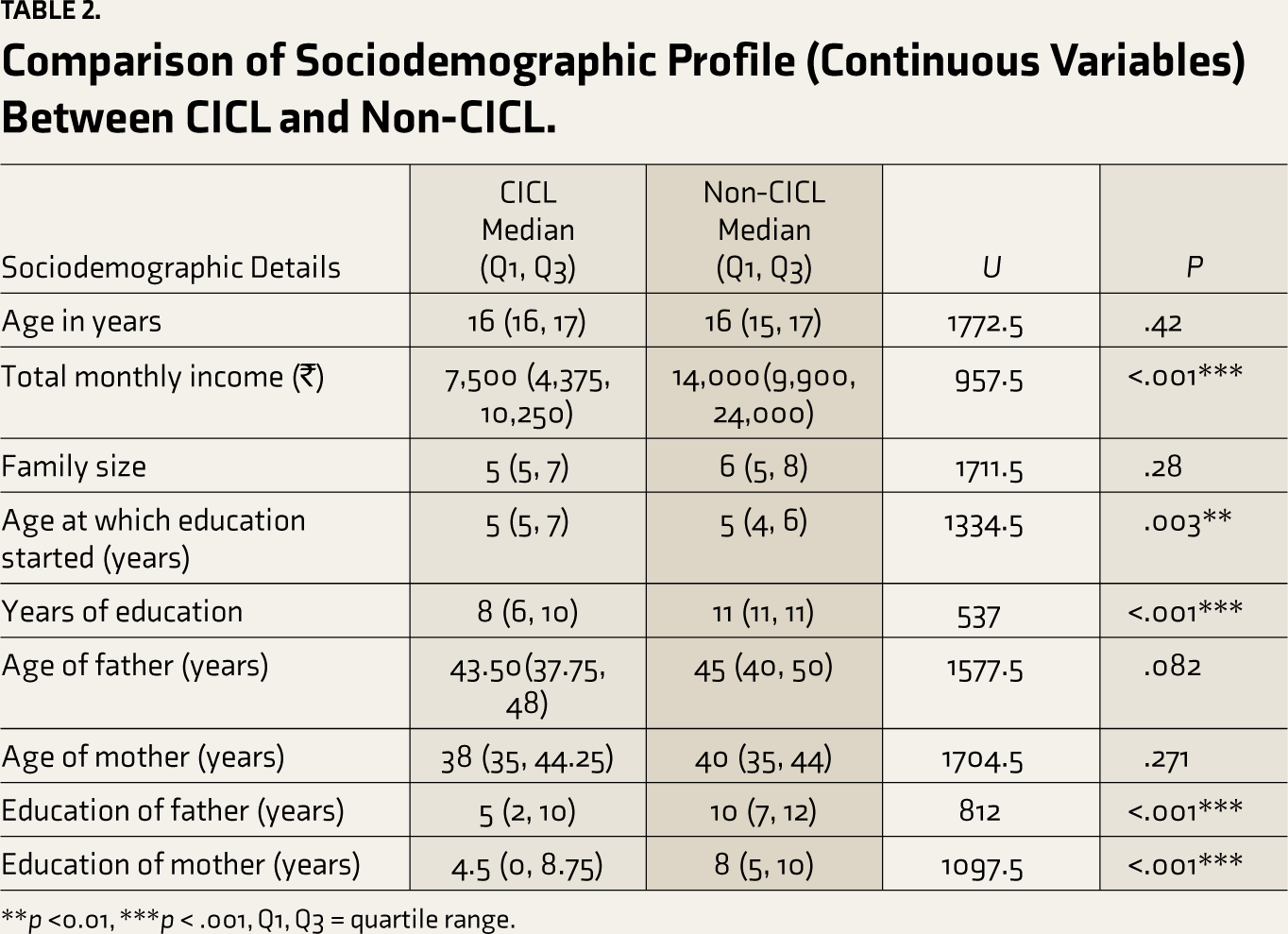
**p <0.01, ***p < .001, Q1, Q3 = quartile range.
The mean age at which crimes were committed was 15.77 (SD = 1.37). The majority were charged with theft/abduction, committed crimes with others, and were reported by others. Before their arrest, many were in education or employment. A significant portion reported feeling guilty post crime and cited friends as their source of crime knowledge (Table 3).
Crime-Related Psychosocial Profile of CICL (Discrete Variables).
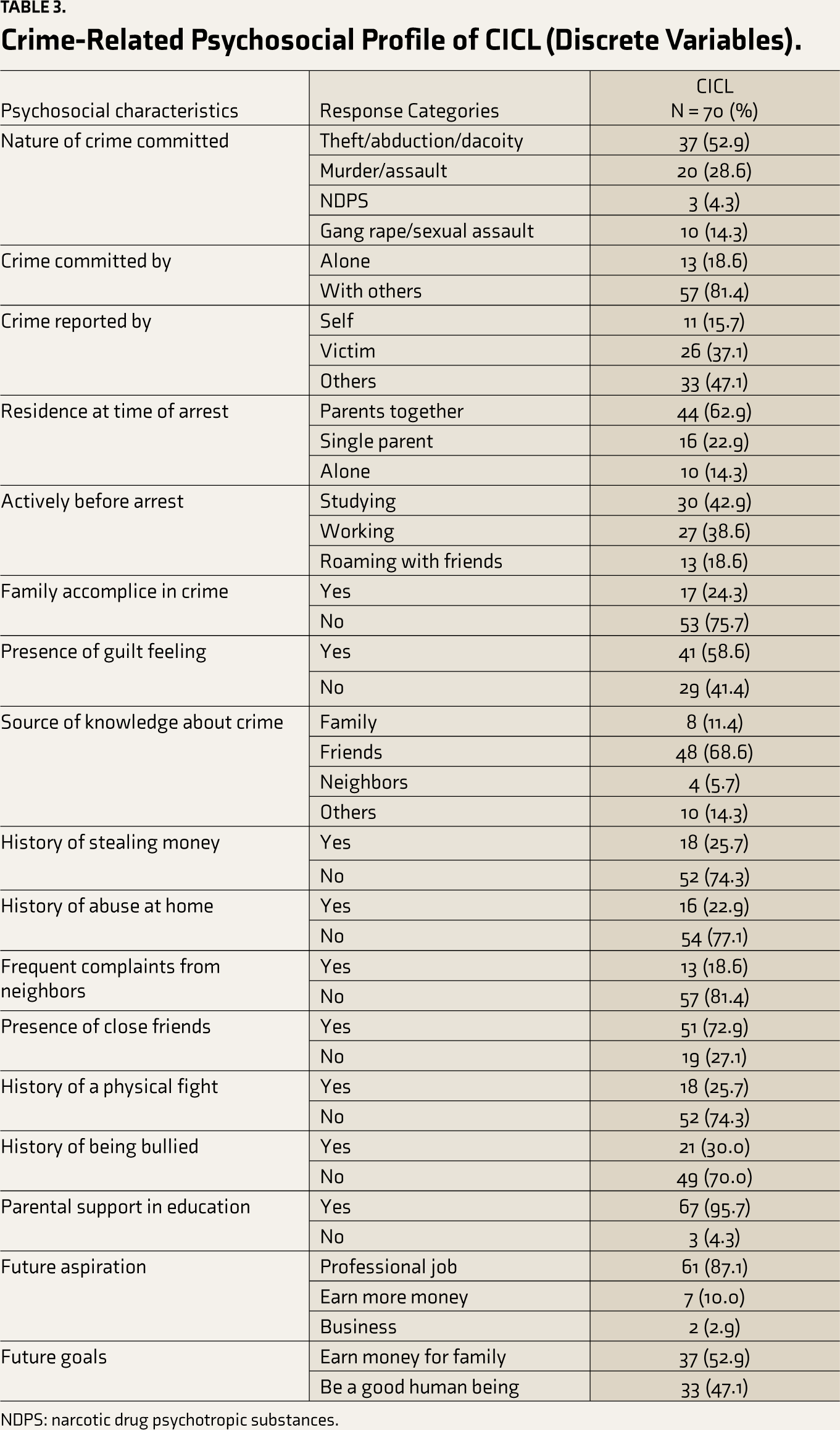
NDPS: narcotic drug psychotropic substances.
In Table 4, the Mann–Whitney U test indicated significant differences between the two groups in peer problems, emotional problems, internalizing attributes, prosocial behavior, level of alcohol/drug involvement, sensation seeking, verbal aggression, self-esteem, parental involvement, and strictness. CICL showed significantly higher levels in most of these domains than non-CICL, except for verbal aggression, which was higher among non-CICL.
Comparison of Psychosocial Variables Between CICL and Non-CICL.
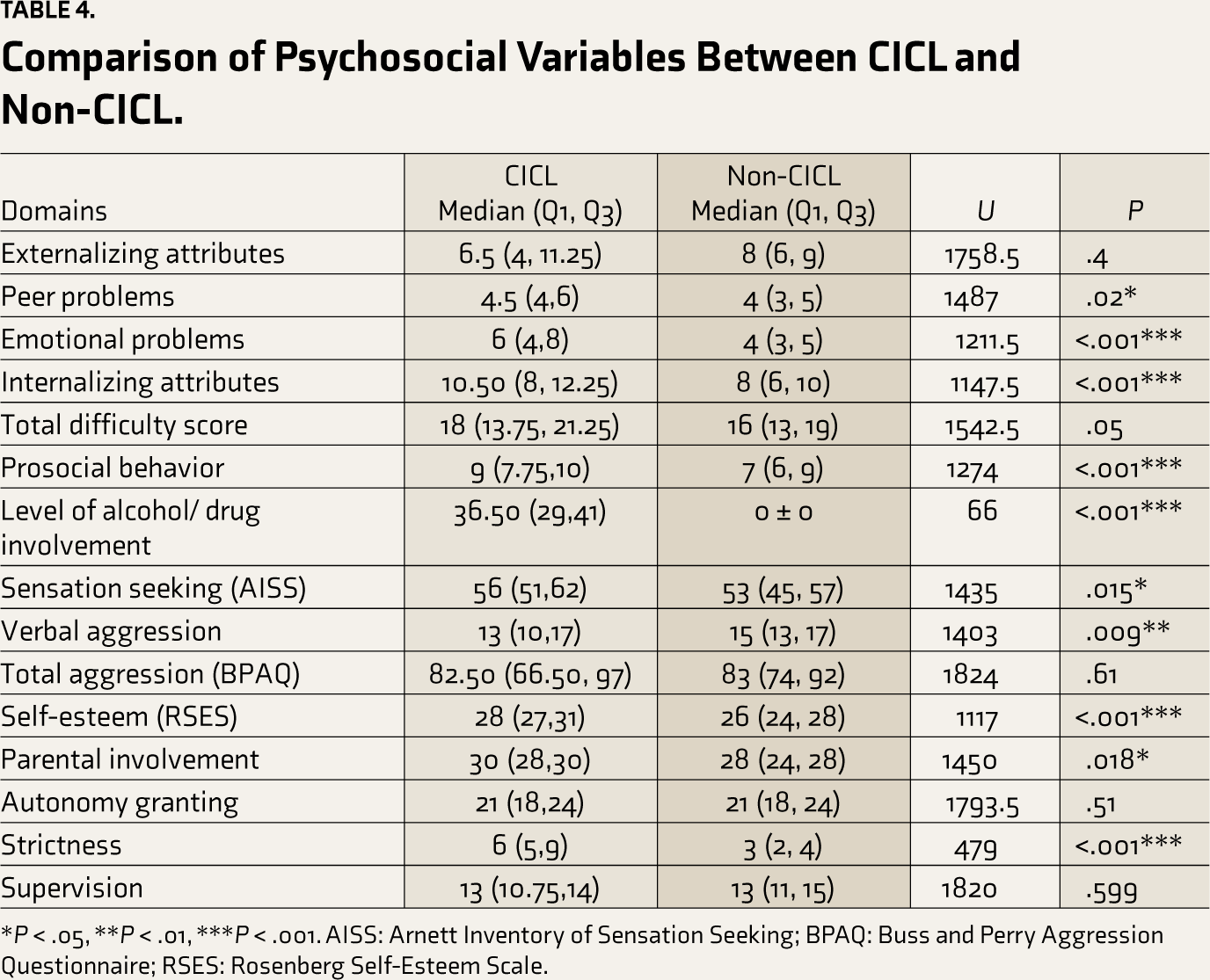
*P < .05, **P <.01, ***P <.001. AISS: Arnett Inventory of Sensation Seeking; BPAQ: Buss and Perry Aggression Questionnaire; RSES: Rosenberg Self-Esteem Scale.
Discussion
The current cross-sectional comparative study assessed the mental health issues and psychosocial contexts of CICL and compared them with non-CICL. The study found that CICL had significantly higher levels of emotional problems, internalizing attributes, prosocial behavior, substance use, self-esteem, and parental strictness than their non-CICL counterparts. The study identified significant sociodemographic characteristics associated with conflicts with the law. These findings align with previous research, indicating that most CICL came from urban residences, 26 broken families, and low socioeconomic status.5,7-10,27-29 Other common factors included low family monthly income,7,8 truancy from school, and school dropouts.8,9 In developing countries, poverty is a primary driver of early school abandonment. The lack of education increases the likelihood of engaging in antisocial behavior. Social and economic issues negatively impact educational development.8,9,30 Additionally, family disruptions often lead to problematic peer group interactions and engagement in disruptive behaviors. 31 The lack of family support and supervision for education might be the reason for CICL, which informed the increased age at which education started and the low number of years of education. The parents might be busy working to meet daily life requirements and have poor academic performance, poor attachment to school, and a bullying history from school. Disengaged individuals mainly engage in socially undesirable behaviors, which can lead to further increased disengagement. 32
Relationships with peers who engage in offensive activities are strong predictors of adolescent offending. Children with friends involved in problematic behaviors are more likely to participate in such behaviors, especially in the absence of proper monitoring and supervision. 31 In this study, most CICL committed crimes with peers, and 68.6% reported learning about the crime from friends. Some studies also pointed out the importance of peer groups in daily life, and wrong decisions often result from the destructive influence of people in their circle.9,28
Despite India’s stringent anti-child labor legislation and policies, the finding of the present study supports the incidents of child labor, which is still in trend. Researches show that the history of crime in the family is another predictive variable that influences antisocial behavior among children who violate the law.8,33 The lack of parental supervision,6,7,9 poor child-rearing practices, externalizing attributes, and high aggression 5 might be some of the reasons for stealing tendency. Findings related to physical abuse at home put some light on the previous findings of the research that children who have been physically neglected or abused are more prone to commit violence and crime. Exposure to violence in the home and elsewhere increases a child’s risk of violent behavior involvement later in life. 8
Externalizing problems are widespread among children reporting a history of serious behavioral problems, with 77% of parents of such children reporting substantial externalizing symptoms. Even children committing severe offenses that may present outwardly with conduct-disordered behavior are likely also to experience symptoms of depression or anxiety. 34 The present study samples also briefed as having internalizing attributes rather than externalizing attributes. Lack of parental support and stressful life events might be the reasons for this.35,36 One of the studies showed the same result as the present study regarding prosocial behavior. The study highlighted the direct association between prosocial behavior towards friends and later delinquency. 37
The study found high levels of substance use among CICL, highlighting an emerging health concern among juveniles in India. Substance use trends vary widely across countries due to sociocultural acceptance, easy availability, and low prices of substances such as tobacco and cannabis. Factors such as childhood neglect, family substance use, and domestic violence may contribute to these high levels of substance use. Additionally, children who face difficulties in school and lack commitment to academic success are more likely to engage in undesirable behaviors, including drug use. 38 Substance use and criminal behavior are closely linked, with each potentially exacerbating the other.8,31 In one of the studies conducted at Udaipur City, India, no significant differences were found between CICL and the control group in terms of proactive aggression and total aggression, 39 which supports the present study findings. However, the study result is inconsistent with previous studies that found that children who engage in criminal offenses were almost as aggressive as non-CICL.5,17,34
While low self-esteem is typically considered a risk factor for illicit behaviors and conduct disorders, 40 this study found higher self-esteem among CICL. This finding contradicts some existing literature and warrants further investigation. Sensation seeking, which correlates positively with illegal behaviors, 41 was slightly higher in CICL than in non-CICL. Farley 42 suggested that individuals requiring higher stimulation levels often come from environments with limited opportunities, leading to engagement in undesirable activities. Significant differences were found between the groups in terms of parental involvement and strictness. The study highlighted that parental involvement (PSI-PI) was higher in CICL than non-CICL. As reported, low parental strictness among CICL may be attributed to factors such as single parenthood, low socioeconomic status, poverty, permissive parenting styles, and poor parental supervision.6,7
There is a thin line between CICL and children in need of care and attention. Many CICLs lack proper care and attention, underscoring the need for targeted interventions for vulnerable children. Addressing these needs is crucial for preventing juvenile crime, as the present study is probably, to the best of the authors’ knowledge, one of the first studies that explore mental health aspects associated with CICL from India. More researches with prospective longitudinal and qualitative designs are required to demonstrate the impact of adverse sociodemographic characteristics on psychological traits related to child crimes. Information gathered from multiple sources such as family members, different stakeholders, and staff of observation homes is suggested for a holistic perspective. Qualitative and mixed-method studies can be explored for the in-depth understanding and for expanding the current study’s findings. Since there is a lack of studies on CICL in psychosocial aspects, the present study may be considered an important contribution in this direction.
The study has several implications for psychiatric social work, training, research, and policy. This study’s findings help to plan any prevention and promotional programs at the individual, family, and community levels. Comprehensive rehabilitation and effective aftercare systems are essential for the social integration of CICLs after they leave the juvenile justice system. Additional training needs to be provided for the counselors who are employed in the observational homes by experts in the field of mental health on rehabilitation, psychosocial interventions, and various psychotherapies that can be used with the CICL and their family members. There is the need of community centers where young children can get emotional, physical, and mental support. The present study elicited certain mental health aspects, such as externalizing symptoms, internalizing symptoms, level of substance use, aggression, and self-esteem. These aspects need to be assessed during admission for better mental health outcomes and interventions. Additional training can be provided to all the staff members on the identification of possible mental health issues among CICL. Family members of CICL need to be included in the counseling process, and family-based programs should be developed. Planning delinquency prevention programs and incorporating standardized mental health modules in the educational system are recommended. Delinquency prevention programs must be given importance to reduce the likelihood of children becoming serious and violent offenders while developing judiciary, police personnel, and teachers’ perspectives should be considered. Conducting mental health promotional activities and sensitization programs on child development will help the psychosocial care providers of the children, including parents and teachers, to learn about good practices at home and outside. Mental health professionals will play a crucial role in implementing these recommendations and making a positive impact on the lives of these vulnerable children.
Limitations
Despite the strengths of this study, several limitations should be noted. First, the generalizability of the findings could be improved as the study sample is restricted to only one observation home in Jharkhand. Future research should consider multi-center studies using randomized sampling to enhance representativeness. Second, participant responses may be biased because of fear of repercussions, potentially leading to underreporting of problem behaviors. Third, data collection was limited to the children, without input from key informants, such as family members, judiciary, and police departments, which could have provided a more holistic view. Finally, the comparison group was not evenly matched in size with the CICL group, which could affect the robustness of comparative analyses.
Conclusion
Identifying the factors related to juvenile crime is complex, involving developmental, psychosocial, and possibly genetic influences. Key sociodemographic characteristics found to be associated with CICL include urban domicile, low socioeconomic status, poor parental scholastic experience, broken families, negative peer influences, family history of crime, history of abuse, and poor parenting practices. The study highlights several significant psychosocial variables among CICL, such as high internalizing problems, prosocial behavior, high levels of substance abuse, high self-esteem, high parental involvement, and strict parental practices. Future research should focus on longitudinal studies, multi-informant approaches, and intervention testing to better understand and address these issues. Addressing the multiple factors involved in juvenile crime requires interventions at various levels, including policy. Training stakeholders such as police, observation home staff, and judiciary on psychosocial aspects are essential to ensure the well-being of CICLs and contribute to a better society. Encouragingly, the majority of CICLs in this study (87%) aspired to professional careers, indicating a strong potential for positive change and underscoring the crucial role of observation homes in their rehabilitation and societal reintegration.
Footnotes
Declaration of Conflicting Interests
The authors declared no potential conflicts of interest with respect to the research, authorship, and/or publication of this article.
Declaration Regarding the Use of Generative AI
The authors declare that they did not use generative AI tools to collect or analyze data, produce images or graphs, or write this article.
Ethical Approval
This study was reviewed and approved by the Institute’s Ethics Committee of Central Institute of Psychiatry, Ranchi, India (Letter No. IEC/CIP/2020-2021/1207, dated March 22, 2022).
Funding
The authors received no financial support for the research, authorship, and/or publication of this article.
Informed Consent
Written assent and consent were obtained appropriately.