




Abstract
Background:
Substance use is a serious public health concern and young adults in India often use multiple substances, often together. There is a dearth of research examining this and its neuropsychological consequences. Polysubstance use (PSU) usually indicates higher chances of dependence and negative outcomes. This study aims to describe the patterns of PSU and associated executive function profiles in a sample of young adults in India.
Methods:
Fifty-four participants aged 18–25 years filled out a self-report questionnaire on PSU, for lifetime and current use of seven classes of substances. Thirty-four participants also performed four executive functions (Flexibility, Inhibition, Working Memory, and Planning). A descriptive analysis was used to identify patterns of PSU and one-way analysis of variance (ANOVA) was conducted to compare the executive functions between three groups of substance users with nonusers.
Results:
Three patterns of PSU were identified in our sample: simultaneous (16.3%), concurrent (37.2%), and mixed (46.5%) patterns of use. Simultaneous and concurrent users reported the most commonly used substance combinations (alcohol/nicotine/cannabis). Performance on executive function tasks was compared among the different groups of substance users and nonusers. Executive function assessments revealed deficits in simultaneous users for inhibition (most errors) and planning (most number of moves) compared to other groups. Concurrent users had the lowest accuracy for the two-back visual working memory.
Conclusions:
The findings of this small sample study suggest executive function deficits are more common in simultaneous users and underscore the need for more research to examine the synergistic effects of substances on cognition and executive functions.
Keywords
Polysubstance use patterns among young recreational substance users in the order of prevalence were mixed (46.5%), concurrent (37.2%), and simultaneous use (16.3%). For executive functions, simultaneous users showed deficits in inhibition and planning when compared to other groups. Concurrent users had the lowest accuracy for the two-back visual working memory task.Key Messages:
Polysubstance use (PSU) refers to the simultaneous (more than one substance at the same time) or concurrent use (various substances on separate occasions) of different psychoactive substances. 1 Research has shown that PSU is associated with greater physical and mental health problems, risk-taking and self-harming behaviors, and cognitive dysfunctions. 2 Epidemiological studies have also established PSU to be a growing public health concern, associated with poorer health outcomes and higher mortality rates. 3 Individuals who initiate the use of substances at younger ages are also more likely to use multiple substances later, which ultimately leads to more severe physical and substance-related consequences.4,5 Most research on substances typically focuses on single substances and excludes individuals who use multiple substances. 1 Although PSU is often defined in research in the context of illicit drug use and substance use disorders (SUD), PSU is prevalent in community populations that also include licit drugs such as tobacco and alcohol.
PSU is often differentiated into simultaneous use and concurrent use, which refer to temporally different patterns of how individuals co-administer substances. These two constructs are correlated, yet also discernible.6,7 Simultaneous use is less common than concurrent use and is often associated with the use of hard drugs. Rates of simultaneous use have increased in recent years among young, nonclinical populations. 8 The use of two or more substances simultaneously has been ascribed to enhance the intoxicating effects of the substances combined. 9 Studies have found that simultaneous use of marijuana and alcohol was the most common, followed by alcohol and tobacco use 10 and across most countries, alcohol, tobacco, and cannabis are the most commonly co-administered substances in youth. PSU also increases the likelihood of using other illicit drugs like opiates, stimulants, and sedatives, and a sequential pattern of substance use has been found, starting with licit drugs and moving on to illicit drugs.6,7,10 A high proportion of concurrent users also engage in simultaneous substance use at some time point, thus characterizing a mixed pattern of use. 11 Studies examining the nature of substance use patterns among young adults have generally identified distinct profiles of polysubstance users in terms of increasing intensity/ severity of use and/or extended range of substances used.12,13 High-risk substance use patterns among young adults can increase the risk of addiction/dependence, fatal and nonfatal overdose, injuries, violence, dangerous driving, and negative sexual experiences.14,15 Impaired mood, impaired executive functions, and poorer educational and occupational outcomes have also been reported among problematic substance and polysubstance users.16,17
Executive functions refer to higher-order cognitive skills that enable people to select logical and rational actions and engage in purposeful goal-oriented behavior. 18 PSU has been associated with moderate-to-large impairments across a range of executive functions, including impairments in fluency, inhibition, shifting, working memory, reasoning, and decision-making.19,20 Studies have also shown that harmful use of substances, particularly multiple substances, leads to deterioration and abnormalities in various brain structures which are often manifested in the form of impairments in cognitive functioning.21–23 Neuropsychological assessment of polysubstance users has revealed clinically significant impairments in their executive functions like cognitive flexibility, response inhibition, working memory, intellectual functioning, and analogical reasoning.20,24 Studies have generally found cognitive dysfunction to be an important predictor of worse prognosis for individuals with SUD.25,26 Not only is PSU associated with greater cognitive deficit, but they also show reduced recovery of cognitive functions during drug abstinence.3,27 However, most research studies on PSU and cognitive/executive functioning have been conducted on clinical populations. Very few studies have looked at the impact of PSU on recreational users, especially those using more common licit substances like tobacco, alcohol, and cannabis. 28
While the opioid epidemic in the United States has sharpened the interest in PSU research, drug use patterns in India have also reached cataclysmic proportions. 29 One review reported the occurrence of PSU in different South Asian countries ranging between 20%-90% among substance users. 30 Few studies have reported adverse effects of PSU and also increased risk of comorbid psychiatric disorders and other health problems.31,32 A recent extensive report on substance use in India, published by the National Drug Dependent Treatment Centre (2019), also does not report on the patterns and consequences of PSU. 33 PSU was also not explored in the National Mental Health Survey (2016). 34 Only a few studies from India have examined PSU primarily in the treatment-seeking population and/or injecting drug users, and they have generally found a higher prevalence of PSU.35–37 So far no Indian studies have examined substance use patterns among at-risk youth, who have increasing recreational use and enhanced access to substances in their environment, thus potentiating a risk of PSU. No Indian research studies have also examined executive functioning in PSU to understand if some patterns of use have more severe consequences than others.
Operationalization of the term “polysubstance use” has been challenging, and so has the definition and understanding of simultaneous and concurrent PSU. Patterns of PSU evade comprehensive understanding because of methodological issues and types of drugs measured.38,39 However, existing research data worldwide suggests PSU to be a normative pattern that entails high risk and serious negative consequences, warranting the need for more studies. Hence, this study is a preliminary exploration of PSU among young adults from urban India who use substances recreationally. It also aims to provide a preliminary profile of executive functioning among various groups of polysubstance users.
Methods
Ethics
This study was reviewed by the Research Conduct and Ethics Review Committee at CHRIST Deemed to be University. Data Collection only began after approval was obtained. This study followed standards for research ethical code of conduct given by the American Psychological Association (APA). 40 Informed consent was obtained from all participants and confidentiality of responses was maintained using data encryption on Red Cap. The participants were also briefed about the ill effects of substance use and appropriate resources for help were shared with those who indicated they needed help. All identifying information was de-identified before analysis and the data was accessible only to the researchers.
Design
This study had two parts and followed an exploratory cross-sectional research design. The first part was a preliminary examination of substance use patterns among young recreational substance users from India. The second part used a between-subject experimental design to explore differences in executive functioning of different groups of recreational polysubstance users and nonusers. This study attempted to lay the groundwork for further research on PSU in India using larger, more representative samples.
Participants
Participants currently residing in Bangalore, India, who had used one or multiple substances in the past were selected using a mix of purposive and snowball sampling. A small group of Indian young adults who had never used any substances in their lifetime (nonuser group) were also recruited. Inclusion criteria for participants were: residing in India, being between 18 and 25 years of age, familiarity with computer technology and use of keyboard functions, and normal or corrected-to-normal vision. They were also screened for their psychological status and participants were excluded from this study if they had any diagnosed mood disorders, personality disorders, head injury, neurological disorders, or any major psychiatric disorders. They were also excluded if they were seeking any sort of rehabilitation or treatment for substance use, or if they were on any kind of medication affecting their cognitive performance. The data collection for this study took place between July 2023 and June 2024. Out of a total of 83 respondents who attempted the PSU questionnaire, only 54 young adults between the ages of 18 and 25 years (mean age = 21.44 years) completed all entries. This included 11 participants who had never used any substances and 43 who had used one or more substances. Further, 34 out of the 54 total participants also completed the executive function tasks.
Procedure
Data regarding substance use was collected using a self-report questionnaire developed specifically for this study, with items derived from existing literature. The survey questionnaire was created on Red Cap, which is a web-based tool for developing and managing online research studies and their data. 41 The link to the survey was circulated online via social media and instant messaging applications. Participants who had filled out the questionnaire were contacted through email to schedule the experimental assessment of executive functioning at their convenient time. Most participants completed the experimental tasks within a few days of filling the online questionnaire and the maximum time duration between administration of the two parts was one week. The executive functioning tests were administered by the researcher and it took approximately 90 minutes to complete the four tasks. Data on executive functioning was collected using Psychology Experiment Building Language (PEBL) 2.0 for MacOS, which is a free open-source software used for creating and conducting standard behavioral and cognitive experiments and tasks. 42 Released in 2006, PEBL has been used extensively in experimental research across several disciplines, and it is widely accepted as a valid and reliable platform for assessing individual differences in neurocognitive functions. 43 All tasks were hosted on a MacBook Air 13.3 inch, placed at a distance of 25 cm in a secure noise-free room. The participants were given appropriate instructions before each task, which was followed by practice trials before they proceeded with the test trials. The tasks were presented in a randomized order, with a break of five minutes after two tasks were completed.
Measures
The PSU questionnaire used to survey participants for this study was developed by collating items derived from a literature review of PSU studies.11,12,44 The questionnaire items were also derived from different standardized substance use measures such as the Alcohol, Smoking, and Substance Involvement Screening Test (ASSIST), 45 Alcohol Use Disorder Identification Test (AUDIT), Semi-Structured Assessment for the Genetics of Alcoholism (SSAGA II), 46 and Composite International Diagnostic Interview Substance Abuse Module (CIDI-SAM). 47 Patterns of use of seven classes of psychoactive substances were assessed: alcohol, tobacco, cannabis, opiates, stimulants, psychedelics, and sedatives. The items in the questionnaire pertained to lifetime individual and PSU, past 90-day use, combinations of substances used, quantity and frequency of use, and harmful use. For the second part of this study, data for executive functioning was collected using the following experimental tasks on PEBL 2.0 which already had the tasks in its test battery. 42
Berg Card Sorting Task (BCST)
The task measured cognitive flexibility and participants were required to sort cards to the appropriate deck according to an unknown and changing rule through the use of a trial-and-error decision-making process. 48
Eriksen Flanker Task (EFT)
The task measured response inhibition. Participants had to report the direction of the arrow in the middle of the screen which was flanked by arrows facing the same direction (congruent) or in the reverse direction (incongruent) by pressing assigned keys on the keyboard. 49
Dual N-Back Task (DNBT)
The task measured working memory and participants were continuously presented with stimuli for which they were required to indicate whether or not the present stimuli matched the one present n instance before (where n = 1, 2, or 3). The participants were simultaneously presented with two stimuli—blue squares on a grid and letters (C, H, K, N, R, W, X, Y). Participants had to respond to each trial regarding whether the letter on screen was the same presented n instances previously, as well as whether the letter was in the same position on screen as one n instances back. 50
Tower of Hanoi (ToH)
The task measured planning and consisted of three disks placed in different formations on three pegs. The participants were required to recreate the formation using three disks in such a way that they could only move one disk at a time and could not place a bigger disk on a smaller one. A minimum number of steps were required to solve the problem. 51
Statistical Analyses
The statistical analyses for this study were done using Jamovi (version 2.3.21). 52 For the exploratory analysis of data collected using the PSU questionnaire and executive function tasks, descriptive statistics were used to represent the data. The data of only those participants who completed the PSU questionnaire and behavioral tasks was considered for analysis. One-way nonparametric analysis of variance (Kruskal–Wallis) tests were used to analyze group differences in executive function for different groups of polysubstance users based on their patterns of use. Effect sizes of the analyses were measured using Epsilon square (ε2). Dwass-Steel-Critchlow-Fligner (DSCF) pairwise comparisons were used to further analyze the differences in executive functioning between the groups.
Results
Survey Questionnaire
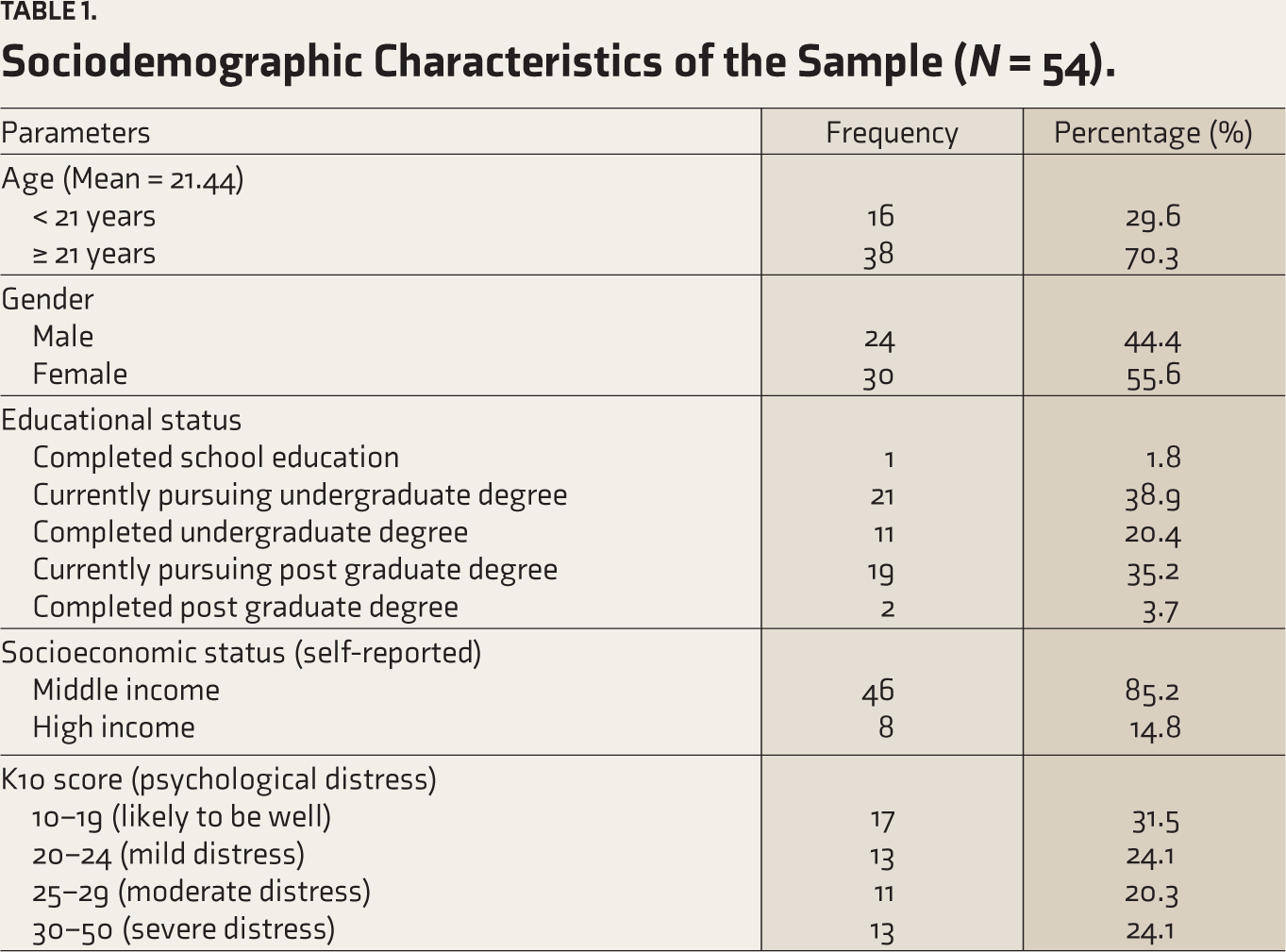
There were 83 total respondents on the PSU questionnaire; however, only 54 had fully completed it. Furthermore, out of the 54 respondents, only 34 participated further and completed the behavioral tasks as well. The sociodemographic characteristics of the 54 participants who completed the questionnaire are given in Table 1. The majority of the participants were in their early 20s (M = 21.44, standard deviation [SD] = 1.74), belonging to a middle-class background (85%), and pursuing their undergraduate degree at the time (38.9%). The sample had a slightly higher proportion of female respondents (55.6%). The majority of the participants met the criteria for no psychological distress (31.5%), as measured by the Kessler Psychological Distress Scale. 53
Sociodemographic Characteristics of the Sample (N = 54).
The sample was composed of 11 (20%) nonusers. Among those who used substances, 9 (20.9%) were single substance users, 11 (25.6%) were dual substance users, and 23 (53.5%) were multiple substance users. Alcohol was the most commonly used substance (74.1%), followed by cannabis (59.3%) and nicotine (51.9%). Among those who used multiple substances, different patterns of substance use were endorsed. Seven (16.3%) of them were simultaneous polysubstance users, which means they used more than one substance at the same time or in very short intervals of another substance, at every occasion of use. Sixteen (37.2%) participants were concurrent polysubstance users, which means they used multiple substances but only used one substance at a time, on any given occasion. Twenty (46.5%) of them reported a mixed pattern of use, indicating they sometimes used more than one substance at the same time (simultaneous) and sometimes used one substance at a time (concurrent). The use of different substances in a simultaneous, concurrent, and mixed pattern in the sample is tabulated in Table 2. The mixed pattern of use, that is, sometimes simultaneously and concurrently, was the most endorsed pattern by both licit and illicit substance users. Simultaneous use was endorsed by those who used alcohol, nicotine, and cannabis only.
Distribution of Use of Different Substances Across Simultaneous, Concurrent, or Mixed Pattern Users (N = 43).

Figure 1 shows the distribution of quantity of use per day for alcohol, nicotine, and cannabis in the different types of polysubstance users. It suggests that higher quantities of alcohol, nicotine, and cannabis were used by simultaneous users compared to other types. Some of these distribution curves reflect bimodal characteristics, which perhaps point towards the presence of sub-groups within the usage patterns within the three types. This warrants more investigations in larger samples.
Distribution of Use of (A) Alcohol, (B) Nicotine and (C) Cannabis Across Types of Polysubstance Users.
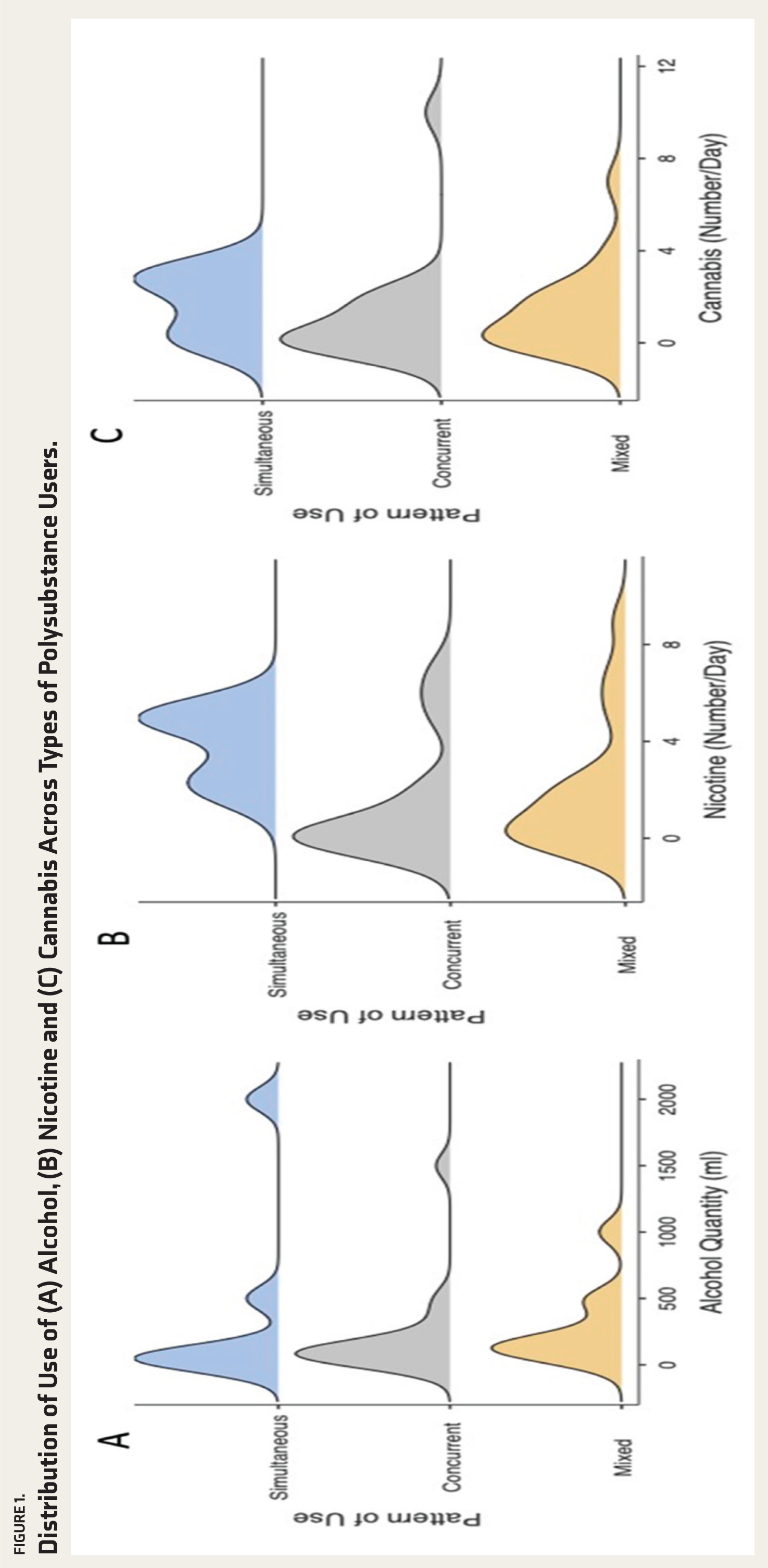
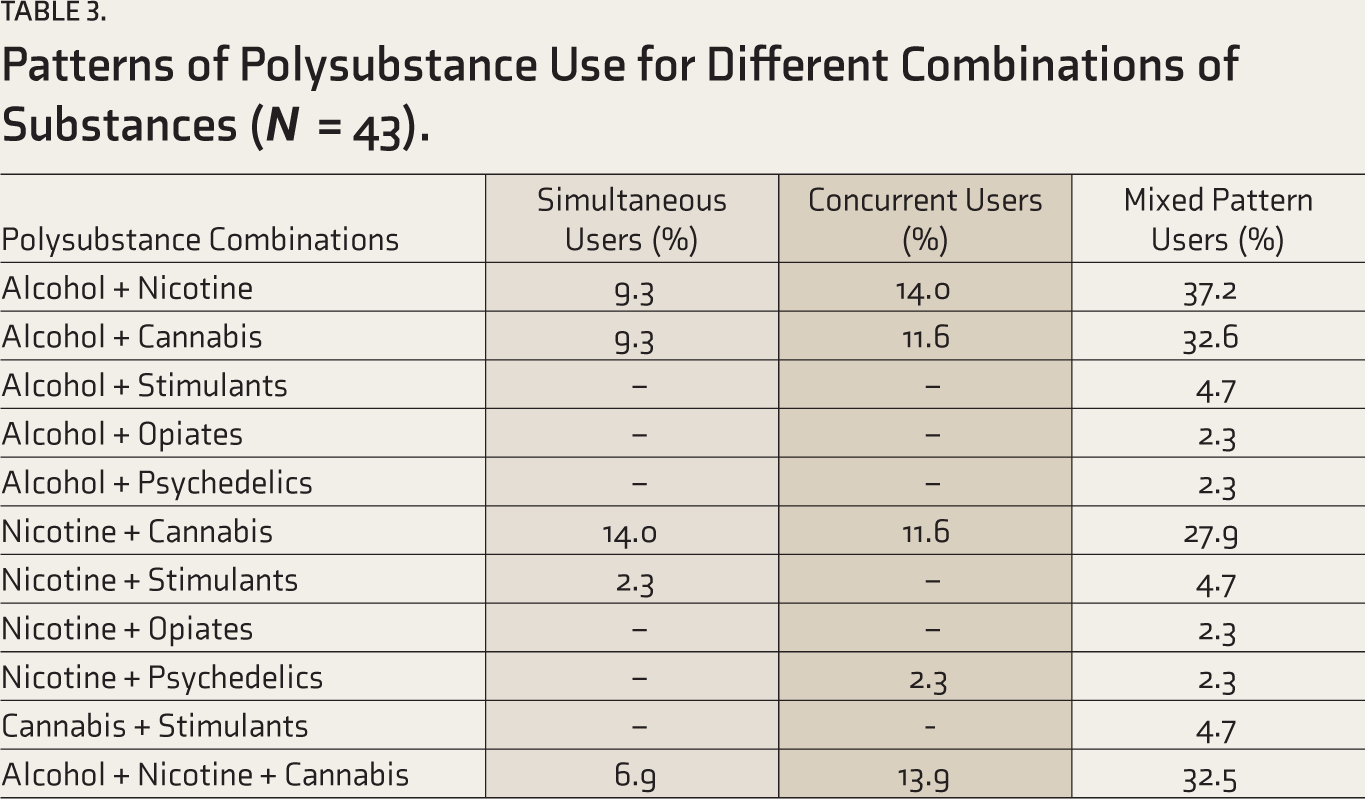
Table 3 shows different combinations of substances used by different types of polysubstance users. Simultaneous and concurrent users only reported the most commonly used substance combinations (alcohol/nicotine/cannabis), while the users with mixed patterns of use reported using less common drug combinations involving stimulants, opiates, psychedelics, and sedatives.
Patterns of Polysubstance Use for Different Combinations of Substances (N = 43).
Executive Function Tasks
Group differences in executive functioning in nonusers (n = 10), simultaneous users (6), concurrent users (9), and mixed pattern users (9) were analyzed using nonparametric one-way analysis of variance tests (Kruskal–Wallis). The results of the analyses of various task parameters from the executive function tasks are given in Table 4. The following outcome measures were obtained for analysis: number of errors (BCST), errors, accuracy and reaction time (EFT), accuracy across six conditions (DNBT), and response time and number of moves (ToH).
Results of the Kruskal–Wallis one-way analysis of variance for performance on the BCST measuring cognitive flexibility revealed no significant differences between the four groups for total errors, perseverative errors, and perseverative responses. For the EFT measuring response inhibition, there were significant differences between the groups on total errors (H [3] = 8.21, P < .05), while differences in accuracy and mean response times on congruent and incongruent trials were insignificant. Comparison of GroupWise means between the groups indicated that simultaneous users had the lowest accuracy (91%), followed by concurrent users (95%), and mixed pattern users (96%) as compared to the nonusers (96%). Performance on visual two-back trials of the DNBT was significantly different for the groups (H [3] = 8.64, P < .05) and the effect size was large (ε² = 0.262). Performance on verbal and visual one-back trials, verbal two-back trials, and verbal and visual three-back trials were not significantly different for the three groups of users as compared to the nonusers. Posthoc (DSCF) comparisons revealed that mixed pattern users had significantly higher mean accuracy than the concurrent group. On the ToH measuring planning ability, there were significant differences between groups of polysubstance users and nonusers only in the total number of moves taken by them to complete the task (H [3] = 8.26, P < .05). Posthoc pairwise comparisons revealed that simultaneous users took a significantly higher number of steps (M = 66.2, SD = 8.2) than nonusers (M = 49.8, SD = 3.3) on the ToH task (Table 4). The observed power and effect sizes of most of the group-wise comparisons were low.
Discussion
This research study aimed to identify the different patterns of PSU among young adults and evaluate differences in executive functioning as compared to a control group. PSU has been a concept that is difficult to crystallize and study even in the clinical samples 38 and an exploration of this in young adults within the age of risk of addiction is even less explored. Understanding these patterns can enable preventive interventions in community settings like universities and colleges.
For this study, purposive and snowball sampling were used to recruit 43 young adults who engaged in recreational substance use, along with a control sample of 11 nonusers recruited separately. Among substance users, 34 (79.1%) were engaged in PSU. Out of the 34 polysubstance users, 7 (16.3%) were simultaneous users, 16 (37.2%) were concurrent users, and 20 (46.5%) were mixed pattern users, that is, concurrent users who also engaged in simultaneous use. In this study, simultaneous use was defined as the consumption of two or more drugs at the same time or within short intervals of each other during any given occasion, while concurrent use was defined as the consumption of more than one substance over a given period. The patterns of use are also consistent with the literature, which indicates that simultaneous users are typically lesser in number amongst nonclinical populations because this pattern is more characteristic of individuals using more potent drugs such as stimulants, opioids, and sedatives and/or those dependent to multiple substances, 30 Mixed pattern of use tends to be more common among nonclinical populations, particularly young adult recreational users. 11 The higher proportion of mixed pattern users in this study also posits some consideration about the boundaries of simultaneous and concurrent patterns of PSU, which have been an important distinction in PSU research in recent years. It could be useful to explore mixed patterns of use further since it can provide insights into differences in environment, time, and other factors for an individual to engage in concurrent use or simultaneous use of multiple substances.
Among polysubstance users, alcohol, nicotine, and cannabis were found to be the most commonly co-administered substances, which is in agreement with research that has shown these three to be the most commonly co-administered substances among university students.10,11 Alcohol was the most commonly and most frequently used substance, as was also reported by the 2019 “Magnitude of Substance Use in India” report. 33 The results of this study also indicated a higher prevalence of cannabis use than nicotine among the participants, despite its illegal status and limited accessibility in India. It may be attributed to the changing attitudes towards cannabis use in India and also the loosening of restrictions on cannabis cultivation for medicinal purposes in a few Indian states. Cannabis remains the most widely used illicit substance in India. 33 A review article of the scientific research on cannabis use in India in the context of historical representations found that cannabis and its derivatives had deep religious and cultural roots in India, which have propagated its use over time. 54 Studies from outside India have also found an increase in the prevalence of cannabis use and a decline in cigarette/tobacco use in recent decades. 55
A subset of participants also completed tasks of executive function (N = 34), which provided data regarding the executive functioning of nonusers, simultaneous users, concurrent users, and mixed pattern users (Table 4). Overall, significant differences in some measures of inhibition, visual working memory, and planning were identified and no differences in other executive function measures were noted. Also, all indices of set-shifting showed no differences. The effect sizes were small to moderate. These mixed results could be attributed to the small sample size resulting in low observed power, and most of the data from measures were also not normally distributed. Moreover, the sample of polysubstance users was young, college-going recreational users, with no current psychiatric or neurological issues and, therefore, they are more functional than the average clinically diagnosed polysubstance user of a similar age range. Age and education do have a significant impact on the cognitive performance of polysubstance users. 56 These results are in agreement with some studies done on recreational users, which have also found small effect sizes and low differences in the executive functioning of users and nonusers.28,38 Some of the earliest evidence for these findings showed that a small direct relationship exists between cognitive performance and social drinking behaviors among young nonclinical males and females. 57 It is possible that the small sample size amplifies some of these issues in our study; hence, it must be interpreted with caution.
Kruskal-Wallis One-Way Analysis of Variance (ANOVA) for Executive Function Tasks.
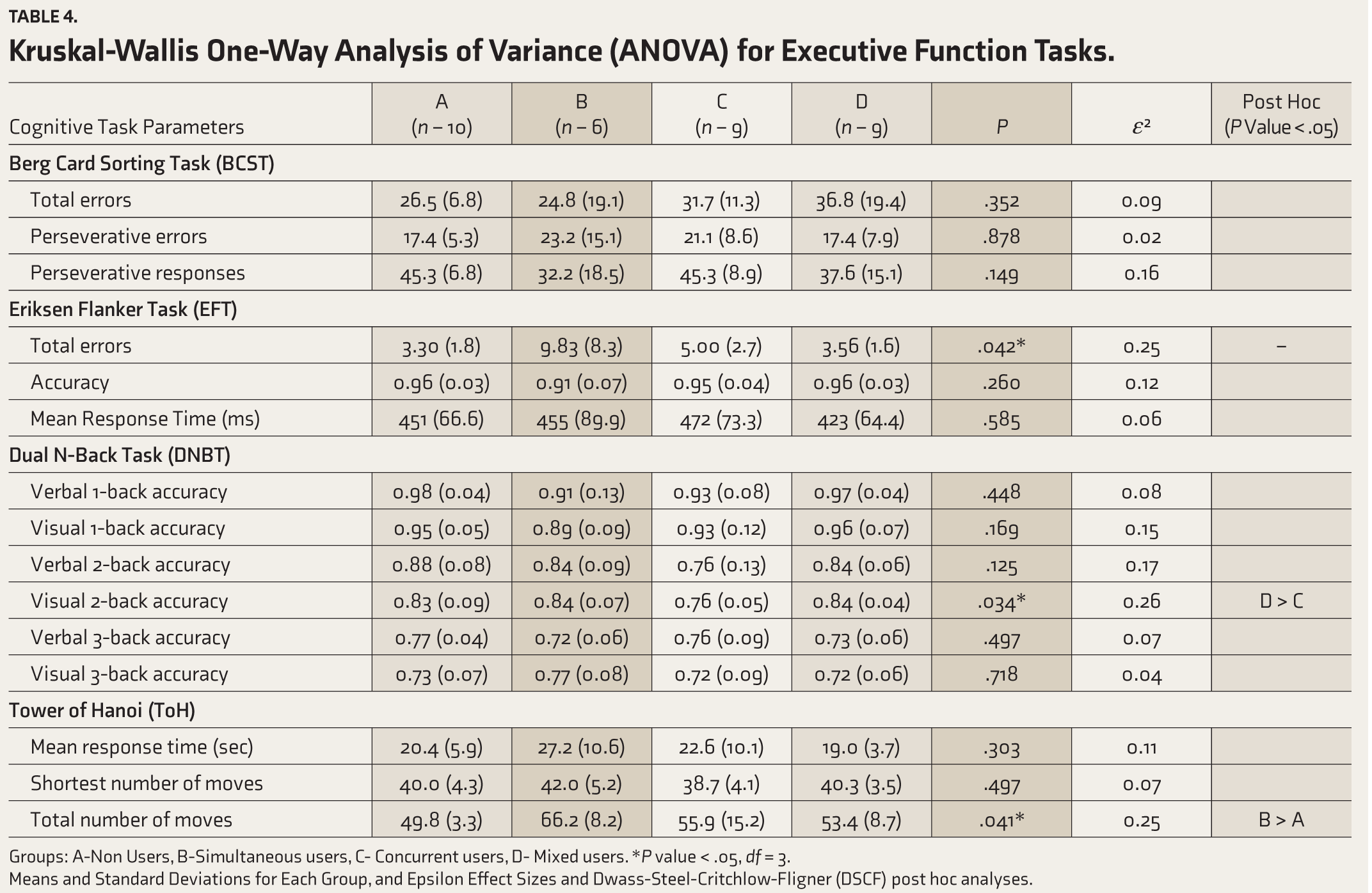
Groups: A-Non Users, B-Simultaneous users, C- Concurrent users, D- Mixed users. *P value < .05, df = 3.
Means and Standard Deviations for Each Group, and Epsilon Effect Sizes and Dwass-Steel-Critchlow-Fligner (DSCF) post hoc analyses.
Inhibitory control has been the most commonly studied component of executive function among polysubstance users. The results of this study indicate that the number of errors committed by the four groups of participants on the task of response inhibition (EFT) were significantly different, with simultaneous users having the highest number of errors. However, no significant differences in accuracy and mean response time were noted. Research has shown that participants’ age, education, and task characteristics influence response inhibition outcomes. It was also noted that most types of substances did not show a significant association with response inhibition, except lifetime cannabis use. 58 Recreational users have been shown to have poor motivational inhibition, despite which no group differences were found in terms of cognitive inhibition. 59 Hence, although small, our study endorses poor inhibitory control in polysubstance users and the highest impact is for simultaneous use. Simultaneous use, according to literature, is the most endorsed pattern of use among polysubstance users who use more potent narcotic drugs.6,30
In the Tower of London task, our study shows differences in planning between the groups for the total number of moves made by the participants to complete the task. The higher the number of moves made, the poorer the planning ability. Simultaneous users took the most number of moves to complete the task and nonusers took the least number of moves to complete the task. Existing literature has also found that polysubstance users had poorer planning performance as compared to controls. 60
This study found no group differences in set-shifting (cognitive flexibility) (BCST) performance and preservative errors between users and nonusers. This finding is supported by the results of previous research, wherein no group differences were found in set-shifting performance when analyzing polydrug use and its effects on executive components. 61 Lastly, working memory measured by DNBT also did not show any overall significant differences in the verbal working memory of the different groups of users and nonusers. Only visual working memory performance under load showed differences in accuracy for the groups, particularly for the concurrent and mixed pattern of users. 61 Research has mostly highlighted the negative impact of PSU disorder and dependence on working memory. 19 That is, clinical populations with PSU problems, particularly excess MDMA (3,4-methylenedioxymethamphetamine) use, have poor working memory. 20 There has been no past research looking at working memory performance of recreational polysubstance users and this study is the first to examine this.
The results of this study have several implications for the field of preventive strategies in community programs on drug use. Even recreational use is associated with cognitive changes in inhibitory control, planning, and working memory. These functions are associated with each other and further studies are needed to understand the gravity of change and develop retraining strategies. Even in this preliminary study, there is evidence for specific patterns of use, where certain patterns have poorer outcomes. Insights from patterns and consequences of PSU among young adults at the recreational use stage can help to prevent exacerbation of the drug use problem in youth. 62 This study underscores the need for regionally constrained policies and prevention efforts designed to control the problem before it can have exponential effects.
This study had its limitations, the sample size was small, and it had limited representativeness. All the participants were from urban, metropolitan cities, and had completed or were pursuing higher education. However, these samples are hard to gather because of the implications of disciplinary action at universities, and hence this study is valuable. Also, variables like age of onset, preference for substances, and severity and duration of substance use were not ascertained in this study. The duration of use of substances could have been relevant as cognitive deficits are more pronounced among long-term substance users or those who have SUD.24,33 It may have also been useful to control for confounding variables like intelligence, psychological distress, and level of education, and this may underlie the mixed results found in this study. Hence, the results may be interpreted with caution, and replication studies are needed to delineate and confirm these patterns and consequences of PSU more clearly. Future studies should look into artificial intelligence (AI)-based algorithms and machine learning methods to generate predictive models for PSU and identify important causative factors for PSU, which will help guide treatment and prevention efforts.63,64 Longitudinal designs with larger samples are needed to confirm whether impairments in cognitive/executive function underlie a predisposition to PSU or are a consequence of the use.
Conclusions
PSU is increasingly prevalent among young adults in India and this study makes a pioneering attempt to map different patterns of PSU among Indian young adults who use substances recreationally. The majority of users were found to engage in a mixed pattern of use. Overall, there were only slight differences in executive functioning between substance users and nonusers. Significant differences were observed in a few parameters of planning and inhibitory control. This study is a preliminary analysis meant to guide future, large-scale research and also has important implications for efforts in preventing PSU. This study attempted to operationalize “polysubstance use” and contribute to its scientific understanding, particularly in India, where there is a serious dearth of scientific research.
Supplemental Material
Supplemental material for this article available online.
Footnotes
Declaration of Conflicting Interests
The authors declared no potential conflicts of interest with respect to the research, authorship, and/or publication of this article.
Declaration Regarding the Use of Generative AI
None used.
Ethical Approval
This study was reviewed by the Research Conduct and Ethics Committee at CHRIST Deemed to be University and received an approval (Certificate number CU: RCEC/003200924) prior to commencing data collection.
Funding
The authors received no financial support for the research, authorship, and/or publication of this article.
Informed Consent
All participants reviewed and signed the informed consent prior to participating in the study.
References
Supplementary Material
Please find the following supplemental material available below.
For Open Access articles published under a Creative Commons License, all supplemental material carries the same license as the article it is associated with.
For non-Open Access articles published, all supplemental material carries a non-exclusive license, and permission requests for re-use of supplemental material or any part of supplemental material shall be sent directly to the copyright owner as specified in the copyright notice associated with the article.
