



Abstract
This article presents, for the first time, descriptive research on the status of music education in Puerto Rican public elementary schools. General music education at elementary schools on the island has been part of the school offering for more than 50 years. As yet, music education at this level has not been recognized as an essential discipline in the Department of Education’s official curriculum. The official governmental positions are contradictory to the reality of the teaching of music. As a result, this study is directed at obtaining a true understanding of the factors by performing research using 228 music educators from different areas of the Puerto Rican territory as the main suppliers of information. A questionnaire, validated by 15 experts, was administered to the 228 highly qualified in-service music teachers, and a 100% response rate was obtained. Overall, the results revealed that music teachers from Puerto Rico are performing under less than ideal teaching conditions.
Introduction
Most of the studies related to Puerto Rican musical education have used as their basic reference the work of Fitzmaurice (1970), in which a detailed history of musical education in Puerto Rico is provided from the Pre-Colombian era to the foundation of its musical education program in the public schools of Puerto Rico. According to Oliver (1999), Latorre (2010), and Cubano (2010), the situation of public musical education on this island has been influenced by social problems and a national lack of identity.[PE: In this article we have graphics and figures.….we have left as such but let us know if we should have changed these all to figures, if you would like us to fix do send it back.]
Even though the works referenced here include extensive information of a descriptive historical character, they do not offer a rigorous and comparable observation of the reality that they purport to study. This view proves the need to employ empirical investigation methods that would allow convenient exploration of the situation of music education in the public elementary schools of Puerto Rico, in both urban and rural areas. This is the path the current study has followed, providing for the first time a valid and reliable consultation instrument, a specific questionnaire to determine with certainty the situation of the school musical reality being studied. This study follows statistical evaluation procedures that are in accordance with the investigation methods used in the social sciences.
Background
The Caribbean island of Puerto Rico is located 1000 miles southeast of Miami, Florida, USA and 800 miles west of the US Virgin Islands. It is the smallest of the Lesser Antilles. The island’s extension is approximately 100 miles long and 35 miles wide. Puerto Rico was a Spanish colony from 1493 to 1898 and has been a colony of the United States since the end of the nineteenth century. Nevertheless, in 1952 it was established as a Commonwealth, although many Puerto Ricans consider it an extension of the colony established by the United States of America in 1898 (Gray, 1999). Presently, Puerto Rico has almost 4 million inhabitants and the distribution of the student population is divided into preschoolers, elementary and secondary students, and university level students, with variations regarding the specific needs and services of this population. For instance, night schools and adult schools or programs meet the enrolment requirements of people with special needs. On the island, elementary school is mandatory and, in addition to the secondary school, constitutes the official public education system that serves 81% of the student population in the country. The remaining 19% of non-university level students attend private institutions run by different organizations. This educational scenario intends to answer the island’s social responsibility to educate its citizens (Díaz, 2006).
Culturally, the presence in Puerto Rico of the Anglo-Saxon footprint, sharing a geographical space with the rooted Spanish influence, has converted the country into a particular place for musical exchange (López, 1952) in which the Central African culture also participates, with its values, beliefs, and rhythms (Snowden & Hines, 1999) as dominant racial elements within most of the music of the Caribbean (Allende, 2008).
Musical education on the island has formed part of the school academic offerings at all levels since the change of the sovereign government in 1898, even though it still does not have a strong basis within the official curriculum of the education system. Nevertheless, the great majority of students of school age do not receive musical education provided by specialists (Lopez, 2010).
Paradoxically, taking into consideration the current close relationship between Puerto Rico and the United States, the situation of music education on the island contrasts to that of many US states, where music has been an educational resource since the nineteenth century (Keene, 1982). To this effect, Schmidt, Baker, Hayes, and Kwan (2006) describe the magnificent planning and implementation of the curriculum of the general music programs, choir, band, and orchestra distributed across Indiana state schools, while authors such as Gerrity (2009) denounce the fact that, in the United States, there has been a decrease in the school music programs during the past few years. Likewise, it will be difficult to find an official programmatic musical education structure in Puerto Rico.
It is curious to ascertain that the influence of the American model waters down the situation of Puerto Rican music education. Clearly, this is an example of a powerful nation imparting its rules on other subordinated ones (Southcott & Hao-Chun Lee, 2003). Hence, many teachers on the island think there is nothing to learn outside the limits of the American model, which discourages the local initiative that attempts to move towards a different horizon in school education (Negron de Montilla, 1998). In practice, this supposes an important brake to the need to contemplate other innovative proposals that would expose the students to experiences of a musical–multicultural type (Aguilar, 2001), where different meanings and perspectives are elucidated regarding the impact of music in society (Abril, 2007), which respond to the implicit knowledge of music and to the social representation of music education that each person possesses within his/her environment (Addessi & Carugati, 2009; Oliveira, 2005).
The recruitment policies of the Department of Education of Puerto Rico specifically require that all teaching personnel of the public school system must have a college degree in their specialty area (DEPR, 2010; Latorre, 2010). Exceptions to this policy are considered in areas which find recruitment difficult, which include English, mathematics, science, and fine arts (DEPR, 2010; Latorre, 2010). In the public school system, elementary level teachers have limited preparation in musical education. Nevertheless, many of those teachers make commendable efforts to integrate singing as a strategy to teach other subjects. López (2010) found that public schools that do not have a music teacher encourage the development of basic music skills by means of social activities such as Christmas and official holiday celebrations and graduations organized by the school. In addition, some schools use available personnel or volunteers with musical abilities to perform music education tasks. Schools do not rule out the recruitment of available school personnel or volunteers from the community who may have any vocal, instrumental, or dramatic ability in order to perform any music education task. Such use of music in the school context concurs with the definition provided by Colwell (2008) about the vision of artistic experiences as a means of social integration in the learning community and not a cognitive necessity.
Regarding the academic profile of the teachers who participated in this work, it must be stated that the majority have educated in the musical field in places such as: Puerto Rico Music Conservatory, the University of Puerto Rico (Río Piedras Campus), the Pontifical Catholic University in Ponce, and the Interamerican University’s San Juan and San Germán campuses. This last institution, as well as the Music Conservatory, offers a musical education master’s degree, through which an advanced diploma in instrumental performance may be obtained. In Puerto Rico, the formal training of music teachers is mostly conducted in educational rather than musical institutions. This situation is similar in other Latin American countries such as Argentina, Bolivia, Chile, Colombia, Costa Rica, Guatemala, and Mexico (Herrera & Lorenzo, 2008).
Furthermore, the situation of school music education in Puerto Rico displays resemblances to that in other countries of the Caribbean, specifically regarding the lack of a well-defined official curriculum, lack of supplies, little relevance of the music content in the school centers, and gaps in teachers’ training (Acra-Brache, 2004; López, 2010; Tucker, 2000). Unfortunately, these characteristics may reflect the situation of school music education in many educational systems of the world (Akrofi, 2002; Burnard, Dillon, Rusinek, & Saether, 2008; Chafchaouni, 2002; Mota, 2000). An exception to this trend is found in Cuba, where the implementation of the music education curriculum excels as a result of its programmatic, philosophical, and contextual suitability and has the flexibility needed to adapt to the flows of a globalized world (Barceló, 2007; Sánchez & Morales, 2008; Torre, Palomares, Castellano, & Pérez, 2007).
Since no research project—reflecting an effort of this magnitude—can be conducted without addressing the matters which make its scope relevant, the objectives of this study are listed below.
Objectives
To deepen the knowledge of the reality of music education in the public elementary schools of Puerto Rico.
To improve the situation of music education in Puerto Rico and propose diagnostic corrections obtained from this study.
Method
For the purposes of this study, a survey was designed and conducted. Since data in surveys are usually collected through the use of questionnaires and can be qualitative (asking open-ended questions) or quantitative (using forced-choice questions; Babbie, 1973), this method was considered appropriate for the study because it allowed for a comprehensive overview of music programs in elementary schools of diverse population sizes and in varied geographical locations. As affirmed by Madsen and Madsen (1988), this type of method enables the collection of a large amount of details and references in a short period of time, characteristics that match the interests of this educational research.
Participants
Information on the Department of Education of Puerto Rico’s website (DEPR, 2010) revealed that in 2009 there were 981 elementary public schools in Puerto Rico, 314 of which had music teachers. In order to ensure representation from all geographical areas of the island, the researchers applied a proportional selection criterion that took into consideration the number of elementary music teachers per region. In August and September of 2009, the questionnaire was distributed and administered to 228 elementary school music teachers; all responded, representing a 100% response level. Of 314 active music educators at the elementary school level in the public education sector of the island, 228 responded to the administered questionnaire. This represents 72.61% of the total elementary school music teachers in Puerto Rico. Demographic data revealed that 37.67% of the participants worked in rural schools, 60.9% in urban schools, and 2.24% taught in both types of schools over the academic year.
According to the information provided by the questionnaire, the institutional distribution of music teachers’ instruction on the island is very even, given the fact that 32% of the participating teachers were graduates from the University of Puerto Rico, 31% were from the Interamerican University, 30% were from the Music Conservatory, and the remaining 3% were alumni from other institutions such as the Pontifical Catholic University of Ponce and the Antilles Adventist University in Mayagüez.
The average age of the participants was 39 years (see Graphic 1). Furthermore, these teachers had between 1 and 28 years of experience teaching at the elementary school level. The general average teaching experience among the teachers was 12 years (see Graphic 2).
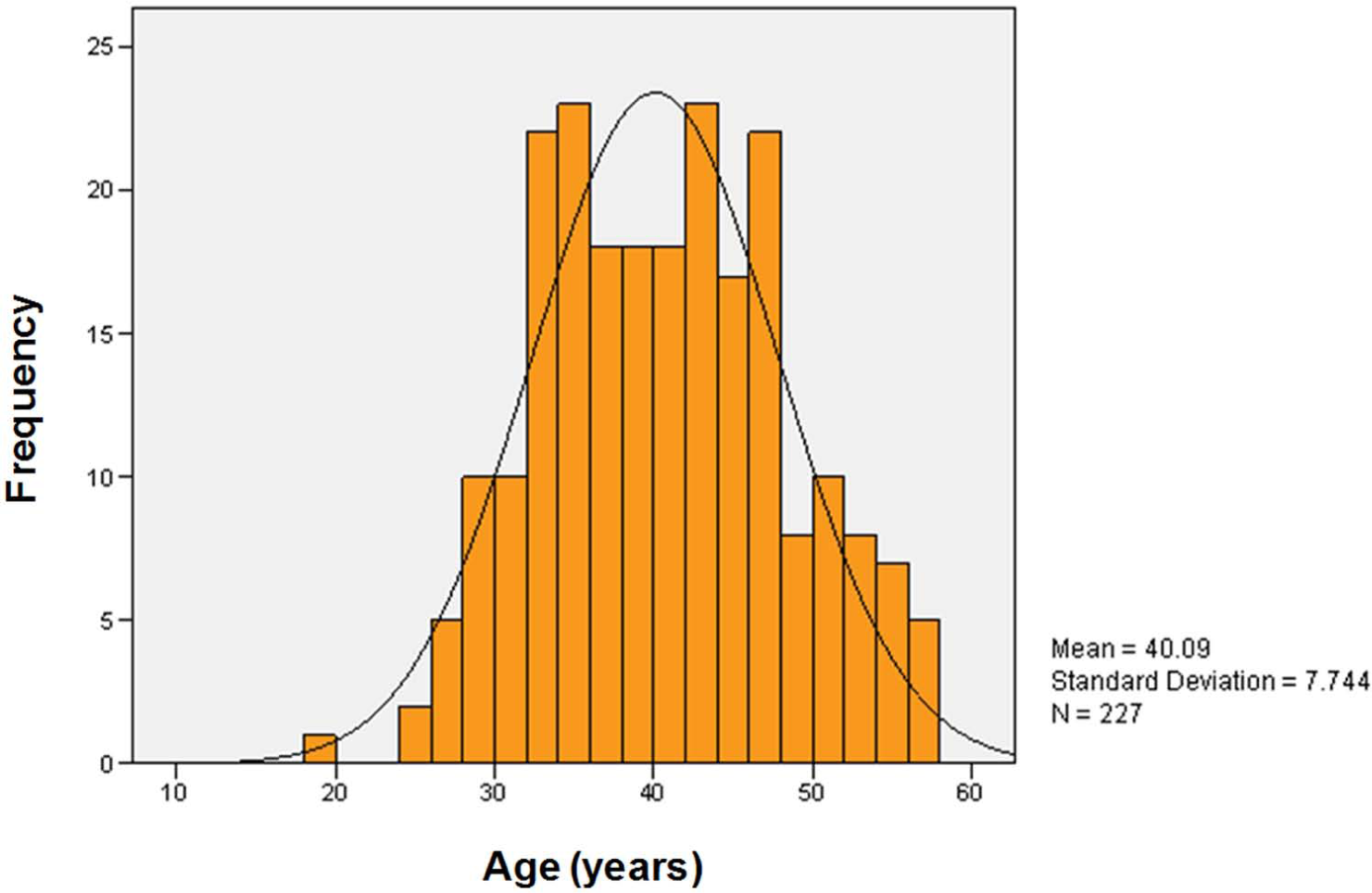
Histogram of the variable: Age.
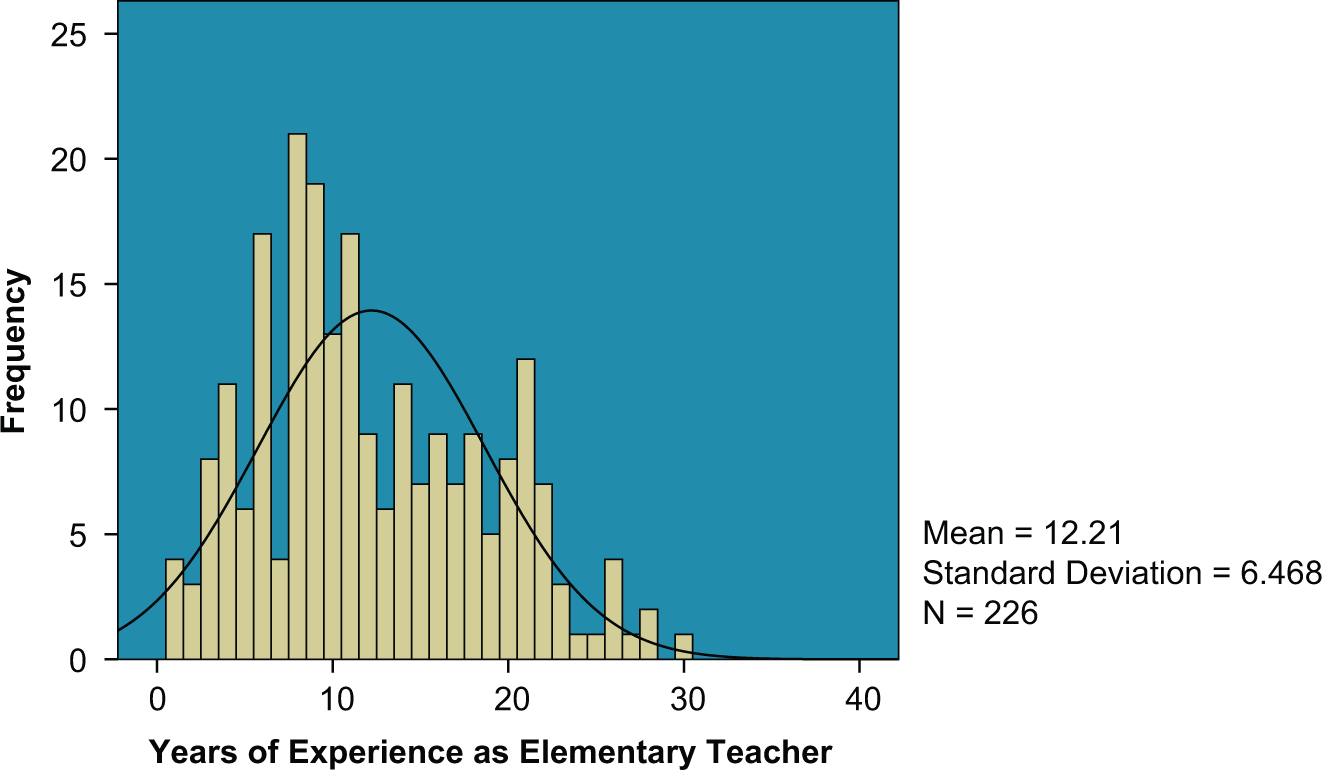
Histogram of the variable: Years of experience as elementary teacher.
According to the information provided by the participants, 82.2% had a bachelor’s degree in musical education, 13.60% had obtained a master’s degree, and 1.75% had completed a doctorate, while 2.63% did not have any college degree. In addition, 89% of them reported they played a musical instrument; nonetheless, 40% informed us they practiced for less than one hour per week or just played in class. The study also revealed that most of the participants played the guitar (22.56%) or the piano (16.92%; see Figure 1).

Distribution of the musical instruments played by the participants.
Instrument
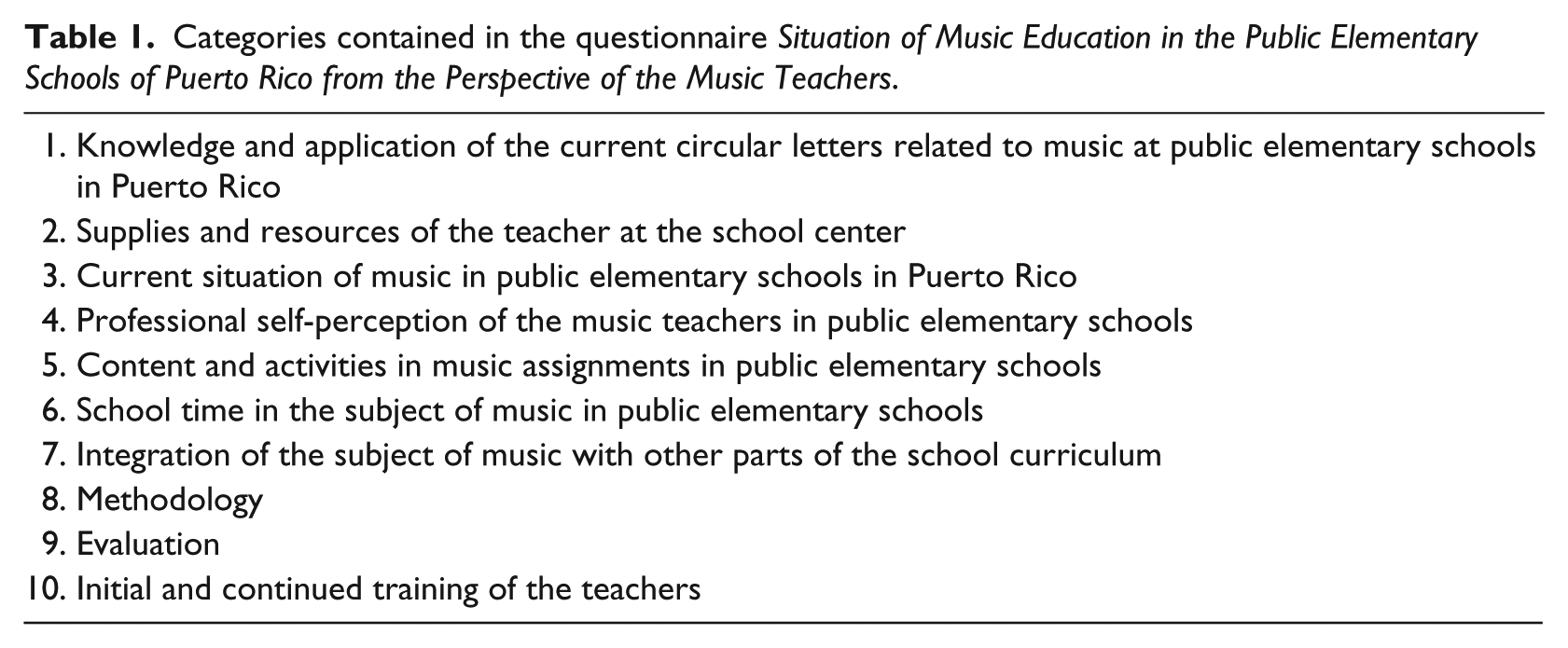
A questionnaire was custom-made for the study. The items in the questionnaire were written in the function of 10 categories of classification (see Table 1). To ensure the validity of the responses, a 54-item questionnaire was prepared; 39 items included a Likert-scaled response of five degree ratings with adhesion degree.
Categories contained in the questionnaire Situation of Music Education in the Public Elementary Schools of Puerto Rico from the Perspective of the Music Teachers.
1 = Never 2 = Almost never 3 = Sometimes 4 = Almost always 5 = Always.
The remaining 15 items were of a calculated type, with open questions and others including true or false options and their respective explanation requests for the answers.
The concurrent and individual validity of each item within a category was evaluated by correlating the sum of all items excluding one at a time. As a result, moderate correlation coefficients were found. Overall, researchers’ analyses confirmed that each item measurement followed the same trend as the collection of items included within the categories.
The reliability of the questionnaire was calculated through the application of Cronbach’s alpha coefficient, with a result of 0.87. According to Gerrity (2009), an alpha with scores higher than 0.80 provides an optimal degree of reliability to the instrument. Therefore, the instrument was reliable. Cronbach’s alpha test was applied to find the coefficient of reliability and factor analysis with Varimax rotation for construct validity. The questionnaire was titled Questionnaire on the Situation of Music Education in the Public Elementary Schools of Puerto Rico from the Perspective of the Music Teachers.
Procedure
The questionnaire was administered to participants during the months of August and September 2009. In order to accomplish this, the researchers resorted to a number of means: direct delivery to the teachers, mailing questionnaires, and also telephone calls. In fact, 72 elementary schools across the island were visited in order to personally administer the questionnaire. The amount of answered questionnaires returned was 228, totaling 100% of those administered.
Results
In order to conduct the analysis of the data used in this research, several techniques of quantitative analysis were used, as was the computer software program SPSS for Windows (version 13.0), which is commonly applied in the statistical analysis of data in social and educational research. In addition, parametric and nonparametric tests were used in order to compare whether or not the responses to the different items differed by gender.
General knowledge, the application of the official rules, supplies, and resources
The majority of the professors (93%) indicated having knowledge of the current official guides and regulations of musical education. Furthermore, 39% of the participants stated that they had no basic supplies to carry out their classes. In addition, it must be pointed out that 67% of the teachers reported not having their own music classroom in order to accomplish their work. This reality indicates that an important number of music teachers move from one classroom to another.
Moreover, the data reveals that the working conditions for the musical educators in Puerto Rico seem to deteriorate. Only 16% of these have a budget assigned by the school administration. According to 69% of those surveyed, this requires them to prepare their own materials and, therefore, the use of textbooks is uncommon. The following Box–Whisker plot used to analyze this data shows a low value for median (2) that corresponds to the “almost never” category, with a marked positive asymmetric distribution (see Graphic 3).
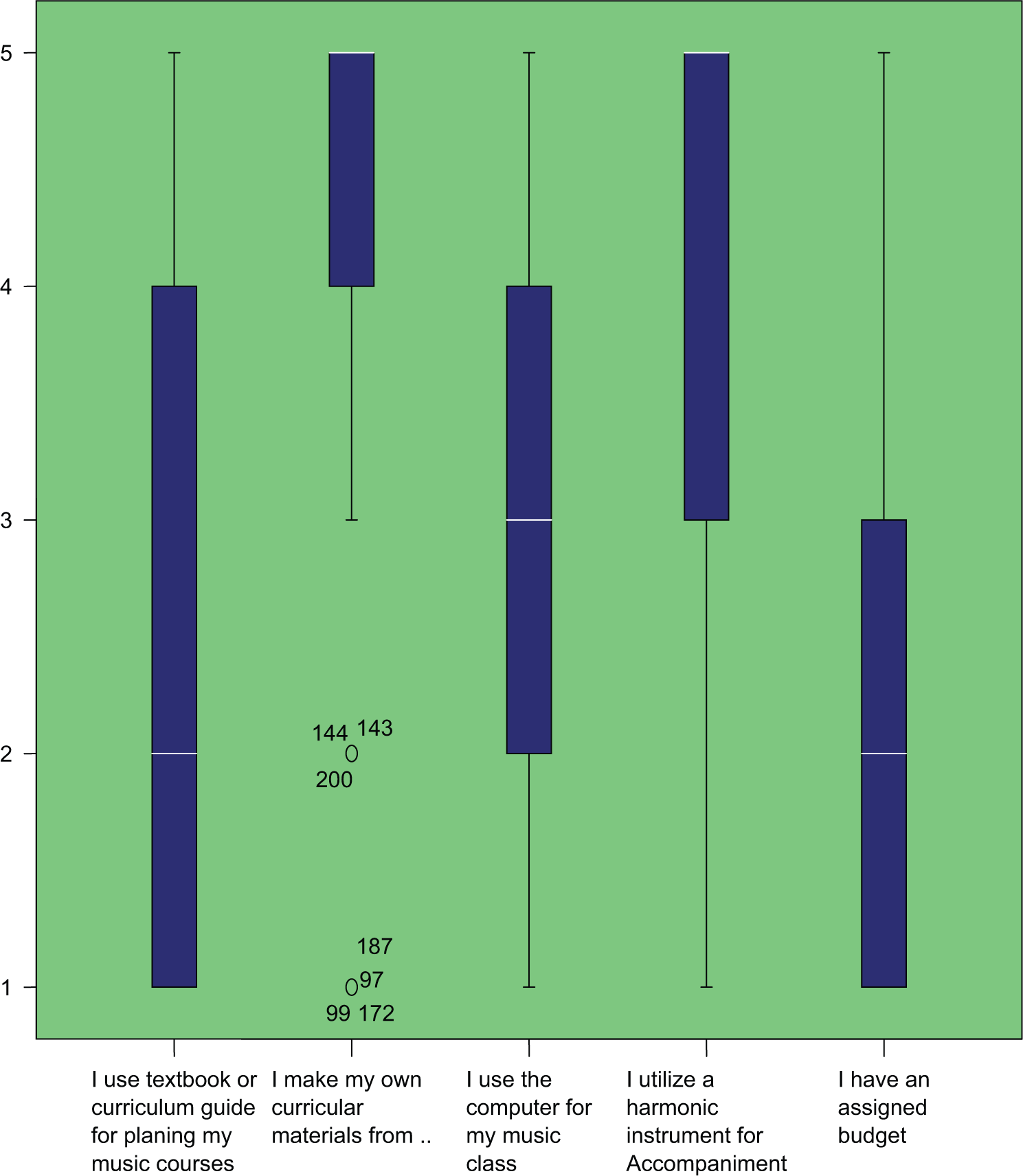
Comparative Box–Whisker plot about related aspects of available resources and curricular materials.
Contents, activities, methodology, and initial preparation of the teachers
According to Carbajo (2003), competence as a music educator in primary schools requires a lot of effort, study, and tenacity. Figure 2 depicts the order in which activities are prioritized by the music teachers. The results point out that voice (35%) and instrument (27%) education predominate over music education in general, with motor-skills development as a strategy for the reinforcement of musical competence at only 7% (see Figure 2).
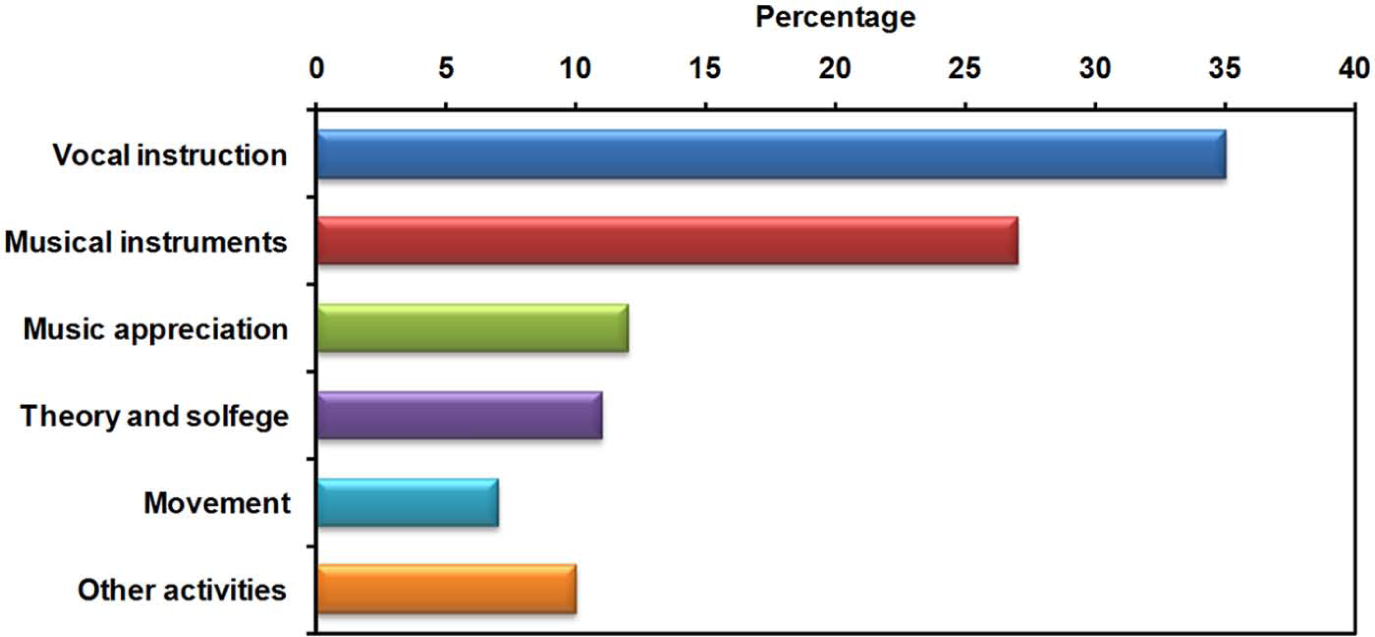
Order in which activities are prioritized by the music teachers.
Those results are derived from cluster analysis carried out to determine the frequency and importance of content and activities conducted by music teachers in the classroom. The dendogram used to illustrate the cluster analysis shows the frequency of three groups of activities: from “frequent use,” through “moderate–low use,” to “less frequent use.” Dividing the distribution of values using percentiles 33 and 66 created the three clusters of activities or intervals. The intervals were categorized as follows: less frequent use, moderate use and frequent use (see Table 2).
Clusters of pertinence of the content and the activities developed in the classroom.
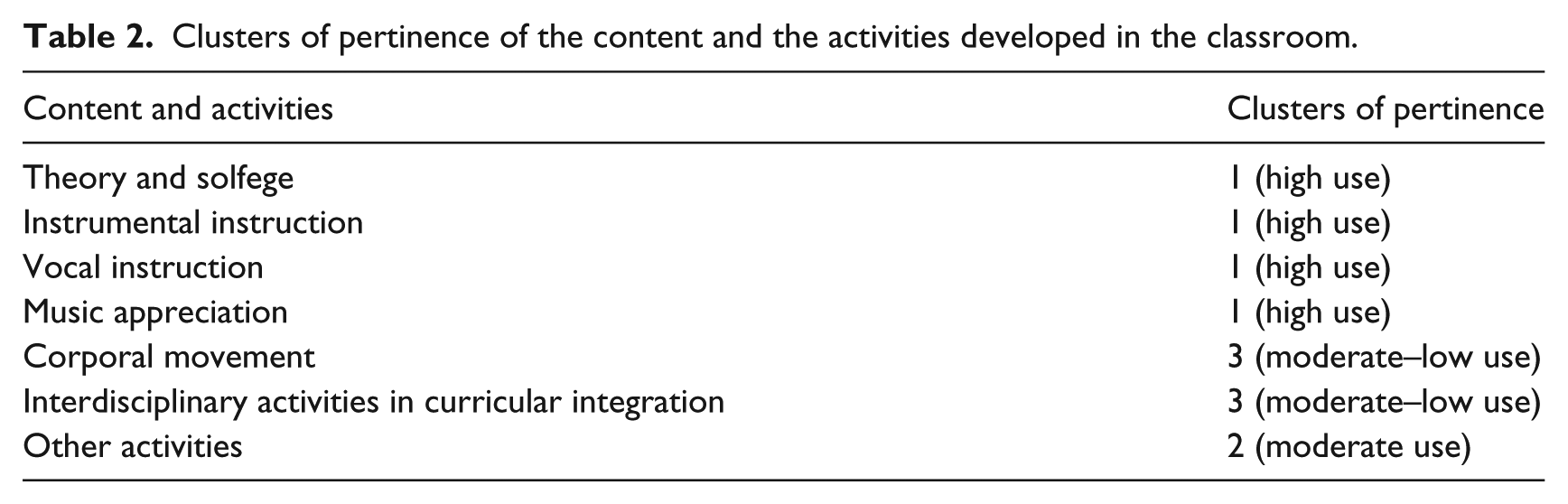
Moreover, vocal instruction and teaching of musical instruments prove to be the preferences of the participating teachers. The study reveals that almost 80% have musical groups at the school. It is noticeable that the data shown by the study demonstrates lack of use of body movement strategies.
According to Bresler (2004) and Addessi and Carugati (2009), it is highly probable that the professors’ academic offerings are tightly linked to their ideas, origin, professional preparation, emotional intelligence, social representations of the music, musical education, and many other elements. In an analysis of the universities’ musical programs on the island, Latorre (2010) confirms that all music education programs in Puerto Rico include music methods courses. Therefore, it is interesting that even though methodological content has been addressed by musical education institutions, 35% of the surveyed teachers mentioned they never used any of the strategies they have been exposed to (see Table 3).
Frequencies and percentages of levels of response about the use of specific music education method items.

Professional self-perception and learning evaluation
It is a true concern for the researchers that most of the teachers do not perceive their work to be valued by society, school administration, parents, and even their colleagues (see Table 4). This confirms the study done by Latorre (2010), in which the author exposed that graduates from a musical career program in Puerto Rico perceived their profession to be valued more by their families and peers than by society, school administration, parents, and even their co-workers. Possibly, this low self-perception of their position within the school’s enclave is a result of the lack of a process of systematic observation of the schools’ music development. In open expressions by almost 90% of the professors, it was indicated that grades or evaluations of performance in the music class were not required by their supervisors because these understood they had no importance or weight in the final analysis of the academic requirements at elementary school level. This information was verified after reviewing official documents (offered by public elementary schools; DEPR, 2010) in which it was not considered a priority to evaluate student performance in the music class. As a matter of fact, the measurement and evaluation of student musical performance is one of the skills which music educators in Puerto Rico need to develop a command of (López, 2010).
Central tendency statistics and asymmetric aspects related to teachers’ self-perception about their profession and labor recognition.

Measurement and evaluation in music education
The findings of this study in the area of evaluation indicate that summative evaluation is maintained as the main form of evaluation among Puerto Rican music teachers. Out of all the participants who responded to this item, 58.37% reported always using evaluation tools such as partial evaluations or assessment in their classes.
Greater importance is given to student summative evaluations (written exams, practical tests, special projects, among others) than to other types of evaluations. Approximately 80% of the teachers responded that they used summative evaluation (see Graphic 4). In the item regarding assessment use, 65.8% answered that they used this evaluation method. Therefore, after analyzing the responses for the evaluation component, it can be seen that this matter requires more attention in future research due to the high level of participants who did not answer. The abstention level of participants reached 86% when it was proposed that they mention other types of evaluation. It is presumed that the lack of knowledge regarding this item encouraged this reaction.
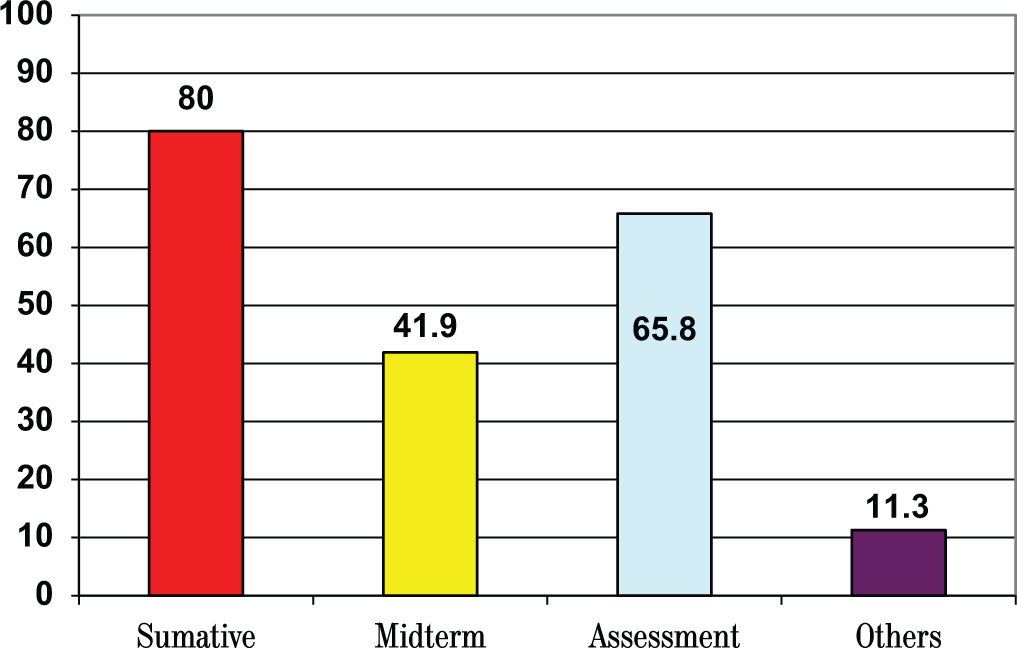
Percentages of different types of evaluation used by the music teachers.
Continued education of the teachers
All of the music teachers agreed that continued education is important for developing competency at work because of the professional skills that are acquired. A view of the most requested topics allowed the researchers to conclude that some recurred within the mentioned responses. Technology in musical education (51.3%), methodology (45.1%), music therapy (43.3%), discipline management (32.1%), and special education (50%) were subjects that seemed to be of much interest among the teachers, since they were overwhelmingly proposed (refer to Graphic 5).
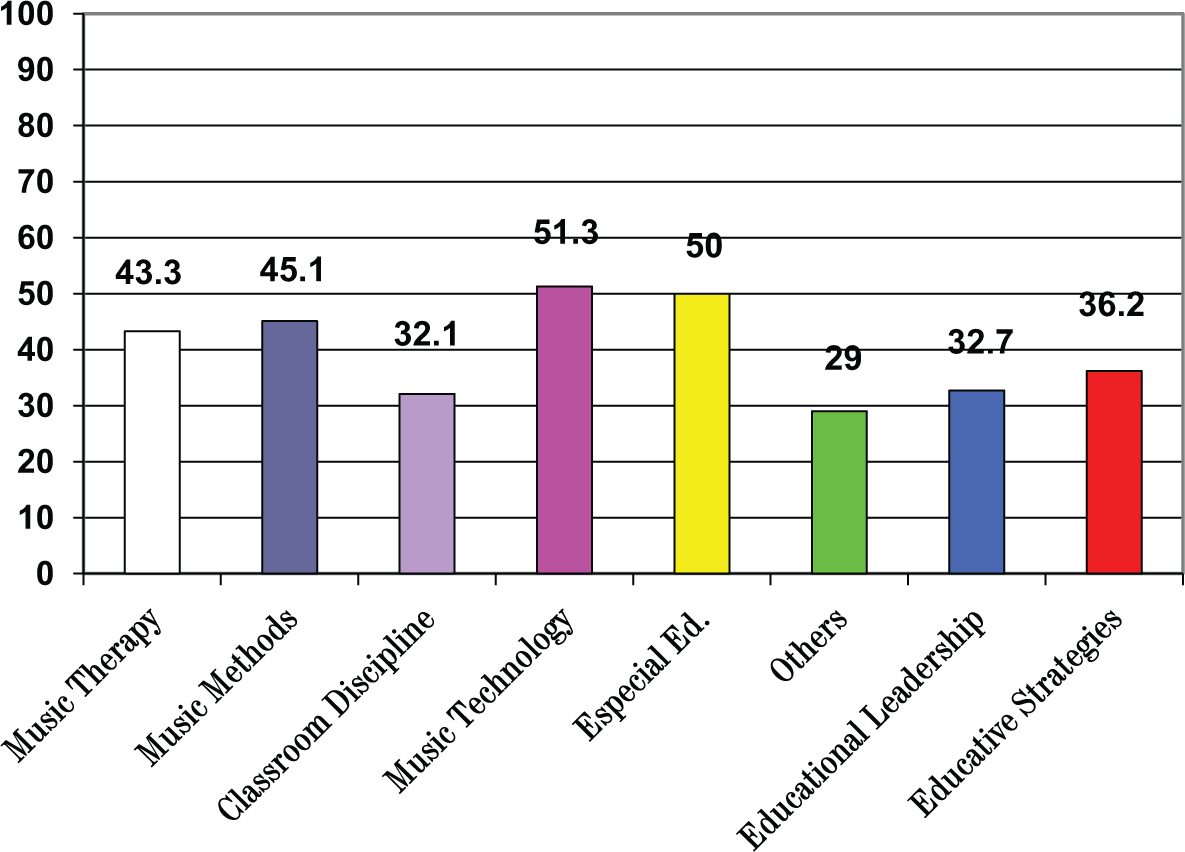
Distribution of the subjects of interest for continued education of the teachers.
It was a matter of concern that the need for developing educational research techniques was not mentioned and that only one participant mentioned the need for workshops and conferences related to the musical educator’s role in the era of globalization.
Discussion
The information provided by the study presents a concrete situation that, even though it is generalized knowledge, it is far from being a model to follow. It seems that lately, the positive focus on music has not been sufficient to persuade school authorities of the importance of a solid music education program in schools. For this reason, music is justified more in the curriculum than in the practice (Heimonen, 2006). This situation is demonstrated by the gap that prevails in schools’ reality and the academic expectations gathered in the proposals of music education in manuals, guides, circular letters, and other material published by the Department of Education in Puerto Rico and which were analyzed for this research.
It may be understood that music education has no space within the priorities of academic offerings in the public elementary schools of Puerto Rico. Findings in this study revealed that 80% of students between kindergarten and third grade and 77% of children from fourth to sixth grade did not have any formal music education throughout the school year. This rate is strikingly low.
Comparison with other countries in which music education occupies a better standing in pedagogic activity is inevitable. Educational models such as Cuba’s offer an ideal structure for official music education in any country (Barceló, 2007). This is particularly true for Puerto Rico, due to its geographic nearness and cultural similarities with Cuba. Its structure for public education is clearly defined in its objectives and social functions. Having observed closely the phases of public education on that island and the results produced in the Puerto Rican territory regarding music education, it would be advisable to analyze in depth the contributions of both nations.
Aspects such as lack of supervision and remedial administration of artistic education may be part of the reason for the lack of academic exposure to music experienced by Puerto Rican school children. Also, the lack of an educational philosophy, defined in the governmental spheres and also in the institutions which form teachers, contributes to the long list of pending matters in the effort to develop room and practices in consistent music education. It is difficult to obtain students’ educational attainment in the students when they do not even receive music classes in any regular manner, let alone consistently throughout the year. Moreover, in music education, as confirmed by Duke (1999), repetition is the strategy indicated in order to achieve tangible results.
Conclusions
This research has addressed some of the aspects that may describe the reality of music education in public schools at the primary or elementary level in Puerto Rico, refining the profile of the valuation set on the object of study on the basis of the opinions and impressions of teachers as sole agents of the school community from which the profile has been obtained. It is clear that other community members that represent value concerning the purpose of exploration pursued here, yet for various reasons, have to account for empirical approach.
This incursion into the Puerto Rican school world has yielded valuable information thanks to the contributions of participating teachers, who were the main protagonists of this analysis of the present situation of music education in public elementary schools on the island. The percentage of teachers who responded to the questionnaires was high and formed part of a broad geographic spectrum that spanned multiple regions throughout the country. This gives credibility to the study and allows it to serve as an initial diagnostic evaluation of the status of musical education and manes it useful in encouraging similar research to be conducted in other nations adjacent to Puerto Rico for presenting their situation in the scope of school music education.
The data revealed that teachers participating in the research did not feel at ease regarding the pedagogic use of basic concepts in modern music education in schools, such as body expression and the use of technology, which move them away from the ability they should have in order to offer students a relevant educational experience (Kertz-Welzel, 2005) consistent with the type of musical competence currently required from teachers (Scout, 1999; Henry, 2005).
This is evidenced, for example, by the limited curricular musical presence of body language or the teaching of musical instruments and the disconnection between musical practices of the environment with respect to sound material presented in the classroom, which collides with the basis of best practices in music education (Gould, 2006). Undoubtedly, the training of teachers affects the use of teaching strategies. For Sánchez and Morales (2008), in nations with a significant African influence, such as those in the Caribbean, body language must be the basis of musical education, even above vocal or instrumental education.
Similarly, concepts such as music assessment, depth of knowledge regarding specific existing musical methodologies, or new trends in music education appear to be lacking in what is meant to be part of the skillset of professionally participating teachers. In the case of assessment, a vast majority of teachers did not use any measurement that was not summative. Authors such as Boyle and Radocy (1987) and Gordon (2002) state it is possible to evaluate and measure implementation, attitude, and knowledge in music education through several procedures. This is particularly important if they want music education to be a substantial part of the curriculum, since being able to measure and evaluate the academic performance of students is crucial in order to provide data on their own progress in the curricular disciplines (Lange, 1999). Thus, this aspect of the teaching work of Puerto Rican music teachers is among the weaknesses that need to be overcome because, as previously mentioned, the low level of knowledge in assessment and other strategies presented by music teachers is clear (Asmus, 2009).
Additionally, few teachers use musical teaching methodologies, which may mean that they do not know of them or recognize their importance. Nevertheless, a review of the study programs offered by the main higher education institutions on the island which offer degrees in music education, allows an appreciation and affirmation that exposure of students to different methodologies is part of the teaching–learning content before graduation. Curiously, the use of principal methods of music education in class is not part of the professional practice of active teachers.
Regarding teachers’ perceptions concerning their working conditions for teaching music, the data obtained suggests that most teachers in Puerto Rico do not have a private space in order for them to conduct music education. It is also true that a large number of them do not have a computer room. However, a vast percentage of participants believe that they have the basic materials for the development of their classes.
This work accomplishes the goal of expanding knowledge of music education in schools and the professional work of music teachers in elementary education. The educational administration on the island has not until now seen any similar study. Likewise, the teachers themselves have provided a snapshot of the current state of the discipline in the framework of the general Puerto Rican school culture. This study has also highlighted the existing shortage of music teachers in the Department of Education of Puerto Rico (314 teachers distributed among 905 schools) and its professional impact on educational institutions when granting degrees in music education. The University of Puerto Rico and the Music Conservatory of Puerto Rico produce the highest number of music education graduates for the public education system, while the Interamerican University of Puerto Rico basically supplies music teachers for the southwestern elementary schools on the island.
As a result of the study findings, this research may provide a source for future research initiatives and serve as a means for professional self-criticism, taking into consideration that the gathered data emerged from the protagonists of music education in Puerto Rico themselves.
Consequently, the data from this research may also serve as a basis to create new educational policies which provide music teachers better working conditions, teaching resources, and professional growth options in order to elevate the well-deserved prestige of this profession in social and academic contexts.
As a final reflection on the data obtained, it may be stated that the situation of music education in public elementary schools in Puerto Rico may be catalogued as insufficient; yet, not as urgent as to be immediately corrected, taking into account the conditions under which the daily task of music teachers in Puerto Rico is performed. They demonstrate professional commitment and tenacity, but may need a form of educational renewal that has not come to them as it has to colleagues in other countries. Music education in schools counts on mature and experienced personnel who may elevate the discipline to higher levels and assimilate more current innovative education models. It is necessary to offer new educational proposals founded on objective bases of work and the eradication of outdated paradigms that are not aligned with the music education reality of this century.
In this framework of pedagogical renewal, teachers show low self-perception of their position within the school environment, indicating that grading or evaluation of student performance in music class were not required by their supervisors on the grounds that it had no importance or weight in the final analysis in order to complete the academic requirements for the elementary levels.
Finally, it is hoped that this study will contribute to changing the general perception of the music teacher, who may very well contribute with major educational proposals for the public education system in Puerto Rico and elsewhere. This study may also be the starting-point for many other future efforts to further the possibility of other colleagues continuing to work in the same direction of interest in Puerto Rican music education.
Footnotes
Funding
This research received no specific grant from any funding agency in the public, commercial, or not-for-profit sectors.