




Abstract
Interactive learning environments have become important components for teaching pianists, which determines the relevance of the research topic. The study was conducted in Faculty of Piano of the Shenyang Conservatory of Music, and 87 first-year undergraduates participated in it. A positive effect of interactive teaching aids on professional skills development in pianists, including the psychophysiological component of performing skills, was revealed. The novelty of the study is the theoretical substantiation of the influence of interactive learning environments on pianists’ professional skills, which can be used for professional selection and improving the quality of musicians’ training.
Keywords
Introduction
In recent years, music education has grown in popularity in China. Much attention is paid to its development both at the state level and in educational institutions. To become a musician, according to researchers, one needs at least 6 years of musical experience (Zhang, Susino et al., 2020). The practice of learning to play the piano is based on a combination of national traditions, rich cultural heritage, and creative experience using modern technologies and a scientific approach to educational process organization. One of the innovative approaches aimed at improving the skills of playing the piano is the use of intelligent interactive learning systems. However, the advantages of this form of educational process in music education institutions need an appropriate scientific justification, which led to the choice of the study topic.
The study’s novelty is the theoretical substantiation of interactive learning environments’ influence on pianists’ professional skills. The study results can be used for professional selection and improvement of musicians’ education quality. These directions are promising for further research.
Literature review
Intelligent interactive environments are being used in music instruction more frequently. The development of a visual learning simulator with real-time sound correction and an audio library allows one to increase the pace of learning, assess results, identify, and analyze errors (Zhang, 2021). Music education is also facilitated by the development of game-based learning materials that help improve musical skills both in music classrooms and in informal after-school instruction, promoting smoother, more focused and effective learning of musical content in a personalized way (Wang, 2021).
The sudden shift to predominantly distance learning has raised serious concerns about the quality of music education (Daubney & Fautley, 2020). The experience of using video content for music education on the e-learning platform e-Hakseupteo during the COVID-19 pandemic has made it possible to identify a number of technological problems of music video education and formulate proposals for ensuring the sustainability of distance music education (Park, 2022). However, in general, the COVID-19 pandemic has contributed to the development of distance music education (Thornton, 2020) and more active introduction of digital technologies into the educational process, which can be considered as the basis for the formation of a new paradigm for the professional training of musicians.
Understanding piano works requires knowing their characteristics and the context in which they were created (Manchado López, 2021; Mohamed Razali & Salleh, 2021; Sánchez Rodríguez, 2021), which is important both in traditional education and when teaching musicians using interactive environments, since in addition to the performance technique, one should take into account the esthetic component, which was also noted in the process of this study. The esthetics of piano works is determined by the analysis of their rhythmic and harmonic features (Marun Filho, 2019). In this regard, special attention should be paid to music textbooks as didactic intermediaries that provide students with the main tools of analysis (Ramos Ahijado et al., 2019). Music promotes intercultural interaction. The relevance and effectiveness of such musical mediation is evidenced by the combination of contrasting Western and Eastern motifs, traditional and modern compositional techniques in modern piano works (Mohamed Razali & Salleh, 2021).
The search for the most effective technological solutions to improve and modernize music education aims to expand the use of mobile applications, the development of synergy of technological solutions and modern pedagogical styles (Marić, 2017; McDonald, 2017), which correspond to the educational needs of the digital generation (Tüzün, 2020). The use of intelligent interactive technologies enhances the effectiveness of learning, provides constructive feedback, allows personalized learning, which shows the promise of digital music education (Shi, 2021).
Playing the piano has a stimulating effect on psychophysiological development, contributing to a higher level of maturation of the functional structures of the brain (Li et al., 2021). Accordingly, music is one of the strongest emotional influences (da Araújo, 2021; de Salles, 2021; Du, 2021; Loo & Loo, 2021). Stimulating individual creativity (Hartmann, 2021; Moro Vallina, 2021) is helped by teamwork, including computer-based online interaction, which allows certain environmental factors to be combined with people’s individual characteristics and has a positive impact on education and talent development (Liet al., 2020). When it comes to piano instruction, the use of computer technology has been evolving since the 1990s, when the Piano Tutor program was created. This program combined an expert system to help identify and correct errors with the provision of a stimulating learning environment that allowed for individualized learning (Dannenberg et al., 1990). A study of the role of music in virtual game environments showed the influence of musical conditions on increasing the number of accurately remembered facts (Richards et al., 2008).
The dynamics of conceptual changes in modern music education requires in-depth research (Bautista et al., 2012). Of interest is the popular Chinese “concept of the piano path,” according to which learning to play the piano not only provides access to beautiful music, but also promotes social status, increases competitiveness in society, provides freedom and creativity for work, and opens new paths to success and life satisfaction (Bai, 2021). The popularity of learning to play the piano has also influenced the development of musical instrument manufacturing, where particular attention is paid to issues of efficiency and novelty (Xu, Yu et al., 2021).
Artificial intelligence technology, permeating many aspects of society and education, has fostered innovative technology in piano instruction (Gang, 2020). Multimedia networked learning provides an expansion of educational functions and permeates all areas of the educational process. Modern theories of piano instruction justify the development of personalized learning, which is enabled by the introduction of sophisticated networking and multimedia technologies (Niu, 2021). Researchers noted the effectiveness of multimedia and network technologies as an auxiliary method of learning to play the piano, which shows the promise of using a network learning system to form an interactive learning environment with the inclusion of all educational process participants (Miksza et al., 2021; Niu, 2021). Thus, the development of digital Internet technology creates unprecedented opportunities for the implementation of piano training in an intelligent interactive environment. The latest technologies of piano teaching are developing in the direction of interactivity and increasing the amount of individual learning with a gradual reduction of the teacher’s role. At the same time, the lack of readiness to adopt new technical solutions makes it relevant to use mixed forms of teaching, in which modern technology is combined with traditional practices (Ye Yang, 2020). Blended piano instruction is an effective means of teaching (Zhu et al., 2021).
The global spread of modern telecommunications and information technology has influenced music education by changing the structure of piano lessons, contributing both to the growing popularity of piano instruction and to a dynamic, intensive improvement in instrument quality based on the principles of compactness, convenience, and practicality (Ye Yang, 2020). Multimedia information technology contributes to the formation of new relationships between students and teachers. In the current era of knowledge economy, distance education is a comprehensive means of building a system of continuous learning, combining face-to-face learning, communicative education, self-learning and interaction of all participants in the educational process with the help of various media (Fu, 2021).
The challenge of learning to play the piano is becoming the need to combine tradition (Gil & Andreu, 2015; Manchado López, 2021; Mohamed Razali & Salleh, 2021; Sánchez Rodríguez, 2021) with new technology (Ponce, 2019). A gesture-based virtual piano system is proposed that uses real-time computer vision and motion tracking to enable user interaction with a device that mimics the use of an acoustic piano. The advantage of such a device is its availability in any environment (van Wyk & van der Haar, 2017). The use of augmented reality for learning to play the piano provides the possibility of interactive lessons with improvisation in various genres— classical, rock, jazz, blues (Das et al., 2017). Among the problems of using computer technology in piano learning, they say that the existing virtual analogs of the piano do not take into account the spatial and temporal component, which makes it difficult to develop improvisation skills (Deja, 2021). At the same time, researchers (Li, 2021) emphasize the powerful emotional impact of music and suggest using this factor as a motivational incentive. The combination of the technological advantages of 5G with the possibility of self-expression through music contributes not only to the mastery of the piano, but also psychological regulation, the formation of students’ positive outlook and values (Li, 2021). To improve the integration of blended music education, a 5G background big data collection model is proposed to provide reliability and optimize online and offline modes of music education (Yuqing, 2021). The augmented reality piano app allows one to compare the keys on the augmented reality screen with the keys of a real piano, which allows one to perform songs without notes and has a positive emotional impact (Pan et al., 2018).
Materials and methods
The study was conducted in the Piano Department of the Shenyang Conservatory of Music, which is one of China’s oldest and most renowned music schools, with some 8,000 students enrolled at the undergraduate, graduate, and professional levels. The combination of the department’s more than half a century of tradition with its deep cultural heritage and modern teaching techniques with scientific evidence ensures the high quality of teaching and promotes piano playing among Chinese young people.
First-year undergraduate piano students were selected to participate in the study by simple randomization. These students studied the piano as their main instrument. During the initial testing, the authors prepared 100 sets of test items, however, nine students for various reasons refused to participate in the study, and four students did not fill out the test forms completely. Thus, 87 students took part in the study. Of these, the experimental group consisted of 43 students (22 boys, 21 girls), who actively used interactive educational environments. Forty-four pupils of the control group (23 boys, 21 girls) learned to play the piano in the traditional way, without the use of interactive tools. The groups were comparable in both gender and age (mean age 17.25 years). First-year students were specifically selected to participate in the experiment because they had no prior experience of using intelligent interactive media to teach piano.
The experiment was carried out for 1 month. During this time, experimental group students actively used interactive learning environments, which included didactic and illustrative material, as well as additional audio and video materials (Tovpich, 2016). Technological practices for students of the experimental group took at least 3 hours daily, while in the control group this time was narrower than traditional practice. Otherwise, the traditional practice in the experimental and control groups did not have significant differences. At the beginning and at the end of the experiment tests were carried out, the results of which allowed evaluating the impact of the use of interactive media on piano teaching. Testing included evaluation of both professional achievements of students (speed of scales and arpeggios, time of learning a new piece, reading from sheet music, playing a melody by ear) and psychophysiological component, determined by means of psychodiagnostic techniques.
The following psychodiagnostic methods were used:
Tapping test is a method of express diagnostics of nervous system properties by psychomotor indices by Ilyin, which determines nervous system endurance by counting the number of points in the square placed by the examinee per unit time (Bazstroi, 2021);
Schulte Tables - a technique that allows one to determine the stability of attention and the dynamics of performance, efficiency, and productivity by searching in a table of numbers from 1 to 25;
A technique for the study of creative imagination in which the subject must compose as many sentences as possible using the given three words in 10 minutes;
Questionnaire of volitional self-control by Zverkov and Eidman, consisting of 30 items and designed to determine the individual level of volitional regulation development, that is, conscious management of one’s behavior, state, and urges, which are markers of a person’s individual style and activity;
Methodology of determining the level of reflexion by Karpov, Ponomareva, which consists of 27 statements and allows one to measure reflexivity—the ability of an individual to cognize both his/her inner world and to understand the positions and motives of other people.
The use of the tapping test is due to the fact that the dynamics of mastering the performance skills of pianists largely depends on the psychophysiological component, since the mobility of the nervous system determines the presence of those abilities that form the structure of musicality and ensure the formation of performing technique. The level of reflection shows respondents’ emotional reactivity, which is associated both with their understanding of the content depth of the musical works performed and with the psychological balance during the performance (Zhmurova & Golmenko, 2018).
For statistical processing of the study results, an unpaired (comparison of two independent samples) and paired (comparison of before-after results) Student’s t-test was used to compare the experimental and control groups of respondents in dynamics. This made it possible to evaluate the statistical significance of the difference between the groups and the reliability of the obtained results. The correlation between the indicators of psychological stability and performance, as well as between the psychophysiological characteristics of the personality and the results of student learning, was determined using Pearson correlation coefficient rxy, whose values were interpreted according to the Chaddock scale, where the value rxy from .9 to .99 indicated a very high correlation, .7 to .9 a high correlation, .5 to .7 a notable correlation, and .3 to .5 a moderate correlation. Scores rxy between .1 and .3 indicated a weak correlation, and rxy less than .1 indicated no correlation.
Ethical issues
The study was approved by the ethical committee. The study addressed bioethics norms, such as anonymity, tolerance, informed consent of respondents to participate in the study, as well as the principle of academic integrity. No special funding was allocated for the study, and there was no conflict of interest.
Results
Studying the influence of using interactive learning environments on piano students’ psychophysiological indicators
Table 1 shows the tapping test scores that determine the baseline performance and respondents’ nervous system types.
Indicators of working capacity and nervous system type of experimental (A) and control (B) groups students.

vAs can be seen from this table, there was initially no significant difference between the groups of respondents. In both the experimental and control groups, the strong and medium types of performance predominated, while the medium-weak type was observed in less than 20% of students in both groups.
Table 2 shows the comparative results of experimental and control groups’ performance at the beginning (A, B) and at the end (A1, B1) of the study.
Dynamics of the students’ working capacity in the experimental and control groups at the beginning (A, B) and at the end (A1, B1) of the study.
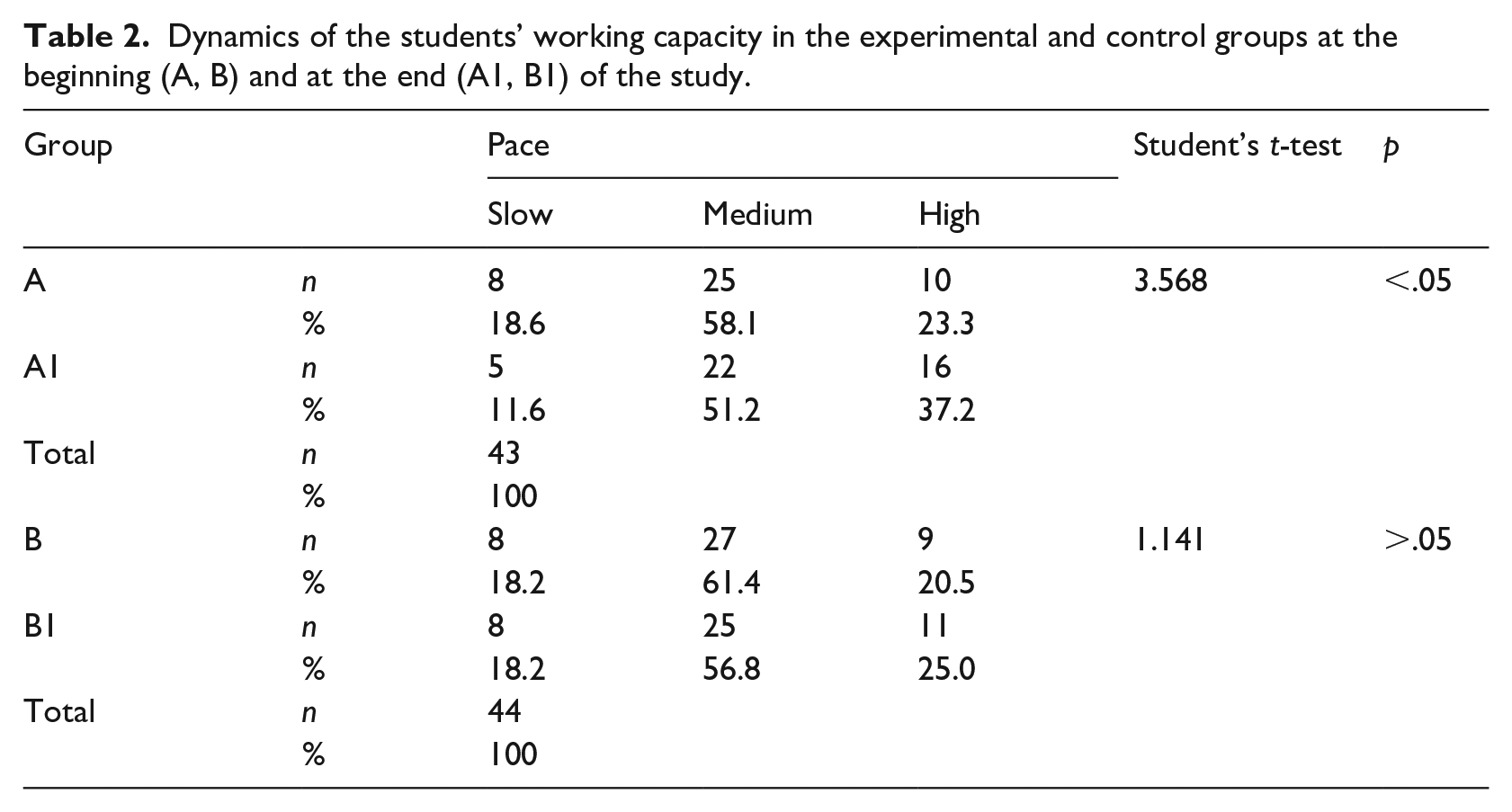
Comparative analysis of students’ performance indicators shows that in the experimental group, which used interactive educational environments for learning to play the piano, these indicators significantly improved (Student’s t-test = 3.568; p < .05). In the control group, there was no statistically significant change in performance indicators (Student’s t-test = 1.141; p > .05).
Studying the impact of using interactive learning environments on respondents’ cognitive sphere
Table 3 shows the results of studying respondents’ attention span and performance, determined with the help of Schulte tables. As it can be seen from this table, positive dynamics of attention and performance, determined by Schulte tables, were observed in both groups of respondents, which is confirmed by statistically reliable difference of initial and repeated measurements (p < .05). However, it was statistically more significant in the experimental group, which used interactive educational environments for learning to play the piano.
Stability of attention and performance of students in the experimental group (A1—at the beginning of the study, A2—at the end of the study) and the control group (B1—at the beginning of the study, B2 - at the end of the study).
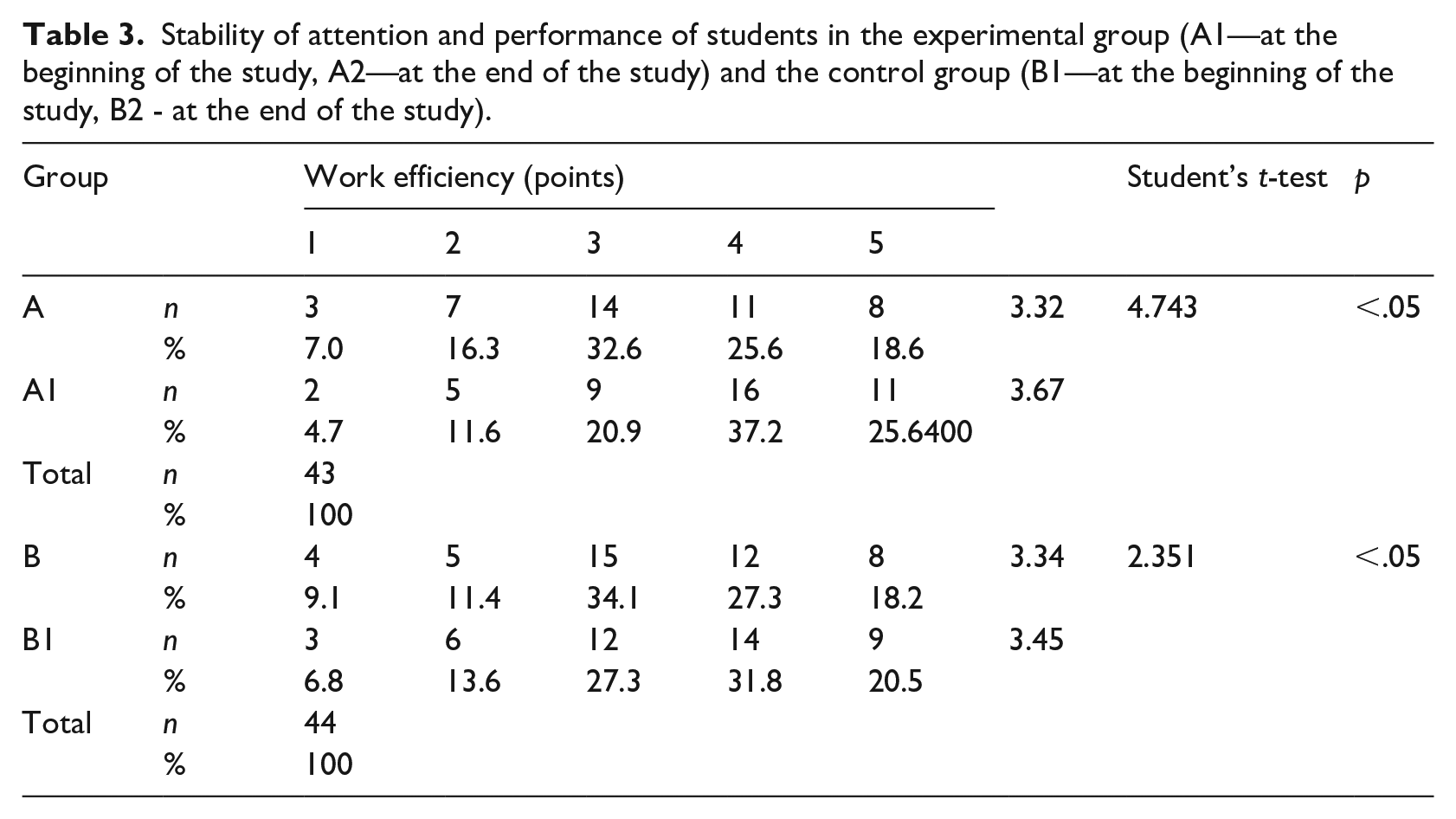
According to the Schulte Tables technique, the performance of the experimental and control group respondents was evaluated taking into account their age. In addition, this technique made it possible to determine the degree of the subjects’ working capacity (preparation time for the main work) and their mental stability. Both these indices were assessed in a similar way: if their values were less than 1.0, it indicated good practicability or good mental stability (endurance). The more the values exceeded 1.0, the worse was the respondents’ working capacity and endurance. These indicators in dynamics are presented in Table 4.
Indicators of endurance and working capacity of respondents (experimental group: A—at the beginning of the study, A1—at the end of the study; control group: B—at the beginning of the study, B1—at the end of the study).
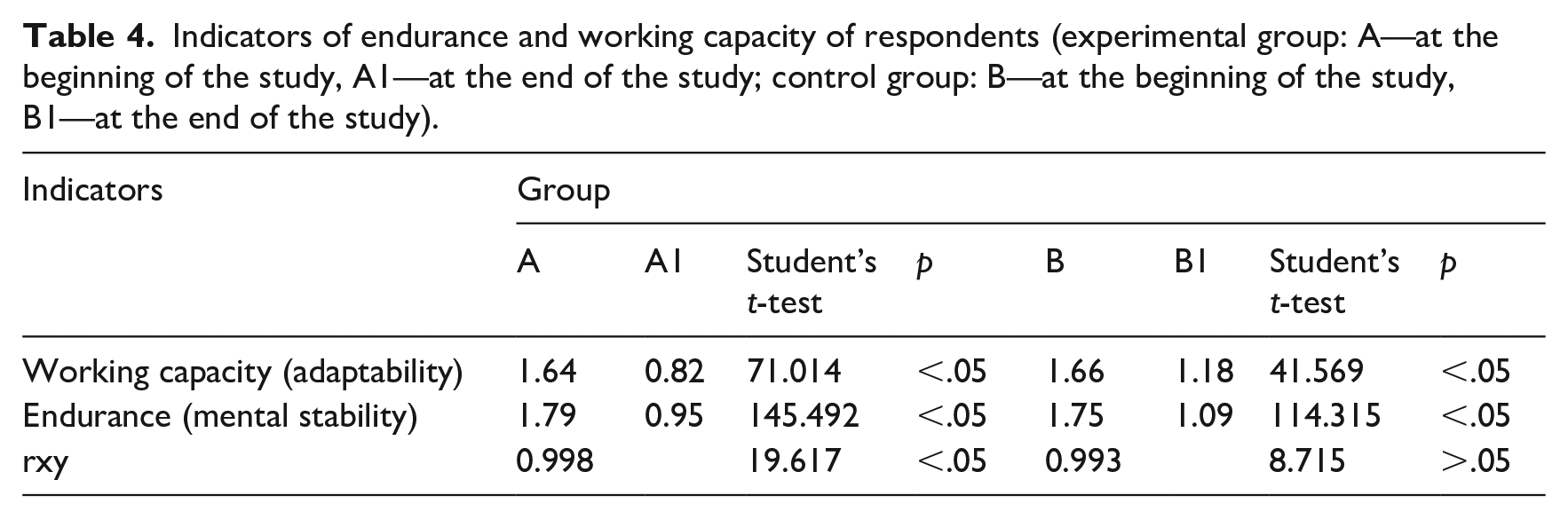
The use of interactive learning environments had a statistically more significant effect on increasing student resilience and engagement than traditional piano instruction. At the same time, both in the experimental and control groups, there was a strong positive correlation (rxy = .998 and rxy = .993 respectively) between psychological stability and working capacity of students, which is explained by general psychophysiological mechanisms of these processes, but in the control group, the significance of these indicators’ relationship was not statistically confirmed (p > .05).
Studying the influence of interactive learning environments’ use on respondents’ personal characteristics
Summary results of assessing the characteristics of respondents’ imagination are presented in Table 5.
Indicators of respondents’ imagination (experimental group: A—at the beginning of the study, A1—at the end of the study; control group: B—at the beginning of the study, В1—at the end of the study).
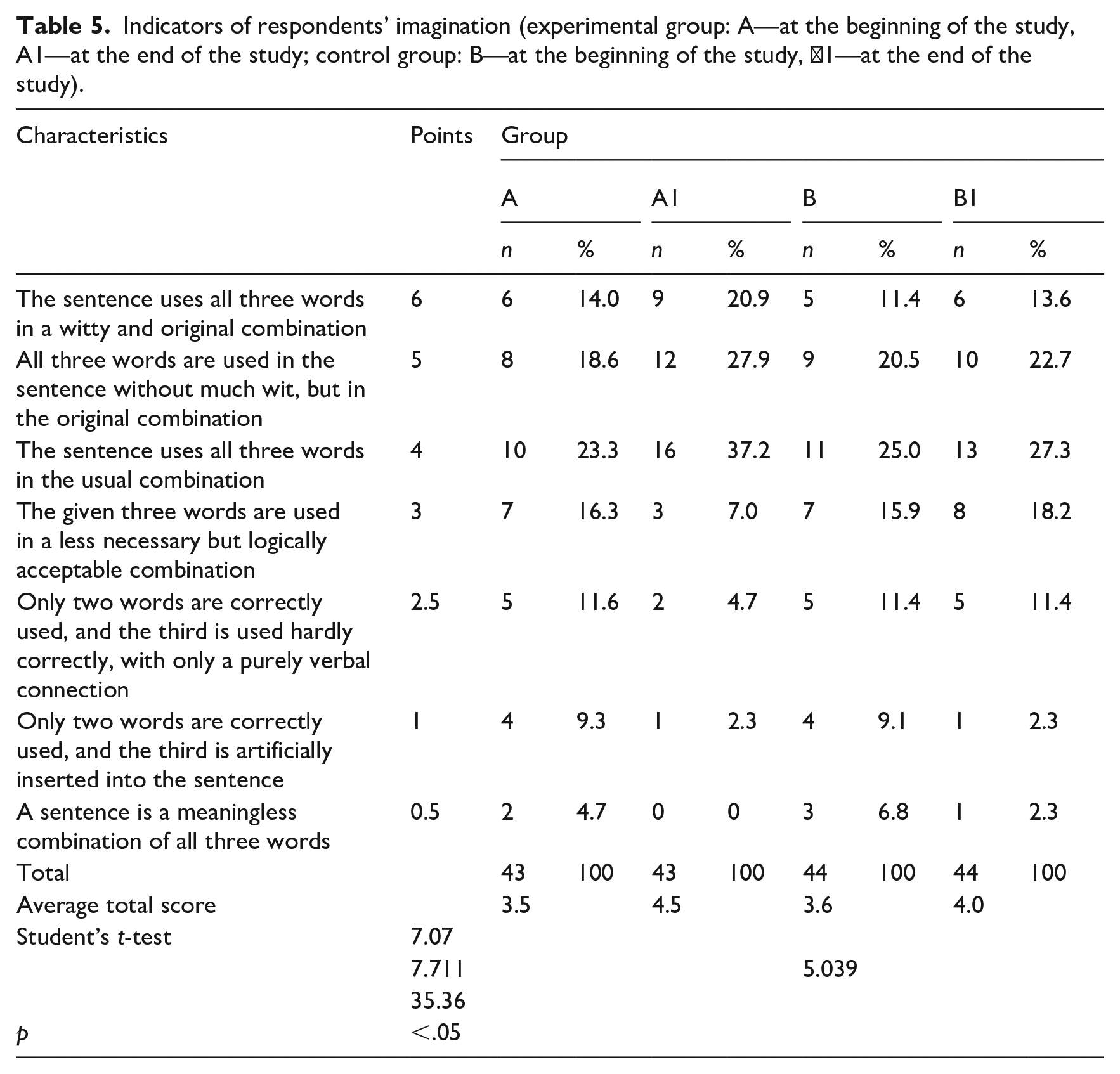
If initially the differences between imagination indicators in both groups were not so pronounced, although statistically significant, in the repeated study the statistical difference between them turned out to be significantly more pronounced. As can be seen from this table, this can be explained by the fact that in the experimental group, which used interactive educational environments to teach the piano, the indicators of imagination improved to a greater extent than in the control group.
Generalized results of determining the level of self-control of the studied groups of students in the dynamics are presented in Table 6.
Dynamics of respondents’ self-control (experimental group: A—at the beginning of the study, A1—at the end of the study; control group: B—at the beginning of the study, B1—at the end of the study).
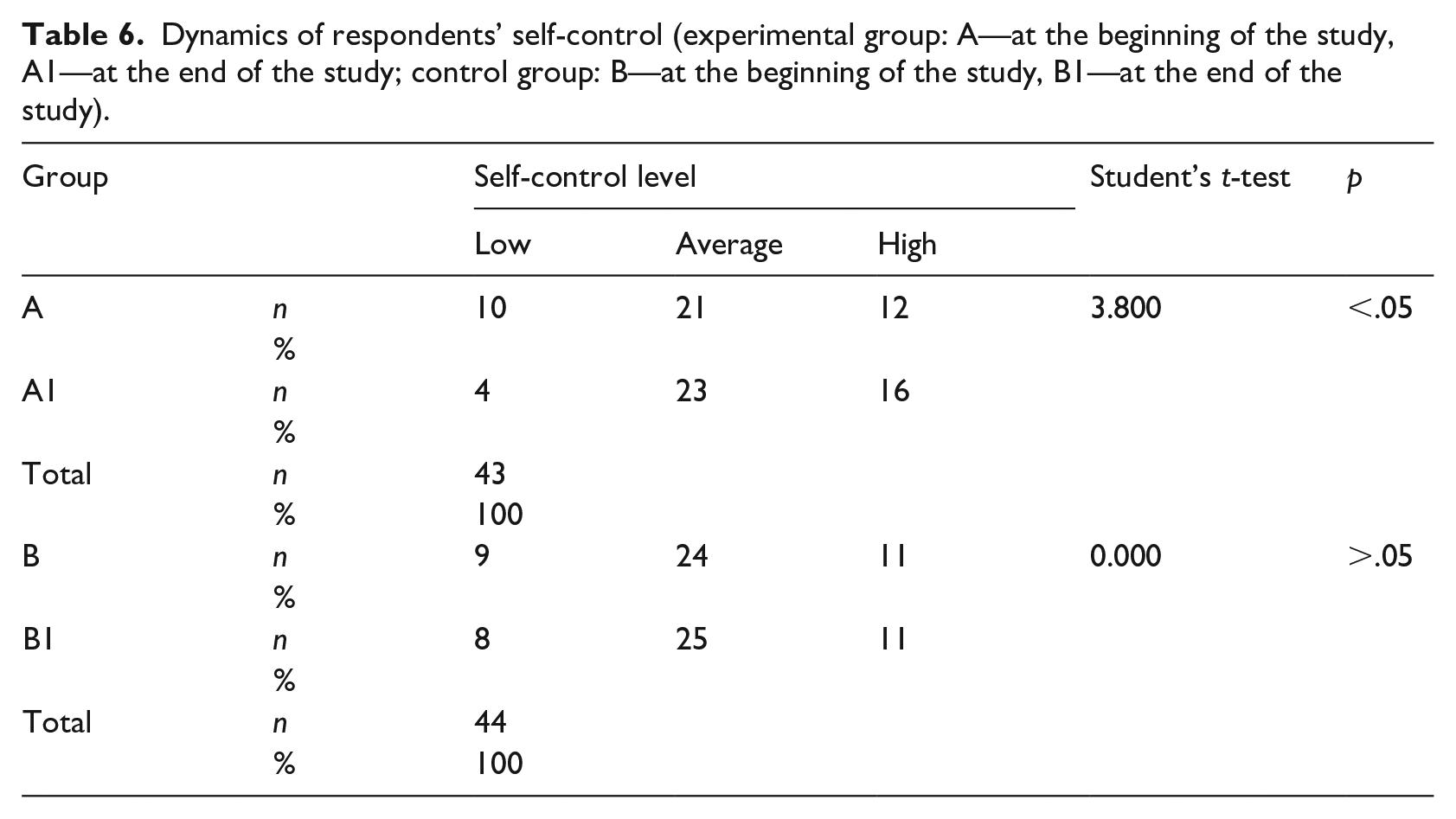
As the study has shown, the use of interactive educational environments has a statistically significant (p < .05) effect on improving self-control of students learning to play the piano, in contrast to traditional teaching, which has no such influence (p > .05). Table 7 shows reflection indicators of the studied students from the experimental and control groups.
Reflection indicators of respondents (experimental group: A—at the beginning of the study, A1—at the end of the study; control group: B—at the beginning of the study, B1—at the end of the study).
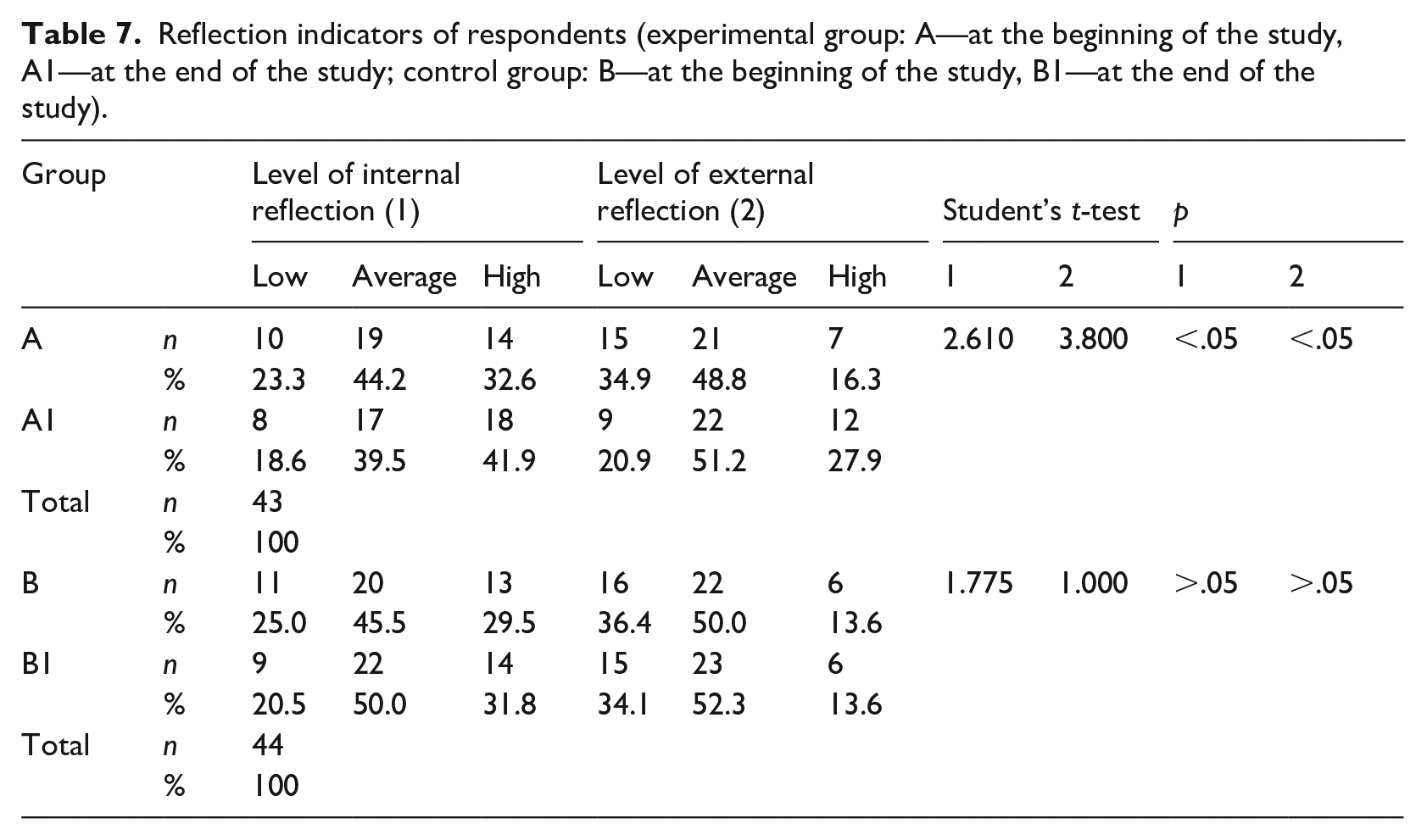
As one can conclude from this table, traditional teaching has no significant impact on reflection level of students learning to play the piano. The use of interactive learning environments, on the contrary, is statistically significant in increasing both internal and, especially, external reflection, which leads to a better understanding and interpretation of musical works by students.
In addition to psychodiagnostic tests, it was decided to compare the results of students in the experimental and control groups performing test tasks, such as the speed of performing scales and arpeggios, the speed of learning a new piece, playing a melody by ear. The research showed that the students who used interactive learning environments coped better with the test tasks, for which they spent about three times less time than the students in the control group. The correlation coefficient between test performance and the dynamics of psychodiagnostic tests in the main group was .931, and in the control group 0.928, which reflects the presence of a strong positive relationship between the psychophysiological characteristics of the individual and the results of learning to play the piano.
Thus, in the experimental group, which used interactive learning environments for learning to play the piano, the tapping test showed a significant improvement in performance (Student’s t-test = 3.568; p < .05), while there was no statistically significant change in performance in the control group (Student’s t-test = 1.141; p > .05). According to the Schulte tables, a statistically significant (p < .05) positive dynamics of attention and working capacity was determined in both groups of respondents, but in the experimental group, which used interactive educational environments for learning to play the piano, it was statistically more significant. The use of an interactive learning environment also had a greater impact on increasing student resilience and practical ability than traditional piano teaching. A strong positive correlation between psychological stability and working capacity of students can be explained by the general psychophysiological mechanisms of these processes, however, in the control group, the significance of the relationship between these indicators was not statistically confirmed (p > .05). In the experimental group, in which interactive educational environments were used to learn to play the piano, the indicators of students’ creative imagination, self-control, and reflection improved to a greater extent than in the control group, who practiced in the traditional way. The use of interactive learning environments statistically significantly (p < .05) enhanced internal and external reflection, which led to a better understanding and interpretation of musical works by students, while traditional teaching did not significantly affect the level of reflection of students learning to play the piano (p > .05). The students who used the interactive learning environments performed better and three times faster on the scale and arpeggio, learning and listening tests than the control group who learned to play the piano in the traditional way. A strong positive correlation was found between the psychophysiological characteristics of the personality and the results of learning to play the piano.
Discussion
The tapping test, which has established itself as one of the simplest and most reliable methods of psychophysiological research, was used to study students’ nervous system, their kinetic and visual-motor ability. Informativeness of the tapping test is combined with simplicity of its carrying out that does not demand special equipment. The significance of this test for the study was determined by the importance for piano students to develop fine motor skills and equal mastery of both hand movements. The scores of the tapping test reflect both innate properties of the nervous system and are indicators of fatigue, excessive exertion. A person’s endurance is determined not only by the strength of the nervous system, but also by other psychophysiological mechanisms (Solomin et al., 2008), reflecting his/her performance and stress resistance. Performing a tapping test for piano students helps to assess the level of motor development and guide further learning. If right-handed people have a higher working capacity of the right hand and left-handed people have a higher working capacity of the left hand, then playing the piano requires the same working capacity of both hands, so if there are significant differences in the indicators, it should be taken into account to correct the learning process. Finding the relationship between the strength of the nervous system and temperament, the balance of excitation and inhibition helps to develop individualized recommendations for improving the performance of students learning to play the piano. As the research has shown, the use of interactive learning environments, as opposed to traditional piano instruction, allows one to take into account the psychophysiological characteristics of students and adjust training to achieve better results.
In addition to the tapping test, the authors assessed the psychophysiological impact of interactive learning environments on piano students, their performance dynamics, and attention span using Schulte tables. This methodology showed that both interactive learning environments and traditional pedagogical techniques have a positive effect on the performance of piano students. Nevertheless, interactive environments have a more significant impact on increasing the psychological resilience and workability of pianists, which helps them achieve better learning outcomes.
Profession pianist refers to the field of art, so to master it, to achieve a high level of skill requires the creative development of personality (Bautista et al., 2012; da Araújo, 2021). The research has shown that interactive educational environments are significantly more conducive to stimulating the creativity of piano students than traditional classes.
In order to become a successful musician, it is not enough to have an aptitude for music. Assiduity and volitional effort, which is determined by the level of self-control, are also necessary (Bai, 2021). Individual development of volitional regulation determines the ability of a person to consciously manage his or her behavior in various situations, to show persistence in achieving the goal set. As it turned out, traditional training has no statistically significant impact on the level of self-control of students learning to play the piano, while the use of interactive learning environments contributes to its significant increase. At the same time, a low level of self-control is combined, as a rule, with emotional instability, impulsiveness, and increased vulnerability and self-doubt, which are extremely undesirable for the profession of a pianist, since it complicates performing activity. Normalization of students’ self-control indicators, on the contrary, contributes to a better understanding of the motives of their educational activities and the construction of promising life and professional plans.
An important aspect of performing a piece of music is its interpretation (Gil & Andreu, 2015; Hartmann, 2021), the correspondence of the pianist’s reading of the piece to its original idea with the originality of the performance, which makes it necessary to develop a certain level of reflection. Since during the primary study it was found that the students in both the experimental and control groups did not have very high scores for this technique, it was of particular interest to compare the results of the influence of teaching methods on reflection level. As it turned out, the use of interactive educational media has a significant advantage in this aspect, especially with regard to external reflexion. If internal reflexion reflects the content of thinking and consciousness of a person’s activity, then external reflexion determines his/her ability to understand other people, motives of their actions, contributes to the knowledge of the surrounding world and interpersonal interaction (Solomin et al., 2008). For the pianist, both internal reflection, which is a mechanism for developing and regulating the subject’s own activity, its critical reflection, and external reflection, which allows one to understand others and contributes to the performer’s communication of the essence of the musical work, the idea behind the composer, and its creative interpretation, are important. At the same time, situational reflection determines the ability of a person to directly understand the situation and corresponding correction of their activity, which for students is an important factor of individual organization of the educational process, independent work. Retrospective reflection allows one to critically assess the causes of failures, to correct mistakes, helping students learning to play the piano to improve their professional skills. Perspective reflection provides planning of professional career, step-by-step systematic achievement of the set goal, finding effective ways of fulfilling the tasks of piano training. As the study results show, the use of interactive educational environments, unlike traditional learning, contributes to the development of students’ reflection, thereby optimizing the learning process and stimulating the development of professionally significant personality traits of pianists, which is an important component of building their musical career.
The history and traditions in Shanghai Conservatory are combined with the active introduction of modern technologies designed to make the educational process more effective and efficient, which contributes to the all-round development of students, the fullest disclosure of their talents and creative potential. However, it is necessary to study the impact of any innovation on the learning process. The study disproved the null hypothesis that the results of piano learning using intelligent interactive environments do not differ from those of traditional teaching methods, and showed significant advantages of these new technologies, confirmed by statistical processing of the study results. Thus, the positive impact of interactive educational environments on the development of abilities and professional skills of students learning to play the piano, including the psychophysiological component of performance skills, give reason to recommend their active use in training both professional pianists and amateur piano playing, which in modern society is experiencing a revival in its popularity, especially among young people.
Research limitations
Research limitations were due to the fact that the research was conducted as a pilot on the basis of only one institution, teaching students to play the piano. A set of psychodiagnostic techniques was included in the study design to assess both psychophysiological and personal parameters of the respondents that are important for improving professional skills; the sample was carefully formed to ensure its representativeness. These aspects can serve as a basis for extrapolating the study results to piano instruction in general, justifying the use of interactive teaching tools in the process.
Conclusions
Finding the relationship between the strength of the nervous system and temperament, the balance of excitation and inhibition, motor features and interhemispheric asymmetry allows one to consider the psychophysiological characteristics of students and on this basis to develop individualized recommendations to improve the performance of students learning to play the piano, which contributes to achieving better results of professional training of pianists. The results of the study show that the use of interactive educational environments positively affects the level of students’ self-control, their awareness of the motives of their learning activities, the construction of perspective life and professional plans. During the course of the study, it was also noted that the use of interactive educational environments, unlike traditional teaching, contributes to the development of students’ reflection, thereby optimizing the educational process and stimulating the development of professionally significant qualities of the pianist’s personality, which is an important component of building their musical career.
As a result of this study, the null hypothesis was disproved that the results of piano instruction using intellectual interactive media do not differ from those of traditional teaching methods. Also, a statistically reliable and significant positive effect of interactive educational environments on the development of piano students’ abilities and professional skills, including the psychophysiological component of performance skills, was proven. Thus, intellectual interactive educational environments can be recommended for active use in training both professional pianists and piano playing amateurs.
Footnotes
Declaration of conflicting interests
The author declared no potential conflicts of interest concerning the research, authorship, and/or publication of this article.
Funding
The author received no financial support for the research, authorship, and/or publication of this article.

Data availability
Data will be available on request.