




Abstract
Efforts aimed at canvassing the past–present continuum of criminal tribes, though appreciable, have proven to be piecemeal, sporadic and awkward. Avoiding some characteristic pitfalls, a historical anthropology of the Pardhis of Chhattisgarh reveals how geographies that were relatively untouched by a colonial programme of criminalization before independence can become active sites of the same in the post-independence period. In avoiding either extremes of emphasizing absolute continuities or alternatively marking a putative rupture between the (colonial) past and (postcolonial) present, this article makes a case for how the colonial programme frequently mutates with/through a number of other discourses, such as regional state formation, administrative procedures, wildlife conservation, nascent ideas of tribal development, and democratic struggles, as part of its relentless movement. This article summarizes the effects of the same for the Pardhis at the level of ‘history’.
Introduction: of Pardhi Silence
Little is known about the Pardhis of Chhattisgarh, while much has been written about Pardhis settled in parts of western India, particularly the state of Maharashtra. Dilip D’Souza, for instance, makes mention of how the Pardhis, along with another 150 tribes, were branded as ‘criminals by birth’ in the colony. D’Souza lays emphasis on how the essentialized understanding of caste as a determinant of an individual’s vocation in the subcontinent served as the basis for criminalization in the colony. To make his point, D’Souza quotes the opinion of a British official, T. V. Stephens, in whose mind the fact that ‘weaving and carpentry … were hereditary jobs’ gave him sufficient cause to believe that there must simultaneously be ‘hereditary criminals who followed their forefathers’ profession’. 1 If at such stages, the ‘criminal’ tribe was imagined as caste, the present article attempts to show how the processes of criminalization are now, more properly, embedded within discussions of what constitutes a ‘proper’ adivasi. Incidentally, this may not only have to do with the manner in which a postcolonial state continues to oppress the Pardhis in Maharashtra, as D’Souza informs us but also the way ‘rights’ are currently being articulated in parts of rural Chhattisgarh. Such a shift is reminiscent of how Michel Foucault establishes the productive function of power by asking the question, ‘Why are the deployments of power reduced simply to the procedure of the law of interdiction?’ 2 We pursue the above question through the rest of the reading, indicating the limits of Foucauldian thought at certain instances.
The Pardhis of Chhattisgarh have, of late, entered discourse through the report of the B. R. Idate Commission. This national-level commission was formed with the objective of placing on record the plight of a number of tribes—such as the Berads, Nats, Bhamptas, Mogiyas, Kaikadis, Banjaras, Waddars, Kanjars, Sansiahs, Yerukulas and Kallars—that suffered a fate similar to that of the Pardhis in the nineteenth century. The commission’s final report, submitted in 2017, draws attention to the operations of the Criminal Tribes Act, 1871, variously explaining how the latter was a culmination of colonial insensitivities to nomadic tribes. It reiterates that the Act of 1871 was an emphatic exercise, as one commentator puts it, in ‘punishing mobility in a way similar to vagrancy laws in Britain’, such that its effects are felt until date. 3
One of the report’s key accomplishments is that it extends concerns regarding the Pardhis, otherwise confined to the state of Maharashtra, to neighbouring states. It manages this by submitting state-wise lists for each of the twenty-nine regional states of India, taking care to enumerate all the hitherto criminal tribes within them. Pardhis are mentioned in the lists pertaining to most of the central Indian states, including Chhattisgarh. 4 This article looks more closely into whether this sarkari narrative does justice to the diverse trajectories of the Pardhis across the geography of central India. Likewise, it questions not only the ‘history’ accorded by the state but also those that are invested by tribal rights activists and tiger conservationists.
All the same, my initial respondents, mostly based in the city of Raipur, regarded the inclusion of the Pardhis in the state list of Chhattisgarh as a welcome move. For the most part, these respondents were development professionals. Parallel to this, I interviewed a handful of veteran activists who were previously a part of the Chhattisgarh Mukti Morcha (CMM), an outfit that steered the formation of the state in 2000 out of a handful of tribal-dominated districts of eastern Madhya Pradesh. Such activists explained as to how the quest for separate statehood was part of a bid to gain greater regional autonomy over natural resources, particularly forests, upon which rural communities remain critically dependent. Many such activists were associated with the charismatic leader of the Morcha, Shankar Guha Niyogi, who was murdered in 1991.
However, the limits in the understanding of such respondents were quickly revealed when I moved from the state capital of Raipur to forested parts of southern Chhattisgarh, where I conducted most of my fieldwork. My field area was a princely state in the colony, covering roughly 3,000 sq. kilometres at the time. The Pardhis in such reaches failed to provide me with any concrete instances of being criminalized in the pre-independence period. Although my fieldwork was being facilitated by an organization of some antiquity, established in the early 1980s, its present-day leadership knew nothing about the colonial campaign of criminalization. Yet, this did not stop the Pardhis from sharing how they led apmanit or ‘insulted’ lives. They spoke of how they were perceived as ‘thieves’, ‘rogues’ and, as we shall note later, ‘improper’ adivasis. So much so, the administrative category of ghumantu, an umbrella term intended to accommodate nomadic and semi-nomadic tribes in Chhattisgarh, amounted to a local pejorative. In select Pardhi hamlets, which comprised of no more than ten to fourteen households, the residents had done well to internalize the prevailing stigma. In one Pardhi habitation, where a primary school had recently opened after much petitioning, the residents had devised a rotational system for policing the children to make sure they did not run away from it during school hours. Khoob Ram, a Pardhi leader, solemnly narrated, ‘These children are thugs, sir; they can’t stay in one place, they keep running here and there, what to say, it is in their blood’. 5
The failure of the Pardhis to recall a single narrative of how they, or their forebears, might have suffered in the colonial period, in the given circumstance, led me to suspect that it was a case of forgetting—that which Paul Ricoeur describes as an ‘attack on the reliability of memory’. 6 Placing the mnemonic capacities of the Pardhis under question drew me closer to Radhakrishna’s thesis, Dishonoured by History, in which she dwells on the way in which the Yerukulas of Madras Presidency were forcefully interned at Stuartpuram—a barricaded evangelical settlement named after one of the early champions of the Act of 1871, Harold Stuart. The more compelling aspect of Radhakrishna’s effort, however, lies in how field interactions with the Yerukulas of present-day Stuartpuram revealed that they had practically no memory of the way in which they had resisted the colonial programme. This was despite the occasional successes of the Yerukulas that had earned lengthy and disdainful elaborations in colonial correspondences, and which, to remind, Radhakrishna had already retrieved from the archives in historical capacity. 7
Hence, I trusted that my consultation with the colonial archives might similarly retrieve a portion of Pardhi pasts that was beyond the folds of their own recollections. But such hopes were quickly dashed. Archival material pointed to the criminalization of the Pardhis in several regions—Sind, Gujarat, Central India Agency and, most strongly, the Bombay Presidency—but not the Central Provinces and the Chhattisgarh Feudatory (my field area was a part of the feudatory in the colony). This did not turn out to be a wasted effort, though. The freshly gained historical perspective made me alert to how patterns of criminalization, observable in other pockets of the colony, were surreptitiously manifesting in the Pardhi hamlets of my study. To take note of this was to simultaneously reckon with the limits of Radhakrishna’s approach to the field. For one, historicism and follow-up fieldwork that are strongly centred on the sites of forced sedentarization in the colony occasionally cast the impression that empire itself is sedentary. 8 This approach cannot account for the manner in which the colonial programme blots, spreads and extends into the space of the nation-state, acquiring a turgid potency in distant locations. 9 If it is only logical that such a movement of empire in the post-colony can be mapped against regional disparities in the colony, the tendency of certain scholars to grant a rhetorical omnipresence to colonial power has only hardened this task. In such scenarios, the Foucauldian impulse to overemphasize the corporeal effects of power on the human body does not make things any easier. Rather, as we note later, excessive focus on the native body is traceable to the very arrangement of colonial criminogenic texts, such that histories uncritically predicated on it reduce the question of geography to a namesake. 10
It is equally the case that historical fieldwork which leaps from the archive to the field runs the danger of ignoring the contemporary as a political field in its own right—a field that commands a smaller history of its own. Now, this casts the impression that the colonial programme is accustomed to surviving in some everlasting purity through several decades of independence. This, contrary to the mobility of colonial practices as hinted earlier, greatly obfuscates the way practices of power mutate in changing postcolonial contexts. Unfortunately, this problem is not addressed but aggravated by ongoing historical’ revisionism’. In the present article, revisionism refers to C. A. Bayly’s effort to intimate the limits of colonial power by locating ‘the rudimentary beginnings of nineteenth-century agrarian capitalism on the political economies of the pre-colonial polities’. 11 It is this truly revisionist thesis of continuity, which has laid down the logic for a subsequent generation of historians to trace what Bayly describes as the ‘indigenous inheritance’ of colonialism. 12 But when such a revisionist ardour comes into the hands of anthropologists, as we subsequently note through Anastasia Piliavsky, it egregiously feeds the ‘timeless traditions’ and ‘eternal present’ of the ethnographic modality. 13
Thus, in being more alert to considerations over space and time—or what may be referred to as the movement and mutations of empire—the present article attempts to map the fashion in which the criminalization of the Pardhis stretches from the Bombay Presidency of colonial India, to contemporary Chhattisgarh. It tracks the arrival of certain colonial logics in the forested pockets of Chhattisgarh, particularly the ‘police point of view’ and the conceptualization of ‘criminal classes’. The procedures through which such colonial conceptualizations get rearticulated into Pardhi lifeworld are further explained against the backdrop of current-day Chhattisgarh, which is anything but a replica of what it was in the colony. Princely states comprising the Chhattisgarh Feudatory have long since gotten merged; the hunting grounds of yesterday’s rajas and colonial sportsmen have become sites of wildlife conservation; activists have ceased constitutional remedies to bolster a case against tribal ‘land alienation’; and the working committee of the Idate Commission, in its own admission, has interacted closely with the ‘hitherto’ criminal tribes of the state in the preparation of its report. In each case, one finds that these latter-day developments provide important coordinates for a colonial programme to enter and anchor itself in the region, giving the Pardhis a ‘history’ other than their own.
Space in the Archives of Crime—the Police Point of View
One of the earliest mentions of a Pardhi within colonial records comes from William Sleeman, who was posted to Saugor district in the early 1830s. Here, Sleeman managed to arrest ‘Feringeea’, whom he described as a murderous criminal. Feringeea, it is believed, led Sleeman to a mass grave of innocent victims. This episode confirmed Sleeman’s belief in ‘thug’ communities that, much like the later-day category of criminal tribes, were bound to crime by religion, a ‘blood-thirsty goddess’, and shared lore. During his much-publicized term as the head of the department of Thugee and Dacoity, from 1835 to 1839, Sleeman launched an extensive campaign to crush thugee in the colony, with Feringeea serving as his aid and informer. While Feringeea appears in almost every other study that seeks to evaluate the extent of Sleeman’s (mis)representations of the phenomena of thugee, 14 another figure, ‘Golbeea’, has not received attention.
Golbeea’s name must have originally been Gulabia, meaning ‘rose-hued’ in Hindavi. He featured as part of a lengthy ‘Appendix’ on the ‘Trial of Thugs’ in Sleeman’s account of the criminal ‘phansigars’ or stranglers in India, in connection with the ‘Burwaha case’ that occurred near Indore in 1831. Men escorting the treasure of one ‘Dhunraj Seth’ from Amraoti, a sub-division of Berar in Bombay Presidency, were all murdered, their throats slit. Golbeea, one might have assumed, was either a first-grade suspect or an approver like Feringeea but surprisingly, he was neither. 15 Rather, he played the role of a stray informant within the village limits of ‘Nadeea’. Having described the possible direction the gang had taken, and how he had found the camels astray in the surrounding jungles, Golbeea disappeared into the thicket of official documents with the innocence of his Pardhi self largely intact. 16
It is likely that the fate of the Pardhis in regions closer to present-day Chhattisgarh was not vastly different. We benefit by briefly turning our attention to the city of Jabalpur. A little over 300 road miles to the east of Indore, Jabalpur was home to an Industrial School. This school, managed by the department of Thugee and Dacoity, was principally a reformatory for approvers. After many years of functioning along lines suggested by Sleeman, it was decided in 1864 that the Industrial School should be transferred to the police department of the Central Provinces. This transfer was a consequence of the decision to withdraw the department of Thugee and Dacoity from British territory, restricting its operations to the princely states. According to Charles Hervey, secretary to the Government, the department was required to persist in princely states with the aim to maintain ‘general intelligence everywhere’. The success of the same is debatable. 17 The withdrawal of the department from the British territory (Figure 1), nonetheless, had more to do with the ‘late introduction in the British territory of a new police system’, a process that gained ground at the turn of the century. 18 In the meantime, a perusal of the reports relating to the transfer of the Industrial School reveals that the facility was overcrowded. It housed an astounding 367 thugs (mostly phansigars) and 491 dacoits (mostly Kanjars, Bhuduks and Kaikarees). But there was not a single Pardhi among them. 19
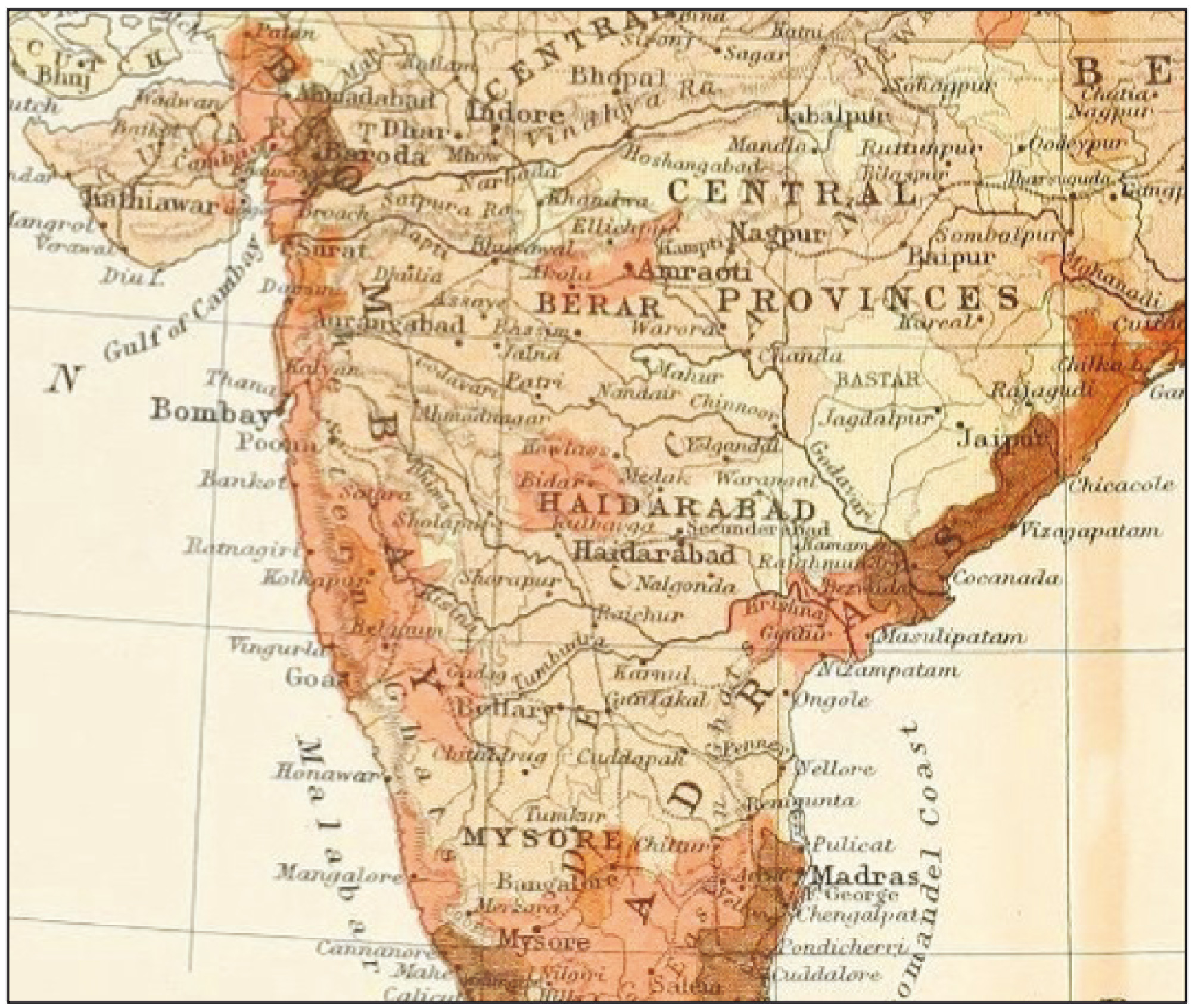
Less than a decade after the transfer of the Industrial School in Jabalpur, a different fate began to unfold for the Pardhis in regions to the west, such as those inhabited by Golbeea. By the 1870s, it was no longer unusual to hear from police officials that ‘Pardees are both dacoits and house-breakers, [and] we have plenty of them in Berar’. 20 Berar, which had comprised a crucial border zone between different kingdoms in pre-colonial India, had become part of the Bombay Presidency by the second half of the nineteenth century. However, Berar sat at the fringe of the Presidency. The Nizam’s Dominions or Hyderabad buttressed Berar from the south. And the Central Provinces, comprising important administrative centres such as Jabalpur and Nagpur, engulfed Berar’s northern and eastern borders. Berar remained a borderland.
Soon after, the Criminal Tribes Act, 1871, was enacted. While the scope of the Act was limited to the North West Frontier Provinces (NWFP), Punjab, and Awadh in the initial stages, this did nothing to stop the administration in Bombay Presidency from acting in the ‘spirit’ of the Act. The Gazetteer of Bombay Presidency, in a little less than a decade, described the Pardhis as thieves that were ‘ragged and dirty’ and possessing a ‘sneaky gait’. 21 Such understandings were complemented by lengthier ethnological descriptions in the 1880s, such as those provided by E. J. Gunthorpe. A policeman with many years of service in Berar, Gunthorpe did not see the Pardhis as separate from the ‘Wagrie’, ‘Moghya’ and ‘Bowrie’ tribes. He variously alleged that the language and ‘slang’ of the Pardhis resembled ‘Guzeratee’; their attire matched that of the ‘Rajpoot’ and lately the ‘Mahratta’ people, and their systems of worship and physiognomy bore strong resemblance with those of the ‘Meywarees’. 22 Such ruminations would later acquire dangerous gravity, particularly when they proved useful for a more influential set of officers headquartered in Bombay.
Michael Kennedy was one such officer. Kennedy was posted to Poona in 1904 in connection with the establishment of the Criminal Investigation Department (CID)—that which Hervey had predicted as the arrival of a ‘new police system’. 23 Having submitted his blueprint for the establishment of this new department, Kennedy turned his attention to scholastic matters. In due course, he delivered a copy of his otherwise prolix Notes on the Criminal Classes of Bombay Presidency. This document devoted comprehensive chapters to the Ramoshis, Katkaris, Pardhis, Mang Garudis, Bhamptas, Rajput Bhamptas, Chapparbands, among several others. Herein, the Pardhis were described as a people ‘addicted to dacoity and robbery … with great violence, even murder’. This understanding largely reiterated what had been stated earlier in the gazettes of the Presidency, but a significant difference lay in how Kennedy transformed cultural geographies of the kind denoted by Gunthorpe into criminal ones. This was a transition of degrees. Through an over-determined reading of Gunthorpe, Kennedy pushed the regime of Pardhi predations (leaving language, attire and systems of worship aside) to include regions as extant as ‘Sind’ and ‘Central Provinces’. 24 George Gayer, a junior in Kennedy’s department, similarly extended the myth of Pardhi terror to the ‘Central Provinces’ and the ‘Deccan’. 25 In less than half a century, colonial imaginings of Pardhi criminality had gained force within Berar and spread in all directions. The fact that Berar sat at the cusp of three local governments must have facilitated this.
However, this imagination was a troubled one. In the time since the publication of the Bombay gazetteer, Kennedy was realizing that the social milieu that Pardhis inhabited was far more variegated than he might have liked. It was in Kennedy’s interest to rinse the Pardhis clean of the ‘Wagrie’, ‘Moghya’ and ‘Bowrie’ influences noted earlier by Gunthorpe. This still left Kennedy with the question of how Pardhis could be of more than two kinds—the ‘Proper’ and ‘Phas’ types maintained by the gazetteer of the 1880s. Kennedy’s own list of the different types of Pardhis had grown to include the ‘Takenkar’, ‘Langoti’, ‘Advichancher’ and ‘Chigri-batgirs’, and he frequently singled out the ‘Takenkars’ as the greater menace. 26 To give direction to the efforts of the police department, Kennedy further switched opinions at a key moment in his exposition to remark that the Takenkars ‘are now as distinct as possible’ from the rest of the Pardhis, even though it ‘originally’ was not so. So much for the talk of anthropological ‘origins’, there is no explanation of where and how this distinction, in what space or time, had come to be established. 27
Gayer, in emulating Kennedy, similarly came up with the semblance of a table with columns to stress the differences between Takenkars and Pardhis. Pardhis ‘do not wash after going to stool’, ‘wear langotis’ or loincloth, and ‘use sticks and stones’ to commit crimes, whereas the Takenkars ‘wash’, ‘wear ordinary Hindu clothing’ and ‘use arms and torches’. 28 Gayer’s conjecture might appear ludicrous by today’s standards but it illustrates how the role of policing the criminal tribe invariably entailed the policing of kinship borders between such communities. Since the latter task was equally, if not more, demanding, it required timely caveats and disclaimers. This was how Kennedy ushered in a ‘police point of view’ into discourse. While discussing the Takenkars, sensing that his distinctions were sooner or later bound to fail, he remarked, ‘it is not proposed to enter an ethnological discussion but merely classify these people from a police point of view’. 29 This point of view was so central to Kennedy’s exposition that it finds early expression in the ‘Preface’ to his Notes as the overall objective to make ‘ethnological and historical details [of] practical use’ for his staff. 30 But pragmatism meant just this: when and where the deceptive line between the criminal and non-criminal kinds was bound to run into a blur, there always existed a point of view, a colonial optic, that allowed a policeman’s truncheon to be unleashed on an unintelligible hunch. In other words, the need for interpretative labour could be shelved at the behest of a ‘police point of view’ and power could be exercised ‘without knowledge’. 31
If the troubled margins of knowledge could pave the way for a heightened exercise of power, 32 Kennedy, like several of his peers, effected a simultaneous switch from the use of a more ethnologically and historically loaded term such as ‘criminal tribes’ to ‘criminal classes’. It is not as though the former terminology of criminal tribes was altogether shelved. 33 Yet, by the time F. C. Daly delivered his Manual on the Criminal Classes Operating in Bengal in 1916, the shift becomes hard to ignore. 34 Its repercussions would be felt more tangibly in the period following independence and in distant regions. At the time, though, the terminology of ‘criminal classes’ provided a better handle for the colonial police that ultimately did not want to be harangued for its failure to define the ‘tribe’ or ‘caste’ in any greater specificity, leave alone how they differed across regions.
This makes it important to take stock of how conjecturing of the above kind influenced authorities in the Central Provinces to the east in the early twentieth century. R. V. Russell’s anthropological treatise, The Tribes and Castes of the Central Provinces, was a case in point. Well, into the second decade of the twentieth century, Russell reported the ‘Langoti’ Pardhis as a definite law and order problem. The ‘Takenkar’, to settle matters of prior confusion, was described by Russell as a ‘small occupational offshoot’ of the Pardhis that possessed ‘strong criminal tendencies’. 35 Despite which, it does not appear that the administration of Central Provinces was always eager to undertake action. This can be seen in the indifferent response of the administration of Central Provinces to the proposed revision of the Criminal Tribes Act in 1922. When local governments across the colony were submitting all sorts of suggestions to give the Act of 1871 sharper teeth, political agents in the Central Provinces merely stated that ‘the Bill was circulated to selected officials and non-officials but no suggestion of value has been made’. The same correspondence admitted to the ‘absence of any valuable criticism and of practical experience of the working of the Act in [the] province’, owing to which, ‘His Excellency, the Governor in Council has no remarks to offer’. 36 In contrast, Pardhis continued to get reported in the official documents of the Bombay Presidency in the same decade. In addition, they were also interned at several locations. 37
Time in the Field of a Tribe—Making the ‘Proper’ Adivasi
In summary, we are made to note the absence of Pardhis in the Industrial School at Jabalpur; the sheer lack of any correspondence from an officer of the department of Thugee and Dacoity from the princely state of my study; and in 1922, a correspondence from the Central Provinces, clearly expressing the non-willingness of administrators to amend and/or implement the Act of 1871. These observations collectively point to the limits of colonial imaginings. They also corroborate the Pardhi silence with which this article begins.
Furthermore, by the late 1930s, a ‘Borstal institution’ had been established at Narsinghpur, not far from the Industrial School of Jabalpur. The Borstal institution was intended to be a ‘modified public school’ designed to give a ‘new character’ to adolescent offenders. 38 Most of the adolescents confined at the Borstal institution belonged to urban-industrial backgrounds, the ‘Oliver Twists’ of their time, and were subjected to a mix of both evangelical discourse and whippings. Unlike the Industrial School of the nineteenth century, which had no Pardhis in it, this institution did not even go as far as to report the presence of qualified thugs, dacoits and approvers, let alone any members of a listed criminal tribe. 39 Thus, it is disconcerting that Crispin Bates, in his account linking criminalization to the practice of colonial anthropometry, states, ‘with modifications, the Criminal Tribes legislation also remained in force and was still being actively used in the Central Provinces and elsewhere in the region till the 1930s’. 40
Incidentally, ‘both literary critics and historians’, in K. Sivaramakrishnan’s deft observation, ‘have studied the objectifying gaze of colonialism, but confined their analysis mostly to its impact on the body, occasionally to the consequences for the appropriation of space, but rarely focused on the body in space’. 41 Following which, a similar lacuna to the one in Bates confronts us in Satadru Sen. In aspiring to draw ‘conclusions broadly about British India’, Sen haphazardly connects developments between the reformatories at Punjab, Bombay and the Andamans. In the process, Sen directs our attention to the Sasoon reformatory at Bombay, stating that its adolescent inmates came ‘from all over the Bombay Presidency’, thereby concentrating ‘the refuse of a wider criminal geography’. Only that Sen’s treatment of geography is characteristically restrained by the vagueness of terms such as ‘broadly’, ‘all over’ and ‘wider’, that intersperses his argument. 42 Nonetheless, walled institutions of the kind explored by Sen have consequently opened-up to deliberations of the kind offered by Clare Anderson. Anderson rests her case on a series of colonial prison practices, such as tattooing, convict dress and fingerprints. But nearly to prove that the limitation of a Foucauldian impulse to overemphasize the body as a site of power, Anderson’s otherwise exquisite thesis, Legible Bodies, preserves a profound illegibility over matters of space. 43
It is probable that such a treatment of space is predicated on the very structure of colonial writings. In Sleeman’s account on the phansigars, where we come upon Golbeea, it is interesting to note how townships, forests and hills appear to fly past in the active pursuit of thugs. It is only at the site of crime that time slows down and the landscape acquires its share of flesh. This is where Sleeman confronts us with vivid descriptions of the possible weapon of murder, fatal wounds and injuries, details surrounding a corpse, the presence of an eyewitness or two, and scattered clues leading in the direction of the perpetrators. Following this, the landscape once again recedes into the background of the investigative plot. Space in such an exposition is reduced to nothing more than that which the body occupies. This remains a persistent feature even when the colonial narrative extends itself from the site of the crime to those of arrest, investigation, confession, discipline and execution. 44 It is this constriction of space that continues to weigh upon the historical imagination, necessitating a fixation with the body to the point that geographical considerations become arbitrary.
In comparison, my initial interactions with the Pardhis proved to be quite different. Dilbatti’s clan had taken to the plough in the early 1990s. On one occasion when I ventured to ask Dilbatti, somewhat abstractly, what was the idea of a home for the Pardhis prior to getting settled, Dilbatti simply flipped his palm over the surrounding landscape and said, ‘Bastar’. Of course, he was not referring to the Bastar that has come to be reduced to the size of today’s district but a larger cultural geography of an earlier time. I wonder if it was such encounters in the vast lengths of Chhattisgarh’s Sal forests, which made me more keenly aware of the strangulation of space elsewhere.
In such reaches, the Pardhis were quick to identify themselves as Nahar-Pardhis. The term Nahar literally means streams and tributaries, and the Pardhis frequently make their temporary camps or tolis in proximity to them. Nahar, at the risk of minor romanticism, might denote the fluid movement of tribes across a verdant landscape. In the limited literature available on Nahars, Ashwini Deo identifies them as a Gondi sub-group of ‘bamboo cultivators’. 45 The Pardhis, likewise, speak of a comparable proficiency in making sieves, baskets, stools and other household products out of locally available bamboo, which are then sold in village markets. They use their genealogical association with Gonds, relying on the shared cognomen of Nahar, to lay claim to a place of equal prestige and power in the medieval past. It is widely acknowledged that pre-colonial India was home to several Gond kingdoms. The Gonds were not the ‘isolated’, ‘backward’ or the ‘primitive’ tribe that they have come to be recognized as in the post-colony. 46 Pardhis further claim that the Gond, as also the Kandra rajas of pre-colonial India, hired them to protect their regimes. Since the borders between kingdoms were more in the nature of general zones, rather than the cartographic lines that separate administrative units nowadays, Roy Burman aptly describes such tribes of a time as ‘buffer communities’. 47
G. S. Khaparde might have had similar communities in mind when, much earlier in the 1920s, he had submitted his statement as part of the ‘Council of States Debates’ on criminal tribes. Khaparde explained that wherever pre-colonial borders had been dramatically realigned or entrusted to the army, displaced ‘border tribes’ had gone from ‘harassing the enemy [to] harassing the people themselves’. 48 A similar transition becomes discernible when we situate Gond-Pardhi relations a little more attentively. Indeed, the shared appellation of Nahar should not lead us to construe a lasting brotherhood between the two tribes. Ashwini Deo, once again, provides a glimpse into their dynamic. He contrasts first-hand observations of annual Gondi performances inside the palace of the erstwhile Maharaja of Kanker, with the colonial archive of the region. This leads him to suggest that the Gonds, not just in pre-colonial India, but even in times closer to ours, have exerted their status as ‘co-sharers of sovereignty’ through ancestral deities and related rituals within the royal palace. 49 While it is doubtful that sovereign-subaltern relations have remained egalitarian to the degree suggested by Deo, this argument on the symbolic sharing of power (between the emergent princes of the nineteenth century and erstwhile Gond rajas) cannot be extended to the Pardhis. The latter, to the best of my knowledge, have never ventured into the gates of any Maharaja’s palace in Chhattisgarh.
If this hints at an established hierarchy between the Gonds and the Pardhis, it should not lead us to believe that the Pardhis are what Piliavsky has recently termed ‘exo-castes’. Piliavsky, in an article relating to the subject at hand, recounts being told by an old Kanjar woman in Rajasthan that, ‘We have been thieves for a long time, child. Our fathers and grandfathers made us into thieves; it was not the work of the English’. 50 Such narratives are strung together by Piliavsky with the sporadic but recurring mention of ‘robber castes’ in the Jatakas, Shastras, Kathas, Aranyakas and Sutras, all of which confirm how such castes thrived on the fringes of the ancient Indian society. This establishes the prevalence of stereotypical notions of ‘born criminality’ prior to the coming of European colonialism in an emphatic way, adding weight to the thesis on continuities as explained in the Introduction. Still, it takes little to note that many of the ancient texts Piliavsky invariably relies upon, are, in fact, colonial translations, which are recognized, even by Bayly, for hypostatizing cultural traits into eternal facts. 51 Not only do the ‘robber castes’ of ancient India get frozen into the stuff of socially peripheral ‘exo-castes’ in this way, but the present-day marginalized status of the Kanjars is simultaneously traced back to the beginning of time. 52 This, then, becomes a stupendous exercise in interpreting the past in terms of the (eternal) present.
Between both extremes—that of an assumed egalitarianism and a timeless ‘Indian’ criminality—the concept of agonistics provides us with a better means of moving forward. In a recent study on the Sahariyas, Bhrigupati Singh has employed agonistics to mean ‘varying intensities of conflict that remain copresent with forms of intimacy and ways of living together’, as opposed to an ‘unrelenting negativity of domination’. 53 According to Dilbatti, a decisive change between Gonds and Pardhis in agonistic terms was marked by the entry of modern guns into the existing milieu. Possibly, the disbursement of guns to local tribesmen might have been a part of the campaigns to exterminate ‘dangerous beasts’, such as tigers, leopards, wolves and wild dogs, as explained by Mahesh Rangarajan for the region until the early part of the twentieth century. 54 However, these guns were granted more for the purpose of protecting crops from raiding animals. This effected a negative displacement of the Pardhis, who had believed so far that crop protection was their ‘ancestral’ occupation.
This appears to have spawned certain mythological claims with the apparent purpose of preserving status quo. While such mythic claims persist until date in varied forms, they appear in startling clarity in the writings of the colonial anthropologist, R. V. Russell. ‘According to their own legends’, Russell narrated, ‘the first ancestor of the Pardhis was a Gond, to whom Mahadeo taught the art of snaring game so that he might avoid the sin of shooting; and hence the ordinary Pardhi never uses a gun’. 55 The rest of Russell’s account confirms that he missed an obvious anachronism—that of the availability of modern guns in the primaeval times of the adivasi god, Mahadeo. If anything, this points to the colonial context in which the myth was given shape, or rather, invented. In this respect, even Piliavsky admits that the colony had served as a breeding ground for inflated traditions. In her explaining, several tribesmen in the colonial period exaggerated their criminal ‘pedigree’, for there were certain livelihood benefits in turning into an approver, much as it was with Feringeea. The fact that colonizers valued ‘hardened’ criminals to act as approvers must have motivated such tactics. This is what might have caused the Kanjars in Piliavsky’s text to make bombastic claims about their supposed criminality since they possibly mistook her for a representative of the sarkar. Only that in giving such invented traditions a millennial history by referring it back to ancient texts, ‘history’ itself becomes invented in Piliavsky’s case. 56
Closer to my field, tensions between Gonds and Pardhis became more pronounced in the initial decades of independence. This was also a time when modern-day courts, police stations and a revenue bureaucracy became more strongly entrenched in the region. 57 Agriculture was simultaneously incentivized to deal with a looming food crisis. ‘Twenty-five million tenants’, several of whom resided in parts of central India, ‘were brought into a direct relationship with the state’. 58 Likewise, agriculture witnessed a ‘8 million ha increase per decade’ in the period between 1950–70, ‘the highest ever in Indian history’. 59 For Mankhush, an immediate relative of Dilbatti, this is when the Pardhis came face-to-face with another reality. Lands that were previously in the nature of encroachments (kabz) had granted the Pardhis greater freedoms. ‘But when the same lands came to enjoy the stamp and seal of the state (thappa), landowners began to treat us like thieves, we could not roam freely’, Mankhush told me. Gonds, who were themselves undergoing a process of gentrification, could not understand that nomadic lifestyles were necessarily a part of Pardhis’ role as crop protectors. 60 Pardhis were not a labour corps in the usual sense of the word. As a hunting-gathering community, they were keenly aware of the movement of animals, particularly wild boars, and frequently this brought them to station themselves in pockets where farmers ended up needing their services.
If notions of private ownership of land inclined farmers to think of nomads as trespassers, what exacerbated the situation was the increased handing of guns to cultivators by the Indian state. This, however, should not lead us to imagine the Gonds as part of what some scholars stereotypically describe as ‘landlord capitalism’. 61 On account of parallel processes, which have been closely scrutinized by Sumit Guha, tribes such as the Gonds had been ‘hammered into becoming … a primitivized, silvicultural proletariat’. The dynamic generated by this gun-wielding proletariat was confirmed by Hugh Allen in the early decades of independence. A former hunter, comparable to Jim Corbett, Allen had decided to settle down at his estate in Mandikhera, Madhya Pradesh, as opposed to leaving the colony. In his book, The Lonely Tiger, which was first published in 1960, Allen averred, ‘Now, almost anyone that cares to apply for a license, was sure to get one’. Allen was not solely concerned with the free distribution of licenses and guns, but that the cultivators were roaming with them after dark ‘in bullock carts and shooting any animal they met by the light of a torch’. 62
Clearly, Allen was symptomatic of an emerging sensitivity to wildlife. Several elite hunters, such as ‘Billy’ Arjan Singh and Col. Kesri Singh, were simultaneously laying their guns down to take up the task of wildlife preservation. Such concerns were complemented with more ‘scientific’ explorations. Field biologists started making their presence felt more strongly in the India of the 1960s. George Schaller’s study on the mammals of eastern Madhya Pradesh, which made relatively intensive use of statistics and parasitology, acquired the shape of the highly acclaimed book of the time, The Deer and the Tiger. Schaller, among other things, stressed the importance of ‘curtailing the activity of poachers’. 63 In due course, J. C. Daniel focused his attention upon the wild buffalo of Bastar. As a close associate of Schaller, Daniel too pointed to the danger of poaching ‘done by villagers’. 64 M. Krishnan, likewise, expressed that the prime danger to wildlife came from the side of ‘shikaris with guns’ and ‘tribals indulging in regular hunting orgies’. Krishnan identified the ‘Kols and Gonds’ as some of the culpable tribes for the region shared by the three states of Orissa, Madhya Pradesh and Andhra Pradesh. 65 This was the very geography that would later be constituted as the regional state of Chhattisgarh.
Such concerns enjoyed a global resonance. Under the influence of international organizations, such as World Wildlife Fund (WWF) and International Union for Conservation of Nature (IUCN), independent India outlawed all forms of hunting. Consequently, gun licenses for crop protection were largely withdrawn at the behest of the Wild Life Protection Act, 1972. ‘Project Tiger’ was launched in the same year. This governmental project sought to conserve the last haunts of the Indian tiger through a series of parks and sanctuaries. According to Mankhush, this was when the Gonds began to reach out to the Pardhis for their services a second time. Some of the Gond villages had sizable holdings by now. They did not want to risk getting on the wrong side of the law while protecting their crops from raiding animals, particularly wild boars, deer, wild buffaloes, gaur and sometimes elephants. Mankhush’s immediate clan refused. In the imagination of the Pardhis, guns had caused the Gonds to reduce them from crop protectors and fellow Nahars to nothing more than vermin. At this stage, festering wounds might have healed but certain discursive shifts prevented this from happening. This shift demands to be historicized, even if at the cost of the present chronology.
We do not know if the Pardhis were directly enlisted to exterminate ‘dangerous beasts’ such as tigers but there is scattered evidence of how they were perceived as a menial class of hunters, some of whom could be cheaply employed to save crops from ‘field rats’ at a reward of ‘a rupee per hundred’. 66 Such programmes were tried in Sholapur, Bombay Presidency, beginning from the early 1880s. Kennedy, on his part, had denigrated the Pardhis for hunting ‘pigs’, ‘deer’ and ‘hares’ but he simultaneously believed that hunting helped the Pardhis keep ‘soul and body together’. According to him, hunting gave the Pardhis a grain of ‘sporting’ character, just as it did to the White man. 67 To the list of animals, R. V. Russell added ‘crocodiles’. He described how the Pardhis hunted them for their fat. Yet, Russell made sure to mention that the Pardhis confined crocodile hunting to select seasons. According to Russell, the Pardhis also ensured that sufficient pairs of avifaunal species remained in the forests that they may go on multiplying. 68 Possibly, for such reasons, G. Monteath, a senior forester, in the context of Bombay Presidency, declared that the ‘painstaking method of snaring … quarry’ of the Pardhis, could gladly be ‘counted out’ as a reason for the disappearance of big game animals. In holding the well-off ‘motoring poachers’ responsible for the major damage, Monteath asked for the Pardhis to be ‘acquitted of blame’ as late as in the mid-1930s. 69 Legendary sportsmen of central India, such as Dunbar Brander, by this time had already confirmed that it was the ‘European sportsman’, and not the native shikari, that thins out the tiger’. 70
From the above records, one has every reason to believe that the hunting traditions of the Pardhis became problematic for the colonial administration to the extent that it impeded the task of sedentarizing them. The 1970s, in contrast, presented a changing picture. With the biopolitical cultivation of wildlife as species of high conservation value, hunting per se became a site of disciplinary power. From the narratives of the Pardhis, it further appears that efforts at tiger conservation were more strongly oriented towards eliminating poaching than opposed to the advance of agriculture or industrial capitalism. For this reason, hunters, more than peasants or industrialists, came to be seen as criminals. ‘I tried to reason with the foresters a million times that we do not kill tigers. Why should we kill tigers when we do not eat them, I told them again and again, but they would simply not understand’, Chhotu Nath said to me. A Pardhi in his seventies, Chhotu Nath, further explained how he won his release after a Gond leader took up his cause, after much pleading on the part of his kin. Not wanting to be obligated to the Gonds any more than necessary, Chottu Nath, like several others, migrated to the city of Durg. Here, many Pardhis took up the task of bandar rakhwali or protecting residential localities from an increasing monkey menace. Thus, urban-industrial contexts, ironically, came to provide a fresh chance to the Pardhis to remain connected with animals. It also transformed the hunter into what Jan Breman describes as a migrant class of ‘wage hunters’. 71
Nonetheless, it was a different story for those who persisted around the forests. By the 1980s, it was becoming apparent that the impetus to create parks and sanctuaries was failing to protect forest cover per se. An article appearing in India Today revealed that India’s forest cover had reduced from 23 per cent to 10 per cent in three decades. This was despite the National Forest Policy (NFP), 1952, which had set the ambitious target of increasing forest cover to 33 per cent in the same period. The reported decline in forest cover was the highest for the state of Madhya Pradesh, which had ‘lost more than two million hectares of teak, sal, and bamboo forests’. 72 If this was not enough, the government decided to bring significant pockets of the remaining forests under developmental initiatives. In Madhya Pradesh, of which Chhattisgarh was a part at the time, agencies such as USAID decided to fund programmes of ‘social forestry’. One such programme was aimed at devolving decision-making to the grassroots in areas spread over nearly 60,000 hectares of forestland. 73 While the overall performance of above projects has been anything but admirable, the anticipated benefits, be it improved access to fuelwood, fodder, forest foods or other minor forest produce, were intended solely for a settled gentry.
Such programmes generated fresh hope for Gonds. Farm and forest came to be seen as a contiguous terrain without the restrictions imposed by a forest bureaucracy. It was not as if the Gonds never had to weather restrictions. The condition of the Pardhis, however, became more precarious with this equation. The Pardhis had already lost their privileged place as crop protectors and had further been reduced to a marginalized community in the gaps that separated farm and forest. It was only a matter of time, that both foresters and Gond adivasis devised ‘collaborative’ means of dealing with the Pardhis. Kuhari Bai, a middle-aged woman, recollects that on one occasion in her younger days, their toli had been razed to the ground. Gond siyans (elders) had passed a resolution to drive out the Pardhis a night earlier. The resolution carried an injunction not unknown to the foresters, according to which, Gond households that failed to supply their youth for the next day’s drive would be fined ‘₹11’.
When members of such Pardhi tolis asked for an explanation, the Gonds only told them that they were not pucca or ‘proper adivasis’. Gond siyans of villages chosen for state-sponsored programmes of social forestry are frequently constituted into Forest Protection Committees (FPC). The member of one such committee claimed that the Pardhis knew nothing about forests. ‘What do they know about forests, they come and go as they please’. This was a popular notion. One which acquires specific potency where the forest, even as an abstract idea, remains an important determinant of indigeneity in the public imagination. To segregate the Pardhis from forests is to make them less adivasi. This greatly paves the way for the characterization of Pardhis as a ‘class’ or nothing more than a moving toli. In the colony, the shift from criminal tribes to ‘criminal classes’, offered timely respite from ethnological and historical complexities for police officials; in the post-colony, it de-historicized the Pardhis and their claims to tribality. The diminished claim of the Pardhis to tribal status still makes it possible for the Gonds to corner state resources, meagre as they are. At the same time, it makes it possible for the administration to police the Pardhis by bypassing various constitutional safeguards conferred to the tribes in independent India.
The Pardhis admit to clashes at this juncture in the 1980s and occasionally stealing crops. Such moments should remind us of Khaparde’s statement in 1923. While Khaparde hinted at the tendency of ‘border tribes’ to take to crime upon being displaced from their role as protectors to various pre-colonial kingdoms, the case of the Pardhis speaks of the effects of being evicted from their specific role as crop protectors from the intermediary regimes separating field and forest. Although this brought the district police into the scene, there is little reason to believe that the police knew anything about the colonial logics of inborn criminality. 74 But even if this underscores the sustained operation of a power without knowledge, it should not tempt us to reject all of Foucault’s claims. The pending discussion points to a simultaneous articulation of power that is ‘irreducible to the representation of the law’ and one that works ‘beyond the state and its apparatus’. 75 Interestingly, it is also a power that comes into its own by agitating against the postcolonial state. We are left to note how ‘anti-state’ activists who came to the rescue of the Pardhis ended up replicating the colonial government of nomadic communities. This becomes perceptible only when we reconsider how the bigger picture of adivasi struggles was already complicating the ‘joint’ initiatives between state-society to police the Pardhis in the 1980s.
The organization that facilitated my fieldwork had initiated a campaign against tribal ‘land alienation’ by the mid-1980s. Its objectives were couched within the broader mandate of the CMM, as per which the main issue waiting to be redressed was the forceful dislodgment of adivasis from their ‘traditional’ landholdings since colonial times. A thriving discourse of ‘land alienation’ amid rapid agrarianization should sound like a mutual contradiction of terms. Sumit Guha successfully enquires into this paradox. Guha shows how the landholdings in tribal-dominated sub-divisions of Dhule district increased from ‘110,000 ha’ in 1938, to ‘194,000 ha’ in 1971. The rate of increase remained ‘about 20 per cent’ in the following period between 1974 to 1991, despite occasional drops in real numbers. Through simultaneous consideration of changing borders, migration patterns and population statistics, Guha makes a persuasive case for how ‘tribals were entrenching themselves in the agrarian sector than being driven off the land’, at the very time concerns of ‘land alienation’ were gaining traction. 76
Ethnographic fieldwork among the Pardhis likewise reveals that what was referred to as ‘land alienation’ in the region of my study was more the fallout of the uneven distribution of land rights. This was principally because of a lethargic bureaucracy functioning for the better part at the behest of party politicians. The Indian National Congress (INC) had suffered a serious drubbing at the hands of the Bharatiya Janta Party (BJP) in the state elections of 1989, the first of its kind. It has been alleged that after the above debacle, it became a recuperative strategy for Congress leaders to build allegiances through the loose and piecemeal distribution of land rights. The intention was to create ‘vote banks’ as quickly as possible, as opposed to ensuring equity and social justice. At critical moments in the 1990s, anxieties over newly framed propriety rights caused Gondi mobilization to turn, rather violently, against the Pardhis.
This was about when Ved ji (as I call him) reached out to Phool Singh and his clan. Ved ji identified himself as a Gandhian and had been associated with the Morcha. Ved ji had long since passed on by the time I arrived but the walls of a humble office building founded by him were still plastered with photos and newspaper cut-outs of Shankar Guha Niyogi and other stalwart activists leading mass mobilizations. Ved ji convinced the Pardhis that the only long-term solution was for them to organize as a competing ‘vote bank’. This was a flawed assessment. The Pardhis remain a small inestimable mass of wanderers beyond the reach of a census officer. Still, entry into electoral rolls required strict proof of residence. 77 When Gond adivasis and neighbouring caste society became aware of the way the Pardhis were ‘feigning’ stable residence for electoral cards, they launched an intensified offensive. Pardhi settlements were burnt on a handful of occasions. 78 This had the curious effect of strengthening the assertion of a stable, agricultural identity. What was ‘feigned’, came to be believed in with such force, that the Pardhis adopted agricultural tools and implements such as the plough, spade and sickle, as opposed to their traditional bow, as idioms of protest and self-representation.
At such moments, Phool Singh, just as Dilbatti, Mankhush and Kuhari elsewhere, became ready contenders for a discourse of ‘land alienation’, even though landlessness had not mattered half as much, to begin with. One could argue that this benefitted a certain kind of activist. It made the Pardhis more tangibly present and thus amenable for middle-class activism. Alpa Shah’s study in neighbouring Jharkhand reveals how sedentary adivasi communities tend to give activists a greater sense of confidence over their circle of influence. This, according to Shah, initiates a process of ‘eco-incarceration’, one which furthers the imagery of ideal adivasis as people rooted in their land. 79 With the Pardhis getting settled in specific locales, it became possible for concerned activists to draw the attention of the state administration. A district magistrate visited a Pardhi habitation in 1994. Amid a softening stance on the part of the administration, some Pardhi groups were able to attain legal entitlements or pattas to parcels of land. By the time we hear of how Phool Singh’s clan gained proprietary rights over a 12 acre plot in the same year, we are left with mixed feelings—what of the incumbent nomad that made the starting point of the entire struggle? Evidently, dominant values had gotten internalized through the very process of everyday resistance. That which was a programme of forced sedentarization in the colony had been reconfigured as a bottom-up struggle for ‘liberation’.
Conclusion: of Pardhi Histories
I could never bring myself to comprehend that activists described the taming of nomads out of existence as ‘victories’ for the Pardhi ghumantus. Some solace, however, remained to be drawn from how the erasure of the semi-nomadic, hunter-gatherer was never complete. Small groups of Pardhis continued to defy the norm of a settled agrarian life in a variety of innovative ways, giving activists, as also other intervening agencies, the impression that the task of making ‘proper’ adivasis is never complete. But this fissured the Pardhi community in ways that are complex enough to warrant another paper altogether. Such processes, strikingly, were unfolding miles (also decades) away from colonial Berar, or other parts of the Bombay Presidency; they were taking shape in a region that had never housed a settlement such as Stuartpuram in the colonial period. Moreover, such processes were unfolding in the period following our independence. Owing to which, it is more purposeful to connect them to developments in the colony than the mention of ‘robber castes’ in ancient religious texts.
Today, concerns over land alienation are acquiring new dimensions. Civil society, and not just the activists I have referenced insofar, have come to believe in the enormous potential of The Scheduled Tribes and Other Traditional Forest Dwellers (Recognition of Forest Rights) Act, 2006, to reverse something they repeatedly call ‘historical injustices’. But in their failure to clarify what and whose ‘history’ this historical injustice refers to, it becomes a normalizing meta-narrative, with ‘didactic references to the settled peasantry as the ideal, moral subject’, very much the way it was in the case of the Criminal Tribes Act of 1871. 80 Not too far, conservation agendas have their own role to play. 81 The WWF, for instance, recognizes the Pardhis along the borderlands of Chhattisgarh as a ‘criminal tribe’. It further believes ‘that without rehabilitating these people from hunting’ there can be ‘no future for wildlife, particularly tigers, in vast parts of India’. 82 Such a narrative quickly erases the variety of animals, such as quails, partridges, crocodiles and rats, with which Pardhi lives were intricately connected during the peak of colonial criminalization. Such a move also silences the voices of colonial foresters and administrators who sought to acquit the Pardhis of any blame in thinning tigers. Simultaneously, it plants the national animal more firmly, and on renewed terms, within Pardhi pasts, thus preparing the ground for a programme of educational reform for the children of Pardhi poachers, the ‘criminals by birth’.
Both the above processes intimate how the current-day struggles of the Pardhis of Chhattisgarh accrue from the way they have been displaced from buffer zones, where they have performed their role as itinerant crop protectors for long. This displacement has unfolded within both the changing relations between a postcolonial state and settled society in times of relative democracy, and the reconstruction of man–animal relations in keeping with global conservationist trends. These changing contexts supplant a ‘history’ upon the Pardhis, to which the report of the Idate Commission adds its own. By believing that the Pardhis were uniformly criminalized across the nation, beginning with the Act of 1871, the report glosses over the fact that much of the stigma in the region has been generated in the post-independence period. The rhetoric of this report obfuscates the manner in which developmental policies of agrarianization and social forestry work towards the reproduction of a ‘criminal class’, stripped of all claims to indigeneity. Despite which, the report’s solution to the problem is to place the hitherto criminal tribes more firmly on the ‘bandwagon of development’. 83 To nearly prove the neo-colonial dimensions of this agenda, this report eventually ends up paying homage to none other than Kennedy, quoting him directly for his understanding of the ‘corrupt’ and ‘guttural’ languages of the Berads, Bhamptas, Kaikadis, Banjaras, Waddars, Wagharis and, last but not the least, the Pardhis. 84
Interestingly, all such agents of social change, state and non-state, have de-colonization as their agenda. Despite this, they inadvertently resurrect elements of an ignoble past in the act of opposing it; they also reproduce the past in opposition to one and another. Activists, conservationists and foresters can scarcely look each other in the eye in Chhattisgarh. Yet, in their differences, they adhere to what Zimmer once stated in his Philosophies of India, ‘Through the universe, the mutually antagonistic elements cooperate by working against one and another’. 85 This is how a Pardhi silence comes to be filled with ‘histories’.
Footnotes
Declaration of Conflicting Interests
The author declared no potential conflicts of interest with respect to the research, authorship and/or publication of this article.
Funding
The article is based on the author’s doctoral thesis, which was partly supported by a grant from the Indian Council for Social Sciences Research (ICSSR), New Delhi. Another grant from Leeds University, United Kingdom (UK), to participate in the workshop, ‘Re-centering the Pariah: Caste, Tribe and Criminality in South Asia’, in 2017, and the resultant discussions, were vital in shaping the present argument.