




Abstract
Historically, the role of ‘self-help groups’ (SHGs) has been highlighted by different authors. The term used widely as cooperation for survival. SHGs play a significant role in transforming the rural economy. Its unprecedented growth helps the resurgence of the weaker section of society in terms of outreach, social position and sustainability. Among different SHGs, ‘Kudumbashree’ of Kerala constitute the largest women SHGs in India. The Government of Kerala launched the programme for poor women on 17 May 1998. Grassroots of ‘Kudumbashree’ are ‘Neighbourhood Groups’ (NHGs). Kudumbashree functions through NHGs.
The present study analyses the social impact of NHGs by taking samples from the tribal and non-tribal areas in the district of Palakkad, Kerala. A detailed survey conducted among 600 respondents with identified social variables. The outcome of the study reveals that NHGs have created a social platform for women to improve social activities and strengthen its members’ social bondage. The social impacts in tribal and non-tribal areas differ for certain social variables and do not vary with others. Overall, the study highlights the need for promoting the role of NHGs as a means of ‘social change’ for strengthening the socialization process of women.
Keywords
Introduction
The term ‘self-help’ has got historical significance and widely used for cooperation for survival (Leung & Arthur, 2004). In the past, it had coined with civil rights and the women’s movement (Vattano, 1972). This trend continued until the 1970s. Further, it took a new dimension of service-oriented activities, which become more popular (Pancoast et al., 1987). From time to time, its social context is discussed by different authors such as Kaplan and Killilea (1976), Katz and Bender (1976), Kenkyûkai (1976), Robinson and Henry (1977), Moeller (1978), Murayama and Agari (1977), Hjemdal et al. (1998), Damen et al. (2000), Matzat and Iller-Sturmhofel (2010) and Brankaerts (1983).
The theoretical foundations of the self-help group (SHG) deeply linked with the framework of sociology (Giddens, 1991). Theoretically, SHGs may stimulate empowerment and increase the participants’ sense of control (Stang & Mittelmark, 2009) and linked with the concepts of social learning (observation and imitation of family/peer/community norms; Moos, 2008). ‘Social perception theory’ backed up in understanding the influence of social variables, which got a substantial element for measuring the outlook of the people (Bem, 1972; Ichheiser, 1966). Measuring social issues (or social benefits) is an integral component of the impact assessment of any social projects (Chathukulam & Gireesan, 2007). Vast social networks (Schuller, 2001) and extensive field surveys are the appropriate methods to capture the diversity of opinion, perceptions and impact of social projects (Herbert & Shepherd, 2002). The effect of participation of group activities also strongly influenced by the ‘social impact theory’ which explains that social impact is the result of social forces such as strength (power or social status), immediacy (physical or psychological distance) and number (Latane & Wolf, 1981).
SHGs play a significant role in transforming the rural economy in a novel way to improve the standard of living of the poor (Asoken & Sudha, 2005). The failure of many anti-poverty programmes led to the formation of many SHGs (Bhagawati, 2006). In the long run, such groups would continue to maintain their popularity and highly beneficial to society (Tendon, 2001). The exceptional growth of SHGs helps the deprived sections of communities to improve their social capacity (Das, 2003). According to Ojha (2001), SHG is a workable, sustainable model for rural society. Their participation in its different social activities helped them to gain confidence and elevate economic and social status (Murugan & Dharmalingam, 2000).
SHGs in India
In India, the origin of SHGs is in Mysore Resettlement and Development Agency (MYRADA) during the year 1985. It has succeeded in mobilizing SHGs in terms of family relations, trust and support. MYRADA founded a microfinance institution, namely ‘Sanghamithra’, which provides credit facilities exclusive to SHGs. Prominent SHGs work close with microfinance in India are Sakhi Samiti in Rajasthan, PRADAN in Jharkhand, Chitradurga Gramin Bank (CGB), Panagal Mandal Mahila Samakhya (PMSS) in Andhra Pradesh, Kudumbashree in Kerala, etc. NABARD took good initiatives to popularize SHGs in India. So far, the bank has provided a grant of more than one million for capacity building of poor people and their sustainability. The very purpose of linking SHGs with formal banking systems through informal approach found successful since 1992, where it has introduced a bank linkage scheme. Currently, about 2.2 million SHGs in India represent 33 million members. These groups are mainly functional in the southern states.
Social Participation of Women SHGs
Since the 1970s, SHGs is playing an essential role in different states of India and contributing mostly to democratize many institutions that stand for the deprived sections of the society (Kumari & Mishra, 2015). It tries to create social stability through financial inclusion and play an active role in the social empowerment of the people in rural areas (Vyas, 2018). According to Hoffmann et al. (2017), the social impact of women empowerment in rural India is mixed. The SHG members’ role in taking strategic decisions in planning and implementation of the programme such as MGNREGA and microfinance activities elevates their social, economic and political position in society (Baskaran et al., 2017); (Sahu, 2015). Kumar et al. (2019) point out that SHGs can create a social platform through social networks, which improves their mobility. Associations with SHGs promote the member’s political participation and social cohesion (Sundaram, 2012). Such partnership widens their entry as members of the local governing bodies (Bali, 2007). Their frequent involvement in public meetings and political forums increases their self-confidence Sanyal et al., 2015; Summer-Effler, 2002). There are three essential features related to SHGs. These are (a) outreach, (b) social role and (c) sustainability. The success of SHGs depends on how far these three aspects resolved (EDA Rural Systems Private Ltd & Andhra Pradesh Mahila Abhivruddhi Society, 2006).
SHGs role in empowering women in rural areas is significant (Mathur & Agarwal, 2017). The social impact of SHGs on women empowerment is noticeable (Deininger & Liu, 2009). It brings social cohesion among the poor at the grassroots level (Ban et al., 2015; Minimol & Makesh, 2012). Field evidence shows that SHG members can easily involve in households’ decision-making and bring positive changes in their life (Desai & Joshi, 2013). According to Nagaraj and Sundaram (2017), SHGs provide a sufficient platform for social participation and encourage the members for better interactions with society (Bali & Wallentin, 2009). SHGs could change women’s social outlook and social status tremendously (Patel, 2013). Such continuous efforts lead to the societal transformation of women in rural areas (Patel et al., 2018).
SHGs in Tribal and Non-tribal Areas
It could notice that there is a differential impact of SHGs in the tribal and non-tribal areas. A study conducted in Orissa reveals that SHG women in the tribal regions improved their social participation and self-confidence than their non-tribal counterparts. At the same time, women in the non-tribal areas could able to take part in an active role in family decision-making. SHGs bring social empowerment and increased participation of women from tribal and non-tribal groups in local institutions, which provide them opportunities in the decision-making process (Government of India [GoI], 2009). It is visible that there is a social adjustment between the people of tribal and non-tribal in balancing social relationships, which is an act of their social skills (Das & Amit, 2013). People from the non-tribal areas hold many social positions than tribal, and the political power vested mostly in the hands of the privileged people in the tribal community or non-tribals. As a result, common mass keeps away from the mainstream social arena (Sinha, 2013). Tribal women lack social interactions when compared with non-tribals (Sachana & Anilkumar, 2015). There are also inter-regional differences within tribal communities. Such disputes connected with the pattern of tribal leadership (Kunhaman, 1980). Even a socially developed state like Kerala, the social profile between the tribal and non-tribal people differs (Luiz, 1961). When compared with non-tribal areas, there is low social empowerment for the tribal people in Kerala (Nithya, 2013). SHGs play a vital role in the tribal region and primarily benefited women (Sharma & Ansari, 2014). It helps tribal women to improve decision-making in families too (Lenka & Mohanta, 2015; Rao, 2016).
There are also criticisms against the practices of the ‘self’ concept of SHGs. It widely felt that the power of determining the activities tuned with the interest of bureaucrats (Lahiri-Dutt & Samanta, 2006). Even in many cases, unrealistic expectations jeopardize the empowerment process (Kempen, 2009). The success of SHGs depends on the programmes which they practice. The performance of SHGs is another crucial issue to be looked at seriously. Benchmarking of its performance is vital for early intervention for sustainability (Rosenberg et al., 2007). Socio-economic targets of SHGs have posed severe challenges in terms of its sustainability and maintain quality. There is also a need to have frequent introspection about their activities and channelize for their empowerment Ramesh & Maria, 2015. The collective responsibility of both marginalized and non-marginalized sections of the society is essential in the process of social transformation (Hoop et al., 2014).
‘Kudumbashree’ in Kerala
‘Kudumbashree’ of Kerala is unique in many ways. It is the largest women SHG in India. It is an exclusive poverty alleviation programme of poor women launched by the Government of Kerala on 17 May 1998. Kudumbashree officially registered as the ‘State Poverty Eradication Mission’. The programme started under the auspices of local self-government (LSG) institutions. Kudumbashree Mission is to accomplish the twin objectives of poverty eradication and women empowerment through self-help initiatives, which will enhance the economic and social empowerment of women (
The thrift and credit society is fundamental to the functioning of women’s NHGs (Abdul, 2005). During the weekly meetings of NHGs, the members discuss the planning and implementation process of thrift and credit mechanisms. Such engagements empower women, both economically and socially (Kenneth & Seena, 2012). The dynamism of social empowerment of the women in this process disserves special mention. The activities of the members such as weekly group meetings, visits to the bank and panchayat offices or attendant at public meetings help them to lead a dignified social life, which will help the women participants to get the self-confidence to intervene collectively and resolve the array of social problems (SIDNET, 2011). Thus, though the primary objective of NHGs is resource mobilization through microfinance activities, its social impacts among the members are many.
The role of Kudumbashree in empowering women through their participation in local governance and social activities is notable (Reheem, 2013). The women’s involvement in NHGs’ activities of Kudumbashree could broadly address their sustainability issues (Praveen & Suresh, 2015). It is essential to evaluate the mission of Kudumbashree within the context of the political and socio-economic scenario, which reinforces the relevance of the organization for the sustainable development of women (Kumar & Jasheena, 2016). The microcredit activities of NHGs could create a robust social status for poor women in society (Raghavan, 2009). In this context, one should also admit the social development of Kerala with a feminist perspective and the role of Kudumbashree in this historical revolution (Devika & Thampi, 2007). Evaluation programmes of Kudumbashree in the tribal communities of Wayanad and Palakkad districts of Kerala pointed out that the active function of these units helps them to be more inclusive and overcome many societal barriers (Williams et al., 2011). According to Sanyal (2009), NHG groups in the Kudumbashree could able to develop a social network of poor women and could make sure of their political participation. Improvement in the social status of women members after joining Kudumbashree is visible Santhosh (2012). SHG is an engine of development that encourages the deprived women to participate in social activities, which obliviously results in creating a strong sense of self-worth and good faith in their ability to interact with the society (Selvi & Pushpa, 2018).
Kudumbashree provides an excellent platform for women in rural areas for social participation (Varghese, 2012). A study by Antony and Arunachalam (2018) in Attappadi, Kerala, shows a noticeable performance of Kudumbashree in improving the social status of the tribal people. It reported that NHGs could make a social impact through the social development of the tribal people in Sholayoor Grama Panchayat in Attappady Block. The primary reasons for the success of Kudumbashree are its initiatives to integrate with the Panchayati Raj Institutions (PRIs). Such linkages always strengthened the capability and capacity of the SHGs (Bandhyopadhyan et al., 2002).
The impact of the ‘Kudumbashree’ programme on rural women has improved their social participation (Nair, 2011). It facilitates collective action by forming and developing the social capacity of poor women (Kadiyala, 2004). It’s initiatives at the grassroots level in establishing a social relationship and creates positive changes in the attitude of women has been succeeded (Arun et al., 2011). The impact of SHGs on women empowerment on the social and political sphere is highly encouraging (Gopalan et al., 1995). NHGs of Kudumbashree are instrumental in social empowerment. The collective responsibilities of women create a feeling of solidarity and social safety nets (Prabhu, 2015). The members’ involvement in the activities liberate them from their traditional role and improve their confidence in participating in social activities and provide excellent opportunity (Anand, 2002). Kudumbashree could make an impact on the social empowerment of women in Kerala (John, 2017), and mostly it could make it sustainable (Jose, 2015). There are also criticisms about its impacts on achieving the targets of Kudumbashree (Venugopalan, 2014). The present study raises two essential research questions: (a) What are the social impacts of the NHGs of Kudumbashree? and (b) How do the social variables differ between tribal and non-tribal areas?
Existing literature has explored the social context of women SHGs but mostly ignored whether the social impact of women SHGs on tribal and non-tribal areas would be the same or not. Empirical evidence is not conclusive. The available research studies on Kudumbashree have not examined this in detail. As the Kudumbashree members actively work in both tribal and non-tribal areas, it is essential to understand the social impact and identify the performance variables in both the regions, which will have useful policy implications for future steps. Hence, our study attempts to address this gap by probing the overall social impact of the NHGs of Kudumbashree as well as the impact of social variables between tribal and non-tribal areas. A hypothesis also formulated in this context.
Hypothesis
H0: The social impact of the variables between tribal and non-tribal are the same.
H1: The social impact of the variables between tribal and non-tribal are different.
Objectives
To study the social impact of the NHGs of Kudumbashree.
To study the impact of social variables between tribal and non-tribal areas.
Methodology
NHGs members constitute the respondents of the study. The study conducted in the Palakkad district of Kerala. Palakkad is the largest district in state. However, the per capita income growth of the district is lower, with the highest deprivation rate of Kerala (42.33%). In the district, 74.38 per cent of the rural households earn only less than ₹5,000 per month shows their poor economic status. The district is one of the highest concentrations of the Scheduled Tribe (ST) population in the state (10.10% of the total ST population). There are 23,940 NHGs functions in the district, with full membership of 359,978 (State Planning Board, 2018).
The locations of the study are Attappadi Block Panchayat (tribal areas) and nearby Mannarkkad Block Panchayat (non-tribal regions). The total number (600) of respondents (NHG members) includes 150 from the tribal areas and 450 from the non-tribal areas. The sample proportionally represents to the total NHG members of the selected ‘block panchayats’. Simple random through lottery method (without replacement) used for the chosen sample size. Table 1 shows the sampling frame.
The demographic characteristics of the respondents reveal that the total number of family members in the households is higher in the non-tribal areas compared with tribal. Hindu population dominates in the study area, followed by Muslims and Christians. Caste-wise, Irula and Ezhava community dominate among the tribal and the non-tribal regions, respectively. Presence of Guptans—a rare population in Kerala is a noticeable feature in the non-tribal areas.
A structured schedule administrated for collecting information from NHG members. The study followed a quantitative research method. The perceptions of the respondents on different statements of the social variables measured in a three-rating scale, where (3) represents ‘high’ and (1) as ‘low’. Studies related to social settings mainly try to measure the perception of the respondents (David, 1965). It helps in generating meaningful conclusions about different attributes of the study (Gordon & Combs, 1958). Such measurement is more relevant to surveys related to SHGs, where evolving social relations dominate (Kulkarni et al., 2013). Among the different instruments available for administering relationship variables, ‘self-perception’ appeared as a potent measure (Jones & Grieneeks, 2015). Each statement on the social variable carefully verified with related questions. The social variables were selected based on a pilot study, interactions with the SHGs, members of non-governmental organizations (NGOs), members of Kudumbashree and information from the past literature. Schedule modified several times based on the relevant information from the study areas.
The reliability test shows that Cronbach’s alpha value is 0.712 for social variables. The Kolmogorov–Smirnov test (K–S test) confirms the normal distribution of the selected variables. The perceptions of the respondents are classified according to area-wise (tribal and non-tribal) and compare at each level of the study with adequate statistical measurements. The content validity of the questions tested with the support of experts in the field. SPSS 20 version used for the analysis. The mean value of the rating scale for each statement interprets the perception of the respondents on social variables. The mean value of more than (2) in a three-rating scale indicates the level of improvements in social variables and vice versa. The frequency table shows the details of the social and political positions of NHG members. The impact of social variables assessed through regression analysis. Independent sample t-test and discriminant analysis examine the differences in the rating of each social variable between tribal and non-tribal. The study conducted only in two ‘block panchayats’ in the Palakkad district. So the results cannot be generalized for other regions.
Sampling Frame

Social Variables Tested
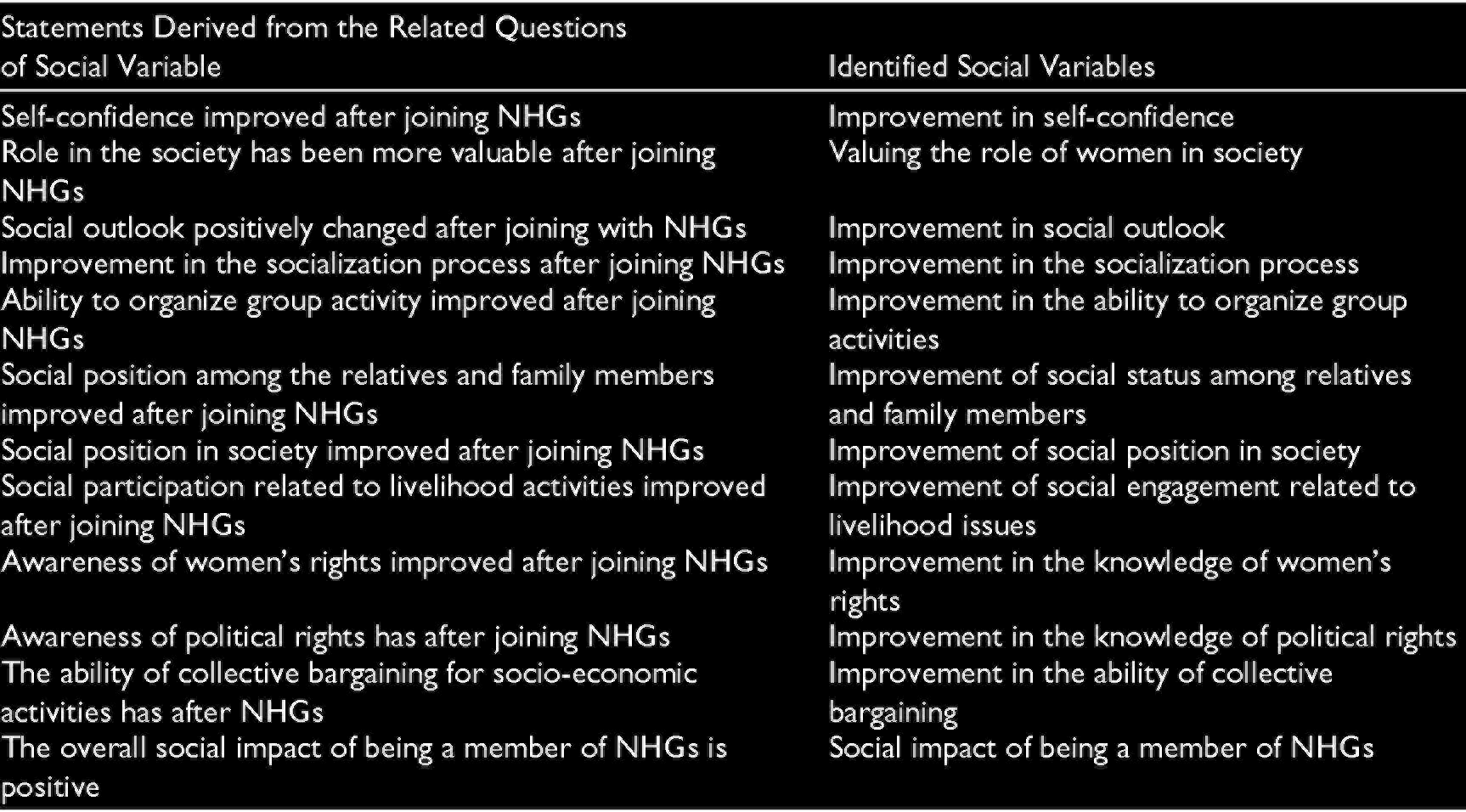
The central objective of Kudumbashree is to establish a community network to eradicate poverty and work for women empowerment through democratic leadership and social support. It keeps social empowerment as one of the significant goals, along with economic empowerment. A study on Kudumbashree has conducted by Kerala Development society, sponsored by Planning Commission in the year 2009 (John, 2009) evaluated its social impact comprehensively. The social variables that tested by the survey are political empowerment, ability to collectively bargain for a common cause, social position among family members and relatives, social position among neighbours and other people in the community, skill/ability to plan projects, ability to organize group activity, feeling of self-confidence, overall capabilities, awareness of women’s empowerment, awareness of women’s rights, awareness on gender discrimination, socialization and livelihood issues. Similar studies by Kumaran (2005) and Oommen (2007) corroborated the importance of some of these variables. The present study also considered some of those variables which are relevant to the context. Previous studies, pilot study and discussions with the experts helped in this direction (Table 2).
Identified Social Variables
Results of the Study
Perception of Social Factors
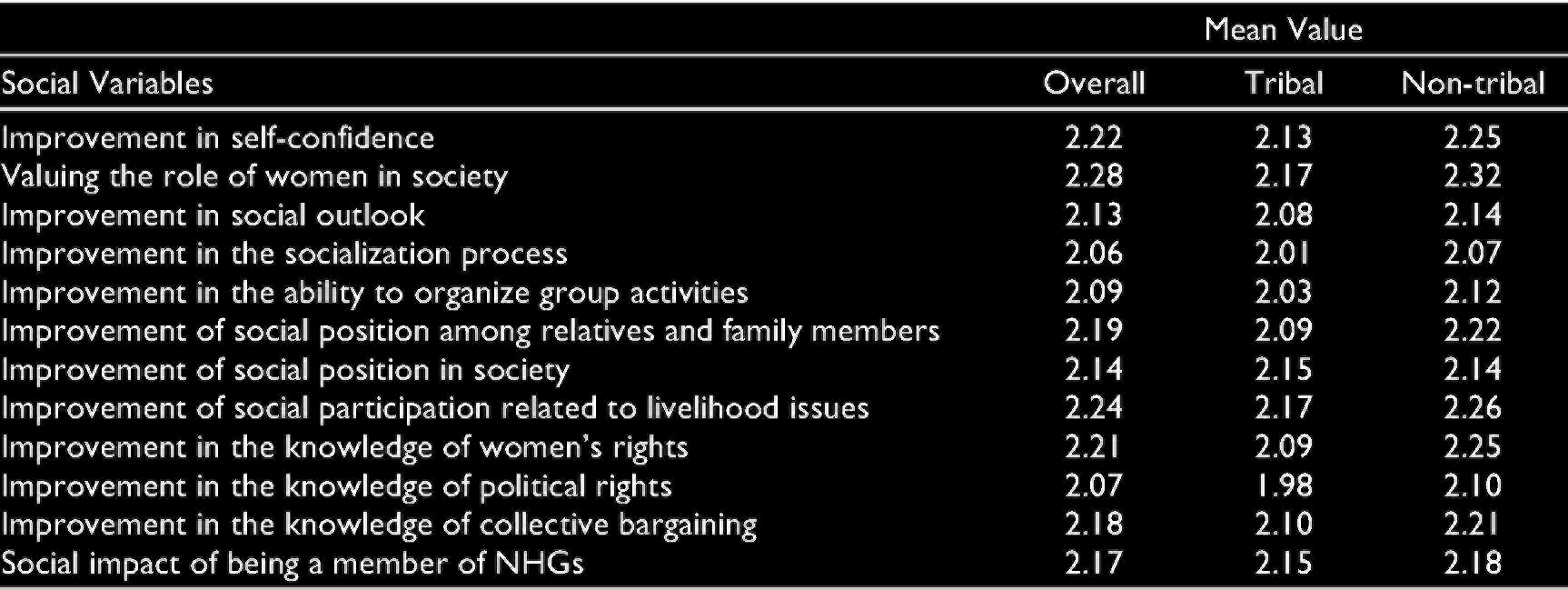
The mean values for social factors are above two, except in the case of ‘improvement in the awareness of political rights after joining NHGs’, where the value is 1.98. The differences in the mean values of the variables between tribal and non-tribal are minimal, though the mean values are higher in the non-tribal areas (Table 3).
Holding the Social and Political Position
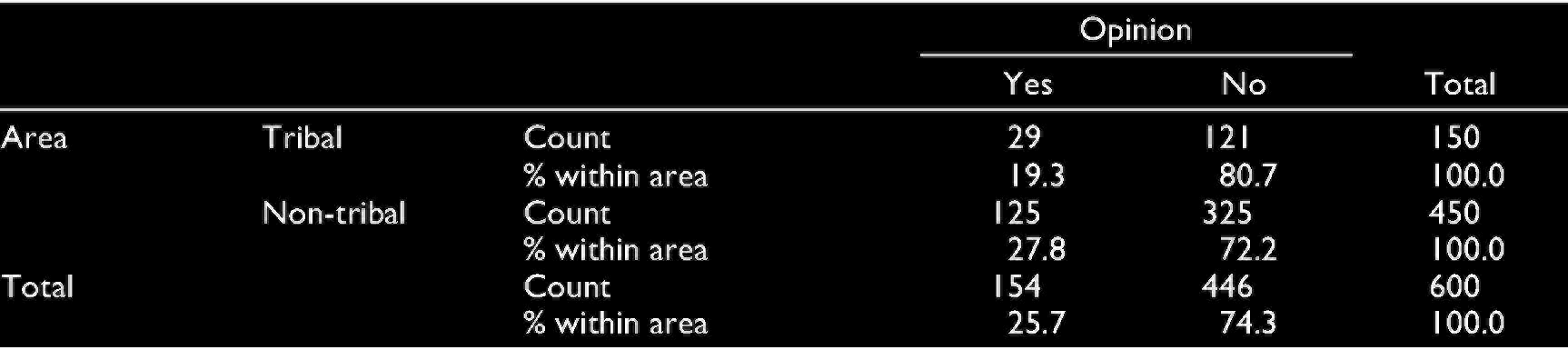
The role of NHGs in elevating the social and political status of women is essential. It facilitates a common platform for discussions and deliberations about different social issues, including their livelihood. Such forums helped them to widen their participation in social and political spheres. Those members who hold positions in social organizations constitute 19.3 per cent and 27.8 per cent in the tribal and non-tribal areas, respectively (Table 4). Among the total respondents, 12.0 per cent and 24.0 per cent from the tribal and the non-tribal regions occupy various positions in political parties. It should note that 2.7 per cent and 1.8 per cent of the members of NHGs from the tribal and non-tribal areas elect as ward members to LSG institutions (Table 5). The role of NHGs in uplifting the social position of its members is remarkable.
Mean Value of the Rating Scale
Holding Any Political Party Status
Position on Political Organization

Social Impact of NHGs
The study analysed the social impact of NHGs. Stepwise regression, independent sample t-test, and discriminant analysis used for analysis.
Stepwise Regression Model
The stepwise regression model performed for the sample size of 600 (combined respondents in the tribal and non-tribal areas) and separately for non-tribal and tribal regions.
Dependent variable: Overall social impact of NHGs
Independent variables: Improvement in self-confidence, valuing the role of women in the society, improvement in social outlook, improvement in the socialization process, improvement in the ability to organize group activities, improvement of social position among relatives and family members, improvement of social position in the society, improvement of social participation related to livelihood issues, improvement in the awareness of on women’s rights, improvement in the awareness on political rights, improvement in the ability of collective bargaining.
The regression model is specified as Y = a + b1x1+ b2x2 + b3x3 + …. + bnxn, where Y is the value of the dependent variable and x1, x2, x3 … xn are the value of independent variables. ‘a’ is constant. The predictors significantly contributed at 0.05 level. The model also subjected to a collinearity diagnostic test and confirms that the independent variables are free from high correlations of inter-associations. The ANOVA tests show that the models are significant.
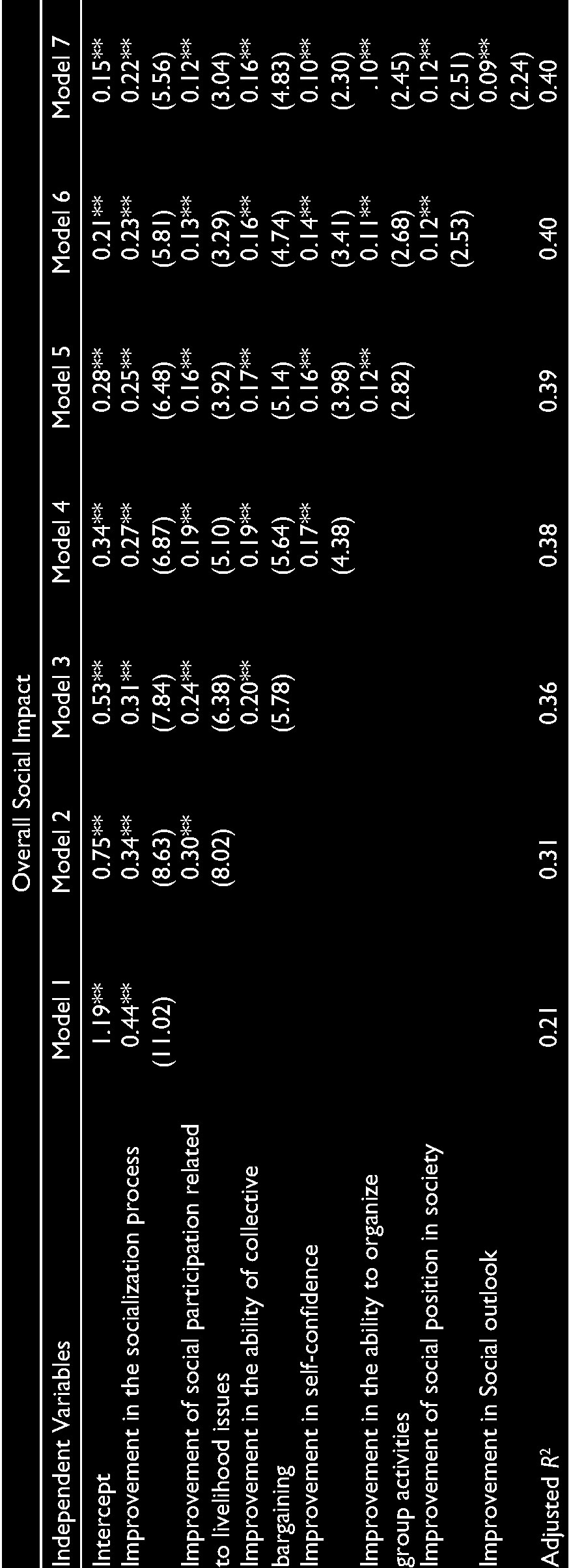
Table 6 shows that the social variables such as ‘improvement of social participation related to livelihood issues, improvement of social status among relatives and family members, improvement in the ability of collective bargaining, improvement in self-confidence, improvement of social position in the society, valuing the role of women in the society, improvement in the ability to organize group activities’ are the most significant predictors of social impact of SHGs.
The predictors of the social impact of SHGs for tribal areas are ‘valuing the role of women in the society, improvement of social position in the society and improvement is socialization process’ (Table 7). On the other hand, the predictors for non-tribal areas are ‘improvement in the socialization process, improvement of social participation related to livelihood issues, improvement in the knowledge of collective bargaining, improvement in self-confidence, improvement in the ability to organize group activities, improvement of social position in society and improvement in social outlook’ (Table 8).
Results of Stepwise Regression Analysis of the Social Impact of NHGs (N = 600)

** p < 0.01% significant.
Results of Stepwise Regression Analysis of the Social Impact of NHGs in the Tribal Area (N = 150)

** p < 0.01% significant.
Performance Assessment of Social Variables Between Tribal and Non-tribal Areas
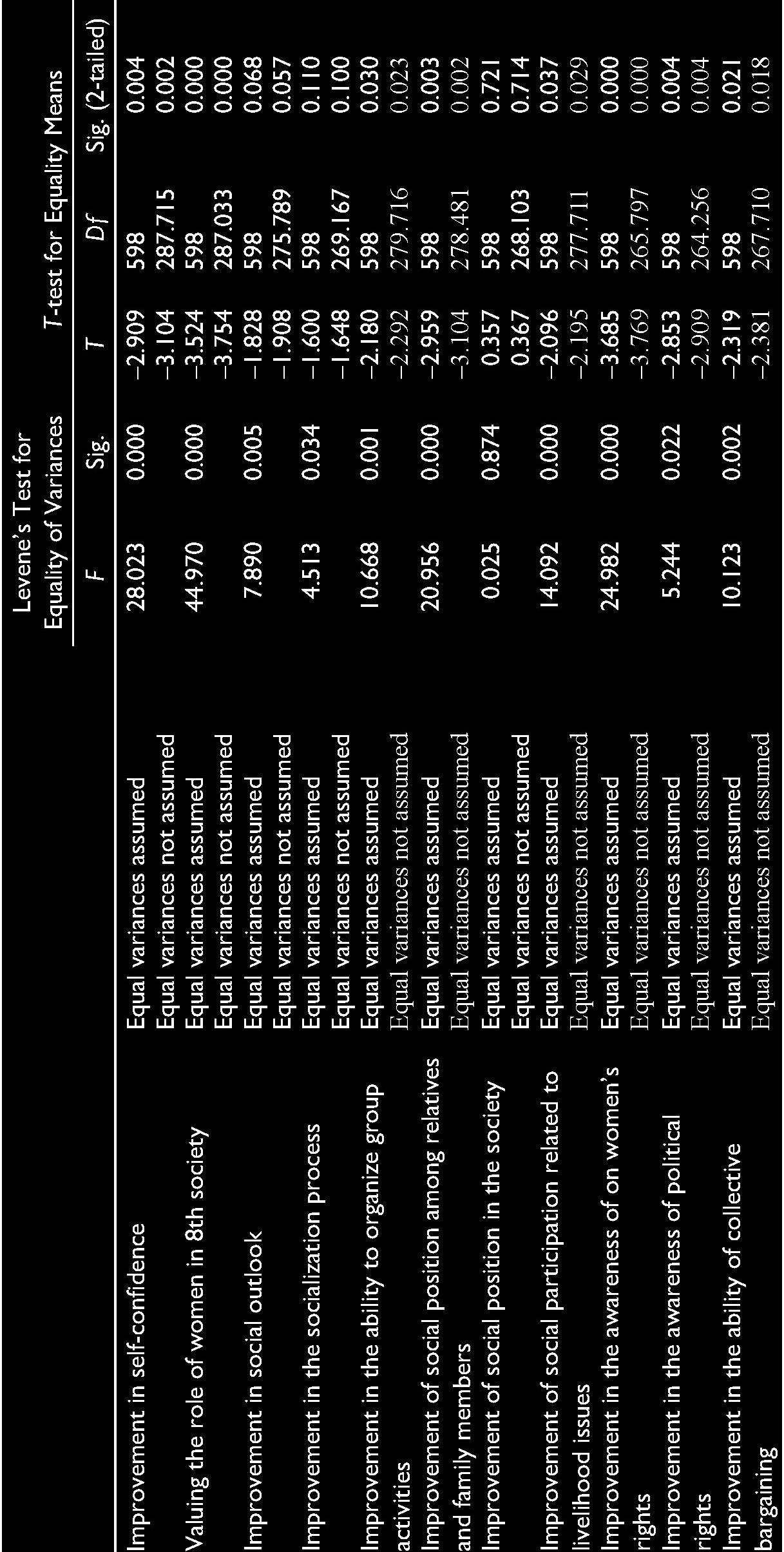
All the social variables are tested and assess its variations between tribal and non-tribal areas. The hypothesis of the study tested with an independent sample t-test. The results of the study show that the p-value is higher than the significant value at 0.01 (p > 0.01) for the variables such as improvements in social outlook and improvement of social position in the society. So the social impact of these variables is the same between the NHGs of both tribal and non-tribal areas. The null hypothesis is accepted.
Results of Stepwise Regression Analysis of the Social Impact of NHGs in the Non-tribal Area (N = 450)
** p < 0.01% significant.
Independent Samples Test
Wilks’ Lambda

Canonical Discriminant Function Coefficients
Functions at Group Centroids

On the other hand, variables such as ‘improvement in self-confidence, valuing the role of women in the society, improvement in the ability to organize group activities, improvement of social position among relatives and family members, improvement of social participation related to livelihood issues, improvement in the awareness of on women’s rights, improvement in the awareness on political rights, improvement in the ability of collective bargaining’, the p-value is less than the significant value at 0.01 (p < 0.01). So the social impact of these variables is different between tribal and non-tribal areas. Here, the null hypothesis rejected (Table 9).
Discriminant Analysis
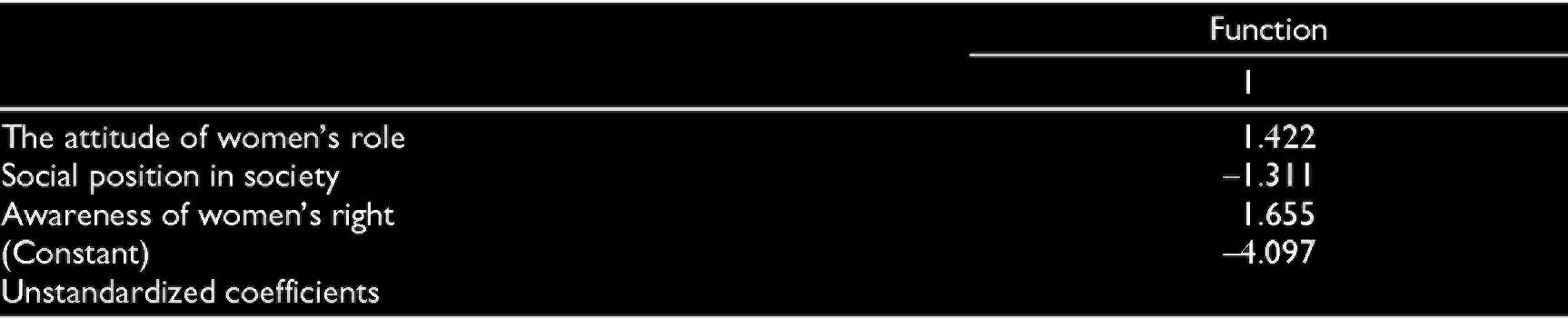
Differences between tribal and non-tribal groups based on the social variables analysed with discriminant analysis (stepwise method). The discriminant technique identified the linear combination of attributes that separates the groups. The standardized canonical discriminant function coefficients used to calculate the discriminant score. Discriminant function Y = –4.097 – 1.422 (valuing the role of women in the society) – 1.311 (improvement of social position in the society) + 1.655(improvement in the awareness of women’s rights). Group Centroid shows the differences between tribal and non-tribal concerning social variables. The Wilks’s lambda value (0.955) indicates that the differences between tribal and non-tribal communities concerning the perception of NHGs on social variables are minimal. In a broader sense, the results interpreted as a sign of improving the social status of the member of NHGs in tribal areas along with non-tribal (Tables 10, 11 and 12).
Discussions
The results of the study contribute to both ‘social perception theory’ and ‘social impact theory’. The contributions are a niche in terms of chosen research areas, tribal and non-tribal. The results are significant to social perception theory in terms of bringing a realistic understanding of social issues, social awareness, social relations through perceptual facts and understanding the dynamic interrelations (Smith, 1970). The results of the study in terms of social impact or social consequences highlight the relevance of social impact theory. The study results add to the theory in terms of understanding the social practices of SHG activities.
The empirically tested social variables confirm the theoretical understanding of the social impact theory as well. Such findings prove the relevance of the application of the theory in a different social context as well. The impact of social variables also contextualized within the social impact theory (Freudenburg, 1986; Hogg, 2016).
The present study addressed two research questions such as (a) What are the social impacts of the NHGs of Kudumbashree? (b) How do the social variables of SHGs differ between tribal and non-tribal areas? Identified social variables tested with the relevant statistical tools that highlight the crucial role of NHGs of Kudumbashree in elevating the social status of its members. NHGs succeeded to a significant extent in engaging its members in the socialization process. The results based on the mean value show that the social interaction of women has helped to improve their self-confidence. There is a visible change in valuing the role of women in society. The social status of women within the family members and the community has improved. Association with NHGs has given a new social outlook to its members. The participation of NHGs’ activities indeed helped in developing the organizational skills and collective bargaining power of its members. Improvement of women’s involvement in livelihood issues noted.
In the same way, the members become more aware of their rights. Although one should admit that the social status of the NHG members in the non-tribal areas differs, one cannot ignore the fact that the differences are minimal between the two regions. The discrepancy noticed related to ‘improvement in the awareness of political rights after joining NHGs’, where tribal areas are lagging. Many NHG members elected as ward members and secure leadership positions in political parties. Such participation helps them to be independent decision-makers and support to women to improve their capacity in governing issues (Salgaonkar & Salgaonkar, 2009). The results of the study corroborate with the findings of the previous studies that, ‘Kudumbashree’ programmes helped in improving social participation (Nair, 2011), social and political empowerment (Arun et al., 2011; Gopalan et al., 1995), freedom to move, getting leadership positions (Galab & Rao, 2003) and create self-confidence in participating social action (Anand, 2002).
Predictor Variables of Social Impact
The overall predictor variables of the social impacts of NHGs are ‘improvement of social participation related to livelihood issues, improvement of social status among relatives and family members, improvement in the ability of collective bargaining, improvement in self-confidence, improvement of social position in the society, valuing the role of women in the society and improvement in the ability to organize group activities’. The predictor variables for the tribal areas include ‘valuing the role of women in the society, improvement of social position in society’ and ‘improvement in the socialization process’. On the other hand, the predictor variables in the non-tribal areas are ‘improvement in socialization process, improvement of social participation related to livelihood issues, improvement in the knowledge of collective bargaining, improvement in self-confidence, improvement in the ability to organize group activities, improvement of the social position of society and improvement in social outlook’. So the impact assessment indicates the different factors that influence the SHGs in both tribal and non-tribal areas.
Performance of Social Variables Between Non-tribal and Tribal Areas
Social variables that make differences between tribal and non-tribal areas are ‘improvement in self-confidence, valuing the role of women in the society, improvement in the ability to organize group activities, improvement of social position among relatives and family members, improvement of social participation related to livelihood issues, improvement in the awareness of on women’s rights, improvement in the awareness on political rights and improvement in the ability of collective bargaining’. The discriminant analysis corroborates the fact about the minimal differences between tribal and non-tribal areas related to the social variables. The standardized canonical discriminant function found significant discriminations of the variables between the tribal and non-tribal in ‘valuing the role of women in the society, improvement in social position in society, and improvements in awareness of women’s rights’.
Few studies that made critical observations about the role of Kudumbashree are valid in this context. Venugopalan (2014) points out the less impact of achieving the targets of Kudumbashree. A study by Nithya (2013) also indicated the slow process of the SHG activities of Kudumbashree in tribal areas when compared with non-tribal. One possible reason for such a state of affairs is the weak social interactions by the tribals when compared with the non-tribals (Sachana & Anilkumar, 2015). As pointed out by Patel (2013), SHGs definitely can make an impact in the tribal areas by improving the social participation and self-confidence of its members.
This outcome of the study also indicates the social adjustment between the two groups in balancing their social relationships based on their social skills (Das & Amit, 2013). Social participation of the members is crucial in improving social status (Nair, 2011). Changes in the pattern of tribal leadership also help in this direction (Kunhaman, 1980). So the social process can be stimulated by improving interactions of the tribal communities with other communities with people from the non-tribal areas.
Social Dynamism of Kudumbashree: Remarks
The results of the study are significant in the context of Kerala, where social development plays a vital role in improving the status of civil society. The purpose of Kudumbashree in this process is significant. Although fundamentally, the organization aims to eradicate poverty through small savings, the social dynamism that has created during this process is tremendous. The NHG of Kudumbashree is central to this. The weekly meetings of NHG members are the right platform for many members from low-income families to initiate dialogues and improving their interactions with other members and the society. The self-confidences of the members increased and became more aware of their rights, which helped them to develop their leadership qualities and occupied different positions in society and families. The role of Kudumbashree is instrumental in bringing social empowerment (John, 2017). The members involved in social and political participation could bring positive changes in their attitude (Arun et al., 2011). The marginal differences in the impact of social variables between tribal and non-tribal areas are the positive signals in continuing the activities of Kudumbashree. The social effects of Kudumbashree in achieving such a social target is an excellent opportunity for social movement (Anand, 2002), and one should not miss this platform to full fill the dream of women.
Conclusion
The study provides sufficient empirical evidence regarding the social impact of NHGs of Kudumbashree, both in the tribal and non-tribal areas. However, it could notice that the differences are minimal concerning to many social variables. NHGs are the basic functional units of Kudumbashree that play a crucial role in improving the social status of women. The inbuilt flexibility of the system attracts many poor women to join the groups. NHGs created as a social platform for women to improve their social activities. Scaling up their operations is essential to strengthening their social bondage. The study points out the need for promoting the role of NHGs as a means of ‘social change’ for enhancing women’s capabilities in decision-making and thereby widening their opportunities in socio-economic and political spheres. The support of LSGs and NGOs are crucial to this.
Footnotes
Declaration of Conflicting Interests
The author declared no potential conflicts of interest with respect to the research, authorship and/or publication of this article.
Funding
The author received financial support from Indian Council of Social Science Research (ICSSR) for the study.