



Abstract
Management education has undergone significant changes owing to the COVID-19 pandemic. The classroom delivery has moved from an offline mode to a completely online mode, unravelling many pedagogical challenges and constraints. This study explores the pedagogical challenges faced by academicians and the innovative remedial measures adopted by them. This study follows an inductive approach using qualitative interviews and uses the cognitive apprenticeship model as the theoretical underpinning. Findings indicate that all domain aspects of the cognitive apprenticeship model are not equally relevant in an online teaching scenario compared to offline teaching. Findings also indicate that the interpersonal and communicational aspects of the learning environment have gained more prominence in online teaching. This article contributes to the existing literature by bringing early evidence on the challenges and innovations in online teaching. In addition, this study also contributes to the understanding of the cognitive apprenticeship model in an online scenario. Even though the scope of the study was limited to academicians from the finance and accounting area, the findings are globally relevant. They have practical implications for other disciplines as well.
Introduction
Management education space and particularly management schools were hit hard by the unforeseen COVID-19 pandemic. Intermittent lockdowns or shutting down of the entire city and the uncertainty over the resumption of physical classroom scenarios disrupted the management curriculum delivery. Students moved from the lush green campuses to the virtual delivery mode, and myriad pedagogical challenges emerged. Educators had to quickly move onto virtual delivery mode because the management education space had never anticipated that physical university interaction would suddenly move to a so-called zoom-university scenario (Selingo & Silagadze, 2021). Pedagogical issues and communication challenges have emerged on multiple fronts in the virtual mode of teaching (Huett et al., 2008). Several issues regarding facilitating student interactions, developing course content, designing assignments and even assessment techniques have emerged (Plummer et al., 2021). Moreover, advancements in technology and inadequate awareness also pose a systemic challenge (Desai et al., 2008). Technology can increase access and reduce socio-economic inequities but could also amplify the existing inequities (Zuo & Juve, 2021).
The objective of management education in business schools, particularly finance and accounting, is to create qualified professionals, equipped with the technical concepts, who can manage the business (Grey, 2002). Contemporary researchers have advocated applying multiple methods in management education to enable students to realize their full potential (Boyatzis & Saatcioglu, 2008). Various studies have argued the need for unique and different pedagogical skills for online teaching compared to traditional classroom teaching (Hardy & Bower, 2004). The online delivery for all aspects of management education poses a massive challenge for educators who in the past had relied mainly on lecture mode to instruct students in a classroom (Desai et al., 2008). Some scholars argue that online teaching requires the educator to move beyond an information conveyor role towards the role of a facilitator (Smolin & Lawless, 2003). Hence, the educator community must explore and develop their online teaching experiences to overcome these challenges.
This exploratory study aims to understand the online pedagogical challenges and innovative remedial measures in management education. The article begins with an examination of the literature about pedagogical challenges in management education. Appropriate inquiry directions are developed based on the literature and the identified framework. The middle part of the article delineates the methodology for data collection and the findings. The later part of the article discusses the findings in conjunction with the relevant literature. Finally, the article concludes with an elucidation of the theoretical contributions and the practical implications of the findings. This article can guide academicians for future research. It is one of the earliest attempts to present the online pedagogical challenges and the remedial measures taken during the COVID-19 pandemic. The findings are globally applicable and have relevance to online education even beyond the pandemic scenario.
Theoretical Underpinnings
While massive open online courses (MOOCs) have been prevalent since 2010, it has still not replaced education’s human or physical elements. Technology holds the potential to enhance learning opportunities, but it needs to be used in the right way by educators. Scholars believe that content and pedagogy are the two pillars of education (Linda, 2021). Successful implementation of both the pillars is curtailed when delivery is done entirely through computer-mediated means. One of the primary reasons for this curtailment is the communication challenges faced by both educators and students. Online mode of communication might miss out on the social cues (Walther et al., 1994). Interpersonal interactions between faculty and students and interactions within a group of students in a physical classroom enable the participants to give importance to the social cues. In a computer-mediated environment, communication becomes less interpersonal and thus adversely impacts the learning outcomes (Walther et al., 1994).
Problem-based learning and experience-based learning are the two most widely used pedagogical methods in management education. Both methods are required to ensure the development of managerial capabilities. In finance and accounting education, problem-based learning is the first step that helps impart technical skills, followed by experience-based learning that enables students to deal with uncertain situations holistically. Both methods require specific approaches to create avenues to share experiences and promote a healthy fusion of various perspectives (Berkovich, 2014). Any approach in management education needs to have elements to address the cognitive and affective processes of the learners, and it should offer real-world focused problem-solving. The cognitive apprenticeship model (CAM) (Collins et al., 1991a; Collins et al., 2018; Matsuo & Tsukube, 2020; Rojewski & Schell, 1994) has been widely supported by academicians as a robust framework aimed to facilitate realistic and context-driven learning environments. CAM also emphasizes imparting knowledge to contextualize learning and apply them in different contexts (Collins, 2006). CAM implementation requires modifying the learning environment to understand the educator’s tacit thinking processes and practise them in real-world problem situations (Collins et al., 1991a). CAM incorporates the various approaches of management pedagogy and can also serve as a framework for both problem-based learning and experience-based learning.
Scholars over time have leveraged CAM to explain the role of technology in creating effective learning environments (Boling & Beatty, 2010). CAM comprises four main areas: content, methods, sequence and sociology (Collins et al., 1991b). Content focuses on two main knowledge aspects, which are domain knowledge and strategic knowledge. While textbooks teach domain knowledge, strategic knowledge, which is tacit, consists of techniques required to fulfil the designated task and learn new concepts (Chi et al., 1989). The second building block of CAM is methods, which primarily caters to the learner’s myriad ways or processes of expertize development. The methods consist of all approaches that enable learners to acquire skills by observing and practising (Palinscar & Brown, 1984). The third building block of CAM is the sequence of learning, which focuses on the order of the learning activities. The final building block of CAM is sociology, which focuses on the social characteristics of the learning environment and includes inter-personal and intra-personal aspects (Collins et al., 1991b).
The pandemic induced online teaching has created a situation that requires going beyond the existing routine activities of the classroom delivery. Hence, educators need to address all the four dimensions of the CAM model in unique and innovative ways. This study has employed the existing framework of the CAM model to explore how experienced finance educators have navigated through the early stage of pandemic induced online teaching. By using the CAM framework, this study explores the four essential questions about the four dimensions of the CAM model. The four questions are as follows:
While moving onto online delivery/teaching, what changes were made in the content or subject matter? While moving onto online delivery/teaching, what changes were made in the teaching/instructional methods? While moving onto online delivery/teaching, what changes were made in the order of teaching activities or learning tasks? While moving onto online delivery/teaching, what changes were made in dealing with students’ communication and interpersonal needs?
Methodology
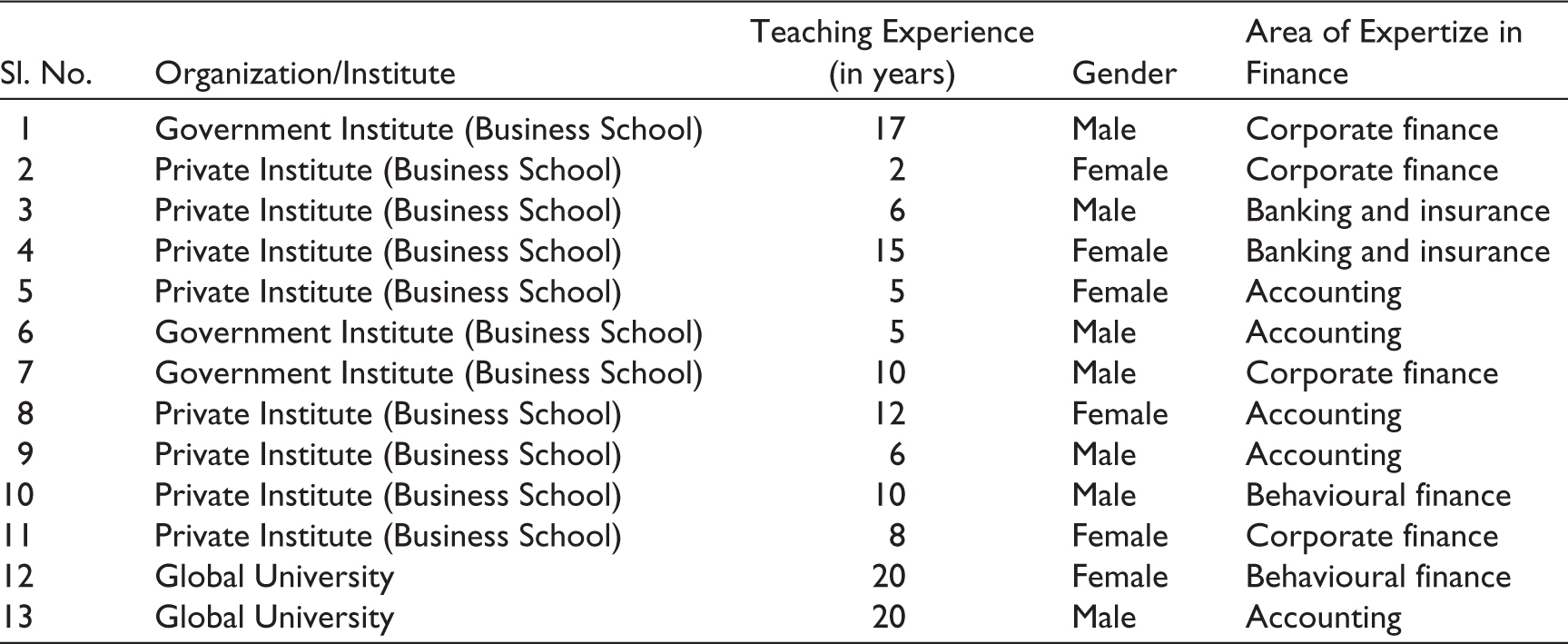
A combination of theoretical sampling and convenience sampling was used to reach out to the participants. The research question is specific to management education, further limited to the area of finance and accounting. One of the expected outcomes of this study is the advancement of theory on pedagogy. Hence, participants for this study were limited to academicians from management education, in particular, finance and accounting. Within the academicians belonging to the finance and accounting area, convenience sampling was used. Even though convenience sampling has its limitations in terms of generalizability, it is appropriate for exploratory studies and for studying a specific segment of the population (Etikan et al., 2016). This study is an exploratory one that is focused only on the academicians in the finance and accounting area, and hence, convenience sampling was found to be suitable. In addition, several measures were taken to increase the diversity of the respondents, which would reduce the inherent bias in convenience sampling and increase the external validity (Murray et al., 2013). The respondents were selected from both private educational institutions and government-controlled institutions. The respondents included academics who had prior experience in small autonomous business schools, large universities and global universities. Few of the respondents had the experience of working in multiple countries, and some of them were working outside the host country during the last 2 years of the pandemic. A total of 26 academicians from the finance and accounting area participated in the study by responding to a semi-structured interview questionnaire. Among them, 13 responses were complete for all the questions and hence were taken for coding. The profile of those 13 finance faculty are given in Table 1.
Respondent Summary
The data were collected online since face-to-face interviews were difficult due to pandemic related travel restrictions. The questions were open-ended. All the participants were informed prior about the purpose and scope of this research. The questions and the details about the study were sent to the participants by email. They were asked to participate based on their willingness and convenience. Only the transcripts of interview responses that were complete for all fours questions were taken for further coding. A general interview approach was followed to ensure standard and systematic data collection from multiple participants (Patton, 1990). The coding of the interview responses included three stages. The first is to derive preliminary codes from the raw data, followed by a grouping of the codes to generate themes. Finally, empirical categories were generated by clustering the themes (Miles & Huberman, 1984). The thematic coding of the interviews was done separately for each question. The results are presented in Tables 2–4. Each table consists of the preliminary codes, second-order themes and empirical categories. The categories that emerge from a thematic coding of qualitative data are helpful to arrive at theoretical aggregates that can be developed into a variable for further confirmatory studies (Vaughn & Turner, 2016). Overall, the coding exercise was aimed at data saturation (Fusch & Ness, 2015) and data convergence (Firmin et al., 2017; Mathison, 1988).
Findings
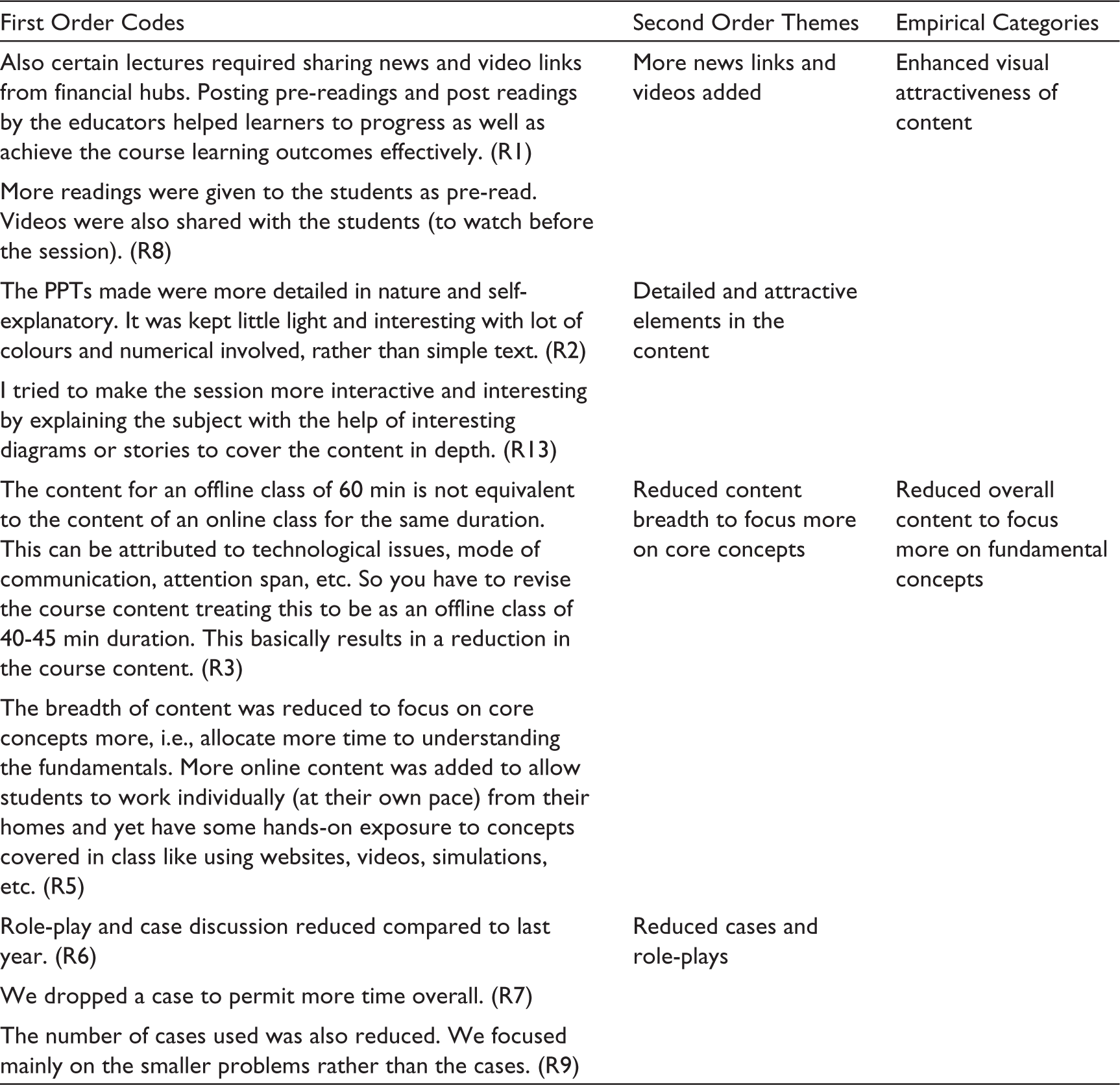
The first question was focused on the content or the subject matter related to the course. The three-stage coding brought two interesting empirical findings. The first is enhancing the visual attractiveness of the content, and the second is a reduction in overall content to focus more on the fundamental concepts. These two were the main thrust areas of content modification while moving onto online delivery or teaching. The visual attractiveness of the content was enhanced by adding more videos and links to news articles. News article links were shared both before the session as a pre-reading, and in some cases, they were sent to students post the session for further reading and internalization of the concept. In addition, few academicians made their power-point presentations exciting and self-explanatory. While doing this, many teachers also made efforts to add better colours, diagrams and short stories to the content. The purpose of bringing in stories and colourful content was to cover them interactively.
From the first question related to online teaching content, the second empirical finding was a reduction in overall content to focus more on the most fundamental concepts. The overall content was reduced by shrinking the breadth of the course coverage and by removing case studies and roleplays. However, the focus on the key concepts, as selected by the faculty members, remained the same. The reduction mainly was on peripheral concepts that added to the broader appreciation of the course. Few teachers opined that a 25% reduction of the content in online mode, compared to offline or face-to-face classes, helped complete the syllabus despite time loss due to technical issues that happen regularly. The content reduction also helped in the wake of a reduced attention span of students due to online fatigue. Academic case studies take considerable time to discuss. Hence, in the new scenario, few teachers resorted to replacing cases with small problem-solving exercises, which helped find time for focusing on the explanation of key concepts. A summary of the preliminary codes, second-order themes and empirical categories about content or subject matter is depicted in Table 2.
Changes to Content or Subject Matter
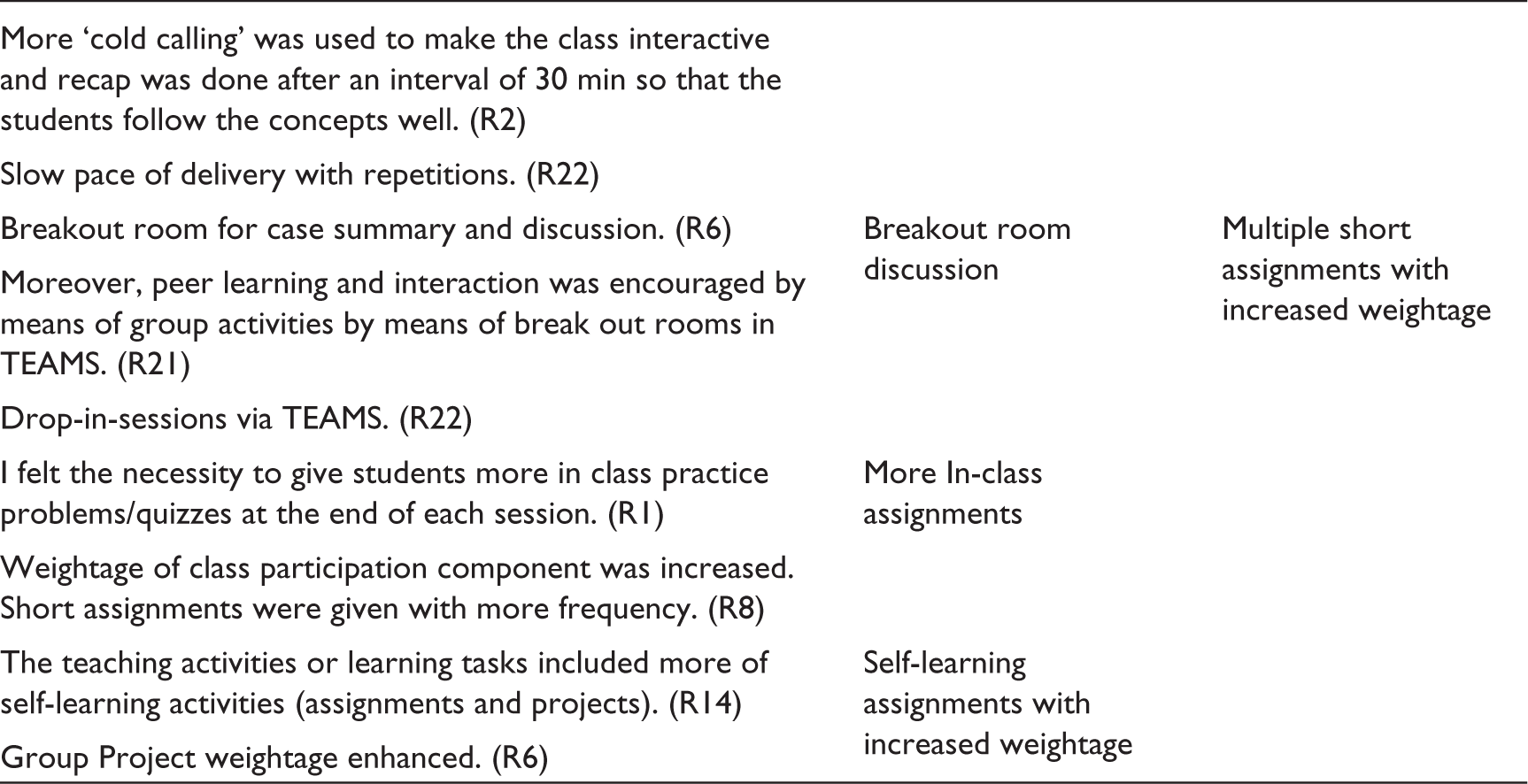
The second question was focused on the delivery of the content or the teaching methods. This question had the most detailed responses and the highest number of empirical findings. The empirical findings are using multiple online tools for delivery at various stages, reduced pace of delivery and multiple short assignments with increased weightage. The first finding, multiple online tools for delivery, was expected and intuitive. However, the novelty of this finding is in the details. Many teachers were posting videos before the class as well as after the class. The pre-class video was mainly a generic video from freely available internet sources. The post-class videos mainly were recordings of the session made available for revisiting the classroom discussion. In addition, teachers also used the add-on options available on the online delivery platforms like google sheet and zoom poll for taking quizzes. Some of the experienced teachers were found to use the online platforms provided by the textbook publishers to deliver problem-solving exercises, create discussion forums and conduct examinations. These platforms also made the proctoring and evaluation easy.
In the second question, the second finding was the reduced pace of delivery with multiple repetitions of concept explanation. In some cases, the pace was reduced to enable a recap of the previous concepts to connect with the previous concepts seamlessly. Some teachers took extreme care in keeping the most appropriate voice modulation to ensure clarity of delivery. Few others ensured that the recap of concepts came at fixed intervals like 30 minutes and used cold calling to check the understanding level of students. An offline classroom would have enabled the teacher to assess the understanding level based on student body language, which is a remote possibility in online teaching. The periodic checks through cold calling and polls are done to compensate for the loss of such opportunities in online teaching.
The third finding was giving multiple short assignments with an increased weightage. One of the teachers said that the assignments were also given more systematically. Most of these short assignments were either in-class exercises or self-learning activities beyond classroom sessions. Short assignments were administered both as individual activities and as group projects. Several respondents opined that the weightage for group projects was increased to draw student attention and facilitate self-learning. In addition, many teachers also used options like breakout rooms or drop-in sessions to divide the students into small groups for discussion. These were done using the exiting options in the online platform and during the classroom discussion. Small group assignments helped in increasing peer interaction and improving the overall learning of the students. A summary of the preliminary codes, second-order themes and empirical categories about teaching methods is given in Table 3.
Changes in Delivery or Teaching Methods

The third question was focused on the sequencing or the order of teaching activities and learning tasks. No significant empirical finding emerged from the data corresponding to this question. However, the second-order themes indicate that discussion of concepts was done before giving the practice problems in the classroom. In addition, students were asked to make introductory presentations at the beginning of the session. These two methods are also found to be followed offline, which suggests no significant change in the order or sequencing of the teaching activities and learning tasks.
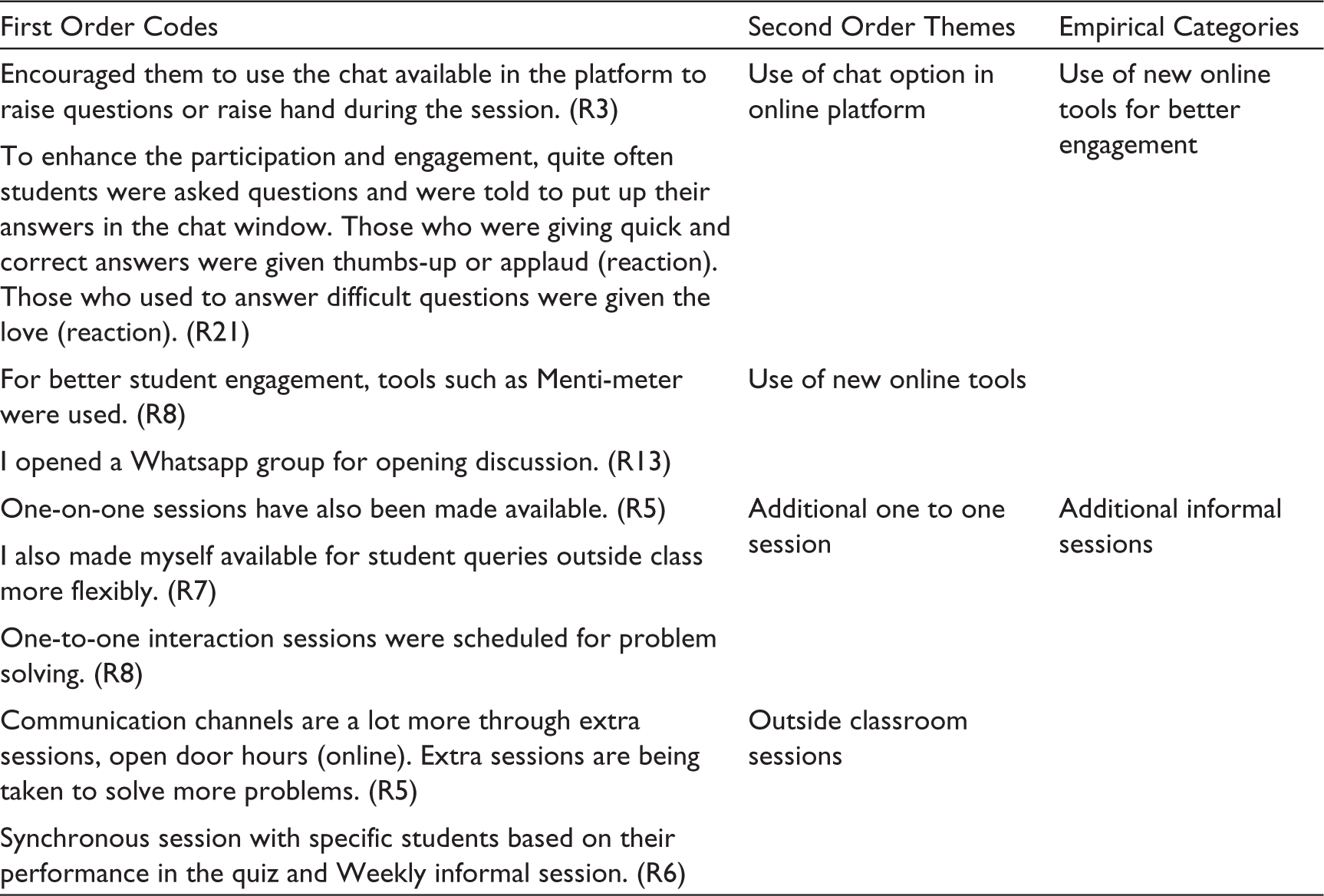
The fourth question was related to the sociological aspects of teaching, like the communication and interpersonal aspects. Two key empirical findings emerged concerning this question. They are the use of new online tools for better engagement and additional informal sessions. Higher engagement during online teaching is a daunting challenge, and teachers adopted two strategies to achieve it. The first is extensive use of chat options in the existing online platforms used for online teaching. Students were encouraged to use the chat option to raise doubts and questions during the class and answer the questions asked by the instructor during the class. One of the respondents also resorted to incentivizing the answers posted on chat by giving different online reactions. The second strategy was to use new-age tools like WhatsApp and Mentimeter to understand students’ opinions and as an engagement platform. These two tools are easy to use and do not take much time to show results during the class.
The second key finding related to the sociological aspects of teaching is scheduling and facilitating additional informal sessions. These sessions were administered in two ways: one-on-one sessions aimed at problem-solving and clarifying individual queries. Moreover, secondly, small group sessions aimed to increase student cohorts’ performance and create an open-door discussion environment within student cohorts. Both ways of additional informal sessions helped open up new communication channels with the students, thereby enabling the teachers to understand the learning level of students. Indirectly, these also helped improve the inter-personal communication needs of students, which is one of the critical attributes of an offline classroom. A summary of the preliminary codes, second-order themes and empirical categories on the sociological aspects of the communication and interpersonal aspects of learning is given in Table 4.
Communication and Interpersonal aspects of Teaching
Discussion
The CAM model has been widely used as a framework to develop and enhance learning outcomes in a variety of contexts (Bor-Tyng, 2019; de Bruin, 2019), including virtual learning (García-Cabrero et al., 2018; Moradi et al., 2018). In addition, CAM has also been used as a framework for developing teaching practice in both offline and online modes of delivery (Oriol et al., 2010; Wiss et al., 2018). This study has also used CAM as a framework to study the online pedagogical challenges for finance and accounting teaching at management schools. Key findings suggest that teachers or faculty members made many changes to all the aspects of the CAM model, except sequencing or order of teaching activities and tasks. The sequence or order of activities followed in online teaching was the same as offline, indicating that most teaching activities can be executed independently. In addition, the same sequence also indicates that each session is planned independently. Further, this finding also signals that the management education and pedagogical approaches have improved to a modular level. Each session or learning activity is focused on specific outcomes, and each activity encompasses all the required elements.
Contemporary research evidence suggests that teachers’ content-related strategies can improve students’ performance in a consistent manner (Napari, 2020). The findings of this study, related to the content aspect, suggest that teachers have tried to improve students’ performance by enhancing the visual attractiveness and giving additional focus on the core concepts. Finance and accounting courses range from technical subjects like accounting principles to interpretation subjects like behavioural finance. Irrespective of the nature of the subject, learning becomes easy for a student when the course content itself is attractive and focussed on the core concepts. Enhancing the attractiveness of the content becomes vital in online teaching because the entire course is delivered through an online platform, limiting teachers’ ability to bring in variety during the delivery. This limitation can be compensated for by making the content more attractive. Reducing the overall content shall help the instructors devote more time to the core concepts, and this shall, in turn, help develop specific strategies to make the content more attractive.
One of the most focused areas of CAM research for enhancing the learning outcomes has been the method or delivery related aspects, which help foster the knowledge and skills (Dickey, 2008). Evidence from research suggests that instructors or teachers cannot be complacent about the delivery method in an online mode (Said et al., 2017). The findings of this study support the previous arguments in the existing literature and suggest that the method of delivery has received the most attention from teachers during the pandemic time. Teachers resorted to using multiple online tools for various purposes rather than depending only on one online tool, which could be two reasons. One, finance and accounting courses have diversified so much that the variations demand different pedagogical needs. The second reason could be that there is no single online tool or platform that can cater to various delivery needs in the finance and accounting courses. The findings of this study also suggest that the delivery pace was reduced, which could complement the previous finding that teachers have reduced the overall content to focus more on the core concepts. Another reason for the reduced pace of delivery could be to mitigate the inequalities that exist between students. All students may not be at the same level in terms of internet connectivity, the convenience of location and prior knowledge of online platforms. The other key finding on the delivery is the introduction of multiple short assignments with increased assessment weightage, which needs to be understood in conjunction with the previous finding that teachers are making efforts to increase the attractiveness of the content. Multiple smaller assignments are easier to administer and shall not augment the technological inequalities between students. In addition, such assignments increase the attractiveness of a finance course and reduce the online fatigue associated with long hours of an online presence. Shorter assignments also help in reducing the overall time required to complete the course content.
Traditionally, one of the lesser focused areas of the CAM model is the sociological aspect. However, recent research suggests that the relationship between the students and the teachers is the most crucial factor in learning satisfaction (Tsui & Chen, 2020). As suggested by the findings of this study, one of the ways of ensuring a continuous communication channel between the students and teachers is to have additional informal sessions beyond the scheduled class hours. Teachers have taken additional sessions in both one-on-one mode and small student groups, which make the students comfortable enough to share doubts and other difficulties faced by them with the teachers, which will serve as real-time feedback for teachers. Past research also suggests that using chat options enhances course delivery and collaborative learning (Rodríguez-Bonces & Ortiz, 2016), corroborating the current findings. Teachers have extensively used multiple tools to increase class engagement through chat options, which has helped them increase class participation and facilitated open discussion among students. Such open discussions can reduce the inequalities arising from variation in technological facilities and abilities across students. Open discussions can also serve to increase cooperation among students and develop appropriate learning attitudes.
Conclusion
This study aimed to explore the pedagogical challenges and innovative remedial measures in management education. The scope of this research was further limited to the finance and accounting area in management education. However, the areas of inquiry were broad and based on the CAM model, a globally accepted framework for studying education outcomes. Academicians made the most changes to the teaching methods and made the slightest changes to the order or sequence of the topics. In addition, academicians reduced the overall coverage of the content to focus more on the other aspects of teaching, like the sociological needs of the learning environment. Interestingly, all the aspects of the vertical of the CAM model are not equally relevant in an online teaching mode, unlike traditional classrooms in offline mode. Hence, it is fair to conclude that online teaching requires more focus on the delivery methods and sociological aspects.
This study has two limitations. This study is exploratory, and any refinement to the CAM model based on the current findings requires further confirmatory studies. However, this study can set the initial direction for further studies. The second limitation is that all the respondents were from the finance and accounting area within management education. Hence, any concrete theorization for the entire management educations requires similar studies in other areas of management. Nonetheless, the findings are globally relevant and would apply to other management areas because the theoretical framework that guided the study, the CAM model, is generic.
Despite these limitations, this study makes significant contributions to the body of knowledge. This study is one of the earliest attempts to understand the challenges and remedial innovations in management education during the pandemic. It brings much-needed initial evidence on all aspects of management education. Secondly, this study explores the relevance and appropriateness of the complete CAM model in an online teaching context. The findings of this study can fuel the development or refinement of the CAM model for an online context, which requires further studies. One of the directions for future research is to replicate similar studies in other management areas, such as organizational behaviour, operations management and marketing management. The second research direction emanating from the findings is to do studies in newer contexts beyond management education. All such studies could be based on the CAM model and follow this study.
Footnotes
Declaration of Conflicting Interests
The authors declared no potential conflicts of interest with respect to the research, authorship and/or publication of this article.
Funding
The authors received no financial support for the research, authorship and/or publication of this article.