



Abstract
This study examines the role of socio-economic characteristics that influence a battered woman in India to either remain silent or approach someone for help in response to domestic violence. We investigate the influence of socio-economic factors on choosing between formal and informal sources of seeking help. The dataset used for the analysis is a nationally representative, community-based survey database—the National Family Health Survey-3 (NFHS-3). A logistic regression framework was used to analyze the data. The results suggest that education and economic empowerment play a crucial role in deciding whether to seek help to stop domestic violence. Women exposed to violence attempts utilize both formal and informal sources of help; however, informal sources of help are more popular compared with formal sources in India.
Introduction
Our objective in this article is to examine the role of socio-economic characteristics that influence a battered woman to either keep quiet or approach someone for help in response to intimate partner violence (IPV). Intimate partner violence refers to violence caused by the husband or an intimate partner, which includes physical, sexual, emotional and psychological forms of abuse. It is one of the most common forms of violence against women in the world. A study in 2005 by the World Health Organization on male IPV against women in 10 countries found that the rate of IPV ranged from 4 to 54 per cent. The situation is no different in India, which is a fast-growing country in terms of gross domestic product (GDP) growth rate. A nationwide survey revealed that 52 per cent of Indian women have suffered at least one incident of physical or psychological assault in their lifetime (ICRW, 2000). Another survey reports that 37 per cent of women respondents are exposed to spousal violence in the form of physical or sexual assault (NFHS-3, 2005–06). Despite the adoption of different policies in India to end violence against women, including the anti-domestic violence law in 2006, IPV remains the major risk factor that threatens the psychological and physical well-being of women in India.
Victimized women, in general, have two choices: They can either keep quiet and continue to submit to torture, or they can seek help. By seeking help against an abusive husband, they may initiate the process of leaving the husband and ending the marriage. Such a decision is difficult in a traditional society like India where social stigma plays a negative role; additionally, there are few economic opportunities for women. The help-seeking behaviour of battered women has received considerable attention among social science researchers in the past few decades. One strand of research examines the type (formal or informal) of sources chosen by abused women and the reasons for the choice, while another strand explores the barriers to help seeking. However, there appears to be little empirical data on variations in help-seeking behaviour among abused women in India. This is a critical area in terms of policy formulation.
In this article, we examine the role of socio-economic characteristics that influence a battered woman to either keep quiet or approach someone for help in response to domestic violence. We also investigate the influence of socio-economic factors in their choice of formal versus informal sources in seeking help. For the analysis, we used the database of the National Family Health Survey 3 (NFHS-3), which is a nationally representative, community-based survey conducted in 2005–2006.
We used a logistic regression model to answer the research questions. The dependent variable is a categorical variable indicating whether a battered woman seeks help or not. It takes the value 1 if a woman seeks help and zero otherwise. Education as a measure of awareness and economic empowerment plays a crucial role in determining whether to seek help or not when exposed to violence. Battered women in India attempt to use both informal and formal sources. The type of sources to be used depends on the type of violence experienced. The cultural construct of the society also plays an important role in this case.
The second section summarizes the relevant research literature and in the third section we describe the theoretical framework. The fourth section describes the dataset and a profile of the sample. The fifth and six sections cover, respectively, the methodology and the results, and the seventh section concludes.
Literature Review
Globally, abused women face significant barriers in obtaining support for several reasons. Often, they are reluctant to disclose abuse or to seek help to end the violence because of their traumatic experience. They are frightened that they will be blamed or not believed (Garcia-Moreno, Jansen, Watts, Ellsberg & Heise, 2005). They also perceive that violence is normal or not serious, and fear consequences in terms of a re-attack by the perpetrator or the risk of losing their children (Fanslow & Robinson, 2011; Miller et al., 2010).
Although there is a considerable body of research on the association between domestic violence and help-seeking behaviour, most of the studies are based on data from developed countries. The main focus of such literature is on the types of sources that abused women use while seeking help, which may be formal or informal, and why they choose such sources (Du Mont, Forte, Choen, Hyman & Romans, 2005). The research shows that many abused women depend on informal sources such as relatives, neighbours and friends to end violence (Gelles & Straus, 1988; Jenkins & Davidson, 2001; Pagelow, 1981a, 1981b; Schulman, 1979). Women approach formal sources for help when their informal contacts fail to provide a solution to the problem (Baker, 1997; Bowker, 1986; Dutton, 1996). A few studies also discuss barriers to help seeking (Bauer, Rodriguez, Quiroga & Flores-Ortiz, 2000).
One area of research has emphasized the potential association between the socio-economic characteristics of victims and their choice of formal or informal sources in response to violence (West, Kaufman Kantor & Jasinski, 1998), but the findings are mixed. Those who sought help tended to be women with higher education, women who are young (Abel & Suh, 1987; Dobash & Dobash, 1979; Gelles, 1977; Gelles & Straus, 1988; West et al., 1998) and those who had been abused physically and verbally. Women who suffered from depression sought help, whereas women with poor health did not do so (Gelles & Straus, 1988). In a recent study using a Canadian population survey dataset, Barrett and St. Pierre (2011) mentioned that the majority of women covered in the survey used at least one type of formal service or informal support in response to violence. Informal support is more important for economically weaker women who may not be able to afford formal services.
Evidence on help-seeking behavioural patterns among abused women from developing countries is rare. Yoshihama, Bybee, Dabby and Blazevisky (2011) focused on Indian, Pakistani and Filipino women. Migrant women mainly use one of the four sources of assistance: the police, legal assistance, domestic violence shelters and non-shelter domestic violence programmes. Indian and Pakistani women seek all four types of assistance, but they call the police only in the case of sexual violence. However, this study is limited to migrant women. In general, the cultural construct of women in traditional society hinders them from reporting violence and seeking help. In Bangladesh, 66 per cent of abused women were silent about their plight (Naved, Azim, Bhuiya & Persson, 2006). The main reasons for their silence were social stigma, fear of intensification of the violence and the acceptance of violence as fate. Only 2 per cent of the sample had ever asked for institutional assistance. The setting in India is similar. The NFHS data indicates that one in three married women has experienced physical or sexual violence at least once in their lifetime (NFHS-3, 2005–06). An additional barrier in the South Asian context is the cultural prohibition against discussing family problems, which would bring shame and may stigmatize the family’s reputation. There is also the fear of losing family honour (Kanukollu & Mahalingam, 2011; Lee & Hadeed, 2009).
In terms of help-seeking behaviours in India, there are a few insightful studies. Kamat, Ferreira, Mashelkar, Pinto and Pirankar (2013) conducted a survey of battered women in Goa, a coastal state in India. Sixty-eight per cent of the sample remained silent in response to violence for reasons ranging from lack of financial sources to emotional attachment and concern for their children. Battered women are also anxious about creating problems for their parents. Only 4 per cent of the sample had approached legal aid or non-governmental organizations (NGOs), and 29 per cent had talked to informal sources. The low utilization of formal sources is due to the poor services of shelter homes and other support systems. Decker et al. (2012) conducted a survey of perinatal women living in low-income communities of urban Mumbai and found that one in three women sought external help during their most recent experience of domestic violence. However, women prefer an informal support system to institutional help. These studies are limited to a specific socio-economic section of society. What is required is a study that examines behaviours across socio-economic categories and identifies the impact of socio-economic characteristics on determining whether to seek external help or not.
Against this backdrop, we have attempted to examine how socio-economic characteristics of the Indian society affect decision-making behaviours related to seeking help in response to violence. Given that India is a traditional society, we have also examined the choice of sources by battered women. To be specific, we have addressed the role of socio-economic factors in choosing formal versus informal sources of help.
Theoretical Framework
Though a formal theoretical framework for help-seeking behaviour is yet to be developed, a broad framework is provided by Liang, Goodman, Narra and Weintraub (2005), which is drawn from the general behaviour of help seeking. We have presented this model in Figure 1. A psychological model of help seeking and change focuses on the help-seeker’s internal and cognitive processes, and defines three stages: problem recognition and definition, the decision to seek help and the selection of a help provider. This process is not necessarily linear, even if the three stages are presented in a distinct manner. Although the theoretical model is presented in cognitive terms, emotions mediate between cognition and intentional actions (Brandstadter, 1998). In many cases, feelings of guilt and shame deter abused women from seeking help. These internal processes are influenced by interpersonal and sociocultural factors.

The first stage is defining and recognizing the problem. Individuals respond to problems in a variety of ways, depending on how they define or label such problems (Fox, Blank, Rovnyak & Barnett, 2001), and how they evaluate the severity of their problems (Greenlay & Mullen, 1990). Individual, relational and sociocultural factors influence women in defining the problem. The definition of abuse by a victim may change over time under individual influence. This is closely associated with whether they are ready to make changes in the regular pattern of their lives. In a transtheoretical model (Prochaska, DiClemente & Norcross, 1992), there are situations when women may downplay their problems by comparing themselves to others with more serious problems. This phase is termed the pre-contemplation stage.
Socio-economic factors play a major role in defining a problem. Abused women perceive the abuse within the context of social, cultural and religious institutions that are reinforced by power inequalities between men and women (Connell, 1987). Social or religious norms in many traditional societies advocate IPV as a private affair between husband and wife, rather than a crime for which the abuser may be held legally responsible.
The second stage of the model involves the decision to seek help. Whether or not a battered woman seeks help would stem from defining the problem herself, followed a continuous shift led by her cognitive assessment of the situation and the shift in external circumstances. Here again, internal, interpersonal and sociocultural influences play a role.
The help-seeking literature identifies two internal conditions as fundamental for seeking support: Recognizing a problem as undesirable and realizing that the problem is unlikely to be solved without the help of others (Cauce et al., 2002). Goodman, Dutton, Weinfurt and Cook. (2003) also found a positive correlation between the severities of abuse and help seeking by IPV survivors. Studies by Goodman (Goodman et al., 2003; Haggerty & Goodman, 2003) use a stage model, where victims progress from using private attempts to deal with the problem to using their informal network of family and friends. At a later stage they approach the formal system, consisting of community agencies, or the legal system as the degree of violence worsens.
In the third stage of the model, after recognizing problem and taking a decision to seek help, a help provider would be selected. Finding help may appear to follow the first two steps, but in reality the process is not straightforward or linear.
Abused women choose the type of support through a cost–benefit analysis of the situation (Broadhurst, 2003). They may consider the relative cost of losing their privacy in choosing informal support versus the cost of remaining silent and accepting violence. In many cases, the cost of using formal services may be exorbitantly high, given the sources of disempowerment or the lack of psychological and economic sources. At the time of severe violence, women think that the cost of death by remaining silent or by using only informal support would be much higher than the risk of seeking help from formal sources.
Interpersonal interactions and the relationships of abused women with others influence the cognitive process of the cost–benefit analysis. For example, many women have witnessed violence perpetuated by their fathers in their childhood. Therefore, they do not consider their fathers as a support, but as a ‘cold’ or ‘distant’ person (Rose, Campbell & Kub, 2000). In many situations, female friends are identified as a source of emotional support.
The sociocultural context plays a significant role in the selection of sources. For example, Yoshioka, Gilbert, El-Bassel and Baig-Amin (2003) in a comparative study of help seeking among African American, Hispanic and South Asian battered women found that most of the women sought help from informal sources. Interestingly, half the African American and Hispanic women among the respondents approached formal sources including the police and lawyers for help, while only a quarter of Asian women used formal sources in response to violence.
We have empirically tested the second and third stages of the theoretical model, that is, the role of socio-economic factors on the decision-making process of seeking help and the selection of formal versus informal sources in response to violence.
Description of the Data
For the analysis, we used a nationally representative, community-based survey database: the NFHS-3 conducted in 2005–2006. The information comes from 29 states that consist of 99 per cent of the population of India. This survey covers a sample of 109,041 households and 124,385 women in the age group of 15–49. We have considered only those women who answered questions related to domestic violence and help seeking for analysis. This reduced the working sample size to 30,851.
Only married women were considered for the study. They face domestic violence, physically as well as emotionally. The NFHS-3 has collected information on violence under two categories—(i) lifetime violence: whether the interviewee has suffered any kind of abuse at least once in her lifetime and (ii) violence in the short run: whether a woman has been exposed to violence in the past year. In the sample, 39 per cent of the women reported that they had experienced physical violence in different forms at least once in their lifetime. Since the different types of violence are not mutually exclusive, one woman may report multiple forms of violence.
We have reported different forms of IPV, 1 physical and emotional violence, experienced by married women in Table 1. The most common form of physical violence is slapping; 35 per cent of women reported that their husband had slapped them on at least one occasion. Other forms of violence include twisting her arm or pulling her hair (16 per cent), pushing, shaking or throwing something at her (14 per cent), punching her with his fist or with something that could hurt her (11 per cent) and kicking, dragging or beating her (12 per cent) at least once in their lifetime. In 2 per cent of the cases, the partner was ruthless enough to try to choke or burn her. Men have threatened or attacked their wives with a knife, gun or another weapon in 1 per cent of the cases.
In terms of emotional violence, 16 per cent of the women have experienced emotional violence at least once in their life. Partners have humiliated them in front of others by saying or doing something in 13 per cent of the cases and 8 per cent of the women complained that their husband had insulted them and made them feel bad. Male counterparts can go to extremes by threatening to harm them or someone close to them, which is reported in 5 per cent of the cases for long-run violence.
Forms of Violence (in %)
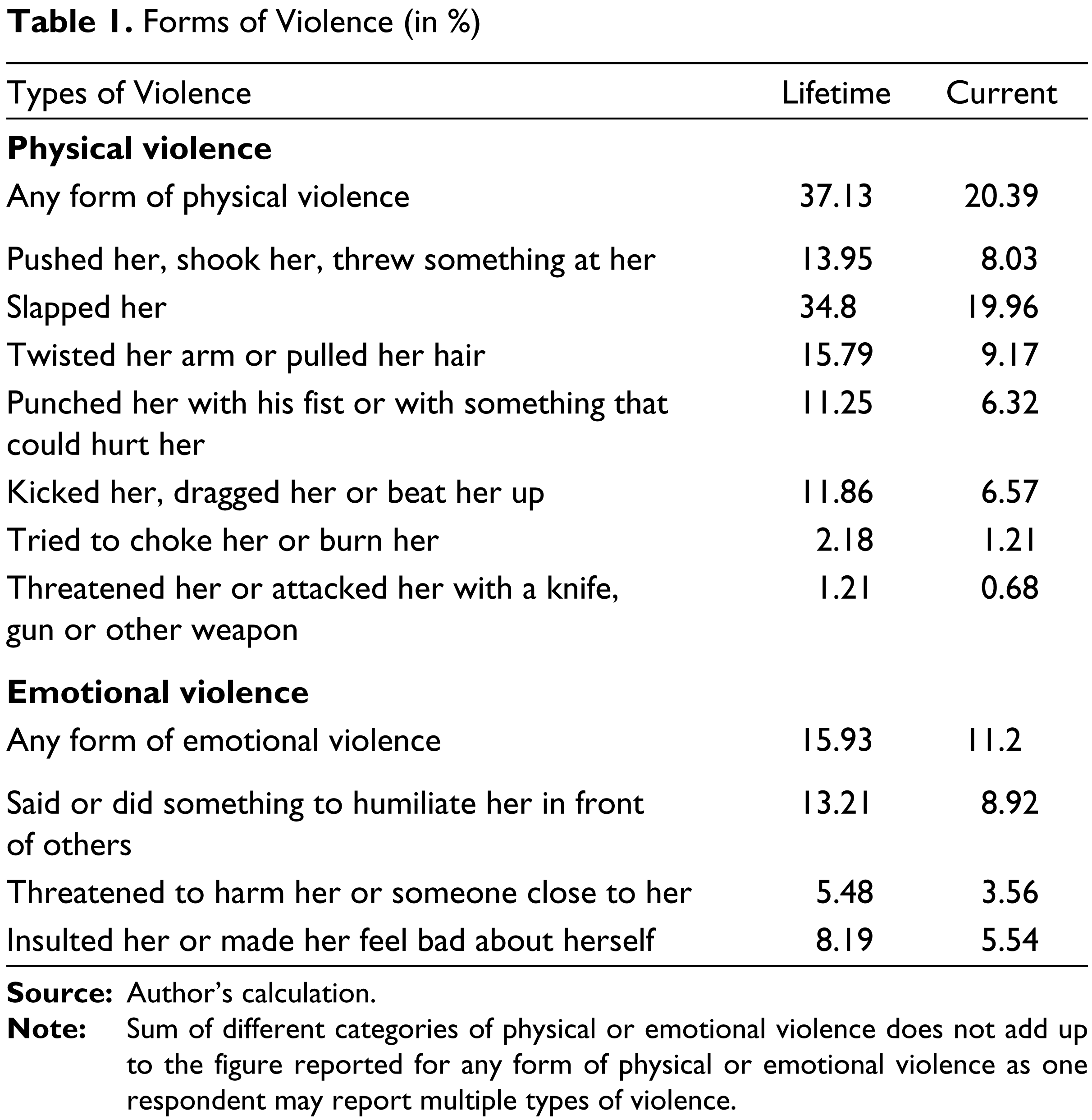
Women frequently bear with multiple forms of domestic violence, but there is the issue of under-reporting of such violence because of social stigma.
The profile of the sample is given in Table 2. We used the national women’s weight to tabulate the summary statistics as well as the analysis. The average age of the women respondents is 31 years, and the majority of the women fall in the age group of 30–39. The average age of first marriage is 18. On average, the women have been married for 10–14 years, and most couples have two children.
Profile of the Sample

More than two-thirds of the help seekers live in rural areas and one-third live in urban localities. Interestingly, even though the majority of women are from rural India, the household structure is nuclear in most of the families (61 per cent), which reflects the transition from a joint to the nuclear family in Indian society. Following the pattern of a religious mix in Indian society, the majority of the women are Hindu (81 per cent), and 14 per cent are Muslims, followed by Christians, Sikhs and Buddhists/neo-Buddhists. In terms of caste, 24 per cent of battered women who sought help belong to Scheduled Castes, 10 per cent to Scheduled Tribes and 40 per cent to other backward classes (OBCs). One-third does not belong to any of these three groups.
The educational attainment of a battered woman is important to give her courage to seek help in response to violence. However, the majority of women who sought help cannot read or write. The proportion of illiterate women in rural areas is double that of women in urban areas. Apart from the illiterate women, the average number of years of schooling is 5–9 for women, irrespective of their place of residence. In the sample, the proportion of employed women was 52 per cent and 30 per cent in rural and urban India, respectively. Forty-five per cent of the women who sought help were currently employed and were in the age group of 15–49. Approximately 30 per cent of the respondents had witnessed domestic violence during childhood.
The economic status of a household is measured through the wealth index, which is an indicator of the living standard and is consistent with measures of income and expenditure (Rutstein, 1999). 2 In NFHS-3, housing characteristics and the household asset data were used to construct the index. A weight or factor score was assigned to each household asset using principal component analysis (PCA). Then, the resulting factor scores were standardized in relation to a normal distribution with mean zero and standard deviation of 1 (Gwatkin, Rutstein, Johnson, Pandey & Wagstaff, 2000). Each household was assigned a score for each asset. Next, the scores were added for each household. Finally, respondents were ranked by the type of household they lived in. The entire sample was divided into quintiles, that is, through five groups of individuals with an equal number of members in each group. In urban areas, 46 per cent of the population belonged to the highest wealth quintile in contrast to only 7 per cent in the rural areas, and the distribution of the population in different quintiles of the wealth index varied widely among help seekers, across the states of India.
Help Seeking
Twenty-four per cent of the battered women sought help from different sources in response to any type of violence. Table 3 summarizes the sources they used to seek help. We have reported the proportion of different types of sources used when exposed to physical, emotional or sexual violence, separately, in three columns. The final column reports the percentage use of any type of informal/formal sources in response to any type of violence.
It is evident that abused women use informal support more than formal institutions. Informal sources included their own family, the family of the husband or partner, the current or former husband, partner or boyfriend, neighbour, friend and some other person. The most commonly used informal source is their own family (18 per cent), while the husband’s family helped in 7 per cent of the cases. Two other significant informal sources are neighbours and friends. In a few cases, IPV survivors approached the police, religious leaders, social service organizations, a lawyer or a doctor.
Sources of Help Seeking (in %)

Methodology
The analysis examines the role of socio-economic determinants to predict the probability of seeking help in response to violence. We used a logistic regression framework to answer the question. The main variable of interest—help sought by a victimized woman—is a categorical variable; it takes the value of 1 if a woman seeks any type of help, subject to the exposure to violence, and 0 otherwise. The dependent variable is whether or not a woman seeks any help. The research question was studied for three scenarios: whether a victimized woman seeks any help, whether a woman seeks help from an informal source and whether a woman seeks help from a formal source.
We controlled for exposure to violence in each of the three models. The main socio-economic determinants considered are as follows: age of the respondent, household structure (i.e., whether the respondent belongs to a nuclear or a joint family), educational attainment, religion, social group, employment status, economic status, ownership of economic resources and whether domestic violence was witnessed as a child. All the variables are categorical, except for age of the respondent. Five education dummy variables are considered: less than five years of schooling, 5–7 years of schooling, 8–9 years of schooling, 10–11 years of schooling and 12 or more years of schooling with no formal education as the base dummy. We took into account six religion dummies: Muslim, Christian, Sikh, Buddhist/neo-Buddhist, Jain and others, while Hindu was used as the base dummy. Three caste dummies were used in the regression: Scheduled Tribe, OBC and other caste, while Scheduled Caste was the base dummy. We captured the economic status (wealth index) through four categorical variables: second, middle, fourth and highest, while first remains the base.
We also assessed the impact of socio-economic characteristics on the most common forms of informal and formal support after controlling for different types of victimization. A series of binary logistic regression analyses were conducted. For informal support, we used four specifications where the dependent variables were own family, husband’s family, neighbours and friends. Logistic regression was also conducted for the two main sources of formal support used: police and lawyer. The role of the same set of socio-economic variables mentioned in the first research question was analyzed for each of the six specifications.
Results
Table 4 reports the results of the logistic model for three different models. Model 1 considers the socio-economic determinants if a victimized respondent seeks any help, either informal or formal, while Model 2 and Model 3 take into account the determinants of informal and formal help, respectively. The beta coefficients and the odds ratio of the logistic model are presented.
Results: Help-seeking Behaviour in Response to Domestic Violence and Socio-economic Determinants


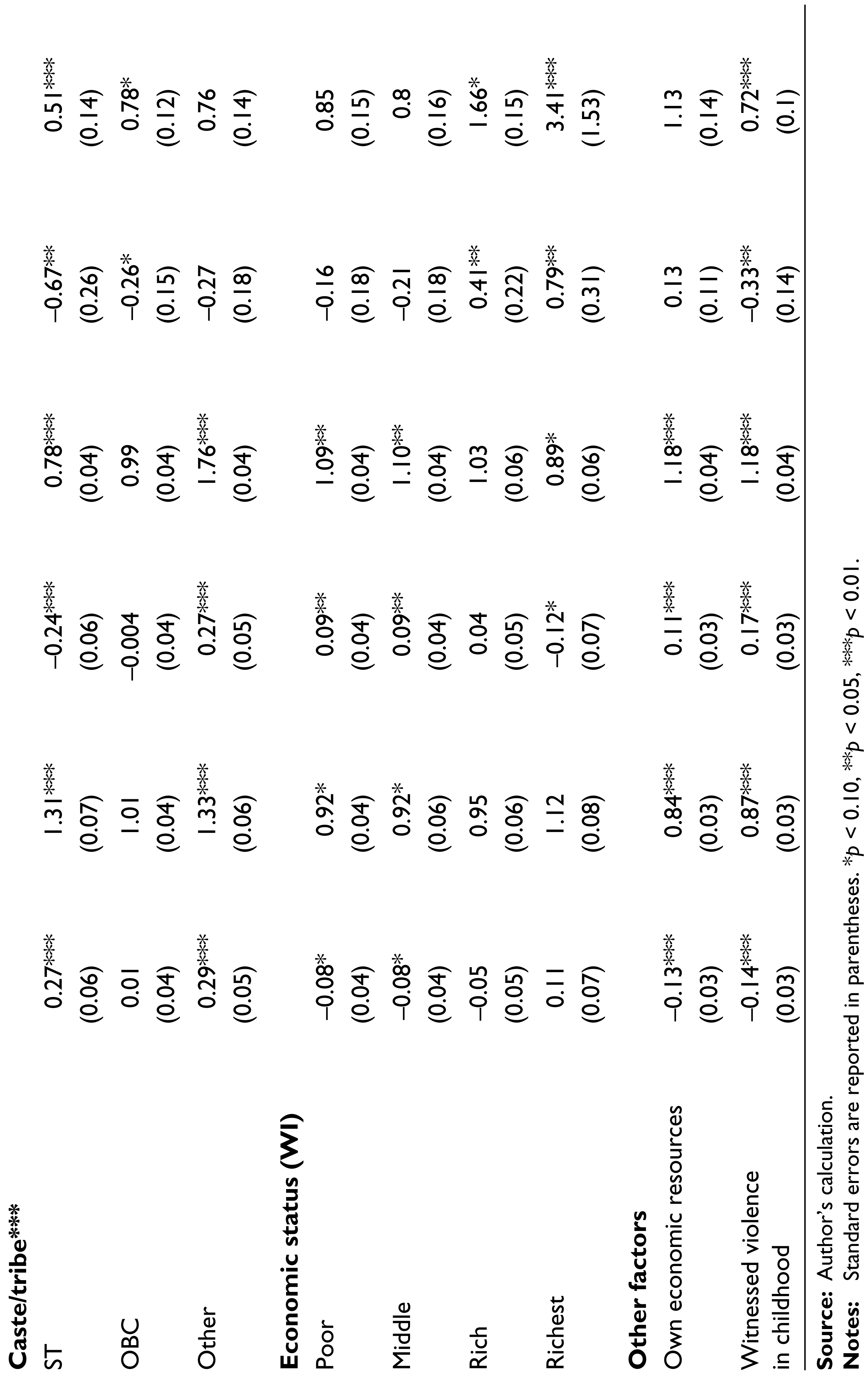
We find positive and significant beta coefficient for the age variable under the specifications of the three models. The log odds ratio for age is also greater than 1, signifying that age plays a crucial role in seeking help. With age, women become mature and gain the experience to talk about abuse to informal as well as formal sources.
The beta coefficient for less than primary education (completed less than five years of schooling) is statistically insignificant under the three models. However, it is positive and significant for 5–7, 8–9 and 10–11 years of schooling. This indicates that in response to domestic violence, an educated woman has higher predicted probability to approach a source for help than a woman who is not educated. The results also show that women who have 12 or more years of education do not seek any significant help from informal sources; instead, they opt for more formal sources of help when they are victimized compared to uneducated women. The log odds under Model 3 for this particular category are significantly high. Thus, we can infer that education is a crucial determinant of help-seeking behaviour among battered women in India.
Christian and Sikh women are more likely to use informal sources than Hindu women, when exposed to domestic violence. The significantly high log odds in both cases implies that they talk more with family, friends and neighbours about their experience of violence and seek help compared to their Hindu counterparts. However, beta coefficients for both these religions are statistically insignificant in the case of formal help. Among Buddhist/neo-Buddhist women, there is a negative association with seeking help from informal sources. They approach their social network for help significantly less than Hindu women. Beta coefficients of help seeking are statistically insignificant for Muslim and Jain respondents under the three models.
Scheduled Tribe women have lower predicted probability of using formal or informal help than Scheduled Caste women. Under Model 3, the log odds ratio for OBC respondents is less than one and is significant, indicating that formal sources of help are less popular among them. Forward castes as well as Scheduled Tribe women prefer to share their experiences with informal sources than seeking formal help.
Although we have observed a significant shift in the family structure of India from joint to nuclear, this does not play a significant role in choosing between formal and informal help to stop domestic violence.
We considered two indicators of economic empowerment: employment and ownership of economic resources. The beta coefficient of employment is positive and significant in the three models. If a woman is employed, the predicted probability of seeking help is higher than that of an unemployed woman. Employed women choose informal as well as formal sources of help, as indicated by the high and significant log odds ratio. The impact of ownership of economic resources is not very strong on help-seeking behaviour. Women who own economic resources have a higher chance of using informal sources in response to abuse than victimized women who do not own any economic resources. However, the beta coefficient for use of formal resources is statistically insignificant, indicating that ownership of economic resources does not play much of a role in seeking help from formal sources such as the police or lawyers.
The economic status of a respondent’s family is measured through the wealth index. The poor and middle-income group respondents use more informal help than the poorest level of the respondent group. The richest stratum uses fewer informal sources than the poorest one, but this is expected because the social sigma may be higher for the richest. Except for the two highest income groups, economic status had no statistically significant impact in terms of seeking formal sources of help. IT was also concluded that battered women from the richer groups have resources to purchase formal services.
The beta coefficient for informal help is also positive and significant for women who have witnessed domestic violence as children. They seek help from informal sources.
Table 5 shows the socio-economic determinants in selecting four major informal sources of support: own family, husband’s family, neighbours and friends. All four informal sources have a significant impact on emotional violence, be it short or long term.
With respect to the type of victimization, abused women prefer not to approach family, neighbours or friends for lifetime physical violence, though they seek help from these sources for short-term physical violence. Women prefer not to share the experience of short-term sexual violence with family or friends. All the informal sources play a significant positive role in the case of lifetime sexual violence.
Among the socio-economic determinants, education plays a significant role. The higher the level of education, the higher is the probability of seeking help from friends. Education does not have much impact on seeking help from neighbours or the husband’s family, while it has a moderate impact on seeking help from the respondent’s own family. It is interesting to note that abused respondents from a nuclear family prefer to seek help from neighbours. Religion does not have much impact on choosing informal sources of help, while caste has a mixed impact. Except for the OBC dummy, beta coefficients for the caste dummies are significant but negative.
The economic status of the respondent’s family plays an important role in choosing the family as an informal source of help. Employed women prefer to rely on friends and neighbours, while battered women with their own economic resources depend on family and friends. Women who have witnessed violence as children prefer to seek help from family, friends and neighbours.
Results: Domestic Violence and Informal Support

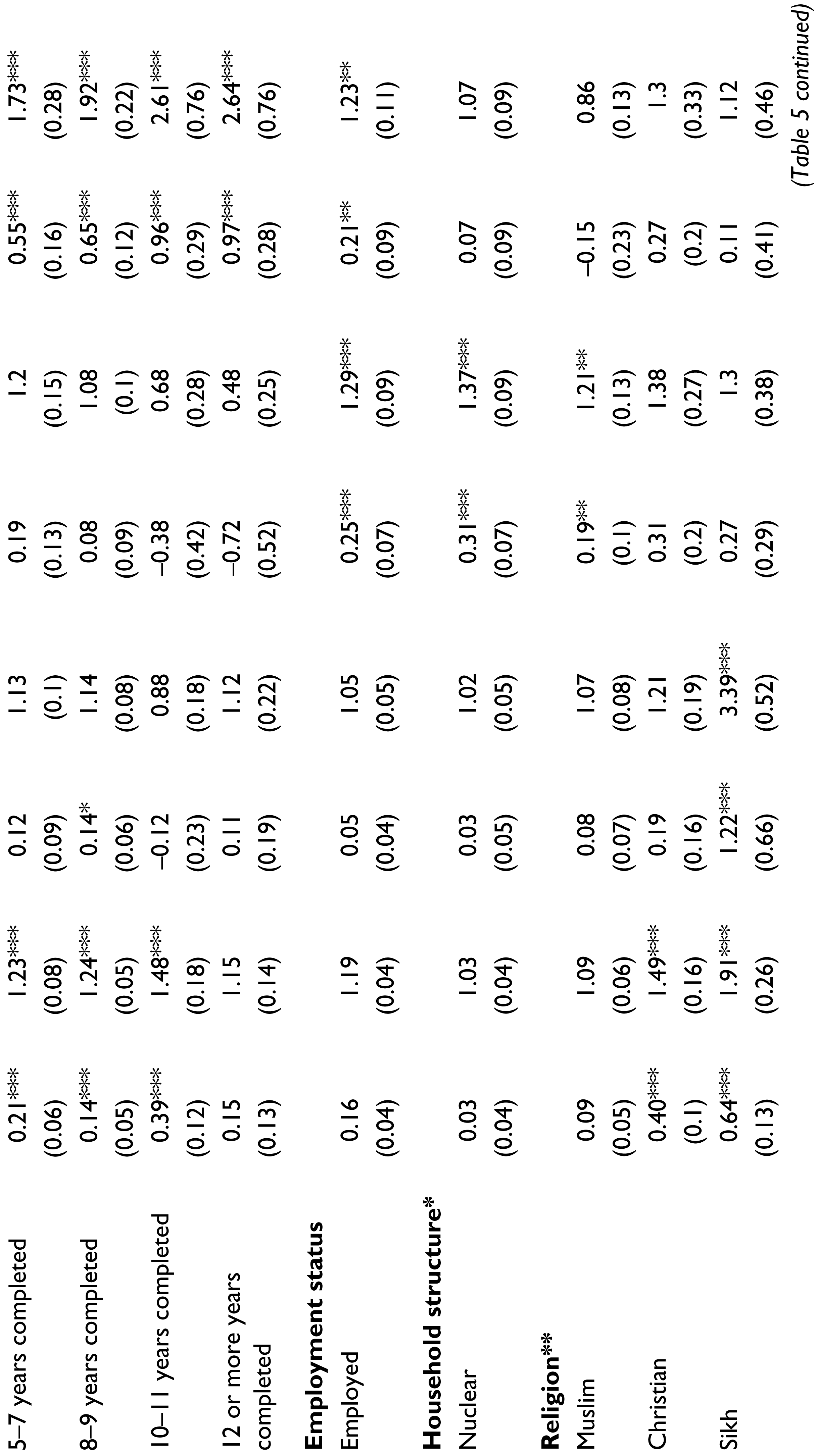
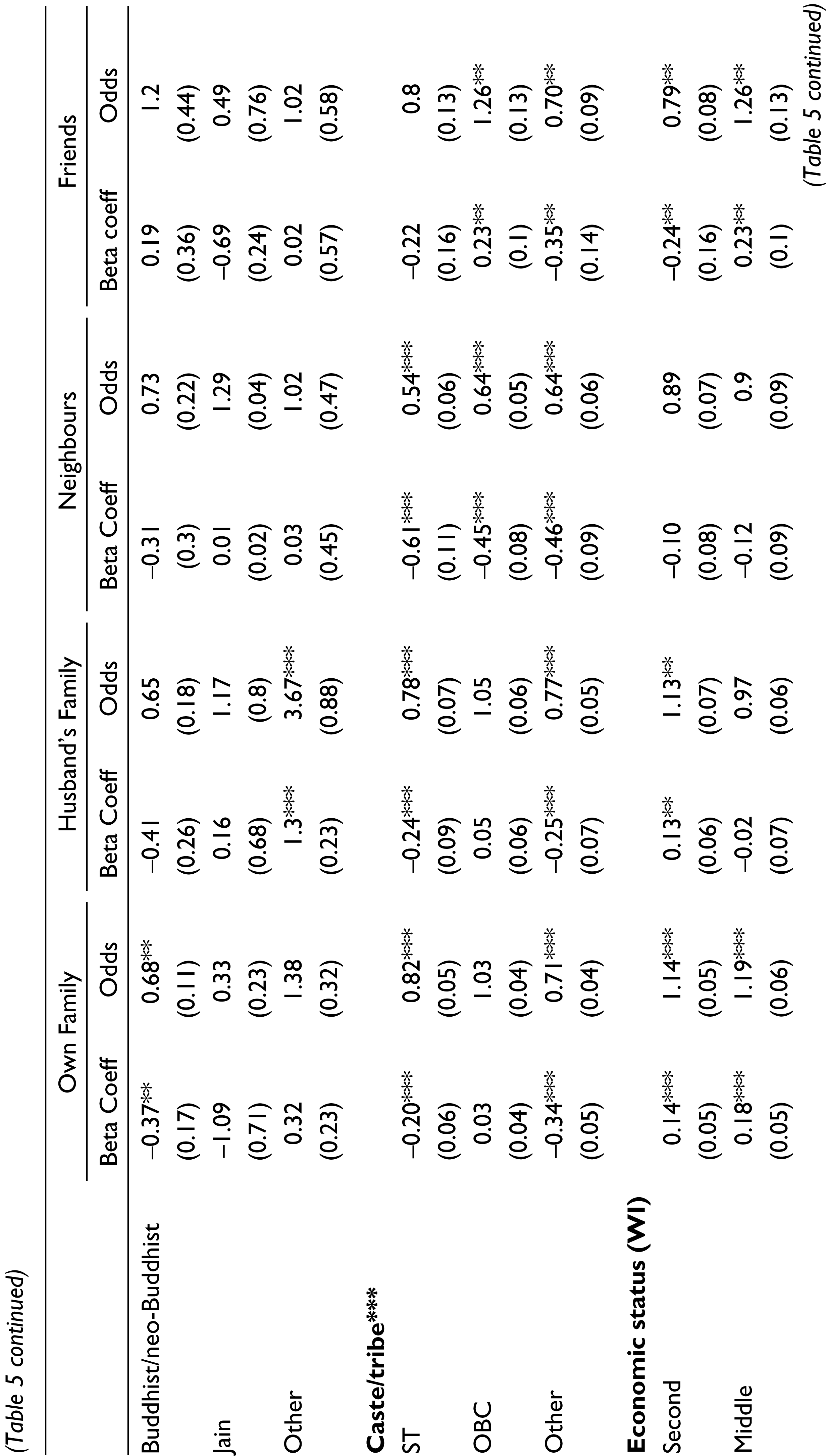
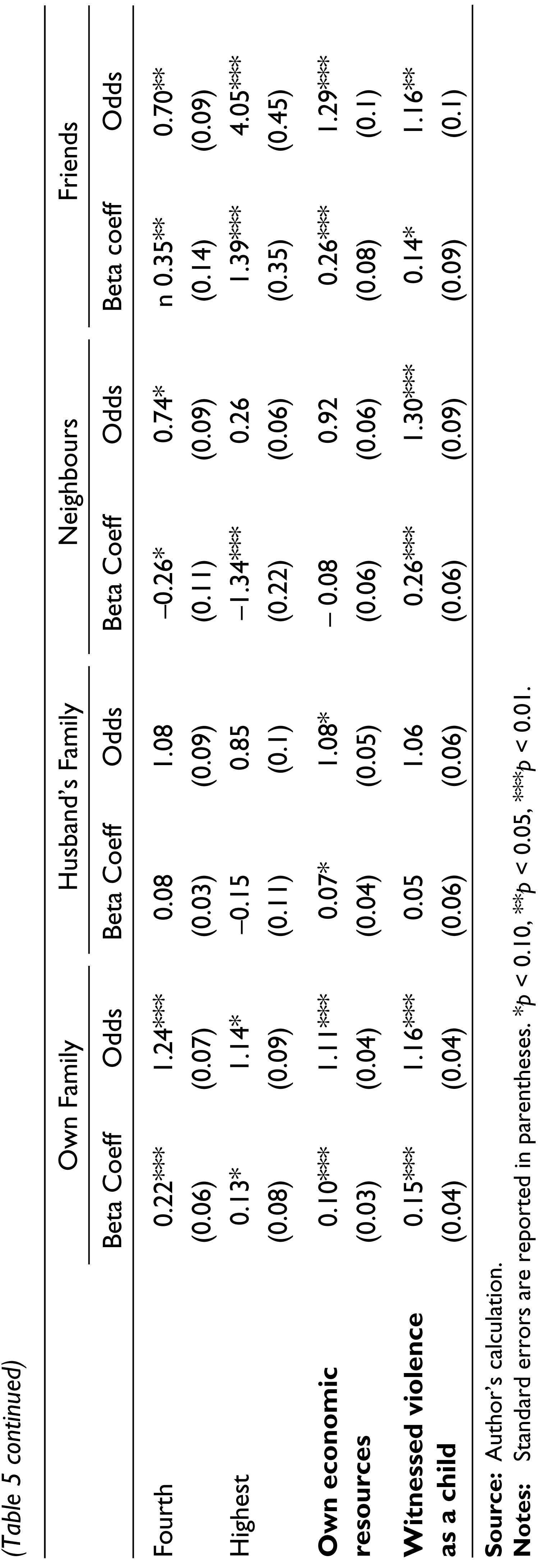
Table 6 shows the results of the logistic regression from the two main formal sources of help: the police and a lawyer. The predicted probability of choosing the police as a source of help is higher for lifetime sexual and emotional violence, while it is higher for lawyers only in the case of short-term sexual violence. The beta coefficient of short-term physical violence is negative and significant for police.
Results: Domestic Violence and Formal Support
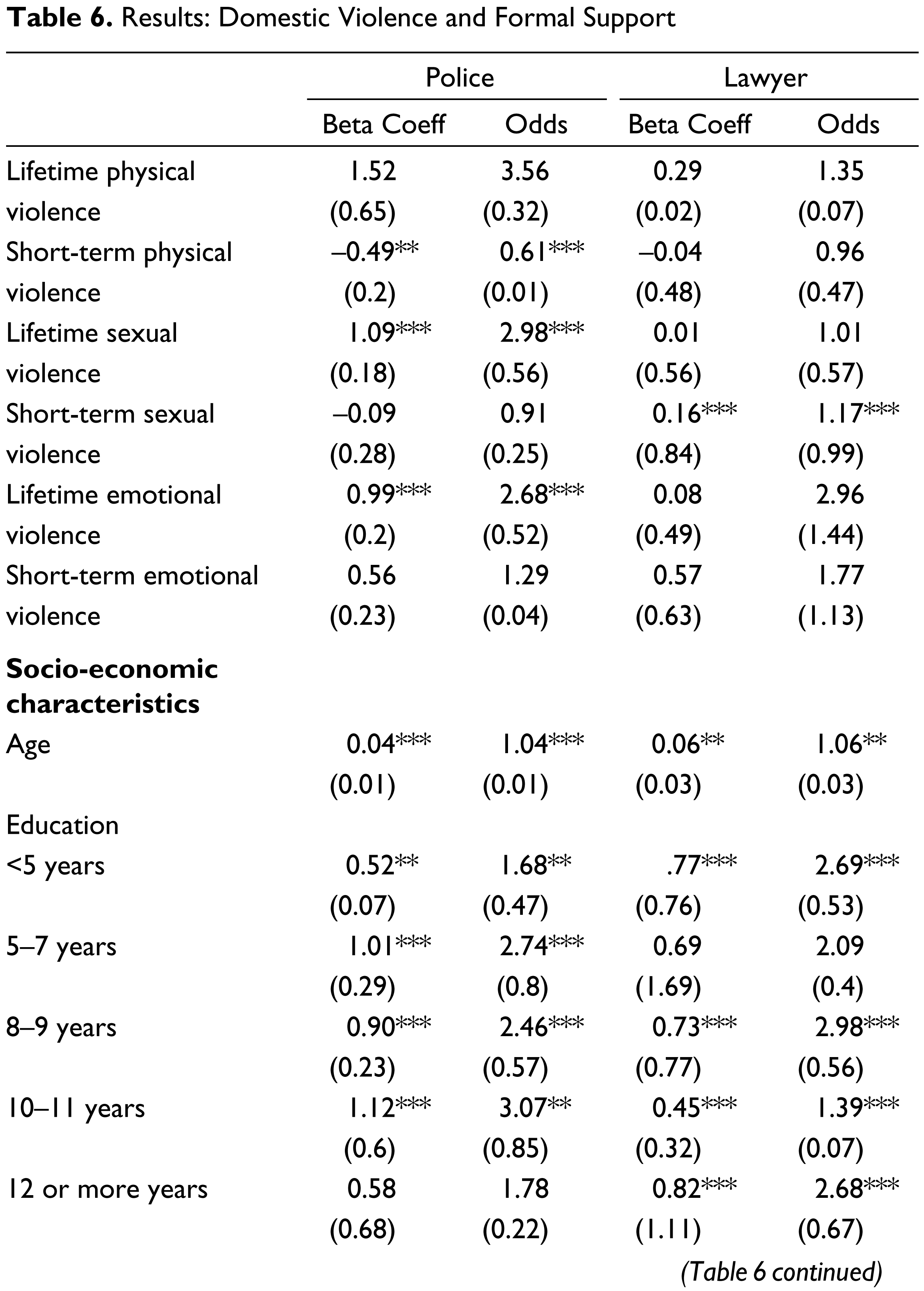

Age and education play an important role in choosing the police as well as lawyers for formal support. The beta coefficient as well as the log odds ratio for employment status is positive and significant in choosing both these sources of formal support. Ownership of economic resources is significant in using the police for support, but it is insignificant for lawyers. Education and indicators of economic empowerment have a significant impact on victimized women who seek formal help.
Discussion and Conclusion
In this article, we examined variations in women’s help-seeking behaviour in response to IPV and tried to determine the extent to which socio-demographic differences among women impacted their participation in both informal and formal help-seeking behaviours. The results of the analysis indicate that abused women actively attempt to utilize informal and formal assistance in response to violence. In India, informal sources are more popular than formal ones for two reasons. The cultural construct of traditional society deters women from approaching formal support systems, and at the same time, the formal support system in India is neither fully developed nor friendly. We found significant variation in selecting specific sources of formal or informal support. Education and employment were found to be the major determinants in using both types of support systems, namely, informal and formal.
For the analysis we used a large survey database in India; hence, the findings would be an important addition to the literature of violence against women in developing countries. At the same time, we need to point to one limitation of the dataset. The anti-domestic violence law was passed in 2006 in India, and the dataset used for the analysis was collected in the same year. Therefore, the impact of the law in terms of encouraging women to seek formal help may not be fully captured in the dataset.
The common image of a battered woman is that she surrenders to domestic violence. The cultural construct of a traditional society also promotes ideologies of the helplessness of an oppressed woman. Therefore, it is important to find the determinants of help seeking by women in such a scenario. Policy initiatives should focus on augmenting both the formal and informal systems to create a more equitable society for women in India. Social isolation and economic marginalization may increase the vulnerability of an abused woman. Therefore, support for education and new economic opportunities should be augmented for women, as these two factors were found to be the most important determinants of help seeking. The responsibilities of families, friends and neighbours in response to domestic violence should be encouraged by promoting community-based action. Professional service providers as well as service providers from the wider community should be appropriately trained to provide safety to battered women in a supportive and non-judgemental fashion. Increased support for battered women’s shelters and reforms in the criminal justice system are other important measures that need to be adopted. These initiatives require long-term budgetary commitments as well, because poor women may not be able to purchase services for formal support. Adequate budgetary services along with an awareness campaign about such services may increase the use of formal support.
Footnotes
Acknowledgements
The author is thankful to the anonymous reviewer for her/his valuable comments.