



Abstract
Traditional Mincer-type hedonic wage equations typically fail to account for the effect of psychological capital, in part because such factors are often regarded as unobservable. This article incorporates a measure of psychological capital (specifically, self-esteem) that has been validated in the psychology literature into an otherwise typical hedonic wage model. Then, the sample is divided into race and gender subgroups and estimates are compared. The results suggest that self-esteem does play a role in determining wages for Whites (White men, in particular), but it has no detectable effect on the wages of African-Americans. Data are drawn from the 1979 National Longitudinal Study of Youth.
Introduction
In the standard human capital model, an individual’s earnings are thought to be determined by human capital characterised through skills that contribute to production. In a hedonic model of wage determination, a worker possessing a vector of skills can sell them through the market and thus generate a wage equal to the sum of each skill times its price. However, common beliefs about which capabilities contribute to higher earnings frequently receive limited support in available data. Standard characteristics, such as age, years of education, labour market experience, occupation, etc, tell us surprisingly little about variation in earnings. Paradoxically, individuals with similar observable characteristics often receive very different wages (Bowles et al., 2001).
There is a literature that focuses on seemingly irrelevant personal characteristics to explain this phenomenon. Behavioural traits or physical characteristics are often robust predictors of earnings. Individual characteristics contained in the National Longitudinal Survey of Youth (NLSY) allow for an empirical investigation into some of these behavioural characteristics to see what effect, if any, they have on wages.
Literature Review
Physical Traits
Do seemingly irrelevant characteristics, such as beauty, height, church attendance or even the cleanliness of one’s house, have a real impact on earnings? Hammermesh and Biddle (1994) find that for the US and Canadian workers, men judged to be ‘below average’ in appearance earned 14% less than those judged to be ‘above average’. The ‘looks premium’ for women was around 9%. Standard factors such as marital status, parental socio-economic status, occupation and industry were accounted for, yet appearance proved to be highly significant. Duncan and Dunifon (1998) find that in the Panel Study of Income Dynamics, the interviewer’s assessment of the cleanliness of the respondent’s house was a good predictor of earnings.
Sargent and Blanchflower (1994) find in their sample of British women that obesity at age 16 contributed to lower earnings at age 23, irrespective of whether the woman was still obese. These findings support the notion that it may not be the obesity per se but the psychological and behavioural traits that emerge during the period of obesity that account, at least in some part, for these results. Other studies suggest that obese women are penalised in the labour market along with thin or short men (see Averett & Korenman, 1996; Register & Williams, 1990; Sobal, 1991).
It has been suggested that willingness to expend effort on one’s beauty or keeping a clean house could be linked with behavioural traits, and that these behavioural traits could be responsible, in part, for differences in earnings. The explanatory power of certain behavioural traits could be picked up by other, seemingly, irrelevant traits, like physical characteristics.
Behavioral Traits
As suggested earlier, labour economists have had a relatively difficult time explaining wage differences among workers. Factors such as education, union status, occupation, etc., are important factors, but they are far from complete in their explanation of earnings differentials. Many economists and sociologists believe that behavioural factors could play an important role. As illustrated by Bowles et al. (2001), economists sometime turn to these behavioural characteristics as important factors in determining wages.
In what Bowles et al. term the ‘Walrasian model’, earnings differences are attributable entirely to skills differences. In this model, the only things that are included in the wage equation are individual skills and traits that would directly affect production. In such a conventional labour market model, the law of one price ensures that identical individuals (in terms of skills) receive identical wages. Equilibrium is assumed to occur instantaneously. This model offers no explanation for the discrepancies in earnings of individuals with apparently identical productive traits because characteristics that do not directly affect production would be irrelevant.
At odds with the Walrasian model are, in Bowles et al. terms, the Schumpeterian and Coasean models. A perpetual state of disequilibrium is assumed in the Schumpeterian model, and thus the law of one price is no longer relevant. In such a scenario, factor payments can include ‘disequilibrium rents’. These rents were attributed by Joseph Schumpeter to technological progress, changes in business organisation and other shocks (Schumpeter, 1934). As the ability to capture these disequilibrium rents varies from person to person, it is possible that such abilities can influence earnings. Certain abilities such as one’s degree of self-directedness, degree of risk aversion, the belief that one’s actions are or are not effective in determining outcomes (internality vs. fatalism) and other traits are likely to enhance an individual’s abilities to deal with disequilibrium. This Schumpeterian model is different from the Walrasian model, in that other factors affect earnings that do not contribute directly to worker productivity.
Another approach on behavioural determinants of earnings stems from the relaxation of the assumption of an exogenously determined level of effort delivered by the employee. Under this perspective, a different set of behavioural characteristics from the ones related to the Schumpeterian model becomes important.
When labour effort is endogenous, ‘incentive-enhancing traits’ may be positively correlated with earnings. Bowles et al. refer to this as the ‘Coasean model’ of earnings determination named for the work of Ronald Coase. It was Coase who first clearly recognised the importance of the employee accepting the authority and the incentive-making capacity of firms in structuring work and pay (Coase, 1937). This Coasean model was the forerunner to the modern principal–agent models of the employment relationship.
In an employment contract, wage and hours worked can be costlessly enforced, but effort level is dependent on the worker’s acceptance of the employer’s authority. Workers with character traits that coincide with the goals of the firm, such as low time discount rate, a predisposition to telling the truth, identification with the firm’s goals, high marginal utility of income and low disutility of effort, may be rewarded in the labour market. Because of these traits, certain individuals would be more likely to respond to the firm’s attempts to link pay with effort.
The implications for the Coasean model have been most fully explored by sociologists, who note that non-skill-related determinates of earnings can often prove informative in what they refer to as ‘socialisation for work’ (Dreeben, 1967; Parsons, 1959). This notion of incentive-enhancing personal traits is consistent with the microeconomic concept of asymmetric information, where the employment relationship is contractually incomplete, and, therefore, employee effort is endogenous.
Heckman et al. (2006) explore the connection between non-cognitive traits and decisions known to influence labour market outcomes, like attending school or engaging in risky behaviour. The authors suggest that while youth intervention programmes like Head Start do not necessarily boost cognitive abilities (for instance, IQ), they do positively affect non-cognitive skills that pay off in the labour market.
Traditionally, economists have taken the view that personality traits are either unobservable or immeasurable, but, more recently, concepts of self-esteem and fatalism have appeared in econometric models (Coleman & DeLeire, 2003; Goldsmith et al., 1997; Heineck & Anger, 2010; McGee & McGee, 2016) due in no small part to their validation in the psychological literature. Psychological studies have found that several self-esteem and locus of control scales in use are effective at capturing psychological characteristics (Demo, 1985; Fleming & Courtney, 1984; Robinson & Shaver, 1980; Robinson & Wrightsman, 1991). Using National Education Longitudinal Study data, Coleman and DeLeire (2003) find evidence that higher levels of internalism are good predictors of higher levels of educational attainment. Heineck and Anger (2010), and Piatek and Pinger (2016), use German socio-economic data to find a similar result. McGee and McGee (2016) find that internalism increases job search effort. Using NLSY data, Cebi (2007) finds no effect on this. Cebi also finds that internalistic attitudes are associated with higher earnings later. The NLSY provides information on self-esteem and locus of control, which can be used to estimate the effect of both human and psychological capital on wages.
It has been proposed by Brockner (1988) that self-esteem influences productivity in two ways. First, workers with high self-esteem possess more direction and thus require less managerial supervision. Second, they tend to be more willing to consider a wide range of solutions and are more confident decision-makers.
Locus of control refers to one’s sense of personal control over one’s life versus the opinion that events are determined by fate or chance and one’s actions do not greatly influence outcomes. Lefcourt (1982) and Bandura (1986) posit that internalistic individuals (i.e., those who believe they are more in control of their destiny) are likely to have a greater sense of self-worth than externalisers. Based on this assertion, Goldsmith et al. (1997) advance the idea that locus of control affects earnings only through its effect on self-esteem. While this may be a stronger assumption than the authors admit, it does allow them to identify the econometric model. As wage is a common measure of one’s productive ability, it is quite reasonable to believe that self-esteem and wage are simultaneously determined (Gleitman, 1991). The assumption that locus of control does not directly affect earnings allows them to use it as an instrument for self-esteem. Their results indicate that changes in self-esteem have greater effects on earnings than similar changes in human capital measures. A 10% increase in self-esteem is associated with a 4.8% increase in wages in 1 year of data (1980) and a 13.3% increase in wages in another year (1987).
Osborne (2000) finds evidence of behavioural traits having different effects conditional on gender. For example, in ‘high-status occupations’, women are penalised more than men for being aggressive, and men are penalised more than women for being withdrawn. A large part of the remainder of this article will use the Goldsmith et al. style od specification, with particular emphasis on empirically comparing psychological capital across various sub-samples.
Model
A very simple (if naïve) empirical specification could take the form:

The vector Z consists of all canonical human capital ingredients in a Mincer-type wage equation (years of education, experience, etc.) and the vector X consists of demographic controls for person i. Applying ordinary least squares (OLS) will generate (not very good) estimates of the parameters, where one could interpret the coefficient associated with the self-esteem variable to be the effect of a one-unit (however defined) change in self-esteem on wages (as a percent). An immediate problem with this simple specification and estimation procedure is that the joint determination of wages and self-esteem is not accounted for. As previously outlined, Gleitman (1991) has suggested that as a generally accepted measure of success in the labour market, wages are likely to influence self-esteem. Due to this simultaneity between wages and self-esteem, estimating the above-mentioned model via OLS will produce biased and inconsistent results. Following Goldsmith et al., an instrumental variables technique will first be employed using locus of control as an instrument for self-esteem.
The second problem with the above-mentioned specification estimated by OLS (or IV) is that it suffers from sample selection. Wages are observed only for those individuals in the labour force. The standard procedure suggested by Heckman (1979) will be employed to correct for this sample selection bias.
An improvement over the above-mentioned model would be:

This can be estimated via an instrumental variables technique with a measure of locus of control instrumenting for self-esteem. With only one instrument, this will be a ‘just-identified’ case. The inclusion of the selection term (inverse mill’s ratio) accounts and corrects for the sample selection bias. It is worth noting that a probit is used for the selection equation, and thus the error term in that equation is assumed to be normal.
Equation (2) is similar to the model used by Goldsmith et al. While they do control for race and gender, it may be interesting to see how the estimated parameters change over various sub-samples. Osborne (2000) finds evidence that the returns for behavioural characteristics depend on gender. While there may be no clear theoretical a priory expectation as to how the effects of self-esteem affect earnings across gender and race, it may be an interesting empirical exercise.
As an extension to the Goldsmith et al. model, this article will further explore identification techniques for the effect of psychological capital on earnings. It may be the case that locus of control itself influences wage. Goldsmith et al. make the strong assumption that locus of control is exogenous to the wage equation. Relaxing this assumption creates two problems. First, self-esteem is no longer identifiable (as the instrument has now become an independent variable in the model), and, second, it is reasonable to believe locus of control itself is correlated with the error term. The first problem involves finding a (different) instrument for self-esteem which may be difficult. The second problem, however, may be more tractable. Based on the work of Carton and Nowicki (1994), it is asserted that certain early childhood factors are influential on locus of control development. One example cited is the separation of a child’s parents, which represents a disruptive event, possibly influencing locus of control negatively. Data on the respondent’s household composition as a child, specifically whether the respondent lived with both biological parents until the age of 18, is available in the NLSY. As there is no clear reason to believe growing up in a one- versus two-parent household will affect earnings later (except through psychological capital), this may make a good instrument for locus of control. A potentially interesting model for estimating the effect of locus of control may take the form:

were the variable BothParents, a dummy variable equalling 1, if the respondent grew up in a household with both biological parents, is used as an instrument for locus of control. It is recognised that if self-esteem is endogenous, estimates are inconsistent.
A final specification will be estimated where self-esteem is assumed to be an endogenous regressor, and locus of control and BothParents will both be used as instruments. The strong assumption of locus of control exogeneity is once again invoked, and it is also posited that growing up with both parents versus one parent may have a psychological impact on self-esteem (but not directly on wages).
Finally, while not the main thrust of this article, an initial attempt at recognising the contribution of psychological capital on wage growth over one’s career will be examined. For the sub-sample of those employed both in 1987 and in 2004, a simple model of nominal wage growth will be estimated, including Selfesteem87, instrumented with LocusofControl.

Data
Data are obtained from the 1979 wave of the NLSY. Following Goldsmith et al., two cross sections will be used. In this case, 1987 and 2004 are examined. Luckily the NLSY contains measures of self-esteem and locus of control. Rosenberg’s Self-Esteem Scale (Rosenberg, 1965) consists of 10 questions designed to measure the respondent’s attitudes towards himself or herself and are asked in the 1987 NLSY. The responses consist of a four-point Likert scale (strongly agree, agree, disagree, strongly disagree) but, for issues of ‘anchoring’, 1 are coded as either a 1 or a 0 with a 1 response corresponding to answering in a manner associated with high self-worth. From this, a measure of self-esteem is obtained, ranging from 0 to 10, based on the summation of the number of answers, indicating high self-esteem.
Rotter’s Internal–External Locus of Control Scale (Rotter, 1966) consists of 23 questions designed to measure a respondent’s locus of control. An abbreviated version of the Rotter Scale consisting of four questions chosen by psychologists as being most representative was included in the NLSY in survey year 1979. A scale (ranging from 0 to 4) is constructed, rating a respondent’s locus of control (with higher scores indicating higher degrees of internalistic attitudes).
There may be concern over the use of a locus of control measure from 1979 as representative of a person’s attitudes 25 years later. Justification for this measure is based on assertions by Gleitman (1991) and Rotter (1966) who consider locus of control to be a stable personality feature, which is formed early in life.
The human capital vector (referred to as Z earlier) will consist of YearsEd, Exper, ExperSq, Tenure, AFQT and three-digit industry and occupation control variables. The vector of demographics will consist of SMSA, Female, HighUnemp, Married, Black and Asian. Number of children is not used as a demographic variable. This decision allows for an exclusion restriction in the selection equation needed to use the Heckman procedure.
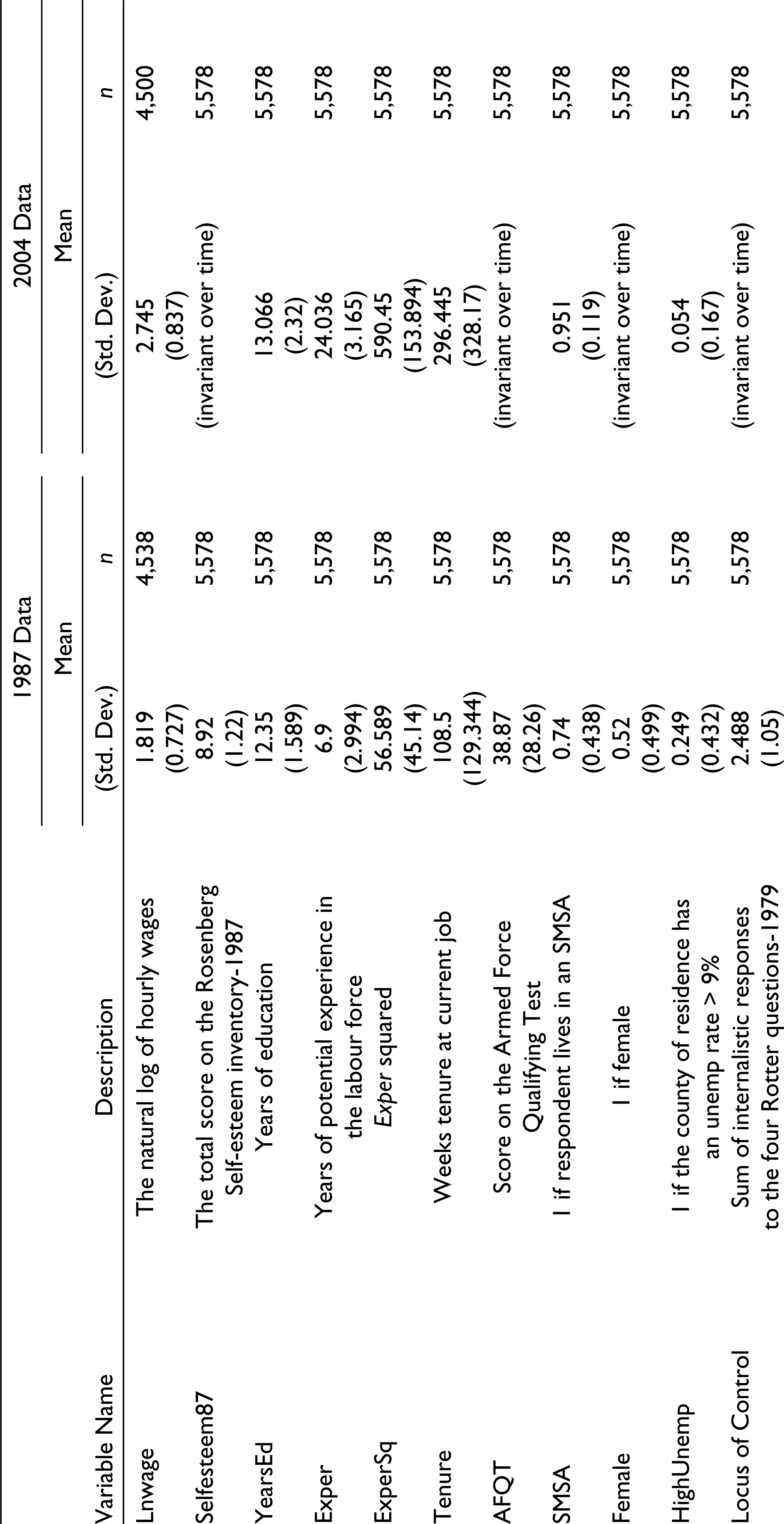
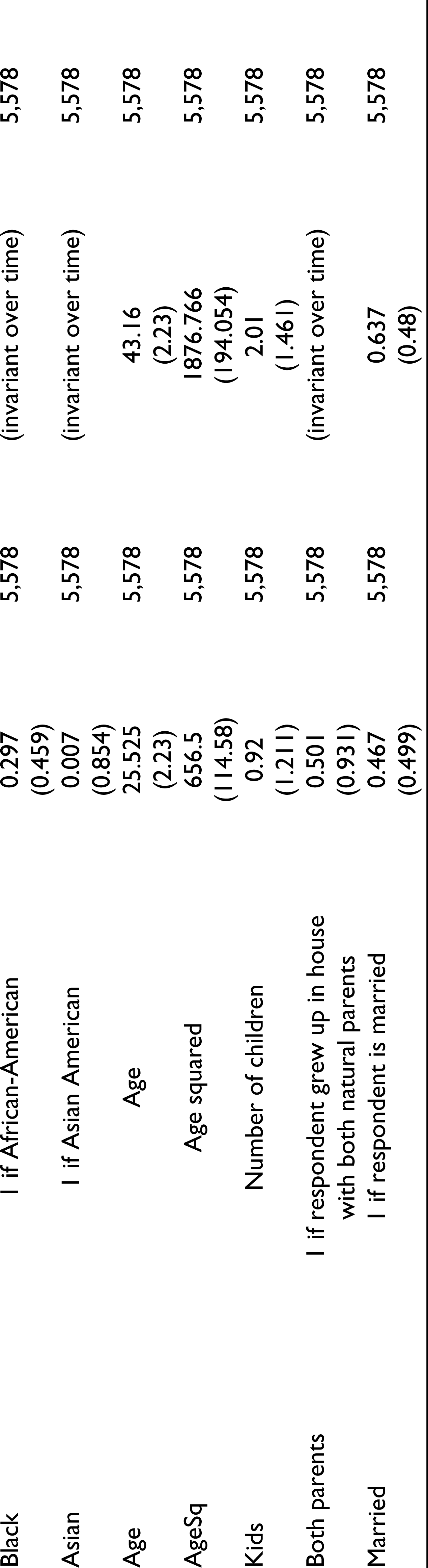
Summary statistics can be found in Table 1.
Summary Statistics
Results
First- and second-stage results from IV estimation on both (1987 and 2004) samples can be found in Tables 2a and 2b.
First Stage IV Results from Entire 1987 and 2004 Samples

From the first-stage results, it is clear that locus of control (TotalRotter) is a predictor of self-esteem. Unfortunately, since this is a just-identified model, a test of overidentifying restrictions cannot be implemented.
Table 2b suggests that self-esteem is a very strong predictor of earnings. The coefficient is positive and statistically different from zero at the 1% level. The large magnitude of the coefficient is difficult to reconcile with prior expectations. According to these results, holding all else constant, answering one more of Rosenberg’s question in an internalistic manner is associated with a wage increase of 53% in the 1987 data and 37% in the 2004 data. OLS estimates of a similar specification (available in Appendix A) find the coefficient associated with self-esteem to be around 0.057.
Second Stage IV Results from Entire 1987 and 2004 Samples
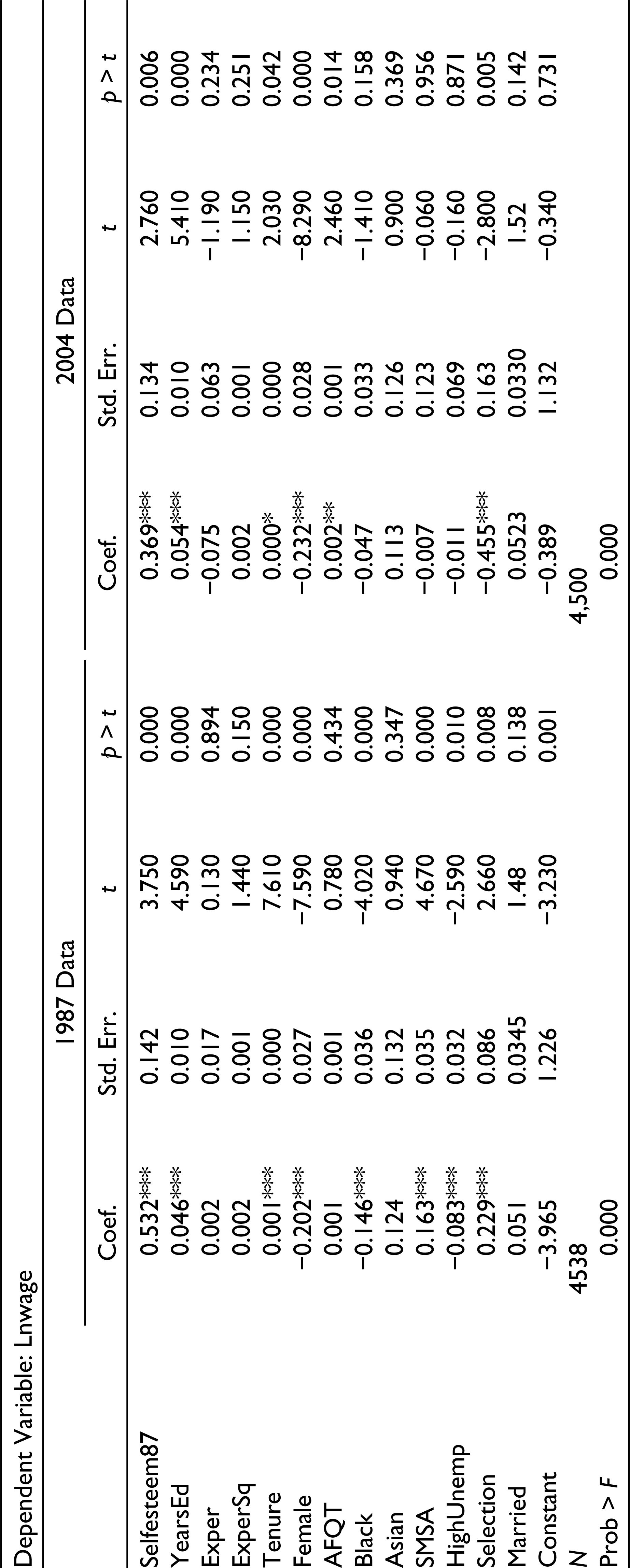
Returns to schooling seem to be in the neighborhood of 5% (result is significant at the 1% level). Being female is associated with a wage penalty of 20%–23%. Being Black is also associated with a wage penalty in the 1987 data, though it falls out of statistical significance in the 2004 data. Selection bias appears to be an issue as the coefficient associated with the inverse mill’s ratio is significant at the 1% level in both cross sections.
Attention now turns to comparisons across sub-samples. First, Table 3 compares men versus women.
Stage IV Results from Sub-sample of Men and Women Using 2004 Data

Interestingly, while the effect of higher self-esteem on wages remains important (statistically different from zero at the 1% level) and positive for men, it has no statistically detectable effect on the wages of women. However, the coefficient on self-esteem for men remains quite high (perhaps unbelievably so).
Table 4 compares the results for Whites versus African-Americans.
Stage IV Results from Sub-sample of Whites and Blacks Using 2004 Data
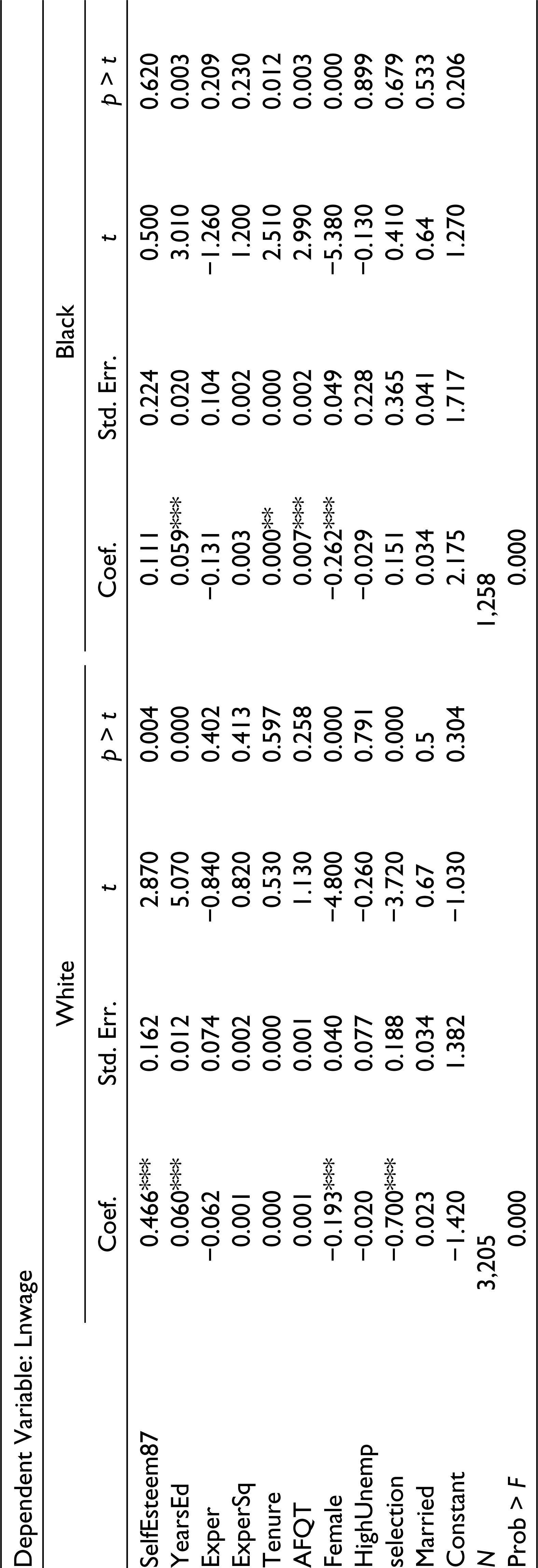
These results suggest that while the effect of higher self-esteem is quite large for Whites, it is not statistically detectable for African-Americans.
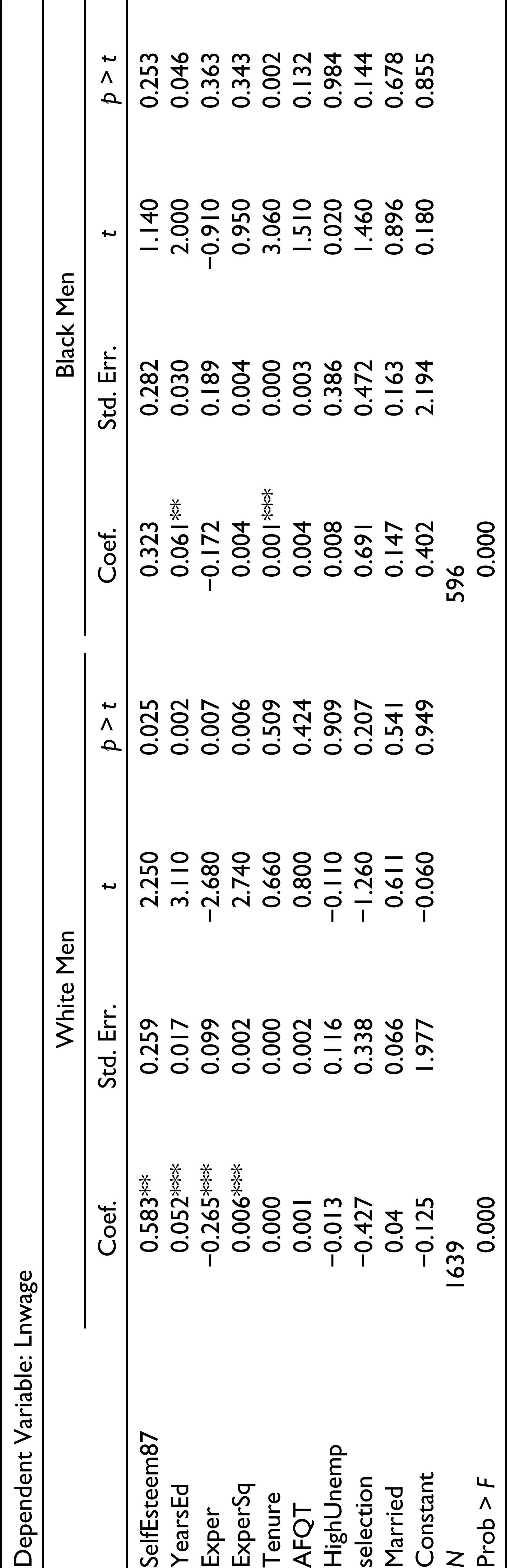
Table 5 compares White men to Black men, and Table 6 compares White women to Black women.
Stage IV Results From Sub-sample of White Men and Black Men Using 2004 Data
Stage IV Results from Sub-sample of White Women and Black Women Using 2004 Data

From the above-mentioned results, one might conclude that high self-esteem is a characteristic most beneficial to White males and somewhat beneficial to White females. High self-esteem seems to have no effect on wages of African-American men and women.
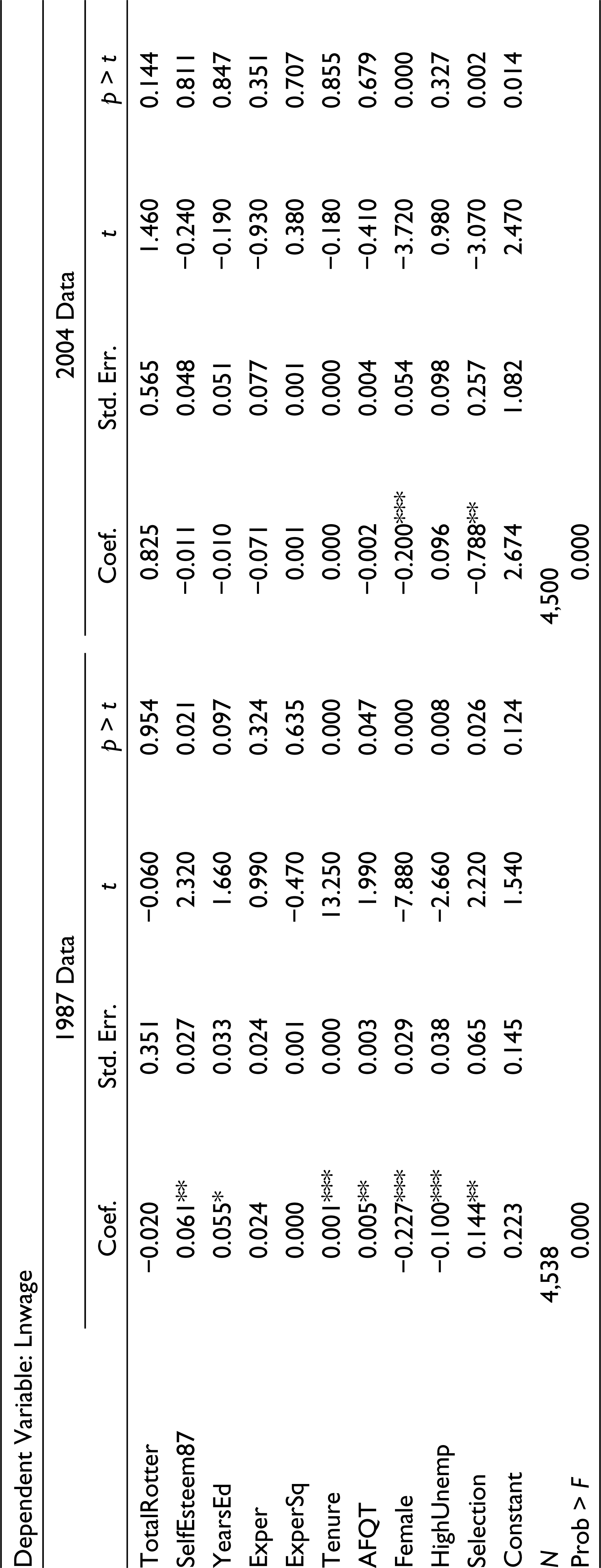
Attention is now turned to alternative specifications. Tables 7a and 7b presents stage IV results using locus of a control as an endogenous regressor instrumented with BothParents. Self-esteem remains in the model, but no instrument could be identified.
First Stage IV Results with BothParents Instrumenting for Locus of Control (Total Rotter)
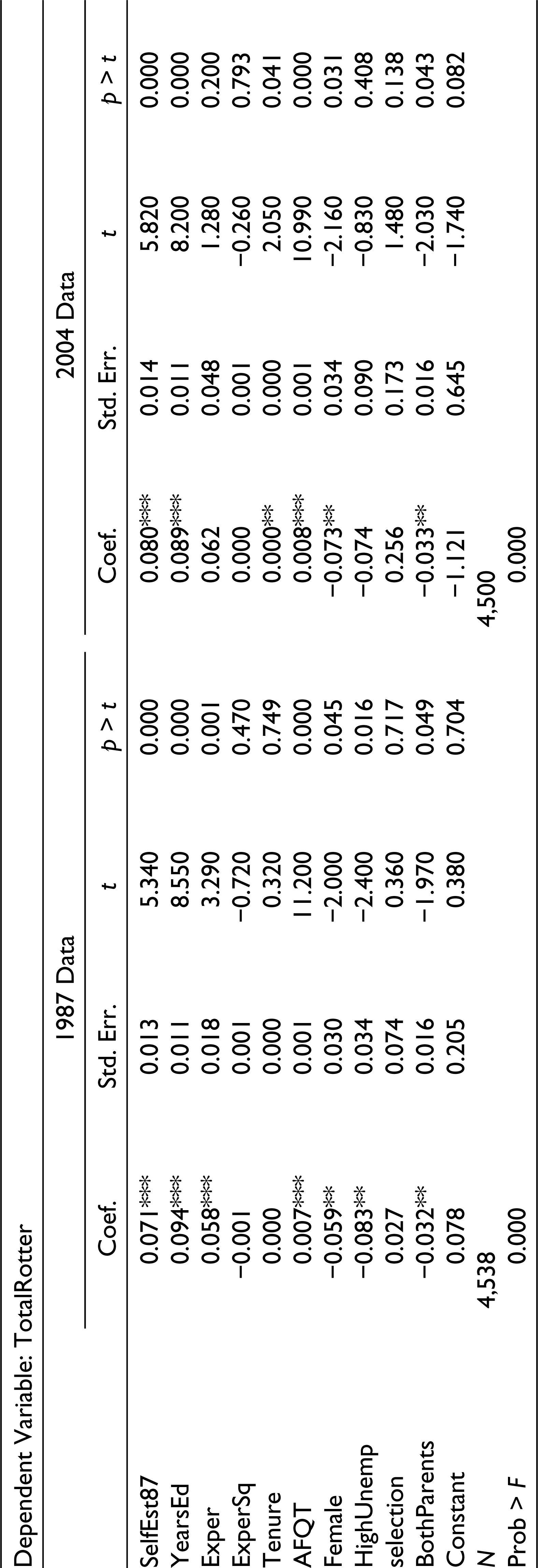
Tables 7a and 7b report results of the model where locus of control is used as an explanatory variable but instrumented with BothParents. It is perhaps surprising to see that locus of control has no detectable impact on logged earnings.
Testing over identifying restrictions failed to reject the null, and, thus, it cannot be rejected that these are valid instruments.
Second Stage IV Results with BothParents Instrumenting for Locus of Control
Tables 8a and 8b report results from a specification, where BothParents and locus of control are used as instruments for self-esteem. Again, self-esteem is highly significant and the magnitude is large. The results of this model are qualitatively similar to the original specification (Table 2).
First Stage IV Results with BothParents and Locus of Control Instrumenting for Self-esteem
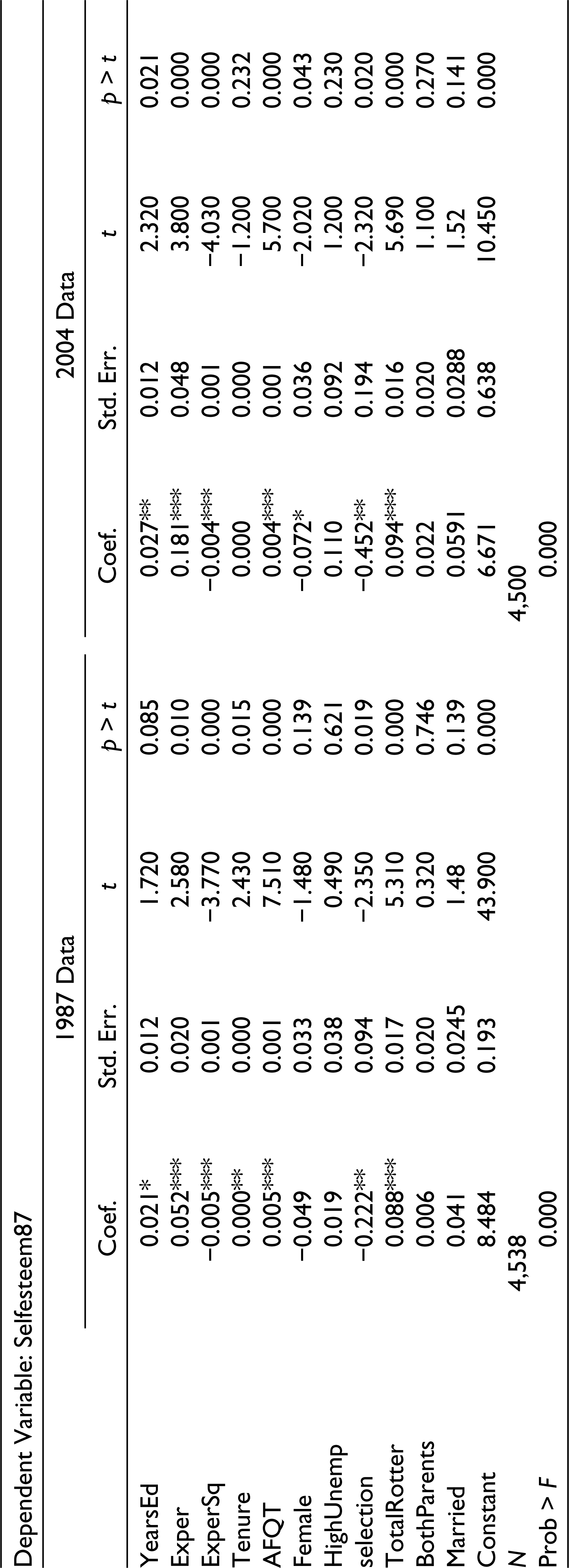
Second Stage IV Results with BothParents and Locus of Control Instrumenting for Self-esteem

Conclusion
Research into the effects of psychological capital on earnings faces notable econometric problems. Specifically, measurement of psychological variables, endogeneity and finding appropriate instruments to address the endogeneity make estimating with confidence difficult. Those difficulties notwithstanding, this article has attempted to identify the effects of self-esteem on wages. In much of the article, to identify the model, a strong assumption (that locus of control is exogenous to wages) was used, and the effects of self-esteem were examined across gender and race subgroups. It may be concluded that the overall effects of self-esteem are detectable and seem to be strongest for White males. There seems to be no detectable effect of self-esteem on the wages for African-Americans. As always, more and better data may allow one to measure the effects of psychological capital more clearly and would be an obvious avenue for future research if such data were to become available.
Footnotes
Declaration of Conflicting Interests
The author declared no potential conflicts of interest with respect to the research, authorship and/or publication of this article.
Funding
The author received no financial support for the research, authorship and/or publication of this article.
Appendix
Selection Probit for Labour Force Participation
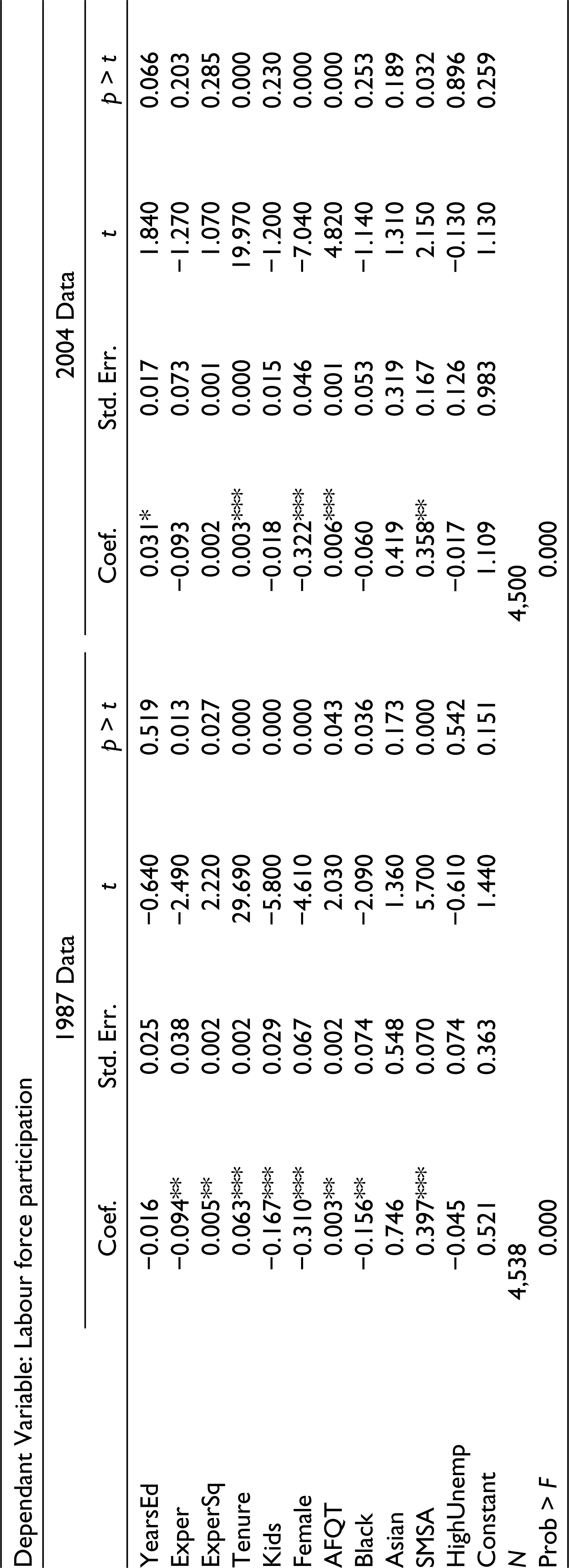
| Dependant Variable: Labour force participation |
||||||||
| 1987 Data |
2004 Data |
|||||||
| Coef. | Std. Err. | t | p > t | Coef. | Std. Err. | t | p > t | |
| YearsEd | −0.016 | 0.025 | −0.640 | 0.519 | 0.031* | 0.017 | 1.840 | 0.066 |
| Exper | −0.094** | 0.038 | −2.490 | 0.013 | −0.093 | 0.073 | −1.270 | 0.203 |
| ExperSq | 0.005** | 0.002 | 2.220 | 0.027 | 0.002 | 0.001 | 1.070 | 0.285 |
| Tenure | 0.063*** | 0.002 | 29.690 | 0.000 | 0.003*** | 0.000 | 19.970 | 0.000 |
| Kids | −0.167*** | 0.029 | −5.800 | 0.000 | −0.018 | 0.015 | −1.200 | 0.230 |
| Female | −0.310*** | 0.067 | −4.610 | 0.000 | −0.322*** | 0.046 | −7.040 | 0.000 |
| AFQT | 0.003** | 0.002 | 2.030 | 0.043 | 0.006*** | 0.001 | 4.820 | 0.000 |
| Black | −0.156** | 0.074 | −2.090 | 0.036 | −0.060 | 0.053 | −1.140 | 0.253 |
| Asian | 0.746 | 0.548 | 1.360 | 0.173 | 0.419 | 0.319 | 1.310 | 0.189 |
| SMSA | 0.397*** | 0.070 | 5.700 | 0.000 | 0.358** | 0.167 | 2.150 | 0.032 |
| HighUnemp | −0.045 | 0.074 | −0.610 | 0.542 | −0.017 | 0.126 | −0.130 | 0.896 |
| Constant | 0.521 | 0.363 | 1.440 | 0.151 | 1.109 | 0.983 | 1.130 | 0.259 |
| N | 4,538 | 4,500 | ||||||
| Prob > F | 0.000 | 0.000 | ||||||