



Abstract
The study investigates the impact of three aspects of the residential summer enrichment program (RSEP) on gifted students' decision to recommend the program to friends. The research was conducted at a public university in Saudi Arabia, with 356 gifted students from grades nine to 11. The study used Confirmatory Factor Analysis and Structural Equation Modeling to examine the causal connections between these factors and students' intention to advocate for the RSEP. The findings show that students' satisfaction with logistics arrangement, soft-skills program, and science program significantly influences their intention to promote the program. The logistics arrangement had the highest unique contribution to this intention, followed by soft skills and science programs. The study suggests that RSEP can enhance motivation, participation, program quality, and provide valuable input for decision-makers in Saudi Arabia. Enrichment programs should prioritize creating a secure learning environment while considering individual well-being and growth.
Introduction
Despite being one of the best educational options for high school gifted students, there aren’t many residential summer enrichment programs (RSEP) offered in Saudi Arabia for gifted students (Mawhiba, nd). The impact of RSEP on talented children’s social and emotional growth is significant and varied, in addition to their academic growth (Allen et al., 2011; Flynn et al., 2019; Papadopoulos, 2021). These programs are perceived to improve social skills, self-awareness, and confidence; they are also supposed to foster emotional intelligence, independence, and responsibility; they lessen feelings of loneliness; and they are thought to cultivate lifelong learners. The social and emotional development that gifted students receive during residential programs not only helps them succeed academically but also often lasts beyond the program’s completion; they positively influencing their personal and social growth in the long run (Kaul et al., 2015; Kim, 2016).
King Abdulaziz and His Companions Foundation for Giftedness and Creativity (Mawhiba), a non-profit educational organization in Saudi Arabia, offers enrichment programs for gifted K-12 students, focusing on STEM fields since 2001. These programs provide challenging, in-depth study opportunities, hands-on experiments, and real-world problem-solving, while also fostering social and personal development. Although the high impact of such programs and the long history of gifted education in Saudi Arabia, RSEPs are very limited and do not exceed 5% of total program offerings every year (Mawhiba, nd). For instance, since 2009, Mawhiba had served over 55K students in over 480 programs and very few were RSEP. In 2022, only five RSEP programs out of 55 programs serving over 7K students were offered for few hundreds gifted students, while 50 academic programs were commuting and online courses in various academic fields for K–12 students.
The low prevalence rate of RSEP, may be due to many factors pertaining to scalability, COVID-19, students’ convenience, limited hosting institutes, optimal school setting, limited accessibility, administrative issues, and complexity of design for these programs. However, the impact of these programs cannot be ignored and cannot be replaced by commuting or online forms of education, especially for youth gifted students (Allen et al., 2011; Kim, 2016). Hattie (2008), in his visible learning study, reported a very limited effect of online education and distance learning versus other means of education like acceleration and enrichment programs. Although gifted students in these programs enrolled based on their academic interests, the trend towards narrowing the holistic experience of gifted students in enrichment programs continuing post-COVID-19 is very concerning. Further, the limited development of social and emotional aspects in gifted students makes their social and emotional growth more crucial than academic performance (Allen et al., 2011; Smith, 2017). Hence, there is a need for research-based evidence on the importance of holistic experience versus academic experience to support the prevalence and advocacy of RSEP. The trend of online and distance education in gifted education might continue and receive more advocacy without proofing evidence. Therefore, there is a need for further investigation and research to inform policymakers about the holistic impact of RSEP programs on gifted students and other benefits alongside academic gains, including social, emotional, and lifelong learning (Patrick et al., 1999).
Literature review
Enrichment programs are designed to provide challenging academic and creative opportunities for gifted students, focusing on subjects such as science, arts, technology, mathematics, social sciences, and humanities (Davis et al., 2013; Tuttle et al., 1988; VanTassel-Baska & Editor, 2003). These programs offer workshops, courses, and experiential learning opportunities, fostering curiosity, innovation, and knowledge pursuit. They also emphasize social skills, teamwork, and leadership through group projects, presentations, prototypes, and outdoor team-building activities (Allen et al., 2011). Enrichment programs can be arranged in various ways, including after-school programs, weekend programs, summer programs, online enrichment programs, other school-break programs, and RSEPs. RSEPs for gifted students offer an immersive experience, allowing students to live and learn with peers who share their interests and ambitions. Such programs provide students with the opportunity to develop life skills such as independence, responsibility, decision-making, teamwork, social skills, emotional growth, self-awareness, self-confidence, time management, and more (Almus & Dogan, 2016; Kaul et al., 2015; Rinn, 2006; Wu & Gentry, 2014). In contrast, enrichment programs that only focus on students’ intellectual development through a curriculum that extends beyond regular schoolwork, fostering creative, critical thinking, and problem-solving skills. They offer advanced curricula in specialized subjects, academic challenges that match gifted students’ abilities, and individual or team projects requiring in-depth research and higher-level thinking (Berger, 2015; Davis et al., 2013; Feldhusen & Clinkenbeard, 1981; Kaul et al., 2015). However, these programs are mainly limited to academic growth.
Nevertheless, the holistic experience of gifted students acknowledges the importance of personal, social, and emotional development in addition to academics for gifted and talented students (Ambrose et al., 2013). RSEPs offer a holistic experience by design that encourages the development of a wide array of critical soft skills. RSEP provides opportunities for students to interact and build relationships with like-minded peers, supporting their emotional well-being, and may also offer support services such as counseling or mentoring to address the unique social and emotional needs of gifted students (Tuttle et al., 1988; VanTassel-Baska & Editor, 2003). The summer programs’ activities must be connected to gifted students’ development but not necessarily mimic the school year robust academic program (Davis et al., 2013). The U.S. Department of Education, based on research findings, warns about practices in enrichment programs if resample traditional school settings (Nilles et al., 2021). Activities during school vacations should be more exciting and venting for students, which may include games, field trips, and fun activities. Although these practices would limit the attrition rate in these programs, if they are well planned, they would have a high impact on the holistic development of gifted students and demonstrate a high social return on investment (Golle et al., 2018; Gubbels et al., 2014; Kim, 2016)
Resudential summer enrichment programs (RSEPs) integrate carefully selected places, settings, activities, professionals, academic tracks, soft skills, and program structure to ensure high engagement and a holistic experience that matters for a targeted age group of gifted students. Further, they must show more application of knowledge, develop psychological and social skills, and emphasize important life values (Nilles et al., 2021). In addition, they must address students’ academic passions and needs by offering a wide range of academic subjects, opportunities for project-based learning, and social activities within optimally supportive and sufficient facilities (Muammar, 2022).
Unlike other enrichment programs, RSEP ideally offers students a holistic experience with full board schooling, which includes accommodation facilities, rigorous academic tracks, and soft skills program to ensure a very intensive experience in a short time (Clark & Zimmerman, 1998; Davis et al., 2013; Tuttle et al., 1988). While holistic experience is more beneficial for gifted students, is such development implied when students reflect on their experience in these programs? Do they appreciate holistic experiences in comparison to academic endeavors? What evidence might gifted students have to support their preference for a holistic approach in enrichment programs as opposed to just academics?
Researchers have proven the substantial impact of RSEP. Studies have shown that participating in summer programs specifically created for gifted children in many areas can lead to positive academic, social, and personal results (Kim, 2016). It is important to highlight that, for talented kids, social and emotional development is more important than academic achievement, due to the less developed nature of these characteristics in gifted persons (Ambrose et al., 2013; Vantassel-Baska et al., 1984). According to Alexander et al. (2007), children who engage in summer learning activities, such as attending camps or residential programs, achieve greater scores on their fall achievement tests compared to kids who do not have structured activities during their spare time. Kaul (2014) examined the impact of a comparable initiative called Project Promise on both career outcomes and intergenerational implications. A cohort of young adults, aged 18 to 28, who had completed at least 3 years of education, were contacted to evaluate the long-term impacts of their participation. The findings revealed favorable benefits on their educational and career outcomes, social interactions, and personal development. Kaul et al. (2015) observed that the most significant influence on gifted students came from their interactions with classmates, teachers, and mentors, rather than from academic courses. In a meta-analysis conducted by Kim (2016), the influence of enrichment programs on students’ development was evaluated. The study revealed a significant positive effect of these programs on students’ achievement, personal growth, and career development. According to other studies, RSEP provided social connections and interaction with classmates, instructors, mentors, and parents, which significantly influences student engagement and the likelihood of their staying in the program (Hany & Grosch, 2007; Jen et al., 2017).
Despite the prevalence of enrichment programs in Saudi Arabia and other places, there is a lack of formal evaluations of holistic talent development, as reported in the literature (Kaul et al., 2015; Subotnik et al., 2011). The present study aims to investigate the correlation between students’ happiness and their inclination to suggest RSEPs to peers, with regards to the contextual factors, academic aspects, and development of soft skills among talented students in Saudi Arabia. In addition, researchers have identified multiple moderator characteristics that impact the efficacy of enrichment programs, depending on different outcomes. The findings demonstrate that both the type of program and the grade level have a substantial impact on academic achievement and socioemotional development (Coleman, 2001; Cunningham & Rinn, 2007; VanTassel-Baska, 2006). Specifically, enrichment programs have a stronger influence on the outcomes of older pupils (Kim, 2016; Rinn, 2006). Golle et al. (2018) documented favorable outcomes on academic performance in a grassroots enrichment program, whereas Gubbels et al. (2014) emphasized the advantages of a triarchic program on practical intelligence, motivation, self-concept, and appreciation of science. According to Wu and Gentry (2014), RSEP offers a wider range of social and emotional benefits compared to academic year programs or summer day programs. This outcome confirms the perspective that adolescence is a period characterized by individual advancement, where social factors play an increasingly significant role in either promoting or hindering the development of talent. The duration and nature of the enrichment program have a substantial influence on students’ academic performance and psychological growth, with longer programs yielding a more pronounced effect (Kim, 2016). These studies indicate that while planning and assessing enrichment programs for gifted students, it is crucial to take into account elements such as program type, duration, grade level, implementation approach, and targeted results, as they have a significant impact.
Given that Saudi Arabia, namely through Mawhiba, has limited availability of the RSEPs and is primarily focused on online learning for talented kids since 2021, it is necessary to assess the overall impact of RSEPs on the comprehensive development of these children (Mawhiba, nd). Moreover, the restricted RSEPs, which have implemented a policy of separating gifted students based on gender, may have an influence on students’ inclination to suggest these programs to their peers. Hence, additional inquiry must be conducted to authenticate these associations. Despite the proven positive impact of enrichment programs on students’ academic achievement and psycho-social development, there are still unanswered questions regarding the specific components of these programs (such as facilities arrangement, science program, soft skills program, and gender) and how they influence students’ satisfaction and intention to recommend the programs to their friends.
The significance of the study
Research on the willingness of talented students to endorse RESPs to their can provide insight into how satisfied students are with the program elements and components by quantifying their likelihood of recommending it to others. In examining the reasons behind gifted students’ intentions to recommend such programs, the research can reveal areas of success, critical needs for gifted students, potential issues to consider in program development, and areas for improvement. If participants intend to recommend the program to their friends, it’s likely that they perceive significant benefits. Thus, the aim is to reveal the benefits of RSEPs academically, socially, and emotionally to inform decision-makers and stakeholders about their effectiveness. Understanding the drivers of intention to recommend can help in devising strategies to encourage positive word-of-mouth, marketing, retention, and loyalty among participants. Further, it supports policymakers in making decisions about the mode and type of enrichment program they must advocate for and pursue. In addition, the findings of current research could contribute to the broader field of gifted education by highlighting aspects that make residential summer programs particularly effective, beneficial, or recommendable for such populations. Therefore, the intention to recommend RSEPs to friends can serve as a valuable measure serving various stakeholders (e.g., gifted students, parents, professionals, sponsors, policymakers, etc.) indicating program success and effectiveness, and studies on this topic can provide useful insights about enrichment programs and the broader field of gifted education.
Purpose and research questions
The current study aimed to determine whether gifted students’ satisfaction with the three aspects of the program: logistics arrangement, science program, and soft skills program (as latent factors) would affect students’ decision to recommend the RSEP to friends. Moreover, it aims to determine whether such effects are moderated by gender since the program was launched for both genders in two separate locations. The questions that guided the study were as follows:
Research questions
Do the study data support the targeted structure of three aspects (latent factors) of student satisfaction with the Residential Summer Enrichment Program (RSEP)⸻Logistics Arrangement, Science Program, and Soft Skills Program?
How do the students’ ratings of (Logistics Arrangement, Science Program, and Soft Skills Program) affect their intention to recommend the RSEP?
Does gender play a moderate role in the effects of the students’ satisfaction factors (Logistics Arrangement, Science Program, and Soft Skills Program) on their intention to recommend the RSEP?
Method
The study employed a quantitative research methodology. The author employed Confirmatory Factor Analysis [CFA] and Structural Equation Modeling [SEM] as analytical techniques to address the study inquiries. SEM is employed to assess the multivariate causal connections of three underlying factors on students’ intention to promote the RSEP. This is done by examining the direct and indirect impacts on pre-established causal links (Dimitrov, 2014). The dependent variable was the students’ desire to suggest the RSEP. The predictor variables consisted of the following dimensions: (a) logistic arrangements; (b) science program; and (c) soft skills program.
Participants
The sample consisted of 356 students (53% male and 47% female) whom Mawhiba identified as gifted in Saudi Arabia. The sample represents the top 10% of Mawhiba Multiple Cognitive Abilities Test (MMCAT), an assessment to identify gifted students in Saudi Arabia. MMCAT assesses students’ mental abilities in four areas: (a) flexibility of thinking, (b) mathematical and spatial reasoning, (c) scientific and mechanical reasoning, and (d) linguistic reasoning and reading comprehension (NCA, 2018). MMCAT is a national test to identify gifted students administered by the National Commission of Assessment [NCA]. Students can be nominated to take MMCAT by teacher recommendation, self-nomination by parents, or students themselves. Students can complete MMCAT within two-and-a-half to 3 h (NCA, 2018). The validity and reliability of the MMCAT have reported in different studies (Alharbi & Dimitrov, 2015; Dimitrov & Alharbi, 2014; Hitchcock & Johanson, 2012).
Participants in RSEPs comprised Saudi and non-Saudi students from various cities in the kingdom, including three grade levels: ninth, 10th, and 11th. RSEP was a three-week camp carried out at two separate sites for both genders within the same institute, using the same program structure, content, and activities but different academic and administrative teams and residential facilities. The gender difference in overall satisfaction was checked using a t-test (t(354) = 1.243, p = .215), and the results showed no significant difference according to gender in overall satisfaction. The attrition rate was 2.9% (3.3% for male [three students] and 3.2% for female [two students]).
Materials
Description of residential summer enrichment program
The RSEP for gifted students was hosted at a university in the Eastern Province of Saudi Arabia, considered one of the largest and oldest institutions in the province. Mawhiba adopts Saudi Arabia gender segregation policy in education; thus, males and females were on two separate campuses with different facilities and staff. The RSEP was a holistic experience integrating knowledge, creativity, innovation, and entrepreneurship. RSEP aim was to nurture the potential of brilliant students and equip them with the skills needed to thrive in the 21st century. It was structured using two conceptual models: the European Framework for Quality Management (2021) and the Talent Development and Innovation Framework (Muammar & Maker, 2022). Within this framework, developers implemented a comprehensive strategy for nurturing talent, incorporating stimulating and demanding tasks that encourage students to engage in creative and analytical thinking, rather than relying on basic cognitive processes.
The RSEP structure comprised three components: (a) science tracks selected by students; (b) a simulated work environment where students were assigned to a “company” and tasked with creating a business plan to tackle a chosen business opportunity challenge; and (c) a comprehensive soft skills program that encompassed explicit and implicit instruction in personal, social, and psychological skills. The subsequent sections provide a more comprehensive explanation of each of these components (Muammar & Maker, 2022).
Science program
Students enrolled in RSEP select a knowledge track from the options provided, based on their individual interests. The available options for study were: (a) Energy or Electrical Engineering; (b) Mechanical Engineering or Biotechnology; (c) Principles of Engineering Design; (d) Encryption and Cybersecurity; (e) Anatomy and Physiology; and (f) Applied Medical and Biological Sciences. Within the scientific program, students actively participated in lectures and project-based learning activities that emphasized critical thinking skills. They engage in interactive and practical learning activities and are provided with chances to showcase their performance in diverse ways (Muammar & Maker, 2022).
Soft skills program
Within this section of RSEP, students from various fields of expertise engaged in a simulated work setting. The participants were required to select a specific challenge aligned with the national priorities of Saudi Arabia and devise solutions that would result in a comprehensive business plan to tackle the identified challenge. Making a clear connection between the knowledge tracks and how this knowledge translated into solutions for start-up companies’ products or services that could serve the economy in the future. During this part of the day, a few students were selected from each group to engage in soft skills training, encompassing topics such as creativity, leadership, self-awareness, and team building (Muammar & Maker, 2022).
The soft skills program incorporates team-based activities that foster emotional, motivational, and social capacities that students require for success in the modern era. The soft skills program was categorized into three interconnected domains: (a) personal skills encompassing initiative, tolerance, co-existence, compassion, mastery, vision, career orientation, critical thinking, analysis, time management, and fitness; (b) social skills including communication, effective listening, and collaboration; (c) psychological skills involving self-awareness, adaptation, resilience, and stress management. Certain skills were explicitly taught, such as leadership, creativity, entrepreneurship, and stress management, while others were implicitly taught, including time management, cooperation, and critical thinking (Muammar & Maker, 2022).
Logistics and facilities arrangement
RSEP was given complete access to the logistics facilities by the host institute. The RSEP had complete access to all instructors, labs, transportation, dorms, dining rooms, restaurants, recreational facilities, prints, playgrounds, and other resources, with full backing from the high administration. As an example, students were allocated an individual bedroom (exclusively for guys) with a private bathroom. The rooms were furnished with top-notch amenities, including high-speed internet, a desk, seats, and a table lamp. The auditoriums were furnished with digital displays, enabling students to see films or showcase their work. The campus restaurants provided catering services and offered a variety of meal options. At the female location of RSEP, female students shared rooms with two students each. Every room was equipped with a private bathroom, and the amenities in each room were comparable to those in the male area. The science tracks taught by faculty members vary between genders. Nevertheless, they utilize the same educational resources as the hosting institutions (Muammar & Maker, 2022).
A daily schedule at RSEP
A typical day commenced at 6:30 a.m. as students woken up arranged their rooms, and thereafter boarded the buses to the breakfast dining facilities. The food team supplied nutritious meals to the students and also provided portable refreshments for the day. Students boarded the buses at 7:30 a.m. to participate in their scientific program, which commenced at 8:00 a.m. in various colleges corresponding to their science tracks. Students collaborated with their academic professors in their scientific program till 2:30 p.m. Throughout the scientific program, students were given several scheduled breaks. At 3:00 p.m., all students assembled in the main auditorium to reflect on their day and engaged in enjoyable activities to refresh themselves for the remainder of the day. The soft skills program commenced at 4:00 p.m., prompting students to create fresh teams to get entrepreneurial experience and enhance their soft skills. During this period, students from several scientific disciplines collaborated in groups to tackle an issue motivated by national priorities, with the aim of proposing a solution that has the potential to evolve into a business venture. The skills development workshops were provided to all students in a concurrent manner through rotation. At approximately 6:00 p.m., pupils were provided with the opportunity to have dinner. A red-carpet celebration was organized at 8:00 p.m. to acknowledge exceptional students and successful teams for the day. Students were transported by busses to physical education facilities around 8:30 p.m. in order to undergo training in different sporting programs. At 10:00 p.m., students returned to the dormitory facilities and were given their cell phones for a duration of 1 h. The light was switched off around 11:00 p.m., and the students were instructed to go to sleep.
Measurements
A 54-item survey according to Mawhiba guidelines was developed. The leaders believed that measuring students’ satisfaction on each RSEP component would help improve student experience during the implementation, optimize students’ experience, and satisfy Mawhiba and families’ expectations since RSEP was tuition-based. The survey’s primary purpose was to collect data to build a knowledge-based system to inform the quality improvement of RSEP. Participants were asked to rate the quality of each item on the survey using a 5-point Likert-type scale (5 = excellent, 4 = very good, 3 = good, 2 = average, and 1 = poor).
In addition, one main item related to overall satisfaction using the star rating of the program was introduced at the beginning of the survey. This item rated the overall gifted students’ satisfaction with the program (criterion variable). This item explicitly asks students, “… to what extent would you recommend and refer friends and relatives to this program?” which implies their overall satisfaction. The extent to which gifted students’ experience in RSEP would influence their decision to refer friends. The satisfaction of students plays an essential role in the excellence and sustainability of the program. Students’ satisfaction is defined as their opinion of the service received compared to the expected service (Jani & Han, 2011). Satisfaction is fulfilled if students expect to receive a service of a certain quality that meets or exceeds their expectations. The overall satisfaction item was rated from one to 10 using a star rating.
The science program subscale included 17 items that focus on students’ satisfaction with the content, level of challenge, application of knowledge, instruction, students’ engagement, and constructive assessment and feedback. Consistent with a talent development framework, the highlighted science program emphasizes exposure to a variety of subjects, offering greater opportunity for gifted potential across a wide variety of domains and skills (Muammar & Alfaiz, 2023; Muammar & Maker, 2022). The soft skills subscale included 17 items corresponding to how the soft skills program provided activities to satisfy the students’ needs and equip them with essential skills needed, including creativity, social skills, leadership, emotional intelligence skills, self-awareness, and entrepreneurial skills. Moreover, the soft skills program aims at equipping students with lifelong learning skills and ensuring holistic development. The logistics arrangement subscale included 19 items about the various logistical issues in the program, including accommodation, facilities and equipment, transportation, food, and security. The reliability estimates and internal consistency indicated by Cronbach’s alpha were as follows for the three dimensions (independent variables): science program, alpha = .94; soft skills program, alpha = .97; and logistics arrangement, alpha = .90. The reliability values in the three dimensions were high.
Procedure
Data collection
Data was gathered throughout two consecutive summers, specifically in 2018 and 2019. The purpose of the data collection was to make an informed decision about various program dimensions to improve the upcoming versions of the program. Students responded to the survey anonymously and provided their feedback about the program. Students received an electronic survey to rate the components of the program. The completion of the survey was voluntary, without names, and confidential. The participants consented to using their data for research purposes.
Statistical analysis
To address the first research question (RQ1), the author used a confirmatory factor analysis (CFA) to test the fit of a model with three correlated factors of student satisfaction with the RSEP, namely logistics arrangement, science and soft skills programs. CFA was used because these three latent factors (aspects of student satisfaction) were targeted a priori, and the survey items (questions) were developed to serve as their observable indicators. Specifically, each item measuring satisfaction with the quality of the program aspects.
The second research question (RQ2) was addressed by upgrading the CFA model to a structural equation model (SEM) by regressing the students’ “intention to recommend the program” (IRP) on the three latent factors (aspects) of program satisfaction (logistics arrangement, science and soft skills programs).
Finally, the third research question (RQ3) was addressed by testing for the moderation effect of gender on the regression impact of each latent factor (logistics arrangement, science program, and soft skills program) on the dependent variable IRP. The analysis was carried out by adding in the SEM model the regression of IRP on the interaction between gender and the respective latent factor. A statistically significant interaction would indicate that gender plays a moderate role in the effect of the respective latent factor of student satisfaction on their intention to recommend the program (Hayes, 2022; Jose, 2013).
Results
Results related to RQ1
Testing for data fir of CFA models.
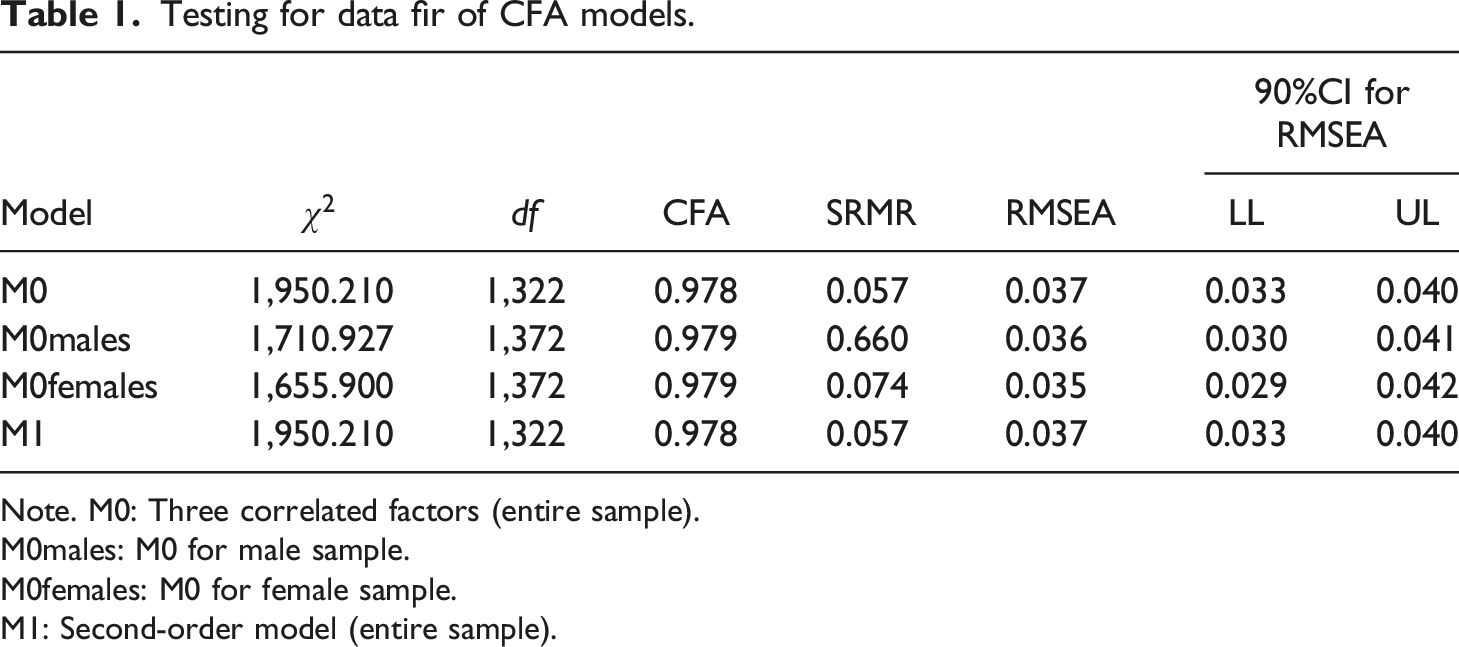
Note. M0: Three correlated factors (entire sample).
M0males: M0 for male sample.
M0females: M0 for female sample.
M1: Second-order model (entire sample).
Standardized factor loadings for three correlated factors model.
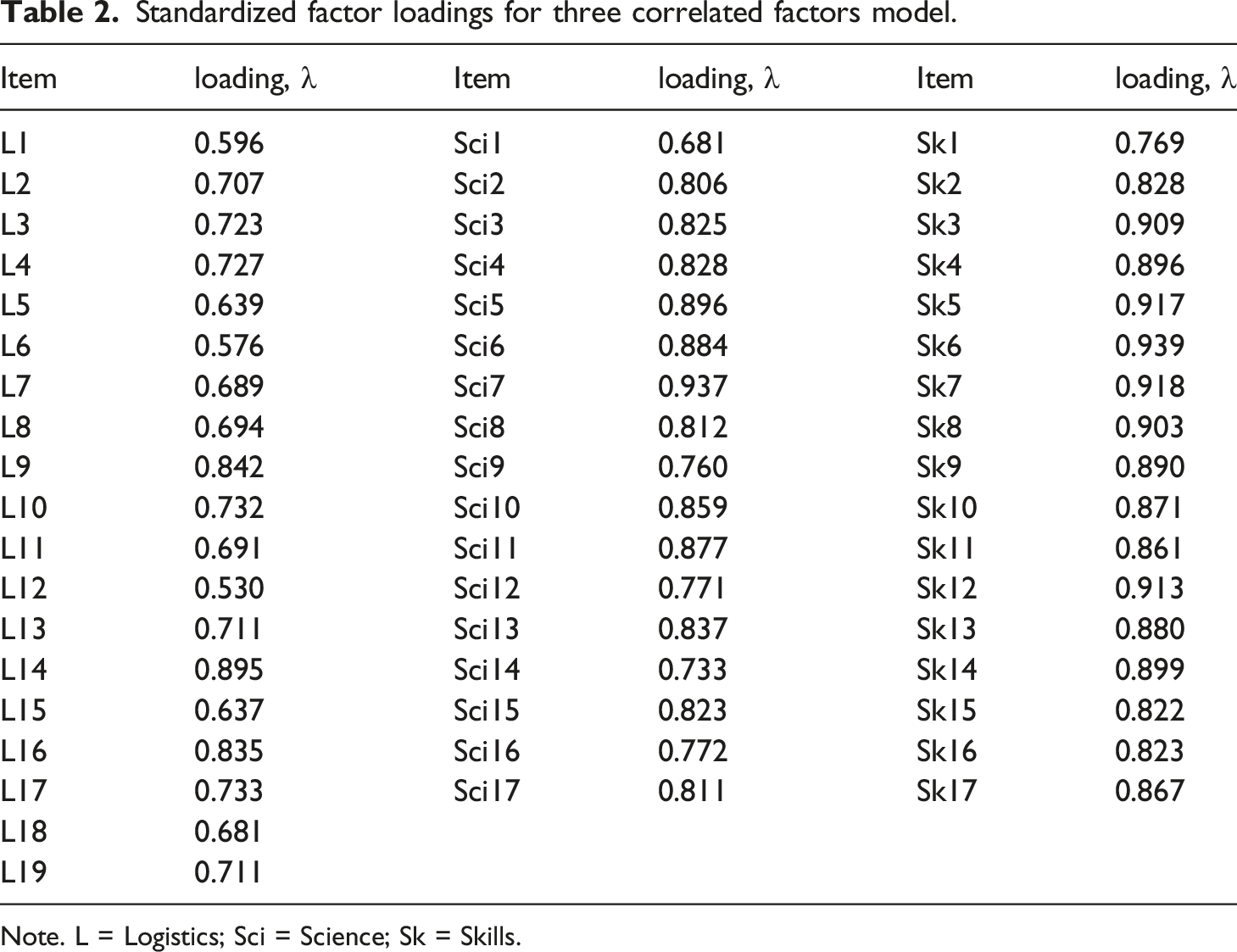
Note. L = Logistics; Sci = Science; Sk = Skills.
Testing for moderation of gender effect on the impacts of three factors of student satisfaction with their intention to recommend the RSEP.
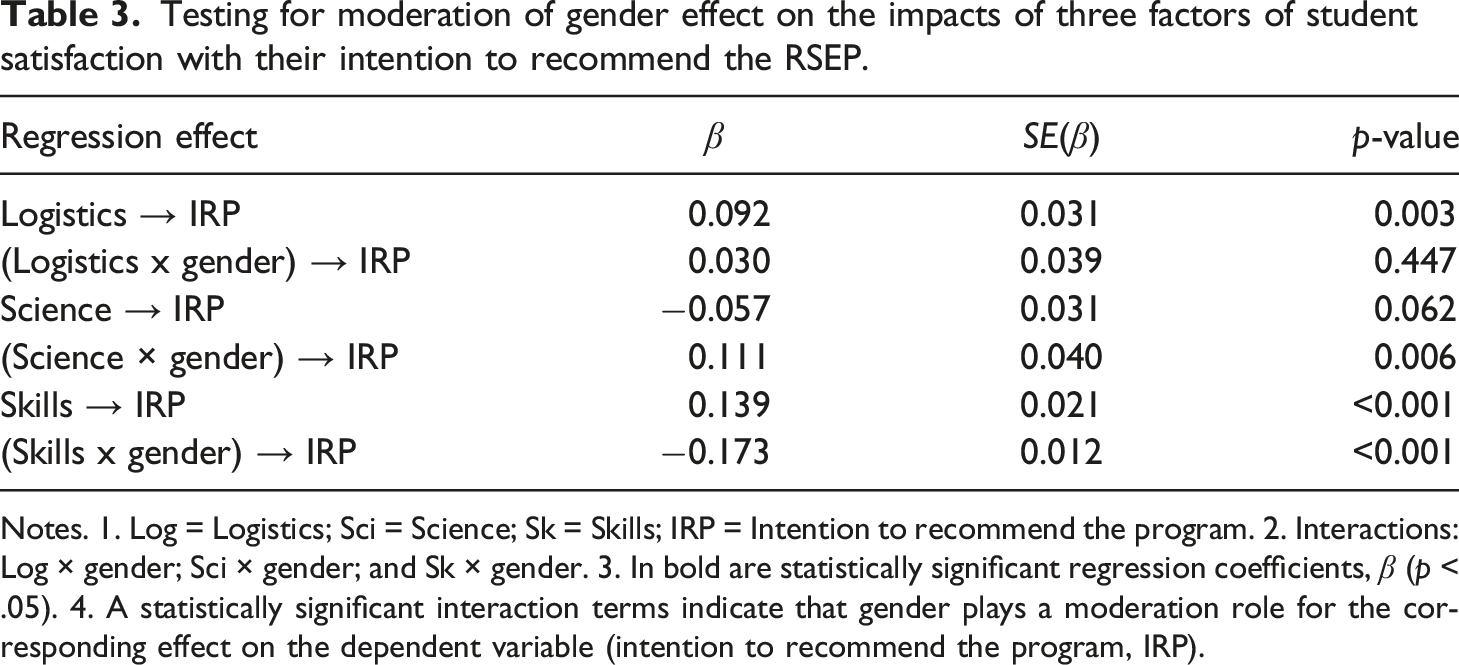
Notes. 1. Log = Logistics; Sci = Science; Sk = Skills; IRP = Intention to recommend the program. 2. Interactions: Log × gender; Sci × gender; and Sk × gender. 3. In bold are statistically significant regression coefficients, β (p < .05). 4. A statistically significant interaction terms indicate that gender plays a moderation role for the corresponding effect on the dependent variable (intention to recommend the program, IRP).
The values of the goodness-of-fit indices in Table 1 show that the CFA model with three correlated factors demonstrates an excellent data fit according to widely adopted criteria (Dimitrov, 2012, p. 105; Hu & Bentler, 1999) as follows: (a) CFI > 0.95 (for excellent fit), (b) SRMR < 0.05 (for excellent fit) or SRMR < 0.08 (for tenable fit), and (c) RMSEA < 0.05, with its 95% confidence interval entirely below 0.05, for excellent fit. Furthermore, as shown in Table 2, all standardized factor loadings are statistically significant and very substantial in magnitudes (ranging from 0.530 to 0.939); each standardized loading indicates the correlation between the respective item and its corresponding latent factor.
The three latent factors (logistics arrangement, science program, and soft skills program) were found to be highly correlated, with correlation coefficients (a) 0.728 between logistics arrangement and science, (b) 0.706 between logistics arrangement and soft skills program, and (c) 0.642 between science and soft skills program. This justified the testing for a second-order CFA model, where the second-order factor (labeled general satisfaction) is explained by the three latent factors used as first-order factors. The general factor loadings for the three latent factors (logistics arrangement, science program, and soft skills program) were 0.895, 0.814, and 0.789, respectively. The goodness-of-fit indices for this model, denoted as model “M1” in Table 1, indicate that this model provides an excellent fit to the study data. Thus, the data structure is explained by a general factor of student satisfaction with RSEP based on three specific domains of satisfaction (logistics arrangement, science program, and soft skills program).
Results related to RQ2
The effects of the students’ satisfaction factors on their intention to recommend the Residential Summer Enrichment Program (RSEP) were examined in the framework of a structural equation model depicted in Figure 1. As shown in the diagram, the highest effect on RSEP is produced by the statistically significant effect of logistics arrangement (β = 0.365), followed by the statistically significant effect of soft skills program (β = 0.265), and then the statistically nonsignificant effect of science (β = 0.041). Also, it was found that the three latent factors of students’ satisfaction, taken together, explain about 32% of the variance in the dependent variable, IRP RSEP. SEM diagram for effects of satisfaction latent factors on intention to recommend the RSEP. Note. Presented are standardized regression coefficients of effects. *Statistically significant regression coefficient (p < .001).
Results related to RQ3
The third research question, RQ3, is about whether the effects of the three latent factors of student satisfaction on RSEP are moderated by gender, that is, whether these effects are the same for males and females. To address this question, the SEM model in Figure 1 was extended by regressing the dependent variable, intention to recommend RSEP, on the interactions between gender and each of the three latent factors of student satisfaction with RSEP (logistics arrangement, science program, and soft skills program). The results are summarized in Table 3. As can be seen, the regression coefficient (β) is not statistically significant for the interaction between logistics arrangement and gender (p = .447). Thus, gender does not play a moderation role in this case; that is, the effect of logistics arrangement on the intention to recommend RSEP is the same for males and females. On the other side, β is statistically significant for the interaction between science program and gender (p = .006) and soft skills program and gender (p < .001), which indicates that gender plays a moderate role in the effects of science program and soft skills program on the student’s intention to recommend RSEP.
The following specific results on the effects for the samples of males and females were also found: The effect of logistics arrangement, which is the same for males and females, is statistically significant for both males (β = 0.10, p = .003) and females (β = 0.12, p < .001). The effect of science program, which is moderated by gender, is not statistically significant for males (β = −0.054, p = .062), but it is for females (β = 0.057, p = .040), although their difference is negligible. Finally, the effect of soft skills program, which is moderated by gender, is statistically significant for males (β = 0.139, p < .001) but not so for females (β = 0.034, p = .060).
Main findings
The results related to RQ1 validate the structural design of the RSEP survey with items (questions) tapping on three latent factors of students’ intention to recommend the RSEP to friends based on satisfactory level with logistics arrangement, science program, and soft skills program. Furthermore, the three latent factors are highly correlated and generate a second-order latent factor, referred to here as a general factor of student overall satisfaction with RSEP.
The results related to RQ2 (see Figure 1) show that the students’ satisfaction with logistics arrangement has the highest unique contribution to the prediction of their intention to recommend RSEP, followed by the unique effect of soft skills program and the negligible (close to zero) unique effect of science program. That is, after taking into account (partially out) the effects of logistics arrangement and soft skills program, the remaining unique contribution of science program to the prediction of intention to recommend RSEP is not statistically significant.
The results related to RQ3 show that the effect of logistics arrangement on intention to recommend RSEP is not moderated by gender, and it is statistically significant for both males and females. In contrast, the effects of science and soft skills program on the intention to recommend RSEP are moderated by gender. Specifically, the effect of science program is statistically significant for females but not so for males, although their difference is negligible. On the other side, the effect of soft skills program is statistically significant for males but not so for females.
Discussion
Logistics facilities dimension
The findings indicated that the logistical arrangement feature played a crucial role in determining students’ overall satisfaction with the RSEP (Muammar, 2022). The logistics arrangement is crucial in the educational setting as it ensures the availability of necessary resources, safety measures, and materials to facilitate the learning process. Facilitating the prompt supply of materials and necessary resources, as well as creating a conducive environment, enhances students’ learning experience. Logistics arrangements involve the efficient and effective management of resources. Students expressed that the technical equipment and laboratories in the program were suitable in terms of their size, device quality, and safety and security measures. Students reported that the locations where the program’s activities were carried out fully complied with all safety and security standards. The quality of accommodation in dormitories was excellent. The transportation was secure and pleasant. Moreover, the findings indicated that the impact of logistics arrangement on the inclination to endorse RSEP is not influenced by gender, and it is statistically significant for both males and females. Although male site is more modern and equipped than female facilities. The findings revealed that both male and female students were quite satisfied with the program’s logistical arrangement, which assured that the program received the best possible amenities.
The strategic organization of logistics at RSEP is crucial in influencing the holistic growth of talented students (Allen et al., 2011; Flynn et al., 2019; Hébert & McBee, 2007; Papadopoulos, 2021; Tookey, 1999). Acquiring life skills is essential for intellectually bright young individuals. Logistical arrangements, such as arranging accommodation and establishing a daily routine, together with regulations, contribute to the development of vital life skills in students. These abilities include self-care, organization, time management, and responsibility, which are crucial for their overall development. Moreover, these configurations have a role in fostering social-emotional growth. Coexisting with other students promotes social interactions and emotional connections, enhancing communication abilities, empathy, and comprehension of variety, so supporting the social-emotional growth of pupils (Allen et al., 2011; Flynn et al., 2019; Monke, 2015; Rinn, 2006). Thoughtfully organized and coordinated activities, instructional sessions, workshops, and field excursions augment holistic development. These arrangements enhance personal development and self-sufficiency by enabling participants to handle their own tasks, such as laundry and meals, fostering discipline, self-reliance, and resilience. Furthermore, engaging in sports and physical exercise enhances persons’ physical well-being and fosters their holistic growth. The access time provided by RSEP accommodates the varied hobbies and interests of intellectually talented pupils. The presence of theater, playing fields, and other facilities enables the development of students’ talents and hobbies outside academic pursuits. Creating a secure environment is essential for students to have a sense of safety and maintain good health, which is vital for their overall welfare. Implementing robust security protocols, providing comprehensive medical facilities, organizing well-balanced dietary arrangements, and other measures are in place to ensure that students are able to maintain a stress-free environment and concentrate on their overall growth (Muammar & Maker, 2022). An intricately planned and organized logistical layout and setup can establish a stimulating environment for exceptional children, facilitating their comprehensive growth (Hébert & McBee, 2007; Kaul et al., 2015; Kim, 2016; Muammar, 2022; Tookey, 1999).
Soft skills program
The findings indicated that the soft skills program had the second highest correlation with students’ inclination to suggest the RSEP to their peers. The soft skills curriculum was designed to foster the comprehensive growth of talented children by offering a variety of organized activities. According to students, the RSEP enhanced their talents in a distinct manner compared to what they acquired at school. They highlighted the enjoyable and significant nature of the soft skills program, including its activities, events, and applications. Usually, around 30% of a student’s time in RSEP is dedicated to the development of soft skills by participation in various activities such as creativity workshops, teamwork activities, leadership sessions, entrepreneurial experiences, and athletics activities (Muammar & Maker, 2022). These activities involved rotating and interacting with different individuals to guarantee that all students had the opportunity to attend them. The results also indicated that gender played a moderating role in the impact of the soft skills program on the intention to suggest RSEP. The impact was statistically significant for males, whereas it was not significant for females. While the soft skills program initially included the same content for both males and females during the design phase, a reduced version was used in the female section in response to the director’s decision about the program. Possible interpretations emerged to explain gender as a moderator in RSEP’s soft skills program, including program content and administration, socialization and peer relationships, and available support and resources. According to the director of the female program, there had been a reduction in the soft skills program for female participants as a result of extensive afternoon activities in response to student complaints, which may have decreased female students’ engagement. Consequently, the female students had fewer meetings and interactions with peers in the structured settings within the program, which may have had a lower influence on female students’ satisfaction with the soft skills program. Differences between male and female soft skills program dynamics, leadership, accessible support and resources, and interactions with mentors and peers may all contribute to girls’ unfavorable feedback of their own experiences in this part of the RSEP.
The team-based experience in RSEP typically requires students to engage in a range of activities where they collaborate with their peers towards a shared objective, aiming to promote comprehensive growth. Collaborating with others is a crucial principle for designing successful programs in demanding and competitive contexts. The soft skills program was intended to facilitate organized social interactions that cultivate a wide range of talents, resulting in significant advantages for the comprehensive growth of talented students (Faizi et al., 2018; Muammar, 2022; Vandell et al., 2015). Gifted kids engage in activities that aim to improve both their social and emotional skills through interactive experiences. This facilitates students articulating their views more proficiently, thereby enhancing their overall social and emotional development. Within the framework of RSEP, students collaborated in teams and were further exposed to a range of problem-solving competitions. They were expected to engage in critical and creative thinking in many circumstances and demonstrate their decision-making abilities. Students were mandated to engage in collaborative teamwork as a fundamental principle of the program, participating in a range of activities and projects. These experiences developed a sense of mutual respect and solidarity among students, instructing them in the importance of valuing varied perspectives, collaborating in a group setting, and developing proficient interpersonal skills (Muammar & Maker, 2022).
Through engaging with diverse peers and adults within a secure and nurturing setting, students gain a deeper understanding of their own attributes, limitations, interests, and aspirations (Allen et al., 2011; Coleman, 2001; Muammar, 2022). Enhancing their self-assurance and self-regard are crucial attributes for achieving success in any domain. In addition, the RSEP soft skills program enhanced emotional intelligence by instructing students in the identification, comprehension, and regulation of their own emotions as well as those of others. As a result, pupils cultivated empathy, fortitude, and enhanced interpersonal connections. Exposure to diverse perspectives and the need to interact with others are unavoidable aspects of living and working together. RSEP empowered students with the capacity to effectively manage conflicts under the guidance of mentors, a crucial aptitude that is valuable not only in academic settings but also in personal life and future professional environments (Allen et al., 2011; Davis et al., 2013; Faizi et al., 2018; Smith, 2017). This prepared gifted students for future success in both their personal lives and careers (Feldhusen & Clinkenbeard, 1981; Patrick et al., 1999). The significant advantages and achievements of RSEP emphasized students’ tendency towards endorsing such programs to their friends and peers, potentially surpassing their academic gains.
In general, the favorable impact of social variables in enrichment programs aligns with prior studies indicating that social and academic support are essential elements for kids in gifted programs (Allen et al., 2011; Kaul et al., 2015; Smith, 2017; Worrell et al., 2000). According to a study by Johnsen et al. (2006), social connections with peers, instructors, mentors, and parents had the most significant influence on student engagement and the likelihood of staying in school. Hence, constructive social engagement within the educational setting can profoundly influence students’ comprehensive growth, encompassing their social and emotional dimensions (Almus & Dogan, 2016; Kaul et al., 2015; Rinn, 2006; Wu & Gentry, 2014).
Moreover, cultivating a feeling of inclusion in RSEP, particularly for intellectually talented youths, and establishing favorable connections with classmates, instructors, and mentors can result in social, emotional, and academic advancement among participants (Faizi et al., 2018; Flynn et al., 2019; Gubbels et al., 2014). An academically gifted individual who experiences a sense of acceptance and inclusion is more inclined to exhibit enthusiasm towards acquiring knowledge and is more likely to achieve their utmost capabilities. Although the sense of belonging may only be temporary in places like summer camps, it is crucial for determining if pupils feel secure in a certain environment. Hence, it is not surprising that the logistic arrangement dimension emerged as the primary predictor of students’ inclination to endorse RSEP. This finding emphasizes the importance of educators striving to establish nurturing and stimulating settings equipped with ample resources to facilitate optimal student development and welfare (Davis et al., 2013; Kaul et al., 2015; Monke, 2015; Vantassel-Baska et al., 1984; Walsh, 2019).
Science program
Even though the science program in the RSEP was designed with high standards, as described by Davis et al. (2013), the science program in the current study had negligible contribution to students’ intentions to recommend the RSEP to friends based on the students’ average perceptions in comparison to other dimensions. Although the previous study carried out by the same author (Muammar, 2022) focused on measuring the impact of RSEP in the same institute and showed a high effect size of the science program (Cohen’s d = 1.437) on academic achievement using pre- and post-tests, the perception of students articulated that the soft skills program was more important to them than the science program. However, this does not mean the science program was not effective. Measuring impact using students’ perceptions involves gathering subjective views on how students perceive their learning experiences, including their engagement and satisfaction. This method focuses on understanding the subjective experiences and perspectives of students, providing insights into their attitudes and emotions related to their experiences. On the other hand, measuring impact using test results involves collecting quantitative data on students’ performance through exams, which emphasize objective measures of student achievement that reflect growth over time. Perception-based measures capture students’ subjective experiences and interpretations of their learning, while test results provide concrete evidence of their academic performance and mastery of content knowledge. The current study and the impact study (Muammar, 2022) used both approaches to complement each other and offer valuable insights into different aspects of RSEP to gain a more comprehensive understanding of the impact of such experiences on student learning outcomes.
Another possible explanation, of why this aspect was the least likely to predict satisfaction compared to the soft skills program and logistics arrangement aspects. This could be because science tracks, lessons, teachers’ qualifications, and the ways they teach were very different in both locations. Interestingly, the findings of the current research were consistent with Kaul et al. (2015), who indicated that it was not the courses that had the strongest impact but the relationships resulting from involvement in the program. However, others found high impact of RSEP on science achievement on pre and post-tests (Berger, 2015; Feldhusen & Clinkenbeard, 1981; Gubbels et al., 2014; Kaul et al., 2015; Muammar, 2022).
The findings also demonstrated that gender moderated the science program effect on the intention to recommend RSEP. The effect of the science program was statistically significant for females but not so for males. Female students stated that the science program was important during the implementation of the RSEP compared with the other dimensions, although this correlation was negligible. This outcome was consistent with the earlier interpretation of gender as a moderation factor in the soft skills program. Because girls feedback was lower in soft skills programs than boys, the science program was of greater importance to females. Another possible interpretation may be attributed to the female instructors who delivered the science content to only female students, and they may have mastered the scientific content with females more than the male instructors. Nevertheless, the author contended that implementing a reduced version of the soft skills program specifically for females could potentially heightened the importance of the science program compared to the original soft skills program. Furthermore, gifted students often have advanced cognitive abilities and can quickly grasp academic concepts, making traditional academic studying less impactful for them (Kual, 2014; Kaul et al., 2015). On the other hand, social interaction plays a significant role in their growth because it helps to develop their emotional intelligence and interpersonal skills, which are critical needs for them and may be lacking (Ambrose et al., 2013). In alignment with previous research, the effectiveness of enrichment programs differs depending on whether the students’ outcome is academic achievement or socioemotional (Allen et al., 2011; Golle et al., 2018; Monke, 2015; Rinn, 2006).
Limitations and future research
The three latent factors of students’ intention to recommend the RSEP to friends, taken together, explain around 32% of the variance in satisfaction with the RSEP. Around 68% is the remaining unexplained variance. Future research may investigate additional variables and dimensions contributing to students’ satisfaction using other means (e.g., using additional open-ended questions in the survey interviews). The unexplained variance may be due to several dimensions absent from the current study, including students’ ability, family involvement, motivation, and program leadership.
Other limitations may pertain to the sample selection, methodology, condition of RSEP, and lack of causality in the design. For instance, the study sample does not represent the whole gifted population in Saudi Arabia, which may limit the generalizability of the results. The sample consisted of students in grades nine through 11 from various geographical locations. They are in the top 5% of their age group for cognitive ability. Because of the sample’s limitations and the socioemotional developmental nature of this group, the findings may not be completely generalizable to all talented students in grades K-12. Therefore, the present results may not apply to the whole talented population. Future research should examine holistic development across age groups and geographical locations. However, the present research and its literature-based findings may be relevant to gifted groups with similar demographics and developmental ages. Furthermore, in Saudi Arabia, the policy of a sex-based segregation education system entails two separate locations for males and females. This issue in the condition of the program may influence the outcome. In addition, methodologically, both independent and dependent variables were assessed simultaneously, which might amplify the dependent variable’s variance. Moreover, the design of the study lacked causality inference. Worth noting that since the current research was based on observational data and there was no variable manipulation, causation cannot be established. Thus, it is very difficult to demonstrate causation between students’ desire to suggest the program to friends and other program’s characteristics. Future studies might help solve this restriction and give more definitive information regarding students’ desire to promote such a program to friends by using experimental designs or quasi-experimental approaches that allow for more control over variables. Prediction studies that focus on predicting outcomes rather than identifying causal relationships between variables may not provide a comprehensive insight into the underlying latent factors or causes of the outcomes.
Although the idea that enrichment programs have a positive influence on students’ academic achievement and socioemotional development is appealing, there are still questions remaining about how different environment and population characteristics (e.g., school context, socioeconomic status, ethnicity, gender, program duration, different types of intervention, teacher training) influence the effects of enrichment programs (Kim, 2016). Further, it may be beneficial to use qualitative methods alongside quantitative approaches to provide more nuanced insights into the factors influencing students’ intentions to recommend such programs. Qualitative methods such as interviews, focus groups, or open-ended surveys could offer a deeper understanding of participants’ experiences, perceptions, and motivations.
Implications
The findings of the current study have several implications. First, assessing students’ intention to recommend RSEP to friends after the program’s implementation helps program developers increase the motivation and engagement of gifted students in these programs, improve the quality of RSEP to meet students’ expectations and interests, and provide feedback on the program’s quality for decision-makers. High satisfaction due to the program drives gifted students to recommend the program to friends, spreading word-of-mouth about the quality of RSEP and improving the program’s reputation and visibility. Attrition is a critical challenge that policymakers and leaders encounter when implementing such intensive programs because of the high dropout rate among students. Therefore, high satisfaction would increase retention and reduce attrition. Many studies and reports (Almus & Dogan, 2016; Curry et al., 1991; Terwilliger & Titus, 1995; Wexler, 2013) found that the average attrition rate was between 20% and 35%. Locally and within the RSEPs funded by Mawhiba, the average dropout rate in 2018 was 5.9% (Mawhiba, 2018).
Educational programs should prioritize a safe and supportive learning environment where students feel physically, socially and emotionally secure. Belongingness and positive social interaction should foster a sense of community and collaborative learning activities, including group projects, and create opportunities for positive social interactions. If the antecedent’s needs are met, the higher levels of Maslow’s hierarchy that focus on self-esteem and self-actualization can be released, including a sense of competence, achievement, and self-worth (Maslow, 1954). In RSEP, gifted students’ accomplishments are recognized and celebrated through challenging and meaningful learning experiences that promote personal growth and self-expression. Gifted programs must go beyond academic instruction and consider students’ holistic well-being and development that is a essential for their development.
Footnotes
Acknowledgements
The author would like to extend appreciation for the sponsorship and support rendered by the King Abdulaziz Foundation for Giftedness & Creativity [Mawhiba] and Imam Abdulrahman Bin Faisal University for this program. Their assistance made it possible to carry out this program and research. We value their dedication to improving the quality of the gifted program and their steadfast commitment to strengthening research and assessment efforts.
Declaration of Conflicting Interests
The author(s) declared no potential conflicts of interest with respect to the research, authorship, and/or publication of this article.
Funding
The author(s) received no financial support for the research, authorship, and/or publication of this article.
