




Abstract
Supercritical fluids have been widely used to prepare various polymer nanocomposite foams due to their high-efficiency, rich-resource, and environment-friendly characteristics. In this work, we prepared polystyrene (PS) nanocomposites with different contents of hybrid fillers of nanoclay and nano-calcium carbonate (nano-CaCO3) and then were foamed by batch foaming method using supercritical carbon dioxide as a physical blowing agent. The effect of hybrid nanofillers components and foaming temperature and pressure on the foaming properties and cellular structure of PS nanocomposite foams was systematically investigated. Dynamic rheology results indicated that the complex viscosity and storage modulus were enhanced with the addition of hybrid fillers. Scanning electron microscopic images show that all samples foamed uniformly macrocells under the given conditions. More importantly, the hybrid fillers of nano-CaCO3 and nanoclay exhibit a significant synergistic effect in improving PS foaming properties, which can be ascribed to the different roles of the two fillers during cell nucleation and cell growth. For instance, the PS/0.22/0.88 nanocomposite foamed under the conditions of 20 MPa and 130°C has shown the finest cell structure (higher cell density of 1.91 × 10¹⁰ and smaller cell diameter of 2.28 µm) due to the coeffect of the hybrid nanofillers. Finally, the synergistic mechanism of these two nanofillers on PS foaming behavior was discussed.
Introduction
Polymeric nanocomposite foams have attracted wide attention in both scientific and industrial fields in recent years. Incorporation of nanoparticles into the polymer matrix can increase the melt strength of the matrix and lead to fabricate high-quality foams efficiently, which can lead to better mechanical properties, smaller cell size, higher cell density, more uniformly cell distribution as well as wider range of applications (i.e. efficient electromagnetic interference [EMI] shielding, thermal and sound insulation, tissue-engineering scaffold, and so on). 1 -14 Moreover, compared with the solid materials, polymeric nanocomposite foams with more porous structures can effectively save the production cost in the polymeric material industry. 4 -9 Therefore, polymeric nanocomposite foams are considered as a promising substitute for conventional polymeric foams.
Polystyrene (PS) is one of the most commonly used materials for preparing polymeric nanocomposite foams. PS nanocomposite foams using nanofillers, such as nanoclay, carbon nanotube (CNT), graphene, nano-CaCO3, nanosilica, and carbon nanofiber, have been intensively studied. 15 -19 The combination of nanofillers and supercritical carbon dioxide (SC-CO2) foaming technology has been proved to be a facile, high-effective, eco-friendly strategy to prepare PS nanocomposite foams with lightweight, high strength, and multifunctionality. 20 -22 Yang and Gupta 23 reported that the incorporation of CNT to PS decreased the density of PS and improved its EMI properties. Famili et al. 24 found that the cell size decreases with increase in the loading of well-dispersed nanosilica particles in the PS matrix. Fu et al. 25 prepared PS/functionalized graphene nanocomposites with low density and good electrical properties. The excellent electrical performance of resulted foams is attributed to nanofillers, which can act as effective heterogeneous nucleation agents and then provide more nucleation sites to facilitate bubble nucleation during the foaming process; thus, a good conductive network is formed. Besides the nucleating fillers mentioned above, nanoclay and nano-CaCO3 are the two most widely used fillers due to their effectiveness in promoting cell nucleation, low cost, and disperse readily in the polymer matrix. Ghasemi et al. 26 found that the incorporation of nanoclay particles decreases the polymer bulk density and cell size as well as an increase in cell density. In our recent article, 27 we showed that the amount of CaCO3 loading had a significant influence on the foaming morphology of PS nanocomposite foams.
Previous studies primarily focus on the effect of different single nanofiller on the PS foaming performance. Very recently, incorporating two or more kinds of nanofillers into the polymer matrix has been regarded as an effective way to improve the properties (i.e. mechanical, thermal, flame, and electrical properties, and so on) of the polymer matrix utilizing their synergistic effect. 28 -34 We also hypothesized that the nanoclay and nano-CaCO3 hybrid fillers play a synergistic effect during the PS foaming process. However, the effect of hybrid nanofillers on PS foaming properties is barely reported and the mechanism is also not clear. Therefore, in this study, the effect of hybrid fillers (nanoclay and nano-CaCO3) with different geometries (laminar and granular) on the foaming behavior of the PS matrix has been investigated. Differential scanning calorimeter (DSC), X-ray diffraction analysis (XRD), and scanning electron microscope (SEM) are employed to explore the effect of hybrid nanofillers on the rheological properties and foaming behaviors of PS composites. Furthermore, the influences of foaming temperature and foaming pressure on the cell structure, cell size, and cell density were studied and the mechanism was also discussed in detail.
Experimental section
Materials
General-purpose PS pellets (N1841 H, density: 1.04 g cm−3) were purchased from Hong Kong Petrochemical Co. Ltd (Hong Kong, China). Nanoclay (I.44P, organomodified montmorillonite), which was surface modification of dimethyl, dihydrogenated tallow ammonium, was received from Nanocor Company (Chicago, Illinois, USA). Its density is 1.9 g cm−3 and the mean particle size determined by SEM observation is 1.6–2 µm. Nano-CaCO3 (product model: ZFN-1) with a density of 1.9 g cm−3, the specific surface area of 892 m2 g−1, and the particle size around 40 nm was bought from Zhejiang Zhengfa Calcium Carbonate Co. Ltd (Jiande, China). Commercial CO2, supplied by Guangzhou Jinzhujiang Co. Ltd (Guangzhou, China), was used as the physical blowing agent for SC-CO2 foaming.
Preparation of PS/nanoclay/nano-CaCO3 composites
Before preparing the nanocomposites, PS raw material, nanoclay, and nano-CaCO3 were dried in a vacuum oven at 80°C for 6 h to remove the residual water. Based on the results of the effect of a single nanofiller on the PS nanocomposite foaming properties, the filler loading was fixed at 1.1 vol% in the present work (see Online Supplemental Material). Different proportions of the PS matrix, nanoclay, and nano-CaCO3 hybrid fillers were premixed using a high-speed mixer and then compound by a triple-screw extruder to prepare the final nanocomposites. The process parameters and formulations of hybrid fillers were summarized in Tables 1 and 2, respectively. The obtained PS nanocomposites were dried in a vacuum oven at 80°C for 12 h to remove the surface water and then hot compressed into the sheet with a thickness of 1 mm (200°C, 10 MPa, 5 min) for the subsequent foaming process.
The process parameters of the triple-screw extruder when preparing PS nanocomposites.

Formulation of single and hybrid PS nanocomposites.

PS: polystyrene; CaCO3: calcium carbonate; PS/x/y: nanocomposite containing x vol% nanoclay and y vol% nano-CaCO3, respectively.
SC-CO2 foaming process
The nanocomposite foams were prepared using SC-CO2 foaming technique. The as-prepared nanocomposite sheets were saturated with SC-CO2 in a homemade high-pressure apparatus at fixed saturated temperature (150°C) and series saturated pressure (12, 16, and 20 MPa) for 3 h. After saturation, the system was quickly cooled down to the foaming temperature (100°C, 110°C, 120°C, and 130°C) and held for 15 min to keep a dynamic equilibrium. Finally, the system pressure was rapidly released within 1–2 s to induce cell nucleation and bubble growth.
Characterizations
Scanning electron microscopy
The distributions of nanofiller in the matrix and the cell morphology were observed using a SEM (Quanta FEG250, FEI, Hillsborough, Oregon, USA). The PS-based nanocomposites and their foams were freeze fractured after soaking in liquid nitrogen for 2 h. Then, they were coated with a thin layer of gold over the surface for observation. Furthermore, the cell density and average cell diameter were measured by Image-Pro Plus software (Version 5.1.0.20 Windows2000/XP Professional, 2004 Media Cybernetics, Inc.). The average cell diameter and cell density Nf (cells cm−3) of foamed samples were calculated by equation (1) 35 :

where n represents the number of cells in the pictures of SEM and A is the actual area in the pictures.
Meanwhile, we calculated the effective cell nucleation density (the number of cells nucleated cm−3 of original (unfoamed) polymer) of the foamed composites to compare the nucleation number of different samples that foamed in various conditions. Effective cell nucleation density N 0 (cells cm−3) of foamed samples was calculated by equation (2) 36 :

where Vf represents the volume occupied by the voids.
Dynamic rheological testing
PS and all nanocomposites were molded into thin sheets with a diameter of 25 mm and a thickness of 1 mm using a plate vulcanizing machine (KS100HR, Dongguan Kesheng Industrial Co., Ltd, China). The rheological measurements of neat PS and nanocomposites were performed on a rheometer (TA AR2000EX, Newcastle, Texas, USA) using the frequency sweep modes, the strain amplitude was set as 1%, and the frequency sweep was ranged from 0.01 rad s−1 to 100 rad s−1 at 180°C.
XRD analysis
XRD (Bruker D8-Discover, Billerica, Massachusetts, USA) was used to analyze the dispersion of the nanoclay in the nanocomposites. The test was performed using a reflection mode with an incident ray wavelength of 0.154 nm.
Differential scanning calorimeter
The thermal properties of the PS and PS/nanoclay/nano-CaCO3 nanocomposite samples were measured by DSC (DSC204C, Netzsch Group, Bavaria, Germany). The endothermal curves of all samples were recorded during second heating from 30°C to 200°C at a rate of 10°C min−1 to remove the influence of thermal history and then determined the glass transition temperature (T g).
Results and discussion
Before investigating the hybrid nanofillers, the effect of single-filler content (0.27, 0.55, 1.1, and 2.7 vol%), foaming temperature (100°C, 110°C, 120°C, and 130°C), and pressure (12, 16, and 20 MPa) on the foaming properties of PS nanocomposites was studied to determine the optimum conditions (detailed results are shown in Online Supplemental Figures S2 to S7 and Online Supplemental Tables S1 and S3 to S6). From the statistical graphs in Online Supplemental Figures S2 and S3, it was found that the average cell size decreased and cell density increased with increasing filler content. However, many agglomerations can be found when the loading of nanofillers is over 1.1 vol%. Therefore, the hybrid filler loading was fixed at 1.1 vol%. And then, the effects of hybrid fillers proportion, foaming temperature, and foaming pressure on PS/nanoclay/nano-CaCO3 nanocomposites foaming properties were further explored.
Characterization of PS/nanoclay/nano-CaCO3 nanocomposites
It can be clearly seen from Figure 1 that nano-CaCO3 is a granular shape while the nanoclay is a typical 2-D layered structure. In general, the layered nanoclay possesses a smaller specific surface area compared with the spherical nano-CaCO3. Figure 2 shows the micromorphology of fractured surface of the PS/nanoclay/nano-CaCO3 nanocomposites. As shown in Figure 2, hybrid fillers dispersed well in the PS matrix even at higher filler content (1.1 vol%), in which the nano-CaCO3 was uniformly dispersed in the PS matrix around the nanoclay. This distribution is considered to be beneficial in improving the intercalation of nanoclay.
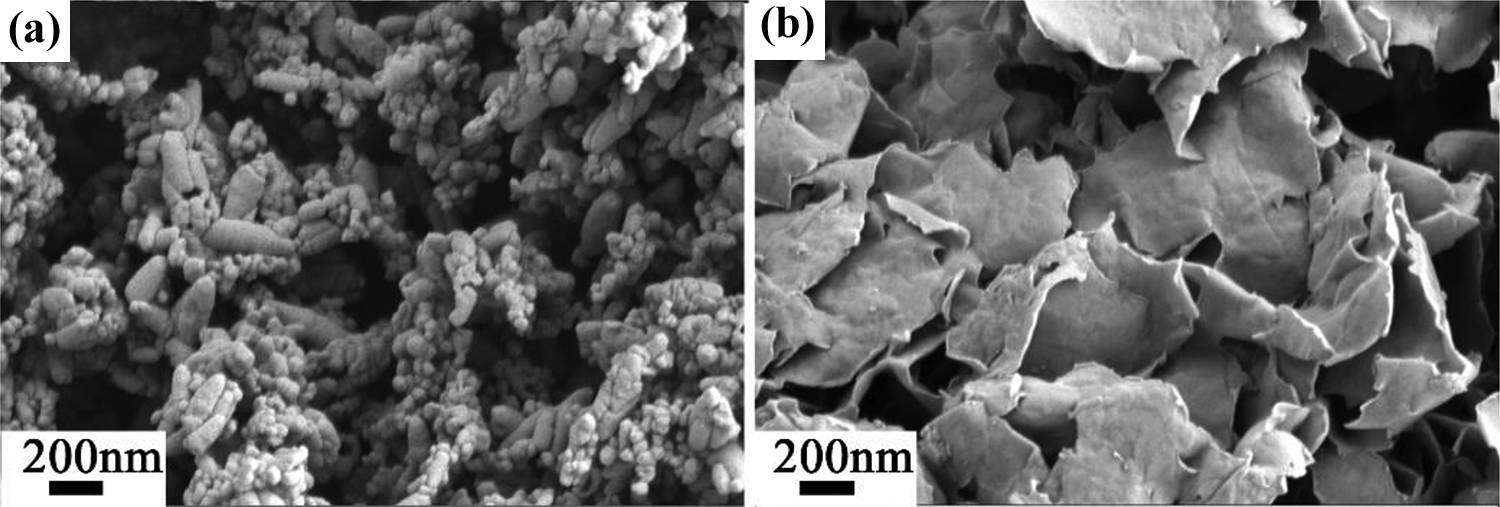
SEM images of (a) nano-CaCO3 and (b) nanoclay.
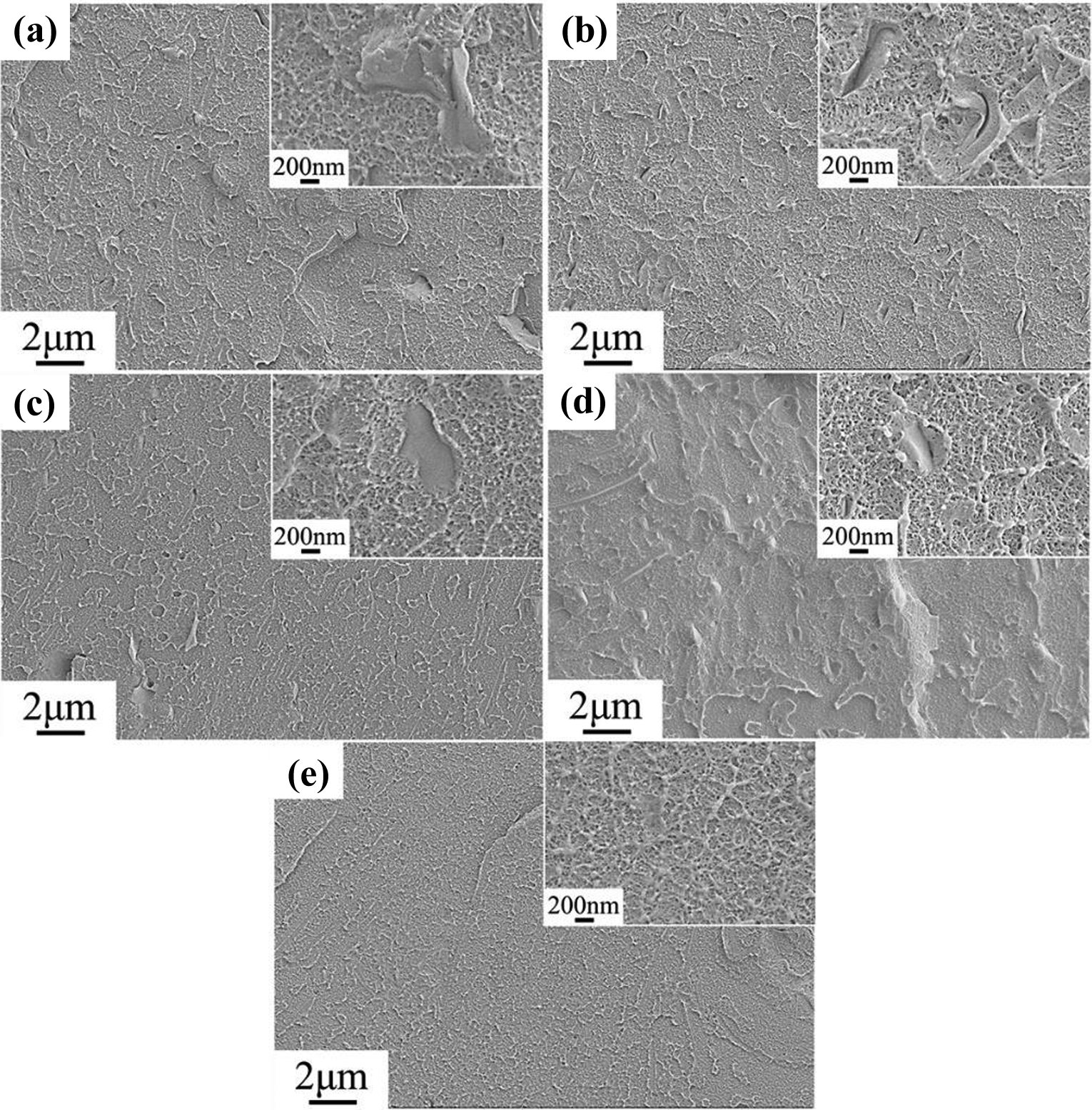
SEM images of PS/nanoclay/nano-CaCO3 composites: (a) PS/1.1/0, (b) PS/0.88/0.22, (c) PS/0.55/0.55, (d) PS/0.22/0.88, and (e) PS/0/1.1.
To further study the effect of CaCO3 nanoparticles on the intercalation of nanoclay in the PS matrix, XRD was conducted and the result was shown in Figure 3 and Online Supplemental Figure S1. In addition, the detailed data of diffraction peak and the average lamellar spacing were provided in Online Supplemental Table S2. The average lamellar spacing of nanoclay was calculated according to the Bragg’s equation, nλ = 2d × sin θ, where λ = 0.154 nm. Neat nanoclay has a broad diffraction peak at 2θ = 3.8° (Online Supplemental Figure S1), and the average lamellar spacing of neat nanoclay is 2.3 nm. For the PS/1.1/0 sample (Figure 3(a)), the pattern shows a sharp peak at 2θ = 2.5°, and the average lamellar spacing is 3.5 nm. Interestingly, with the introduction of CaCO3, the diffraction peak shifts about 0.2–0.3° to the left compared with PS/1.1/0 (Figure 3(b) to (d)), implying that the larger lamellar spacing was achieved. The XRD results indicated that the nano-CaCO3 can promote the intercalation of nanoclay in the PS matrix and uniformly dispersed multilayer nanoclay in the PS matrix was obtained.
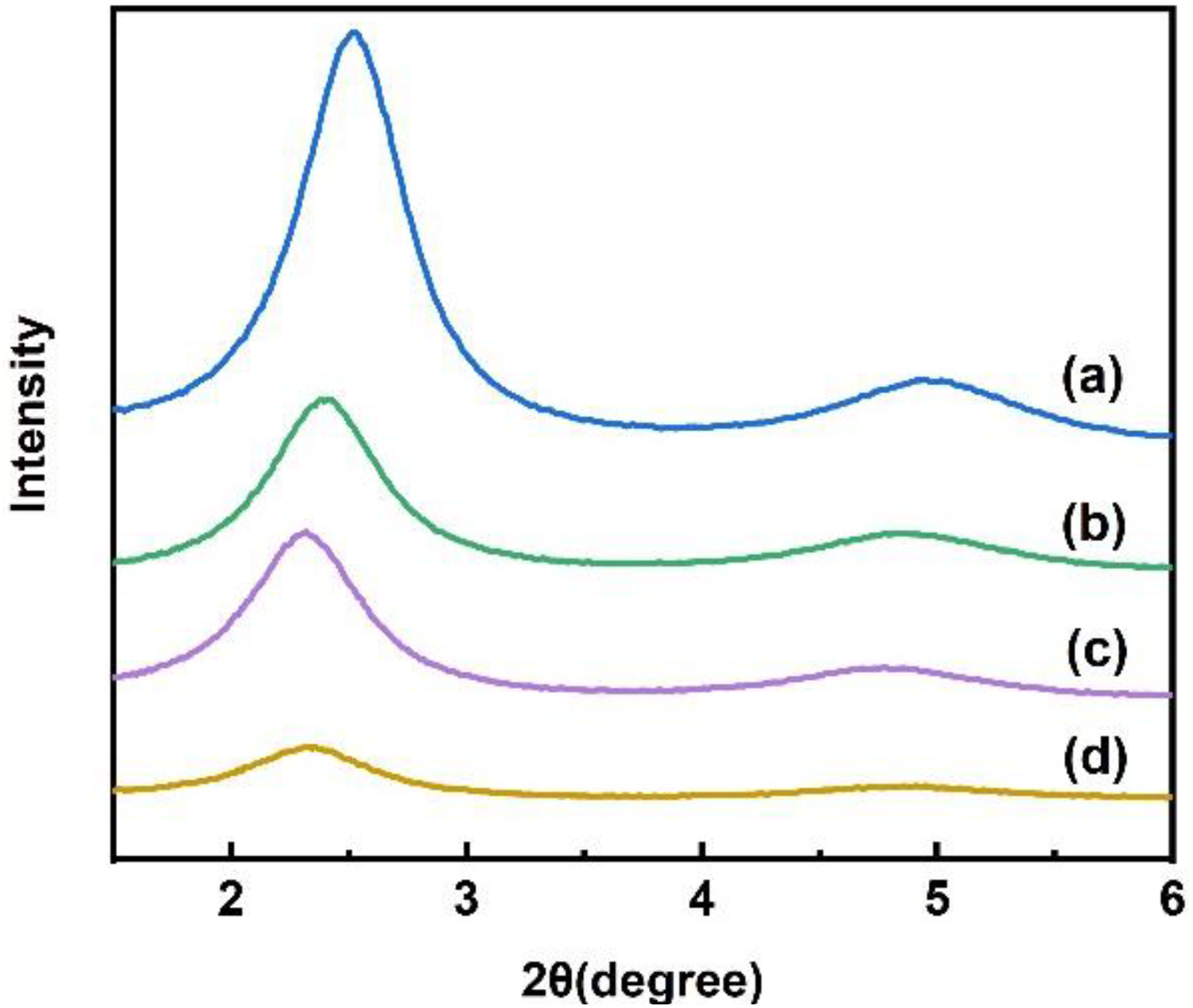
XRD patterns of PS/nanoclay/nano-CaCO3 composites: (a) PS/1.1/0, (b) PS/0.88/0.22, (c) PS/0.55/0.55, and (d) PS/0.22/0.88.
The thermal property of PS/nanoclay/nano-CaCO3 was studied by DSC measurement and the thermograms are shown in Figure 4. It can be found that the T g of PS/nanoclay/nano-CaCO3 composites increases slightly compared with neat PS sample, which is primary caused by the introduction of rigid nanoparticles that can enhance the entanglement of the PS chain segments. Moreover, the PS/nanoclay/nano-CaCO3 composites with hybrid nanofillers have a higher T g than the samples that only have single filler. This phenomenon can be ascribed to the interaction of the two different fillers (the intercalation of nanoclay induced by nano-CaCO3), which may play the coeffect on retarded chain movement.
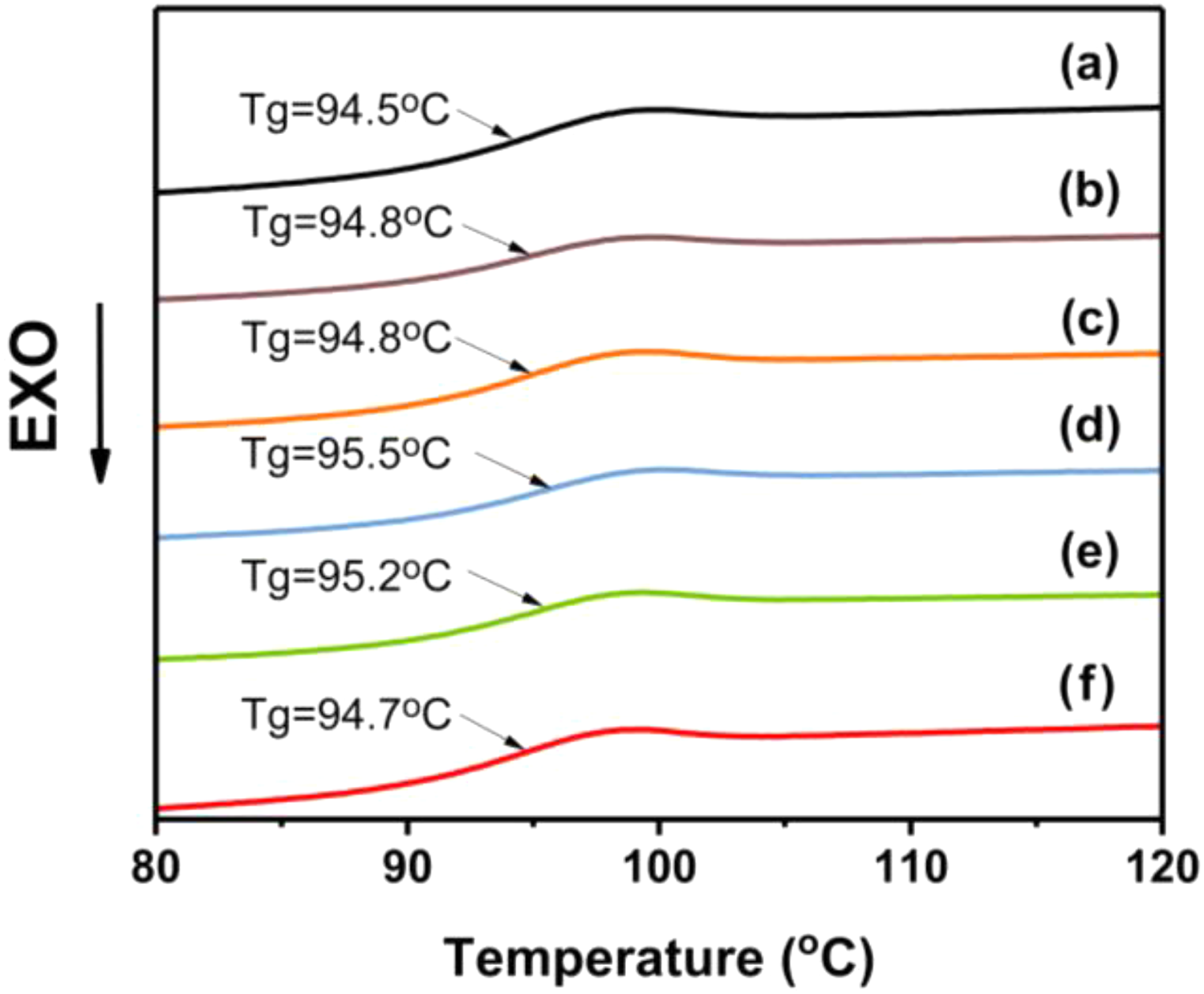
DSC thermograms of PS/nanoclay/nano-CaCO3 composite samples: (a) neat PS, (b) PS/1.1/0, (c) PS/0.88/0.22, (d) PS/0.55/0.55, (e) PS/0.22/0.88, and (f) PS/0/1.1.
The rheological properties of PS/nanoclay/nano-CaCO3 composites were exhibited in Figure 5. It can be found that the G′, G″, and η* increased with the incorporation of nanofillers in the whole range of scanning frequency. Moreover, the nanoclay has better enhancement in rheological properties of the PS matrix than nano-CaCO3 under the same filler content. As shown in Figure 5(c), all PS/nanoclay/nano-CaCO3 samples show typically pseudoplastic fluid characteristic. Meanwhile, higher modulus of PS/nanoclay/nano-CaCO3 composites indicates improved melt strength, which is beneficial to create stable cell structure during the foaming process.
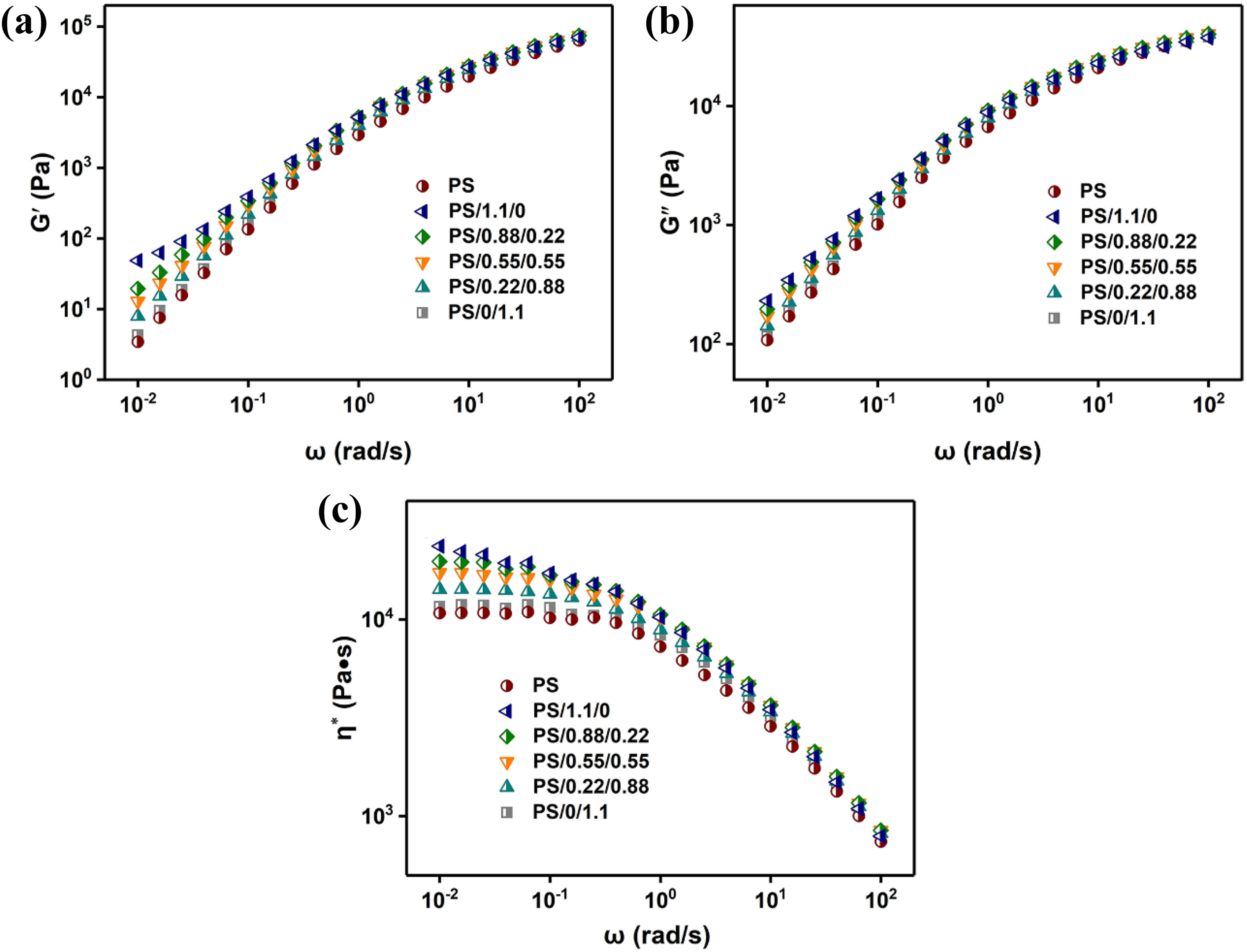
Rheological properties of PS/nanoclay/nano-CaCO3 composites: (a) storage modulus, (b) loss modulus, and (c) complex viscosity.
Different proportion of hybrid fillers effect
After fully understanding the effect of single fillers on PS foaming behaviors, as shown in Supporting Information, we take 120°C and 20 MPa as a suitable foaming condition to explore the influence of hybrid nanofillers component on the PS nanocomposite foaming behaviors. The cell morphology of all samples was shown in Figure 6, and the average cell diameter, cell density, expansion ratio, and effective cell nucleation density were shown in Figure 7 and Online Supplemental Table S7. Compared with the neat PS, PS/nanoclay, and PS/nano-CaCO3 composite foams, although the expansion ratio of PS/nanoclay/nano-CaCO3 composite foams decreases, effective cell nucleation density of this sample rises under the foaming condition. The PS/nanoclay/nano-CaCO3 composite foams have apparently smaller cell size but higher cell density than neat PS foam. It revealed that nanoclay and nano-CaCO3 play a synergistic effect in improving PS foaming performance due to the different roles of these two kinds of fillers in cell nucleation and cell growth. In the cell nucleation progress, spherical nano-CaCO3 has more advantages than nanoclay because of the larger specific surface area of nano-CaCO3 that can provide more heterogeneous nucleation sites, which accelerates the nucleation rate and increases the cell density. However, during the cell growth progress, the layered nanoclay possesses more advantages than the spherical nano-CaCO3. From the rheological results, we know that the melt strength of the PS matrix significantly enhanced with increased nanoclay content. It is widely acknowledged that higher melt strength could resist cell growth, leading to smaller cell size. As we can find in Figure 7, the PS/0.22/0.88 composite foam shows the most obvious synergistic effect when foamed under the conditions of T f = 120°C and P s = 20 MPa. Compared with PS/0.11/0 and PS/0/0.11 composite foams, the average diameter of PS/0.22/0.88 composite foam was reduced by 49% and 41%, and the cell density was increased by 400% and 190%, respectively.
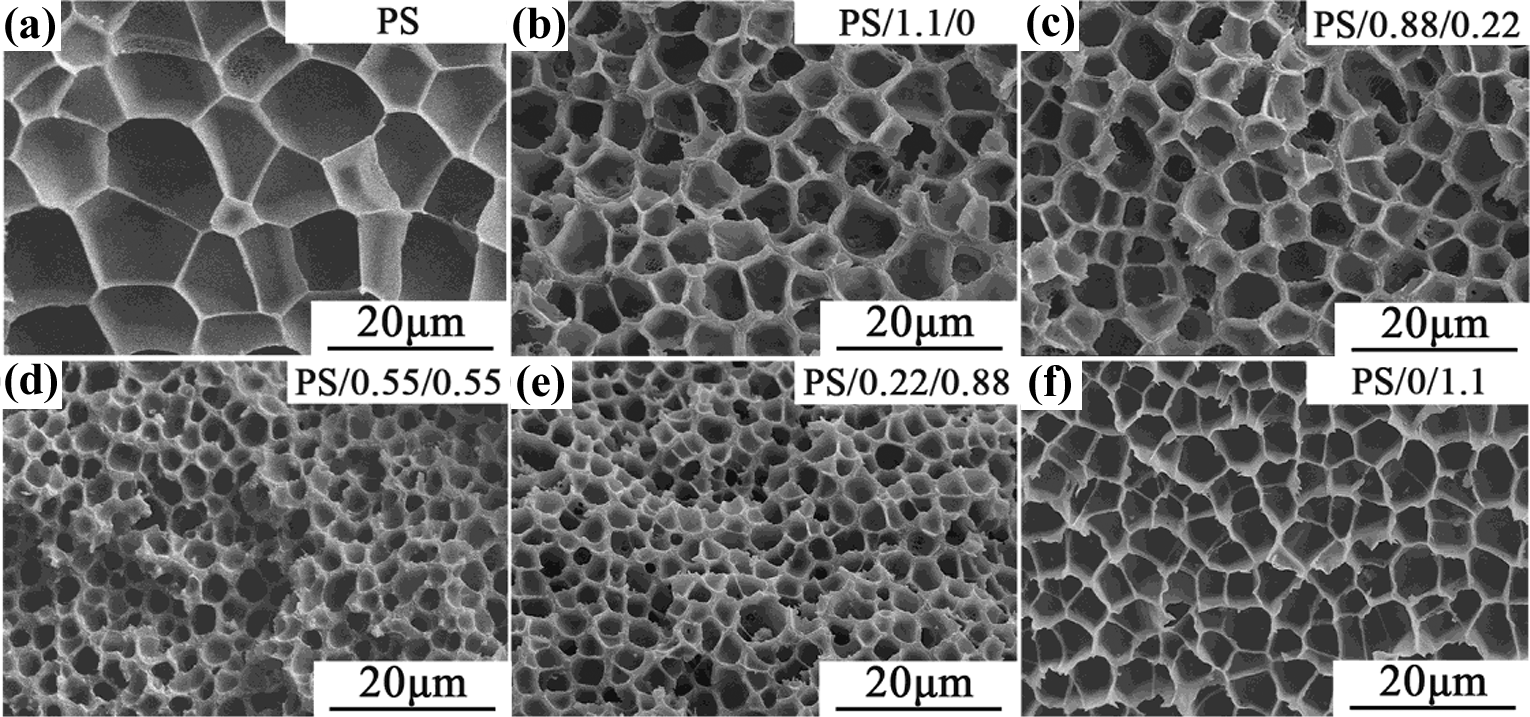
SEM images of PS/nanoclay/nano-CaCO3 composite foams (T f = 120°C, P s = 20 MPa).
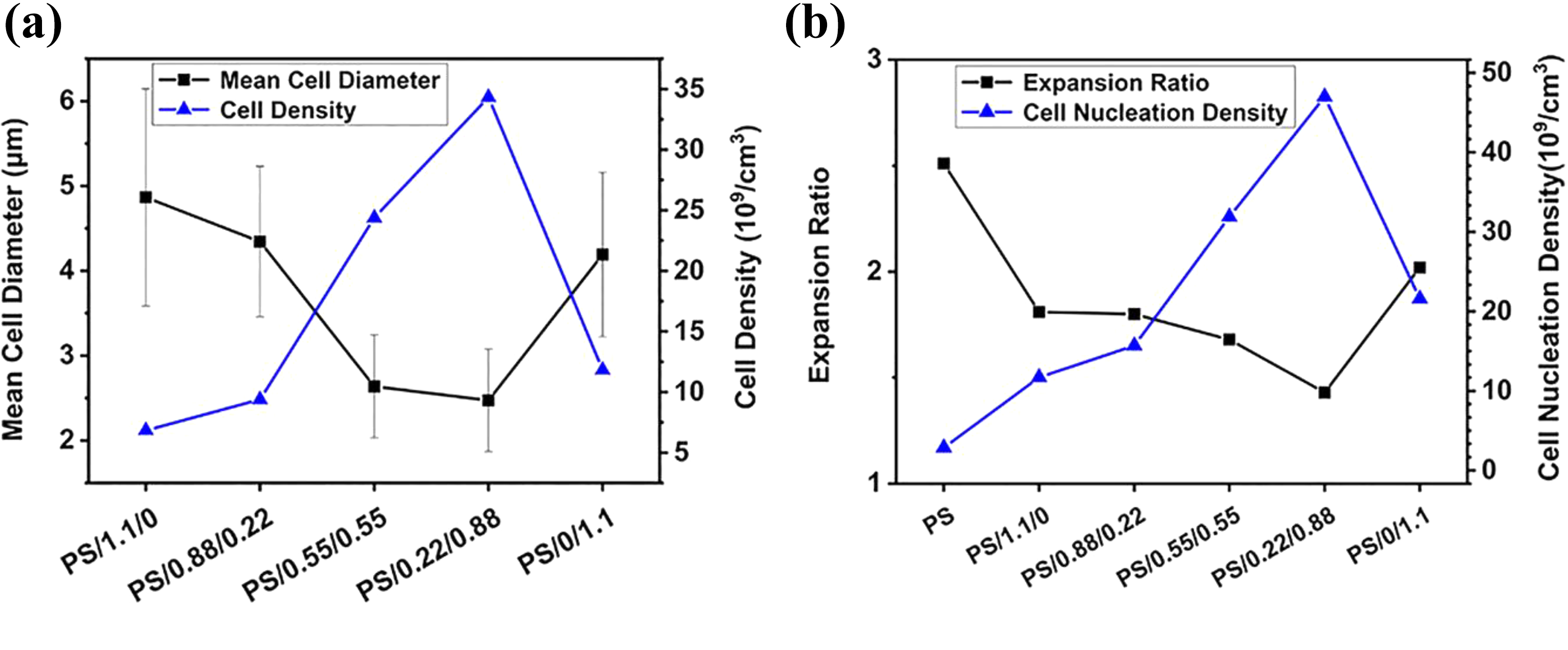
Average cell diameter, cell density, expansion ratio, and effective cell nucleation density of foamed PS/nanoclay/nano-CaCO3 samples (T f = 120°C, P s = 20 MPa).
Temperature effect
Foaming temperature is a crucial factor in batch foaming process since the melt strength of polymer composites was closely dependent on the temperature. In this study, four foaming temperatures (100°C, 110°C, 120°C, and 130°C) were selected to investigate the foaming behaviors of PS nanocomposites with hybrid nanoclay and nano-CaCO3. The cell morphology of as-prepared PS/nanoclay/nano-CaCO3 composite foams was shown in Figure 8 and the corresponding statistics data (including cell size, cell density, expansion ratio, and effective cell nucleation density) were shown in Figure 9. One can observe that the cell diameter of all samples decreases as the foaming temperature rises, while the cell density and cell nucleation density increase at the early stage (100–120°C) and then decrease when the foaming temperature reaches to 130°C. The effect of temperature on the foaming performance of the polymeric materials is mainly reflected in several aspects, such as gas solubility, viscoelasticity of the polymer matrix, and cell nucleation rate. These changes mentioned above are generally because higher temperature is more favorable in improving the bubble nucleation rate under a relative lower foaming temperature range, which led to smaller cell size and higher cell density. However, with the foaming temperature further increased to 130°C, on the one hand, the elasticity of the polymer melts decreased rapidly so that the dissolved CO2 has partly escaped and the bubble nucleation tends to coalescence during the cell growing progress; on the other hand, the gas solubility decreases at higher temperature, which means that less gas is involved in the cell nucleation and cell growth process. As a result, small cells with thicker cell wall were formed when foaming at 130°C. Furthermore, it can be clearly found that the effective cell nucleation density of PS/0.88/0.22 and PS/0/1.1 at 130°C is even lower than that of 110°C. Considering the above analysis, we can conclude that the foaming temperature significantly influences the cell nucleation and cell growth; however, there existed an optimum foaming temperature, at which the higher nucleation density and thinner cell wall can be obtained at the same time.
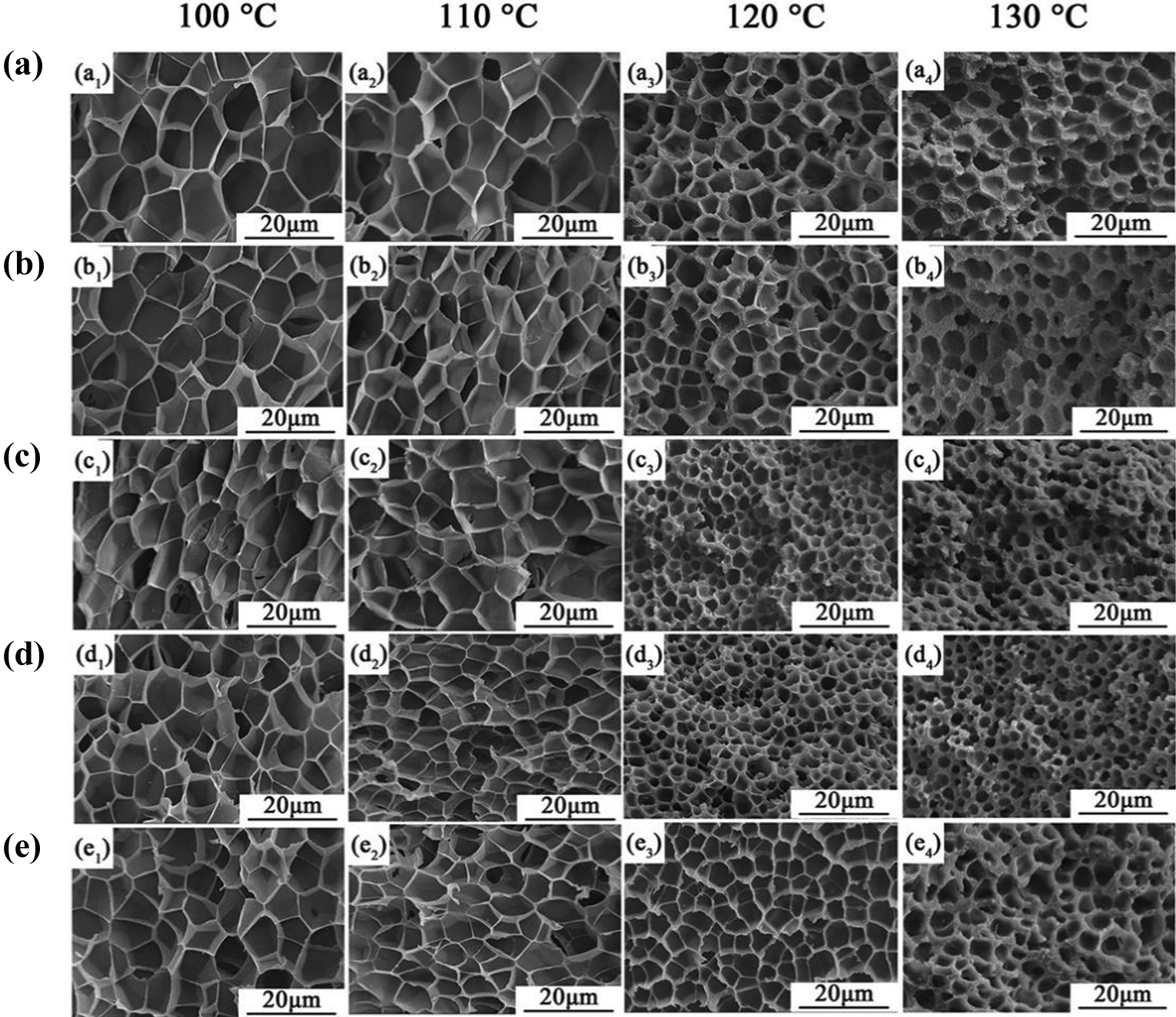
SEM images of PS/nanoclay/nano-CaCO3 composite foams under different foaming temperature, P s = 20 MPa: (a) PS/1.1/0, (b) PS/0.88/0.22, (c) PS/0.55/0.55, (d) PS/0.22/0.88, and (e) PS/0/1.1.
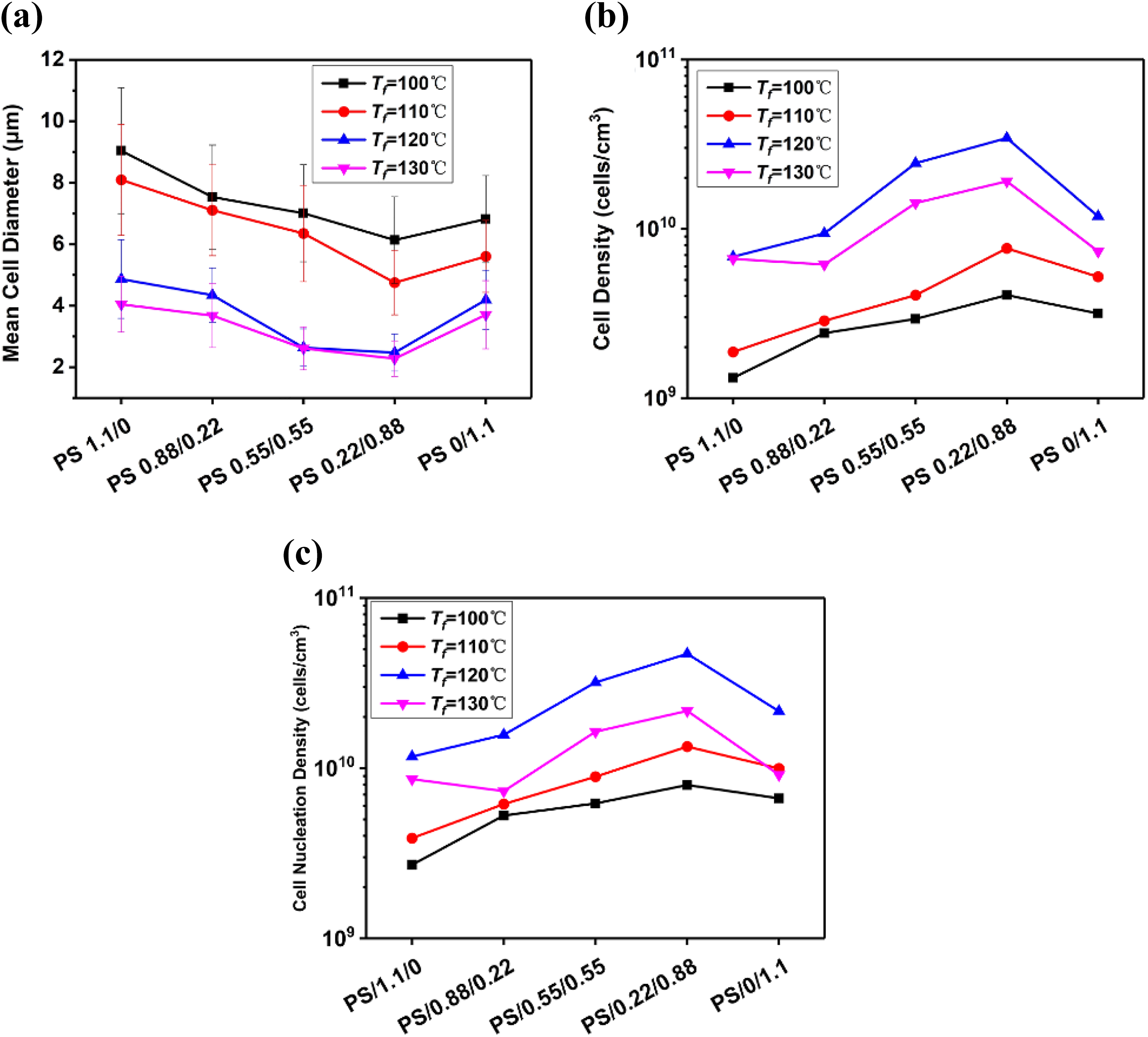
Average cell diameter, cell density, and effective cell nucleation density of foamed PS/nanoclay/nano-CaCO3 composites (P s = 20 MPa, T f = 100°C, 110°C, 120°C, 130°C).
In addition, it is clear that the PS/0.22/0.88 composite foam showed the smallest cell diameter and highest effective cell nucleation density under all foaming temperatures (Figure 9 and Online Supplemental Table S8). The above analysis revealed that the foaming temperature is an important factor for the synergistic effect of nanoclay and nano-CaCO3, and the synergistic effect can only be effectively carried out under the appropriate temperature and filler component.
Pressure effect
The influence of foaming pressure on PS/nanoclay/nano-CaCO3 nanocomposites foaming behaviors was further studied, the cell structure was shown in Figure 10, and the statistical data were given in Figure 11 and Online Supplemental Table S9. From the SEM images in Figure 10, we can find that the average cell diameter reduced with the improvement of foaming pressure while the cell density shows an opposite trend. Generally, this effect of foaming pressure on the foaming behavior mainly depends on gas solubility and cell nucleation. By Henry’s law (see Online Supplemental equation (3)), the solubility of CO2 in the PS matrix increases as the pressure improves, which provides more gas in the foaming progress of cell nucleation and growth. On the other hand, according to the classical nucleation theory (see Supporting Information equations (4) to (6)), higher foaming pressure would result in a lower free-energy barrier and smaller critical nucleation radius for homogeneous/heterogeneous nucleation. That means the nucleation rate accelerates when increasing the foaming pressure, which leads to the number of bubble nuclei formed per unit volume/time rises. These effects that cause gas dissolved in the polymer matrix are more used for bubble nucleation and the gas used for bubble growth is less under the same conditions. Therefore, the cell size is relatively uniform in high foaming pressure or high-pressure drop rate. When foaming pressure decreases, the number of bubble nuclei decreases due to the increase in the bubble nucleation energy barrier. Meanwhile, more gas is used for bubble growth, which results in the increasing of the cell size and decreasing of the cell density. Moreover, the foaming behaviors also changed with the filler component. For example, the smallest cell size and highest effective cell nucleation density appeared when the volume ratio of nanoclay to nano-CaCO3 is 1:1 under the foaming pressure of 12 MPa. However, when the foaming pressure increased to 16 or 20 MPa, the PS/0.22/0.88 composite foam has the smallest cell diameter and the highest effective cell nucleation density. This phenomenon demonstrating that the synergistic effect of the hybrid fillers on the PS foaming performance has a strong dependence on the foaming pressure. By analyzing the above results, we can deduce that nanoclay and nano-CaCO3 have an obviously synergistic effect in improving PS foaming performance under the foaming pressure range from 12 MPa to 20 MPa.
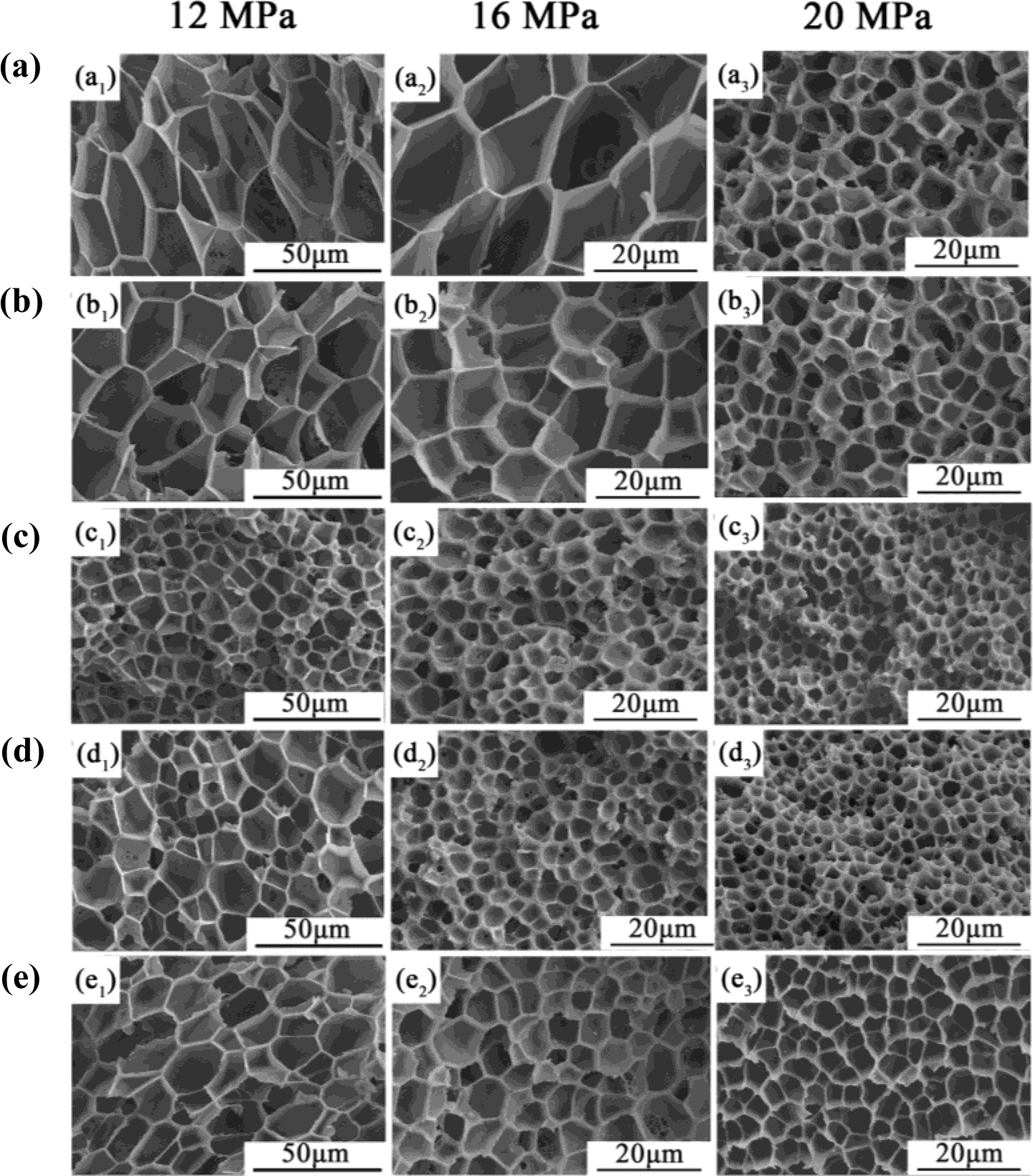
SEM pictures of PS/nanoclay/nano-CaCO3 composite foams with various foaming pressure (12, 16, and 20 MPa), T f = 120°C: (a) PS/1.1/0, (b) PS/0.88/0.22, (c) PS/0.55/0.55, (d) PS/0.22/0.88, and (e) PS/0/1.1.

Average cell diameter, cell density, and effective cell nucleation density of foamed PS/nanoclay/nano-CaCO3 samples (T f = 120°C, P s = 12, 16, and 20 MPa).
Mechanism of synergistic effects
The schematic diagram of the cell nucleation and growth progress of PS/nanoclay/nano-CaCO3 composites is shown in Figure 12. According to the morphology analysis of PS/nanoclay/nano-CaCO3 composites, nanoclay and nano-CaCO3 achieved a good dispersion in the PS matrix and nano-CaCO3 promoted the intercalation of nanoclay. The supersaturation of the SC-CO2 caused by rapid depressurization can induce cell nucleation in different phases. And the bubble nuclei are primarily generated on the surface of nanoclay and nano-CaCO3. As generally known, cell nucleation and cell growth are two competitive factors during the foaming process. In the progress of cell nucleation, spherical CaCO3 could provide more nucleation sites than nanoclay. Meanwhile, the layered nanoclay has more advantages to protect the foams from collapse and combination during cell growth. This phenomenon can be ascribed to the orientated nanoclay along the cell wall caused by bidirectional stretching between the neighboring cells during the growth progress, which would avoid the cell damage and reduce the cell growth rate. 37 The fact that lamellar nanoclay will be oriented along the cell wall during cell growth also has been reported by Okamoto et al. 38 The orientation of nanoclay has two effects: Firstly, improving the strength and thickness of the cell wall, thereby increasing the structural stability during the cell grows; secondly, increasing the gas diffusion path (reduce the gas diffusion rate) and thus limited the cell growth. When nanoclay and nano-CaCO3 are simultaneously added to the PS matrix, nano-CaCO3 can provide more bubble nuclei and nanoclay can increase the gas diffusion path. Therefore, when hybrid nanoclay and nano-CaCO3 with proper volume ratio were introduced into the PS matrix, the two kinds of nanoparticles act as synergistic effect to induce cell nucleation and maintain the stability of the bubble structure than any single filler. Eventually, high-performance PS/nanoclay/nano-CaCO3 composite foams with high cell density and small cell diameter were obtained.
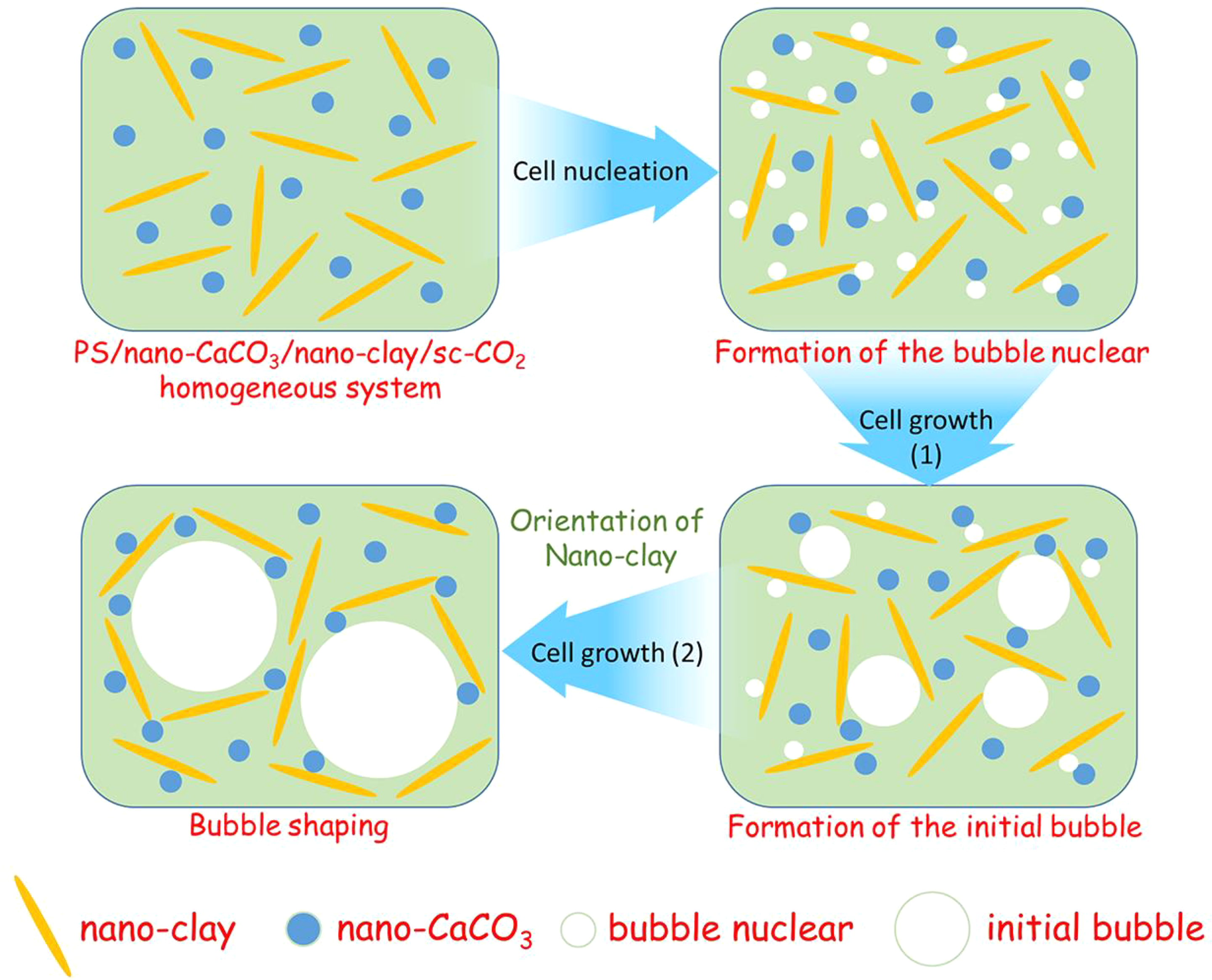
Schematic diagram of cell nucleation and growth of PS/nanoclay/nano-CaCO3 composites.
Conclusions
In this work, various PS nanocomposite foams with high cell density and small cell size were successfully prepared by batch foaming method. The effect of hybrid nanofillers on the foaming behavior of PS nanocomposites was systematically studied. The foaming performance of the PS matrix was improved with the introduction of hybrid nanofillers. We conclude that the nanoclay and nano-CaCO3 act significantly synergistic effect in improving PS foaming performance. Interestingly, we found that the synergistic effects of nanoclay and nano-CaCO3 show strong dependence on the foaming temperatures and foaming pressures. The improved PS nanocomposite foams are expected to have many potential applications in both industrial and agricultural fields, such as high effective thermal insulation materials and quality packaging materials.
Supplemental material
Supplemental Material, Supporting_information - Synergetic effect of nanoclay and nano-CaCO3 hybrid filler systems on the foaming properties and cellular structure of polystyrene nanocomposite foams using supercritical CO2
Supplemental Material, Supporting_information for Synergetic effect of nanoclay and nano-CaCO3 hybrid filler systems on the foaming properties and cellular structure of polystyrene nanocomposite foams using supercritical CO2 by Xinghan Lian, Wenjie Mou, Tairong Kuang, Xianhu Liu, Shuidong Zhang, Fangfang Li, Tong Liu and Xiangfang Peng in Cellular Polymers
Footnotes
Author contribution
XL and WM contributed equally to this work.
Declaration of conflicting interests
The author(s) declared no potential conflicts of interest with respect to the research, authorship, and/or publication of this article.
Funding
The author(s) disclosed receipt of the following financial support for the research, authorship, and/or publication of this article: This work was funded by the National Natural Science Foundation of China (nos 51803062 and 51573063), Science and Technology Program of Guangzhou (nos 201804010110 and 201904010272), Natural Science Foundation of Guangdong Province of China (nos 2018A030310379 and 2019A1515012125), the Fundamental Research Funds for the Central Universities, SCUT, and the Opening Fund of State Key Laboratory of Materials Processing and Die & Mould Technology, and Huazhong University of Science and Technology (P-2020-016).

Supplemental material
Supplemental material for this article is available online.
References
Supplementary Material
Please find the following supplemental material available below.
For Open Access articles published under a Creative Commons License, all supplemental material carries the same license as the article it is associated with.
For non-Open Access articles published, all supplemental material carries a non-exclusive license, and permission requests for re-use of supplemental material or any part of supplemental material shall be sent directly to the copyright owner as specified in the copyright notice associated with the article.
