




Abstract
In order to explore the potential utilization value of iron tailings, the typical solid waste-iron tailings was introduced into rigid polyurethane foam (RPUF) as a flame retardant filler in this paper. The flame retardant performance, combustion performance, gas-phase products and char residue’s related properties of RPUF/ITS composites were systematically investigated by limiting oxygen index, thermogravimetric (TG), cone calorimetry (CCT) and thermogravimetric-infrared spectrometry (TG-FTIR). The results showed that ITS improved the overall thermal stability of the composites, and the T-5%, T-50%, Tmax1, Tmax2 and char residue rates were all higher than those of the pure samples. The CCT indicated that ITS had a certain effect on smoke suppression and heat release reduction. The peak heat release rate of RPUF-6 was reduced by 22.75% compared with that of the pure sample, and the total smoke release of RPUF-2 was reduced by 25.36%. Smoke factor (SF), fire growth rate index and fire performance index indicated that ITS reduced the fire risk of RPUF/ITS composites. TG-FTIR showed that ITS inhibited the decomposition of RPUF/ITS composites, and the release intensity of hydrocarbons, CO2, isocyanate compound, CO, aromatic compounds and esters decreased significantly. TG, MCC, scanning electron microscope and Raman implied that ITS promoted the formation of a dense char layer in RPUF and improved the heat resistance of the char layer.
Introduction
As a typical metallurgical solid waste, iron tailings (ITS) emissions are also increasing year by year due to the rapid development of China’s steel industry. Due to technical limitations, a large number of iron tailings in China are stored in tailings ponds every year because they can not be effectively used, which also leads to a series of environmental and safety problems.1,2 Therefore, how to effectively utilize tailings and fully tap its potential utilization value has become a hot research topic.3–7
Due to its inherent organic material and porous structure, rigid polyurethane foam (RPUF) is easily ignited and releases toxic smoke, resulting in serious fire accidents.8–12 In 2010, 58 people were killed and 71 injured in a building in the Jing’an District of Shanghai caused a fire by illegal construction igniting polyurethane insulation materials. In 2017, 19 people died and eight people were injured when the external polyurethane insulation material was ignited by a circuit fault in Beijing Daxingyi underground cold storage. Such accidents have aroused people’s attention to the flame retardant modification of polyurethane insulation materials.13,14
At present, intumescent flame retardants (such as expandable graphite, ammonium polyphosphate), phosphorus flame retardants (like phosphates, phosphates, organophosphorus salts, etc.), inorganic flame retardants (such as metal hydroxides, antimony and boron compounds) are widely used in the flame retardant modification of polyurethane.15–17 Zhang et al. 18 successfully prepared cobalt phytate (PA-CO) and formed a cooperative system with ammonium polyphosphate (APP) for RPUF modification. TG test showed that at 700°C, the char residue of RPUF/APP40/PA-CO10 was 35.2 wt%, which was significantly higher than 12.3 wt% of RPUF. APP/PA-Co could significantly reduce the release of smoke, heat, CO, flammable gas and toxic gas, and was conducive to the formation of a dense char layer in the combustion process of the composite. The graphitization degree of the char layer was high, which inhibits the mass and heat transfer and plays a flame retardant role. Tang et al. 19 systematically studied the effect of aluminum diethyl phosphonate (ADP) on polyurethane composites. The results showed that 30 php ADP increased the limiting oxygen index (LOI) of RPUF from 18.8 vol% to 23.0 vol%. TG, MCC and TG-FTIR tests showed that phosphonates and diethyl phosphonate generated by ADP thermal decomposition promoted the degradation of the RPUF matrix. The peak heat release rate (PHPR) of the composite was significantly reduced, and the PHPR value of RPUF/ADP20 was 21.8% lower than that of pure RPUF. The char residue analysis showed that the addition of ADP promoted the formation of the aromatic and aromatic heterocyclic structure of the polyurethane molecular chain, and improved the strength and compactness of char residue.
Iron oxide, alumina and silica contained in iron tailings have been successfully applied to flame retardant fillers of polymer materials.20–23 Xu et al. 24 prepared melamine cyanuric acid-gas phase silica (MCA-SiO2) by using self-assembly technology and reaction deposition of melamine (ME) and cyanuric acid (CA) in water suspension on gas-phase silica. It was found that MCA-SiO2 (20 wt% SiO2) made the vertical combustion of glass fiber reinforced polypropylene (GF-PP) pass through the V-0 level, and its LOI increased to 32.4 vol%. The flame retardant mechanism is that the low thermal conductivity of SiO2 prevents heat exchange and promotes the formation of a dense char layer of GF-PP/IFR-(MCA-SiO2) composites, which plays a condensed phase flame retardant role. Yuan et al. modified γ-Al2O3 on the surface of graphene nanosheets (GO) and introduced it into the matrix of polypropylene (PP) to explore the influence of alumina-graphene nanoparticles on PP. The results show that the char residue content of PP/γ-Al2O3-Go increases from 0.47 wt% to 3.85 wt%, and the peak heat release rate (PHRR) decreases by 30.6%. The improvement of flame retardancy is attributed to the barrier effect of graphene and the catalytic carbonization of γ-Al2O3 nanosheets.
Based on this, the rigid polyurethane foam/iron tailings composite (RPUF/ITS) was prepared by the one-step method using ITS as a flame retardant. The flame retardant properties, combustion properties, gas-phase products and other related properties of RPUF/ITS composites were studied by oxygen index instrument, thermogravimetric analyzer, cone calorimeter and thermogravimetric-infrared analyzer. The above research provides new ideas and a theoretical basis for the comprehensive utilization of iron tailings.
Experimental section
Materials
Polyether polyol (LY-4110) and triethylenediamine (A33) were bought from Jiangsu Luyuan New Materials Co., Ltd. (China). Polymethylene polyphenyl polyisocyanate (PM200) was purchased from Wanhua Chemical Group Co., Ltd. (China). Silicone oil foam stabilizer (AK8805) was provided by Jining Hengtai Chemical Co., Ltd. (China). Triethanolamine (TEOA) was purchased by Sinopharm Chemical Reagent Co., Ltd. (China). Catalyst dibutyltin dilaurate (LC) was purchased from Air Products & Chemicals, Inc. (U.A.). Iron tailings (ITS) was kindly supplied by Nanshan Iron Mine in Ma’anshan. (China). Distilled water was made in the laboratory.
Preparation of RPUF/ITS composites
Formulation of RPUF/ITS composites.

Measurement and characterization
X-ray fluorescence (XRF) was employed to analyze the chemical composition of ITS by ARL Advant'X Intellipower TW3600 Scanning X-ray Fluorescence Spectrometer (Thermo Fisher Technologies Inc, U.A.).
X-ray diffraction (XRD) was employed to analyze the mineral composition of char residue of RPUF/ITS composites by D8ADVANCE X-ray diffractometer (Bruker Company, Germany). Test condition: Target material: Cu target; Scanning range: -3o ∼150o; Accuracy of goniometer: 0.0001o; 2θ Angle accuracy: ≤0.02o.
The LOI was tested by the JF-3 oxygen index analyzer (Nanjing Jiangning Instrument Factory, China) in accordance with ASTM D2863 with a sample dimension of 127 mm × 10 mm × 10 mm.
UL-94 vertical burning test was gained using CZF-3 (Nanjing Jiangning Instrument Factory China) in accordance with ASTM-D3801-2010. The sample size was 127 mm × 13 mm × 10 mm.
Thermogravimetric (TG) was conducted on a Q5000IR thermogravimetric analyzer (TA Instruments, USA). 5–10 mg of sample was heated from room temperature to 800 C with a heating rate of 20 C/min.
Thermogravimetric-Fourier Transform Infrared Spectrometer (TG-FTIR) was performed using Q5000IR (TA Instruments, USA) thermo-analyzer instrument which linked to Nicolet 6700 FTIR spectrophotometer (Thermo Scientific Nicolet, USA). 5–10 mg of sample was placed in an alumina tray of the TGA and heated from room temperature to 800 C at 20 C/min in a nitrogen atmosphere.
Scanning electron microscope (SEM) was performed to obtain the image of RPUF, RPUF/ITS and composites’ char residues by JSM-6490LV scanning electron microscope (JEOL Ltd, Japan). In order to enhance the electrical conductivity of the materials, the samples were coated with a thin conductive layer before observation.
Cone calorimetry was investigated using a conical calorimeter (Fire Testing Technology, UK) in accordance with ISO 5660. The samples with a size of 100 mm × 100 mm × 25 mm were covered with aluminum foil and the uncovered upper surface was placed horizontally on the sample bench of a cone calorimeter for testing. The thermal radiation flux was set at 35 kW/m2.
The Raman spectra were tested to assess the degree of graphitization of residues on an inVia Reflex Laser Raman spectroscopy (Renishaw, UK) with a wavenumber range set from 800 to 2000 cm−1 and resolution of 1 cm−1.
Results and discussion
Chemical composition of iron tailings
Chemical composition of ITS.

Morphology
The effect of ITS addition on the RPUF matrix was investigated by SEM, and the photos of 100 - fold amplification were shown in Figure 1. It could be observed from Figure 1(a) that the pure sample was a porous structure with uniform pore size and closed pores.
28
When 10 php ITS were added, the cell uniformity of RPUF-1 decreased, but the overall effect was small, possibly because the addition of ITS was small. When 30 php ITS was added, the pore diameter of RPUF-4 became larger, which may be because ITS promoted the expansion of polyurethane, but the uniformity of the cell decreased and the damage occurred, which was due to the poor compatibility between ITS particles and polyurethane matrix. Figure 1(d) presented that compared with RPUF-4, the damage degree of RPUF-6 with 50 php ITS was more serious. SEM images of RPUF and RPUF/ITS composites: (a)RPUF-1; (b) RPUF-2; (c) RPUF-4; (d) RPUF-6.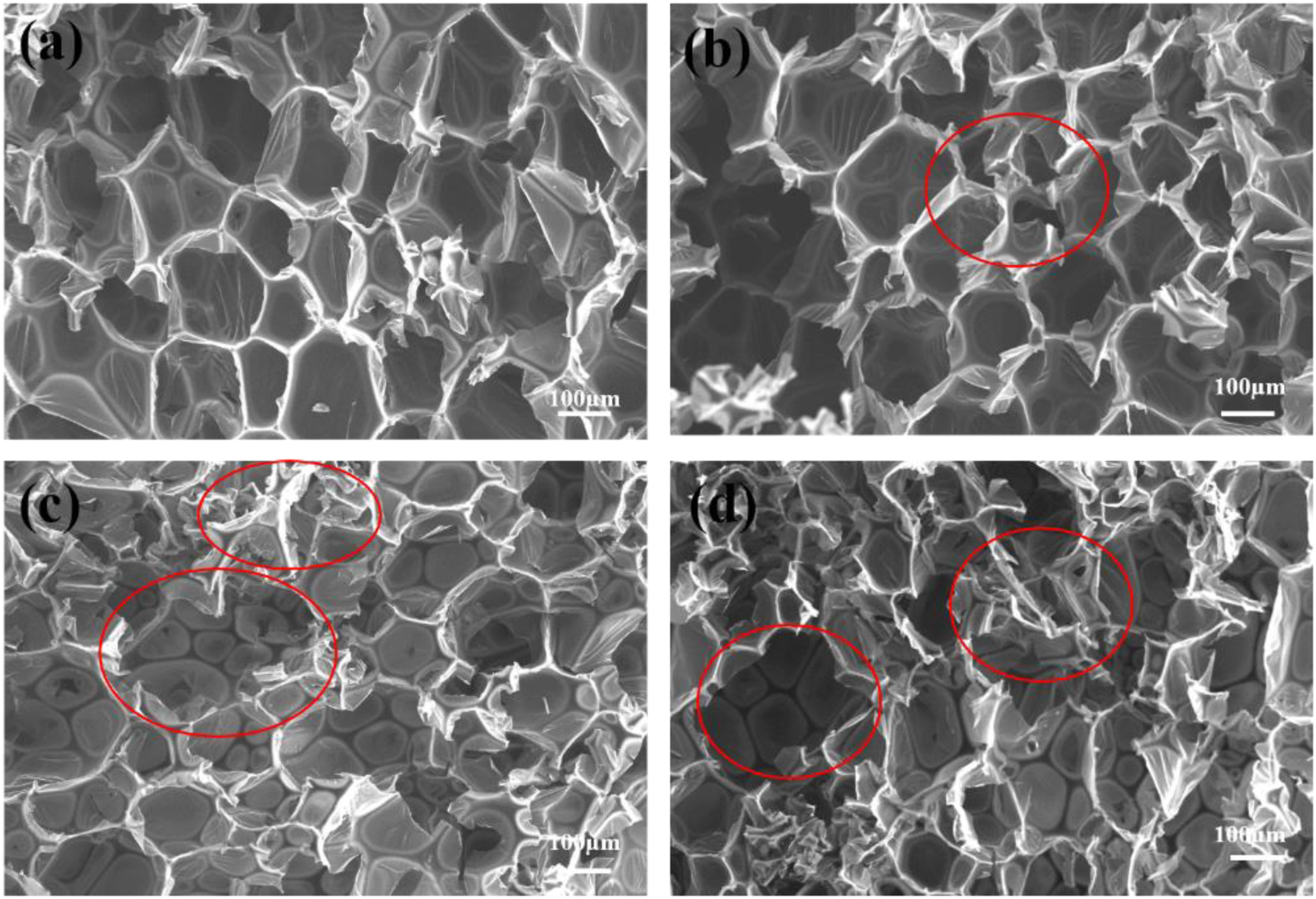
Flame retardant property
Limiting oxygen index and UL-94 test results of RPUF and RPUF/ITS composites.
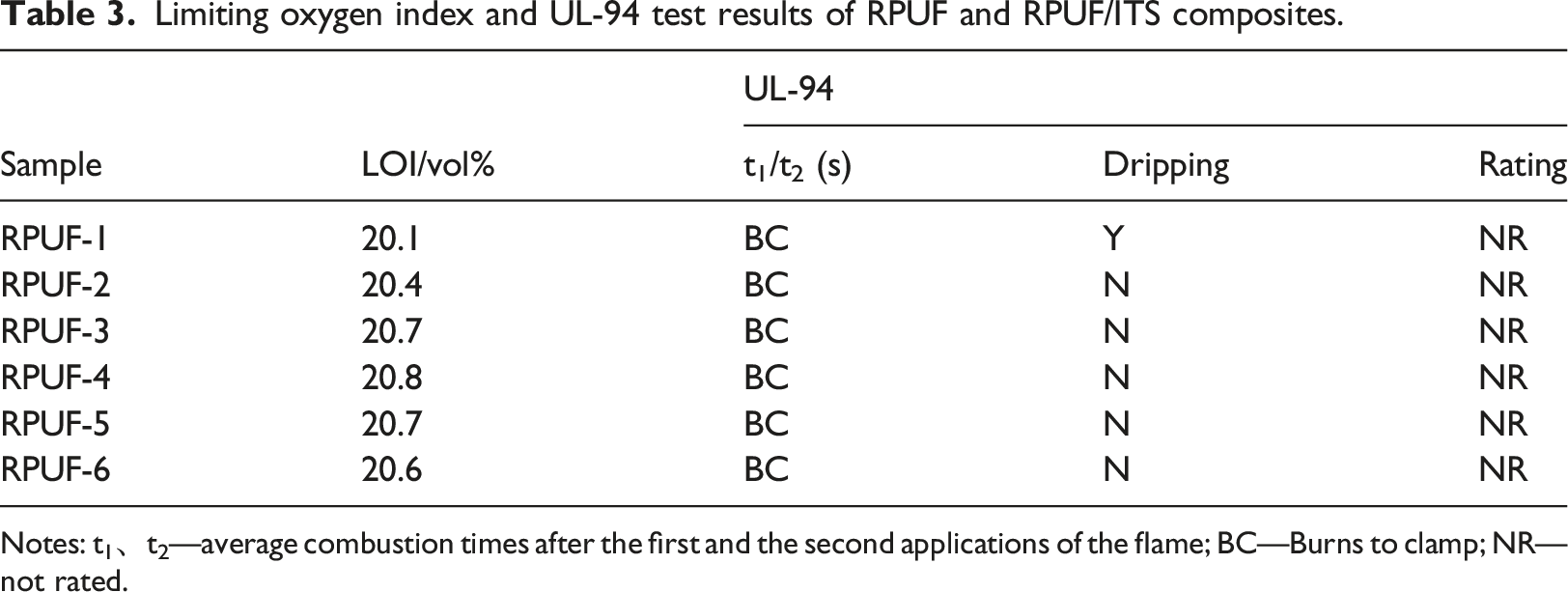
Notes: t1、t2—average combustion times after the first and the second applications of the flame; BC—Burns to clamp; NR—not rated.
Figure 2 was the combustion photographs of RPUF and RPUF/ITS composites. The photographs showed that the combustion time of RPUF/ITS composites decreased first and then increased after adding ITS, which was consistent with the Td trend of the cone calorimeter. Compared with the combustion photographs of each period, it could be found that the combustion intensity of the composites decreased with the increase of ITS addition, which indicated that ITS had a certain inhibitory effect on the combustion of RPUF. Combustion photographs of RPUF and RPUF/ITS composites.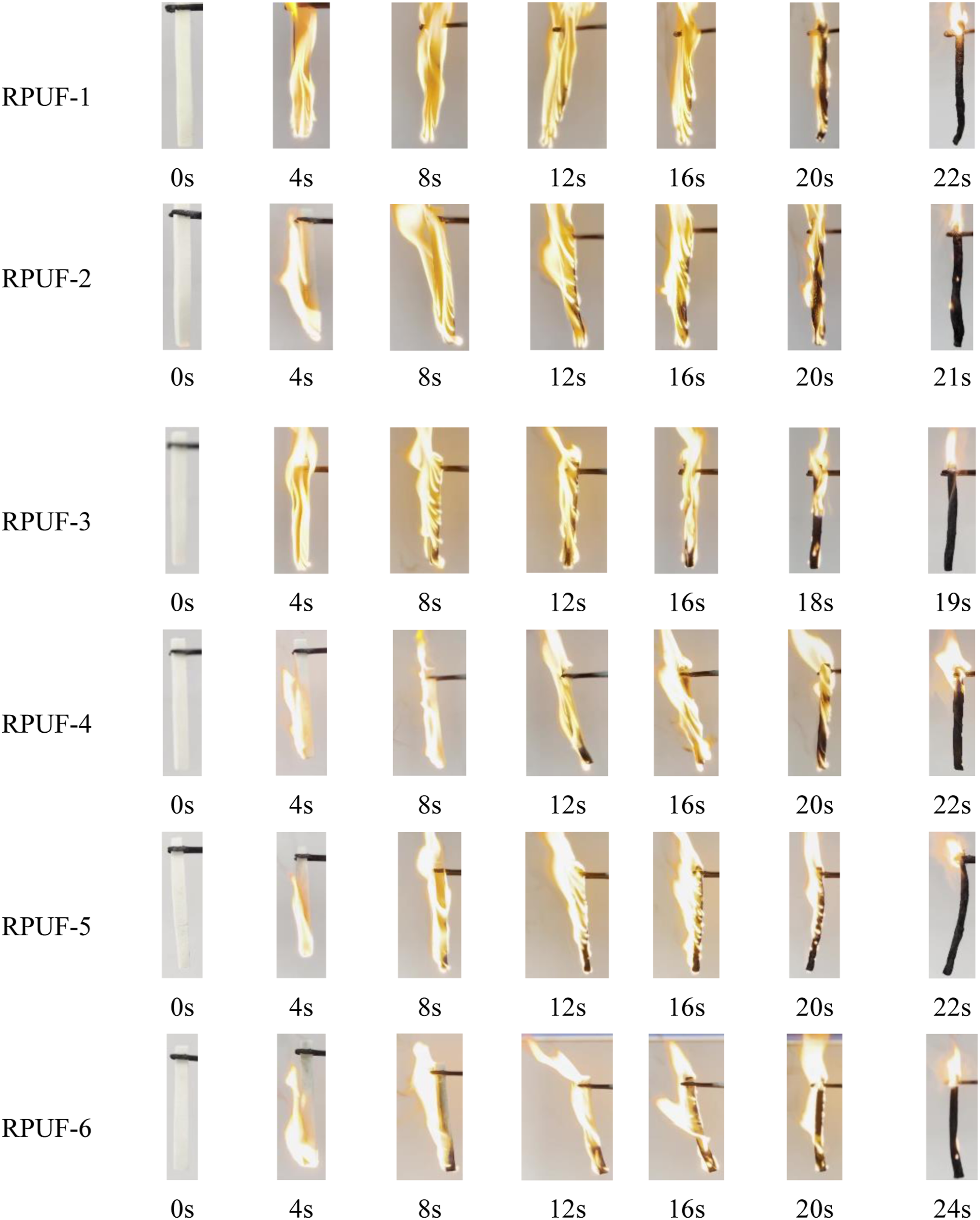
Thermal stability
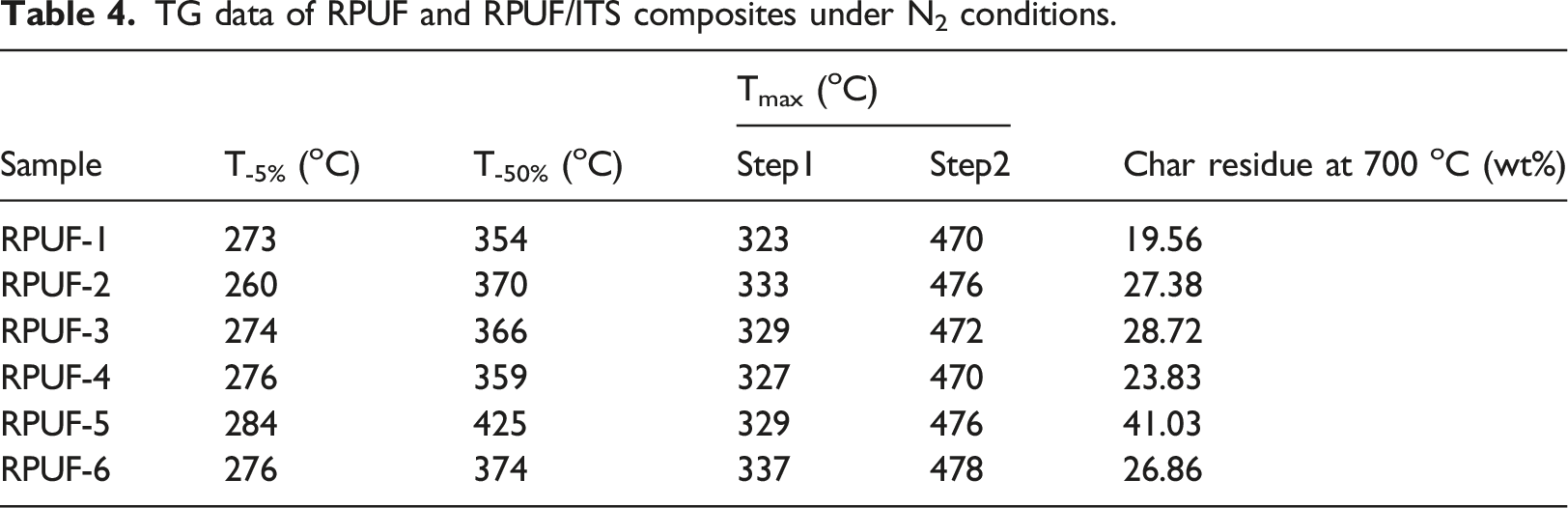
The effect of ITS on the thermal stability of RPUF/ITS composites under nitrogen conditions was displayed in Figure 3, and the corresponding data were summarized in Table 4. The initial decomposition temperature (T-5%) of the pure sample was 273°C, and the temperature corresponding to the decomposition midpoint (T-50%) was 354°C. The decomposition of the pure sample presents two stages ,[30, 31] the first stage was polyurethane hard segment degradation at 300–400°C, and the second stage was polyurethane soft segment degradation at 400–550°C. The temperature (Tmax1, Tmax2) corresponding to the peak decomposition rate of the two stages were 323°C and 470°C, respectively, and the char residue rate at 700°C was 19.56 wt%. As could be seen from Table 4 that after ITS was added to the polyurethane matrix, except that the T-5% of RPUF-2 was slightly lower than that of the pure sample, the T−5%, T−50%, Tmax1 and Tmax2 of RPUF/ITS composites were all higher than those of the pure sample, and T-5% showed a trend of first increase and then decrease, while Tmax1 and Tmax2 showed a trend of the first decrease and then increase, indicating that ITS inhibited the decomposition of RPUF matrix and improved the overall stability of the composites. The char residue rate of RPUF/ITS composites at high temperature was also significantly increased, and the char residue rate of RPUF-5 at 700°C was as high as 41.03 wt%. TGA(a) and DTG(b) curves of RPUF and RPUF/ITS composites. TG data of RPUF and RPUF/ITS composites under N2 conditions.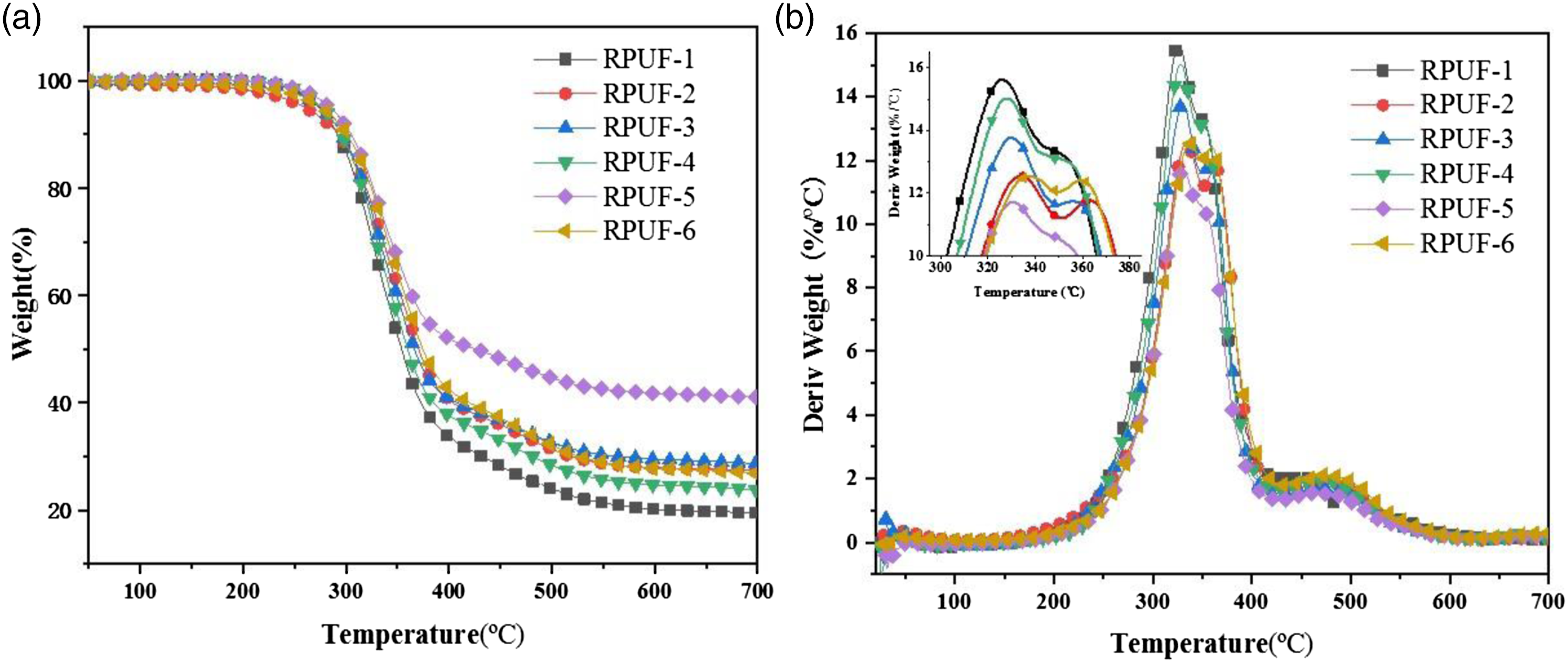
Combustion performance
The cone calorimeter test was used to explore the effect of ITS addition on the combustion performance of composites, and the results were given in Figure 4 and Table 5. The ignition time (TTI) of the composites was only 4 s, which was due to its organic material and porous structure. RPUF reached the PHRR which was 442.78 kW/m2 at 51 s, and the whole combustion time lasted about 150 s. After adding ITS, the PHRR of RPUF/ITS composites showed a decreasing trend with the increase of ITS addition and the peak time was delayed, the PHRR of RPUF-6 decreased to 342.06 kW/m2, which was 22.75% lower than that of the pure sample. However, ITS had little effect on the total heat release (THR) of the composites, and the THR of RPUF-2 was slightly higher than that of the pure sample, indicating that ITS could effectively reduce the PHRR of the composites, but had little effect on THR. Characteristic curve of RPUF and RPUF/ITS composites: (a) HRR; (b) total heat release; (c) smoke release rate; (d) total smoke release; (e) SF; (f) mass. Cone calorimetry data of RPUF and RPUF/ITS composites.
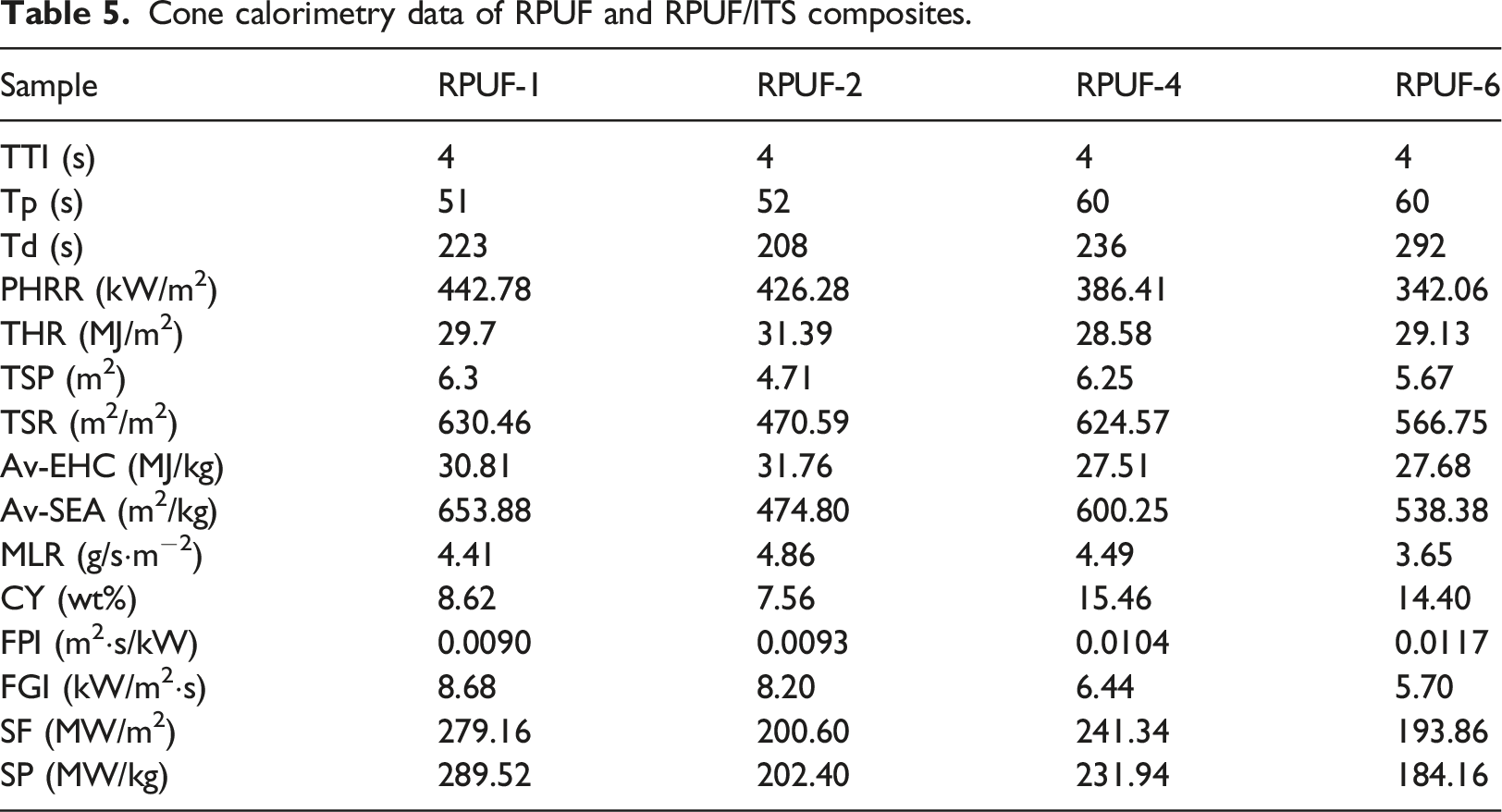
The average effective heat of combustion (Av-EHC) reveals the combustion degree of volatiles in the gas phase during combustion. 32 The Av-EHC of the pure sample was 30.81 MJ/kg. When 30 and 50 php ITS were added, the Av-EHC of RPUF-4 and RPUF-6 decreased to 27.51 MJ/kg and 27.68 MJ/kg, indicating that ITS had a certain gas-phase flame retardant effect.
Figure 4(c) presented that the smoke release rate (SPR) of the pure sample gradually increased with time, reached the peak at 57 s, and then reached zero at about 80 s because the formation of the char layer inhibited the smoke release. After adding ITS, the SPR of RPUF/ITS composites decreased significantly, and the SPR of RPUF-2 was the lowest. The total smoke release (TSR) of the pure sample was 630.46 m2/m2, and the TSR of RPUF-2 was reduced to 470.59 m2/m2, which was reduced by 25.36%. The smoke parameter (SP) is the product of Av-SEA and PHRR, and the SP of the pure sample is 289.52 MW/kg. After adding ITS, the SP of RPUF/ITS composites was all lower than that of the pure sample, and the SP of RPUF-6 was 36.39% lower than that of the pure sample. Smoke factor (SF) is the product of PHRR and TSR to comprehensively characterize heat release and smoke release. Figure 4(e) exhibited that the SF of RPUF-2, RPUF-4 and RPUF-6 were lower than that of the pure sample, and the SF of RPUF-2 and RPUF-6 were 28.98% and 30.56% lower than that of the pure sample, respectively. The above results confirmed that ITS had a good smoke suppression effect.
The fire growth rate index (FGI) is the ratio of PHRR to the time to reach the peak (Tp); the fire performance index (FPI) is the ratio of TTI to PHRR. Both are used to evaluate the fire safety of materials. 33 The larger the FPI is, the smaller the FGI is, indicating that the fire safety of materials is higher. Table 5 listed that the FPI and FGI of RPUF were 0.009 m2·s/kW and 8.68 kW/m2·s, respectively. When ITS was added, the FPI of the composites was positively correlated with the addition of ITS, and the FGI was negatively correlated with the addition of ITS, indicating that ITS was beneficial to improve the fire safety of the composites.
Figure 4(f) is the mass change during the test, the mass-loss rate (MLR) of the pure sample was 4.41 g/s·m−2, and the final char residue was 8.62 wt%. The addition of 10 php ITS had little effect on the mass loss of the composites. When 30 php and 50 php ITS were added, the MLR of RPUF-4 and RPUF-6 were 4.49 g/s·m−2 and 3.65 g/s·m−2, respectively, and the final char residue was increased to 15.46 wt% and 14.40 wt%, indicating that ITS can improve the high-temperature stability of the composites.
Figure 5 showed the char residue photos after the cone calorimeter test. As could be seen from Figure 5(a) that the char layer of RPUF was loose, and there were holes and cracks on the surface, which was not conducive to preventing the spread of combustion. After adding 10 php and 30 php ITS, the density of the char layer on the surface of RPUF-2 and RPUF-4 composites was slightly higher than that of pure samples, and the pore structure of surface distribution was also reduced. After adding 50 php ITS, RPUF-6 could not form a continuous char layer and yellow metal oxides could be seen, because ITS had the poor charring ability and was not conducive to polyurethane charring. Photographs of char residue after cone calorimetry of RPUF and RPUF/ITS composites: (a) RPUF-1; (b) RPUF-2; (c) RPUF-4; (d) RPUF-6.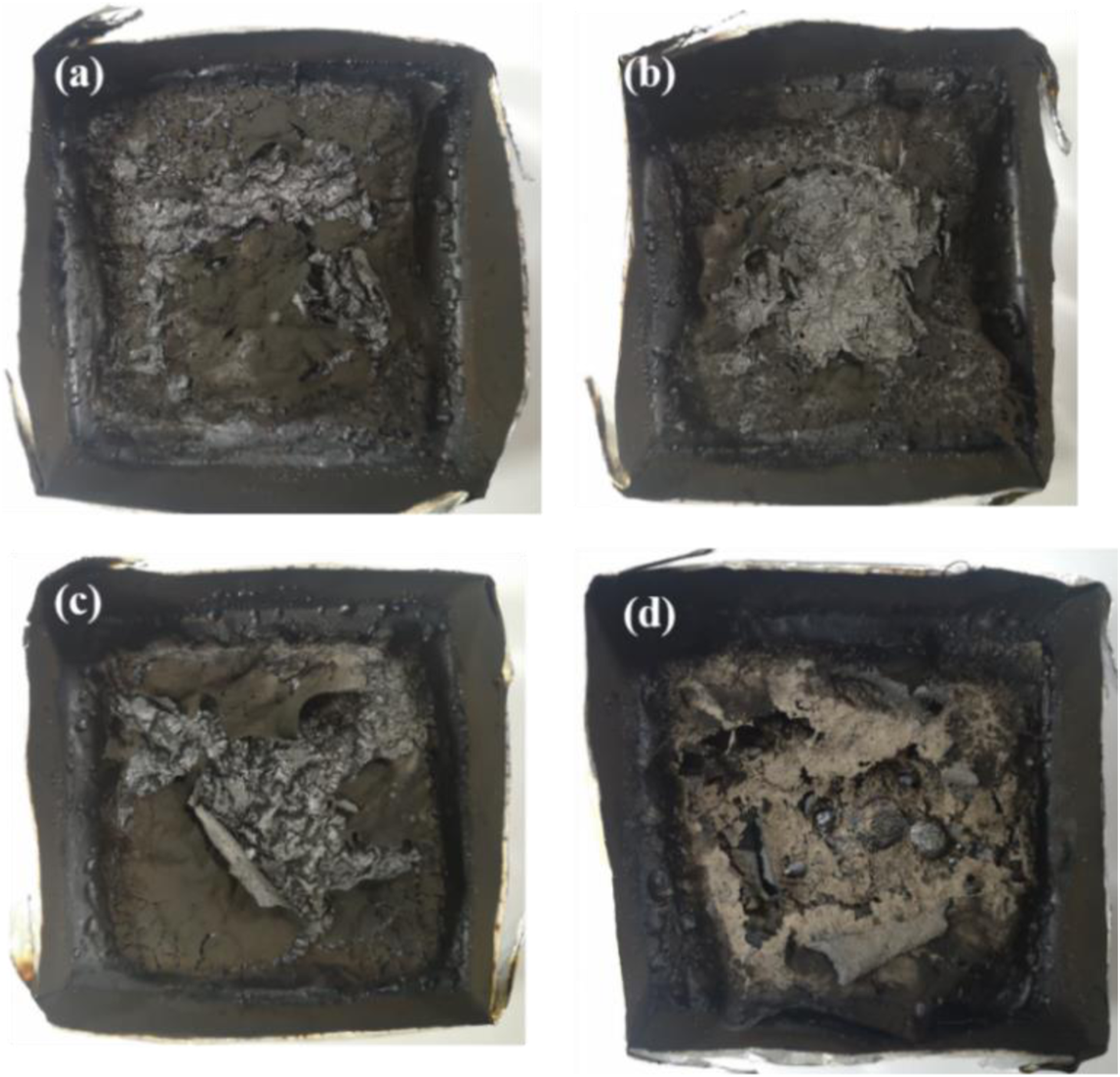
Gaseous product
The pyrolysis behavior of RPUF/ITS composites was analyzed by TG-FTIR.34,35 Figure 6 showed the three-dimensional (wavenumber-time-strength) curves of the test process of RPUF and RPUF/ITS composites. The four figures all observed an obvious release peak at about 350°C, and the positions of other peaks were basically the same, indicating that the addition of ITS did not change the degradation process of RPUF. The FTIR spectra of the four materials under the maximum release peak in Figure 6 were shown in Figure 7. The absorption peak at 3730 cm−1 was attributed to the N-H bond of carbamate,
36
and the absorption peak at 2930 cm−1 was attributed to the stretching vibration of the C-H bond in hydrocarbons. The characteristic absorption peaks of -NCO in isocyanate compounds and CO2
37
appeared at 2380 cm−1 and 2306 cm−1, respectively. The absorption peak at 1640 cm−1 and 1510 cm−1 could be ascribed as the characteristic peaks of carbonyl compounds and aromatic compounds,
38
respectively. The absorption peaks at 1260 cm−1 and 1074 cm−1 represented the characteristic peaks of esters. 3D-FTIR spectra of RPUF and RPUF/ITS composites. (a) RPUF-1; (b) RPUF-2; (c) RPUF-4; (d) RPUF-6. TG-FTIR spectra of pyrolysis products at a maximal decomposition rate of RPUF and RPUF/ITS composites.
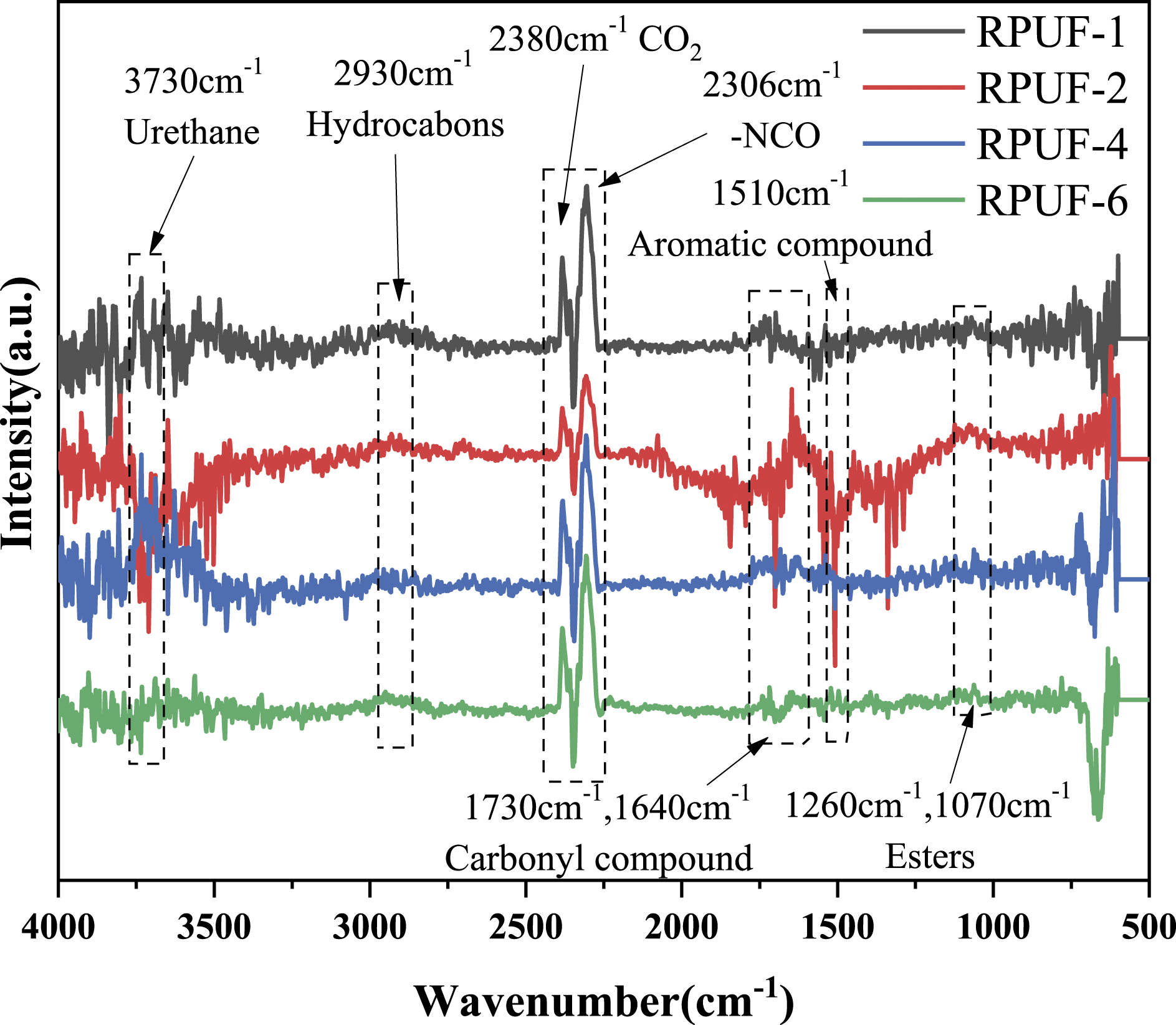
Figure 8 showed the changes of the total gaseous products and the release intensities of various typical gaseous products of RPUF and RPUF/ITS composites with time. Figure 8 displayed that the peaks of all curves are delayed compared with the pure sample, implying that ITS inhibited the decomposition of RPUF/ITS composites. The Gram-Schmidt curve represents the change of the total pyrolysis product strength with time. It could be found from Figure 8(a) that the G-S curves of the four composites are bimodal, corresponding to the degradation of the two segments (hard segment and soft segment) of RPUF.
39
When ITS was added, the G-S curves of RPUF-2, RPUF-4 and RPUF-6 were below the pure sample, meaning that ITS inhibited the decomposition of the RPUF matrix and improved the high-temperature stability of the RPUF/ITS composites, but this inhibitory effect would be weakened with the increase of ITS content. Figure 8(b) is the release strength curve of hydrocarbons. After the addition of ITS, the release strength of RPUF/ITS composites was significantly lower than that of pure samples. Figure 8(c) and (d) is the release curve of CO2 and isocyanate compounds. The addition of ITS reduced the release intensity of CO2 and isocyanate compounds, but the additional amount of ITS has little effect on the release intensity of CO2 and isocyanate compounds. As combustible and toxic gas in fire, CO poses a great threat to life safety in a fire. CO was generated in the degradation stage of the RPUF soft segment as exhibited in Figure 8(e), and ITS inhibited the degradation of the soft segment and thus reduces the release intensity of CO. Figure 8(f) and (g) are the release curves of aromatic compounds and esters, respectively. The aromatic compounds of pure RPUF at 900 s presented a sharp release peak, while esters of pure RPUF exhibited double peaks. After adding ITS, the strength of aromatic and ester compounds in RPUF/ITS composites decreased significantly, indicating that ITS significantly inhibited the release of aromatic and ester compounds. The above results indicated that ITS inhibited the decomposition of RPUF, improved its thermal stability, and changed the pyrolysis mechanism of the RPUF matrix to a certain extent. Absorbance of pyrolysis products of RPUF and RPUF/ITS versus time: (a) Gram-Schmidt; (b) hydrocarbons; (c) CO2; (d) isocyanate compound; (e) CO; (f) aromatic compounds; (g) esters.
Char residue analysis
The RPUF and RPUF/ITS composites were calcined at 600 C for 10 min in a muffle furnace, and the microstructure of the obtained char slag was displayed in Figure 9. Figure 9(a) showed that the char slag of pure RPUF was thin and fragile,
40
which was not conducive to preventing the transportation of heat and the spread of flame. Therefore, the flame retardant performance of RPUF was poor. When 10 php ITS was added, the char layer thickness of RPUF-2 was slightly increased, but it was still fragile and a small number of ITS particles were distributed on the surface. When 30 php ITS was added, the thickness of the char layer for RPUF-4 was also increased compared with that of the pure sample, and more ITS particles were distributed on the surface. These particles were conducive to improving the heat resistance of the char layer and inhibiting the heat and material transport during the combustion of the material. When 50 php ITS was added, the compactness of the char layer for RPUF-6 was reduced to a certain extent compared with that of RPUF-2 and RPUF-4. This may be due to a large amount of ITS added, which not only promoted the expansion of the polyurethane matrix but also destroyed the pore structure, leading to uneven stress during combustion and easy to be broken by gas. At the same time, it was found that the char residue of RPUF-6 also distributed a large number of ITS particles. SEM images of char residues for RPUF and RPUF/ITS composites: (a): RPUF-1; (b): RPUF-2; (c): RPUF-4; (d): RPUF-6.
In order to further analyze the charring characteristics of RPUF/ITS composites, the char residue of RPUF and RPUF/ITS composites was analyzed by Raman spectroscopy. As shown in Figure 10, all curves show double peaks. The D peak at about 1360 cm−1 is related to amorphous carbon atoms, and the G peak at about 1580 cm−1 is related to crystalline carbon atoms.29,41 The graphitization degree of materials is usually characterized by the peak area ratio of D peak to G peak (ID/IG). The smaller the ID/IG is, the higher the graphite degree of char slag is, and the better the heat resistance is.
42
Figure 10 exhibited that the ID/IG of the pure sample was 2.36. When ITS was added, the ID/IG of RPUF-2, RPUF-4 and RPUF-6 were greater than that of the pure sample, which was mainly due to the poor charring ability of ITS. Most of the ITS still existed in the char residue in granular form, which affects the growth of crystalline carbon atoms. Raman spectra of char residue for RPUF and RPUF/ITS composites.
XRD is mainly used to analyze the crystal phase structure of objects.
43
Figure 11 are XRD patterns of RPUF and RPUF/ITS calcined in a muffle furnace. It could be found from the figure that there was a wide peak at 2θ = 23° in the RPUF slag,
44
which was due to the amorphous phase of the char residual after RPUF combustion. When ITS was added, the broad peak shifted to 2θ = 26° and the peak area decreased significantly. When 10 php ITS was added, most peaks on the XRD curve of char residue for RPUF-2 disappeared, indicating that the chemical reaction between ITS and RPUF occurred during combustion. When the addition of ITS increased, the characteristic peaks of ITS in the corresponding XRD curves became more obvious, indicating that the content of ITS was too much. Only a small part of ITS reacted with RPUF, and most ITS particles were still distributed on the char residue. The results were consistent with SEM. XRD spectra of char residue for RPUF and RPUF/ITS composites.
Flame retardant mechanism
Based on the above analysis, the flame retardant mechanism of RPUF/ITS is as follows: ITS exists in the RPUF matrix, which improves the thermal stability of RPUF/ITS. After ignition of the composites, the masking effect of ITS will inhibit the combustion intensity of the composites and the metal oxides in ITS can catalyze the formation of continuous and dense char layers. In the condensed phase, the acidic substance such as HCN decomposed by RPUF reacts with ITS to form a metal ion char layer, while the unreacted ITS distributes on the surface of the char layer to improve the heat resistance of the char layer. Therefore, ITS mainly plays a condensed phase flame retardant role (Figure 12). Schematic illustration for flame retardant mechanism of RPUF/ITS composites.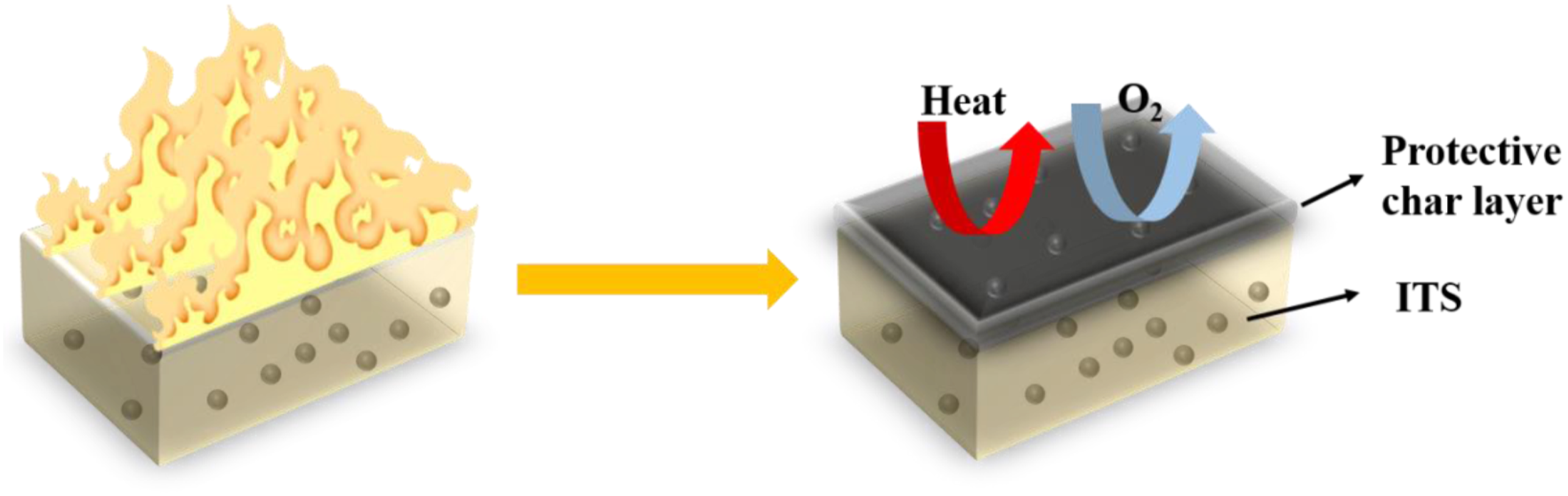
Conclusion
In this paper, ITS were used as flame retardants to prepare RPUF/ITS composites with different ITS loadings by the one-step method. The effects of ITS loadings on the thermal stability, combustion performance, gas products, morphology and graphitization degree of RPUF/ITS were systematically studied. It was found that ITS could improve the thermal stability of the composites. Except the T−5% of RPUF-2 was slightly lower than that of the pure sample, the T−5% of RPUF/ITS composites showed a trend of increasing first and then decreasing, and Tmax1 and Tmax2 showed a trend of decreasing first and then increasing, and were higher than that of the pure sample. The residual char rates of all samples were higher than those of pure samples, and the residual char rate of RPUF-5 was as high as 41.03 wt%. The cone calorimeter test showed that the PHRR of RPUF/ITS composites was negatively correlated with the addition of ITS and the peak time was delayed. When 50 php ITS were added, the PHRR, SP and SF of RPUF-6 were reduced by 22.75%, 36.39% and 30.56%, respectively, compared with the pure sample. When ITS was added, the FPI and ITS content of the composites increased, while FGI decreased with the increase of ITS content, indicating that ITS improved the fire safety of the composites. Raman, XRD and SEM showed that too much ITS was not conducive to the formation of a dense char layer of RPUF, and most of ITS was still distributed on the surface of char residue in granular form.
Footnotes
Declaration of conflicting interests
The author(s) declared no potential conflicts of interest with respect to the research, authorship, and/or publication of this article.
Funding
The author(s) disclosed receipt of the following financial support for the research, authorship, and/or publication of this article: This research was supported by National Natural Science Fund of China (No.51403004) and Anhui Provincial Nature Science Foundation (No.2108085ME178, 2108085QE243).
