




Abstract
This essay addresses the intersection of ‘urban topography’ and history in shaping the contours of the self and encounters with ‘the other’. It is based on field research in primarily one neighborhood of Beirut – Hamra. Whereas almost all neighborhoods in Beirut are dominated by one sect, Hamra is considered to be the most secular, diverse, and cosmopolitan area in this city. It is the home of several international universities and has nourished a robust public culture. Based on countless hours of observation and conversations as well as formal interviews with dozens of residents, shop owners, and intellectuals, I explore the dynamics of belonging and exclusion in a neighborhood that is imagined as the exemplar of a cosmopolitan culture. In the first section of the essay, I sketch a typology of street cultures, suggesting connections to forms of selfhood. I argue that Hamra’s urban topography, in conjunction with Beirut’s post-civil war history, has formed a self that is not disposed toward open engagement with the other. In the second part of the essay, I analyze patterns of social difference in Hamra, exploring the shape of gender, sexual, and ethnic differences. I consider which differences ‘coalesce’ and what form this takes as well as patterns of incorporation and exclusion. In the third part of the essay, the meaning of cosmopolitanism in an urban context is examined. I explore the notion of cosmopolitanism as a rhetoric of nationalism against both sectarian and Arab nationalism. Finally, in the last section I argue that the confessional basis of power in Lebanon helps explain patterns of social exclusion. This confessional polity encourages a politics of paranoia.
THE HEIGHTENED awareness of social diversity that has accompanied globalization, along with the surge of multicultural politics, has provoked a wide-ranging reconsideration of the notion of cosmopolitanism (Vertovec and Cohen, 2002). This concept speaks to the way selves negotiate social differences, to the possibility of multiple and global forms of citizenship, and to the emergence of international practices of political regulation in a world still dangerously in the throes of national conflicts. At its core, cosmopolitanism balances somewhat uneasily between a Romantic embrace of individuality and multiplicity (Hannerz, 1996) and an Enlightenment aspiration to articulate the universal or speak from the standpoint of the global (Cheah and Robbins, 1998; Held, 1995).
Although the juxtaposition of cosmopolitanism and cities is not new (Jacobs, 1961; Sennett, 1970; Young, 1989), this thematic focus has recently acquired a heightened salience among social critics and researchers. In this regard, the publication of two collections of original essays is telling. Cosmopolitan Urbanism (Binnie et al., 2006) presents conceptual and research-based essays addressing chiefly Anglo-European cities; Cairo Cosmopolitan (Singerman and Amar, 2006) invokes cosmopolitanism as a productive way to access changes in this iconic Arab city. The appearance of the latter volume by a new wave of Arab and European urbanists also disarms critics who might dismiss the appropriateness of extending a presumptively ‘western’ concept to the Middle East (cf. Mayaram, 2010). These two volumes, in the midst of a steady accumulation of studies (Amin, 2002; Binnie and Skeggs, 2004; Hiebert, 2002; Sandercock, 2003), underscore the point that cosmopolitanism is today a central thematic focus for analyzing urban dynamics across the globe.
While the literature on cosmopolitanism tends to be theoretically oriented (Brown and Held, 2011), urban research that draws on this concept is often empirically rich but analytically thin, for example, equating cosmopolitanism with diversity or tolerance or globalism. I wish to bridge this divide by sustaining an analytically nuanced notion of cosmopolitanism while offering thick empirically concretizing studies.
I pursue this aim in three interrelated ways. First, there is broad agreement that cosmopolitanism refers to a cluster of cognitive and evaluative beliefs such as tolerance and respect for social differences, or suggests an orientation that invites encounters with foreign cultures. However, the social psychological underside of cosmopolitanism, the affective dimension (e.g. the dispositional character that is receptive to dissonant perspectives and ways of life), is typically unarticulated and almost never empirically explored. In the first section, I consider the way urban topography intersects with sociohistorical conditions to produce ‘dispositions’ or a habitus that structures the way selves relate to urban space and to others. In a case study of a Beirut neighborhood I sketch an account of the formation of affective dispositions that are inimical to the kind of ‘empathetic and dynamic exchanges’ that would characterize a robust cosmopolitan culture.
Second, there is considerable research addressing which urban settings invite lively exchanges among people of diverse backgrounds and identities. The idea of an urban topography in which people of different social backgrounds and statuses mix was, of course, at the heart of Jane Jacobs’ critique of the hard-edged verticalism of urban modernists. However, all too often researchers rely on unstated and unexamined assumptions about the meaning of tolerance and diversity. In the second section, I outline an approach that identifies two axes of tolerance, that of symbolic inclusion/exclusion and structural equality/subordination. Tolerance is best approached in relation to a horizontal field of inclusion/exclusion and a vertical space of equality/subordination. From this perspective, the category of otherness, which is assumed by the notion of tolerance, should perhaps be imagined as a multiplicity involving, at a minimum, ‘strangers’, ‘status differences’ (included but subordinate) and ‘the Other’ (excluded and systematically subordinate). In a series of abbreviated case studies I explore the sociological aspects of the making of difference and otherness in Hamra and Beirut.
Third, cosmopolitanism is rightly understood not only as an analytical or normative category, but also a collective representation. The latter underscores its role as a social force with real-life consequences; for example, cosmopolitanism may be promoted as a state or entrepreneurial strategy of branding and tourism, or as a class ideology. In this section, I’m interested in the way cosmopolitanism slides between serving as a collective representation and a normative standpoint.
In the Arab world, to speak loosely, the notion of cosmopolitanism is doubly suspect. Locals raise doubts about whether its application to the Middle East carries the stench of neocolonialism, since once again the ‘Near East’ is seemingly positioned in relation to the implicit normativity of the West. And yet to claim, as some western scholars do, that cosmopolitanism is alien to the Arab world might be considered patronizing and no less orientalist. To some extent, such concerns have been addressed by a wave of recent studies by Arab and other scholars that not only make the case for cosmopolitanism as a compelling framework for the study of the Arab Middle East but also reveal that this concept is indigenously produced and deployed. That is, cosmopolitanism has taken root as a collective representation, with arguably its own unique genealogy, e.g. Hellenism, Islam, Ottomanism, the European Enlightenment.
In the third section, I consider the collective representation of Hamra as a cosmopolitan neighborhood; indeed, according to some locals, it is perhaps the only one in Beirut. Residents, shop owners, and cafe frequenters insist, virtually without dissent, that this neighborhood is not only uniquely cosmopolitan but that residents and regulars can’t help but absorb its cosmopolitan culture. I am less interested in assessing the validity of this claim than in exploring the social conditions that make this claim coherent and compelling. I argue that the discourse of cosmopolitanism is enmeshed in ongoing struggles over national identity. Specifically, cosmopolitanism is enlisted to defend a liberal nationalist project against both Arab nationalists and sectarian loyalists. Furthermore, to the extent that liberal nationalists invoke Hamra to make their case, they are also advocating urban cosmopolitanism as a general model for Beirut, as if maximizing diversity and a global orientation are obviously preferred policy goals in a city and nation in the grip of sectarian polarization. I have my doubts. In most Beirut neighborhoods, which by and large lack a history of Anglo-European immigration, ‘communitarianism’ may be a more compelling urban model. This section introduces a caution for those who assume that urban cosmopolitanism is or should be the default normative position.
My intent in the four ‘set pieces’ that make up this essay is not so much to juxtapose an ideal of urban cosmopolitanism to Beirut realities. Rather, I’m wagering that cosmopolitanism is a productive way to explore how urban topography intersects with history and social context to shape the way selves approach the many strangers that populate city life. I sketch a series of studies addressing a central dynamic of contemporary urban life: the encounter between the self and the other (Tonkiss, 2005). In particular, I wish to be attentive to the symbolic transformation of strangers into status differences or polluted Others. As much as the politics of cosmopolitanism is about recognition, tolerance, and inclusion, it is also, and necessarily, about misrecognition, intolerance, and exclusion. Beirut proves a compelling place to stage this discussion. Located at the intersection of the ‘Arab’ and ‘western’ worlds, Beirut confronts the challenges of blending its cosmopolitan aspirations with historically embedded cultural traditions.
Hamra, a Neighborhood in Beirut
The chief site of my research was a predominantly (Sunni) Muslim neighborhood in West Beirut. Historically, Hamra has been home to internationally recognized universities (American University-Beirut and Lebanese American University) and a refuge for persecuted and marginal cultural producers, minorities, and immigrants. Before the civil war (1975–90), its young, educated, middle-class population helped Hamra prosper as an essentially service-oriented, white-collar economy. Hamra’s considerable Anglo-American immigrant population, and its secular, professional and youthful population, produced a dynamic public culture of cinemas, clubs, cafes, theatres, and bookstores (Kassir, 2010 [2003]; Khalaf and Kongstad, 1973). Long-time residents and visitors recall Hamra in the 1960s and the early 1970s as a magnet for adventurers, tourists, intellectuals, political activists, and writers and artists from across the Middle East. As one shopkeeper recalled: ‘Before the 1975 war, the streets were buzzing with life. There were lots of foreigners, students, and artists. Theaters, cinemas, and other cultural venues contributed to the general lively atmosphere of Hamra.’ It was also Hamra’s good fortune to have avoided becoming a key battleground during the war years. In fact, as merchants and bankers abandoned the ruins of the Central Business District (the center of government and the souks), Hamra benefited. Its educated, affluent population and its proximity to the Central District and to the sea attracted waves of capital and human investment through the 1990s.
Today, as the reconstruction of the downtown continues, Hamra is as much the social and cultural hub of Beirut as is possible in a city lacking an undisputed center. Despite a series of political crises (political assassinations, the July 2006 Israeli assault, and prolonged government paralysis), the recent arrival of high-end stores such as ‘Vero Moda’ and ‘GS’, new cafes such as Costas and Linas catering to a global middle class, and the construction of high-end residential and commercial buildings, suggests a neighborhood confident of its future.
The restless, dynamic public culture of Hamra impressed me upon my arrival. As I got to know other neighborhoods, my appreciation of Hamra was sharpened. Hamra strikes me as distinctive because of its sectarian and ethnic diversity and its culture of personal and social experimentation. Indeed, in the course of conversations and interviews with residents, shop owners, and intellectuals, Hamra’s culture of individualism and cosmopolitanism was repeatedly celebrated as unique in Beirut.
Between September 2007 and June 2008, and January and June 2009, I lived in Hamra. I spent countless hours walking its streets, attending cultural events, frequenting cafes, observing and taking notes, and speaking with dozens of residents, workers, artists, intellectuals, and shop owners. Additionally, in my classes at the American University I trained students in the skills of urban research. They mapped Hamra’s streets, observed public spaces, and collected and transcribed some 100 interviews, which supplemented my own. As an outsider to Beirut, I have been mindful of trying to avoid imposing ‘problematics’ and conceptual strategies that may reflect narrowly Anglo-European considerations. I have tried to stay close to the life-world of Beirut’s residents in order to challenge and revise my categories and viewpoints. I have sought an ‘embedded interpretation’, recognizing that my situated standpoint both enables and angles my interpretive claims. There is no escaping the hermeneutic circle.
I. Street Culture: The Anxiety of the Other
I share with critics of vertical modernism (Jacobs, 1961; Lynch, 1960) the view that the street is the ‘cell’ of urban neighborhoods. Its formal properties structure the contours of personal and collective life. Streets are, though, sociologically and historically situated. I raise the following question: how does street topography intersect with history and social dynamics to fashion the dispositions of Hamra’s denizens? Specifically, does Hamra’s street culture foster a social psychology favorably disposed towards urban cosmopolitanism, e.g. porous self-boundaries, empathic engagement, and openness to difference and innovation?
Street typographies speak to the organization of urban public space. For example, streets that are primarily oriented to the circulation of goods, bodies, images, and information would maximize orderliness, efficiency and speed of flows. As much as streets are spaces of circulation, they are also public arenas where selves or groups claim an identity, forge a sense of belonging, and assert their power by establishing boundaries of inclusion and exclusion. With regard to the latter, urban areas may become the exclusive territory of a specific status or class group, which projects its authority through the naming of streets, marking territory through posters of martyrs or notables, or by policing the neighborhood.
Consider urban spaces that are imagined as dangerous or ‘security risk areas’. Streets and neighborhoods may be viewed as threatening because they become ‘social purgatories’ (Wacquant, 2008), ‘black holes of social exclusion’ (Castells, 1998), or spaces of moral corruption (prostitution, drugs, homosexuality, gambling) and violence (gangs, crime, terrorism). As such, these streets may be isolated by regulating entry and exit, erecting barriers and walls, or by surrounding them with neutral or emptied space. Classifying specific urban quarters as dangerous may accelerate the privatization of urban space by providing a rationale for establishing ‘safe’ spaces. The spread of gated communities, privately owned and patrolled malls and parks, fee-based recreational and leisure spaces, sequestered tourist zones, fortified business complexes (‘citadelization’), and the creeping commercialization and suburbanization of land are telling signs of the erosion of urban public space encouraged by the incitement of urban fears (Abaza, 2006; Blakely and Snyder, 1997; Denis, 2006; Marcuse, 2003). In extreme cases, streets can be militarized or become battlegrounds regulated by checkpoints and military patrols, cordoned off by fences or walls, subject to surveillance cameras, or zoned to deny ordinary citizens’ access (Lyons, 2003; Misselwitz and Rieniets, 2006; Sorkin, 2003; Warren, 2003; Weizman, 2003).
Different street topographies shape the ‘habitus’ of the self and its disposition towards others. For example, if streets become combat zones, neighborhoods will be divided along the axes of ally and enemy. In the former, selves would be disposed to be inviting and expansive towards insiders. Porous, fluid boundaries among allies would reinforce solidarity and loyalty. But as selves navigate beyond friendly territory, their surface skins would likely harden; selves would perhaps turn inward, projecting indifference or an edge of hostility to ward off potential aggressors. Strangers would be met with suspicion and social distancing. By contrast, urban streets rich in common spaces and attracting people of varied cultural backgrounds would encourage porous self boundaries and cultivate selves who are comfortable with the challenges presented by strangers. Empathic and sympathetic engagement would perhaps form the affective texture of such social exchanges. In the remainder of this section, I sketch the way urban topography intersects with Beirut’s unique history to shape the emotional texture of the relationship between self and other in Hamra.
Others as Strangers and Enemies
Hamra’s wide sidewalks, phone boxes, streetlights, green spaces, public squares, and its many cinemas and cafes suggest topographical traces of a one-time robust public culture. However, except for Bliss and Hamra streets (the former occupied by American University, the latter the commercial center of Hamra), neglect has taken its toll. Sidewalks suddenly break off, forcing pedestrians to walk on the street or a dirt walkway; streetlights brighten Hamra and Bliss but many streets remain dark throughout the evening; navigational signs, public restrooms, and public clocks are either absent or impossible to locate. The soft furnishings that provide urban comfort and aesthetic pleasure have fared worse. Benches, monuments, and landmarks are absent; many streets lack any green space while those with planters or trees often betray long-term neglect. On almost every street, there are buildings in various states of disrepair. Many apartment complexes are emptied of tenants and others seem abandoned by their owners. A cityscape dotted with empty lots, deserted squares, abandoned buildings, vacated galleries and cinemas, and the commercialization of almost all common areas underscores a deteriorating public space.
The postwar deterioration of Hamra’s public space does not extend to circulation. The streets are cleared of debris, garbage is removed, mail is delivered, and order is more or less maintained. Machines, bodies and goods flow easily. Circulation has become a chief priority of this urban slice of the ‘merchant republic’. In Hamra, there are no traffic lights, and while there are stop signs, no one obeys them. Cars routinely ignore one-way directional traffic rules; motor scooters and motorcycles freely move between crowded streets and sidewalks; parking space is expanded by using sidewalks; vendors use street corners or sidewalks to hawk their goods regardless of pedestrian traffic; grocery stores turn into cafes as tables are squeezed onto sidewalks even as pedestrians are nudged into the street. Zoning laws seem equally optional. Shop owners, residents, real estate speculators, and builders rearrange space without concern for the law or the public good (e.g. Fawaz, 2003). Concerns of scale and land use are ignored so long as circulation can be accelerated.
The streets of Hamra are today chiefly about the flow of bodies, goods, and machines. Impediments have been removed, rules kept to a minimum. Space bends to temporality, to a driving impulse to free circulation of unnecessary constraints. This urban culture of flows produces a dynamic, phantasmatic collage of sounds and sights, bodies and machines colliding, intersecting, but always on the move.
In the circulatory flow of the streets, an urban topography gives shape to a lean, minimally unencumbered self. This self, as she navigates the streets, is not a self whose thick past is in play. Instead, this self imagines suspending time in order to live intensely in the here and now. This is also not a self whose inner life is to be revealed. Hamra’s streets may be a space of desire, but in a street culture bent to flows and speed they do not encourage intimate sharing. To the contrary, this street savvy, lean self stays close to the body, to the surfaces and desires that bind the self to the immediate sensual excitements of the street. This is a self that flourishes in the drama of the discrete gesture – a self who enters and exits, stops and goes, greets and departs, spends and moves on; a self that doesn’t linger too long anywhere, with anyone or anything.
But, exactly what burdens are these fast moving selves trying to leave behind? To address this question, I shift from a topographical to a sociological analysis. Despite an official narrative that contrasts Lebanon to other Arab nations by its laissez-faire, freewheeling individualism, Lebanese live in a densely rule-bound order. Kin, village, sect, patriarch and patron, gender code and social class encircle the self in a seamless web of rules, customs, and rituals (Joseph, 1993, 2002). If formal regulations have only a faint presence in the lives of individuals, due to a notoriously weak state, informal controls operate like a spider’s web radiating from the inner layers of the Lebanese self to outer behavior. Selves are extensions of kin, and where family leaves off sect steps in; and at its border are inflexible gender and class norms. Hamra’s street culture then holds out the promise of some release from customary rule, from the layers of regulation that may feel like a crushing weight on personal life.
Release does not of course mean the absence of regulation. In Lebanon, the boundaries between the private and public are fuzzy; the ‘private’ realm of kin and sect bleeds into the public, including the urban street. Still, the codes governing personal and social behavior, from kinship obligations to sectarian-based personal status laws, may be relaxed as the street allows selves some distance from actual kin. Hamra, in particular, invites an ‘unburdening’. There is a fluidity and unruliness to Hamra’s street life that reflects its secular culture and a singularly dynamic public culture of cafes, amusement centers, gambling joints, brothels, pubs, and nightclubs, which shield the self from the social censure and control of kin and sect.
Something of the freewheeling, fast-paced street culture of Hamra seems also to be fueled by an almost obsessional flight from recent history. For many Lebanese, the present is thick with an affective aura of loss, with barely contained feelings of fear, vulnerability, and rage and with unresolved feelings of betrayal and shame, as the present remains deeply wedded to a 15-year period of civil violence (e.g. Saghie, 2004). For those who came of age during this time, those young men and women who are the face of Hamra, there is perhaps no escaping the formative power of this era. But, also, because this nation has been unable to render the war years coherent, and to ritually enact a national drama of forgiveness and reconciliation, it seems unlikely that individuals can do so. In contrast to nations that have found ways to process periods of protracted civil violence, there have been no collective acts of memorialization in Lebanon, no judicial accountability for killings and massive theft, and no public rituals of truth telling and reconciliation that might facilitate a national catharsis.
Lebanon’s war years have been met with a numbing silence and an almost conspiracy-like will to forget (Khalaf, 1993; Sarkis, 2006; Tueni, 1998; Yahya, 2007). Amnesia, though, hardly seems possible. How does one forget the death, exile, or betrayal of kin, the loss of home, family, and community, or the paralyzing shame or rage for deeds done or witnessed? Indeed, how is forgetting possible under conditions in which the very culture of social polarization and sectarian enmity, which fueled the collective madness of the war years, has been reproduced by a postwar history of spectacular assassinations, heightened class and sectarian division, and political paralysis? If neither reconciliation with a violent, disturbing past, nor forgetting, are possible, what are the options – and with what implications for the shape of encounters between self and other?
As memories of civil violence are repeatedly evoked by sectarian rivalries, and indeed as hostilities seem always on the verge of spilling over into civic violence, as occurred in May 2008, some individuals retreat into the enveloping world of the sect. In a nation in which the state is unable to protect its citizens, and in which the power of the sect is woven into nearly every tissue of personal and social life, the sectarian community serves as a homeland. The main sects (Maronite, Greek Catholic, Orthodox, Druze, Sunni, and Shia) have their own political organizations, allotment of civil service positions to dispense, militias, flags, originary myths and narratives of villains and heroes. Sects are virtual mini-states. They provide safety, security, jobs, and offer a rich, lived sense of identity and social belonging. Sectarian personal status laws regulate birth, marriage, divorce, and inheritance; its charities and social service organizations provide healthcare and social welfare; each sect has its own schools and media – from television channels to newspapers. In short, the sect offers security and solidarity for a war weary, traumatized citizenry.
But the sect also creates a social world of mistrust and hostility towards outsiders. And sectarian leaders, who have long ago abandoned ideological politics, secure popular loyalty in no small measure by tapping into paranoid fears and hatreds of rivals. Sectarian outsiders appear as enemies, threatening civil violence and disorder.
As much as the sect offers a refuge in an unstable, violent-prone nation, it is also condemned for contributing to Lebanon’s civil unrest. A counter discourse of anti-sectarianism exists alongside sectarian myth-making. The retreat from sectarianism has often meant a preoccupation with personal fulfillment, for example, with consumerism or careerism. At the level of urban street life, this anti-sectarianism has nourished an inward-looking disposition while publicly sustaining an affectively muted surface so as to not invite hostilities. Presenting an emotionally neutral even if glossy (colorful, richly textured) bodily surface allows the self to navigate Hamra’s public terrain with minimal social interference and tension.
Underlying the steady, quick circulation of bodies and vehicles is an almost studied indifference to others, a walling off of one’s emotional life. If a disposition of inwardness and indifference is what selves cultivate in their public lives in order to negotiate a world of anonymous enemies, engagement with strangers will bear little of the spirit of empathy and openness, cultural exchange and mixing that defines a robust urban cosmopolitanism. Instead, a disciplined indifference allows easy, unimpeded movement and purposeful engagements, which can be eased only in the presence of ethno-religious kin, intimates, or allies.
Hamra’s vibrant street life continues to promise a certain release from the burdens of the present and recent past. This neighborhood remains a fertile ground for creative, unruly impulses. Still, unless I am terribly mistaken, the conjuncture of urban topography and history has conspired to promote cultural strains of a crippling civic indifference and paranoia. Specifically, whereas a heightened sectarianism shapes a disposition of fear and barely contained loathing towards the sectarian other, an urban culture oriented to circulation cultivates a disciplined insularity, as if nothing is owed to others beyond benign indifference. This ethos may give to the streets of Hamra something of its aura of freedom, but it threatens to become a freedom to be indifferent to the other, to approach strangers as potential impediments, if not enemies. This insularity and indifference is the antithesis of the ‘empathic engagement’ that is the spirit of cosmopolitanism.
II. Limits of Tolerance: The Politics of Difference and Othering
The notion of an unencumbered self is an ideal type. Selves are always thickly layered with social markings and bear the weight of history. In Lebanon, the sect rivals the nation as a terrain of identity and belonging. Although some 18 sects have found a home in Lebanon’s confessional order, such tolerance has not been extended to many nonsectarian statuses. In this section, I turn to a central theme of cosmopolitanism: the politics of tolerance. Cosmopolitanism assumes a social field inviting of diverse personal styles and social statuses, but also highlights social patterns encouraging mixing and hybridization. A culture of diversity and dynamic innovation would not be possible without tolerance. Too often, however, this notion is imagined in one-dimensional terms, as if varied statuses or ‘lifestyles’ are either included or excluded. I propose a multidimensional approach.
Tolerance may be conceptualized as involving two analytically distinct dimensions: inclusion/exclusion and equality/subordination. The former speaks to whether a social status is recognized as morally legitimate and whether the agent is accorded rights and respect. The latter concerns an individual’s access to opportunities and resources and considers whether there are patterned hierarchies along specific status dimensions such as gender or ethnicity. Tolerance can therefore be analyzed in terms of whether statuses are symbolically included (accorded rights and respect) and whether they are structurally advantaged or disadvantaged in terms of access to resources and opportunities. A social arrangement in which specific statuses are symbolically excluded and/or structurally subordinated would underscore a restricted form of tolerance. Symbolic exclusion does not, however, always accompany social subordination. It is possible for a status to be symbolically recognized while socially subordinate (post-Second World War American women). Finally, patterns of symbolic exclusion and social subordination may be partial (some social sectors) or systemic (across social sectors).
To the extent that a social status is subject to systemic patterns of symbolic exclusion and structural subordination, it may be more appropriate to speak of ‘otherness’ rather than ‘difference’. Whereas difference underscores a condition of subordination but within an imagined community, otherness highlights a symbolic positioning outside of such a community, or at the edge of tolerance. It is the contrast between the normalized but still inferior gay American (difference) and the polluted, closeted homosexual (Other). Identifying statuses that are excluded and/or socially subordinated, and their singular pattern of difference and othering, speaks to the actual state of a neighborhood or nation’s culture of cosmopolitanism.
So, what statuses are marked as different and Other in Hamra? How are the salient patterns of exclusion and subordination manifest in its public space?
Inferiorized Insiders: The Politics of Gender
Streets may be gendered, even if lacking the thick gender markings of the body. Their architectural properties – linear or curved – and their ‘hard’ and ‘soft’ furnishings project a gender resonance. Of course, gender is manifest in who uses which urban spaces. So how does gender enter into the social organization and texture of the street in ways that bear on the politics of tolerance?
In Hamra, gender politics are transparent in at least one way. Men rule the streets. They’re the ones behind the wheels of the BMWs and Mercedes, driving the taxis, gathered in front of shops, talking, or playing backgammon. It is men who own the flower, sporting goods, electronic, clothing, or grocery shops. And it is men who are the construction workers, the police and military officers as well as the waiters, dishwashers, street cleaners, newspaper and mail deliverers.
Women share the streets with men, but not equally. Women walk the streets aware of the lurid looks and gestures that often follow them. I’ve watched men stare as a woman walks by; they smile, as if acknowledging a brotherhood of male gender power. Women know that they walk the streets alone at night at some risk. Stories circulate of women attacked in front of their apartments or dragged into alleyways or cars (statistics on sexual violence are unavailable, if they even exist). In fact, as darkness descends, most streets are dimly lit or not at all while police are rarely seen. Women are scarcely seen alone.
The street exposes women to an equally serious risk: the loss of respectability. As a space where formal controls are relaxed, and where men’s sexuality is more in play, women have to tighten internal controls as they negotiate Hamra’s streets. For many women (Muslim and Christian), respectability is wedded to controlling desire. Women step onto the street as bearers of their fathers’ and families’ honor, and as responsible for regulating men’s desire. For many Muslim women the street is a test of piety; public sexual modesty is a condition of claiming respect. To surrender to sexual desire risks dishonor for herself and her family. Parents, brothers, uncles, cousins, boyfriends, clerics, sheikhs, and peers heavily regulate women’s bodies and desires. A dense network of taboos and prohibitions surround her sexuality in ways that have no counterpart for men.
Unlike in the US or western Europe, an honorable Lebanese woman cannot choose to be sexual and single, cannot choose motherhood outside of marriage, cannot choose cohabitation (illegal and would mark her as disreputable), cannot choose another woman as her partner, and cannot choose to remain celibate and single without being stigmatized as a failed woman. Marriage is the central event for women; it is their fate, regardless of class. Gender respectability is linked to a ‘good marriage’, which pivots on staging a virginal wedding. As a university (female) student confided, ‘A woman ... should marry as a virgin. ... The best thing a woman could offer her husband is her innocence and purity.’ Most men agreed. ‘Of course my wife has to be a virgin. I want her to be pure.’ Mark continued: ‘[Otherwise], I can’t trust her [since] she might have been going around with many guys ... what will people say?’ That said, many women choose to be sexual. Some younger women voiced a right to sexual fulfillment. But even these women conceded that surrendering their virginity risks forfeiting respectability. More than a few women navigate the troubled waters of sexual desire by practicing anal sex; others acknowledged that hymenoplasty is widespread. And still other women opted for abortion, despite it being illegal (Fathallah, 2010).
Women’s restricted erotic-intimate freedom is paralleled by state-enforced patterns of gender subordination that include a lack of political representation (since the Taif Agreement in 1989 there has been just one woman in the Council of Ministers), the absence of laws criminalizing spousal rape, domestic violence, and sexual harassment in the workplace, and the lack of a right to confer citizenship on a foreign-born spouse and their children (Khalaf, 2002; Zuhur, 2002). To date, no social movement, not in Hamra and not in Beirut, has rallied women to challenge their lack of legitimate intimate choices as emblematic of an unequal gender order. There are organizations addressing specific types of gender inferiorization, such as violence against women (Kafa) or women’s disenfranchisement (Lebanese League for Women’s Rights), but these either offer a specific service or lobby for narrow legal reform. Some activists explained the absence of a women’s movement by referring to their sense of personal inferiorization and powerlessness in a confessional political system hostile to non-sectarian movements. ‘The government is definitely our enemy. It will not allow a women’s movement. It would threaten the power of the sect.’ Activists face a dilemma: change must have sectarian support but sects discount its importance. The prospects for far-reaching gender change are dim (Zuhur, 2002).
Men’s public performance of power, from hyper-masculine bodily presentations to the exaggerated bravado of their oratory, has shaped a culture that projects men’s seemingly seamless power. Indeed, in interviews and conversations with women, even young, privileged women, men were almost always imagined as so powerful that few women would even concede that they too are enmeshed in a network of customary rules that constrains them.
In fact, men also shoulder the burden of upholding their family’s honor. They too must marry, and marry well; they are expected to create and provide for a family, and defend its honor. Moreover, they never escape the duties and demands of the family of origin, including responsibility for the behavior of their sisters. They must provide a steady authoritative hand ensuring their sisters’ respectability; this obligation continues even after their sisters marry (Joseph, 1994). Assuming responsibility for their female siblings is also about acquiring the skills, dispositions, and obligations of masculine authority. In the case of divorce or a father’s death, sons are expected to stand in for the father and become the provider and authority figure for the family. This too does not end even as they establish their own families.
Men’s social power carries its own risks. They suffer from anxieties of public shaming that would accompany any failure or loss of masculine power. Masculine authority must be repeatedly claimed and demonstrated in relation to women and other men. Only men who are effective in the competitive arenas of masculinity, for example, in sports, in displaying the right body, in heterosexual dating and marriage, and in wealth accumulation, are fully rewarded with the authority conferred by masculinity. In this hyper-masculine world, and one in which there is effectively no government to cushion failure, any weakness in the armor of masculinity can bring humiliation and dire consequences for the entire family. Accordingly, men and women can be unforgiving towards non-masculine men (Moussawi, 2008).
Gender is then a central axis of social difference in Hamra. Women occupy an inferior, subordinate status in relation to men and male masculinity. Their subordination may be systemic but, at least for citizens, it is not accompanied by symbolic exclusion. Lebanese women are respected as familial, civil selves; there are no state-legal impediments to their participation in civil life and the institutions of marriage and the family. But there is patterned subordination within these civil institutions. Further complicating gender politics, women’s subordination is understood as fixed by the laws of nature or God. From this perspective, women may occupy a different status than men but this dichotomous gender pattern is not explained in terms of a politics of justice.
There is, though, an exception to this politic of social inclusion: gender dissidents. Masculine women and feminine men occupy a space of Otherness. Gender dissidents are threatened with systemic patterns of exclusion that would make it impossible for them to fashion a morally respected, honorable self. Gender dissidents are not alone; migrant laborers, ethnic minorities (Kurds, Syrians), Palestinians, and sexual dissidents also fall on the wrong side of the moral order. These populations face systemic patterns of exclusion and subordination that stretch the notion of tolerance to its limit. How are these exclusions enacted? And what forms of belonging and political resistance are possible for those who seem to fall on the other side of tolerance?
Ethno-national Otherness: Bare Life
There are no walls dividing neighborhoods, and no gated communities. Beirut is neither Hebron nor Cairo. But there are multiple degraded and denigrated populations. There are the armies of dark-skinned Asian immigrant workers, but also the undocumented refugees from Iraq, Eastern Europe, and Russia who often become sex workers or survive in a criminal underworld. There are also the Palestinians and Syrians who live on the edge of the city, in its squalid refugee camps or in its slums (Chalcraft, 2008; Hanafi, 2008, 2010; Peteet, 2005). Disenfranchised, poor, and polluted, these populations are barely visible, despite sustaining the infrastructure of this nation.
There are vast differences among these disenfranchised, disrespected ethnic populations. To illustrate one pattern of ethno-national othering, I consider the case of migrant domestic laborers. Economic hardship has fueled the immigration of domestic laborers from the Philippines, Sri Lanka, East Africa, and Southeast Asia. As ‘foreigners’, migrant laborers are not protected by Lebanese labor laws. They cannot form labor unions, are not covered by minimum wage laws, and employers are not legally required to set work hours (Young, 2003). After three months of employment, the employer assumes full legal responsibility for the worker; his power is virtually unchecked by the state. Families will often confiscate the passport of the domestic laborer and restrict their freedom, for example, denying them a day off or locking maids in the home when the madam goes out. These extreme measures are rationalized by representations of domestics as infantile and incapable of protecting themselves from male predators (Jureidini, 2002).
In the past two decades, the composition of domestic laborers has changed, and their status has become more precarious. Prior to the civil war, young Lebanese and Syrians from poor families, but also Egyptians and Palestinians, were the chief source of domestic labor (Young, 2003). Given their shared Arab identity and language, and the ongoing responsibility their male kin felt for their well-being, there were some threads of human identification and accountability in this labor regime.
But the composition of domestic laborers changed after the civil war. Mass immigration from Sri Lanka, the Philippines, and Africa swelled the ranks of domestic laborers. As foreign nationals, domestics retain their legal status as Philippine or Sri Lankan citizens. In principle, the Lebanese government and employment agencies are supposed to be accountable to foreign embassies or consuls and therefore protect migrant labor. In practice, poor nations such as Sri Lanka or the Philippines count on remittances as a chief source of national income, and are reluctant to intervene in the domestic affairs of the host nation.
At the same time, the dramatic shift in the composition of domestic laborers has been accompanied by a racialized discourse that is perhaps minimizing ethno-national representations (Beyene, 2005; Jureidini, 2003; Lee, 2009). On the one hand, specific behavioral and moral dispositions are stereotypically assigned to nationalities, in effect racializing them. For example, madams and Filipinas, who occupy the apex of the domestic labor hierarchy, describe Sri Lankans and Ethiopians in highly dehumanizing ways. On the other hand, researchers discern a language of a deterritorialized racial other in descriptions of non-Arab migrant laborers. Sri Lankans and Ethiopians are at times referred to as ‘black’ (Abed), which ‘denotes both a black person and a slave’ (Jureidini, 2003: 1). This shift from a legal-national to a racialized status signals a further degradation in the status of domestic laborers. They are approached as a free-floating, racially inferior mass without a nationality. In this racialized discourse, domestics assume the status of the Other – inferior and excluded from the Lebanese national imaginary of a moral order of respect and civility.
Recent research on Filipina domestic laborers shows the migration of the language of a racial discourse into the world of the madams and maids (Lee, 2009). Central to this discourse is the division between Filipinas and Southeast Asian and African domestics. As one madam opined: ‘I don’t like them [Sri Lankans and Ethiopians] at all. ... They have bad character. ... They are very stubborn, the Ethiopians. ... I don’t like them. Even the Sri Lankans, I don’t like. They’re really idiots. The best are the Filipinas’ (Lee, 2009: 10). Filipinas are the highest paid and are assigned the most valued tasks in the household, for example, childcare and the serving of food. It’s hardly surprising then that Filipinas also invoke this racial discourse. Commenting on how her madam would allow only her to prepare food with her bare hands, a Filipina observed that ‘her madam would never let Trouen [an Ethiopian maid] make tabbouleh with (her) bare hands .... because Trouen is “black” and “dirty’” (Lee, 2009: 12–13).
Although Filipinas are privileged in relation to ‘black’ domestics, they too are racialized by madams as not white and not Lebanese. They occupy an ambiguous status in households. If there are other non-Filipina maids in the home, the Filipina’s role is to protect the family from the polluting status of ‘black’ maids who do the ‘dirty’ work. If she is the only maid, the Filipina will bear some of the polluted status associated with doing ‘dirty’ housework.
The trend towards the racialization of domestic laborers is troubling. As it is, domestic laborers have few rights and legal options in the face of often punishing work schedules and employers. A Lebanese culture that represents domestics as child-like, impulsive and untrustworthy further contributes to their degraded status. Even in respectful households, and even for Filipinas, social exclusion from respectable Lebanese culture is the elementary fact of their lives. Inside the household, symbolic exclusion is signaled by the location of their sleeping ‘quarters’ (kitchens, closets, or balconies) or by their infantilization.
Stepping onto Hamra’s streets, it is their absence from the rich public world of cafes and shops that signals domestic workers’ symbolic and social exclusion. With the exception of Sundays, and then only in segregated spaces, for example, the backrooms of internet cafes or the enclosed space of a church, do Filipinas or Sri Lankans participate in Hamra’s public life. Exclusion and inferiorization is not fixed in law or public prohibitions but, as is often the case in Lebanon, it is customary law that rules the day. The owner of a well-known cafe spoke expansively of its cosmopolitanism; yet he was not shy about revealing the limits of his tolerance. ‘I do not like Filipinas to come into the cafe. Would you come have coffee or a drink at this place with a house worker sitting next to you? I don’t think so. …. Also, I do not like it when blacks come here. … I wouldn’t kick them out if they happen to come in once. But I would make it obvious that they are not welcome’ (Ghanem, 2008). So while Lebanese and Anglo-Europeans can be observed enjoying Hamra’s prime public spaces (Starbucks and the Crowne Plaza Hotel areas on Hamra Street), Filipinas or East Africans never gather in these places.
Domestic workers are aware of a Lebanese culture that pollutes and excludes them. They are especially fearful of Lebanese men who are often seen as predatory and exploitive. They hold no illusions about altering their outsider status. That said, work conditions vary considerably, and many maids report working in households that are respectful and compassionate. Moreover, domestic workers resist inferiorization by embracing a narrative of moral superiority as virtuous wives and mothers in contrast to selfish and neglectful Lebanese women (Lee, 2009). Also, many maids are able to avoid isolation and infantilism by forging social networks composed chiefly of others of their nationality. These networks are a source of self-affirmation and social solidarity; they also provide an exit option when work life is intolerable. At the heart of these networks are ‘freelancers’ (Beyene, 2005). These women may live four to eight in a small flat in a marginal, low-rent area, but at least freelancers control their own time and movement. For runaway maids, these networks offer financial aid and access to illegal work, social services, and housing (Jureidini, 2006).
For maids who live with a family, Sunday is their day off. Many of these women will experience free time as a release from social isolation and inferiorization. Typically, these women will gather at a church or cafe that caters to domestic laborers (Beyene, 2005: 99). In Hamra, St Francis Church serves as a gathering spot for Filipinas (Baban, 2009). Church service will be followed by social events, from the buying and selling of goods to sports, games or Bible study. Many women will then shop, visit at a cafe, or gather to eat and socialize at a freelancer’s flat. Although these networks may function like quasi-kin units, they are informal, loosely formed, resource poor, and threatened by their illegal status. Domestic laborers also have recourse to a handful of formal organizations and agencies that provide legal and social aid.
Until Spring 2009, political protest by domestic workers was unheard of. This changed in February of that year. A public demonstration took place in Hamra that advocated for the rights and dignity of domestic laborers. Organized and supported by young activists, many affiliated with the American University, some domestic workers bravely related tales of victimization while advocating legal reform (see Figure 1). In fact, very few domestic workers attended this public demonstration and there is little popular support for political mobilization (Lee, 2009). Most activists believe that reform will require considerable pressure from international organizations and the relevant foreign embassies and consuls.
Domestic laborers protest in Hamra. Photo by the author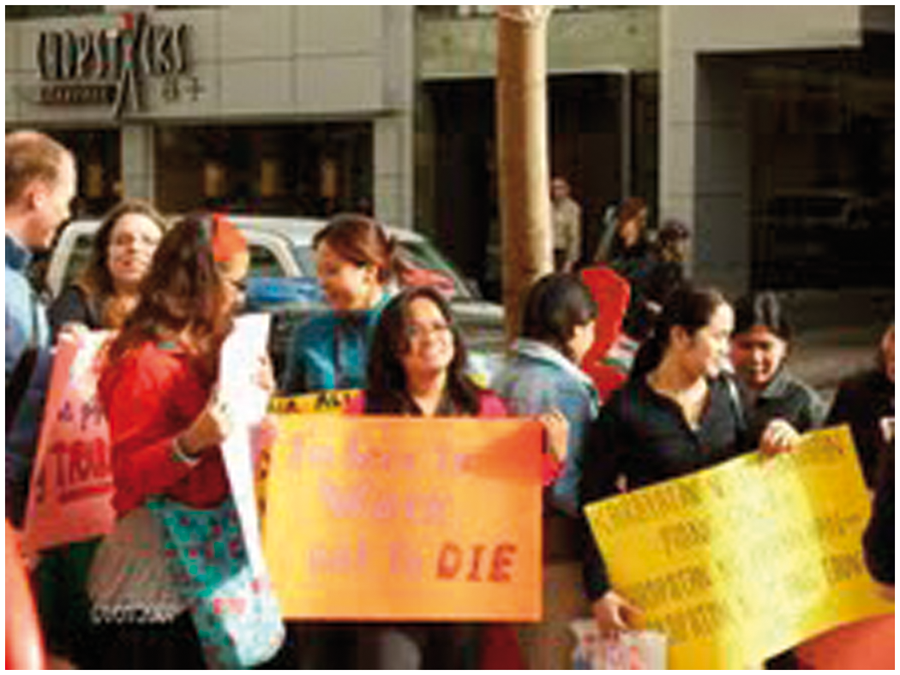
Sexual Dissent: Resistance in a Post-Identity Culture
Lebanon is a marriage-and-family centered nation. Individuals are understood as extensions of their kin; and marriage is considered a social duty. Intimate norms are especially rigid for women, requiring exclusive heterosexuality, sexual modesty, virginal marriage, and a procreative imperative. A double standard gives men more latitude. This intimate code produces an abundance of denigrated, outsider sexualities – the unmarried, loose, promiscuous women, barren men and women, cohabiting men and women, childless marriages, but, above all, nonheterosexuality. So unequivocally is heterosexuality understood to be the foundation of intimate life that this norm hardly needs to be verbalized, much less defended; it is simply the only way to claim a normal sexuality and gender. How do non-heterosexuals negotiate an urban world that leaves no legitimate alternative to heterosexuality?
The world of nonheterosexuality in Beirut contrasts sharply with that of New York or London. The tight association of desire and sexual identity, and the formation of identity-based sexual communities, so salient in American and British cities, cannot be assumed in Beirut. In line with other researchers (McCormick, 2006; Moussawi, 2008), I found that most individuals approached same-sex attraction as a desire or behavior, not an identity. If individuals invoked a vocabulary of identity (e.g. typically using the English terms gay or lesbian since the Arab terms [shaadh, luti, khanit] are denigrating), they mostly did so as a shorthand way to refer to sexual preference, not as revealing a core, true identity (Moussawi, 2008).
Lebanese confront a social world in which same-sex sexuality is publicly disrespected and, in the case of behavior, criminalized. Although state persecutions seem rare (data is not available), periodic police harassment and sexual violence, the closing down of businesses friendly to non-heterosexuals, and public scandals remind Beirutis that only heterosexuality grants full rights and respect. That said, non-heterosexually oriented Lebanese are not necessarily destined to lonely and miserable lives. Through the internet or friends, or the few public places (clubs, bars, cafes, and organizations) that exist in Beirut, non-heterosexuals find each other and become sexual partners, friends, lovers, or long-term partners. At times, these give rise to social networks, which serve as safe spaces for non-heterosexuals – not unlike informal networks in the US and Europe.
Between Beirut and Manhattan, London, or Manchester there is then some affinity. This is not entirely unexpected since many Lebanese, especially among the middle and upper classes, have been exposed to American and British gay life through popular culture, academia, the internet, travel, or living abroad. A striking example of Anglo-European influence is the recent formation of a clandestine group of nonheterosexual women called ‘Meem’. Composed of mostly young, educated middle-class women, this collective published a remarkable book of personal narratives (Bareed Mista3Jil, 2009). Noteworthy not only for its frankness and publicness (though tellingly all contributions are anonymous), this collection is composed of stories organized around themes familiar to Anglo-Europeans such as the struggle with shame, coming out, affirming a lesbian, gay, bi, trans, or queer identity, the migration to cities, the formation of networks, and so on.
Yet even as some sexual dissidents create loose communities of belonging, these are different from their counterparts in the US or the UK in one important way: non-heterosexuals in Beirut have not coalesced, whether purposefully or not, into identity-based public cultures. The latter would include social and political organizations, institutionalized cultural production (e.g. newspapers, magazines, fiction, scholarship, art, theatre, music), businesses, and perhaps territorial enclaves. In Hamra, there is one publicly marked non-heterosexual space, a bar housed in a little trafficked, dimly lit side street. And in Beirut, a city of well over a million residents, there is just one club and one or two pubs where non-heterosexuals can safely gather. Citywide, there is one public political organization, Helem (2004), which is an NGO. Helem advocates for gay and lesbian rights, promotes AIDS prevention, and offers social support services. It might be tempting to argue that the absence of a public non-heterosexual culture in Beirut is a product of a closeted world; if social controls were to be relaxed, so the argument goes, sexual identities and public cultures would likely emerge. Perhaps, but it is telling that Meem seems intent on circumventing Helem’s identity political strategy. Meem activists describe this group as a ‘grassroots movement where women are empowered’. They prefer the post-identity term ‘queer’ to situate their standpoint and politics (Bareed Mista3jil, 2009: 2, 28). Perhaps the absence of a public sexual culture, as we know it in the Anglo-European world, speaks less to the suffocating world of the closet than to a distinctively Lebanese approach to questions of sexual desire, identity, and publicness. This is the theme I want to further pursue.
Walking the streets of Beirut, I’ve been struck, as a gay man, by my inability to identify non-heterosexuals. Over time I concluded that there does not exist in Beirut what in Anglo-European societies we might call a gay/lesbian or queer sign system, or a symbolic code for signaling non-heterosexuality. This refers to public practices, understood by the agent and segments of the broader public, which signify a non-heterosexual status. Such sexual signifiers are invented by non-heterosexuals in order to recognize one another and perhaps to claim a public status; they also allow heterosexuals to identify non-heterosexuals and to project a public heterosexual status by avoiding these practices. In the US, gender play has often served as a powerful marker of sexual identity. By contrast, non-heterosexual men in Beirut embrace conventional masculine styles (Moussawi, 2008). Gender bending does not signal sexual status. Neither a hyper masculine nor an incompletely masculine man will be understood as anything other than heterosexual, unless he exhibits an exaggerated femininity. In a striking contrast to the US or UK, Beirut’s public life presents a virtual seamless culture of heterosexuality. As one young man remarked, ‘Really, you just don’t see openly gay people.’ Once again, it’s possible to read this absence as evidence of a closeted world, but this account loses credibility when we consider the link between sexual and social dissidence.
After attending a wide range of cultural and political events, and talking with many cultural producers and consumers in Hamra, I have come to believe that dissent is expressed in ideological, not identity terms. There is a very public style of expressing dissent; bohemes, artists, leftists, secularists, and intellectuals are on the frontlines of dissent. The center of this dissident public culture is Hamra and its thick clustering of cafes, theatres, galleries, and performance spaces. Dissidents champion an ideological agenda that is anti-consumerist, anti-sectarian, pro-Palestinian, secular and democratic, and challenges the rigid sexual, gender and class coding of bodies and selves. Some non-heterosexuals and gender dissidents express their sexual difference as part of this dissident public culture. Meem’s statement of purpose captures this non-identitarian spirit. ‘We are the non-conforming sexual community of Lebanon: the lesbians, the bisexuals, the queer, the questioning women, the transgendered and transsexual men and women, the Muslims, the Christians, the Druze, the atheists and agnostics’ (Bareed Mista3jil, 2009: 29). The blending of sexual difference into a culture of social dissent suggests that the absence of sexual identity communities is in no small measure an expression of a resistance to identity-based models of self and politics. This is hardly surprising in a nation in which kin and sect impose enveloping and inflexible identities on all individuals.
To further explore this theme, I considered the sexual organization of public space. As mentioned above, the heterosexualization of public space, reinforced by rigid binary gender norms, seems almost seamless. But, in fact, sexual dissidents occupy Hamra’s public space. They are regulars in cafes, which are known to be places where intellectuals, artists, musicians, activists, and non-heterosexuals gather. In these ‘counter-spaces’ (Lefebvre, 1991 [1974]), freed of the regulation of kin, sect, and state, multiple differences and a robust culture of tolerance provide a place of belonging for all sorts of dissidents who might elsewhere be less welcomed.
The owners and managers of these cafes often boasted of creating havens for dissidents, including non-heterosexuals. With considerable pride, they maintained that sexual dissidents are tolerated, indeed welcomed, so long as they avoid public affection (this also holds for heterosexuals) and remain a thread in the social mosaic of their clientele. No owner wants his or her cafe to become known as a homosexual place. As one cafe owner confided: ‘Gay couples sometimes frequent the cafe. I don’t mind but I do not want this cafe to be known as their regular hangout. .... [Also], I don’t mind if they furtively display slight affection but I make sure that it doesn’t go beyond that. If this escalates, I might ask them to stop or leave. … I have no judgment against them. However, I need to ensure that all my customers are comfortable and at ease.’ Does this anxiety about their cafe becoming known as a ‘homosexual’ hangout betray a homophobic sentiment? Probably, but I also think it expresses an unease that this owner feels, as a cosmopolitan, with an identitarian social logic, or with the notion of an exclusive identity-based space.
This cosmopolitan unease surfaced in conversations with owners of a cafe (a male couple) that is known as welcoming to sexual dissidents. They too were put off by the idea of their cafe becoming an exclusively sexual space. They preferred a cosmopolitan framing of their cafe, as a place that values ambiguity, diversity, and social mixing. ‘I want this to be a place’, said one of the owners, ‘where no one judges you and where everyone feels comfortable to be themselves. Look around; this is a place that welcomes many different kinds of people. That’s what we wanted.’ The desire for a space that values ambiguity and fluidity seems also to be what draws patrons to this cafe. A woman confided, ‘I guess there are a lot of gays and lesbians here but it’s not noticeable. ... No one shows public affection and nobody wants to offend anyone else. I guess no one really cares. I don’t.’ While a culture that trades on the ambiguity of identity provides ‘cover’ for sexual dissidents, this does not mean that it is a closeted accommodation to a regime of compulsory heterosexuality. This would likely be true in Chicago or London or Sydney, but I do not think it is necessarily the case in Beirut. In a confessionally-based nation, in which sectarianism serves as a master identity embedding selves in a thick regulatory order, the resistance to identity and the appeal to cosmopolitan fluidity and ambiguity is a compelling act signaling authenticity and transgression.
The status of nonheterosexual desire is far from settled in Beirut. There is an uneasy ambivalence among Lebanese, even cosmopolitans, regarding the relation between desire, identity, and public life. In part this ambivalence is rooted in the continued moral and social authority of kin and sect, which stigmatizes nonheterosexuality. Even in Hamra, nonheterosexuality crosses the line into moral legitimacy in very few public places. And Lebanese, even non-heterosexuals, seem to believe that at present they have little choice but to present themselves as gender conventional and to organize an intimate life that publicly admits only opposite gendered desires and partners.
I did, however, meet individuals who chose to publicly defy this sexual and gender regime. They were open about their dissident status to family members (typically female siblings or their mothers, almost never to their fathers), friends, and some co-workers. They acknowledged the grave risks and potential costs of their choices (estrangement from family and friends, threat of violence, public shame) but, as they gained a footing in informal networks, their lives took on an integrity and coherence. Often enough, though, a sense of crisis loomed as these young men and women reached their 30s; they felt enormous pressure from kin, sect, and peers to marry and have a family. A graduate student and activist informed me that women who live as lesbians in their 20s often expect to be married by their 30s, or else they leave the country. A student researcher found that all 15 young women she interviewed conceded that ‘in the end they would ... marry the opposite sex’ (Hachache, 2008). For those who have not joined the 14 million or so in the diaspora, the compulsory status of heterosexuality often leaves sexual dissidents with a stark choice: to live a double life or to live a dissenting life that is often squeezed outside of a moral order of respectability and honor.
We’ve covered considerable ground in this section. To summarize, tolerance, to be slightly reductive, is about establishing the conditions of social inclusion. Belonging might be imagined as a series of overlapping social circles: some cast very wide (nation, world, humanity) and therefore inclusive but thin in social and emotional density; others quite circumscribed, thus exclusionary, but socially and emotionally thick. As the circle of belonging widens, the number of groups engaged expands and one’s status is secured as a respected moral, civil person. An expansive circle of belonging suggests a robust cosmopolitanism. Conversely, as the circle contracts there may come a point at which the self shifts from just an other to an Other. Occupying the latter status means experiencing a withdrawal of rights and respect and diminished access to social opportunities and resources – in short, patterned symbolic exclusion and social inferiorization. A neighborhood or nation in which large segments of the population are marked as Other would contradict claims of a robust cosmopolitanism.
Several populations inhabit the status of Other in Hamra – Palestinians, migrant laborers, and sexual and gender dissidents. These populations are subject to multiple strategies of exclusion and inferiorization – from the denial of access to jobs and schooling to disenfranchisement, territorial sequestration, violence, and depersonalization. These selves inhabit a symbolic space of moral debasement and are often imagined as dangerous. How does a neighborhood or nation that embraces cosmopolitanism as a core identity manage these contradictory realities?
III. Lebanese Exceptionalism: The Rhetoric of Cosmopolitan Nationalism
Talking with students, residents, shopkeepers, and intellectuals, Hamra was celebrated as a unique blend of commerce and cosmopolitanism. ‘I don’t live in Hamra but I’ve been coming here since the 1960s’, commented an owner of a music shop. ‘I’ve seen it change. During the [civil] war many Christians left …. [Even though I’m Christian] I have a business in Hamra. Today it doesn’t matter what [religion] you are. You find people of many different backgrounds, classes, and countries living here. Hamra is the center of culture, its very cosmopolitan … Arabs, French, Armenians, Americans, and people with different politics and lifestyles, they all mix.’ After living in Hamra for almost two years, I find much truth in the shopkeeper’s account. Its mixed land-use practice, its horizontal, historically-layered architecture, its buzzing street life displaying bodies and selves of varied ethno-national, religious and lifestyle backgrounds recalls something of Jane Jacobs’ description of Manhattan’s West Village.
Yet the sheer repetition of the rhetoric of cosmopolitanism seemed rather too scripted to be taken entirely at face value. It’s not that I thought it wrong, but I wondered why this discourse seemed so uncompromising. What especially gave me pause was that this discourse was uncritically voiced by just about everyone, despite a public reality that denigrated and often excluded non-heterosexuals, gender dissidents, migrant laborers, Kurds, and Palestinians. Moreover, with the exception of sexual dissidents, these subaltern populations are not hidden; they are observable on Hamra’s streets, in its cafes, gyms, and shops, and often in the homes of Lebanese. Indeed, it is not an exaggeration to say that migrant laborers along with Palestinians sustain the infrastructure of Lebanese commercial and family life.
From a North American and European standpoint, the cosmopolitan claim seemed obviously contradicted by these social patterns of disrespect and exclusion. I was puzzled. Gradually, though, I realized that, even though many of my informants were exposed to Anglo-European cultures (traveled or lived there, were fluent in English and French, and consumed its pop culture), they understood the politics of tolerance chiefly in relation to Lebanon and other Arab nations. In an Arab context, the principal measure of tolerance was not gender and sexual variation or even respect for ethnic minorities but rather attitudes towards the West and religious diversity. For Hamra’s citizens, to be receptive to western culture and its language of individualism, and to show respect for diverse religious sects, is the moral baseline for assessing the parochial or cosmopolitan status of a neighborhood or nation.
Against the cultural horizon of the Arab Middle East, Lebanese appeal to their respect for cultural and religious diversity as the normative core of their national identity. Only Lebanon, these cosmopolitan nationalists assert, weaves together the West and the East, secularism and piety, and Christianity and Islam. Lebanon’s confessional, power-sharing polity is founded on religious and social pluralism; and this nation, and only this nation in the Arab world, has forged a hybrid identity poised between Europe to the West and the Arab world to the East. Embracing images of the ‘Phoenician nation’ or the ‘Switzerland of the Middle East’ underscores a view of Lebanon as the exceptional Arab nation. Accordingly, the rhetoric of cosmopolitan nationalism assumes a contrast between the ‘modernity’ of Lebanon (forward-looking, individualistic, pluralistic, and global) and Arab ‘traditionalism’ (backward-looking, communitarian, intolerant, and provincial).
These cosmopolitan nationalists not only assume a geopolitical symbolic division between Lebanon and other Arab nations, but also claim that there is a parallel division inside Lebanon. Specific social spaces, institutions, figures, and movements are said to signify Lebanon’s modernity and cosmopolitanism while other spaces, institutions, figures, and movements symbolize Arab traditionalism and provincialism. Lebanon’s essential national spirit, its ‘modernity’ and cosmopolitanism, is unevenly distributed inside this country. Specific sites and symbols are said to exemplify its core national identity. In contemporary Lebanon, figures such as former Prime Minister Rafiq Harari and the current President Michel Sleiman, documents such as the 1926 Constitution and the 1989 Taif Accord, institutions such as the military, movements such as the ‘Cedar Revolution’, and social spaces such as Hamra, the corniche, and the Central Business District are at times claimed to exhibit this nation’s core modern, cosmopolitan spirit. Of course, there are conflicts over these symbols precisely because of their national significance (Volk, 2010).
So what makes Hamra modern and cosmopolitan? Informants emphasized its unique connection to Euro-American culture and its dynamic mix of western and Arab culture. In particular, cosmopolitan nationalists highlighted the pivotal role of the American University and the Lebanese American University, the steady flow of European and Arab tourists, and a history of coexistence between sects and between secularists and the pious. A pub manager boasted that ‘the people ... in Hamra accept things that other people in Beirut would not. ... Today, Hamra … is the most diverse district in Beirut and Lebanon. Hamra can also be considered a melting pot of identities and backgrounds. People from all over Lebanon live and work in Hamra as well as Arab, western, African, and Asian foreigners from all over the world. In Hamra, Christians, Muslims and Druze live somewhat of a harmonious existence.’ Apart from the downtown, which is the seat of government and also serves as a common space for social mixing, and perhaps the corniche, which draws diverse people to the seaside, other neighborhoods in Beirut were more ‘traditional’ and parochial, as they lacked a vibrant culture of diversity and social mixing.
The enthusiastic embrace of cosmopolitanism among Hamra’s residents, but also among many Beirutis who imagine Lebanon as forward-looking and dynamic, should also be understood in the context of the intensification of sectarianism during and after the war. In the course of the civil war, religiously mixed neighborhoods disappeared. Beirut was split between a Christian East and a Muslim West. The territorialization of sectarian identities reached extreme forms by the war’s end. For example, West Beirut changed from 35 percent Christian before the war to 5 percent by its end. Prewar East Beirut was 8 percent Muslim; by 1989 Muslims counted for just 1 percent (Nasr, 2005: 148–50). Apart from Hamra and some marginal areas in West Beirut, especially around the Palestinian refugee camps (in particular, Sabra-Shatila and Burj al-Barajneh), there are very few neighborhoods left in Beirut that have a dynamic religious mix. In most neighborhoods there is a majoritarian sect whose claim over public space is projected by posters of notable political or religious figures, sectarian flags and street names, a major mosque or church, and sectarian-based social services. The territorial anchoring of sectarian identities in postwar Beirut has been reinforced by the heightened political rivalry between sectarian parties. By presenting Hamra as a model of sectarian coexistence and social tolerance, this neighborhood’s cosmopolitanism is promoted as an urban and national alternative to sectarian polarization and conflict.
Implicit in the discourse of urban cosmopolitanism is, then, a normative claim: Beirut should be modeled after Hamra. But is cosmopolitanism with its norms of maximizing diversity, cultural mixing and hybridization, a plausible model for all Beirut neighborhoods? Arguably, Hamra is sociologically unique. It is a singularly immigrant-based urban neighborhood. Because of the location of the American University, and the American-Lebanese University, a global, professional class of Americans and Americanized Lebanese has shaped Hamra’s public life. Furthermore, this North American-European infusion has contributed to the making of a robust culture of personal and social experimentation, including a dissident public culture that has no parallels in other Beirut neighborhoods. Hamra’s ethno-national diversity and culture of lifestyle experimentation and political dissidence bears a closer affinity with Manhattan’s East Village or East London’s ‘Spitalfields’ than to the rest of Beirut. 1
If Hamra can be described as a version of urban cosmopolitanism, neighborhoods such as Dahiya (Shia), Tariq al-Jadidah (Sunni), or Ashrafiah (Christian) represent a type of ‘urban communitarianism’. These neighborhoods feature a majoritarian sect, which has enough power to plausibly project their aspiration for a sectarian-based public culture. One encounters sectarian power almost immediately upon entering virtually any Beirut neighborhood, for example, in its public posters of notable figures, flags, or the prominence of its churches or mosques. At the same time, the sectarian aspiration to transform its majoritarian into a hegemonic status has not necessarily been successful. To the extent that sectarian communities lack the state power to enforce neighborhood dominance, for example, to control that enters and exits a neighborhood, these hegemonic projects are at best incomplete. The reality is that people of different ethnicities, religions, and classes circulate more or less freely across neighborhoods, encountering few restrictions in terms of work or residence. These neighborhoods suggest a ‘loose’ or relaxed type of communitarianism.
Cosmopolitanism and communitarianism represent two normative and empirical urban types. Whereas the former highlights a public culture that makes social diversity, lifestyle variation, and political dissidence salient, the latter emphasizes cultural solidarity and security. As we’ve seen, some of the conditions that produce urban cosmopolitanism in Hamra are perhaps sociologically unique, rendering it less transferable as an urban model in Beirut. And even if there were compelling political reasons to enhance diversity in some neighborhoods, for example, in order to lower sectarian tensions, this does not necessarily entail abandoning communitarianism. It is less the communitarianism of some Beirut neighborhoods that should give us pause than the brand of sectarian politics that has marked postwar Beirut. It is to this politics that we turn by way of a conclusion.
IV. Cosmopolitan Dreams, Realpolitik Realities
Recall the originary national myth of Lebanon. Born out of the dualities of sea and mountain, city and village, West and East, this nation was destined to be the exceptional Arab nation – multicultural and dynamic (Ajami and Eli, 1988; Hourani, 1946). This nation of under four million, graced with natural beauty and a restless, enterprising people, imagines itself as having an expansive geopolitical significance: to serve as a model of civic pluralism and cosmopolitanism in the Arab world.
At the foundation of this nation is the sect. Lebanon has written tolerance into its constitution by recognizing the political and civil status of some 18 ethno-religious communities. Each sect has its own clerical hierarchy, institutions, personal status laws, media, and political organizations and leaders. In principle, a social field of multiple sects provides fertile ground for cultural exchange and innovation. Lebanon’s experiment in ethno-religious pluralism has often been championed as a bold alternative to an Arab world otherwise mired in tradition, tribalism, and patrimonialism. But, as Weber long ago taught us, history is littered with the bad outcomes of the best of intentions. Far from delivering an exemplary model of liberal nationalism, Lebanon’s sectarianism has deposited a trail of hatred and bloodshed. A history of civic violence (1958, 1975–90, 2005, 2006, and 2008) has made this country into an iconic symbol of national failure (see Figure 2).
Military rolls into Hamra in the aftermath of the civil violence of May 2008. Photo by the author
The civil war officially ended in 1990 but the culture that took shape during the war years did not abruptly come to an end. Memories of these years are still vivid for many Lebanese. Beirut’s postwar topography is a daily reminder. The bombed out buildings and the once stunning Ottoman villas that were claimed by militias or abandoned to squatters and then simply abandoned bear witness to years of rage and ruin (see Figure 3). The landmarks that secured a sense of place, a tree-lined street or the family’s butcher shop, these too are gone and the awareness of their absence evokes a past that cannot be easily forgotten. Gone too are the neighbors or the friends of the family who fled to avoid the violence. Closer to home, there is the brother or cousin lost in battle or to a stray bullet; the sister or uncle who chose exile over chaos; or the parents who endured the war years but now live in a state of dread. These losses and dislocations evoke a past very much alive in the present, and infuse it with a profound melancholy (Makdisi, 1999 [1990]: 76–7; 258).
Traces of the war years. Photo by the author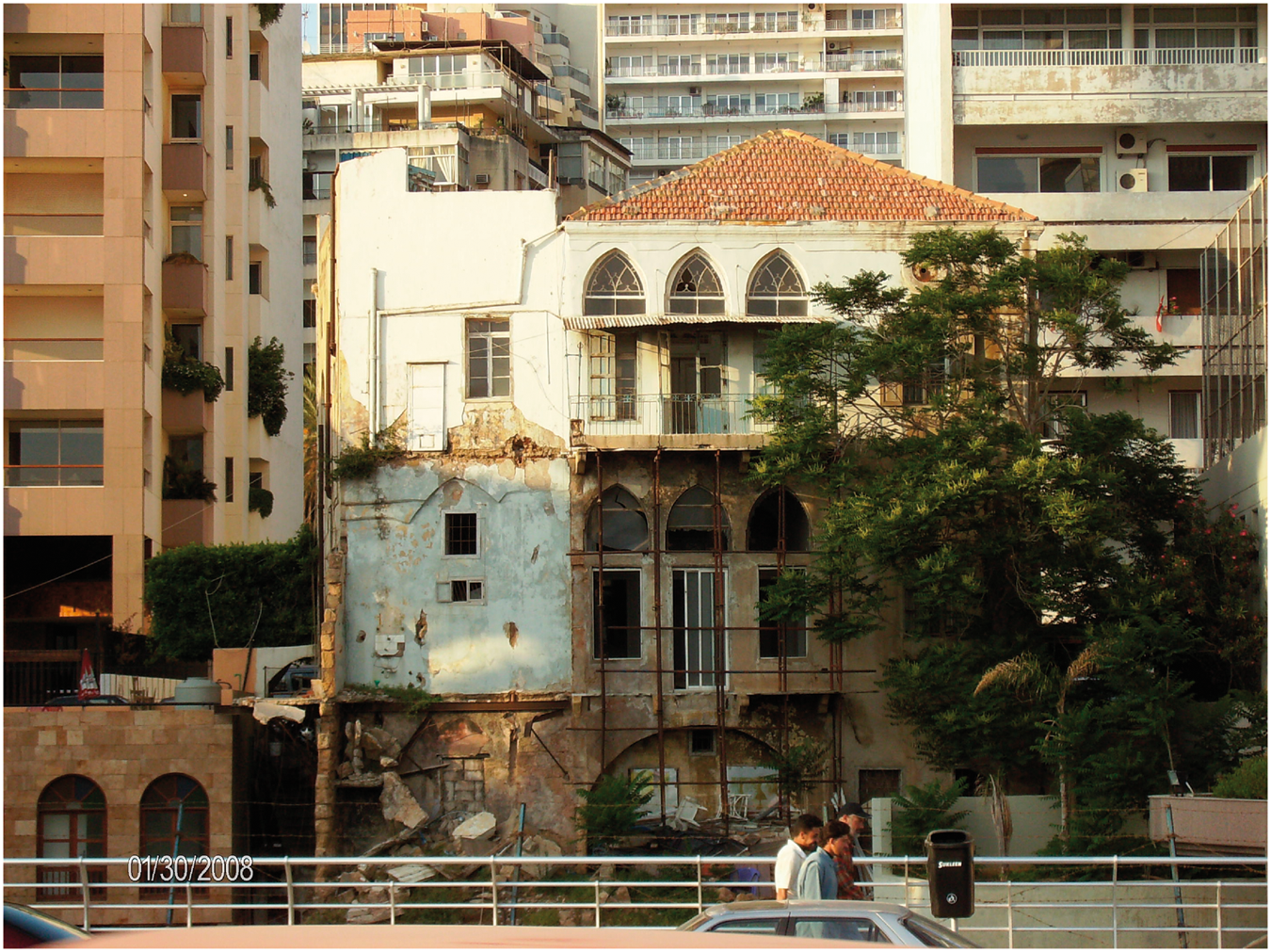
Some of the most poignant and compelling writing of the past two decades has underscored the point that the culture formed during 15 years of social polarization, often brutally intimate violence (170,000 dead), and traumatizing dislocations (almost one million citizens fled Lebanon while well over a million were internally displaced) has not surrendered its force in the postwar years (e.g. Alameddine, 1999 [1998]; al-Daif, 2007; Mills, 2007; Najjar, 2006 [1999]). Many Lebanese still live inside a war culture. At its center is the sect, imagined as a quasi-national homeland. Lebanese may wax eloquent about their national pride, but it is the sect to which they turn for security, jobs, welfare, education, and an abiding sense of identity and belonging. But, as is true of many homelands, the world beyond its borders is replete with risks and dangers. Sectarian solidarity is forged in part around a construction of the sectarian other as an enemy, as a threat so immediate and consequential to self, kin, sect, and nation that it has the magnitude of a force of evil. It is as if all of the anxieties and hatreds shouldered by Lebanese have been projected onto the sectarian other. It is perhaps this inflation of the sectarian other into a demonic figure, and the simultaneous purification of one’s sectarian community, which made possible the seeming banality of killing (e.g. Najjar, 2006: 56; Younes, 2008: 223). To annihilate the sectarian other or to degrade all of her traces (flags, icons, bodies, buildings, property) became an act of personal and collective redemption.
With its polarizing moral logic of evil and redemption, sectarianism has been sustained by the territorialization of sectarian identities and the hyper-politicization of sectarian conflicts in the postwar years. However, the cessation of civil violence has meant that sustaining sectarian allegiance and hatred of the other has relied less on militarization than symbolic acts. The appearance of a personality cult around sectarian leaders, public rallies brandishing the emblems of collective identity (martyrs, flags and insignia), and the demonization of outsiders sustains sectarian solidarity but at the cost of the depersonalization of the sectarian other. As many Lebanese turn to their sect to secure a sense of belonging and to experience self-ennoblement, a culture of fear and rage towards the other is preserved. Almost two decades after the end of the war, sectarian identity is still the chief axis dividing insider and outsider.
The sectarian outsider is not just a stranger but also a menacing Other threatening the degradation of the pure self and community. He is imagined as an unrepentant and unredeemable figure eliciting fear and loathing. While acts of collective annihilation are no longer options, symbolic denigration and evisceration is possible. After the assassination of the former Prime Minister Rafiq Hariri in 2005, Lebanese politics regressed into a war fought on the terrain of symbolic violence. The politics of accommodation and compromise, at the heart of any consociational polity, has been overwhelmed by a politics of rage whose aim is to obliterate political opponents by exposing their evil intentions and nefarious plots. This is a politics that trades on fears of shadowy, haunting schemes and secret maneuvers; it shapes a political culture of pervasive mistrust and apocalyptic calls for purges and new beginnings. This politics of paranoia is a recipe for a stalled, barely functioning government, which has been Lebanon’s fate since the Cedar Revolution.
Since the war’s ending, a barely functioning sectarian pluralism has coexisted with what Jean Said Makdisi (1999 [1990]), in her searing memoir of the war years, once referred to as ‘a generalized rage’. How is coexistence managed? What sort of defense formation makes this accommodation possible? And, to return to the initial impulse of this essay, how is it manifested in Beirut’s street life? Like other affects such as shame or fear, rage is less a discrete, separable unit than a diffuse energy that structures the psyche’s emotional economy. Rage cannot be easily dissipated, walled off, or abandoned to the past. And, if it has not been ‘worked through’ in the form of civic rites of commemoration or reconciliation, it can at least be managed, and indeed must be if this affect is continuously produced by the social order.
At the level of street life, rage may be controlled by a self well practiced in the art of disciplining a troubled inner world beneath a glossy surface. This is a self skilled in navigating spaces in ways that neither invite nor antagonize anonymous others. This self, at least as he ventures beyond his sectarian world, displays an opaque surface, as if a curtain is drawn around his interior. The private territory of the self can only be pierced if invited inside. The other, effectively all anonymous others since insider/outsider status is often not outwardly marked, is to be minimally engaged, exchanges condensed to sharply compressed gestures of recognition. Eye contact is to be avoided, communication streamlined to polite, scripted essentials, and expressive embellishments minimized as the self negotiates a terrain populated by enemies.
This urban self cultivates an indifference to the other that might appear to the foreigner as a steely self-regard. Such selves are able to move speedily and with apparent ease through urban space, as they are relieved of the burdens of performatively thick engagements with others. This cultivated indifference towards others gives to Beirut’s streets something of its speed, its impressive play of form and movement, its fluidity and apparent lightness of being, even if this surface conceals passions fired by fear and loathing. Something of this troubling affective underworld bubbles up now and again, disturbing the slick surface. Amidst the steady flow of bodies and machines, ‘micro-wars’ are taking place, for example, in the all-too-serious jockeying for advantage among drivers, in the rivalry between pedestrians and motorists as they intersect at road crossings, in the sidewalk battles between pedestrians as they maneuver to claim its narrow space, and in the notorious free-for-all that passes for waiting on lines in Beirut. During a relaxing moment at a local cafe, a fellow patron related the following incident: ‘In front of where I was sitting, a woman was getting out of the car with her baby, carefully. Within seconds a man behind her started shouting and cursing because she was too slow. This was very humiliating and disrespectful. … You know, before the war people were sort of unified, respectful, but today they have become like strangers.’ These civic skirmishes, so at odds with a polite culture that places enormous significance on glossy, inviting surfaces, betrays a world in which a generalized rage is still pervasive. This urban self is not to be confused with Simmel’s stranger or the clinically observant gaze of Benjamin’s flanuer. Beirut’s urban dweller assumes the pose of a battle scarred, war weary self who still dwells inside a war culture driven by paranoid fantasies of an Other plotting to bring about her degradation and (symbolic) annihilation.
Footnotes
Acknowledgements
Many thanks to Patricia Clough, Jeff Alexander, Linda Nicholson, Sari Hanafi, Ghassan Moussawi, Samir Khalaf, Alan Frank and the AUB students who contributed significantly to the research and were often a delight to teach. I wish to also acknowledge the reviewers for pushing me to clarify the theoretical aspects of the essay.