



Abstract
This article examines how diverse groups of displaced African men in Athens, Greece, navigate racialised abandonment, homelessness, and violence through practices of solidarity and caregiving. Drawing on ethnographic fieldwork, the paper highlights how men's caregiving responds not only to their need material assistance—addressed through their hosting and cohabitation arrangements—but also their need for emotional connectedness with others—addressed through the bonds of “brotherhood” they nurture. These modes of emotional exchange enable positive feelings to circulate. Such feelings are an important resource because they contest the politics of death that otherwise governs men's material and emotional lives. Situating these practices within a decolonial lens of “non-masculinity”, African men's caregiving and emotional intimacy are read as part of longer struggles against dehumanisation. This reading draws attention African men's aspirations for freedom from oppression (as opposed to the masculine desire to oppress). It also highlights the ways these practices of collective care connect with other struggles and mobilisations across borders and generations, unsettling Eurocentric assumptions about gender, emotionality, and care.
Introduction
Humanitarian policies and practices, national and international legislation, statutory procedures, and even certain grassroot responses to immigration in Europe routinely reproduce racialised and gendered assumptions about who qualifies as “deserving” of care and who is rendered a “threat” (Paul and Masood, 2024; Scheibelhofer, 2017; Ticktin, 2011; Wyss, 2022). These representational frames have specific consequences for men during displacement, both restricting their rights to protection and mobility, and legitimising and increasing their exposure to destitution, criminalisation, incarceration, violence, and even death (Carpenter, 2006; Myrttinen et al., 2017; Paul, 2025a).
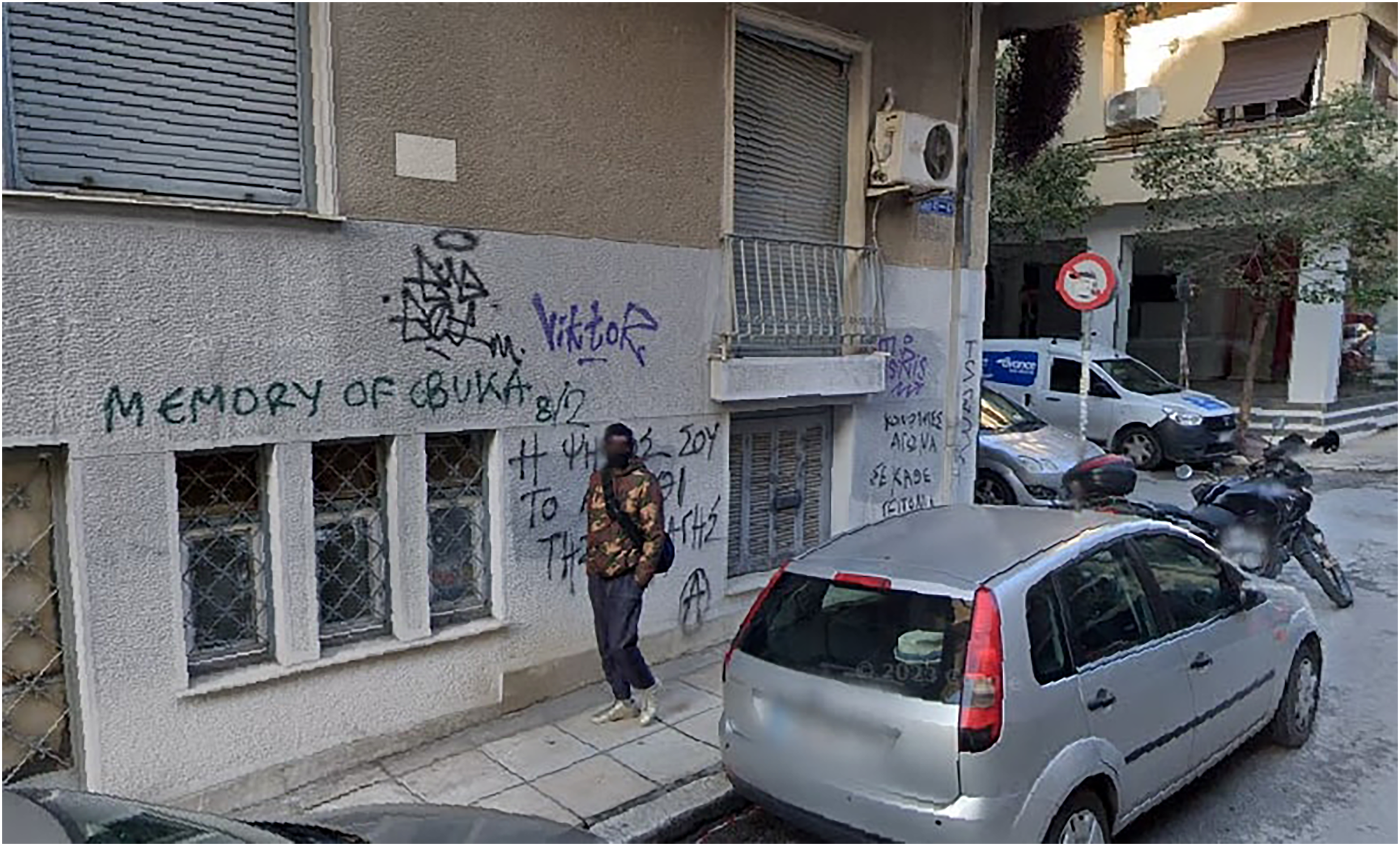
Graffiti on Tenedou Street, Kypseli, remembering Ebuka Mamashoubek, who was beaten in police custody and died on 8th February 2019.
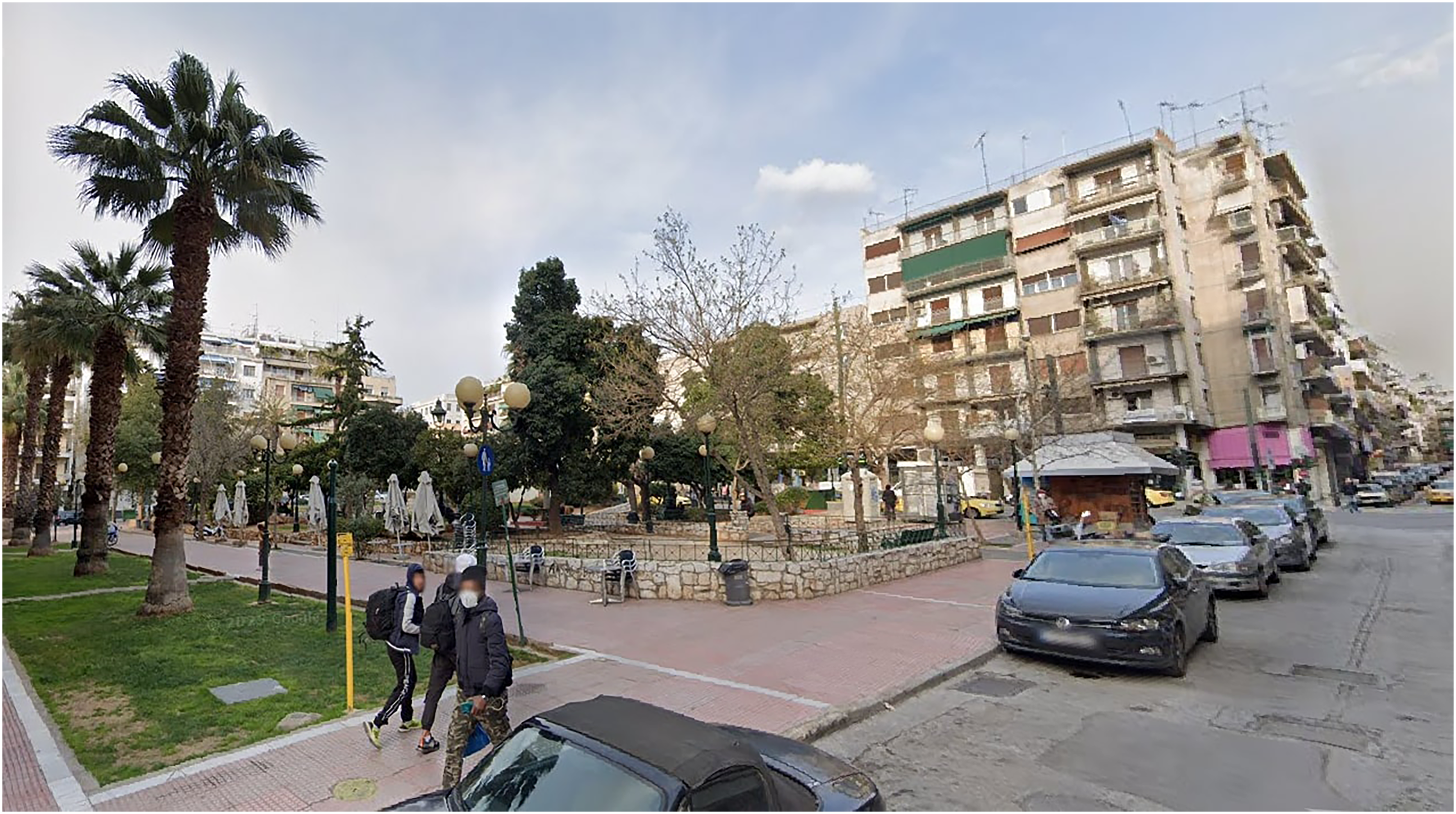
Plateia Amerikis.
The pervasiveness of such outcomes for many Black and Brown men in Europe today lays bare the contemporary, gendered effects of a longstanding political order in which certain racialised populations are subjected to slow, accumulative forms of violence, suffering and injury (Mbembe, 2003). This mode of governance Achilles Mbembe conceptualises as “necropolitics” (2003, 2019), and has its origins in European colonialism and slavery, which racially marked certain groups of people as humans and others as fungible property that could be bought, sold and disposed of (see also Fanon, 2008; Ratele, 2024). Although the formal infrastructures of colonialism and slavery have been dismantled, the dehumanising logics they produced continue to structure contemporary life. These enduring patterns of power and knowledge shape the lived experiences, material conditions, economic relations, social interactions, and differentiated access to rights and opportunities of all people today (Quijano, 2007).
While scholars have examined the affective politics that accompanies—and indeed undergirds—the contemporary necropolitical order, particularly the ways certain forms of racialised and gendered suffering are rendered “ungreivable” (Ahmed, 2004; Butler, 2010; Ticktin, 2011), far less attention has been paid to the emotions that necropolitics produces among its targets, where feelings of fear, shame, lovelessness, rage and solitude circulate rampantly. These emotional economies are not incidental to necropolitics, but one of the key modes through which it operates, shaping how disposability and dehumanisation are felt, lived, and navigated. Equally underexplored are the emotional and relational practices through which people, but especially men, resist these conditions and remake the terms of their humanity.
This article then examines the worlds of material and emotional neglect that Black African men in Athens, Greece, are forced to endure, as well as the critical care networks they have developed to contest these conditions. I focus in particular on the everyday acts of care, social reproduction and emotional relationality that emerge through practices of hosting and cohabitation in the city. Such practices are widespread in Athens and involve diverse communities of African men opening up their homes, sharing cramped rooms, rotating sleeping spaces, covering rent shortfalls, as well as pooling food, money and social connections in order to challenge the pervasiveness of homelessness and destitution that characterises this group's experiences of displacement in the city. Crucially, these arrangements not only address men's immediate material needs, such as housing, but also their needs to care and be cared for, generating affective and relational worlds that counteract the emotional degradations of necropolitics.
Through daily acts of care, emotional support and intimacy, many men form kin-like relations and speak of one another as “brothers.” Brotherhood, in this context, operates simultaneously as a relational claim to mutual recognition, an affective bond that sustains men's emotional lives and interdependencies, and an ethical orientation toward other African men navigating similar challenges in the city. These caring socialities can be understood as modes of political claims-making, presence, and belonging in urban contexts—forms of “making life” in spaces structured to diminish it, as Zoe Jordan (2022) compellingly demonstrates in her analysis of Sudanese men's cohabitation arrangements in Amman. Yet, African men's caring socialities and identities can also be read as gendered practices forged within and against the grain of necropolitics, and this reframing has important implications for how we understand care, gender, and resistance.
In this light, I argue that brotherhood, and the caring practices and identities that undergird it, are not only a a relational and collective praxis of survival or everyday urban politics, but also a way for men to reclaim humanity and articulate forms of masculinity systematically denied to them by the structures that render them less than human. This perspective draws on Kopano Ratele's (2019, 2024) concept of non-masculinity. He argues that “to fully grasp African masculinities, not only at the height of colonialism […] but in the world today, an accounting of the struggles of men and women against dehumanisation is warranted” (2024: 33). The concept of non-masculinity names the material and psychological conditions of men who have been historically placed outside the “circle of humans”, and therefore outside the gender order itself (2019: 131).
The continuity of Black African men's struggles against dehumanisation is no clearer to see than in the wanton violence and unmourned suffering that characterises their forced passage across Mediterranean today (Proglio et al., 2021). For Ratele, taking these struggles seriously means recognising that the lives and subjectivities of those reduced to non-men cannot—indeed, should not—be understood solely through frameworks of gender domination and contestation among men or between men and women (2019, 2024). Analysis must also attend to non-men's “aspirations for freedom from oppression (in contrast to men's will to oppress)” (2019: 129).
The concept of non-masculinity therefore challenges prevailing narratives in gender studies that associate masculinity solely with power and domination (2019, 2021, 2024), and I use it here to unsettle interpretations in the field of “caring men and masculinities” (Elliott, 2016; Inhorn and Naguib, 2018; Prattes, 2022). This field of inquiry has expanded rapidly in recent years, and tends to treat men's care-based practices, identities, and relationships as “emergent” (Inhorn, 2012) and/or as transgressive departures from a presumed masculine drive toward oppression (Elliott, 2016).
However, recognising non-men's struggles against dehumanisation highlights how their practices of care shape and sustain enact their aspirations for freedom from oppression. This shift offers an orientation that is distinct from other decolonial studies of men's care, which focus primarily on how coloniality constrains certain men's capacities to care (Nayak, 2023; Poeze, 2019; Prattes, 2022). Rather than centring constraint, it directs attention to the caring practices that already exist, and to the epistemological, ontological, and political frameworks that make them possible, and which are being expanded upon and reworked in next contexts by African men in Athens.
Drawing on long-term ethnographic fieldwork, oral histories, archival research, and action-oriented methods, I explore how people carry distinct ethics of relatedness and entitlements to care—such as harambee and terànga—with them across borders (see also Western, 2023; Zaman, 2020). These practices are often grounded in decolonial traditions that link everyday acts of hosting, cohabitation, and mutual support in Athens to longer histories of anticolonial mobilisation and intergenerational struggles to be recognised as fully human. By offering a relational and decolonial account of African men's caregiving, the article argues that brotherhood—as it is lived and enacted in Athens—constitutes a vital site for rethinking gender, care, and power.
This article proceeds as follows. First, I introduce feminist literatures that underscore political significance of care work (Held, 2006; Tronto, 1993). In the subsequent section, I engage this literature with decolonial studies of men and masculinities, in particular emphasising the ways Black and African men have been dehumanised and placed outside the gender order. Here, I explore how the concept of “non-masculinity” can help us approach African men's relations, practices and identities of care in ways that take into account the violence and injury against their lives in contemporary times (Hooks, 2004; Ratele, 2019, 2021, 2024).
Before turning to my own research, I introduce myself and my research participants, as well as methodologies that were used to produce this research. Then, in the following four sections, I first present the realities of displacement for many African men in Athens, characterised by homeless, fear and solitude. Second, the ways men in this context provide support to each other, often strangers, through the framework of brotherhood. Third, I underscore the emotional closeness and connectivity that inhere within these forms of brotherhood and highlight how men's practices of care are fundamentally driven by a struggle for recognition—both to be seen as fully human and to affirm the humanity of their brothers. It is within this ontological struggle that, in the closing section, I examine how gender, emotions and care intertwine with longer histories of injustice.
The politics of care
Care is a highly moralised, emotional and political practice that shapes how people relate to one another and assume responsibility for collective wellbeing (Bellacasa, 2017; Dowling, 2022; The Care Collective et al., 2020; Tronto, 1993). It encompasses all the forms of labour that we require to “maintain, continue and repair ‘our world’ so that we can live in it as well as possible” (Tronto and Fisher in Tronto, 1993: 19), including those relating to the material conditions of subsistence, the embodied work of social reproduction, and the emotional labour through which relationships and socialities are sustained.
Under systems of imperialist, white-supremacist, capitalist patriarchy, however, social, legal, and political expectations and entitlements to care are distributed in highly unequal and unjust ways (Tronto, 1993). These ‘regimes of care’ (Ticktin, 2011) allocate care along hierarchies of gender, race, class, age, sexuality, nationality and other axes of differentiation, unevenly determining whose needs are recognised, who is deemed worthy of care, and who is compelled to provide it (Dowling, 2022; Malherbe, 2020).
Many of the groups most marginalised from receiving care are also those who perform (or are expected to perform) the majority of care work (The Care Collective et al., 2020). This is because care work is systematically devalued—cast either as an individual act of love rather than socially necessary labour (Federici, 1975), or reframed as a low-skilled task “naturally” suited to minoritised, colonised and declassed people, especially women, for little or no remuneration (Dowling, 2022).
The construction of care as feminised, low-status and servile labour has also positioned caregiving practices, identities and relationships as incompatible with dominant masculine norms and ideals (Hunter et al., 2017; Messerschmidt, 2000). Consequently, men and masculinities are routinely presumed neither to need care nor to provide it—assumptions that shape both how men are treated and how they are expected to behave (Allsopp, 2017; Carpenter, 2006; Krystalli and Schulz, 2022; Myrttinen et al., 2017; Paul and Masood, 2024). These expectations often encourage men to reproduce inequalities that ultimately harm them (Allan, 2018; Allsopp, 2017; Paul and Masood, 2024).
However, precisely because contemporary care arrangements play such a critical role in structuring inequalities in the world today, feminist care theorists have identified it as a politically transformative and prefigurative praxis—one through which people contest the hierarchies embedded in normative care relations by enacting alternative, more just forms of care, including those tied to gender (Dowling, 2022; Federici, 1975; Kessler, 2008; Malherbe, 2020; The Care Collective et al., 2020; Tronto, 1993). Building on this, Karla Elliott (2016, 2020a) introduced the concept of “caring masculinities” to theorise—and ultimately promote—practices of care by men that reject male domination and modes of violence embedded in so-called “normal” male behaviour, and, which are instead oriented towards care, relationality, and non-violence.
The ‘caring masculinities’ framework has since become influential in shaping debates about men's involvement in social reproduction, emotional labour, intimate relations, and ethical self-making (Hunter et al., 2017; Prattes, 2022; Wojnicka and Kubisa, 2023). Much of this work, however, centres on men's care-based practices, relationships and identities in their roles as fathers or (heterosexual) partners (Poeze, 2019). This framing risks making men's caregiving legible primarily through their relationships with feminised subjects—women and children—and, in so doing, reifies the associations between femininity, emotionality and care (Paul, 2025a). Moreover, as Elliot (2020b: 21) herself has noted, existing scholarships has tended to portray “men who are marginalized along axes such as class, ‘race’ and sexuality as regressive, violent and grasping at power”. Meanwhile, white, middle-class men are “painted as the vanguard of progress and change” (Elliott, 2020b: 21; see also Elliott, 2020a; Prattes, 2022; Roberts and Elliott, 2020), without taking seriously the structural privileges and inequalities that make such forms of care possible for some and not for others (Nayak, 2023).
A smaller body of work, however, has engaged with Black and Brown men's practices of care and emotional intimacy, including among single men (Ahmad, 2016; Jordan, 2022; Kathiravelu, 2012; Martin-Márquez, 2006; Palivos, 2018; Paul, 2025a). These studies pay closer attention to the enduring legacies of colonialism, racialised hierarchies, and global power relations that unevenly shape men's capacities to care (Nayak, 2023; Prattes, 2022). Maria Inhorn's (2012) framework of ‘emergent masculinities’, for example, grasps the ways men's caregiving and emotional intimacy are in constant flux and transform in relation to structural forces, such as, wars, economic policies, and technological advancements.
Drawing on this framework, studies in Greece (Ingvars and Gíslason, 2018; Palivos, 2018) and elsewhere (Suerbaum, 2020) have explored how political and economic forces have led to the emergence of more caring identities and practices among displaced men. Ingvars and Gíslason (2018: 398 emphasis added), for example, identify a “newly emergent refugee masculinity” among Syrians in Athens, oriented around care and gender equality. These new masculine identities are seen to have emerged from men's engagement in Greek solidarity movements and their pursuit of intimate relationships with Western women.
Similarly, in her study of a migrant squat in Thessaloniki, Matina Kapsali (2020) suggests that men's participation in the day-to-day housekeeping chores of the building—such as cooking and cleaning—can be attributed to the reduced presence of women in these spaces. She further highlights the role of European activists in actively encouraging residents to challenge traditional gender norms of social reproduction.
In each of these studies, men's caring practices are understood to have emerged both as a response to the structural conditions of displacement—which often compel men to migrate alone—and as a result of their engagement with feminist political discourses and the practices of European activists. While this line of analysis is undoubtedly valuable and insightful for understanding care in displacement contexts, it does risk reducing displaced men's caregiving practices as emergent in and through displacement alone, and once again reinforcing the Europeans as the vanguards of progress and change. More critically, however, from the perspective of this article, this analytical approach to men's caregiving often obscures the longstanding histories and transnational continuities of care within Black and Brown men's lives, treating care as something that they must learn, rather than something they carry with them across borders.
Decolonising care
A common trend in migration studies is to treat political subjectivities and socialities of care and solidarity as emerging only through displacement, rather than recognising how pre-existing patterns are recycled, reworked and mobilised across time and place. This perspective risks overlooking—perhaps even intentionally—“people's struggles and resistance before reaching the European continent, and the feedback loops that connect these movements” (Western, 2020: 3). Tom Western instead urges us to trace how practices, meanings and socialities of solidarity and resistance travel across multiple temporalities and spatialities, circulating in rhythm with “nonlinear geographies and histories, anti-border struggles, anticolonial pasts and futures, migrations and mobilisations” (2023: 826). Analytically, this process requires opening up dominant European frameworks to diverse embodied experiences, epistemological perspectives and ontologies that shape care, solidarity and resistance among different groups.
Tahir Zaman's (2019, 2020) studies of the migrant squats of Athens offer an excellent illustration of this approach. He notes that refugee residents’ practices of care are often mistranslated or only partially recognised in ways that have obscured the epistemologies and socio-cultural memories that animate everyday interactions within the squats. He shows how Muslim residents enact care through the Arab–Islamic epistemology of jīwār, or neighbourliness—an Islamic tradition tied to obligations of protection and assistance that is frequently misread by activists as a localised expression of secular ‘solidarity’.
Similarly, many of the men I spoke with drew on practices and epistemologies of relatedness that they had carried with them, mobilising these traditions when enacting care for one another. African-oriented ethics and entitlements to care—such as Harambee, rooted in communal self-help and nation-building in East Africa, and Terànga, emphasising hospitality, generosity and collective dignity in Senegalese contexts—carry memories of past struggles, aspirations for freedom, and modes of political organisation that exceed the temporal and spatial boundaries of migration. These patterns of care do not arise only as pragmatic responses to life in Athens but draw on long-standing political and ethical traditions through which communities have historically mobilised collective labour, care and mutual obligation to survive, resist and even overturn colonial domination and dehumanisation. Tracing these links is not only crucial for resisting the tendency to recalibrate people's practices of care so that they are intelligible for and from European perspectives but also opens up conceptual space for exploring how masculinities and care intersect in transnational, decolonial ways.
This is where Ratele's concept of non-masculinity becomes particularly useful. As noted earlier, European colonialism and slavery divided people around the world into humans and property based on racial markers. Under this system, White males were men, who had free will and owned property, while colonised men, although biologically male, were property. As Ratele writes, “the colonised man is not a man but something that resembles one only in form… a non-man; a man only in appearance; a human male who expresses what is here called non-masculinity.” (Ratele, 2019: 127)
Despite the mutations introduced by postcolonial and neo-colonial formations, the effects of this divide persist today. African and Black men continue to be entangled in heterarchies of domination, and their gendered lives are deeply shaped by racism, colonial conquest, dispossession, control and exploitation. The condition of non-masculinity, as Ratele notes, “is repeatedly, daily, paternalistically or cruelly asserted by violence—against body and mind and space” (2019: 128).
Ratele has primarily used this concept to analyse the violent, injurious and affectively corrosive conditions under which African and Black men are rendered ‘non-men’, emphasising the need to confront the “often-unremarked negative emotions, such as fear, lovelessness, shame, and rage” that dehumanisation generates in its targets. Yet widening this conceptual lens to consider caregiving and emotional intimacy among African men in Athens opens up a different analytical terrain. Rather than treating care and emotional expressiveness as external—even contradictory—to men's gendered identities, the framework of non-masculinity allows us to see these practices as integral to Black and African men's ongoing ontological struggle to be recognised as fully human, and fully man.
From this perspective, African men's caregiving should not be read as inherently transgressive or as newly “emergent” through displacement or exposure to supposedly more egalitarian gender norms in Europe. As Andrea Chiovenda (2018) argues, the recent scholarly interest with racially minoritised men's “emergent” caring masculinities often reflects the blind spots of earlier research rather than any actual novelty in these practices. What is needed instead, as Riikka Prattes suggests, is a “conceptualization of caring masculinities that goes beyond the rejection of gender-based oppression and is grounded in an active struggle against domination in general and white supremacy and oppression based on racial domination” (Prattes, 2022: 724). Seen through this perspective, the caring practices African men enact in Athens—hosting, cohabitation, shared subsistence, emotional support—become legible as embodied continuations of a longstanding and ontological struggle to assert one's humanity and to recognise the humanity of one's brothers. This is the insight bell hooks articulates when she writes: “it cannot be a mere accident of fate that the visionary male teachers who are offering us messages about ways to care […] are men of colour from poor countries, men who live in exile, men who have been victimized by imperialist male violence.” (Hooks, 2004: 149)
The remainder of this article examines the care practices of these men of colour—men from poor countries, living in exile, and subjected to imperialist male violence. Rather than treating these practices as surprising or exceptional departures from masculine identities or expectations, I approach them as ethical and political formations forged within the very conditions of imperialist, white-supremacist, capitalist patriarchal violence that shape these men's lives. This perspective unsettles the idea that African and Black men's caregiving is always anomalous or transgressive of a supposed masculine will to dominate. Instead, it positions these practices as continuations of non-men's long-standing aspirations for freedom from oppression. In this context, care—including the varied practices and relations of brotherhood—is an effort to create conditions in which men can be recognised, and can live, as human beings, experiencing and sharing the care that such being and belonging require.
Methodology
This research has come out of my active engagement with solidarity initiatives in Athens since 2016. During that period, I have been participating in a number of different community centres with displaced people in the city. This paper draws on fieldwork I conducted between November 2021 and June 2024, during which time I participated in several small organisations and migrant-led collectives. Through this and other activities, I met several activists, whom I later interviewed and organised with. In total, I also conducted 35 semi-structured interviews, and one focus group with four men, which appear in this text. As instructed by the interviewees, I have used the men's real names, unless otherwise requested. Ethical approval was granted by the Human Social Sciences Research Ethics Committee at the University of Warwick in the United Kingdom.
Among the interview participants, there was wide range of immigration statuses, including undocumented, asylum-seeker, refused asylum-seeker, refugee, and temporary work visa. All of the men were cisgender, presented as heterosexual, and aged between 20–55 years old. Most had travelled alone to Greece, apart from one man who had travelled as a teenager with his mother, and another who had arrived in Greece with his wife. They grew up in Nigeria, Sierra Leone, Sudan, Côte d’Ivoire, Cameroon, Senegal, Democratic Republic of Congo, Guinea, Burkina Faso, Ghana, Tanzania and Kenya, arriving in Greece between 1988 and 2021. This wide sample draws attention to the long and diverse history of African activism in Greece that often goes overlooked and has also enabled me to examine how different social movements have overlapped, eclipsed, coexisted or escaped each other over time.
The decision to focus on specifically African migrants, and principally men, was guided by the general oversight of this group in studies of displacement in Greece. While there has been significant focus on the migration of people from the Balkans, Middle East and South Asia, including specifically men's experiences displacement and practices of masculinity (Ingvars and Gíslason, 2018; Kukreja, 2021a; Xhaho et al., 2022), there is notably less research on the African diaspora in the country. My research then aims to contribute to a small, but growing body of literature, that engages with and demonstrates the significance of African activism in Greece (Gousis, 2021; Gousis and Gill, 2023; Nwoke, 2021; Paul, 2025b; Zaphiriou-Zarifi, 2019).
My interest in African migration to Greece also stems from my own family history of migration to and from southern Africa. This is where both my White parents grew up, with my father leaving for Greece in the 1970s after his conscription to apartheid South Africa's war in Angola. Although I mainly grew up in the UK, I spent much of the first few years of my life in Greece, and later every summer. My family history of migration, and my own life in Greece is, of course, markedly different from all of my participants, and has been deeply shaped by my racial and class privileges. However, this history has also guided my interest and commitment to the topic I am studying.
From the outset of my fieldwork, I aimed to design a research methodology that emphasises participants’ meaningful involvement and the pursuit of self-determined social transformation. I introduced more creative or action-oriented methods, such as walking interviews. However, these were met with little enthusiasm. Initially, I attributed this to an insufficient trust with my research participants, but one of the men with who was particularly supportive of this research, advised me that such methods could be perceived as infantilising or disrespectful, especially among older men. He advised that if I wanted to people to give up their time, I should organise specific times and spaces for interviews. As such, most of my interviews were conducted in the homes or community offices of the research participants.
Reflecting on my position as a White male researcher, and the potential impact this may have on my participants exercising their right to opacity, I decided not to record conversations on a first encounter with any participant. My goal was to build trust and understanding with the men, to gauge their interest in my project, and give them an opportunity to consider how, if at all, they wanted to participate without the pressure of having to make a decision in the first moment of meeting. I was conscious that this approach was time-intensive for my participants as it required meeting me at least twice. This also posed the risk of me missing the chance to record a follow-up interview. However, I felt this was a worthwhile trade-off to avoid an extractive research dynamic, and, in the end, every man I spoke to was keen to conduct a second recorded interview. During both the recorded and unrecorded conversations, I aimed to create an environment where men felt not only comfortable to say ‘no’ but also empowered to shape the themes of the discussion, avoiding situations where refusal became necessary.
Given the focus of my research, the role of gender within the interview setting was always going to be significant in shaping the types of discussions we had. At some points, our shared maleness and masculine identities became a point of connection. When these connections were made, they often revolved around men's frustrations regarding the privileges they perceived women receiving from humanitarians, law enforcement agencies, legal systems and employers. In these circumstances, I was conscious not to build rapport in ways that risked reifying certain patriarchal masculine identities, discourses, and behaviours. This created a dilemma, however. On the one hand, I didn’t want to encourage patriarchal forms of male bonding merely to build understanding (Flood, 2014). On the other hand, I wanted to ensure participants didn’t feel judged or negatively challenged (Messerschmidt, 2000). I felt it was crucial to listen to how men understood and articulated their struggles, even when these understanding did not necessarily align with my own interpretations of gender power and contestation.
To navigate this dual challenge, I aimed first to listen attentively to men's opinions, and then to share my perspectives and invite interviewees to engage critically and collectively in a dialogue about gender power. I tried to express companionship with the participants, by sharing my own vulnerability and gendered pressures, while trying not to suggest any answers. This approach encouraged us to let down our masculine guards, facilitating deeper reflections on key issues for both my participants and me, including on the themes explored in the remainder of this article.
Necropolitics in Athens: Homelessness, destitution & harm
Before proceeding to explore the caregiving practices of brotherhood, I will first sketch out, in brief, the wider violences facing African men in Athens, especially those stemming from homelessness.
Housing insecurity is a defining feature of displacement for many people in Greece, especially single men. This is a politically-induced phenomenon arising from the immense lack of statutory and humanitarian provisions for all displaced people, combined with their gendered understandings of vulnerability and need that exclude men specifically (Papada, 2023; Papatzani et al., 2022; Paul and Masood, 2024). It is a key part of how necropolitics is exercised, bringing with it other slow and degrading forms of violence. Indeed, there are many dangers that come with sleeping on the streets of Athens as a racialised man. This includes those that stem from the lack of food, sleep and sanitary facilities, exposure to extreme weather conditions, and violent hate crime (Paul and Masood, 2024). The experience of Mamadou, a Guinean man who arrived in Athens in 2007, captures the conditions that many men are forced to reside in: The first week for me was violent. I arrived in Greece in the middle of winter. I knew no one. […] At night, I opened up my suitcase and put on all my clothes to protect me from the cold. I slept there with my suitcase next to me. Can you imagine? […] Someone could come and slice me up and steal from me […] especially with Golden Dawn […] if they came across a migrant in a park, that's it, he's a corpse, they'll find him in the morning. (INT.018.1 2023)
To date, most debates about the causes of racist violence in Greece are nestled in discussions of far-right extremism, especially in relation to the now criminalised neo-Nazi group, the Golden Dawn. Yet, as Lena Karamanidou argues, reducing racial violence in Greece to marginalised groups and individuals obscures “the extent to which violence against migrants has been exercised […] by both by state and non-state actors, during and before [and in the wake of] the crisis” (2016: 2003).
Recent data gathered by the Racist Violence Recording Network (2023) show that 40 percent of racist hate crimes were perpetrated by police officers and/or law enforcement authorities in 2023. This study shows an epidemic of arbitrary arrest, abduction, false imprisonment, humiliation, drowning, shooting, stripping, beating, sexual assault and murder within both the Hellenic Police Force and the Hellenic Coast Guard. In fact, while writing this article, two further killings occurred: Mohammad Kamran Ashiq, a Pakistani national, was beaten to death by police at the Agios Panteleimonas police station, followed ten days later with the ambiguous death of Khalis Miah, from Bangladesh, who tragically took his own life while detained a few kilometres down the road at the Omonia police station. These men join a tragically long list of Athenian residents whose lives have been needlessly cut short by the Hellenic Police Force; a list that also includes Ebuka Mamashoubek, a Nigerian national, who was beaten to death in 2019 again at the Omonia police station, and Mohammed Kamara, a 21-year-old Cameroonian national, who was found dead in police custody in Kiffisia in 2015. These numbers pale in comparison to the murders at sea, such as the Pylos shipwreck in 2023, where 650 people were killed (Al Jazeera, 2023). No convictions have been made for any of these deaths. Discussing this wanton loss of life, Nathaniel, a Nigerian man in his mid-fifties, told me: All these people are human beings, killed as if they are animals, as if they are fish! How many people are buried from 2019 to now. We are not talking about Covid, o! […] Without reason. Control. Full control. (Nathaniel, INT.015 2022)
Charles, the president of the Kenyan Community of Greece, also painfully recalled Ebuka's death, telling me of the strategies that many men have to adopt to ensure their own security: He was killed for what? He was beaten in the prison. In the police cells. Up to today, they have never really explained it. [The] police just want to beat you for nothing. The only thing is to try and avoid these places as much as possible. (Charles, INT.001 2022)
Such atrocities point to condition of non-masculinity outlined above, and the ways this state of being less-than-human is continually reinforced through violence against African men's bodies, minds, and everyday spaces. These violences imbue the city with a palpable sense danger, leading men to place limits on their movement and visibility in public spaces (Kukreja, 2021b). It also encourages men, aware of each other's shared vulnerability, to host other men, often strangers in their homes. It is to these practices of hospitality and cohabitation, to which we can now turn. (Figures 1 and 2)
Plateia Afrikis: A site of care & solidarity
Many men, as Charles notes above, regularly advise each other, especially new arrivals and those without papers, to avoid certain public spaces. Yet, it is usually those very spaces that are important sites of solidarity and care. One with particular significance for people is Plateia Amerikis.
The small square, just north of central Athens—also known fondly as Plateia Afrikis—is a place where diverse African communities congregate to socialise, do business and offer each other support. It is also a place where many people without houses sleep, laying out their clothes or pieces of cardboard on a bench or the floor for the night. Such practices are extremely common, as described by Mamadou in the previous section. In fact, almost all the men I spoke to had spent a period of time sleeping in the plateia when they first arrived in Athens, and, of those, all had found a way out of homelessness through the generosity and hospitality of other African men they met there.
Solo, for instance, from Côte d’Ivoire, arrived on Lesvos Island in 2016. As a result of the policy of geographical restriction implemented by the EU-Turkey Deal (Papada, 2023), he was forced to spend eight months living in the horrendous conditions of Moria camp while his application for international protection was examined (Paul and Masood, 2024). Upon receipt of asylum, Solo, like most recently recognised refugees, immediately left, travelling alone to Athens to recommence his life there: When I got down from the boat here in Athens, I knew nobody. I saw a Congolese guy on the boat, so I tried to speak with him. He said, ‘Go to Plateia Amerikis. A lot of African people are living in Amerikis. Maybe you can find someone.’ […] When I arrived at Amerikis I was scared. I slept outside in the park, just looking for people to help me for housing. The second day, I found a man, called Adnan. I cannot forget him. He said to me, “Ok, I can take you.” (INT.010 2023)
It is common practice for men, like Adnan, who have accommodation of their own, albeit often very precarious, to host other stranger-men who find they find vulnerable on the streets of Athens. Such offers of housing are a vital source of solidarity, as Mamadou, who was also hosted by other men he met in the plateia, notes, Without this solidarity, what would I become? Maybe I'd stay in the park for a whole winter, for a fortnight, three weeks, a month, who knows what could happen to me! I could die twice. (INT.018.1 2023)
In addition to providing shelter and protection from the streets, these relationships create networks through which employment opportunities are found. As Jordan notes of Sudanese men's similar cohabitation practices in Amman, “hosting relationships and employment activities should not be considered as distinct spheres of activity” (2022: 876). In Athens, many men provide their guests with information about jobs and even with “integration loans” (INT.018 2023, Mamadou). This challenges more paternalistic models of aid in kind, typically adopted by humanitarian and some solidarity initiatives (see Rozakou, 2016; Zaman, 2019). The men who hosted Mamadou, for example, not only allowed him to stay rent-free, but gave him a loan of 200 euros so that he could start street hawking as they did, and eventually make rent contributions: The cash float gave me a legitimacy in the apartment. After a week I was paying my own rent contribution. I had some legitimacy; we weren’t in a handout relationship. It was a base of solidarity. (INT.018.1 2023)
The sense of legitimacy and equality that Mamadou received through the loan also points to benefits of African men's collective employment and housing strategies, beyond financial and material assistance. For many African men in Athens, necropolitics is not only about their abandonment from institutional care infrastructures, but the emotional geographies of loneliness, solitude and fear in which they live. These practices of cohabitation thus not only respond to men's exclusion from statutory, humanitarian and solidarian accommodation infrastructures, but also to men's desires and needs to live social worlds characterised by care, responsibility, belonging and emotional exchange. Attempts to prefigure these social worlds and relations are often articulated and enacted through the concept of brotherhood.
Brotherhood, care and emotional intimacy
Brotherhood, in this context, emerges as a framework for many single African men to enact solidarity with other African men living in Athens. It is used to refer to both (a) an abstract community of African men who have not (and may not ever) meet, but who nonetheless feel tied together through a shared experience of isolation and vulnerability; as well as (b) men's much more intimate, interpersonal relationships with each other. Both forms of brotherhood stimulate intense and challenging forms of emotional connectedness that undergird their acts of generosity, hospitality and cohabitation. In this section, I explore the emotional bonds of brotherhood that exist among strangers, before moving onto the more interpersonal patterns of care in the following section.
Brotherhood then, in the abstracted sense, stimulates forms of racialised and gendered belonging that cut across normative identity categories, such as nationality, with men from different countries hosting and caring for each other. Christopher, a middle-aged Nigerian man, who has been living in Athens for many years, exemplifies how these brotherly entitlements and obligations are commonly understood and enacted: Anybody that comes here, that comes from Africa, that might need help I will just take him in, ‘Stay here!’ […] Even if I don't have money to offer him, at least, I will say, ‘Please, my brother, come in and sleep here for the meantime.’ (INT.013 2023)
As Christopher's remarks suggest, brotherhood responds to men's feelings of fear and loneliness, empathy and concern that are bound up in their shared experiences of homelessness and vulnerability to violence. In this context, men's offers of care are often entangled with the hosts’ own experiences of having been themselves hosted by strangers when in need. This duality of homeless and hospitality compels participation in reciprocal systems of care. Indeed, many men recognise, indeed often rely on, these forms of connectedness and interdependency in order to survive. As Patrick notes, We Africans, many of us, are living a communal lifestyle. We live communal, and that's the reason why we are gathering as a group from different nationalities. We gather together, we merge together, […] supporting one and another the little best we can. That's how many of us survive here. (FG.001 2023, Patrick)
The socialities of care and solidarity that Patrick describes stretch the parameters of kinship by uniting diverse groups of African men (and women) together in new familial relations. However, as much as brotherhood draws on pre-existing responsibilities and entitlements embedded in kinship, it also broadens these patterns of relatedness. As Abdoulaye notes: In Senegal, we live in community. It is not the family, [but it] creates a second family. […] But here in Greece, the community is your family. (INT.008 2022)
The relationships of brotherhood are emotionally complex, encompassing both tenderness and protection, as well as anxiety, stress, and fatigue. Many men feel pressures to support others especially once they have reached relative stability themselves. Solo's feelings illustrate this: “If I see a newcomer [and] I leave the person like that [sleeping on the street], after I will think about him, his situation. It will make me stressed. It will make me very stressed. I will not sleep. I will think about that person all the time. I will think that guy will be in a dangerous situation. I will do what is necessary to help him.” (INT.010 2023)
Solo's distress at the thought of leaving a newcomer on the streets underscores the emotional dimensions of men's hospitality and cohabitation practices. These types of emotions undergird the strong and supportive networks that many men rely on. However, they can also limit some men's personal freedoms, making it challenging for individuals to prioritise their own needs or explore opportunities outside of the social world of brotherhood.
Moussa, for instance, who I have come to know very well through various community activities that we have organised together, is one of the busiest people I have ever met. He is president of the Cote D’Ivoire Association (which he established), as well as a board member of several pan-European anti-racist networks, a shop owner, a husband, a father of two children, and a brother to hundreds of people in Athens. He is constantly co-ordinating campaigns and protests, visiting people in hospitals and prisons, hosting new arrivals in his home, organising social events, such as beach days and football tournaments, representing African communities at parliamentary and/or humanitarian meetings, and I am sure many more things that I am not aware of. In an intimate interview, he emphasised the challenges and demands that all these activities put on him: Sometimes it is pressure. Pressure of people. […] It is pressure for me. At one moment, I realised I didn't have time for my family. [But] one woman told me something that touched my heart. She said, ‘Moussa, you said you have your family to take care of, but don't forget that this community is also your family. You built this family, so you cannot leave.’ […] She told me the truth. This is my family. (Moussa, INT.003 2022)
Moussa highlights a friction between men's sense of obligation to both their new brothers (and sisters) and their more traditional families, which, in the case of Moussa, is his wife and children with whom he lives in Athens. Although the distinctions that exist between brotherhood and men's more conventional family relations are not completely eclipsed, they are challenged by the intensity of emotions. One the one hand, this woman's reminder to Moussa that the community is his family reinforces the pressures on him to uphold the responsibilities that such relationships entail. On the other, Moussa's recognition of this ‘truth’ illustrates the intensity and intimacy of these interpersonal ties, the value that they hold for many people, and the integrity of emotional connectedness and caregiving in these social worlds of care.
These tensions are common, and underscore the affective complexity of brotherhood, in which both negative feelings of responsibility, reluctance and betrayal circulate, alongside positive feelings of affection, devotion and tenderness. For instance, Kayu, a Tanzanian man in his late fifties, who has been involved in several solidarity movements since the 1990s, says: At one moment, I reached the point to say ‘Okay, if there is any problem now, I cannot be involved’. But it is not possible. I
These emotions create a deeply embodied sense of responsibility and interdependency that clings to men's everyday lives in ways that bind them together in webs of mutual care and concern. Despite their physical and emotional strains, it is these feelings that sustain networks of care, and which are the basis for the more interpersonal forms of brotherhood to which I now turn.
Struggles for humanity
As is reflected in the histories of my research participants, the majority of African men travel alone to Greece, leaving behind families and neighbourhoods in dangerous, distant or fatal situations. Within this group, some men hope and are expected to send money back to their relatives, and others have aspirations, rarely fulfilled, of bringing people they consider family to join them in Greece or reuniting with them elsewhere in Europe. In some cases, such ties have become fractured or totally destroyed by conflict or prolonged separation, and dreams of reconnecting are painfully unrealised or hard to achieve. For almost all men, recurrent periods of illegality and unstable employment, make maintaining and sustaining families, wherever and however they may be formed, incredibly difficult, and this has very isolating effects. During a discussion group, Patrick highlights the massive pressures and anxieties many men face in Greece under these conditions: After he is totally rejected [from his asylum application], what will be the outcome? [He] must survive. He must feed. Who will do it for him? He has no parents here. He has no family here. He has no brother or sisters here. […] My dear, when your government doesn’t care, and the country that is hosting you doesn’t care, who do you have? Nobody. […] A young man will be full of depression and frustration and that might lead to suicide. Some people don’t have a conscience. People should think that we are all human beings and should respect all human beings and the lives of people. (Patrick, FG.001 2023)
Patrick's comments capture precisely the condition of “non-masculinity”. He not only describes the politics of neglect and suffering towards African men (and women) in Europe and within the African continent but also underlines how African men's struggles for legal protection and recognition are inseparable from deeper ontological struggles to be cared for and recognised as ‘human beings’. The forms of brotherhood that many men develop to survive are thus significant not only because they enable men to reclaim rights to presence in the city or distribute financial resources (Jordan, 2022), but because they also allow for care and positive emotions to be exchanged in ways that affirm African men's humanity, creating spaces where being and belonging can be fully experienced.
Solo and Kennedy's relationship with each other is exemplary of these dimensions of brotherhood. After a period of sleeping on the floor of an overcrowded basement apartment with no water or electricity, Solo could longer afford the rent and was evicted. He returned to Plateia Amerikis in search of housing. After several nights sleeping on a bench, he met Kennedy who invited him to stay at his house. This initial act of hospitality soon grew into an intimate and dependable form of brotherly love. As Solo describes: Kennedy accepted me, and we started to live together, and until now we live together! […] We have become brothers. […] He can call me and say ‘Today, I'm not feeling well’. We can give some advice, and we can talk. Nobody is perfect, everybody can stress. Everybody. […] You need to talk with somebody, a person you trust. (Kennedy, INT.005 2022)
This relationship, like many others, illustrates how the usage and meaning of brotherhood corresponds to men's need for emotional connectedness, as well as their gendered and familial entitlements and obligations that may have been destroyed or disrupted through displacement. Indeed, many men appear to gladly, perhaps even gratefully, engage in different forms of affective labour, such as nurturance, consolation, encouragement, celebrating achievements, mentoring and guiding, accompaniments to hospital, visits to detention facilities, and so on. This demonstrates how caring roles and identities are valued and actively pursued by men, who find strength and meaning in nurturing others amidst their own challenges. As Sanfo, a young man from Burkina Faso, explains: I choose to take on that role because I believe that there is a meaning that I'm here. There is a meaning that I can bring. (Sanfo, INT.006 2022)
In this context of urban displacement, where care is precarious, improvised, and deeply political, such forms of brotherly love envision—indeed enact—alternative social worlds, where men are not alone, cut off familial support or excluded from wider assistance. Instead, men build relationships with each other grounded in care, affection, recognition and trust. Sanfo illustrates how men consciously blend these principles and affections into their interactions and exchanges with others: I try to understand, and I try to be patient, that's important. You have to use dialogue. You have to use patience. You don't want to stay on the head of this person, telling him how to do it always. No, the point is to show him the way and to believe in this person, that he's intelligent enough in his understanding, that he is human, and that he is able to understand and to move on with or without you. (Sanfo, INT.006 2022 emphasis added)
These comments, similar to Patrick's at the start of this section, once more underscore African men's (and women's) ongoing ontological struggle to be recognised as fully human (Ratele, 2019, 2021, 2024). The feelings of shame, lovelessness, loss and grief are a crucial part of the political terrain through which bodies are governed under necropolitics, and through which the condition of slow death and dehumanisation are embodied and felt. Building alternative emotional economies then is also an important site in the struggle to reclaim humanity, to move from a position of non-men to that of being human and man.
Continuities of care
The centrality of brotherhood in men's caring practices has important implications for how we think about care, emotions, and masculinities. On one level, it offers a recognisably masculine framework through which men can care for one another without breaching gender expectations (Elliott, 2016; Palivos, 2018; Paul, 2025a). On another level, the use of brotherhood may limit the gender transformative potential of men's care practices by embedding them within established gender norms (Nayak, 2023). This tension speaks to some of the issues being grappled with in studies of men and masculinities today (Nayak, 2023).
Yet, in the context of my study men's repeated emphasis on ‘humanity’—both in recognising others and in seeking recognition themselves—suggests that their caregiving practices and sensibility extends beyond issues of gender contestation among men and between men and women, speaking instead to broader struggles against dehumanisation (Ratele, 2019). In this light, African men's forms of brotherhood in Athens are not simply challenges to masculine domination but part of longer histories of resistance in which care and emotional expressiveness are crucial. This perspective unsettles narrow (and reifying) views of caregiving as feminised labour and highlights instead the patterns and epistemologies of relatedness that men carry across borders, linking their everyday solidarities and mutual care infrastructures to wider struggles against oppression.
When I asked Abdoulaye, for instance, a middle-aged Senegalese activist who has been living in Greece since 2005, why he thought so many African men host and care for other men, often strangers, in their homes, he referred to the concept of terànga. Terànga is the Wolof word for hospitality and is a core symbol of Senegalese collective identity, predicated on the notion of welcoming the other into your home and providing them with whatever you can (Riley, 2016). It has been found to play a key role in the meaning and practices of solidarity among Senegalese migrants in other contexts (see Johnson, 2019), and, as Abdoulaye suggests, has significance in Athens as well: It's our roots, our roots in Senegal, to give the people hospitality. It is very important. It's our tradition, you know, our roots. It's our belief. We have our tradition. We trust in this. We trust in this hospitality because we know that everybody, at one time, needs help. Everybody! (Abdoulaye, INT.008 2022)
The idea of solidarity-qua-hospitality is by no means new to academic discussions, and, in a number of contexts, scholars have highlighted the limitations of this framework when predicated on the host's innate right to delimit the space of welcome (Darling, 2014; Fiddian-Qasmiyeh, 2020; Paul, 2023). However, the invitation and invocation of guests as ‘brothers’ challenges some of these power imbalances, creating a relationship grounded in shared needs, vulnerabilities and capacities to care, rather than one defined by the contrasting rights and material capacities of the host and the guest.
Additionally, Abdoulaye's emphasis on hospitality as something ‘we trust in’, as well as a practice that is culturally ‘rooted’, points to the use and reliability of this framework in other places, times and struggles. This prompts us to consider men's acts, subjectivities and relations of care within wider circulations and feedback loops (Western, 2020). Indeed, Abdoulaye was not the only person to draw on ‘Other’ epistemologies of collective care when speaking of African n solidarity networks in Athens today. Charles, for instance, a Kenyan man in his sixties, connected and extended African men's practices and relationships of collective care in Athens to the concept and practice of harambee, meaning ‘pulling together’ in Kiswahili.
Before Kenyan independence from British colonial rule, harambee was an important grassroot practice for the social exchange of labour and assistance, denoting values of collective effort and community self-reliance. It became an integral part of Kenyan national identity during and after its anti-colonial struggles for self-determination (Waiguru, 2016: 251). As Charles explains: We call it harambee. That is how we have built most of our country, especially in the first years [of independence]. We built schools and whatever. That's something that we have. [It] started from the villages. This is the roots of African socialism. (Charles, INT.001 2022)
The epistemologies that people bring with them reveal the abundance and complexity in the meanings and practices of care that exist and are built upon in Greece today. As both Charles and Abdoulaye assert, these knowledge and practices of collective care are something ‘we have’. They circulate across time and space through shared narratives, cultural inheritances, and ongoing mobilisations (Zaman, 2020). In this circulation, they acquire affective value, embedding emotional and moral imperatives into these acts of care, solidarity and resistance. Seen in this light, the decision to host brothers may not solely reflect an individual choice, but enduring obligations tied to broader struggles and mobilisations that travel across geographies and generations.
The circulation of these practices and knowledges, the ways histories of anti-colonial struggle and virtues of self-determination are reworked to comprehend and resist contemporary injustices, shape the relationships, emotions and identities of care that undergird African brotherhood in Athens today. This challenges the assumption that displaced men's practices of care are emergent only through the act of crossing a border, or that these caring masculine identities can be disentangled from longer histories of forced displacement and suffering.
Conclusion
This article has examined how African men in Athens navigate racialised abandonment and violence through practices of brotherhood, combining material support with the circulation of emotional resources. While exclusion from housing and wider infrastructures of care is central to the necropolitical governance of displaced men in Greece, equally consequential are the negative emotions—solitude, shame, fear, frustration—that such governance produces. Hosting and cohabitation arrangements respond to both dimensions, enabling men not only to survive materially but also to live emotionally rich and connected lives in contexts that otherwise deny such possibilities. These forms of brotherhood encompass recognition and love as well as stress and anxiety, revealing the emotional labour involved in sustaining networks of material support.
Building on Ratele's concept of non-masculinity, I have argued that these caring relationships must be understood within men's ongoing struggle to be recognised as human in a world that repeatedly denies them humanity. Through this lens, brotherhood becomes a site where men contest the colonial and racialised division of humanity that renders them “non-men,” and articulate alternative forms of relationality, belonging, and being. This perspective unsettles entrenched associations of care with femininity and challenges assumptions that emotionality lies outside the domain of masculinity. It shifts analysis away from debates that see men's caregiving as transgressive or emergent, highlighting instead how men mobilise care as a political and ethical resource to confront the emotional degradations enmeshed in the condition of non-masculinity.
Crucially, by recognising these forms of emotional and relational labour as central to the processes through which men resist the dehumanising principles and outcomes of necropolitics, helps us to situate these caring practices within longer genealogies of struggle and alternative world-making. Indeed, African men do not arrive in Europe and learn how to care. Instead, men often draw on transnational, historically situated epistemologies of care and mutual obligation, which they recycle and reshape to meet the demands of life in Athens. These continuities of care thread men's everyday acts of hosting, cohabitation, and mutual support in Athens into longer histories of anticolonial mobilisation and intergenerational struggles against racially gendered forms of dehumanisation. This reveals that care, in certain contexts, is an ontological struggle and prefigurative praxis to embody what it means to be a human.
The identities, practices and relations of care that undergird brotherhood in Athens are a mode of political claims-making and world-building that contest the conditions structured to diminish life. By tracing how African men create and sustain these relational worlds, the article highlights the need for analyses of care and masculinities to take seriously both the affective harms of necropolitics and the relational capacities through which its targets persist, resist and create more liveable futures.
Footnotes
Acknowledgements
I would like to extend great thanks to all the participants who shared their valuable time, knowledge and experiences with me during my research. I would also like express my gratitude to Ann-Christin Zuntz at the University of Edinburg and Alyssa Miller from the German Institute of Global and Area Studies (GIGA), Hamburg, for organising the workshop ‘Ambivalent Solidarities’ at GIGA. The development of this article hugely benefited from the valuable feedback they and the other participants provided. I would also like to thank Professor Kopano Ratele and the Centre for Critical & Creative Thought at the University of Stellenbosch, South Africa, for hosting me in 2025, and the valuable discussions we had on this paper. I would like to thank my supervisors, Professor Vicki Squire, Dr Julia Welland, and Professor Akwugo Emejulu for their ongoing feedback and support. Finally, I would like to thank the Midlands Graduate School Economic Social Research Council Doctoral Training Partnership, in particular the administrative team, for their excellent support throughout all phases of my research.

Ethical approval statement
Ethical approval was granted by the Human Social Sciences Research Ethics Committee from the University of Warwick.
Informed consent statement
The informed consent of all participants was received both orally and in writing.
Funding
This research was supported by the Economic and Social Research Council 1+3 Award (UKRI).
Declaration of conflicting interests
The author declared no potential conflicts of interest with respect to the research, authorship, and/or publication of this article.
Data availability statement
A redacted version of the data is available upon request.
Anonymity
There are no other identifying information related to the authors and/or their institutions, funders, approval committees, etc, that might compromise anonymity.