




Abstract

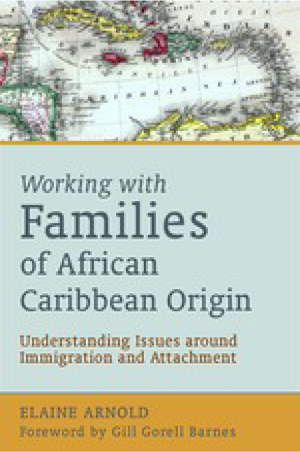 The story of African Caribbean migration to the UK and the lives of the British born descendants of those migrants continue to be examined and debated in academic and political circles as well as in our wider society. Elaine Arnold’s book looks at an important aspect of this story from a different perspective, but one which I suspect will have resonance for probation practitioners. Based on two studies, one completed in 1975, the other in 2000, Dr Arnold examines the separation and reunion experiences of African Caribbean women who emigrated to the UK in the years following the end of the Second World War. The first study focused on women who had emigrated while leaving children behind in the Caribbean, usually with members of the extended family, while the second study looked at the experiences of the children who had been left behind and were then later reunited with their mothers in the UK.
The theoretical base for both of these studies is Attachment Theory and the application of the ideas of John Bowlby who drew our attention so strongly to the potentially damaging impact of broken family attachments, separation and loss on children’s social and emotional development. Elaine Arnold’s own experience of working in an orphanage in Trinidad provided her with a dramatic illustration of Bowlby’s theories in action and in conducting her studies of separated and reunited African Caribbean mothers and children, Arnold felt certain that Bowlby’s ideas were applicable to her subject.
In her introduction to this book, Dr Arnold says: I believe it is necessary to understand the history of the past experiences of serial immigration of African Caribbean families. Unsatisfactory reconstituting of many, and the seeming transgenerational trauma, have impacted adversely upon the lives of many children and impeded progress in their development, educationally, socially and economically. (p. 20)
This is not to say that Arnold ignores other factors; throughout the book she is clear about the difficulties faced by African Caribbean migrants to the UK such as badly paid, low status work, poor housing and overt racial discrimination as well as the institutional racism of the police, educational establishments and other aspects of British society. However, in looking at the relationship between parent and child and the impact of its rupture on this group of migrant women and children, Arnold has highlighted an area of vulnerability which she believes should be taken into account along with the broader socio-economic and political factors mentioned above.
This slim volume covers a very broad reach, with chapters ranging from the history of African Caribbean people, slavery, migration to the UK, the work of Bowlby as well as those that focus on the studies of separated and reunited mothers and children and their narratives. It is in these chapters, especially, that the book grabs the reader’s attention. Arnold’s sparse, lucid writing style and quotations from interviewees vividly illustrate the points she wishes to make and serve as a poignant reminder of the women’s struggles as they sought to establish themselves in their new lives far from home. Thus one woman speaks of being reunited with her son after six years: ‘He stayed with his grandmother too long to really appreciate me as his mother … I felt I had committed a crime, making him think his grandmother was his mother’ (p. 77). Yet, this is also a story of survival and resilience and Arnold shows how many mothers tried to manage the separations successfully; for example, by writing and sending parcels regularly to their children, thereby letting them know that they were kept in mind.
Other contributors to this journal have highlighted the importance of using Attachment Theory in our work with offenders (Ansbro, 2008; Forbes and Reilly, 2011). Arnold’s book reminds us of these ideas and of the importance for probation practitioners of listening to those they supervise, to take a developmental history and to try to really understand where their clients are coming from. I believe that this book is not only useful for working with people of African Caribbean origin but with all those for whom circumstances have led to traumatic ruptures of their closest relationships.