




Abstract

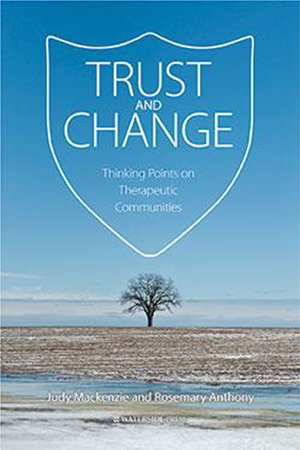
This is a welcome edition that sits alongside an existing canon of research, policy, and guidance manuals on therapeutic communities (TCs). The authors share their lived experience of working in TCs. The book is neither a ‘how-to’ nor a summary of research findings, it is a refreshing, well-structured text, designed to share wisdom derived from practice and provoke questions, personal reflections and improve policy and practice. The work is structured around 10 chapters with helpful introduction and scene-setting. The reader is signposted throughout to a range of in-depth resources from textbooks to films and literature. The book targets the person who is open to learn and reflect and who in time will build their own personal resources and supports – each chapter concludes with summary and reflection points, written up in a structured and accessible way.
Chapter 1 provides a clear introduction to the bedrock of all TCs; the community meeting. For seasoned professionals and those new to the field, we are reminded of the role and function of these for all staff and residents. Process, purpose, content, and form are explored alongside the prerequisite of getting to know residents and yourself. The community meeting is set alongside the staff meeting with gentle reminders to self about the range of viewpoints and standpoints that both silence and contribution add. Chapter 2 explores the four pillars of a TC; democratisation, tolerance, communality, and reality confrontation are considered in relation to both staff-to-resident and staff-to-staff dynamics including the wider relationship with the host regime.
Chapter 3 is central to the text and to the reader’s ability to engage with and benefit from the purpose of this work. It focuses on a culture of enquiry and how being part of a TC is a learning experience. The therapist/worker is explored as a fellow traveller with residents and the reader is drawn to explore this dynamic in relation to both a questioning mind and an approach that is open to questioning. Chapter 4 explores the role of boundaries in relation to staff-to-staff and staff-to-resident relationships. TCs are a hothouse of emotions and the reader is guided to consider how their and others’ emotions and past can lead to transference and countertransference. There is a clear focus on process, interpersonal dynamics, and the need for clear disclosure, trust, and transparency based on empathy not sympathy.
Chapter 5 engages with the role and function of boundaries in a TC and the tensions and overlaps between care and control at both an individual and institutional level. This echoes the experiences of Fisher and Wilson (1982) and Cowe and Reeves (2012) in community-based hostel settings. Consideration is given to the balance between external controls and surveillance and the need for internal controls and personal responsibility. Examples of boundary making and the dynamic risk of complacency/control are explored around drugs, interpersonal contact, violence, and collusion.
Chapter 6 explores how loss and grief can shape and affect one’s ability to empathise and take personal responsibility for one’s actions past and present. Denial and anger are highlighted as two of the five stages of grief that people most often get stuck at and consideration is given to the experiences behind these, which shape and influence behaviour in the present. Examples are provided from high tariff lifers where repression of offence memory may be linked to repression of earlier memories and trauma. Practitioners are cautioned of the need to engage with the felt level before the intellectual and that untrained intervention can be damaging. The reflective practitioner may be a wounded healer. The authors underscore the need to be able to see through the difficult and painful in self and with others. Clear examples are provided of offences linked with failure to deal with loss and grief alongside a clear message that understanding this is not about taking responsibility away for individuals for their action.
Chapter 7 considers the balance between the core of a TC and those other interventions and approaches that are additional to this, including external audit. Three models are suggested for the structure of a TC with a clear steer towards the centrality of the community and community meetings. Chapter 8 focuses on staff, their emotional and intellectual responses to individual offenders and offences. The importance of individual supervision and staff processing of their thoughts and emotions are central to an effective environment for change as well as self-care. Stability and learning in the supervisory relationship affects and shapes how the community functions – this is not about managerial supervision.
The penultimate chapter provides examples of ex-resident feedback on their experience of a TC. It briefly touches on the demise of pre-release hostels and links to probation approved premises and considers the evidence base for the success of TCs and what counts as success. A range of success measures are considered including the more humane treatment of offenders and this could have been juxtaposed with the brutalising impact of some regimes on increasing recidivism. The final chapter provides a series of the authors’ notes and reflections from various times and places in their careers.
As the title suggests, the work focuses on trust and change and the authors bring to life the complex, challenging, and potentially rewarding experiences of making a career out of working with perhaps some difficult and damaged individuals. The book is a challenging and practical read of real value to those in practice or considering a career in such change-focused practice.