




Abstract
We suggest a low-vision reading aid based on user-customized text presented on a head-mounted display (HMD), and make an initial comparison to optical aids in participants with age-related macular degeneration (AMD). Biomimetic scrolling, a novel method of text presentation which mimics the natural movements of the eye while reading, was previously invented: while the user maintains a steady gaze, text is scrolled horizontally across the display in a series of pauses and steps that resemble the natural fixations and saccades of reading. This method, along with rapid serial visual presentation, continuous scrolling, and static text, was presented on smart glasses to 23 participants with macular disease. Reading speed and subjective preference of the smart glasses was compared to reading text printed on paper using the participants’ habitual optical reading aid. Reading using smart glasses, the mean (±standard error) maximum reading speed was 122 ± 15 words per minute (wpm), compared to 74 ± 9 wpm using each participants’ habitual optical magnifier. This is a statistically significant difference as confirmed by a paired-sample t-test, t(17) = –4.61, p < .001. In total, 70% of the participants preferred reading from the smart glasses compared to reading from paper, and 84% found doing so easier. Data from this small patient cohort with AMD have demonstrated enhanced reading performance using dynamic text presented on a spectacle type HMD-device. Loss of reading ability marks a major decline in quality of life and independent functioning. Dynamic text presentation, including biomimetic scrolling, on smart glasses could improve reading performance for the visually impaired.
Keywords
Introduction
There are an estimated 285 million people worldwide who are visually impaired (Pascolini & Mariotti, 2012). With only 39 million of these classed as blind, the remainder retain some level residual vision. This is the case for many who suffer from age-related macular degeneration (AMD), one of the leading causes of blindness in the Western world (Resnikoff et al., 2004). As the central visual field is most affected by AMD, sufferers typically benefit greatly from rehabilitation strategies and low vision aids (LVAs), especially for high acuity tasks such as reading.
In AMD, when the fovea is damaged, a preferred retinal locus (PRL) is chosen to be used in its place (Schuchard, 2005). To make it easier to use the PRL, the steady eye strategy is recommended (Gaffney & Margrain, 2012). In normal reading, the gaze moves across static text, but this is reversed in steady eye strategy such that text is moved across a static gaze, although fixation stability remains a challenge (Castet & Crossland, 2012; Tarita-Nistor et al., 2011). What if the text was moved in such a way as to mimic the visual experience of reading normally? This is the question which motivated the development of a novel form of dynamic text presentation, termed biomimetic scrolling (previously referred to as saccadic scrolling) (Moshtael, Nuthmann, et al., 2016).
Horizontally scrolling text has been found to increase reading accuracy compared to static text in simulated central scotoma (Harvey & Walker, 2014) and macular degeneration (Walker et al., 2016), and increase reading speed for low vision participants (Legge et al., 1989). Rapid serial visual presentation (RSVP) is another method of text presentation that displays a succession of words in a single location on the screen. It is known to allow rapid reading as it removes the need for eye movements (Sharmin et al., 2012). A study on 35 low vision participants (most with central field loss) found no significant difference in maximum oral reading rates between RSVP, horizontal scrolling, vertical scrolling, and static text presentations, and that half preferred the horizontal scrolling format (Bowers et al., 2004). Another study found that RSVP showed a benefit for low vision participants, but only when the text size was at least eight times their acuity threshold (Fine & Peli, 1998). Varying the display duration for each word based on its length was found to increase reading speed in participants with age-related maculopathy (Aquilante et al., 2001).
The closed circuit television system (CCTV) is the LVA that is often used for text presentation: it allows users to magnify text size and has a larger field of view than a typical optical magnifier (Ahn & Legge, 1995). Though any electronic display can be used for dynamic text presentation, the increasingly familiar head-mounted display (HMD) has been suggested as a new approach to address visual impairment (Ehrlich et al., 2017; Moshtael et al., 2015; Natale et al., 2018; Werblin & Palanker, 2014). Our pilot trial evaluated two types of HMDs, a smartphone-based system (for virtual reality) and smart glasses (for augmented reality), for users with macular degeneration (Moshtael, Fu, et al., 2016). Despite the virtual image of the miniature display screen being located in the central visual field, thus normally requiring the macula for viewing, eight out of nine participants could read static text from the displays, with half of them reporting it easier to read text from the smart glasses than from paper.
The present study builds on these findings by combining the HMD with dynamic text presentation, including biomimetic scrolling. Each person’s visual impairment is unique, as are their preferences, so an individually tailored approach to text presentation is adopted. Tailored text presentation on smart glasses is compared to the LVA habitually used by most patients in our low vision clinic – the handheld optical magnifier. Reading speed and subjective preference are the outcome measures.
Methods
Participant recruitment
Participants were recruited from the low vision clinic of the Princess Alexandra Eye Pavilion, Edinburgh, United Kingdom, and from the Macular Society. As such, they were not necessarily patients and we did not have access to their clinical details. Our inclusion criteria required participants to have macular disease, such as Stargardt’s macular dystrophy or AMD, and to be able to consent. All participants gave informed, written consent. A favourable opinion was given by the Leicester South NHS Research Ethics Committee (REC reference 14/EM/1322) and gained NHS Lothian management approval. The study adheres to the tenets of the Declaration of Helsinki.
Apparatus and materials
The model of smart glasses used was the Epson Moverio BT-200 (Seiko Epson, Japan). It includes two miniature high definition colour display screens, one aligned to each eye, used to create a fused virtual image which appears in focus at infinity as a single screen in the centre of the visual field with a field of view of approximately 23° with an aspect ratio of 16:9. Unlike regular display screens which are opaque, semi-silvered mirrors are used to create a partially transparent virtual image of the display screens. This means that the user’s natural view is not completely obscured by the virtual image, and allows simultaneous viewing of the image on the display screen superimposed upon the view of the outside world. The Moverio also incorporates a colour camera on the headset, allowing its use as a video camera.
To turn the Moverio into a reading aid, a text presentation software was developed. The software was written to run biomimetic scrolling, but it also offers other dynamic text presentation options (described below). Standard text presentation customization is also available, including typeface, font size (magnification), and colour contrast. The Python programming language, and in particular the Kivy library, was used to develop the software which allowed the generated text images to be screen-shared between a laptop PC and the smart glasses.
The software was conceived for use on HMDs such as the Moverio, and so enables switching between outputting images to a single eye (left or right selectable) or both eyes simultaneously (monocular and binocular viewing). The Epson Moverio BT-200 supports side-by-side three-dimensional (3D) format. Three configurations were used here: dual display, in which text was displayed on both screens; right hand screen only, where text was only displayed on the right screen and the left screen was blackened; and left-hand screen only. This could be of particular benefit to low vision users whose visual impairment is often asymmetric between eyes.
Biomimetic scrolling
When a person with normal vision reads a line of text, the eyes typical do not move smoothly across each line of the page, as may be subjectively perceived. Rather, they move together in short, rapid steps called saccades, fixating at each point for a few 100 ms between saccades (Rayner et al., 2016). However, when the steady eye strategy is used to read, progression through the text is achieved by moving the text rather than the eyes. We introduce the term ‘biomimetic scrolling’ to describe any method for generating text movements that mimic eye movements for reading. This replaces our previous term of ‘saccadic scrolling’ which we have since discovered had previously been coined for a different technique (Moshtael, Nuthmann, et al., 2016; Sekey & Tietz, 1982).
Three parameters were used to characterize eye movements while reading: first, fixation position (the horizontal location at which the eye fixates); second, fixation duration (how long the eye pauses at the fixation point); and third, saccade duration (how long the eye takes to move to the next fixation point). Analogous to these, three parameters were used to characterize text movements during biomimetic scrolling: first, sentence position (the horizontal position of the sentence with respect to the fixation point); second, pause duration (how long the text stops to allow fixation at the fixation point); and third, step duration (how long the text takes to move along to the next fixation point).
The visual effect is of a single line of text moving horizontally across the screen, intermittently stopping for a fraction of a second before resuming its travel. This form of text movement is similar to what has been called line-stepping (Bouma & De Voogd, 1974). Arrows are used to draw the gaze to the intended fixation point. Three frames of this movement are illustrated in Figure 1.
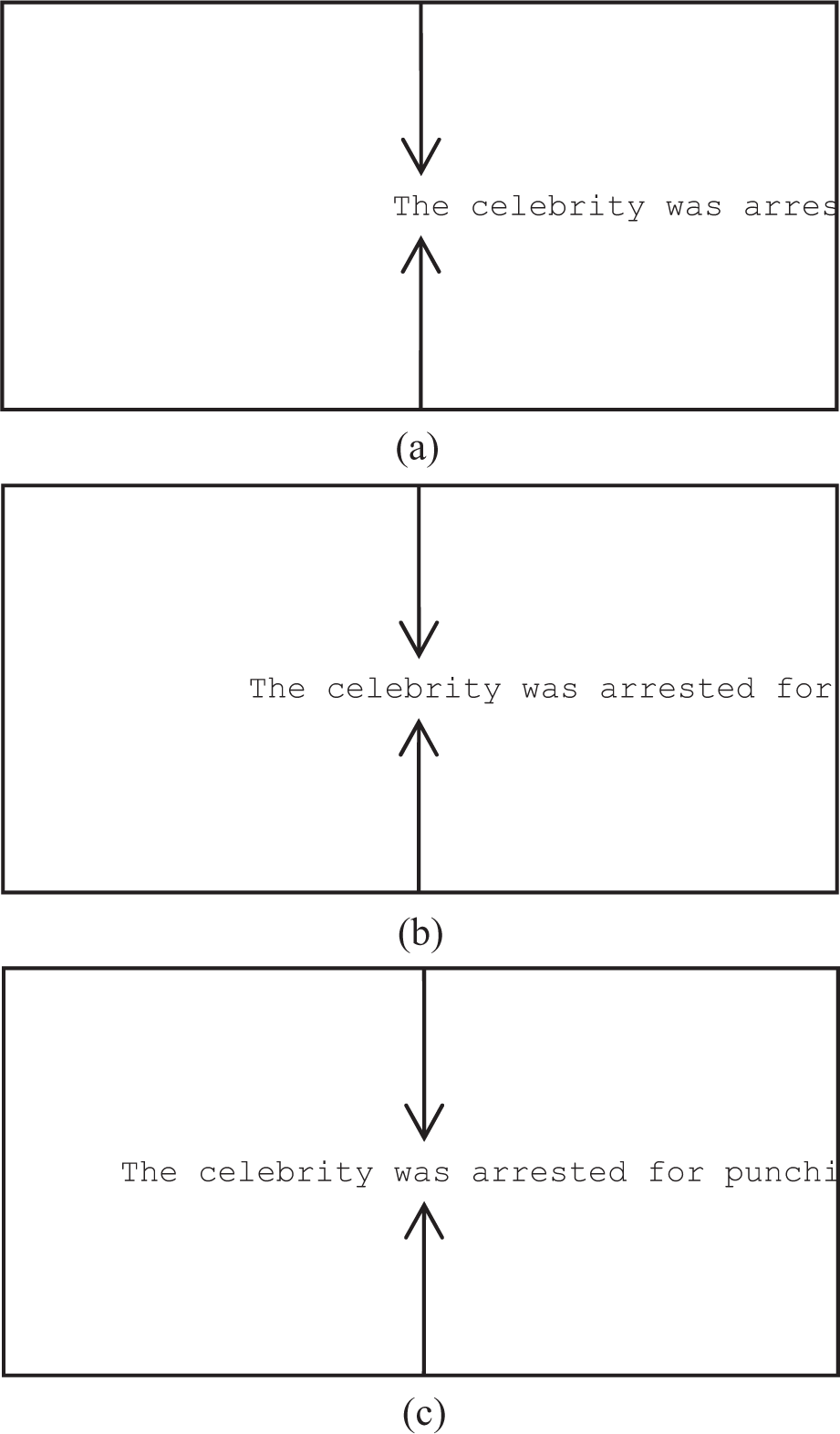
An illustration of three consecutive frames of the text presentation method: (a) position i, (b) position i + 1, and (c) position i + 2. The rectangular outline illustrates the boundaries of the screen, and the arrows and text illustrate what is displayed on the screen. The function of the arrows is to define the fixation point, the location for the gaze to fixate.
For our previous study on normally sighted participants (Moshtael, Nuthmann, et al., 2016), the choice of biomimetic scrolling parameters was made with reference to an eye movement corpus comprising data from 67 participants reading 150 sentences, each presented as a single line of text across the screen. Sentence position was set to the centre of each word; pause duration was set to the average fixation time on the word multiplied by the overall speed setting; step duration was chosen as zero for instantaneous movement.
For the present study on subjects with AMD, a different configuration of biomimetic scrolling parameters was used. According to previous research, the length of forward saccades decreases from 7.5 letters in control subjects to a value between 1 and 4 letters in age-related maculopathy (Bullimore & Bailey, 1995). To compound this issue, the use of magnified text decreases the field of view (Dickinson & Fotinakis, 2000). Therefore, for subjects using larger font sizes, the sentence paused more than once on longer words, with the pause positions equally spaced along the word. Pause duration was varied according to the word length and the overall speed setting. Step duration was still set to zero, meaning the speed was controlled via the pause duration only.
Text presentation
In addition to biomimetic scrolling, three other types of text presentations were incorporated in the software for testing: continuous horizontal scrolling, in which a single line of text smoothly moves horizontally across the centre of the screen (referred to as "leading" and as "times square"); RSVP, in which the words of a sentence are presented sequentially, one at a time, in the centre of the screen; and static (non-dynamic), where the text is spread across multiple lines in the format of a paragraph.
The presentation of text on the smart glasses was tailored to suit the particular vision of each participant. The choice of text size is a trade-off between being large enough to be legible, while also small enough so as not to unduly decrease the field of view (Fine et al., 1996; Lovie-Kitchin & Woo, 1988). The Radner Reading Chart (Radner et al., 1998) was used to estimate the critical print size for each participant – the minimum size at which they achieved maximum reading speed. The suitability of this size was confirmed with the participant and increased or decreased according to their preference. In the static text condition, the entire sentence did not fit on the screen for subjects who required the largest text sizes, so it was presented half a sentence at a time.
Colour contrast was another option provided by the software for tailoring text presentation. It has been found that a yellow background to black letters was preferred by the majority of AMD subjects, compared to blue, green, and red (Alizadeh-Ebadi et al., 2013). Black on white, white on black, and black on yellow were the three choices provided to the user. The expressed preference of each individual was used for the test. Font type was set as bold Courier New as this has previously been found to be suitable for AMD (Tarita-Nistor et al., 2013).
Reading speed
Oral reading speed was the primary outcome measure for assessing the effectiveness of the visual aids. The English Radner Reading Chart was used to measure reading acuity and maximum reading speed. This chart is a bank of 28 standardized sentences, each 14 words long, whose length, difficulty, and syntactical construction are similar to each other (Radner & Diendorfer, 2014; Radner et al., 1998). The Radner Chart defines the logRAD (reading acuity determination) score which is the reading equivalent of logMAR (Radner & Diendorfer, 2014). Participants held the chart at a distance of 25 cm, at an angle of their choosing. Those who could not read the top line from this distance were allowed to hold it at a comfortable distance, with the distance measured and taken into account for the measurement of reading acuity. Subjects continued reading the sentences down the chart until it was too small for them to read.
Reading speed using their habitual optical LVA was then measured using the Radner Reading Chart. This first experimental condition, reading from printed text using an optical magnifier, is henceforth referred to as the ‘paper’ condition. Subjects were instructed to read the sentences aloud as quickly and accurately as possible, and to read to the end of the sentence without correcting any errors. The time from start to finish of each sentence was measured with a stopwatch. Reading speed was measured at the smallest print size readable with the LVA without straining (down to a minimum letter size of 0.5 M) as well as at the size above, and the maximum of these speeds used. Participants wore their habitual reading correction (if any) to read from the chart.
The second experimental condition was reading text from the smart glasses, and this is henceforth referred to as the ‘smart glasses’ condition. Again, sentences from the Radner Reading Chart were used, but different ones from those used in the first experimental condition. Again, participants wore their habitual distance correction (if any) as the screen is focused at infinity. For the three dynamic text presentation methods, RSVP, continuous scrolling, and biomimetic scrolling, the investigator set the speed of text presentation and initiated it. The speed of the first sentence was set to be well below the participant’s threshold, with each new sentence increased in speed with a staircase procedure until the subject was unable to keep up. No practice sentences were given to the participants, although starting at a slower speed gave them an opportunity to see the format before it sped up. The maximum reading speed was taken as the speed at which no more than two errors were made. The order of presentation method was randomized and counterbalanced between static and dynamic text presentation methods.
Subjective preferences
In addition to the measurable increase in reading speed, the subjective experience of the user is also important for a reading aid. Therefore, a short questionnaire was given, following the assessment of reading speed, to gauge the participants’ preferences. The first question required a binary response: ‘Did you prefer reading from the display or from paper?’ The second question was, ‘Compared to reading large print from paper, did you find reading from the display to be . . .’. A five-point Likert-type scale was offered for their response: much easier, a little easier, the same, a little harder, or much harder. Questions were administered by the interviewer.
A feature of binocular HMDs that distinguishes them from other display classes is that each eye is presented with its own display screen. When eyesight is better in one eye than the other, people sometimes cover their weaker eye while reading. As the smart glasses aid allows switching among left/right/both screens, the display screen to the weaker eye can be turned off, presenting the text only to the stronger eye. However, it was unknown whether this would be a desirable feature for any users. Therefore, participants were shown a word in binocular view and in monocular view to their stronger eye, then asked to state which they could see better.
Results
Participants
A total of 23 participants were recruited for this study, 17 female and 6 male, with an average age of 81 years (standard deviation [SD]: 7, range: 60–91). Participant data are compiled in Table 1.
Participant data.
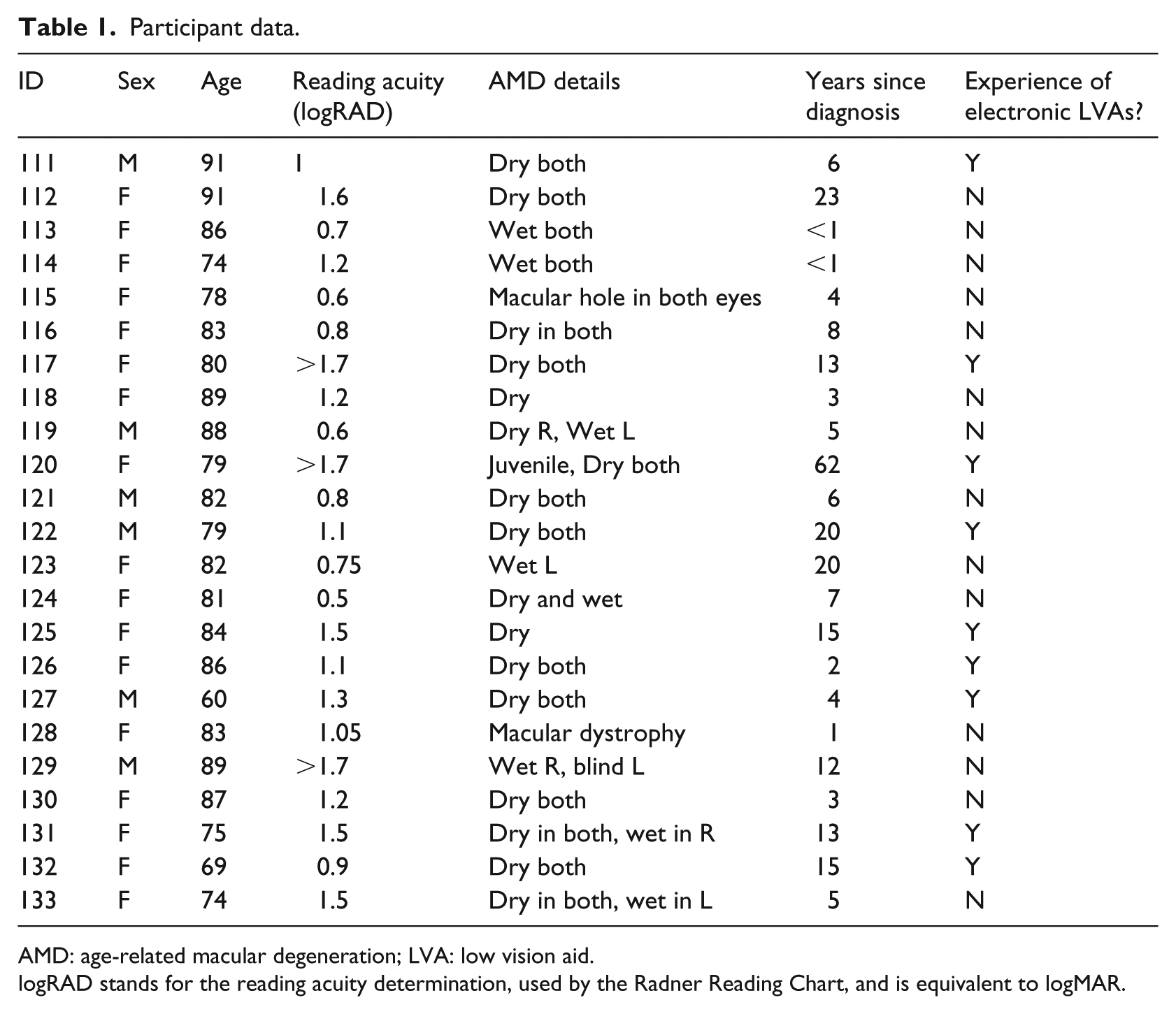
AMD: age-related macular degeneration; LVA: low vision aid.
logRAD stands for the reading acuity determination, used by the Radner Reading Chart, and is equivalent to logMAR.
Reading speed
Through testing the four different methods of text presentation, the method which enabled the fastest reading speed for each individual was determined. In addition, each individual’s preference for the text/background colour and for text size was established. In sum, the size, colour, and dynamics of the text on the smart glasses were tailored to the particular needs of the individual. Thus, Experimental Condition 2 is the maximum reading speed they achieved using the smart glasses.
Figure 2 compares the reading speed in each experimental condition: reading from paper using the optical aid, and reading from the smart glasses with the text presented according to their needs and preference. It shows a scatter plot of the reading speed achieved in each condition. Participants 115 and 116 did not bring an optical aid with them to the study as they reported that they did not use one to read. Therefore, their results for reading from paper at their critical print size are used instead. Participants 112, 118, 120, 125, and 129 had vision too poor to read from the smart glasses display system and thus are not included in this plot.
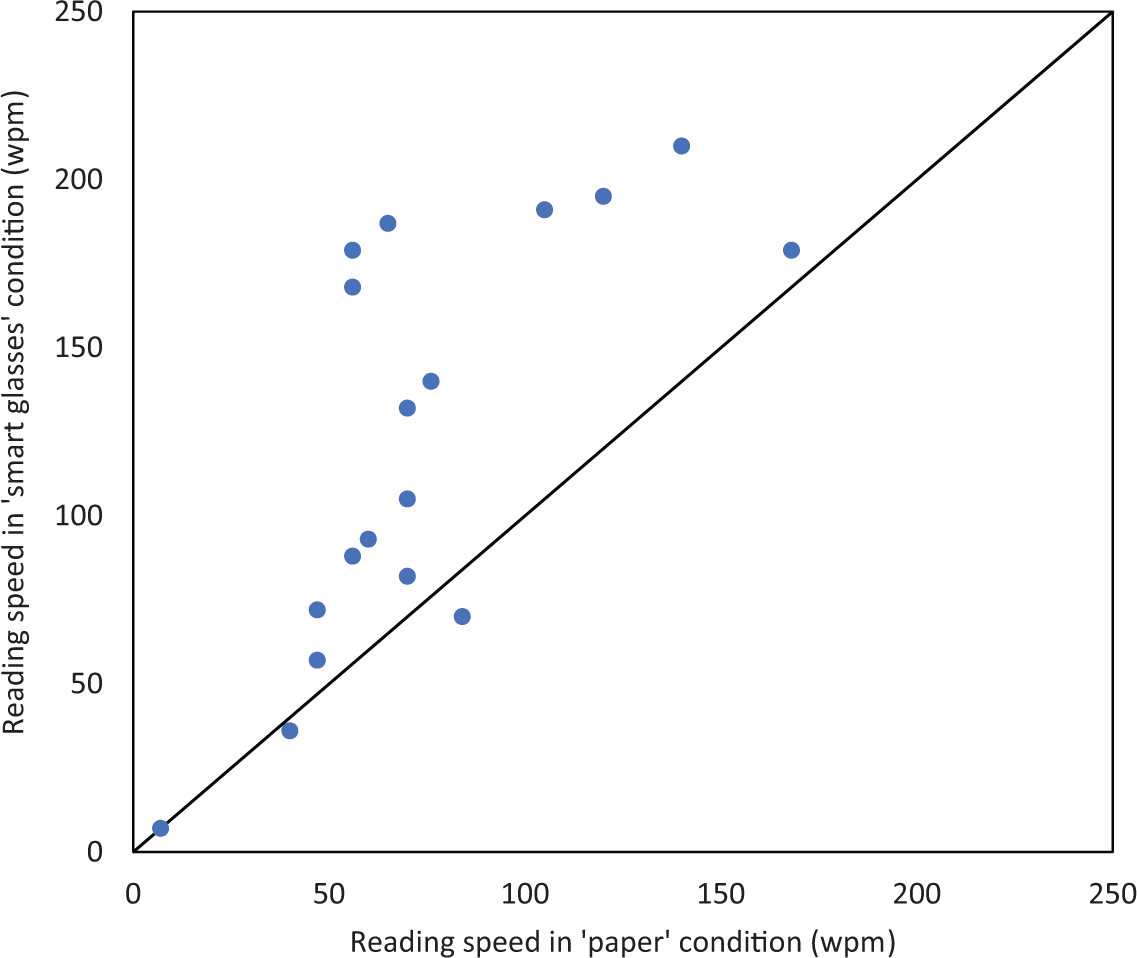
Plot of maximum reading speed achieved by each participant in each experimental condition: reading from paper using an optical aid (x-axis), and reading from the smart glasses (y-axis). The line of equal speed is also plotted, with points above the line indicating a faster speed for the smart glasses.
In total, 15 out of 18 participants read faster using the tailored text on the smart glasses than using the optical magnifier. The mean (±standard error [SE]) reading speed using the smart glasses was 122 ± 15 wpm and using the optical aid was 74 ± 9 wpm. This is a statistically significant difference as confirmed by a paired-sample t-test, t(17) = –4.61, p < .001.
The ‘smart glasses’ experimental condition is further analysed by comparing the four text presentation methods – biomimetic scrolling, continuous scrolling, RSVP, and static text. It was found that each of the methods enabled the maximum reading speed for a proportion of the participants. Figure 3 shows these proportions for each method. This plot is included to illustrate the range of preferences across the sample, showing the heterogeneity of the population, suggesting that the inclusion of a range of options will assist more individuals than a ‘one size fits all’ approach. However, it does not take into account the magnitude of the differences in reading speed.
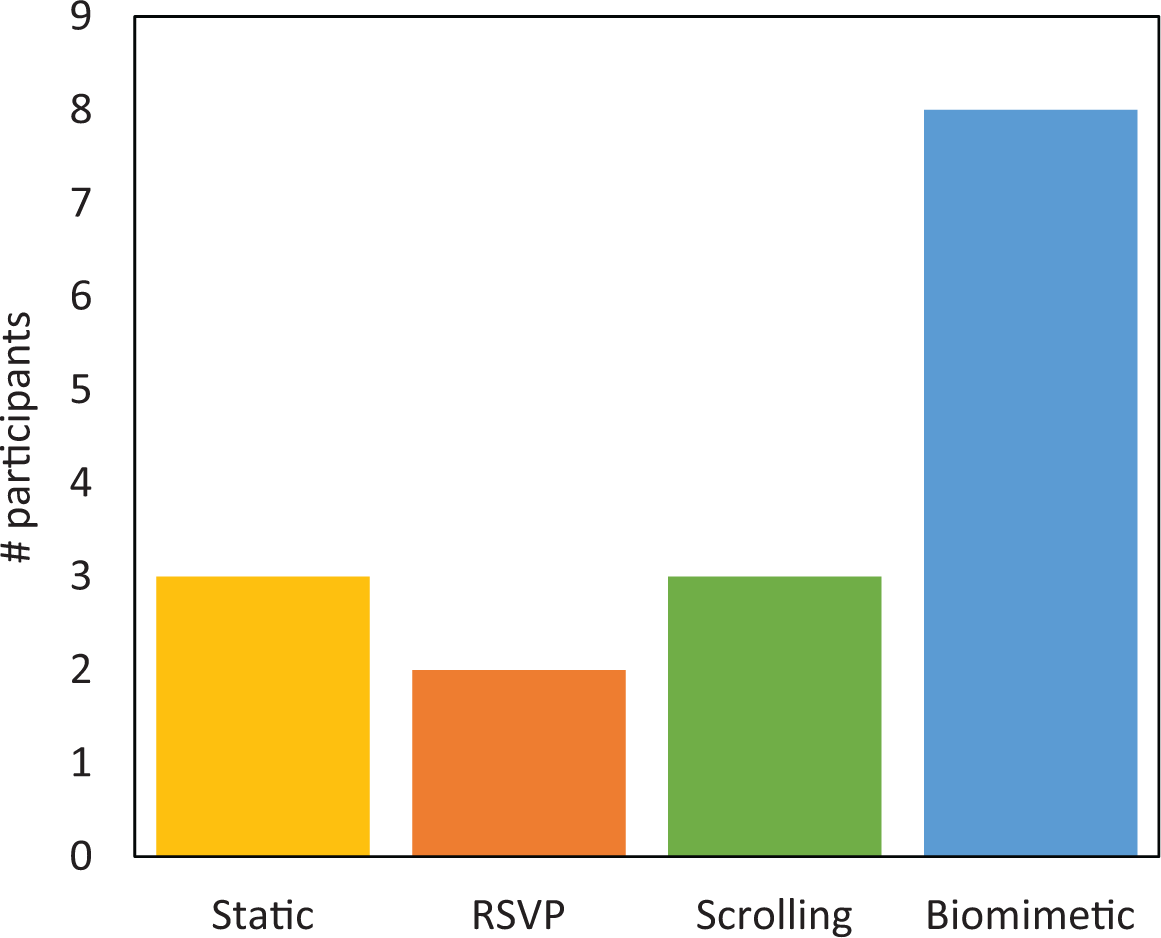
Number of participants that achieved their fastest reading speed on the smart glasses for each of the four methods of static, RSVP, horizontal smooth scrolling, and biomimetic scrolling.
The mean reading speed for each text presentation method is shown in Figure 4. Numerically, biomimetic scrolling shows the highest reading speed, but the differences between methods are small. The data were analysed with a linear mixed-effects model (LMEM) with by-subject random intercepts, using the lmer program of the lme4 package for R (Bates et al., 2015). To evaluate the effect of presentation method on reading speed (wpm), we used treatment contrasts in which the RSVP condition served as the reference group. Consequently, the intercept for the fixed effect presentation method estimates the mean value for the RSVP condition. Three additional fixed effects estimate the difference between RSVP and any of the other conditions. For the LMEM, we report regression coefficients (b), SEs, and t-values (t = b/SE). A two-tailed criterion (|t| > 1.96) was used to determine significance at the alpha level of .05 (Baayen et al., 2008), effects with|t| > 1.645 indicated marginal significance. In the LMEM, the estimated reading speed for RSVP was 95.25 wpm (SE = 13.45, t = 7.08). For biomimetic scrolling, there was a marginally significant increase in reading speed (b = 16.88, SE = 9.31, t = 1.81); specifically, mean reading speed was increased to 112.13 (95.25 + 16.88) wpm. The reading speed for continuous scrolling did not differ significantly from the RSVP condition (b = 8.63, SE = 9.31, t = 0.93). The same was true for the static reading condition (b = 5.44, SE = 9.31, t = 0.58).
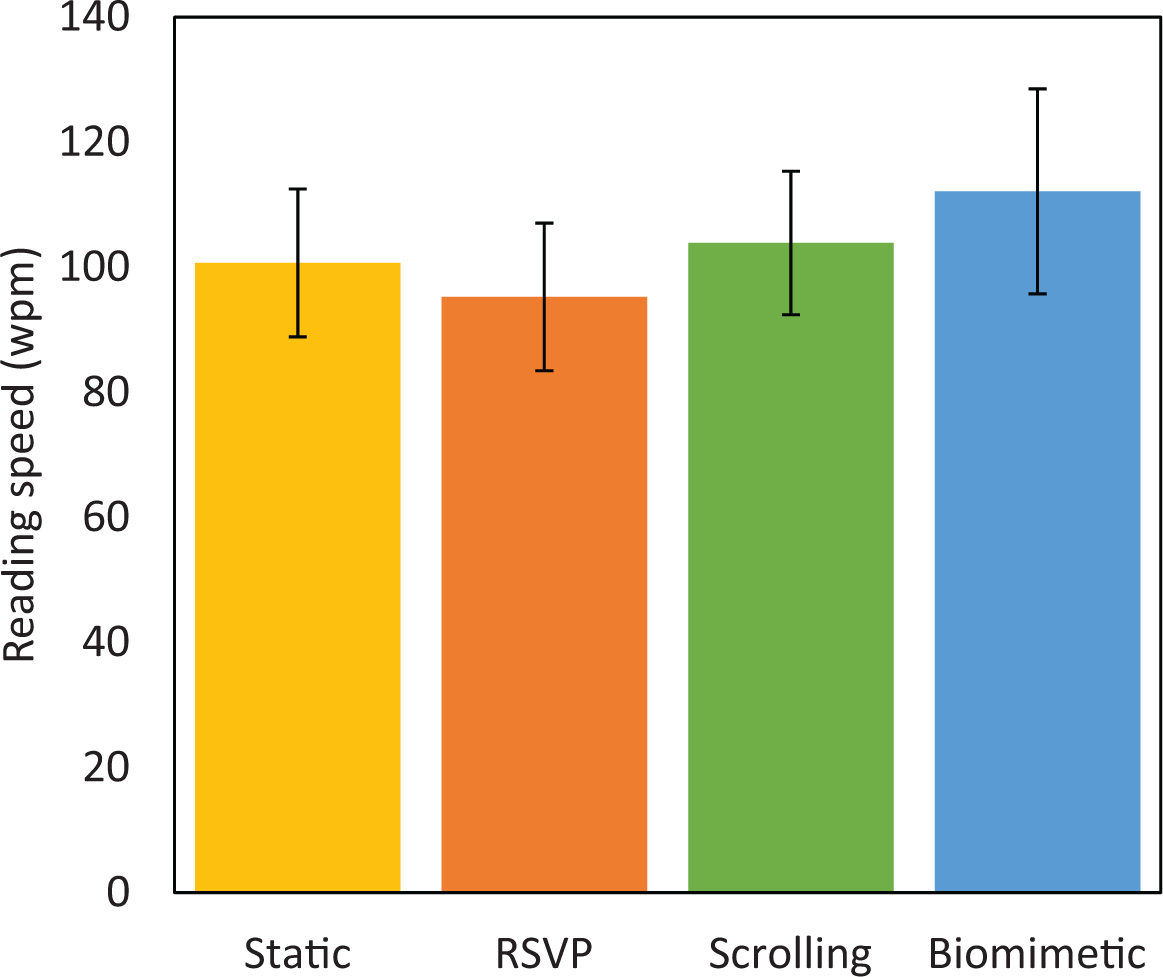
Mean reading speed on the smart glasses for the four text presentation methods of static, RSVP, horizontal smooth scrolling, and biomimetic scrolling.
Subjective preferences
The responses to the questionnaire questions which probed the participants’ preference and self-assessment between paper and the smart glasses reading aid are shown in Figure 5. A large majority of participants reported in favour of the smart glasses aid, with 70% preferring it and 84% finding reading easier with it.
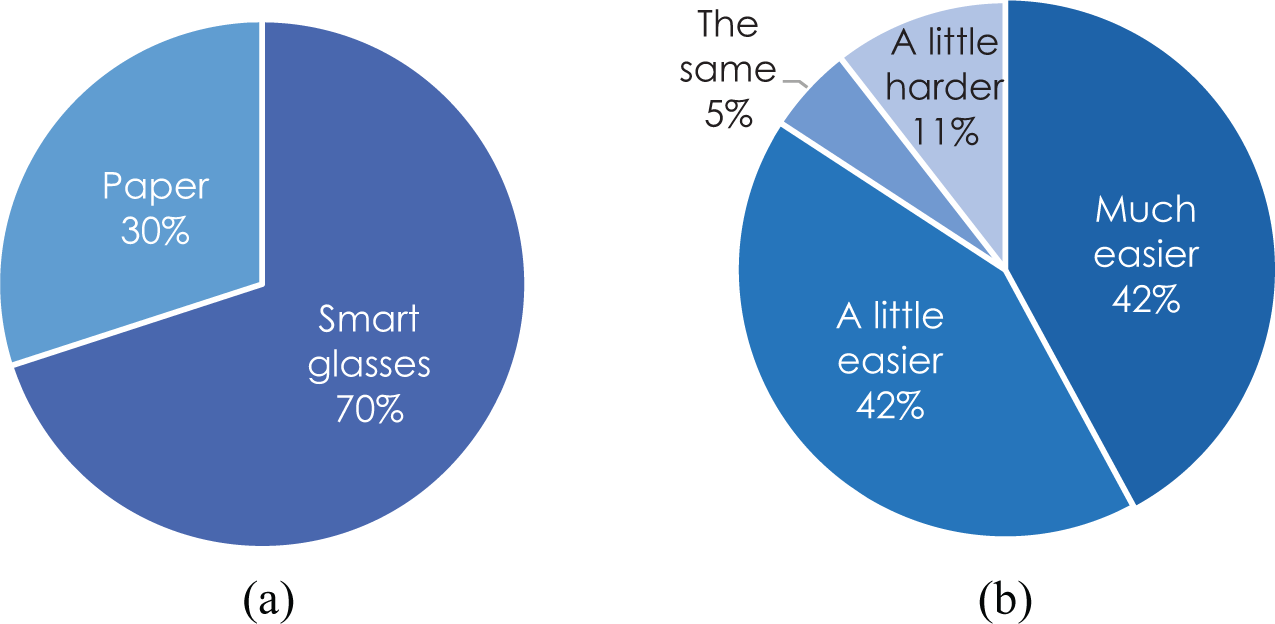
(a) Responses to the question, ‘Did you prefer reading from the smart glasses or paper?’. (b) Responses to the question, ‘Compared to reading large print from paper, did you find reading from the display to be . . .’.
Participants were asked to compare how well they could see a word in binocular view, where both the left- and right-eye miniature display screens were used, to monocular view, where the word was only presented on the miniature display screen in front of their stronger eye. Figure 6 shows the proportion of participants who favoured each format. The results indicate that some patients would benefit from the inclusion of a monocular view, in addition to the regular dual-display view.
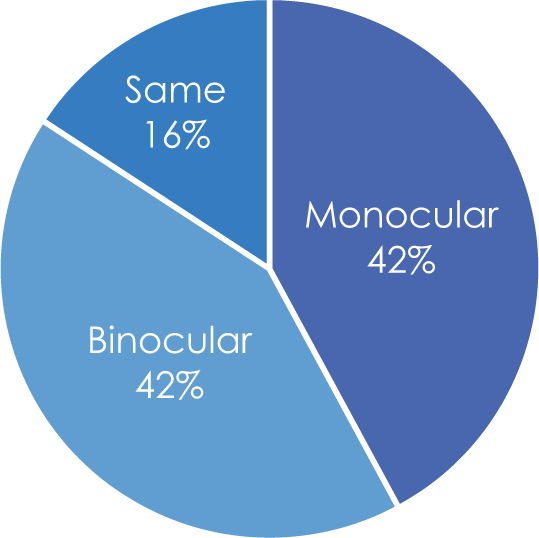
Proportion of participants who self-reported preference for either monocular or binocular views or both equal.
Discussion
With advancing age and declining mobility, individuals spend more time in indoors, therefore, reading text (on paper or on an electronic display screen) assumes greater importance both as a quality of life enhancing activity and a route to communicating with the outside world. Maintaining good reading vision in older age is a cost-effective approach to reducing the rate of functional decline over time. Currently, there is no spectacle-based solution which addresses both the macular and oculomotor deficits which impact reading capability. This lack of an accessible, effective, and unobtrusive method for reading leads to a disinclination, then discontinuation, in this key activity.
We hypothesized that the tailored presentation of text, incorporated into smart glasses, would be an effective approach to reading enhancement. The rationale for this approach was derived from our systematic review of image processing for the visually impaired (Moshtael et al., 2015) and from our pilot trial on HMDs for macular disease (Moshtael, Fu, et al., 2016). In particular, a novel form of text presentation, biomimetic scrolling, was described. In a previous study with 30 normally sighted individuals, we have demonstrated that biomimetic scrolling enabled all participants to read text more quickly than with continuous scrolling, on average by a factor of five times, and enabled almost half of them to read more quickly than with RSVP (Moshtael, Nuthmann, et al., 2016).
In this small but well-characterized patient cohort with macular degeneration, tailored text presentation on the smart glasses was found to enable a faster reading speed than the optical magnifiers habitually used by the participants. The average increase was statistically significant at 64%, with 15 of the 18 subjects who read in both experimental conditions experiencing some increase. An additional five subjects had vision too poor to read from the smart glasses. This is an encouraging result which offers initial evidence that this approach to assisting reading in macular disease is effective.
However, the purpose of the study was primarily to assist with the development process, rather than as a thorough test of a finished product. Further thorough testing is needed to make a more definitive assertion about the effectiveness of the smart glasses aid in assisting reading and how they compare to optical magnifiers. One limitation of the evidence is that only the reading of single sentences was tested, whereas a more extended reading test would simulate normal reading more closely.
The self-assessment of users matches the objective measures, with 84% finding it easier to read using the smart glasses than reading from paper. This corresponds to the preferences expressed by participants, 70% of whom preferred reading from the smart glasses than from paper. By comparison, in our previous study with static text, 50% found it easier and expressed a preference for the smart glasses (Moshtael, Fu, et al., 2016). In their assessment, several participants referred to the clarity of the display. Others, however, pointed out one of the key differences between displays that are head-mounted and those that are not, namely, that head movements cannot be used to look across the display; eye movements alone must be used. For the participants who relied heavily on head movements, this was a problem. The dynamic presentation of text removes the need for either eye or head movements, so most participants did not express an issue with this.
Steady-eye strategy requires a method for moving text across the point of fixation. The method of biomimetic scrolling aims to resemble the movements of regular reading. The parameters of biomimetic scrolling can be tuned to increase or decrease this resemblance, to mimic an individual or a population, and to adapt to the length or complexity of the words being scrolled. Just one configuration of these parameters was used in this trial, but further work is being undertaken to investigate other configurations.
Steady-eye strategy is not used by the general population as it is considered a strategy for the partially sighted. However, removing the need for eye movements can increase reading speed, a fact long exploited by RSVP. Biomimetic scrolling could therefore have utility beyond the community considered here.
Given that the optical magnifier was habitually used by the participants, and in most cases prescribed by the low vision clinic, they were generally well familiar with its use. By contrast, the smart glasses were new to all participants save the four participants who had participated in the pilot trial. Just 9 of 23 had ever used any electronic LVA. This comparative lack of experience does not seem to have limited the benefit of this new technology. Training in steady eye strategy and other reading strategies has proven to be effective for the use of optical aids, including spectacle mounted aids and high-powered glasses (Gaffney et al., 2014). Further improvement can be made by offering the patients a few training sessions with the smart glasses, but this effect of familiarity or practice needs to be investigated.
To tailor the text to the large range of visual deficits present in a group of individuals with macular disease, a large range of choices for tailoring is needed. This was justified by the fact that all four of the dynamic presentation methods, biomimetic scrolling, continuous scrolling, RSVP, and static, enabled the fastest reading speed in at least two of the participants. Therefore, software for enhancing reading would benefit from the inclusion of every method.
Further work is planned to explore the clinical utility of a modified prototype incorporating a user–machine interface app. Storing data gathered at this interface for single eye text presentation might also serve as a surrogate for macular functioning allowing early detection of central vision decline in macular monitoring.
In addition to reading speed, we will investigate understandability and comprehension of biomimetic scrolling in patients and controls. RSVP, at least for the normally sighted, has been associated with reducing comprehension and, as the speed increases, the number of errors increase (Metzner et al., 2017). The suppression of parafoveal processing inherent in RSVP has been suggested as a cause of this (Benedetto et al., 2015), which may give biomimetic scrolling an advantage. In both methods, however, the rhythm of text presentation is imposed on the readers, which does not allow the clustering of fixations typically done with normal reading in maculopathy (Calabrèse et al., 2016). This trade-off between speed and accuracy will need further investigation.
Beyond AMD, we see this reading aid as having potential applications in a range of conditions where eye tracking is sub-optimal, for example, dyslexia and cerebral visual impairment, and we are pursuing this in our clinical research. Further work is needed to explore dynamic text presentation on smart glasses and handheld devices, in both health and disease to fully explore the role of this technology in schools, workplaces, and everyday activities whenever reading is required.
Footnotes
Funding
The author(s) disclosed receipt of the following financial support for the research, authorship, and/or publication of this article: Funds were provided by the Lothian Health Foundation and the Engineering and Physical Sciences Research Council through the Centre for Doctoral Training in Applied Photonics (EP/L01596X/1), and by the Medical Research Council Confidence in Concept scheme.
