




Abstract
Albinism refers to a group of genetic disorders that, following genetic mutations, lead to impaired melanin production, resulting in skin allergies and visual impairment in affected people. Visual impairment brings not only physical limitations and challenges but also many social problems, including psychosocial challenges, leading to different experiences in the lives of these people. To this end, using a qualitative content analysis approach, the present study aimed to identify psychosocial challenges and introduce coping strategies for people with albinism living in Tehran in 2021. The participants were people with albinism aged 20 to 40 years in Tehran. The participants were selected from among members of the Iranian Albinism Association (AMAL) using purposive sampling. The data were saturated through semi-structured interviews with 20 participants in the research sample. The collected data were analyzed using conventional content analysis. Analysis of the participants’ experiences revealed three main themes: (1) The challenges and difficulties of living with albinism, (2) welfare, specialized facilities, and support seeking, and (3) strategies for coping with psychosocial challenges. According to the findings, albinism, due to its limitations, brings many bitter and painful experiences in education, job finding, and marriage for affected patients. The condition is also associated with some limitations such as visual impairment affecting various aspects of the patient’s life and different developmental periods. Each person may have different interpretations of their challenges and thus seek unique strategies for coping with the challenges. The findings of this study can have some implications for mental health professionals and managers of relevant institutions and to become aware of the nature and complications of albinism, the challenges faced by people with albinism, and the special needs of these people. Findings from this study can be used to identify the relationship between albinism, the challenges of living with albinism, and the special needs of these individuals, by mental health professionals, related institutions, and psychosocial environments.
Keywords
Introduction
Albinism refers to a group of genetic disorders that affect the pigmentation of the west, hair, and eyes following the reduction or nonproduction of melanin. Affected people usually have very white skin with white or light hair. They are often more vulnerable to skin damage and skin cancer, including melanoma, following exposure to sunlight. Albinism also results in a decrease in the pigments in the colored part of the eye (iris) and the light-sensitive tissue in the post-eye (retina). People with albinism generally have eye problems including visual acuity, decreased sharpness, nystagmus, and photophobia (Baulier et al., 2018; Boycott et al., 2013; Charlotte et al., 2010; Jung et al., 2018; Parker & Parker, 2007; Summers, 2009; Thuku, 2011). Albinism affects approximately 1 in 14,000 to 17,000 people, regardless of ethnicity or race (Kruijt et al., 2018).
The term disabled refers to a person who, as a result of hereditary problems, diseases, or accidents, has lost part of his or her physical or psychological abilities permanently or temporarily followed by reduced independence in individual and social life. The World Health Organization (WHO, 2018a) defines disability as a disorder in the relationship between oneself and the environment. People with albinism generally suffer from a persistent visual impairment that prevents them from engaging in many activities such as education, driving, and employment. Thus, they can be considered visually impaired people (United Nations [UN], 2007; United Nations High Commission for Human Rights [UNHCHR], 2013). Visual impairment is a global and pervasive problem, affecting 283 million people in the world with more than 90% of them living in developing and poor countries (WHO, 2018b). Approximately, 600,000 to 700,000 people were diagnosed with visual impairments in Iran in 2015 (Aghaee-Chaghooshi et al., 2021; Koolaee, 2017). Visual impairment can be a different experience in the affected person’s life that exposes people to many psychological and social problems and challenges as well as discrimination stemming from social misconceptions (Bhoomika, 2014; Pinquart & Pfeiffer, 2011; Warner & Adams, 2016). Visual impairment in people with albinism brings not only physical limitations and challenges but also a lot of social stigma and segregation leading to different experiences in their lives (Marcon & Maia, 2019). Patients with albinism are vulnerable people who face challenges and deprivations from childhood, especially from the time they enroll in school and start school. Many of these children are sent to schools for the blind while they are not blind. They often refrain from extracurricular activities at school, such as sports, arts, and so on (Castillo, 2019). Most schools and educational institutions place students with albinism in conditions similar to those of normal students, regardless of their visual impairment. Thus, they do not allocate the facilities and equipment needed to facilitate their education. Thus, these children encounter a lot of challenges and suffering during their studies. Furthermore, teachers do not have enough knowledge about the learning needs of students with albinism. Therefore, visually impaired students with diverse needs do not receive adequate support and suitable services to facilitate successful education, such as additional training, vision aids, and textbooks with large fonts. These shortcomings disrupt the academic achievement of these students, and thus they face many difficulties and challenges in adapting to the educational environment. Consequently, they are more likely to leave the school after experiencing these educational problems (Ndirangu, 2014; Ndomondo, 2015; Tambala-Kaliati et al., 2020). Students with albinism typically experience school studies with helplessness and suffering; thus, they do not expect a successful future for themselves (Baker et al., 2010). Restrictions such as lack of access or poor access to educational resources make these people face many difficulties when looking for job opportunities (Thurston, 2014). Education is one of the ways to overcome discrimination and social problems. The inclusion education system not only provides education for people with special needs but also brings the opportunity to live with people without disabilities (Gillies, 2013). In their study, Watson-Hulum (2011) found that there was a significant relationship between the level of academic achievement of students with albinism in Africa and the severity of their vision problems.
People with albinism also face challenges in accessing job opportunities due to their eye-skin problems. Kessy (2017) explored the implications, challenges, and effects of albinism in the workplace for people with albinism in Africa and found that the most important workplace challenges faced by these people were knowledge and understanding of the condition, being considered an incompetent person, and the absence of equipment and facilities needed by these people in the workplace. Furthermore, people with visual impairments face some obstacles and challenges in their marriage. These problems increase many times when the person with a disability lives in developing and poor countries (Bekoe, 2018). Ikuomola (2015) found that men with albinism in Africa more easily engage in emotional relationships and have a better marriage than women, especially when they are from affluent families, and the parents do their best for their child to have a good marriage to maintain their family name, thus filling the gap of the presence of a child with albinism in the family, but the issue of marriage of people with albinism is still affected by their illness.
Hardship, stress, and adversity are an inevitable part of the human experience. Coping strategies are behavioral and cognitive efforts that people who use stressful situations and exposure to stressors and threats to cope and adapt to their problems and challenges, and thus these strategies can reduce the suffering caused by challenges (Lazarus & Folkman, 1984). Because many aspects of the life of people with albinism, such as education and work, social life and intimacy, and access to resources, are affected by their illness, these people come up with different strategies to cope with the challenges. In general, perceived stress levels are higher in people with albinism than in those without vision problems (Cho et al., 2015). Rai et al. (2019) found that blind and partially sighted people use various coping strategies to deal with their disabilities and limitations. They also showed that these people also use positive reflective coping strategies as well as avoidance coping strategies. However, using reflective coping strategies is associated with better general performance and higher quality of psychosocial life. Tambala-Kaliati et al. (2020) reported that some of the coping strategies that people with albinism use to address their own challenges and problems include developing awareness-raising programs, striving to support friends and family, striving for personal growth and inner richness, seeking counseling, receiving support and security from friends and family as well as social media, and acceptance. These coping strategies helped some of these people to accept their circumstances as well as paved the way for them to become more sociable. Most of the research was conducted in Africa, Asia, and Latin America. According to WHO, more than 90% of people with visual impairments live in developing and poor countries (WHO, 2018a).
Although there are at least 30,000 patients with albinism in Iran, lawmakers and cultural institutions in Iranian society have not yet made an effort to address the challenges faced by these patients. Problems with schooling, career choices, and strict employment and marriage laws are just some of the challenges of people with albinism that remains unresolved over the years. The ignorance of the pertinent institutions and the silence of the laws about albinism have made it impossible to help empower these people. Furthermore, there are very few statistical studies about their number and living conditions. Therefore, a qualitative analysis of the views, experiences, and challenges of people with albinism and a deep understanding of the issues related to them is necessary because the various factors that affect people cannot be easily addressed through quantitative studies. Furthermore, due to socio-cultural differences, laws, decision-making policies, economic problems, and limited job opportunities, the findings of studies conducted in other countries should be carefully generalized to Iranian society. Thus, exploring and identifying psychosocial challenges faced by people with albinism in Iran and developing some coping strategies for them can be theoretically and practically important. Theoretically, the exploration of challenges of people with albinism can extend the body of knowledge in this field, contribute to promoting public awareness of the albinism in the Iranian community, and facilitate further studies on this issue. Practically, this study can provide clinical specialists, consultants, welfare organization officials, training staff, and employers with a comprehensive picture of the experiences of people with albinism by in-depth analysis of the lived experiences of these people and contribute to their understanding of their challenges at different stages of life. Thus, officials in charge with a higher level of awareness can deal with people with albinism more efficiently and provide the required services fitting their special conditions in educational and occupational environments and promote the well-being of these people. Where this study is significant is in the impact of culture and attitudes and how they are different from challenges faced by people with albinism in other cultures. To this end, the present study aimed to identify psychosocial challenges faced by people with albinism and introduce some coping strategies to be used by them.
Research method
The present study was conducted using a qualitative content analysis technique to identify psychosocial challenges faced by people with albinism and introduce some coping strategies to be used by them (Graneheim & Lundman, 2004). A qualitative approach discovers theories, concepts, hypotheses, and categories directly from data rather than inferring them from previous theoretical frameworks and assumptions (Corbin, 2014). The content analysis process involves several steps, including data collection, review, and analysis of the relationship between information categories. In qualitative studies, especially studies conducted based on content analysis, data are collected through exploratory interviews. Hence, the process of data collection and analysis is performed simultaneously to discover theories underlying the data. In this study, simultaneously with the sampling process, the data were analyzed using a five-step qualitative content analysis method. In the first step, the content of the recorded interviews was transcribed word by word. In the second step, the transcripts were reviewed several times to achieve a general understanding of the content. In the third step, meaning units and initial codes were identified and extracted. In the fourth step, the primary codes were classified into broader categories. And finally, in the fifth step, the main themes were extracted (Graneheim & Lundman, 2004).
The research population included all people with albinism living in Tehran. The participants were 20 men and women with albinism in Tehran who were members of the Iranian Albinism Association (AMAL). They were selected using purposive sampling from people aged 20 to 40 years who did not take any special medicine and were not suffering from any psychological disorder. The participants were diagnosed with oculocutaneous albinism (OCA). The willingness to participate in interviews and share experiences was also one of the criteria for enrollment in this study. The sampling process continued until the data were saturated, that is, when no new information was obtained with additional interviews. To collect the data, the researcher referred to the AMAL and invited some members to participate in the study. The data were collected through semi-structured interviews with the participants (Creswell & Báez, 2020). The qualitative questions asked in the interviews were developed by the researchers. The developed questions were reviewed in terms of content and adequacy by several experts and qualitative researchers experienced in lived experiences of people with special needs.
Since this study was conducted during the COVID-19 outbreak in Iran, 10 interviews were conducted through video calls on WhatsApp messenger. The remaining 10 interviews were conducted in person. The online interviews were conducted using a high-speed internet connection to ensure that the interviews had the highest audio and video quality. The face-to-face interviews were conducted in the early hours of the morning, generally in open areas such as parks in full compliance with health protocols to avoid possible transmission of the coronavirus. At the beginning of the interview sessions, the researcher introduced herself and explained the objectives of the study. To comply with ethical considerations, the participants were told that their attendance in the interview would be voluntary, and they could leave the interview if they wished. Besides, written consent was obtained from the participants to record their statements during the interviews. The participants were also ensured that their identity would be kept confidential and their statements would be quoted using a code to ensure their anonymity. Moreover, the participants’ statements were deleted after being transcribed, codified, and analyzed. Initially, to establish rapport with the participants and get familiar with them, demographic questions such as age, education, employment status, marital status, birth order, and type of marriage of parents were asked followed by the main questions. At the end of the interviews, the participants were asked to any add any further comments to their statements if they wished. During the interview, the questions were not necessarily asked in order but based on the progress of the interview and following the responses provided by the participants. The questions aimed to elicit the participants’ opinions about their psychosocial challenges and coping strategies to deal with their challenges.
During the interviews, short and probing questions (e.g., Could explain more?) were asked to prevent influencing the participants’ responses and contribute to the continuation of the interview process. The questions were asked in a way that the participants did not make them feel interrogated. Data analysis was performed simultaneously with data collection. After interviewing 20 persons, the data were saturated, and no new information and theme were obtained in the data analysis process. The minimum interview time was 35 min and the maximum was 90 min. A total of 1117 min of interviews were conducted, with an average of 56 min per interview. The interviews and data collected lasted for one and a half months from April 21 to June 6, 2021, in Tehran. At the end of each interview session, the participants’ statements were transcribed in MS Word to go through further codification and analysis. Then the transcripts were analyzed by extracting the related themes and categories using a systematic qualitative content analysis approach.
The transcripts were then read and reviewed several times to gain an accurate understanding of the participants’ feelings and experiences. Afterward, significant statements in the transcripts were identified, and semantic units (primary codes) were extracted from the content of the participants’ statements. The primary codes were then categorized and named based on conceptual similarities in the subcategories with different abstract levels. After reviewing, revising, and confirming the extracted codes by experts in the field of psychology and psychological nursing, the data analysis process continued. In the end, all the identified subcategories were compared, and the categories with common features were placed in the main and more abstract clusters. The main categories were also categorized and subdivided into more abstract concepts. Finally, the identified themes were presented (Graneheim & Lundman, 2004).
To ensure the credibility of the data, the criteria proposed by Lincoln and Guba were used (Cope, 2014; Lincoln & Guba, 1990) were used. Emphasizing selecting the appropriate context, the data collected from the interviews were triangulated by comparing them with previous studies on people with albinism as well as reviewing the experiences of people with albinism of living with this phenomenon. Moreover, the participants’ opinions were taken into account, and they were constantly involved in interpreting the data. The steps taken to collect and analyze the data were described in detail to enhance the transferability of the findings. The data and findings were peer-checked by experts in psychology and psychological nursing. The participants were assured that their data including name, phone number, and address would be kept confidential. Besides, the recorded voices of the participants were deleted after data analysis. This research project was approved under the code of ethics ID IR.QUMS.REC.1400.156 by Qazvin University of Medical Sciences in Iran.
Results
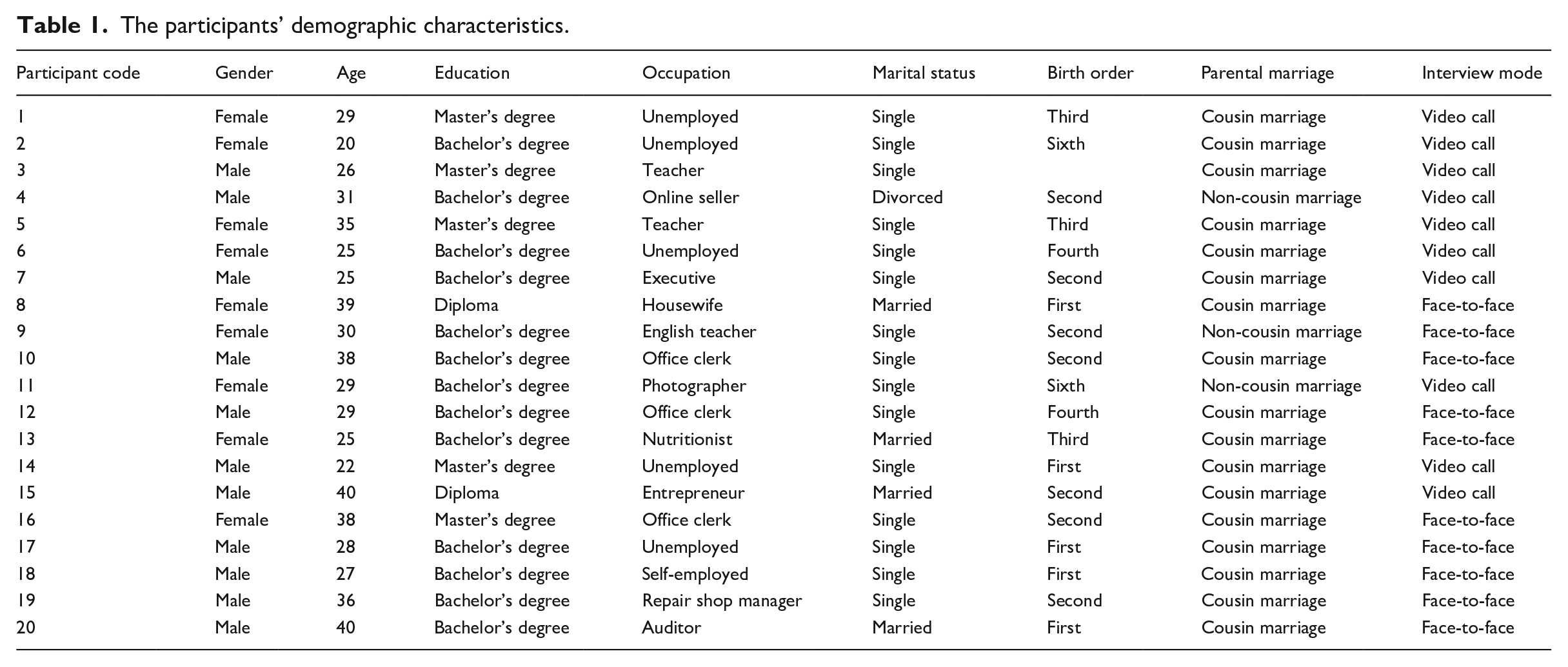
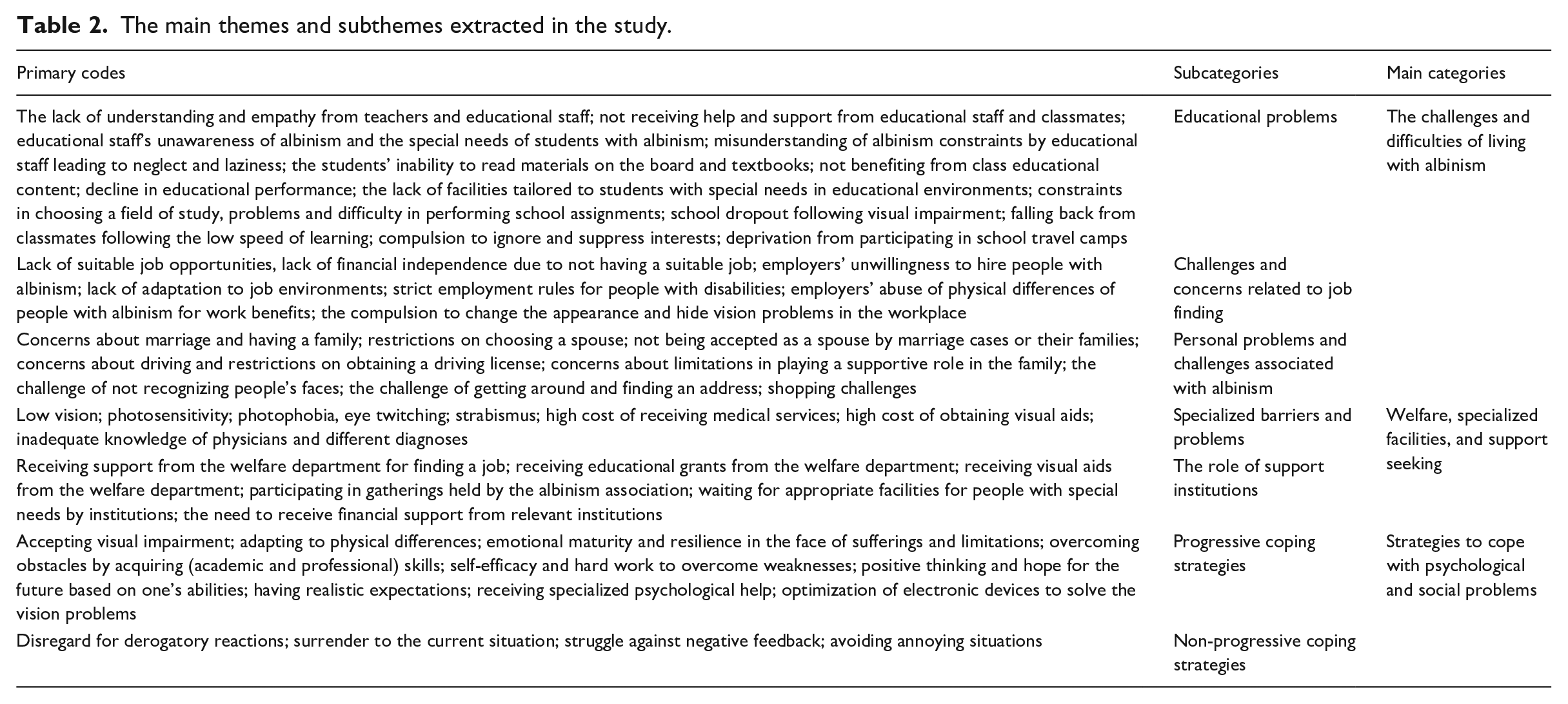
Table 1 displays the participants’ demographic data. Analysis of the participants’ experiences revealed 3 main themes, 7 subthemes, and 56 primary codes. The main themes extracted from the data in this study were (1) the challenges and difficulties of living with albinism; (2) welfare, specialized facilities, and support seeking; and (3) strategies for coping with psychosocial challenges as shown in Table 2:
The participants’ demographic characteristics.
The main themes and subthemes extracted in the study.
The challenges and difficulties of living with albinism
As shown in Table 2, the challenges and difficulties of living with albinism include educational problems, challenges and concerns related to job finding, and personal problems and challenges associated with albinism. According to the participants: Studying at school and university was very difficult for me. The teachers and professors did not understand me and did not know what educational needs I have as a different student. For example, when I said I could not see the board, the teacher would tell me to sit in the front seats in the classroom or they asked me why I did not change my glasses. I was very annoyed about these things” (Participant #2). “I applied for a job many times, but I could not find one due to my visual impairment. There are no good jobs for people like us with albinism. Whenever I apply for a job, employers try to get rid of me. Some of them tell me directly that there isn’t a job for me. Some ask me to give them my phone number and address and they will call me, but they will not call (Participant #1).
Welfare, specialized facilities, and support seeking
The second main theme addressed welfare, specialized facilities, and support seeking. It was further divided into two sub-themes of specialized problems and barriers and the role of support institutions. Two participants stated: My most important problem and concern is my visual impairment. All my problems now are just about seeing and not seeing” (Participant #11). “I expect the related institutions to provide all the facilities for a disabled person to approach the standard of living of ordinary people, and financial support for people like me should be on the agenda of lawmakers (Participant #20).
Strategies for coping with psychological and social problems
Finally, the third major theme, strategies for coping with psychological and social problems covered the subthemes of progressive coping strategies and nonprogressive coping strategies. Two participants stated: We have some kind of disability because of our vision problem. I don’t have a negative assessment of the disability and I accept it. The fact that we have low vision. I consider myself a disabled person who has a series of disabilities and needs services tailored to the disabilities” (Participant #5). “Albinism has caused me trying to avoid those situations that are very anxious and stressful due to my visual impairment and I keep myself away from these situations (Participant #6).
Discussion
Using a conventional qualitative content analysis approach, this study explored psychosocial challenges and tried to introduce some coping strategies used by people with albinism. An exploration of the participants’ experiences revealed three main themes including the challenges and difficulties of living with albinism, welfare, specialized facilities, support seeking, and strategies for coping with psychosocial challenges. The challenges and difficulties of living with albinism covered educational problems, challenges and concerns related to job finding, and personal problems and challenges associated with albinism. The findings of this study concerning educational problems were in line with the results reported by Baloyi (2019) and Castillo (2019) indicating that people with albinism have painful and difficult educational experiences during their studies and they face many educational challenges due to their visual impairment, negative attitudes of the teaching staff, lack of empathy and support for them, and lack of facilities and aids to meet their special needs in educational settings. Furthermore, Kanyungo et al. (2021), Tambala-Kaliati et al. (2020), and Castillo (2019) stated that educational challenges of people with albinism include the inability to read the writings on the blackboard, limitations, and difficulty in reading textbooks; not being accepted by the teaching staff and classmates; academic failure; or decision for school dropout in some people with albinism. Moreover, the misinterpretation of albinism-related visual impairment as disability and weakness on the part of the teaching staff highlighted by the participants were in line with the findings of Kanyungo et al. (2021). The participants also reported that teachers or professors misinterpreted the request for help from people with albinism without understanding and being aware of their visual impairment and limitations in reading and writing as their laziness and their attempts to justify their faults and academic backwardness under various pretexts. Furthermore, other challenges faced by the participants expressed the unawareness of the teaching staff about their special needs, restrictions in choosing a field of study or major, coercion and giving up their interests, and deprivation of camps and some outdoor activities. For instance, they pointed out that due to vision problems, they were not able to study in some fields such as electricity, nursing, medicine, and piloting. They regarded this experience as a weakness and regretted not being allowed to pursue many of their interests. Study time is the most painful and challenging period of life for all people with albinism. They recall their most bitter experiences related to this period. The study period is one of the first encounters of these people who have some differences from others. Moreover, given the relationship between individuals’ satisfaction and academic success with achieving a high social and occupational position in the future, and as shown in this study, the experience of people with albinism during their studies and how to overcome the challenges encountered during this period can predict the level of socioeconomic well-being of these people in the future.
The findings of the present study concerning job-finding challenges faced by people with albinism were in line with the results of a study by Kessy (2017) on the work-related challenges of people with albinism, including staff’s inadequate knowledge about the disease in the workplace, the perception of being an incompetent person, and the lack of equipment needed by these people in the workplace. In addition, Elkader and Crothers (2015) reported that albinism limits people from finding a suitable job and deprives them of access to many job opportunities. Physical differences and visual impairment of them make employers often reluctant to hire them. As a result, due to their insufficient income, there is no guarantee for the financial independence of these people. They also stated that these physical differences did not help to convince employers to accept them. According to Estrada-Hernandez (2018), physical differences are still a major factor in how people with albinism are treated and accepted in the workplace. However, physical differences of these people compared to other people, visual impairment, labels, and stigmas about the inability and weaknesses of people with albinism, make employers reluctant to employ them even without their competencies and skills. The participants in this study stated that unemployment and low socioeconomic status were their main concerns for marriage and starting a marital life.
Single participants in the study reported concerns about marriage and family formation. Some female participants admitted that suitors or their families, after becoming aware of their vision problems, withdrew their marriage proposal and even behaved unfairly with humiliation and insults in response to these problems. They stated how painful it was when they lived in well-educated and honorable families and were in a good position in terms of education and employment, and the necessary life skills and high abilities to start life but they were rejected without these positive qualities being seen and recognized in them, they were rejected by suitors simply because of their vision problems. In addition, some male participants stated that their favorite girls had rejected their marriage proposal because, due to their visual impairment, they had not yet been able to find a suitable job and an ideal income and did not have a good social position. Accordingly, Elkader and Crothers (2015) showed that emotional and marital relationships are influenced by albinism. In a similar vein, Ikuomola (2015) highlights concerns about marriage and family formation in many people with albinism. Moreover, Munsaka (2012) stated that people with albinism are considered a last resort or option for marriage by men and women who are unable to attract another person. Driving concern was also reported as another recurring concern of the participants in this study. Elkader and Crothers (2015) also showed that having the qualification to drive among New Zealanders with albinism is a dream come true. The participants in this study believed that driving restrictions affected all aspects of their lives, including work and family life. These restrictions impacted the male participants most to the extent that some of them associated driving restrictions directly with the decline in the role of supporters in the family and stated that the prohibition on driving would not allow them to take their wives and children on trips and travel easily, or take them to medical centers in the case of emergencies such as illness and find themselves alone and inefficient.
The female participants also stated since driving is effective in increasing women’s independence in society, driving restrictions along with other constraints caused by albinism would limit their independence. Commutation was another challenge experienced by most albinism participants in this study as indicated by Elkader and Crothers (2015). Many participants also experienced the challenge of not recognizing people’s faces and difficulty in finding new addresses and shopping. They acknowledged that while they may seem trivial and funny, these are the concerns and challenges that may face daily. Regarding not recognizing people’s faces, some participants said that many people think that they are arrogant and narcissistic people who show a cold shoulder to people they know, unaware that people with albinism are severely affected by visual impairment, although their visual problems may not be so obvious.
Specialized problems and barriers, the participants considered visual impairment as a deterrent to achieving their goals in life and acknowledged that visual impairment in people with albinism is not noticeable or less noticeable compared to their physical differences but was still a big problem. Visual problem is in fact the main concern and the biggest challenge that these people face from the very beginning of life. The vision problem of people with albinism is considered a sensory disability (here visual impairment) leading to the agreement and in some cases criticism from the participants in this study. The participants stated that visual impairment created a great deal of suffering for them so much so a majority of them suggested that vision problems have made life so bitter for them that they no longer paid attention to their physical differences and considered them the second priority after the vision problem. Many participants reported that they experienced a very painful experience of seeing a specialist for periodic examinations following a vision problem. Upon checking their eyesight, they were shocked by the ophthalmologist’s surprise at the severity of their vision problems. Some participants, following the idea that wearing glasses due to poor eyesight, were not willing to wear glasses as they wanted to hide their visual impairment. The participants also pointed out the high cost of receiving medical services and the provision of visual aids and the lack of adequate knowledge of physicians and their different diagnoses. Accordingly, Tambala-Kaliati et al. (2020) highlighted visual and skin problems, lack of access to services and specialized medical facilities, negative public attitudes, and insufficient awareness of medical staff. The participants also stated that they were annoyed by the different and sometimes contradictory diagnoses and prescriptions of some physicians.
The role of support institutions, some participants stated that they were supported by institutions such as the welfare department to find employment and financial aid. They also believed that this type of assistance or support or participation in gatherings could partly relieve their pain as if there was a safe place in which their problems were seen, and they could take a step albeit small to improve their quality of life. The participants considered the expansion of the Albanian Association as a way to achieve their social rights, and they thought that sitting at home and grieving would not do anything and that it was unification that could give them a voice to assert their rights. Furthermore, some participants expressed their expectations for receiving useful facilities to meet their special needs, access to job opportunities, effective training services, social and professional facilities as well as the need for receiving financial support from relevant institutions.
Following the previous studies in the literature (e.g., Estrada-Hernández and Harper, 2007; Huang et al., 2020; Chikwamba, 2013; Wan, 2003), the present study showed that people with albinism use different effective or ineffective coping strategies to deal with abnormalities related to their limitations. Many participants accepted their visual impairment, acknowledging that accepting albinism as a form of disability entitles them to be aware of and demand their civil and social rights. Accordingly, Tambala-Kaliati et al. (2020) found that people with albinism strive for personal growth and inner richness by acknowledging their limitations and shortcomings. Some of the participants stated that they completely adapted to their physical differences and accepted them so much that they were not even willing to use hair dye to change their appearance, while most of these people had completely white hair without any pigment. More than half of the participants stated that they were resilient to external annoying factors such as visual impairment, and discrimination in the workplace and the educational environment, and respond to these painful issues with emotional maturity. In line with Kumpfer’s (1999) theory of resilience, the present study showed that stressors in the lives of people with albinism, such as vision problems, school suffering, job worries, and marriage concerns, prevent them from adapting to living conditions. Moreover, following the resilience theory, the present study identified the experience of people with albinism about living with this complication, the most important challenges and concerns faced by them, and how they adapted to and overcome these challenges, and returned to their original balance. In addition, many participants stated that they worked hard and with high self-efficacy to overcome their weaknesses. They also acquired academic and occupational skills and tried to overcome obstacles and increase their inner richness. Gillies (2014) showed that Collaborative engagement is a key construct for the successful delivery of programs and services for people with special education needs. In a similar vein, Bradbury-Jones et al. (2018) showed that many people with albinism stubbornly strive to succeed in their studies to show that despite the limitations can be efficient and be a role model for others. Similarly, Chikwamba (2013) found that many of these people are positive-minded and, relying on their abilities, envisioned a bright and promising future for themselves. They work hard to become more courageous and ultimately achieve self-actualization. Concerning the optimization of electronic devices and their use to overcome the visual limitations and difficulty in working with these devices by people with albinism, Tandon (2016) found that despite the problem of low vision in people with albinism, the use of special glasses and lenses, printed materials with large fonts, magnifying glasses, and proper color settings when working with electronic devices would greatly solve their vision problems. In contrast, some participants used nonprogressive strategies to cope with the challenges, and some of them stated that they ignored the humiliating reactions.
Accordingly, Chikwamba (2013) found that people with albinism often face this challenge by ignoring the negative attitudes of others and ignoring it. A number of the participants in this study reported that they adopted a belligerent approach in the face of negative social feedback in such a way that they strongly guarded against those who reacted negatively and derogatively and treated them with strong physical or verbal reactions. Moreover, some participants stated that they tried to avoid attending to annoying and stressful situations. In the same vein, Brunes et al. (2019) showed that visually impaired people are more likely to be socially isolated than the general population and avoid community participation. The avoidance strategy culminated when the participants found themselves in new and unfamiliar situations and felt alone and helpless to adapt to that situation. In fact, given that people with albinism are different from other people in terms of vision and appearance, so interacting with people who have perfect vision and no problem and those who can learn new skills with full confidence and have normal experiences make these people more likely to be exposed to their disabilities and differences and are more likely to use the avoidance and isolation strategy. In connection with this finding, it can be argued people with albinism try to avoid direct exposure to unpleasant feelings caused by annoying situations and rejection by others, or negative predictions and cognitive errors, and thus they use a strategy of avoidance and withdrawal, thereby reducing the pressure on them.
Generally, people with albinism have gone through many hardships in their lives. The participants in this can be divided into two categories. The suffering experienced by people with albinism has, in most cases, made them determined, diligent, and purposeful to achieve their goals and build a life worth living. Thus, the perseverance and achievements of these people sometimes arouse the surprise and disbelief of others. By acquiring different skills and demonstrating their abilities, these people try to prove that they can live like ordinary people in an equal and nondiscriminatory society and have the right to be seen and loved. They hope for the future and, relying on their abilities, move forward with strength and do not give up. They see their difference not as a threat, but as an opportunity to be at their best. These people accept themselves as people with some form of disability, are aware of their civil and social rights as individuals with disabilities, and demand the realization of those rights from the relevant institutions. In contrast, among the participants were people who succumbed to limitations and disabilities, gave up trying, and rode on the wave of destiny during it, as if they could not direct their lives. Their differences make these people helpless and inefficient, unable to cope with adversity.
Conclusion
The findings of the present study showed that people with albinism mostly spend their life to deal with difficulties associated with albinism. Due to its limitations, albinism brings with it many bitter and painful experiences in terms of education, employment, and marriage for affected patients. These restrictions affect all aspects of the lives of people with albinism in different periods of development. In general, the association between functional limitations of people with albinism and the challenges and sufferings of these individuals has complexities that are likely to affect how they cope with and adapt to a challenging environment. Each of these individuals may have a different interpretation of the challenges. They may see them as a threat to their well-being or as a motivator. People with albinism use their unique measures and strategies to deal with their condition, depending on the severity of the challenges and problems they face. Since people with albinism often go through adversities and unpleasantness in their studies at school and university such as teachers’ inadequate knowledge of albinism and the problem of low vision, and the lack of cooperation of educational staff to facilitate educational barriers, in-service training of teachers and professors should cover training on characteristics and needs of different people with special needs, including albinism. This type of treatment helps teachers to deal with students with albinism with more support and help. However, given the importance of childhood experiences and education in people with albinism, future studies need to focus on the experiences of children and adolescents living with albinism. Given the special importance of job finding in the lives of people with albinism and the problems and challenges caused by not having a job and a decent income, relevant authorities are recommended to take effective measures and strategies for the creation of job opportunities for people with albinism.
Cultural considerations
Research has identified genetic traces in albinism (Moreno-Artero et al. 2021), and Table 1 shows that two-thirds of the parents of the participants had a first cousin marriage. In Muslim countries, marrying a cousin is normal and even religiously recommended. These recommendations contribute to genetic disorders in these countries. However, in recent years, there have been numerous attempts to consciously marry people and perform genetic tests before pregnancy, but this is still the case in small towns and villages.
There are economic problems, unemployment, and social exclusion of all people with special needs to some extent. Believing that work and marriage are normal for people and there is no reason for disabled people to have a job. Also, political conditions and international sanctions have added to the problems of people’s lives, because of the many problems that society faces, the needs of people with albinism are sometimes easily forgotten.
Albinism is not seen as a serious visual and health condition in Iranian culture and literature. Unlike countries such as Africa, where people with albinism are considered witches, for example, Zaal (means Albino in Persian) is a legendary Iranian king from Sistan and is recognized as one of the greatest warriors of the Shahnameh epic. He is the father of the equally legendary Iranian hero, Rostam, in BC. Unfortunately, the people of the society are not very aware of their condition and vision and skin problems, and for this reason, a law has not been passed in the parliament to support them. However, society treats them inappropriately due to ignorance and their medical, health, and well-being needs are not taken into account.
Limitations
The participants in this study were from Tehran and had a university education, which does not include people with albinism in small cities, villages, and illiterate or low-literate. The COVID-19 outbreak in Iran prevented conducting face-to-face interviews with several participants.
Footnotes
Acknowledgements
The authors appreciate managers and staff of Iranian Albinism Association (AMAL) in Tehran and all participants in the study.
Declaration of conflicting interests
The author(s) declared no potential conflicts of interest with respect to the research, authorship, and/or publication of this article.
Ethical considerations
This research project was approved under the code of ethics ID IR.QUMS.REC.1400.156 by Qazvin University of Medical Sciences in Iran.
Funding
The author(s) received no financial support for the research, authorship, and/or publication of this article.
