




Abstract
This study investigated the relationship between the Big Five personality domains and the dimensions of social wellbeing among Iranian students. Participants were 236 university students at the University of Tehran. Bivariate correlations showed a modest overlap between personality factors and dimensions of social wellbeing. Among the Big Five personality domains, neuroticism was negatively related to social acceptance, social contribution, and social coherence. Conscientiousness was positively related to social contribution. Openness was positively related to social contribution and social coherence. Agreeableness was related to social acceptance and social contribution. No significant correlation was observed between extraversion and dimensions of social wellbeing. Results of regression analysis and canonical correlation analysis mainly converged with those of bivariate correlation analysis in showing that there was a modest relationship between the predictors and social wellbeing dimensions. Results of canonical correlation analysis indicated that the full model explained about 28% of the variance shared between the personality factors and social wellbeing variables. Results also revealed that male students scored significantly higher than female students on social wellbeing. However, gender did not moderate the relation between the Big Five personality domains and social wellbeing. Implications of the results are discussed with reference to prior studies on the relation among personality traits, gender, and hedonic and eudaimonic components of wellbeing in Iran and other countries.
The distinction between hedonic and eudemonistic aspects of wellbeing has repeatedly proved meaningful and informative (e.g., Keyes & Annas, 2009; Keyes, Shmotkin, & Ryff, 2002; Ryan & Deci, 2001). From the hedonic view, wellbeing is equated with hedonic pleasure or happiness. “Indeed, the predominant view among hedonic psychologists is that wellbeing consists of subjective happiness and concerns the experience of pleasure versus displeasure broadly construed to include all judgments about the good/bad elements of life” (Ryan & Deci, 2001, p. 144). Most research from this viewpoint has used assessment of subjective wellbeing (SWB). SWB is generally operationalized as both a predominance of positive over negative affect (i.e., affect balance) and a global satisfaction with life (Diener, 1984).
The eudemonistic view, on the other hand, maintains that wellbeing cannot be equated with hedonia (Ryan & Deci, 2001). This second view considers wellbeing to consist of more than just happiness, suggesting that people’s high level of avowed happiness does not necessarily mean that they are functioning psychologically and socially well. This view is referred to as eudaimonism and is concerned with living well or actualizing one’s human potentials (Deci & Ryan, 2008). In other words, eudaimonism focuses on developing abilities and capacities toward becoming a more fully functioning person and citizen (Keyes, 2006).
Ryff’s (1989) model of psychological wellbeing falls within the eudaimonic tradition. Her model stemmed from extensive literature aimed at defining positive psychological functioning (from the mental health, clinical, and lifespan developmental theories). She tried to integrate these diverse viewpoints into a coherent multidimensional model of positive psychological functioning. The model contains six components: self-acceptance, personal growth, purpose in life, positive relations with others, environmental mastery, and autonomy (Ryff, 1989; Ryff & Keyes, 1995).
Social component of eudaimonic wellbeing
According to Keyes and Shapiro (2004), what has been missing in wellbeing literature is the recognition that individuals may evaluate the quality of their lives and personal functioning by comparison to social criteria. Unfortunately, the subjective and psychological conceptions of wellbeing portray adult wellbeing as a primarily private phenomenon largely neglecting individuals’ social lives (Keyes, 2002). That is, the attitudes towards and perceptions of the whole society and its structure and organizations have been almost completely neglected in the hedonic and psychological wellbeing models. However, “individuals remain embedded in social structures and communities, and face countless social tasks and challenges” (Keyes, 1998, p.122). Accordingly, Keyes calls for more attention to be devoted to individuals’ social wellbeing.
Keyes’ (1998) model is one of the first attempts to assess multiple dimensions of social wellbeing. This model falls within the eudaimonic perspective and addresses social aspects of human functioning. His model consists of five dimensions that indicate to what degree individuals are functioning well in their social world.
Social acceptance is a favorable view of human nature and a feeling of comfort with other people; social actualization is the belief in the evolution of society and the sense that society has potential that is being realized through its institutions and citizens; social contribution is the evaluation of one’s value to society; social coherence is the perception of the quality, organization, and operation of the social world and includes a concern for knowing about the world; and social integration is the extent to which people feel they have something in common with others who constitute their social reality (e.g., their neighborhood), as well as the degree to which they feel that they belong to their communities and society. (Robitschek & Keyes 2009, p. 323, [italics added])
Social wellbeing is not reducible to having positive relations with others. While the concept of positive relations focuses on the quality of the person’s relations with the relatively limited number of significant others, social wellbeing deals with the person’s attitudes towards and perceptions of the whole society. The two constructs, however, seem to be related. Joshanloo and Nosratabadi (2009), for example, have found significant positive correlations between a scale of positive relations and all dimensions of social wellbeing.
Social wellbeing has been found to be correlated positively with community involvement, generativity, neighborhood heath, life satisfaction, and happiness and negatively with dysphoria and anomie in the United States (Keyes, 1998). It is positively related to social participation in the United States, Italy, and Iran (Cicognani et al., 2008). Previous research shows that social wellbeing is positively related to perceived social support, psychological sense of community, identification with the community, self-esteem, and self-efficacy in Iranian university students (Joshanloo, Rostami, & Nosratabadi, 2006). Keyes and Ryff (1998) also found that overall social wellbeing was positively correlated with measures of civic engagement and prosocial behavior in the United States. Using an Iranian student sample, Joshanloo and Ghaedi (2009) found that social wellbeing was positively correlated with life satisfaction, affect balance, and psychological wellbeing in Iran. In the same study, it was found that pursuing power and self-direction was inversely correlated with social wellbeing, and attaching importance to conformity and benevolence was positively related to social wellbeing.
Prior research has also shown that social status is positively associated with social wellbeing. Social wellbeing increases with education and, in general, with age (Keyes, 1998). Using a national American sample, Keyes and Shapiro (2004) found that social wellbeing is highest among high-status persons, males, and those who are married or never married. In contrast, females, those who are previously married, and those who have low occupational status have lower levels of overall social wellbeing. Although these societal factors are important, it is also worthwhile to explore the associations between social wellbeing and other types of factors such as personality traits. Personality traits have been repeatedly found to be associated with the quality of personal relations (e.g., Holland & Roisman, 2008; Robins, Caspi, & Moffitt, 2000, 2002).
The Big Five personality traits
According to McAdams and Pals (2006), the new trait psychology heralded by the Big Five (personality traits) “is arguably the most recognizable contribution personality psychology has to offer today to the discipline of psychology as a whole and to the behavioral and social sciences” (p. 204). The Big Five traits are most commonly labeled as extraversion, neuroticism, conscientiousness, agreeableness, and openness to experience (Costa & McCrae, 1994; Goldberg, 1981).
According to McCrae and Costa (2003), extraversion has interpersonal and temperamental facets. The interpersonal facets are warmth, gregariousness, and assertiveness. Warmth and gregariousness are positively related to sociability (or affiliation, Watson & Clark, 1997) and assertiveness is positively related to leadership skills and expression of feelings and desires (McCrae & Costa, 2003). These three facets have been found to positively correlate with positive relations with others (Siegler & Brummett, 2000). Mathews (1989, as cited in Watson & Clark, 1997) reports a positive correlation between the number of close friends and extraversion (r = .30). Those high on extraversion also like to be the center of attention in social situations and have a greater degree of energy to invest in social activities (Watson & Clark, 1997). Positive emotionality has also been linked with higher-quality relationships (Robins, Caspi, & Moffitt, 2000, 2002).
Neuroticism is the tendency to experience negative emotions. According to McCrae and Costa (2003), those high on neuroticism tend to be irritable and ill-tempered and may prove difficult to associate with. Other people also tend to become impatient with these people’s constant complaining. “In social situations they are anxious and embarrassed, and their frustration in dealing with others may make them hostile” (McCrae and Costa, 2003, p. 48). In a similar vein, Buss (1991) states that “neuroticism or emotional instability has been the most consistent personality predictor of marital instability, emerging as a significant factor in nearly every study that has included a measure of it” (p. 664). In a meta-analysis, Heller, Watson, and Ilies (2004) found that neuroticism was the strongest negative correlate of marital satisfaction (see also Karney & Bradbury, 1995). Furthermore, this trait has been found to have a negative influence on the individual’s interpersonal relationships (Schmutte & Ryff, 1997; Siegler & Brummett, 2000). A person with such stable characteristics, which tend to cause interpersonal conflicts, does not seem to have a high sense of social wellbeing.
“Conscientiousness describes socially prescribed impulse control that facilitates task- and goal-directed behavior, such as thinking before acting, delaying gratification, following norms and rules, and planning, organizing and prioritizing tasks” (John & Srivastava, 1999, p. 121). This trait has evidenced positive association with many indicators of wellbeing and organizational and personal success. A meta-analysis by Barrick and Mount (1991), for example, indicated that, among the Big Five domains, conscientiousness showed the most consistent positive relations with all job performance criteria for all occupational groups examined in their study. In another meta-analysis, Peeters, Van Tuijl, Rutte, and Reymen (2006) found that conscientiousness was positively related to higher team performance. These findings, indicating a consistent positive association between conscientiousness and indicators of positive personal and team functioning, suggest that this trait would be positively related to social wellbeing.
Having such facets as trust (trusting others and being trustworthy), altruism (considerateness and desire to help others), and compliance (deferring to others rather than aggressively pushing for one’s own ends), agreeableness is expected to promote the survival of the social groups (McCrae & Costa, 2003). In addition, agreeable people are “humble, showing Modesty in their assessment of their own abilities and importance. Low scorers on this facet might be considered narcissistic. Attitudinally, agreeable people exhibit Tender-mindedness and sentimentality, and may be an easy touch for charities and good causes” (McCrae & Costa, 2003, p. 50 [italics in the original]). Agreeableness is expected to facilitate cooperation and team effectiveness. Consistent with these ideas, agreeableness has shown evidence of positive linkages with team player predisposition (Kline & O’Grady, 2009). In a meta-analysis, Peeters et al. (2006) found that agreeableness was related to higher team performance. Barrick, Stewart, Neubert, and Mount (1998) also found that agreeableness was positively associated with group cohesion.
“Openness to Experience (vs. closed-mindedness) describes the breadth, depth, originality, and complexity of an individual’s mental and experiential life”(John & Srivastava, 1999, p. 121), and is therefore expected to have a positive relation with social coherence. Social coherence involves a person’s perception and appraisals of the quality, organization, and operation of the social world and it includes a concern for knowing about the world (Keyes & Shapiro, 2004). The depth, breadth, and complexity of an individual’s mental life are expected to help the person evaluate and understand the complex social world more successfully.
In their recent review of SWB literature, Lucas and Diener (2008) assert that “after decades of research on SWB researchers have often arrived at what to some seems like a startling conclusion: The most important factor in determining a person’s SWB appears to be the personality with which he or she is born” (p. 801). Research has shown that SWB is often strongly correlated with stable personality traits (Diener, Oishi, & Lucas, 2003). In terms of the Big Five personality domains, extraversion and neuroticism have been found to be the strongest predictors of SWB in many countries (see Schimmack, Radhakrishan, Oishi, Dzokoto & Ahadi, 2002 for a brief review). However, the meta-analyses conducted by DeNeve and Cooper (1998) as well as Steel, Schmidt, and Shultz (2008) indicated that agreeableness and conscientiousness also predispose individuals towards SWB. Openness does not appear to be a strong and consistent predictor of SWB (McCrae & Costa, 1991).
Psychological dimensions of eudaimonic wellbeing also have been linked with personality domains. Schmutte and Ryff (1997) revealed consistent linkages between the domains of personality and psychological wellbeing. Neuroticism was negatively related to environmental mastery, purpose in life, and autonomy. Self-acceptance, environmental mastery, and purpose in life were positively linked with extraversion and conscientiousness. Personal growth was positively related to openness. Having positive relations with others was positively linked with agreeableness and to a lesser degree, with extraversion. Finally, autonomy was linked positively with extraversion, conscientiousness, and openness and negatively linked with neuroticism. Schmutte and Ryff (1997) concluded that the “dimensions of psychological wellbeing are distinct from, yet meaningfully influenced by, personality” (p. 557).
This brief review points to the fact that all the Big Five personality domains have important implications for wellbeing. Another remarkable point is that openness tends to correlate only with eudaimonic aspects of wellbeing. This is in line with Keyes, Shmotkin, and Ryff’s (2002) finding that those with high levels of eudaimonic wellbeing (as assessed by psychological wellbeing scales) but low levels of SWB, were distinguished from their opposite counterpart (high SWB/low psychological wellbeing) by their high levels of openness. In sum, from the hedonic point of view, thus, a happy person is most likely to be a person who has high scores on extraversion, conscientiousness, and agreeableness, and a low score on neuroticism. From the eudaimonic point of view, however, high openness is also considered a component of a mentally healthy personality. Nonetheless, much of the prior research has been conducted in Western regions (e.g., Europe, North America). It is not known whether the linkages between the Big Five and mental wellbeing would be similar in a different cultural region, such as Iran. Research on these linkages conducted in Iran will likely contribute to the extant wellbeing literature.
The cultural context of Iran
Iran is a non-Arab Muslim country in southwestern Asia. The official language of the country is Persian, and the country is ruled by a theocratic government. According to the population and housing census conducted in 2006 (www.amar.org.ir), Iran’s population is approximately 70,495,000. Ninety-seven percent of the population in Iran is Muslim (Clawson & Rubin, 2005). Relative to North American and North European societies, collectivist values are more salient in Iranian social life (Safdar, Lewis, & Daneshpour, 2006). In Hofstede’s (2001) analysis, for example, Iran is found to be slightly more collectivistic than Japan. In keeping with these findings, in a sample of 768 Iranian managers, Ali and Amirshahi (2002) also found that participants scored high on collectivism and work collectivism while they scored low on individualism and relatively moderately on work individualism.
More elaborate findings on Iranian collectivism come from a large-scale study conducted as part of the GLOBE (Global Leadership and Organizational Behaviour Effectiveness) research program, using data from over 17,000 middle managers in more than 60 different cultures (House et al., 1999). Comparing the Iranian data with the entire GLOBE sample revealed that the Iranian sample scored fairly high on in-group collectivism (the third highest score in this dimension) which is defined as the extent to which individuals are attached to and demonstrate loyalty, pride, and cohesiveness toward small groups such as family and close groups of friends (Javidan & Dastmalchian, 2003). Interestingly enough, Iran scored comparatively low on societal collectivism (the 13th lowest score on this dimension) which is defined as the degree to which individuals are encouraged by social institutions to be integrated into groups within organizations and society. These findings show that Iranians’ trust and respect for the collective system is low and they prefer to rely on their close family and friends (Dastmalchian, Javidan, & Alam, 2001; Javidan & Dastmalchian, 2003).
Indeed, a prominent feature of Iranian collectivism is its family orientation. That is why many authors like Dastmalchian et al. (2001) argue that family is the cornerstone of the Iranian social structure and order. Family has been the most important social institution in Iran throughout history. Family is still highly valued in Iranian society as a source of social and economic support, emotional intimacy, counseling, and problem solving for its members (Azadarmaki & Bahar, 2006). Generally, family continues to play the same roles even after the children get married and separate from their families. A vast majority of Iranian families living in big cities are nuclear. That is, the family comprises father, mother, and their children, living in a single residential unit such as an apartment, although these nuclear families tend to stay emotionally (or even physically) close to their original families and relatives (Azadarmaki & Bahar, 2006; Mortazavi, 2006).
The strong reliance of Iranians on their families and close friends is partly accounted for if we consider the state-citizen relationships in third world countries. Iran is a third world developing country with relatively low standards of living and economic performance. Dwairy (2006) argues that the developments and social, economic, and political changes that led Western cultures to become more individualistic have not yet happened in third world countries. In Western countries the state has taken responsibility for the welfare of its citizens, and citizens are no longer dependent on their families for survival. Within such a context the individual-family interdependence has been replaced by individualism. Dwairy argues that in Muslim countries (a majority of which are less industrialized, and economically less developed countries compared to Western countries), these political, social, and economic changes have not happened yet and the states still cannot satisfy all the needs of their citizens. In these countries people retained the interdependent relationship with their families, and the family is still responsible for raising and educating the children, finding jobs and housing for young adults, and providing protection and economic help in critical times. In addition, because of the vital interdependence between the individual and the family, familial authority still plays the role that the courts and law enforcement agencies play in western states. (Dwairy, 2006, p. 7)
Although it has its roots in the pre-Islamic Persian culture (Latifi, 2006), Iranian collectivism is in accord with the tenets and teachings of Islam (Azayem & Hedayat-Diba, 1994). In Iranian families, the interactions are regulated partly by religious norms. Many Muslim societies are collectivistic. In Muslim societies families are viewed as the individual units of society rather than individuals themselves (Smither & Khorsandi, 2009). The Qur’an emphasizes positive interpersonal relationships as one of the basic human drives and encourages showing respect to parents and the elderly (Smither & Khorsandi, 2009). Disclosing personal and family problems outside the family is disapproved of in Islam (Ali, Liu, & Humedian, 2004). It is prescribed by Islam that the individual family member must consider the benefits of their family in each of their life decisions and individuation from families is discouraged (Ali, Liu, & Humedian, 2004; Hall & Livingston, 2006).
Therefore, Iran is different (in political regime and culture) from most of the countries in which wellbeing studies have been conducted previously. Some recent research has begun to explore the linkages between the Big Five personality traits and health/wellbeing in Iran. For example, Joshanloo and Nosratabadi’s (2009) study of Iranian students showed that extraversion, neuroticism (negatively), conscientiousness, and agreeableness significantly discriminated among three levels of mental health (i.e., flourishing, moderately mentally healthy, and languishing). In another study on Iranian university students (Joshanloo & Rastegar, 2007), eudaimonic wellbeing (as measured by scales of meaning in life and personal growth) was positively predicted by conscientiousness in females and by conscientiousness, agreeableness, and extraversion in males. Openness was positively correlated with eudaimonic wellbeing. Joshanloo and Afshari (2011) found that four of the Big Five traits (extraversion, neuroticism (negatively), agreeableness, and conscientiousness) were significantly correlated with life satisfaction in a sample of Iranian university students. In addition, results showed that female students scored significantly higher than male students on life satisfaction. Gender also moderated the relation between conscientiousness and life satisfaction. This relation was found to be significantly stronger for female students. Ghaedi and Yaaghoobi (2008), using university student samples, found that perceived social support from different resources (family, friends, and special persons) was positively related to psychological wellbeing, social wellbeing, life satisfaction, and affect balance. In addition, gender moderated this relation. Perceived social support, for example, was found to predict hedonic wellbeing aspects only in females.
This recent line of research suggests that the linkages between the Big Five personality traits and wellbeing might be similar in Iran and other countries. These findings also give initial support to the applicability of the relatively new constructs (such as different aspects of wellbeing) and their measures, recently introduced by positive psychologists, to Iranian samples. Finally, these findings suggest that it is wise to control for gender in Iranian wellbeing research, as it tends to moderate the relation between personality traits and wellbeing. These prior Iranian studies can serve as a guide for future research, but there have been relatively few studies to date. A persistent line of research is needed before conclusions about the relevance of these personality and wellbeing concepts to Iranian culture can be made. The present study is an attempt to contribute to this developing line of research.
Hypotheses
The present study sought to examine the relationship between the Big Five personality traits and social wellbeing. Given that the emphasis on social wellbeing is relatively new in Iranian research, there was insufficient foundation to create hypotheses for linkages between each personality trait and specific dimensions of wellbeing. Thus, only the direction of the association with overall wellbeing is proposed in each hypothesis. H1: Neuroticism is negatively associated with social wellbeing. H2: Extraversion is positively associated with social wellbeing. H3: Openness is positively associated with social wellbeing. H4: Agreeableness is positively associated with social wellbeing. H5: Conscientiousness is positively associated with social wellbeing. H6: Male students score significantly higher than female students on social wellbeing. H7: The association between personality domains and social wellbeing is moderated by gender.
Although we expected that these five hypotheses would hold true for both men and women, it is possible that there are some gender differences and gender plays a moderating role. Given that previous research in the USA has found that males score higher than females on social wellbeing (Keyes & Shapiro, 2004) and in view of the fact that Iran is a relatively traditional and religious culture (where laws and social customs grant men more rights and privileges than women, Kousha & Mohseni, 2000), we expected that male students would score higher than female students on social wellbeing. Finally, considering that prior research has found that gender can moderate the relation between personality traits and the components of wellbeing in Iran and other countries (e.g., Joshanloo & Afshari, 2011; see Ryff, 2008, for a review), we predicted that gender would moderate the relation between the Big Five traits and social wellbeing.
Method
Participants and procedure
Participants were 236 undergraduates at the University of Tehran. The sample consisted of 148 female (62.7%) and 88 male (37.3%) students who were recruited from different fields of study. All students reported their religious affiliation as Muslim. Average age was 21.62 years (SD = 2.28). Ninety-three (39.4%) of the participants were from Tehran (the capital of Iran) and 141 (59.7%) of them were from different areas of Iran (including villages). Two students did not report their city.
In groups of varying size, the respondents completed the questionnaire in classrooms. A trained data collector was present during the data collection sessions to answer any queries raised by the participants. Participation was voluntary, and the participants’ confidentiality was ensured. The respondents were also assured that there were no right or wrong answers.
Measures
All scales were translated from English into Persian in previous research, using the method of back-translation (Joshanloo & Ghaedi, 2009; Joshanloo & Nosratabadi, 2009). Since the factor structure of the scales has not been examined in Iran, shortened versions of them were developed and used in this study.
The Big Five personality traits
In order to assess the Big Five personality traits, a shortened version of the Big Five Inventory (John, Donahue, & Kentle, 1991) was used. Items for inclusion in this study were chosen based on a principal component analysis (followed by promax rotation) on the 44 original items of the scale. A relatively large sample of Iranian university students (unpublished raw data, N = 998) was used for this analysis. Items of all personality domains formed their separate factors. The included items were those that loaded on their expected factors with loadings above .4. The only exception was item No. 6, which is related to extraversion. This item loaded on the extraversion factor with a loading of above .4 but was omitted from the extraversion scale, because its omission improved the alpha of the extraversion scale (from .59 to .61). According to the results of principal component analysis, shortened versions of the subscales were developed – neuroticism (seven items), openness (six items), conscientiousness (six items), agreeableness (five items), and extraversion (five items). Respondents indicated on a five-point scale the degree to which they agreed with each item (1 = disagree strongly, 5 = agree strongly).
Social wellbeing
A shortened version of Keyes’s (1998) scale of social wellbeing was used. Items for inclusion in this study were chosen based on a principal component analysis (followed by oblimin rotation) on the 33 original items of the scale. A relatively large sample of Iranian university students (unpublished raw data, N = 772) was used for this analysis. Social integration items did not form a separate factor, and therefore this subscale was not used in this study. However, the other four subscales formed their separate factors. The included items were those that loaded on their expected factors with loadings above .4. According to the results of principal component analysis, shortened versions of the remaining subscales were developed – social-acceptance (five items), social actualization (four items), social contribution (four items), and social coherence (four items). Respondents indicated on a seven-point scale the degree to which they agreed with each item (1 = strongly disagree to 7 = strongly agree). Scores of the four subscales were summed to obtain a total social wellbeing score for each respondent.
Results
Preliminary analyses
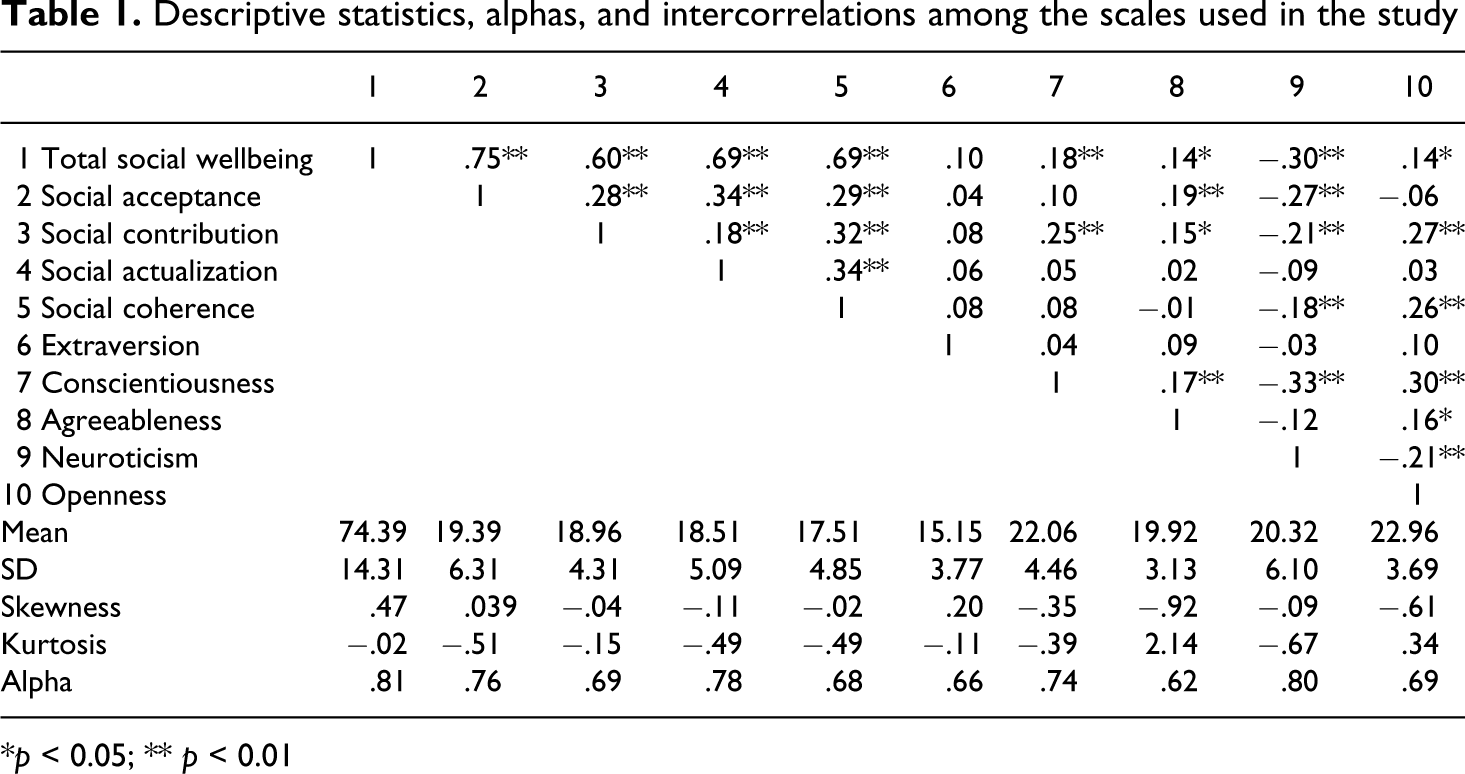
Table 1 presents bivariate correlations, means, standard deviations, Cronbach’s alphas, and skewness and kurtosis estimates for all scales used in the study. Reliabilities of the shortened scales used in this study were analogous to those of the original scales in previous Iranian studies (e.g., Joshanloo & Nosratabadi, 2009). This indicates that the shortening of the scales has not decreased the internal consistency coefficients.
Descriptive statistics, alphas, and intercorrelations among the scales used in the study
*p < 0.05; ** p < 0.01
Hypotheses 1–5 predicted that social wellbeing would be negatively correlated with neuroticism and positively correlated with four other personality domains. The results of correlation analysis supported four of these hypotheses. However, contrary to Hypothesis 2, that predicts a positive association between extraversion and social wellbeing, the correlation between these two variables was not statistically significant. In view of the noticeable correlations between the personality variables in this sample (see Table 1), it was also appropriate to use multivariate techniques that control for overlapping variance among the variables. Accordingly, to further examine the relation between personality traits and social wellbeing, regression and canonical correlation analyses were performed.
Supplemental analysis: regression
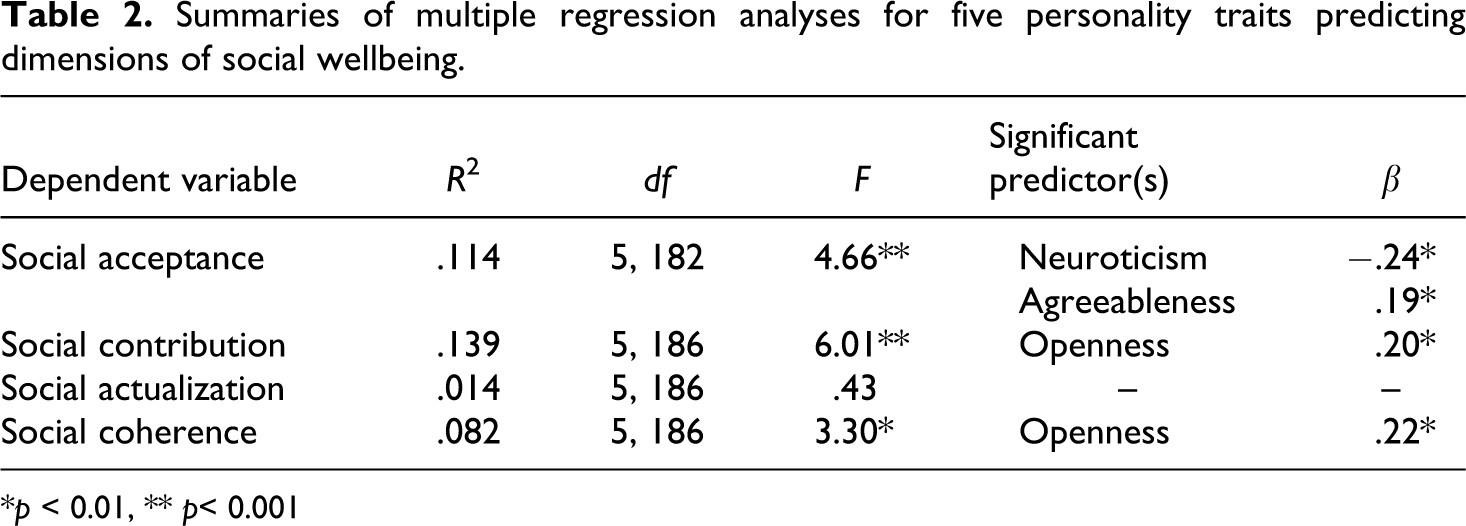
To further assess the relationship between the Big Five personality domains and dimensions of social wellbeing, four multiple regression analyses were conducted. In each regression analysis, one social wellbeing dimension was entered as the dependent variable and all five personality domains were entered as potential predictors. Results of the regression analyses are summarized in Table 2. As displayed in the table, results of the first regression analysis showed that 11.4% of the total variance in social acceptance was explained by the Big Five domains (R2 = .114, adjusted R2 = .089, F (5, 182) = 4.66, p < .001). Results of the second regression analysis showed that 13.9% of the total variance in social contribution was explained by the Big Five domains (R 2 = .139, adjusted R2 = .116, F (5, 186) = 6.01, p < .001). Results of the third regression analysis showed that the Big Five personality domains did not significantly predict social actualization (R2 = .014, adjusted R 2 = −.012, F (5, 186) = .43, p = .750). Finally, results of the fourth regression analysis showed that 8.2% of the total variance in social coherence was explained by the Big Five domains (R2 = .082, adjusted R2 = .057, F (5, 186) = 3.30, p < .01).
Summaries of multiple regression analyses for five personality traits predicting dimensions of social wellbeing.
*p < 0.01, ** p< 0.001
Supplemental analysis: canonical correlation
To more holistically investigate the relationship between the variables of the study, a canonical correlation analysis was conducted. Canonical correlation analysis is appropriate when we want to examine the relationship between two variable sets (Sherry & Henson, 2005). Variables are combined to produce, for each side, a synthetic variable that has the highest correlation with the other synthetic variable. Canonical correlation analysis is different from multiple regression analysis in that canonical correlation analysis is a multivariate technique. That is, we have more than one dependent variable, and it allows for simultaneous comparisons among variables rather than requiring many statistical tests being conducted. It thus reduces the probability of committing Type I error (Sherry & Henson, 2005). “A canonical function (or variate) is a set of standardized canonical function coefficients (from two linear equations) for the observed predictor and criterion variable sets. There will be as many functions as there are variables in the smaller variable set” (Sherry & Henson, 2005, p. 40 [italics in the original]).
Because functions are computed in descending order of magnitude, the first one or two are often reliable and, therefore, interpreted (Tabachnick & Fidell, 2001). In this technique, the canonical structure coefficient (which is the bivariate correlation between observed variable and synthetic variable, and may range from −1 to +1) is generally used to indicate the size of the contribution of each variable. Larger structure coefficients should be weighted more when interpreting each function (Sherry & Henson, 2005). As a rule of thumb, structure coefficients in excess of .3 are interpreted.
A canonical correlation analysis was performed using the five personality traits as predictors of the four social wellbeing dimensions to evaluate the multivariate shared relationship between the two variable sets. The analysis yielded four functions with canonical correlations of .39, .34, .13, and .08 for each successive function. Collectively, the full model across all functions was statistically significant using the Wilks’s λ = .72 criterion, F(20, 554.83) = 2.81, p < .001. Because Wilks’s λ represents the variance unexplained by the model, 1 – λ yields the full model effect size in an r2 metric. Thus, for the set of four canonical functions, the r2 type effect size was .28, which indicates that the full model explained about 28% of the variance shared between the variable sets.
Besides Function 1 (the full model), Function 2 also was statistically significant (F(12, 444.78) = 2.18, p < .05). Function 3 and 4 did not explain a significant amount of the shared variance between the variable sets. Given the effects for each function, only the first two functions were considered noteworthy in the context of this study (explaining about 15.5% and 11% of the shared variance, respectively).
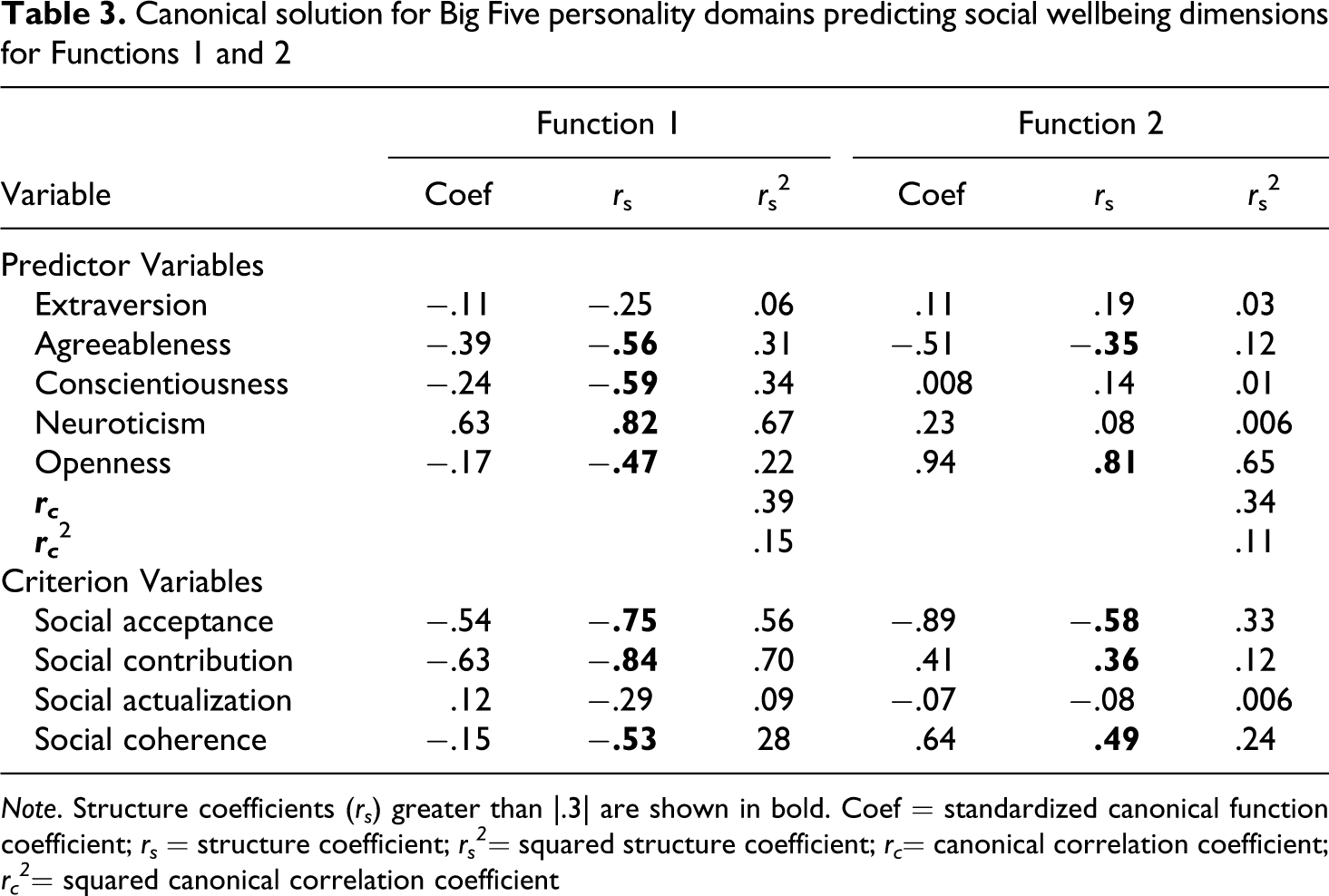
Table 3 presents the standardized canonical function coefficients, structure coefficients, and squared structure coefficients for Functions 1 and 2. Structure coefficients of Function 1 show that social acceptance (−.75), social contribution (−.84), and social coherence (−.53) contribute to the synthetic criterion variable. Regarding the predictor variable set in Function 1, neuroticism (.82), agreeableness (−.56), conscientiousness (−.59), and openness (−.47) contribute to the synthetic predictor variable, albeit much more so for neuroticism. The first canonical variable indicates that lower neuroticism and higher conscientiousness, openness, and agreeableness are associated with higher social acceptance, social contribution, and social coherence.
Canonical solution for Big Five personality domains predicting social wellbeing dimensions for Functions 1 and 2
Note. Structure coefficients (rs ) greater than |.3| are shown in bold. Coef = standardized canonical function coefficient; rs = structure coefficient; rs 2 = squared structure coefficient; rc = canonical correlation coefficient; rc 2 = squared canonical correlation coefficient
Regarding Function 2, the structure coefficients in Table 3 suggest that criterion variables of relevance are social acceptance (−.58), social contribution (.36), and social coherence (.49). Relevant predictor variables are openness (.81) and agreeableness (−.35). The second canonical variable thus indicates that lower agreeableness and higher openness are associated with lower social acceptance and higher social contribution and social coherence.
Gender differences
An independent t test was conducted to test Hypothesis 6, which predicts that male students will score higher than female students. The results showed that, consistent with this hypothesis, male students scored significantly higher than female students on the total social wellbeing scale (t(210) = −2.117, p < .05).
Another t test also revealed that female students scored significantly higher than male students on neuroticism (t(197.259) = 3.351, p < .01). No significant gender difference was observed in other personality domains.
Moderating effects of gender
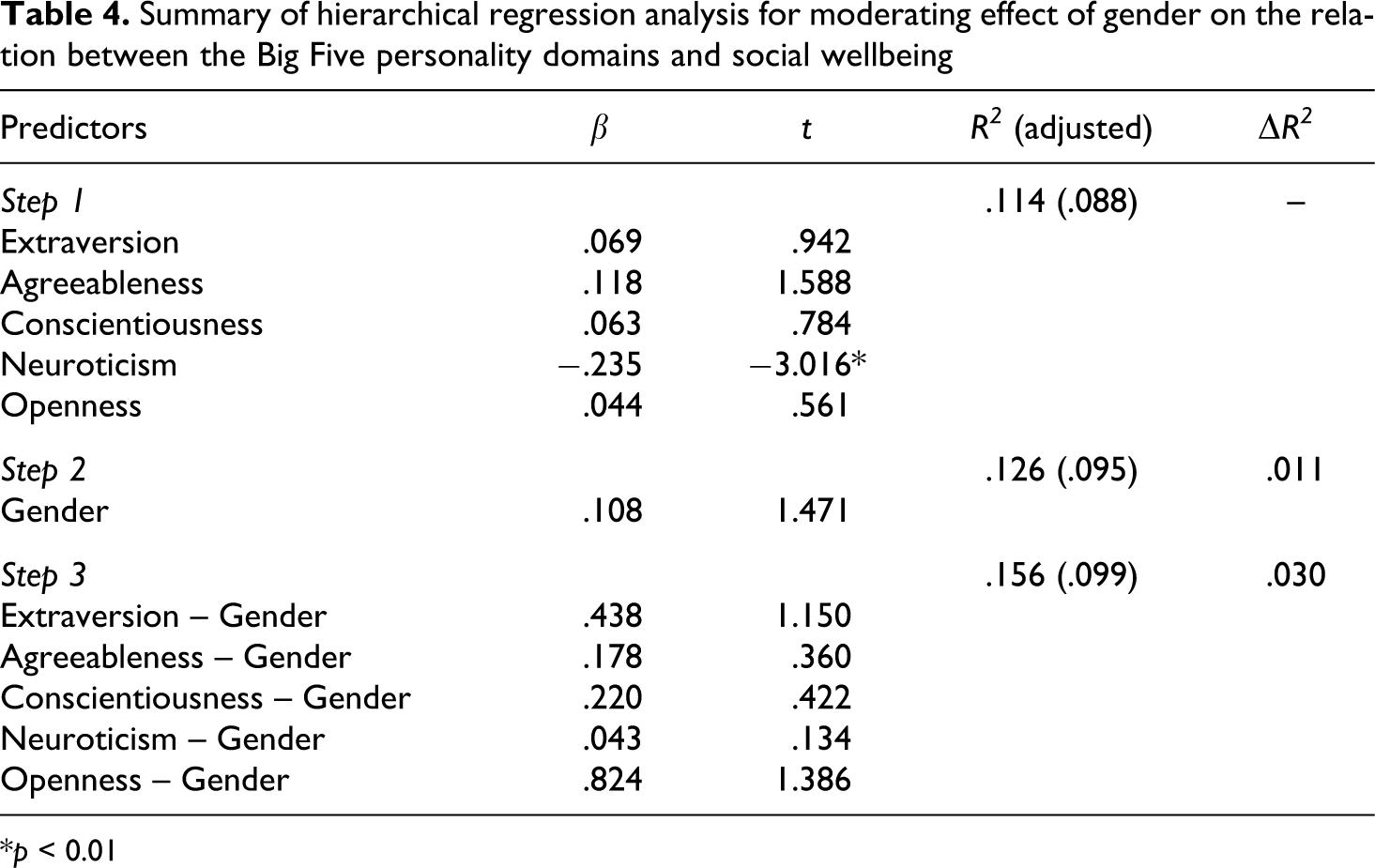
Hypothesis 7 suggests that gender moderates the association between personality domains and social wellbeing. In order to test this hypothesis, a hierarchical regression analysis predicting overall social wellbeing was conducted. The predictors (the Big Five domains) were entered in the first block and the moderator (gender) was entered in the second block. Finally, the interaction terms between predictors and moderator were entered in the last block. Generally, a significant interaction term is taken as an indication of a significant moderating effect (Cramer, 2003). The results of the hierarchical regression analysis are displayed in Table 4. Results showed that, at step 3, no significant interaction term was found. These results indicated that, contrary to Hypothesis 7, gender does not moderate the relation between personality traits and social wellbeing in this sample.
Summary of hierarchical regression analysis for moderating effect of gender on the relation between the Big Five personality domains and social wellbeing
*p < 0.01
Discussion
This study examined the relation between the Big Five domains and dimensions of social wellbeing in a sample of Iranian university students. Consistent with the hypotheses, total social wellbeing was negatively related to neuroticism (H1), and positively related to openness (H3), agreeableness (H4) and conscientiousness (H5). Contrary to Hypothesis 2 (which predicts a positive correlation between extraversion and social wellbeing), extraversion was found to be uncorrelated with dimensions of social wellbeing. Generally, the findings that emerged in the present study are in line with those of previous studies in Iran and other countries (e.g., DeNeve & Cooper, 1998; Keyes, Shmotkin & Ryff , 2002; Schmutte & Ryff, 1997), indicating that personality traits are consistent predictors of different aspects of wellbeing.
That extraverts, who are characterized by high levels of energy, sociability, and social skills, do not necessarily have high social wellbeing needs explanation. Prior research has documented positive links between this personality trait and positive interpersonal relationships in Iran (Joshanloo & Nosratabadi, 2009). Nevertheless, the current findings suggest that perhaps extraversion only improves the quality of the person’s relations with a relatively limited number of significant others, and it does not contribute to the person’s attitudes towards and perceptions of the whole society.
Some characteristics of Iranian culture (described earlier) support this notion. As noted previously, Iranians show high levels of in-group collectivism (defined as the extent to which individuals are attached to small groups such as family and close groups of friends) while they score relatively low on societal collectivism (defined as the degree to which individuals are encouraged by social institutions to be integrated into groups within organizations and the society) (Javidan & Dastmalchian, 2003). It can be suggested that, in such a society, high levels of extraversion lead to better interpersonal relationships with family members, close friends, and relatives but this does not translate into a favorable view of human nature, a belief that society has potential that is being realized through its institutions and citizens, a positive evaluation of one’s worth to society, and a concern for knowing about the world. In other words, a low societal collectivism, which characterizes Iranian culture, limits the interpersonal relationships of extraverts to their close circle of friends, family members, and relatives. Consequently, in this cultural context, this trait is likely to be of limited influence on the individual’s social wellbeing which consists of the person’s attitudes and feelings towards the whole society and its institutions. This speculative explanation, however, needs to be further investigated in future studies.
To further investigate the nature of these relations and control for overlapping variance among the variables, regression and canonical correlation analyses were performed. Results of the regression analysis revealed that openness significantly predicted social coherence and social contribution. That openness is a positive predictor of social coherence makes intuitive sense. The depth, breadth, and complexity of the individual’s mental life, which characterize those high on openness, are expected to help a person more successfully evaluate and understand the complex social world.
It is likely that those high on openness more frequently participate in social and political activities and this leads to a sense of social contribution (defined as a positive evaluation of one’s value to society). Previous research supports this notion by showing that openness exerts a positive influence on social participation in learning environments (Caspi, Chajut, Saporta, & Beyth-Marom, 2006) and various facets of political participation and civic engagement (Mondak & Halperin, 2008; Mondak, Hibbing, Canache, Seligson, & Anderson, 2010; Vecchione & Caprara, 2009). Previous research has documented a positive correlation between social contribution and social participation in Iran, Italy, and the USA (Cicognani et al., 2008).
In the current study, neuroticism and agreeableness significantly predicted social acceptance. Neuroticism predisposes the individual to be irritable, self-conscious, and sometimes hostile and ill-tempered (McCrae & Costa, 2003) and such characteristics are likely to be barriers in the way of establishing enjoyable and trusting interpersonal relationships (e.g., in married life, Karney & Bradbury, 1995). This is likely to lead to the formation of a negative attitude towards human nature and society as a whole. In accordance with this reasoning, Chen, Fok, Bond, and Motsumoto (2006) found that neuroticism was positively correlated with social cynicism (representing a negative view of human nature) which is itself negatively associated with social acceptance. Agreeable people, on the other hand, are trusting, believing the best of others, and rarely suspecting hidden intents (McCrae & Costa, 2003). They are tender-minded, considerate, and willing to help others. Such characteristics predispose agreeable people to show high levels of social acceptance. Consistent with this reasoning, Chen et al. (2006) found that agreeableness was inversely correlated with social cynicism.
Canonical correlation analysis produced two significant functions. The first function indicated that lower neuroticism and higher conscientiousness, openness, and agreeableness were associated with higher social acceptance, social contribution, and social coherence. The results related to the first function converged with those of regression and bivariate correlation analyses. The second function indicated that lower agreeableness and higher openness are associated with lower social acceptance and higher social contribution and social coherence. Part of these results is consistent with those of regression and bivariate correlation analyses. That is, agreeableness is positively related to social acceptance and openness is positively related to social coherence and social contribution. However, this function also indicates that openness is negatively related to social acceptance and agreeableness is negatively related to social coherence and contribution. This pattern of findings suggests that agreeableness and openness interact in their effects on different dimensions of social wellbeing. As mentioned earlier, openness predisposes the person to participate more frequently in social activities and agreeableness predisposes the person to trust others quite easily. These two traits individually contribute positively to one or more aspects of social wellbeing (see Table 1). But the question is, is it possible that the presence of both high openness and low agreeableness in an Iranian leads to low scores on some dimensions of social wellbeing? The results of the second function of canonical correlation analysis conducted here suggest that it can be possible. Although the results of this exploratory analysis need to be replicated in future before making any firm conclusions, one can suggest that, in Iran, frequently participating in social and political activities (caused by high openness) and at the same time not being trusting, trustworthy, compliant, and modest (caused by low agreeableness) might lead to successive failure and frustration. This state of affairs (frequent presence in situations that require the person to be agreeable when the person is indeed not agreeable) is likely to lead to an unfavorable view of human nature and a feeling of discomfort with other people (i.e., low social acceptance).
Finally, in the current study, as expected, a significant gender difference was detected in social wellbeing scores (with males scoring higher). This is in line with previous studies showing that males score higher than females on social wellbeing (Keyes & Shapiro, 2004). One explanation for this finding might be that females scored significantly higher than males on neuroticism. Given that neuroticism was found to be negatively correlated with social wellbeing, and females scored higher on this domain, males are likely to gain more social wellbeing from being more emotionally stable than females in this sample.
Alternatively, this finding also may be interpreted in view of the traditional gender role expectations in Iranian society. Although the social status of women has improved during the last decades (Bahramitash, 2003), their social status is still lower than that of men (Afshar, 1985; Kousha & Mohseni, 1997, 2000; Tamadonfar, 2001). For example, according to general observations, many parents prefer male children to female children. Girls have the lowest position in the hierarchy of the family. As women living in a traditional-religious society, Iranian women are expected to adhere to much stricter codes of conduct than men (Kousha & Mohseni, 2000). Collectively, such social conditions may lead to lower social wellbeing for female students in Iran. Nevertheless, it is not easy to fully explain this gender difference yet, mainly because research on social wellbeing and its relation with socioeconomic variables is rare in Iran. Therefore, exploring the reasons for this difference remains an interesting topic for future research.
In the current study, gender did not moderate the association between personality domains and social wellbeing. This finding was inconsistent with Hypothesis 7, which predicted that gender would moderate these relationships. These results are therefore inconsistent with prior studies (e.g., Ryff, 2008; Joshanloo & Afshari, 2011). The results of moderation analysis, however, need to be interpreted with caution as male students were underrepresented in the sample and the total sample size was relatively small.
One important point to note is that, as expected, the pattern of relations between social wellbeing and the Big Five domains resembled those obtained for eudaimonic wellbeing in previous studies. Openness (which tends to be unrelated to hedonic wellbeing and related to eudaimonic wellbeing), for instance, was positively correlated with two aspects of social wellbeing. Furthermore, extraversion, which is one of the most consistent and strong predictors of hedonic wellbeing, did not significantly contribute to social wellbeing. Although females scored significantly higher than males on life satisfaction in prior studies (Joshanloo & Afshari, 2011), here males scored significantly higher than females on social wellbeing. These findings indicate that gender differences and the linkages of wellbeing and personality domains that emerge are highly dependent on the wellbeing dimension that is assessed in any given study.
These findings also contribute to the ongoing debate among the wellbeing researchers as to whether hedonic and eudaimonic aspects of wellbeing are conceptually distinct from each other. Kashdan, Biswas-Diener, and King (2008), for example, maintain that this distinction does not translate well into science. Likewise, King (2008) states that “this distinction between eudaimonia and hedonia is arguably quite artificial and potentially unnecessary” (p. 433). Results of this study suggest that the two aspects seem to be conceptually distinct, as they differentially relate to the Big Five domains and gender (for more arguments in support of the idea that the distinction between hedonic and eudaimonic wellbeing is scientifically and philosophically warranted, see Fave & Bassi, 2009; Keyes & Annas, 2009; Ryan & Huta, 2009).
Indeed, this distinction has important conceptual complications. For instance, the findings regarding the contribution of openness to social wellbeing bring to light the potential significance of openness, which has not received much attention in the hedonic wellbeing literature thus far. Findings regarding the negative effect of neuroticism on both social wellbeing (emerging in this study) and psychological wellbeing (which emerged in previous studies, e.g., Schmutte & Ryff, 1997; Siegler & Brummett, 2000) also are noteworthy. These findings suggest that the tendency to experience negative emotions not only undermines emotional and subjective wellbeing, but also undermines multiple aspects of social and psychological functioning. It is hoped that such findings will contribute to the research on the interface of stable personality traits and mental disorders, given that in that field also a distinction between feeling towards life (e.g., depressed mood in a Major Depressive Episode) and symptoms of malfunctioning (e.g., overeating or not eating in a Major Depressive Episode) is maintained (Keyes & Annas, 2009).
Along with the omission of one dimension of social wellbeing (i.e., social integration) and underrepresentation of male students in the sample, this study was limited by some other factors. For example, this study utilized cross-sectional data, and therefore causality cannot be inferred. In the future, studies could compare levels of social wellbeing over time, and examine longitudinally the relations among personality traits and dimensions of social wellbeing. This study utilized self-report measures and thus the data could have been affected by response bias. Future research should control for social desirability bias and use a multi-method approach in terms of blending quantitative and qualitative tools (such as interviews and diaries).
Another limitation was that the sample used in this study was one of convenience and it consisted solely of undergraduates. This may limit the generalizability of the findings. Further research is needed to examine the hypotheses of this study using other samples from various demographic groups. Finally, in this study, we focused on the relation between stable personality traits and social wellbeing. Further research should include other theoretically and empirically relevant variables besides personality traits and gender. For example, it seems fruitful to further examine how personality processes (e.g., goal setting) relate to social wellbeing. Moreover, it seems fruitful to examine possible mediators of the associations found in this study (such as self-esteem). Given that the findings of the present study show that personality is not a significant predictor of social actualization, another promising avenue for future research is to examine other variables’ ability to predict this dimension. Some concepts from community psychology literature appear to be useful in this regard. Identification with the community, for example, has been found to predict this dimension of social wellbeing in Iranian male university students (Joshanloo, Rostami, & Nosratabadi, 2006).
Despite these limitations, this study does suggest that there is an association between the Big Five personality domains and social wellbeing, but this association is moderate. An important contribution of this study is that, as a part of the emergent research on personality and wellbeing in Iran, it revealed the pattern of the Big Five-social wellbeing linkages in a country that has been underrepresented in prior research. Plus, this study focused on dimensions of social wellbeing, which has received less empirical attention in the wellbeing and happiness literature heretofore. It is therefore hoped that this study can contribute to a better understanding of the factors leading to enhanced social functioning.
Footnotes
Funding
This research received no specific grant from any funding agency in the public, commercial, or not-for-profit sectors.