



Abstract
Mother–child interactions can be emotionally charged, particularly when mothers experience difficulties with depression. Further, variation in the tone of such interactions has been linked to variation in youth functioning. Yet, little is known about the role of emotion regulatory processes during mother–child interactions. This study examined negative affective transactions between mothers and youth across 5-min conflict and fun-activity planning discussions, in relation to depressive symptoms and maternal and youth respiratory sinus arrhythmia (RSA). Maternal depressive symptoms predicted more negative affect. Maternal and youth RSA interacted with maternal depressive symptoms to predict both overall affect and the stability of affect across time. The beneficial effects of youth RSA were stronger, but maternal RSA weaker, in the face of elevated maternal depression.
Interactions between parents and their children are often emotionally charged. Such interactions may be particularly difficult when a parent experiences depression. Indeed, a large literature documents the associations between parental depression and parenting styles that are marked by high levels of negative affect, hostility, and criticism (for review, see Goodman et al., 2011). The bulk of this literature has focused on depression in mothers, and, indeed, depression in fathers has been found to be significantly less closely related to youth functioning relative to maternal depression (Connell & Goodman, 2002). Children of depressed mothers have been found to be at heightened risk for developing a range of emotional and behavioral difficulties (Goodman et al., 2011). Although multiple pathways are undoubtedly involved (including genetic and neurobiological processes), impaired parenting is thought to be a core pathway through which maternal depression is related to child difficulties (Goodman & Gotlib, 1999). In line with this model, a number of studies have found that disrupted parenting practices mediate the relations between maternal depressive symptoms and youth emotional and behavioral difficulties. For instance, in a sample of 9- to 15-year-olds, Reising and colleagues (2013) found that child and parent reports of parental intrusiveness and withdrawal mediated relations between parental depressive symptoms and youth emotional and behavioral difficulties. Similar results were found in a large school-recruited, high-risk sample of adolescents (Pugh & Farrell, 2012).
While children of depressed mothers are at heightened risk for emotional and behavior problems, there is substantial variability in outcomes (see Goodman et al., 2011; Connell & Goodman, 2002), with many youth exhibiting healthy development. Such variability may be associated, in part, with the degree of impaired parent–child interactions across families. For instance, Brennan, LeBrocque, and Hammen (2003) reported that high levels of maternal warmth as well as low levels of maternal emotional overinvolvement and psychological control of teens predicted resilient outcomes in adolescents with depressed mothers. Further, low levels of psychologically controlling behaviors were predictive of resilient outcomes into young adulthood (Pargas, Brennen, Hammen, & LeBrocque, 2010). In turn, it is likely that individual differences in emotion regulation ability across parents and youth underlie variability in the quality of parent–child interactions. Yet relatively little is known about factors that predict variability in parent–child interaction dynamics related to maternal depression. The goal of the current study was to examine affective transactions during dyadic mother–child interactions, in relation to both maternal depressive symptoms and the physiological capacity to regulate emotions in mothers and youths, as indexed by respiratory sinus arrhythmia (RSA).
A substantial body of work has linked RSA—an index of parasympathetic influence on cardiac activity—to the capacity to regulate emotions, particularly in social situations (see Beauchaine, 2001; Butler, Wilhelm, & Gross, 2006). Specifically, RSA activity provides the fastest way to up- or downregulate heart rate in order to meet environmental demands (Porges, 1995). This study focused on baseline RSA measured during a paced-breathing task. Generally, baseline RSA is thought to reflect an individual’s temperamental reactivity and emotionality (Beauchaine, 2001). High baseline RSA has been related to adaptive coping (e.g., Crowell et al., 2008; Fabes & Eisenberg, 1997) and resilient outcomes for at-risk youth (El-Sheikh, Harger, & Whitson, 2001). Conversely, low baseline RSA has been related to emotional inflexibility and dysregulated emotional states (e.g., Beauchaine, 2001; Rottenberg, 2007). Of particular relevance to the current study, several studies have found that individual differences in RSA predict variability in functioning for youth with depressed mothers. For instance, in a sample of 8- to 10-year-old children, Wetter and El-Sheik (2012) found that high baseline RSA in youth was protective in the face of elevated maternal depressive symptoms, predicting decreased growth in internalizing symptoms over three yearly assessments. Similar protective effects of baseline RSA in the face of maternal melancholic depression were reported by Shannon, Beauchaine, Brenner, Neuhaus, and Gatzke-Kopp (2007) in a cross-sectional study of 8- to 12-year-old children.
While these studies highlight the potentially protective nature of RSA in the context of maternal depression, there has been little work to date, connecting RSA to variations in social dynamics between parents and youth, particularly with respect to maternal depressive symptoms. Thus, we sought to address two gaps in the literature on maternal depression, emotion regulation, and parent–child interaction dynamics, including (1) moving beyond static measures of parenting and parent–child relationship qualities to adopt a dynamic, transactional framework and (2) integrating physiological indices of emotion regulation capacity in parents and youth with variability in affective dynamics during dyadic interactions. These gaps are discussed in turn.
Dynamic perspective on parenting
Much of the research examining relations between maternal depression and parenting has used global and static measures of parenting (i.e., self- and other-reports, or macro-ratings of observed interaction quality) and largely unidirectional analyses, examining parent and child emotions in relative isolation from one another. However, parenting is a dynamic process that unfolds in the moment as parents and children interact. In recognition of such dynamic processes, recent research on emotions in close relationships more broadly has begun to incorporate a transactional perspective, examining temporal dynamics using bidirectional analytic frameworks (Butler, 2011). A critical feature of this approach is examining mutual influences of emotions across members of the relationship dyad. Capturing such bidirectional emotional processes and gaining a broader understanding of how emotional reactivity affects parenting in the moment are critical challenges to understanding the quality of parent–child relationships. This, in turn, is crucial for advancing research on parenting risk, as there is a well-established link between the quality of parent–child relationships and the development of emotional and behavior problems in youth. Further, adolescence may be a crucial time in which to examine emotions in parent–child interactions, due to the fact that parent–adolescent relationships are marked by increased conflict and decreased closeness, likely as a result of adolescents’ autonomy seeking (Collins & Laursen, 2004).
Affective co-regulation is a term that has been used to reflect the dynamic, reciprocal influences of emotional processes between parents and children during interactions (i.e., Saxbe & Repetti, 2010). In line with this perspective, several studies have attempted to disentangle the direction of emotional influences between parents and children. For instance, in a diary study of 55 two-parent families of teenagers, Larson and Richards (1994) found evidence of directional transmission of affect from daughters to parents, as daughters’ emotions predicted mothers’ and fathers’ emotions several hours later. Other studies have supported the transmission of affect from parents to youth. Matjasko and Feldman (2005) found that maternal reports of happiness and anger during the day predicted teens’ affect when mothers returned home from work. Further, Feng, Shaw, Skuban, and Lane (2007) examined observed affect during parent–child interactions over a 2-year interval. They found that observed maternal expression of positive affect and responsiveness to child expressions of affect predicted increased expressions of positive affect and decreased expressions of negative affect in children over time. Child affect did not influence parents’ affect. Taken together, the limited body of available research highlights the importance of the quality of affective co-regulation in the parent–child dyad. However, additional research is needed to disentangle the direction of influences between parents and adolescents.
RSA and social interaction dynamics
While there has been tremendous growth in the RSA literature in recent years, most studies have employed standardized emotion provocation paradigms, such as an emotion-eliciting film clip. This methodological paradigm fails to fully capture a key element of Porges’ polyvagal theory (1995, 2007; Porges, Doussard-Roosevelt, Portales, & Greenspan, 1996), which suggests that individual differences in RSA reflect an individual’s ability to emotionally react and engage with the social environment (see also Butler et al., 2006). Consequently, results of studies using nonsocial paradigms (such as film-viewing tasks) may not fully inform our understanding of the role of RSA in regulating emotions during social interactions. Notably, Butler, Wilhelm, and Gross (2006) examined RSA in relation to social interaction, measuring RSA in college-aged women during both a baseline task and a social interaction task. They found that women with higher baseline RSA expressed more negative affect and less positive affect when discussing an upsetting film clip with a partner. This finding suggests that higher baseline RSA allows for greater emotional flexibility, as those with higher baseline RSA expressed higher levels of affect appropriate to the task, including higher negative affect (Butler et al., 2006).
In particular, relatively little research has examined the association between parental physiological responses and parenting behaviors. Of note, Perlman, Camras, and Pelphrey (2008) examined baseline RSA in 42 parents of 4- to 5-year-old children and found that higher parental baseline RSA was related to greater self-reported engagement in effective emotion socialization practices with their children, and to children’s knowledge of emotional situations. A better understanding of RSA responses during parent–child interactions may be especially helpful in understanding the physiological underpinnings of affective co-regulation in close relationships.
Current study
The goal of the current study was to characterize mutual influences of negative affect between mothers and youth during dyadic interactions, using actor–partner interdependence models (APIMs; Kenny, Kashy, & Cook, 2006). Further, we sought to characterize the role of baseline RSA in parents and youth in relation to the expression of negative affect during these interactions, and in moderating the stability of negative affect across time as well as the influence of partner expressions of negative affect on subsequent negative affect by mothers and youth. Prior work with this sample examined relations between RSA and global aspects of observed interactions, including overall negative affect, with results highlighting that elevated RSA was associated with less negative affect (citation masked for review). Thus, in line with previous studies (e.g., Thayer and Lane, 2000), we hypothesized that higher baseline RSA would predict decreased negative affect across positive and conflict interactions as well as a decreased tendency to reciprocate negative affect expressed by the interaction partner.
Additionally, we examined whether these bidirectional processes were related to maternal depressive symptoms. Broadly, we expected that maternal depressive symptoms would be associated with greater negative affect in mothers and youth, as well as a greater tendency to reciprocate negative affect expressed by one’s interaction partner in the next time point. For example, depressed mothers might respond to their child’s negative affect by exhibiting heightened negative affect themselves. Finally, in line with research on the protective effects of RSA for youth, we hypothesized that the relation between higher baseline RSA and decreased negative affect would be stronger in families with more depressed mothers. Both the goals and analytic technique employed in the current article are distinct from previously published work from this study, in that the current analyses seek to capitalize on the microsocial coding approach to examine directional influences between parents and youth during the course of emotionally laden discussions, using an APIM analytic approach.
Method
Participants
Participants were 59 mother–adolescent dyads, with youth between the ages of 11 and 17. Families were recruited from the surrounding community via advertisements in online message boards, local newspapers, and flyers in community centers and schools. Advertisements reflected an “elevated risk” recruiting strategy by targeting families in general, as well as families with concerns about childhood depression. Mean youth age was 13.67 years (SD = 1.58 years), and 39 youths were female (66%). Twenty-nine youths were European American (49%), 22 were African American (37%), 4 were Asian American (7%), 1 was Latino/Latina (2%), and 3 were biracial (5%). Parents were married or cohabitating in 26 families (44%), and the median family income was US$30,000–$39,000 annually.
Procedures
Participants completed questionnaires and took part in a 90-min visit to the university laboratory. Only procedures pertinent to the current analyses are described. During all tasks, dyads were alone in the observation room and physiological recordings were monitored from the adjacent room. After consent forms were reviewed and informed consent was obtained, participants completed a 2-min paced-breathing task from which baseline RSA was calculated (see Physiologic Data Acquisition below). Dyads were seated in front of separate computer monitors linked for simultaneous presentation of stimuli, but oriented so participants could not see one another easily. Participants were instructed to breathe in and out along with the words on the screen. Following recommendations by Wilhelm, Grossman, and Coyle (2004), this task was designed to induce a respiratory rate of 9 cycles/min and shows test–retest reliability that indicates relative independence from prior stressors. Baseline RSA scores were computed from physiological recordings taken during this task.
Families were then asked to (1) discuss a family conflict that had occurred in the last month, and how it was resolved/could be resolved and (2) discuss a plan for a positive event that the family could do together in the next week. These 5-min tasks were adapted from Dishion and Kavanagh (2003) and were designed to elicit a stressful emotional reaction, and then present an opportunity to regulate and recover with a positive one. Tasks were presented in consistent order across families, given our interest in examining the role of task switches on parent and youth affect. Discussion tasks were digitally recorded using small, remotely operated, wall-mounted digital cameras. Families received $50 for participation.
Measures
Center for Epidemiological Studies–Depression Scale (CES-D)
Mothers completed the CES-D (Radloff, 1977), a well-established inventory of 20 items reflecting symptoms of depression. Mothers reported how frequently they experienced symptoms of depression in the past week using a 4-point scale. Higher scores reflect greater severity of depression. The scale has been shown to have high internal consistency, suitable test–retest stability, and exceptional concurrent validity by clinical and self-report criteria (Radloff, 1977). High α reliability was found in the current study (α = .89). In line with the elevated risk recruiting strategy, the mean CES-D score in this sample was 15.41 (SD = 12.37), and 25 mothers (42%) reported CES-D scores above the 16-point cutoff used to identify clinically significant symptom levels.
Child Depression Inventory (CDI)
The CDI (Kovacs, 1992) is a 27-item self-report measure of depressive symptoms in youth, scored on a 3-point scale, with possible scores from 0 to 54. Good internal consistency was found in the current sample (α reliability = .92). Scores over 12 reflect clinically significant symptoms of depression in high-risk samples (Kovacs, 1992). In the current study, scores ranged from 0 to 34, and 14 youth (22%) had scores over 12.
Physiologic data acquisition
Heart rate and respiration data were collected simultaneously from mothers and youths using a Biopac MP150 system, with data sampled at 500 HZ. Electrocardiograph data were recorded using disposable silver/silver chloride electrodes placed in a modified Lead II configuration. Heart rate (in milliseconds) was derived from the interbeat intervals (IBIs) using an automated algorithm. Respiration rate was measured with a respiratory effort transducer band secured around participants’ chests. RSA was calculated using the peak-to-valley method (e.g., Berntson et al., 1997), which measures RSA as the difference in IBIs readings from inspiration to expiration onset measured in milliseconds. This method correlates highly with alternative measures of RSA (Galles, Miller, Cohn, & Fox, 2002), and with changes in RSA produced by pharmacological or surgical blockades (Berntson et al., 1997). Physiological and observational recordings were synchronized using Noldus Observer XT. All physiological parameters were inspected for artifacts and corrected using automated correction routines (or manually, when necessary).
Observational coding
Observational coding was completed with Noldus Observer XT 7.0. Trained observers coded each participant’s video-recorded affect independently, yielding two synchronized streams of data. The simple affect coding system (Jabson, Venkatraman, & Dishion, 2003) was used to assess the affect during interactions. In this system, multiple coders used verbal and nonverbal (including facial expression and posture) cues of each participant to categorize their affect state second by second during all interactions. Two negative affective categories used were as follow: anger/disgust (for example, a mother angrily criticizing her child), and distress (including sadness, fear, and withdrawal; e.g., a mother crying). The categories were highly correlated across the discussion tasks (intraclass correlation [ICC] = .76), and so they were collapsed into an overall negative affect variable. Recent work by Ha, Dishion, Overbeek, Burk, and Engels (2014) used a nearly identical coding system, and also collapsed these categories into a single variable. The time spent in this negative affective state for each participant was calculated for each 15-s epoch, yielding 20 epochs per participant per task. This duration was selected to balance the need for epochs to be long enough to yield reasonable durations of negative affect expression while being short enough to yield a dynamic perspective on dyadic interaction. Of note, other recent articles employing the APIM approach to dyadic interaction data have used comparable epoch lengths (e.g., Randall, Post, Reed, & Butler, 2013).
Observers were trained to a criterion of 70% agreement and a kappa of 0.60 using an event-unit-based comparison with a 2-s tolerance window and 80% event overlap, and a criterion of a 0.80 κ using a time-unit-based comparison with a 2-s tolerance window. Both reliability methods were employed because a time-unit κ may provide a somewhat liberal reliability estimate, while event-based κs may be somewhat conservative (Bakeman, Quera, & Gnisci, 2009). The entire team coded 20% of the tapes. Weekly meetings were held to minimize observer drift. For the event-unit method, average coder agreement was 74% (κ = 0.64), and for the time-unit method, average agreement was 93% (κ = 0.81).
Analysis plan
Core hypotheses regarding the effects of baseline RSA were tested with APIM implemented as mixed-effects analyses in SPSS 21.0. We used a prospective-change version of the APIM to account for nonindependence within repeated-measures dyadic data (see Randall et al., 2013; Butner, Diamond, & Hicks, 2007). A conceptual overview of the analytic approach is shown in Figure 1. The analyses treat the 15-s epochs as repeated-measures data, and are conceptually similar to cross-lagged panel models, with parent and youth affective states at time t regressed on parent and youth affective states at time t - 1. Eighteen of the twenty 15-s epochs served as both dependent and independent variables, while the first epoch of each task served only as an independent variable and the last only as a dependent variable.
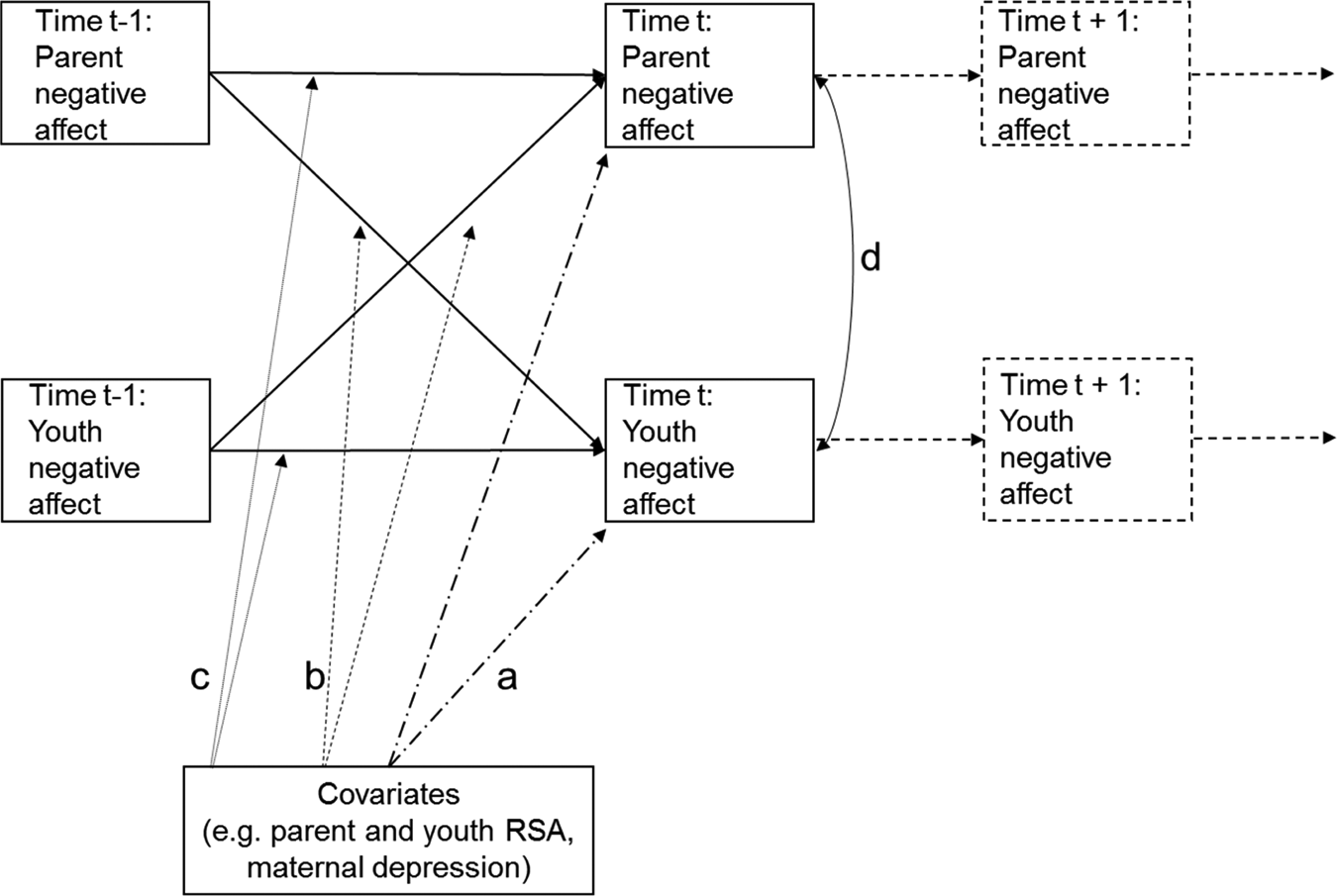
Conceptual illustration of actor–partner interdependence model (APIM) analysis. Three types of covariate effects are as follows: (a) predict affect at time t, (b) moderate the influence of partner negative affect in the prior epoch on own negative affect at time t, and (c) moderate influence of own negative affect in the prior epoch on current negative affect.
In this framework, there are two types of actor and partner effects: those for prospective change processes and those for baseline RSA effects. For prospective change, actor effects reflect the stability of negative affect across epochs. A significant positive actor effect, for instance, reflects the tendency for an actor’s high negative affect in one epoch to predict their own continued high negative affect in the next epoch. Conversely, a significant negative actor effect would reflect the tendency for an actor’s high negative affect to predict less negative affect in the next epoch. Partner effects for prospective change processes reflect the influence of an interaction partner’s negative affect in the prior epoch on one’s own negative affect in the current epoch. A significant positive partner effect for mothers, for instance, would reflect the tendency for a mother to exhibit more negative affect in response to youth negative affect in the prior epoch, while a significant negative partner effect for mothers would reflect the tendency for mothers to respond to youth negative affect by decreasing their own negative affect.
Broadly, actor effects for baseline RSA reflect the association between one’s own RSA level and expressions of negative affect during the discussion task. For example, the actor RSA effect for mothers may show that higher maternal baseline RSA predicts lower levels of maternal negative affect during the discussion tasks. Partner effects for baseline RSA reflect the association between an interaction partner’s RSA level and one’s own expressions of negative affect during discussion tasks. For example, the partner RSA effect for mothers would capture the possibility that mothers are less negative when interacting with a youth with higher baseline RSA (i.e., a youth with a greater physiological capacity to regulate emotions).
Importantly, there are three ways in which covariates and moderators (most centrally, including parent RSA, youth RSA, and maternal depressive symptoms) might influence maternal and youth negative affect in this APIM framework. First, covariates and moderators were allowed to predict overall negative affect for mothers and youths at time t (path A in Figure 1). Second, covariates and moderators were allowed to predict the magnitude of partner influences (path B in Figure 1). Conceptually, these factors influence the actor’s response to negative affect expressed by their interaction partner by either increasing or decreasing their own negative affect. Third, covariates and moderators were allowed to predict the magnitude of actor effects (path C in Figure 1). Conceptually, such influences affect the stability of negative affect across epochs, within persons. For instance, individuals with high RSA may exhibit less stable negative affect, consistent with the possibility that such individuals may be less likely to get “stuck” expressing negative affect over an extended period of time. Follow-up analyses for significant interaction effects used procedures described by Preacher, Curran, and Bauer (2006) to identify regions of significance using the Johnson–Neyman technique (Johnson & Neyman, 1936), from which plots were generated at ±1 SD of the moderator for illustrative purposes.
Results
Descriptive analyses
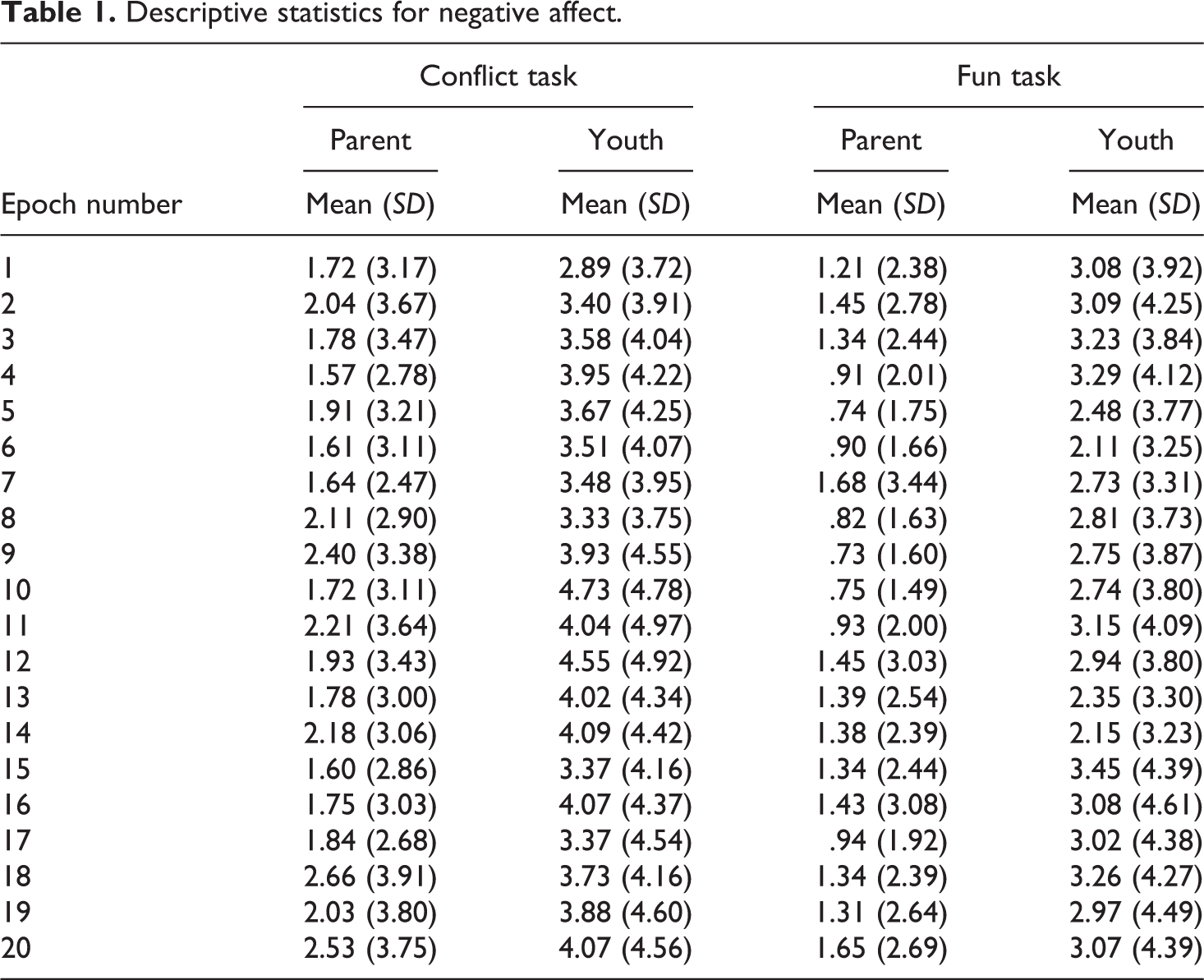
Descriptive statistics for observed affect during discussion tasks are shown in Table 1. The average maternal RSA score was .12 seconds (SD = .06), while the average youth RSA score was .20 s (SD = .08). A correlation matrix for core study variables is shown in Table 2. For correlational analyses, negative affect scores were summed across the 5 min of interaction to reduce the number of correlations. Youth female gender was positively related to both maternal and youth depressive symptoms and negatively related to youth RSA. Maternal depression was related to youth depression and maternal marital/cohabiting status, and ethnic minority status was related to maternal marital/cohabitation status.
Descriptive statistics for negative affect.
Correlations.
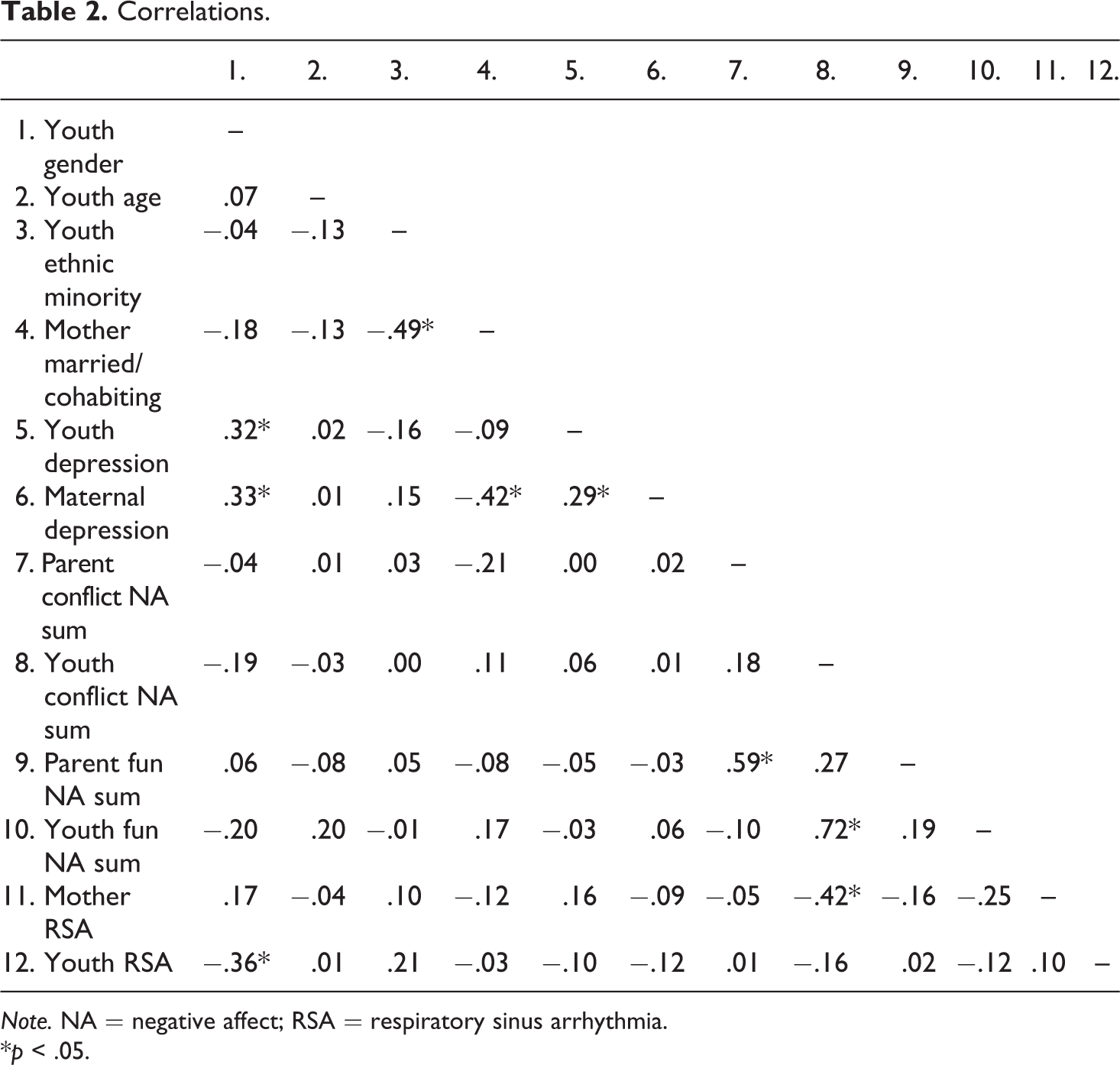
Note. NA = negative affect; RSA = respiratory sinus arrhythmia.
*p < .05.
APIM analyses
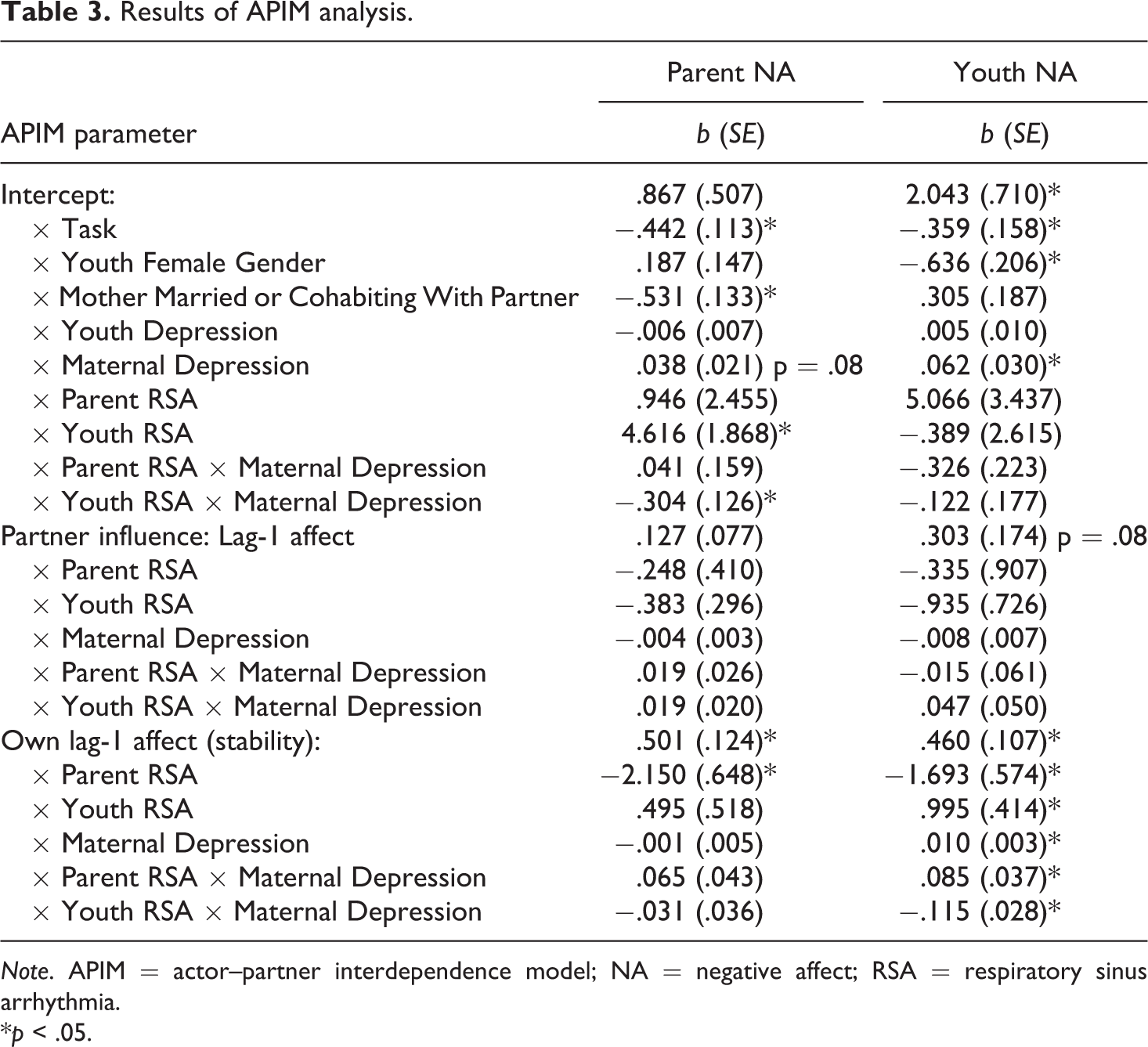
Preliminary APIM analyses examined several aspects of the model. First, we examined a model in which the parent and child intercepts were treated as random effects. These random effects were not significant, and so they were removed from the final model. Similarly, we examined a model in which the discussion task was included as a moderator, interacting with actor and partner RSA and lag-1 negative affect. This analysis explored whether these actor and partner influences might differ significantly across the two interaction tasks. Although the overall level of negative affect did differ significantly across tasks, none of the task interactions were statistically significant, and so these interactions were removed from the final analysis. Similarly, we examined a preliminary analysis, including the CDI scores, with the full set of interactions mirroring those for maternal depression symptoms. None of those effects were significant, and so we removed these interactions from the final model, but retained the CDI as a covariate. Additionally, we examined child age, gender, and ethnicity, parental marital/cohabitation status, and time in the interaction task as possible covariates. Significant effects were only observed for child gender and parental marital status. As such, discussion task, child depressive symptoms, child gender, and parental marital/cohabitation status were included as covariates in the final model. Results for the final APIM analysis are shown in Table 3.
Results of APIM analysis.
Note. APIM = actor–partner interdependence model; NA = negative affect; RSA = respiratory sinus arrhythmia.
*p < .05.
Maternal negative affect during discussion tasks
Overall results
Overall maternal (path A, Figure 1) negative affect differed significantly across the discussion tasks, with mothers exhibiting less negative affect in the fun task relative to the conflict task. Additionally, two main effects were observed for mothers’ overall negative affect, with maternal depression predicting greater negative affect at statistical trend level, and youth RSA predicting greater maternal negative affect. Further, the interaction between maternal depression and youth RSA was significant in predicting maternal negative affect. As shown in Figure 2, youth RSA was positively related to maternal negative affect at low levels of maternal depression, but negatively related to maternal negative affect at higher levels of maternal depression. Follow-up analyses indicated that the relation between youth RSA and maternal negative affect was significant at both low levels of maternal depression (below depression scores of 7.26, containing 32.2% of the sample; β at critical boundary = 2.47, p < .05) and high levels of maternal depression (above depression scores of 39.63, containing 8.4% of the sample; β at critical boundary = −7.24, p < .05).
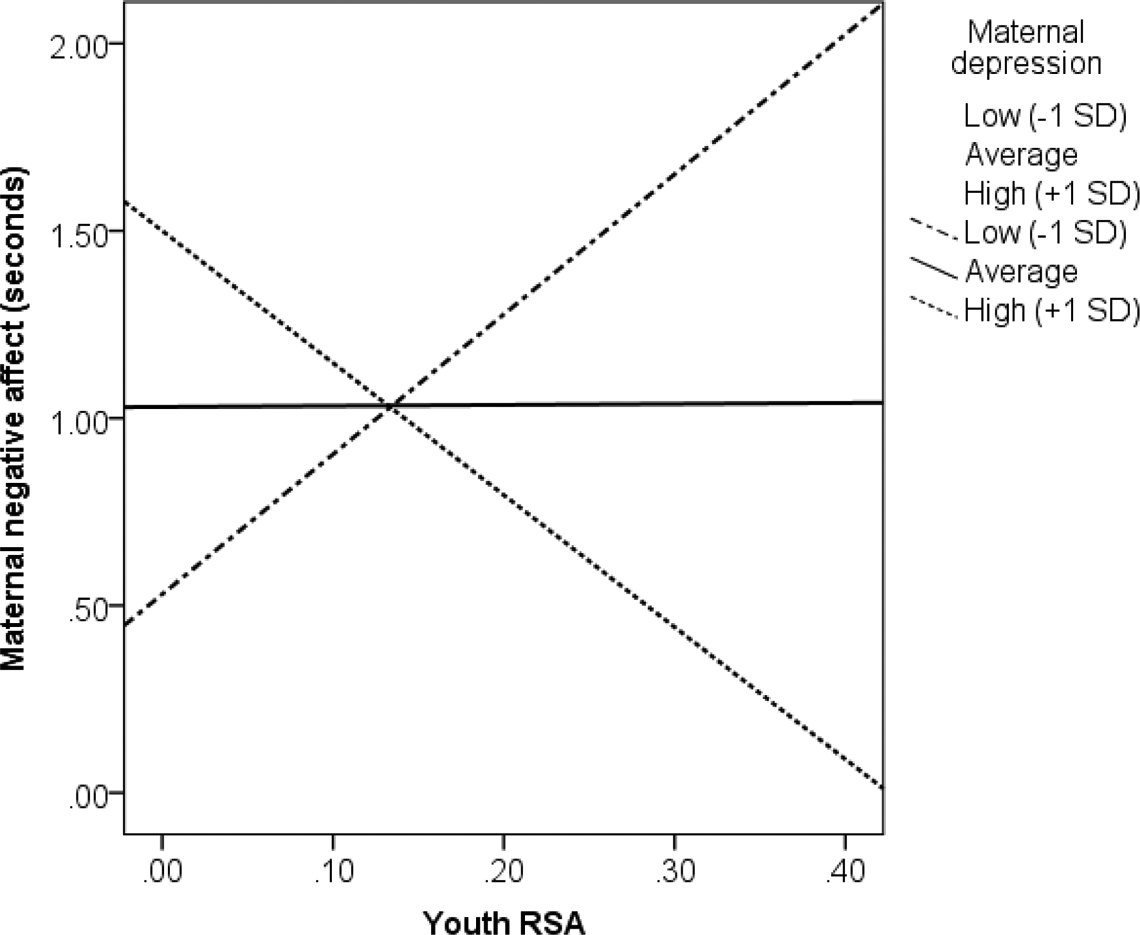
Maternal Depression × Youth Respiratory Sinus Arrhythmia (RSA) predict overall maternal negative affect.
Partner effects
No significant partner effects (path B, Figure 1) for either lag-1 affect or RSA were observed for mothers’ negative affect.
Actor effects
The maternal actor effect (path C, Figure 1) for lag-1 affect was significant, with elevated maternal negative affect predicting elevated maternal negative affect in the subsequent epoch. Further, there was a significant main effect of maternal RSA on the maternal lag-1 actor effect, with higher maternal RSA predicting a weaker connection between maternal negative affect in one epoch and maternal negative affect in the subsequent epoch.
Youth negative affect during discussion tasks
Overall results
Overall youth negative (path A, Figure 1) affect significantly differed across the discussion tasks, with youth exhibiting less negative affect in the fun task relative to the conflict task. Girls also exhibited less negative affect than boys in the discussion tasks. Further, maternal depressive symptoms were positively related to youth negative affect. However, no moderators were observed for overall youth negative affect.
Partner effects
A trend-level effect of maternal negative affect at lag-1 was observed for predicting youth negative affect, with higher maternal negative affect predicting higher subsequent youth negative affect (path B, Figure 1).
Actor effects
There was a significant actor effect (path C, Figure 1) for youth negative affect, indicating that higher youth negative affect in one epoch predicted higher youth negative affect in the subsequent epoch. Further, the magnitude of the youth lag-1 effect was significantly negatively related to parent RSA, but positively related to youth RSA.
Further, both parent and youth RSA interacted with maternal depressive symptoms to predict the magnitude of the actor effect (see Figures 3 and 4, respectively). Follow-up analyses indicated that maternal RSA was significantly negatively related to the stability of youth negative affect across epochs only at lower levels of maternal depressive symptoms (less than critical cutoff value for maternal symptoms of 12.19, containing 50.1% of the sample; β at critical boundary = −.72, p < .05).
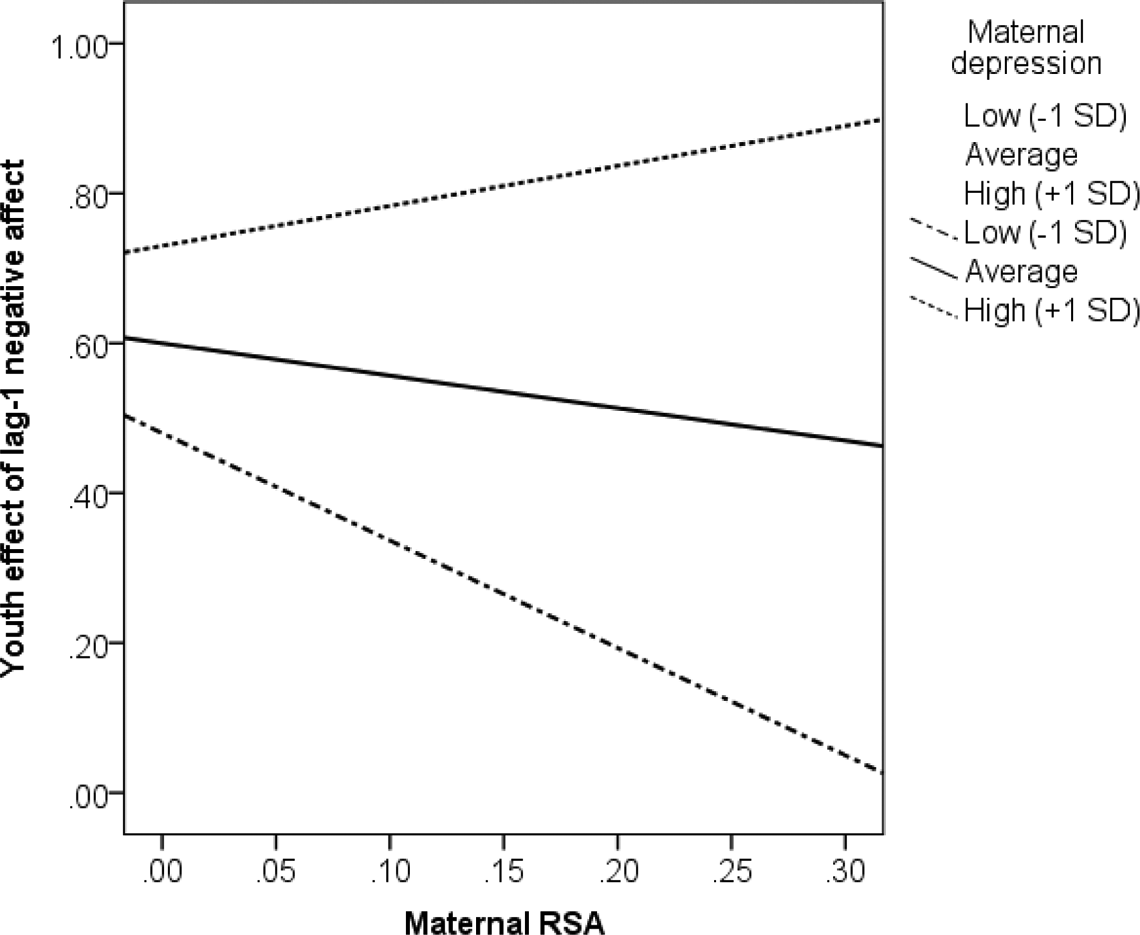
Maternal Depression × Maternal Respiratory Sinus Arrhythmia (RSA) moderate youth actor effect.
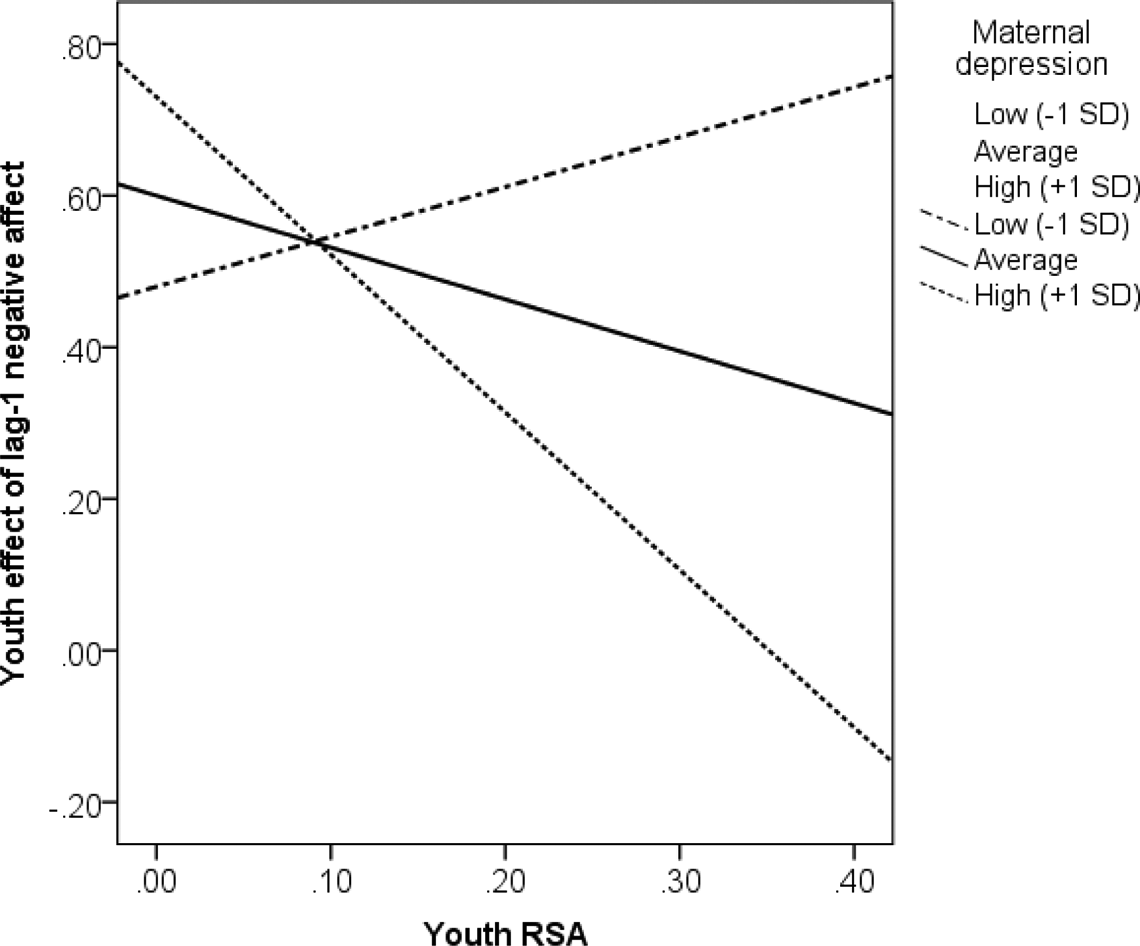
Maternal Depression × Youth Respiratory Sinus Arrhythmia (RSA) moderate youth actor effect.
Conversely, follow-up analyses indicated that the effect of youth RSA on the stability in youth negative affect was significant both at very low levels of maternal depression and at higher levels of maternal depression. At very low levels of maternal depression (scores totaling less than the critical cutoff value for maternal symptoms of 2.34, containing 11.9% of the sample), youth RSA was positively related to the stability of youth negative affect across epochs (β at critical boundary = .73, p < .05). Conversely, at higher levels of youth maternal depression (greater than critical cutoff value for maternal symptoms of 14.96, containing 42.4% of the sample), youth RSA was negatively related to the stability of youth negative affect across epochs (β at critical boundary = −.65, p < .05).
Residual variances
Significant residual variance in negative affect was observed for both mothers (residual variance = 12.08, SE = .39) and youth (residual variance = 6.16, SE = .20). Further, the correlation between mother and youth residual variances during the conflict task was significant (r = .08, p < .05), such that higher maternal negative affect was associated with greater concurrent youth negative affect, controlling for model covariates.
Discussion
The broad goal of this article was to examine patterns of affective influence between mothers and youths during emotionally charged discussions as related to maternal and youth RSA, a physiological index related to the capacity to regulate emotions (e.g., Beauchaine, 2001) as well as to the depressive symptoms in mothers and youth. A large literature has documented the association between depressive symptoms in mothers and a range of emotional and behavior problems in youth, and both theory and empirical research suggest that the tendency for depressed mothers to express high levels of negative affect during interactions with youth may be one central mechanism through which maternal depression affects youth functioning. To date, however, little research on maternal depression has adopted a microsocial observational approach to unpacking interaction dynamics in detail, or has integrated physiological measures of parent or youth emotion regulation capabilities. Such integrative research may carry implications for our understanding of parenting risk related to maternal depression as it operates in the moment.
Broadly, the emotion regulatory capacity of mothers and youth, indexed by RSA during a baseline paced-breathing task, was related to aspects of negative affect exchanges during the discussion tasks. Further, maternal depressive symptoms were associated with more negative affect from youth and mothers during the discussion tasks (although the latter only at the level of statistical trend), consistent with a large body of literature (see Goodman et al., 2011). However, maternal depression also interacted with mother and youth RSA to moderate several aspects of the relation between maternal and youth negative affect across the discussion tasks. Findings for mothers and youth are discussed in turn.
Maternal negative affect
For mothers, the overall duration of negative affect was predicted by the interaction of maternal depressive symptoms and youth baseline RSA, reflecting a partner RSA influence. In dyads with more depressed mothers, higher levels of youth RSA predicted lower levels of overall maternal negative affect during the conflict discussion. This moderation effect is consistent with the possibility that youths’ regulatory abilities, measured by RSA, provide protective effects by reducing maternal negativity during dyadic interactions, particularly in the highest risk dyads (i.e., those with mothers reporting elevated depressive symptoms). It may be that depressed mothers find interactions with better regulated youths to be less difficult, and therefore express less negative affect overall. It is worth highlighting that this moderation effect by youth RSA is consistent with the general finding that there are a wide range of youth outcomes in relation to maternal depression, with many youth exhibiting healthy development despite exposure to risk (see Goodman et al., 2011). There are a number of possible explanations for why some youth with depressed mothers may exhibit such adaptive regulation. For instance, it is possible that fathers may provide a buffer against the deleterious influence of depression in mothers (e.g., Connell & Goodman, 2002), or that healthy maternal functioning prior to the onset of a depressive episode may support physiological health that may serve to protect her child against effects of her depressed mood later in development. Future work on such possibilities is needed.
Conversely, this moderation result also showed that higher youth RSA was associated with greater maternal negative affect in families with less depressed mothers. This aspect of the moderation result may best be interpreted in light of evidence that higher RSA may be associated with greater emotional flexibility (i.e., Butler et al., 2006). The expression of negative affect is not necessarily always bad, and less depressed mothers interacting with better regulated teens may display more situationally appropriate negative affect during emotionally laden discussions.
Additionally, significant stability in maternal negative affect was observed across 15-s epochs (an actor effect), so that high levels of negative affect during one epoch predicted continued high levels of negative affect in the subsequent epoch. However, mothers high in RSA were less likely to show stable or escalating negative affect across epochs throughout the discussion tasks. This finding is also consistent with the interpretation of higher RSA being associated with greater emotional flexibility during dyadic interactions. Thus, it appears that maternal emotion regulation capacity may be important during affectively laden conversations with teens, in part because it is associated with mothers’ ability to de-escalate from negative affective states, rather than continuing to express negative affect.
Youth negative affect
Similar to mothers, youths also exhibited significant stability in negative affect over time, so that high levels of negative affect during one epoch predicted continued high levels of negative affect in the subsequent epoch. An interaction between youths’ own RSA and maternal depressive symptoms was observed to predict the stability of youth negative affect over time during the discussion tasks. In dyads with more depressed mothers, higher levels of youth RSA predicted significantly less stability in youth negative affect throughout the tasks. This result suggests that youths’ ability to regulate emotions, as measured by RSA, acts as a protective factor when interacting with dysphoric mothers. In such dyads, youths with a greater physiological capacity to regulate emotions appeared less likely to exhibit stable or escalating patterns of negative affect. Instead, such youths exhibited a tendency to de-escalate their own negative affect over time, which may help these dyads avoid getting into a pattern of escalating negativity when interacting with one another. These findings are in line with studies showing that higher baseline RSA predicts adaptive social and emotional functioning (e.g., Thayer & Lane, 2000). We speculate that this is a protective effect, and, to the extent that interaction processes are a core pathway through which maternal depression influences youth functioning, may help to explain the buffering effects of youth RSA, more generally. It is also possible that this finding reflects a more complex pathway mediating the association between higher youth RSA and lower maternal negative affect in depressed mothers, as the decreased stability in youth negative affect may make the interaction less aversive for more depressed mothers.
Conversely, as was observed for maternal negative affect, higher youth RSA was associated with greater stability of negative affect expressed by youth in families of mothers reporting low levels of depression. This finding is also consistent with the interpretation of higher RSA reflecting greater emotional flexibility. Such flexibility may be associated with greater expression of negative affect under some conditions (including during discussions of potentially emotional topics in families with less depressed mothers).
Additionally, maternal RSA also interacted with maternal depressive symptoms to predict the stability of youth negative affect (a partner effect). In contrast to the pattern observed for youth RSA described previously, follow-up analyses revealed that maternal RSA was related to youth negative affect only when mothers were less depressed. In dyads with less depressed mothers, high maternal RSA predicted less stability in youth negative affect across epochs. However, for dyads with more depressed mothers, the relation between maternal RSA and youth negative affective stability was nonsignificant. Thus, it appeared as though the beneficial effects of maternal RSA for predicting negative affective dynamics were somewhat diminished in dyads with more depressed mothers. These results suggest that maternal RSA may be a less effective buffer against maternal depression than youth RSA during dyadic interactions, in regard to the level of negative affect expressed by youth. Clinically, prevention programs for youths with depressed mothers may be enhanced by focusing on maternal efforts to manage negative emotions during interactions with their children, as the current results suggest that this regulatory capacity may be impaired in mothers with depression.
Broader findings and implications
As expected, parents and youth expressed more negative affect when discussing a recent conflict than when planning a fun family activity, suggesting both that the task manipulation was effective, and that generally families were able to switch gears from a stressful to a pleasant task. While the fixed order of the tasks was used to encourage the need to “shift gears,” it is also possible that this may have led to order effects, which cannot be ruled out in the current study. More generally, however, the effects of RSA, maternal depression, and actor/partner negative affect did not appear to differ across the tasks in preliminary analyses. Such null findings are difficult to interpret cleanly, and it is worth highlighting that the power of the current study to detect higher order moderation of actor and partner influences by the nature of the discussion task was limited. Future, larger studies should examine the possibility of such task differences in more detail.
Similarly, we found few influences of youth depressive symptoms on maternal or youth displays of negative affect in preliminary analyses. It may be that maternal depressive symptoms are simply more strongly related to the affective tone of interactions between mothers and youth, relative to youth depressive symptoms. It is also worth highlighting, however, that youth in the current study generally reported relatively low levels of depressive symptoms. Such low symptom levels are consistent with the relatively young age of the youth in the study, as the youth are just entering the period of greatest risk for developing depression. Future work with more depressed youth may yield different findings.
Additionally, most of the findings from the current analyses reflected influences on either overall negative affect or the stability of each participant’s negative affect across adjacent epochs. In contrast, there were very limited main or moderating effects related to the influence of partner negative affect in the prior epoch. Indeed, only one trend-level influence was observed, with higher maternal negative affect predicting higher youth negative affect in the next epoch. It is worth highlighting, however, that significant residual correlations were observed between concurrent maternal and youth negative affect. These significant correlations indicate that levels of negative affect were shared concurrently by parents and youths during discussions, controlling for actor and partner influences and covariates. It may be that such affective reciprocity may happen more closely in time than can be seen with the 15-s epochs used in the current study. Additionally, we focused on the duration of negative affect per epoch, and it may be that a focus on the intensity of negative affect (versus the duration of negative affect) may yield somewhat different conclusions. Future research examining such possibilities is needed.
Limitations and future directions
As with any study, there are several limitations to the current study. First, while we chose to focus on RSA due to its established links to emotional and social flexibility and emotion regulation efforts, RSA is only one physiological index of relevance to family functioning. Future studies can further bridge the fields of affective and family science by incorporating sympathetic nervous system measures, hypothalamic-pituitary-adrenal axis (HPA) indices, and central nervous system measures (e.g., Stephens, Silbert, & Hasson, 2010). Second, although we chose to focus exclusively on negative affect, given the established importance of negative parent–child interactions as a risk factor for future psychological problems in youth, it would also be informative to examine positive affect in families to gain a better understanding of the full range of parent–child interactions. Further, as is the case with many lab-based studies of physiology and emotion, it is possible that experiences prior to arriving at the lab may affect people’s emotional state and physiological responses during the lab visit, although we have no reason to expect that such experiences would systematically bias the current results toward either more or less negative dyadic interactions.
Our sample, though partially recruited for parental concerns about depressed mood, also consisted of community-recruited families. While we posit that RSA is important for flexible emotional functioning in family interactions, future research with clinically diagnosed samples is warranted. Further, this study only focused on maternal functioning, and it is important for future research on RSA and family interaction processes to include fathers as well. Finally, demographic factors were only included as covariates in the current analyses, and future research examining possible moderation of RSA/emotion relations by demographic factors is warranted. Several factors predicted differences in observed affect. Mothers who were married or living with their partner expressed less negative affect in both tasks than single mothers. It may be that single mothers experience less support in the parenting role, and this lack of support leads mothers to be more negative when interacting with their children. Consistent with this possibility, single mothers in the current study reported higher levels of depression than mothers with resident partners. Additionally, child gender was associated with negative affect expressed by youth, with girls expressing less negative affect than boys. Future research examining possible differences in transactional processes across genders is needed. Another consideration for future research may be to compare parent–child interactions within a more restricted age range, as pubertal and other developmental factors may have significant effects on family relationships, mood, and/or emotion regulation in youth. For example, 17- to 18-year-olds are twice as likely to have experienced clinical levels of depressed mood than 13- to 14-year-olds, which suggests age-related effects may be at play (Merikangas et al., 2010).
Despite these limitations, the current results underscore that emotional processes are central to parenting and unfold in a dynamic, transactional manner during social interactions. Further, physiological factors such as RSA are crucial underpinnings of emotional responses during parent–child interactions, as baseline RSA in the current study was related to the likelihood of expressing and responding to negative affect as mothers interact with their children. Although these results are in line with the large literature that has documented the association between RSA and emotion regulation/dysregulation, the relationship between RSA and emotional responses may be complex. For instance, there are multiple aspects of RSA (resting RSA versus change in RSA in response to stress) that may be related to emotion regulation in complex ways (e.g., Cole, Martin, & Dennis, 2004). Further, most research has used experimental procedures such as mood induction to assess RSA in relation to emotion regulation, and additional research is needed to examine RSA responding in the context of more naturalistic, emotionally provocative settings. Such research may yield a more complex understanding of RSA and emotion in social interactions. For instance, Butler et al. (2006) found that high baseline RSA was associated with greater expression of negative affect by women discussing an emotionally distressing film clip, highlighting that the relation between baseline RSA and emotional expression may be nuanced, and that sometimes, flexible emotional responding may be associated with greater (not lesser) expressions of negative affect.
Thus, future research examining multiple aspects of RSA responding in the context of social interactions is needed. Nevertheless, we hope that the current findings further our understanding of the processes that underlie parenting risk, and provide some evidence for the importance of emotion regulation skills in serving as a protective factor in the face of the risk posed by maternal depression and negative parent–child interactions. In addition, we hope that the current study helps to foster future research on the role of physiological processes in promoting adaptive and flexible emotional functioning in families.
Footnotes
Funding
This research received no specific grant from any funding agency in the public, commercial, or not-for-profit sectors.