



Abstract
The investment model is one of the most influential theoretical frameworks for understanding commitment in close relationships. Nonetheless, few studies have examined commitment dynamics using within-persons designs. In addition, there have been few attempts to examine potential antecedents of investment dynamics. The current research attempts to integrate the investment model with contemporary perspectives on attachment and perceived partner responsiveness by examining relationship dynamics within and between persons in a yearlong, intensive longitudinal design. We found that across levels of analysis, perceived partner responsiveness shaped investment model variables which, in turn, shaped commitment. We also found that individual differences in attachment moderated some of these dynamics, such that people who were insecurely attached were less likely than others to perceive their partner as responsive. We suggest taking a more integrationist approach to close relationship research and explore romantic relationship dynamics on the within-person level.
Keywords
Predicting romantic relationship commitment by integrating the investment model and attachment theory
Why do some relationships persist whereas others fail? Research has shown that a key mechanism underlying persistence is commitment—the tendency for people to feel psychologically attached to a relationship (Rusbult, 1983; Rusbult & Buunk, 1993). According to the investment model (Rusbult, 1980), people are most likely to feel committed to their relationships when they are satisfied, invested, and have few alternatives. One of the reasons the investment model provides a powerful tool for understanding commitment is that it unpacks these distinct components and explains how each one contributes to relationship processes. Moreover, the model accounts for the possibility that people can be unsatisfied in their relationships, but remain committed to them nonetheless due to the investments they have made.
Despite the theoretical distinctions among these components, studies consistently find that satisfaction, investment, and quality of alternatives tend to covary (Le & Agnew, 2003). For example, people who are relatively satisfied in their relationships also tend to be more invested. Thus, one challenge is to explain why these components covary so strongly, despite their theoretical independence. The primary purpose of the present research is to evaluate a conceptual model that does so. We propose that one reason these factors covary is that they are each dependent upon variation in the extent to which people feel that their partners are responsive to their needs. Specifically, we suggest that perceived partner responsiveness (PPR; Reis, Clark, & Holmes, 2004)—a critical construct in understanding the development of intimacy and relationship functioning—serves as an organizing variable that drives, in part, the covariation among investment model constructs. PPR is a process by which individuals “come to believe that relationship partners both attend to and react supportively to central, core defining features of the self” (Reis et al., 2004, p. 203). When people perceive their partners as understanding and responsive, they are more likely to feel satisfied with their relationships, increase their investments, and perceive alternatives to their partner as less appealing. Importantly, we also propose that variation in PPR can vary as a function of individual differences in attachment style (Hazan & Shaver, 1987; Mikulincer & Shaver, 2007). People who are more insecure in their attachment orientations, for example, might be less likely to perceive their partners as responsive to their needs (e.g. Collins & Feeney, 2000). These perceptions, in turn, may have implications downstream for the experience of satisfaction, quality of alternatives, and investment (Carter, Fabrigar, MacDonald, & Monner, 2013; Etcheverry, Le, Wu, & Wei, 2013).
The second purpose of this research was to evaluate commitment dynamics at the between- and within-persons level. Although the investment model is often billed as a process model—a model that captures the dynamics of individuals within their relationships—most investigations focus on between-person differences. However, it is clear from the literature that individuals can vary across time in the extent to which they feel satisfied with and invested in their relationships. Therefore, we examined how variation in satisfaction, investment, and quality of alternatives vary within persons across time. In addition, we evaluated the possibility that PPR drives the covariation among them across time. It is our hope that this research will help to advance our understanding of commitment in close relationships while also bringing together a variety of theoretical perspectives (i.e., interdependence theory, perceived partner responsiveness, and attachment theory) that, more often than not, are studied in isolation.
The investment model of commitment
The investment model (Rusbult, 1980) suggests that commitment is the subjective manifestation of the dependence that builds between romantic partners (Rusbult, Johnson, & Morrow, 1986). As people become more attached to their partners, their relationship orientation shifts from the short term to the long term, and their willingness to maintain the relationship increases. According to the investment model, three factors drive commitment and hence persistence in romantic relationships: satisfaction, investment, and quality of alternatives (see Figure 1(a); Rusbult & Buunk, 1993). An individual’s satisfaction level in his or her relationship is a consequence of meeting or exceeding a “comparison level” (Rusbult, 1983), a standard by which one weighs the costs and benefits of being in the relationship. If one’s needs in the relationship are met or exceeded, satisfaction increases, thereby strengthening relationship commitment. Partners’ investment size refers to the various kinds of investments people make in their relationships, investments that would be lost if the relationship ended. These investments range from more abstract things, such as time, effort, or sacrifices, to more tangible things, such as sharing possessions, vehicles, or a home. The more invested a person is in his or her relationship, the less likely he or she will be to end it—even if the relationship is an unsatisfying one. Quality of alternatives refers to having viable alternatives to the current relationship. As people “scope the field,” they search for attractive alternatives to their current partner and weigh the costs of leaving the relationship versus the benefits of starting a new one. When one’s needs in the relationship are not met, better quality alternatives drive decreases in commitment.
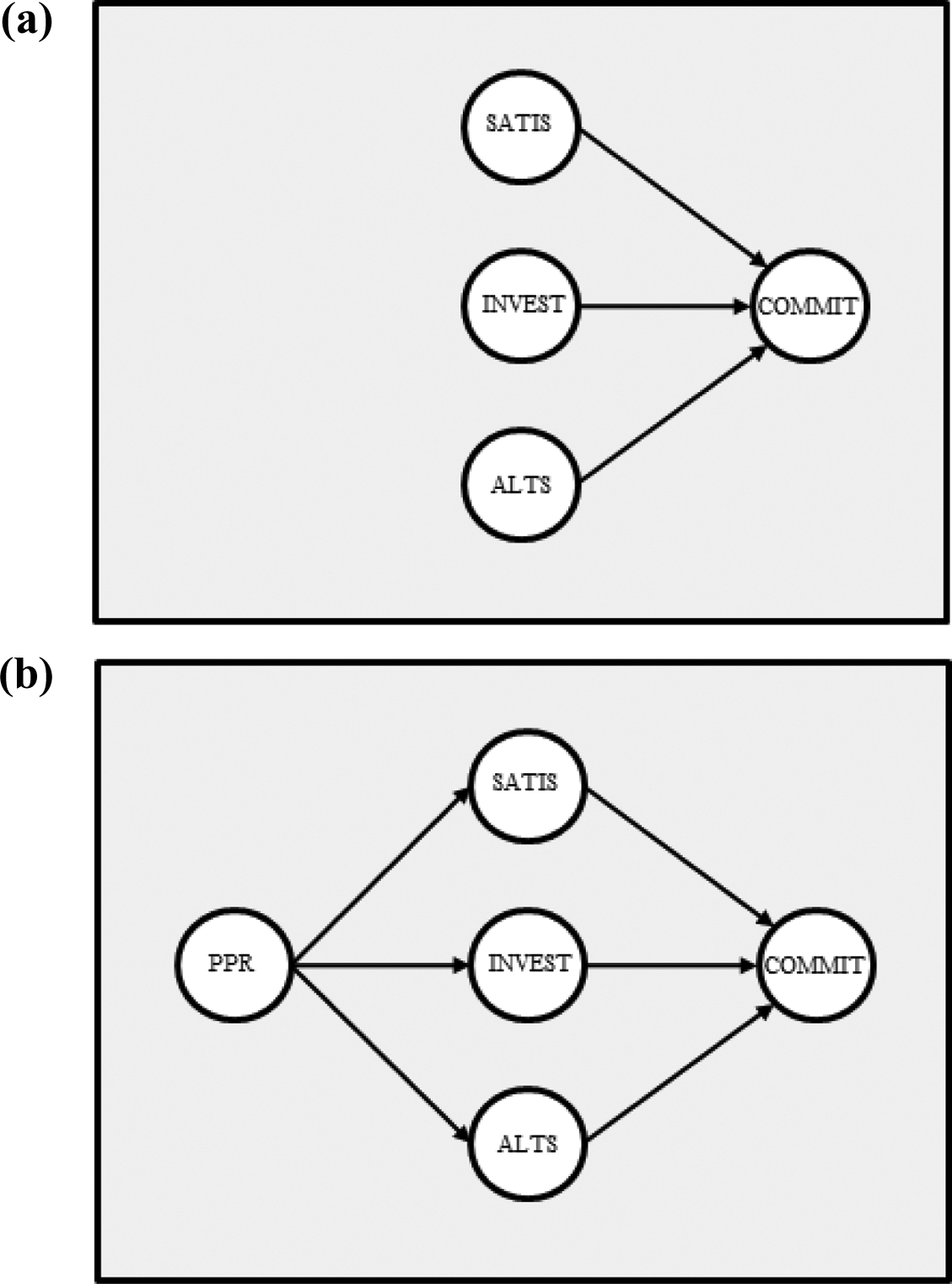
(a) The traditional investment model. (b) An addendum to the traditional model that also takes perceived partner responsiveness into account as an antecedent of investment model dynamics.
An organizing principle for investment model constructs
One reason the investment model makes strong distinctions among these three constructs is that they are theoretically independent. It is possible, for example, for someone to be highly dissatisfied in his or her relationship, yet be highly invested in it. As a result, such a person may remain highly committed to the relationship. Despite the logical independence of the investment model constructs, research shows that measures of these constructs tend to covary substantially. In a meta-analysis of 52 investment model studies (Le & Agnew, 2003), measures of satisfaction, investment, and alternatives were found to be substantially correlated (r ranges from −.44 to .42). One challenge for the field is to explain why these variables covary so strongly.
We propose that one reason these variables covary strongly is that they are all organized by PPR. Research has shown that people who perceive their partners as being responsive are more likely to experience a sense of belonging and acceptance, a sense of being valued, and higher levels of trust and honesty (Reis et al., 2004). Thus, it seems likely that, when people feel that their partner is responsive, they will find the relationship more satisfying, downplay the quality of alternatives, and increase their investments in the relationship. This addendum to the traditional investment model is illustrated in Figure 1(b). Although this hypothesis has never been directly tested, previous research suggests that PPR may be related to investment model constructs. For example, research has found that projections of responsiveness to one’s needs may lead to higher satisfaction (Lemay, Clark, & Feeney, 2007). Similarly, Sprecher and Hendrick (2004) found positive associations between self–disclosure, partner responsiveness, and relationship quality in a longitudinal study. Research also suggests that when people feel their partners are responsive, they are more inclined to invest in their relationships (Murray, Holmes, & Griffin, 1996). This line of research presents evidence for people having “positive illusions” (i.e., the tendency to regard partners more favorably than they view themselves or others view them), which could make potential alternatives seem less desirable (Collins & Feeney, 2000; Murray et al., 1996). However, the precise nature of the relationship between perceived partner responsiveness and investment model constructs is yet to be explored.
Individual differences in relationship commitment processes
As Reis (2013) notes, the concept of PPR is a foundational one in theories of close relationships, making appearances in models of social support (e.g., Cohen, Underwood, & Gottlieb, 2000), sociometer theory (Leary & Guadagno, 2011), and self-determination theory (Deci & Ryan, 1987). The concept plays a particularly salient role in attachment theory. According to attachment theory, one of the factors that shapes individual differences in attachment style is people’s relational history (Bowlby, 1969; Mikulincer & Shaver, 2007). Research indicates that people who have had a history of supportive, responsive interactions are more likely to be secure than people who have not (e.g., Fraley, Roisman, Booth-LaForce, Owen, & Holland, 2013). These attachment styles, in turn, are assumed to play a role in shaping the way in which people interpret the intentions and behavior of their partners in close relationships (Collins & Feeney, 2004). Indeed, research suggests that people who are more secure are more likely to perceive their partners as being responsive to their needs (Collins, Ford, & Feeney, 2011; Collins & Feeney, 2004). Research also suggests that highly anxious individuals perceive more conflict and experience higher distress, undermining their satisfaction and closeness in their relationships (Campbell, Simpson, Boldry, & Kashy, 2005). Although several scholars have noted the theoretical connections between attachment and responsiveness, perceived regard, and other relational well–being-related constructs (Holmes & Cameron, 2005; Reis, 2007), these connections have not been fully explored in the empirical literature.
One of our goals in the present research is to examine whether attachment orientation may function as an antecedent to the kinds of psychological dynamics described above. Although it is possible that attachment orientation could influence any or all of the components of the investment model (see Etcheverry et al., 2013), in the present research we examined what we considered to be a relatively parsimonious integration of the ideas described previously. Specifically, we tested the hypothesis that people who are more secure in their attachment orientation will be more likely than those who are not to perceive their partners as being responsive to them in the context of their romantic relationships. Because we are conceptualizing PPR as an organizing variable in investment dynamics (see Figure 1(b)), this model implies that attachment orientations potentially shape downstream outcomes in commitment in virtue of their influence on how people evaluate the responsiveness of their partners.
We also explored a slightly more nuanced proposal that individual differences in attachment orientation may influence the magnitude of the within-person relations among the investment model constructs. In an experimental study using hypothetical relationships, Carter, Fabrigar, MacDonald, and Monner (2013) showed that the association between investment model constructs and commitment varied as a function of attachment style. For example, people who were more highly avoidant exhibited a weaker association between satisfaction and commitment compared to people who were less so. In the present research we evaluate whether the naturalistic covariation between investment model constructs varies as a function of attachment style.
Within-person dynamics of commitment processes
In many respects, the investment model is a model of psychological dynamics that take place within a person’s relationship. That is, it is a process model designed to capture the factors that shape commitment for a given individual (e.g., Gordon, Impett, Kogan, Oveis, & Keltner, 2012). Nonetheless, the model has been tested almost exclusively using between-person designs. Many researchers, for example, examine whether people who are high in relationship satisfaction are more likely than those who are low to report higher commitment to their relationships.
It seems clear that people vary in their day-to-day lives in how satisfied, invested, and committed they are in their relationships. Thus, understanding the way in which investment model dynamics play out at the individual level is potentially just as important as understanding the way the dynamics play out across persons. One of the goals of the present research was to examine investment model dynamics within and between persons. In addition, we examined the potential organizing role of PPR at the within-person level. To the best of our knowledge, this is the first attempt to evaluate the investment model simultaneously at two levels of analysis.
Overview of the present study
The first goal of the present study was to replicate previous findings concerning the investment model, in particular, whether satisfaction, investment, and quality of alternatives are related to commitment. The second goal was to explore whether PPR may organize these variables. We did this by testing the association between PPR and commitment and whether this association is mediated by the three predictors of commitment. The third goal was to extend previous work by incorporating attachment styles into the model to explore how insecure attachment may affect commitment processes.
Method
Participants
We analyzed data from a yearlong longitudinal study of people involved in romantic relationships. The sample included 382 people who were all in serious, long term romantic relationships. Participants were surveyed online once a week for up to a year. Although we recruited individuals who were in romantic relationships, we did not recruit both members of the relationship. Participants were paid approximately 10% of their total stipend up front and US $150 total. Participants who dropped out of the study early were paid in a way that was proportional to their participation. At the conclusion of the study, participants were provided with detailed feedback about the way their attachment scores had changed over the course of the study via a customized, online website that summarized their data. 1 Sixty-five percent of this sample was female, with an average age of 22.5 years (SD = 6.3). The majority of the sample was Caucasian (72%) and Chinese American (9%). Seventy-one percent of the participants described themselves as being in exclusive dating relationships. Twenty percent described themselves as being married (n = 64) or engaged (n = 11). The remainder of the sample described their relationships as casual. The average relationship length was 29.6 months (SD = 3.7) at the start of the study. By the midpoint of the study at week 30, 33 participants had reported breaking up with their romantic partners and by the end of the study, 51 participants had reported a breakup. The data from participants who broke up during the study were included in all the analyses. We recruited enough subjects to detect bivariate correlations of .2, since they are the basis of any structural equation model.
Measures
Investment model scale
We used the Investment Model Scale (IMS; Rusbult, Martz, & Agnew, 1998) to assess relationship satisfaction, investment, quality of alternatives, and commitment. The IMS was administered each week for the duration of the study. Participants were asked to rate their agreement or disagreement on a 7-point scale. Example items for the satisfaction scale included, “Our relationship makes me very happy” and “I feel satisfied with our relationship.” Example items for the investment scale included, “I have invested a great deal of time in our relationship” and “My relationships with friends and family members would be complicated if my partner and I were to breakup (e.g., partner is friends with people I care about).” Example items for the quality of alternatives scale included, “My needs for companionship (doing things together, enjoying each other’s company, etc.) could be fulfilled in alternative relationships” and “The people other than my partner with whom I might become involved are very appealing.” Finally, examples for the commitment scale included “I am committed to maintaining my relationship with my partner” and “I would feel very upset if our relationship were to end in the near future.” Reliability coefficients for each subscale were α = .82, α = .84, α = .81, α = .89, respectively, based on data collected in the first week of the study.
Perceived partner responsiveness
For the present study, we created a 6-item scale, in which we asked participants each week to recall one negative event and how their partner responded to them. Participants rated their agreement with six statements concerning their partner’s responsiveness: “My partner blamed me for the event” (reversed), “My partner assured me that everything would be okay,” “My partner thought I was being irrational or overreacting” (reversed), “My partner understood my concerns,” “My partner essentially ignored my concerns” (reversed), and “My partner made me feel better about the experience.” Participants responded on a 5-point Likert-type scale. Ratings were averaged each week to create a composite perceived partner responsiveness score (α = .87, based on the ratings from the first week).
Attachment styles
During the initial session (i.e., before the longitudinal portion of the study began), we administered the Experiences in Close Relationships–Revised questionnaire (ECR-R; Fraley, Waller, & Brennan, 2000) to assess attachment. The ECR-R is a self-report measure designed to assess individual differences in attachment with respect to two dimensions: attachment-related anxiety and avoidance. Attachment-related anxiety concerns the extent to which a person is worried that others may reject him or her (e.g., “I’m afraid that this person may abandon me.”) Attachment-related avoidance concerns the strategies that people use to regulate their attachment behavior in close relationships. On the high end of this dimension are people who are uncomfortable with closeness and dependency (e.g., “I don’t feel comfortable opening up to this person”), and on the low end are people who are more comfortable using others as a secure base and safe haven (“I find it easy to depend on this person”). The prototypical secure person is low on both of these dimensions.
Modeling
Researchers in social and personality psychology typically analyze intensive longitudinal data using multilevel modeling techniques. However, such techniques were originally developed for situations in which there is a single outcome being modeled by one or more predictors. In the present research, we wished to evaluate a structural model that has several endogenous variables with complex structural assumptions. Thus, we used multilevel structural equation modeling (MSEM) to examine the predictions entailed by that model (Preacher, Zyphur, & Zhang, 2010). One advantage of MSEM is that it can accommodate multiple dependent variables within a single model. In addition, the MSEM framework can be used to test mediation and cross-level interactions in the presence of complex structural assumptions.
The general structure of the model we evaluated is illustrated in Figure 2. The traditional portions of the investment model are illustrated in the top panel (i.e., the between-persons portion). According to this model, commitment is a function of (a) satisfaction, (b) investment, and (c) quality of alternatives. As described previously, we expanded the traditional model to include variation in perceived partner responsiveness as a factor that drives variation in each of the investment model constructs. In addition, we included the two attachment dimensions—anxiety and avoidance—as factors that might drive individual differences in how responsive people view their partners.

The between-and within-persons general structure of the expanded investment model.
The within-persons structure of the model is illustrated in the lower portion of Figure 2. This portion of the model represents the way in which investment dynamics may play out within a given individual. Namely, the model assumes that on occasions when an individual perceives that his or her partner is responsive, that person will experience increases in satisfaction and investments and decreases in alternatives. Those changes, in turn, will lead to increases in commitment. The dual-level nature of the data is represented in the middle of the panel, showing that measures of each construct (e.g., satisfaction) are driven by between- and within-persons factors.
The parameters of the model were estimated using Mplus version 7 (Muthén & Muthén, 2012). The first set of results we report are based on a model that specified random intercepts and fixed slopes. To help minimize the complexities of the model, we used the measured composites (the middle row of Figure 2) as direct indicators of the latent constructs. Thus, technically, our model is a multilevel path model, which is easily subsumed by the MSEM framework. Although we will discuss estimates from different portions (i.e., the between-persons and within-persons associations) of this model separately below, we should note that the various parameters of the model are estimated simultaneously. We should also make it clear that, although we are evaluating the hypothesis that the dynamics entailed by the investment model play out similarly within persons as it does between persons, these two levels of analysis need not function in similar ways. It is possible, for example, that the specific mediational hypothesis we have proposed only holds—if at all—at one level of analysis.
Results
As a first step in our analysis we computed intra-class correlations (ICCs) for each variable that had the potential to vary both between persons and within persons. Table 1 lists the ICCs for each variable, along with the estimates of the between-person and within-person variances. The ICCs indicate that the majority of the variance in each variable was accounted for by differences between persons rather than differences within persons. The one exception to this was perceived partner responsiveness, for which the majority of the variation was due to within-persons differences. Taken together, these ICCs indicate that, although there is variation in each construct at each level of analysis, most of the differences are due to variations that exist between people rather than within people.
Estimated correlations among constructs based on within-person and between-person variation and variance estimates.

Note. PPR = perceived partner responsiveness; SATIS = satisfaction; INVEST = investments; ALTERN = quality of alternatives; COMMIT = commitment; ANX = anxious attachment; AVOID = avoidant attachment; ICC = intra-class correlation. The shaded section reports the estimated correlations among constructs within persons below the diagonal and the estimated correlations between persons above the diagonal. The between-persons correlation between anxiety and avoidance was .41.
Table 1 also summarizes the estimates of the correlations between the various constructs separately for within persons and between persons. As can be seen, the correlations were in the expected directions at each level of analysis. Overall, the within-person correlation estimates were lower than those for the between-person estimates, probably due to the fact that the majority of the variation was at the between-persons level.
Between-person associations
Between-subjects replication of investment model associations
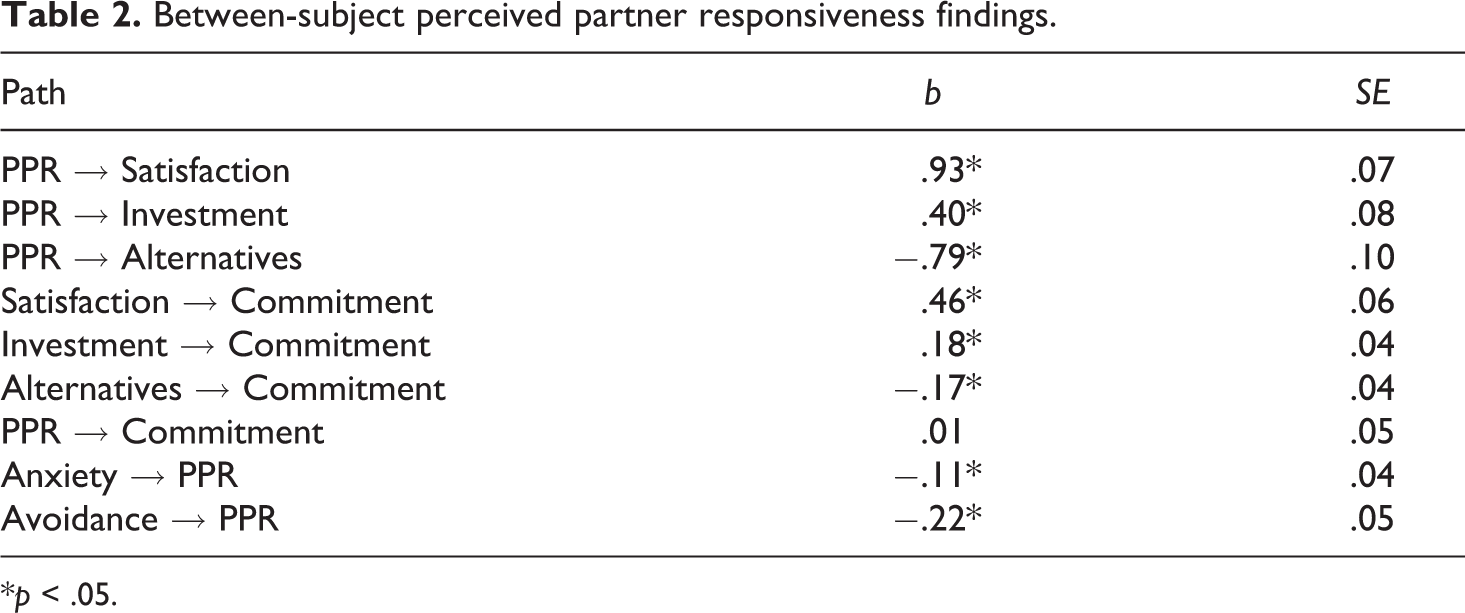
We first summarize the between-person findings (see Table 2). Replicating previous research (e.g., Le & Agnew, 2003), we found that people who tended to experience higher levels of satisfaction, investment, and fewer alternatives were more committed to their relationships than those who did not (bs = .46, .18, −.17 respectively, p < .05). In other words, the structural relations implied by the traditional investment model held in the present sample.
Between-subject perceived partner responsiveness findings.
*p < .05.
Does PPR predict investment model variables on the between-person level?
People who tended to perceive their partners as being more responsive were more likely than those who did not to feel more satisfied in their relationships, more invested, and to perceive their alternatives as being lower in quality (bs = .93, .40, −.79 respectively, p < .05). This pattern of results is consistent with the hypothesis that perceived partner responsiveness is an organizing variable that helps to drive the shared covariation among measures of the investment model constructs.
Do the investment model variables mediate the association between PPR and commitment?
The previous results indicate that people who are more likely to perceive their partner as being responsive are more likely to be satisfied and invested in their relationships and less likely to consider alternatives to their relationships. Moreover, each of those factors, in turn, is related to higher levels of relationship commitment. To more fully evaluate the potential mediating role of the investment model factors, we estimated the direct path between perceived partner responsiveness to commitment. This path was not statistically significant (b = .01, p = .88). (This direct path is statistically significant in a model that does not include the conjectured mediators: b = .60, SE = .07.) In addition, we followed the recommendations by Preacher, Zyphur, and Zhang (2010) and computed the indirect effects of PPR on commitment simultaneously via each of the three mediators (i.e., satisfaction, investment, and quality of alternatives). Each of these indirect paths was statistically significant (.43, .07, .12, respectively). Taken together, these results are consistent with the hypothesis that, at the level of between-person differences, perceived partner responsiveness indirectly influences relationship commitment via satisfaction, investment, and the quality of alternatives.
Do individual differences in attachment style predict between-person differences in PPR?
We next examined whether individual differences in attachment predicted between-person differences in PPR. We found that both anxiety (b = −.11) and avoidance (b = −.22) predicted between-person variation in PPR. People who were generally concerned about the availability of their close others (attachment anxiety) or who were uncomfortable using others as a secure base (avoidance) were less likely than more secure individuals to perceive their partner as responsive to their needs and supportive.
Within-person associations
Does PPR predict investment model variables on the within-person level?
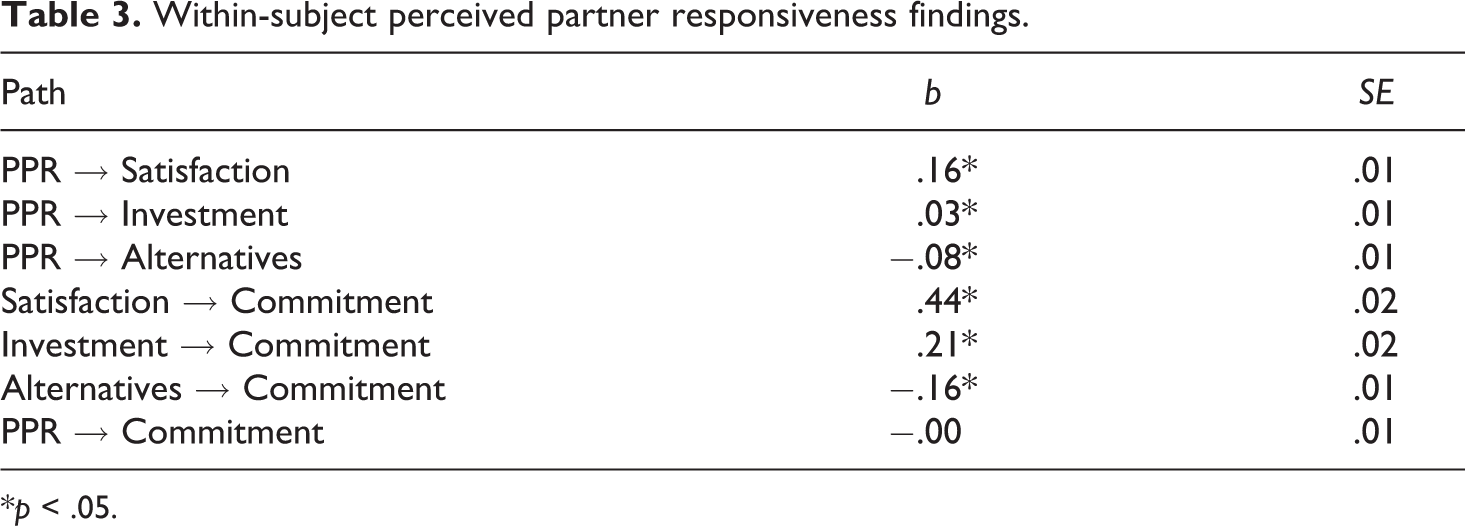
We next investigated whether the investment model variables predict commitment on the within-person level (see Table 3). Within-person variations in relationship satisfaction, investments, and perceived alternatives to the relationship predicted within-person variation in the extent to which people felt committed to their relationships (bs = .44, .21, −.16 respectively, p < .05). On occasions in which people experienced higher levels of satisfaction and investments, or lower quality alternatives, they reported feeling a greater sense of commitment to the relationship.
Within-subject perceived partner responsiveness findings.
*p < .05.
Does PPR predict investment model variables on the within-person level?
On weeks when people perceived their partners as being more responsive to them, people were more likely to feel satisfied and invested in their relationships and to perceive lower quality of alternatives (bs = .16, .03, −.08 respectively, p < .05). This pattern of results is consistent with the hypothesis that variations in perceived partner responsiveness within a given individual function as an organizing variable that helps to drive the shared within-person covariation among measures of the investment model constructs. It should be noted that these paths are smaller in magnitude than those found at the between-persons level. One potential reason for this is that most of the variation exists at the between-persons level rather than the within-persons level (see Table 1).
Do the investment model variables mediate the association between PPR and commitment?
The previous results indicate that, during weeks in which people are more likely to perceive their partner as being responsive to their needs, they are also more likely to report being satisfied and invested in their relationships and less likely to positively appraise alternatives to their relationships. Each of those factors, in turn, is related to higher levels of relationship commitment. To evaluate the potential mediating role of the investment model factors, we estimated the direct path between perceived partner responsiveness to commitment. This path was not statistically significant (b = −.002, p = .71). (This direct path was statistically significant in a model that does not include the conjectured mediators: b = .09, SE = .01.) We also computed the indirect effects of PPR on commitment simultaneously via each of the three mediators (i.e., satisfaction, investment, and quality of alternatives). Each of these indirect paths was statistically significant (bs = .07, .01, .01; SEs = .006, .002, and .002, respectively). Taken together, these results indicate that, at the level of within-person dynamics, the effects of perceived partner responsiveness on commitment were mediated by satisfaction, quality of alternatives, and investment.
Cross-level moderation
The previous analyses were based on a model that assumes fixed slopes. It is possible, however, that the within-person association between PPR and the investment model constructs varies across people such that some individuals are more likely to experience changes in relationship satisfaction, for example, when they perceive their partners as being responsive. Moreover, if such variation exists, it is possible that some of it can be accounted for by individual differences in attachment.
To evaluate this possibility, we estimated the parameters of the same model described previously, with one critical difference. Namely, we allowed the within-person associations to vary (i.e., we treated them as random, rather than fixed, effects) and modeled that variation as a function of attachment-related anxiety and avoidance. Because there are six paths that were allowed to vary (e.g., PPR → {Satisfaction, Investment, Quality of Alternatives} → Commitment; see the lower panel of Figure 2), we estimated 12 additional paths (i.e., six for each attachment dimension). In general, individual differences in attachment were not associated with variation in the slopes, with two exceptions. First, people who were higher in attachment-related anxiety had stronger within-person associations between investment and commitment than people who were lower in anxiety (b = .06, SE = .02). That is, although people were likely to report greater commitment to their relationships on weeks when they also felt that they had high investments (average b = .14), this association was stronger among anxious individuals. Second, people who were more avoidant exhibited a stronger inverse association between the perceived quality of alternatives and commitment (b = −.03, SE = .01). That is, although people generally reported less commitment when they felt that the alternatives to their relationship were better (average b = −.12), this inverse association was magnified among people who were highly avoidant. Highly avoidant people were more likely than those who were less so as to decrease their commitment to the relationship when they perceived the alternatives as being of higher quality.
Discussion
One of the objectives of this investigation was to explain the covariation between the components of the investment model, that is, satisfaction, investment, and quality of alternatives. Although these constructs are theoretically independent, their covariation implies that there are shared antecedents that drive the associations among them. We proposed that perceived partner responsiveness may function as an organizing variable (Reis et al., 2004). Our findings demonstrated that, on the between-person level, people who perceived their partner as being more responsive were more satisfied in their relationships, more invested, and perceived alternatives to the relationship as being lower in quality. In addition, we found that perceived partner responsiveness indirectly influenced relationship commitment via the investment model variables.
We also proposed that perceived partner responsiveness may vary as a function of individual differences in attachment style (Hazan & Shaver, 1987; Mikulincer & Shaver, 2007). Our analyses suggested that people who were anxiously or avoidantly attached were less likely than others to perceive their partner as responsive to their needs. In turn, these perceptions shaped satisfaction, investment, and perceived quality of alternatives.
The second objective of our research was to evaluate commitment processes both at the between-persons level and at the within-persons level. The investment model is typically billed as a process model—that is, a model that characterizes the way commitment processes unfold for a person across time. Nonetheless, the majority of empirical research on investment processes examines variation between persons as a way of testing the model’s assumptions. In the present research, we examined investment dynamics at the within-persons level by studying people intensively across time. We found similar patterns of results on both levels of analysis, that is, when people experienced higher levels of satisfaction and investment, or perceived alternatives as of less quality, they reported feeling a greater sense of commitment to the relationship. We also found that perceived partner responsiveness indirectly influenced relationship commitment via the investment model variables.
We also examined the role that attachment orientations may play in investment model dynamics. We found that people who were more insecure with respect to attachment were less likely to perceive their partners as being responsive. In addition, we found some evidence for cross-level moderation, such that the within-person association between PPR and the investment model constructs varied partly as a function of attachment style. Specifically, our results suggested that anxious individuals were especially likely to scale-up their commitment as investments increased, whereas avoidant people were more likely to decrease their commitment to the relationship when they perceived the alternatives as being of higher quality.
Implications for research and theories of commitment
One of the contributions of this research is that it helps to highlight the ways in which seemingly disparate theoretical traditions can be constructively integrated. Our findings indicated, for example, that attachment styles may serve as antecedents to investment model dynamics, essentially serving as different “starting points” for how those dynamics play out. Relatively insecure people were more likely to perceive their partners as being unresponsive to their needs. Those construals, in turn, shaped the extent to which people felt satisfied in their relationships, invested in those relationships, and appraised the quality of alternatives to their relationships. Each of these processes, in turn, helped to increase the commitment people felt to their relationship. We believe this integration is important because, on occasion, scholars have treated attachment theory and investment theory as competing models of relationship processes (e.g., Wieselquist, Rusbult, Foster, & Agnew, 1999). Our research adds to a growing body of work, which suggests that attachment theory and interdependence perspectives can be brought together to provide a more comprehensive account of interpersonal dynamics (e.g., Carter et al., 2013; Etcheverry et al., 2013).
In addition, we sought to explore the within-person processes of commitment, beyond the typical investment model between-person explorations. Although the investment model is grounded in social–psychological theory, it is typically tested by focusing on individual differences across people rather than by examining the way variations across context influence individuals. To get better insight into how contextual variation may influence commitment in relationships, one would want to hold the individual constant, so to speak, and examine how contextual changes in the relationship lead to changes in relationship commitment. We attempted to do this by examining the way in which variations in relationship processes (e.g., the appraisal of or perception of partner responsiveness) across time are associated with changes in investment model variables. Our findings indicate that the kinds of dynamics entailed by the investment model capture within-person processes. This is an important contribution because virtually every empirical study on the investment model examines the association between variables based on differences between people rather than variation within persons across time. Because these different levels of analysis are logically and statistically independent, data from one level of analysis do not necessarily illuminate psychological processes at another level of analysis. The fact that our analyses indicate that the core dynamics implied by the investment model capture both between- and within-person processes indicates that the investment model is a highly robust and powerful one.
Limitations and future directions
One of the limitations of the present study is that we were not able to manipulate any of the core variables of interest. Thus, our ability to draw causal inferences is severely constrained by the nature of these data. It could be the case, for example, that people who are unsatisfied in their relationships perceive their partners to be less responsive. Indeed, there are a large number of logically plausible models that could account for these data (see Mehta & Neale, 2005). Researchers who study close relationships tend to focus on the specific causal directions implied by the investment model—and we have followed that tradition here—but we should be clear that the estimates reported here are only as good as the structural models in which they are contextualized.
One of the strengths of this study is that it was an intensive longitudinal study, and participants were requested to provide reports of their relationship functioning once a week for up to a year. The limitation of this kind of methodology is that we had to sacrifice the duration of the study to obtain a larger number of assessments per person. The relatively short period of time (1 year) covered by this longitudinal study limits the conclusions we can draw from it. For example, our results suggest most of the variation in investment model variables is on the between-persons level (Table 1). Yet it is possible for researchers to find that within-person variation in a construct such as commitment can be considerable when studying the full life span of a romantic relationship. Future research that is designed to examine interdependence at the person level may benefit from expanding the time frame of investigation, even if that comes at some cost to the total number of assessment waves that can be implemented.
Another limitation of this research is that we only explored perceived partner responsiveness as an antecedent to the investment model variables. PPR is a core construct within close relationship research and encompasses such factors as trust, understanding, and support. Thus, PPR is certainly a good candidate to begin exploring the antecedents to investment model variables. That said, we wish to be clear that we are not proposing PPR is the only thing that organizes investment model constructs. Another factor that may serve an organizing role is variation in love. For example, some authors have argued that love is a commitment device (Frank, 1988; Kirkpatrick, 1998). To the extent to which this is true, people who experience greater feelings of love toward their partner—independently of perceived partner responsiveness—should find alternatives less desirable and feel more committed to long-term pair-bonding (Eastwick, 2009; Fletcher, Simpson, Campbell & Overall, 2015). We encourage future research to explore this and other possibilities empirically. We recognize that PPR is not the only antecedent to these variables, and we encourage researchers to consider additional antecedents to the investment model variables.
A fourth limitation of this research is that we did not study the persistence in the relationship. Instead, we focused on commitment as the “ultimate” outcome variable of interest. We believe the persistence of relationships is an outcome of obvious significance and encourage future researchers to study it more carefully.
We treated attachment as an exogenous variable, using attachment as measured at the beginning of the study to predict changes in other relationship variables. We did this because attachment style is typically treated as an antecedent variable in close relationships research. Nonetheless, there is a growing number of researchers who are interested in the ways in which attachment styles can be modified by ongoing interpersonal experiences. We believe that an exciting direction for future research is to examine the way the dynamics entailed by the investment model may shape attachment security in the context of the romantic relationship. It is possible, for example, that, as people become more committed to their partners, this sense of commitment facilitates the decrease in attachment-related anxiety.
In the current study, we focused on individual difference variables and their association with commitment. To explore perceived partner responsiveness, we examined self-reported partner responsiveness to negative life events. It is possible that situational factors and the nature of the events may affect the consequences of partner responsiveness. For example, would perceived responsiveness to positive life events have a differential effect on investment model variables?
In summary, the investment model provides a theoretically compelling account of how relationship processes unfold. Nonetheless, people enter into relationships with rich and diverse interpersonal histories. In the present article, we sought to examine two potential antecedents of investment model processes—perceived partner responsiveness and attachment orientation—and to examine the structural relations among those constructs at both the between- and within-persons level. We hope this work will encourage researchers to continue to (a) integrate different perspectives in close relationship research and (b) explore romantic relationship dynamics on the within-person level.
Footnotes

References
Supplementary Material
Please find the following supplemental material available below.
For Open Access articles published under a Creative Commons License, all supplemental material carries the same license as the article it is associated with.
For non-Open Access articles published, all supplemental material carries a non-exclusive license, and permission requests for re-use of supplemental material or any part of supplemental material shall be sent directly to the copyright owner as specified in the copyright notice associated with the article.
