




Abstract
For firefighters, there is reason to believe that relational quality with spouses and firefighter friends might buffer the negative effects of occupational stress both on and off the job. In this study, we examined the associations among firefighters’ relationship quality at work and at home, their job stress, job satisfaction, and quality of work life (QWL). We surveyed 428 male firefighters employed at 12 fire stations across Texas. All but one of our hypotheses were supported, as relationship quality with both wife and firefighter friend emerged as significant, positive predictors of job satisfaction and QWL, whereas job stress emerged as a significant, negative predictor of job satisfaction and QWL. These main effects were qualified by three, significant two-way interaction effects. Whereas the negative effect of stress on job satisfaction and QWL was buffered by relational quality with a firefighter friend, it was exacerbated by relational quality with a spouse. Nevertheless, when a firefighter has strong relational quality at work and at home, the effects of job stress are diminished.
Keywords
Firefighters work in varied and complex environments that increase their risk of on-the-job injury, illness, and death. These public servants also experience real threats of constant hazard and peril that contribute to unique types of occupational stress and mental strain. According to the United States Fire Administration (USFA), 89 firefighters lost their lives in 2016, 93 firefighters died in 2017, and 83 firefighters were lost in the line of duty in 2018 (USFA, 2019). In 2016, the USFA reported 24,325 on-the-job injuries in the fire service. Compared to the general population and most other occupations, firefighters have a significantly higher risk for a number of cancers (National Institute of Occupational Safety and Health, 2018) and despite the frequent misperception that most firefighters die of smoke inhalation or burns, 47% of firefighters on duty die as a result of cardiovascular events, the most frequent cause of death for U.S. firefighter personnel (USFA, 2019).
In addition to persistent threats to their physical safety, firefighters are regularly engaged in intense emotion labor when confronting the pain and suffering of individuals in a variety of perilous and life-threatening situations (Jahnke, Poston, Haddock, & Murphy, 2016). Firefighters are trained to anticipate exposure to traumatic events as part of their job, which in turn necessitates the ability to control or suppress their own feelings while simultaneously encountering the intense emotions of coworkers and emergency victims experiencing trauma, injury, shock, and loss (Hsieh, Jin, & Guy, 2012). One important outcome of being confronted consistently with dangerous and stressful experiences is a higher risk for post-traumatic stress disorder (PTSD). Firefighters have PTSD rates two to three times higher than the general population (Kessler, Chiu, Demler, & Walters, 2005), and PTSD is often associated with higher rates of depression, suicide ideation, and/or attempted suicide among the firefighter population (Boffa et al., 2017). In fact, suicide rates among firefighters are higher than within the general population (Henderson, Van Hasselt, LeDuc, & Couwels, 2016).
Given their demanding, dangerous, and stressful work, researchers have also observed a common “crossover” effect that occurs in the personal lives of many firefighters and their loved ones (Pfefferbaum et al., 2002). For example, Lavner and Clark (2017) found robust crossover effects between an individual’s workload stress and a decline in their partner’s marital satisfaction. Exposure to highly dangerous and stressful experiences on a regular basis has clear implications for firefighters who often have difficulty separating the stress of their work from their personal relationships.
Nevertheless, there is reason to believe that the quality of an individual’s relationship with close friends and/or romantic partners might play an important role in helping to reduce the negative effects of occupational stress. Consider, for example, the positive and health promoting benefits of marriage for men (Holt-Lunstad, Birmingham, & Jones, 2008; Monin & Clark, 2011), as well as the affirming emotional benefits of close friendships between men (Morman & Floyd, 1998; Robinson, Anderson, & White, 2018). A common theme in most personal relationships research is that social and emotional support received from significant others plays an important role in coping with and managing difficult circumstances (Cunningham & Barbee, 2000). Given that over 90% of firefighters in service today in the United States are male (International Association of Firefighters, 2018), these men split their time between two distinctly different relational contexts; one working with their “brothers” in a typically all-male environment while at the fire station, and for married firefighters, a second with their wives at home. In both contexts, high-quality relationships often serve as buffers against the negative effects of occupational stress both on and off the job (Prati & Pietrantoni, 2010; Randall & Bodenmann, 2009). Despite this more general conclusion, however, researchers have yet to examine whether relationship quality with coworkers and spouses might provide the same benefits for firefighters as they negotiate the intertwined and mutually influential contexts of both work and home life. Therefore, in the current study, we examined the associations among firefighters’ relationship quality at work and at home, job stress, job satisfaction, and quality of work life (QWL). We reasoned that relational quality with both spouse and firefighter friend would not only enhance job satisfaction and QWL but would mitigate the adverse effect of job stress on both outcomes.
Literature review
Firefighters live unique professional lives that differ from the vast majority of the working public. In addition to hazardous materials and life-threatening scenarios, a firefighter’s job is full of other potential sources of occupational stress, such as rendering emergency medical care to the seriously injured, exposure to death and dying, dead body recovery, and large-scale disaster response. Dangerous working conditions, physical exhaustion, long working hours, financial issues, and conflict with coworkers or supervisors are associated with disproportionately higher levels of firefighter substance abuse, alcoholism, depression, and PTSD, all leading to the potential for physical and emotional exhaustion that undermines firefighters’ job satisfaction and QWL (Lavee & Ben-Ari, 2007; Levenson & Roberts, 2001).
Research from industrial and organizational psychology on general employee wellness is extensive and consistently focuses upon job satisfaction and QWL as important factors that support employee wellness and are strongly associated with occupational stress (Karapinar & Camgoz, 2018). Whereas job satisfaction is conceived of as emotionally positive attitudes and feelings derived through aspects of work (e.g., productivity, salary, relationships with coworkers), QWL primarily focuses on the employee as a person and the broader, more holistic employment experience (e.g., work–life balance, job enrichment, career trajectory). In other words, job satisfaction encompasses feelings about the job itself, whereas QWL emphasizes the emotional condition of the whole person. Most importantly, thousands of studies across multiple career contexts have concluded that job stress directly and significantly erodes employee job satisfaction and QWL (Rossi, Meurs, & Perrewe, 2016).
By and large, scholars interested in stress and employee wellness have focused either on positive indicators, such as life circumstances, job performance, and job motivation (Gladis, Gosch, Dishuk, & Crits-Christoph, 1999), or on negative indicators, such as post-traumatic symptoms (e.g., depression), compassion fatigue, and burnout (Prati, Pietrantoni, & Cicognani, 2010). Defined more generally as indifference to the suffering of others, compassion fatigue is linked to dysfunctional coping strategies such as emotional numbing, distraction, and self-criticism among firefighters and other emergency personnel (Cicognani, Pietrantoni, Palestini, & Prati, 2009; Vogt et al., 2017). Burnout refers to the experience of overwhelming exhaustion, feelings of cynicism and detachment, and a sense of ineffectiveness that is predictive of depersonalization and emotional exhaustion among firefighters (Lourel, Abdellaoui, Chevaleyre, Paltrier, & Gana, 2008). Other researchers have noted a culture of fatalism among firefighters or the feeling that events are outside of the individual’s control while simply endorsing a type of deterministic attitude that eventually a job-related death will occur (Anderson, Harrison, Yang, Muhamad, & Morgan, 2017). Collectively, this body of work supports the argument that job-related stress predicts poorer QWL, occupational functioning, and job satisfaction (Vogt et al., 2017) and is a meaningful predictor of mental health outcomes among firefighters (Meyer et al., 2012). Therefore, we advanced our first hypothesis to test the more general associations among firefighters’ job stress and their job satisfaction and QWL:
Marital quality as a moderator of job stress and QWL
A second goal of our investigation was to examine the degree to which firefighters’ marital quality alters the inverse associations between their job stress and their job satisfaction and QWL. Despite recent findings questioning the health promoting benefits of marriage (Tumin, 2017), most researchers still contend that, overall, a high-quality marriage remains a robust source of social support for healthy living (Miller, Hollist, Olsen, & Law, 2013). Specifically, Monin and Clark (2011) argued that marriage provides increased social and emotional support, access to more economic resources, expanded social networks, increased social integration, and the promotion of healthy lifestyles.
The protective effects of marriage may be particularly important to firefighters given that high-quality marriages benefit men more so than women (Wanic & Kulik, 2011), particularly for men who stay married over the course of their lives (Tumin & Zheng, 2018). In earlier research, for example, married men reported better overall health compared to single or never-married men, with unmarried men facing a 250% greater risk for mortality than married men (Ross, Birmingham, & Jones, 1990).
Even though both men and women receive benefits from marriage, men benefit more than women due to (a) increased social and emotional support from their spouses, (b) greater promotion of health regulatory and prevention behaviors by their spouses, and (c) more help with household maintenance (Wanic & Kulik, 2011). Additionally, for married firefighters, a high-quality marriage may provide an important source of emotional support that leads to other benefits, such as lower rates of depression and lower alcohol consumption (Haddock, Jahnke, Poston, Jitnarin, & Day, 2016). Marital partners may provide firefighters with an opportunity to talk about their difficult days at work and to make sense of their stressful and traumatic experiences. Consequently, a supportive and caring marital relationship at home should be positively associated with firefighter job satisfaction and QWL at the firehouse. Therefore, we advanced our second hypothesis:
Theoretically, the stress-buffering hypothesis suggests that social support provided by a significant other protects individuals from the negative consequences of exposure to stressful events and thereby moderates the effects of stress on well-being (Cohen & Wills, 1985). For example, the resources provided by meaningful social relationships, such as identity, inclusion, and social connection, serve as important protective factors in both the prevention of, and recovery from, mental illness (for a review, see Cruwys, Haslam, Dingle, Haslam, & Jetten, 2014). For instance, Holt-Lunstad, Birmingham, and Jones (2008) found that married people are more satisfied with life than single individuals and that high marital quality potentially serves as a protective buffer against high blood pressure, stress, and depression. In contrast, negative or antagonistic relationships tend to have adverse effects on health. For example, Kiecolt-Glaser and Newton (2001) reported that individuals in negative relationships experience greater risk of cardiovascular, endocrine, immune, neurosensory, and other physiological problems, as well as increased depression.
Clearly, job stress, shift work, physical and emotional exhaustion, and other health threatening issues associated with the firefighting profession can be detrimental to first-responder marriages (Levenson & Roberts, 2001). And yet, high levels of perceived social support are negatively associated with firefighters’ reports of occupational stress, PTSD symptomology, depression, anxiety, and alcohol abuse (Meyer, Zimering, Daly, Knight, & Kamholz, 2012). Similar findings have also emerged for the stress-buffering association between social support and suicidality when high levels of occupational stress are present (Carpenter et al., 2015). Consequently, marital quality is likely not only to be positively associated with firefighters’ job satisfaction and QWL but to mitigate the adverse effect that job stress is likely to have on both outcomes. To test this line of reasoning, we advanced a third hypothesis:
Firefighter friendships as moderators of job stress and QWL
In addition to marriage, other researchers have argued for the health promoting benefits associated with same-sex friendships between men. For example, a host of psychosocial benefits such as companionship, affection, social support, mutual assistance, closeness, self-validation, social adjustment, and personal happiness are associated with high-quality friendships (Demir, Ozen, Dogan, Bilyk, & Tyrell, 2011; Waldrip, Malcolm, & Campbell, 2008). In fact, close friendships are so important for an overall state of well-being that researchers have found inverse associations between the quantity and quality of an individual’s social relationships and morbidity and mortality (Fehr & Harasymchuk, 2018).
High-quality friendships between men create safe and protective spaces for emotional bonding, support, mutual understanding, emotional connection, and relational significance (Inman, 1996). Men’s friendships are often instrumental and more focused on shared activities, with a side-by-side (as opposed to a face-to-face) interpersonal orientation (Baumgarte & Nelson, 2009) or “closeness in the doing” (Wood & Inman, 1993). Deeply intimate male friendships are characterized by high levels of trust and emotional self-disclosure, increased affection, and the removal of physical or emotional boundaries, allowing for less criticism, fear of judgment, conflict, and competition among men (Robinson et al., 2018). In fact, Robinson, White, and Anderson (2017) argued that because close male friendships have become more socially acceptable, they may be easier to maintain for men and may be more emotionally satisfying than their romantic relationships with women.
Firefighters inhabit distinct work environments that involve not only duties associated with fire and rescue but also spending extended periods of time together at the fire station. Unlike most occupations, firefighters live life together in a masculine, brotherly, multigenerational firehouse culture that incorporates elements of both home and work life, such as cooking meals for each other, watching television, playing games, cleaning and preparing equipment, and sleeping. Moreover, shared firefighting experiences, the camaraderie, and the empathy garnered from a common understanding of the profession provide opportunities for deeper intimacy, emotional support, and empathic concern, likely unrivaled by any other interpersonal relationship in a firefighter’s life (Regehr, Dimitropoulos, Bright, George, & Henderson, 2005). Scholars have examined the masculine culture of the firehouse by exploring the way firefighters socialize one another to manage and suppress their emotions on an emergency call (Scott & Meyers, 2005), how firefighters build and react to trust in the workplace (Colquitt, Lepine, Zapata, & Wild, 2011), the role of joviality and companionate love in shaping firehouse climate (O’Neill & Rothbard, 2017), and by assessing the benefits of humor for sensemaking and identity management (Tracy, Myers, & Scott, 2006). These studies, and others like them, report on the consequential nature of the brotherly relationships created and maintained within the firehouse, high-quality friendships that like high-quality marriages, should promote similar positive work-related outcomes for firefighters. Hence, we advanced a fourth hypothesis:
Of course, in line with the stress-buffering hypothesis, close firefighter friends may provide additional sources of social support that help firefighters cope with the stress and trauma associated with the job. Thus, we reasoned that coworker friendship quality would also mitigate the inverse association that job stress has on firefighters’ job satisfaction and QWL:
Finally, firefighters who benefit the most from the various types of social support provided by members of their social and familial networks should be those who have both strong marriages and strong friendships with coworkers. Although it is certainly plausible that these two relationships work independently of each other to facilitate (or inhibit) firefighters’ abilities to talk about and make sense of their job-related stressors, from a systems perspective, we reasoned that the interdependence that is likely to exist for firefighters among their support networks may create a situation where quality support offered within one context is magnified by quality support in the other. Consequently, we advanced a final hypothesis to test this idea, as well as Figure 1 to depict our hypothesized model:
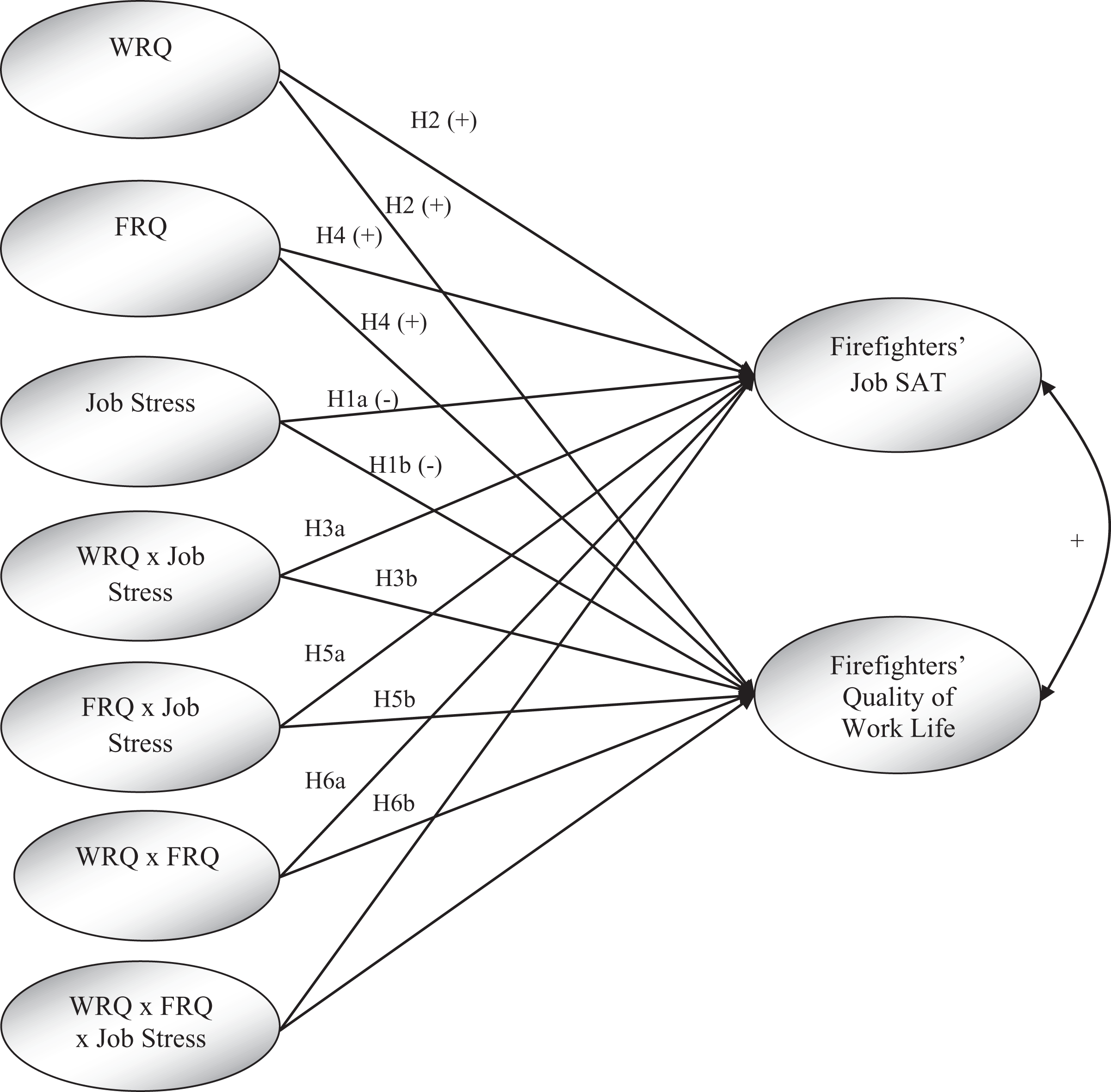
Hypothesized model of wife relational quality (WRQ) and friend relational quality (FRQ) as moderators of job stress and job satisfaction (SAT) and quality of work life. Although not depicted here, all covariance estimates among the exogenous constructs were included in the model.
Method
Participants
The initial sample included 428 male career firefighters employed at 12 municipal fire departments in Texas (from equal numbers of small, medium, and large city departments). Firefighters’ ages ranged from 21 to 65 years old (M = 37.8, SD = 9.4) and most were married (77.6%, n = 332), although 7.9% (n = 34) were divorced, 14.0% (n = 60) were single, never married, and one was widowed. For the purposes of this study, we included only those firefighters who were currently married and who provided relatively complete responses to the survey, resulting in a final sample size of 318 firefighters. Most men identified themselves as Caucasian/White (82.0%, n = 351), although 8.6% (n = 37) identified as Hispanic, 4.2% (n = 18) as Black, 1.6% (n = 7) as Native American, and 2.8% (n = 12) as “other.” Firefighters’ years of service in the fire profession ranged from 4 months to 41 years (M = 13.3 years, SD = 8.5). For those participants who were married, the length of their marriages ranged from 1 month to 40 years (M = 12.5 years, SD = 9.5). Likewise, the length of the participants’ friendship with a fellow firefighter ranged from 2 months to 45 years (M = 11.3 years, SD = 9.1).
Procedure
Upon securing IRB approval, we met with departmental administrators from various municipal fire departments and explained the purposes and procedures of the study. Once permission was granted, we met with fire station personnel and administered paper and pencil surveys to firefighters. In some cases, departmental leaders distributed surveys to firefighters during weekly department or training meetings. All participants were informed and assured of their rights as volunteers in the study. To protect the identity of our participants, questionnaires were completed anonymously and on a volunteer basis. Questionnaires included demographic items (e.g., age, race/ethnicity, marital status and length, friendship length, etc.), occupational items (e.g., years in fire service), and measures of all constructs included in our hypothesized model (see below). All participants reported on a close male friendship with another firefighter within his department; additionally, married participants reported on their marital relationship. The questionnaires, along with self-addressed and stamped envelopes, were distributed with instructions to return the surveys in the mail. Of the 1,070 surveys distributed across the 12 departments, 428 usable surveys were returned, producing an initial response rate of 40%, with our effective sample size producing a final response rate of 29.7%.
Measures
Job stress
Firefighters’ job stress was measured with 6 items adapted from the Perceived Stress Scale (PSS) (Cohen, Kamarck, & Mermelstein, 1983). The original, 14-item PSS is designed to measure the degree to which situations in one’s life are appraised (in a global sense) as stressful. In this study, participants were instructed to think about their work as firefighters in the last month and to report their overall sense of stress on the job (e.g., “I have felt that I was unable to control the important things in my life”). Responses were solicited using a 7-point Likert-type scale that ranged from (1) strongly disagree to (7) strongly agree. Items were averaged together to create a manifest variable score and then parceled when using structural equation modeling (SEM) to identify the latent construct. The adapted PSS scale produced excellent internal reliability with an α coefficient of .90.
Relational quality
Firefighters’ marital and friendship quality were operationalized using three different variables commonly used to assess relational quality within interpersonal scholarship: satisfaction, commitment, and involvement. First, we measured relational satisfaction using Floyd and Morman’s (2000) scale. The scale includes 6 items measuring participants’ satisfaction with their relationships (e.g., “My relationship with my friend is just the way I want it to be”). Participants were asked to consider their relationship with both their wife (if married) and their closest firefighter friend. Responses were solicited using a 7-point Likert-type scale that ranged from (1) strongly disagree to (7) strongly agree. A composite satisfaction score consisting of averaged items was used as one of three indicators of relational quality in the structural model, with higher scores representing greater levels of relational satisfaction. Acceptable reliabilities were obtained for wife satisfaction (α = .92) and friendship satisfaction (α = .85).
Second, we measured participants’ commitment to their closest firefighter friend and spouse using a modified version of Rusbult, Martz, and Agnew’s (1998) commitment subscale from the Investment Model Scale. The original measure includes 8 items assessing relational commitment in romantic relationships. In this study, 4 items were modified to measure participants’ commitment to their same-sex friend (e.g., “I am committed to maintaining my friendship with my male friend”) and commitment to their spouse. Responses were solicited using a 7-point Likert-type scale that ranged from (1) strongly disagree to (7) strongly agree. A composite commitment score consisting of averaged items was used as a second indicator of relational quality, with higher scores representing greater commitment. The modified commitment measure produced excellent reliability for both friendship commitment (α = .91) and wife commitment (α = .91).
Finally, we assessed relational involvement using Floyd and Morman’s (2000) 7-item measure. This scale assessed how much time participants devoted to both friend and spouse (e.g., “I am always spending time with my friend”), how involved they felt in their friend’s and spouse’s lives, and how positive their interactions were with both individuals. Responses were solicited using a 7-point Likert-type scale that ranged from (1) strongly disagree to (7) strongly agree. A composite involvement score consisting of averaged items was used as the final indicator of relational quality, with higher scores representing greater involvement. The measure produced excellent internal reliability estimates for friendship involvement (α = .93) and wife involvement (α = .92).
Job satisfaction
To measure firefighters’ job satisfaction, participants responded to 7 items developed specifically for this study about their experiences with their fire department. Example items included, “I feel like I am an important part of my fire department,” “It is easy to get along with my colleagues,” and “Overall, I am satisfied working in my fire department.” Responses were solicited using a 7-point Likert-type scale that ranged from (1) strongly disagree to (7) strongly agree. Items were averaged together to create a manifest variable score and then parceled when using SEM to identify the latent construct. Alpha reliability for the job satisfaction scale was .87.
Quality of work life
Finally, firefighters’ professional quality of life was measured using 20 items from the Professional Quality of Life Scale (Stamm, 2005). Whereas our measure of job satisfaction focused on firefighters’ departments, this scale assessed specific quality of life indicators commonly associated with service/helping occupations. The measure contains three subscales: satisfaction with the job duties and responsibilities (e.g., “I feel invigorated after working with those I help” and “I like my work as a helper”), compassion (e.g., “I have happy thoughts and feelings about those I help” and “I have beliefs that sustain me in this line of work)”, and fatigue (reverse-coded, e.g., “I feel depressed because of the traumatic experiences of people I have helped” and “I feel worn out because of my work as a helper”). In the present study, we combined the subscales into one aggregate measure for use as an assessment of overall professional quality of life for first responder firefighters, with higher scores representing greater QWL. Responses were solicited using a 7-point Likert-type scale that ranged from (1) strongly disagree to (7) strongly agree. Alpha reliability for the scale was .82.
Data analysis
We employed SEM with maximum likelihood estimation using LISREL 8.80 to test the hypothesized associations in Figure 1. Consistent with the two-step modeling procedures outlined by Kline (2016), a confirmatory factor analysis (CFA) of the measurement model was conducted to assess the relationships among indicators and their respective latent constructs prior to testing the hypothesized model. The measurement model included only the five first-order latent constructs: (a) wife relational quality, (b) friend relational quality, (c) job stress, (d) job satisfaction, and (e) QWL. The first two constructs were identified using participants’ reports of involvement, satisfaction, and commitment with their spouse and closest firefighter friend as indicators of relational quality in both relationships. The other constructs were identified using three parcels to facilitate just-identification. Items were assigned to parcels using a balancing approach (Little, Rhemtulla, Gibson, & Shoemann, 2013). To test all two-way interaction effects and the three-way interaction effect in the structural model, we created orthogonalized interaction terms (Little, Card, Bovaird, Preacher, & Crandall, 2007). For both measurement and structural models, model fit was evaluated with the maximum likelihood chi-square statistic, as well as the non-normed fit index (NNFI), comparative fit index (CFI), standardized root mean square residual (SRMR), and root mean square error of approximation (RMSEA) (Kline, 2016).
Results
Preliminary analysis
Descriptive statistics, including means, standard deviations, and Pearson’s product-moment correlations for all manifest variables, are reported in Table 1. Before CFA and SEM analyses, a trivial amount of missing data (less than 1%) was imputed via the expectation–maximization algorithm in SPSS. Preliminary analyses were conducted to determine if age and years of firefighting service were significantly associated with firefighters’ job satisfaction and QWL. As displayed in Table 1, with the exception of a statistically significant, but negligible association between years of service and QWL (r = −.14, p < .05), both demographic variables were largely unassociated with both outcomes. Thus, we tested our hypothesized model without including either control variable in the analysis.
Descriptive statistics and Pearson’s product-moment correlations for all manifest variables (N = 318).
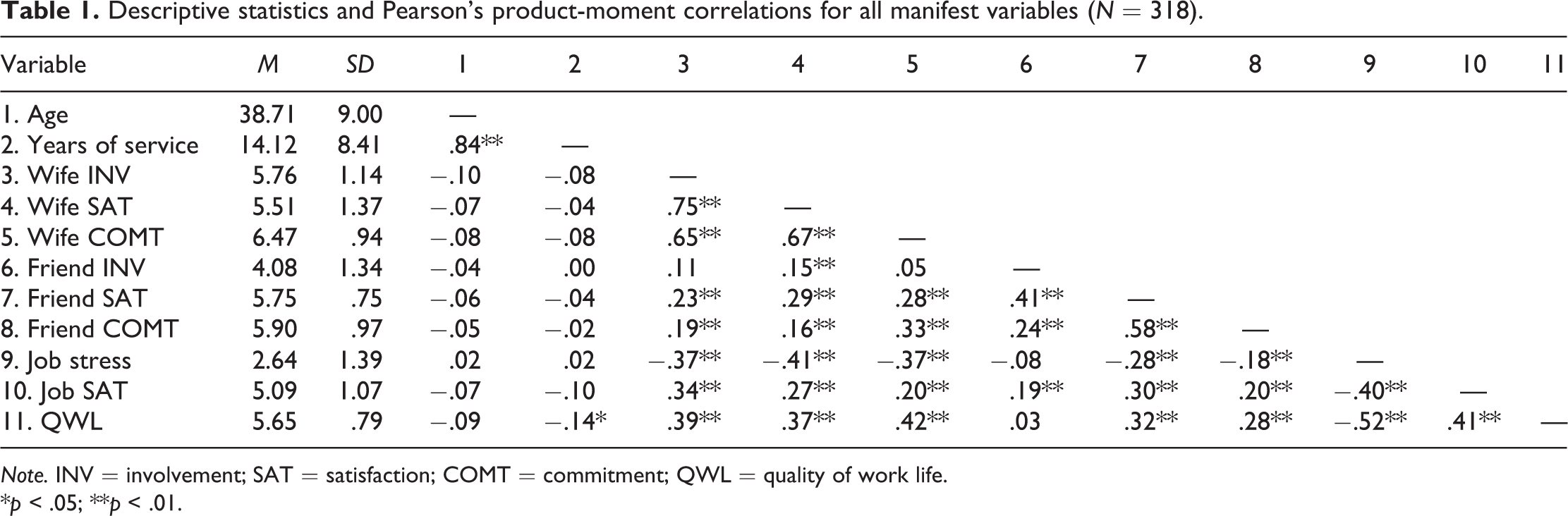
Note. INV = involvement; SAT = satisfaction; COMT = commitment; QWL = quality of work life.
*p < .05; **p < .01.
Primary analysis
At the bivariate level of analysis (see Table 1), job stress is inversely associated with job satisfaction and QWL (H1 supported). Likewise, the results largely support H2 and H4, as both wife relational quality and friend relational quality are positively associated with job satisfaction and QWL.
Measurement model
The measurement model demonstrated good model fit, χ2(80, N = 318) = 221.62, p < .001, NNFI = 0.96, CFI = 0.97, SRMR = .051, RMSEA = .077 (90% CI [.066, .089]). An examination of the modification indices revealed no additional changes that were theoretically defensible and would improve model fit. With the exception of a modest factor loading for involvement (i.e., .42) on the friend relational quality construct, each of the remaining indicators loaded well on their respective latent factors, with factor loadings ranging from .61 to .95. Constraining the two factors (i.e., job stress and QWL) that produced the largest intercorrelation (−.58) to equality yielded a significant decline in model fit, Δχ2(4) = 502.08, p < .001, confirming that the five-factor solution was most appropriate.
Structural model
The hypothesized structural model demonstrated good model fit, χ2(288) = 723.88, p < .001, NNFI = .94, CFI = .95, SRMR = .044, RMSEA = .069 (90% CI [.062, .075]), explaining 31% of the variance in job satisfaction and 44% of the variance in QWL. Table 2 presents the unstandardized and standardized regression parameters for both outcomes. The results indicate that relational quality with both spouse and friend are significant, positive predictors and job stress is a significant, negative predictor of job satisfaction and QWL (H1, H2, and H4 supported). The main effect of job stress on satisfaction and QWL depends on wife relational quality, however, as indicated by the significant two-way interaction effect for both outcomes. Likewise, there was a significant two-way interaction effect of job stress by friend relational quality on QWL, as well as a significant two-way interaction effect of wife relational quality by friend relational quality on QWL. The three-way interaction effect was not statistically significant.
Regression parameters for job satisfaction and QWL (N = 318).

Note. Although not depicted here, these parameters were estimated while controlling for the covariances among the exogenous constructs and the covariance between job satisfaction and QWL (ψ = .10, p < .05). QWL = quality of work life; RQ: relational quality; FRQ: friend relational quality.
*p < .05; **p < .01.
We decomposed the significant interaction effects using the procedure described by Cohen, Cohen, West, and Aiken (2003), calculating simple slopes at the mean and ±1.5 standard deviations away from the mean for each first-order predictor variable. For the two-way interaction effect of wife relational quality by job stress on job satisfaction (see Figure 2), the decomposition reveals a pattern that is contrary to what we hypothesized (H3 not supported), as the inverse association between stress and satisfaction changes from statistically nonsignificant at low levels of relational quality with wife (b = −.01, z = −.07, p > .05) to significant and greater in magnitude at moderate (b = −.37, z = −4.56, p < .01) to high levels of relational quality with wife (b = −.74, z = −5.59, p < .01). Likewise, the decomposition for the same two-way interaction effect on QWL (see Figure 3) reveals a similar trend, as the inverse association between stress and QWL grows in magnitude across low (b = −.30, z = −2.30, p < .05) to moderate (b = −.58, z = −7.04, p < .01) to high levels of relational quality with wife (b = −.87, z = −6.82, p < .01).

Decomposition of the two-way interaction effect of wife relational quality (WRQ) by job stress on job satisfaction (SAT). Values are z-scores. SD = standard deviation.
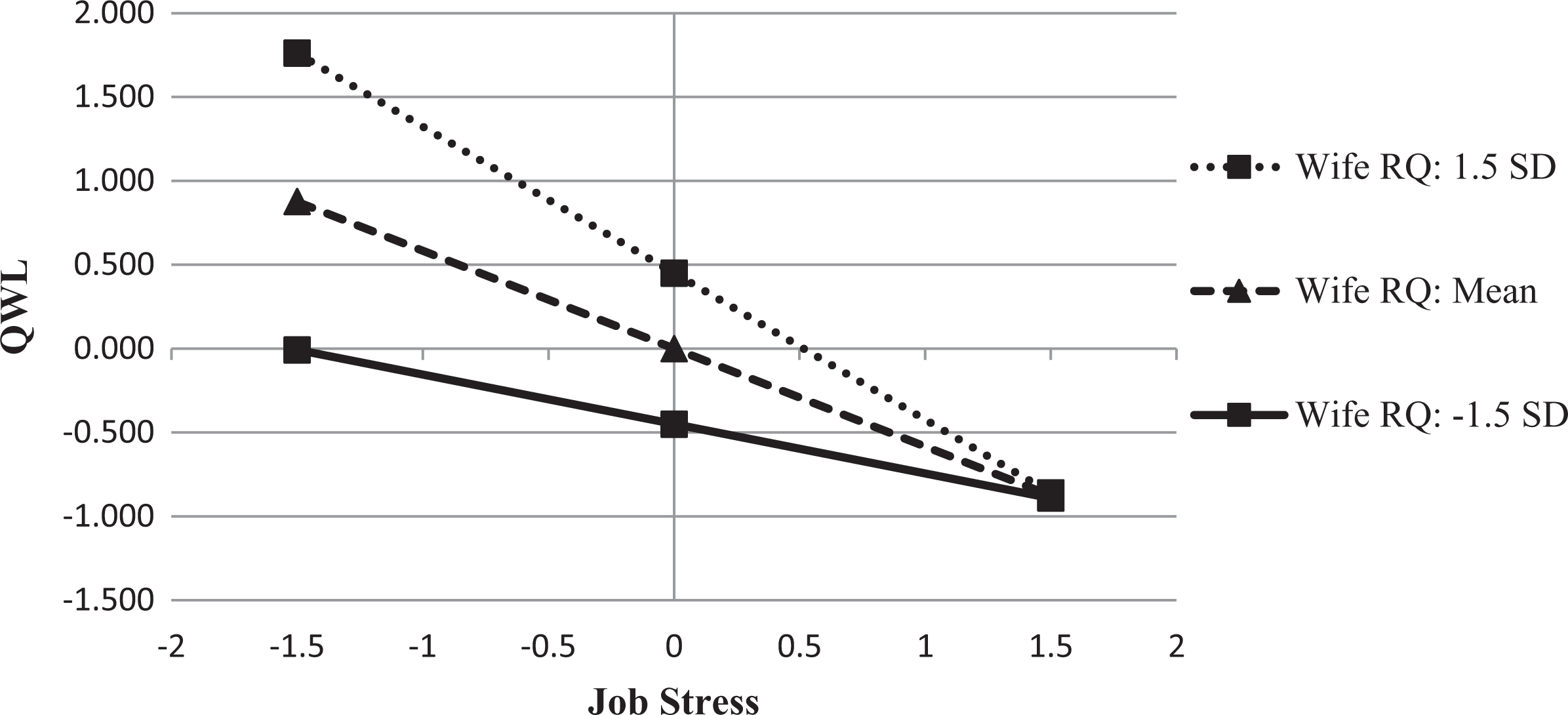
Decomposition of two-way interaction effect of wife relational quality (RQ) by job stress on quality of work life (QWL). Value are z-scores. SD = standard deviation.
The other two interaction effects for QWL were consistent with what we hypothesized (H5 and H6 supported). Specifically, the decomposition of friend relational quality by job stress (see Figure 4) reveals that the negative association between stress and QWL weakens in magnitude across low (b = −.92, z = −6.65, p < .01) to moderate levels of relational quality with friend (b = −.58, z = −7.04, p < .01), to statistically nonsignificant at high levels of relational quality with friend (b = −.25, z = −1.78, p > .05). Finally, the decomposition of wife relational quality by friend relational quality (see Figure 5) reveals that the positive association between wife relational quality and QWL changes from being statistically nonsignificant at low levels of relational quality with friend (b = .06, z = .44, p > .05) to significant and greater in magnitude at moderate (b = .30, z = 3.75, p < .01) to high levels of relational quality with friend (b = .54, z = 3.76, p < .01).
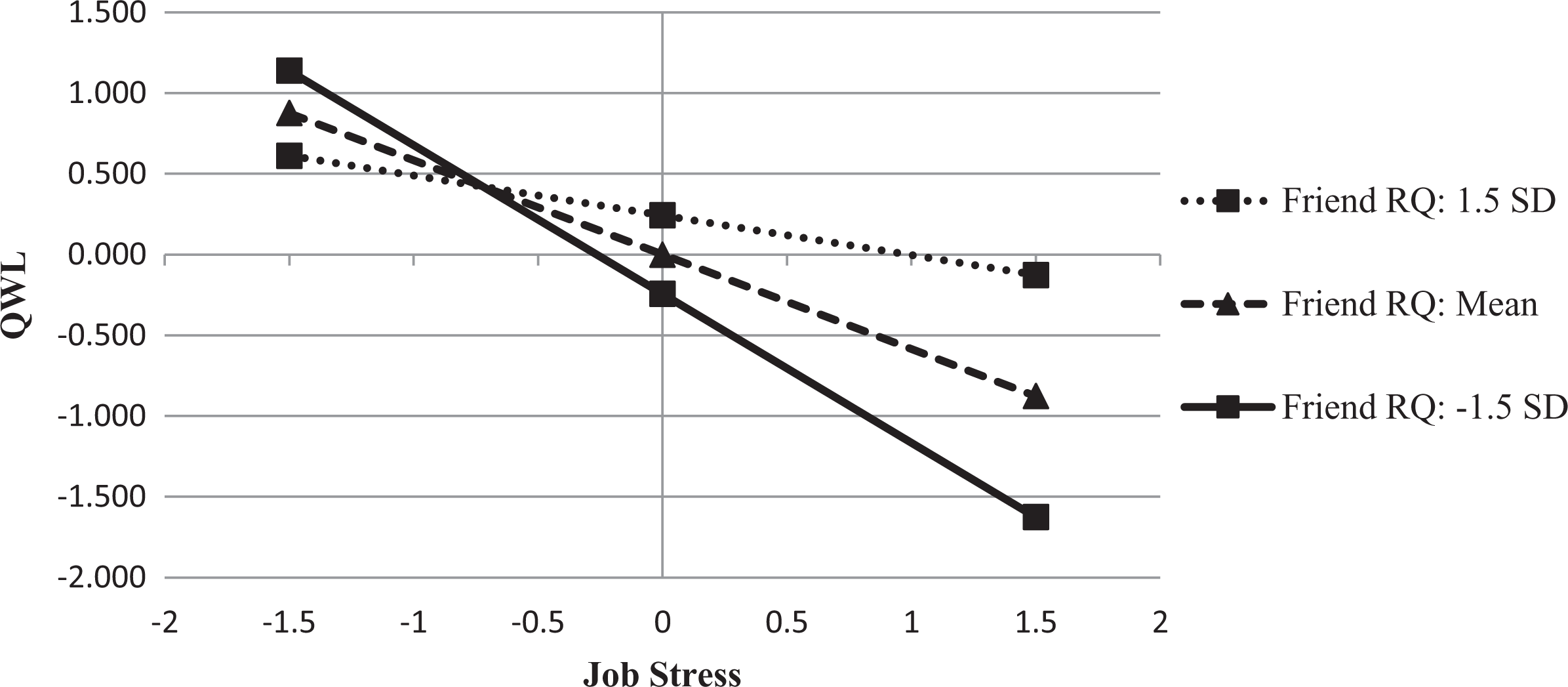
Decomposition of two-way interaction effect of friend relational quality by job stress on quality of work life (QWL). Values are z-scores. SD = standard deviation.
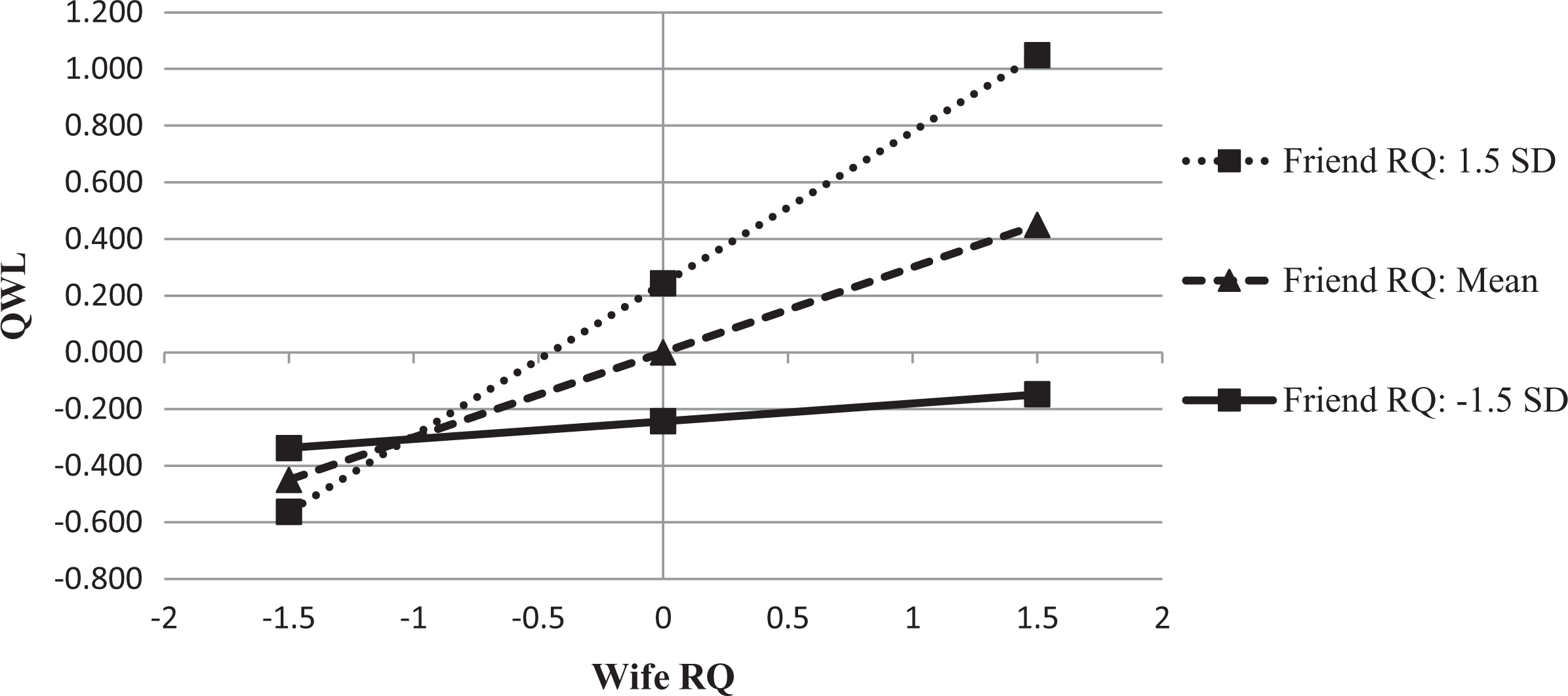
Decomposition of two-way interaction effect of wife relational quality (RQ) by friend relational quality (RQ) on quality of work life (QWL). Values are z-scores. SD = standard deviation.
Discussion
Other than the fire service, few occupations place employees consistently and directly in harm’s way, exposing workers to a vast array of dangerous and life-threatening experiences on a daily basis. The current study contributes to ongoing efforts to understand firefighter well-being by providing a more nuanced understanding of the powerful outcomes associated with having relationship quality within marriage and within the same-sex friendships of men. Overall, our results indicate that relationship quality both at home and at the firehouse is essential in helping to mitigate the negative effects of job stress on firefighters’ job satisfaction and QWL. Despite the more general support obtained for our theoretical line of reasoning, however, one surprising and unintended consequence of strong marriages for firefighters may be that marital quality actually magnifies the negative effects of stress on job satisfaction and QWL. Consequently, the results of this study extend previous research on relationship quality and professional outcomes by providing at least three implications worth noting.
First, our results support the contention that firefighters are more likely to be satisfied with their jobs and to experience enhanced QWL when they have high-quality marriages or high-quality friendships with their coworkers. In fact, having both appears to magnify firefighter QWL given that both forms of relational quality emerged as significant predictors of QWL, and the positive effect of one form of relational quality is enhanced to some degree in the presence of the other. Researchers have already demonstrated that marital quality is associated with a host of positive physical and mental health outcomes for men (Tumin & Zheng, 2018; Wanic & Kulic, 2011), including lower rates of depression and lower alcohol consumption (Haddock et al., 2016). One meaningful implication of our results, then, is that they extend marriage benefit research into the fire service context and provide further support for the contention that marital quality, when examined by itself, is positively associated with firefighters’ job satisfaction and QWL (see Table 1). Similarly, the friendship quality of firefighters is positively associated with job satisfaction and QWL and extends previous work on the health-promoting benefits associated with close friendships between men into the masculine culture of the firehouse. At first glance, both sets of findings are not only consistent with the social support literature that helped frame our investigation, but they underscore the need for training programs that help firefighters cultivate strong marriages at home and strong friendships at work. A closer examination of the differences between these two sources of social support, however, reveals an interesting tension that may exist for firefighters and their spouses when it comes to managing the stress associated with the job, leading to our second implication.
Specifically, the negative effects of occupational stress on job satisfaction and QWL are buffered by firefighter friendship quality, yet the negative effects of job stress on both outcomes are enhanced by marital quality. This not only counters the stress buffering hypothesis with which we advanced our predictions, but it reveals an interesting tension that likely exists for firefighters as they interact with their wives at home. Firefighters with strong marriages have a potential source of social support that should help them navigate the challenges associated with first-responder work. Thus, on one hand, having a high-quality marriage may lead firefighters to deprioritize their work lives when they are experiencing stress, undermining their job satisfaction. On the other hand, firefighters may experience feelings of ambivalence as their wives seek or expect their husbands to share work-related experiences with them, many of which involve stress-related and/or traumatic circumstances. Not only might the disclosure of these work-related experiences perpetuate upset feelings for firefighters themselves, in some cases, they may elicit fear responses from their spouses given the potential dangers associated with firefighting in general. As firefighters attempt to catch up and reconnect relationally with their spouses after long and difficult shifts on the job, the added burden of seeing their partners react to particularly aversive information may exacerbate the negative effects that job stress is having on their feelings about the job. For those who choose not to disclose their true feelings about their work to their spouses, the inherent tension of withholding information that otherwise would be shared in a high-quality marriage may lead some firefighters to engage in emotion labor.
As one form of impression management, emotion labor occurs when an individual manages or regulates the experience and expression of emotion to meet the emotion display rules and expectations of a social group and/or conversational partner (Hochschild, 1983). According to Hochschild (1983), individuals rely primarily on two different strategies when engaging in emotion labor: surface acting and deep acting. Whereas surface acting involves hiding, suppressing, or faking the emotions that an individual feels in order to display the emotion required by the organization (or in this case, the spouse), whether by explicit or implicit rules, deep acting refers to an individual’s effort at trying to actually experience the desired or required emotion. When appropriated to the present set of findings, firefighters may feel the need to engage in surface acting when probed by their spouses about their jobs and work-related experiences, especially given the predominantly masculine culture of firehouses and the gendered expectations of remaining strong and stoic in the face of traumatic and upsetting events. Given that emotion labor is associated with negative psychosocial effects (Wharton, 1999), including stress, self-alienation (Hochschild, 1983), and depression (Ashforth & Humphrey, 1993), firefighters may find that the added burden and stress of hiding or faking their emotions to protect their spouses from fear and anxiety related to receiving disclosures about work may heighten the negative effects that job stress is having on their job satisfaction and QWL. In fact, Sanz-Vergel, Rodriguez-Munoz, Bakker, Demerouti (2012) found spillover effects in emotion labor from work to home, such that surfacing acting at work spills over to surface acting at home, and spouses tend to adopt similar emotional management styles in response to their partner’s use of surface acting. Thus, the emotion labor of firefighters in their relationships with spouses and children represents an important direction for future research given the counterintuitive findings reported here for marital quality and job stress.
The third implication of our research emanates from the potential benefits that come from having a high-quality, same-sex friendship with a fellow firefighter. Our results indicate that firefighter friendship quality helps buffer the negative effect of job stress on QWL, and thus, represents an important source of social and emotional support for firefighters. In fact, given the unique dynamic that may exist for married firefighters who attempt to protect their spouses from the stress associated with the perils of the job, the benefits of having a strong coworker friendship with someone who understands those perils and more is magnified. Ironically, single firefighters may benefit from having a strong friendship with a fellow firefighter, as well as from not having to protect a spouse or loved one at home from the emotional trauma and potential danger that comes with the job. For both married and single firefighters, however, one explanation for these findings stems from the nature of most firehouse cultures, which tend to inculcate masculine, activity-oriented, side-by-side closeness through shared experiences, camaraderie, and a common understanding of the profession. This provides firefighters an additional, yet unique source of social and emotional support grounded in concepts of masculine intimacy and gendered closeness. As Robinson et al. (2017, 2018) noted, for many men, especially younger men, close male/male friendships are easier to maintain and are more emotionally satisfying than their romantic relationships with women. They theorized that this is due to the unique resources and benefits generated from high-quality friendships with men, and from the freedom derived by rejecting the more restrictive gendered role demands presumably associated with romantic, heterosexual relationships. In light of their theorizing, then, we contend that the potential benefits of having a strong firefighter friendship may be magnified even further given the demands of the profession and the hyper-masculine culture of most firehouses.
Of course, our findings should be interpreted with caution given the inherent limitations of the research design. Despite our best efforts to recruit as many firefighters as we could from a variety of fire departments, our participants consisted of predominantly white men from the state of Texas. This, in turn, limits the generalizability of our findings to the ethnic, sociocultural, and gendered characteristics of the sample. Likewise, our reliance on self-report measures prevented us from assessing potential partner effects that may exist in relational communication and quality and various job outcomes for firefighters. In fact, there may have been some degree of nonindependence in reports of friendship quality left unaccounted for in our statistical analyses given our use of anonymous surveys and our desire not to match firefighter responses based on friendship dyads. Future researchers can extend our results by examining how firefighters disclose or withhold information about the job from their spouses using dyadic research designs. Likewise, scholars might find that the emotion labor of firefighters holds particularly important implications for the mental health and well-being of these first responders, and thus, needs further investigation. Given the hyper-masculine nature of most firehouses, researchers should also investigate the degree to which partner relational quality and friendship quality function in similar and different ways for female firefighters. Such work would reveal interesting insights into the ways in which women do the communication work of firefighting (cf. Donovan, 2019) and potentially resist the gendered nature of the profession.
These limitations notwithstanding, our investigation provides substantial evidence in support of advocating for stronger marriages and coworker relationships for firefighters. Although the benefits of having a strong friendship with a fellow firefighter are relatively clear and straightforward, the benefits of having a strong marriage are more nuanced and dependent upon how the firefighter views and responds to the relational burdens of maintaining a strong spousal relationship in the face of doing perilous and emotionally taxing work. Thus, we call for future investigations to focus more specifically on the communication behaviors of firefighters in both relational contexts to advance training and intervention programs that help these civic heroes navigate the emotional and relational burdens of the firefighting profession.
Footnotes
Funding
The author(s) received no financial support for the research, authorship, and/or publication of this article.

Open research statement
As part of IARR’s encouragement of open research practices, the author(s) have provided the following information: This research was not pre-registered. The data used in the research are available. The data can be obtained by emailing: