




Abstract
Using daily diary data from 81 same-sex couples, we examined the link between stress experienced outside the relationship (external) and within the relationship (internal) for individuals (stress spillover) and their partners (stress crossover). Extending prior literature, we examined spillover and crossover of both common external (e.g., work stress) and sexual minority stress (e.g., discrimination based on sexual orientation) and the extent to which individuals’ own and their partner’s difficulties in emotion regulation moderated these associations. We found compelling evidence for spillover of common external stress and crossover of both types of stress. Further, we found both concurrent (same day) and lagged (next-day) stress spillover and crossover processes for both types of external stressors, moderated by both partners’ reported difficulties in emotion regulation. Findings related to stress spillover and crossover as well as implications for researchers and clinicians working with same-sex couples are discussed.
Nearly everyone is exposed to stress in daily life (American Psychological Association, 2017). For individuals in a romantic relationship, stressors may originate outside the relationship (i.e., external stress, such as work- or school-related stress) or inside the relationship (i.e., internal or relationship stress, such as relational conflict or annoying habits of the partner; Randall & Bodenmann, 2017). Stress spillover occurs when one partner’s experience of external stress influences their own experience of relationship stress. For example, if one has a stressful day at work, one may be likely to come home and need time to “unwind,” which can indirectly create distance between partners. Such withdrawal may be followed by less communication and time spent together for both partners, which in turn can contribute to perceptions of elevated relationship stress. Indeed, reports of greater common external stress are linked to greater relationship stress among both partners in heterosexual relationships, which supports the stress spillover process (Neff & Karney, 2009).
In addition to stress spillover, stress can crossover from one partner to the other (Westman, 2001, 2006). Stress crossover occurs when stress experienced by one partner affects the other partner’s stress experience. As such, stress can be considered a dyadic phenomenon, one that affects both partners in a romantic relationship (e.g., Bodenmann, 1995, 2005; Randall & Bodenmann, 2017). For example, a stressful day at work for one partner can leave one “on edge” and prone to have a conflict with the other partner at home (Westman & Vinokur, 1998). Thus, one’s external stress can affect not only one’s own perceived relationship stress (spillover, commonly described as actor effects) but also the other partner’s perceived relationship stress (crossover, commonly described as partner effects).
There is a rising number of people identifying as lesbian, gay, bisexual, or transgender (LGBT) in the U.S. (4.5%; Newport, 2018), and nearly one-million same-sex couple households (Characteristics of Same-Sex Couple Households, 2018). Yet most research on stress spillover and crossover processes within romantic relationships has focused on different-sex couples (for exceptions, see Feinstein, McConnell, Dyar, Mustanski, & Newcomb, 2018; Otis, Rostosky, Riggle, & Hamrin, 2006; Totenhagen, Butler, & Ridley, 2012). As same-sex couples may experience unique external stressors stemming from their sexual minority status (i.e., sexual minority stress; Meyer, 2003), there is a critical need to explore stress spillover and crossover processes in same-sex couples, especially for the different sources of stress they face. Further, individual factors, such as difficulties with emotion regulation, may affect stress spillover and crossover processes. Emotion regulation indicates how individuals manage their emotional and behavioral responses amid stressful experiences (J. J. Gross, 2015). Those struggling to regulate their emotions (i.e., having greater difficulties in emotion regulation) may be more susceptible to stress spillover and crossover. The present study addresses important gaps regarding stress spillover and crossover in same-sex couples by examining the unique processes for common external and sexual minority stress and the moderating effects of difficulties in emotion regulation for these processes.
Sources of external stress in same-sex couples
Common external stress
Individuals commonly experience daily stress outside the relationship (i.e., common external stress), due to various commitments. Though most daily stressors are perceived as relatively minor, the accumulation of daily, minor stress can erode relationship quality over time. For example, daily common external stress is associated with increased distance and reduced closeness between partners, and a greater likelihood for divorce among married different-sex couples over time (Bodenmann, 2005; Totenhagen et al., 2012). Moreover, daily common external stressors can take a toll on both romantic partners via stress spillover and crossover (Falconier, Nussbeck, Bodenmann, Schneider, & Bradbury, 2015).
Despite prior research with different-sex couples, associations between spillover and crossover of stress in same-sex couples, and whether it varies by type of external stress, remain unclear. This is a notable limitation in the literature given the potential benefits of this knowledge to mental health providers working with same-sex couples, especially because one of the most common reasons sexual minority individuals seek mental health counseling is for relational concerns (Rogers, Emanuel, & Bradford, 2003). Therefore, understanding the stress spillover and crossover processes that may occur, for both common and sexual minority stress, is of importance to researchers and clinicians alike.
Sexual minority stress
In addition to common external stress, same-sex couples may experience unique stress due to their sexual minority status (Meyer, 2003). Sexual minority stress may take the form of discrimination at work or lack of support from family or friends based on one’s sexual orientation (Lewis, Derlega, Berndt, Morris, & Rose, 2001). Indeed, sexual minority individuals may face greater levels of stress due to stigma (Hatzenbuehler, 2009), which is negatively associated with psychological well-being (Mereish & Poteat, 2015).
Sexual minority stress is also linked with relational well-being: a recent meta-analysis based on 32 studies showed sexual minority stress to be negatively associated with relationship quality (Cao et al., 2017). Further, sexual minority stress has been associated with more frequent negative interactions within same-sex couples (Hatzenbuehler, 2009). Feinstein, McConnell, Dyar, Mustanski, & Newcomb (2018) examined the spillover and crossover of both common external stress and sources of minority stress (i.e., internalized stigma, microaggressions, and outness) onto relationship functioning (i.e., relationship quality and negative interactions) using cross-sectional data with a sample of male same-sex couples. They found that both higher common external and minority stress were associated with more negative relationship interactions (Feinstein et al., 2018). As many researchers, like Feinstein and colleagues, have adopted a cross-sectional design, there is limited investigation into the temporal process of stress spillover and crossover, particularly in same-sex relationships. The current investigation extends cross-sectional research to examine spillover and crossover of common external and sexual minority stresses using a daily diary design and explores difficulties in emotion regulation as a potential moderator.
The role of difficulties in emotion regulation
Not all individuals react to stressors in the same way, as various individual factors make one susceptible to stress spillover or crossover (e.g., Falconier et al., 2015). One important factor to consider is individuals’ general ability (or difficulty) to regulate their emotions. Emotion regulation has been defined as the process by which individuals manage the occurrence, experience, and expression of emotions (J. J. Gross, 2015). Emotion regulation can be measured as individuals’ general capacity for recognizing and regulating emotions for desired outcomes, or difficulties in modulating emotions with effective strategies. General, trait-like difficulties in regulating emotions have been found to moderate the association between stress and psychological and physical well-being such that individuals with greater difficulties in emotion regulation report lower well-being in the face of elevated stress than those with fewer difficulties in emotion regulation (Bradley et al., 2011; R. Gross, 2015).
Emotion regulation is also important in romantic relationships (Buck & Neff, 2012; Repetti & Wang, 2017), perhaps more so than other types of relationships because of the high level of interdependence in romantic relationships (Agnew & VanderDrift, 2015). Difficulties in emotion regulation are associated with harmful behaviors in relationships, such as aggression (McNulty & Hellmuth, 2008) and relationship dissolution (Lavner & Bradbury, 2012). On the other hand, partners’ co-regulatory strategies (e.g., appraise and regulate emotions together) are linked to psychological well-being (Butler & Randall, 2013; Horn & Maercker, 2016). Notably, the process of regulating emotions is iterative (J. J. Gross, 2015). That is, romantic partners’ actions in response to each other’s experience of stress could potentially elevate the shared experience of stress, such as relationship stress (Levenson, Haase, Bloch, Holley, & Seider, 2013). It is possible that individuals’ trait-like lack of capacity to regulate their emotions may poise them with greater susceptibility to the iterative process of stress spillover on a daily basis as identified by the system transactional model (Bodenmann, 1995, 2005). In other words, individuals with greater difficulties in emotion regulation may face more challenges to mitigate the spillover or crossover of daily external stress onto their experiences of relationship stress.
Of note, sexual minority individuals’ ability to effectively regulate their emotions is linked to their coping strategies with sexual minority status (Hatzenbuehler, 2009; Hatzenbuehler, McLaughlin, & Nolen-Hoeksema, 2008). Therefore, individual partners’ difficulties in emotion regulation may increase same-sex couples’ risk for stress spillover and crossover. However, it is uncertain if this moderating effect would differ between common external and sexual minority stress. Further, whether individuals’ own or their partners’ difficulties in emotion regulation plays a more prominent role in the stress spillover and crossover process remains largely unexamined. Given partners’ interdependence (Agnew & VanderDrift, 2015; Kelley & Thibaut, 1978), it is important to examine individuals’ own and their partner’s difficulties in emotion regulation concurrently as both pose risk for both partners in stress spillover and crossover processes. Moreover, a daily diary design will afford researchers the opportunity to capture trends in stress spillover and crossover processes as couples experience stress from day to day.
The current study
The goal of the current study was to examine spillover and crossover of both common and sexual minority stress experienced by same-sex couples and to examine the moderating effects of difficulties in emotion regulation on these processes using a daily diary design. Conceptualizing stress as a relational construct (Randall & Bodenmann, 2009, 2017) and stress spillover and crossover processes as nuanced from day to day, we adopted a daily diary dyadic design to examine actor and partner effects for both partners in same-sex relationships as stress occurs (Bolger & Laurenceau, 2013). Notably, the use of a daily diary design permits examination of not only concurrent effects (i.e., how stress spillover and crossover occur on the same day) but also lagged effects (i.e., how one partner’s experiences of external stress from 1 day may be associated with a change in both partners’ relationship stress the following day). Studying lagged effects helps illuminate the extent to which external stress spilling and crossing over are short lived, occurring only on the same day, or remain from 1 day to the next.
We hypothesized perceptions of daily common external stress would be positively associated with same-day relationship stress for individuals themselves (spillover) and their partner (crossover; H1). Similarly, we expected those who perceived sexual minority stress would report greater same-day relationship stress (spillover) and so would their partners (crossover; H2). Figure 1 presents visual representation of our hypotheses. As a research question, we explored whether these spillover and crossover processes of common external (RQ1a) and sexual minority stress (RQ1b) would persist the following day (lagged effects).

Model of hypothesized relationships. DERS = difficulties in emotion regulation; A = Partner A; B = Partner B.
Additionally, we examined the moderating effects of both partners’ difficulties in emotion regulation on stress spillover and crossover processes. We hypothesized the positive association between common external stress (H3a) or sexual minority stress (H3b) and relationship stress would be stronger for those reporting greater trait difficulties in emotion regulation. As a research question we explored whether the moderating effects of difficulties in emotion regulation on stress spillover and crossover would persist the following day (lagged effects; RQ2).
Method
Procedures and participants
Participants were recruited from Arizona (AZ) and Alabama (AL) in the U.S. through LGBT organizations’ electronic mailing lists, social media platforms, and by posting flyers around the local communities. Eligible couples had to be in a romantic relationship for at least 2 months, of legal age for consent, and willing to participate. Interested participants received distinct numeric IDs from the research team after their eligibility was determined. They were sent links to complete online surveys using their IDs, including a baseline survey followed by 14 days of daily diaries with reminders through Survey Signal at a designated time in the evening. Participants were each compensated up to US$30 (US$60/couple): US$6 for completing the baseline survey, US$1 for completing each daily diary entry, and a US$10 bonus if both partners completed more than 12 daily diary surveys.
Ninety-five same-sex couples (AZ = 53, AL = 42 couples) completed the baseline and part of the daily diary surveys. Fourteen couples had at least one partner who did not complete the daily diaries for at least three consecutive days and were subsequently excluded given this study’s focus on daily stress crossover, resulting in a final sample of 81 couples (AZ = 44, AL = 37 couples). These inclusion criteria have been used in previous literature (Totenhagen, Butler, Curran, & Serido, 2016; Totenhagen, Curran, Serido, & Butler, 2013). χ2 tests demonstrated no significant differences between those excluded and those remained regarding ethnicity, parental status, or region, although those excluded tended to endorse lower educational levels. Across the retained sample, 13.57% of daily entries were missed or skipped, suggesting acceptable participant compliance through 14 days of daily diaries.
Most participants identified as women (71.6%). We explored possible gender differences in relationship length, age, ethnicity, education, and the presence of children at home with t-tests and χ2 tests. Men and women differed only with respect to children; women were more likely to report having children living at home (26.7%) than men (6.5%). Given minimal gender differences, we reported combined men’s and women’s demographics. Most participants were Caucasian (74.1%) and had attended at least some college (95.1%). On average, participants were 33.7 years old (SD = 9.9, range = 18.8–61.1 years) and had been in their relationship for 5.4 years (SD = 6.0, range = 0.3–35.0 years). Approximately 18% indicated they were married, and of those who were not married, 82% reported they lived together. Participants identified their sexual orientation as lesbian (51.2%), gay (29.6%), bisexual (11.7%), queer (5.6%), or other (1.9%).
Measures
Daily relationship stress and common external stress
Daily common external stress and relationship stress were measured with the Multidimensional Stress Scale for Couples–Revised (Bodenmann, Schär, & Gmelch, 2008), adapted for daily use. Five items on a 4-point Likert-type scale (from 0 = not at all to 3 = strong) assessed the severity of common external stress (job/education, social contacts, free time, children, and family of origin). Another 5 items assessed relationship stress (difference of opinion with your partner, difficult behavior of the partner, insufficient behavior of the partner, unsatisfactory distribution of duties and responsibilities, and neglect on the part of the partner). Composite measures of relationship stress and common external stress were summed separately. Each subscale showed acceptable reliability (Cronbach’s α = .75 for common external stress and α = .75 for relationship stress).
Daily sexual minority stress
Participants completed an adapted 13-item version of the Measure of Gay-Related Stress (Lewis et al., 2001). For the daily diaries, to reduce participant fatigue and increase retention (Stone, Kessler, & Haythornthwaite, 1991), we revised the original 56 item scale to decrease length. In doing so, we focused on retaining items representing each of the 10 original subscales (i.e., family reaction to sexual orientation, family reaction to partner, visibility with family and friends, visibility with work and public, misunderstanding, discrimination at work, general discrimination, sexual orientation conflict, and violence and harassment) and combining (or deleting) items so that items retained were most likely to occur on a daily basis. Participants reported the amount of stress they experienced that day in response to each item using a 4-point Likert-type scale (from 0 = no stress to 3= severe stress). A composite score was calculated, showing good reliability (Cronbach’s α = .83). However, given the report of daily sexual minority stress was highly skewed (only 22% of the daily entries across all participants endorsed at least one source of sexual minority stress), we transformed this measure to be dichotomous so that 1 = experienced sexual minority stress and 0 = did not experience sexual minority stress. Subsequent analyses performed on this measure in both continuous and dichotomous forms revealed similar results, so we reported findings based on dichotomous daily sexual minority stress, given data skewness.
Difficulties in emotion regulation
Difficulties in emotion regulation were measured at baseline with a 25-item version of the Difficulties in Emotion Regulation Scale (Gratz & Roemer, 2004). This 25-item version excluded the awareness and clarity subscales of the original DERS but contained all items for the remaining four subscales (nonacceptance, goals, impulse, strategies). This decision was made given our interest in more action-oriented emotion regulation reflected in these four remaining subscales and is supported by prior research demonstrating that awareness and clarity may represent a separable construct (Chiu, Ewing, & Holley, 2014). Participants reported the frequency of their experiences with difficulties in managing or regulating their emotions (e.g., “When I am upset, I become out of control”) using a 5-point scale ranging from 1 = almost never to 5= almost always. A composite measure of DERS was summed, with high scores indicating greater difficulties in emotion regulation, and showed excellent reliability (Cronbach’s α = .90).
Data analysis
We ran two multilevel models appropriate for longitudinal actor–partner interdependence models (APIMs) with indistinguishable couples (e.g., Kashy, Donnellan, Burt, & McGue, 2008) using SAS version 9.4 (2011). One of the models examined the concurrent effects of daily external stress (common and sexual minority) on daily relationship stress, whereas the other examined the 1-day lagged effects. We initially included gender, location, and age as controls given that men and women might respond to stress differently (e.g., Matud, 2004), the data were collected from two states in the U.S. characterized by potentially different attitudes toward same-sex couples (Pizmony-Levy & Ponce, 2013), and there are possible age differences in emotional reactions to stress (Scott, Sliwinski, Mogle, & Almeida, 2014). However, none of the controls were significant, nor did their inclusion alter the patterns of results, so they were excluded in favor of more parsimonious models. The final longitudinal APIM model included actor and partner daily common external stress, actor and partner daily sexual minority stress, actor and partner difficulties in emotion regulation, and interactions between actor and partner daily stress (common and sexual minority) with actor and partner difficulties in emotion regulation, as well as the 1-day lag of the dependent variable (relationship stress) in the fixed effects to model autocorrelation and change in relationship stress from 1 day to the next. This way, a significant effect can be interpreted as being associated with a change in relationship stress from the previous day. Common external stress was person-centered so that interpretation of effects reflected fluctuations from individuals’ personal average experiences of stress (Enders & Tofighi, 2007), and difficulties in emotion regulation were grand-mean centered to reflect variability between individuals. All significant interactions were probed using simple slope analyses appropriate for multilevel models (Preacher, Curran, & Bauer, 2006) at one standard deviation above and below the mean when variables were continuous (Aiken & West, 1991), and sexual minority stress was probed at no stress and experience of stress. To provide the reader with a sense of the magnitude of effects, we report both unstandardized (b) and standardized β’s (B) for the simple slopes of probed interactions. Bs were calculated in the standard way as b × [SD–X/SD –Y], where SD–X and SD–Y refer to the standard deviations across all the data (Snijders & Bosker, 1999).
Results
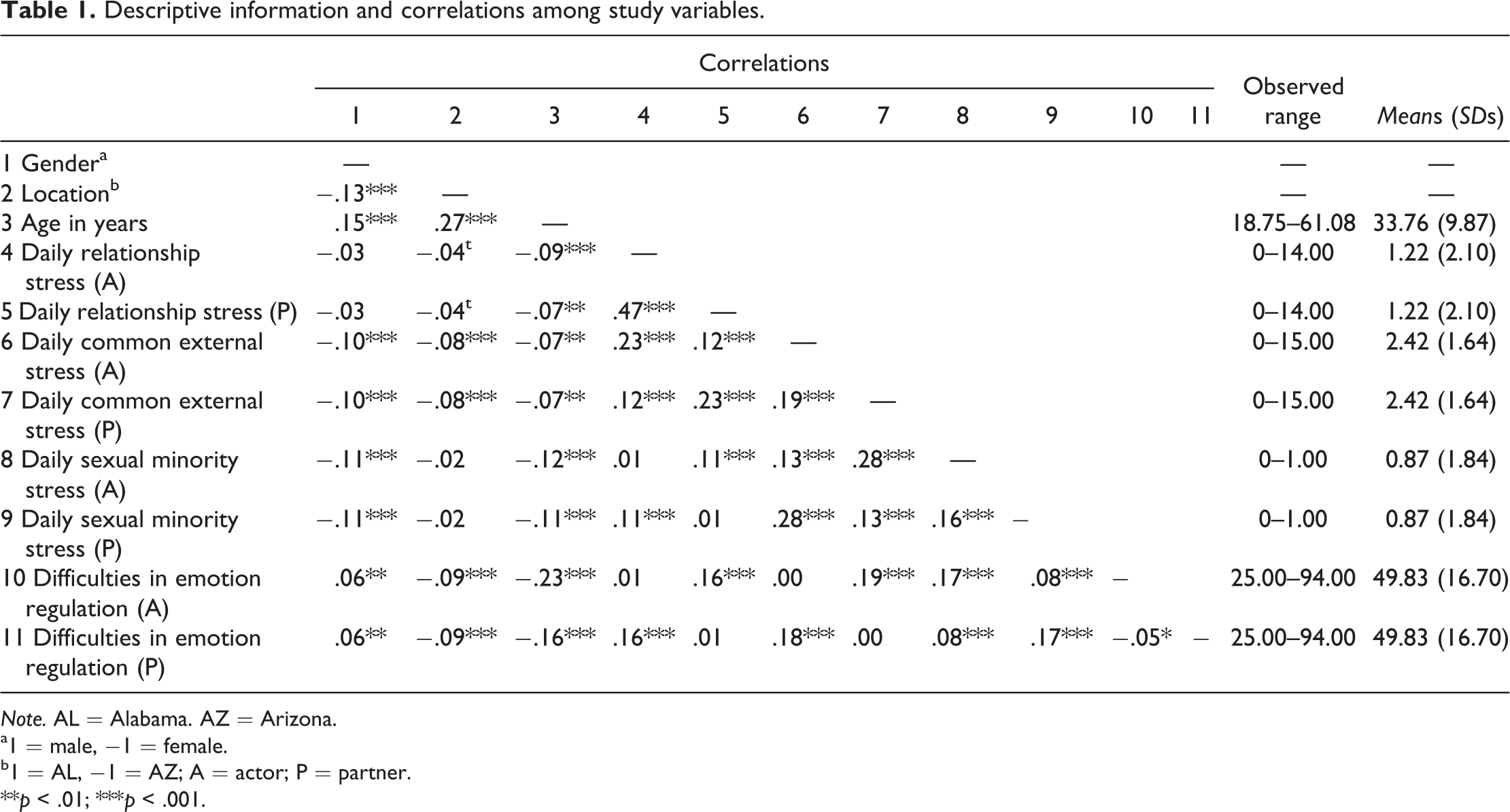
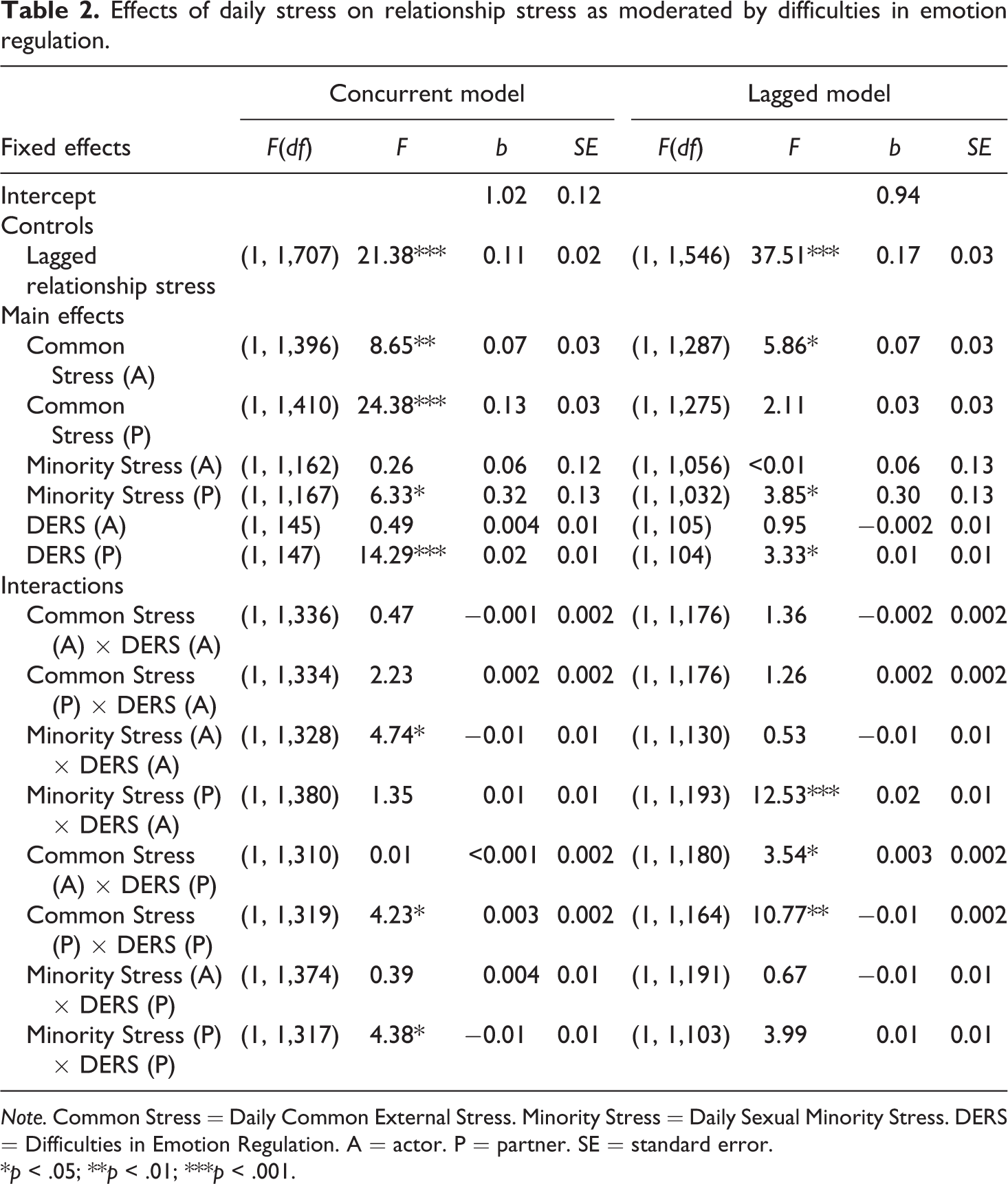
Descriptive information and correlations among study variables can be found in Table 1. Below, we highlight results from the multilevel models specific to our hypotheses and research questions (see Table 2 for full results).
Descriptive information and correlations among study variables.
Note. AL = Alabama. AZ = Arizona.
a1 = male, −1 = female.
b1 = AL, −1 = AZ; A = actor; P = partner.
**p < .01; ***p < .001.
Effects of daily stress on relationship stress as moderated by difficulties in emotion regulation.
Note. Common Stress = Daily Common External Stress. Minority Stress = Daily Sexual Minority Stress. DERS = Difficulties in Emotion Regulation. A = actor. P = partner. SE = standard error.
*p < .05; **p < .01; ***p < .001.
Stress spillover and crossover (conditional main effects)
Concurrent model results (H1 and H2)
For daily common external stress, we found significant concurrent actor (spillover) and partner (crossover) effects: on days when individuals reported higher common external stress, they also reported higher relationship stress compared to the previous day (b = .03, B = .02, p = .003), and on days when their partner reported higher common external stress, actors reported higher relationship stress than the previous day (b = .13, B = .10, p < .001). Therefore, H1 was supported.
For sexual minority stress, we found significant concurrent partner effects: on days when their partner reported experiencing sexual minority stress, individuals reported higher relationship stress than the previous day (b = .32, B = .06, p = .012), supporting the crossover hypothesis. However, the actor effect (spillover) of sexual minority stress to relationship stress was nonsignificant. Therefore, H2 was partially supported.
Lagged model results (RQ1)
Specific to common external stress, we found a significant lagged actor effect: individuals reported higher relationship stress when they experienced higher common external stress the previous day (b = .07, B = .05, p = .015). The lagged effect of partner common external stress was nonsignificant. Thus, the spillover of actor common external stress, but not crossover of partner common external stress, persisted to the next day.
Specific to sexual minority stress, we found a significant lagged partner effect. Individuals reported greater relationship stress when their partner reported experiencing sexual minority stress on the day before (b = .30, B = .06, p = .020). The lagged actor effect was nonsignificant. These results mirrored the concurrent results for sexual minority stress. In summary, when an individual’s partner reported sexual minority stress, the individual reported higher relationship stress the same day and the following day.
Moderating effects of emotion regulation
Concurrent model results (H3a and H3b)
The positive association between external and relationship stress was hypothesized to be stronger for those with greater difficulties in emotion regulation. Specific to common external stress (H3a), the interaction of partner stress by partner (but not actor) difficulties in emotion regulation on actor relationship stress was significant. In probing the interaction, we found that on days when partners with greater difficulties in emotion regulation reported higher common external stress, actors reported higher relationship stress (b = .18, B = .14, p < .001). The slope for partners with fewer emotion regulation difficulties was marginally significant (b = .07, B = .05, p = .067; see Figure 2). Thus, we found partial support for H3a. Crossover of common external stress was stronger for partners who reported greater difficulties in emotion regulation. Actor difficulties in regulating emotions did not moderate the crossover processes, and neither actor nor partner difficulties in emotion regulation moderated the spillover process.
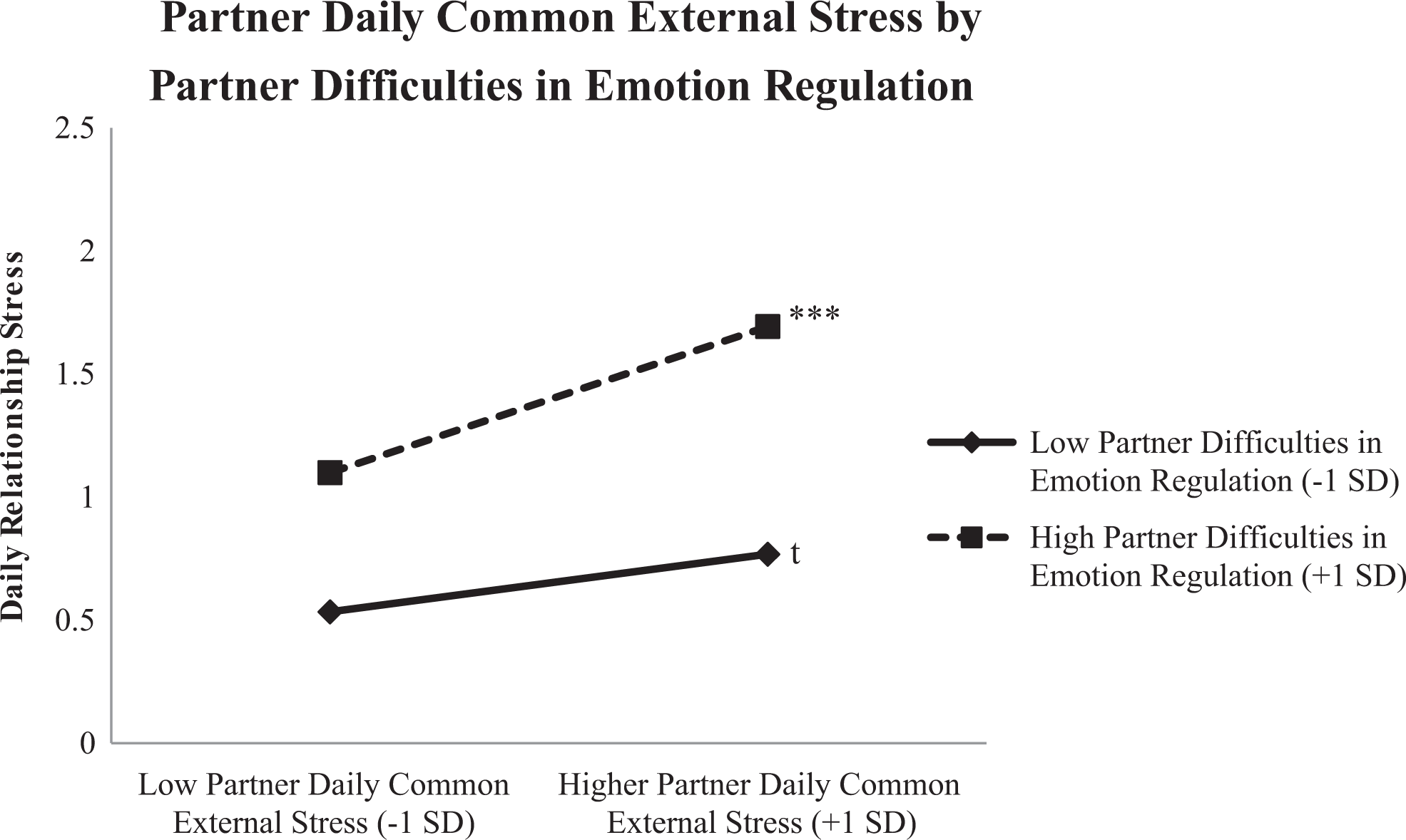
Interaction of partner daily common external stress by partner difficulties in emotion regulation on daily relationship stress (dashed line is significant, p < .001; solid line is marginally significant, p < .10).
For sexual minority stress (H3b), we found two significant interactions: actor sexual minority stress by actor (but not partner) difficulties in emotion regulation (spillover) and partner sexual minority stress by partner (but not actor) difficulties in emotion regulation (crossover). In probing the interaction for spillover, we found that although the interaction was significant, neither the slope for greater difficulties in emotion regulation (b = −.18, B = −.04, p = .22), nor the slope for fewer difficulties in emotion regulation (b = .31, B = .06, p = .11), was significant. In probing the interaction for crossover, we found for actors whose partner reported fewer difficulties in emotion regulation, on days their partner reported experiencing sexual minority stress, they (actors) reported increased relationship stress on the same day (b = .55, B = .11, p = .003); the crossover of partner daily sexual minority stress to relationship stress was nonsignificant for actors whose partner reported greater emotion regulation difficulties (b = .08, B = .02, p = .57; see Figure 3). Thus, H3b was not supported. Instead, actors were more likely to experience same-day crossover of sexual minority stress if their partners reported fewer difficulties in emotion regulation.
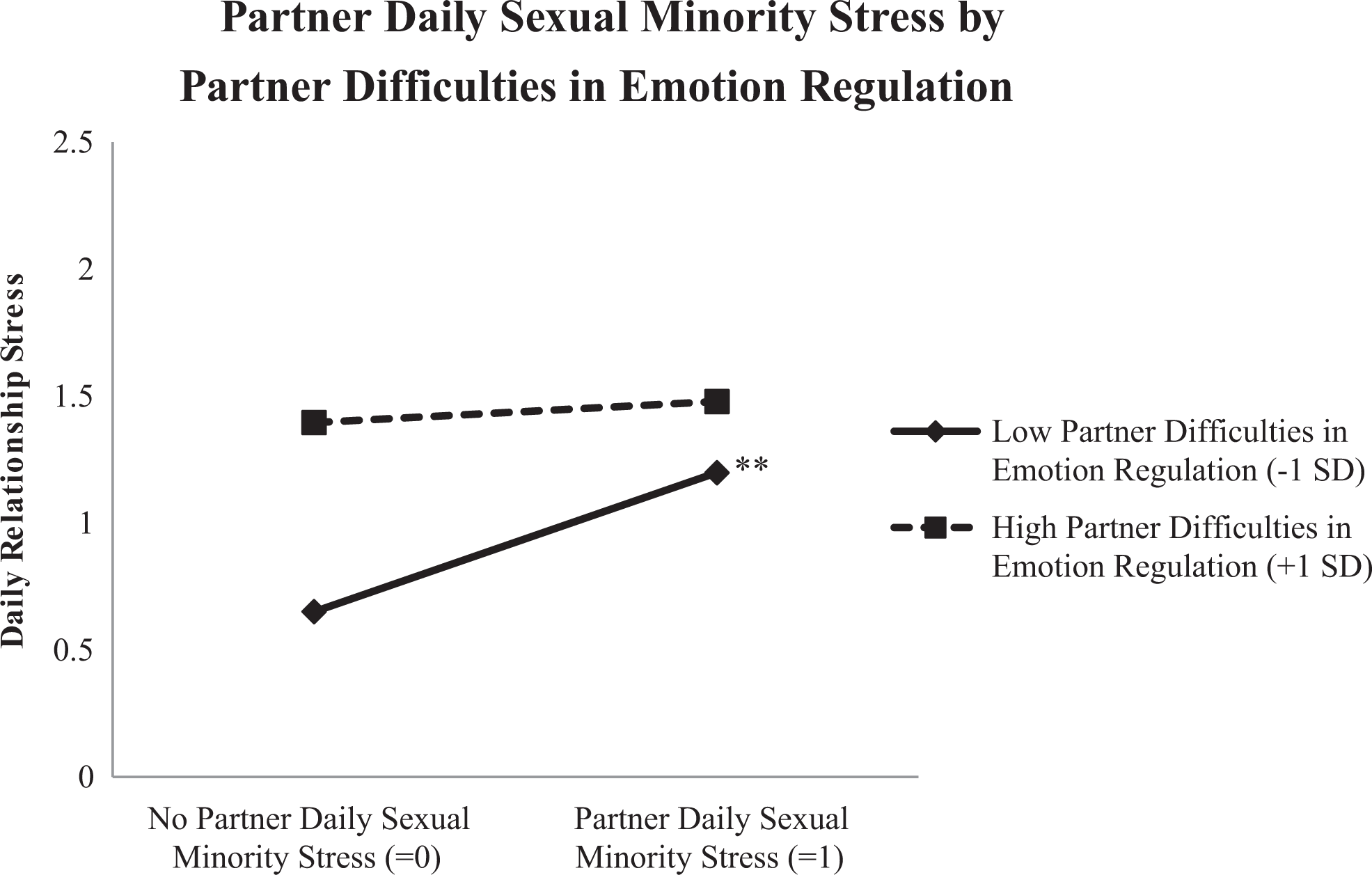
Interaction of partner daily sexual minority stress by partner difficulties in emotion regulation on daily relationship stress (solid line is significant, p < .01). Note. The line graph is used for ease of interpretation. It should be noted that the association between daily sexual minority stress and daily relationship stress is not linear given the dichotomous nature of transformed daily sexual minority stress (no stress vs. stress).
Lagged model results (RQ2)
In the lagged model specific to common external stress, we found that partner (but not actor) difficulties in emotion regulation moderated the spillover and crossover of daily common external stress. In probing the spillover interaction of actor stress by partner difficulties in emotion regulation, we found that when actors who had partners with greater difficulties in emotion regulation reported higher common external stress on one day, these actors reported increased relationship stress on the following day (b = .12, B = .09, p < .001). The slope for those with partners with few difficulties in emotion regulation was nonsignificant (b = .01, B = .01, p = .77; see Figure 4). Thus, the spillover of common external stress was stronger when individuals had partners with greater difficulties in emotion regulation. In probing the crossover interaction of partner stress by partner difficulties in emotion regulation, we found a different and unexpected pattern. Partners’ higher common external stress was associated with higher relationship stress for actors on the following day, only if the partner reported fewer difficulties in emotion regulation (b = .12, B = .09, p = .003). The association between lagged partner common external stress and actor relationship stress was nonsignificant when partners reported greater difficulties in emotion regulation (b = −.05, B = −.04, p = .14; see Figure 5).
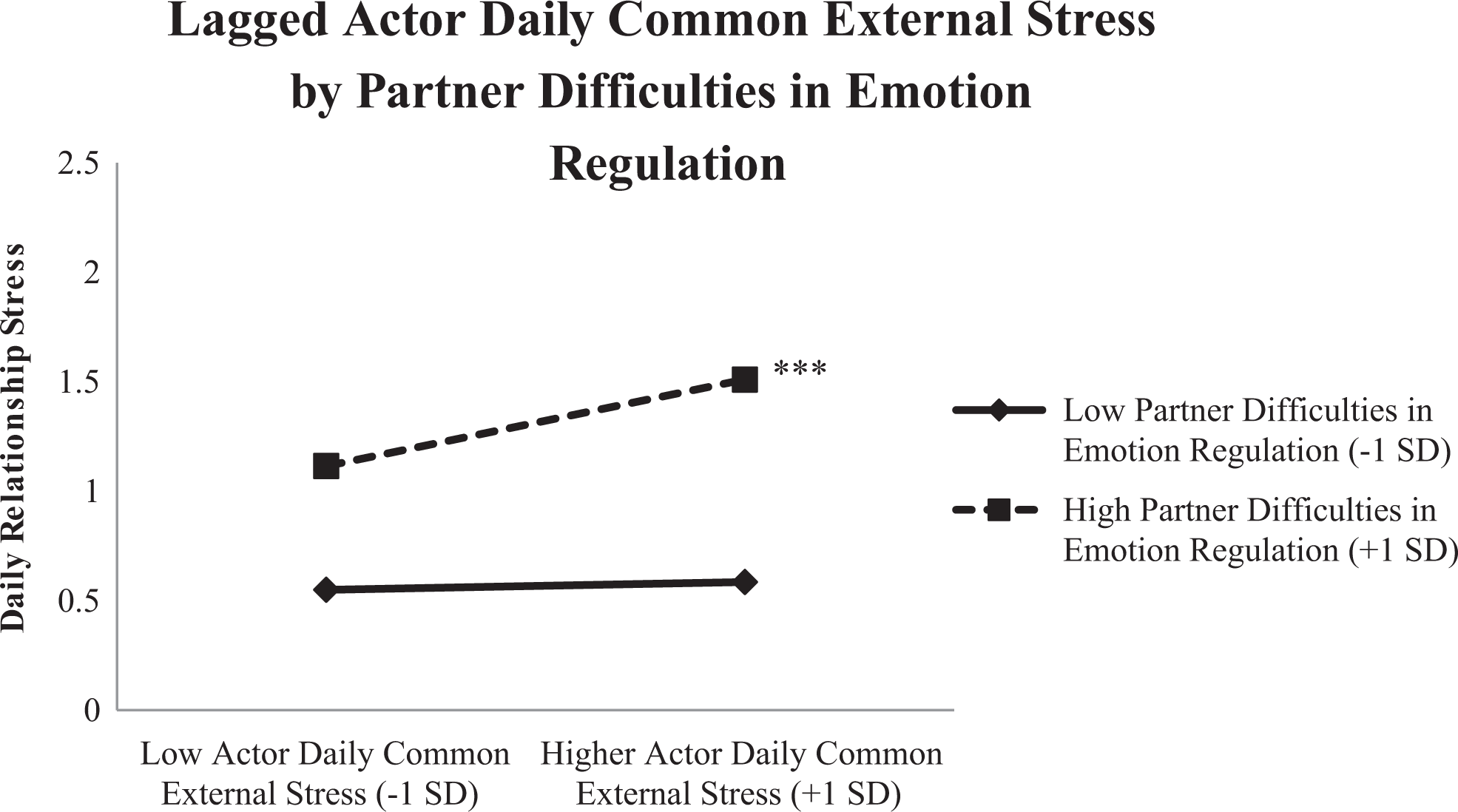
Interaction of lagged actor daily common external stress by partner difficulties in emotion regulation on daily relationship stress (dashed line is significant, p < .001).

Interaction of lagged partner daily common external stress by partner difficulties in emotion regulation on daily relationship stress (solid line is significant, p < .01).
Specific to sexual minority stress, we found one significant interaction in the lagged model: partner sexual minority stress by actor difficulties in emotion regulation. Specifically, we found that for actors who reported greater difficulties in emotion regulation, if their partners reported experiencing sexual minority stress on one day, these actors reported higher relationship stress on the following day (b = .70, B = .14, p < .001). The slope between lagged partner sexual minority stress and actor relationship stress was not significant for actors who reported fewer difficulties in emotion regulation (b = −.10, B = −.02; see Figure 6). In other words, actor difficulties in emotion regulation strengthened the crossover of sexual minority stress from 1 day to the next.

Interaction of lagged partner daily sexual minority stress by actor difficulties in emotion regulation on daily relationship stress (dashed line is significant, p < .001). Note. The line graph is used for ease of interpretation. It should be noted that the association between daily sexual minority stress and daily relationship stress is not linear given the dichotomous nature of transformed daily sexual minority stress (no stress vs. stress).
Discussion
To expand current literature on daily stress spillover and crossover processes to same-sex couples, we explored how perceptions of common external and sexual minority stress were associated with increased relationship stress for individuals themselves and their partner on the same day and from 1 day to the next. Further, we examined the moderating effects of both partners’ difficulties in emotion regulation on these processes.
Results revealed compelling evidence for spillover and crossover of common external stress and for crossover of sexual minority stress for same-sex couples. Specifically, individuals’ perceived daily common external and sexual minority stress was uniquely related to their partner’s perception of relationship stress, which is consistent with the conceptualization of stress as a relational construct (e.g., Randall & Bodenmann, 2009, 2017). These results suggest that stress spillover processes for common external stressors operate similarly for same-sex couples compared to those for different-sex couples (Falconier et al., 2015). Our investigation also offers unique insights into the conversation around spillover and crossover of sexual minority stress. For example, similar research examining sexual minority stress and relationship functioning found more evidence for spillover (vs. crossover) of sexual minority stress (Feinstein et al., 2018). However, our findings largely support the crossover of sexual minority stress. Differences in methodology and sample may help to explain these discrepancies. For example, whereas Feinstein and colleagues used a cross-sectional design and asked young men about their overall experiences of sexual minority stress in the past 6 months, we asked men and women in committed relationships about sexual minority stressors experienced each day for 14 days. It may be that within-person (i.e., spillover) associations hold over longer periods of time, whereas cross-partner (i.e., crossover) associations unfold on a daily basis but then dissipate. Still, research in this area is limited and together these studies beckon researchers to continue exploring stress processes in same-sex couples and the unique relationship implications of perceived sexual minority stress.
Overall our findings support the crossover literature (Westman, 2001, 2006). Further, our findings highlighted the unique crossover of perceived sexual minority stress above and beyond common external stress. Results also shed light on the lagged effects of external stress on relationship stress, which offers a more in-depth understanding of how stress spillover and crossover functions over time. Specifically, we found lagged spillover of common external stress and lagged crossover of sexual minority stress (but not spillover). Given that spillover and crossover processes vary according to the type of external stress, researchers should continue to explore the unique association between partners’ experiences of sexual minority stress and their relationship health, especially the tendency of this association to linger from 1 day to the next. Still, we found that partners’ difficulties in emotion regulation were important to these associations in several cases.
The role of difficulties in emotion regulation
Common external stress
Results for common external stress were congruent with the systemic transactional model (Bodenmann, 1995, 2005) and prior research on emotion regulation (J. J. Gross, 2015; R. Gross, 2015), which suggested that common external stress played a more significant role on partners’ relationship stress for those reporting more difficulties regulating their emotions. First, one’s common external stress spilled over to one’s relationship stress on the same day; however, it appeared to persist on the following day if one’s partner reported greater difficulties in emotion regulation. High common external stress might compound the emotionally draining effects of providing support to a partner with greater difficulties in regulating emotions. Research on interpersonal regulation may offer some interpretations for these findings (Zaki & Williams, 2013). Individual variations in extrinsic interpersonal regulation may offer insight. Individuals who experience fewer difficulties in emotion regulation may tend to provide emotional support to their partner (extrinsic interpersonal regulation) who experienced greater difficulties regulating. Receiving positive reinforcement from their partner for individuals who provided emotional support might reduce the spillover of external stress to relationship stress. However, on days of high external stress, maintaining both individuals’ own and their partner’s emotional needs may deplete regulatory resources, which may already be limited (Baumeister, & Vohs, 2007) and yield negative perceptions of the relationship the following day. Still, additional research is needed to further examine the associations among stress spillover, regulatory capacity, and interpersonal regulation as they occur on a daily basis.
Results for crossover of common external stress were nuanced. On days when individuals reported increased common external stress, their partner reported increased relationship stress on the same day, particularly when the individual reported greater difficulties in emotion regulation. The partner would also report increased relationship stress the next day, but more so when the individual reported fewer difficulties in emotion regulation. Poor emotional regulation may be linked to more negative interactions between partners on days of high common external stress (Lopes, Salovey, Côté, Beers, & Petty, 2005). Lagged effects, however, may be explained by research on interpersonal regulation (Zaki & Williams, 2013) and regulatory capacity (Baumeister, & Vohs, 2007). Individuals with fewer difficulties in emotion regulation may engage in extrinsic interpersonal regulation, but on days of high external stress, they may be less likely to provide expected emotional support. However, research is needed to test the underlying mechanisms that affect the way difficulties in emotion regulation moderate daily stress spillover and crossover.
Sexual minority stress
Findings on daily sexual minority stress showed a different pattern. As expected, individuals reported higher relationship stress the day after their partner reported high sexual minority stress, particularly if their partner reported greater difficulties in emotion regulation. Unexpectedly, however, individuals reported increased relationship stress on days that their partner reported experiencing greater sexual minority stress, but only if their partners were low in difficulties in emotion regulation. This interaction is difficult to interpret as it contradicts the expectation that stress crossover of sexual minority stress would be more likely for those high in difficulties in emotion regulation. For example, individuals’ perceived sexual minority stress is specific to their sexual minority status, which can be linked to their relationship status (in a same-sex relationship). So individuals who are more likely to feel this type of stress may be more vulnerable to negative perceptions of their partner and the relationship (i.e., relationship functioning; Feinstein et al., 2018). Although it is clear that emotion regulation is linked to coping behaviors and relationship satisfaction (Rusu, Bodenmann, & Kayser, 2019), difficulties in emotion regulation as a trait may not consistently moderate spillover and crossover of sexual minority stress, and not always in the expected direction when significant.
One way to interpret the unique pattern of findings with respect to daily common external stressors is to acknowledge that participants’ reports of their relationship stress tended to remain relatively stable and comparatively higher over the 14 days surveyed in this study when their partners reported greater (versus low) difficulties in emotion regulation. This pattern of results emerged regardless of whether individuals experienced sexual minority stress on that day or not (as revealed in the main relations between partner difficulties in emotion regulation and actor relationship stress). That is, individuals tended to report higher relationship stress across all days if they had a partner who reported greater difficulties in regulating emotion, independent of whether their partner experienced sexual minority stress on a given day. Based on our results, it appeared that when partners with fewer difficulties in emotion regulation experienced sexual minority stress, actor relationship stress was barely at the level similar to those who have partners with greater difficulties in emotion regulation. However, it is important to acknowledge that this finding could be a spurious effect, given the number of interactions tested, and should be interpreted with caution.
Implications
Taken together, results from this study suggest fewer difficulties in emotion regulation in partners experiencing external stress may mitigate the daily process of stress crossover. That is, one’s ability in regulating emotions might protect their partner from greater relationship stress on days of high external stress. However, this protective effect of low difficulties in emotion regulation was not evidenced for partners’ daily experience of sexual minority stress. Lagged findings generally support the crossover of partners’ common external stress and sexual minority stress onto actors’ relationship stress the next day, which was further moderated by actor and partner’s difficulties in emotion regulation. Although the patterns of moderation are tenuous and the magnitude of effects is limited, the findings as a whole bring attention to the unique interactions between difficulties in emotion regulation and spillover and crossover of sexual minority stress for same-sex couples. Importantly, researchers should examine the relational implications of the unique stressors that minority couples may experience and individual differences that may mitigate experiences of stress.
For mental health providers working with same-sex couples or sexual minority individuals currently in a romantic relationship, results suggest that external stress experienced by those in a same-sex relationship has a temporal effect on their relational experiences. It would therefore be beneficial to explore stress spillover and crossover processes with these clients and identify how stress and its influences may occur from day to day. These explorations may be particularly beneficial in couples therapy settings as clinicians can facilitate communication on the experiences of stress in vivo in therapy. However, in individual therapy, clinicians may still facilitate clients to gain insights into how stress outside the relationship can affect their experiences within the relationship. Related to this is the importance of understanding the similar but nuanced risks posed by different types of stress on same-sex couples’ experiences. As our results may not apply for all same-sex couples, clinicians are encouraged to probe the experiences of sexual minority stress in addition to common external stress with clients to understand their unique experiences. Further, clinicians are encouraged to provide psychoeducation and assess couples’ emotion regulation strategies, given difficulties in emotion regulation may place them at greater risk for spillover of common external stress.
Limitations, future directions, and conclusions
The current study extends existing literature by applying concepts related to stress processes to a marginalized sample of couples who may be at increased risk for experiencing stressors associated with their sexual identity (LeBlanc, Frost, & Wight, 2015). Despite the potential implications of our findings from a dyadic daily diary design, this study is not without limitations. Generalizability of the study’s results is limited due to potential sample bias; for example, most participants were women, and couples reported relatively low daily stress, especially sexual minority stress. Findings might look different for couples in other contexts where greater stigmatization of same-sex relationships would yield high levels of sexual minority stress. Future research should continue to examine the interaction between external stress and difficulties in emotion regulation in association with relationship stress for couples that are more diverse in demographic composition, sexual orientations, and experiences of stress.
Findings regarding sexual minority stress and the moderating role of emotion regulation were counterintuitive and warrant future research. Although emotion regulation was measured as a trait in this study, future research could adopt more state-like measures of emotion regulation that could shed light on how daily fluctuations in emotion regulation may affect stress processes. Future research could benefit from a more detailed examination of which components of difficulties in emotion regulation are most salient to the moderating effects found in this study, such as difficulties in emotional control versus lack of emotional awareness (Gratz & Roemer, 2004), or by exploring evaluations of daily efforts to regulate emotions. Researchers might also assess the degree to partners match in their regulatory capacity, as this could provide insight into the patterns of regulatory behaviors between romantic partners. The consideration of individual difference factors such as personality, attachment security, and self-esteem may also be important to examine in future research, as these are known to influence perceptions in romantic relationships (Campbell, Simpson, Boldry, & Kashy, 2005; Robins, Caspi, & Moffitt, 2000). Further, it has been argued that emotion dysregulation mediates the relationship between sexual minority stress and psychological well-being (Hatzenbuehler, 2009). Therefore, the daily measurement of emotion regulation, external stress, and relationship stress might benefit from an examination of emotion regulation as a mediator.
Previous studies have found that aggregate sexual minority stress is associated with relationship well-being (Cao et al., 2017), but these effects differ for specific types of minority stress. For example, internalized homophobia was associated with poorer relationship well-being, whereas heterosexist discrimination and sexual orientation visibility management were not (Cao et al., 2017). Thus, it may be beneficial for future research to differentiate specific sources of sexual minority stress when examining factors that influence the stress spillover and crossover processes in same-sex couples.
Further, researchers may continue to explore dyadic efforts to cope with stress that could help mitigate the daily spillover and crossover of common and sexual minority stress. Research on dyadic coping (Rusu et al., 2019) offers promise for identifying ways in which couples can actively cope with stress. Building upon the current findings’ support for the dyadic nature of daily stress, future research should explore ways in which couples can effectively cope with stress spillover and crossover in their relationship. Researchers can also explore how difficulties in emotion regulation influence the communication of stress and engagement in dyadic coping, a known relational factor mitigating the stress spillover process (Falconier, Randall, & Bodenmann, 2016). Similarly, future research on this topic may access and analyze how partners match in their skills to emotionally regulate because this could influence dyadic coping efforts; moreover, the matching or mismatching of emotion regulation skills (Horn & Maercker, 2016; Randall & Schoebi, 2018) might offer additional insights into some of the counterintuitive findings in the current study.
Despite these limitations, this study highlights the importance for individuals in same-sex relationships to draw upon their abilities to regulate emotions as associated with daily stress. This is especially important given that individuals’ experience of common, every day stressors can spill over to their own perceptions of relationship stress as well as their partner’s. Further, same-sex couples appear particularly vulnerable to their partner’s experiences of both common and sexual minority stress, although it is apparent that individual factors, such as difficulties in emotion regulation, may differentially influence stress crossover processes depending on the type of stress experienced. As such, prospective studies exploring these associations as well as interventions focused on emotion regulation will help to better promote relationship well-being for same-sex couples in the face of stress.
Footnotes
Funding
The author(s) disclosed receipt of the following financial support for the research, authorship, and/or publication of this article: The authors would like to acknowledge funding from the National Council on Family Relations Innovation Grant awarded to Ashley K. Randall and Casey J. Totenhagen.

Open research statement
As part of IARR’s encouragement of open research practices, the authors have provided the following information: This research was not pre-registered. The data and materials used in the research are available upon request by emailing
References
Supplementary Material
Please find the following supplemental material available below.
For Open Access articles published under a Creative Commons License, all supplemental material carries the same license as the article it is associated with.
For non-Open Access articles published, all supplemental material carries a non-exclusive license, and permission requests for re-use of supplemental material or any part of supplemental material shall be sent directly to the copyright owner as specified in the copyright notice associated with the article.
