




Abstract
The primary goal of the present study was to systematically investigate the role of intimate partner support in alcohol use and to examine whether partner support serves a maladaptive function among individuals with a history of alcohol dependence. This goal was pursued in a sample of low-income outpatients because of increased risk for chronic stress and alcohol use disorders among this population. We implemented a comprehensive, multi-method assessment of partner support and ecological momentary assessments of alcohol use over 14 consecutive days. Results demonstrate the potential “dark side” of helping behaviors that has been proposed in recent literature. Specifically, in a sample of low-income outpatients, we found that receiving more frequent and higher quality support from one’s partner put individuals meeting criteria for alcohol dependence at greater risk for consuming alcohol. Findings converge with research suggesting that helping behaviors might function to enable maladaptive coping mechanisms in the context of alcohol use disorders.
Alcohol use disorders are widespread in the U.S., with 43.6% of individuals meeting criteria for an alcohol use disorder in their lifetimes (Grant et al., 2015), and individuals of low socioeconomic status (SES) are at particular risk (Baum et al., 1999; Collins, 2016; Moore et al., 2006). For low-income individuals in intimate relationships, support received from one’s partner might be a vital resource for coping with chronic adversity and stress (e.g., financial strains) which, in turn, could reduce risk for alcohol abuse. Nonetheless, there are certain circumstances under which partner support might have iatrogenic effects. Researchers are increasingly recognizing the potential “dark side” of social support in the context of individual psychopathology (Calvocoressi et al., 1999; Fredman et al., 2008; Freisthler et al., 2014; Gleason et al., 2008). Consistent with this emerging research, the primary goal of the present study was to investigate whether partner support has the potential to increase alcohol use for low-income outpatients with a history of alcohol dependence.
Emerging research suggests that when someone is highly accommodating in an attempt to alleviate distress experienced by a partner with mental illness (e.g., canceling plans or taking over chores, driving a partner with agoraphobia to work every day), this can result in the exacerbation of symptoms (Calvocoressi et al., 1999; Fredman et al., 2008, 2014). Thus, efforts to be “supportive” in response to a loved one’s distress might be counterproductive, even if the recipient of that support appears satisfied. The unintended consequences of support are particularly notable in the alcohol abuse literature (Le Poire et al., 2000; Thomas et al., 1996). The tendency to avoid negative and distressing internal experiences is central to alcohol use disorders (Levin et al., 2012; Moos et al., 1990), and support seeking can function as a form of avoidance (Karekla & Panayiotou, 2011). For example, certain types of support might help the recipient escape distressing thoughts and feelings (e.g., taking care of the problem so that the partner does not need to face the source of distress), unintentionally bolstering avoidance (Kashdan et al., 2006).
Further, research demonstrates the consequences of enabling behaviors that reinforce maladaptive patterns of alcohol and substance use (Rotunda & Doman, 2001; Rotunda et al., 2004). On the surface, behaviors characteristic of enabling, such as taking on more responsibilities in the home or covering for a family member who has been drinking, might appear to have a supportive quality. However, in the context of substance use disorders, these behaviors could serve to increase substance use. Notably, in a sample of patients presenting for outpatient couples therapy with their nonalcoholic partners, Rotunda et al. (2004) found significant instances of enabling for the majority of couples enrolled in the study, demonstrating the pervasiveness of this issue. Thus, the propensity to unequivocally view partner support as an adaptive process and source of resilience in intimate relationships might be misguided. Systematic examinations of partner support processes in vulnerable populations (e.g., low-income outpatients with a history of alcohol use disorders) have the potential to reveal the circumstances under which partner support ultimately leads to adverse outcomes.
Contemporary perspectives of partner support recognize the complex, dyadic, and transactional nature of support processes unfolding in close relationships (Brock & Lawrence, 2010a, 2010b; Cutrona, 1996; Gardner & Cutrona, 2004). Historically, social support researchers have examined the amount or frequency of support provided to individuals in distress; however, this overlooks the quality of support that is received and whether it is an optimal match to what is required to cope with a stressor (Freisthler et al., 2014; Gad & Johnson, 1980; Jarnecke & South, 2014; Uchino et al., 1996). When a partner provides support that matches one’s preferences for support—often referred to as support adequacy—this is typically conceptualized as a successful support transaction (Barry et al., 2009). Research suggests that support provided skillfully and in a way that matches the recipient’s preferences has numerous mental and physical health benefits (Brock & Lawrence, 2010a; Smith et al., 1994; Uchino et al., 1996). Yet, in the context of research suggesting that helping behaviors might have a “dark side” for individuals who have a history of alcohol use disorders (Freisthler et al., 2014; Moos et al., 1990; Rotunda & Doman, 2001), there is a critical need for research examining whether supportive behaviors that appear to be adaptive on the surface might ultimately serve a maladaptive function.
Present study
The primary goal of the present study was to systematically investigate the role of partner support in alcohol use and to examine whether partner support serves a maladaptive function among low-income, treatment-seeking individuals with a history of alcohol dependence. This goal was pursued in a sample of low-income outpatients due to the increased risk for stress and alcohol use disorders among this population (Baum et al., 1999; Collins, 2016; Moore et al., 2006). We hypothesized that the effect of partner support on the probability of alcohol use would significantly differ for individuals meeting criteria for alcohol dependence relative to those who do not. Specifically, we predicted that higher quality partner support over the past 6 months would be associated with higher probability of drinking over the subsequent 14 days, but only for individuals with a history of alcohol dependence. Using multiple methods, we implemented both macrolevel measures of partner support (i.e., overall quality of and satisfaction with support transactions over the past 6 months) and microlevel measures (i.e., frequency and perceived adequacy of specific support behaviors). To produce robust measures of alcohol use and minimize retrospective recall bias (Townshend & Duka, 2002), we used ecological momentary assessments over 14 days and nested repeated measures within participants using multilevel modeling (MLM) techniques.
Method
Participants and procedures
Participants were recruited from community mental health clinics providing reduced fee services. To be eligible, patients had to be (a) in a committed relationship lasting at least 6 months and currently cohabiting with their partner, (b) over the age of 18, and (c) not actively psychotic. Eligible patients were scheduled for a 2.5-hr appointment during which clinical interviews and questionnaires were administered. Participants then completed 10- to 15-min questionnaires from home for 14 consecutive days following the laboratory appointment either on the Internet (67.9%) or by mailing a paper version of the survey. Participants were asked to record their experiences and perceptions at predetermined intervals (i.e., before bedtime) and were compensated US$50 for completing the study procedures.
A total of 61 outpatients participated in the study. Data from two participants were omitted due to displaying symptoms of psychosis during the lab appointment; thus, a total of 59 participants (42 females) met eligibility requirements. Participants were primarily White (84.5%), unemployed (56.9%), and had a modal income of less than US$10,000. Over half of the sample were cohabiting with their partners but were not engaged or married (51.8%), and the majority of participants had children (56.9%). Average length of the intimate relationship was 91.93 months (SD = 83.28), and almost half of the sample had separated from their partner at some point in the relationship (42.1%). Almost all participants (91.5%) met either current or past diagnostic criteria for a mood, anxiety, or alcohol use disorder as measured by the Structured Clinical Interview for DSM-IV-TR Axis I Disorders (SCID-IV; First et al., 2002). In most cases, individuals met criteria for more than one disorder.
The present analyses focus on outpatients who participated in the daily survey phase of the study. Participants who completed the daily survey (N = 53) did not differ significantly from the recruited sample (N = 61) on any key demographic characteristics (i.e., gender, children, age, cohabitation length; χ2 values ranged from .033 to .145; t-scores ranged from .151 to .407).
Measures
Daily alcohol use
Each day, participants were asked to report if they had consumed any alcoholic beverages that day. To ensure consistency across reports of what constituted an alcoholic beverage, the following guidelines were provided: 1 drink = a 12-oz beer, a 5-oz glass of wine, or a 1.5-oz shot of liquor. The data were coded such that a participant received a score of 1 on a given day if they self-reported that they consumed any alcohol beverages and 0 if they did not consume any alcohol beverages on that day. Across the 14 days, approximately 40% of patients reported drinking alcohol, and the average number of days when alcohol use occurred for those individuals was 2.67 (SD = 1.71). Across the entire sample, the average number of days during which alcohol beverages were consumed was 1.06 (SD = 1.69) of the 14 days. Thus, on average, heavy alcohol use was not pervasive over 2 weeks in this sample of outpatients.
Alcohol abuse and dependence
Each participant was interviewed using the SCID-IV (First et al., 2002) to diagnose alcohol dependence. Approximately 15% of interviews were randomly selected and double-coded; interrater reliability was established (M intraclass correlation [ICC] = .941). Over half (50.8%) of the participants met criteria for current or past (lifetime) alcohol dependence.
Microlevel measures of partner support
Participants completed the Support in Intimate Relationships Scale-Revised (SIRRS-R; Barry et al., 2009; Dehle et al., 2001), and a 25-item self-report measure of supportive behaviors was provided in response to stressors, hassles, or challenges over the past month. Items assessed whether an individual’s partner engaged in a variety of supportive behaviors, including “told me everything would be okay,” “said I was not at fault for my situation,” “gave me suggestions on how to handle a situation,” “did something to help me indirectly (e.g., did my chores),” and “hugged or cuddled with me.” Participants reported how frequently their partners provided specific supportive behaviors over the past month (support frequency) on a scale of 0 (never) to 4 (almost always) and whether they would have preferred more, less, or the same amount of each behavior (support adequacy). Responses were coded as 1 if an individual would have preferred the same amount of a supportive behavior (adequate support) and as 0 if they would have preferred more or less of that behavior (inadequate support). Frequency and adequacy scores were summed across items to produce two scores, one reflecting the frequency of support received over the past month (possible range: 0–100) and one reflecting adequacy of support received (possible range: 0–25).
Macrolevel measures of partner support
Participants completed the Relationship Quality Interview (RQI; Lawrence et al., 2008, 2009, 2011). The RQI was administered by a team of undergraduate research assistants who completed a workshop on the basics of clinical interviewing (e.g., directive and nondirective listening) and received detailed instruction in the administration of the RQI. Open-ended questions—followed by closed-ended questions—were asked to obtain contextual information about one’s intimate relationship across multiple domains (see Lawrence et al., 2011 for more information). The RQI demonstrates strong reliability, convergent validity, and divergent validity (Lawrence et al., 2008, 2009, 2011). Approximately 15% of the interviews were randomly selected and double-coded, and strong interrater reliability was established (average ICC = .930).
The present study focused on the partner support domain of the RQI, during which interviewers asked participants about different kinds of support they might have received over the past 6 months. For example, participants were asked “To what extent does your partner provide emotional support, like talking and listening to you, holding your hand, hugging you, letting you know s/he understands you, things like that when you have had a bad day, are feeling down, or have a problem?” and “How often does your partner provide you with information you need, help you think about a problem in a new way, or things like that?” Interviewers independently rated the quality of support discussed during the interview on a scale from 1 to 9:
1. Partner provides no support or partner provides some support, but it is not what the participant wants. Partner almost always dismisses or ignores requests for support (or alone time) or responds with criticism.
2.
3. In most situations, there is a mismatch between support received and support desired. Partner sometimes dismisses or ignores requests for support.
4.
5. There is some mismatch between type of support received and type of support desired (about half the time). Participant is neutral on this topic.
6.
7. In most situations, there is a match between type of support provided and type of support desired. Partner never dismisses or ignores requests for support.
8.
9. High quality of support from partner. Partner is excellent at providing support and always responds well to requests for support.
Accordingly, we obtained relatively objective scores of the overall quality of support transactions occurring during the past 6 months. Following the interview, participants were also asked to rate their satisfaction with the level and quality of support in their relationship over the past 6 months on a scale from 1 (completely dissatisfying) to 9 (exceptionally satisfying), reflecting on the discussion they just had with the interviewer.
Data analytic plan
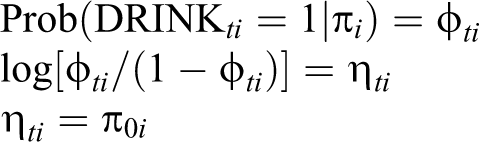
MLM techniques were implemented with HLM 7 software (Bryk & Raudenbush, 1987; Goldstein et al., 2006) using restricted maximum likelihood estimation such that repeated daily measures were nested within participants. Given that the outcome variable was binomial (1 = consumed alcohol that day, 0 = did not consume alcohol), a Bernoulli distribution was used. The following multilevel model was tested for each measure of support:
Level-1 Model
Level-2 Model

where the outcome at Level 1 represents the probability of alcohol use on a given day and π0i represents the average probability of alcohol use across the 14 days. Person-level predictors were added to Level 2, including one of the four indicators of support (e.g., RQI Quality of Support) and alcohol dependence (1 = met Diagnostic and Statistical Manual of Mental Disorders, 4th edition [DSM-IV] criteria for current or past alcohol dependence as measured by the SCID, 0 = did not meet criteria). To test for moderation, the interaction between support and alcohol dependence was also added to Level 2. The primary parameter of interest was β03, which tests the hypothesis that the effect of partner support on the probability of alcohol use significantly differs for individuals who meet criteria for alcohol dependence relative to those who do not. Note that in the presence of this interaction, β01 and β02 are conditional, such that (a) β01 represents the association between partner support and average probability of drinking alcohol over 14 days for outpatients who did not meet criteria for current or past alcohol dependence and (b) β02 represents the association between alcohol dependence and average probability of drinking alcohol over 14 days when support equals zero.
Missing data
Missing data at Level 2 (measures of support and alcohol dependence) were limited (approximately 2%). To retain all patients who completed the daily survey procedures, we used multiple imputation and created five imputed data sets, which were used in subsequent analyses. In contrast, multiple imputation was not required for missing data at Level 1, given that cases were retained for nested data despite missing scores (e.g., if a participant missed 1 or 2 days of the surveys). Notably, for this high-risk, low-income sample, participation rates were satisfactory (74% across 53 participants completing 14 days of surveys).
Potential control variables
We screened several demographic variables (e.g., total household income) and characteristics of the relationship (e.g., length of relationship) to identify potential control variables. If a variable was significantly correlated with at least one of the predictors (i.e., support or alcohol dependence) and predicted the outcome variable (average probability of alcohol use over 14 days), that variable was included as a covariate in the analyses. Two variables met criteria to be included as covariates. Length of current intimate relationship was significantly associated with quality of support (r = −.43, p = .001) and support frequency (r = −.31, p = .016) and predicted average probability of alcohol use over 14 days, t(46) = −4.05, p < .001. Length of cohabitation was significantly associated with quality of support (r = −.42, p = .001) and support frequency (r = −.31, p = .016) and also predicted average probability of alcohol use over 14 days, t(46) = −4.36, p < .001. Thus, participants who were in relationships of longer duration and who had been living with their partners for a longer period of time were less likely to consume alcohol, but they also received less frequent and adequate support.
Results
Descriptive statistics for partner support are reported in Table 1. The four measures of partner support demonstrated excellent convergent validity (Pearson’s rs ranged from .67 to .77 among the measures, ps < .001). As expected, support scores were relatively low in this sample of low-income outpatients as compared to community samples. For example, the average for interviewer ratings of the overall quality of partner support based on the semi-structured interviews was 5.14 (SD = 2.27), which is significantly lower than the mean obtained in a community sample of newlywed couples (M = 6.91, SD = 0.79, N = 102; Brock & Lawrence, 2011), t(154) = 7.12, p < .001. Lifetime alcohol dependence was not significantly correlated with any measures of support (point biserial rs ranged from −.04 to .06, p > .05); thus, participants who met DSM-IV diagnostic criteria for lifetime alcohol dependence (50.8%) did not differ from those who did not meet criteria with regard to partner support scores. Of the participants who met diagnostic criteria for lifetime alcohol dependence, 46% reported consuming an alcoholic beverage at least once during the observed 14 days.
Descriptive statistics of support measures.

Note. RQI = Relationship Quality Interview; SIRRS-R = Support in Intimate Relationships Scale-Revised.
Preliminary analysis accounting for the passage of time
Given that our measure of alcohol use consisted of 14 reports of alcohol consumption completed in daily succession, we accounted for the possibility that the passage of time was a significant predictor of alcohol use (i.e., there was systematic increase or decrease in alcohol use over the 14 days). Accordingly, time, measured as the number of days from Day 1, was entered uncentered at Level 1 prior to adding any Level 2 predictors. The deviance statistic from this model was compared to the deviance statistic of the model excluding time, and a χ2 difference test indicated that accounting for the passage of time did not significantly improve the fit of the model, χ2(3) = 2.43, p > .500; thus, we retained the more parsimonious model excluding time as a Level 1 predictor. The retained “empty” model with a random intercept and no predictors demonstrated significant between-subject variability in average probability of alcohol use over 14 days, χ2(52) = 127.65, p < .001.
Primary test of study hypothesis
We predicted that higher quality partner support over the past 6 months would be associated with higher probability of drinking over the subsequent 14 days, but only for individuals with a history of alcohol dependence. Results of the four tested models are reported in Table 2. These models correspond to each of the four measures of partner support: SIRRS-R frequency and adequacy scores (microlevel measures), and RQI interviewer and RQI participant scores (macrolevel measures). We report results from the population-average models with robust standard errors which (a) allows us to draw population-level conclusions rather than to explain outcomes for specific individuals and (b) minimizes bias in estimation of random effects (e.g., Hu et al., 1998). Across the four measures of support, there was evidence of significant moderation such that the effect of each support measure on probability of daily alcohol use varied as a function of whether an individual met diagnostic criteria for alcohol dependence.
Model results.

Note. B = unstandardized coefficient; SE: standard error; SIRRS-R = Support in Intimate Relationships Scale-Revised; RQI = Relationship Quality Interview. N = 53. Length of relationship and length of cohabitation were included as Level 2 covariates in all analyses (effects are omitted for ease of presentation). The moderation parameter of interest is bolded for each model. Estimates are reported with robust SEs. Dependence (1 = history of alcohol dependence, 0 = no history).
Closer examination of simple slopes revealed that higher support scores (i.e., more adequate and frequent support, higher quality support, and more satisfying support) were associated with higher probability of alcohol use for individuals with a history of alcohol dependence. However, support was not significantly associated with probability of alcohol use for participants without a history of alcohol dependence. Specifically, outpatients meeting criteria for lifetime alcohol dependence were more likely to drink over the 14-day period to the extent that they (a) reported greater support adequacy over the past month, t(47) = 3.03, p = .004, (b) received more frequent support over the past month, t(47) = 2.00, p = .050, (c) were objectively rated by interviewers as having higher quality support in their intimate relationships over the past 6 months, t(47) = 3.35, p = .002, and (d) reported more satisfying support transactions over the past 6 months, t(47) = 2.87, p = .006. In contrast, the probability of consuming alcohol for outpatients who did not meet current or past diagnostic criteria for alcohol dependence was not influenced by (a) support adequacy, t(47) = −0.55, p = .585, (b) support frequency, t(47) = −1.44, p = .156, (c) quality of support transactions (interview-rated), t(47) = −1.84, p = .073, or (d) satisfaction with support over the past 6 months, t(47) = −0.87, p = .390. 1
Discussion
Results derived from our comprehensive, multi-method assessment of partner support and ecological momentary assessments of alcohol use over 14 consecutive days demonstrate the potential “dark side” of helping behaviors that has been proposed in recent literature (Freisthler et al., 2014). Specifically, consistent with our hypothesis, we found that receiving more frequent and higher quality support from one’s partner put individuals meeting DSM-IV criteria for lifetime alcohol dependence at greater risk for consuming alcohol. This converges with research suggesting that supportive behaviors might function to enable maladaptive coping mechanisms (e.g., Freisthler et al., 2014; Moos et al., 1990; Rotunda & Doman, 2001; Rotunda et al., 2004). Indeed, many of the supportive behaviors measured in the present study (e.g., helping out with chores) have also been identified as behaviors that may function to enable alcohol use (e.g., “partner takes over client’s neglected chores because s/he was drinking”; Rotunda et al., 2004). However, our results demonstrate this effect for partner support more generally (i.e., support that is not necessarily provided in response to drinking). Notably, the association between partner support and a higher probability of alcohol use in outpatients with a history of alcohol dependence was demonstrated across all four measures of partner support, each with strong psychometric properties, highlighting the robust nature of this finding. Thus, partners might engage in behaviors that, on the surface, appear to be adaptive and helpful but ultimately increase the likelihood of alcohol consumption.
Results of the present study have important implications for how couples, researchers, and clinicians conceptualize partner support in intimate relationships in the context of individual psychopathology. Traditionally, researchers have viewed more frequent support—ideally matching the preferences of the support recipient—as adaptive and serving a protective function (Brock et al., 2014; Cutrona et al., 2007; Dehle et al., 2001; Don & Hammond, 2017). Further, several empirically supported treatments for psychopathology promote social support (e.g., Interpersonal Psychotherapy; Klerman et al., 1994), and couples’ interventions have been developed that promote mutually supportive behaviors in relationships (e.g., Bodenmann et al., 2008; Rogge et al., 2002). Yet, results of the present study converge with emerging research that partner support has the potential to exacerbate symptoms of psychopathology, specifically reinforcing alcohol use in the context of alcohol dependence (Moos et al., 1990; Rotunda & Doman, 2001; Rotunda et al., 2004). Future research should focus on isolating the mechanisms explaining this association and identifying factors that might disrupt this dysfunctional process. This line of research is of paramount importance to inform practice recommendations when working with couples when one partner has a history of substance abuse (e.g., Beattie & Longabaugh, 1999; Cox et al., 2013).
Results of the present study can also be understood within the lens of equity theory, suggesting that individuals are most satisfied with their relationships when they perceive equity and balance in the relationship (Hatfield & Traupmann, 1981). Individuals who feel as if they consistently invest more or less than they reliably receive from their partners tend to experience greater relationship dissatisfaction (Bar-Kalifa et al., 2017). Thus, if an individual with a history of alcohol dependence perceives their partner as consistently providing more support and assistance than they provide in return, this sense of inequity might lead to dissatisfaction with the relationship and ultimately exacerbate symptoms. This process might be especially salient during the course of therapy, when patients come to terms with the consequences of their substance abuse for their partners and gain a greater awareness of inequities in the relationship.
It is also important to consider the pattern of results in the context of the low-income nature of the sample. Economic strains, prevalent in low-income populations, cause high levels of chronic and inclement stress shared by both partners (Baum et al., 1999). Thus, the capacity to fully and adequately tend to the needs of one’s partner might be diminished in the context of such adversity. This could lead individuals to report sufficient partner support when, in fact, the support is not adequate for mitigating the distress experienced as a result of shared adversity and individual psychopathology. In other words, an individual might recognize and report on the perceived effort given by partners to support them, rather than reporting on the ability of that support to ultimately aid in effective coping with stress. Thus, this context also highlights the need to implement behavioral observation measures in research, along with subjective reports of support from both partners, to understand the complex role of partner support in individual psychopathology.
Limitations
Several limitations of the present study must be considered when interpreting the results. First, despite the strengths of implementing multiple methods to assess partner support both at the macrolevel (overall quality and satisfaction) and microlevel (specific supportive behaviors reported by participants), as well as using instruments with strong psychometric properties, partner support is a dyadic construct. Thus, the lack of partner report limits our understanding of partner support processes unfolding in relationships. There is a need for research implementing reports from both partners, as well as research that utilizes observational methods. Second, we relied on self-reports of alcohol use, which may be susceptible to retrospective recall bias (Gmel & Daeppen, 2007; Townshend & Duka, 2002). To mitigate this limitation, we asked participants to report on alcohol use on a daily basis; however, there was still a potential time lag between consumption of alcohol and reporting of alcohol consumption on a given day, which could introduce bias. We also limited our measurement to alcohol use alone—specifically, whether or not an individual consumed an alcoholic beverage during the day—and did not collect any data on the consequences of that use. Future research should examine dysfunction associated with alcohol use as a consequence of partner support as well as to what extent amount of alcohol use alters partner support. Third, outpatients were recruited from community mental health clinics to oversample for economic adversity and individual psychopathology; however, information about the nature and course of treatment was not collected.
Finally, there are limitations unique to the study sample. Given the barriers and challenges to recruiting low-SES outpatients and retaining them across repeated assessments that involved a lengthy laboratory appointment, the sample size was relatively small. Nonetheless, we demonstrated robust findings linking four measures of partner support to the probability of consuming alcohol. Further, outpatients were recruited from community mental health centers in the Midwest, providing a representative sample of the region; however, given the sample consisted of predominantly White females, this limits the generalizability of the findings.
Conclusion
Historically, social support has been viewed as an essential coping resource for navigating stress and adversity. Yet, emerging research indicates that in the context of certain forms of individual psychopathology, supportive behaviors enacted by an intimate partner—behaviors that are intended to be helpful—might paradoxically serve a maladaptive function, ultimately perpetuating symptoms. Results of the present study demonstrate this “dark side” of social support by linking higher quality and more frequent and satisfying partner support to a greater probability of consuming alcohol over 2 weeks for low-income outpatients with a history of alcohol dependence. As such, researchers and clinicians should revisit assumptions that partner support is indisputably adaptive and, rather, adapt a more nuanced and context-specific conceptualization of social support. Further, results highlight the need for clinicians to routinely consider the role of intimate partners in the individual treatment for alcohol use disorders and, particularly, consider how supportive partners might inadvertently undermine the therapy process (e.g., see recommendations by Fredman et al., 2014; Rotunda & Doman, 2001).
Footnotes
Authors’ note
Portions of this research were presented at the International Association for Relationship Research annual convention in July 2018.
Acknowledgments
The authors would like to thank Lauren Laifer, Bergen Johnston, Olivia Maras, Gabby Perez, Kassi Pham, Jaci Rolffs, Brittany Urbane, and Katie Collins for assistance with data collection and manuscript preparation. They also thank Erika Lawrence for providing resources to support this research.
Funding
The author(s) disclosed receipt of the following financial support for the research, authorship, and/or publication of this article: This research was supported by the National Institutes of Mental Health, National Research Service Award 5 F31 MH082571-03 (to Rebecca L. Brock) and research grants from the International Association for Relationship Research (IARR) and the American Psychological Association (APA).

Open research statement
As part of IARR’s encouragement of open research practices, the authors have provided the following information: This research was not pre-registered. The data used in the research are not available. The materials used in the research are available. The materials can be obtained by emailing: