



Abstract
Sexual desire is associated with romantic relationship satisfaction and maintenance, yet desire for a partner often declines over time. Self-expansion (new experiences that facilitate growth) with a partner boosts desire, but how this occurs is not well-understood. Across three studies—a 21-day daily experience study, a one-month weekly experience study, and an experimental study—we tested whether closeness, and a new construct otherness (seeing a partner in a new light), accounted for the association between self-expansion and desire. Across studies, self-expansion was associated with higher closeness and otherness, and, in turn, higher sexual desire (indirect effect through otherness significant in Studies 1 and 3). The findings provide evidence for the importance of fostering closeness, as well as otherness, in the maintenance of desire.
For many people, sexual desire is associated with relationship satisfaction and longevity (e.g., Brezsnyak & Whisman, 2004; McNulty et al., 2016; Muise et al., 2019), as well as individual health and well-being (e.g., Diamond & Huebner, 2012). Yet maintaining desire over time can be challenging. Desire typically starts to fade within the first 2 years of a relationship (e.g., Call et al., 1995; Sims & Meana, 2010) and people who report lower desire for their partner often report lower relationship satisfaction (e.g., Brezsnyak & Whisman, 2004) and have more thoughts about leaving their relationship (e.g., Willoughby & Vitas, 2012). Unsurprisingly then, problems with desire are a leading reason why couples seek counseling (Ellison, 2002).
Despite an overall trend for desire to decline over time, some people describe feeling high desire for their partner decades into their relationship (Acevedo & Aron, 2009; O’Leary et al., 2012). Given the link between desire and individual and relational well-being, a growing body of research has focused on understanding the protective factors that might buffer against desire waning (e.g., Birnbaum, et al., 2016; Impett et al., 2008; Muise et al., 2013). One factor gaining empirical support is self-expansion—shared novel experiences with a partner that expand one’s sense of self or view of the world (Aron & Aron, 1986; 1996; Aron et al., 2000). Research involving community couples (Muise et al., 2019) and couples in which one partner has clinically low sexual desire (Raposo et al., 2020) has found that when people report higher self-expansion or when they are instructed to engage in self-expanding activities (vs. familiar activities), they report higher desire. What is not well-understood is why self-expansion is associated with higher desire. In the current study, we tested closeness (i.e., the extent to which people take on aspects of their partner as their own and feel connected to their partner) and otherness (i.e., the extent to which people see their partner in a new light and feel they are learning new, surprising or unique things about their partner) as possible links between self-expansion and desire to gain insight into how couples can keep their “spark alive.”
Self-Expansion Theory
Self-expansion theory assumes that people are innately driven to grow and that romantic relationships are a primary way that people expand their sense of self (Aron & Aron, 1986, 1996). At the start of a new relationship, partners often experience rapid growth as they get to know each other, and in turn, take on aspects of each other’s identity, knowledge, and experience (Aron, Aron, & Norman, 2004). This rewarding process of gaining new skills and knowledge becomes associated with the partner and the relationship (Aron, McLaughlin-Volpe, et al., 2004; Xu et al., 2011), leading to feelings of desire and satisfaction (Aron et al., 2013). With time and greater familiarity, opportunities to self-expand through the relationship naturally decline (Aron et al., 2013) as do desire (McNulty et al., 2019) and relationship satisfaction (Aron, Aron, & Norman, 2004).
Although elements of self-expansion are important for initial attraction (Aron et al., 2006; Sprecher et al., 2015), research has shown that self-expansion can also help longer term couples maintain their connection over time. Self-expanding with a partner has been consistently linked to greater relationship satisfaction in experimental and intervention studies (e.g., Aron et al., 2000; Graham & Harf, 2015), as well as in couples’ daily lives (Graham & Harf, 2015; Muise et al., 2019). More recently, self-expansion has been associated with higher sexual desire (Muise et al., 2019; Raposo et al., 2020). In these studies, when people reported greater self-expansion in their relationship, or when their self-expansion was experimentally enhanced, both they and their partner reported higher desire. Higher sexual desire was, in turn, associated with a greater likelihood of engaging in sex that day and greater sexual and relationship satisfaction (Muise et al., 2019). Even for couples coping with clinically low desire, self-expansion was associated with higher sexual desire for a partner (Raposo et al., 2020).
One way self-expanding activities are thought to impart their effects is through heightened physiological arousal being misattributed to the partner (Aron et al., 2000; Graham, 2008; Strong & Aron, 2006; Waugh & Fredrickson, 2006). More recent research has shown that in the context of ongoing relationships, self-expanding activities do not have to be physically arousing to promote relationship satisfaction (Tomlinson et al., 2019) or desire (Muise et al., 2019). In fact, self-expansion in relationships involves gaining novel experiences or insights and broadening one’s perspectives through a partner and can happen through many types of interactions. Yet, self-expansion is not simply about spending positive or pleasant time with a partner and past work has shown that self-expansion is associated with higher desire even after accounting for positive affect and time spent together and generalizes across genders and length of relationship (Muise et al., 2019).
Self-Expansion Is Associated With Desire through Closeness
One way that self-expansion may be associated with higher desire is through greater closeness; closeness has been theoretically (Aron et al., 2013) and empirically tied to self-expansion (Aron et al., 2013; for a review, see Branand et al., 2019). People can expand through their relationships insofar as they become close to their partner and take on their resources, identities, and knowledge as aspects of themselves (Aron et al., 2013). Research on the related concepts of intimacy and perceived partner responsiveness (Aron et al., 1992; Reis et al., 2004) suggest that closeness should also be associated with desire. Striving to promote intimacy and closeness in a relationship was associated with desire daily and over a 6-month period (Impett et al., 2008) and experimentally increasing perceived partner responsiveness (which is a construct linked with closeness; Reis et al., 2004) led to a boost in desire (Birnbaum et al., 2016). In line with self-expansion theory, we hypothesize that including aspects of the partner into the self (i.e., closeness) is what accounts for the association between self-expansion and relationship outcomes. Importantly, feeling closer to a partner in daily life was one factor that accounted for the association between self-expansion and desire in past research (Muise et al., 2019). We aimed to replicate the effect of greater closeness linking self-expansion to higher desire, and extend these findings by testing closeness alongside otherness, as simultaneous mediators.
Self-Expansion Is Associated With Desire through Otherness
In addition to closeness, we considered otherness, a novel and understudied construct, as another route through which self-expansion is associated with higher desire. Psychological theory recognizes that while people have an innate need to connect with others (e.g., Baumeister & Leary, 1995; Ryan & Deci, 2000), people function best when they are also able to view themselves as competent and distinct individuals (Aron, McLaughlin-Volpe, et al., 2004; Ben-Ari, 2012; Ryan & Deci, 2000). Clinicians and qualitative researchers have noted a similar dynamic with desire maintenance; feeling close to a partner may be necessary to initiate and maintain a romantic relationship but partners may need to experience “otherness,” a sense of separateness between two distinct individuals (Perel et al., 2007), or “celebrated otherness,” relationship experiences that, at the same time, emphasize partners’ autonomy and investment in each other (Prekatsounaki et al., 2019), to continue to cultivate desire over time. Guided by this previous work, in the current research, we define otherness as the perceptual distance needed to learn new things about a partner and to value the unique contribution that each partner makes to the relationship (Ferreira et al., 2012; Perel et al., 2007; Prekatsounaki et al., 2019; Schnarch, 1991). Unlike closeness, which fosters trust and a shared sense of identity through the blurring of two selves (e.g., Branand et al., 2019), otherness is the recognition and appreciation of the distinct selves that make up a relationship. Otherness is not equivalent to experiencing novelty or uncertainty in a relationship (Perel et al., 2007), although novelty and uncertainty likely encourage otherness, but rather a shift in perspective that allows a person to discover something new or surprising about their partner (Perel et al., 2007). It is likewise a distinct construct from differentiation of the self, the ability to maintain a sense of personal autonomy while being in a deep intimate relationship with a partner, which has also been considered a factor in desire maintenance (Ferreira et al., 2015; Schnarch, 1991). People could feel autonomous in their relationship while continuing to see their partner as a familiar and known entity. Instead, it has been argued that without a partner being perceived as offering unique contributions to the relationship, people may feel stifled and unable to benefit from further self-expanding opportunities (Aron, McLaughlin-Volpe, et al., 2004).
Empirical work on relationship satisfaction (Aron, McLaughlin-Volpe, et al., 2004; Frost & Forrester, 2013; Mashek et al., 2011) and sexual well-being (Frost et al., 2017) suggests that both feelings of closeness and otherness are important for individual and relational well-being. Closeness without sufficient otherness can be common in relationships and result in partners needing space and time alone, wanting separate interests and goals, feeling suffocated, wanting more time with friends, and needing independence (Mashek et al., 2011). It is possible, then, that sexual desire in a relationship is fostered through both closeness and a sense of otherness. Insights from clinicians who work with couples (Perel et al., 2007; Schnarch, 1991) and qualitative interviews with couples (Ferreira et al., 2015; Sims & Meana, 2010) suggest that when established partners, who are otherwise satisfied in their relationship, can maintain a sense of otherness, higher desire can be maintained over time. In addition to being associated with closeness, self-expanding experiences might also provide partners with the opportunity to see each other in a new light, which in turn, may be associated with higher desire. In the current research, we tested otherness alongside closeness, as simultaneous mediators of the association between self-expansion and desire.
The Current Research
Our key goal in the current research was to test two simultaneous mechanisms for the association between self-expansion and desire: closeness and otherness. In Study 1, we conducted a 21-day dyadic daily experience study to test whether higher self-expansion in daily life was associated with greater closeness and otherness, and in turn, higher desire for both partners. Study 2 was a pre-registered weekly experience study involving couples living together during the COVID-19 pandemic in which we tested the same model as Study 1. Our key pre-registered predictions were about how a person’s own reports of self-expansion are associated with their own desire, but we pre-registered testing all actor and partner effects in our models (following the Actor–Partner Interdependence Model) because past research has demonstrated that self-expansion as reported by one partner is associated with both partner’s feelings of desire (Muise et al., 2019), and it is also possible that a person’s enhanced closeness from self-expansion could be associated with higher desire for both partners. Given that otherness involves learning something new about a partner or having a shift in perspective that sees one’s partner in a new light, it is unclear how one person’s sense of otherness is associated with a partner’s desire.
To provide evidence for our predicted causal direction of effects, in Study 3, we conducted a pre-registered experimental study of people in established relationships in which we manipulated self-expansion through a recall task and tested whether self-expansion leads to greater desire through greater closeness and otherness. To rule out the possibility of “sentiment override,” in which people in happy relationships respond to all relationship assessments more positively (Hawkins et al., 2002; Robinson & Price, 1980; Weiss, 1980), we conducted two additional sets of analyses: testing whether our effects held controlling for daily or weekly relationship satisfaction and testing whether our findings were moderated by general feelings of relationship satisfaction. Finally, because self-expansion tends to decline over the course of a relationship, we also tested relationship duration as a moderator of our effects. Data and syntax for all studies are posted on the Open Science Framework 1 .
Study 1
In Study 1, we tested whether daily changes in self-expansion (from a person’s own average level) were associated with daily changes in closeness and otherness, and in turn, both partners’ sexual desire. This study was approved by York University’s institutional ethics review board.
Method
Participants and Procedures
Demographics Across Studies.
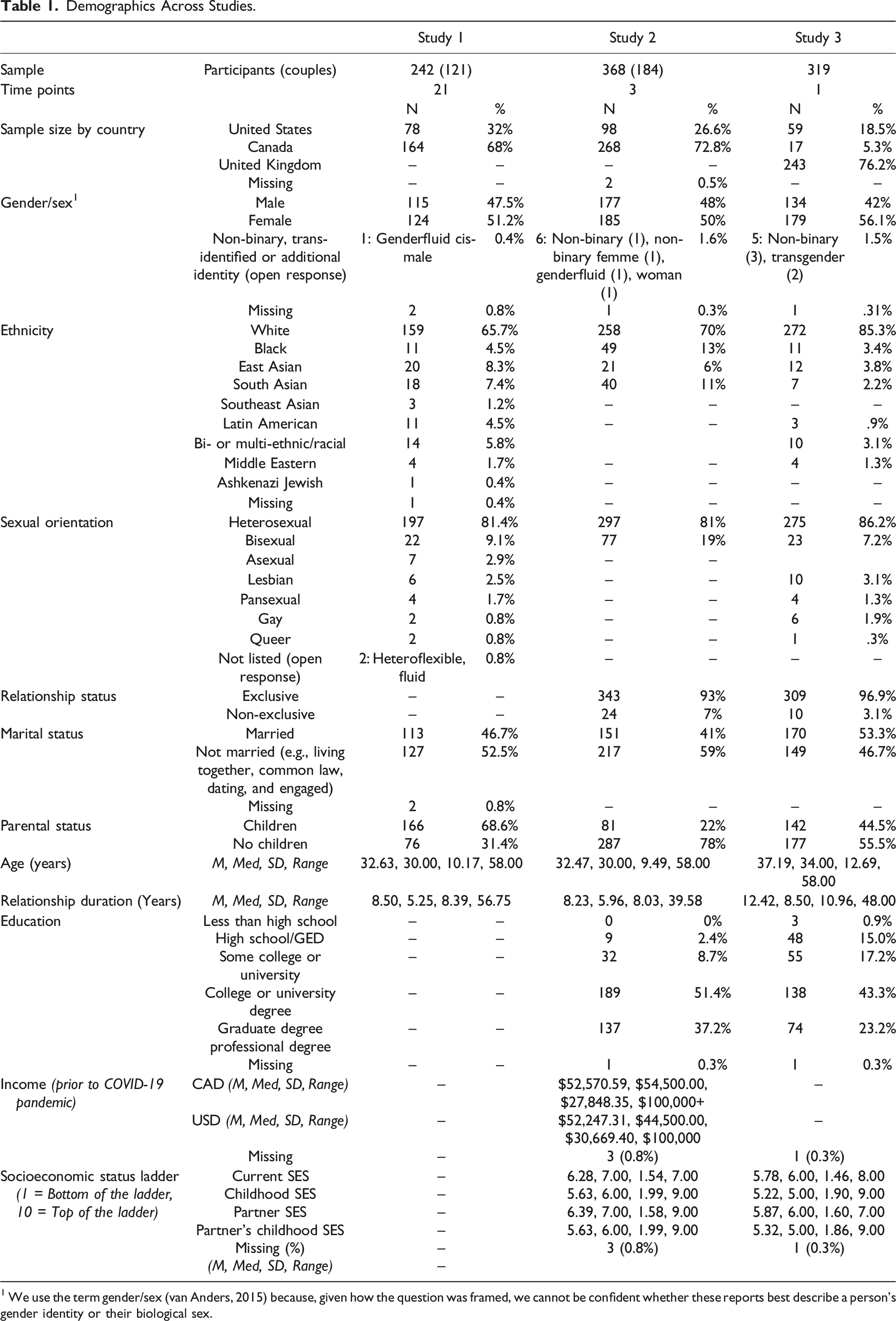
1 We use the term gender/sex (van Anders, 2015) because, given how the question was framed, we cannot be confident whether these reports best describe a person’s gender identity or their biological sex.
Participants were screened for eligibility by email and telephone and upon consent were emailed an individualized link to complete a 60-minute background survey. Then, both partners independently completed 15-minute daily surveys every evening for the next 21 days. On average, 18.39 daily surveys were completed out of a possible 21. Participants were compensated up to $60 CAD ($48 USD) for completing all components of the study.
Measures
Correlations Among Focal Variables in Study 1.
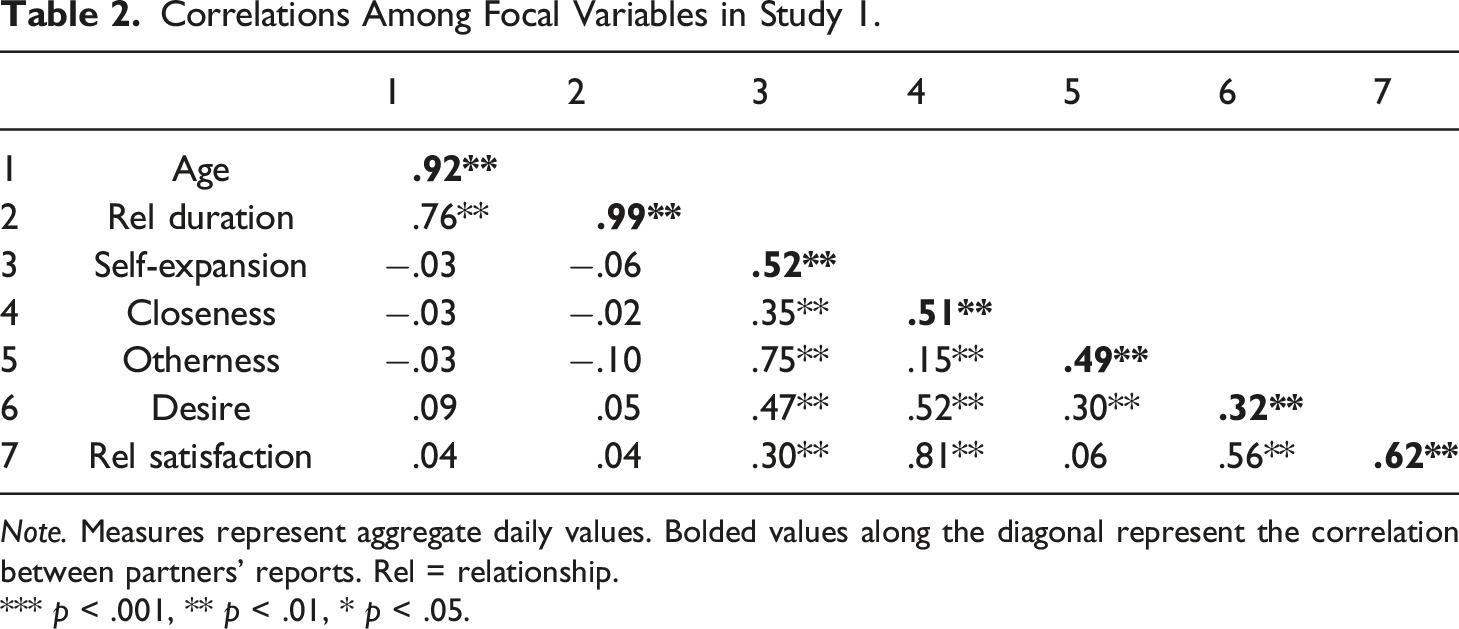
Note. Measures represent aggregate daily values. Bolded values along the diagonal represent the correlation between partners’ reports. Rel = relationship.
*** p < .001, ** p < .01, * p < .05.
Self-expansion: Self-expansion was measured using six items from the Self-Expansion Questionnaire (SEQ; Lewandowski & Aron, 2002) that had previously been adapted to the daily context (Muise et al., 2019) (1=Not very much to 7=Very much) (M=3.80, SD=1.88,
Closeness: Daily closeness was measured using a single face-valid item adapted from the Need Satisfaction Scale (La Guardia et al., 2000): “Today, when I was with my partner, I felt a lot of closeness and intimacy” (1=Not true at all to 7=Very true) (M=5.46, SD=1.71). Perceived partner responsiveness, a related construct to closeness and one that has been associated with sexual desire (Birnbaum et al., 2016), was also tested as a mechanism and showed a similar pattern to closeness (see p. 1–3 and Tables S1 and S2 in the OSM).
Otherness: Otherness was measured using two items developed for this study based on previous qualitative work (Ferreira et al., 2012, 2015): “Today, I learned something about my partner that I didn’t know” and “Today, I saw a new side of my partner” (1=Strongly disagree to 7=Strongly agree) (M=2.70, SD=1.71, r=.80). An Exploratory Factor Analysis (EFA) using maximum likelihood estimation and promax (i.e., oblique) rotation revealed two factors in which the self-expansion items loaded on to one factor and the otherness items onto a second factor with acceptable fit (χ 2 (13) = 774.35, p < .001, TLI = .96) with a forced one factor model yielding a poor fit (χ 2 (20) = 3904.28, p < .001, TLI = .85) (see p. 3 of the OSM for more details).
Sexual Desire: Desire was measured using a face-valid item (Muise et al., 2016, 2019): “Today, I felt a great deal of sexual desire for my partner” (1=Strongly disagree to 7=Strongly agree) (M=4.80, SD=1.82).
Relationship Satisfaction: Relationship satisfaction was measured at background (M =6.06 SD= 0.967) and daily (M=6.04, SD=1.25) using a single item from the Perceived Relationship Quality Components Inventory (PRQC; Fletcher et al., 2000): “How satisfied are you with your relationship?” (1=Not at all to 7= Extremely).
Data Analyses
We analyzed the data using multilevel modeling in SPSS 27.0 guided by the Actor–Partner Interdependence Model (Kenny et al., 2006). We employed two-level cross-classified models to account for non-independence of partners within dyads and across days. We modeled separate random intercepts and slopes for each partner within the dyad but treated the partners as indistinguishable and utilized compound symmetry matrices to constrain the two partners to have the same parameters. Random slopes were tested, but either the models did not converge, or the random slopes were not significant, so were removed. The fixed effects estimates changed negligibly between models with and without random slopes. 4 To account for both between- and within-person variance, we used aggregate and person-mean centered daily predictor variables (Raudenbush et al., 2004; Zhang et al., 2009), although our key effects of interest were the within-person associations. Effects below are reported with unstandardized coefficients representing a change in the dependent variable for every one-unit deviation from the participant’s own mean. No data was missing for our key variables of interest and multilevel modeling is robust to participants having different numbers of daily surveys (Snijders & Bosker, 1999).
All mediation analyses tested the actor and partner mediators (i.e., closeness and otherness) simultaneously and were conducted using multilevel mediation, following the guidelines for a 1–1–1 multilevel mediation model (Zhang et al., 2009). To compute the indirect effects, we used the Monte Carlo Method for Assessing Mediation (MCMAM; Selig & Preacher, 2008) with 20,000 resamples and 95% confidence intervals (CI). A significant indirect effect was present if the CI did not contain zero.
Results
Total, Direct, and Indirect Effects for Models With Closeness and Otherness Mediating the Association Between Self-Expansion and Sexual Desire in Study 1.
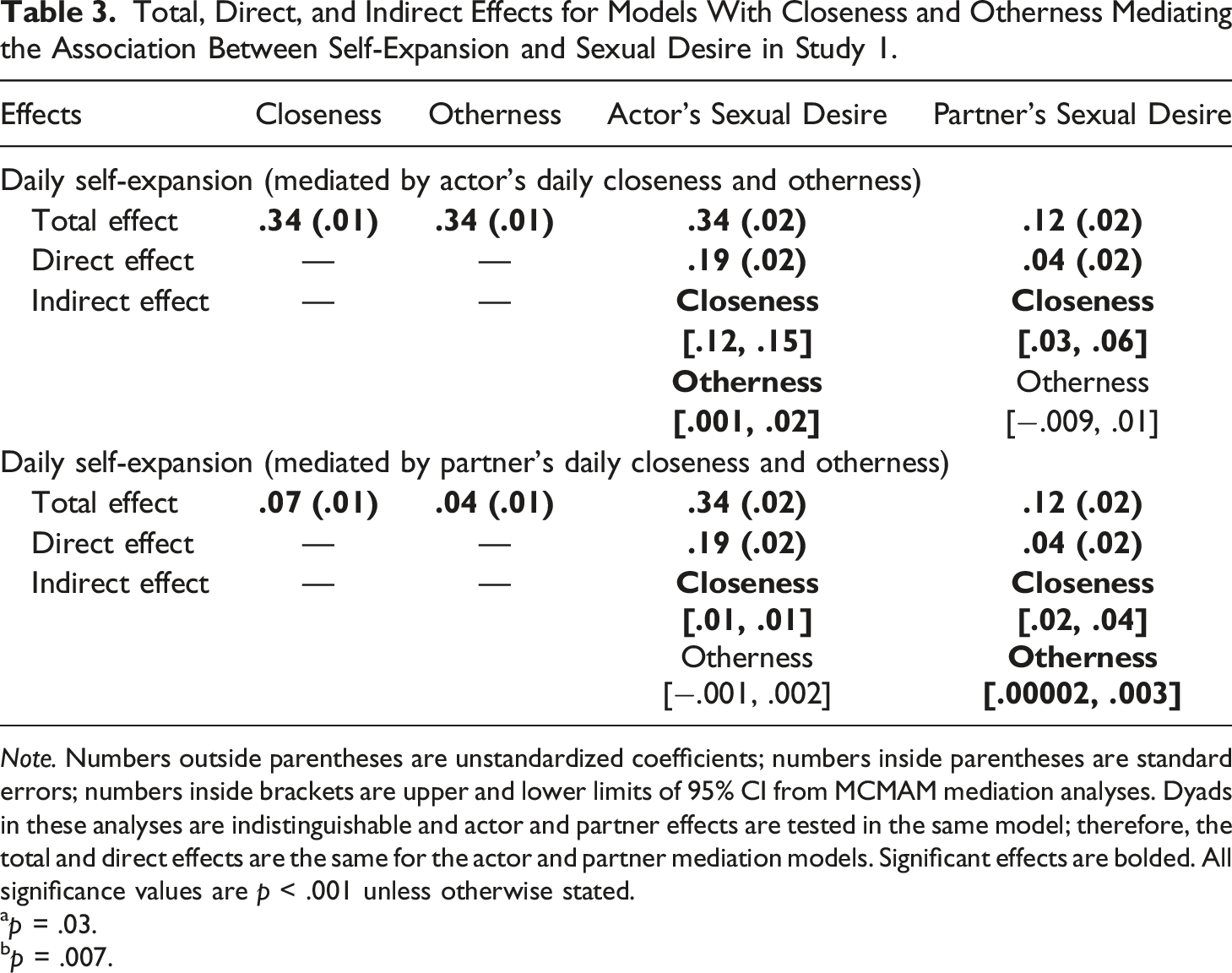
Note. Numbers outside parentheses are unstandardized coefficients; numbers inside parentheses are standard errors; numbers inside brackets are upper and lower limits of 95% CI from MCMAM mediation analyses. Dyads in these analyses are indistinguishable and actor and partner effects are tested in the same model; therefore, the total and direct effects are the same for the actor and partner mediation models. Significant effects are bolded. All significance values are p < .001 unless otherwise stated.
ap = .03.
bp = .007.
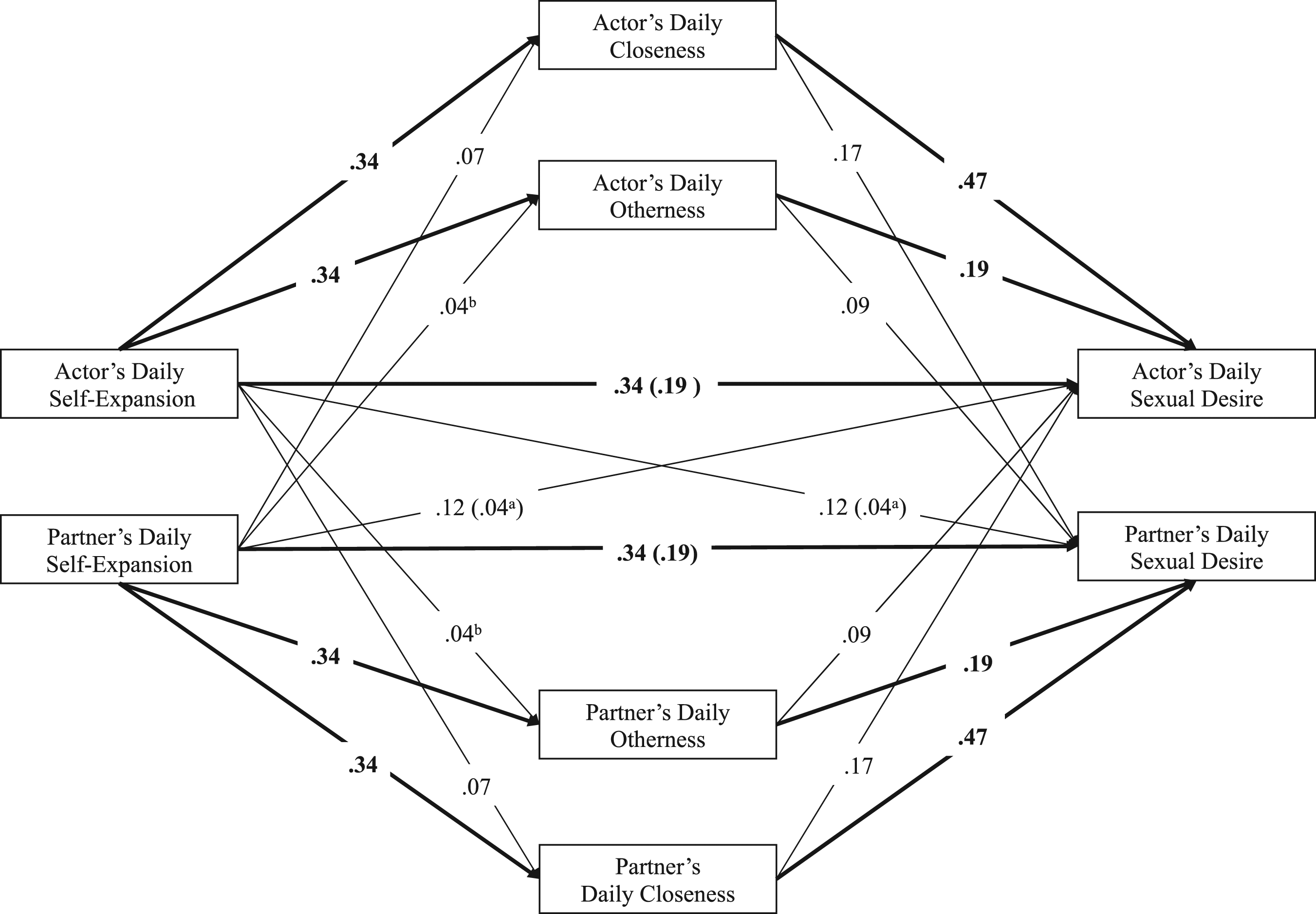
Actor–Partner Interdependence Model (APIM) for Full Mediation in Study 1. Note. Numbers represent unstandardized coefficients. Numbers outside the parentheses represent total effects while numbers inside the parentheses represent direct effects (see Table 3). Bolded lines represent actor effects and regular lines represent partner effects. All significance values are p < .001 unless otherwise stated. a p = .03, b p = .007.
To rule out the possibility that our effects are driven solely by people’s positive views of their relationship, we tested whether our effects held controlling for daily feelings of relationship satisfaction as well as whether our effects differed for more versus less satisfied couples. In fact, all effects held controlling for daily relationship satisfaction and relationship satisfaction at background significantly moderated one association: the association between otherness and desire for a partner. Otherness was associated with higher desire for people who were both higher and lower in relationship satisfaction at background, but the association was stronger for people in less satisfying relationships (see p. 4 and Table S3 of the OSM), perhaps suggesting that less satisfied couples have more room to grow. Overall, these analyses suggest that the findings are not driven by people in happy relationships simply responding positively to all relationship assessments. Controlling for relationship duration did not change the associations reported above, although relationship duration moderated one association—the association between self-expansion and otherness. The association was significant for couples with both a shorter and longer relationship duration but was stronger for couples in newer relationships (see p. 5 and Table S4 of the OSM).
Study 2
In Study 2, we conducted a pre-registered analysis of COVID Together (https://osf.io/pbq5z/), a month-long study that took place from April to June of 2020 following the onset of the COVID-19 pandemic and approved by York University’s institutional ethics review board. Although the stress associated with COVID-19 can dampen sexual desire (Balzarini et al., 2020), other research has shown that stressful or challenging experiences can also present couples with opportunities to expand and grow as they manage a challenge together (Muise et al., 2019; Raposo et al., 2020). In this study, we aimed to conceptually replicate the associations from Study 1 and test whether weekly variability in reports of self-expansion were associated with greater closeness and otherness, and in turn both partners’ sexual desire.
Method
Participants and Procedures
Couples were recruited through online advertisements (e.g., Kijiji and Facebook/Instagram) and research platforms (Honeybee Hub). Participants had to be at least 18 years old, living with their partner, in a relationship for at least 6 months, have access to a computer with internet, and reside in the United States or Canada. Given that we were targeting a specific time period (COVID-19), as with Study 1, our aim was to recruit at least 100 couples, but we recruited as many couples as possible from April 24, 2020, to June 16, 2020. Our final sample included 184 couples who completed, on average, 3.74 surveys out of a possible four (see Table 1 for demographics) (see p. 6 of the OSM for data exclusions).
Couples interested in participating completed an eligibility survey. If eligible, they were asked to leave the research team a voicemail in which each partner gave consent to participate and confirmed that they lived together. Once consent was given, partners were emailed an individualized link to complete a 45-minute background survey. Then, each week for the next 3 weeks, participants were sent a 25-minute weekly survey with truncated measures. Participants were compensated $15 CAD ($12 USD) for completing the background survey and $5 CAD ($4 USD) for each weekly survey.
Measures
Correlations Among Focal Variables in Study 2.
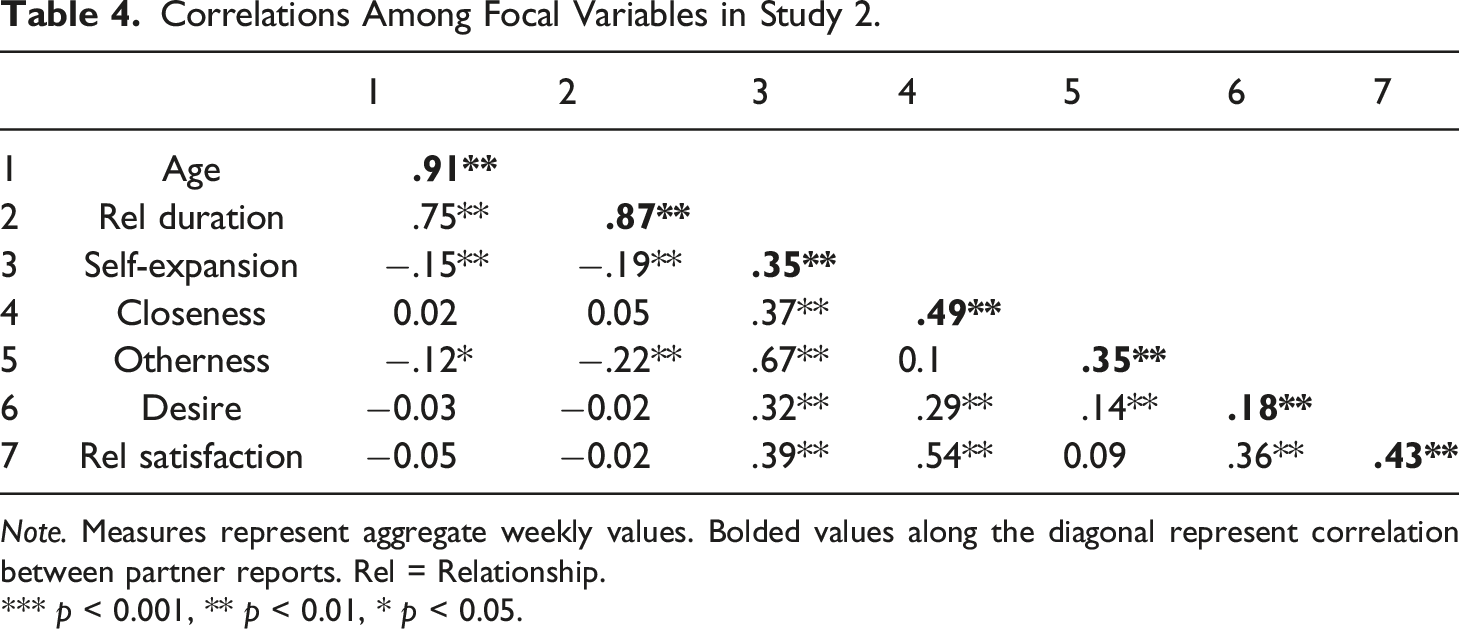
Note. Measures represent aggregate weekly values. Bolded values along the diagonal represent correlation between partner reports. Rel = Relationship.
*** p < 0.001, ** p < 0.01, * p < 0.05.
Self-expansion: Self-expansion was measured using three items from the SEQ (Lewandowski & Aron, 2002) (1=Not at all to 7=Very much) (M=3.79, SD=1.43,
Closeness: Closeness was measured using the Inclusion of Other in Self (IOS) Scale, rated from 1 to 7 (Aron et al., 1992; M =4.77, SD=1.64). We also had a measure of intimacy, a proxy for closeness, which showed a similar pattern of results (see p. 6 and Tables S5 and S6 of the OSM).
Otherness: Otherness was measured using three items akin to the items in Study 1: “I have learned things about my partner that I didn’t know before,” “I discovered something surprising about my partner,” and “I have seen my partner in a new light” (1=Not at all to 7=Very much) (M=2.73, SD=1.55,
Sexual Desire: Sexual desire was measured using a single, face-valid item: “I felt a great deal of sexual desire for my partner” (1=Not at all to 7=Completely) (M=4.92, SD=1.62).
Relationship Satisfaction: Relationship satisfaction was measured at background (M =5.90, SD =1.23) and weekly (M=5.97, SD=1.27) using a single, face-valid item: “I felt satisfied with my relationship” (1=Strongly Disagree to 7=Strongly Agree).
Data Analyses
Our data analytic plan was the same as in Study 1, except data were reported weekly instead of daily.
Results
Total, Direct, and Indirect Effects for Models with Closeness and Otherness Mediating the Association Between Self-Expansion and Sexual Desire in Study 2.
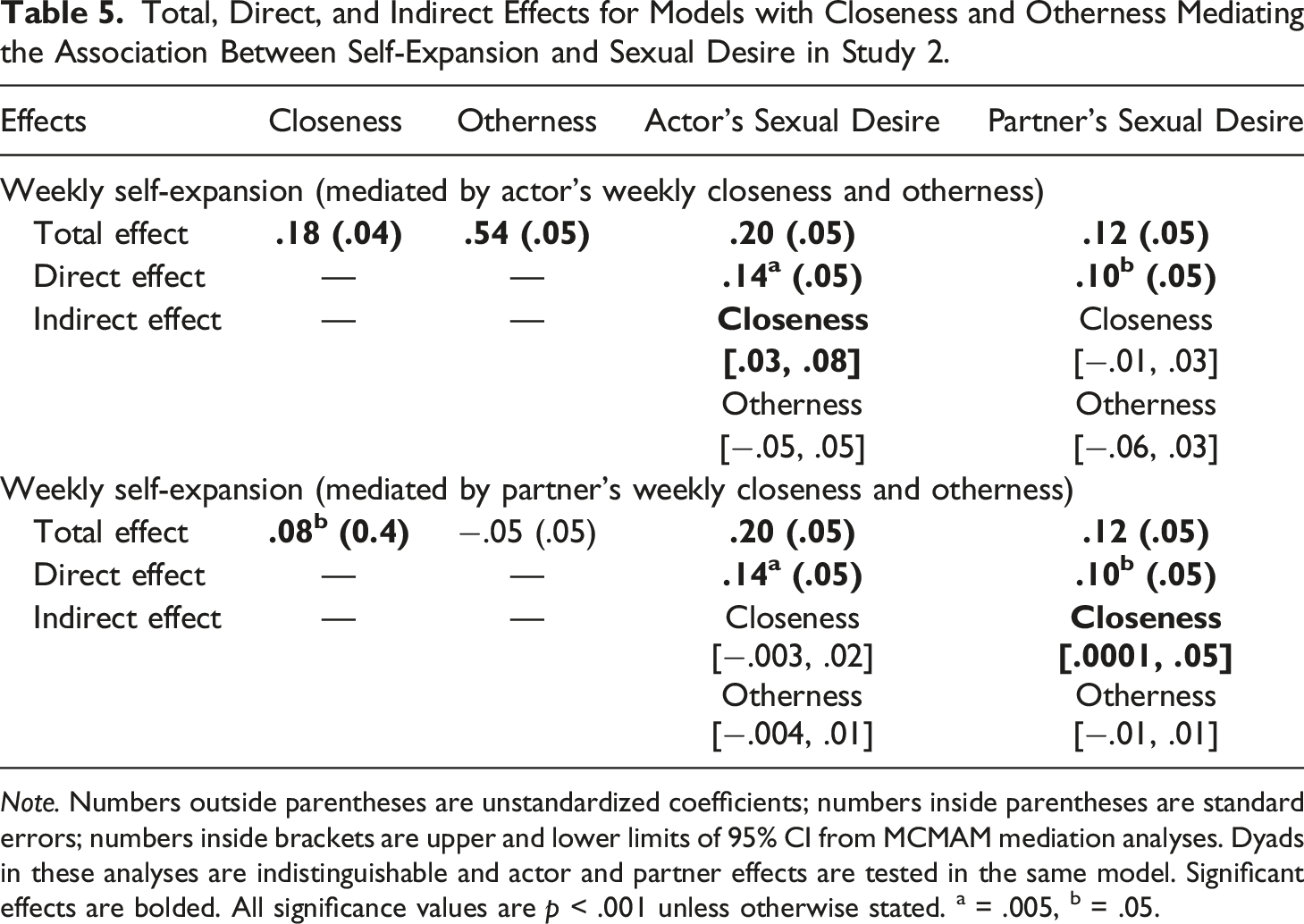
Note. Numbers outside parentheses are unstandardized coefficients; numbers inside parentheses are standard errors; numbers inside brackets are upper and lower limits of 95% CI from MCMAM mediation analyses. Dyads in these analyses are indistinguishable and actor and partner effects are tested in the same model. Significant effects are bolded. All significance values are p < .001 unless otherwise stated. a = .005, b = .05.

Actor–Partner Interdependence Model (APIM) for Full Mediation in Study 2. Note. Numbers represent unstandardized coefficients. Numbers outside the parentheses represent total effects while numbers inside the parentheses represent direct effects (see Table 5). Bolded lines represent actor effects and regular lines represent partner effects. All significance values are p < .001 unless otherwise stated. a = .005, b = .05.
As in Study 1, we wanted to rule out the possibly that couples’ relationship satisfaction is driving the effects. Again, all the effects remained the same, controlling for weekly relationship satisfaction and relationship satisfaction at background moderated one association: the association between self-expansion and otherness, which was significant for people in more and less satisfying relationships but was stronger for people in more satisfying relationships (see p. 9 and Table S7 in the OSM). Controlling for relationship duration did not change any of the associations reported above and none of the associations were moderated by relationship duration (see p. 10 and Table S8 in the OSM).
Study 3
In Study 3, to extend our correlational findings from Studies 1 and 2, we conducted a pre-registered experiment to test whether having people recall a self-expanding experience with their partner (compared to a familiar and comfortable experience or no recall task) would increase people’s feeling of closeness and otherness, and in turn, their desire. We recruited people in established relationships in March of 2021 and randomly assigned them to one of three conditions adapted from previous research (Muise et al., 2019): a self-expansion condition, a familiar and comfortable condition, or a control condition. The familiar and comfortable condition was included as another control condition to compare recalling a self-expanding experience to recalling another positive, but not novel or exciting experience with a partner. This study was approved by York University’s institutional ethics review board.
Method
Participants and Procedures
Individuals in established relationships were recruited using Prolific. To be eligible, participants had to be in an established relationship of at least 2 years, be at least 18 years old, read English and currently reside in the United Kingdom, United States, or Canada. To ensure sufficient power across our three conditions and four outcome variables (two mediators, two outcomes), we used G*Power (Faul et al., 2007) to calculate our sample size. To achieve 95% power at an alpha at .05 using an effect size from a previous self-expansion manipulation (Muise et al., 2019) of .2, we aimed for a sample of 291 participants (97 participants per condition). To account for possible exclusions, we oversampled by approximately 20% for a total of 347 participants. Our final sample included 319 participants (self-expansion: 105, familiar and comfortable: 105, control: 109; see Table 1 for demographics) (see p. 11 of the OSM for data exclusions).
Experimental Manipulation for Study 3.
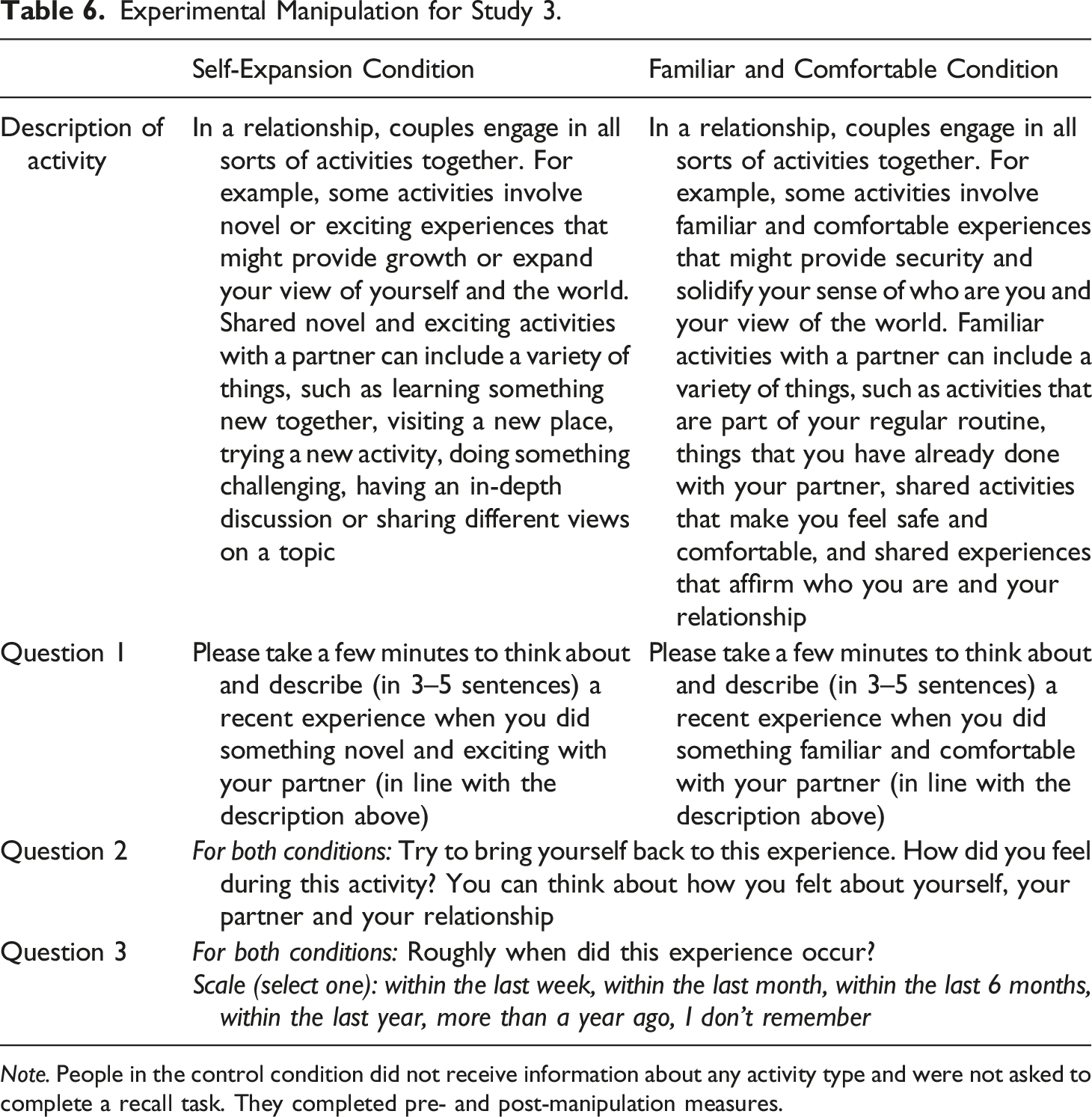
Note. People in the control condition did not receive information about any activity type and were not asked to complete a recall task. They completed pre- and post-manipulation measures.
Measures
The following measures were assessed following the manipulation:
Closeness: As in Study 2, closeness was assessed using the IOS Scale (Aron et al., 1992), rated from 1 to 7 (M = 5.06, SD=1.51). 6
Otherness: Otherness was assessed using four items: “I am still learning things about my partner that I didn’t know before,” “I am still discovering surprising things about my partner,” “I often see my partner in a new light,” and “I am aware of the unique things that my partner brings to the relationship” (1=Not at all, to 7=Very much so) (M=4.19, SD=1.37,
Sexual Desire: Sexual desire was assessed using a single face-valid item: “How much sexual desire or interest do you feel for your romantic partner right now?” (1=Not at all to 7=Very much) (M=4.44, SD=1.64).
Relationship Satisfaction: Relationship satisfaction was also measured using a single face-valid item: “How satisfied are you with your relationship right now?” (1=Not at all to 7=Very much) (M =5.66, SD =1.38).
We included four items to assess the difficulty and effectiveness of our manipulation. First, in the self-expansion and familiar and comfortable conditions, directly after the recall task, we asked participants when the experience occurred: 1=Within the last week, to 5=More than a year ago, and 6=I don’t remember (M = 1.39, SD =1.47), and “How easy versus difficult was it to recall a novel and exciting experience with your partner?” (or a familiar and comfortable experience): 1=Extremely easy to 5= Extremely difficult (M = 1.18, SD = 1.22). Second, following our key outcomes, we asked participants in all three conditions: “To what extent do you and your partner do novel and exciting things together” (M = 4.01, SD = 1.61) and “To what extent do you and your partner do familiar and comfortable things together?” (M = 6.00, SD = 1.08), rated from 1= Not at all, to 7= Very much.
Manipulation Checks
Based on our pre-registered manipulation checks, self-expansion was manipulated across conditions as intended, but the groups differed on how difficult the activities were to recall and time since the activity occurred (Table 6; also see p. 11–12 in the OSM for more details). Accordingly, difficulty of recall and time of experience were controlled for in subsequent analyses.
Tests of Our Key Predictions
Results of Manipulation Checks, Direct Effects, and Indirect Effects for Study 3, Controlling for Experience Date and Recall Difficulty.
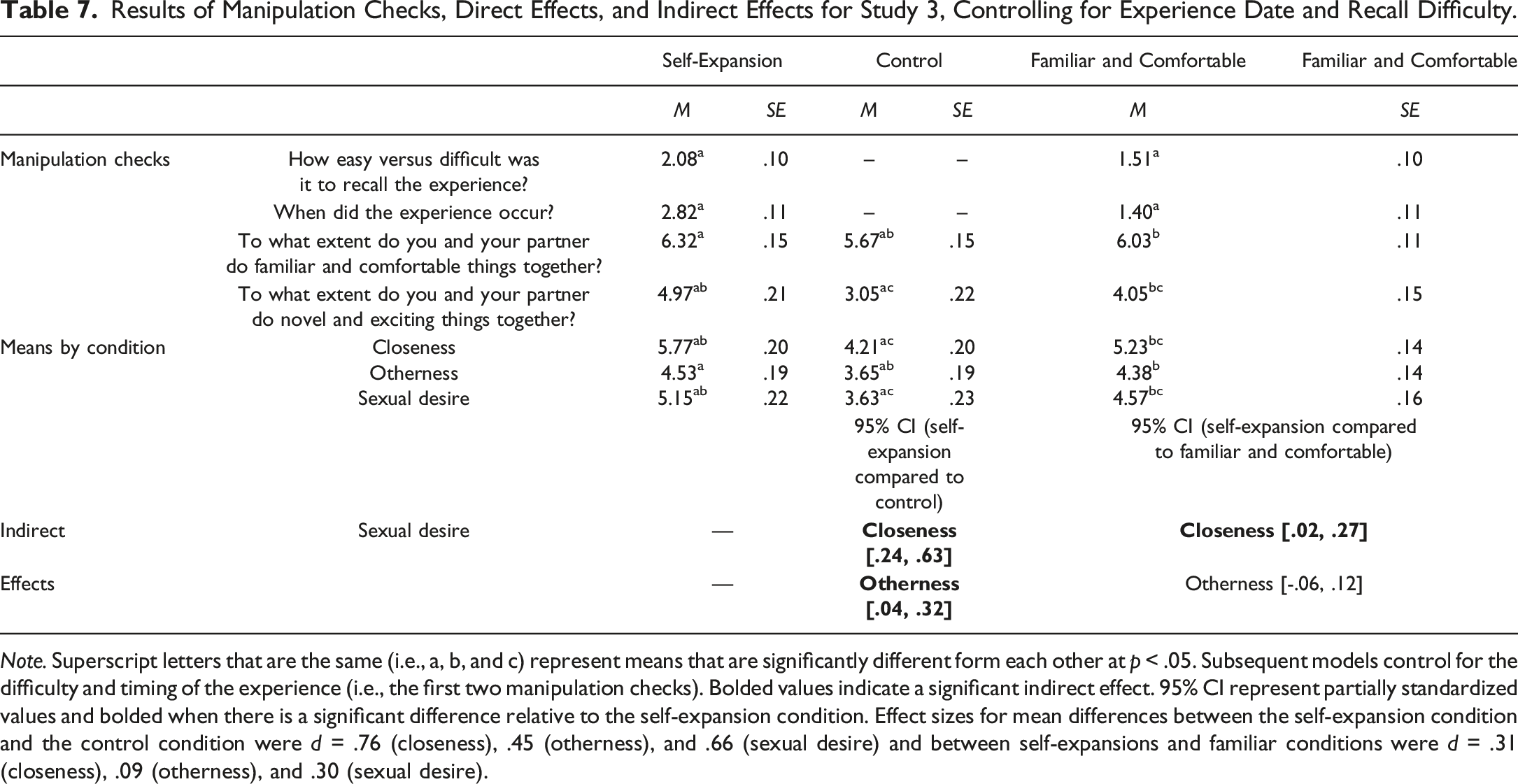
Note. Superscript letters that are the same (i.e., a, b, and c) represent means that are significantly different form each other at p < .05. Subsequent models control for the difficulty and timing of the experience (i.e., the first two manipulation checks). Bolded values indicate a significant indirect effect. 95% CI represent partially standardized values and bolded when there is a significant difference relative to the self-expansion condition. Effect sizes for mean differences between the self-expansion condition and the control condition were d = .76 (closeness), .45 (otherness), and .66 (sexual desire) and between self-expansions and familiar conditions were d = .31 (closeness), .09 (otherness), and .30 (sexual desire).
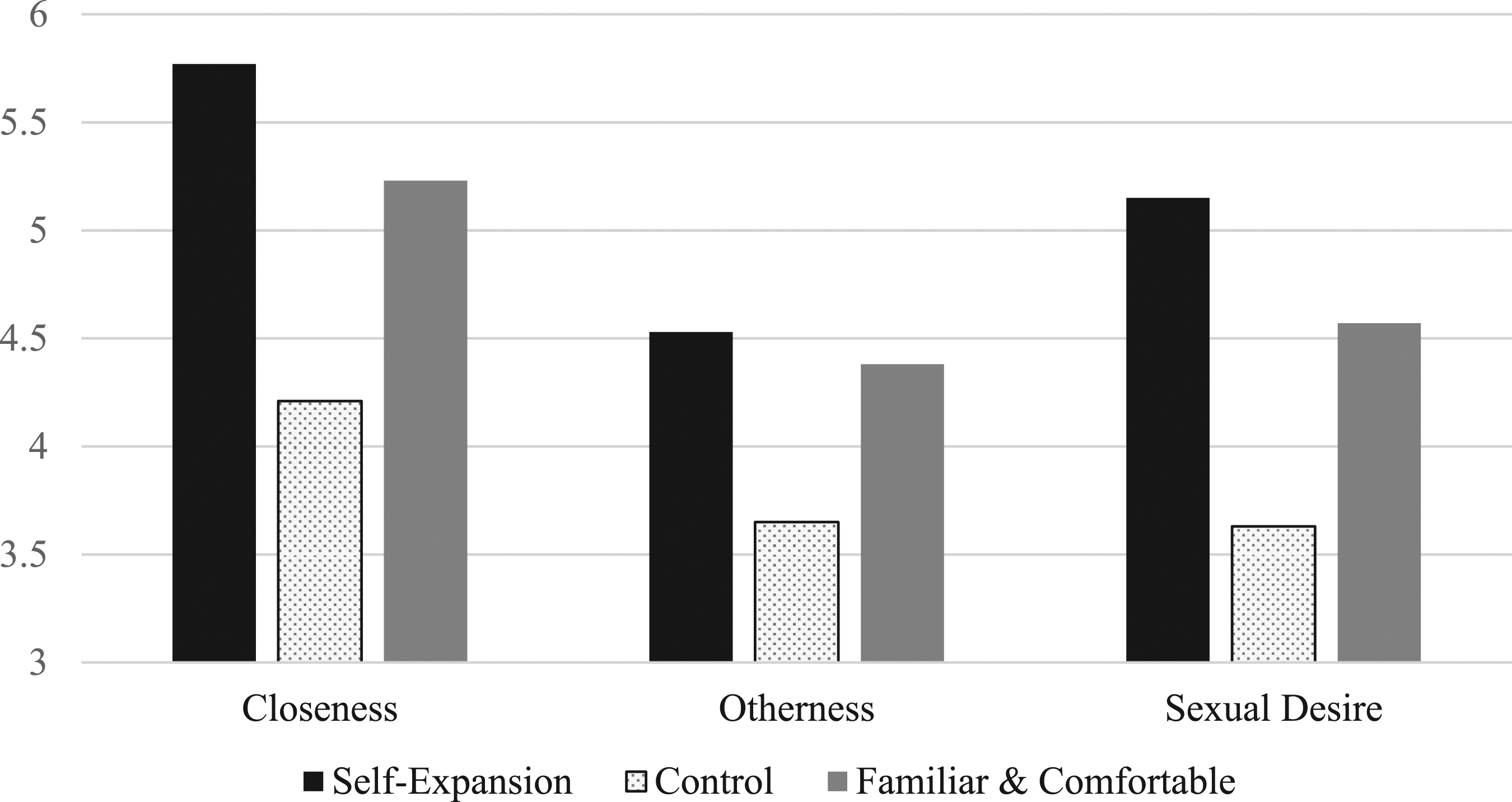
Closeness, Otherness, and Sexual Desire by Condition, Controlling for Experience Date and Difficulty of Recall. Note. All measures were rated using a 7-point Likert scale. Significant mean differences are reported in Table 6.
Next, to test our key prediction that an increase in closeness and otherness in the self-expansion condition would account for higher desire, we used the PROCESS SPSS macro (Hayes, 2017) to construct a 95% CI for each indirect effect using bootstrapping techniques with 5,000 resamples (see Table 7). As predicted, people in the self-expansion condition reported higher desire than people in the control condition and this boost in desire was accounted for by an increase in closeness and otherness. Relative to the familiar and comfortable condition, people in the self-expansion condition also reported higher sexual desire and this increase was due to an increase in closeness but not otherness. Relationship duration did not moderate any effects (see p. 12 and Table S9 in the OSM).
General Discussion
Sexual desire for a partner tends to decline over time in relationships (e.g., McNulty et al., 2016). Clinicians and sex researchers have often noted this paradox; as relationships become more secure and familiar, the novelty that often sparks desire begins to fade (Perel et al., 2007; Schnarch, 1991; Sims & Meana, 2010). Yet some people can maintain high desire for their partner decades into their relationship (Acevedo & Aron, 2009; O’Leary et al., 2012). Self-expansion theory offers a compelling explanation for these processes (Aron & Aron, 1986, 1996); self-expansion tends to be highest in the early stages of a relationship, but declines over time, like desire. But if self-expansion can be maintained in an established relationship, it is associated with higher desire for both partners (Muise et al., 2019; Raposo et al., 2020). The current findings provide additional evidence for the link between self-expansion and desire and extend previous research by demonstrating that closeness and otherness account for this association.
Across three studies using dyadic, experience sampling, and experimental designs, we demonstrated that both closeness and otherness account for the association between self-expansion and higher desire. In Studies 1 and 3, both closeness and otherness mediated the link between self-expansion and desire, while in Study 2, only closeness mediated this link, although otherness was marginally associated with higher desire. Couples in our correlational studies were highly satisfied (Study 1: M = 6.04, SD =1.25; Study 2: M= 5.97, SD=1.27; rated on a 7-point Likert scale), which raises the possibility that the link between self-expansion and desire through closeness and otherness was driven by “sentiment override” (Hawkins et al., 2002; Robinson & Price, 1980; Weiss, 1980). That is, that our effects are capturing couple members’ overall positive or negative feelings about the relationship, rather than a true association. Yet all associations held when controlling for relationship satisfaction and were consistent for couples who were more versus less satisfied with their relationship at background, suggesting that their overall feelings about their relationship are not driving the effects.
Extending Self-Expansion Theory
Feeling closer to a partner may be an intuitive way that self-expansion is associated with greater desire, but it fails to explain why partners in long-term relationships who consistently feel close experience a decline in desire, as well. Social psychologists and clinicians believe that a fusion of partners might contribute to a decline in sexual satisfaction (Frost & Forrester, 2013) and desire (Perel et al., 2007; Schnarch, 1991; Sims & Meana, 2010), which acknowledges that although people have an innate need to connect with others, they similarly have a need to feel like competent, distinct individuals (Aron, McLaughlin-Volpe, et al., 2004; Ben-Ari, 2012; Ryan & Deci, 2000). In the current set of studies, we investigated the novel construct of otherness (felt alongside closeness)—the perceptual distance that allows people to learn new things about a partner and see a partner in new ways. Engaging in self-expanding activities may create opportunities for otherness by putting partners in novel, exciting or challenging situations in which learning something new about a partner or seeing them in a new light is more likely and may foster desire as they present opportunities for further self-expansion (Sims & Meana, 2010).
Otherness and Sexuality
The idea that people and relationships function best when couple members can feel both connected and distinct, related and autonomous, closeness and otherness, is not new (Aron, McLaughlin-Volpe, et al., 2004; Ryan & Deci, 2000), yet there has been limited empirical research testing these ideas in couples’ daily lives, within the domain of sexuality, and simultaneously. Although closeness is linked to higher desire in relationships (Birnbaum et al., 2016; Impett et al., 2008; Muise et al., 2019), clinicians and researchers have theorized that closeness, without sufficient otherness or distinction between partners, can stifle desire (Perel et al., 2007; Schnarch, 1991). The current results support the conceptualization of otherness as a separate process from closeness, as closeness and otherness independently mediated the relationship between self-expansion and desire (Prekatsounaki et al., 2019; Schnarch, 1991), but more work is needed on otherness in relationships.
One aspect of otherness that was not investigated in detail in this paper is otherness as a negative experience. In Study 2, which was collected amidst the COVID-19 pandemic, participants shared open-ended responses about their experiences. Some participants provided examples in which seeing a partner in a new light was not a positive experience (e.g., “…My partner is showing a certain character that I didn’t know he had [,] with less tolerance and patience. [T]his has surprised me.”). It is understandable that when partners are spending all their time together and facing novel external stressors, they may become frustrated with daily habits or learn new and negative things about their partner, which may explain the inconsistent results in Study 2. Future research could investigate when otherness sparks desire and connection and when it might be threatening to a relationship.
Limitations, Future Directions, and Implications
One limitation of the current set of studies is that participants were primarily in established relationships and we were not able to track them from the initial stages, when desire and self-expansion are likely to be high, to later stages, when these typically decline. A direction for future research is to track self-expansion and desire over longer periods of time, as well as changes in closeness and otherness; questions that the current study designs were not equipped to assess. In future studies, it would also be valuable to assess whether the meaning of these constructs changes over time. By tracking our model of desire over longer periods of time, we can also examine how relationship transitions, such as observing a partner becoming a parent, could create opportunities for self-expansion, closeness, and otherness. Although relationship transitions can be very stressful, couples might be able to better navigate these transitions if they can find opportunities for growth and self-expansion. A second limitation of the current set of studies is that data was not consistently collected on socioeconomic status (e.g., education and income) or disability status, factors which could influence the frequency and type of self-expanding activities in which people engage and should be investigated in future work. Finally, although our sample sizes are in line with previous studies using similar designs, we did not conduct a priori power analyses for Studies 1 and 2 and may have been underpowered to detect some effects.
Participants in the current research were mostly white, heterosexual, in monogamous relationships, and most were college educated; thus, findings may lack generalizability. Future work on self-expansion and desire could benefit from more diverse samples, in terms of ethnicity, race, sexual orientation, and relationship configurations, such as consensually non-monogamous (CNM) relationships. For example, people in CNM relationships have been shown to report similar levels of trust and commitment as those in monogamous relationships while also allowing partners more room for novelty and uncertainty that may foster desire (Moors et al., 2017). Studying those in CNM relationships may provide unique insight into the balance of closeness and otherness in relationships.
Despite these important directions for future research, for clinicians working with couples, these findings suggest that promoting desire long-term is not only about encouraging partners to strive for greater intimacy but also to support and appreciate partner distinctiveness. This could be achieved by having couples be intentional about engaging in self-expanding activities or by bringing awareness to the unique aspects that each person already brings to the relationship.
Conclusions
Many people struggle to maintain desire over time, but there are couples who continue to feel desire for each other decades into their relationship. The current findings suggest that self-expansion creates opportunities for partners to feel closer to each other and appreciate the unique and novel ways that each person contributes to the relationship, in turn, fostering desire, providing insight into the relationship processes that maintain desire. These findings also advance theory in the areas of self-expansion and sexual desire maintenance and highlight the role of otherness in keeping the spark alive in relationships.
Supplemental material
Supplemental Material, sj-pdf-1-spr-10.1177_02654075221081137 for Feeling Close and Seeing a Partner in a New Light: How Self-Expansion Is Associated With Sexual Desire
sj-pdf-1-spr-10.1177_02654075221081137 for Feeling Close and Seeing a Partner in a New Light: How Self-Expansion Is Associated With Sexual Desire by Sophie C. Goss, Stephanie Raposo, Rhonda Balzarini, Natalie O. Rosen, Veronica Benyamin and Amy Muise in Journal of Social and Personal Relationships
Footnotes
Declaration of Conflicting Interests
The author(s) declared no potential conflicts of interest with respect to the research, authorship, and/or publication of this article.
Funding
The author(s) disclosed receipt of the following financial support for the research, authorship, and/or publication of this article: This work was supported by a Social Sciences and Humanities Research Council (SSHRC) Insight Grant and Insight Development Grant and a Canadian Foundation for Innovation (CFI) Infrastructure Grant awarded to Amy Muise, and a SSHRC Doctoral Fellowship awarded to Stephanie Raposo.
Supplemental Material
Supplemental material for this article is available online.

Notes
References
Supplementary Material
Please find the following supplemental material available below.
For Open Access articles published under a Creative Commons License, all supplemental material carries the same license as the article it is associated with.
For non-Open Access articles published, all supplemental material carries a non-exclusive license, and permission requests for re-use of supplemental material or any part of supplemental material shall be sent directly to the copyright owner as specified in the copyright notice associated with the article.
