




Abstract
Attachment insecurity is associated with lower satisfaction and lower felt security in romantic relationships, especially during times of stress such as coping with a global pandemic. Heightened external stressors for couples are associated with poorer relationship quality, but how couples cope with stress together, or their dyadic coping strategies, is associated with the maintenance of relationship satisfaction. In the current study, we followed 184 couples living together during the COVID-19 pandemic to test whether specific coping strategies buffered people higher in attachment anxiety and avoidance from lower satisfaction and felt security in the early weeks and ensuing months of the pandemic. Our findings demonstrate that perceiving more emotion-focused dyadic coping—being affectionate and using intimacy—buffered the negative association between attachment anxiety and relationship satisfaction and felt security, both concurrently and over several months of the pandemic. In addition, problem-focused perceived dyadic coping backfired for people higher in attachment anxiety; they felt less satisfied when they perceived more problem-focused coping—which involves being solution-focused and using instrumental support—in their relationship. In contrast, people higher in attachment avoidance were buffered against lower relationship satisfaction when they perceived more problem-focused dyadic coping and were not buffered by emotion-focused coping. The current findings suggest the importance of tailoring coping strategies to a partner’s attachment style for relationship quality and felt security during times of stress.
Attachment insecurity—both attachment anxiety, which involves desiring extreme closeness and fearing rejection and abandonment, and attachment avoidance, which involves valuing independence and feeling uncomfortable with closeness—tends to be associated with lower satisfaction and lower felt security in relationships, especially during times of stress (Candel & Turliuc, 2019; Simpson & Rholes, 2012). In the context of stress, a pre-existing vulnerability like high levels of attachment anxiety or avoidance shapes dyadic processes, ultimately impacting relationship satisfaction (McNulty et al., 2021). For example, a recent global stressor—the COVID-19 pandemic—has taken a toll on romantic relationships (Balzarini et al., 2022; Luetke et al., 2020; Panzeri et al., 2020; Pietromonaco & Overall, 2021) and people with enduring vulnerabilities, such as attachment insecurity, are most at risk for poor relationship quality during this time (Pietromonaco & Overall, 2021). However, the associations between attachment insecurity and poor relationship outcomes can be buffered, meaning that the distress or dissatisfaction typical of attachment insecurity can be reduced by using certain strategies (Simpson & Overall, 2014). Given that in North America up to 50% of people have chronic attachment insecurities (Levine & Heller, 2010), it is important to understand the coping strategies that might buffer against the impact of attachment anxiety or avoidance on relationship quality. In the current study, we test whether different dyadic coping strategies—emotion-focused versus problem-focused—buffer those higher in attachment anxiety and avoidance from the lower relationship satisfaction and felt security they tend to report.
Dyadic coping in relationships
External stressors, such work stress, financial worry, and extended family responsibilities, can spillover into couples’ relationships (Neff & Karney, 2004) and how couples cope with stress, or their dyadic coping strategies, is important for the maintenance of satisfaction and felt security (Bodenmann, 2005). A stressful event that impacts both partners can be managed through a number of dyadic coping strategies aimed at resolving the problem together, regulating stress, and promoting safety in the relationship (Systemic-Transactional model; Bodenmann, 2005). How couples cope with a common stressor can be divided into two key types of coping strategies: emotion-focused dyadic coping, involving coping efforts aimed at reducing emotional distress such as relaxing together, being affectionate, and using intimacy to help each other to regulate emotions, and problem-focused dyadic coping, which involves instrumental support, such as helping each other to reappraise the situation or coming up with solutions for the problem (Bodenmann, 2005; Falconier & Kuhn, 2019).
Overall, both emotion-focused and problem-focused dyadic coping strategies are associated with greater satisfaction in romantic relationships (Falconier et al., 2015). In fact, the greater use of both emotion-focused and problem-focused dyadic coping strategies have been found to be among the strongest predictors of overall relationship quality (Bodenmann et al., 2011). One study found that greater use of positive dyadic coping during the COVID-19 pandemic buffered the association between pandemic-related stress and relationship quality (Randall et al., 2021). However, this study did not distinguish between the types of coping strategies or assess for attachment-related differences in which coping strategies might buffer against lower satisfaction and felt security.
Coping strategies that buffer attachment insecurities
A person’s attachment style, or their working model of how others will respond to their needs (Mikulincer & Shaver, 2007), can be conceptualized as falling along two orthogonal dimensions: attachment anxiety and attachment avoidance (Bowlby, 1973; Shaver & Mikulincer, 2009). Individuals who are higher on attachment anxiety theoretically have a history of attachment figures (i.e., parents, caregivers) who were inconsistently responsive to bids for closeness or comfort, resulting in a hyperactivated attachment system in which they are vigilant to signs that others will be responsive and supportive. Conversely, those higher on attachment avoidance theoretically have a history of unavailable and dismissive attachment figures which has promoted strategies aimed at deactivating one’s attachment system and avoiding dependence on others (Bowlby, 1973; Mikulincer et al., 2003). This working model is purported to be strengthened over one’s life and serve as archetype for attachment as an adult (Fraley, 2002).
In romantic relationships, people higher in attachment anxiety tend to be heavily invested in their relationships and crave emotional closeness to feel more secure. Attachment anxiety is associated with perceiving more conflict and more negative affect in relationships, which, in turn, is related with lower relationship satisfaction (Brassard et al., 2009; Molero et al., 2017). Conversely, people higher on attachment avoidance tend to be uncomfortable with closeness and dependence on a romantic partner, instead preferring self-reliance (Shaver & Mikulincer, 2009; Simpson & Rholes, 2012). Those higher in attachment avoidance tend to report lower trust and less security in their relationship and perceive less support from their partner, which ultimately damages relationship satisfaction (Givertz et al., 2013; Mak et al., 2010; Sadikaj et al., 2015). A secure attachment style is characterized as being low on both attachment anxiety and avoidance (Shaver & Mikulincer, 2009), and is associated with having romantic relationships characterized by high levels of trust, commitment, and satisfaction (Simpson, 1990).
Associations between attachment insecurity and lower relationship quality are heightened during times of stress (Simpson & Rholes, 2012). During the COVID-19 pandemic specifically, greater attachment anxiety is associated with poorer relationship quality, and both attachment avoidance and anxiety are associated with less family cohesion (e.g., supporting and helping each other; Overall et al., 2021). However, despite relationship difficulties associated with attachment insecurity and stress, some couples maintain relationship quality. Partner behavior that is responsive to one’s attachment orientation has been shown to be associated with enhanced partner security, and can reduce levels of attachment anxiety and avoidance in the relationship (Rice et al., 2020). Successful partner buffering of attachment insecurity has been shown to produce better long-term outcomes, such as relationship stability. For example, one study found that among couples in which a partner was lower in attachment security as an infant, focusing on positive aspects of the relationship following a discussion about a serious relationship conflict was associated with couples being more likely to be together two years later (Salvatore et al., 2011).
People higher in attachment anxiety desire emotional closeness from a partner (Simpson & Rholes, 2012) and are characterized by excessive reassurance-seeking (Shaver et al., 2005). The use of more emotion-focused individual coping strategies, such as rumination on negative thoughts and feelings, intensifies emotional distress in more anxiously attached individuals (Collins et al., 2006; Pascuzzo et al., 2015). However, research assessing these strategies used dyadically, in the context of a romantic relationship, has largely found that people higher in attachment anxiety tend to experience better relationship outcomes when they feel close and intimate with their partner via the use of emotion-focused strategies. For example, highly anxious individuals feel more secure when their partners are overtly affectionate (Lemay & Dudley, 2011), and experience higher relationship satisfaction when they are sexually satisfied (Little et al., 2010), or feel their partner is responsive to their sexual needs (Raposo & Muise, 2021), in part, because these factors may signal partner availability (Little et al., 2010). Indeed, accumulating evidence suggests that emotion-focused dyadic coping—using affection and intimacy to cope with stress—may provide the cues and signals that those high in attachment anxiety crave in relationships (e.g., sexually satisfying encounters, partner affection, and relational connection). Therefore, people higher in attachment anxiety may benefit from emotion-focused coping strategies that involve shared intimacy and a partner’s emotional availability, as these address their attachment-related concerns.
In contrast, those higher in attachment avoidance fear intimacy and tend to prefer a detached, self-reliant role (Simpson & Overall, 2014). For such individuals, partner support can be negative, and emotion-focused coping strategies in particular may be overly intimate and, consequently, not as effective. However, people higher in attachment avoidance can benefit from support if tailored to their needs. Previous research suggests that people higher in attachment avoidance experience decreased distress, higher self-efficacy, and less distancing from their partner when receiving high levels of practical support from their romantic partner (e.g., generating solutions, suggesting actions to produce change; Girme et al., 2015). Moreover, when experiencing distress brought on by difficult conversations with their partner, people higher in attachment avoidance were calmed when their partner offered more instrumental and less emotional support (Simpson et al., 2007). In a non-romantic context, social interactions involving instrumental support and discussion of problem-solving strategies alleviated negative affect in more avoidantly attached individuals in anticipation of a stressful task, while emotion-focused social interactions increased their negative emotions (Mikulincer & Florian, 1997). Thus, in contrast with those with higher attachment anxiety, people higher in attachment avoidance may benefit most from problem-focused dyadic coping (Simpson & Overall, 2014), as these strategies might accommodate their need for autonomy while also providing support during times of stress.
Although people higher in attachment anxiety and avoidance tend to report lower relationship satisfaction and felt security, they may be buffered against this by using dyadic coping strategies that match their attachment-related needs (i.e., emotion-focused for those higher in attachment anxiety and problem-focused for those higher in attachment avoidance). However, no research has yet investigated the potentially mitigating role of dyadic coping strategies that align with attachment styles on relationship satisfaction and felt security.
The current study
In the current study, we recruited couples living together during the COVID-19 pandemic to examine how perceiving the use of different dyadic coping strategies might buffer against the lower relationship satisfaction and security of people with attachment insecurity. Our key predictions were that higher attachment insecurity (i.e., higher attachment anxiety or avoidance) will be associated with lower relationship satisfaction and felt security, but that perceiving more emotion-focused dyadic coping in the relationship will buffer these associations for people high in attachment anxiety, whereas perceiving more problem-focused coping will buffer these associations for people high in attachment avoidance. Our predictions and analyses were pre-registered, and data and syntax are available here: https://osf.io/aet7s/?view_only=79cf41832d4e44c3a4a5644c2dc89963
Methods
Participants
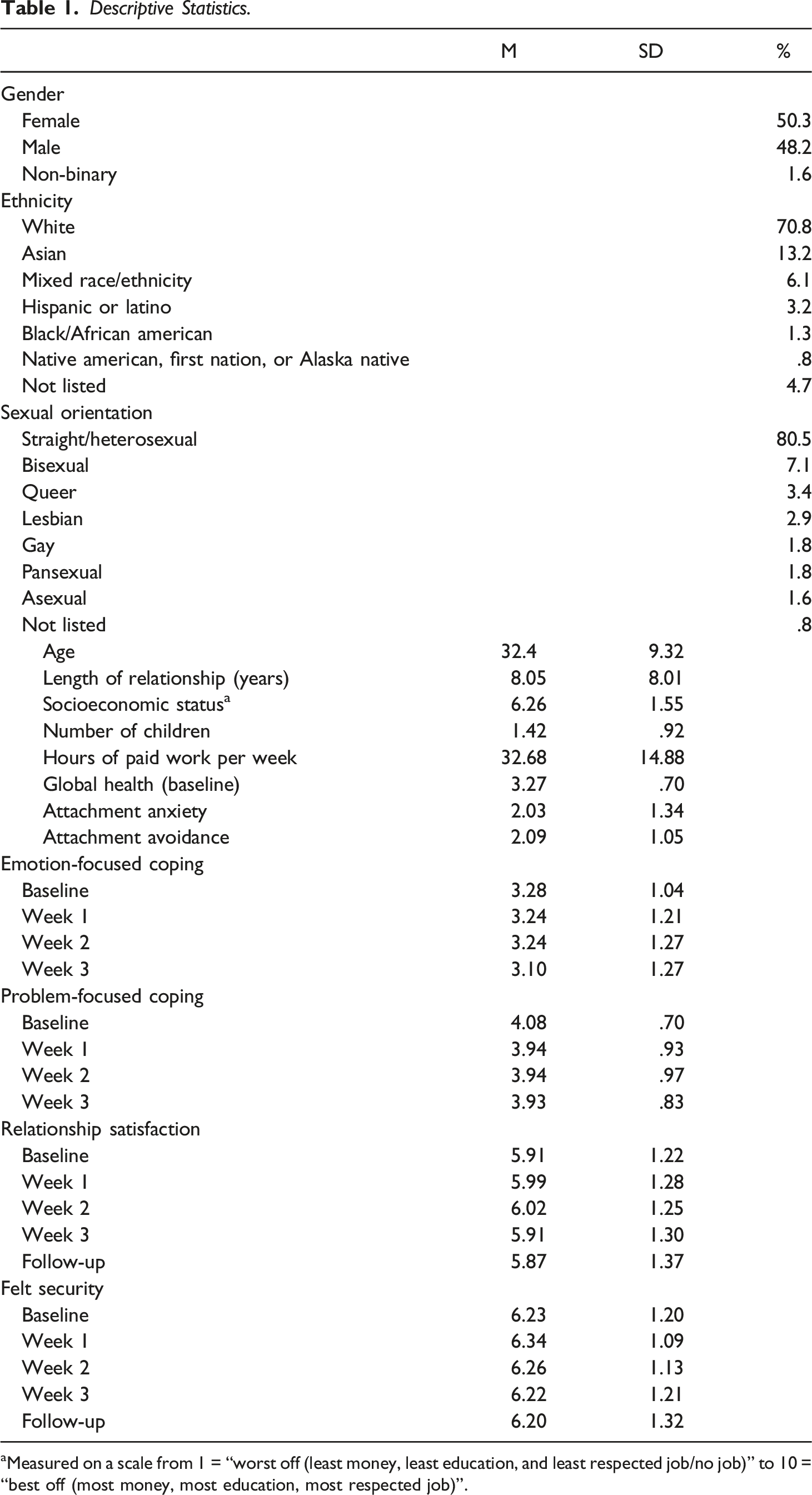
Descriptive Statistics.
aMeasured on a scale from 1 = “worst off (least money, least education, and least respected job/no job)” to 10 = “best off (most money, most education, most respected job)”.
Procedure
The study involved three parts. First, both couple members completed an initial online survey (approx. 45 minutes). Next, couple members completed weekly surveys for the next 3 weeks, in which they answered questions about their relationship, health, well-being, and experiences with COVID during the past week (approx. 20–25 minutes). Finally, couple members were asked to complete a follow-up online questionnaire 4–6 months after they completed their last survey (approx. 30 minutes; n = 283). Participants were compensated $15 CAD ($12 USD) for completing the baseline survey, $5 CAD ($4 USD) for each weekly survey, and $10 CAD ($8 USD) for completing the follow-up survey. All study procedures were approved by our institution’s research ethics committee. Means and SDs for measures can be found in Table 1.
Measures
Baseline measures
In addition to primary variables of interest, participants reported their age, gender, ethnicity, sexual orientation, socioeconomic status, relationship length, number of children, employment status, hours worked per week, and a measure of global health (see Table 1). Constructs of interest were measured using truncated versions of primary measures for the purpose of brevity and in order to lessen participant fatigue and attrition (Bolger et al., 2003).
Weekly and follow-up measures
Data analysis
To examine the effects over time, we used multilevel modelling using mixed models in SPSS (version 28.0) with partners nested in couples. For analyses using the weekly surveys, we used a cross-classified model with partners nested within a time-point and couple. We included random intercepts, allowing people to vary, and tested for random slopes. However, the models with random slopes either did not converge or random variances could not be computed, therefore, we modelled random intercepts and fixed slopes; the fixed effects estimates changed negligibly between models with and without random slopes. For our weekly analyses, we tested models analyzing both the within-person (i.e., change within people over the 3 weeks) and between-person (i.e., difference between people over the 3 weeks) effect by entering both the person-mean centered and aggregated predictors in the model. We tested both of our key predictions about the buffering effects of specific perceived dyadic coping strategies on attachment style in the same models. That is, we tested for a significant moderation between attachment anxiety and emotion-focused coping, and between attachment avoidance and problem-focused coping predicting our two key outcomes: (1) relationship satisfaction and (2) felt security. We included all possible interactions between attachment and perceived dyadic coping to test whether the buffering effects were unique. The models included all main effects of (a) attachment anxiety, (b) attachment avoidance, (c) emotion-focused coping, and (d) problem-focused coping and the following interactive effects: (e) attachment anxiety × problem-focused coping; (f) attachment avoidance × problem-focused coping, (g) attachment anxiety × emotion-focused coping, and (h) attachment avoidance × emotion-focused coping. Using the follow-up data, we tested whether perceived coping strategies over the course of the weekly study (the aggregate of emotion-focused coping and problem-focused coping) moderated the associations of baseline attachment anxiety or avoidance with felt security and relationship satisfaction at follow-up (i.e., 4–6 months after the initial survey, controlling for felt security/relationship satisfaction at baseline). For all analyses, we report unstandardized coefficients, which can be interpreted as the change in the outcome for every one unit change in the predictor variable.
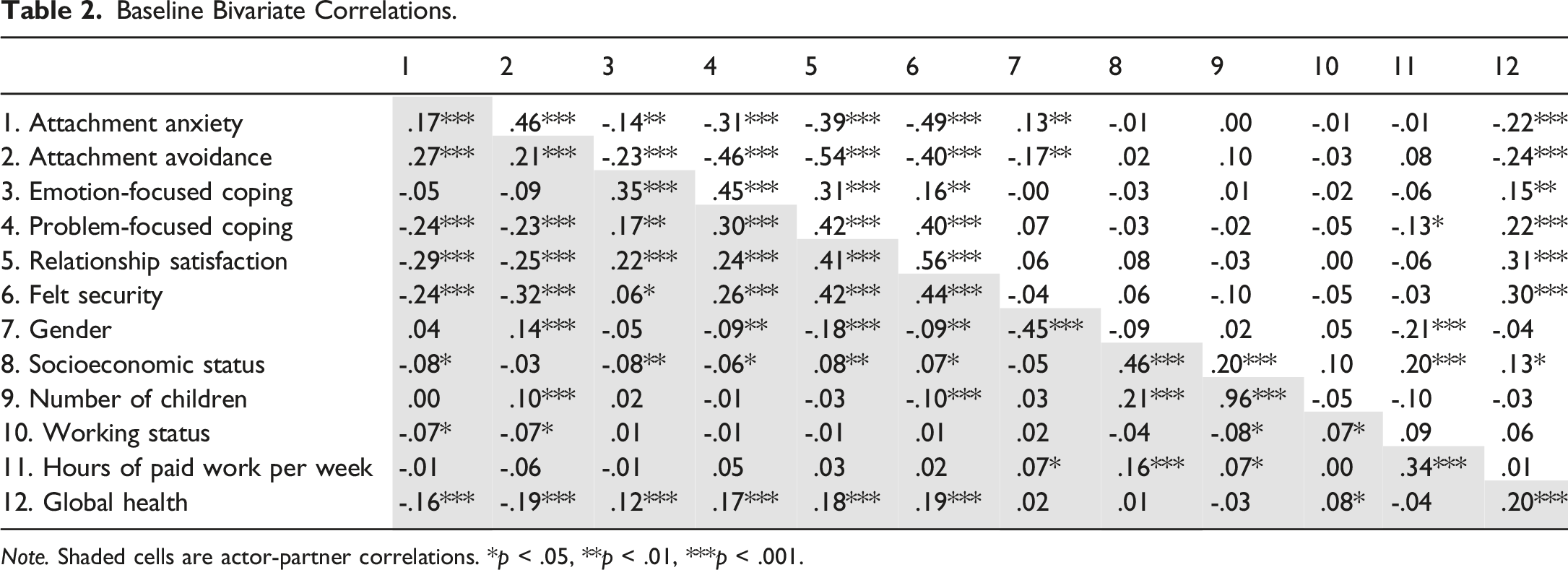
For our moderation predictions, significant moderations between attachment and perceived dyadic coping predicting relationship satisfaction or felt security were followed-up with simple effects tests at high (+1SD) and low (-1SD) levels of problem-focused or emotion-focused coping. That is, we tested whether the association between attachment avoidance/anxiety and our outcomes of interest was attenuated at high versus low levels of perceived problem- or emotion-focused coping. We also tested whether factors that could covary with perceived coping strategies and relationship outcomes (i.e., gender, parental status, socioeconomic status, employment status, hours worked per week, and global health) were correlated with our key variables and those correlated at a weak or higher level (i.e., more than r = .2; Salkind & Frey, 2019, Chapter 5) were included in the models as a covariate. We tested indistinguishable models, then tested for moderations by gender given previous literature suggesting men may be more likely to engage in problem-focused coping and women emotion-focused coping (e.g., Gabriel et al., 2016)—though the evidence is mixed (Tamres et al., 2002). If any of the effects were moderated by gender, we tested a two-intercept distinguishable model to test the effects separately for men and women. Finally, we did not have predictions about the buffering effect of an individual’s perceived dyadic coping strategies for their partner’s attachment style, so we did not include partner effects in the models presented below. However, we tested full models with both actor and partner effects. The actor effects in these models follow the general pattern reported below. Details are reported in Online Supplemental Materials (OSM).
Results
Preliminary analyses
Baseline Bivariate Correlations.
Note. Shaded cells are actor-partner correlations. *p < .05, **p < .01, ***p < .001.
Moderation Models with Attachment Insecurity and Dyadic Coping Predicting Relationship Satisfaction.

Note. Baseline relationship satisfaction is included as a covariate in follow-up model.
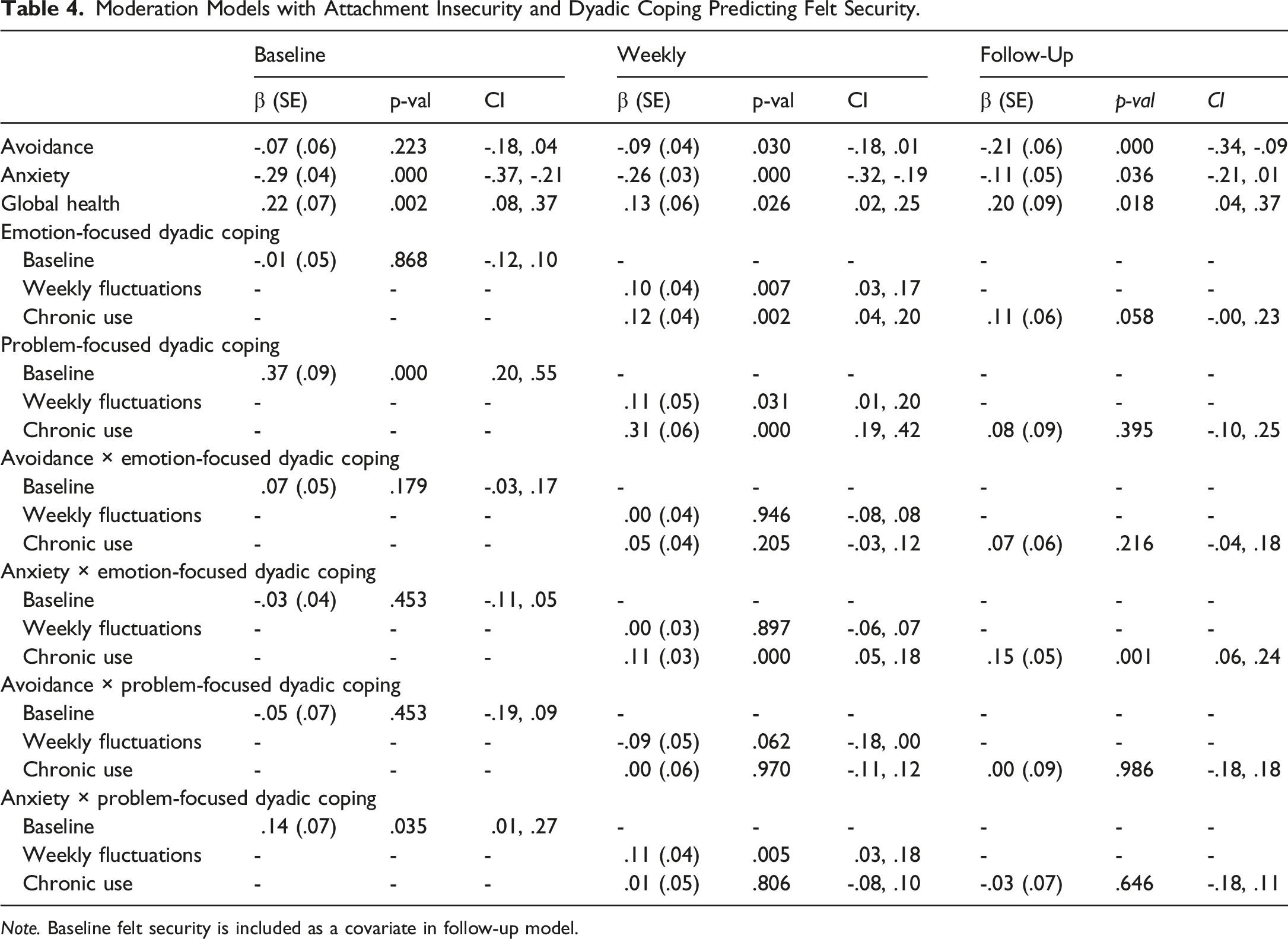
Moderation Models with Attachment Insecurity and Dyadic Coping Predicting Felt Security.
Note. Baseline felt security is included as a covariate in follow-up model.
Relationship satisfaction
People who perceived more emotion-focused (b = .23, SE = .04, t(347.25) = 5.31, p < .001) and problem-focused (b = .38, SE = .07, t(349.406) = 5.85, p < .001) dyadic coping strategies over the 3-week study reported higher relationship satisfaction. In addition, weekly fluctuations from a person’s mean levels of either coping strategy predicted higher relationship satisfaction (emotion-focused: b = .15, SE = .03, t(586.06) = 4.36, p < .001; problem-focused: b = .16, SE = .05, t(586.29) = 3.37, p < .001).
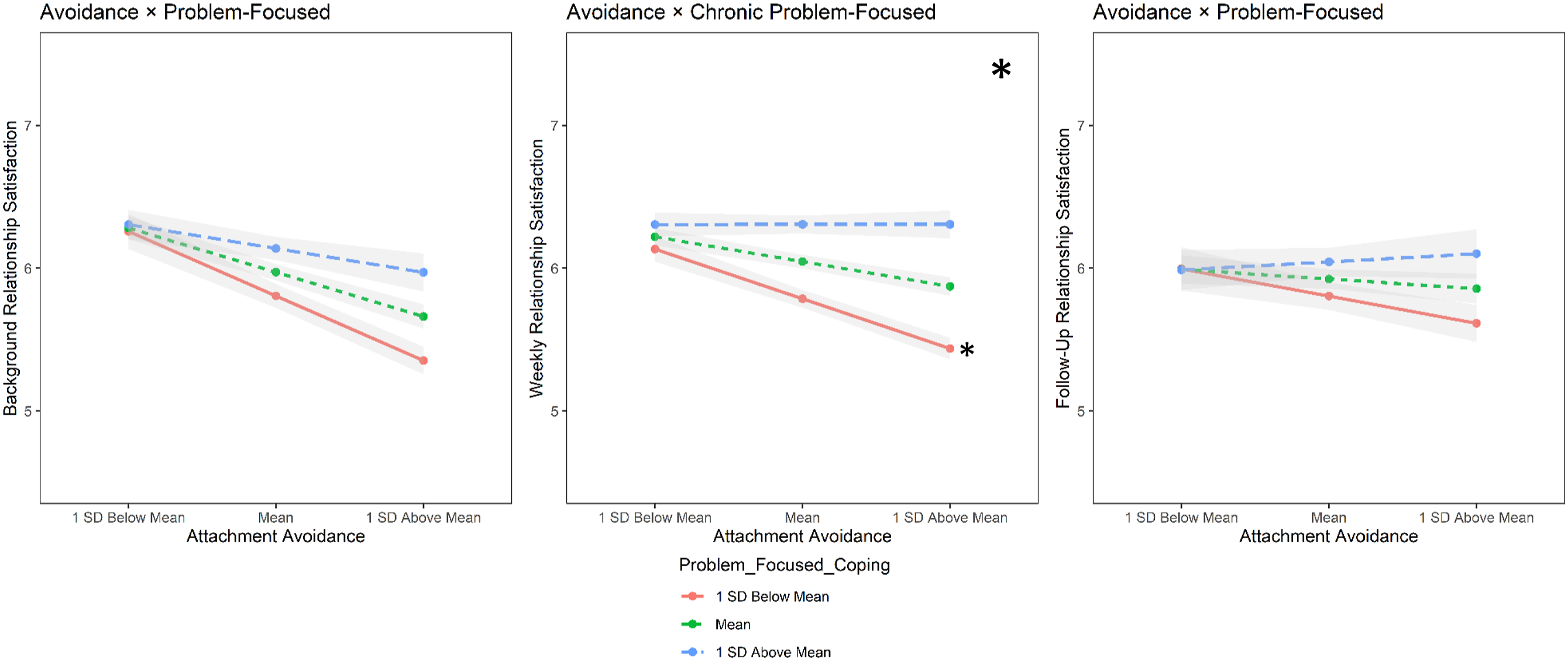
All significant moderations were with chronic perceptions of coping strategies. Weekly fluctuations from an individual’s mean levels of emotion- or problem-focused perceived coping did not significantly moderate the associations between attachment anxiety/avoidance and relationship satisfaction. As anticipated, there was a significant interaction between attachment anxiety and chronic perception of emotion-focused coping over the 3 weeks in predicting relationship satisfaction (b = .14, SE = .03, t(365.56) = 4.10, p < .001; Figure 1). Specifically, higher attachment anxiety was associated with lower relationship satisfaction at low levels of emotion-focused coping (b = -.32, SE = .06, t(350.08) = -5.73, p < .001), but not at high levels of emotion-focused coping (b = -.01, SE = .05, t(356.23) = -.25, p = .80). Also in line with our predictions, there was a significant interaction between attachment avoidance and the chronic perception of problem-focused coping over the 3 weeks (b = .15, SE = .07, t(355.45) = 2.29, p < .05; Figure 2). Specifically, higher attachment avoidance was associated with lower relationship satisfaction at low levels of problem-focused coping, (b = -.32, SE = .06, t(340.12) = -4.95, p < .001), but not at high levels of problem-focused coping (b = -.09, SE = .08, t(354.76) = -1.16, p = .25). Emotion-focused Coping Moderates the Association Between Attachment Anxiety and Relationship Satisfaction. Note. Left panel: Baseline. Middle panel: Chronic use during the weekly study. Right panel: Follow-up. Green dotted lines represent mean levels of problem-focused coping, blue dashed lines represent one standard deviation above the mean, pink solid lines represent one standard deviation below the mean. Asterisks indicate significant interactions/simple slopes. Problem-focused Coping Moderates the Association Between Attachment Avoidance and Relationship Satisfaction. Note. Left panel: Baseline. Middle panel: Chronic use during the weekly study. Right panel: Follow-up. Green dotted lines represent mean levels of problem-focused coping, blue dashed lines represent one standard deviation above the mean, pink solid lines represent one standard deviation below the mean. Asterisks indicate significant interactions/simple slopes.
Neither attachment anxiety nor attachment avoidance at baseline were significantly associated with relationship satisfaction at follow-up, accounting for baseline relationship satisfaction (anxiety: b = -.08, SE = .05, t(251.69) = -1.60, p = .11; avoidance: b = -.07, SE = .07, t(254.77) = -.95, p = .35). The perception of more emotion-focused coping strategies (b = .19, SE = .06, t(263.95) = 3.01, p < .01), but not problem-focused coping strategies (b = .16, SE = .09, t(255.02) = 1.74, p = .08), over the 3 weeks was associated with higher relationship satisfaction at follow-up, accounting for baseline levels. Perceiving more emotion-focused coping over the 3-week study moderated the association between attachment anxiety (assessed at baseline) and relationship satisfaction at follow-up (b = .17, SE = .05, t(257.13) = 3.50, p < .001; Figure 1). At low levels of emotion-focused coping, people higher in attachment anxiety reported lower relationship satisfaction at follow-up (b = -.27, SE = .08, t(252.47) = -3.56, p < .001). However, at high levels of emotion-focused coping these associations were attenuated (b = .10, SE = .07, t(256.79) = 1.45, p = .15). There were no significant moderation effects at follow-up for attachment avoidance or problem-focused perceived dyadic coping.
Felt security
Both the chronic use of (b = .31, SE = .06, t(363.91) = 5.23, p < .001) and weekly fluctuations in (b = .11, SE = .05, t(591.342) = 2.17, p < .05) problem-focused perceived dyadic coping over the 3-week study were associated with more felt security. The same pattern was found for emotion-focused perceived dyadic coping predicting felt security (chronic use: b = .12, SE = .04, t(362.64) = 3.08, p < .01; weekly fluctuations: b = .10, SE = .04, t(591.268) = 2.69, p < .01).
Unexpectedly, weekly fluctuations in problem-focused perceived dyadic coping moderated the association between attachment anxiety (b = .11, SE = .04, t(595.46) = 2.84, p < .01) predicting felt security. In fact, on weeks with low perceived levels of problem-focused coping, higher attachment anxiety was associated with lower felt security (b = -.31, SE = .04, t(569.84) = -8.16, p < .001) but, on weeks with high perceived levels of problem-focused coping, this association was attenuated (b = -.20, SE = .04, t(569.47) = -5.31, p = < .001). However, as predicted, the chronic perception of emotion-focused coping moderated the association between attachment anxiety and felt security (b = .11, SE = .03, t(371.32) = 3.64, p < .001). Higher attachment anxiety was associated with lower felt security at low levels of emotion-focused coping (b = -.38, SE = .05, t(353.48) = -7.558, p < .001), but this association was attenuated at high levels of emotion-focused coping (b = -.13, SE = .04, t(361.60) = -3.02, p < .01). Problem-focused coping did not significantly moderate the associations between attachment avoidance and felt security, contrary to what expected (see Table 4).
Higher attachment anxiety at baseline (b = -.11, SE = .05, t(238.97) = -2.11, p < .05) and higher attachment avoidance at baseline (b = -.21, SE = .06, t(234.76) = -3.34, p < .001) were associated with lower felt security at follow-up, accounting for felt security at baseline. There was no association between felt security at follow-up and the perception of more problem-focused coping (b = .08, SE = .09, t(267.86) = .85, p = .40) or emotion-focused coping (b = .11, SE = .06, t(270.64) = 1.91, p = .06) during the 3-week study. Perceiving more emotion-focused coping over the 3-week study moderated the association between attachment anxiety (assessed at baseline) and felt security (b = .15, SE = .05, t(236.64) = 3.24, p < .01) at follow-up. At low levels of emotion-focused coping, people higher in attachment anxiety reported lower felt security (b = -.27, SE = .07, t(233.67) = -3.65, p < .001) at follow-up. However, at high levels of emotion-focused coping this association was attenuated (b = .06, SE = .07, t(242.44) = .81, p = .42). There were no significant moderation effects at follow-up for attachment avoidance or problem-focused perceived dyadic coping.
Discussion
The current findings add to the burgeoning area of research on factors that can buffer people higher in attachment insecurity from the lower satisfaction and felt security they tend to report. In line with previous research (Candel & Turliuc, 2019), both attachment anxiety and avoidance were associated with lower relationship satisfaction and felt security, both concurrently and over time. Also, overall, both higher levels of emotion-focused and problem-focused perceived dyadic coping were associated with higher relationship satisfaction, and problem-focused strategies were associated with feeling more secure over time. Our key predictions were largely supported. More specifically, perceiving emotion-focused coping buffered the negative association between attachment anxiety on relationship satisfaction at all time points and buffered against lower felt security with perceived chronic use during the weekly study and at follow-up. Perceiving problem-focused coping buffered the negative association between higher attachment avoidance and lower relationship satisfaction with perceived consistent use over the 3-week study.
Attachment and dyadic coping
Attachment insecurity can make individuals more vulnerable to poor relationship quality, especially during times of heightened stress such as the COVID-19 pandemic (Overall et al., 2021). The current results demonstrate that both emotion- and problem-focused perceived dyadic coping strategies are associated with higher relationship satisfaction (and problem-focused strategies with felt security). However, which coping strategies most effectively buffer against lower relationship quality differ based on a person’s attachment style.
The current research adds to our understanding of how aligning a person’s perceptions of dyadic coping in the relationship with their attachment-related needs can be associated with relationship satisfaction. The findings provide initial evidence that perceiving emotion-focused dyadic coping buffers attachment anxiety for relationship satisfaction and felt security, and perceiving problem-focused dyadic coping buffers attachment avoidance for feelings of relationship satisfaction. Perceiving more emotion-focused dyadic coping strategies—including being affectionate, relaxing together, and making love—may signal that their partner is available and responsive, qualities that anxiously attached people theoretically crave in their romantic relationships. Indeed, previous work shows that these strategies are effective at buffering more anxiously attached individuals from negative outcomes. For example, expressing exaggerated positive sentiments can increase an anxious partner’s feeling of being valued (Lemay & Dudley, 2011). In line with this, people higher in attachment anxiety are buffered against negative relationship outcomes when receiving touch from a romantic partner (Kim et al., 2017), and when they perceive their partner as sexually responsive (Raposo & Muise, 2021) and committed and responsive to their needs (Tran & Simpson, 2009). Conversely, problem-focused dyadic coping strategies may provide a practical way to deal with a dyadic stressor without being overly intimate, which aligns with the desire for autonomy and discomfort with intimacy that is characteristic of attachment avoidance. The current findings are in line with previous work showing that, during conversations about relationship problems, more avoidant individuals experienced less anger and withdrawal when their partner was sensitive to their need for autonomy and acknowledged their constructive efforts (Overall et al., 2013). Weekly problem-focused perceived dyadic coping strategies also buffered attachment anxiety for felt security. It is possible that a weekly increase in the perceived use of problem-focused coping represented a weekly stressor that required couples to address the problem and find solutions together, but that a chronic perception of emotion-focused dyadic coping provided greater felt security long term.
Taken together, these results indicate that different coping strategies are one way to buffer the detrimental impact of attachment insecurity on relationship satisfaction and felt security. However, it is important to note that tailoring dyadic coping strategies to a partner’s attachment insecurity may be beneficial in the short-term, but there is some evidence that these strategies might not address the underlying vulnerability of attachment insecurity and thus may not be particularly effective at creating a lasting sense of security (Arriaga et al., 2018). Though these strategies were associated with higher relationship satisfaction in the current study (and felt security for those higher in anxious attachment engaging in emotion-focused coping), they may be a short-term solution and do not prevent anxiously attached individuals from requiring excessive reassurance or avoidantly attached individuals from tending to withdraw during stress. Partners of more insecurely attached people may become weary of constantly assuaging their partner’s insecurities (Arriaga et al., 2018). While these strategies may be beneficial in the short-term, people can help a more anxiously attached partner to be more secure by encouraging independent pursuits to gain a sense of self-efficacy. Further, more avoidantly attached partners may benefit from experiences that create a positive association with dependence (Arriaga & Kumashiro, 2019).
Implications and limitations
These findings must be considered in the context of some limitations. First, the study occurred during the initial few months of the COVID-19 pandemic, and we were unable to control for pre-pandemic relationship satisfaction and felt security. Indeed, although the present findings indicate the potentially mitigating role of dyadic coping strategies in the association between attachment insecurity and relationship quality, we tested this in the context of the pandemic and future work should replicate the effects in other contexts and by assessing the specific stressors in which couples are coping. As restrictions are lifted, future research should focus on the longer-term relationship effects of these dyadic coping strategies in a non-pandemic context. In addition, the current sample was relatively low in attachment insecurity (i.e., mean scores of 2.03 for attachment anxiety and 2.09 for attachment avoidance on a 1-to-7-point scale). Given our findings, future research may be warranted to assess the interactions of attachment and dyadic coping among individuals who are higher in attachment insecurity. Furthermore, future work might consider whether tailoring dyadic coping to a partner’s attachment style can help to reduce attachment insecurities over time, and across more diverse populations coping with different types of stressors. The current sample was primarily (i.e., 70.8%) White and largely affluent, and may have been better able to cope or have experienced less severe stressors, which may not generalize to a more diverse sample.
An additional limitation is that the current study is correlational and, although we account for baseline outcomes in our over time analyses, we cannot confirm causality. As well, the current data is self-reported. Although partners showed agreement in perceptions of the dyadic coping strategies in the relationship, future work assessing coping strategies from behavioral observation of dyadic interactions in the lab could provide more objective assessments. It is likely that the perceived strategies have the strongest effects (Pollmann & Finkenauer, 2009), but future work could include a more comprehensive assessment of couples’ dyadic coping strategies.
Despite the limitations, the current study followed couples over several months as they coped with a global pandemic and sheds new light on the associations between attachment style, perceived dyadic coping, and relationship satisfaction and security. The current findings suggest that tailoring dyadic coping to a partner’s attachment style might be one route to maintaining satisfaction and security in a relationship. Second, our findings suggest that not all dyadic coping is created equal. Much of the past work has examined emotion- and problem-focused strategies together (Bodenmann et al., 2011; Falconier et al., 2015), though there is evidence that these are two distinct constructs (Falconier et al., 2013; Kanth et al., 2022; Vedes et al., 2013; Xu et al., 2016). Here we provide initial evidence that type of dyadic coping matters and the benefits might depend on a person’s attachment style (or other individual differences to be investigated in future research). A key takeaway from the current research is for partners to reflect on their preferred way of coping with stress together and communicate these preferences, as perceived dyadic coping that aligns with a person’s needs can buffer against lower relationship satisfaction and security. Future research is needed to elucidate if type of dyadic coping strategy use is amenable to change, and if orienting couples toward certain strategies could help couples feel more satisfied and secure over time.
Footnotes
Author note
Predictions and analyses for the current study were preregistered ( ). This research was supported by a Social Sciences and Humanities Research Council (SSHRC) Insight Grant and Insight Development Grant and a Canadian Foundation for Innovation (CFI) Infrastructure Grant awarded to Amy Muise. Correspondence concerning this article should be addressed to Lana Vedelago, Department of Psychology, York University, 4700 Keele St., Toronto ON M3J 1P3, Canada. Email:
Declaration of conflicting interests
The author(s) declared no potential conflicts of interest with respect to the research, authorship, and/or publication of this article.
Funding
The author(s) disclosed receipt of the following financial support for the research, authorship, and/or publication of this article: This work was supported by Social Sciences and Humanities Research Council of Canada (Insight Grant).
Open research statement
As part of IARR's encouragement of open research practices, the authors have provided the following information: This research was pre-registered. The aspects of the research that were pre-registered were the hypotheses and data analytic plan. The registration was submitted to Open Science Framework. The data used in the research can be publicly posted. The data can be obtained at: https://osf.io/aet7s/?view_only=79cf41832d4e44c3a4a5644c2dc89963 or by emailing: or by emailing: