



Abstract
People with insecure attachment tend to experience more relationship-related issues, including lower sexual satisfaction. Although gratitude is a powerful emotion that can be used to boost and maintain relationship quality, it is unclear whether gratitude can help sustain sexual satisfaction in relationships. The current research tested whether expressed and perceived expressions of gratitude promote daily sexual satisfaction, as well as whether they can attenuate the negative effects of attachment insecurity (i.e., anxiety and avoidance) on sexual satisfaction in three 21-day dyadic daily experience studies (Study 1: n = 101 couples; Study 2: n = 121 couples; Study 3: n = 118 couples). Results indicated that expressed and perceived gratitude were associated with higher sexual satisfaction (though the association was no longer significant when accounting for relationship satisfaction). Additionally, in Studies 1 and 3, gratitude buffered the negative association between attachment anxiety and sexual satisfaction. These studies provide preliminary support for the role of gratitude in shaping sexual satisfaction, particularly for people higher in attachment anxiety. Future research should determine the specific conditions under which gratitude promotes satisfying sexual relationships for insecurely attached individuals.
Introduction
People who are insecurely attached (i.e., high in attachment avoidance and/or anxiety), who struggle to balance closeness and independence in relationships, tend to report lower sexual satisfaction (see Mikulincer & Shaver, 2016 for a review), partly because of concerns that their partner will be unresponsive to their needs (Raposo & Muise, 2021), and partly due to a lack of regard for either themselves (in the case of anxious attachment) or their partner (in the case of avoidant attachment; Mikulincer & Shaver, 2016). One way to potentially buffer the negative association between attachment insecurities and sexual satisfaction is the experience of gratitude. Gratitude is a positive emotion felt in response to receiving a benefit from another person, which can motivate people to provide a benefit in return (McCullough et al., 2001) and help to maintain romantic relationships (Algoe, 2012). For those who experience insecure attachment, gratitude may signal responsiveness and a motivation for a partner to be attentive to their sexual needs (e.g., Brady et al., 2021; Raposo & Muise, 2021), as well as help those with anxious attachment to improve their regard for themselves and those with avoidant attachment to improve their regard for their partner (Park, Impett, et al., 2019; Park, Johnson, et al., 2019). As such, gratitude might buffer people who are insecurely attached from their typically low sexual satisfaction. In the current research, we tested whether partner-reported expressions of gratitude or perceived partner expressions of gratitude are associated with sexual satisfaction in general, and then whether gratitude might also buffer the associations between attachment insecurity and lower sexual satisfaction in three dyadic daily experience studies.
Gratitude in relationships
Gratitude is a positively valanced emotion that emerges in response to recognizing a benefit offered by another person (e.g., Algoe et al., 2008). According to the find-remind-and bind theory of gratitude (Algoe, 2012), gratitude is likely to be felt if people perceive that the partner is responsive in their actions, which reminds people of the benefit or value their partner provides them and serves to maintain their relationship. A growing body of research has revealed that gratitude is associated with greater personal (e.g., life satisfaction; Robustelli & Whisman, 2018) and relational (e.g., relationship satisfaction, commitment; Algoe et al., 2008; Gordon et al., 2012) well-being. For example, expressing gratitude is associated with the motivation to maintain a relationship (Lambert et al., 2010) and receiving expressions of gratitude make partners feel appreciated, which is positively associated with relationship quality and maintenance (Gordon et al., 2012). Importantly, gratitude is uniquely suited to provide these relational benefits and does so above and beyond other positive expressions or emotions from a partner (e.g., happiness, admiration; Algoe & Haidt, 2009).
Despite this growing body of research on the unique role of gratitude in shaping romantic relationship quality, researchers have only begun to investigate the link between gratitude and sexual quality. In one study, gratitude accounted for the association between mindfulness (i.e., the acknowledgment and acceptance of one’s thoughts, feelings, emotions) and higher sexual satisfaction in relationships; Eyring et al., 2021). In addition, people who both express and receive more gratitude expressions show a greater motivation to meet their partner’s sexual needs, above and beyond their motivation toward general need fulfillment (Brady et al., 2021). This could be in part due to sexual relationships typically being monogamous, which makes them a unique and important for partners’ need fulfillment in romantic relationships (for a review, see Impett et al., 2014).
Partner’s gratitude expression as a buffer against the negative impact of attachment insecurity
In the present research, we propose that a partner’s expressions of gratitude can play an important role in buffering insecurely attached individuals against experiencing their typically lower levels of sexual satisfaction (e.g., Butzer & Campbell, 2008; Davis et al., 2006; Mark et al., 2018). According to attachment theory (Bowlby, 1969), people develop beliefs about themselves and others based on early interactions with caregivers as well as later experiences with close others (Fraley et al., 2013). Individuals who have received consistent and sufficient support from significant others develop a sense of attachment security and are able to build and maintain satisfying close relationships that contribute to their mental and physical well-being (Raque-Bogdan et al., 2011). In contrast, repeated interactions with unreliable or unresponsive others result in a sense of attachment insecurity which is conceptualized in two broad dimensions, avoidance and anxiety (Brennan et al., 1998), both of which may leave insecurely attached individuals vulnerable to experiencing sexual dissatisfaction in their relationships.
Attachment avoidance
Individuals high in attachment avoidance are characterized by a fear of intimacy and closeness, and as such, they are highly self-reliant, distrustful, and emotionally closed off, often choosing to deal with issues alone when faced with distress or conflict (e.g., Hazan & Shaver, 1987; Mikulincer & Shaver, 2003). Of relevance to the current investigation, several studies have shown that individuals higher in attachment avoidance report lower levels of sexual satisfaction (e.g., Birnbaum et al., 2006; Butzer & Campbell, 2008; Davis et al., 2006; Mark et al., 2018). Given that sex as an act often involves partners attempting to meet each other’s needs, it can threaten an avoidantly attached individual’s sense of independence, but also induce feelings of discomfort about the intimacy that comes with sexuality (Brassard et al., 2007). Furthermore, one way avoidantly attached individuals have been theorized to distance themselves from the intimate aspect of sex is by focusing on how they provide and receive sexual favors from their partner. Indeed, when it comes to sex, avoidantly attached individuals are more exchange- and less communally-oriented, which may underlie their own and their partner’s lower levels of sexual satisfaction (Raposo et al., 2020). In addition, research has shown that people who are communally motivated to meet their partner’s sexual needs, as opposed to those who seek equal sexual returns and monitor the exchange of sexual benefits, experience higher sexual satisfaction (Raposo et al., 2020).
There are several reasons that gratitude expressed by or perceived from a partner might be especially important in benefitting the sexual relationships for those who are avoidantly attached. For example, gratitude may signal that their partner will be responsive to their needs (Algoe et al., 2008) and possibly bolster their self-concept as a capable relational and sexual partner. These benefits may challenge their typically negative sexual self-esteem (Antičević et al., 2017), negative views of intimacy associated with sex, and their distrust toward the partner (Simpson & Overall, 2014). Additionally, gratitude can be important as a signal of positive regard (Grant & Gino, 2010). Those with attachment avoidance tend to be more influenced by their partners when their partner clearly shows positive regard (Overall et al., 2013). This regard communicated in gratitude may be one reason that gratitude seems to be particularly effective in helping those with avoidant attachment to become more relationally focused (Park, Impett, et al., 2019). This may be particularly important in the sexual domain, as those with avoidant attachment especially struggle with feeling confident in their sexual abilities (Antičević et al., 2017) and with relational connection in their sex lives, being more likely to view sexuality in terms of casual pleasure (Mikulincer & Shaver, 2016).
Attachment anxiety
Individuals high in attachment anxiety are characterized by persistent worrying about the state of their relationship, fears of rejection, an excessive desire for closeness, and the use of pressure to get their partner to provide the intimacy, love, and emotional availability they want, often in the face of distress or conflict (e.g., Hazan & Shaver, 1987; Mikulincer & Shaver, 2003). People higher in attachment anxiety tend to view sex as a way to meet their intense needs for intimacy and reassurance (Davis et al., 2004; Tracy et al., 2003) and often use their sexual experiences as a barometer for the quality of their overall relationship (Butzer & Campbell, 2008). Of particular relevance to the current investigation, several studies have shown that individuals higher in attachment anxiety report lower levels of sexual satisfaction (e.g., Butzer & Campbell, 2008; Davis et al., 2006; Mark et al., 2018), perhaps because they tend to feel underappreciated by their partners (Jayamaha et al., 2017).
Both theory and empirical evidence point to several possibilities for why gratitude could attenuate the negative effects of attachment anxiety on lower sexual satisfaction. First, received or perceived gratitude may serve as a signal that the grateful partner is satisfied with the sexual relationship, which has been linked to anxiously attached partners experiencing greater sexual satisfaction (Øverup & Smith, 2017). Additionally, receiving gratitude may promote perceptions of one’s partner as being more responsive (Gordon et al., 2012) and higher in communal strength (Park, Impett, et al., 2019). Crucially, when people higher in attachment anxiety feel that their partner is responsive to their sexual needs, they report higher sexual satisfaction (Raposo & Muise, 2021), potentially because their perceived responsiveness signals to them that their partner is available and interested in meeting their intense needs for intimacy and closeness. Additionally, gratitude signals that someone’s actions have provided a meaningful benefit to the recipient (Sonnentag & Grant, 2012), and receiving gratitude increases perceptions of positive prosocial impact and promotes increased engagement in further prosocial behavior (Lee et al., 2019). This might suggest that gratitude could help anxiously attached folks to realize that they can provide meaningful benefits to their partner, which might increase their confidence in the sexual domain and motivate them to be more engaged in meeting sexual needs. This is especially important considering that those who are more anxiously attached tend to fear they will be abandoned by their partner because they are an inadequate lover (Mikulincer & Shaver, 2016). Finally, gratitude can also signal high regard for those who are anxiously attached (Park, Impett, et al., 2019), and better self-concept can help those who are more anxiously attached to experience more sexual satisfaction (Mikulincer & Shaver, 2016). For example, anxiously attached individuals tend to lack appreciation for or feel negatively toward their own bodies (van den Brink et al., 2016), and thus experience lower sexual well-being (Gillen & Markey, 2019). Although we did not assess perceived gratitude for one’s body specifically, it seems plausible that perceiving one’s partner to be grateful, or having a partner express gratitude, may therefore help buffer the tendency of those with anxious attachment to negatively view their body, which should also yield benefits for sexual well-being. This seems especially plausible considering that perceiving a partner to appreciate one’s is linked to better sexual well-being (Walters et al., 2019).
Overview of hypotheses and the current research
Altogether, both theory and empirical evidence suggest that a partner’s gratitude has the potential to buffer both types of attachment insecurity. Some research has already highlighted that responsiveness can buffer the negative association between anxious attachment and sexual satisfaction (Raposo & Muise, 2021). Although responsiveness and gratitude are related, and likely work in tandem, there are additional, independent reasons why gratitude could buffer the negative association between attachment insecurity and sexual satisfaction. For example, partner gratitude can challenge insecurely attached individuals’ negative sexual self-esteem and body image (Antičević et al., 2017; van den Brink et al., 2016), and doubt of their partner’s positive regard for them (Grant & Gino, 2010). More broadly, by challenging attachment insecurity deficits in regard for oneself and one’s partner (Mikulincer & Shaver, 2016), we argue that partner gratitude has the potential to buffer the negative associations between both attachment insecurities and sexual satisfaction, especially given that sexuality is a domain where regard for oneself (Gillen & Markey, 2019) and the partner (e.g., Brady et al., 2021) are particularly salient.
Our research was guided by two central goals. First, we examined whether expressions of gratitude–both expressed by one partner and perceived by the other–would shape daily sexual satisfaction in romantic relationships. We hypothesized that gratitude expressed by one partner (the partner report) and perceived by the other (the actor report) would be positively associated with daily sexual satisfaction. Second, we examined the role of partner gratitude as a buffer against the typically low levels of sexual satisfaction reported by insecurely attached individuals, both those high in attachment anxiety and avoidance. We hypothesized that partner gratitude (partner report of expressed and actor report of perceiving the partner’s gratitude) would buffer against the negative association between both types of attachment insecurity and sexual satisfaction. We tested these hypotheses in three dyadic daily diary studies in which both partners completed daily surveys for 21 consecutive days.
In each of the studies, we tested increasingly complex models to focus on our research questions. We first tested main effects in multi-level models, with one of the gratitude variables (expressed or perceived) predicting sexual satisfaction. This was to obtain a basic understanding of whether gratitude variables predicted sexual satisfaction in multi-level data. Second, we added relationship satisfaction as a covariate to assess whether gratitude uniquely predicted sexual satisfaction above and beyond its connection to the overall relationship. Finally, we added each attachment style and their interactions with gratitude to the predictors from previous models. In Study 1, we assessed whether partner expressed gratitude as well as perceptions of the partner’s gratitude measured in a background survey were associated with daily sexual satisfaction, and whether partner gratitude could mitigate the negative effects of attachment insecurity measured at background on daily sexual satisfaction. In Study 2, we tested whether the results from Study 1 would replicate with a similar sample and study design. Finally, in Study 3, we examined whether gratitude expressed by the partner each day as well as more chronically over the course of the 21-day study was associated with sexual satisfaction in daily life. The Study 3 dataset included perceived partner gratitude, but it did not include partners’ reports of their own expressed gratitude.
All syntax for the current research is available on the Open Science Framework (https://osf.io/b5xq2/?view_only=3b794c898564426284e6d772d3fcb6e5). The studies were not preregistered. We report how we determined our sample size, all data exclusions (if any), and all measures used in each study. Each study received approval from an ethics committee. Note that data were not collected with this specific research question in mind. We developed the research question and then sought to address it with the data available to us, explaining some inconsistencies in design and measurement.
Study 1
Method
Participants and procedure
We recruited participants using convenience sampling through visits to classrooms at a local Canadian university and advertisements on Kijiji and Craigslist in the Greater Toronto Area. Couples were eligible to participate in the study if both partners provided consent and considered themselves to be in an exclusive relationship. In addition, both partners had to be over the age of 18, sexually active, fluent in English, have daily access to the internet, and see each other multiple times per week. Couples who met these criteria were asked to email the authors of this paper for more information about the study. Upon providing their consent, both partners in each couple were emailed an individualized link granting access to the online surveys.
Kenny et al. (2006) guidelines suggested a sample size of at least 100 couples. Using those guidelines, we recruited a final sample size of 202 individuals, or 101 couples (95 mixed-gender, 6 same-gender; a total of 103 women, 96 men, and 3 participants who did not specify) ranging in age from 18 to 53 years (M = 26 years, SD = 7 years, Median = 24 years). However, sensitivity analyses (conducted after hypothesis testing) using the APIMpower calculator (https://robert-a-ackerman.shinyapps.io/apimpower/) revealed that this sample size gave us 80% power to detect medium effect sizes (R2 = .24) and only 21% power to detect a small effect size (R2 = .10). Both estimates are at the between-person level, as we were unable to assess within-person effects due to some key measures not being assessed daily.
Nearly half of all participants were either cohabitating (29%), married (17%), or engaged (3%); the remaining participants were in a romantic relationship but not living together (51%). Couples ranged in relationship length from six months to 22 years (M = 4.45 years, SD = 3.76 years). The sample consisted of 69% of participants identifying as White, 14% as Black, 8% as Asian, 4% as South Asian, 1% as Arab/West Asian, and 5% as multi-ethnic or “Other.” For sexual orientation, 87% reported being heterosexual, 3% reported being gay or lesbian, 5% reported being bisexual, 1% reported being queer, 2% reported being uncertain, and 2% reported being “Other.” We did not have information on class or disabilities.
Participants were required to complete a 30-minute background survey on the very first day of the study. Afterward, participants completed 5–10-minute daily surveys for 21 consecutive days. We instructed participants to begin answering the surveys on the same day as their partner and avoid any discussion about their responses until the study concluded. We compensated participants for their participation with gift cards valued at up to US$40 CAD for completing both the background survey and all 21 daily diaries. Total payment was based on the number of completed daily diaries. Participants completed an average of 18.48 diary entries (out of 21).
Measures
All measures were assessed on a 7-point scale (1 = strongly disagree to 7 = strongly agree), unless otherwise noted. Both gratitude measures and both attachment measures were assessed in the background survey. Perceived partner gratitude was measured with the “appreciated” subscale of the Appreciation in Relationships (AIR) Scale (Gordon et al., 2012). Participants rated seven items such as “My partner makes sure I feel appreciated” (M = 5.30, SD = 1.27, α = .89). The partner’s expressed gratitude was measured with the “appreciative” subscale of the AIR Scale. Participants rated nine items such as “I often tell my partner how much I appreciate her/him” (M = 5.28, SD = 1.05, α = .85). Attachment anxiety (“I need a lot of reassurance that I am loved by my partner; ” M = 3.35, SD = 1.36, α = .83) and attachment avoidance (“I try to avoid getting too close to my partner; ” M = 2.12, SD = 1.02, α = .78) were assessed using the Experience in Close Relationships Scale (ECR-S), which consists of 12 items, six each for anxiety and avoidance (Wei et al., 2007).
Sexual satisfaction and relationship satisfaction were both assessed at the daily level, rather than in the background survey. Sexual satisfaction was measured daily for 21 days, only on days when participants indicated engaging in sex with their partner (M = 4.13, SD = 2.83, range 1–14) with the Global Measure of Sexual Satisfaction (GMSEX; Lawrance & Byers, 1995). Participants rated their daily sexual satisfaction on 7-point scales along five bipolar dimensions: bad–good, unpleasant–pleasant, negative–positive, unsatisfying–satisfying, and worthless–valuable (M = 6.30, SD = .80, ω = .89). There was not a minimum number of days required to be included. Relationship satisfaction was measured every day as a control variable (M = 5.69, SD = 1.41), which asked participants to indicate their agreement with one item, “I felt satisfied with my relationship with my partner today” on a 7-point scale (1 = strongly disagree to 7 = strongly agree).
Analysis plan
Descriptive statistics and correlations among variables of interest (study 1).
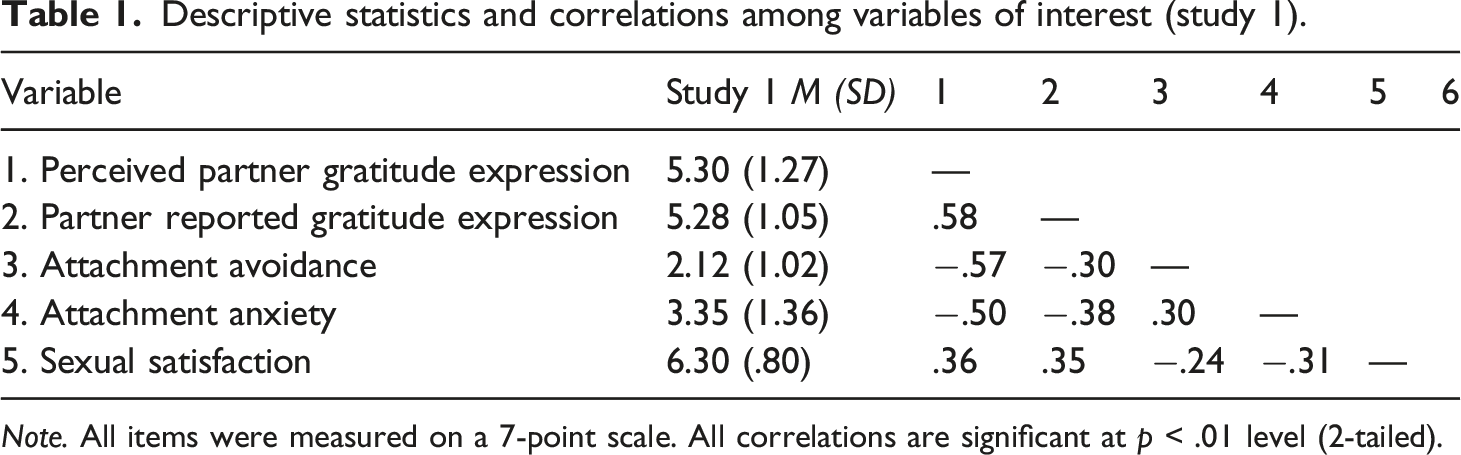
Note. All items were measured on a 7-point scale. All correlations are significant at p < .01 level (2-tailed).
Results and discussion
The effects of perceived partner gratitude and attachment dimension on sexual satisfaction (studies 1 and 2).


Moderating effects of perceived partner gratitude (panel A) and partner-expressed gratitude (panel B) in the association between attachment anxiety and sexual satisfaction (study 1). Note. High and low values represent 1 SD above and below the mean.
The effects of partner-reported expressed gratitude and attachment dimension on sexual satisfaction (studies 1 and 2).
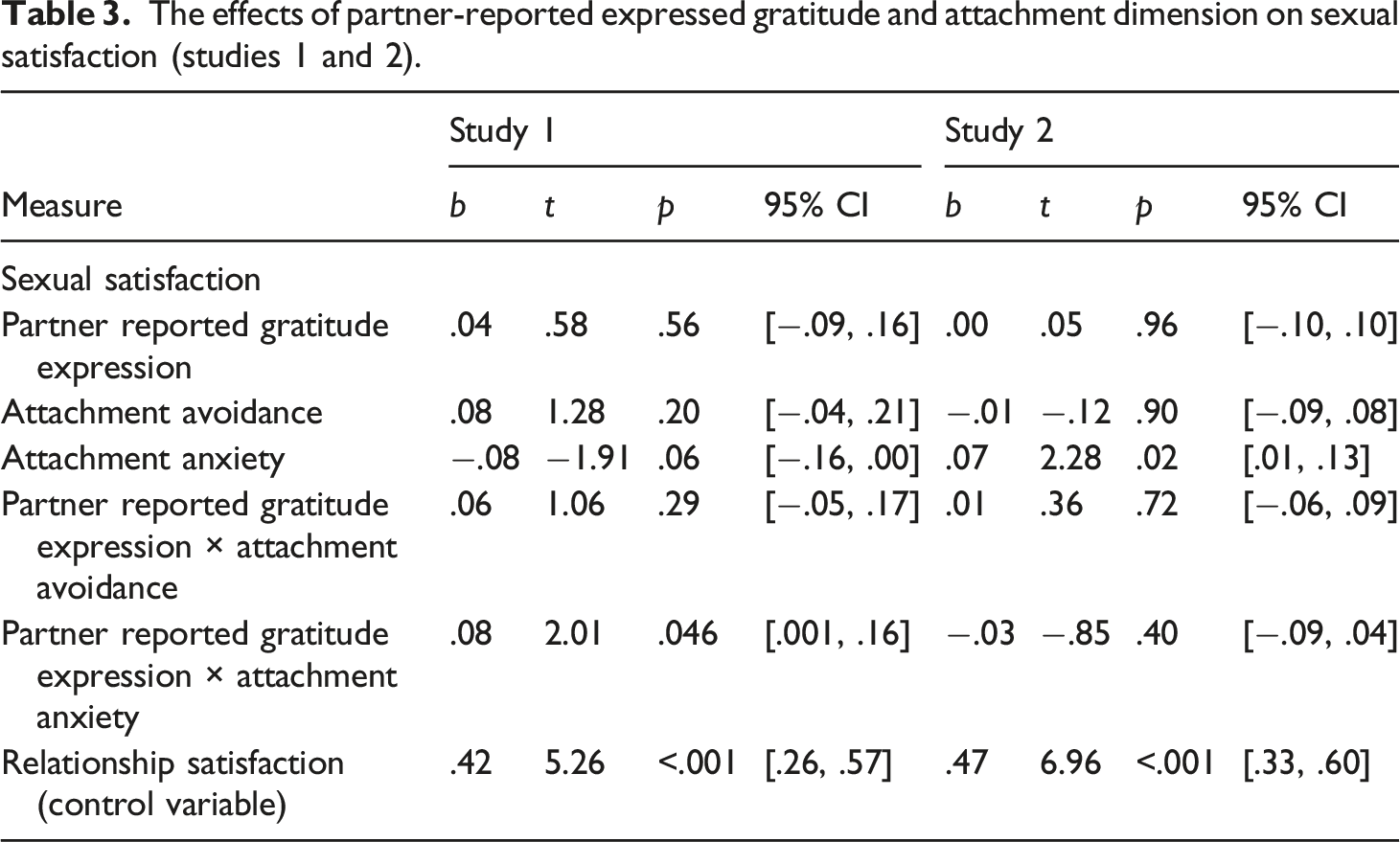
In summary, this study is the first to document that gratitude—as expressed by one partner and perceived by the other—is associated with sexual satisfaction. But these effects do not hold when taking relationship satisfaction into account. In addition, these results provide preliminary evidence that partner gratitude may attenuate the negative association between attachment anxiety and sexual satisfaction, but we observed no such buffering role for attachment avoidance. Next, we conducted a similar study to test whether the effects replicate.
Study 2
Method
Participants and procedure
Participants were recruited using convenience sampling through web postings on Craigslist in 12 major U.S. cities. To be eligible for the study, couples had to be in an exclusive romantic relationship, cohabiting, over the age of 18, and both members of the dyad had to be willing to participate and provide consent. When we received emails from couples expressing interest in participating in the study, we confirmed whether they met inclusion criteria and then sent the link and information to complete the background and daily surveys online. In total, we recruited 118 mixed-gender couples (dyads of men and women). Participants ranged in age from 19 to 74 (M = 32.3 years, SD = 10.2 years, Median = 28.0 years) and had been in their current relationship from four months to 30 years (M = 4.9 years, SD = 5.3 years). All couples were cohabiting, but only 37% were married and 19% were engaged. Regarding the ethnic makeup of the sample, 55% identified as White/European, 14% as African American, 8% as Asian, 5% as Latino, 3% as Native American, 1% as Indian, and 14% self-identified as other. For education, 5% had less than high school, 43% finished high school, general education or some college, 42% had a college degree, and 10% had a graduate school degree. For income, 12% made under US$15,000, 20% made between US$15,001–US$25,000, 15% made US$25,001–US$35,000, 20% made US$35,001–US$50,000, 15% made US$50,001–US$75,000, 13% made US$75,001–US$100,000, and 5% made over US$100,000. We did not have information on sexual orientation or disabilities. Similar to Study 1, sensitivity analyses (conducted after hypothesis testing) using the APIMpower calculator (https://robert-a-ackerman.shinyapps.io/apimpower/) revealed that this sample size gave us 80% power to detect medium effect sizes (R2 = .24) and only 21% power to detect a small effect size (R2 = .10). Both estimates are at the between-person level, as we were unable to assess within-person effects for when measures were taken.
Upon receiving consent from the couples, we emailed each partner a different link to access the study. Couples first had to complete a 30-minute background survey. Afterward, for 21 consecutive days, couples completed a brief 5–10-minute survey. We instructed participants to begin answering the survey on the same day as their partner and avoid any discussion about their responses until the study concluded. Each partner was paid up to US$50 USD for participating. Total payment depended on the number of daily surveys completed. On average, each participant completed 18.2 diary entries (out of 21).
Measures
All measures except for daily sexual satisfaction were identical to those assessed in Study 1, including perceived partner gratitude (M = 5.14, SD = 1.40, α = .92), partner-expressed gratitude (M = 5.23, SD = .99, α = .83), attachment anxiety (M = 3.48, SD = 1.37, α = .80), attachment avoidance (M = 2.17, SD = 1.09, α = .83), and daily reported relationship satisfaction (M = 5.89, SD = 1.34). As in Study 1, daily sexual satisfaction was only assessed on days when participants engaged in sex (M = 4.98, SD = 3.38, range = 1–13). There was no minimum number of days required to be included. Participants rated on a 7-point scale (1 = strongly disagree to 7 = strongly agree) three items adapted from Birnbaum et al. (2006) including “During sex, I felt passionately attracted to my partner”, “Overall, I had great fun during sex” and “I enjoyed the sexual experience” (M = 6.40, SD = .79, ω = .92).
Analysis plan
Descriptive statistics and correlations among variables of interest (study 2).
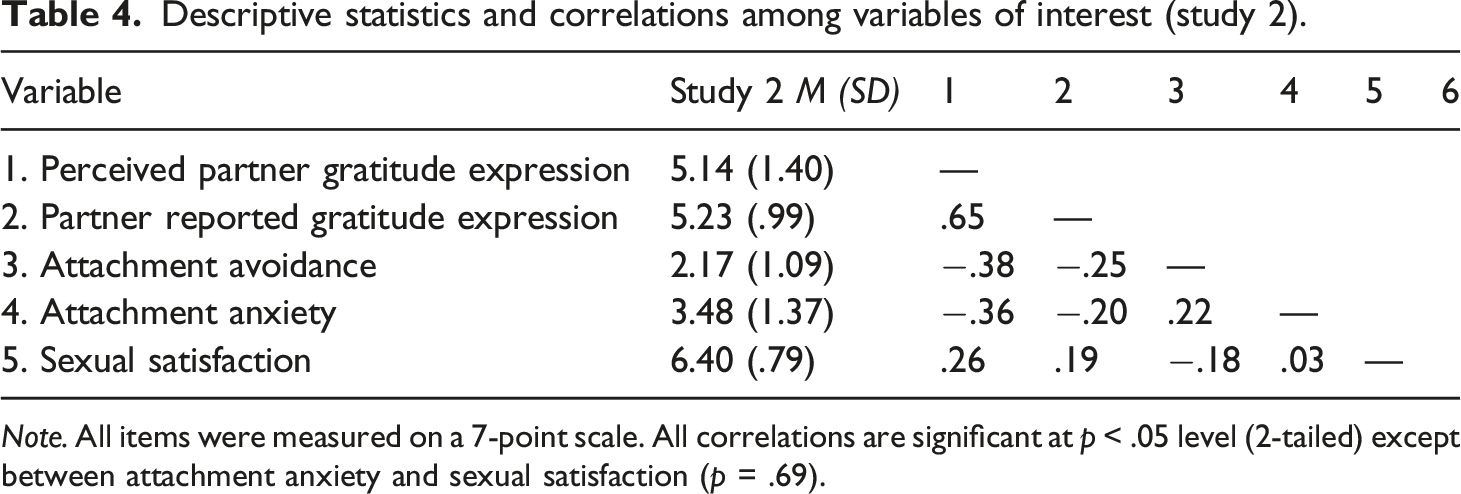
Note. All items were measured on a 7-point scale. All correlations are significant at p < .05 level (2-tailed) except between attachment anxiety and sexual satisfaction (p = .69).
Results and discussion
In our multi-level models, we first focused on perceived partner gratitude. In the first model that only included perceived partner gratitude, it was not associated with sexual satisfaction, b = .05, SE = .03, p = .13, CI 95% [−.01, .12]. It remained nonsignificant when controlling for relationship satisfaction, b = −.02, SE = .03, p = .52, CI 95% [−.09, .04]. Once we added interaction effects with attachment styles in a final model, perceived partner gratitude remained nonsignificant, b = .01, SE = .04, p = .88, CI 95% [−.07, .08] (Table 2). We also did not detect interaction effects.
We then tested a series of models focused on partner-expressed gratitude. In the main-effect model, partner-expressed gratitude was positively associated with sexual satisfaction, b = .10, SE = .05, p = .04, CI 95% [.005, .20]. This association did not hold when controlling for relationship satisfaction, b = −.00, SE = .05, p = .92, CI 95% [−.10, .09]. With attachment styles and their interactions with partner-expressed gratitude added, partner-expressed gratitude was still not associated with sexual satisfaction, b = .00, SE = .05, p = .96, CI 95% [−.10, .10] (Table 3). Like the perceived partner gratitude model, there were also no significant interactions for the partner-expressed gratitude model.
In summary, gratitude—as expressed by one partner and perceived by the other—had mixed associations with higher sexual satisfaction. Perceived partner gratitude was not associated with sexual satisfaction, but partner-expressed gratitude was. Both associations became nonsignificant, however, when accounting for relationship satisfaction. Additionally, in contrast to Study 1, this study did not provide any evidence of a buffering effect for individuals high in attachment anxiety or attachment avoidance.
Study 3
The inconsistency in results regarding buffering effects for individuals high in attachment anxiety between Studies 1 and 2 prompted us to test our hypotheses in a third study. One key difference between Study 3 and our previous two studies was that we did not assess partner reports of expressed gratitude. Additionally, instead of measuring gratitude as an individual difference measure prior to the diary, in Study 3, we asked participants to provide daily reports of the amount of gratitude they perceived their partner to have expressed. This means that in addition to providing tests of between-person effects (examined in Studies 1 and 2), this study design allowed us to, for the first time, examine possible within-person links between perceived partner gratitude expressions and sexual satisfaction, as well as cross-level interactions between gratitude expressions (within-person) and attachment insecurity (between-person) in predicting sexual satisfaction.
Method
Participants and procedure
We recruited participants through online (e.g., Reddit, Kijiji, Facebook, Craigslist) and physical (e.g., university campuses, public transportation centers) advertisements in both the U.S. and Canada. Eligibility to participate in the study required the consent and participation of both members of the dyad who had to be exclusively together. Both partners had to be over the age of 18, sexually active, fluent in English, have daily access to the internet, and be cohabiting or seeing one another at least five days a week. There was no minimum number of days required to have sex to be included. A total of 242 individuals (M = 32.6, SD = 10.2, Median = 30.0, range = 20–70 years) or 121 couples, consisting of 13 married, 19 engaged, 33 common-law, 71 cohabiting, 3 dating, and 1 “other” couple, participated in the study. Couples’ average relationship length was just over eight and a half years (M = 8.68, SD = 8.71, range = 1.5–58.5 years). Of the 242 participants, 197 identified as heterosexual, 26 as bisexual or pansexual, eight as gay or lesbian, seven as asexual, and four as queer or “other.” In total, 115 of the participants were men and 124 were women. The sample consisted of 65.3% of participants identifying as White, 4.5% identifying as Black, 8.3% as East Asian, 7.4% as South Asian, 4.1% as Latin American, 5.8% as bi- or multi-racial, and 4.1% as “other. We did not have information on class or disabilities. Sensitivity analyses using the simr R package (Green & McLeod, 2016) revealed that this sample size gave us 80% power to detect small effect sizes for within-person effects (R2 = .04) and medium effect sizes for between-person effects (R2 = .19). 1
Like Study 1, after providing consent to participate, each partner within the eligible couple was emailed a unique link to the study. We instructed participants to complete a 60-minute background survey on the first day of the study and a 10–15-minute daily diary for 21 consecutive days. We instructed participants to begin answering the surveys on the same day as their partner, answer before going to sleep each night, and avoid any discussion about their responses until the study concluded. Participants were compensated with up to US$48 USD in Amazon gift cards for completing the entire study. Participants completed an average of 18.39 diaries (out of 21).
Measures
All the measures, except for perceived partner gratitude, which in this study was assessed daily, and relationship satisfaction were identical to those in Study 1. These included attachment anxiety (M = 3.40, SD = 1.12, α = .71), attachment avoidance (M = 2.01, SD = .89, α = .79), and daily sexual satisfaction (M = 5.44, SD = 1.47, ω = .96), which was assessed each day, regardless of whether participants had sexual interactions with their partner (M = 4.80 days, SD = 3.08, range = 0–17). Gratitude was measured at the daily level with a single item and only focused on perceived gratitude expressions from one’s partner (“Today, my partner told me he/she appreciates me; ” M = 5.11, SD = 1.49) on a 7-point scale (1 = not at all to 7 = very much). Relationship satisfaction (M = 5.98, SD = 1.31) was assessed daily, asking participants “How satisfied were you with your relationship?” on a 7-point scale (1 = not at all to 7 = extremely).
Analysis plan
Descriptive statistics and correlations among variables (study 3).
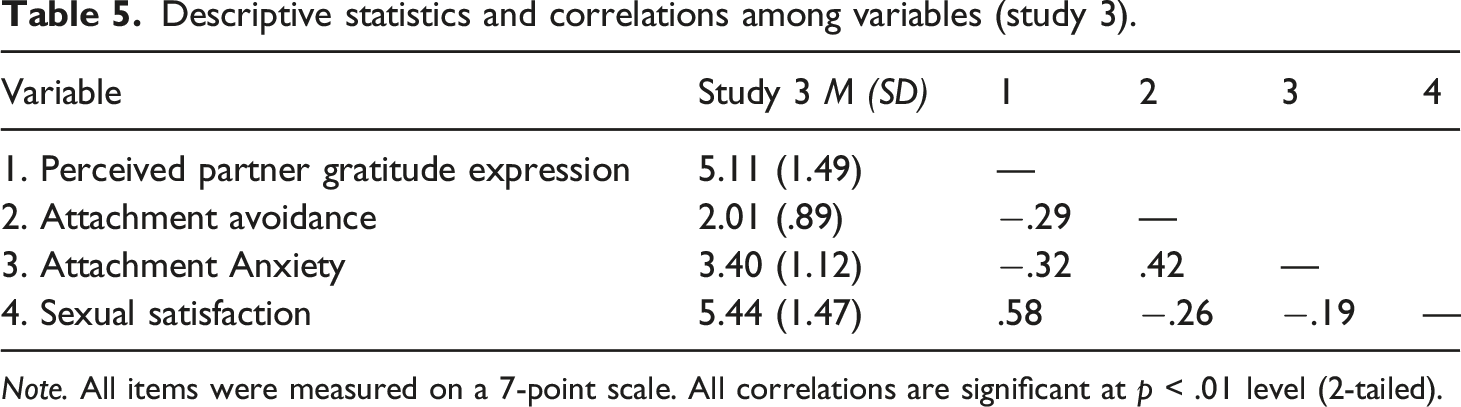
Note. All items were measured on a 7-point scale. All correlations are significant at p < .01 level (2-tailed).
Results and discussion
The aggregate and daily effects of actor-reported perceived gratitude and attachment dimension on sexual satisfaction (study 3).
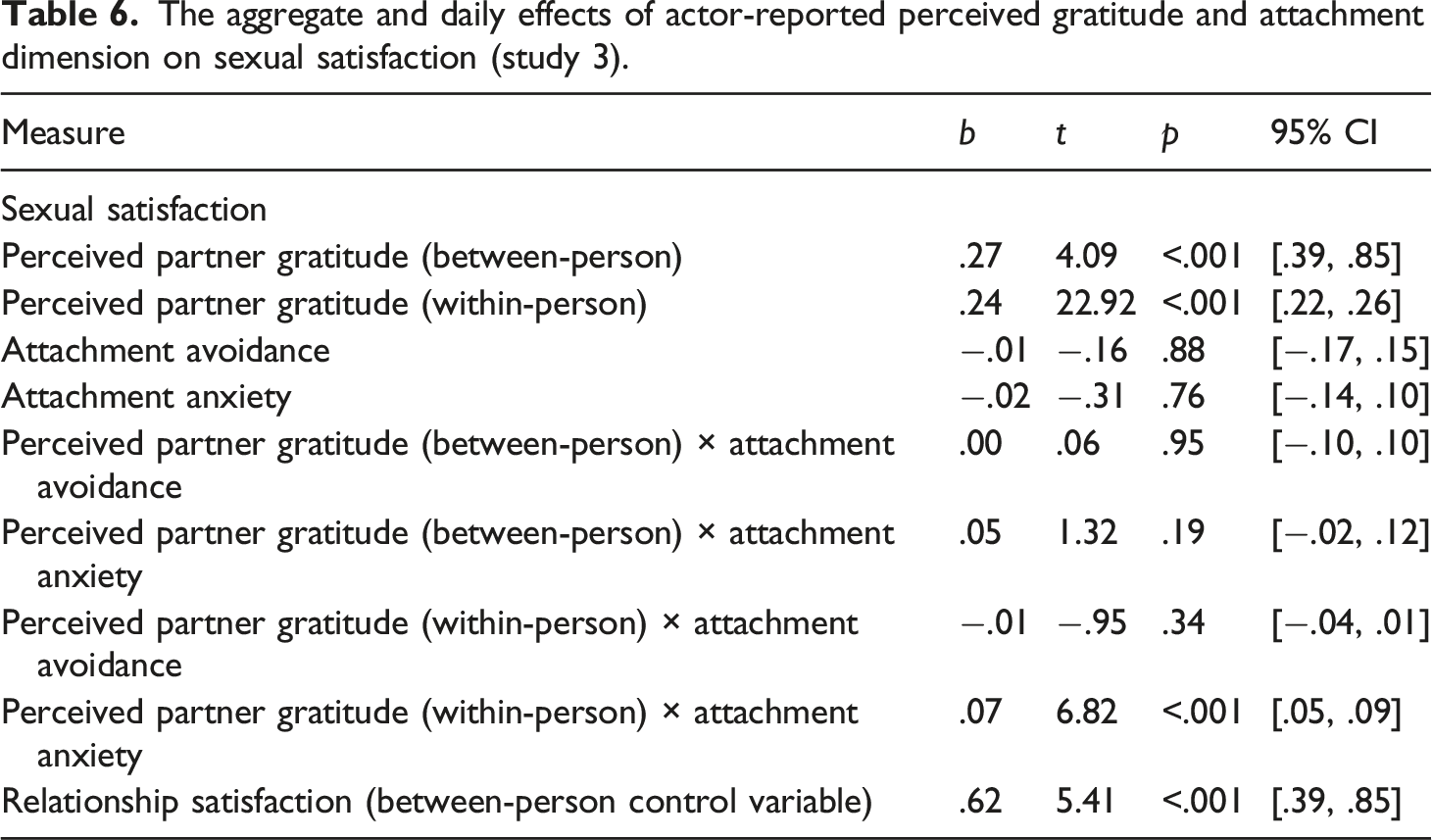
Turning to the within-person results, the results revealed a significant within-person link between daily perceived partner gratitude and daily sexual satisfaction, b = .25, SE = .01, p < .001, CI 95% [.23, .27]. With relationship satisfaction added as a control variable, daily perceived partner gratitude continued to predict daily sexual satisfaction, b = .25, SE = .01, p < .001, CI 95% [.23, .27]. Finally, after adding attachment styles and their interactions with gratitude, daily perceived partner gratitude still predicted daily sexual satisfaction, b = .24, SE = .01, p < .001, CI 95% [.22, .26]. This means that on days when people perceived their partner to be more grateful than usual over the 21-day study, they reported significantly higher sexual satisfaction. In addition, these analyses revealed a significant cross-level interaction between daily perceived partner gratitude and attachment anxiety, a novel finding in this study. As shown in Figure 2, simple slopes tests showed that on days when individuals perceived their partner to express less gratitude than usual over the course of the study, individuals higher in attachment anxiety experienced lower sexual satisfaction, b = −.13, SE = .06, p = .048, CI 95% [−.25, −.001], but this link was attenuated on days when individuals perceived their partner to express more gratitude than usual, b = .09, SE = .06, p = .17, CI 95% [−.04, .22]. There was not a significant cross-level interaction between daily perceived gratitude and attachment avoidance. Moderating effects of perceived partner gratitude at the within-person level between attachment anxiety and sexual satisfaction (study 3). Note. High and low values represent 1 SD above and below the mean.
In summary, perceptions of a partner’s gratitude were associated with greater daily sexual satisfaction in main effect models; in contrast to Study 1 and Study 2, effects held when accounting for relationship satisfaction and interactions. Furthermore, Study 3 extends these results by also showing that daily fluctuations in perceived partner gratitude were associated with daily fluctuations in sexual satisfaction. Like Study 2, there were no interactions at the between-person level. There was, however, an interaction between perceived partner gratitude and attachment anxiety at the within-person level, providing some evidence that perceived partner gratitude can buffer anxiously attached individuals from experiencing low sexual satisfaction.
General discussion
According to the find-remind-and bind theory, gratitude serves an important function in relationships by bringing a couple closer together when one partner perceives the other to be responsive towards them (Algoe, 2012). While previous studies have linked expressions of partners’ gratitude with relevant relationship outcomes such as relationship satisfaction and commitment (Algoe et al., 2008; Gordon et al., 2012), no existing research to our knowledge has documented if daily expressions of gratitude–both expressed by one partner and perceived by the other–are connected to peoples’ sexual satisfaction. Addressing this gap in the literature was our first key goal. Across three dyadic daily diary studies, we found evidence that perceived partner gratitude and partners’ reports of their own gratitude were generally associated with higher daily sexual satisfaction (the one exception being perceived partner gratitude in Study 2). That is, generally it was not only perceptions of a partner’s gratitude that were associated with greater sexual satisfaction, but partners’ actual reports of gratitude, suggesting that the effects were not all driven by the perceiver. Further, in our final study in which we had daily reports of perceptions of a partner’s gratitude, we demonstrated that on days when people perceived their partner was more grateful than usual, they reported feeling more sexually satisfied. We note, however, that while these associations remained significant in the full multi-level model from Study 3, the associations between gratitude variables and sexual satisfaction became nonsignificant in the other studies when accounting for relationship satisfaction. This could be in part due to how strongly relationship satisfaction predicted sexual satisfaction. Between the studies, the takeaway seems to be that perceived partner gratitude and partner-expressed gratitude are connected to higher sexual satisfaction; however, there is mixed evidence that it may be uniquely beneficial to the sexual relationship, as the connection between gratitude and sexual satisfaction may be due to the broader connection between gratitude and relationship satisfaction as a whole.
Given that numerous empirical studies have demonstrated that people higher in attachment avoidance and anxiety both tend to be less sexually satisfied (e.g., Butzer & Campbell, 2008; Davis et al., 2006; Mark et al., 2018), our second key goal was to test a partner’s gratitude expressions (expressed by one partner and perceived by the other) as a potential buffer of these negative associations. We begin with discussing the results for attachment anxiety and then turn to results for attachment avoidance.
Attachment anxiety
In Study 1, we found that individuals higher in attachment anxiety were buffered from experiencing lower daily sexual satisfaction, both when their partner reported expressing more gratitude and when they perceived more gratitude in their partner. These buffering effects were not replicated in Study 2, however. The inconsistency in results between Studies 1 and Study 2 prompted us to assess our questions in a third study. In Study 3, we assessed perceived partner gratitude at the daily level, which allowed us to assess between-person interactions (using aggregates of partner gratitude across the diary diary) as well as cross-level interactions between attachment and daily partner gratitude, both at the aggregate (between-person) and cross-level daily (within-person) levels. We did not find evidence of a buffering effect at the aggregate level. Most notable and novel to this study, however, was the finding that on days when anxiously attached individuals perceived that their partner expressed higher levels of gratitude than they typically did, they were buffered from experiencing lower levels of sexual satisfaction.
Taken together, evidence from Studies 1 and 3 somewhat supports the notion that anxiously attached individuals may attempt to gauge how well their relationship is doing by connecting relationship interactions and events (expressions of gratitude) with sexual initiations and encounters (Davis et al., 2004, 2006; Mikulincer & Shaver, 2003). Moreover, these results may be driven by anxiously attached individuals’ higher sensitivity to changes in cues indicating their partner’s responsiveness and availability (Fraley et al., 2006). It is possible that if a partner expresses gratitude, an anxiously attached individual may perceive the signal as particularly intimate. For example, it may be the case that sexual interactions between anxiously attached individuals and their partners are the result of a partner expressing appreciation (and thus, signaling reassurance and desire) to the anxiously attached partner, which could have associated benefits (e.g., reduced fears about their partner’s commitment and greater sexual and relationship satisfaction).
Attachment avoidance
The results did not provide evidence that a partner’s expressions of gratitude could buffer the negative link between attachment avoidance and daily sexual satisfaction, as we did not find evidence of a buffering interaction in any of the three studies. Our hypothesis that gratitude would buffer the effects of attachment avoidance on sexual satisfaction was informed by the idea that gratitude expressions can boost sexual communal beliefs (Day et al., 2015; Muise & Impett, 2015) and promote healthier views of one’s partner without necessarily affecting their sense of independence, as well as past research highlighting this potential effect (Park, Impett, et al., 2019; Simpson & Overall, 2014). One possible explanation for the lack of a buffering effect for attachment avoidance may be, as Vollmann et al. (2019) noted, that gratitude expressions may trigger deactivation strategies and perhaps cause avoidantly attached individuals to dismiss their partner’s gratitude entirely, assessing it as a threat to their autonomy (Mikulincer & Shaver, 2005; Mikulincer et al., 2006). Additionally, some research has suggested that avoidant individuals may dislike it when a close other uses communal norms (Bartz & Lydon, 2006), which may be insinuated with expressions of gratitude. Moreover, gratitude expressions may be seen as implicit intrusive demands that create impeding expectations for the avoidantly attached individual’s sense of independence.
Taken together, our results indicate that the benefits of gratitude may not always extend to the sexual relationship for avoidantly attached individuals, perhaps due in part to avoidantly attached individuals’ hesitation to make sex intimate and vulnerable (Mikulincer & Shaver, 2016); gratitude’s potential buffering effect on sexual dissatisfaction may be limited to anxiously attached individuals. Perhaps discomfort with the intimate nature of sex, along with its imposed expectations of attempting to meet another’s needs, negates any benefit gratitude could provide for avoidantly attached individuals, even when it is perceived without a threat to independence.
Limitations, implications, and future directions
One limitation of our research is that we assessed partner gratitude in the first two studies with an individual difference measure rather than on a daily basis. The AIR scale evaluates a person’s general sense of how much appreciation they give and receive in their relationship. While any individual in a relationship likely has a general sense of how appreciated they feel by their partner, perceptions of a partner’s gratitude are likely to fluctuate daily based on the interactions a person has with their partner. Individuals can use these fluctuations to “average things out” and form an overall evaluation of how they feel about their relationship partner, but this judgement may not capture instances when perceiving gratitude is associated with higher, or lower, sexual satisfaction on the day. For this reason, Study 3 may have been better equipped to investigate our research questions. Daily reports of expressed and perceived gratitude could be better than global measures for successfully detecting effects. However, given that the first two studies were underpowered to detect small effects, it would be beneficial for future studies to collect larger samples to better understand whether effects might be more consistent with the ability to detect small effects. It is encouraging, however, that adequate power to detect small effect sizes in Study 3 revealed some buffering at the within-person level.
Some inconsistencies in our results could also be due to the inability to adequately capture nuances surrounding gratitude expression. Future research should investigate the specific types of gratitude expressions that most strongly promote sexual satisfaction, as well as ways of expressing gratitude that might buffer the effects of attachment insecurity. For example, gratitude expressions, specifically applauding an avoidantly attached individual’s actions and taking note of their personal attributes (i.e., “I really appreciate how hard-working and resilient you have been lately”), may boost their self-esteem and confidence (Grant & Gino, 2010). Moreover, such gratitude expressions that specifically focus on the positive actions, behaviors, and qualities presented during a sexual encounter may work to attenuate the negative effects of attachment avoidance on sexual satisfaction. As suggested by Park, Impett, et al. (2019), such gratitude expressions may help avoidantly attached individuals form stronger bonds with their relationship partner. However, gratitude expressions that communicate feelings of intimacy and emotional closeness (i.e., “I appreciate how caring you are and how loved you make me feel”) may induce deactivating strategies and increase an avoidantly attached individual’s discomfort with their partner and relationship. While the intimate nature of such expressions may be unpleasant for avoidantly attached individuals, such expressions may be particularly beneficial for anxiously attached individuals as the reassuring nature of the expression may bolster their perceived value within their relationship (Park, Impett, et al., 2019). Additionally, one important factor for those with anxious attachment experiencing benefits from gratitude expression is believing that the gratitude expression is authentic (Lemay & Clark, 2008). Overall, future research assessing more specific aspects of gratitude expression could help to fine tune the aspects of gratitude expression that are more likely to buffer the association between both types of attachment insecurity and lower sexual satisfaction.
Finally, our three samples predominantly consisted of White (62.1%), mixed-gender couples in established relationships (4+ years). We did not have information on sexual orientation in Study 2, information about class in Study 1 or Study 3, or information about disabilities in any of the studies. Thus, these constraints to generalizability mean that our results may not extend to participants of more diverse backgrounds and relationship structures. Therefore, studying the effects of gratitude in various types of relationships can further our understanding of how insecurely attached individuals navigate within, maintain, and develop bonds with others, as well as which conditions and factors maximize the relationship-related benefits of gratitude.
The findings also have implications for educators and clinicians who are working with couples that include at least one partner with anxious attachment by identifying gratitude expressions as a way to buffer against sexual dissatisfaction. Given that both perceptions of a partner’s gratitude and a partner’s actual expressions of gratitude buffered anxiously attached people’s lower sexual satisfaction, an intervention promoting the expression of gratitude to a partner as well as increased attention to a partner’s expression of gratitude may be fruitful for improving couples’ sexual relationships.
Conclusion
Our research aimed to determine whether expressions of gratitude–both expressed by one partner and perceived by the other–can promote sexual satisfaction in romantic couples, and if these expressions can buffer the typical negative effects of insecure attachment on sexual satisfaction. Across three dyadic diary studies, we found consistent evidence that both partner-expressed and perceived partner expressions of gratitude were linked with higher daily sexual satisfaction. In addition, in two out of three studies, we found that gratitude expressions have the potential to buffer anxiously attached individuals from experiencing lower daily sexual satisfaction, whereas we did not find a buffering effect on avoidant attachment. Thus, more research is required to understand how the benefits of gratitude can be maximized, especially for those who are insecurely attached.
Footnotes
Author’s note
Nathan D. Leonhardt and Michael A. Drobenko and were co-first authors on the manuscript. This research was presented at the Society for Personality and Social Psychology in 2020.
Declaration of conflicting interests
The author(s) declared no potential conflicts of interest with respect to the research, authorship, and/or publication of this article.
Funding
The author(s) received no financial support for the research, authorship, and/or publication of this article.
Open research statement
As part of IARR’s encouragement of open research practices, the author(s) have provided the following information: This research was not pre-registered. The data used in the research are posted on the Open Science Framework (OSF). The data can be obtained at the following address:  or by emailing