




Abstract
Romantic relationships are central to an individual’s well-being across life, and among emerging adults. A relationship breakup is a life-disrupting event that is often accompanied by considerable distress, including depression and anxiety (Rhoades et al., 2011). In addition, difficulties in initiating and maintaining romantic future relationships were reported to follow a difficult breakup (Halpern-Meekin et al., 2013).
Review of the existing research on romantic breakups shows that the majority of studies addressed two questions, the predictors of breakup, or its emotional and behavioral sequelae (Machia et al., 2023). The vast number of studies focus on the predictors of breakup, which is not the focus of the current study. This focus of research can be understood, because separation severs a major attachment-like bond (Fraley & Shaver, 2016; Monk et al., 2022) and can become a major distressful event for individuals and couples. An additional body of research examined the emotional adjustment following a breakup and focused mainly on emotions such as frustration, guilt, anger, and resentment, as well as on anxiety and depression (Field et al., 2010). Other studies focused on the modes of coping with separation and suggested that positive experiences could result from a separation, such as rediscovery of one’s sense of self and subsequent post-breakup growth (Larson & Sbarra, 2015; Lewandowski & Bizzoco, 2007).
The current study focuses on the possible negative and positive emotional sequelae among emerging adults. Emerging adults were documented to be in and out of relationships across time, and might have experienced a number of breakups (Shulman & Connolly, 2013). However, romantic experiences including, involvement in relationships and breakups, could become a model for romantic behavior and carried forward into the future (Furman & Collibee, 2014). Therefore, it is important to examine the possible emotional sequelae following a breakup among emerging adults, as these experiences might be carried forward into the future.
Finally, past research focused on a single breakup event. However, emerging adults are in and out of relationships (Shulman & Connolly, 2013), and might have experienced a number of romantic breakups in recent years. Existing research lacks information about the possible accumulative effects of such repeated experiences of breakups. The current study aims to study the longitudinal associates of an earlier breakup experience, as well as of repeated breakup experiences, with future outcomes. As suggested, the study will examine the possible longitudinal negative and positive future associates of earlier breakups.
Distress following a romantic breakup
Dissolution of a romantic relationship was described in the clinical research as one of the greatest stressors in life (Rhoades et al., 2011), and one of the “worst events” a person might experience (Frazier & Hurliman., 2001). Perilloux and Buss (2008) found that following a recent breakup, individuals reported more depression and rumination. The elevated distress associated with a breakup might even lead to the outbreak of a first episode of major depression (Monroe et al., 1999). Research showed that the distress frequently occurring post romantic breakups is also associated with a wide array of difficulties, including decreased academic performance (Field et al., 2010), a decrease in self-concept (Slotter et al., 2009), drinking, and unorganized behavior among college students (Field et al., 2013). In addition, breakup was also associated with a decline in life satisfaction, more psychiatric symptoms, sleep problems, and alcohol use (Chung & Hunt, 2014).
The magnitude of the emotional reaction to a romantic breakup can be understood because romantic partners are an important resource of support, in particular for emerging adults, when its centrality increases over the years (Connolly et al., 2023). Gomillion et al. (2015) described that a romantic dissolution robs people of the resources and support they once relied upon and trusted. A breakup can, thus, be understood as a sudden and major loss (Verhallen et al., 2019), which can explain its adverse effect on well-being, undermining daily functioning and the capacity to address developmental tasks. Relatedly, conceptualized within an attachment perspective, Kansky and Allen (2018) described that a romantic partner serves as an attachment figure and provides the features of a secure base, proximity seeking, and a safe haven. A breakup disrupts these basic supportive features). Sbarra and Hazan (2008) state that the provided and felt security serves as a coregulatory process that alleviates stress and maintains homeostasis. A relationship dissolution is the loss of this system of coregulation, which leads to the onset of stress and difficulty in coping with challenges. Losing a partner can evoke a sense of abandonment and betrayal (Eisma et al., 2022; Fraley & Shaver, 2016), which can explain increased mental distress. Cutting ties with a romantic figure might lead not only to an increase in distress, but might also hamper the capacity to trust romantic figures. This can explain individuals’ difficulties in forming and trusting new relationships following a breakup, and these difficulties might be carried forward into the future (Kansky & Allen, 2018). In sum, experiencing a breakup might affect a person in two ways. It might lead to an increase in negative affect, such as anxiety and depression. In addition, a breakup might also associate with an increased feeling of insecurity about a partner’s availability, or uncomfortable feelings about being close to and dependent upon a partner in future relationships.
Personal growth following a romantic breakup
It is unclear if and when the disruption of the coregulatory process following a breakup can be repaired, and whether individuals will resume functioning. A study by Sbarra and Emery (2005) provides some insights into this question. They followed young adults who had recently experienced a breakup for four weeks. Participants were asked to complete daily diaries and rate their emotions each day. Within a month, individuals reported greater variability in their anger and sadness emotions. More importantly, anger, sadness, and love (for the ex-partner) decreased over the month, and were comparable to a non-breakup group, suggesting the possible start of a recovery process.
Tashiro and Frazier (2003) showed that following a breakup, in addition to increased distress, individuals also reported positive changes that represented personal growth following the breakup. The most common changes reflected changes in specific behaviors or attitudes essential for addressing a relationship (e.g., ‘‘I learned to admit when I am wrong’’, “I’ll never be in a relationship like that again’’). In addition, individuals reported that they learned the importance of support from friends and family, and not relying only on a romantic partner. These changes suggest that individuals can draw lessons from a dissolved relationship, and acquire better skills for addressing future relationships (Tuval-Mashiach et al., 2014).
Researchers have not explicitly described romantic breakup as post-traumatic stress disorder. However, they draw from the PTSD literature on the ways individuals might cope with the grief and loss following a breakup and, in particular, how one’s coping changes over time (Dailey et al., 2023; Van der Watt et al., 2021). According to the model of post-traumatic growth proposed by Tedeschi and Calhoun (2004), individuals can bounce back from a traumatic experience to a higher level of functioning than before the trauma. Finding a new strategy in response to a stressful event can lead to post-traumatic growth, increased levels of well-being, and lower levels of depressive affect (Helgeson et al., 2006; O’Connor & Canevello, 2019)).
McKiernan et al. (2018) also apply the post-dissolution growth model to understand coping with a breakup. They postulate a Dual Processing Model (DPM) for understanding individual behavior following a romantic breakup, including both reactions to the loss and restoration-orientation coping. Loss-orientation (LO) encompasses painful focus on, appraisal and processing of details of the actual loss experience, and is likely to lead to an increase in despair and depressive affect. In contrast, restoration-orientation (RO) focuses on coping with concurrent stressors, adjusting to changes in roles, routines, and identity, and revising future plans.
Considered together, two distinctive mechanisms following a breakup can lead to recovery and self-growth. Tashiro and Frazier (2003) suggest that breakup distress itself can serve as a mechanism for learning from past experiences how to address a relationship more competently in the future. By reflecting on earlier breakup experiences, a person might realize what went wrong in the past and what could be learned for the future. Following the post-dissolution growth model, McKiernan et al. (2018) suggested that response to a distressful event such as a breakup inherently carries two mechanisms: one focuses on the pain experienced in response to a breakup, and the other emphasizes the penchant for repair and ability to bounce back from a stressful experience.
Assessing reaction to breakup distress among emerging adults
Most earlier studies mainly examined adult married or unmarried relationships, and focused less on emerging adults whose interest and investment in romantic relationships becomes a central aspect of their lives (Dailey et al., 2023). Furthermore, the early years of emerging adulthood are a formative period in which models of romantic, intimate relationships should be developed (Shulman, 2024). A difficult breakup might affect future confidence and capacity to address a romantic relationship.
Gomillion et al. (2015) found that a breakup with a romantic partner among young adults is associated with lower goal progress and lower confidence in receiving partner support. Kansky and Allen (2018) followed emerging adults for a period of one to two years. They showed that experiencing a breakup at age 22 predicted relative increases in internalizing symptoms, and the capacity to interact competently with, and respect a partner’s different views. These few studies indicate that experiencing a breakup might affect emerging adults’ capacities to address developmental tasks such as goal progress and the capacity to address future relationships. Thus, it is important to examine the long-term effects of a breakup among emerging adults.
Studying the effects of breakup among emerging adults needs further consideration. Emerging adults tend to move in and out of romantic relationships and were described to be involved in casual sexual and romantic encounters (Shulman & Connolly, 2013). However, this trend does not exclude their also being in steady relationships. Meier and Allen (2009) showed that at any given point of time, about half of emerging adults can be observed to be in a steady relationship. Drawing data from the multisite longitudinal study of child development, Rauer et al. (2013) found that the percentage of being involved in a relationship at one point of time increased from 47% to 70% over time. Conceptually, these findings suggest that over time emerging adults tend to become more involved in long term and exclusive romantic relationships, though these relationships do not necessarily lead to marriage during the first half of the twenties. Considered together, it is highly likely that an emerging adult has experienced a number of breakups from an exclusive and steady relationship over the years. Given that emerging adults may experience multiple romantic breakups over time, the long-term effects of earlier breakups should be reconsidered. Specifically, it is important to examine the cumulative impact of going through several breakups. Do repeated breakup experiences associate with accumulating distress, or do former breakup experiences might facilitate coping with a future breakup? To the best of our knowledge, the accumulating effects of multiple breakup experiences have not been examined in prior research.
Welsh et al. (2003) suggested that emerging adults react differently to breakups; while pain can endure for some, others may draw lessons from their stressful experiences that will lead to growth, strength, and involvement in new relationships (Tuval-Mashiach et al., 2014). It can thus be questioned whether individuals learn from past breakups, and over time, pain and distress following a breakup might decrease. Alternatively, it might be assumed that experiencing repeated breakups might lead to increased pain and greater difficulties in trusting or handling a future romantic relationship. In sum, two aspects need to be examined in assessing the long-term effects of a romantic breakup among emerging adults. First, in what ways does an earlier breakup experience affect future well-being and future capacity to handle romantic relationships; can an earlier breakup experience turn into an opportunity for learning and growth? Second, examining the accumulating effect of repeated breakups beyond the effect of an earlier single breakup experience on future outcomes is also important. Does the accumulation of breakup experiences and associated distress negatively impact future mood and the future ability to trust and maintain relationships? To what extent might repeated breakup experiences initiate a process of learning?
The present study
An extensive body of research has documented distress reactions following a romantic breakup. However, earlier research explored the impact of a romantic breakup on subsequent relationships (Kansky & Allen, 2018) less. It is particularly important to understand how earlier romantic experiences (such as a romantic breakup) are associated with future romantic competence among emerging adults, because their earlier romantic experiences might be carried forward into future relationships (Furman & Collibee, 2014). Being disappointed in or betrayed by a romantic partner might disrupt one’s capacity to trust and rely on a partner. As such, this might affect one’s basic sense of felt security (Sbarra & Hazan, 2008). The present study followed emerging adults for a period of eight years, from age 20 to age 28, which could teach us about the long-term associates of an earlier romantic breakup experience.
The bulk of earlier research focused on the distress reactions following a recent breakup experience. However, negative emotions such as sadness and anger tend to decrease over time, and the dissolution might then be differently understood (Sbarra & Emery, 2005). The decrease in negative feelings can facilitate a less biased examination of an earlier dissolved relationship. An individual might be able to better understand what happened in the relationship, and draw lessons for the future (Kansky & Allen, 2018). Furthermore, Furman et al. (2019) suggest that with age there are significant changes in which romantic relationships are understood. Therefore, romantic events – including a breakup - can become significant in shaping patterns of future relationships over the years. Thus, we first hypothesize that greater earlier breakup distress would be associated with greater depressive affect and anxiety. Embedded within the attachment framework, it can be assumed that earlier greater distress could lead to lower security in a romantic relationship. We also hypothesize that the earlier breakup distress would be associated with a greater tendency to report feeling insecure about a partner’s availability, or uncomfortable about being close to and dependent upon a partner in the future, exemplified by reporting higher preoccupied and avoidant attachment attitudes toward a romantic partner. In addition, considering that positive reactions might also emerge (Kansky & Allen, 2018), we hypothesize that earlier breakup distress would be associated with higher romantic competence (Davila et al., 2017) as this might allow reflection and learning about relationships (Tashiro & Frazier, 2003). In particular, earlier breakup distress will be associated with a higher likelihood of understanding and finding meaning in past romantic experiences, and better addressing a romantic relationship.
The accumulating research on emerging adults shows they are likely to move in and out of romantic relationships. Thus, it is reasonable to assume that an emerging adult could experience several breakups across the years. Therefore, it is important to question the accumulative effect of experiencing several breakups. It can be assumed that experiencing repeated breakups would be associated with greater distress and reduced trust in relationships in the future. Therefore, we secondly hypothesize that increasing romantic distress over the years would be associated with greater future depressive affect, anxiety symptoms, and feeling insecure about a partner’s availability or uncomfortable about being close to and dependent upon a partner. We also assume that increasing romantic distress over the years would undermine the capacity to learn from past experiences and draw lessons from the past, which will be expressed by future lower romantic capacity.
Finally, the post-dissolution growth theory (O’Connor & Canevello, 2019) describes that people can experience positive changes in personal functioning following a breakup, including positive changes in relating to others. Borrowing from the post-traumatic growth theory, Dailey et al. (2023) and O’Connor and Canevello (2019) suggest that the distressful nature of the breakup event has also the potential to affect how one copes over time. A distressful event can shatter core beliefs and increase intrusive thoughts, but also carries a potential to bounce back from the distressful experience to a higher level of functioning than prior to the stressful event (Helgeson et al., 2006). The impetus for restoration following a breakup (McKiernan et al., 2018) can be accompanied by a positive change in mood and facilitate seeking out new romantic partners to overcome the trauma (O’Connor & Canevello, 2019). We thus thirdly hypothesize that the capacity for post-dissolution growth would contribute to future lower depressive and anxiety symptoms, feeling more secure about a partner’s availability, and more comfortable about being close to and dependent upon a partner in the future, We also assume that the capacity for post-dissolution growth would associate with future greater romantic competence in handling romantic relationships.
Method
Participants and procedure
Participants were enrolled in a comprehensive longitudinal study in Israel, focused on the progression of romantic and sexual relationships from adolescence to emerging adulthood. The sample originated with eleventh and twelfth-grade students recruited from three schools in the central and northern regions of Israel, and followed them into their late twenties.
Data for this report were collected when participants were at the ages of 20, 23, 25, and 28. The age 20 assessment comprised 124 participants (79 females, 45 males) with a mean age of 20.22 years (SD = 0.89). The subsequent assessment at age 23 included 110 participants (69 females, 41 males) with a mean age of 22.79 years (SD = 0.86, range = 21–24 years). At age 25, the cohort consisted of 102 individuals (68 women, 34 men) with a mean age of 24.74 years (SD = 0.71, range = 23–26 years). The age 28 assessment comprised 100 participants (66 females, 34 males) with a mean age of 27.44 years (SD = 0.75).
At each wave participants were asked first to report whether they had experienced the breakup of a romantic relationship in the preceding twelve months. If they answered that they had experienced a romantic breakup, they were asked to complete a questionnaire assessing the intensity of distress following the romantic breakup. The percentage of participants reporting the experience a breakup across waves was between 80 and 88%.
All participants came from middle-class backgrounds. The mean years of education for fathers and mothers were 15.37 years (SD = 2.59) and 15.58 years (SD = 3.40), respectively. Participants were compensated at each assessment with 100 NIS (about $25). The University’s Institutional Review Board approved all procedures.
Comparison between participants who stayed in the study and those who dropped out on relevant variables.

Measures
Breakup distress was assessed four times at ages 20, 23, 25, and 28. At each assessment, participants were asked to report a recent, or any other, breakup experienced in the last twelve months.
Breakup distress
The Breakup Distress Scale (BDS; Field et al., 2010) is a 16-item inventory that assesses the intensity of distress and preoccupation with an ex-partner following a romantic breakup (i.e., “I feel I cannot accept the breakup I’ve experienced”). Items were rated on a four-point Likert scale ranging from 1 (‘strongly disagree’) to 4 (‘strongly agree’). Cronbach’s alphas in the current study for the four assessments were in the range of .91 −.94.
Age 20 assessment
Anxiety symptoms
The 6-item anxiety subscale (e.g., “How often did you feel tense during the last month”), taken from the Brief Symptom Inventory (BSI; Derogatis & Melisaratos, 1983), assessed the level of experienced anxiety. Cronbach alpha for the anxiety subscale at age 20 was .90.
Age 23 assessment
Post-dissolution growth
An adapted version of The Post-Traumatic Growth Inventory to assess post dissolution coping (PTGI; Tedeschi & Calhoun, 1996) was employed. Participants were instructed to indicate their capacity to recuperate from a recent breakup. The inventory consisted of 8 items assessing expected growth following a romantic breakup (e.g., “I have learned that I have the capacities to cope with stress”; “I realized that I am stronger than I was considered myself”). Statements were rated on a 6-point scale (0 = low to 5 = high). Cronbach’s alpha was .89.
Age 28 assessment - outcome variables
Avoidant, preoccupied, and secure romantic attachment
Participants completed a shortened version of the Experiences in Close Relationships survey (ECR; Brennan et al., 1998). This measure focuses on the quality of relationships with a future romantic partner. It assesses the extent to which individuals are secure or insecure about their partner’s availability and responsiveness, or described the extent to which they were uncomfortable about being close to and dependent upon their partner. The three subscales were rated on a seven-point Likert scale ranging from 1 (‘strongly disagree’) to 7 (‘strongly agree’): Avoidant romantic attachment consisted of six items (i.e., I get uncomfortable when a romantic partner wants to be very close”). Internal consistency for this scale was 87. Preoccupied romantic attachment consisted of seven items (i.e., “I worry a fair amount about losing my partner”). Internal consistency for this scale was 83. Secure romantic attachment consisted of six items (e.g., “I do not mind asking my partner for advice or help”). Internal consistency for this scale was 89.
Depressive symptoms
Beck Depression Inventory (2nd ed.; BDI–II; Beck et al., 1996). The second edition of the Beck Depression Inventory (2nd ed.; BDI–II; Beck et al., 1996) was administered to assess depressive symptoms. This is a validated 21-item self-report questionnaire designed to measure the severity of depressive symptoms according to the DSM-IV criteria. Each of the 21 items is scored on a scale from 0 = has not occurred to 3 = occurs quite often. Cronbach alpha in the current study was .87.
Anxiety symptoms
The 6-item anxiety subscale taken from the Brief Symptom Inventory (BSI; Derogatis & Melisaratos, 1983) administered at age 20 was administered again at age 28. Cronbach alpha for the anxiety subscale at age 28 was .91.
In line with the study, three scales of romantic competence were rated: Emotional regulation - assesses the capacity to express emotions appropriately and decrease emotional intensity, which is crucial for addressing romantic interaction and solving disagreements. Capacity to learn from past experiences – assesses the extent to which individuals are capable of learning from past, even difficult experiences in a romantic relationship, to draw lessons and act differently in the future, or whether individuals tend to repeat their earlier mistakes in new relationships; and Coherence assesses the extent to which individuals are aware of the nature of their own and their partners’ mental states, and the association of mental states with behavior, and the extent to which they are able to elaborate on processes and changes that occurred in their romantic lives and explain these changes. Low coherence was reflected in disorganized or even contradictory stories. All scales were rated from 1 to 5: 1 - low capacity on the particular scale and 5 – representing high capacity, such as the clear capability to draw a lesson from past experiences.
Two coders, graduate students majoring in developmental and clinical psychology, were trained in rating romantic competence. They rated 20 interviews separately to establish reliability. Intra Class Correlations (ICCs) for the two raters across the three scales were .79, .81, and .78 across the three scales, respectively. Disagreements were discussed until a consensus was reached.
Plan of analysis
Missing data accounted for an average of 9.4% of reports for the variables included in this study. Missing data were addressed with full information maximum-likelihood estimation (FIML), which allowed participants with incomplete data to be included in the models. Little’s test indicated that data were missing randomly, χ2 (390) = 558.40, p = .06.
In order to assess the change (slope) in levels of breakup distress across the four assessments, individual univariate linear growth curves were modeled (Mplus, Muthén & Muthén, 2017). The intra-individual change was modeled with factor loadings at each time point, estimating the latent factors of the intercepts (mean levels) and the slopes (linear changes over time). Intercept loadings were set at 1, and linear slope loadings were respectively set at 0, 2, 3, and 5 for each time point (ages 20, 23, 25, and 28). The index of the breakup distress, the slope, was imported into the following analyses. Only participants who had experienced at least two breakups across the 8 years were included in the analysis. One hundred participants met this criterion, and were included in the final analysis. Mean number of reported breakups for this subsample was 3.11, SD = .08, Median = 3.00.
A series of regression analyses were conducted to examine the three hypotheses and assess predictors of outcome measures at the age of 28. To control the possible effects of confounding variables on future breakup related responses, three control variables were entered. Two demographic variables – gender and parental marital status (intact vs. divorced) - were entered in the first step. Although no significant gender differences were found in response to separation, women report greater postdissolution growth compared to men (Tashiro & Frazier, 2003). In addition, parental conflict or divorce was found to have an impact on children’s emotional insecurity, which might be expressed in their romantic interaction (Cummings & Davies, 2010). Considering that individuals who experience high levels of anxiety (as a disposition) might also experience greater breakup distress, anxiety level at age 20 was entered in the second step. The level of breakup distress at age 20 was entered in the third step, and the index of change in breakup distress – slope between the age 20 and age 28 assessments was entered in the fourth step. In the fifth step, the level of post-dissolution growth at age 23 was entered. Finally, considering the size of the sample, possible interactions between post-dissolution growth and breakup distress at age 20, and the change in breakup distress over time (slope) were entered on an exploratory level. To probe the interaction, simple slope analysis was employed using ‘emmeans’ package (Lenth, 2022) in R version 4.2.1.
Results
Descriptive statistics
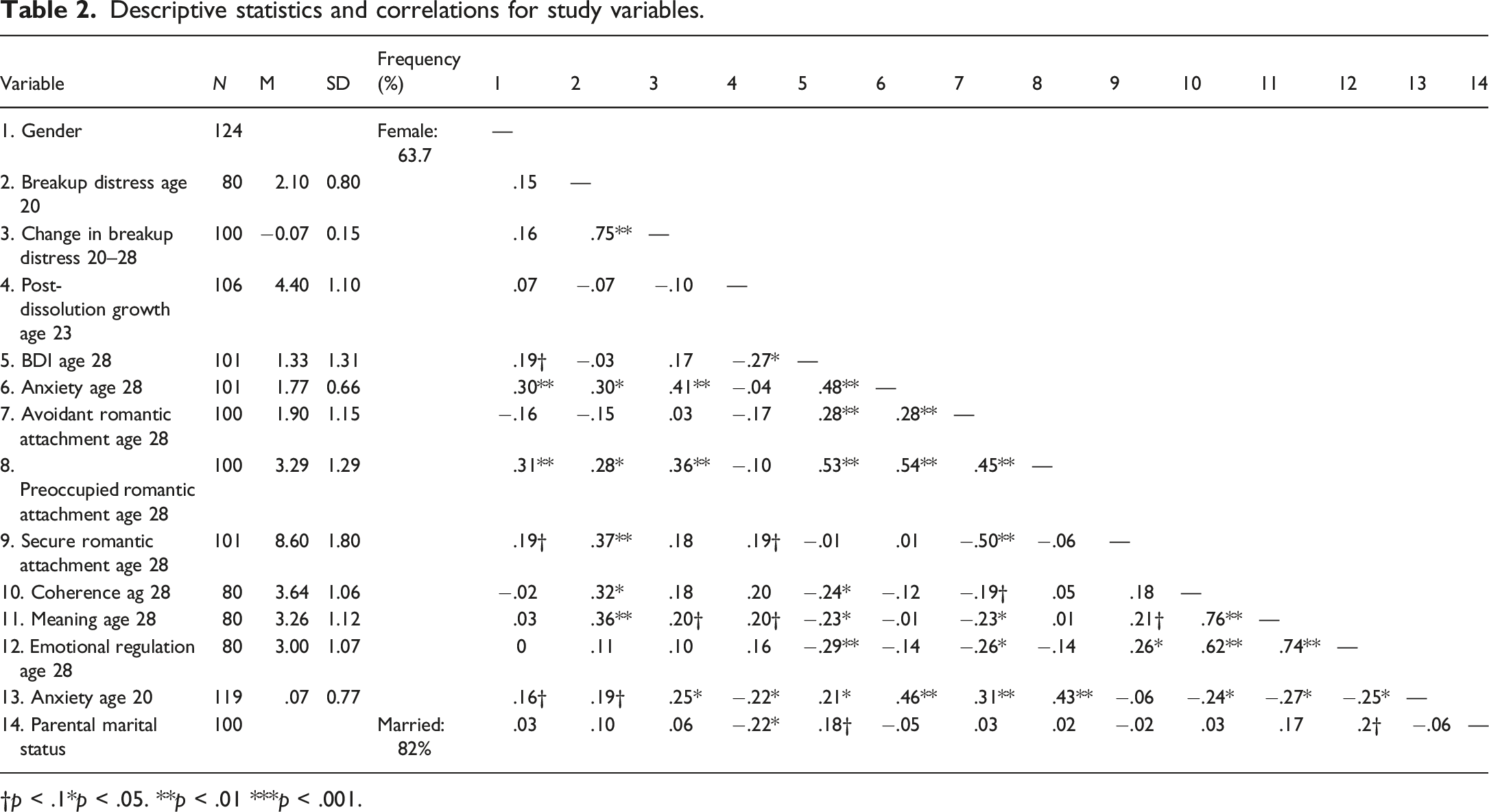
Descriptive statistics and correlations for study variables.
†p < .1*p < .05. **p < .01 ***p < .001.
Breakup distress at age 20 was associated with higher levels of anxiety and preoccupied and secure attachment attitudes at age 28. In addition, it was associated with a greater romantic capacity to learn from past experiences and coherence at age 28. An increase in breakup distress over the eight years (slope) was associated with higher levels of anxiety and preoccupied romantic attachment attitude at age 28. Finally, greater post-dissolution growth at age 23 was associated with a fewer depressive symptoms at age 28.
Predicting psychological distress, attitudes toward romantic attachment, and romantic competence at age 28
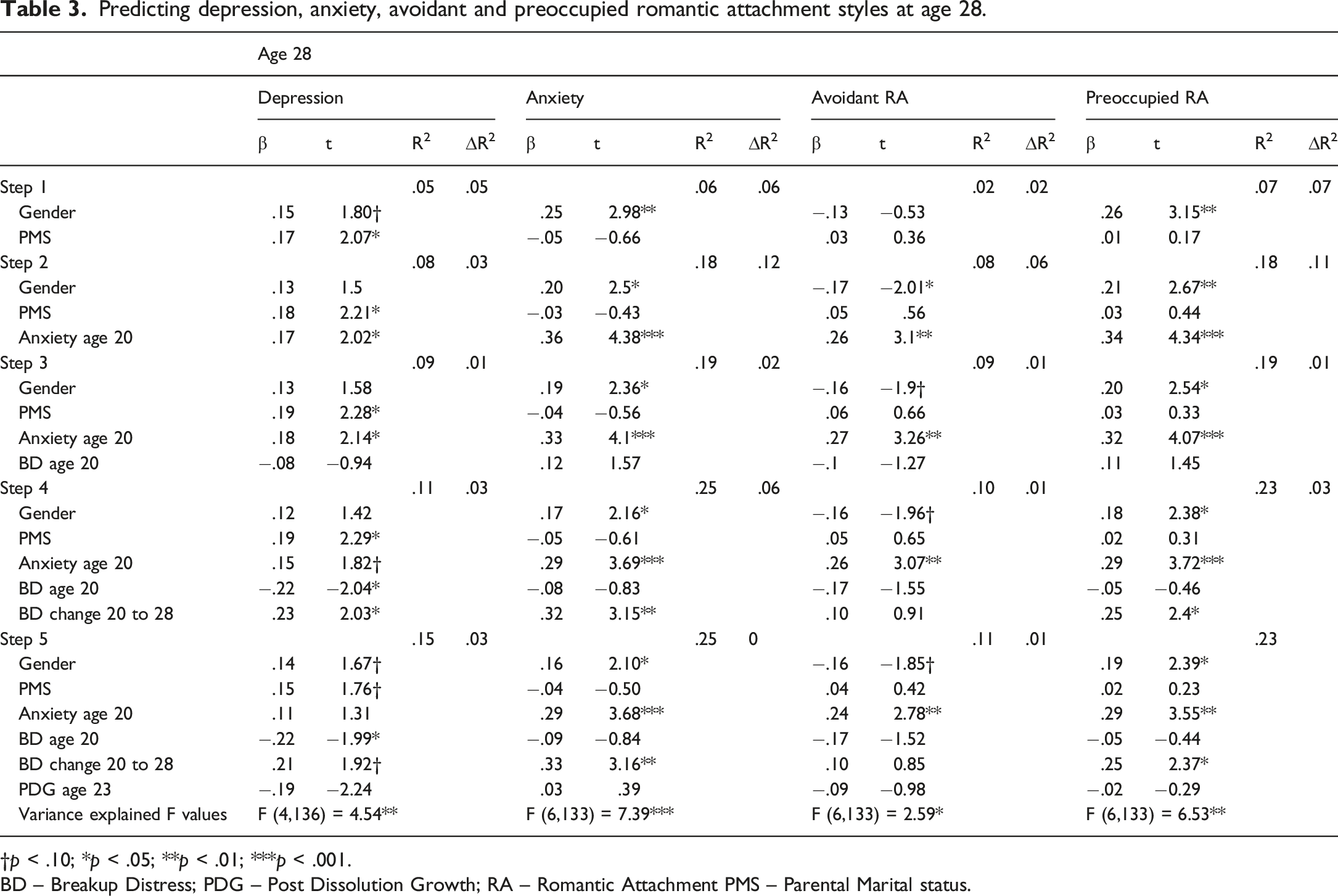
Predicting depression, anxiety, avoidant and preoccupied romantic attachment styles at age 28.
†p < .10; *p < .05; **p < .01; ***p < .001.
BD – Breakup Distress; PDG – Post Dissolution Growth; RA – Romantic Attachment PMS – Parental Marital status.
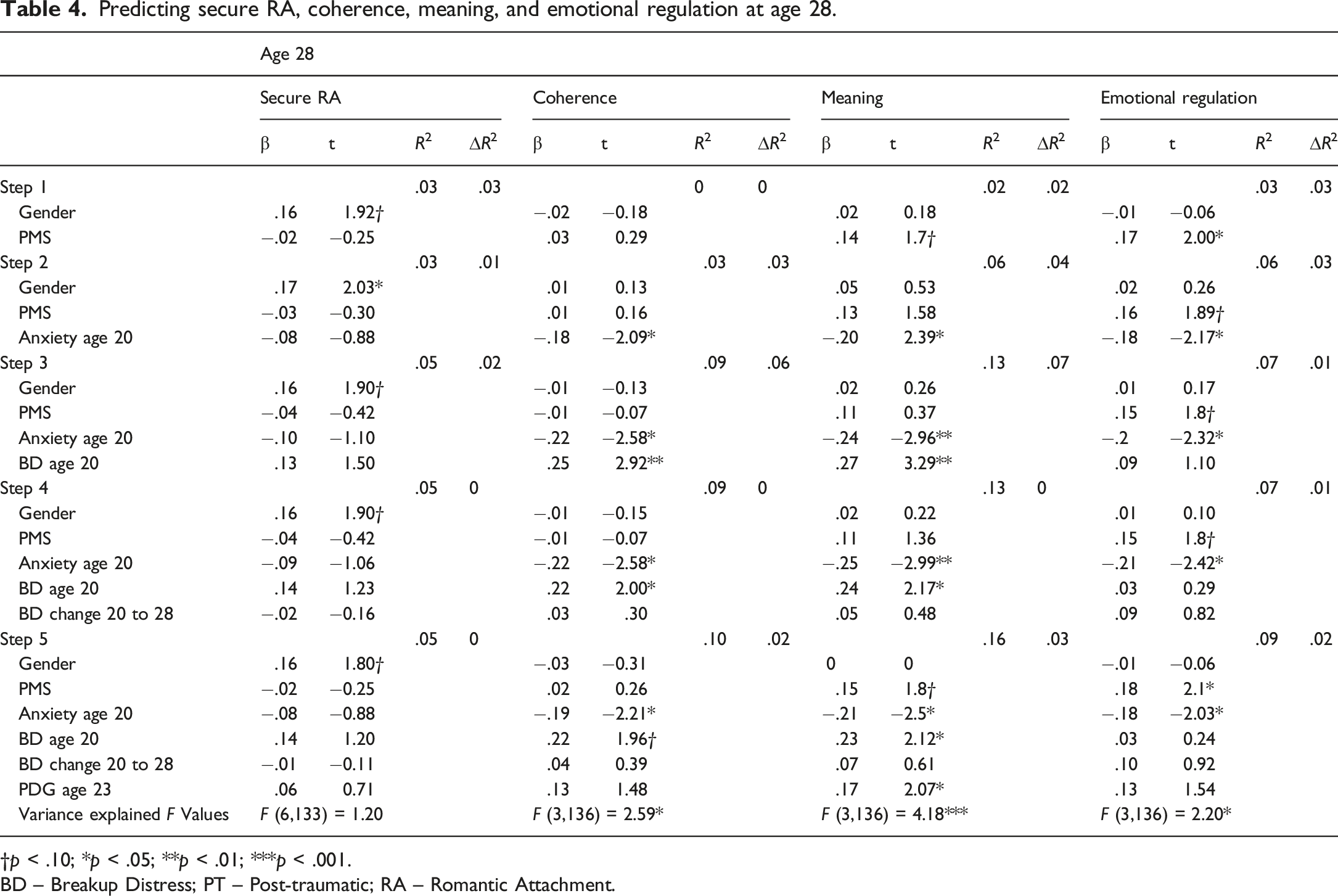
Predicting secure RA, coherence, meaning, and emotional regulation at age 28.
†p < .10; *p < .05; **p < .01; ***p < .001.
BD – Breakup Distress; PT – Post-traumatic; RA – Romantic Attachment.
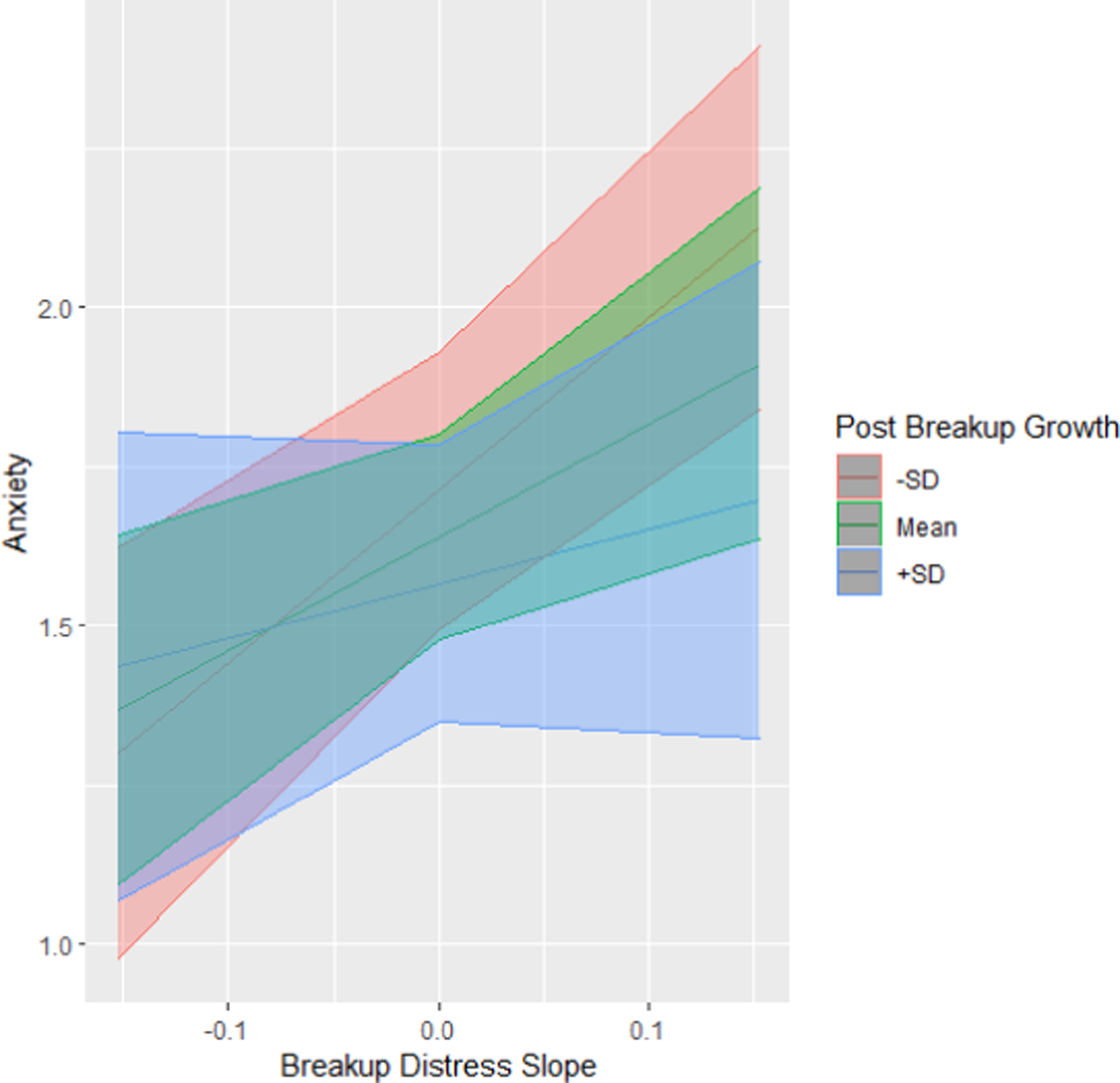
The significant interaction between breakup slope and post traumatic growth, and future anxiety. Only high and medium growth served as a protective factor.
Table 4 presents predictors of romantic competence indices at age 28. As can be seen, the level of breakup distress at age 20 predicted a greater capacity to learn from past experiences, and to provide more coherent romantic accounts.
In sum, earlier breakup distress explained future indices of romantic competence, whereas an increase in breakup distress across the years explained future levels of depressive and anxiety symptoms, and greater preoccupied romantic attachment attitudes. Post-dissolution growth minimally explained future outcomes and associated with future lower depressive affect. The complexity of these findings with regard to our hypotheses will be addressed in the discussion.
Discussion
The current study is among the first to examine the future correlates of an earlier breakup longitudinally over a period of eight years. In addition, the long follow-up also provided new insights about the possible accumulating effect of repeated breakup experiences among emerging adults on future wellbeing and romantic competence. Following a sample of young adults from between ages 20 to 28 revealed that emerging adults were highly likely to experience more than a single breakup during this period of time. Emerging adults reported an average of three breakup experiences that could have led to increased stress over time. Existing research examined the extent to which an earlier single breakup might affect future relationships (Kansky & Allen, 2018). Our findings suggest that examining the longitudinal effects of a breakup need to consider whether a respondent has experienced additional breakups that could lead to accumulating distress over the years (Tibubos et al., 2020).
Accordingly, the first two hypotheses of the current study examined the role of both an earlier breakup experience and the accumulating distress due to a number of repeated breakup experiences among emerging adults on future psychological wellbeing and romantic competence. As shown above, the findings are complex. Romantic breakup distress experienced at age 20 was significantly associated with a greater number of anxiety symptoms and feeling greater insecurity about a partner’s availability and responsiveness at age 28. These findings replicate earlier research (Dailey et al., 2023). However, the associations between distress experienced due to a breakup at one point of time and future outcomes were fully mediated through the accumulating effect of the repeated breakup distress experiences over the years. It was the increase in the magnitude of breakup distress over the years following repeated breakup experiences that explained the future greater number of anxiety symptoms and feeling greater insecurity about a partner’s availability and responsiveness at age 28. These findings suggest that examining the longitudinal effects of an earlier breakup experience need to consider possible additional distressful romantic-related events such as repeated breakups, which might take place during the follow-up period of time.
The effect of earlier breakup distress at age 20, which was fully mediated by the increasing distress due to repeated experiences, did not directly explain future psychological wellbeing. However, it significantly explained future romantic competence at age 28. Greater breakup distress at age 20 was associated with a greater future capacity to learn from past experiences, and with higher coherence of participants’ descriptions of their romantic encounters. These distinctive findings require better understanding. Why does a breakup experience eight years earlier still associate with future greater romantic competence? In addition, it is questionable why the accumulating effects of breakups associate with future emotional states and not with romantic competence.
Following a breakup, individuals express marked emotional distress. They described feelings of sadness, depression, anger, bitterness, and a sense of feeling alone (Davila, 2008). This is a state of emotional upheaval and confusion. Feelings such as sadness and anger, alongside feelings of love for the lost partner, can be felt following a breakup (Sbarra & Emery, 2005). Sbarra and Emery (2005) followed individuals who had experienced a breakup for four weeks, and collected diary data to learn about the emotional sequelae. They found that during the first week after the breakup, individuals indeed felt greater variability in their daily emotions; however, the degree of variability decreased. Moreover, during the next three weeks, individuals’ sadness, anger, and love for the former partner significantly decreased, while their sense of relief increased to the same level as that of individuals who had not experienced a breakup. Sbarra and Emery (2005) contend that though these emotional changes cannot be considered equivalent to general adjustment to one’s breakup, they do indicate that a process of adjustment is taking place (Sbarra & Emery, 2005).
Experiencing fewer negative emotions can also allow a person to recall positive aspects of a dissolved relationship, such as minutes of intimacy and help, and possibly revive positive emotions (Frost et al., 2016). The capacity to perceive the dissolved relationship more comprehensively can help understand what worked and did not work in the relationship. Tashiro and Frazier (2003) were among the first to search for positive changes following a breakup, and found two aspects of change. The first change referred to the understanding of a former relationship: ‘‘I’ll never be in a relationship like that again”; “I learned that I should not be in a relationship in which I am not respected and do not respect my partner.” The second change referred to aspects related to a better understanding of oneself, such as feeling more self-confident, independent, stronger, and emotionally stable: “I have learned that I am strong enough to cope with difficulties.” I was afraid I would break, but I know how to go on with my life.” Drawing lessons from a negative experience can subsequently improve well-being and romantic relationships in the future (Tashiro & Frazier, 2003). These findings can also be understood within the developmental framework of emerging adulthood. Though emerging adults were described as being in and out of relationships, these fluctuations do not necessarily reflect instability. This fluidity can be understood as a way of exploring and learning about being in, and handling, a relationship (Shulman, 2024). In addition, over time emerging adults tend to be involved in longer and more exclusive romantic relationships (Rauer et al., 2013), and each relationship has the potential to become an arena for learning. Thus, romantic and sexual experiences during the earlier years of emerging adulthood can be understood as an ongoing learning experience. Within this context, individuals learn how to handle relationships, including also drawing positive lessons from breakups, as described by Tashiro and Frazier (2003). Consequently, the lessons learned are carried forward and expressed in future relationships (Furman & Collibee, 2014). Of note, in the current study, participants reported about the level of distress they experienced following the breakup, but were not questioned as to whether they learned something positive from the breakup, as was done by Tashiro and Frazier (2003). Questioning participants in future studies as to whether they learned lessons from the breakup experience could have better informed us of both negative and positive effects of a breakup. The role of earlier breakup distress and the role of accumulated distress due to repeated breakups on future wellbeing and romantic competence was partially supported (Hypotheses 1 and 2) as discussed above. However, our expectation that the capacity for post-dissolution growth would further explain future outcomes was minimally supported. Post-dissolution growth measured at age 23 was only associated with a lower number of depressive symptoms at age 28, and moderated the association between the intensity of distress due to repeated breakups and the number of anxiety symptoms. The breakup slope associated positively with greater future anxiety only under the conditions of low post-traumatic growth.
Owenz and Fowers (2019) differentiated between Positive Reappraisal (PR) and Post- Dissolution Growth (PTG). Positive Reappraisal exemplifies processes in which an individual reevaluates past experiences, and is beneficial for drawing lessons from past difficult experiences as elaborated by Tashiro and Frazier (2003). In addition, when negative emotions decrease over time, a person might reach a different perspective and understanding of the breakup, which could further facilitate developing a more constructive approach toward relationships (Sbarra & Emery, 2005). In contrast, Post-Dissolution Growth represents a process of resilience, focusing on recuperation following stressors, adjusting to roles, routines, and identity changes such as telling oneself “I realize that I am strong and can continue in my life” (McKiernan et al., 2018). Emergence of an attitude such as this can be helpful for decreasing negative mood, but less for paving a new understating about relationships. The Post-Dissolution Growth mechanism does not address the reasons that might have led to the breakup. This can explain why post-traumatic growth explained only future lower level of symptoms but not the way relationships are perceived or reappraised, or how to address romantic relationships.
A number of caveats of the current sample must be noted. First, this study is based on self-reports, and the sample is relatively small. Information from additional sources, such as partners or measures such as daily diaries, might enrich our data and provide an additional perspective. The time between the separation and reporting might affect the extent to which the distress is reported. Reporting on distress shortly after the breakup might align with reporting greater distress. Unfortunately, this factor was not controlled in either of the four assessments, and should be controlled in future research. In addition, it is important to emphasize that the current findings do not indicate a causative process. Based on the nature of the current data, it is more accurate to suggest that earlier breakup distress assessed at one point in time, and the increasing distress due to repeated experiences of romantic breakups, is associated with future romantic and well-being indices. Additionally, although gender was entered as a control variable, the proportion of women included in the study was higher that that of men. Finally, this sample was comprised of Israeli youth. Israel is a Western culture, and research has shown that romantic encounters and relationships of Israeli emerging adults is similar to those of their Western counterparts (Shulman, 2024). However, despite these similarities, establishing a family and becoming a parent is highly valued in the Israeli culture (Schwartz, 1994), which might differently assess or react to breakups. Therefore, it is important to replicate our findings in a different culture and, in particular, in more individualistic cultures.
Conclusion
The current study followed emerging adults for a period of eight years, examining the longitudinal correlates of breakup distress. The long follow up indicated that during this period of time emerging adults are likely to experience more than one breakup, suggesting that individuals might be exposed to an accumulating effect of breakup distress. Findings of this longitudinal design expands the existing research in several aspects, and also informs us of the complex ways in which a breakup experience might affect future wellbeing and the capacity to handle romantic relationships in the future.
The intensity of breakup distress at age 20 was not found to be associated with future emotional outcomes. It was the increased accumulating distress due to repeated breakups that explained future outcomes. Increased accumulating breakup distress associated with a higher number of depressive and anxiety symptoms, and reports of a higher level of feeling insecure about a partner’s availability and responsiveness at age 28. Our findings also show that earlier breakup distress experienced at age 20 could serve as a learning experience for coping with relationship difficulties. Conducting in-depth interviews with participants about their romantic relationships showed that earlier breakup distress was associated with a better capacity to learn from past romantic experiences and draw lessons for future behavior. In addition, earlier breakup distress is associated with providing more coherent accounts of romantic relationships. Considered together, findings suggest that while breakup distress and, in particular, accumulating breakup experiences, can affect future well-being, the experience of a breakup experience may also serve as a positive learning arena for future relationships. Perceiving romantic dissolution in a comprehensive manner could be helpful for understanding that breakups are probably part of the normative development of romantic relationships, and should not be perceived only from a deficit perspective.
Footnotes
Funding
The author(s) disclosed receipt of the following financial support for the research, authorship, and/or publication of this article: This study was supported by the Israeli Ministry of Health - Grant # 6412/12 and The Ben Dov Chair in Youth Psychology at Bar Ilan University given to Shmuel Shulman.
Open research statement
This research was not pre-registered. The data used in the research cannot be publicly shared but are available upon request. The data can be obtained at
