



Abstract
This exploratory study was conducted to describe how children and young adults with autism spectrum disorder (ASD) are currently using iPads® and applications, to explore the role of education professionals on iPad® and application use, and to determine potential research needs regarding iPad® use in children with ASD. Naturalistic observations were conducted on six individuals (ages 6;6 to 20;8) with ASD while they were using iPads® in their school environment. The data suggest that (1) the participants used iPads® and applications for a variety of purposes, (2) there was considerable variability regarding whether or not the application was used consistent with its intended function, and (3) the presence of an education professional and the type of application impacted the variability in functional use of the application. Pertinent lines of research that are needed to expand the base of evidence regarding effective iPad® use in children with ASD are discussed.
Keywords
I Introduction
Autism spectrum disorder (ASD) is a highly prevalent developmental disability that results in impairments in social communication and repetitive/restrictive stereotyped behaviors. Recent research estimates the prevalence of ASD to be 1 in 88 (Centers for Disease Control, 2012). A variety of established, effective treatments exist to treat children with ASD (for review, see National Autism Center, 2009), including, for example, behavioral interventions, modeling, naturalistic teaching, and pivotal response treatment. There are also a number of treatments that are emerging that have at least one research study to suggest effectiveness (National Autism Center, 2009). Examples of emerging treatments include cognitive behavioral interventions, massage/touch therapy, exercise, the Picture Exchange Communication System, and technology-based treatments. Technology-based treatments are particularly appealing as an intervention option for children with ASD because of technology’s widespread use and affordability. Additionally, some characteristics of technology are suggested to be compatible with the characteristics of ASD (Pennington, 2010). For example, children with ASD prefer electronic media (Shane and Albert, 2008), may respond better to the game-like nature of technology (Tincani and Boutot, 2005), the visual strengths of children with ASD (Mayes and Calhoun, 2003) are utilized with technology, and the computer-generated speech associated with technology may be beneficial for children with ASD (Schlosser and Blischak, 2001).
Technology-based treatments can be used as speech-generating augmentative and alternative communication (AAC) systems to support communication, to facilitate participation in the classroom, and to teach specific academic skills. Schlosser et al. (2009) provided a review of the evidence regarding AAC use in children with ASD and stated that speech-generating AAC is ‘a viable and effective option for individuals with ASDs’ (p. 165). Researchers have also suggested that computer-assisted instruction (CAI) can be used to teach academic skills to children with ASD. A review of the literature by Knight et al. (2013) indicated increases in academic performance after participating in technology-based instruction and the review by Pennington (2010) suggested that CAI may be effective for teaching academic skills, specifically literacy skills, to students with ASD.
However, researchers are cautious in considering CAI in children with ASD as an evidence-based intervention due to the low to moderate levels of evidence, limited amount of research overall, and particularly the lack of experimentally controlled studies (Knight et al., 2013; Pennington, 2010; Tincani and Boutot, 2005). Knight et al. (2013) recommend caution in using CAI to teach academic skills to children with ASD and suggest that all decisions about use of technology should be individually based, continually monitored, and used with systematic instruction.
Despite the lack of definitive research to support its effectiveness, CAI is becoming increasingly popular. Hess et al. (2008) found that 22% of public schools were using assistive technology in the classroom with children with ASD. More recently, a Google Scholar (Google, 2013) search revealed 65,600 articles related to ‘autism and technology’ with 1,360 articles in 2013 alone. The advent of the Apple iPad® in 2010, in particular, has contributed to this increase in use of CAI with children with ASD by offering a portable, easily accessed, socially acceptable, and relatively cost-efficient platform to incorporate CAI (Neely et al., 2013).
An additional appealing aspect of the iPad® is its versatility. Because iPads® function through applications (hereafter referred to as apps), there is an endless possibility of options for integrating iPads® in work with children. Recent research, for example, has suggested that iPads® and their apps can effectively be used to increase play skills (Murdock et al., 2013), to decrease challenging behavior (Neely et al., 2013), to increase academic engagement (Neely et al., 2013), as speech-generating AAC (Lorah et al., 2013), and to provide video models (Burton et al., 2013; Kagohara et al., 2012).
Kagohara et al. (2013) provided a review of the literature regarding the use of iPads® and iPods® with individuals with developmental disabilities. The goal of the review was to describe the skills being supported with technology, the apps, and the effectiveness of the interventions. The review identified 15 articles that showed that iPads® and iPods® have been effectively used to teach academic skills, teach communication, develop employment skills, teach leisure skills, and teach transitioning. The authors acknowledged that although 15 studies were identified, the total number of participants in these studies was fewer than 50, indicating these results should be interpreted with some caution.
The rapid rise in popularity and perceived potential of the iPad® has led to many educational services in the USA and elsewhere purchasing iPads® for their students with ASD. With growth in technology outpacing research, education professionals are implementing use of iPads® and apps without research-based guidance on how to do so effectively and efficiently. While education professionals constantly rely on their training and expertise to provide high-quality instruction, treatment of ASD is particularly vulnerable to the implementation of interventions that are unproven or controversial (Simpson, 2005). Researchers have even suggested there may be some potential negative aspects of computer use in children with ASD, including increased social isolation, a reduction of social interactions, increased repetitive and stereotypical movements (RSM), and perseveration (Ramdoss et al., 2011).
Lines of potential research have begun to emerge from the most recent experimental studies involving iPads® and children with ASD. For example, gaps exist in the literature regarding the effectiveness of iPads® when they are used as interventions in and of themselves, such as spelling-based apps to effectively target spelling (Kagohara et al., 2013); the effectiveness of apps in a variety of content areas (Knight et al., 2013); the effectiveness of CAI with a variety of ages and severities of ASD (Kagohara et al., 2012); necessary characteristics of educational apps (More and Travers, 2012); whether CAI is more efficient and effective than traditional interventions; and what type of teacher training and support is needed to fully implement iPads® effectively.
Research to date on iPad® use and children with ASD has predominately focused on the results of specific intervention studies, primarily with the iPad® serving as an intervention delivery system or nonverbal children with ASD using the iPad® to request (Kagohara et al., 2013). While this hypothesis-driven experimental research contributes significantly to the base of research, there is a paucity of research that describes how children with ASD and their education professionals are currently using iPads® in their natural environments. It is anticipated that additional insight regarding iPad® and app use in children with ASD will emerge from this study and that unique gaps in the literature will be revealed based on the naturalistic observation of iPad® use.
Hence, the primary purpose of this exploratory study was to fill a gap in the iPad® research literature by using a descriptive research strategy to show how children with ASD are currently using iPads® and apps and to explore the role that education professionals have on iPad® and app use. Naturalistic observation methods were selected to provide an unobtrusive glimpse of routine iPad® use in children with ASD in their typical environment. It is anticipated that this study’s findings can be used to (1) describe how a sample of children with ASD use iPads®, (2) describe the role of education professionals, and (3) determine potential research needs regarding iPad® use in children with ASD.
II Method
1 Participants
The participants in this study were six children and young adults with a diagnosis of, or characteristics of, ASD who attended a special day school for individuals with significant impairments (e.g. autism spectrum disorders, cognitive disability, speech and language impaired, developmental delay) in Midwestern United States. The participants’ ages ranged from 6;6 to 20;8 (years; months). Five of the six participants had received a specific ASD diagnosis and one participant was diagnosed with a developmental delay. The special day school confirmed that this participant had characteristics consistent with ASD but, due to her age, had not yet received the official diagnosis.
Participants were recruited by contacting the administrator of the special day school and describing the purpose of the study. School teachers and administrators identified six predominantly nonverbal students, all with characteristics of ASD, who were potential candidates for iPad® use. This recruitment process resulted in a small participant pool with a wide range of ages. Because of the exploratory nature of this study, the external validity of this study was expected to be limited. Therefore, the small sample size and wide age range of participants was considered acceptable. Table 1 summarizes the participant’s characteristics.
Participant characteristics.
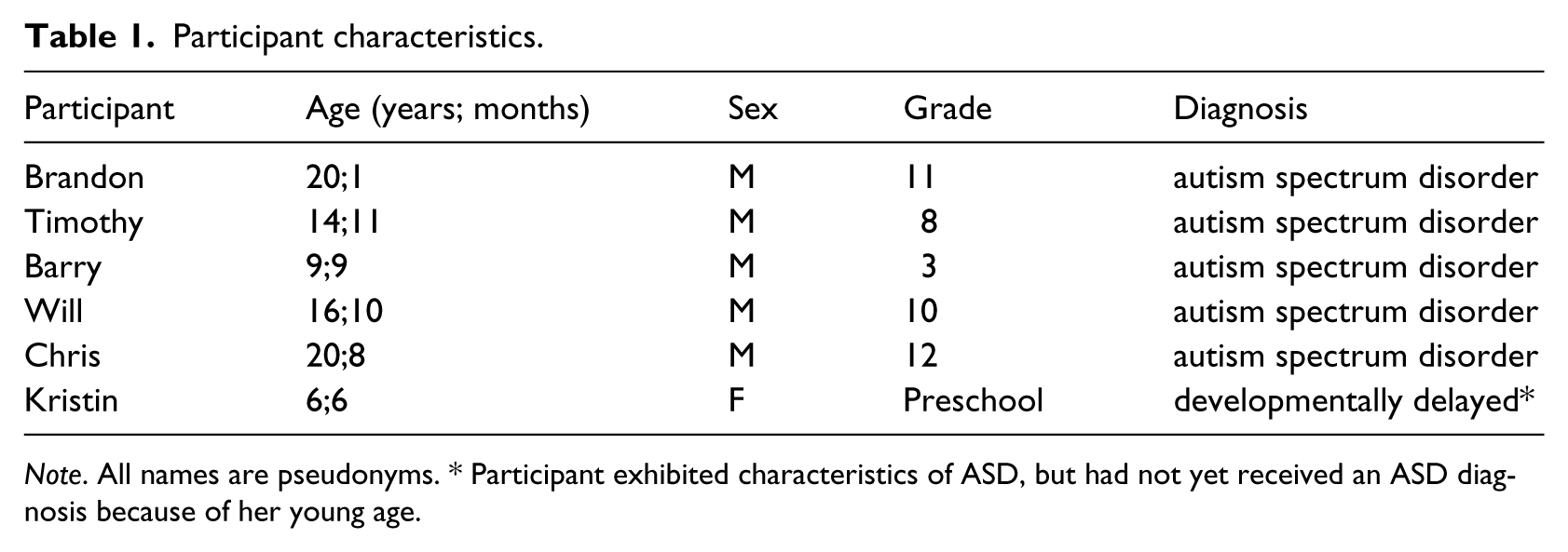
Note. All names are pseudonyms. * Participant exhibited characteristics of ASD, but had not yet received an ASD diagnosis because of her young age.
Observation of the education professionals at the school were also a component of this study. Each classroom contained a maximum of six students and was staffed, at minimum, by one special education teacher and one paraprofessional, and additionally by a variety of professionals, including certified regular and special educators, teacher aides, paraprofessionals, and speech-language therapists. At the time of the study, the school reported that staff were not familiar with iPads®, although they were familiar with a variety of speech-generating AAC devices such as, DynaVox and Go Talk. Prior to iPad® distribution, initial training sessions on iPad® use was offered to the school, but was not accepted.
2 Materials
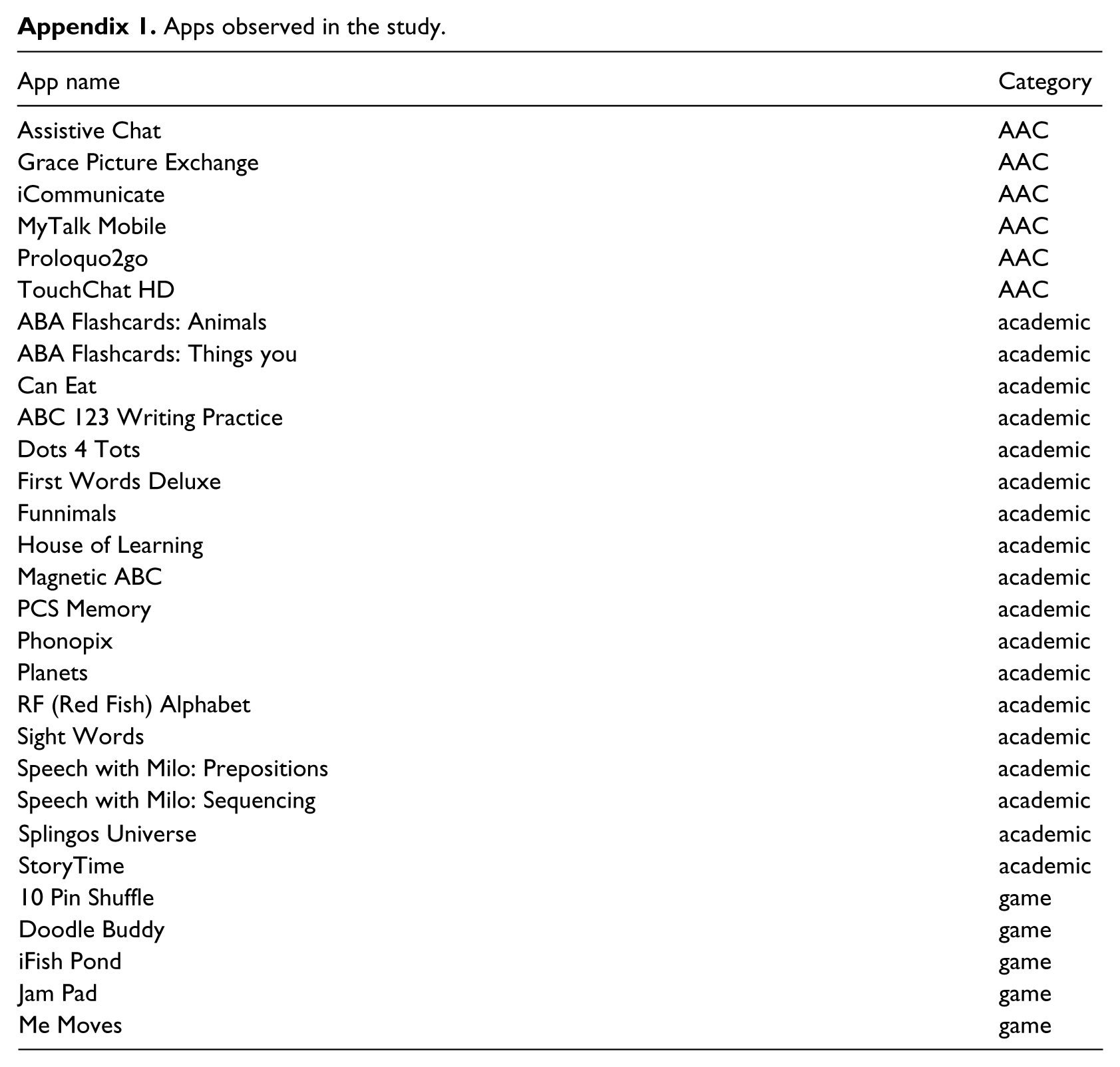
Six iPads® and apps were funded through a university grant and were provided to the participants free of charge. Based on the individual needs of each participant, the education professionals at the school determined the specific apps they considered to be most appropriate and relevant for the participants. A total of 63 different apps were selected and installed on the six iPads®. Of these 63 apps, use of 28 different apps were observed during the course of this study, and use of the other 35 apps installed on the participants’ iPad® was not observed. These 28 apps were classified into one of three categories:
augmentative and alternative communication (AAC) apps: these allowed the iPad® to function as a speech-generating device;
academic apps: these targeted a specific language, literacy, or academic topic; and
game apps: these consisted of apps that were for entertainment.
A list of the 28 apps (and their category) observed in the study are presented in Appendix 1.
3 Procedures
All participants were observed in their natural classroom environment while using an iPad® with a variety of apps installed. The six participants were observed 28 times (2–8 observations per participant) for a total of 202.6 minutes. These observations were obtained over a three month time frame in their classrooms. Video data were collected by a graduate student videographer with a Flip Mino HD video camera. Because the aim of this study was to explore how iPads® were being used by children and young adults with ASD naturally in their classroom setting, no specific instruction or guidance was given to the education professionals before the video recording sessions. Recording sessions occurred at random times of the day to prevent capturing behavior during only one specific activity. Upon arrival, the videographer requested that the student be given his/her iPad® if they were not already using it.
4 Data coding
Due to the exploratory nature of the study, a combined deductive and inductive approach was used to develop the coding scheme to provide the data needed to answer the research questions. Using the method of constant comparison, repeated reviews and analyses of the video data led to refinement of codes and development of additional codes. The third author was responsible for viewing the data and developing preliminary schemes. The first author finalized all operational definitions and performed the final data coding for all observations. One hundred percent of the video data obtained was coded, in other words no video data was excluded from analysis. The data were coded using the Noldus Observer XT 11 computer software (Noldus Information Technology, 2013).
The data were coded in five phases. In the first phase, all of the video data were reviewed repeatedly by the first and third authors. As anticipated, the iPad® use was immediately determined to be complex, and several phases of analyses were deemed necessary. The first two research questions of the study provided for deductive data analysis, specifically regarding the participants’ and education professionals’ actions with the iPad® (phases two, three, and four). However, after review of the data, the need for more specific information regarding how the participants were using the specific apps emerged (phase five).
In the second phase, the video data were filtered to exclude behaviors that provided no relevant information to the study. These behaviors were coded as:
unknown: app could not be determined through video or audio;
away: child abandoned the iPad®; and
programming: education professional was programming or using the iPad® so there was no opportunity for participant use.
The third phase involved coding time spent in the different iPad® environments. The participants spent their time in four distinct, mutually exclusive, iPad® environments. These were coded as:
app: participant was in one of the 28 applications;
homescreen: the initial screen that allows for the selection of apps;
app settings: within an app, individual ‘app settings’ provides such information as the specific app instructions and any procedures for modifying the app; or
iPad® settings: accessed through the homescreen; the ‘iPad® settings’ screen allows for modifications to the general iPad® settings, e.g. internet connection mode, languages, time and date.
The fourth phase of data coding consisted of indicating the presence or absence of an education professional. An education professional was determined to be ‘present’ if the professional was directly interacting with the participant and was visible on the video. If no education professional was present, the time spent on the iPad® was coded as ‘independent’. The education professionals directly interacted with the participants in a variety of ways dependent on the actions and needs of the participant, such as hand-over-hand prompting to facilitate correct answers within an app, serving as a communication partner during snack-time requiring the participant to request using an AAC app, or modeling how to use a specific app.
The final phase of data coding involved further analysis of how the 28 apps were used by the participants. The repeated viewings of the video data suggested that some participants were using the apps as they were intended to be used; however, the apps were also being used in a manner that was inconsistent with their intended functions. Therefore, the final coding phase consisted of determining whether or not the app was used in a way that was consistent with its intended function (‘fulfilled’) or if the app was used in a way that was inconsistent with its intended function (‘violated’). Because each app had a unique function, the determination of fulfilled or violated was made individually for each app and was based on the description or objective of each app, according to the iTunes website or as stated in the app’s settings. The term ‘violation’ was specifically selected to indicate that an app was used in a manner that was substantially inconsistent with its intended function, in other words, the described purpose of the app could not be achieved. For example, the goal of the Speech with Milo: Sequencing (Doonan Speech Therapy, 2011) app is to teach prepositions through touching Milo the mouse, listening to a preposition named, and watching Milo demonstrate the preposition. A violation of this app was considered to have occurred when a participant advanced the screen before Milo demonstrated the preposition, therefore preventing any opportunity for preposition learning to occur. In another example, the goal of ABA Flash Cards: Animals (Kindergarten.com, 2011) is to develop expressive and receptive language skills and comprehension. When a flashcard appears, the animal must be tapped, and a description of the animal is provided. An example of violation of this app occurred when the participant advanced the screen before the description was completed, therefore preventing vocabulary learning from occurring.
Two types of behaviors were also coded as automatic violations: (1) The iPad screen resting in an incorrect orientation and (2) use of repetitive and stereotypical movements (RSM) with the iPad (i.e. repetitive and rapid tapping or swiping that is not part of the function of the app). For example, The Doodle Buddy (Pinger, 2011) app required repetitive tapping of the finger to make stamps, resulting in a fulfillment. However, when required to perform an action in Splingo’s Language Universe (Talking Wizard, 2011) app (e.g. place the trashcan under the box) and the trashcan is simply tapped repeatedly in a stereotypical manner, the behavior was coded as violated.
Violation and fulfillment of AAC apps was based on the Wetherby and Rodriguez (1992) coding scheme for intentional communicative acts: ‘child directed a motoric and/or vocal act toward the adult as evidenced by eye gaze, body orientation, or physical contact, and awaited a response from the adult, as evidenced by looking at the adult, hesitating, or persisting in the communicative act’ (p. 133). AAC apps use that did not meet this requirement of intentional communicative act was coded as violated. General coding information and the operational definitions for the ‘fulfilled’ and ‘violated’ codes are provided in Appendix 2.
a Interobserver agreement
To ensure the coding scheme allowed for consistent and reliable coding of data, the third author re-coded one randomly selected observation from each participant (23% of total observations). After the re-coding, agreements and disagreements with the initial coding were calculated. An agreement occurred if the duration of the behavior was within three seconds (tolerance window) and the name of the code was identical. A disagreement occurred if the duration was not within three seconds or if the name of the code was different. The percent agreement was calculated by dividing the total number of agreements by the total number of agreements and disagreements and multiplying by 100. The average reliability score was 90.8% (range 85.7% to 100%).
b Data analysis
A descriptive approach was used to analyse the data. This approach was selected because of the preliminary nature of the research question, small sample size, and lack of normative data for comparison purposes. Descriptive analysis provided data on each of the following:
the percentage of time spent in each of the four iPad® environments;
the percentage of time spent in each category of app;
the percentage of time app functions were fulfilled or violated;
the interaction between professional presence and fulfillment and violation; and
the interaction between app category and fulfillment and violation.
All percentages presented are based on data from all of the participants.
III Results
1 iPad environment, app category, violation and fulfillment
After the second phase of data coding (i.e. after excluding observations coded as ‘unknown’, ‘away’, and ‘programming’), there was 186.5 total minutes of viable data. Of this total, the participants averaged 87% of time in an app (162.16 minutes) and 13% of the time in either the iPad® settings, app settings, or the homescreen (24.34 minutes).
While in an app (162.16 minutes), an education professional was present an average of 47% of the time and the participants independently used the iPad® an average of 53% of the time. Of the three categories of apps, participants spent an average of 36% of their app time in an AAC app, 51% in an academic app, and 13% in a game app. Participants interacted with the app in a manner consistent with its intended function (i.e. the ‘fulfilled’ code) an average of 69% of the time. Conversely, the participants did not use the app consistent with its intended function (i.e. the ‘violated’ code) an average of 31% of the time.
2 Relationship between presence of professional and violation and fulfillment of app
An interaction was noticed between the presence of an education professional and whether an app was fulfilled or violated. When a professional was present, the app function was fulfilled an average of 84% of the time (16% of the time violated). When the participants were independent, the app function was only fulfilled an average of 55% of the time (45% of the time violated). These data are presented in Figure 1.
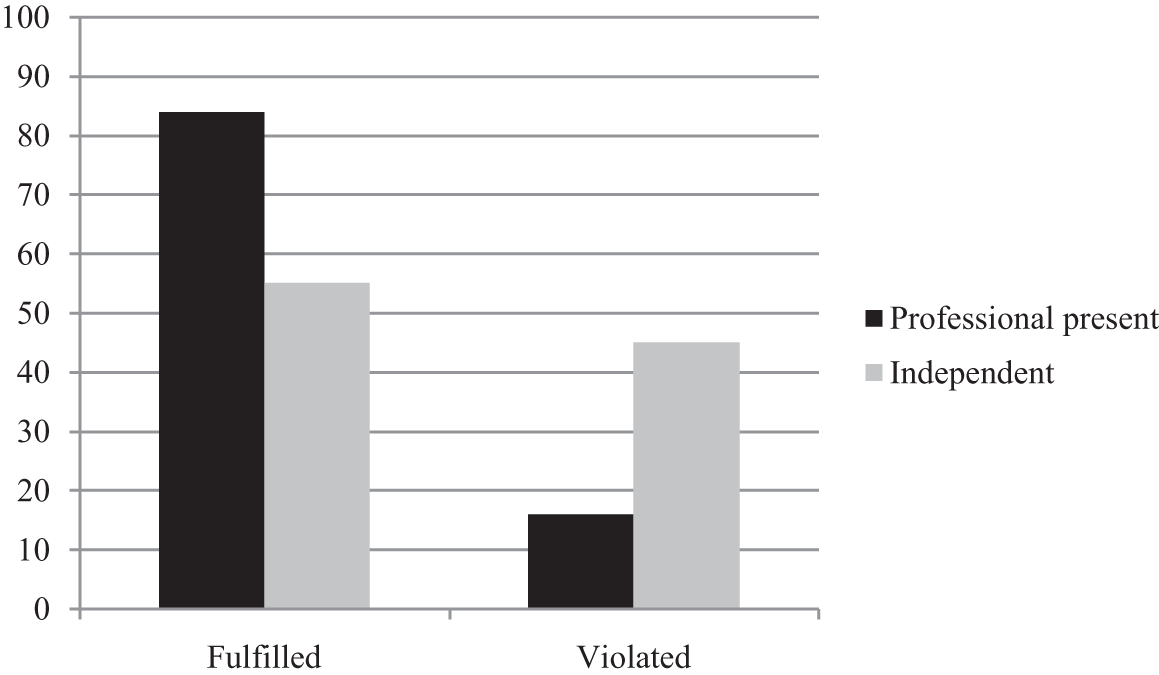
The percent of app function fulfillment and violation when in the presence of an education professional.
3 Relationship between app category and violation and fulfillment of app
There was also a noticeable interaction between the app category and whether the app function was fulfilled or violated. AAC apps were fulfilled 58% of the time in an AAC app (violated 42%), academic apps were fulfilled 71% of the time in an academic app (violated 29%), and game apps were fulfilled 86% of the time in a game app (violated 14%). These data are presented in Figure 2.
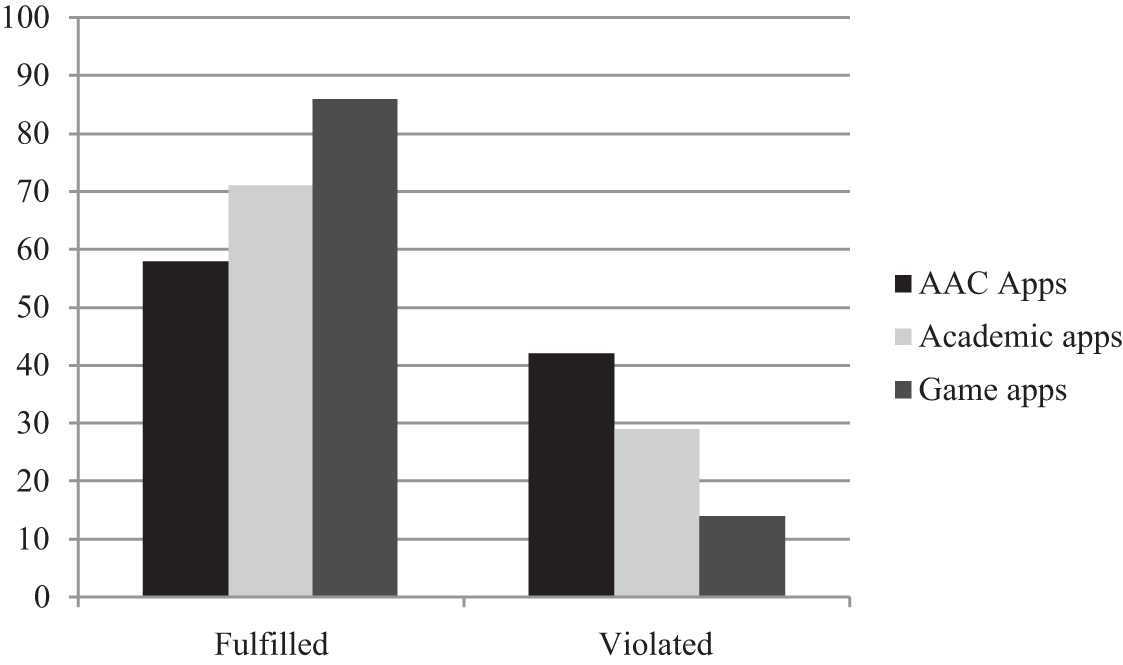
The percentage of app function fulfillment and violation within each app category.
4 Relationship between presence of professional and app category with violation and fulfillment of app
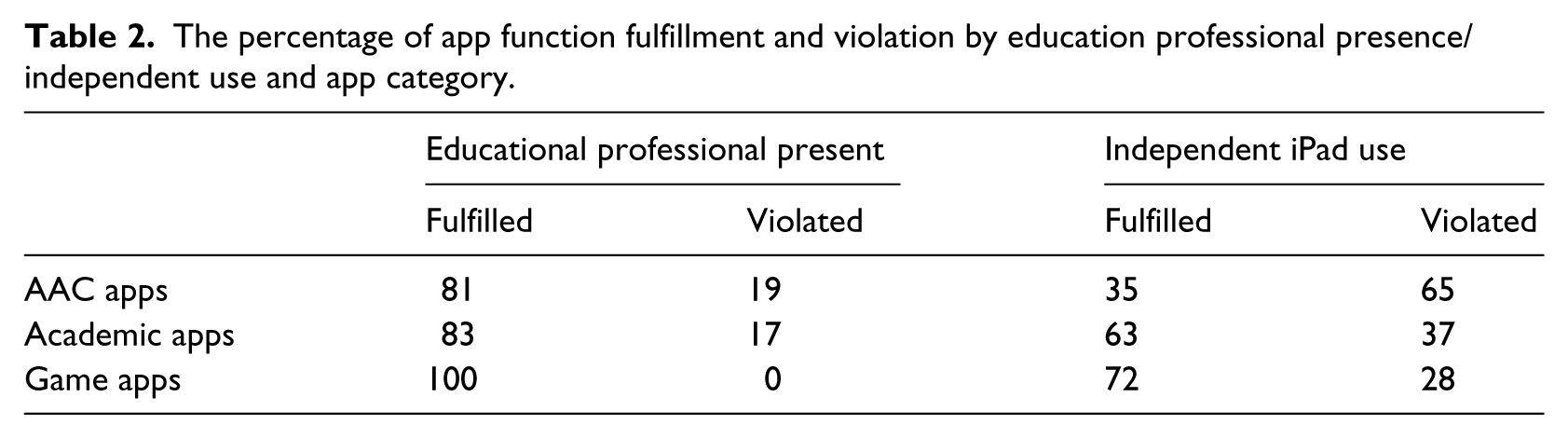
The percent of fulfillment and violation of app function by app group and education professional presence or independent use is presented in Table 2. In general, the data showed that education professional presence impacted fulfillment and violation similarly based on app category. However, AAC apps in particular were violated twice as much as academic and game apps when the participant used the iPad® independently.
The percentage of app function fulfillment and violation by education professional presence/independent use and app category.
IV Discussion
The results of this exploratory observational study provided information regarding how iPads® were used in a special day school in Midwestern United States by six children and young adults with ASD. Much research to date on the use of iPads® has used experimental methodology to determine the effectiveness of iPads® and apps as a means to deliver an intervention (for review, see Kagohara et al., 2013). This present descriptive study provided additional insight regarding iPad® and app use in children and education professionals, confirmed needed lines of research that have been identified in the literature, and also identified unique gaps in the literature based on naturalistic observation of iPad® use in a school setting. Because the type of app (i.e. game, AAC, academic) impacted on use, these discussion points will be framed within each app type.
1 Game apps
Considering the financial burden in providing an iPad® and its apps, this study provides some initial support and assurance to relevant stakeholders that iPads® and their apps were used predominantly for purposes that support education, including those that support academics and communication. While iPads® can provide opportunities for students to participate in game activities during break time or as rewards, the primary use of iPads® and apps in school should be to support learning and education. The finding that only 13% of time in apps was spent on games is positive and reassuring.
2 Academic apps
Time spent in academic apps represented 51% of the total app time. The academic apps observed in this study were predominantly used to support expressive and receptive language and literacy skills. This is consistent with research that has suggested that language and literacy are the academic areas most often supported with apps (e.g. Knight et al., 2013; Pennington, 2010). The field would benefit from further research to address the question of whether use of apps improves learning and, if so, do they do so more than traditional teaching methods? Intervention studies using methodology that can determine cause–effect relationships are required to determine if, for example, an app that claims to teach prepositions actually teaches appropriate use of prepositions. Additionally, methodologically robust research is needed to determine if the use of apps is more efficient and effective than traditional teaching methods.
Violation of app function was a unique finding of this study. Although academic apps had a higher rate of fulfillment than AAC apps, app use violation still occurred almost a third of the time. There is no research to date that has investigated how to reduce app violation, and this line of research would significantly supplement the literature on iPad® and app use in children with ASD. A variety of procedures and protocols have been recommended to promote appropriate iPad® use, and research is needed to determine if following these procedures actually increases appropriate iPad® use and limits violation of app function. For example, More and Travers (2012) discuss several recommendations for selecting apps, that the content of apps should be selected based on a child’s Individualized Education Program (IEP) or other type of educational plan, should be developmentally appropriate, should not merely be an electronic worksheet or electronic flashcards, and should be closely investigated for design flaws. Walker (2011) recommended the use of an app rubric to evaluate the effectiveness of an app in the areas of curriculum connection, authenticity, feedback, differentiation, user friendliness, and student motivation. It is not known whether following these types of guidelines and recommendations actually results in more appropriate iPad® use.
The role and impact of the education professional was also a unique finding of this study and suggests additional areas of needed research. Education professional presence increased appropriate academic app use by 20%. This finding identifies the critical importance of an education professional’s role in promoting appropriate use of apps; however, the study did not explore which specific actions of education professionals supported appropriate iPad® use. Knight et al.’s (2013) review of the literature emphasizes that successful technology-based instruction must be implemented in combination with research-based instructional procedures (e.g. time delay, differential reinforcement, stimulus prompting/fading, delayed prompting), and Priest and May (2001) identified teachers’ ability to adapt learning tasks to fit with technology as the second highest factor contributing to success. In the study reported here the offer of training in use of iPad® was not taken up by the school. Further research might evaluate whether training for educational professionals in instructional procedures with the iPad® increases operational competence and their ability to evaluate app effectiveness, for example. Continued research is also needed to determine the specific actions and practices of the education professionals that promote app fulfillment and those actions that tend to result in app violation.
3 AAC apps
The impact of iPads® and apps on AAC has been described as revolutionary (McNaughton and Light, 2013). iPads® offer an extremely cost efficient alternative to traditional speech-generating devices, and are socially acceptable, easy to operate, and more portable than traditional speech-generating devices (McNaughton and Light, 2013). The data from this study indicate that iPads® are being used as AAC, with AAC apps representing 36% of the time in apps. An interesting finding of this study is that although all six participants were virtually nonverbal, they were only using the iPads® as AAC 36% of the time, and AAC app functions were only fulfilled 58% of the time. Two themes for future research have emerged from this finding. First, as evidenced in this study, iPads® and apps are used for multiple purposes; however, apps cannot currently be used simultaneously, so that when a child is working on an academic skill, they do not have immediate access to the AAC app. Lack of need or opportunity to use AAC was reported as the third highest factor related to inappropriate AAC abandonment (Johnson et al., 2006), and using an iPad® for multiple functions inherently prevents AAC availability. Further development might determine how iPads® can operate for a variety of functions, while having constant access to the AAC apps. In the meantime, professionals may consider providing individuals who are using the iPad® as AAC two iPads®, one for communication and one for other purposes.
Second, AAC is complex; speech and language therapists and teachers have reported some concerns with their ability to effectively implement AAC (e.g. Marvin et al., 2003; Soto, 1997), that communicative interactions in the classroom among children who use AAC are generally low (Mellman et al., 2010), and that high rates of inappropriate AAC abandonment are not uncommon (Johnson et al., 2006). With the data indicating that AAC app function was fulfilled only 58% of the time, there is some concern that these participants’ AAC systems may not be facilitating communication adequately. Further, the impact of an education professional on fulfillment of AAC suggests that violation may have occurred because a communication partner was not present or bids for communication by the participants were not acknowledged. This is further supported by previous findings suggesting that inappropriate AAC abandonment often occurs because of factors related to the communication partner (Johnson et al., 2006). The Wetherby and Rodriguez (1992) coding scheme used in this study to determine fulfillment and violation was effective; however, it was focused primarily on the actions of the participant who used AAC. Research that identifies facilitative/non-facilitative behaviors on the part of the communication partner or education professional would determine the skills needed to support AAC use and overall communication (McNaughton and Light, 2013), particularly in the classroom.
V Limitations and conclusions
These direct and naturalistic observations of iPad® use in children with ASD provided unique information that supplements the current research base; however, there were several significant limitations that suggest these results should be interpreted with caution. Specifically, as an exploratory study, the sample only consisted of six participants, the total number of minutes the participants were observed was limited and variable between participants, and the participants were of varying ages. Further, the selection of apps was controlled by the school and not the researchers, resulting in a different number and type of app available for each participant. Consistent app options between participants would provide more experimental control. Finally, the random and limited nature of the data collection possibly may not have provided a complete picture of iPad® use. Consistent video recording over the course of an entire day, and over several days, would have provided more consistent descriptive results.
In conclusion, the data from this study suggests that iPads® can, and are, being used in schools appropriately to support children and young adults with ASD. This descriptive and exploratory study provided an unobtrusive glimpse of how iPads® and apps are currently being used by children and education professionals, and identified several lines of further research, particularly related to the fulfillment and violation of app function and to the role of the education professional. While iPads® potentially provide exciting opportunities for technological support to individuals with ASD, additional research is necessary to support their effectiveness and guide the iPad® implementation process.
Footnotes
Appendix 2
Appendix 1.
Apps observed in the study.
| App name | Category |
|---|---|
| Assistive Chat | AAC |
| Grace Picture Exchange | AAC |
| iCommunicate | AAC |
| MyTalk Mobile | AAC |
| Proloquo2go | AAC |
| TouchChat HD | AAC |
| ABA Flashcards: Animals | academic |
| ABA Flashcards: Things you | academic |
| Can Eat | academic |
| ABC 123 Writing Practice | academic |
| Dots 4 Tots | academic |
| First Words Deluxe | academic |
| Funnimals | academic |
| House of Learning | academic |
| Magnetic ABC | academic |
| PCS Memory | academic |
| Phonopix | academic |
| Planets | academic |
| RF (Red Fish) Alphabet | academic |
| Sight Words | academic |
| Speech with Milo: Prepositions | academic |
| Speech with Milo: Sequencing | academic |
| Splingos Universe | academic |
| StoryTime | academic |
| 10 Pin Shuffle | game |
| Doodle Buddy | game |
| iFish Pond | game |
| Jam Pad | game |
| Me Moves | game |
Acknowledgements
The authors would like to thank Elizabeth Zeilenga for her contribution to this research.
Declaration of Conflicting Interests
The authors declared no potential conflicts of interest with respect to the research, authorship, and/or publication of this article.
Funding
This research was supported by the Southern Illinois University Graduate School Seed Grants for Transitional and Exploratory Projects.