



Abstract
Research indicates that a significant number of children enter primary school with insufficient vocabulary knowledge. This study investigates whether a small group daily word learning programme delivered by the class teacher can improve word learning in young children.
Eighteen children, aged five to six years, with English as an additional language or poor language development, attending three schools in an area of social deprivation, participated in the study. Class teachers implemented a principled approach for teaching and learning vocabulary that included the development of word-learning strategies. Vocabulary knowledge was assessed pre- and post-intervention using a non-standardized, study-specific measure that compared taught and untaught vocabulary. Receptive vocabulary was also measured using standardized assessment. Pupil and teacher questionnaires were presented before and after the intervention. There were significant changes in children’s knowledge of both taught and untaught words, with more change in knowledge of taught words. Some children also showed significant change on standardized measurement of vocabulary. Class teachers reported changes in their practice and some children reported using a wider range of strategies to learn words.
Keywords
I Introduction
Young children are reported to learn between five and nine new words a day (Berk, 2003; Beck et al., 2002), reaching an expected vocabulary of between 3,000–5,000 words by age 5 years (Locke, 2006), and increasing to approximately 8,400 by 11 years of age (Biemiller and Slonim, 2001). However, some children show poor vocabulary development for a number of reasons including: presence of language impairment, learning English as an additional language, and home environment (Snowling et al., 2001). Vocabulary knowledge is a strong indicator of academic progress and important for success in school and in the world outside school (Clegg and Ginsborg, 2006; Clegg et al., 2009; Hart and Risley, 1995).
1 Childhood experience and vocabulary development
Children enter school with substantial differences in their understanding and use of vocabulary (Roulstone et al., 2011) and some begin education with sizable disadvantages (Washbrook and Waldfogel, 2011). Biemiller and Slonim (2001) observed a large gap in vocabulary learning amongst 7–8-year-old children of between one and half root words and three root words per day. A root word is the primary lexical unit of a word that cannot be reduced into smaller constituent parts and carries the semantic content. Biemiller and Slonim’s findings suggest that these differences reflect life experiences rather than constitutional factors, mirroring the findings of Hart and Risley (1995). For many children the language of school may manifest itself as a foreign language (Stahl and Stahl, 2004). Story books and text books may contain a high proportion of unfamiliar words rarely encountered outside school (Cummins, 2000). Evidence from the UK suggests that children in areas of social disadvantage are at risk of academic underachievement and failure due to poor language development (Clegg and Ginsborg, 2006; Locke and Ginsborg, 2003).
Hart and Risley (1995) demonstrated how adults’ talk influenced their child’s vocabulary knowledge and academic success, with variation in IQ and language abilities related to the number of words children heard from birth to age three. Roulstone et al. (2011) reported that various factors within a child’s communicative environment, such as providing a range of books and toys to encourage talking, playing and reading, visiting a library and preschool groups and keeping TV time to a minimum, had more influence on future achievement than innate ability, material circumstances or quality of pre-school and school provision. Washbrook and Waldfogel (2011) demonstrated how parental interactions and spoken language impacted on vocabulary development of children from low to middle income families, irrespective of economic or material circumstances.
When starting school, high-performing / high-talk children have an average receptive vocabulary of 7,100 root words and typically-performing children have an average 5,100 root words, whereas relatively poorly-performing / low-talk children know about 3,000 words (Biemiller, 2003). Children with smaller vocabularies are also adding words more slowly to their lexicon. Biemiller (2003) estimated that it would take five to six years of intervention, learning three to four root words per day, for these ‘low-talk’ children to catch up with their ‘high-talk’ peers. These children are also less successful in using strategies for word learning (Blachowicz and Fisher, 2004).
2 Learning new words
Nation (2001) suggests that the more children know about the language and about a word, the less effort will be required to learn it, as existing knowledge can be drawn upon. Nation identified three processes involved in vocabulary learning: becoming aware of the word, retrieving the word in both receptive and expressive forms, and its application in different contexts. Beck et al. (2008) and Stahl (2003) discuss how full and flexible knowledge of a word develops along a continuum through multiple exposures and opportunities to use the word. As children encounter a word repeatedly, more information accumulates about that word.
Little attention is given to explicit vocabulary instruction for children in mainstream school settings, except for those with English as an additional language (EAL; Blachowicz et al., 2006). It is not possible for teachers to provide specific instruction for all the words children may need to know (Nagy, 2007). However, children can be taught to use a range of word learning strategies to determine the meaning of words that are new to them (McCartney et al., 2005). Nagy (2007) suggests that words can be easily learned from context during reading, yet children with low vocabularies are less able to derive meaning from context (Cain et al., 2004). Teaching new words using a definitional approach may not be a useful route for vocabulary development (McKeown, 1993; Nash and Snowling, 2006). Graves (2006) describes a spoken and written vocabulary development programme with four components: opportunities for wide reading, explicit teaching of words, developing children’s independent word learning skills, and developing word consciousness, mirroring the recommendations of Beck and McKeown (2007).
Beck et al. (2002, 2008) suggest a student’s vocabulary should increase by 2,000–3,000 words a year, of which about 400 are taught directly. They advocate a three-tier system for selecting target words. Tier 1 consists of basic words, e.g. brother, baby, happy, that rarely require explicit explanation and teaching in school; however, it cannot always be assumed that this type of word is frequently heard in the home. Tier 2 words appear in more specialist situations rather than in conversation and represent the more sophisticated vocabulary of the written word. They are vivid verbs, adjectives, adverbs and specific or abstract nouns; words that aid reading comprehension and can have an impact on the quality of the spoken and written language of children, e.g. warm, darker, nearly, remarkable. They have been re-labelled as ‘Goldilocks’ words by Stahl and Stahl (2004: 133) as they are not too difficult, not too easy, but ‘just right’ to enhance understanding, and they expand children’s general language repertories (Biemiller, 2005). Tier 3 words appear in more specialist situations and rarely in general use in everyday conversation. They tend to be limited to specific domains and subject areas (science, mathematics, etc.) and are central to building the knowledge and conceptual understanding of the subject/content, e.g. symmetrical, peninsular, parallel, conceptual. No formula exists for selecting age-appropriate vocabulary words and selecting which words to teach is ‘a matter of judgment, best decided by those who know the individual students’ (Beck et al., 2005: 221).
Word knowledge and word learning skills can be developed using an explicit approach to teaching and learning words. Apthorp (2006) evaluated the use of a published programme, Elements of Reading: Vocabulary (Beck and McKeown, 2004) over 24 weekly whole class lessons, delivered to children aged 8–9 years not identified as having oral language difficulties. Significant gains in oral vocabulary were found as compared to a control group. However, this was only the case in schools with higher levels of social disadvantage and in which children had poorer vocabularies at the start of the study. The key elements of the instruction were: defining and explaining word meanings; six or more exposures to new words; deep and active processing of words and meanings in a range of contexts. In a study of children aged 5–7 years in schools with low levels of achievement, Beck and McKeown (2007) found that teaching vocabulary by providing contexts and definitions and encouraging children to repeat target words had a significant effect on receptive vocabulary, as compared to a no-intervention control group. Furthermore, children learned significantly more target words when the amount of instructional time and exposures to target words were increased four-fold.
Nash and Snowling (2006) investigated two methods of teaching vocabulary to small groups of 7–8-year-old children identified as having poor vocabulary knowledge. Using written materials, half the children were taught new words by providing definitions, and the other half by deriving meaning from context. The intervention was delivered twice a week for 6 weeks and vocabulary knowledge improved in both groups. However, children taught using contexts continued to show better word knowledge three months later, indicating that they were using this strategy to learn new words. These authors also noted that the children appeared to find it easier to learn nouns than verbs. Parsons et al. (2005) report a 7–8-week intervention for mathematics vocabulary that linked semantic and phonological features and repeated words in different contexts to be effective when taught individually to two 8-year-old children with language impairment. Whilst vocabulary intervention may be provided by a speech and language therapist (e.g. Parsons et al., 2005), other studies report on successful vocabulary teaching by regular classroom teachers (e.g. Beck and McKeown, 2007).
It has been suggested that many children acquire vocabulary naturally through activities in school (Osborn and Armbruster, 2001). Conversely, Clegg et al. (2009) and Snowling et al. (2001) argue that vocabulary learning cannot be left to chance for children with low vocabularies. Research indicates the children with language difficulties might require more exposure to new words for learning than children who are developing language typically (Gray, 2003; Riches et al., 2005). Baumann (2009) examined studies by Beck and colleagues and suggested that vocabulary teaching should not just be rich in nature but also provide many encounters with the words being learnt. Analysis of the data indicated that using a word in between 10 and 18 teaching session might be sufficient to have a positive effect.
The implementation of a principled framework for teaching new words would scaffold the naturalistic way that new vocabulary may be introduced within the mainstream classroom. A synthesis of the methodology for developing word learning skills from a range of existing theory and research was used to validate this principled approach and the varied activities selected to apply the principles of word learning within the school curriculum.
The current literature outlines the connection between a child’s level of vocabulary and his or her future academic and life-long achievements. However, there is little empirical evidence reporting practical ways in which word learning can be supported effectively within the classroom and contextually measured in children with reduced vocabularies. This study will build on the current theoretical perspectives outlined above to provide practical recommendations and suggestions for future research to address this shortfall.
3 The current study
This study implemented a principled vocabulary intervention in schools in an area of social disadvantage. This study builds on the previous research by including younger children, aged 5–6 years, who were identified as having poor spoken language development. A vocabulary intervention that incorporated a wide range of approaches to teach specific curriculum vocabulary was delivered to small groups of six children over a 3–4-week period. In addition, qualitative data was collected to report the teachers’ views of the intervention.
The aims of the study were to investigate:
the effects of a daily word-learning programme on children’s vocabulary development;
the effects of training to deliver, and delivery of, a daily word learning programme on class teachers’ knowledge and practice.
Specific hypotheses were that:
children would demonstrate significantly better knowledge for words taught during the intervention than words not taught;
children would demonstrate a significant increase in receptive vocabulary scores after the intervention as measured using ratio gains on a standardized assessment.
II Methodology
The project was approved by the Research Ethics Review Panel at the University of Sheffield, UK.
1 Participants
a Class teachers
Teachers of Year 1 classes (children aged 5–6 years) in 22 schools in a local authority within the North West of England were invited to participate in the study. The local authority was within the lowest 17% most disadvantaged councils in England (Office for National Statistics, 2007). Over 50% of children join school with EAL. One in four children is on the special educational needs (SEN) profile (Blackburn with Darwen, 2010). The resources available for the study allowed for three teachers to participate, and these were randomly selected from the seven who volunteered to participate. The teachers were from three different schools and had an average of five years teaching experience within the primary sector.
b Children
Eighteen children, aged 5–6 years (7 girls; 11 boys), six from each class, with known speech and language difficulty, learning difficulty and/or with EAL were selected by their class teacher and school Special Educational Needs Co-ordinator. None of the children were receiving intervention for vocabulary from speech and language therapy. Teachers were asked not to select pupils who had significant health or hearing issues. Parents of these pupils were invited to consent to their child’s participation, and signed consent forms were returned for all pupils. Numbers of participants with EAL and/or on the SEN profile and Deprivation Index for each school (Blackburn with Darwen, 2010) are given in Table 1. Information with regard to socio-economic status of individual children was not available.
Profile of participants in each school.

Notes. EAL = English as an additional language; SEN = special educational needs
2 Materials
a Vocabulary intervention
Various activities advocated and used by Beck et al. (2002, 2008), Biemiller (2003, 2005), Blachowicz and Fisher (2002), Elks and McLachlan (2005), Graves (2006) and Lubliner (2005) were amalgamated and adapted to provide a range of word learning games and tasks. Additional activities were included, such as the Dice game, which was already being successfully used by the first author in school-based work. The Question game allowed the teacher to promote the semantic, phonological and multisensory features of a word. The ‘How we learn new words’ prompt cards were specifically colour-coded for word knowledge / semantics (WK: green), phonological awareness (PA: red) and kinaesthetic or visual information (KV: purple). Prompts were presented on a word learning mat (see Figure 1), as individual cards and as small reminder cards on a key ring. The teachers were encouraged to maximize all opportunities to ‘talk around the word’ whilst undertaking the various activities, using the semantic, phonological and kinaesthetic prompts to emphasize the different word learning features. An accompanying manual provided a rationale for vocabulary teaching and learning with specific details on the production and delivery of the activities to promote the three areas of word learning: clarifying, self-monitoring and building rich in-depth word knowledge. All the resources were prepared in line with dyslexia-friendly advice (Department for Children, Schools and Families, 2008) and with picture/symbol support using Communicate: In Print 2 (© Widgit).
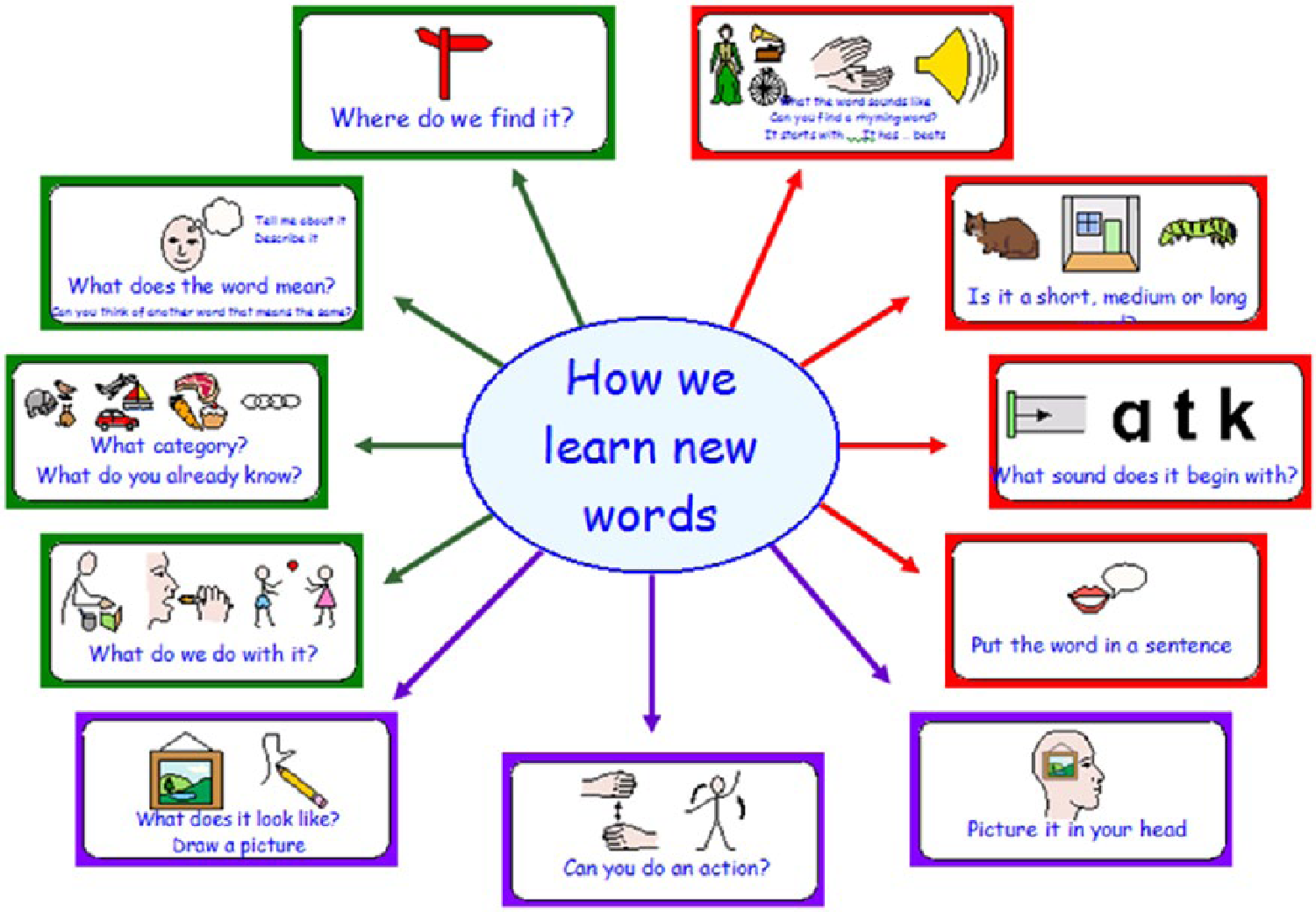
Word learning mat.
Sessions comprised three elements:
An introductory clarification activity, selected from the following:
Stop sign used by pupils to show when they did not know the meaning of a word and traffic light strips to show how much they knew about a word: happy, okay, unhappy. Use of these was modelled by the teacher.
Detective clue card with graphics and text encouraged pupils to use context to identify word meanings (Lubliner, 2005), ‘Look in the pictures’, ‘Look in the writing’, ‘Use what you already know’, ‘Have a good guess’.
Clarifying cue card (Lubliner, 2005) used by the teacher (see Figure 2).
Attribute web (Elks and McLachlan, 2005) with key word in the centre and related words written and/or drawn around as spokes, making links to prior knowledge.
Multiple meaning trees (Elks and McLachlan, 2005), where appropriate, used written words and picture symbols to illustrate all possible meanings of a word, for example, trunk: a big suitcase, an elephant’s big nose, main part of a tree.
Main Activity
Day 1: Question Game to support semantic and phonological features of word learning: An object or picture of a target word selected from a Feely Bag, each pupil in turn answering the question from one of the prompt cards.
Day 2: Word Knowledge Map (Elks and McLachlan, 2005): The teacher draws a picture of a word in the centre. Pupils use prompt card questions and their answers added to create a mind map. Responses were colour-coded to match the prompts and grouped in specific locations on the page (WK left-hand side, PA right hand side, VK bottom of page).
Day 3: Dice Game: Pictures of words in envelopes labelled with dice faces. Pupils threw a dice and named the picture in the matching envelope using prompts to guide responses.
Day 4: Match the meaning: Base boards and individual cards of picture symbols, written words, and definitions of words generated by the teacher (a class-based – not dictionary – definition) were used for lotto games, pair’s games, and matching picture to written word and to definition.
Day 5: Word Knowledge Map: As for day 2 and using another word.
Supplementary activity to consolidate word learning from the following:
Attribute web (Elks and McLachlan, 2005).
Word storms: Pupils thought of as many words as they could associate with the target word.
Word investigation: True and false facts were generated for discussion. For example, transparent: paint is transparent, milk is not; light can go through something that is transparent; water and glass are transparent; transparent things are always liquids like water.
Word connection: Target word presented in centre of the page and around this words that were or were not linked. Pupils drew lines between the target word and related words.
Word choice: Children were asked which word answered a question. For example, which of the following are transparent?: milk, water, oil, glass, plastic windows in a tent.
Word bluff: Children were asked which of three statements was related to the word; for example, transparent is: a parent who moves from one family to another; something you can see through; something which looks cloudy.
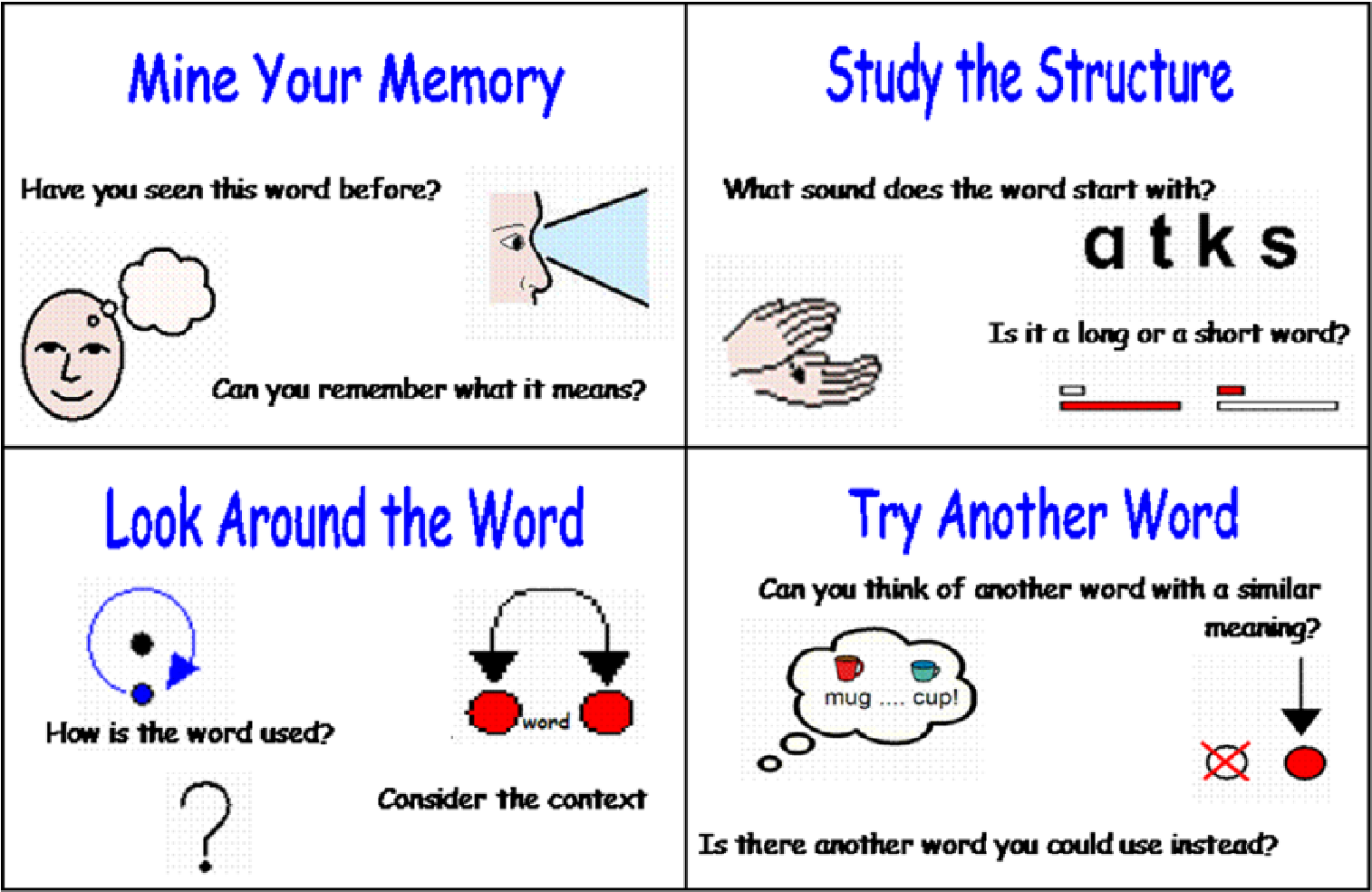
Clarifying cue card.
b Vocabulary for intervention
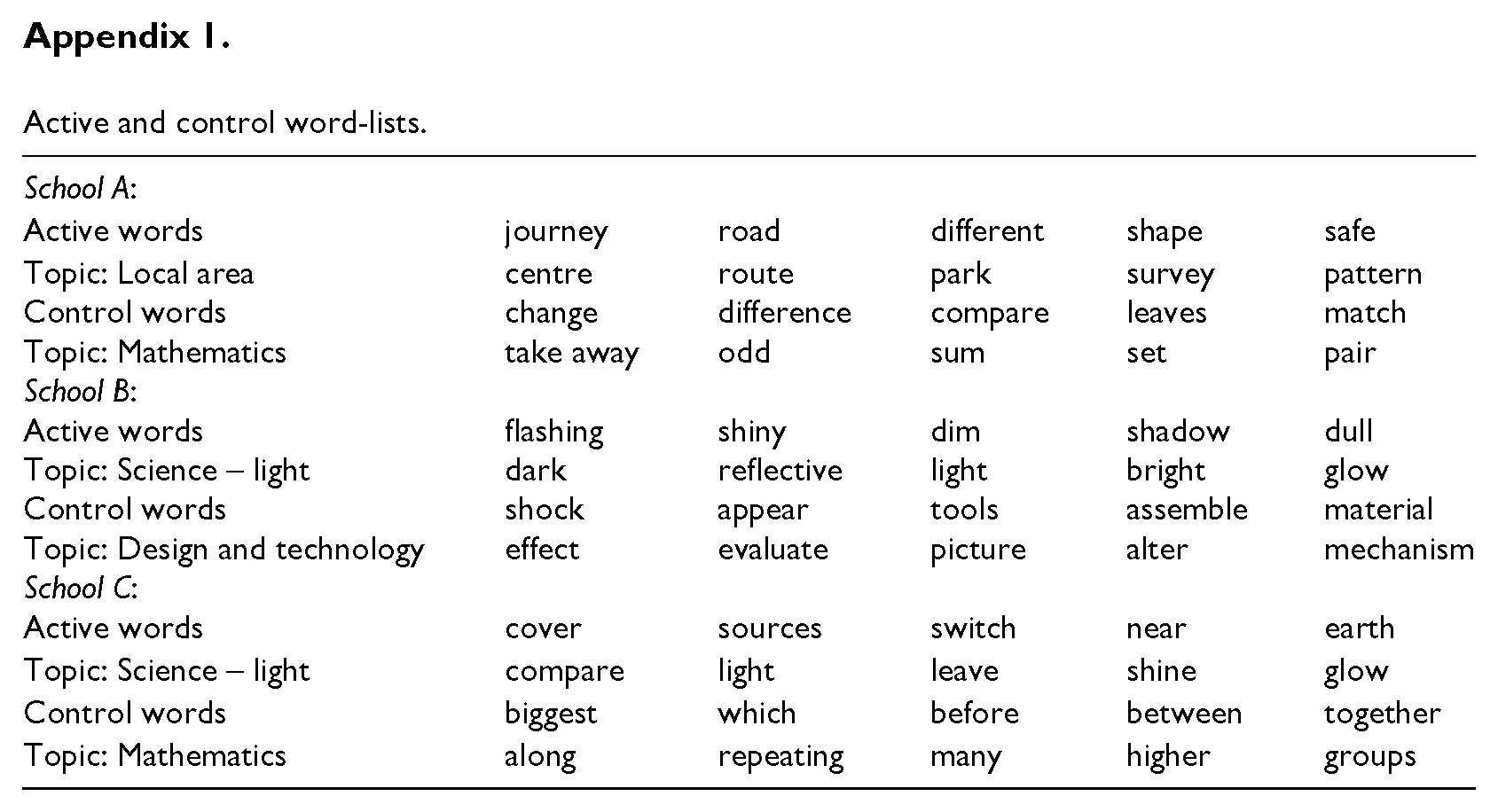
Each teacher was asked to select 10 Tier 2 words (that expand children’s general language repertoires; Beck et al., 2002) from each of two curriculum areas of their choice. It was suggested that they considered actual words regularly used in the classroom for the topics rather than words directly taken from a specific text. Teachers selected some words that did not meet Beck and McKeown’s suggested Tier 2 criteria. They also selected words of different types. A realistic target of 10 words to be taught over the time of the intervention was selected. The set of words from one curriculum area constituted the control word list, not taught, and the other set the active intervention word list, which was taught (see Appendix 1).
c Training session
The teachers participated in a 90-minute training session. A presentation introduced the rationale behind the approach to teaching and learning vocabulary, the identification of Tier 2 words and outlined strategies for effective vocabulary learning. These were demonstrated. Teachers were given handouts and a reference manual scripted to enhance efficacy of delivery.
d Evaluation measures
(i) Pupil pre- and post-intervention questionnaire
With teacher support, pupils completed:
A visual scalene on which they indicated how they felt about learning new words: happy, okay, unhappy.
A questionnaire with picture symbols and written text which asked ‘What helps me learn new words?’ Pupils selected one or more responses from the following: hearing the word lots of times; seeing what it is; touching or playing with it; clapping the beats.
(ii) Word knowledge
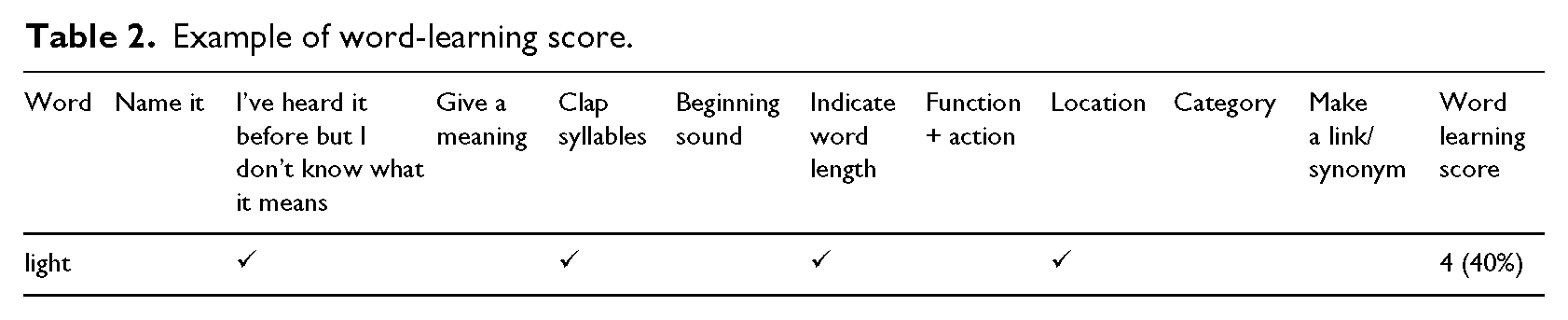
A word learning procedure assessed pupil’s word knowledge before and after the intervention on the active and control words. A picture/symbol card was presented for each target word and the pupil was asked to name it. If the pupil was unable to name the picture, the adult then said the target word and asked the pupil whether he or she had heard it before (even if the pupil was not sure what it means). The word learning mat was used to ask the pupil to: give a meaning; clap syllables; say the beginning sound; indicate word length; describe what it does or what we do with it (function); say where it may be found (location); give the category; and make a link and/or give a word that means the same. One point was scored for each appropriate response, and percentage scores were calculated for each word (see Table 2).
Example of word-learning score.
(iii) British Picture Vocabulary Scale-II (BPVS, Dunn et al.,1997)
BPVS is a standardized assessment of receptive language in which children hear a spoken word and select which of four pictures represents the word.
(iv) Teacher questionnaires
A questionnaire presented before the training included the following questions, with six possible responses for each rating.
How confident do you feel in teaching new vocabulary: to individual children?; to the whole class? (from very confident to not confident at all)
Children need to be able to determine the meanings of words that are new to them by themselves. (from strongly agree to strongly disagree)
Which words should teachers teach?
Questionnaire 2 was presented after the intervention. This repeated the three items in questionnaire 1 and additionally included the following items.
The training increased my knowledge of vocabulary teaching and learning. (from strongly agree to strongly disagree)
The intervention work was difficult to undertake and deliver in class. (from strongly agree to strongly disagree)
The principled vocabulary approach can be applied across all curriculum areas. (from strongly agree to strongly disagree)
Have you used the strategies with the whole class?
Do you continue to use this approach in your daily practice?
Please list all practices you have consciously changed, if any, since receiving training and undertaking the intervention work.
3 Procedure
In September 2009 teachers completed questionnaire 1, attended the 90-minute training session, chose active and control vocabulary from two curriculum areas, and selected six pupils in their class to be invited to participate in the intervention. Data was available in pupils’ records for the BPVS assessment from July 2009 (Schools A and B), 2 months before intervention, and from April 2009 (School C), 5 months before the intervention started. Author 1 administered the word learning checklist, and teachers administered the pupil scalene and questionnaire immediately before the intervention.
Teachers were asked to work daily with the group of pupils on the ‘active’ topic words for 10–15 minutes within their classroom during the specific topic lesson over a 3–4-week period. This was planned as a differentiated activity delivered in addition to whole class teaching on the topic. The number of sessions was recorded. The teachers were asked not to use the principled approach to vocabulary teaching when delivering their lesson from which the ‘control’ sets of words were chosen, and these control words were not used during any specific group instruction.
The teachers also displayed and used the ‘how we learn new words’ prompt cards in class to model semantic, phonological and kinaesthetic word learning features of words in the active curriculum area with the whole class. They were requested to remind target pupils of their word work and to encourage them to use the prompt cards whilst working in class. A class-based topic word-wall was created displaying the key words and pictures and child-generated definition cards for the target pupils to refer to during topic lessons.
After the intervention, teacher questionnaire 2 and pupil scalene and questionnaire were completed. The word learning checklist was re-administered four weeks after the end of the intervention by author 1. The BPVS was re-administered in June 2010 (Schools A and B) and April 2010 (School C) as part of the usual school assessment procedures
III Results
1 Word learning
Word learning checklist scores for active, taught words and control, untaught words are shown in Table 3. There was a significant difference in pre and post–intervention scores for word knowledge of active words (t(17) = 9.04, p < 0.0001, r = 0.83), and for control words (t(17) = 7.74, p < 0.0001, r = 0.78), with large effect sizes. There was also a significant difference in the change in word learning scores for active words as opposed to control words (t(17) = 5.583 p < .0001, r = 0.65) with a medium to large effect size, indicating that the intervention had more effect for active than for control words.
Pre- and post-intervention word learning scores for active and control words.
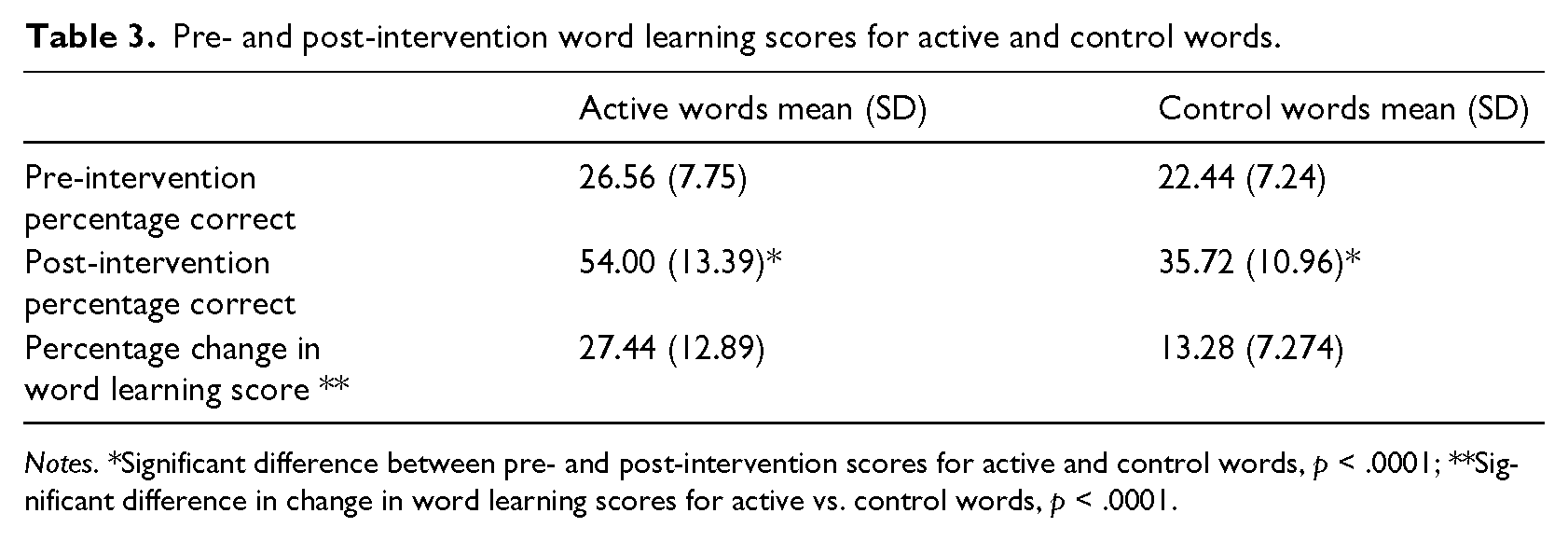
Notes. *Significant difference between pre- and post-intervention scores for active and control words, p < .0001; **Significant difference in change in word learning scores for active vs. control words, p < .0001.
To explore any differences between schools, change in knowledge for active and control words for pupils across the three schools were analysed, using Kruskal–Wallis non-parametric analysis. There was no significant difference on change in word learning scores for active words (H = 5.74, p = .057) or for control words (H = 5.05, p = .08) (Table 4).
Data for individual schools.
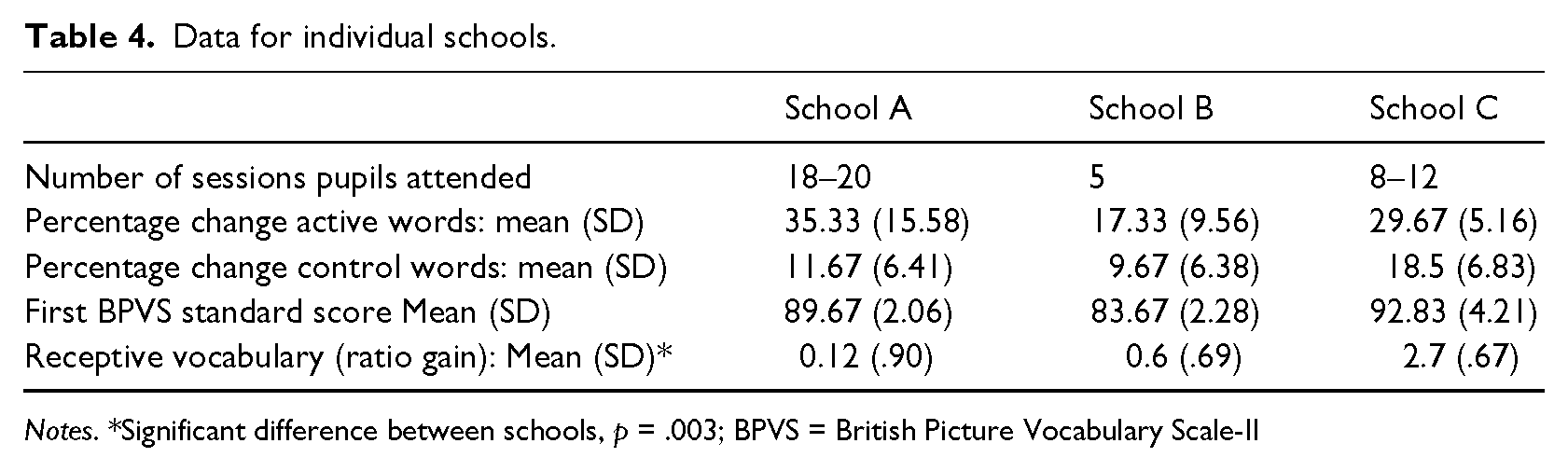
Notes. *Significant difference between schools, p = .003; BPVS = British Picture Vocabulary Scale-II
2 Receptive vocabulary
There was no significant difference in first BPVS standard scores according to school (H = 4.74, p = .094), indicating that pupils across the schools were matched for initial receptive vocabulary knowledge (Table 4). There was no significant difference in BPVS standard scores between the two assessment points (First: Mean = 88.72 (SD 7.95), Second: Mean = 91.33 (SD 11.62); t(17) = 1.41, p = .176), suggesting that pupils’ vocabulary development had not accelerated over the year that included the period of intervention.
BPVS scores were also used to calculate the ratio gain (RG) for individual pupils, as advocated for the evaluation of intervention effects by Brooks (2002). RG is calculated by dividing gain in vocabulary age by the time between testing. One month of vocabulary age equivalent per month of chronological age produces a RG of 1, and indicates standard progress. Brooks (2002) suggests that an RG of 1.4 indicates significant change over time. The mean RG for all participants was 1.13 (SD 1.35) with a range of −1.1. to 3.6. Seven of the 18 pupils showed a RG of more than 1.4, indicating they had significantly accelerated progress in receptive vocabulary (1 pupil in each of schools A and B, and five pupils in school C). There was a significant difference in the RG across the three schools (H = 11.366, p = .003) (see Table 4).
3 Child questionnaire
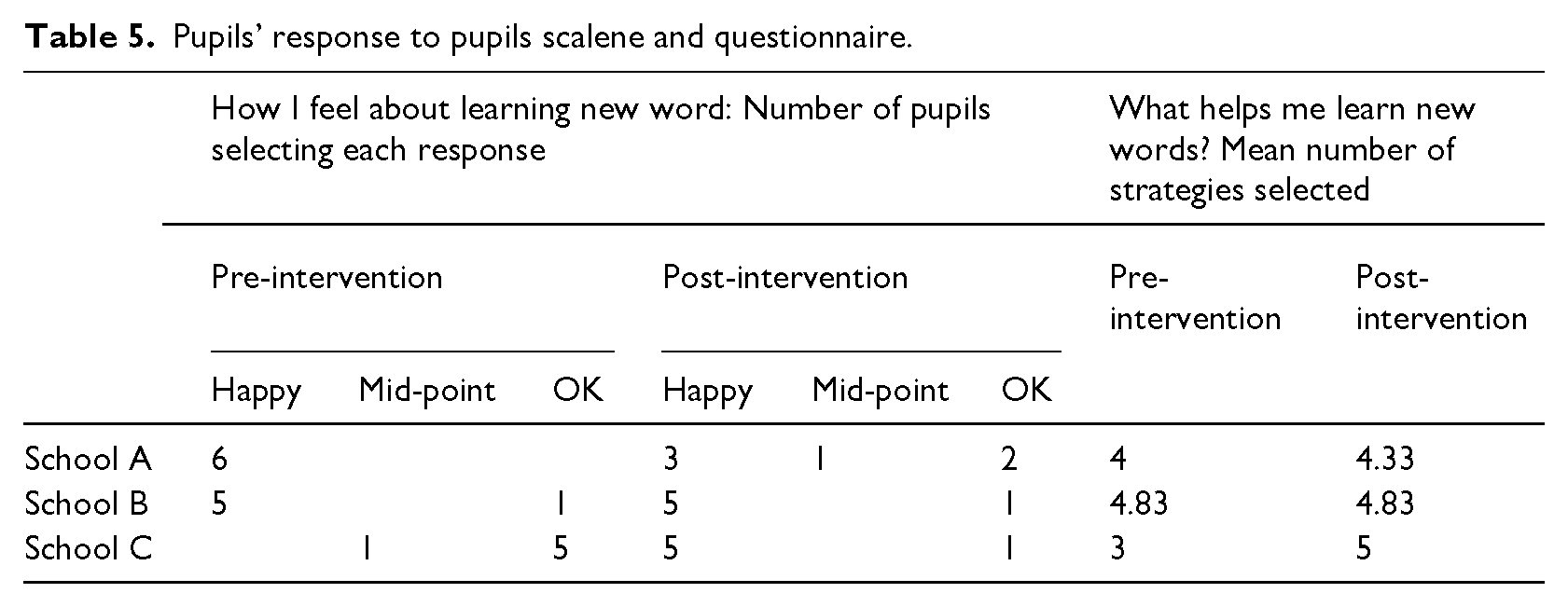
No pupils reported feeling unhappy about learning new words before or after the intervention period. Visual inspection of the data suggests that most change was reported by pupils in School C (see Table 5). Pupils in School C also reported the greatest change in use of strategies (see Table 5).
Pupils’ response to pupils scalene and questionnaire.
4 Teacher questionnaires
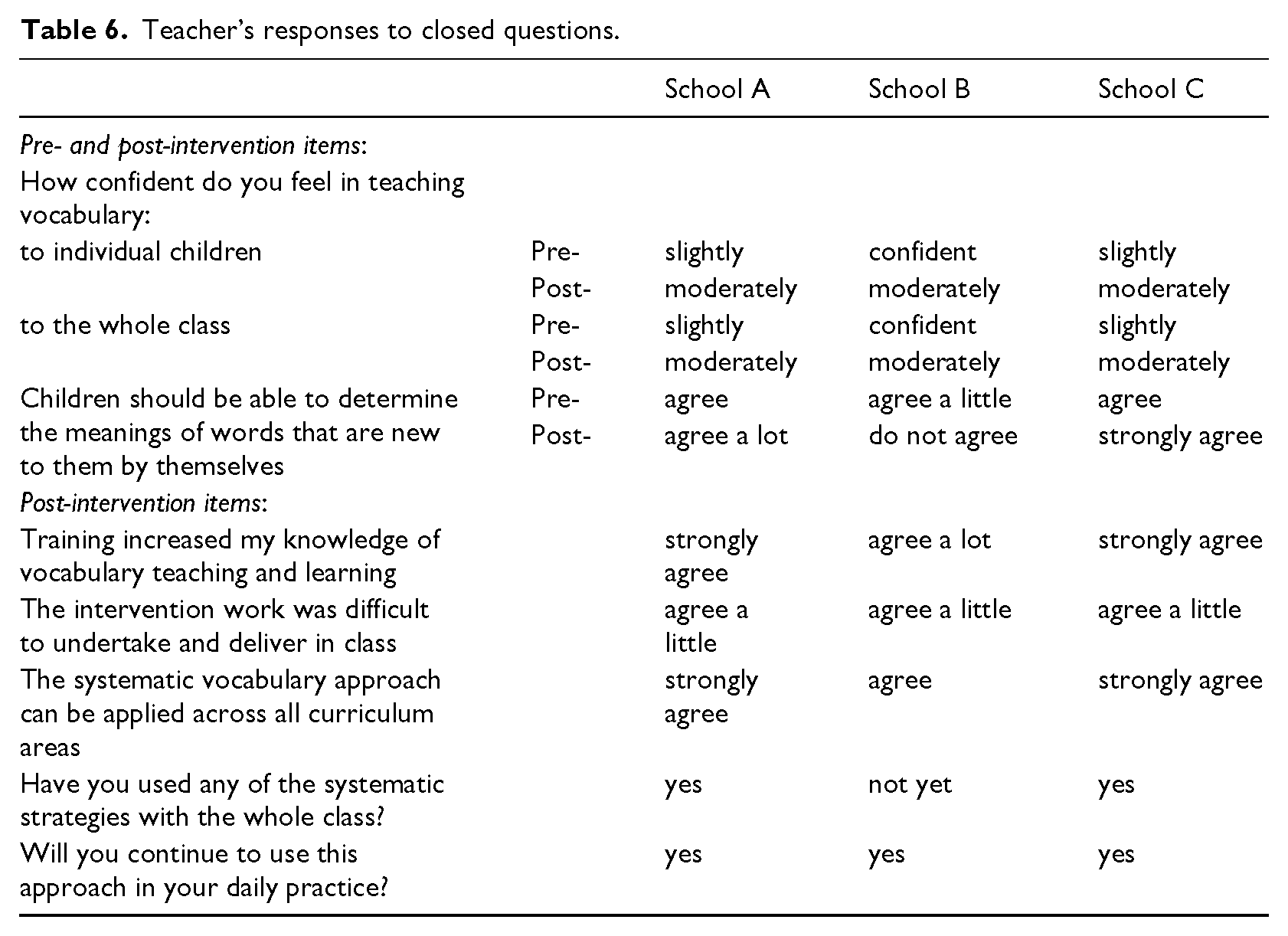
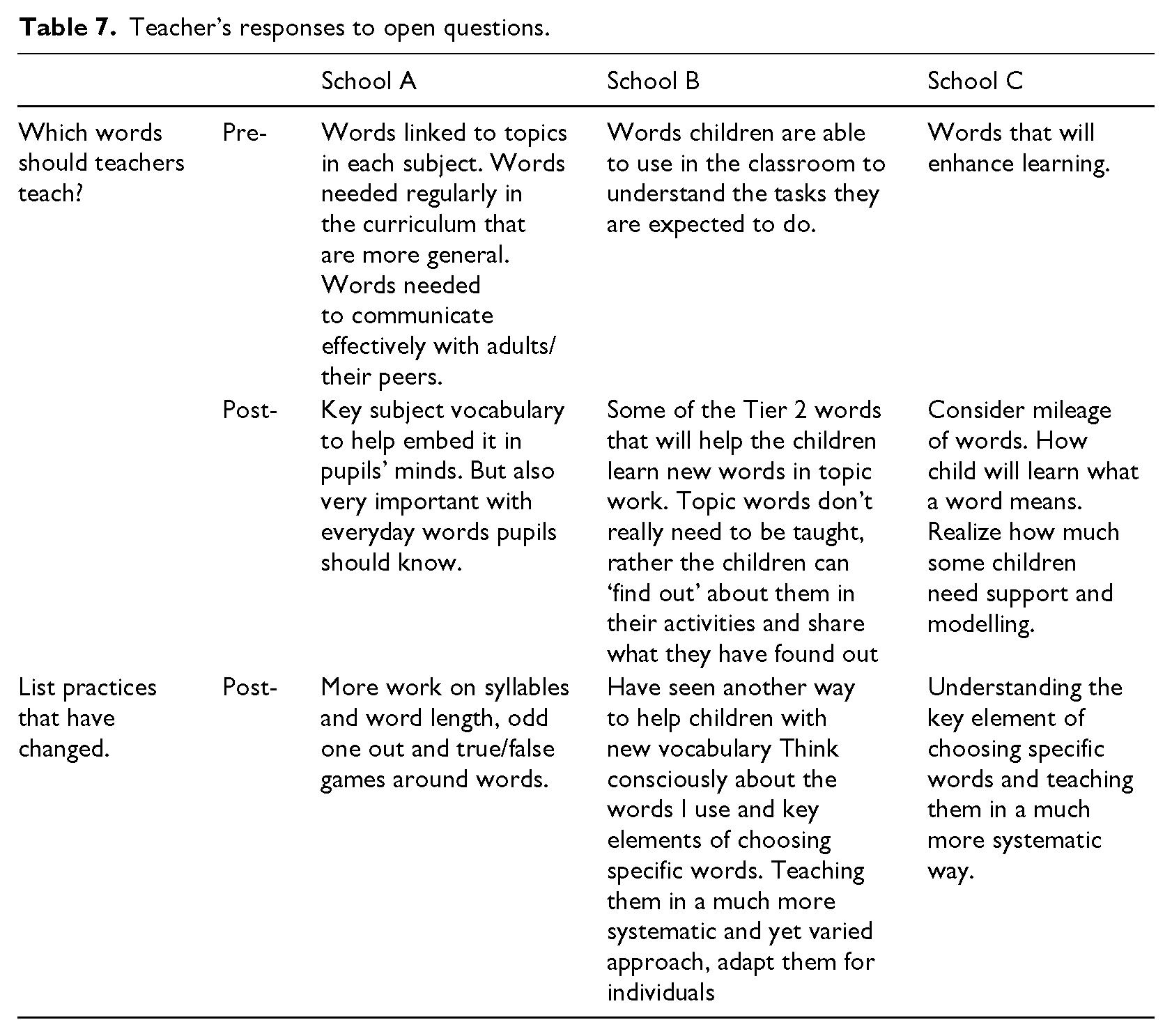
Teachers’ responses to the pre- and post-intervention questionnaires are summarized in Tables 6 and 7.
Teacher’s responses to closed questions.
Teacher’s responses to open questions.
IV Discussion
1 Word learning
We predicted that pupils would demonstrate significantly better knowledge for words taught in the intervention than those not directly taught, in light of the accepted good practice (Beck et al., 2002, 2005, 2007). We also expected some generalization in the pupils’ ability to learn new words when exposed to them in class, as the intervention aimed to develop word learning strategies (Graves, 2006). There were significant differences in word learning scores for both active and control words before and after the intervention, and a significantly greater change in word knowledge for active words than for control words. This confirms the hypothesis that pupils would learn more about the words taught during the intervention and appears to indicate a specific effect of intervention. The findings are in accord with a number of studies that show a positive effect of explicit word learning interventions (Apthorp, 2006; Beck and McKeown, 2007). This study demonstrates an effect of intervention in younger children aged 5–6 years to complement the findings from older children (Apthorp, 2006; Nash and Snowling, 2006), and for a relatively short period of time, 3–4 weeks. The intervention combined a range of approaches taken from Blachowicz and Fisher (2002), Beck et al. (2002, 2008), Biemiller (2003, 2005), Graves (2006), and Lubliner (2005). It is not possible to identify which elements of the intervention were most influential in developing word knowledge; however, one element of the intervention was the use of words in context, found to be effective by Nash and Snowling (2006) when using written material. The use of a range of approaches provided opportunities for repeated exposures to target words, found to be more effective by Beck and McKeown (2007).
The active and control words were items of curriculum vocabulary, and we expected some generalization in the pupils’ ability to learn new words when exposed to them in class, as the intervention aimed to develop word learning strategies (Graves, 2006). The finding that word knowledge for control items also improved is in line with Parsons et al. (2005) study, which included taught and untaught curricular words, suggesting the intervention has an effect on incidental word learning in class. However, we acknowledge that there was no matching of active and control words, these had been selected by the teachers, and it is possible that the active words were in some way easier to learn than the control words. For example, Nash and Snowling (2006) indicate that nouns may be easier to learn than verbs. As well as teaching specific vocabulary, the intervention was promoting word learning strategies and so these might be expected to support the pupils in also learning the control words that they were exposed to during classroom topic work as reported by Nash and Snowling (2006) and Beck and McKeown (2007). The word learning score was not a standardized assessment, and there was potential for subjectivity in scoring pupils’ responses. There was also potential bias as the assessor knew that the pupils had received some intervention and which were active and which were control words. Pupil responses were scored at the time, so there was no opportunity to check the scorer reliability.
The BPVS, a standardized test of receptive vocabulary, provided another measure of the pupils’ vocabulary development. Scores were available from two testing points, about a year apart, during which time the intervention had taken place. These are not, therefore, a direct measure of the intervention, but might indicate whether word learning had accelerated during the time in which intervention was implemented. There was no significant difference in standard scores between the two testing times. Parsons et al. (2005) also found no change on BPVS scores in their participants and suggested that standardized vocabulary assessment is not subtle enough to demonstrate change in vocabulary knowledge following a targeted intervention. However, ratio gains demonstrated that most pupils in School C, and one child in each of Schools A and B, showed accelerated development in receptive vocabulary, suggesting generalization of word learning strategies for some pupils.
Pupils in School C also showed more positive change in their responses to the pupil scalene and questionnaire than pupils in Schools A and B. In part, this is because pupils in School C gave less positive responses in describing how they felt about learning new words and what strategies they used to learn new words before the intervention, therefore, there was more potential for change. Some pupils in School A seem less happy with learning new words after the intervention than before. The questionnaire information was collected from the pupils by their teachers, so there is potential bias in how the questionnaire was presented. The reporting of increased strategy use by pupils in school C is supported by accelerated receptive vocabulary development as shown in the gains on the BPVS.
2 Teacher perspectives
The questionnaires completed by the teachers indicate some changes in their perspective on word learning. The teachers in Schools A and C reported increased confidence in, and knowledge about, vocabulary teaching. They strongly agreed that the approach could be applied across all curriculum areas, and reported that they had used the strategies with the whole class and would continue to use the approach. The teacher in School B reported reduced confidence in teaching vocabulary, but that the training had increased their knowledge. She agreed that the approach could be applied across the curriculum and that she would use the approach, although she had not yet done so with the whole class. This was attributed to the temporary nature of the teacher’s contract at the time of the study. All three teachers indicated a change in choice of words to teach, moving from subject domain vocabulary to more general ‘process’ Tier 2 words. All three teachers described ways in which their practices had changed, and these comments were related to elements of the vocabulary intervention.
3 Differences between schools
There was no significant difference in mean receptive vocabulary standard score between the three schools before intervention. School B had the highest deprivation index (92%) and School C the lowest (53%). The literature would lead us to expect differences in vocabulary knowledge for children with social disadvantage (Law et al., 2011; Locke et al., 2002). However, pupils in all three schools had been selected as having poor language skills, and this may have obscured expected differences as a result of social disadvantage. We do not have data to indicate the socio-economic status of the individual pupils included in the study. Apthorp (2006) found a greater effect of intervention for pupils in schools with higher levels of social disadvantage and with poorer vocabulary knowledge before the intervention. The participants in the study reported here were selected on the basis of poor spoken language. However, the deprivation index of School C might suggest that that school population would not be considered to be experiencing social deprivation. As there was no significant difference in word learning, the findings suggest that direct vocabulary teaching may have a wider beneficial effect, irrespective of socio-economic status. There were differences in the number of pupils with EAL and on the SEN profile, with fewer such pupils in School C.
Baumann’s (2009) analysis of studies by Beck and colleagues indicated learning of words that had been presented across 10–18 sessions (mean 14 sessions). In this study there was no significant difference in word learning between schools, and yet pupils in School A attended the highest number of sessions, and pupils in School B received the least number of sessions (5 sessions). The questionnaire completed by the teacher in School B indicated that s/he had not yet used any of the strategies with the whole class, and showed less positive responses to the training than the other two teachers. However, there was no significant difference in change in word knowledge scores across the three schools, suggesting that number of sessions was not a factor in intervention outcome.
Visual inspection of the mean scores for change in word knowledge for control words suggested that pupils in School C made the most progress (Table 4). Pupils in School C also showed significantly greater ratio gains on the receptive language measure, and reported increases in the number of word learning strategies they were using after the intervention. Taken together, these findings suggest that pupils in School C generalized word learning skills and strategies to extend their existing vocabularies more than pupils in Schools A and B. Although the three teachers attended the same training and received the same manual and materials, it is possible that there were differences in delivery such that the teacher in School C consolidated the word learning strategies more than the teachers in Schools A and B. Wilson et al. (2010) also found differences between teachers in developing their understanding of vocabulary teaching.
V Conclusions
The connection between a child’s level of vocabulary and their future academic and life-long achievements is clearly established. It is, therefore, important to find ways in which word learning can be supported effectively in children with reduced vocabularies within the classroom setting. This study shows there is potential for small group vocabulary teaching to have an impact on word learning in pupils with heterogeneous language difficulties, aged 5–6 years. The participating teachers also reported increased knowledge and understanding of vocabulary teaching and learning. It would be useful to extend the study across a larger number of pupils and a wider range of teachers and schools and with objective vocabulary measurement to see if the findings of this study are replicated.
Footnotes
Appendix
Active and control word-lists.
| School A: | |||||
| Active words | journey | road | different | shape | safe |
| Topic: Local area | centre | route | park | survey | pattern |
| Control words | change | difference | compare | leaves | match |
| Topic: Mathematics | take away | odd | sum | set | pair |
| School B: | |||||
| Active words | flashing | shiny | dim | shadow | dull |
| Topic: Science – light | dark | reflective | light | bright | glow |
| Control words | shock | appear | tools | assemble | material |
| Topic: Design and technology | effect | evaluate | picture | alter | mechanism |
| School C: | |||||
| Active words | cover | sources | switch | near | earth |
| Topic: Science – light | compare | light | leave | shine | glow |
| Control words | biggest | which | before | between | together |
| Topic: Mathematics | along | repeating | many | higher | groups |
Acknowledgements
The authors would like to thank the staff and pupils who took part in the vocabulary intervention. This study was carried out by the first author in part fulfilment of the MSc in Language and Communication Impairment in Children at the University of Sheffield.
Declaration of conflicting interest
The authors declare that there is no conflict of interest.
Funding
This research received no specific grant from any funding agency in the public, commercial, or not-for-profit sectors.