




Abstract
Speech, language and communication needs (SLCN) are prevalent among primary school-aged children. Collaboration between speech and language therapists (SLTs) and teachers is beneficial for supporting children’s communication skills. The aim of this study was to investigate the needs of both professional groups and their preferences for service delivery when working with mainstream, primary school-aged children with SLCN. This study was undertaken within one education region in New South Wales, Australia, using a mixed-methods research design. In Phase 1, all teachers (schools n = 156) and all SLTs (n = 36) working within the region were invited to complete a questionnaire. Responses were obtained from 14 teachers and 6 SLTs. In Phase 2, a subsample of participants (n = 4) contributed to a focus group. Within the study sample, minimal collaborative practice was reportedly occurring. Teachers and SLTs expressed a desire for increased training and knowledge and more collaborative practice. Teachers and SLTs also expressed frustration at perceived systemic inadequacies with regard to funding, personnel and resources. Findings from this study suggest that change to service delivery needs to be considered at an individual, interpersonal and organizational level to enable better outcomes for children with SLCN and increased support for their families and the professionals who work with them.
Keywords
I Introduction
Speech, language and communication needs (SLCN) are highly prevalent (Law et al., 2000a), affecting between 12% and 13% of primary and secondary school children (McLeod and McKinnon, 2007). Indeed, SLCN is reportedly more prevalent than other areas of learning need including behavioural/emotional difficulty, physical/medical disability, intellectual disability, hearing and visual impairment (McLeod and McKinnon, 2007).
Children with SLCN often have difficulties with literacy, academic achievement and socialization throughout their school years (Felsenfeld et al., 1994; McCormack et al., 2011). Persistent SLCN has been linked to reading difficulties (Catts, 1997), problems with literacy (Dockrell and Lindsay, 2000; Schuele, 2004), educational underachievement (Snowling et al., 2001), and behavioural difficulties (Botting and Conti-Ramsden, 2000). In addition, children with SLCN have been found to receive lower ratings of social acceptance than typically developing peers (Lindsay and Dockrell, 2002). Difficulties may be due to the impact of SLCN on children’s ability to ‘access the curriculum and interact with their peers’ (Dockrell and Lindsay, 2000: 25).
In Australia, the presence of SLCN has been identified by teachers as the most important predictive factor for their recommendation that students required a high level of support in the classroom (McLeod and McKinnon, 2010). However, teachers have also reported that the majority of students identified as having SLCN receive no involvement from outside agencies (i.e. speech and language therapists or professionals other than teachers) (McLeod and McKinnon, 2007). Whilst early and timely intervention can effectively minimize ongoing difficulties (e.g. Almost and Rosenbaum, 1998; Gallagher and Chiat, 2009), it is often the case that children may not be identified until later, when they have started formal schooling (Schuele, 2004). Thus, there is a need to provide ongoing support to this population of children throughout their school years.
1 Australian speech and language therapy services in schools
In Australia, as in the UK, the majority of speech and language therapists (SLTs) are employed by Health Departments (Health Workforce Australia, 2014), while teachers are employed by Education Departments. In order for most school-aged children with speech, language and communication needs (SLCN) to receive school-based speech and language therapy services, they need to be eligible for funding. This funding is allocated on the basis of their presenting difficulties and is provided to schools to enable them to employ SLTs to support the needs of the funded children. Legislation and policies regarding funding and service provision for children with SLCN vary from one state to the next. For instance, in Victoria, the second most populous state in Australia, children need to present with language skills at least 3 standard deviations below the mean (0.1% of the population) in order to receive funding, while in New South Wales (NSW), the most populous state, students with SLCN are not specifically included in criteria to receive individualized funding (McLeod et al., 2010). As a result, some families seek private speech and language therapy services instead, the cost of which can be prohibitive for many families (Senate Community Affairs Committee Secretariat, 2014).
Given the fragmented nature of legislation and policy (McLeod et al., 2010), it is not surprising that a large proportion of children in NSW identified as having SLCN receive no additional support within the school system, with support for children’s SLCN being left to teachers (McLeod and McKinnon, 2007). The NSW Department of Education and Communities (DEC) has acknowledged that ‘schools and teachers are increasingly challenged by students who may present with additional learning and support needs but who do not meet the existing disability criteria for targeted services’ (NSW Department of Education and Communities, 2012: 5). Teachers are also the most commonly accessed source of information for parents in relation to their children’s SLCN (McAllister et al., 2011); however, many teachers do not feel that they have the required knowledge, skills or expertise to identify (Antoniazzi et al., 2010), manage or intervene with children with SLCN (Law et al., 2000b). Teachers also reported dissatisfaction with both current collaborative practice with SLTs, and service delivery for children with SLCN (Dockrell and Lindsay, 2001).
2 Collaboration between teachers and speech and language therapists
Research suggests that successful inclusion of a child with disabilities (including SLCN) in mainstream classrooms may be facilitated by routine collaboration between teachers and their colleagues and health professionals, such as SLTs (Shaddock et al., 2007). Collaboration has been defined as ‘a style for direct interaction between at least two co-equal parties voluntarily engaged in shared decision-making as they work towards a common goal’ (Friend and Cook, 2000: 6). For collaborative practice between teachers and SLTs to occur, the fields of health and education need to converge (Lindsay and Dockrell, 2004). However, this union of sectors can be difficult to achieve as the health and education sectors differ in their attitudes to practice, their methods of staff training and their methods of determining the effectiveness of services (McCartney, 2002). When primary school children in NSW do receive school-based speech and language therapy services, it is unclear/unknown how such services are being delivered: through the ‘pull-out’ model (Brandel and Loeb, 2012), through an indirect consultative model (Law et al., 2001), or via an alternative model. It is also not known whether any consultation/collaboration occurs in the delivery of such services.
In the UK, an increase in children with SLCN attending mainstream schools has been observed (Law et al., 2001). Furthermore, a more indirect service delivery model is increasingly being utilized for such children (Lindsay and Dockrell, 2004), with SLTs providing a more consultative role to teachers and parents rather than direct therapy. Research findings indicate that parents have concerns with this type of service provision and also concerns with teachers’ ability to cope with increased numbers of children needing specialized support (Law et al., 2001). As a result, it has been argued that there is a need for policy change to assist SLTs, teachers and parents to effectively support these children (Law et al., 2001).
3 Benefits of collaboration and factors impacting on its success
Studies show that both teachers and SLTs would like better joint working practices, collaboration, and education (Antoniazzi et al., 2010; Dockrell and Lindsay, 2001; Mroz, 2006; Wright and Kersner, 1999). Studies from the UK also indicate that teachers and SLTs believe it is important for both groups to collaborate in the management of children with SLCN (Kersner, 1996; Wright and Kersner, 1999) while also recognizing the difficulties in doing so (Law et al., 2000b; Wright and Kersner, 2004). Benefits of collaboration include: consistency of approach (Tollerfield, 2003) a transfer/sharing of knowledge and skills between professionals (Kersner, 1996; Tollerfield, 2003; Wright and Kersner, 2004), and an approach that meets the demands of both curriculum and therapy (Tollerfield, 2003; Wright and Kersner, 2004).
Teachers and SLTs have different, but complementary, skills in developing children’s language and learning. SLTs are trained to ‘take a linguistically analytical approach to language’ and SLCN (Wright and Kersner, 1998; see also Wright and Kersner 1999: 201) while teachers’ knowledge and skills relate to the curriculum, literacy and teaching practice. For a holistic approach to care, SLTs would support children with SLCN to understand and learn the curriculum being taught by teachers in schools. Ideally, an approach that combines the skills of teachers, SLTs and parental insight and involvement should provide the best intervention for children with SLCN (NSW Department of Education and Training, 2008; Speech Pathology Australia, 2011).
Factors that facilitate collaborative working practices include:
increased time available for professionals to spend together, and closer professional interactions (Wright and Kersner, 1999);
a shared language and understanding of each other’s roles (Kersner, 1996; Law et al., 2000b);
similar beliefs, an ability to adapt and increased communication between the two groups (Hartas, 2004);
an understanding of individual responsibility and a willingness to contribute to a team (Hartas, 2004);
a need for a good organizational structure which clearly defines roles and expectations (Hartas, 2004);
the development and implementation of policies which encourage teamwork (Hartas, 2004).
Barriers to collaborative practice between teachers and SLTs include:
lack of communication (Hartas, 2004)
lack of time to engage in collaborative discussions (Hartas, 2004; Wright and Kersner, 1999, 2004).
the employment of teachers and SLTs by different agencies, with significantly different frameworks and models of prioritization (Law et al., 2000b)
differences between the required teaching content of teachers and SLTs and the different priorities of the two professional groups (Tollerfield, 2003)
There is limited research that has investigated the views of teachers and SLTs regarding current practices and service delivery models, and preferences for practice and service delivery, within mainstream schools for children with SLCN.
4 Research aims
The purpose of this study was therefore twofold:
to explore teachers’ and SLTs’ current practices when managing primary school children with SLCN; and
to investigate teachers’ and SLTs’ perceptions of need and preferences for service delivery to primary school children with SLCN.
II Method
This study was undertaken using an embedded mixed-methods research design (Creswell and Plano-Clark, 2007) to allow for both quantitative and qualitative data to be collected. Within an embedded mixed-methods research design, ‘one of the data types plays a supplemental role within the overall design’ (Creswell and Plano-Clark, 2007: 68). Typically, this design is undertaken in two phases; however, for the purposes of this study it was modified to include an extra stage to reflect the exploratory nature of the research. This modified, sequential model enabled each phase to build on the previous phase (Figure 1). All phases of this research were conducted with the approval of Charles Sturt University Human Research Ethics Committee (Protocol number 405/2011/08) and the State Education Research Approval Process (SERAP number 2011189).

Embedded design (modified).
1 Initial exploratory phase
An initial exploratory phase was undertaken to analyse data, collected by New South Wales Department of Education and Communities (NSW DEC), from an online training course undertaken by teachers within one education region of NSW. The region is a largely agricultural region with some major cities/centres and a population of 250,000 people. As part of the online training course, teachers were required to contribute to a minimum of 10 open-ended forum questions, which explored their experiences of working with children with speech, language and communication needs. A content analysis of responses to the forum questions was undertaken. Themes identified from this analysis were used as a basis for developing the questionnaire for the current study. Results from this initial exploratory phase will not be reported in this article, as the purpose of this phase was to inform Phase 1.
2 Phases 1 and 2
a Recruitment
Consistent with NSW DEC requirements when undertaking research in public schools, an invitation to participate was initially sent to each school principal, detailing the nature and aims of the research. An expression of interest was required for the school to participate. Principals who returned expressions of interest were emailed participant information sheets for onward dissemination to teaching staff. These participant information sheets included a hyperlink to access the online questionnaire. SLTs were sent an invitation to participate in the research. The invitation detailed the nature and aims of the research and contained a hyperlink for the online questionnaire.
For the focus group, purposeful sampling was utilized to invite individuals who represented both professions, and a range of experiences, who were available and willing to participate in the study (Liamputtong, 2010). This method of sampling was adopted to ensure participants were ‘information rich’ (Patton, 2002: 230), which allowed for a deeper understanding of the issues (Minichiello et al., 1999). Due to the geographical distances between participants, the focus group was conducted via teleconference and took approximately 90 minutes to complete. With participant permission, the focus group was digitally recorded to ensure sufficient quality for transcription (Bloor et al., 2001).
b Participants
All class teachers employed in mainstream primary and central schools (K-6) (schools n = 156) working with primary school children (5–12 years) within one education region were invited to participate in Phase 1 of the study. Eleven schools (7% of 156) agreed to participate in the research, which ranged in size from a student population of 14 to 380, with class sizes ranging between nine and 29 students. From the 11 schools, 15 teachers completed the questionnaire. One questionnaire could not be analysed due to being incomplete, resulting in 14 questionnaires to analyse. Characteristics of the participating teachers are provided in Table 1.
Teacher participant characteristics.

Notes. *n = 14. Teachers may act in more than one position and may teach multiple grade levels. SLCN = speech, language and communication needs.
All SLTs working within the same region were invited to participate (n = 36). A total of 6 (17%) SLTs responded to the questionnaire. Characteristics of the participating SLTs are provided in Table 2. All worked in either a community health setting or as a private practitioner (one worked part-time in a hospital setting as well). The majority of respondents rated themselves as having had considerable working experience with primary school-aged children with SLCN.
Speech and language therapist participant characteristics.
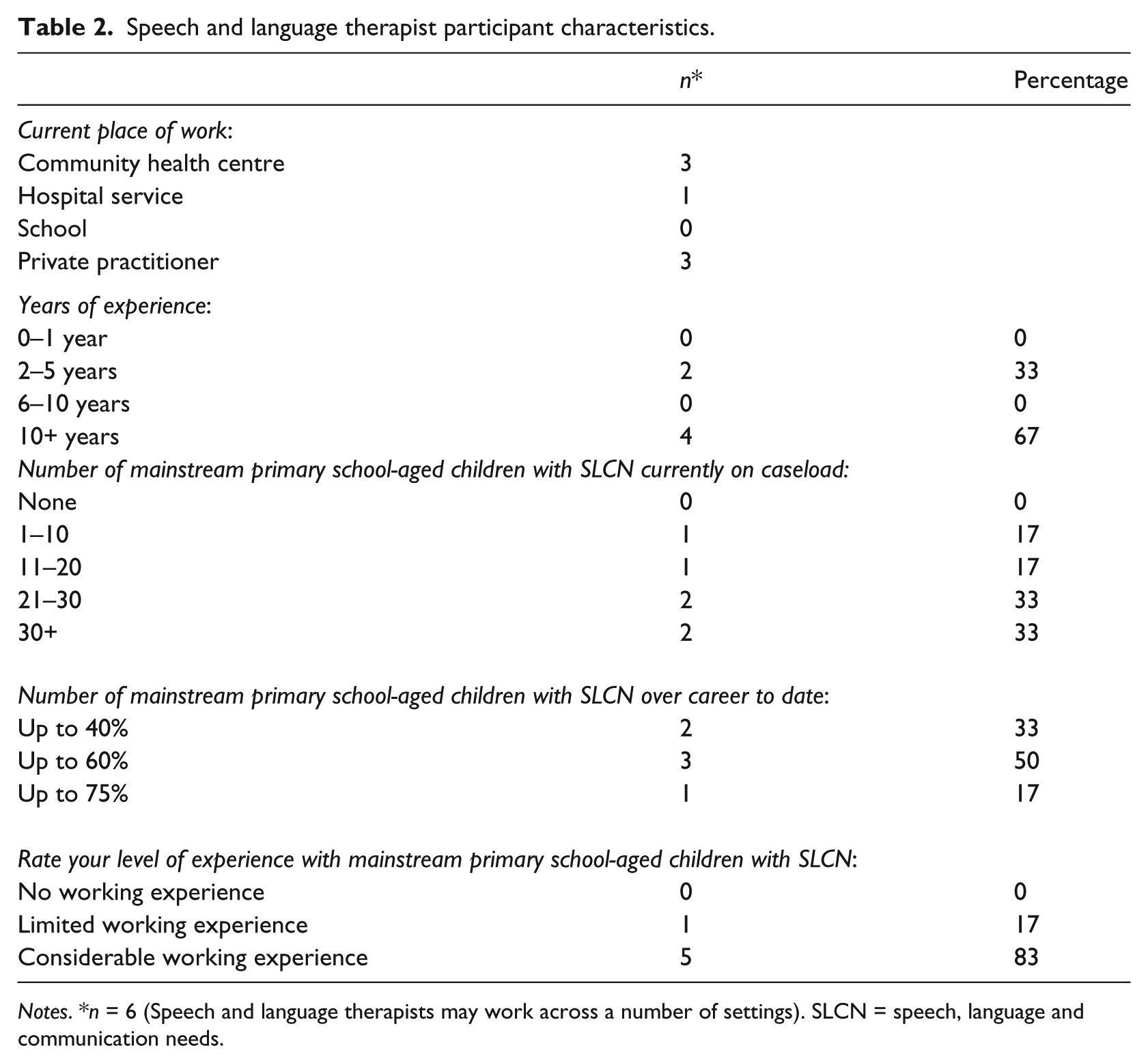
Notes. *n = 6 (Speech and language therapists may work across a number of settings). SLCN = speech, language and communication needs.
The subsequent focus group in Phase 2 included four participants: one teacher, one learning support officer and two practicing SLTs. The teacher had 30 years’ experience, one SLT had nine years’ experience, and the other had 30. The learning support officer (trained as both a teacher and an SLT) had three years’ experience as an SLT and 18 years’ experience as a teacher.
c Data collection tools
Two online questionnaires, one for teachers and one for SLTs, were developed specifically to gather information relating to the research questions. The questionnaires utilized both closed and open-ended questions. The questions were derived from themes that arose in the initial exploratory phase and from reviews of existing instruments from previous studies in collaborative practice (Baxter et al., 2009; Hartas, 2004; Kersner and Wright, 1996; Wright and Graham, 1997; Wright and Kersner, 1999). The closed questions sought descriptive information relating to current practices (e.g. ‘For children currently receiving speech pathology services, when do children receive the service?’) and also sought to describe the characteristics of participants (e.g. ‘What grade do you currently teach or work with?’). Open-ended questions sought information relating to perceptions of need and preferences for service delivery (e.g. ‘In an ideal world, how do you envisage teachers and speech pathologists [speech and language therapists] working together?’).
In Phase 2, a focus group sought further information about the responses from the questionnaires. In order to focus the discussion and maximize use of participants’ time, themes and issues that emerged from the questionnaire were disseminated to participants one week prior to the focus group. Topics discussed within the focus group included issues relating to current practices: SLTs in schools; funding; relationships; and preferences for practice. The first author presented each theme within the focus group and then invited participants to comment.
d Data analysis
Thematic analysis was undertaken to allow recurrent themes and repeated patterns of meanings to emerge (Patton, 2002). Thematic analysis allowed for relationships between these meanings to be identified (Davidson and McAllister, 2002).
The questionnaire responses and focus group transcript were read through a number of times to become familiar with the overall meaning of what was being said (Creswell, 2003; Minichiello et al., 1999; Roberts and Priest, 2010). This was undertaken sequentially (i.e. the questionnaires were analysed prior to the focus group data). During this process, general thoughts or themes were noted. Following this initial familiarization, a process of coding was undertaken whereby the data was organized into ‘chunks’. The responses from each phase were segmented into categories or topics, and the categories were labelled using a term based in the actual language of the participants (Creswell, 2003). Following the focus group, data from both phases were combined. Further analysis was then undertaken to identify similar or overlapping categories which were then combined where possible (Roberts and Priest, 2010). The final step involved cross checking the data to ensure no new topics or categories were identified (Roberts and Priest, 2010). This process allowed the authors to examine the data in detail and, as a result, present a meaningful summary and interpretation of the data to others (Minichiello et al., 1999).
e Validity and reliability of research findings
In order to ensure rigour of findings reported in this research, a number of measures were undertaken. Within qualitative research, rigour is determined by trustworthiness of the data (Liamputtong, 2010). Trustworthiness was established by ensuring credibility, transferability, dependability and confirmability of the data (Lincoln and Guba, 1985) using several data triangulation techniques (Tashakkori and Teddlie, 1998).
Triangulation of methods was achieved through the use of a mixed-methods design which allowed a form of ‘comparative analysis’ (Patton, 2002: 558) where data from Phases 1 and 2 were cross-checked. Validity is established when findings obtained across methods correspond and result in similar conclusions (Silverman, 2011). Triangulation of data sources was achieved through the participation of teachers and SLTs across the selected region: teachers from different schools, teaching a range of classes and having taught various numbers of children with SLCN; and the participation of SLTs who had varying levels of experience and worked across different settings. Additionally, triangulation of investigators was achieved through the researchers independently analysing the qualitative data and then comparing and discussing themes until agreement was reached. Transferability of the interpretations was ensured through the use of ‘thick description’ (Tashakkori and Teddlie, 1998), which takes the reader into the setting described (Creswell, 2003) through the use of verbatim participant quotes to illustrate issues and themes (Minichiello et al., 1999). Finally, dependability was ensured through detailed description of the research strategy and data analysis methods (Silverman, 2011).
III Results and discussion
The aims of this study were to explore current practices and to investigate perceptions of need and preferences for delivery of services to mainstream primary school children with SLCN. The small number of participants in this study present a snapshot of service delivery difficulties within a specific location and at a single point in time. Thus, the findings are exploratory in nature, but could serve as a foundation for future studies of service delivery within Australia and beyond. The results will be presented here with the discussion, to build on the current literature base and to aid in contextualizing the findings.
1 Current service context
The NSW Department of Education and Communities (DEC) and Speech Pathology Australia (SPA) acknowledge that teachers and SLTs are faced with increasing numbers of students at school with additional learning requirements, including communication needs. They anticipate the demand for school SLT services to grow in line with international trends (Speech Pathology Australia, 2011). Increasing demand may be a result of more inclusive policies within mainstream schools (United Nations Educational Scientific and Cultural Organization, 1994) and a growing awareness of both the impact SLCN has on academic achievement and social skills, and the role of SLTs in the management of SLCN.
In the current study, teachers reported a greater number of children in classrooms needing services than were currently receiving them. These figures are supported by the responses to open-ended questions from the questionnaires and the focus group where teachers and SLTs reported increasing numbers of children needing services and demonstrating language abilities poorer than expected.
The instance of students with language difficulties appears to be increasing in classrooms. [Q T9]
1
I would say that in one particular school … that 80% of the children have a moderate to severe language delay. [FG SLT3]
In Australia, SLTs provide services to children at school during school hours, at clinic during school hours and in clinic outside of school hours. Varied methods of service delivery are utilized, consultation and individual therapy being the most common service delivery methods. Both teachers and SLTs indicated that children were not being seen frequently enough; time constraints and caseload size are frequently cited as reasons for being unable to see children more frequently.
Ruggero et al. (2012) surveyed Australian parents regarding service delivery and reported the most common session frequency was once or twice per month, which is less frequent than recommended in the literature, namely, two to three sessions per week for speech sound disorders (Baker and McLeod, 2011) or daily sessions for children with Childhood Apraxia of Speech (Ballard, Robin, McCabe, and McDonald, 2010).
SLTs reported that, if possible, they worked directly with the parents. However, both SLTs and teachers commented that this was not always possible. Participants perceived that for some parents, for a variety of reasons, their child’s communication difficulties were not a priority. Additionally, SLTs reported that parents may lack the ‘capacity’ to undertake therapy at home or ‘are not able to commit’: … they’re more focused on putting food on the table than doing the speech practice. [FG SLT1]
Both SLTs and teachers agreed that in such cases, the responsibility for services returned to the school and the teacher. In such instances, teachers and SLTs rely on the use of teachers’ aides to provide extra support in the classroom or for children individually.
teachers aids [sic] implement programs in school when parents/carers unable. [Q T7]
Once teachers identified that a child required extra support, some teachers reported providing additional support through the use of available resources or by attempting to spend individual time with the child. Further research is required into the use of teacher’s aides in this context.
2 Perceptions of need and preferences for service delivery
Analysis of the questionnaires and focus group transcripts resulted in the emergence of four themes relating to current practices, perceptions of need and preferences for service delivery: (1) knowledge and training, (2) collaboration, (3) support, and (4) the system. These themes could be grouped to demonstrate the levels at which change may need to be considered in order for ideal practice to be enacted: (1) individual (knowledge, skills and training), (2) interprofessional (collaboration and support) and (3) organisational (systems) (Figure 2).
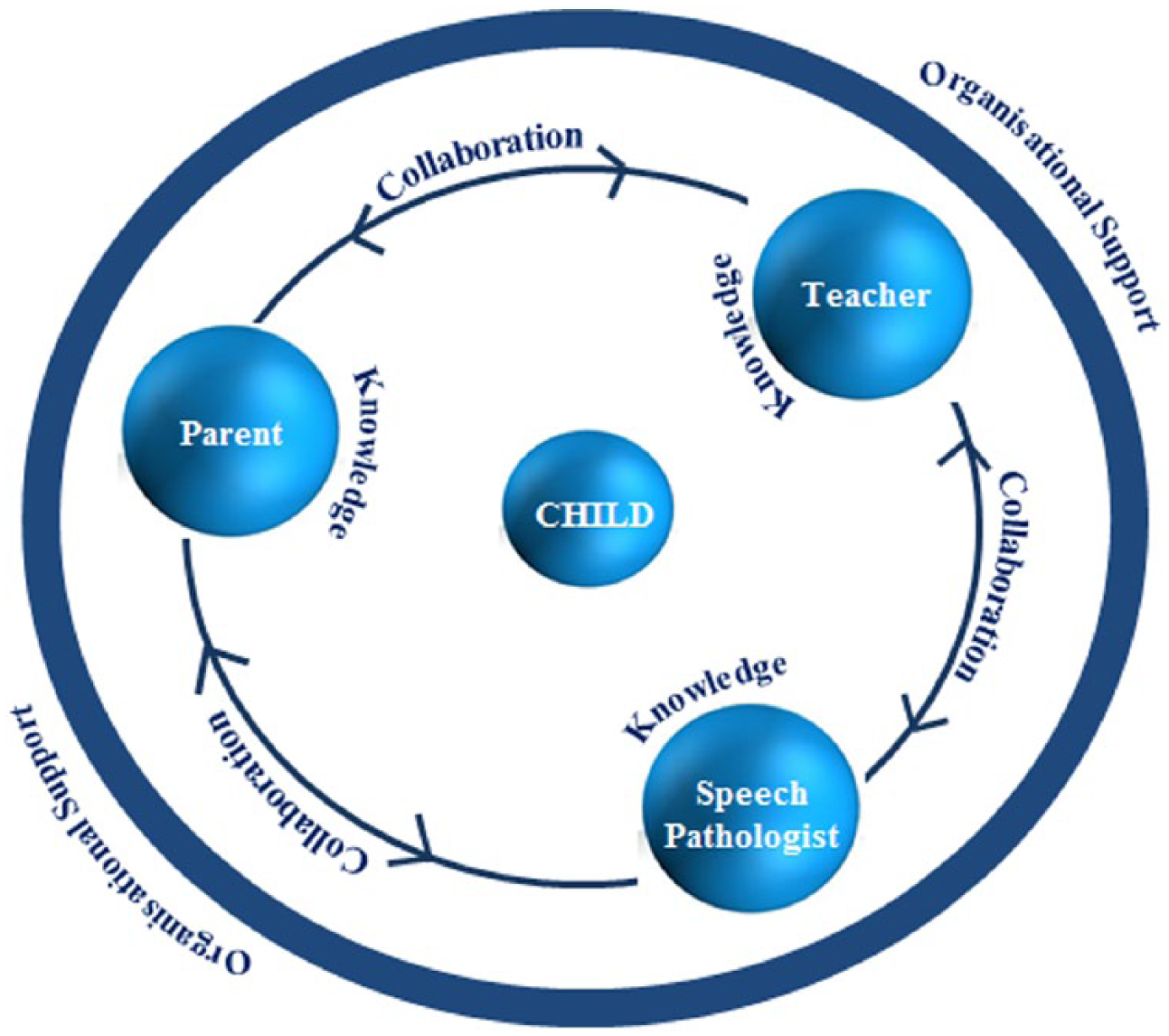
Suggested representation for change at an individual, interprofessional and organizational level.
At an individual level, participants expressed a need for increased knowledge for teachers, SLTs and parents. At an interprofessional level, participants expressed desire for increased collaboration between all parties. At an organisational level, participants expressed a need and a desire for increased support that would help strengthen and support what is required at an individual and interprofessional level. Each of these will now be discussed in detail.
a Knowledge/training: ‘Shared knowledge is powerful’
Teachers and SLTs described a need and preference for increased knowledge. Additionally, increased opportunities for training were seen as important across both professional groups; however, perceptions about the focus of the training needs differed between teachers and SLTs. Teachers reported wanting increased knowledge in how to help children in the classroom: More teacher training so they’re [children] receiving support all day everyday from someone who has the skills and knowledge to support them. [Q T3]
Twelve teachers who responded to the questionnaire indicated that they would like training from SLTs in how to support a child with SLCN. Only four teachers reported any formal professional development, while six teachers indicated they had received informal training from local SLTs. Four of the 14 had not received any training.
These results are reflected in teachers’ reported levels of knowledge regarding SLCN, with eight out of 14 teachers rating themselves as having limited knowledge and six indicating that they have a reasonable level of knowledge. No relationship was found between level of knowledge of SLCN and number of children taught with SLCN. However, participant numbers were small. Teachers in the questionnaire and focus group reported wanting practical ideas and strategies to use in the classroom.
… I like the real – the practical things. These are the sorts of things you can do in your classroom for this child … [FG T1]
Consistent with previous research, results from this study suggest that teachers do not feel they have the necessary skills or knowledge to support children with SLCN (Antoniazzi et al, 2010; Dockrell and Lindsay, 2001; Hall, 2005; Marshall et al., 2002a; McAllister et al., 2011; Mroz, 2006; Sadler, 2005). A desire for practical advice and strategies that teachers could use in the classroom has also been found with early years’ teachers (Hall, 2005). Teacher training has been found to result in a better understanding of typical speech and language development and a better ability to implement strategies and goals for children with SLCN (O’Toole and Kirkpatrick, 2007).
SLTs also perceived that teachers and teachers’ aides would benefit from further training, to enhance their understanding of SLCN and how to help children with SLCN. Training was also seen as necessary to help teachers better understand an SLT’s role: Teachers may perceive speech and language disorders different from speech pathologists. [Q SLT4]
This view was supported by the teacher who participated in the focus group: I would like understanding each other’s roles, particularly teachers understanding speech pathologist roles more … [FG T1]
SLTs within the focus group found education of teaching staff in the past was well received: I did some education at the start of this year … and the feedback that we got from that has been great. [FG SLT2]
SLTs’ perception that teachers may not fully understand their role was also a finding in previous studies (Hartas, 2004; Law et al., 2000b), while SLTs perceived that such knowledge would lead to more successful collaborative relationships (Law et al., 2000b). Similarly, Kersner (1996) found that teachers and SLTs work best together when they have an understanding of each other’s work.
Whilst teachers indicated a need for further training in SLCN, four of the six SLTs indicated having only a limited knowledge of the NSW curriculum while two SLTs reported a reasonable knowledge. This knowledge was gained through observation, personal experience or self-initiated research rather than any formal training. SLTs indicated they would welcome training in the NSW curriculum and would find this beneficial in tailoring interventions for children.
… that speech pathologist would start to learn the curriculum better and so would be able to tailor their intervention better to the children, as well. [FG SLT1]
Additional to training in the curriculum, half of the SLTs reported a desire for additional knowledge and information from teachers about the ‘classroom functioning’ of children in their class with SLCN. Training in the curriculum for SLTs was also found to be warranted for increased communication and collaboration (Kersner, 1996; Law et al., 2000b) while teachers found that SLTs lack of knowledge regarding classrooms and the curriculum resulted in difficulties working together (Law et al., 2000b).
Recognition of the unique knowledge and contribution that each group makes to service delivery was identified: Shared knowledge is powerful – we might have a knowledge [sic] about the students background and the speechies [SLTs] might have simple tricks to move these kids forward. [Q T12]
The perception that teachers and SLTs have knowledge to be shared was also a finding by Hartas (2004). SLTs and teachers with a shared understanding and knowledge were found to benefit from each other’s work and result in better collaborative practices (Hall, 2005; Tollerfield, 2003). Teachers and SLTs who work collaboratively were, similarly, found to share knowledge (Kersner and Wright, 1996; Law et al., 2000b; Wright and Kersner, 2004).
Education for parents was also strongly perceived as necessary by both teachers and SLTs. This topic was discussed in depth in the focus group and it was perceived that many parents may not understand that their child has a SLCN. Additionally, parents may believe that once the child starts school the teacher will ‘fix the problem’.
Most parents I have been involved with believe their child will grow out of having a speech problem … [Q T8]
The suggestion that parents may need education regarding their children’s SLCN has previously been identified (McAllister et al., 2011; Skeat et al., 2010). Consumers of SLT services also believed education for the general public regarding the role of SLTs in the remediation of SLCN to be necessary (O’Callaghan et al., 2005) to ensure early identification and management of children with SLCN.
b Collaboration: ‘It’s all about communication really’
Both SLTs and teachers expressed a desire for increased collaboration. When asked what they perceived would enable effective working between teachers and SLTs, both groups reported increased opportunity to collaborate, and regular contact and communication.
I think the more you’re present in a school the better relationship you can have … it’s all about communication really. [FG SLT2] Having regular meetings to discuss the child’s needs, progress. [Q T1]
A call for increased collaboration between the two professional groups has been reported previously both from overseas (Dockrell and Lindsay, 2001; Mroz, 2006) and within Australia (Antoniazzi et al., 2010; McAllister et al., 2011; McLeod and McKinnon, 2010; O’Callaghan et al., 2005). SLTs and teachers believed that if SLTs were working within the school system, better relationships, through increased contact and collaboration, could be forged. It was also perceived that improved working relationships would result in a team approach.
More therapists employed in the schools and part of the education team as opposed to therapists coming in and being seen as the treating team. [Q SLT3]
The preference for SLTs to be more present in schools was also a finding by Wright and Kersner (1999). Additionally, where SLTs spent more time at school, greater opportunities for engagement in incidental liaison was reported and resulted in improved relationships (Law et al., 2000b).
Both teachers and SLTs reported that SLTs not being based in schools was a major barrier to effective teamwork and collaboration.
The inability of therapists to work out of schools. This is where students are and they need to be in schools, delivering their services and assisting teachers to understand and to meet the needs of the students. [Q T7]
Time and a lack of SLTs were also raised frequently as barriers to effective working practice. Teachers and SLTs reported a lack of time to communicate, to undertake therapy or provide extra assistance in the classroom and to build relationships with each other: Too many patients and not enough time to communicate properly. [Q T11] … difficulty for teachers to access release time for meetings. [Q SLT1]
Time constraints, as a barrier to collaborative working, is reflective of findings from previous studies (Hall, 2005; Hartas, 2004; Kersner and Wright, 1996; Marshall et al., 2002a; Wright and Kersner, 1999, 2004). Teachers and SLTs both agreed that there was limited time to meet, plan, discuss or collaborate which affected their relationship and in turn, their ability to collaborate. In contrast, having time to liaise was seen to promote good collaborative practice (Law et al., 2000b). This view is supported by teachers and SLTs in other research studies who reported having time to collaborate, engaging in team work, and good communication facilitated collaboration and allowed for joint planning and engagement (Hartas, 2004; Law et al., 2000b).
Participants identified that lack of parental involvement made it even more important for teachers and SLTs to develop good working relationships. Both teachers and SLTs reported that involving parents in a three way collaborative approach would be ideal: home-school-speech contact. Interactions between all parties. [Q T3] If we have parents that are connected and engaged then it’s easy and it works really well and if that happened we wouldn’t need all these resources. [FG SLT3]
c Support: ‘Not enough resources …’
A theme that emerged from the combined data was teachers’ and SLTs’ need, and preference for, increased support in order to manage children with SLCN. Teachers reported not having enough time to provide the extra support needed to follow through on programs within regular class time.
I am a teacher … I haven’t time within the context of a K-6 class to add speech therapy to my load. [Q T12]
Teachers also reported needing extra support in the form of resources. At times, the term ‘resources’ referred to games/activities that could be used in the classroom, whilst in other instances it referred to support in terms of extra personnel.
the schools need to be given resources to support these programs if speech therapists are not available. [Q T7]
From the SLTs’ viewpoint, support requirements were found to mean increased therapy aide time. SLTs reported not having enough time to see all the children requiring services and not having sufficient time to spend with the children needing services. It was felt that more resources were needed to work with the children on a daily basis.
Time and not enough resources to have therapy aides that could continue the work when I am not at the school. [Q SLT3]
The use of therapy aides was further discussed within the focus group with an agreement that the outcomes achieved were dependent on the calibre of the teacher’s aide.
I think it’s entirely dependent on the quality of the teachers aide … and how she’s able to use the information you provide her and run with it. [FG SLT3]
Similar to findings in this study, teachers were found to lack the necessary support to manage children with SLCN in mainstream classrooms in the UK (Dockrell and Lindsay, 2001). As with this study, this lack of support was found to relate to a lack of time, expert knowledge and skills, people available to work with and spend time with the child and practical resources and activities which could be used (Dockrell and Lindsay, 2001). Greater levels of collaboration and support were reported in special schools (Kersner and Wright, 1996; Tollerfield, 2003; Wright and Graham, 1997). Such findings may be the result of well-developed collaborative practices over time, which allowed for joint planning and discussion, but also a higher ratio of staff to children in such organizations.
A lack of resources, in the form of materials and personnel, was listed as one of the three main barriers to inclusive education by trainee teachers in the UK (Marshall et al., 2002a), while a lack of resources in the form of classroom assistance was found to be concerning for trainee teachers in the UK (Marshall et al., 2002b).
d The system: ‘It’s just not happening’
Analysis of the data from both the questionnaire and the focus group resulted in a theme relating to how teachers and SLTs perceive there to be a general failing within ‘the system’, resulting in children not receiving adequate or effective services. Discussion touched on the increasing numbers of children requiring services and lack of support services available to meet the demand.
one child in my room has been waiting 8 months. [Q T10] One of the schools that I go to one day a week, I have 40 kids there on the caseload. [FG SLT2]
In rural areas, this lack of service availability was more keenly felt. As a result of increasing numbers and reduced service availability, SLTs found it was necessary to prioritize children to whom they could provide services.
… rather than trying to see 10 kids and do an okay job, if I see five of them and do a really good job … [FG SLT2]
SLTs and teachers expressed their frustration with the funding process which provided extra support for some children while others missed out.
The counsellor will sometimes come and say they’re one point away from funding. In an ideal world it would be just these kids need help, let’s get them some. [FG T1]
Comments were made regarding the impact of funding and how funding needed to be manipulated in order to provide services for those children in need.
I do pick up children that haven’t been funded. I work with them with the funded children but it’s not even scratching the bottom of the barrel … [FG SLT3] The children are lucky as there is a teachers aid [sic] employed for other children … and we can take advantage of that. [Q T13]
Both teachers and SLTs reported increasing frustration with the system which, they feel, makes it difficult to deliver adequate and effective services to children with SLCN.
the New South Wales DEC says on their website … all students will get the teaching and support they need to learn, achieve and progress. It’s just not happening. Special needs funding is being cut all the time. [FG T1]
Some participants felt that funding could be redirected to early intervention. The benefits of early intervention were seen as twofold in that children would have programs in place prior to starting school, but also that parents would be made aware of their child’s difficulties earlier and engage more with therapy at an earlier stage.
Would like to see greater access by pre-schools (i.e. early intervention) so that program are [sic] in place before students begin school. [Q T4]
This view was in contrast with other participants’ viewpoints that many children, especially from lower socio-economic families, bypass early intervention services. As a result, some children start school having had no intervention previously. It was argued, therefore, that funding should be used to employ SLTs in schools to work with children so that teachers have the support needed.
… whilst that money in early intervention would be great, it would be great for a group of people who are happy to look for those services and the ones that I’m working with aren’t … so then it becomes the teacher’s problem when they’re at school. [FG SLT3] For those who slip through the early intervention schemes, placement of therapists IN SCHOOLS, so that treatment is consistent and ongoing and non reliant on parents! [Q T4]
One participant believed that if funding was provided early in a child’s life, either through early intervention or in the early school years, less funding would be needed for mental health, behavioural, or social programs later on.
I also think the more money is spent now the more problems you avoid later on behaviour problems, social problems … mental health problems … and drug abuse … [FG SLT1]
Higher levels of funding to support children with SLCN in mainstream classrooms and employment of SLTs in schools have also been called for in previous research (McLeod and McKinnon, 2010). When asked how service delivery to children with SLCN could be improved, both groups, again, stated a preference for having SLTs work within the school system.
have it at school … actually having a speech pathologist in schools. [Q T9] employ speech pathologists within the education system in NSW, like in most other states. [Q SLT4]
Parents also perceived that SLT services in schools could be a solution to service delivery barriers in Australia (Ruggero et al., 2012). The Australian Senate Inquiry’s final report includes 10 recommendations including an immediate audit of the current speech pathology services within Australia and an investigation of the most effective models of speech pathology [speech and language therapy] services for various systems, including the education system (Senate Community Affairs References Committee, 2014). Furthermore, this Senate Inquiry requests that the Government prepare a position paper on the most appropriate model of service provision for SLTs working in the education system among other areas and also states a need for a collaborative approach among key stakeholders, including the Education Department to ensure adequacy of services for children with SCLN (Senate Committee Affairs References Committee, 2014). Findings from future research undertaken as a result of these recommendations may provide resolution to the identified needs and desires of participants in this study.
IV Limitations
The small response rate to the questionnaire and focus group limit the extent to which the findings within this study may be applicable to other contexts. Furthermore, this study did not seek parental input to ascertain their views on current practices or need for services. Additionally, as participants self-selected to be involved in the research, it could be surmised that results are biased towards those who had a particular interest in the topic. It is interesting to consider whether years of experience also influenced participation in the research. Most respondents identified that they were experienced in their profession (not recent graduates). Their decision to participate may have reflected their experience of service delivery issues and willingness to draw on these to discuss the difficulties of servicing this population.
The majority of participants (both SLTs and teachers) had years of experience. A process of member checking was not undertaken following conclusion of the research analysis. Such a process would have added further credibility to the results by ensuring that interpretations of the data were true to the participants’ experiences and, as a result, increase the trustworthiness of the data (Creswell and Plano-Clark, 2007; Silverman, 2011). However, this study was intended to be exploratory, and its findings can be viewed as a stimulus for further research in this area.
V Conclusions and future directions: ‘These kids need help; let’s get them some.’
The teachers and SLTs in this study raised some interesting issues and provided valuable insights into current and preferred practices. Further investigation of these issues and practices in a larger scale study would provide increased validity of results. However, the findings from the current study can still provide some useful guidance for improving practice. The themes that emerged from this study suggest that current practices could be improved at three levels in order to ensure children with SLCN receive the help they need: (1) individual (knowledge and skills), (2) interprofessional (collaboration and support), and (3) organizational (systems and resources).
Teachers in the current study desired more knowledge of typical speech and language development and skills to assist children with SLCN in the classroom, while SLTs desired increased knowledge regarding the curriculum. At a pre-service level, improvements to individuals’ knowledge and skills could occur through the provision of joint learning and teaching experiences for students studying to become SLTs and teachers in order that they develop a common language, and a shared understanding of communication development and ways to integrate activities to support children’s speech and language skills within the school curriculum. This could in turn improve collaboration through ensuring that the roles of each professional and their contributions were recognized and respected in future practice. At a service level or in the absence of such pre-service experiences, opportunities for joint professional development could still be offered. For instance, SLTs and teachers could take alternate turns at hosting or coordinating inter professional events or could establish interprofessional groups to share information, research and resources, and to discuss/resolve current service needs.
Teachers and SLTs in the current study recognized the need for additional resources and support, but discussed the impact of time and caseload demands in preventing this being provided. Interprofessional groups, particularly if established online, could enable SLTs and teachers to develop and share resources for use with children with SLCN in the classroom. Such resources might focus on strategies for supporting children with SLCN to undertake particular activities, or provide ideas and suggestions for modifying the classroom environment to maximize the likelihood of communication success (including physical layout, auditory input, multi-modal language, and teacher/peer communication styles).
Joint training opportunities and shared resources are two options for improving support for children with SLCN. However, a third option is the implementation of joint-teaching. This service delivery method involves SLTs being present in the classroom and working with teachers to support the communication skills of all children. It enables SLTs to model strategies for eliciting, scaffolding, and extending communication attempts in a functional way, while providing them with a greater awareness and appreciation of other classroom demands faced by teachers. Such an approach to service delivery might still need to be combined with a traditional individual approach for some children with specific SLCN.
Further research is required to explore the benefits of these suggested changes to practice, including the impact of interprofessional training on teacher and SLT knowledge and confidence when working with children with SLCN, and the benefits of classroom-based compared to clinic-based service delivery in improving child outcomes. When changes to practice are found to be effective, such changes need to be recognized at a policy level, and supported by appropriate policy direction. This will then provide a fertile environment for future collaboration to take place.
This research has shown that teachers and SLTs are faced with high numbers of children requiring communication support in mainstream classrooms and would like to support these children more effectively. The impact of SLCN on children’s lives is long lasting, and may have consequences for employment and life participation resulting in a cost to society and the nation as a whole (Ruben, 2000). In order to break this cycle, individual, interpersonal and organizational change needs to occur to provide greater support and assistance to children with SLCN at school.
Footnotes
Acknowledgements
The authors also wish to thank the teachers and speech and language therapists who agreed to participate in this study. Without their input, this research would not have been possible.
Declaration of conflicting interests
The author(s) declared no potential conflicts of interest with respect to the research, authorship, and/or publication of this article.
Funding
The author(s) disclosed receipt of the following financial support for the research, authorship, and/or publication of this article: The first author would like to acknowledge the assistance provided by Speech Pathology Australia and Charles Sturt University in the form of research grants, which enabled this research project to be undertaken.