




Abstract
Deficits in working memory (WM) have been reported repeatedly in children with primary language impairment (PLI) and may significantly contribute to the language difficulties that are experienced by these children. However, interventional studies within the field regarding the cross-domain effects between working memory and language are limited, and their results are contradictory. Therefore, the first aim of this study was to explore whether WM training can improve the WM skills of these children and whether the effects of training could be transferred to language, specifically to grammatical skills. The second aim of this study was to investigate the near and far transfer effects of direct language intervention on grammar and WM, respectively, as this is the most (and sometimes the only) considered treatment programme for children with PLI. Using a single-subject experimental design, ten 6–8-year-old children with PLI received WM training and language intervention, respectively, in two consecutive phases of study. The treatment gains on targeted areas and generalization to the other domain were tracked by repeated measurements of some WM and language tasks and were completed by a set of pre- and post-intervention measures. Regarding the results, it appears that if sufficient time is spent on WM training, WM-related skills improve and the effects also transferred to morpho-syntactic language skills. However, a cross-domain effect in the reverse direction is questionable. Though the language intervention programme resulted in good gains in grammatical skills, it did not improve participant performance in WM tasks, with the exception of non-word repetition (NWR). The observed participant gains in non-word repetition were likely due to the improvement in higher-level linguistic processing, rather than the actual enhancement of WM skills.
Keywords
I Introduction
Primary language impairment (PLI) is a developmental language disorder that occurs in the absence of obvious causal factors. Children with PLI experience significant impairments in different aspects of language development, particularly in morpho-syntactic comprehension and production (Leonard, 2000; Maleki Shahmahmood et al., 2011; Rice, 2003), and their evident language defects cannot be attributed to biomedical conditions such as hearing loss, mental retardation, frank neurological impairments or socio-emotional disorders (Leonard, 2000). However, the cumulative evidence obtained from more than two decades of study indicates that though language is the most obviously impacted feature, it is not the only deficit in this disorder (Kohnert and Ebert, 2010; Maleki Shahmahmood et al., 2016). Despite having normal nonverbal intelligence, the affected children might experience additional disturbances in some nonlinguistic cognitive processes, especially in sub-components of working memory such as central execution and both verbal and visuo-spatial short-term memory (Archibald and Gathercole, 2006; Haresabadi and Shirazi, 2015; Vugs et al., 2014).
The concept of working memory refers to a set of cognitive processes that temporarily stores programs or data currently in use and manipulates them simultaneously (Baddeley, 2003), and it is important for many everyday functions, such as reading comprehension (Cain et al., 2004), following instructions (Gathercole et al., 2008), and reasoning (Oberauer et al., 2008). From a domain-general perspective, deficits in working memory (WM) capacity, especially reduced verbal working memory (vWM), can result in widespread negative effects on language learning and functioning, including recognition and production of words, grammatical forms and syntactic structures (Andrade and Baddeley, 2011; Gathercole and Baddeley, 1990; Marini et al., 2014; Montgomery et al., 2010).
In the area of the most obvious deficiencies in PLI, grammatical problems, pro domain-specificity researchers believe that the main causes for these imperfections may be the lack of grammatical rules (e.g. tense-marking) or specific grammatical classes (e.g. verb, subject or object) or syntactic structures (e.g. the S+V+O in the English language) (Montgomery et al., 2010). They also claim that the weaknesses in cognitive processing skills in PLI simply tend to co-occur with language problems (Archibald, 2016). However, it is obvious that children learn linguistic structures in a holistic manner in the first steps of language learning, and only later they discover the grammatical rules, classes, and structures from input. WM, and especially phonological short-term memory (pSTM), may act as an intermediary mechanism in this analytical process (Montgomery et al., 2010). The results of Adam and Gathercole (1995) support this claim. Their results show that pSTM could serve as a good predictor for the quality and quantity of spontaneous speech produced by three-year-old children. In other words, children with a longer pSTM span produce longer sentences that contain more complex syntactic structures and wider vocabulary diversity. Furthermore, the results of Blake et al. (1994) show that the pSTM span could predict mean length of utterances (MLU) in pre-schooler children better than could mental or chronological age.
From a more domain-general perspective, the notable deficits of children with PLI in morpho-syntactic learning and processing might be related to the lower WM capacity. Production of newly learned grammatical morphemes needs to access the newly learned inflection and join it to the stem of the verb, while simultaneously formulating and producing the rest of the sentence in a timely fashion. Carrying out these processes exceeds the overall processing capacity of children with PLI, therefore errors in morphological production occur (Montgomery et al., 2010). Andrade and Baddeley (2011) also proposed that WM plays an important role in grammar learning via the effect on vocabulary learning that is related to pSTM.
Although the importance of WM, and especially pSTM, is greater for language production than for the reception of language (Nation, 2001), many children with PLI are at risk for constructing incomplete/inaccurate representations of the speaker’s input due to poor processing capacities (Montgomery et al., 2010). The difficulty that PLI children have in sentence comprehension, especially for complex sentences, might be secondary to WM limitations, because the information-processing demands that are inherent in complex sentence comprehension exceeds their WM capacity (Montgomery, 2000). A direct correlation has been shown between the poor performance of PLI children on standardized language tests and low WM capacities (Leonard et al., 2007).
Regarding the findings related to the deficits of children with PLI in both information processing and short-term phonological storage, it is proposed that the working memory deficits might be the key for lasting and specific limitations in language learning of children with PLI (Gathercole and Baddeley, 1990) or at least, WM deficits place children at risk for language difficulties (Archibald, 2016). However, the casual association between WM and language limitations in PLI has not yet been well tested, and the claim is mainly based upon the results derived from correlational studies that have examined the link between language skills and WM capacities. The best study paradigms for detecting the interconnections among apparently different skills are interventional studies. Our understanding of the association between WM and language would benefit greatly from interventional studies designed to consider effects across domains (i.e. cognition to language, or vice versa). Cross-domain interactions between nonlinguistic cognitive performances (e.g. vWM) and language due to training would be in line with the theoretical claims of a direct relationship between language and cognition (Ebert et al., 2014) and could also offer a window into the processes and mechanisms that underlie normal language acquisition.
1 Cognitive and language gains due to WM training in the literature
There is a precedent for studies that have investigated the effects of working memory training on WM skills and other non-trained cognitive domains (e.g. Hammill and Larsen, 1978, Gillam et al., 2008; Ebert and Kohnert, 2009; Ebert et al., 2014; Holmes et al., 2015). Some studies have suggested that WM can be trained, and the effects of training can be transferred to other non-trained cognitive domains (e.g. Zhao et al., 2011; Klingberg, 2010; Archibald, 2016) and additionally, that WM training must be used as a remediating intervention for individuals with low WM capacity (see Klingberg, 2010), although there is some debate on the generalization of the training gains. The results from some studies on WM training have proposed that WM could not be trained (e.g. Just and Carpenter, 1992) or that transferring the effects of training to non-trained tasks of other cognitive domains is not possible (Melby-Lervåg and Hulme, 2013; Redick et al., 2013; Shipstead et al., 2012).
Ebert and Kohnert (2009) have directly considered the question of whether attempting to improve WM in children with PLI can lead to improvements in language or not. In their study, two school-aged girls with severe PLI received brief, intensive treatments for auditory working memory and processing speed for visual information. Despite the participants’ notable gains in language skills, especially in expressive language, supporting the cross-domain interaction between language and cognition, there was little support for changes in auditory WM skill. Therefore, consistent with the static view of WM (Miller, 1956; just and carpenter, 1995), they concluded that the WM capacity is invariant, and the observed changes in the linguistic performance of subjects may be due to improvements in processing speed or attention (Ebert and Kohnert, 2009). These researchers have continued to study the transfer of cognitive training effects to language in subsequent studies, but the training of WM has not been the aim of their later studies (see Ebert et al., 2012; Ebert et al., 2014). However, due to the small number of studies and contradictory results, further studies on the efficacy of WM training for improving WM capacity and language skills are essential.
2 Can working memory skills be trained through language therapy?
The possibility of cross-domain effects in the opposite direction (i.e. language to cognition) has also been investigated in some studies (e.g. Gillam et al. 2008; Stevens et al., 2008; Ebert, 2014; Ebert et al., 2014). In accordance with Gillam’s claim (2008) about the improvement of underlying attention skills via language therapy, Stevens and colleagues (2008) studied the event-related potentials of children with PLI and obtained some direct evidence for changes in attention skills by using computerized language therapy. Ebert and colleagues (2014) conducted a clinical trial treatment study on school-age Spanish–English bilingual children with PLI. Participants of this study were divided into four groups, and each group received one of the nonlinguistic cognitive processing treatments: English, bilingual (Spanish–English), or deferred. Their study directly addressed the transfer of treatment effects from language to cognitive skills, including WM. However, the results were inconsistent. The comparison between the pre- and post-treatment scores in every single treatment group indicated that the participants who received English-only language training made gains in English language skills and across all nonlinguistic cognitive processing skills, including WM, but participants of the bilingual group not only did not show improvement in the studied nonlinguistic skills but also their performances in one of these skills, processing speed, was weaker than before the treatment. Given these conflicting results and to further investigate individual patterns of change and detailed changes across time, Ebert (2014) studied the changes of some nonlinguistic cognitive processing skills (including WM, processing speed and attention) during language treatment in a single-subject study on three monolingual English-speaking 6- to 9-year-old children with PLI. Although her results showed that all three participants made substantial gains in language, the changes of nonlinguistic cognitive skills were variable across participants and tasks. Although the results of Ebert (2014) proposed the possibility of transitioning the effects of language intervention to memory, the intra- and inter-participant performance variability in this small-scale study and the inconsistency between the results of different studies, limits the ability to answer the question of whether language treatment for children with PLI can improve WM capacity. Further investigations in this area may help to clarify how the mechanisms by which language treatments for children with PLI are effective.
3 The current study: Aims and design
The questions of interest in the current study are 1) whether a brief, intensive training that is focused on improving language-related working memory components (i.e. pSTM and central executive) with 6–8-year-old monolingual Persian-speaking children with PLI can lead to improvements in the performance of verbal WM and grammatical language tasks (as the most prominent area of deficiency in children with PLI); and 2) whether language intervention can result in the improvement of language and WM skills in children with PLI. Given the dominance and severity of language deficits, children with PLI generally receive treatment for their language difficulties that is cantered on the direct instruction of language rules or structures, and treating the proven cognitive problems outside of the linguistic modality, such as WM deficits, is often ignored. However, some children with PLI, particularly children with receptive language problems, show resistance to language interventions (Bishop et al., 2006), and their responses to syntactic interventions are not stable and their gains are few (Ebbels, 2007). Disregarding the treatment of impaired fundamental cognitive skills, such as WM, may be the reason for this. Investigating the effectiveness of WM training, as the dominant nonlinguistic cognitive deficit in children with PLI (Leonard et al., 2007), is essential and has clear clinical implications for designing more effective methods of the assessment and treatment of PLI. This would reduce the negative effects of this disorder on the personal, family and social life of these children, such as literacy problems, lack of friendships and unemployment.
This study employed a single-subject experimental design (SSED). Although the small group of participants is a limitation, and the ability to generalize the results is lower than that in large-sample interventional designs such as clinical trials, the advantages of SSEDs, such as reflecting individual patterns of change across time and high internal validity have made them important tools in interventional studies for language disorders (Kazdin, 2010; Byiers et al., 2012). There is a particular value in finding out what happens to a few individual cases, especially in highly heterogeneous groups, such as the group of children with PLI.
II Method
1 Participants
Twelve 6–8-year-old monolingual Persian-speaking children who met the criteria for PLI were recruited from school special education services or government clinics that were affiliated with Mashhad University of Medical Sciences. Ten of the children completed the entire study protocol. The characteristics of these participants at the time of study enrolment are presented in Table 1. Based on the participants’ scores in the Persian version of the test of language development (TOLD-p: 3; Hassanzade and Minayi, 2010), nearly all of the participants were mixed receptive- expressive language impaired and the severity of linguistic deficit ranged from moderate to severe. All of the ten participants had histories of speech-language interventions, and the reports of their speech therapists showed that although language and communication skills were increased somewhat, none of the children made significant gains in other areas of language, especially grammar.
Participant characteristics at the time of study enrolment.
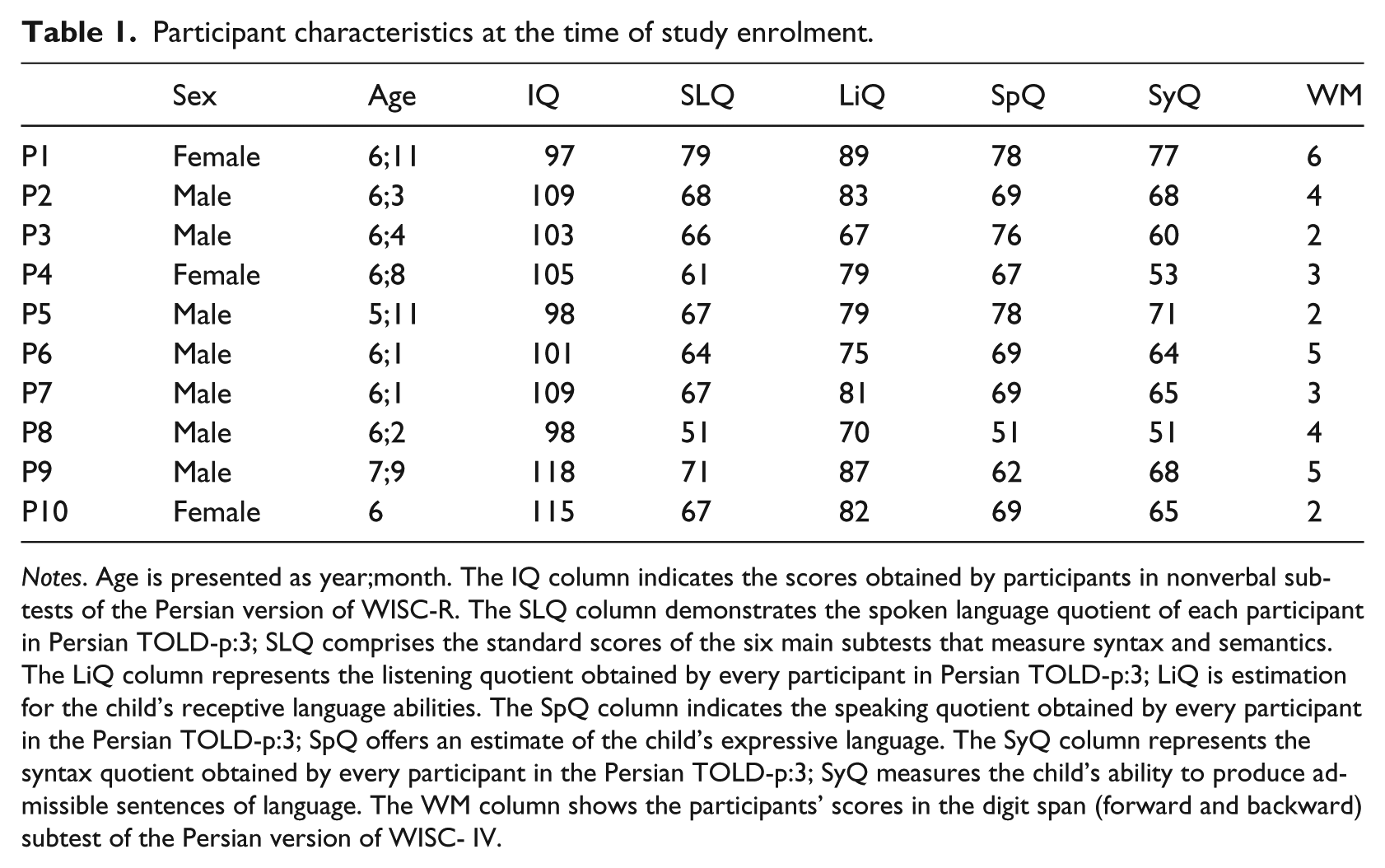
Notes. Age is presented as year;month. The IQ column indicates the scores obtained by participants in nonverbal subtests of the Persian version of WISC-R. The SLQ column demonstrates the spoken language quotient of each participant in Persian TOLD-p:3; SLQ comprises the standard scores of the six main subtests that measure syntax and semantics. The LiQ column represents the listening quotient obtained by every participant in Persian TOLD-p:3; LiQ is estimation for the child’s receptive language abilities. The SpQ column indicates the speaking quotient obtained by every participant in the Persian TOLD-p:3; SpQ offers an estimate of the child’s expressive language. The SyQ column represents the syntax quotient obtained by every participant in the Persian TOLD-p:3; SyQ measures the child’s ability to produce admissible sentences of language. The WM column shows the participants’ scores in the digit span (forward and backward) subtest of the Persian version of WISC- IV.
2 Design
All participants met the conventional criteria for PLI. According to the parent’s reports, there were no signs of known biomedical conditions that would cause language impairment, such as autism, ADHD, intellectual disability, sensory disorders, brain damage or seizures in the developmental and medical history of the children. Furthermore, all of the children passed a hearing screening at 20 dbHL at 500, 1,000, 2,000, and 4,000 Hz, and passed an articulator function assessment with no signs of dysarthria or oral apraxia. All participants obtained nonverbal IQ scores within the normal range in the Persian revised version of the Wechsler intelligence scale for children (WISC-R; Shahim, 2008), and they scored at least 1.5 standard deviations below the mean in TOLD-p:3. Finally, all participants demonstrated moderate to severe WM weakness based upon their scores in forward and backward digit span subtests in the Persian version of WISC-IV (Abedi et al., 2013). None of the participants had a medication regimen that included psychiatric drugs during the course of study. During the period of intervention, all children were enrolled in preschool or elementary school, but they did not receive any form of direct speech-language services outside of the experimental intervention. Parental consent was obtained for the participation of each child in the study.
Notably, while all the participants shared the diagnosis of PLI and met the same study criteria, the strength and weakness profiles and the severity of symptoms in both receptive and expressive modalities were quite variable among them (see Table 1). This heterogeneous mix of subjects was not only expected according to the literature (e.g. van Weerdenburg et al., 2006; Archibald, 2016), it was also desirable for the study design. If an intervention programme is effective in the same way on individual subjects with different profiles, then it is more likely that the intervention programme will be effective on differently affected people (Byiers et al., 2012).
We employed a phased single-subject design, in which every child received both WM training and language intervention in two consecutive phases with a break period between them.
a Assessment
Due to the study design, we applied two series of measures: repeated measures and pre- and post-test measures. The repeated measures were used to track the changes in WM and language skills during the baseline and the intervention periods. The performances of every participant in selected tasks were measured eight times overall, at one-week intervals (three times at baseline and five times in the intervention period) during each phase. Throughout the intervention period, assessments were carried out at the end of each week and after 3 sessions of intervention, at the end of the third session. In addition to the repeated measures, some WM and morpho-syntactic language measures were used before and after each treatment phase to provide supplementary data for interpreting changes in the repeated measure tasks.
For tracking the changes of WM and grammatical skills throughout the baseline and intervention periods, participants were asked to complete five different tasks repeatedly: two WM tasks, two linguistic tasks and one control task. The repeated measures for WM were a non-word repetition test for Persian children (Soleymani et al., 2014) and backward digit span (BDS) subtests of the Persian version of WISC-IV (Abedi et al., 2013). The Persian non-word repetition test (NWR) consists of two counterpart checklists, where every list contains 25 one- to four-syllable non-words. It is difficult to learn such low probability non-word stimuli, especially for children with PLI; however, to reduce the probability of learning the test’s stimuli at repeated performances, the same checklist was not used in two consecutive sessions of measurement.
To track changes in the morpho-syntactic skills of the participants across the baseline and intervention periods, a picture description task and a sentence completion task were employed.
Fifteen pictures of different scenes, where a few children are carrying out different actions (selected from Shafiei and Koshkhabari-khamene, 2011) were administered to elicit language samples. The audiotaped children’s descriptions of the pictures were transcribed directly into the computer (as we listened to the audiotapes) based upon the conventions of the systematic analysis of language transcripts (described in the SALT programme documents), and all transcriptions were checked again while listening to the tapes. Unintelligible or unanalysable utterances (such as utterances that were broken off) were excluded from the analysis. Then, the mean length of utterances in words (MLU-w) and the percent of grammatically well-formed utterances (GU%) were calculated as indexes of grammatical development. The MLU was calculated by dividing the total numbers of words by the total numbers of utterances of the language sample (Marini et al., 2014). The GU% was calculated by dividing the total number of well-formed grammatical utterances produced within the language sample by the total number of utterances, multiplied by 100 (Marini et al., 2014). An utterance was measured as grammatical if all the obligatory arguments of the verb had been correctly inserted and there were no omissions or substitutions of free or bound morphemes. The reliability of the transcriptions was checked by re-transcribing 20% of the files by a trained speech-language pathology student. The agreement between transcribers was 94% (SD = 2%).
The other task for the repeated measurement of morpho-syntax was the sentence completion task. Sentence completion tasks measure the child’s ability to process inflectional morphology to produce well-structured sentences (Marini et al., 2014). Each stimulus of this task was made of a pair of model and target sentences. The children were asked to listen to the first sentence (the model) and then complete the unfinished second sentence (the target) by assigning the correct morphemes to the verb. Each correct answer was assigned 1 point, with a maximum score of 20. Please see Appendix 1 for more information about the method of constructing the stimuli for this task and determining the validity.
As in the study of Ebert and Kohnert (2009), a control repeated task, keeping the balance on one leg for as long as possible, was included within the design to specify general patterns of performance on tasks repeated over time. Although children with PLI show weakness in gross motor movements (to some extent), there is no evidence for significant effects from language or cognitive treatments on these skills (Ebert, 2014). Therefore, unlike other repeated measures, it was expected that the performance variability on this measure would be minimal across time points, with a nearly stable performance throughout the baseline and treatment phases. The timespan of maintaining balance on each leg was timed using a stopwatch, and the overall score on the balance task was calculated by averaging the balance time on the left and right legs.
Immediately prior to the intervention phases, the children received a series of tests to establish primary language and WM scores. The participants were also re-evaluated by these tests after the treatment phases to verify the effects of the treatment programmes. The Persian syntax comprehension test (Mohamadi et al., 2015) and the photographic expressive Persian grammar test (Haresabadi et al., 2016) were used to evaluate the effects of both training programmes on the participant’s receptive and expressive morpho-syntactic skills. The Persian syntax comprehension test is a picture selection test that encompasses 96 items and four pictures (one target picture and three distractor pictures) for each item and assesses the comprehension of 4- to 6-year-old children on 24 important syntactic structures of the Persian language. The photographic expressive Persian grammar test is a fast and easy to administration test that comprises 40 image items and is designed to evaluate the production of important morph-syntactic structures of the Persian language in 4- to 6-year-old children. Although both tests have been designed, validated and normed for appraising the receptive/expressive morpho-syntactic skills of 4- to 6-year-old Persian-speaking children, these two tests assess the most basic and important Persian syntactic structures that are extremely difficult for children with PLI to learn, even in older age groups. Therefore, considering this issue and due to the absence of formal tests for assessing Persian morpho-syntactic skills, we applied these tests as available valid tasks to evaluate the changes of morpho-syntactic proficiencies of the participants as the result of the treatment programmes.
The evaluation of WM memory skills in the pre- and post-treatment periods was based on the word list recall and backward word span subtests of the unpublished Persian working memory battery for 5- to 15-year-olds (Delfani et al., in press). The word list recall task tests the pSTM span. Children listened to lists of familiar monosyllabic words that varied in length (from 2 to 8 words), and a maximum of four lists were presented at each length. They were then asked to recall the words from each list in the correct serial position with full accuracy. Phoneme substitution errors were accepted when the errors were part of the child’s habitual articulation pattern. If the child correctly recalled at least two lists at any given length, longer lists of the words were subsequently offered. The task score was the sum of correct recalled lists. The structure of the backward word span task for evaluating the verbal working memory span was identical to the word list recall task, except that the words of this task were two-syllable words, and the participants were asked to recall the list of words in the reverse sequence. For delivering these two tasks, as well as non-word repetition and backward digit span tasks, the test stimuli were recorded on CD. Moreover, though the scoring was done during the test administration, to ensure the accuracy of scoring the children’s responses were also digitally audio-recorded and later re-scored. Additionally, 20% of the children’s recorded data were re-scored by a trained speech-language pathology student who was blind to the treatment assignment. In the case of disagreement between scorers due to the low intelligibility of the recorded voice, the original scoring was retained. Inter-scorer reliabilities were above 85% in all tasks.
The assessor was also the person who provided the intervention programmes; therefore, she was not blind to intervention allocation. However, to reduce the risk of bias, during the test administration the participants’ answers were merely scored (1 for correct and 0 for incorrect); calculating the final scores and entering them into the computer was postponed until after completion of the research phases and was carried out by an employee outside of the research team who was completely blind to the study design.
b Intervention programmes
The treatment programmes were both conducted on a fixed-time basis to offer the same opportunity for learning to all children across the two treatments. In the first phase of the intervention, all participants completed a no-treatment baseline period of three sessions, followed by a one week-long gap, and then 15 sessions (three 60-minute sessions per week for five weeks) of WM training. After completing the WM training phase and a break period of five weeks, the participants underwent the second phase of intervention, which, similar to the first phase, started with three no-treatment baseline sessions, followed by 15 sessions of direct language intervention. The treatment programmes were performed on an intense basis (180 minutes per week), and the two treatment programmes differed only in the content of the intervention (WM vs. language), while all other aspects of the intervention programmes were identical. The durations of the sessions where repeated measures were carried out (the last session in each week) were longer than the other sessions by approximately 15 minutes.
Individualized training for each participant in both intervention programmes was conducted by the first author, a speech-language pathologist with good clinical experience in working with children with PLI. The physical environment of the intervention was a quiet room with enough light, an appropriate temperature and away from distractions. To maintain motivation and participation of the participants, encouragement and positive reinforcements were provided. Details of the strategies, tasks and stimuli of both treatment programmes were fully explained in drafts of the WM and language treatment protocols and were then evaluated and verified by two experts within the field of speech and language pathology and psychology.
The first phase of intervention, WM training, was aimed to improve the capacities of pSTM and executive WM, especially grammatical-morphology and syntax, which are the targets of language evaluations, without directly treating language. The intervention programmes were implemented in two interactive computerized ways and involved repeated practice that required storage or concurrent processing and storage of stimuli. Table 2 shows the selected stimuli and training activities. A part of each intervention session was devoted to computerized training because it was attractive to children and led to more involvement in the training. However, computerized training could not cover all of the training goals. During the interactive training, important WM strategies (including rehearsal, use of concrete images to support the process of rehearsal, dual encoding between visual and verbal stimuli and mental imagery of presented words) were also used to approach the tasks, though the training was not designed to explicitly teach strategies. For each child, the starting point for training was in the difficulty level of tasks at which the child could properly complete 10 to 30% of the activities. The complexity levels of activities were increased when the participant was able to complete the tasks presented at a specific difficulty level without the help of the therapist in 75% of the cases. Increasing the task’s difficulty levels was done by adding a new item to the chain of stimuli, increasing the length of syllables/non-word stimuli that needed to be recalled or by adding visual or auditory distractors.
Working-memory (WM) training programme: Method of delivery, stimuli and activities.
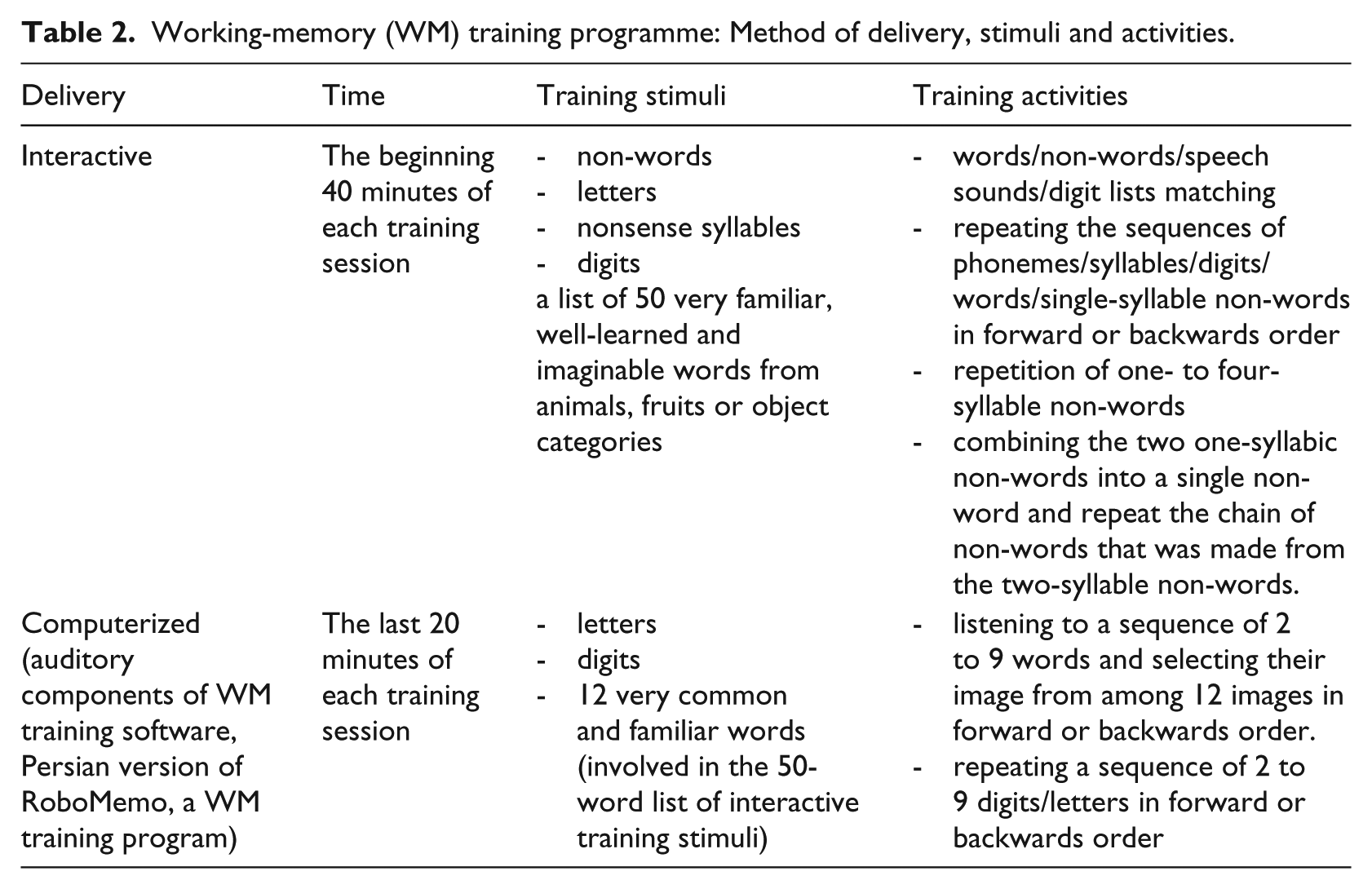
Although a number of high-frequency words were used as training stimuli, the combinations of words or sentences (that are the basic elements for grammatical learning) were not the treatment stimuli. Sentences were avoided as much as possible, and methods of stimulating and facilitating language learning were not used. Short conversations between the therapist and the child for greeting, teaching how to execute the activities, and giving feedback were inevitable.
The latter phase of intervention, language intervention, was intended to enhance the morpho-syntactic skills of participants by a non-computer-based face-to-face intervention. The focus of intervention activities was on the areas of grammatical morphology and syntax, which according to the literature are impaired in elementary school-aged Persian children with PLI and are also more resistant to language therapy. Therefore, as many linguistic targets as possible (presented in Table 3) for each participant were addressed by a range of evidence-based effective techniques for presenting grammatical targets to children with PLI. The imitation, modeling and focused stimulation techniques were administered to teach the grammatical structures that were not present in the children’s speech; conversational recasting was also applied to facilitate the generalization of target grammatical structures to spontaneous speech. Common clinical tools, such as comic books and images of objects, functions, events and scenes, dolls, doll houses and toy forest animals were used to guide the trainings. Appendix 2 presents the list of the targets of language intervention for each participant along with a brief report of his/her characteristics and attitudes.
Focused language targets in the second phase of intervention.
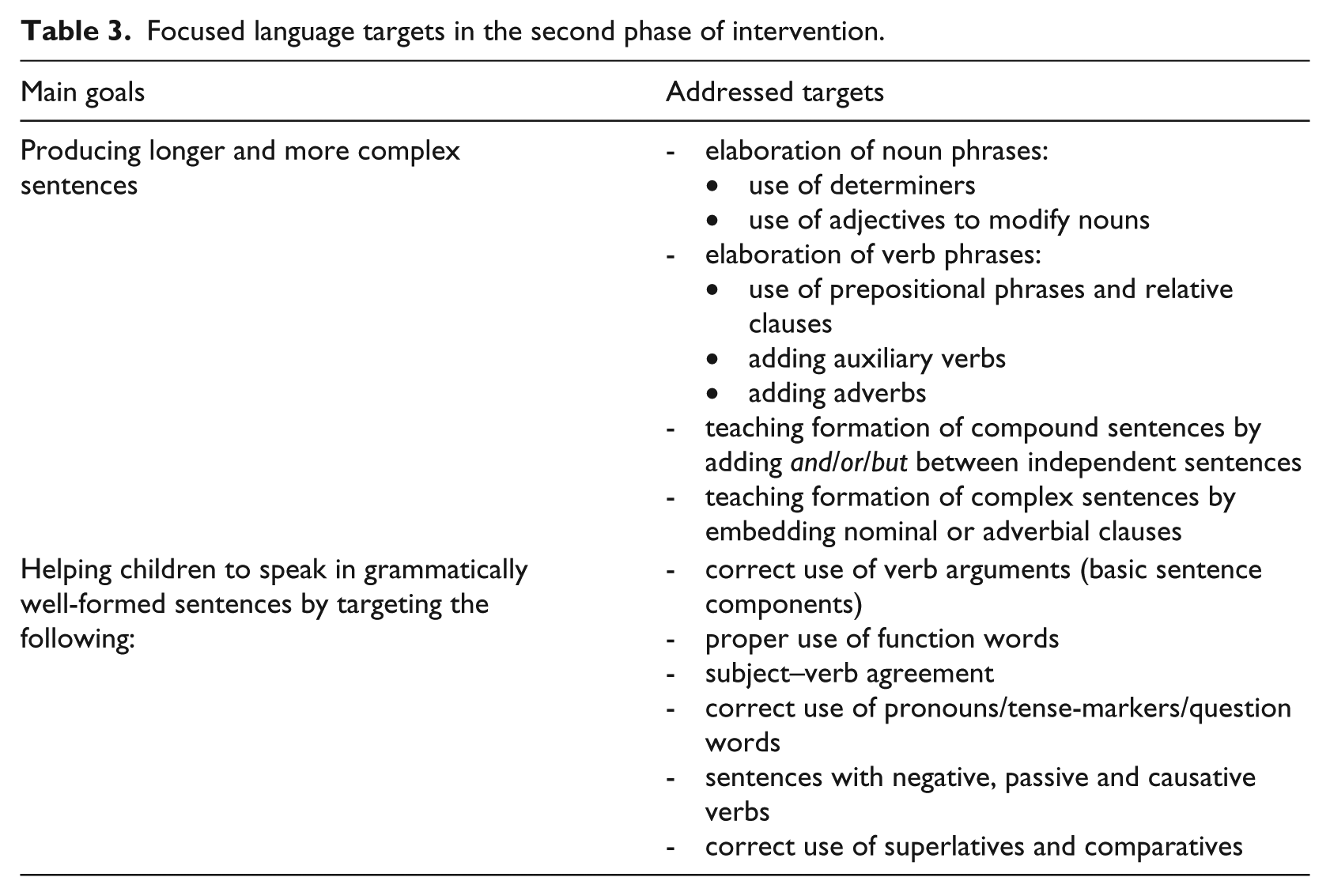
Regarding the suggestion of Ebbels (2014), for each child the grammatical structures that were produced in spontaneous speech but with errors in more than 50 percent, or the structures that were not produced but were understood by the child were a priority for intervention. The difficulty level of the activity was increased when at least 75% of the child’s production of targeted structure was accurate; for structures with lower accuracy in production, additional support was provided. Based on Eisenberg (2014), the proficiency level was adjusted to 80–90% production accuracy.
3 Analysis
For analysing the repeated measure data and documenting the efficacy of the intervention programmes, we used traditional visual analysis supplemented with effect-size calculation strategies, including percent of non-overlapping data (PND) and standardized mean differences (SMD) (Olive and Smith, 2005; Riley-Tillman and Burns, 2009). The intervention programmes were considered to be effective if 1) the graphs showed a rising trend in the treatment periods compared to baseline; and (2) similar patterns of performance could be seen among children in the same condition (McReynolds and Kearns, 1983). Furthermore, we considered SMD scores of 2 or larger alongside the PND above 70% to indicate clinically significant changes (Crumbacher, 2013). The changes resulting from any single intervention from pre-test to post-test were evaluated by a paired t-test (regarding the normal distribution of all pre-test and post-test measures between participants, specified by the Kolmogorov–Smirnov test).
III Results
1 Repeated measures
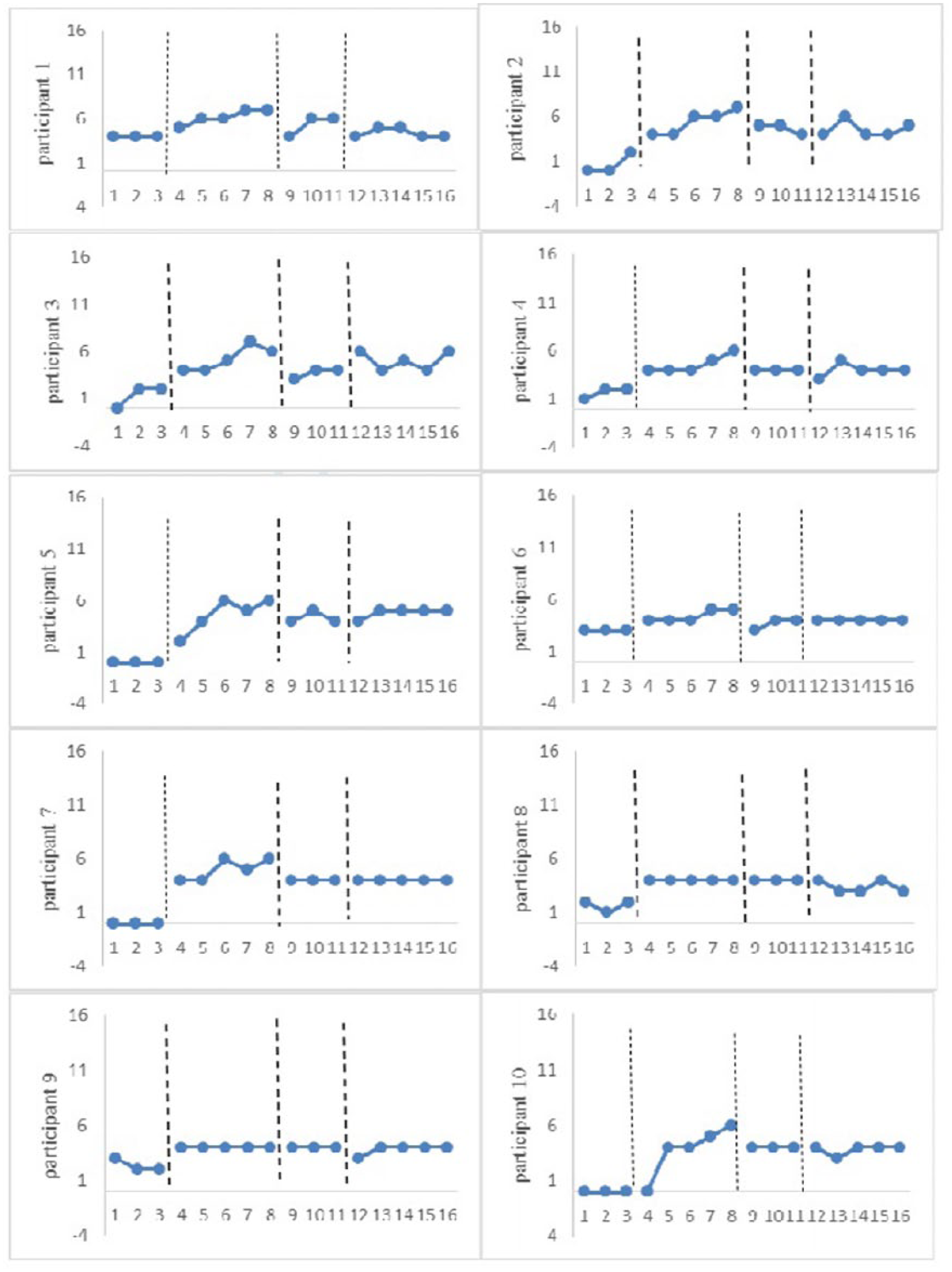
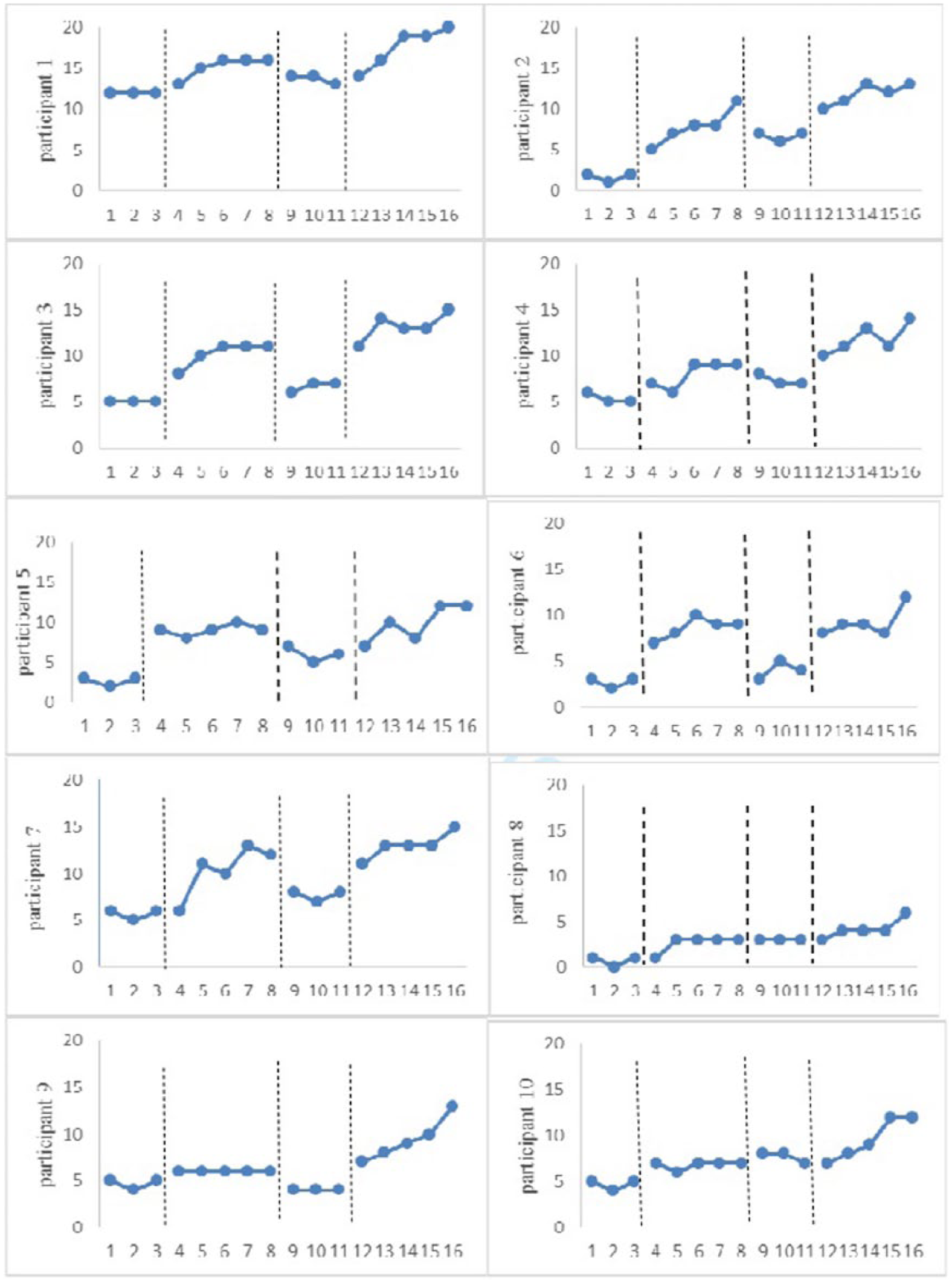
Results from the six repeated measure tasks for all participants are presented in Figures 1 to 6, and the effect sizes of the intervention programmes on these repeated measures were estimated by PND and SMD and are shown in Tables 3 and 4.
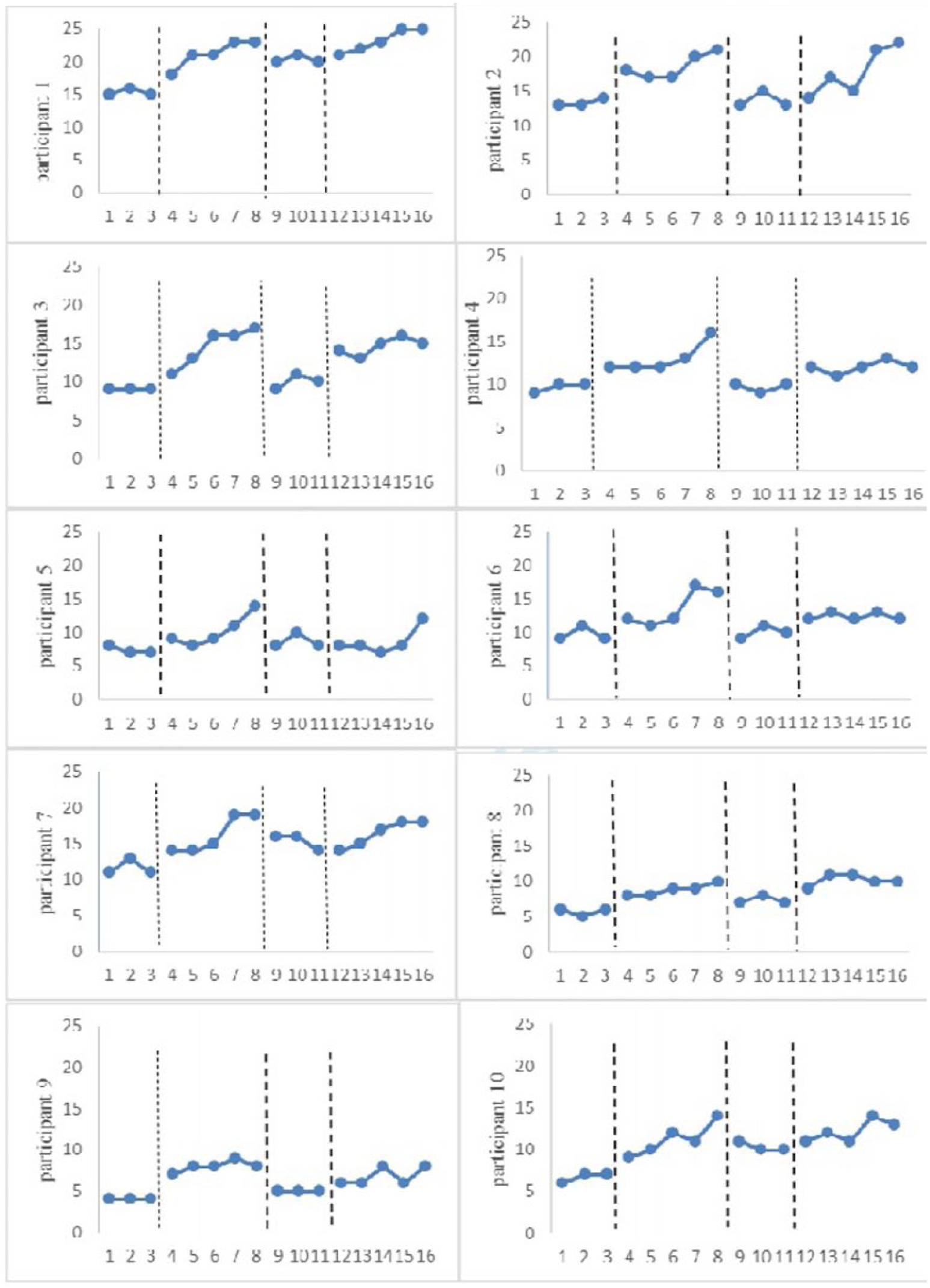
Results of non-word repetition (NWR) repeated measures during the phases of study (A1-B-A2-C).
Results of backward digit span (BDS) repeated measures during the phases of study (A1-B-A2-C).
Repeated measures of sentence completion task during the phases of study (A1-B-A2-C).

Repeated measures of MLU-w during the phases of study (A1-B-A2-C).
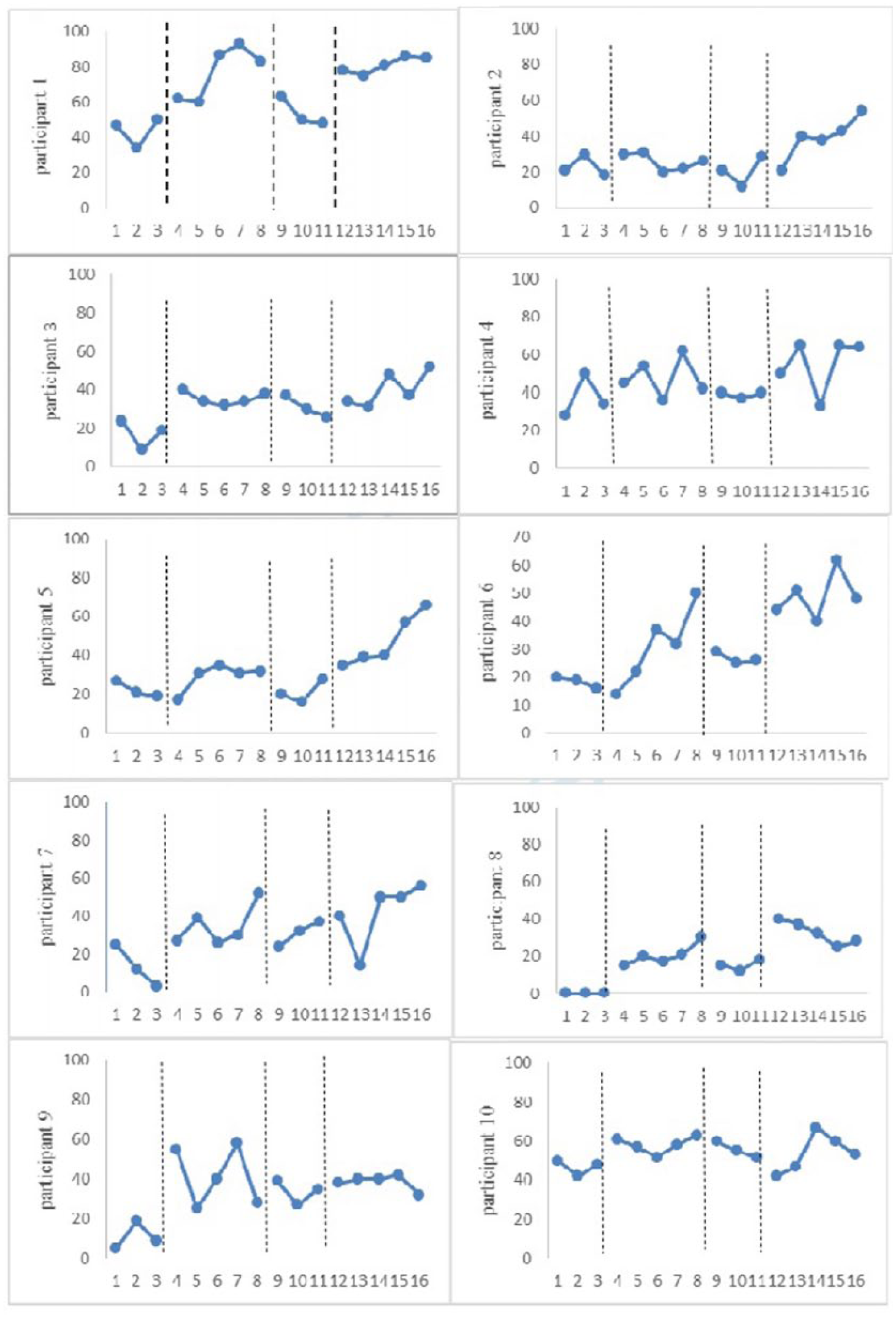
Repeated measures of grammatically well-formed utterances (GU%) during the phases of study (A1-B-A2-C).
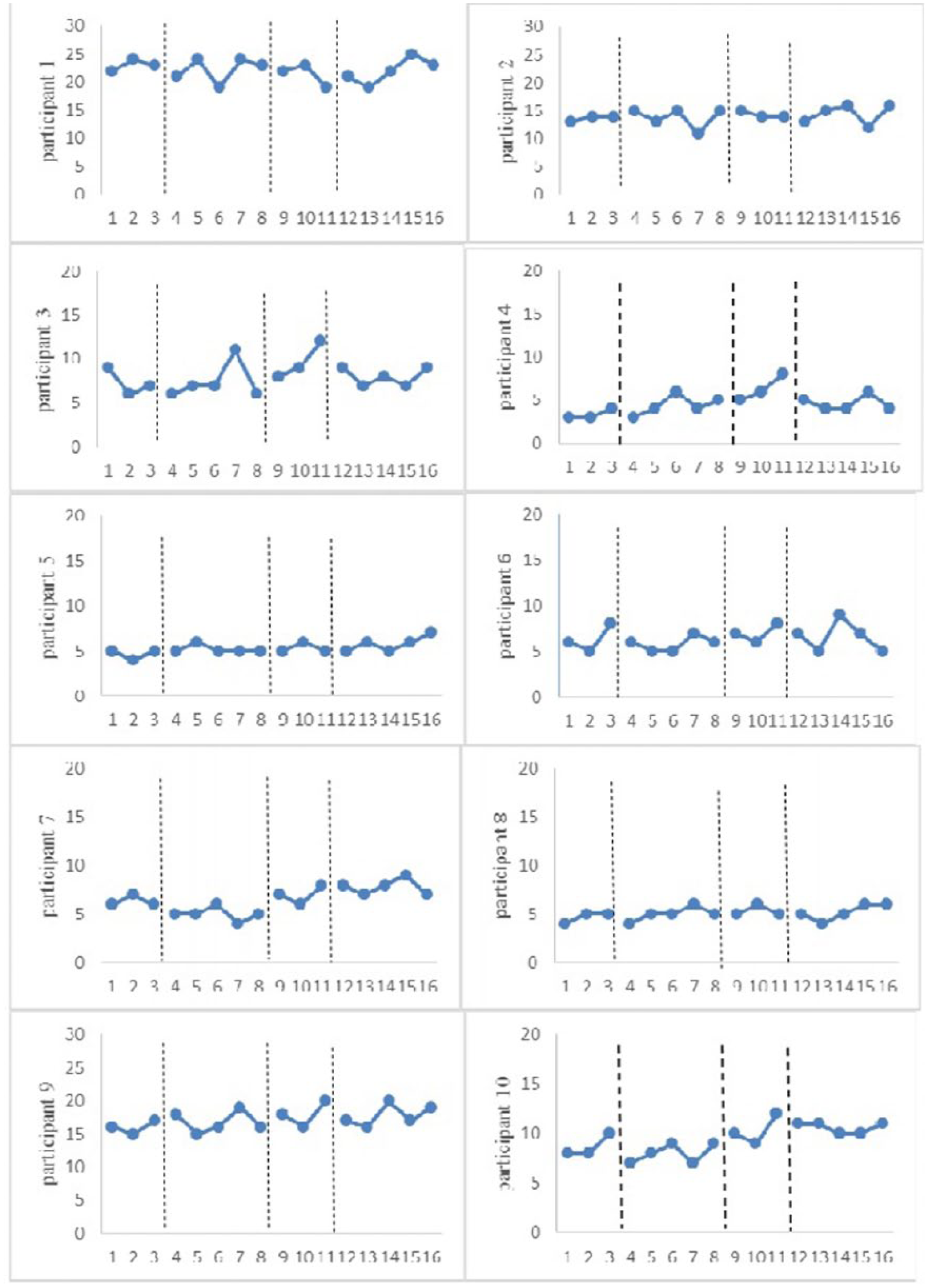
Repeated measures of keeping balance during the phases of study (A1-B-A2-C).
Effect sizes of WM training on repeated measures (WM, language and control tasks).
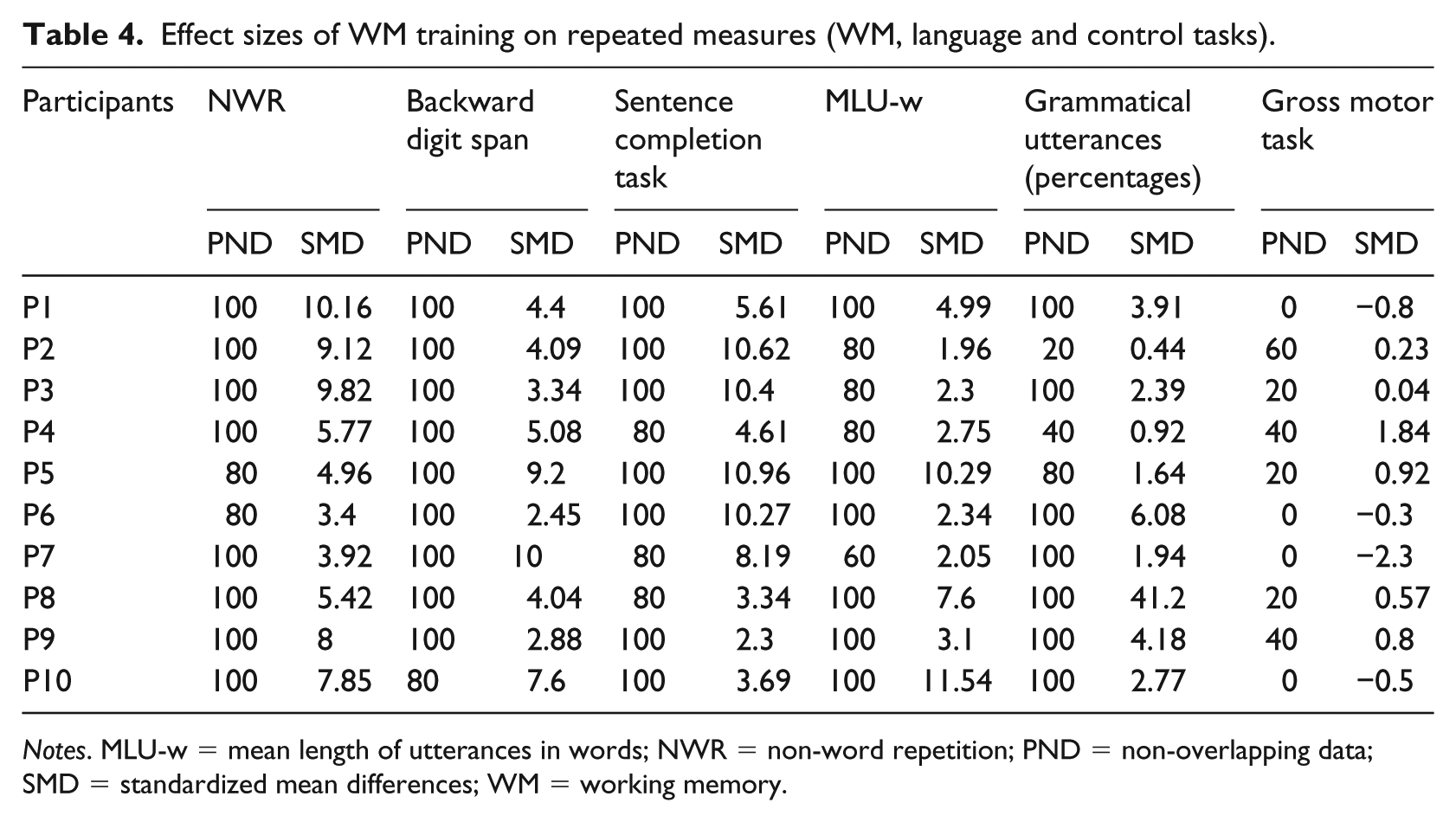
Notes. MLU-w = mean length of utterances in words; NWR = non-word repetition; PND = non-overlapping data; SMD = standardized mean differences; WM = working memory.
a Efficacy of WM training on WM and morpho-syntax skills
As shown in Figures 1 and 2 and Table 4 (based on PND and SMD scores), all participants showed clear evidence of improvement in working memory tasks, including NWR and BDS, during the WM training. There are notable differences between the levels of baseline and training for all participants in both tasks; there are no or very little overlaps between the scores of every participant in the baseline and training phase. Following the introduction of the training, the participants’ performances in NWR tasks were improved immediately and continued with an upward or variable trend line with a positive slope. Similar patterns of performance could be seen for BDS among the participants. However, the performance pattern trends of participants 8 and 9 were slightly different from the others. For these two participants, a sudden increase in performance could be seen after the onset of training, but the score remained constant throughout the training phase, with zero slope.
Although visual analysis of the data indicates notable variability among participants, the performances of all participants show a significant increase in the sentence completion task during WM training. Based on the charts in Figure 3 and effect size scores (Table 4), the performances of all participants in this task were effectively developed during the WM training phase.
It is difficult to explain the effectiveness of the WM training on extracted indexes from language samples (including MLU and GU%) among the participants. The efficacy of WM training on MLU enhancement is clear for all participants, except participants 2 and 7. Despite the diversity of the participants’ performances, the average MLU scores in the training phase are greater than those in the baseline phase for all participants. Similar to the other participants, participants 2 and 7 also showed this level enhancement pattern, but for participant 2 the difference between the levels of the baseline and training phases was not significant; while the training shows a trend towards improvement and the overlap between the training and baseline phases is small (PND = 80), the effectiveness of WM training for increasing the MLU is not clear because of the small change in level shown by the SMD (= 1.96). Participant 7 demonstrated an improved performance across the training period, with an upward trend. While the visual analysis and SMD scores relatively support the effectiveness of the training, the 3 points of overlap between the data from the training and baseline periods, which is also demonstrated by the PND score (= 60), raise some questions about the effectiveness of the training for this participant.
Regarding the GU% charts (Figure 5), seven participants (P1, P3, P6, P7, P8, P9, and P10) demonstrated a clear enhancement of grammatically well-formed utterances in their speech samples during WM training. While a large variability could be seen among these seven participants’ performances, for all participants the GU% increased suddenly or gradually following the introduction of WM training. The patterns of performance are variable, but the level of the training phase is obviously greater than the level of the baseline phase. The effect size scores (SMD ~ 2 or greater and PND > 70, Table 4) also support the visual analysis. However, the effectiveness of the training was not acceptable for participants 2 and 4 and is doubtful for participant 5. For participants 2 and 4, the average data for the training period are greater than those for the baseline, but the difference between them is not significant. The data from the training period shows high variability and has many overlaps with the baseline data. The effect size scores are in accordance with the visual analysis. For participant 5, a relatively slight increase in performance could be seen during the WM training period, and there is little data overlapped between the training and baseline phases (PND = 80); however, the insignificant difference between the levels of the training and baseline periods raise doubts about the clinical significance of the training (SMD = 1.64).
On the balance task, the performance patterns of all participants during the training phase were variable, and although there was high variability among the performance patterns of different subjects, both visual analysis (Figure 6) and the effect size scores (Table 4) do not support the effectiveness of the training on gross motor skills for all participants.
The participant scores for the repeated measures of WM and language (Figures 1–5) during the WM training and after the break period show that for some children the scores in the second baseline are lower than the scores obtained during the first treatment phase. This pattern of performance is visible for all participants in NWR, for all participants except participants 8 and 9 in BDS, for all participants except participants 8 and 10 in the sentence completion task, for all participants except participants 2, 5, 6 and 8 in MLU-w, and for all participants in GU%.
b Efficacy of language intervention on WM and morpho-syntactic skills
The effect size scores in Table 5 clearly show that the performances of six participants (P1, P3, P4, P6, P8 and P9) exceeded the clinical significance thresholds on the NWR task, although there are substantial differences between their overall task performances (Figure 1). Among the remaining four participants (P2, P5, P7 and P10), for participant 2 the presence of two points of overlap between the data from the intervention and baseline phases and the PND score (= 60) raise some uncertainty about the efficacy of the intervention. However, a variable pattern of performance in the first three sessions of intervention, followed by a sudden improvement and upward trend at the end of the intervention period resulted in a level during the intervention period that was greater than the level of the baseline period and gave an SMD = 3.57, which is well above the threshold of 2 for clinically significant change. The performance pattern of participant 10 is inconstant during the intervention phase, though the slope of the trend line is positive. Two points of overlap between the data of intervention phase and the data of baseline phase resulted in a PND = 60, which indicates a small effect size. Nevertheless, the average of the task performances during the intervention period is significantly above the participant’s performances in the baseline phase (SMD = 3.2). Therefore, both visual analysis and the SMD scores support the efficacy of the intervention for participants 2 and 10. For participants 5 and 7, the overall difference between the levels of the baseline and treatment phases is small, and there are some points of overlap in task performances between the intervention and baseline phases. The effect size scores (SMD = −.05, PND = 20 and SMD = .92, PND = 60 for participants 2 and 10, respectively) do not support the intervention efficacy.
Effect sizes of language intervention on repeated measures (WM, language and control tasks).
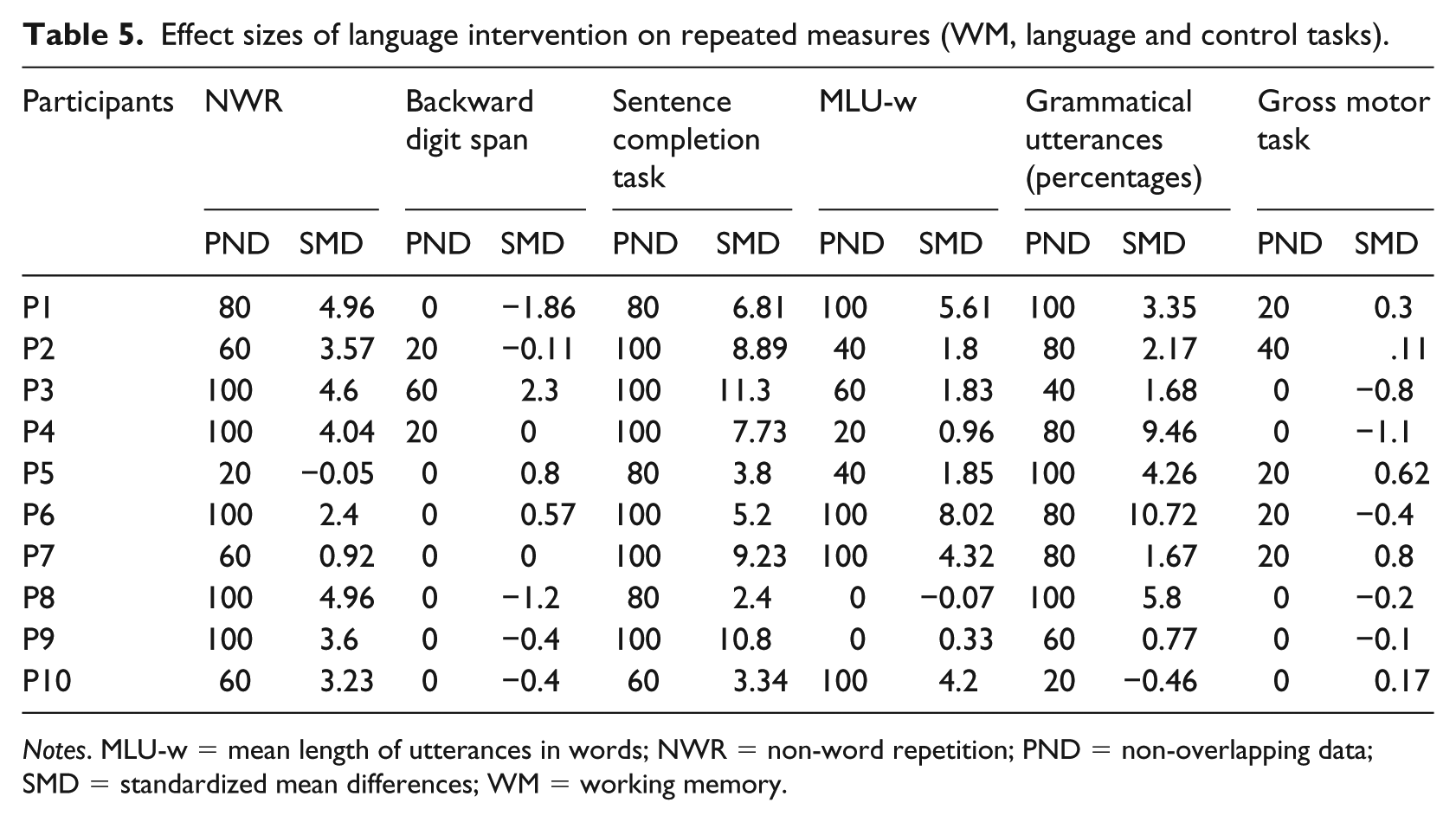
Notes. MLU-w = mean length of utterances in words; NWR = non-word repetition; PND = non-overlapping data; SMD = standardized mean differences; WM = working memory.
Changes of participants’ performances in the second WM task, BDS, are presented in Figure 2. These charts show the small decrease in level for participants 1, 2, 8, 9, 10 and an unchanging level for participants 4 and 7 during the treatment phase. Only for three participants (P3, P5 and P6) was the level of the intervention phase above the level of baseline. The performances of participants 5 and 6 are nearly stable throughout the intervention period, and the level increase is not significant for either. Therefore, based on a visual analysis (Figure 2) and on the effect size scores (Table 5), it is clear that the language intervention did not result in performance improvements in BDS for nine of the participants. The performance of participant 3 was variable, with no detectable trend during the intervention period, in spite of an upward trend during the baseline period. Therefore, despite the increase in level, regarding the variable pattern of performance during the intervention and the PND score ( = 60), the intervention was not effective for this participant.
Both a visual analysis of Figure 3 and the effect size scores (Table 5) confirm the efficacy of the language intervention programme for improving the participants’ performances in the sentence completion task. Figure 3 shows that the performances of participants 1, 2 and 9 improved immediately after the introduction of intervention and continued with an upward trend. For participants 3, 4, 5, 6, 7 and 8, though the performance patterns were variable during the intervention phase, increases in performances began following the introduction of the intervention. Although in the first sessions of intervention the task performances of P10 have overlaps with performances in baseline period (PND = 60), the steady upward trend in performance during the intervention phase indicates that the intervention resulted in significant improvement.
Regarding Figure 4 and Table 5, the efficacy of language intervention for improving MLU is obvious for four participants (P1, P6, P7 and P10). The MLU of participant 1 increased immediately after the introduction of intervention and continued with a steady upward trend throughout the intervention. The differences between the levels of intervention and baseline phases are significant for P6, P7, and P10, though they show variable patterns of performance during the intervention phase (SMD = 8, 4.3 and 4.2, respectively). However, the intervention was not effective for increasing the MLU for the other six participants (P2, P3, P4, P5, P8 and P9). Participant 2 demonstrated a slow upward trend that did not result in a significant improvement in the MLU (SMD = 1.8). Furthermore, many overlaps can be seen between the MLU scores of the baseline and intervention phases (PND = 40). Participants 3, 4 and 5 demonstrated variable patterns of performance, with no significant improvement in the MLU during the intervention phase (SMD = 1.8, 0.96 and 1.8, respectively). These participants’ MLU scores during the intervention period had many overlaps with MLU scores in the baseline period (PND = 60, 20 and 40, respectively). The performances of participants 8 and 9 during the intervention phase were variable and altogether lower than the baseline performances. For participant 8, the effect size scores were SMD = −.07 and PND = 0. For P9, the presence of one very low data point during the baseline period resulted in positive, non-significant SMD of .3.
Based on a visual analysis of Figure 5 and the effect size scores (Table 5), it appears that the language intervention caused improvements in expressing grammatically well-formed utterances in seven participants (P1, P2, P4, P5, P6, P7, and P8). Participants 1 and 5 showed improved performances immediately after the introduction of the intervention, which continued with an upward trend. For participant 2, a sudden increase in the GU% occurred two weeks after the onset of intervention and continued with slow rate during the intervention period; the level is significantly above the level of the baseline period. Participants 4 and 6 showed highly variable performances during the intervention, which have no (P6) or little (P4) overlaps with the performances in the baseline period; their effect size scores (SMD = 9.46, PND = 80 and SMD = 10.7, PND = 100, respectively) demonstrate the effectiveness of treatment. The pattern of performance of P7 is variable; however, by excluding one very low data point, it seems that their performance follows an upward trend. Though the presence of one very low data in the intervention phase resulted in no significance SMD ( = 1.67), the PND effect size score ( = 80) and visual analysis relatively support the effectiveness of intervention for this child. The performance of participant 8 shows a sudden increase immediately after the introduction of the intervention, which was followed by a downward pattern; in spite of the presence of this visible downward trend, the intervention phase scores are still above the baseline phase scores, and no overlap between the data could be seen. The effect size scores (SMD = 5.8 and PND = 100) confirm the intervention efficacy for this participant. However, the performance patterns of the other three participants (P3, P9 and P10) during the intervention phase are not representative of language intervention efficacy in increasing grammatical correctness. Participant 3 shows a large variability and no significant increase in the level during the intervention phase. For participant 9, a very slow upward trend was replaced by a downward trend at the end of the intervention. While some increase in performance could be seen, this increase was not significant. The performance pattern of participant 10 during the intervention phase is variable and has many overlaps with baseline (PND = 20); the level during the intervention period is lower than the level of baseline and resulted in a negative SMD ( = −.46).
Finally, regarding Figure 6 and Table 5, all participants demonstrated a large variability in performance patterns, which does not support the language intervention efficacy on the balance task.
2 Pre- and post-test measures
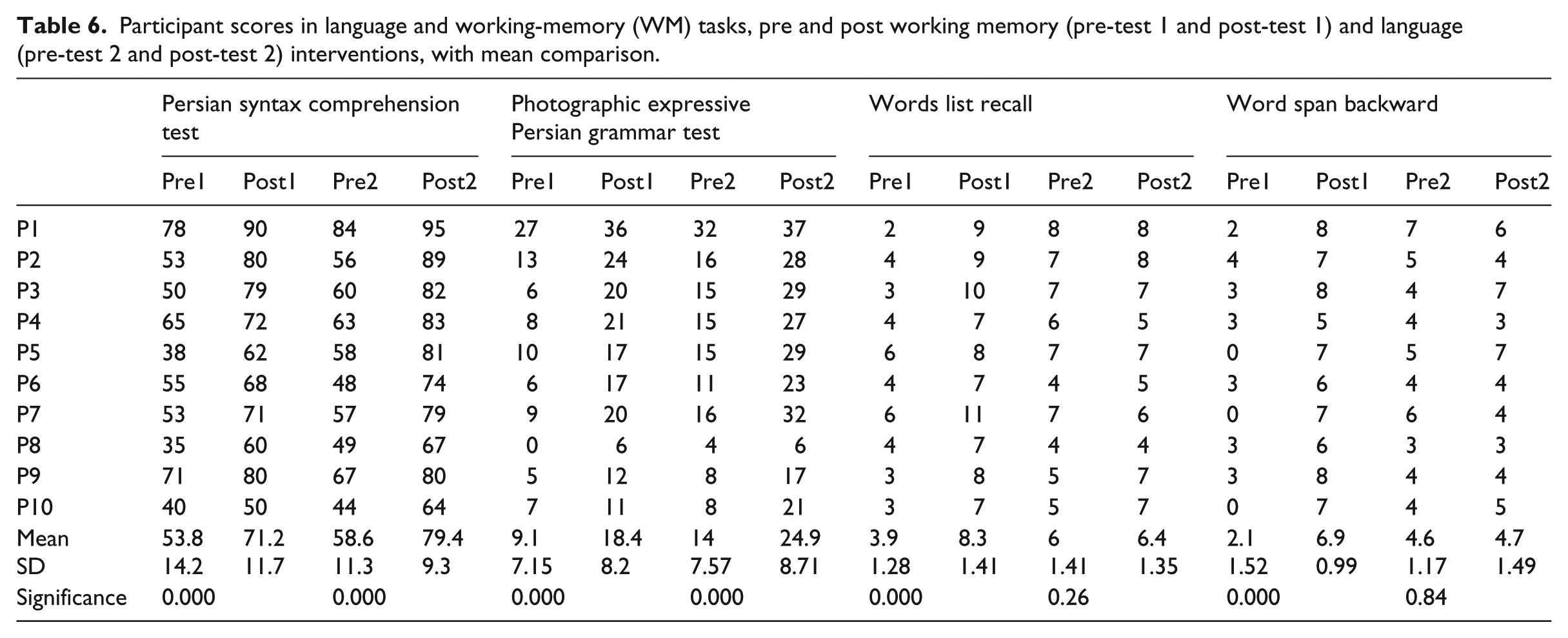
Table 6 displays the participant’s characteristics and their pre- and post-treatment performances in the language and WM tests at two interventional phases. All participants showed significant memory and language gains after completing the working memory training (p < .001). Language intervention also led to an improved grammatical receptive and expressive functioning of all participants (p < .001), though it did not notably change the participant’s performances in WM tasks, including the word list recall (p = .26) and backward word span tests (p = .84).
Participant scores in language and working-memory (WM) tasks, pre and post working memory (pre-test 1 and post-test 1) and language (pre-test 2 and post-test 2) interventions, with mean comparison.
IV Discussion
The purpose of the present study was to consider the effects of an intensive WM training programme and a similarly intensive language intervention curriculum on improving WM skills and language morpho-syntactic performances of ten 6- to 8-year-old children with PLI.
The results show obvious evidence of improvement across participants in both WM tasks due to WM training. Furthermore, though the results of the WM training on the measured morpho-syntactic indexes are diverse across participants and tasks, in general the results reflect the transfer of working memory training effects to grammatical skills. All participants showed considerable improvements in the ability to complete sentences with appropriate inflected verbs. For the other language index, MLU, the results for all participants are generally in the predicted direction, towards improvement. Moreover, the WM training programme resulted in more well-formed grammatical sentences in language production for seven of the participants. The participants’ post-test scores in the tests of syntax comprehension, syntax production, and both WM tasks were significantly higher than the pre-test scores and confirm the results obtained from the repeated measures.
These results show that direct remediation of working memory can lead to beneficial changes in WM skills and in language, which is a cognitive domain that is supported by this cognitive tool. Our results are in line with the results of Holmes et al. (2015). Their WM training programme for a group of children with low WM resulted in near transfer to other WM tasks and far transfer to math and English.
However, our results contradict the results of Ebert and Kohnert (2009). Their study on two female children with PLI showed no significant changes in auditory memory skills or receptive language measures following WM training in either participant; therefore, they concluded that WM capacity is probably not able to be altered. However, as the authors themselves noted, the lack of change in the auditory memory area may be due to the WM task difficulty levels that made the selected measures insensitive to change for those particular participants (Ebert and Kohnert, 2009). The nature of the training tasks may also play a role in the observed difference between their results and the outcomes of our WM training programme. Unlike the intensive engagement of our participants in cognitively challenging tasks, which simultaneously stimulate the storage and processing capacities of working memory, three of the four WM training activities in Ebert and Kohnert’s study (2009) were computerized games, with the aim of stimulating phonological storage. Processing skills were involved in addition to storage in only one of the training activities. Moreover, due to the nature of the interventional tasks in their study, it appears that it was impossible for participants to learn WM strategies, explicitly or implicitly; however, learning strategies such as rehearsal is important for the improvement of WM proficiency (Archibald, 2016; Dehn, 2008).
Although few previous studies have explored working memory training effects in children with language needs (and these have presented contradictory results), there are many previous controlled correlation studies that have shown a direct link between WM span and linguistic performance, especially in the areas of vocabulary and grammar. Daneman and Case (1981) reported a positive correlation between short-term memory span and children’s proficiency to learn new words and new linguistic structures. The results of Sansavini and colleagues (2007) showed close correlations between children’s phonological working memory and grammar acquisition. Karpicke and Pisoni (2004) and Duinmeijer et al. (2012) found that individual differences in grammar learning and the MLU of children with SLI correlated positively with differences in the digit span. Marini et al. (2014) conducted a study on 7- to 11-year-old children and found that verbal WM capacities have a major effect on grammatical, but not on lexical, processing in older children with SLI.
However, there is considerable debate regarding the potential mechanism of how WM training effects could be transferred to grammar. On one side of the debate, researchers have suggested that WM training plays a role in the improvement of grammar through a phonological loop, and more specifically, a phonological store. Andrade and Baddeley (2011) addressed the role of WM in grammar learning in a study on artificial grammar and concluded that pSTM contributes to grammar learning via effects on vocabulary learning. They suggested that verbal short-term memory not only preserves phonemes in the correct order to be encoded into long-term memory but also plays an important role in extracting patterns from more complex and variable stimuli. On the other side, some researchers have argued that sentence processing skills increase after WM training due to increases of WM-related functions, such as attention control (Klingberg, 2010; Noonan et al., 2014). In the current study, both the phonological loop and the central executive were the targets of WM training; therefore, the observed changes in linguistic skills cannot be attributed to the increase in the proficiency of only one of these components separately. However, given the advent of the changes in participants’ grammatical skills immediately after the introduction of WM training, it appears that the training programme led to improved central controller skills, which in turn resulted in more attention to the structure of language inputs to extract grammatical structures. Nevertheless, producing more accurate and longer utterances could also be secondary to the increase in pSTM span that led to the maintenance of novel phonological patterns. Further studies on artificial grammar learning or intervention studies that focus on the training of only one component of WM could better address this uncertainty.
After completing the first phase of the intervention, there was a no-treatment break period. As mentioned earlier in the results section, the participants’ scores in the repeated measures during the WM training and after the break period showed a slight decrease after withdrawal of the training. This pattern of performance that was seen in the majority of the tasks and for most participants may be at least partly due to the assessment method. The repeated measurements were carried out at the end of intervention sessions, once every three sessions. It is likely that measuring the performance directly after the intervention resulted in a higher estimation of the performance level, because it is possible that the intervention had in some way primed the participant’s attention or performance, which led to increased scores, but only on the same day. However, it is clear from Figures 1–5 that the level of the participants’ performances was reduced to a small extent, and the no-treatment break period did not led to the return of the performance to the initial level, i.e. before the introduction of WM training. Notably, Melby-Lervåg and Hulme (2013) also concluded in their review that WM improvements after WM training are not very durable.
After undergoing the language intervention (in the second phase), there was evidence of significant improvement for one of the WM-related tasks (i.e. NWR) for eight participants; though this progress was not commensurate with the performance of the majority of the participants during the WM training period. However, even in the cases of participants 5 and 7 (whose changes in NWR scores were not so significant) the trends were slightly towards progression.
Unlike the relative increase in the non-word repetition scores, the data indicate that the language intervention was ineffective at improving the performance of the participants in the other WM-related repeated measure, backward digit span task (BDS). BDS is a cognitively challenging task that uses processing and storage resources simultaneously (Dehn, 2008). To achieve a maximum level of performance on this task, the intensive engagement of controller mechanisms, particularly attention, is necessary. Gillam et al. (2008) have suggested that attention improvement might be the underlying mechanism for development of language skills in response to the variety of linguistic intervention activities. Although attention skills were not directly measured or treated in our study, regarding the participants’ performances in BDS in comparison with NWR, it appears that attention was trained by WM exercises, while unlike the Gillam et al. suggestion, a similar pattern could not be seen during the language intervention. Similar results could be seen in Ebert’s study (2014). Although there were considerable variabilities among the performances of the three school-aged participants with PLI, her results indicated that the cross-domain transfer from treated language skills to cognitive performance is possible, but this transfer of effect is more supportable for auditory short-term memory skills than for attention (Ebert, 2014). However, it should not be ignored that the lack of notable gains in the BDR task in the second phase of intervention may be, at least in part, due to an artifact of the performance improvements in the first phase of intervention. The first phase of intervention led to significant increases in the BDR scores of participants, and these achievements, though decreased after the break in the majority of participants, were not completely lost. Therefore, this issue made it difficult for the second intervention to increase the WM capacity to a higher level.
However, the comparisons between the pre and post language intervention scores of both WM tasks (including word list recall and backward word span) did not reach statistical significance. Among the included WM tasks in this study, the participants’ gains arising from the language intervention were clinically significant only for NWR. The increase in participant NWR skills in response to language intervention could be at least partly attributed to the development of abstract representations of sub-lexical aspects of words rather than the improvement of WM skills. Therefore, our small-scale study with few participants has failed to provide clear evidence regarding the possibility of cross-domain generalization from language to WM, which is the most defective cognitive processing domain in children with PLI.
All participants’ performances in the sentence completion task significantly increased during the language intervention course. However, the efficacy of language intervention on increasing MLU is obvious only for four participants (P1, P6, P7 and P10). MLU is a good index to demonstrate progress in language, and specifically in syntax. Although the increase in the participants’ MLU scores was not the main goal of the intervention, it was directly addressed during the language intervention programme (see Table 2). However, the language intervention programme failed at increasing the MLU in more than half of the participants. Notably, while significant increases in the MLU did not occur for participants 2, 4, 5 and 8, their grammatical errors in language samples did decrease due to the treatment. Three participants (participants 1, 6 and 7) achieved the ability to produce sentences that were longer and grammatically well-formed in response to the language intervention. For participant 3, although the effectiveness of the language intervention on the MLU was minimally acceptable, no major decrease in grammatical errors occurred. For participant 10, in spite of the noticeable increase in MLU, the grammatical errors in language production increased. Only for participant 9 did neither the MLU nor the percentage of grammatical utterances increase. In summary, language intervention led to longer utterances or fewer grammatical errors or both factors in all participants except P9, a boy with very severe problems in expressive language who had no interest in the verbal exercises. While his motivation to do nonverbal activities was good, his disinterest in the language exercises could explain the lack of progress. The diversity of patterns of performances of the participants in response to the intervention may, to some extent, be due to the large variability among the participants’ initial linguistic skills and experience (see Appendix 2).
In accordance with the results of the repeated measures, comparing the pre- and post-treatment measures shows that participants made significant gains in comprehension and the production of morpho-syntactic structures due to the language intervention.
The performance of participants in the control task provided a meaningful context for interpreting the results. The large intra-participant variabilities, with no evidence of the interventions’ effects in both phases of study, indicate that the visible changes in the participant’s performances in the other measured indexes were due to the intervention programmes and did not occur by accident or were the result of maturation.
Overall, this small-scale study with a single-subject experimental design demonstrated that cross-domain interactions exist between language and WM, which is in accordance with the results of previous studies (e.g. Ebert and Kohnert, 2009; Ebert et al., 2014; Gillam et al., 2008) and supports the general cognitive theories of language.
IV Limitations and future directions
This exploratory study had a single-subject experimental design; therefore, it is not excluded from the general constraints of SSEDs, such as limited generalization of the outcomes compared with large-scale interventional studies. All study designs have advantages and disadvantages. We tried to choose the best method that addressed our question as directly as possible and was also suitable for our heterogeneous and small group of participants. Although the scope of the conclusion that can be derived from this study is limited because of the small sample size, our results provide primary evidence regarding the importance of WM training as an indispensable component of intervention programmes for children with PLI. However, the results should be confirmed by future studies with more robust designs. However, it appears that there was some progress in the participants’ performance in non-word repetition (as a tool for measuring the pSTM skills) due to the language intervention, but it is not clear that these achievements were truly related to the enhancement of WM skills, and the magnitude of participation of higher-level language processes in the NWR performance is not clear. Thus, further studies are needed in this area. Additionally, the role of the training delivery schedule on the obtained results is not clear. The training programme included an intense treatment schedule, with more than 180 minutes of training per week. The effectiveness of less intense training conditions must be addressed in other studies with different training schedules. Furthermore, maintenance of the training effects beyond the immediate treatment period should be considered in further research. The lack of follow-up on the changes in the participants’ performances after the language intervention is one of the main limitations of this study. Regarding the slight decrease in performance after the withdrawal of WM training, the addition of a maintenance period after the language intervention would make it possible to investigate what happened after the intervention came to an end, for the case of both interventions.
Another important limitation of this intervention is the delivery of the two interventions in the same order to all participants. Future studies with a counter-balanced order of interventions will have more power to draw stronger conclusions about the relative efficacy of each intervention programme.
V Conclusions
The results of the present study indicate that WM could be trained and that the training effects extend to grammatical language skills. The language intervention programme concentrated on the implicit learning of morpho-syntactic skills for children with PLI and led to the improvement of grammar, although generalizing the effects to WM skills is questionable. The language intervention programme led to a significant increase in the participants’ performance only in the NWR task, and not in the other WM-related tasks. The increase in the participants’ NWR scores can be attributed to the improvement of higher-level linguistic processing rather than to an actual increase in WM skills.
Importantly, clinicians may need to consider that in children with severe expressive problems who are not interested in language exercises, a focus on language intervention may not be successful, but concentrating on memory deficits as the main target of intervention can improve their participation in treatment and improve their linguistic comprehension and production skills.
Footnotes
Appendix
List of targets of language intervention for each participant and a brief report of his/her characteristics (at the time of study enrolment) and attitudes (during the course of study).
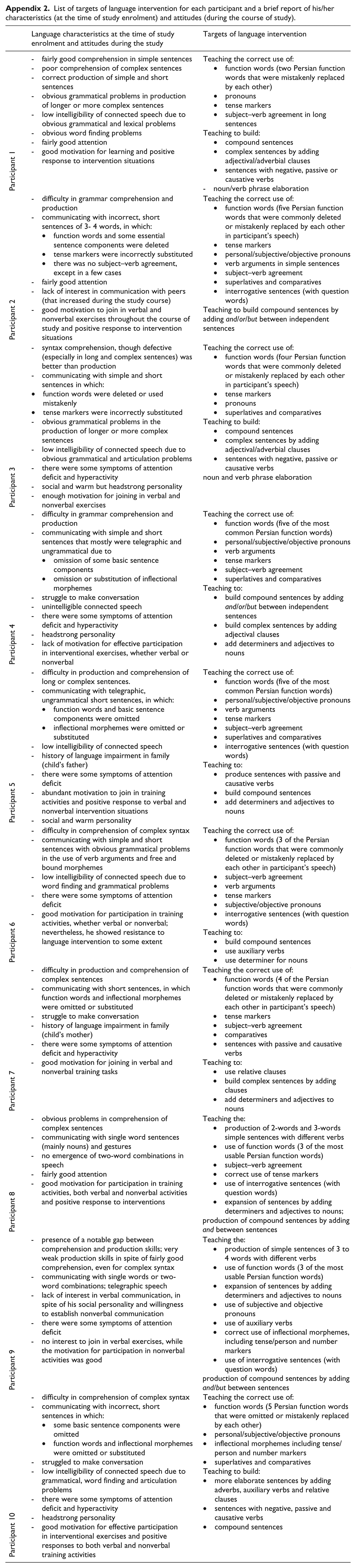
| Language characteristics at the time of study enrolment and attitudes during the study | Targets of language intervention | |
|---|---|---|
| Participant 1 | - fairly good comprehension in simple sentences - poor comprehension of complex sentences - correct production of simple and short sentences - obvious grammatical problems in production of longer or more complex sentences - low intelligibility of connected speech due to obvious grammatical and lexical problems - obvious word finding problems - fairly good attention - good motivation for learning and positive response to intervention situations |
Teaching the correct use of: • function words (two Persian function words that were mistakenly replaced by each other) • pronouns • tense markers • subject–verb agreement in long sentences Teaching to build: • compound sentences • complex sentences by adding adjectival/adverbial clauses • sentences with negative, passive or causative verbs - noun/verb phrase elaboration |
| Participant 2 | - difficulty in grammar comprehension and production - communicating with incorrect, short sentences of 3- 4 words, in which: • function words and some essential sentence components were deleted • tense markers were incorrectly substituted • there was no subject–verb agreement, except in a few cases - fairly good attention - lack of interest in communication with peers (that increased during the study course) - good motivation to join in verbal and nonverbal exercises throughout the course of study and positive response to intervention situations |
Teaching the correct use of: • function words (five Persian function words that were commonly deleted or mistakenly replaced by each other in participant’s speech) • tense markers • personal/subjective/objective pronouns • verb arguments in simple sentences • subject–verb agreement • superlatives and comparatives • interrogative sentences (with question words) Teaching to build compound sentences by adding and/or/but between independent sentences |
| Participant 3 | - syntax comprehension, though defective (especially in long and complex sentences) was better than production - communicating with simple and short sentences in which: • function words were deleted or used mistakenly • tense markers were incorrectly substituted - obvious grammatical problems in the production of longer or more complex sentences - low intelligibility of connected speech due to obvious grammatical and articulation problems - there were some symptoms of attention deficit and hyperactivity - social and warm but headstrong personality - enough motivation for joining in verbal and nonverbal exercises |
Teaching the correct use of: • function words (four Persian function words that were commonly deleted or mistakenly replaced by each other in participant’s speech) • tense markers • pronouns • superlatives and comparatives Teaching to build: • compound sentences • complex sentences by adding adjectival/adverbial clauses • sentences with negative, passive or causative verbs noun and verb phrase elaboration |
| Participant 4 | - difficulty in grammar comprehension and production - communicating with simple and short sentences that mostly were telegraphic and ungrammatical due to • omission of some basic sentence components • omission or substitution of inflectional morphemes - struggle to make conversation - unintelligible connected speech - there were some symptoms of attention deficit and hyperactivity - headstrong personality - lack of motivation for effective participation in interventional exercises, whether verbal or nonverbal |
Teaching the correct use of: • function words (five of the most common Persian function words) • personal/subjective/objective pronouns • verb arguments • tense markers • subject–verb agreement • superlatives and comparatives Teaching to: • build compound sentences by adding and/or/but between independent sentences • build complex sentences by adding adjectival clauses • add determiners and adjectives to nouns |
| Participant 5 | - difficulty in production and comprehension of long or complex sentences. - communicating with telegraphic, ungrammatical short sentences, in which: • function words and basic sentence components were omitted • inflectional morphemes were omitted or substituted - low intelligibility of connected speech - history of language impairment in family (child’s father) - there were some symptoms of attention deficit - abundant motivation to join in training activities and positive response to verbal and nonverbal intervention situations - social and warm personality |
Teaching the correct use of: • function words (five of the most common Persian function words) • personal/subjective/objective pronouns • verb arguments • tense markers • subject–verb agreement • superlatives and comparatives • interrogative sentences (with question words) Teaching to: • produce sentences with passive and causative verbs • build compound sentences • add determiners and adjectives to nouns |
| Participant 6 | - difficulty in comprehension of complex syntax - communicating with simple and short sentences with obvious grammatical problems in the use of verb arguments and free and bound morphemes - low intelligibility of connected speech due to word finding and grammatical problems - there were some symptoms of attention deficit - good motivation for participation in training activities, whether verbal or nonverbal; nevertheless, he showed resistance to language intervention to some extent |
Teaching the correct use of: • function words (3 of the Persian function words that were commonly deleted or mistakenly replaced by each other in participant’s speech) • subject–verb agreement • verb arguments • tense markers • subjective/objective pronouns • interrogative sentences (with question words) Teaching to: • build compound sentences • use auxiliary verbs • use determiner for nouns |
| Participant 7 | - difficulty in production and comprehension of complex sentences - communicating with short sentences, in which function words and inflectional morphemes were omitted or substituted - struggle to make conversation - history of language impairment in family (child’s mother) - there were some symptoms of attention deficit and hyperactivity - good motivation for joining in verbal and nonverbal training tasks |
Teaching the correct use of: • function words (4 of the Persian function words that were commonly deleted or mistakenly replaced by each other in participant’s speech) • tense markers • subject–verb agreement • comparatives • sentences with passive and causative verbs Teaching to: • use relative clauses • build complex sentences by adding clauses • add determiners and adjectives to nouns |
| Participant 8 | - obvious problems in comprehension of complex sentences - communicating with single word sentences (mainly nouns) and gestures - no emergence of two-word combinations in speech - fairly good attention - good motivation for participation in training activities, both verbal and nonverbal activities and positive response to interventions |
Teaching the: • production of 2-words and 3-words simple sentences with different verbs • use of function words (3 of the most usable Persian function words) • subject–verb agreement • correct use of tense markers • use of interrogative sentences (with question words) • expansion of sentences by adding determiners and adjectives to nouns; production of compound sentences by adding and between sentences |
| Participant 9 | - presence of a notable gap between comprehension and production skills; very weak production skills in spite of fairly good comprehension, even for complex syntax - communicating with single words or two-word combinations; telegraphic speech - lack of interest in verbal communication, in spite of his social personality and willingness to establish nonverbal communication - there were some symptoms of attention deficit - no interest to join in verbal exercises, while the motivation for participation in nonverbal activities was good |
Teaching the: • production of simple sentences of 3 to 4 words with different verbs • use of function words (3 of the most usable Persian function words) • expansion of sentences by adding determiners and adjectives to nouns • use of subjective and objective pronouns • use of auxiliary verbs • correct use of inflectional morphemes, including tense/person and number markers • use of interrogative sentences (with question words) production of compound sentences by adding and/but between sentences |
| Participant 10 | - difficulty in comprehension of complex syntax - communicating with incorrect, short sentences in which: • some basic sentence components were omitted • function words and inflectional morphemes were omitted or substituted - struggled to make conversation - low intelligibility of connected speech due to grammatical, word finding and articulation problems - there were some symptoms of attention deficit and hyperactivity - headstrong personality - good motivation for effective participation in interventional exercises and positive responses to both verbal and nonverbal training activities |
Teaching the correct use of: • function words (5 Persian function words that were omitted or mistakenly replaced by each other) • personal/subjective/objective pronouns • inflectional morphemes including tense/person and number markers • superlatives and comparatives Teaching to build: • more elaborate sentences by adding adverbs, auxiliary verbs and relative clauses • sentences with negative, passive and causative verbs • compound sentences |
Acknowledgements
The authors appreciate all children who participated in this study and their family and all speech therapists who referred the potential subjects. We are also grateful to all reviewers and experts who helped us with their scientific opinions, and especially Dr Fatemeh Haresabadi, Dr Yald Kazemi, Dr Reihane Mohammadi, Dr Ali Alizadeh and Dr Susan Ebbeles. Furthermore, we are grateful to Mrs Estaji and the authorities and personnel of Dr Khatib’s Charity Clinic of Mashhad who helped us by providing the physical space for performing assessments and interventions.
Conflict of interest
The authors announce that there is no conflict of interest
Funding
This study was supported by Tehran University of Medical Sciences with ethical code IR.TUMS.REC.1394.2021.