



Abstract
The United Nations Conventions on the Rights of the Child recognises the importance of including children's voices in matters that concern them. Traditionally, parent-reported measures like the Focus on the Outcomes of Communication Under Six (FOCUS) have successfully been used to evaluate children's communication experiences through proxy means. However, available tools like the Speech Participation and Activity Assessment of Children (SPAA-C) and drawings remain underutilised as ways of listening to children's voices. This study explored whether relationships existed between tools designed to gather information about the child (i.e. proxy measurement) and activities designed to capture information with the child. Parents of 37 typically developing 4- to 6-year-old Jamaican Creole (JamC)-Jamaican English (JamE)-speaking children completed the FOCUS in English only, in keeping with previous work in the Jamaican context. Children completed the SPAA-C and drawings in both languages. Pearson correlations were used to describe relationships between the FOCUS and the SPAA-C. Children's drawings were analysed for themes and SPAA-C responses were categorised as positive, neutral, or negative. A Fisher's Exact Test explored associations between themes in children's drawings and SPAA-C responses. No significant correlations were observed between FOCUS scores, which are proxy-based and scores on the SPAA-C, which directly gather children's responses about their communication experiences. However, statistically significant associations were observed between SPAA-C responses and themes coded in children's drawings. These findings highlight the importance of extending beyond traditional proxy means of informing young Jamaican children's communication experiences by listening to children's voices directly.
The importance of including children's voices in matters that concern them is well supported in the literature (Cronin and McLeod, 2022; Lundy, 2007). The United Nations Convention on the Rights of the Child (CRC; United Nations, 1989) affirms this principle, particularly through Articles 12 and 13. Article 12 emphasises children's right to express their views on matters that affect them, while Article 13 extends this right by recognising children's ability to seek, receive, and share information through speech, writing, art, or media of their choice. Lundy (2007) outlines a model for listening to children's voices, which encompasses four key elements: Space, ensuring children have the opportunity to express their views; Voice, facilitating their ability to do so; Audience, ensuring their views are heard; and Influence, ensuring their views are considered and acted upon when appropriate. These elements are interrelated, each playing a critical role in effectively implementing Articles 12 and 13 of the CRC. Despite the global endorsement of the CRC, practical tools and strategies for meaningfully incorporating children's perspectives in healthcare remain limited (Davies et al., 2023; McLeod, 2018).
Gathering proxy voices
In speech-language pathology, assessment practices have traditionally relied on standardised tools (Castilla-Earls et al., 2020; Wright Karem and Washington, 2021) and input from caregivers and educators to evaluate children's communication skills (Roulstone and McLeod, 2011). Parent-reported measures have an important role in the assessment process, as parents have the unique advantage of observing their child's communication across various real-life contexts, providing insights which may not be fully captured within a clinical setting. This insight is particularly important for multilingual children whose communication skills and experiences may differ across cultural and linguistic contexts (Kokotek and Washington, 2023). By reporting on their child's communication abilities in both their home and community languages, parents provide valuable information that makes possible a more complete picture of the child's communication profile (Abutbul-Oz and Armon-Lote, 2022; Paradis et al., 2010). Although parent-reported outcome measures offer clinical utility, evidence-based tools for describing communication experiences of multilingual children remain limited but are a much-needed resource (Wright Karem et al., 2019).
Focus on the outcomes of communication under six
One measure that has been used across different languages, developmental, and geographic contexts is the Focus on the Outcomes of Communication Under Six (FOCUS; Thomas-Stonell et al., 2010, 2013). The FOCUS is a parent-reported measure that describes children's communicative participation (i.e. a child's ability to use speech and language skills to be included with others; Eadie et al., 2006). It has been used in various countries and has been validated in several languages including Afrikaans, Danish, Dutch, French, German, Italian, Norwegian, Slovenian, Swedish, Tagalog, Turkish, and Vietnamese (see Cunningham et al., 2021). The FOCUS was developed in alignment with the International Classification of Functioning, Disability and Health (ICF; WHO, 2024), a framework that considers biological, psychological, and social factors in describing a child's health and development. The FOCUS provides valuable insight into real-world communicative participation by capturing parents’ perspectives on their child's communication in both structured and social settings. Although the FOCUS was originally developed to measure the impact of speech-language intervention on communicative participation in young children, researchers have also demonstrated its validity with typically developing (TD) children (Kokotek et al., 2023; Piazzalunga et al., 2021) and in measuring children's current level of communicative functioning (Washington et al., 2013). While the FOCUS Total score reflects a child's overall communicative participation across different contexts, FOCUS Profile scores offer a more detailed analysis of specific areas of the child's communication profile. Capacity profile scores reflect a child's communication in structured settings with support, whereas Performance profile scores capture the child's ability to communicate independently in everyday interactions. To date, only one study has been completed to validate the FOCUS Total and Profile Scores for a multilingual context (c.f. Kokotek et al. 2023, Jamaican context). The findings support the construct validity of both FOCUS Total and Profile scores, demonstrating the FOCUS in English alone is appropriate for assessing the communicative participation of multilingual JamC-JamE-speaking children.
Gathering children's voices
Although parent-reported measures, such as the FOCUS, provide valuable insights into observable aspects of children's communication profiles, they do not fully capture children's perspectives about their own experiences (Kokotek et al., 2023). Previous literature has identified a discrepancy between parent and child reports of functioning, particularly regarding emotional states (Boukouvala et al., 2023; Hemmingsson et al., 2017; McCormack et al., 2019). In a study conducted by Boukouvala et al. (2023), children aged 5- to 6-years old with developmental language disorders (DLDs) were asked to assess their emotional, social, school, and physical functioning using a simplified three-point Likert scale represented by smiley faces (ranging from ‘not at all’ to ‘a lot’) to answer questions such as, ‘Other kids tease me’. Parents completed a similar 5-point Likert scale addressing the same set of questions about their child (e.g. ‘Getting teased by other children’). The results consistently revealed differences between parent and child ratings across various aspects of functioning. These findings highlight the importance of including children's voices in the assessment process, even at a young age, to achieve a more comprehensive understanding of their communication experiences.
By actively listening to children's voices, speech-language pathologists can support children's right to express their opinions, feelings, and beliefs on matters that affect them, while ensuring that assessments are representative of each child's unique experiences (McCormack et al., 2022). Measures that incorporate children's perspectives through child-friendly and age-appropriate methods have been developed for research and clinical practice (Kaplun, 2019; McCormack et al., 2019; McLeod, 2004a; Roulstone and McLeod, 2011) but remain under-utilised in the speech-language pathology profession (Washington et al., 2024).
The speech participation and activity assessment of children
The Speech Participation and Activity Assessment of Children (SPAA-C; McLeod, 2004a) is one tool that encourages children to share their talking experiences. The SPAA-C is a 10-item questionnaire that asks children to rate how they feel when talking to a variety of communication partners and in various contexts. It uses a child-friendly visual Likert scale to elicit children's responses (i.e.  -happy.,
  -in the middle,
  -sad,
-sad,  -another feeling, and ?-I don’t know). Children can provide answers by talking, pointing, colouring, or using any other method of communicating, aligning with Article 13 of the CRC. The SPAA-C is freely available for use and has been translated into several languages to listen to children's perspectives about their communication (McLeod, 2004b). The SPAA-C was originally developed to support children with speech sound disorders (SSDs) in sharing their communication experiences; however, it has also been used to gather communication experiences amongst a broader range of children, including multilingual children who are TD (e.g. Washington et al., 2024) and those with language disorders (e.g. Bazzocchi et al., 2025). In the Bazzocchi et al. (2025) study that also included TD children, the researchers noted that children's responses on the SPAA-C could be categorised as positive (e.g. happy, excited), neutral (e.g. in-the-middle, bored), or negative (e.g. sad, angry), offering understanding of a child's overall feelings about their talking experiences across communication partners and contexts.
Drawings
In addition to questionnaires, such as the SPAA-C, research suggests that arts-based methods (e.g. drawings) can also serve as effective tools for actively listening to children's voices (Kaplun, 2019; McCormack et al., 2022). Drawings are familiar and engaging for children, offering a way to communicate their thoughts, emotions, and perspectives that might be difficult to convey through verbal means alone (Holliday et al., 2009; McLeod et al., 2006). Like the SPAA-C, the Sound Effects Study Drawings Protocol (McCormack et al., 2022) is a tool that offers children a means of expressing their views on talking and offers adults a means of listening actively to children. The protocol consists of three parts: the child is asked to draw a picture of them talking to someone (drawing/observing), the assessor listens and notes the child's verbal commentary while drawing (talking/listening), and when the child is finished drawing, the assessor asks them a set of questions about their drawing (responding/discovering).
Although the protocol was initially developed with children with SSD, it has been used effectively with multilingual children who are TD (Hopf et al., 2016; Washington et al., 2024) and those with DLD (Bazzocchi et al., 2025). In a recent study, Washington et al. (2024) employed the Sound Effects Study Drawing Protocol with TD Jamaican children to explore their experiences of talking in JamC and JamE. The children's drawings were descriptively analysed using a meaning-making approach (Harrison, 2014). Three themes and seven focal points (i.e. specific aspects of the drawings that attracted the viewers’ attention) used in prior research (Holliday et al. 2009; McCormack et al., 2022) were identified across both languages. Similarities in themes and focal points were found across the two languages; however, some children drew themselves talking to more people in the JamC elicitation compared to the JamE elicitation. Washington et al. (2024) suggest that this may highlight the importance of the collectivist culture in the Jamaican context. These findings emphasise that drawings are a useful tool for capturing the nuanced details within multilingual children's communication from their perspective.
Gathering children's voices in the Jamaican context
Despite recent research expanding our understanding of approaches to multilingual assessment for JamC-JamE speakers (see Washington et al., 2023), evidence-based tools for exploring these children's views and ratings about their talking in each of their languages spoken remain limited. In Jamaica, both JamC and JamE have distinct social and cultural significance. JamC, also known as Patwa or Patois, is a primarily oral language with influences from English, West African, and French languages, and most of its vocabulary derived from English (Brown-Blake, 2008). It is typically considered the community language, used informally amongst friends and family. In recent years, the Jamaican Language Unit has established a standardised written form of JamC (see The Jamaican Language Unit, 2009). In contrast, JamE serves as the official language of Jamaica, and is used in formal and educational settings (Brown-Blake, 2008; Irvine, 2008). Most Jamaicans grow up as simultaneous bilinguals, acquiring both JamC and JamE from birth and frequently engaging in code-switching (Wright Karem et al., 2022). Beyond Jamaica, the JamC and JamE language pairing is becoming increasingly common in countries such as Canada, the United Kingdom, and the United States (Hinrichs, 2011; Mair, 2003). Given the unique roles of each language within the Jamaican context, the application of ecologically valid tools that allow Jamaican children to express their voices in a way they can be meaningfully listened to would uphold the speech-language pathologists’ commitment to the CRC. In this case, an acknowledgement of children's right to be heard and to be given means of expressing themselves as experts in the speech-language evaluation process.
The current study
This exploratory study provided an opportunity to consider the relationships between the SPAA-C, a parent-reported measure (the FOCUS), and a child-directed tool (drawings). These measures capture different facets of children's communicative experiences that may influence their participation in daily life. The FOCUS creates a space for listening to parents’ opinions about their children, whereas the SPAA-C and drawings acknowledge children as experts about their own communication experiences. Prior work by McCormack et al. (2019) examined children's attitudes towards talking using the SPAA-C and KiddyCAT (Vanryckeghem and Brutten, 2007) and compared children's KiddyCAT scores with parent-reported FOCUS scores. They found no significant correlation between children's self-reported attitudes and their parents’ perceptions of communicative participation. However, the study did not directly compare the SPAA-C to the FOCUS and was limited primarily to monolingual English-speaking children. This study aims to build on previous research by examining how these measures relate to one another within the Jamaican context, and to examine whether proxy-based and child-directed tools provide complementary insights or reflect similar dimensions of communication in multilingual JamC-JamE speaking children. Findings from this study can inform whether both proxy-based and child-directed tools should be used when characterising children's communication, even if they target similar constructs. The following aims were addressed:
To determine whether correlations existed between FOCUS Total and Profile Scores and children's responses on the SPAA-C. To determine whether correlations existed between themes coded in children's drawings and their responses on the SPAA-C.
Methods
Ethics
This research was approved by the Research Ethics Board at the University of Toronto. Written informed consent was obtained from parents of all participants and all children provided assent.
Data collection
The data included in the present study were obtained as part of a larger, ongoing Jamaican Creole Language Project being completed in collaboration with stakeholders in the Jamaican community (cf. Bazzocchi et al., 2025; Washington et al., 2023). To address the aims of the present study, TD children between 4 and 6 years old were included if they had (a) completed SPAA-C questionnaires and drawings in both languages and b) a completed parent FOCUS questionnaire with no missing responses. To be classified as TD, a converging evidence approach was used (Castilla-Earls et al., 2020; Kokotek et al., 2023). A child was considered as TD if no concerns regarding the child's speech or language development were raised by a parent + teacher or SLP for JamC and JamE.
Participants
Participants were 37 TD JamC-JamE speaking simultaneous multilingual preschoolers. Participants had a mean age of 56 months (SD = 5.83, Range = 50–73 months), with 14 males, and 23 females included in the study. All participants passed a standard audiometric screening (25dB at 1, 2, 4-kHz) and Diagnostic Evaluation of Articulation and Phonology (Dodd et al., 2006) Oral Motor screening. TD group assignment was substantiated through performance of >4.12 on the Intelligibility in Context Scale (ICS; McLeod et al., 2012a) and its JamC translation (ICS-JC; McLeod et al., 2012b), information gathered through parent and teacher questionnaires, and direct assessment with children (e.g. Primary Test of Nonverbal Intelligence; Ehrler and McGhee, 2008). See Table 1 for participants’ characteristics.
Included participant demographics.
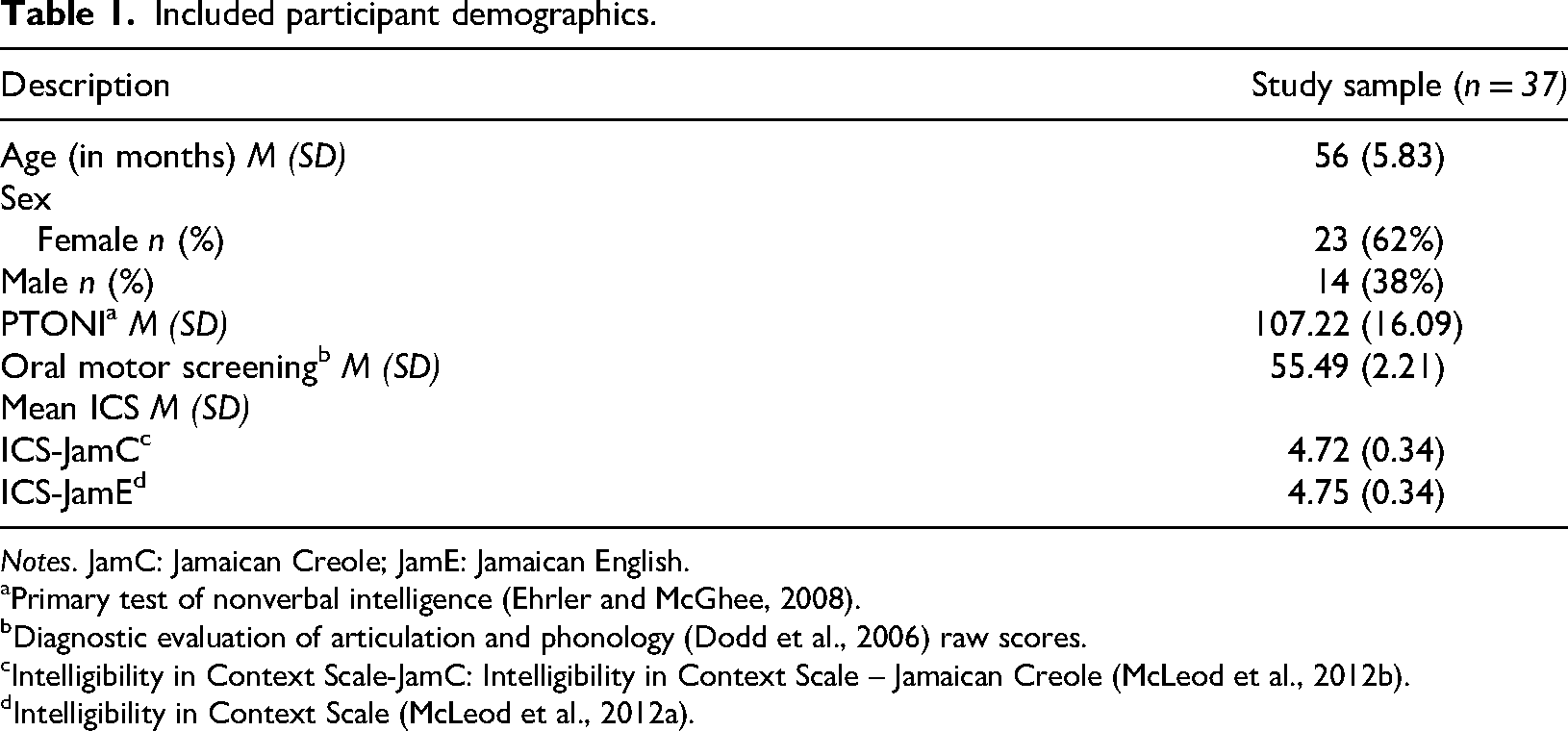
Notes. JamC: Jamaican Creole; JamE: Jamaican English.
Primary test of nonverbal intelligence (Ehrler and McGhee, 2008).
Diagnostic evaluation of articulation and phonology (Dodd et al., 2006) raw scores.
Intelligibility in Context Scale-JamC: Intelligibility in Context Scale – Jamaican Creole (McLeod et al., 2012b).
Intelligibility in Context Scale (McLeod et al., 2012a).
Measures and procedure
Parents completed the FOCUS in English only, in keeping with previous literature validating its use in the Jamaican context (Kokotek et al., 2022, 2023). In contrast, children participated in two assessment sessions, one in JamC and the other in JamE. Each session was conducted by a native speaker of the respective language. Within each session, children completed the Speech Sound Effects Drawing Protocol first, followed by the SPAA-C questionnaire. To control for order effects, sessions were counterbalanced where half the participants completed the JamC assessment first, and the other half completed the JamE session first.
Focus on outcomes of communication under six
Prior to the children's assessments, all parents completed the FOCUS in English. In its original form, the FOCUS included 50 items based on the Activities and Participation components of the WHO ICF (Oddson et al., 2019; WHO, 2024). The FOCUS-34 was created as a streamlined version of the FOCUS-50, with the removal of 16 items from the original questionnaire. The FOCUS-50 scores were converted to FOCUS-34 scores using the FOCUS-34 manual in keeping with research guidelines (Oddson et al., 2019). Based on availability and the annual needs of the Jamaican Creole Language Project, both the FOCUS-50 and FOCUS-34 were used in the current study.
Sound effects study drawing protocol
Children completed the Sound Effects Study Drawing Protocol (McCormack et al., 2022) in JamC and JamE. The assessors used a standard instruction to invite children to draw a picture, with the only difference being the language used to provide the instruction. In the JamE elicitation, the instructions were, ‘I want you to draw a picture for me. Is it OK if I keep it when you are done? Draw a picture of yourself talking to someone’. In the JamC elicitation, the instructions were, ‘Mi waahn yu jraa wan pikcha fi mi. Mi kyan kiip i wen yu don? Jraa yuself a taak tu smadi els’. Children were then provided with a blank sheet of paper (8.5 × 11 inches) and 10 coloured markers (red, orange, yellow, green, dark blue, light blue, purple, pink, brown, black). The assessor handed the paper to the child at an angle so that it did not influence their choice of drawing in either landscape or portrait orientation. While the child completed their drawing, the assessor observed and created an identical replica drawing on a different piece of paper using the same coloured markers. The assessor responded to the child and noted anything the child said, however, did not initiate any conversations while the child was drawing. Once the drawing was complete, the assessor asked the child a standard set of questions about their drawing (e.g. ‘Who is in your drawing?’, ‘How do you know them?’; see McCormack et al., 2022) to encourage the child to provide a self-interpretation. Gathering the child's self-interpretation increases the adults’ ability to listen to what the child is communicating through their drawing and limits the risk of the adult over-interpretating what the child is attempting to express.
The speech participation and activity assessment of children
Following the completion of the drawings, all children completed the SPAA-C (McLeod, 2004a). The SPAA-C is a 10-item questionnaire that uses a visual Likert scale to help children rate their feelings about talking. The SPAA-C has been translated into multiple languages, including JamC (McLeod, 2004b) and previous literature has supported its use in the Jamaican context with both TD preschoolers (Washington et al., 2024) and children with DLD and SSD (Bazzocchi et al., 2024; 2025). In the questionnaire, children rate their experiences talking with different communication partners and in various contexts using the following scale: (i.e. -happy/api, -in the middle/ina di migl, -sad/sad, -another feeling/wan neda fiilin, and ?-I don’t know/no nuo). All children completed the SPAA-C in JamC and JamE.
Analyses
Focus on the outcomes of communication under six
FOCUS total scores were calculated for all participants. The original FOCUS-50 scores were converted to FOCUS-34 scores using the conversion tool that can be found in the FOCUS manual (Thomas-Stonell et al., 2015). In addition to the FOCUS Total Scores, eight Profile Scores were also calculated to describe the child's Capacity and Performance in different domains (Kokotek et al., 2023; Oddson et al., 2019; Thomas-Stonell et al., 2010). Capacity profile scores included expressive language, pragmatics, and receptive language/attention (Oddson et al., 2019; Thomas-Stonell et al., 2010). Performance scores included intelligibility, expressive language, social/play skills, independence, and coping/emotions. Both Capacity and Performance profile scores were calculated using the average score from items assessing each domain (Oddson et al., 2019; Thomas-Stonell et al., 2010).
Drawings
Following the methods outlined in previous works analysing children's drawings (see Holliday et al., 2009; McCormack et al., 2022) participants’ drawings were coded for the presence of three themes: (1) could express talking/listening (T1), (2) drew themselves talking to family/friends (T2), and (3) portrayed themselves as happy when talking (T3). These themes represented the general feelings and experiences shared by the child and have been coded successfully in the Jamaican context (Washington et al., 2024). Student clinicians were trained on drawing analyses and analysed each drawing with the support of the fourth and last authors. The analysis process involved viewing the child's drawing in concert with the notes on the replica drawing and the child's verbal responses to questions about their drawing (see Supplemental Materials for exemplars of children's drawings, descriptions, and verbal responses). All drawings were coded independently by two students and reliability was conducted using a Cohen's Kappa statistic, (< 0.20 = Poor, 0.21–0.40 = Fair, 0.41–0.60 = Moderate, 0.61–0.80 = Good, 0.81–1.00 = Very Good). Good agreement was noted across raters for themes in JamC (κ = .725, p < .001) and JamE (κ = .796, p < .001).
SPAA-C
Responses to each question on the SPAA-C were coded into one of the following three categories: positive emotions (e.g. happy, excited) coded as ‘1’, neutral emotions (e.g. silly, in the middle) coded as ‘0’, and negative emotions (e.g. sad, angry) coded as ‘−1’ (Bazzocchi et al., 2025). This categorisation was not intended to rank responses, but rather to describe the different types of emotional experiences a child could express (Bazzocchi et al., 2024). To avoid over-interpretating a child's feelings a conservative approach was used to classify emotions. Emotions expressed through the ‘another feeling’ option of the Likert scale were classified as ‘neutral’ (e.g. hungry, okay) if they did not clearly fall into the ‘positive’ or ‘negative’ categories. ‘I don’t know’ responses were always coded as neutral.
Once the child's responses were categorised and assigned a numerical value (i.e. ‘1’, ‘0’, ‘−1’), SPAA-C total scores were calculated by summing responses of the first eight questions of the questionnaire within both the JamC and JamE contexts. The decision to include only the first eight questions on the SPAA-C aligns with previous research demonstrating that responses to these initial eight items are particularly consistent among preschoolers (McLeod et al., 2017) and have been effectively utilised with TD Jamaican children (Washington et al., 2024). Including the first eight questions resulted in a total score ranging between −8 and 8, with scores with a negative value (i.e. ‘−8 to −1’) indicating the presence of more negative emotions, scores with a positive value (i.e. ‘1 to 8’) indicating the presence of more positive emotions, and a score of ‘0’ being considered neutral.
Statistical analyses
Data were analysed using the IBM Statistical Program for the Social Sciences (IBM Corp, 2023). To address Aim 1, multiple Pearson correlations were conducted to examine the relationship between the SPAA-C Total Scores (max = 8) and the FOCUS Total (max = 238, FOCUS-34; max = 350 , FOCUS-50) and Profile (max = 7) scores. Prior to conducting the Pearson correlation, a Shapiro–Wilk’s test was run and showed the relationship to be linear with both variables normally distributed (p > .05) and no outliers present. To address the issue of multiplicity when conducting multiple correlations, a Bonferroni correction was applied a priori. An adjusted alpha of p < .005 was used to account for SPAA-C Total Scores being compared to nine different variables (i.e. FOCUS Total and Profile scores). Correlation magnitudes were classified according to Cohen (2013) as minimal (0.1 < |r| < .3), moderate (0.3 < |r| < .5), and strong (|r| > .5). To address Aim 2, a Fisher's exact test was conducted to determine if an association existed between SPAA-C total scores and the themes present in children's drawings. This test was chosen as it has been shown to be appropriate for studies with small sample sizes (Kim, 2017).
Results
Overall findings
Focus on the outcomes of communication under six
The average FOCUS total score was 209.81 (SD = 17.10, Range = 179.52 to 234.6). For the Profile Scores, it was evident that most parents rated their children's highest functioning in the domain of social/play (M = 6.26, SD = 0.74), followed by receptive language/attention (M = 6.18, SD = 0.69), expressive language performance (M = 5.97, SD = 0.77), pragmatics (M = 5.65, SD = 1.01), intelligibility (M = 5.28, SD = 0.77), expressive language capacity (M = 5.27, SD = 0.83), and independence (M = 5.13, SD = 1.12). They rated children lowest in the domain of coping/emotions (M = 5.00, SD = 0.96).
Drawings
All 37 children produced drawings in both the JamC and JamE context. The three themes (T1: could express talking/listening, T2: drew themselves talking to family/friends, and T3: portrayed themselves as happy when talking) were present in most children's drawings in both language contexts. However, themes were present more often in children's drawings in the JamC than in the JamE context (JamC: T1 = 95%, T2 = 81%, T3 = 78%, JamE: T1 = 84%, T2 = 78%, and T3 = 73%). Themes are illustrated amongst participants with positive, neutral, and negative overall SPAA-C scores (see Figures 1 to 3, Supplemental Materials).
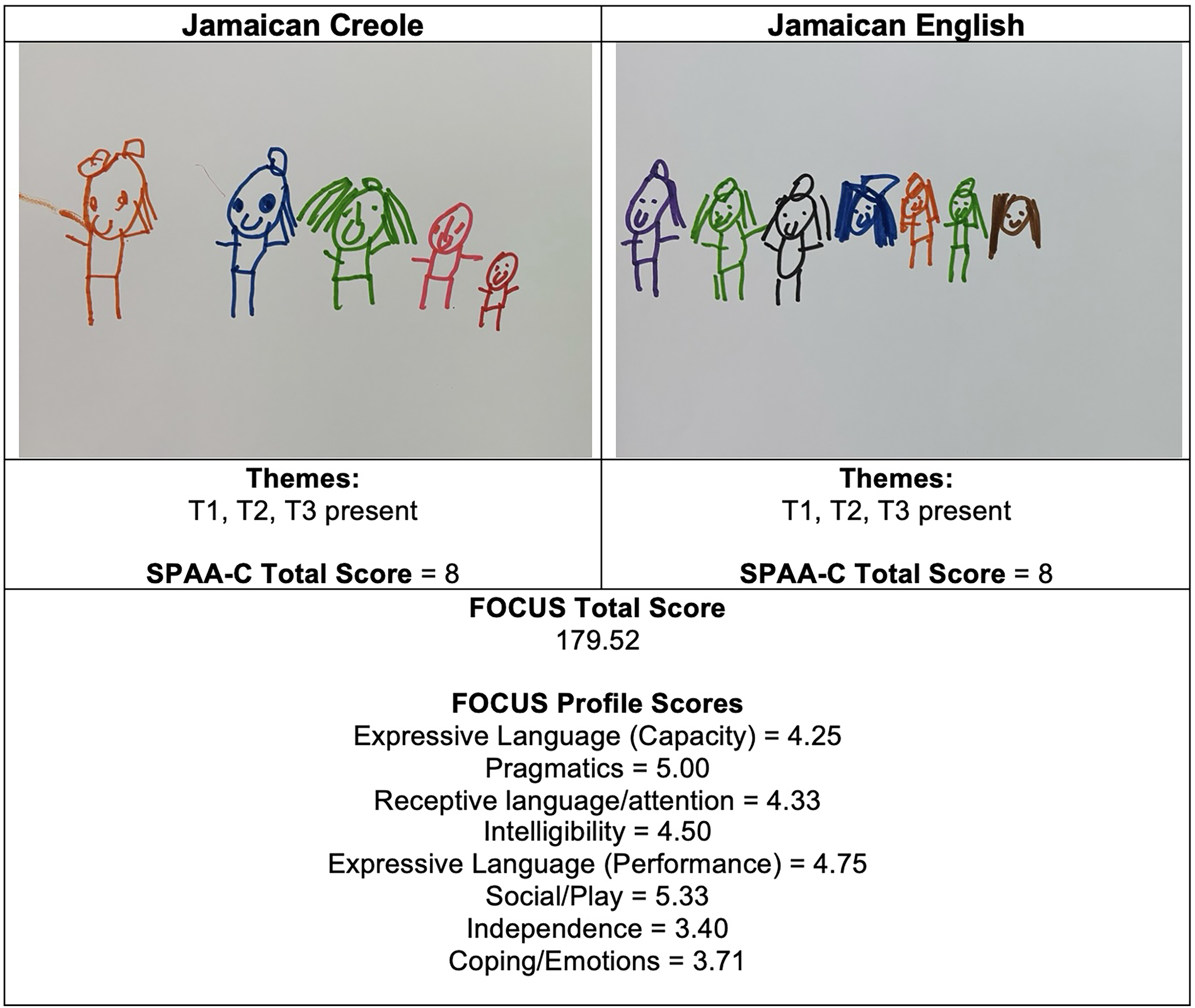
Exemplar of a participant's drawings with positive SPAA-C JamC and JamE scores, and themes coded.
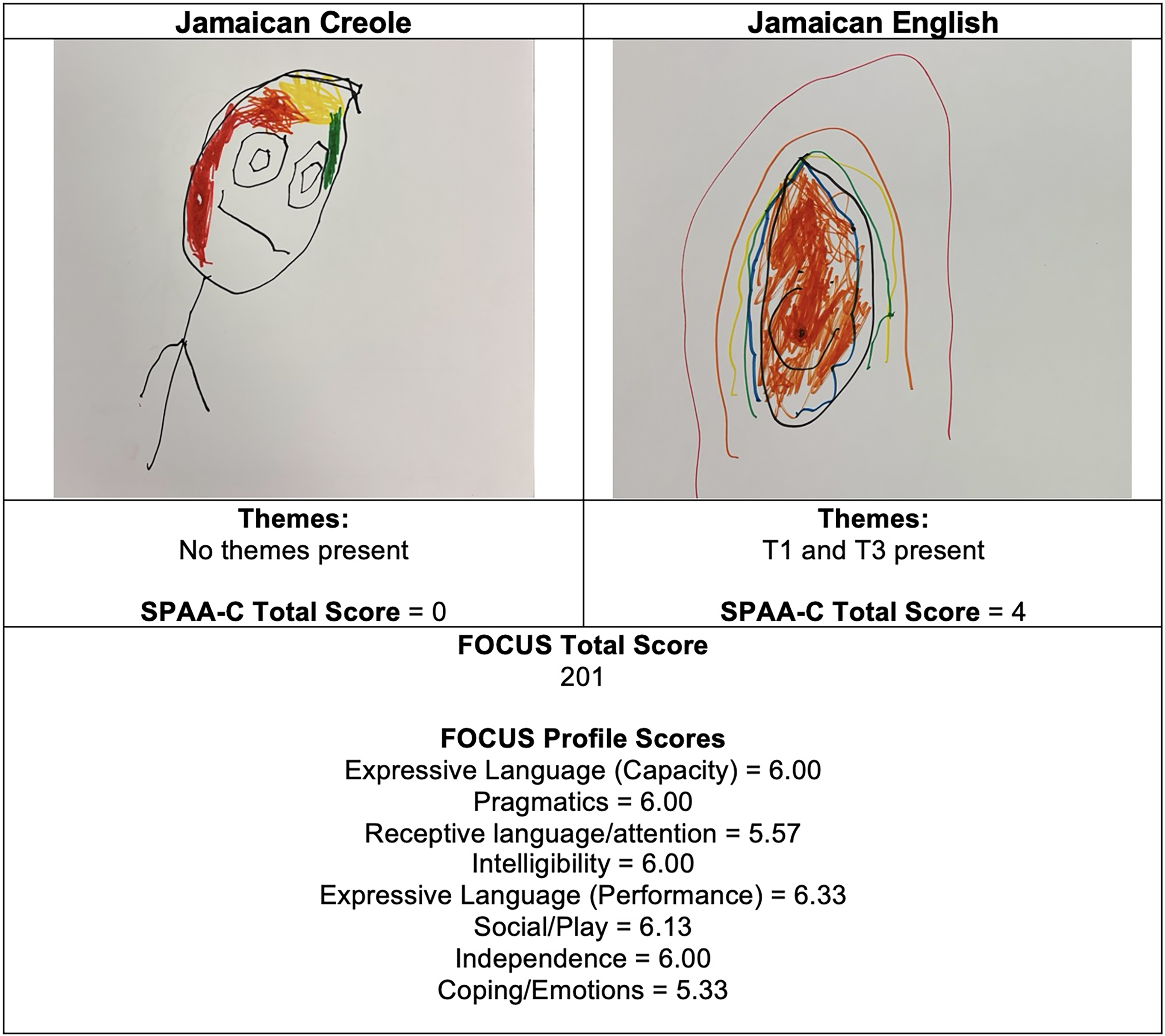
Exemplar of a participant's drawings with neutral SPAA-C JamC and positive SPAA-C JamE scores, and themes coded.
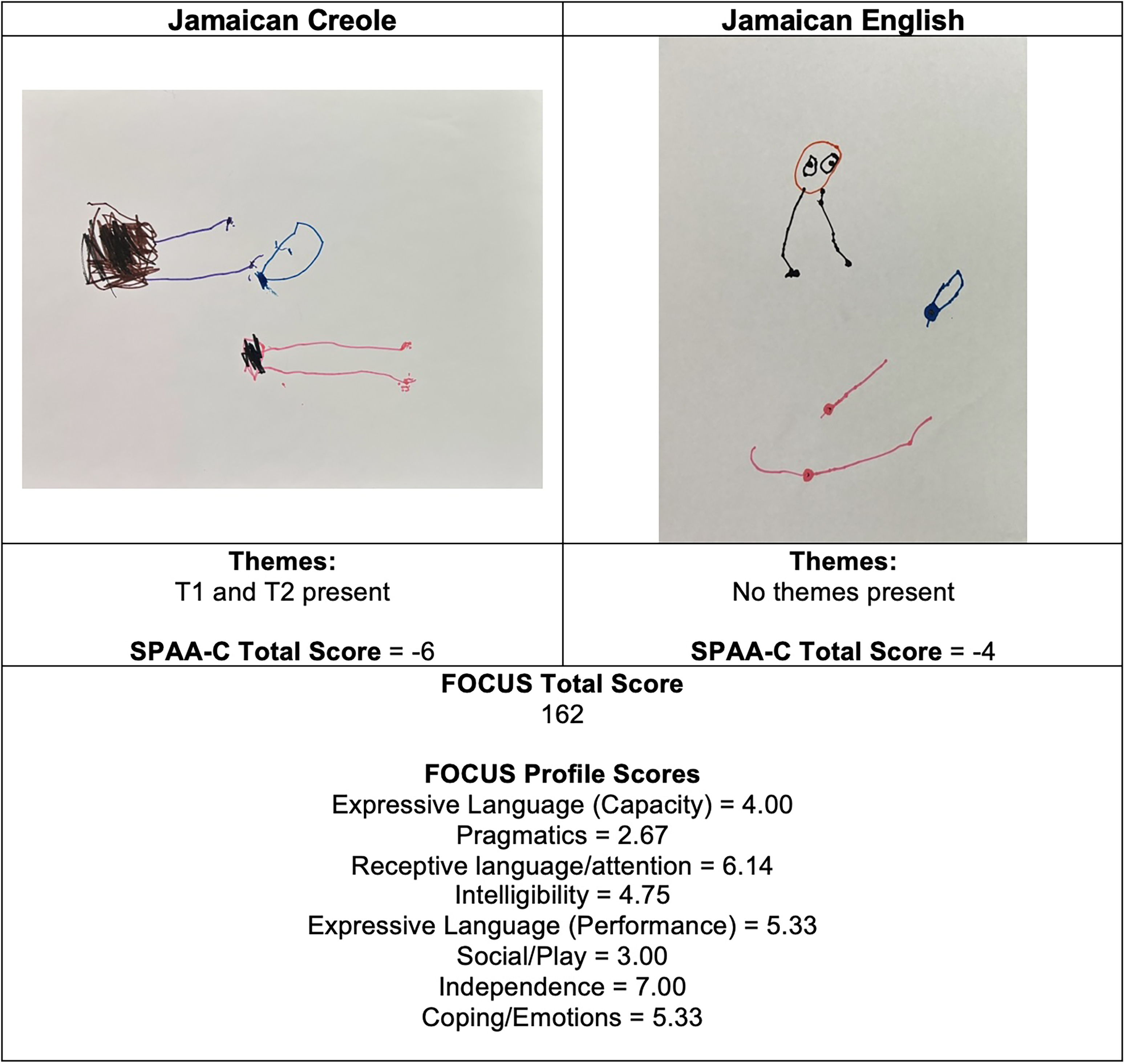
Exemplar of a participant's drawings with negative SPAA-C JamC and JamE scores, and themes coded.
SPAA-C
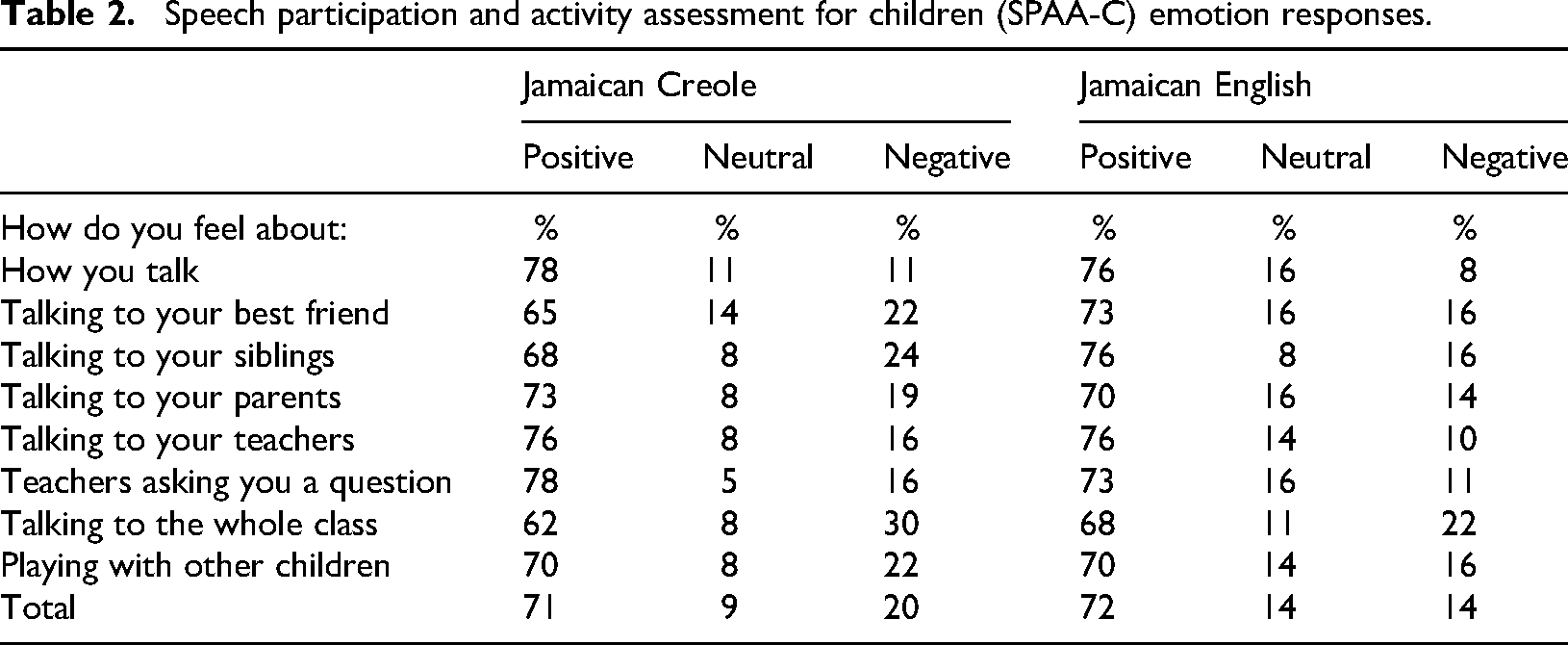
Most children reported they were happy to talk to friends, siblings, parents, teachers, and peers in both JamC and JamE contexts. Children reported 211 positive emotions, 26 neutral emotions, and 59 negative emotions across all questions on the SPAA-C in JamC. In JamE, children reported 213 positive emotions, 41 neutral emotions, and 42 negative emotions. A breakdown of children's responses to SPAA-C questions can be found in Table 2.
Findings by research aim
Relationship between the SPAA-C and the FOCUS – aim 1
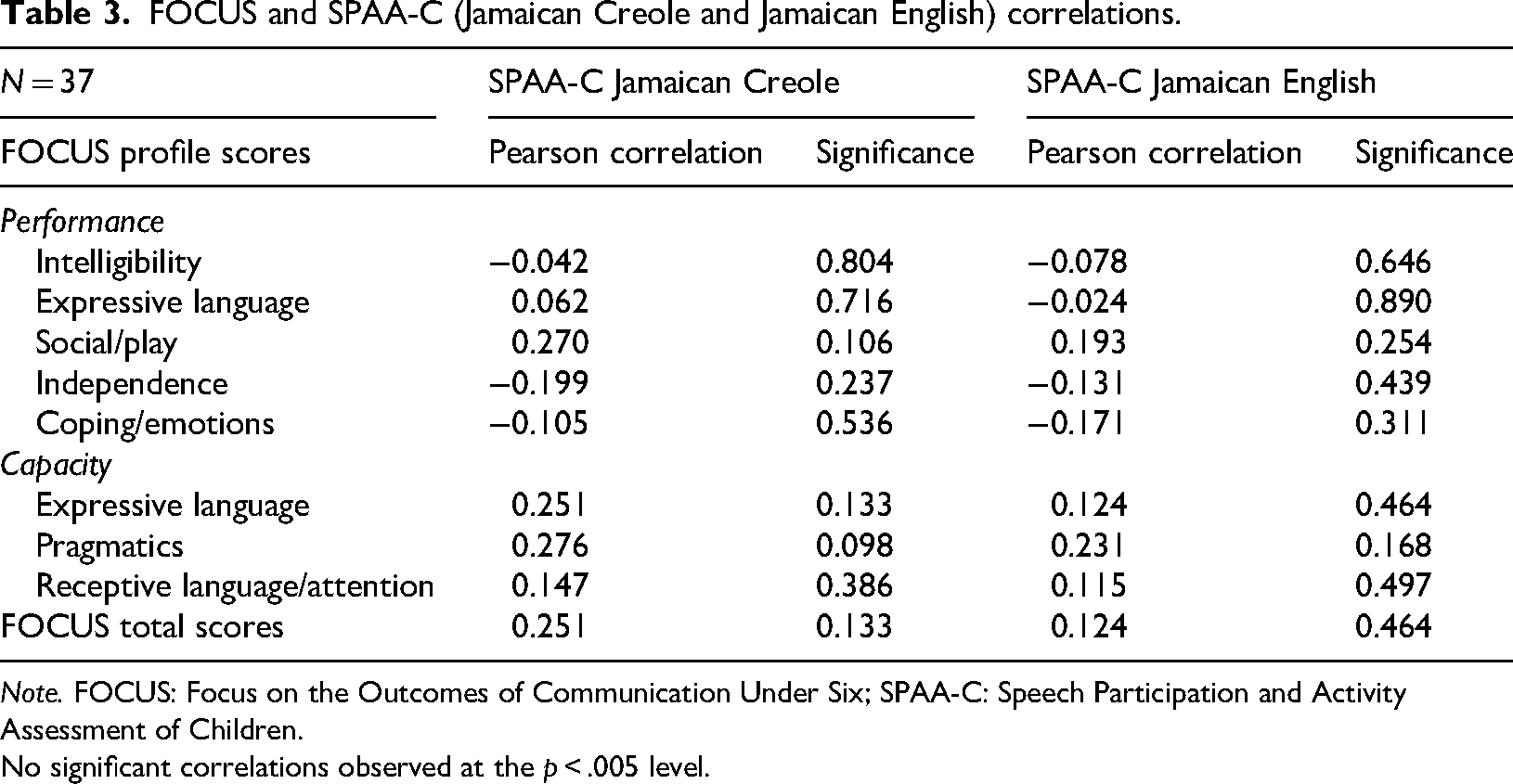
There was no significant correlation between total scores on the SPAA-C and FOCUS Total scores in JamE, r(37) = .124, p = .464, or JamC, r(37) = .251, p = .133. Minimal correlations were found between the SPAA-C total scores and the FOCUS Performance profile scores of social/play, independence, and coping/emotions, as well as the FOCUS Capacity profile scores of expressive language, pragmatics, and receptive language/attention in both language contexts. These correlations were not statistically significant. See Table 3 for a summary of all correlational analyses between the SPAA-C and FOCUS Total and Profile scores in both languages.
FOCUS and SPAA-C (Jamaican Creole and Jamaican English) correlations.
Note. FOCUS: Focus on the Outcomes of Communication Under Six; SPAA-C: Speech Participation and Activity Assessment of Children.
No significant correlations observed at the p < .005 level.
Relationship between the SPAA-C and drawings – aim 2
A Fisher's exact test was used to assess for associations between SPAA-C total scores and themes coded in children's drawings. In the JamC context, there was a statistically significant association between the presence of T1 in children's drawings and SPAA-C total scores, p = .041, with children with positive SPAA-C total scores being more likely to include T1 in their drawings than children with negative SPAA-C total scores. There were no statistically significant associations between the presence of T2 or T3 and SPAA-C total scores, p = .642 and p = .691, respectively. In contrast, for the JamE context, there was no statistically significant association between the SPAA-C total scores and the presence of T1 in children's drawings, p = .068. However, there was a statistically significant correlation between the presence of T2 and T3 in children's drawings and their SPAA-C total scores (T2: p = .027, T3: p = .009), with children with positive SPAA-C scores including T2 and T3 more often than children with negative SPAA-C scores.
Discussion
This study examined relationships between parent-reported and child-directed communication tools in the Jamaican context. We learned that measures like the FOCUS, SPAA-C, and drawings can inform Jamaican children's communication assessments, though in different ways. We also learned that parent reports alone do not fully capture children's lived communication experiences, underscoring the need to integrate both perspectives for a comprehensive assessment of multilingual children's communication.
Observations between the FOCUS and SPAA-C
Minimal correlations were observed between FOCUS and SPAA-C scores, none of which reached statistical significance in the JamC or JamE context. While parents rated their children's communicative functioning highest in social/play, receptive language/attention, and expressive language, they reported the lowest scores in coping/emotional skills. In contrast, most children self-reported positive emotions around communication. This discrepancy highlights the limitations of proxy measures like the FOCUS, which capture observable behaviours but fail to also account for children's internal experiences. Prior research similarly indicates that parents’ perceptions of speech intelligibility and functional communication (Boukouvala et al., 2023; McCormack et al., 2019) often differ from children's self-reported emotions and attitudes. Omitting child-directed measures within an assessment process risks conflating communicative ability with lived experience. These findings reinforce the importance of incorporating child-directed tools to ensure a more holistic understanding of children's communication experiences.
Observations between the SPAA-C and children's drawings
Beyond self-reported measures, children's drawings provided additional insights into their attitudes around communication. The significant and positive associations observed between children's SPAA-C responses and themes present in their drawings motivate ongoing work in this area to understand how children express their communication experiences across child-directed tools and languages. While prior research has shown that children with SSD generally report positive attitudes toward talking when assessed through child-directed tools such as the SPAA-C and KiddyCAT (McCormack et al., 2019), this study, to our knowledge, is the first to directly examine associations between child-directed measures. The significant, positive associations between the SPAA-C and children's drawings reinforce the effectiveness of child-directed measures in capturing children's lived experiences in the Jamaican context (Washington et al., 2024). Unlike proxy measures, these tools allow children to directly communicate their views and feelings, offering insights into aspects of communication that are not externally observable. Notably, both the SPAA-C and drawings are child-friendly methods that are developmentally accessible, even for children as young as four years of age. While this study focused on TD children, these tools have been effectively used with children with SSD (Bazzocchi et al., 2024; McCormack et al., 2022) and DLD (Bazzocchi et al., 2025), demonstrating their broader applicability for capturing the perspectives of children with diverse communication abilities.
The findings observed in this study also revealed differences in themes present in children's drawings across language contexts. Specifically, the themes of could express talking/listening (T1), drew themselves talking to family/friends (T2), and portrayed themselves as happy when talking (T3) appeared more frequently in the JamC than in the JamE context. These results align with previous research suggesting that children's communication experiences vary depending on the language used (Hopf et al., 2016; Washington et al., 2024). As suggested by Washington et al. (2024), the greater frequency of these themes in JamC may be attributed to the widespread use of JamC in everyday social interactions within the community. In contrast, JamE, as the more formal language, is typically used in structured settings, which likely influences how children experience and represent communication in that context. This variation highlights the importance of engaging children in discussions about their communication experiences across all languages spoken.
Limitations and future research
The current study was exploratory in nature and included a relatively small sample size, which may limit the external validity of the findings. While statistical tests were appropriately selected based on the sample size, future research with larger sample sizes may reveal different patterns or correlations between various measures of children's communication experiences in the Jamaican context. Future work could examine whether correlations exist between specific items on the SPAA-C (e.g. ‘How do you feel when talking to your mother and father/brothers and sisters/best friend?’) and related themes in children's drawings (e.g. T2: drew themselves talking to family/friends) to gain deeper insights into the correlations between child-based measures of communication experience. Additionally, this study only included TD children. Expanding this type of research to include Jamaican children with SSD and DLD is essential to understanding how communication challenges influence both parental perceptions and self-reported experiences. This study also focused exclusively on Jamaican children in Jamaica, which may not fully capture the diversity of communication experiences within the broader population of Jamaicans globally. Exploring this research amongst the Jamaican diaspora would provide valuable insights into how various cultural and linguistic factors shape Jamaican children's communication experiences.
Lastly, understanding children's emotional experiences related to communication is critical as these feelings directly influence their social engagement and self-confidence (McCormack et al., 2009, 2011). Gathering these emotions can better identify participation barriers and support targeted interventions that not only improve communication skills but also foster positive attitudes towards social interaction. While this study provides evidence that the SPAA-C and drawings offer children a space, a voice, and an audience, as part of an assessment, this information must be acted upon to also grant them influence (Lundy, 2007). Exploring strategies to enhance and measure children's positive emotions toward communication could strengthen the application of the SPAA-C, not only as an assessment tool for speech-language pathologists but also to more meaningfully integrate children's perspectives into therapy. These efforts would ensure that children's voices shape intervention in a substantive way, moving beyond tokenistic inclusion.
Building on Bazzocchi et al. (2025), this study expanded the approach to categorise and characterise children's emotional experiences expressed through the SPAA-C. While individual SPAA-C questions offer valuable insights into children's communication experiences with specific conversational partners or in particular contexts (Daniel and McLeod, 2017; Kreuger, 2019), an overarching characterisation of these experiences could serve as a useful outcome measure in intervention settings. Future research should investigate the effectiveness of this characterisation in tracking changes in children's communication experiences post-intervention.
Conclusions
This exploratory study contributes to the growing body of literature emphasising the importance of including children's voices in understanding their communication experiences (e.g. Hopf et al., 2016; Lundy, 2007; McCormack et al., 2022; Washington et al., 2024). The findings underscore the importance of integrating both proxy measures and child-directed tools to gain a comprehensive understanding of children's communication profiles. While tools like the FOCUS offer valuable external observations, the SPAA-C and drawings provide direct insight into children's emotions and self-perceptions for all languages spoken. To achieve a more culturally responsive and complete assessment, practitioners and researchers should combine proxy measures with child-directed tools. This combination can empower children to become active partners in their own care whilst enriching professionals’ understanding of Jamaican preschoolers’ communicative experiences.
Supplemental Material
sj-docx-1-clt-10.1177_02656590261461429 - Supplemental material for Listening to Jamaican preschoolers’ voices: Exploring relationships between child- and proxy-based measures of communication experiences
Supplemental material, sj-docx-1-clt-10.1177_02656590261461429 for Listening to Jamaican preschoolers’ voices: Exploring relationships between child- and proxy-based measures of communication experiences by Katarina Miletic, Lauren D Choi, Kereisha Biggs, Nicole BM Bazzocchi and Karla N Washington in Child Language Teaching and Therapy
Footnotes
Acknowledgements
The authors would like to thank the families, children, and school community for their participation in this project. We also thank Professors Laura and Richard Kretschmer, the Jamaican Language Unit, the Education Abroad Team members who helped gather data and the PedLLS Lab Members who made this work possible.

Ethical approval
This research was approved by the Research Ethics Board at the University of Toronto (00043534). Written informed consent was obtained from parents of all participants and assent was obtained from all children.
Funding
This work was supported in part by the Canadian Institutes of Health Research – Canada Research Chair (Grant No. CRC-2022-00366); by the NIH – National Institute of Deafness and Other Communication Disorders (Grant no. 1R21DC018170-01A1); and by the PedLLS Lab Gift Fund.
Declaration of conflicting interests
The authors declared no potential conflicts of interest with respect to the research, authorship, and/or publication of this article.
Data availability statement
Data included in this study are not publicly available. Data may only be shared using a data sharing agreement in the case that informed consent was obtained from the parents of the participant. For questions, please contact the corresponding senior author (Karla N Washington).
Supplemental material
Supplemental material for this article is available online.
References
Supplementary Material
Please find the following supplemental material available below.
For Open Access articles published under a Creative Commons License, all supplemental material carries the same license as the article it is associated with.
For non-Open Access articles published, all supplemental material carries a non-exclusive license, and permission requests for re-use of supplemental material or any part of supplemental material shall be sent directly to the copyright owner as specified in the copyright notice associated with the article.
