



Abstract
Using concepts derived from strategic entrepreneurship, this article discusses small firm growth models and investigates the determinants of small firm growth in Ghana. The study develops hypotheses that relate firm growth to investment in research and development, human capital, social capital, innovation and exporting. Using data from a sample of 441 entrepreneurs, the study develops ordinary least square regression models to test the hypotheses. The models find several positive relationships between firm growth and the characteristics of the entrepreneur, firm resources and firm strategy, and in so doing provide some support from a developing country for the strategic entrepreneurship framework.
Introduction
Studies that aim to investigate the determinants of small firm growth have become increasingly important, as a global scale governments pursue economic policies that focus on wealth creation (Goedhuys and Sleuwaegen, 2010; Hamilton, 2012; Masakure et al., 2009; Wiklund et al., 2009). Many of these studies have focused on developed and transition economies (Andersson and Tell, 2009; Hoxha and Capelleras, 2010; Wiklund et al., 2009); the volume of research that explores small firm growth in developing countries (Doern and Goss, forthcoming, 2012), and more specifically using large-scale samples and econometric models, is small by comparison (Robson and Obeng, 2008). This is surprising, as small firms are perceived to be a potential source of wealth creation (Rankhumise and Rugimbana, 2010) and a route to facilitate the transition from developing to developed nation status (Masakure et al., 2009; Pansiri and Temtime, 2010; Saffu et al., 2008). Although the literature on small firm growth in developed countries is increasing, we still know little about the phenomenon in Ghana, an emerging developing nation and in Africa more generally (Buame, 1996; Kiggundu, 2002; Nichter and Goldmark, 2009).
Many factors have been found to be associated with small firm growth Davidsson et al., 2002; Orser et al., 2000; Pansiri and Temtime, 2010; Saffu et al., 2008; Sleuwaegen and Goedhuys, 2002. Early growth models include the law of proportionate effect (Gibrat, 1931), resource-based theory (RBT) (Penrose, 1959), learning theory (Jovanovic, 1982) and Storey’s (1994) determinants of growth model. More recently, how firms create wealth has been conceptualised as a multidisciplinary construct that combines tools, techniques and concepts from entrepreneurship and strategic management (Hitt et al., 2001, 2011; Ireland et al., 2001, 2003). Since entrepreneurship involves identifying and exploiting opportunities to create wealth (Zahra and Dess, 2001), and strategic management scholars aim to identify why some firms are better at creating wealth than others (Hitt et al., 2011; Parker et al., 2010), when brought together, strategic entrepreneurship (SE) aims to examine how new and established ventures exploit competitive advantage(s) to create wealth. According to Storey (1994), the growth of small firms is determined by a mix of characteristics of the entrepreneur, the firm and firm strategy. The present study investigates the relationships between small firm growth and the economic sector, and relates these to the mindset and human capital of the entrepreneur; the resources of the firm, which include firm size, family ownership, location of the firm and networks; and the strategy of the firm in relation to innovation and exporting. By this approach, this study responds to the current debate concerning improving and refining the set of explanatory variables that affect firm growth (see Parker et al., 2010; Stam, 2010). Thus growth models are intimately related to SE, in that it is through growth that small firms create wealth.
This study makes three contributions to the literature on SE. First, it examines theories of small firm growth and links them to SE to show how established constructs in entrepreneurial growth models are embedded in SE. Second, it explores the relationship between firm growth and the characteristics of the entrepreneur, firm resources and firm strategy in small firms in Ghana. Finally, the data are drawn from a survey of entrepreneurs in Ghana and therefore, the results extend knowledge about entrepreneurship and small firm growth in developing countries.
The article is organised as follows. To begin, three theories of small firm growth are reviewed and linked to the SE framework. The hypotheses to be tested, and the measures of growth employed in the study, are developed. This is followed by an explanation of the research context, data and methodology. The next section presents the results of the determinants of small firm growth from a survey of entrepreneurs in Ghana; and the final section concludes the article.
Small firm growth models and strategic entrepreneurship
Although the study of firm growth has received an unprecedented amount of attention from researchers in recent years (Davidsson et al., 2002; Smallbone and Wyer, 2000; Wiklund et al., 2009; Yasuda, 2005), evidence from the literature finds that theories to explain and predict small firm growth have been sparse (Garnsey, 1998) and ‘crude and contradictory’ (Davidsson et al., 2002: 1). Early theories to explain the growth of small businesses include the law of proportionate effect (Gibrat, 1931), RBT (Penrose, 1959), Jovanovic’s (1982) theory of ‘noisy’ selection and the determinants of growth model (Storey, 1994). The validity of these theories has been examined empirically in developed and developing countries (Almus and Nerlinger, 2000; Davidsson and Wiklund, 1999; Masakure et al., 2009; Orser et al., 2000; Stam, 2010; Weinzimmer et al., 1998; Wiklund et al., 2009). The complementary links between entrepreneurship and strategic management were theorised first in 2001 (Hitt and Ireland, 2001), when it was proposed that wealth creation was related to leaders’ capabilities, investment in research and development (R&D), innovation, networks, internationalisation, organisational learning, the performance of senior management teams, governance and strategic growth (Ireland et al., 2001). Growth is especially important for enabling small firms to develop competitive advantage through achieving economies of scale and increased market power (Ireland et al., 2003). We now review three theories of small firm growth and link them to the SE framework.
Penrose’s (1959) resource-based theory noted that firm growth could be influenced by the extent of the firm’s resources, that the ‘amount of resources administered by a firm has in itself a significant influence on the opportunities for expansion open to the firm’ (Penrose, 1959: 217). Thus, firms with access to more resources, and therefore likely to be larger firms, would tend to grow more rapidly than smaller firms. Resources are broadly construed and include physical, financial and human capital. For Davidsson and Wiklund (1999), the contribution of RBT to understanding small firm growth lies in the importance placed on differences between the internal resources of firms and their capacity to achieve high growth. RBT has been used extensively in strategic management research, and increasingly by entrepreneurship researchers to examine differences in the performance of firms (Ireland et al., 2003). In SE, wealth creation is concerned with the firm’s ability to generate sustainable income, and is influenced by the competencies of the leaders and the firm’s human and social capital resources.
Jovanovic’s theory of ‘noisy’ selection was based on the proposition that ‘efficient firms grow and survive; inefficient [ones] decline and fail’ (1982: 649). According to Jovanovic (1982) firms differ in size not because of their fixed capital structure, but because of differences in their efficiency. Parker (2004) noted that in Jovanovic’s model, entrepreneurs do not know their abilities when they start their businesses. However, as entrepreneurs continue to practise, they learn about their abilities and the able survive and grow, whereas those who are less able decline and exit. The model has been criticised because it was based on the assumption that managers were born with an efficiency level, and even though they learn the level of their efficiency over time, they are not able to alter it (McPherson, 1996). In spite of this criticism, Parker (2004) and Rodriquez et al. (2003) observed that a myriad of empirical studies (e.g. Dunne and Hughes, 1994 and Evans, 1987a, 1987b) have supported Jovanovic’s learning theory model. In SE an entrepreneurial mindset is related to alertness to opportunities, a focus on evaluating and identifying valuable opportunities, and allocating resources in relation to anticipated outcomes. These abilities are shaped by the knowledge and skills of the entrepreneur and influenced by their previous experiences.
In the 1990s, interest in identifying the determinants of small business growth increased (Barkham et al., 1996; Davidsson and Wiklund, 1999; Garnsey, 1998; McPherson, 1996; Mead and Liedholm, 1998; Orser et al., 2000). Storey (1994) reviewed the by-then large volume of literature on small firm growth, and created an analytical framework which brought together the factors that had been found to influence small firm growth. Storey’s framework allocates factors associated with small firm growth to three main groups of characteristics relating to the entrepreneur, the firm and the firm’s strategy. By combining the key theories into a single framework, Storey’s (1994) model provided a comprehensive structure for investigating small firm growth and became one of the most prevalent frameworks used by small business researchers (Davidsson et al., 2002; Freel and Robson, 2004; Smallbone and Wyer, 2000). Recently, Hansen and Hamilton (2011) used Storey’s (1994) framework to distinguish growing small firms from non-growing small firms. The constructs of Storey’s model are central to the SE framework; however, SE advances our understanding of firm growth further by a deeper exploration of the entrepreneurial mindset and entrepreneurial processes as they relate to strategy.
Hypotheses
The research reported in this article investigates the determinants of small firm growth in Ghana. Although concerns have been raised about the applicability to developing countries of theoretical models derived from research conducted in developed countries (Chamlee-Wright, 1997), the lack of theoretical frameworks concerning firm growth in developing countries led us to operationalise our study by using the analytical categories of the entrepreneur, firm resources and firm strategy. To link these categories to SE, we develop hypotheses relating to entrepreneurial mindset, human capital, social capital, innovation and internationalisation.
The entrepreneur
Data were gathered on the age, gender, commitment to R&D, educational qualifications and previous business experience of the entrepreneur. Although age and gender are not part of the SE framework, they are fundamental descriptors of entrepreneurs. Previous research in African countries has identified the dominance of female entrepreneurs, particularly as working proprietors operating from home (Adekunle, 2011; Rankhumise and Rugimbane, 2010). However, successful African entrepreneurs have been found to be male and middle-aged (Kallon, 1990), and male-owned firms grow faster than those owned by women (Mead and Liedholm, 1998). Adekunle’s (2011) study of the determinants of micro-enterprise performance in Nigeria found that female entrepreneurs experienced less growth in profit compared with their male counterparts. In a study of entrepreneurs in Ghana, Robson and Obeng (2008) found that men were more likely than women to face barriers relating to the high cost of replacing equipment, and difficulty in finding appropriate equipment; also, that women were more likely than men to face inadequate family finance and poor-quality utilities. The small amount of published research that examines the age and gender of entrepreneurs in Ghana means that the results from the present study will provide novel insights into these characteristics.
The entrepreneurial mindset is defined as ‘a growth-oriented perspective through which individuals promote flexibility, creativity, continuous innovation and renewal’ (Ireland et al., 2003: 968). Investment of resources in R&D indicates that the entrepreneur is actively pursuing a strategic approach to developing inventions to bring to market in the future. Thus, we would expect that small firms that invest in R&D, i.e. that have an entrepreneurial mindset, would be associated with higher levels of growth than those that do not invest in R&D, which leads to our first hypothesis:
H1: Growth is positively associated with expenditure formally committed to R&D.
Human capital refers to the knowledge and skills of the firm’s workforce (Dess and Picken, 1999). In relation to human capital, research that examines the relationship between the entrepreneur’s educational qualifications and firm growth has not been conclusive (Goedhuys and Sleuwaegen, 2010; Mead, 1999; Nichter and Goldmark, 2009). Many studies have found a positive association between level of education and firm growth (Almus, 2002; Brown et al., 2005; Littunen and Tohmo, 2003). However, Barkham et al. (1996) found no significant association, and Lee and Tsang (2001) found a negative association between education and small firm growth. Studies in developed countries have found a statistical relationship between formal education and the growth capabilities of small firms, in that education beyond primary school has been found to be associated with firm growth (Harrison and Friedrich, 1994; Parker, 2004). However, for firms in developing countries, ‘greater complexity emerges when one examines the relationship between education and SMEs’ growth in developing countries’ (Nichter and Goldmark, 2009: 1454). On balance, we would expect growth to be higher in those firms led by entrepreneurs with higher levels of formal qualifications, which leads to our second hypothesis:
H2: Growth is positively associated with higher levels of formal qualifications.
Entrepreneurs’ previous experience will have exposed them to opportunities to learn about entrepreneurship, and this has been found to be a consistent indicator of small firm growth (Barringer et al., 2005; Lee and Tsang, 2001; McPherson, 1996; Rauch et al., 2005). Previous business experience is employed as an indicator of entrepreneurial learning and accumulated knowledge, and we would expect that greater experience would be associated with higher growth, which leads to our third hypothesis:
H3: Growth is positively associated with the entrepreneur’s previous experience.
Small firm resources
The resources of the firm include firm size, family ownership, firm location and networks. Most firms in Africa are small in size and located in rural areas. Firm size provides one of the most consistent indicators of small firm growth (Almus, 2002; Liedholm, 2002; McPherson, 1996; Yasuda, 2005). These empirical studies have found an inverse relationship between the initial size of the firm and growth, thereby supporting Jovanovic’s (1982) learning theory, and few studies have found a positive association between small firm size and growth. This implies that larger businesses grow faster than small businesses (Biesebroeck, 2005; Frazer, 2005; Roper, 1999), which leads to our fourth hypothesis:
H4: Growth is positively associated with firm size.
The extent and impact of family ownership has been rarely measured in African countries, and thus the present study provides a novel insight into an overlooked factor in small firm growth in Africa. A family business is defined as one where one or more relatives of the owner-manager are employed in the firm. Generally, the importance of family obligations is accepted as a characteristic feature of African societies, such that employees are recruited on the basis of kinship rather than ability. Previous research has found that family firms were more likely to experience managerial and financial difficulties than non-family firms (Ibrahim et al., 2003; Kotey, 2005; Sharma, 2004), to encounter more problems than non-family firms (Robson and Obeng, 2008; Sirmon and Hitt, 2003), and to have lower survival rates than non-family firms (Ibrahim et al., 2003: 474). This leads to our fifth proposition, that family firms will grow at a slower rate than non-family firms:
H5: Growth is negatively associated with family ownership.
In terms of firm location and firm growth, ‘location matters’ (Hoogstra and van Dijk, 2004: 179). In most previous studies, small firms located in urban areas appear to grow faster than those located in rural areas (Davidsson et al., 2002; Sleuwaegen and Goedhuys, 2002), and few studies have reported otherwise (Keeble, 2003). Urban locations are more likely to be associated with resource munificence and denser networks, and therefore are conducive to firm growth. Thus we would expect that firms located in urban areas would grow faster than those located in less urban and rural locations, which leads to our sixth hypothesis:
H6: Growth is positively associated with higher levels of urban resources.
The networks between individuals are referred to collectively as ‘social capital’ (Hitt et al., 2002). Social capital is perceived to be advantageous to a firm, as it increases access to resources which, in turn, have an impact on firm performance. The use of networks for business advice has the potential to improve performance and generate strategic benefits for the firm. Specifically, social networks (e.g. friends, family and business associates) have been found to be one of the most important sources of advice for most small businesses, particularly in developing countries (Buame, 1996; Chamlee-Wright, 1997; Chell and Baines, 2000; Jay and Schaper, 2003). Thus, we would expect growth to be higher in firms which have received business advice from their networks. The lack of empirical studies on the use of external advice and small firm growth in Ghana means that our analysis is exploratory, which leads to our seventh hypothesis:
H7: Growth is positively associated with the use of external business advice.
Small firm strategy
We investigated the relationship between firm growth and strategies concerning innovation and export involvement. With regard to innovation and firm growth, a positive association between innovation and growth in employment has been noted (Calvo, 2006; Freel and Robson, 2004; Yang and Huang, 2005), although the debate has not been conclusive (Storey, 1994). In Ghana, small firms are considered to be low innovators, and this has been explained by low educational qualifications, poor skills and competences and low levels of training (Robson et al., 2009; Wolf, 1999). Thus, we might expect that firm growth would be associated with small firms that innovate; this leads to our eighth hypothesis:
H8: Growth is positively associated with innovation.
In African countries most exports originate from large firms. In Ghana the major export products are minerals and agricultural products (Wolf, 1999), and these tend to be within the domain of large firms. Despite being one of the more diversified portfolios within Africa the low level of exports from small firms constrains Ghana’s development potential in terms of generating national income. This low level of export intensity has been attributed to the poor performance of manufacturing firms and endogenous and historical factors (Naudé and Krugell, 1999). The majority of small firms in Ghana do not export, and research confounds the general belief that exporting firms grow faster than non-exporting firms (Ibeh, 2003; Wagner, 1995). In a study of the sources of finance for non-traditional exporters in Ghana, Abor and Biekpe (2006a) reported a negative association between growth and export intensity. This has been attributed to the poor competitiveness of Ghanaian products in the world market (Frazer, 2005; Soderbom and Teal, 2003) and the lack of technical efficiency across firms (Teal, 1999). In contrast, Frazer’s (2005) study in Ghana found that exporting manufacturing firms were neither more nor less likely to fail or exit than the others; however, firms that switched from export to local markets were more likely to exit. This supports Ireland et al.’s (2001) view, that internationalisation enables firms to accrue a positive wealth creation outcome. Thus the picture is complex, and our final proposition posits that on balance, exporting is positively associated with growth.
H9: Growth is positively associated with export involvement.
Method
Research context
The context of the present study is Ghana, Africa. Since independence in 1957, Ghana has experienced fluctuations in prosperity that have seen national wealth rise and fall. Taking a broad view of Ghana’s development since independence, although advances have been made in terms of the establishment of a liberal democracy, development initiatives have not consistently generated beneficial outcomes (Berman, 2003). In recent years, Ghanaian gross domestic product (GDP) has risen, averaging about 6 percent a year since 2000; inflation and interest rates have reduced substantially to around 10 % and interest rates have fallen from 30 percent to around 15 percent (World Bank, 2007). However, the situation encountered by the business community is not as rosy:
Unfortunately, the decline in interest rates has not been fully reflected in the lending rates of banks. Bank lending rates have only marginally declined from a range of 39.0–55.0 per cent at the end of December 2000 to 39.0–53.0 per cent at the end of December 2001. (Republic of Ghana, 2002: 15)
More recently, in 2009 GDP fell to 4.7 percent, the lowest since 2002. According to Ghana Statistical Services (2012), GDP for 2011 grew by 14.4 percent over the 2010 figure (8%) in real terms.
The economic structure of most African countries is polarised between a small number of large corporations and many micro- and small enterprises (McDade and Spring, 2005; Sleuwaegen and Goedhuys, 2002). In between is the ‘missing middle’ of small firms that employ wage labour (Mkandawire, 1999: 34). According to the World Bank, Ghana was ranked among the top 10 reformers on the ease of doing business (World Bank, 2007) thus, Ghana presents itself as one of the more developed countries in Africa.
Historically, development strategies in Africa have been public-sector led. However, employment in small firms is potentially an important route to development for many developing countries, as well as a source of income and supplier of domestic goods and services (Goedhuys and Sleuwaegen, 2010; Mead and Liedholm, 1998). The promotion of a thriving economy led by a new generation of entrepreneurs has been recognised as a potentially viable route to development: new jobs come into being in small firms either in net creation of new businesses, or through the expansion of existing firms (Mead and Leidholm, 1998; Saffu et al., 2008).
The present study targets firms with a minimum of four employees and investigates the determinants of firm growth. This definition of firm size was adopted in order to avoid bias in favour of the large number of subsistence entrepreneurs in Ghana. Furthermore, Ghanaian government policy and small firm support organisations, such as the Empretec Ghana Foundation, also target this size of firm (Wolf, 1999).
Sample and data collection
This study is based on survey responses from 441 Ghanaian entrepreneurs who completed a questionnaire in face-to-face interviews in Ghana between January and June 2005. Due to the lack of a single public register of small firms in Ghana (Robson and Obeng, 2008; Wolf, 1999), the survey population was drawn from multiple sources of business listings (Ghana Export Promotion Council, Association of Ghana Industries and Ghana Telecom Directory; see Obben and Magagula, 2003). The survey response rate was 83 percent. The entrepreneurs who completed the questionnaire were located in six regions of Ghana: Greater Accra, Central, Western, Eastern, Ashanti and Northern, where approximately 83.3 percent of all industry establishments are located, according to the 2003 industrial census. Non-response bias tests were carried out by using core information such as the number of employees and business activity from the firms which collected the questionnaire but did not respond. Following Bullock’s (2003) approach there was no evidence of response bias at the 10 percent level. Table 1 shows the summary statistics and correlation matrix, and there was no evidence of multicollinearity.
Descriptive statistics and correlation matrix.
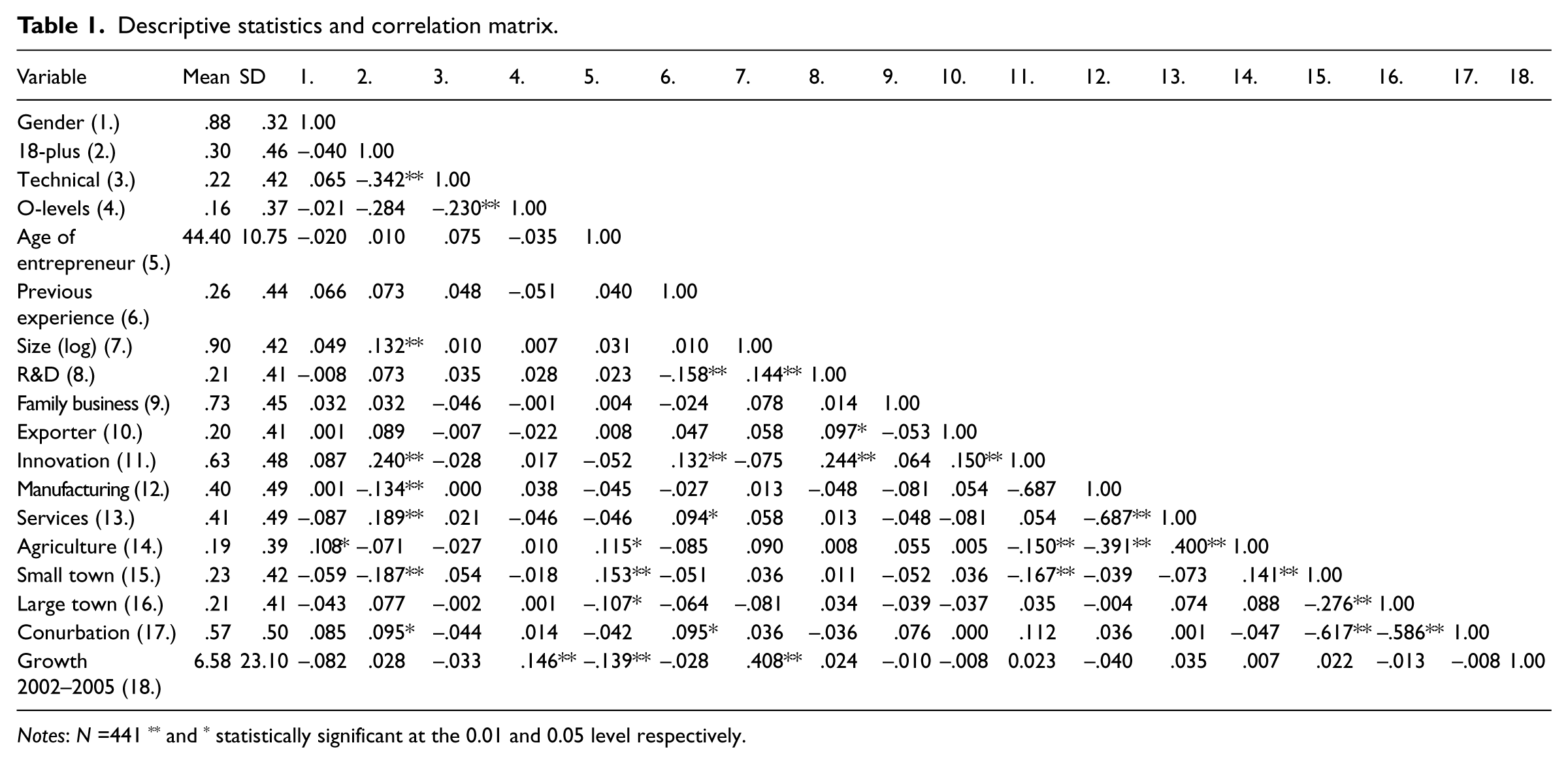
Notes: N =441 ** and * statistically significant at the 0.01 and 0.05 level respectively.
The majority of African economies are mixed, comprising a dominant agricultural sector, slow-growing manufacturing sector and fast-growing service sector (Killick, 1999). The low resource barrier in service firms makes them especially attractive to entrepreneurs in resource-poor environments.
The entrepreneurs in the survey operated in the manufacturing (38.6%), services (43.4%) and agricultural (18%) sectors respectively, where the values in parentheses are the sectoral composition of the data. The sample excludes one-person undertakings, of which there are many in Ghana, and focuses on firms that hire between four and 50 employees. These criteria were applied because they were the main focus of Ghanaian government policy as well as the Empretec Ghana Foundation. Throughout this article we have referred to the respondent firms as ‘small’ businesses, as this is in line with the European Union (EU) definition of small businesses and therefore likely to be familiar to most readers. However, we acknowledge that in the development studies literature, businesses with up to 50 employees would not be considered small (Osei et al., 1993). Given that we have been able to assemble a large dataset and that the response rate is high, we are confident that the results are reliable and statistically robust.
Data analysis
The data for the analysis were the results of estimates of ordinary least square (OLS) models which report the relationship between employment growth and the characteristics of the entrepreneur, firm resources and firm strategy.
Variables. Firm growth rates can be operationalised in several ways (Delmar et al., 2003). In the present study, growth is measured by the change in the number of employees from 2002 to 2005. The growth rates were computed based on annualised rate growth method (Brouwer et al., 1993). Although other measures of growth such as revenue (McDade, 1998), productivity and profitability could have been adopted, the unwillingness of all the respondents to provide information about sales, output and profitability resulted in an inadequate number of responses for meaningful statistical analysis. In addition, measuring the number of employees is often favoured, as it is remembered more readily by respondents and less vulnerable to inflation than alternative measures such as output, income or assets (Mead and Liedholm, 1998).
Information about the entrepreneurs’ qualifications is grouped into four categories:
18-plus education (postgraduate, professional, degree or advanced-level qualifications);
technical (technical, vocational and apprenticeships);
secondary; and
junior secondary or lower qualifications.
Qualifications below junior secondary school were excluded from the comparison group. For external advice and networks, the sources are categorised into seven groups:
market and supply chain (customers and suppliers);
social networks (friends, family, business associates);
professional specialists (banks, accountants and solicitors);
professional generalist (consultants and institutes of higher education);
business associations (trade associations, professional associations and informal sector associations);
government-sponsored schemes (National Board for Small Scale Industries [NBSSI] and Ghana Regional Appropriate Technology Industrial Service [GRATIS]); and
bilateral or multilateral agencies (African Project Development Fund [APDF], Empretec, Technoserve, Support Programme for Enterprise Empowerment and Development [SPEED]).
In terms of innovation, data concerning patents is in its infancy in Ghana, and hence we have adopted the approach followed in the EU Harmonised Innovation Survey (Kleinknecht and Mohnen, 2002). Respondents were asked to report whether they had introduced novel or incremental innovations in seven categories: products or services, production processes (including storage), work practices and workforce organisation, supply and supplier relations, markets and marketing, administration and office systems and product or services distribution in the research study period. Novel or radical innovation was new to the firm and the industry, while incremental innovation was new to the firm but not new to the industry. Our measure of innovation included in the models is novel or incremental innovation in any one or more of the categories.
Table 2 provides a summary of the definitions of the variables included in the growth models.
Variables included in the growth models.
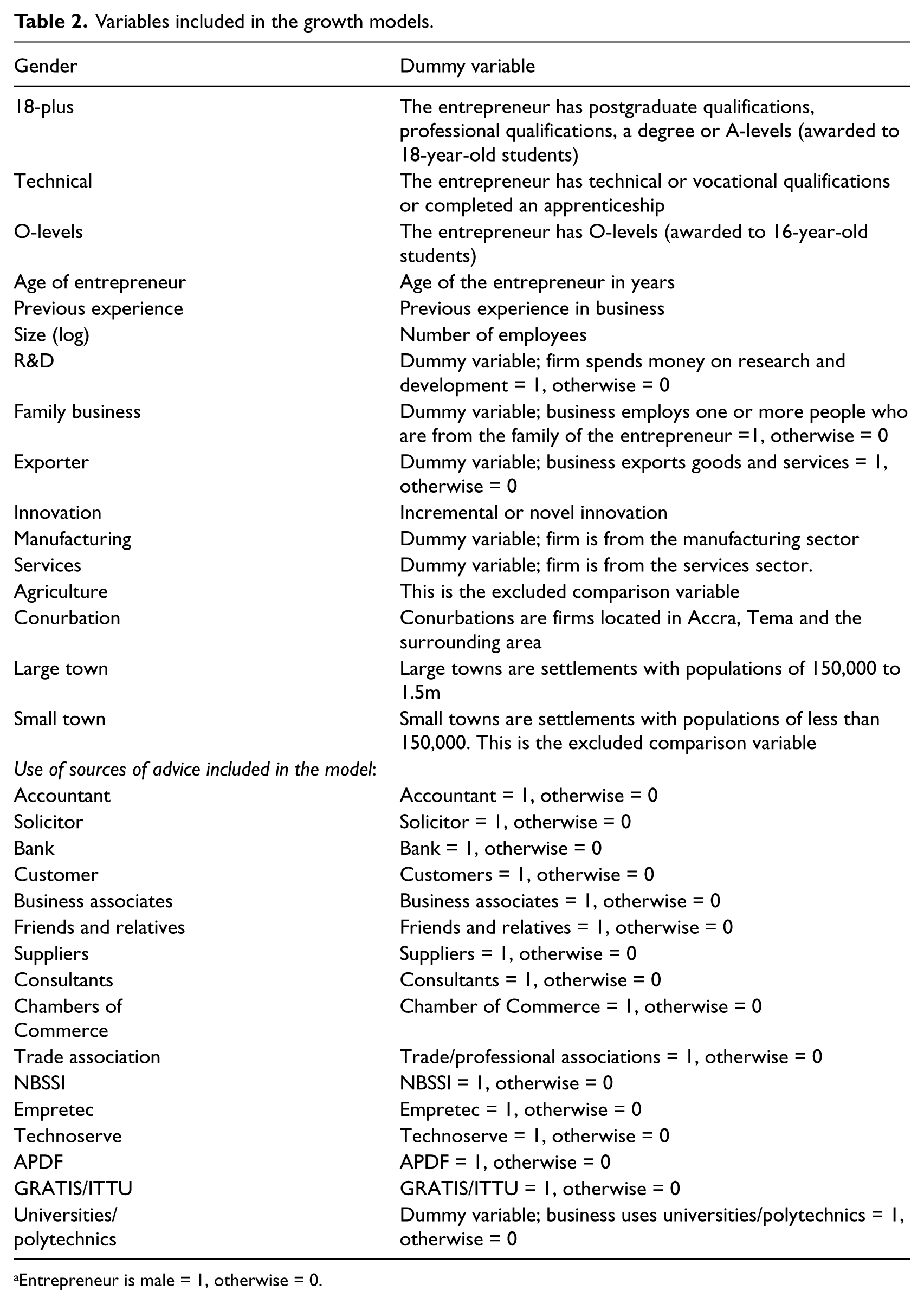
Entrepreneur is male = 1, otherwise = 0.
Results and discussion
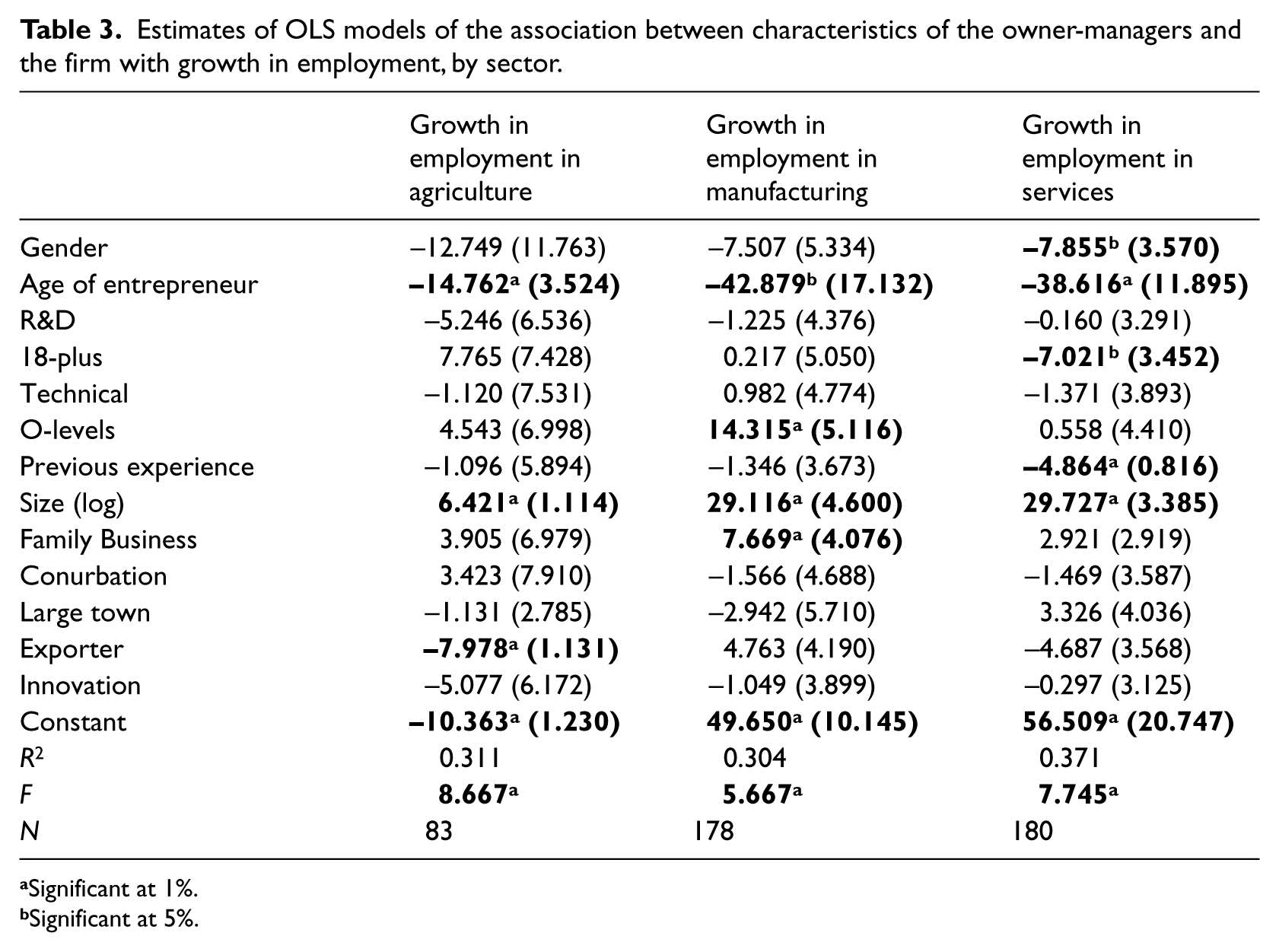
Table 3 presents the estimates of the OLS models of the association between business growth and the characteristics of the entrepreneur, firm resources and firm strategy.
Estimates of OLS models of the association between characteristics of the owner-managers and the firm with growth in employment, by sector.
Significant at 1%.
Significant at 5%.
The entrepreneur
First, we present a background analysis of the age and gender of the entrepreneur. This provides the context of the study and is independent of our SE hypotheses. The estimates of OLS models presented in Table 3 show that only age was found to have a significant statistical association with growth in employment in all the three sectors of the economy. The negative association between age and firm growth demonstrates that the growth rate in employment decreases with age, implying that the younger entrepreneurs would be associated with higher growth rates in employment rather than the older owner-managers (Almus and Nerlinger, 1999; Brown et al., 2005; Roper, 1999). Notwithstanding the above finding, Kiggundu (2002) concluded that successful entrepreneurs in Africa tended to be middle-aged.
The regression results suggest that compared with female entrepreneurs, male entrepreneurs in service-sector firms were more likely to be associated with negative firm growth. This relationship was statistically significant at the 5 percent level. Furthermore, there was no association between gender and growth in employment with regard to agricultural and manufacturing firms. This result contradicts the conclusion drawn from previous research, which found that male-owned firms grow faster than female-owned firms (Abor and Biekpe, 2006a; Cliff, 1998; Kiggundu, 2002; McDade and Spring, 2005; Mead and Liedholm, 1998; Shelton, 2006). Mead and Liedholm (1998) reported that the likelihood of small firm survival and growth is higher if they are owned by male entrepreneurs. In the Ghanaian context, Abor and Biekpe (2006a) observed that female owner-managers do not network effectively and have a lack of access to sources of information and capital compared to their male counterparts hence, their poor performance. However, one reason to explain the present study’s finding could be the higher use of networks for business advice by female owner-managers compared to male owner-managers. Furthermore, Abor and Biekpe’s (2006b) study demonstrated that small firms operated by female owner-managers with high educational qualifications could report profits double that of their male counterparts.
H1 proposed that investment in R&D was indicative of an entrepreneurial mindset and would be associated with higher growth. The analysis found no statistical association between growth in employment and R&D activities, suggesting that when resources are invested in R&D, the opportunity cost impacts on firm growth. This finding is robust across the three sectors of the economy, and highlights the resource constraints of small firms that hinder their capacity to adopt strategic investments in R&D.
For the relationship between formal educational qualifications and growth in employment, partial support was found for H2. The results in Table 3 support the view that ‘empirical studies linking education and training to entrepreneurial success have had mixed and contradictory results’ (Kiggundu, 2002: 243). Although no significant relationships between firm growth and formal educational qualifications across the three sectors of the economy were found, it was surprising to observe a negative and significant association between firm growth in the services sector and entrepreneurs with A-level or higher qualifications. However, a positive relationship was found between firm growth and entrepreneurs with secondary school qualifications and manufacturing firms. These results contradict previous empirical findings on the relationship between the educational qualifications of the owner-manager and employment growth (Rauch et al., 2005: 692). Thus, the present study’s results provide partial confirmation of an earlier study undertaken in Ghana by Sowa et al. (1992), which found a significant and positive link between owner-managers with technical education and business performance, and provides partial support for a relationship between human capital and firm performance.
Most of the studies which have found positive relationships between educational qualifications and growth in employment were conducted in the manufacturing sector (Davidsson et al., 2002; Mead and Liedholm, 1998), and did not consider different qualification levels (Barkham et al., 1996; Hall, 1995). The strength of the present study’s finding is derived from the inclusion of three main sectors of the Ghanaian economy and discrete qualification levels. The finding that entrepreneurs with O-levels were likely to lead faster-growing firms provides support for the Government of Ghana’s poverty reduction strategy, as the majority of the owner-managers are in this category.
Although the inverse relationship between the owner-managers with A-level or higher qualifications and growth in employment was surprising, Lee and Tsang (2001) made a similar observation. However, their study measured growth in term of sales and profit. The present study’s finding does not suggest that A-level or higher qualifications and technical qualifications were not relevant with regard to the small firm growth, as their impact could be indirect. For example, further analysis shows that owner-managers with A-level or higher qualifications were more likely to use external advice such as professional specialists and generalists, than those with lower qualifications. In addition, the higher use of those sources of advice was likely to have influenced business performance significantly. Moreover, studies undertaken by Frazer (2005), Lall (1995) and van Dijk (1997), have shown that lack of technical skills has resulted in the low level of productivity among Ghanaian manufacturing firms, and has rendered their products uncompetitive in the world market.
We found a statistically significant negative association between the entrepreneur’s previous experience and employment growth in the services sector. However, there is no statistically significant association between previous experience and employment growth for firms in the agriculture and the manufacturing sectors. These findings support the claim that the previous experience of owner-managers with firms in the services sector is more likely to be a stumbling block for business growth, hence the negative association (Brown et al., 2005; Kiggundu, 2002). Other studies have reported inconsistent results, although Mead (1999) noted that education and previous experience complement each other, and that owner-managers who exhibit both skills appear to perform better than the others. Thus H3 is not supported.
Small firm resources
The growth models in this study include variables for firm size, family ownership, location (captured by a series of dummy variables) and use of business advice in the estimates of the OLS models. Table 3 shows a positive association between the size of the firm and firm growth across the three sectors of the economy. Furthermore, a positive association was found between family business and growth in employment in the manufacturing sector, although no statistical association was found with location (both conurbation and large towns, compared to small towns).
The regression results in Table 3 demonstrate that medium-sized firms in Ghana were more likely to grow faster than small and micro-sized businesses. These results are not surprising for Ghana, as various empirical studies undertaken to measure the productivity and growth performance of firms in the manufacturing sector have found similar results (Biesebroeck, 2005; Frazer, 2005; Teal, 1998). The studies by Frazer (2005) and Teal (1998) found that large firms were more productive and more likely to survive and grow more rapidly than small firms. Van Dijk et al. (1997: 131) also confirm this picture of low productivity and low labour returns for micro-businesses in Ghana. Micro-businesses have low productivity because the value added per unit of labour is three times higher in large firms than in micro-firms. Sleuwaegen and Goedhuys’ (2002) study of firm growth in sub-Saharan countries also found a positive association between business size and employment growth. Thus H4 is supported.
The data in Table 3 show a significant and positive association between family ownership and employment growth in manufacturing firms; however, this was not statistically significant in the agricultural and services firms. Family firms in the manufacturing sector were found to grow faster than non-family firms. Notwithstanding the above result, in the African context this finding is elucidated when sociocultural factors are taken into consideration. For example, Buame (1996) observed in Ghana that family links and connections served as a source of information and resource acquisition for small firms. Alternatively, the result could be linked with the availability of low-cost or free labour associated with family firms, as owner-managers are obliged to employ family members irrespective of their level of competence (Buame, 1996; Takyi-Asiedu, 1993). Therefore, H5, that non-family firms would grow faster than the family firms, was not supported.
Although it was anticipated that firms located in conurbations and large towns would grow faster than those located in small towns, the estimates of OLS results shown in Table 3 show no association between the firms in conurbations and large towns with growth in employment. In neighbouring Côte d’Ivoire, Sleuwaegen and Goedhuys’ (2002) study of firm growth noted that firms located in Abidjan, the commercial capital of the country, were more likely to engage in networking and subcontracting, which provided a greater opportunity for growth than for the firms located in other parts of the country. However in Ghana, H6 is not supported.
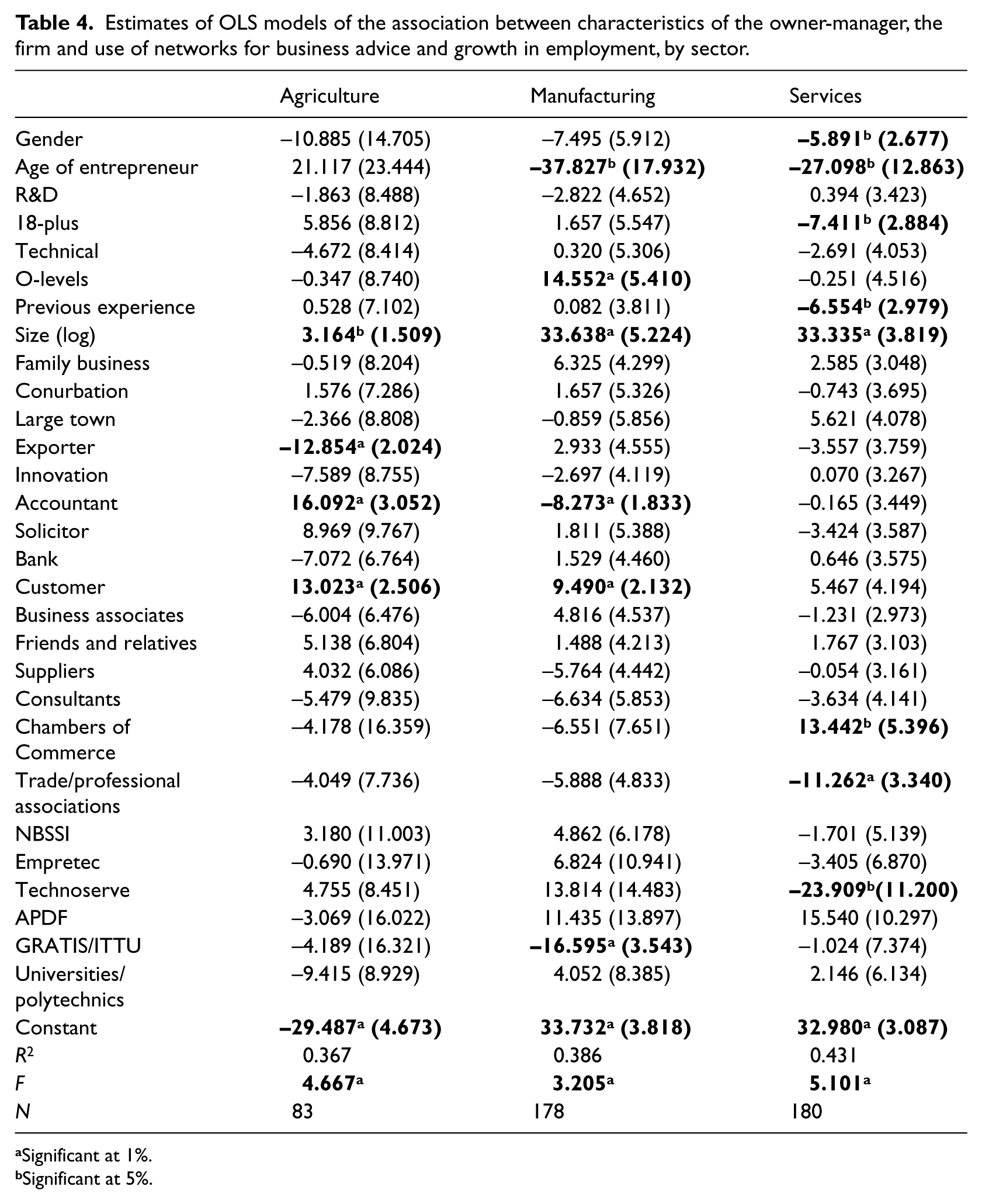
Table 4 presents the regression results of the association between firm growth and the characteristics of the entrepreneur, firm resources and the use of networks for business advice, by sector. In terms of the impact of use of external advice on firm performance, the results show that the use of customers and accountants had the strongest association with firm growth.
Estimates of OLS models of the association between characteristics of the owner-manager, the firm and use of networks for business advice and growth in employment, by sector.
Significant at 1%.
Significant at 5%.
By comparing the results in Table 3 and Table 4 with particular reference to the statistical associations, both sets of results are similar, with the exception of differences in age of the entrepreneurs in the agricultural sector and family firms in the manufacturing sector. In both these categories, the results in Table 4 reported no significant association with growth in employment, whereas the data in Table 3 report a significant relationship. A possible explanation for this result could be the introduction of the sources of business advice and networks variables, which neutralise the impact of the entrepreneur’s age and the family firm variables and employment growth.
In reporting estimates of the use of networks and firm growth, the use of external business advice networks does not necessarily lead to increases in employment growth. It might be that the use of external advice networks results in employment contraction, as entrepreneurs seek to increase sales turnover and maximise profit rather than expand employment (Robson and Bennett, 2000), especially if they are under pressure to increase employment through kinship rather than capability. Table 4 shows that the use of external advice has little relationship with employment growth by sector. However, there are eight cases that demonstrate significant statistical associations with growth in employment.
Table 4 shows a positive statistically significant association between the use of accountants and employment growth in the agriculture sector, in contrast with a negative statistical association with firms in the manufacturing sector. As indicated earlier, both negative and positive growth in employment could be beneficial to entrepreneurs and policymakers. On the one hand, for policymakers, the growth in employment resulting from the use of accountants by firms in the agriculture sector could be used as a basis for future initiatives to promote employment in the sector by providing subsidies to small firms that use accountants. On the other hand, an inverse relationship between the use of accountants by firms in the manufacturing sector suggests a contraction in employment (Robson and Bennett, 2000). The use of accountants could lead to an improvement in the inventory control system, rigorous costing procedures and prudent management of resources, which in turn could lead eventually to increases in efficiency and productivity. Drawing on these results, one can conclude that the use of accountants can affect firm growth in the manufacturing and agriculture sectors. This result also supports the conclusion drawn in previous research, that the use of accountants had a significant impact on business performance (Bennett and Robson, 1999; Berry et al., 2006; Kirby and King, 1997).
The results reveal a positive association between the use of customers and employment growth in the agriculture and the manufacturing sectors. However, in contrast with previous research (Robson and Bennett, 2000), the use of suppliers for business advice is not significantly associated with firm growth.
Table 4 shows that there is no statistical association between growth in employment and the use of social networks. With regard to professional generalists, the regression results exhibit no association between employment growth and the use of consultants and universities or polytechnics. However, Oyeleran-Oyeyinka’s (2004) study in Nigeria and Uganda found that technical apprenticeships were the most common method of internal training for most small enterprises; his study also demonstrated that performance was positively associated with investment in learning, in which local institutions had an important role to play.
Next, our attention focuses on the use of business associations and firm growth. The results show a positive association between the use of Chambers of Commerce and growth in employment by service-sector firms, and a negative association with the use of trade or professional associations. Nevertheless, there was no significant association between these sources and employment growth. Although the levels of use of business associations were not comparable to that of the market and supply-chain category or social networks, their significant association with employment growth in the services sector underscores the need to encourage small businesses in the services sector to seek advice from business associations. This result is supported by Chamelee-Wright (1997), who observed in Ghana that trade associations provide a network of advice and mutual support among market traders.
Finally, in relation to sources of advice sponsored by the Government of Ghana and multilateral or bilateral agencies, the results show that the use of Technoserve by businesses in the services sector is negatively associated with employment growth, and the use of GRATIS or the Intermediate Technology Transfer Unit (ITTU) is negatively associated with businesses in the manufacturing sector. For GRATIS and ITTU, the contraction in employment growth could be explained as the result of improvements in efficiency and productivity. This is because GRATIS and ITTU aim to provide appropriate technology to small businesses in order to improve efficiency and enhance productivity; the same reason cannot be assigned to Technoserve, which focuses on businesses in the agricultural sector. A possible explanation for the reduction in employment growth could be an improvement in efficiency and productivity as a result of the use of external business advice.
Small firm strategy
In the present study, firm strategy is the third component in the SE model of the determinants of small firm growth in Ghana. We have discussed investment in R&D already as an indicator of entrepreneurial mindset, as well as the use of networks as an indicator of the firm’s social capital resources. We now conclude the results section with data relating to innovation and export involvement in the OLS models. Results are included that relate to the extent of network use as an explanatory variable.
The method in this study enabled information to be gathered about the type of innovations adopted by the respondents, which were then categorised either as novel or incremental innovations. For example, when making decisions concerning where to sell their catch, fishmongers in one village had begun to use mobile telephony to compare market prices. We labelled this ‘novel innovation’ because at the time of data gathering, mobile telephone ownership was low and market comparison services unavailable – thus, the innovation was new both to the firm and the market. In another example, a firm that relied on selling its products in export markets had developed and introduced a brand identity to market the same products to domestic consumers. We labelled this ‘incremental innovation’, as the product was new to the market but not to the firm. The data in Table 3 report a negative (but not statistically significant) relationship between innovation and firm growth across the three sectors of the economy. Although this result supports previous findings in relation to Ghana (Robson et al., 2009; Wolf, 1999), it contrasts with the positive association found by others (Calvo, 2006; Freel and Robson, 2004; Yang and Huang, 2005). The extent of innovation and use of networks for business advice have been included in the present analysis because they are included in the SE framework (Hitt et. al., 2001; Ireland et al., 2003) and firm growth (Berry et al., 2006; Freel, 2000; Freel and Robson, 2004; Hausman, 2005; Mahemba and De Bruijn, 2003; Ramsden and Bennett, 2005; Robson and Bennett, 2000). In Table 4 the data show a positive relationship (not statistically significant) with firm growth, business advice and firms in the service sector.
The results in Table 3 show that for firms involved in exporting activities, there is a statistically significant negative association with growth in employment for agricultural firms. Given that exporting firms have performed better than non-exporting firms, the finding from the estimates of OLS tests was that firms in the agricultural sector involved in exporting activities were less likely to experience growth in employment.
Conclusion
This study’s analysis of the primary data gathered directly from 441 entrepreneurs in Ghana has examined a range of determinants of small firm growth. By linking theories of small firm growth to SE constructs, it has found some support for the SE framework. The results support several statistically significant relationships between the characteristics of the entrepreneur, firm resources and firm strategy. In common with many previous studies, the data offer encouragement to policymakers by rejecting the notion that firm growth is explained by chance.
We found that the most important factors that determine employment growth differed greatly across the three main industry sectors. Older entrepreneurs, non-exporting activity and businesses of greater size were associated with employment growth for agricultural sector businesses. Older entrepreneurs, entrepreneurs with O-levels and businesses of greater size were associated with employment growth in manufacturing sector businesses. Male entrepreneurs, older entrepreneurs, those without levels of education to 18 years or greater, those without experience and businesses of greater size were associated with employment growth for service-sector businesses. Two common findings that emerge from the data relate to age and firm size. Firms led by younger entrepreneurs tended to grow faster than firms led by older owner-managers, suggesting that the SE framework might consider including the age of the entrepreneur or chief executive in the SE framework. This finding supports similar conclusions drawn by many studies which have examined the determinants of small firm growth (Almus and Nerlinger, 1999; Barkham et al., 1996; Brown et al., 2005). Although we found that previous experience was negatively related to firm growth, taken together the results are not consistent with Jovanovic’s learning perspective of firm growth. In terms of the policy implications in Africa, the results suggest that younger entrepreneurs are more likely to generate employment growth: this is especially welcome to help accommodate the rapidly expanding population in Ghana.
In relation to the size of the firm and firm growth, this study found that firm size was positively associated with employment growth. This result contradicts the theory of a negative relationship between firm size and subsequent growth, as well as the view that small firms are founded with suboptimal size and therefore, grow quickly to reach efficient size. It also belies a number of studies which have concluded that small firms grow faster than the larger-sized firms (Davidsson et al., 2002; Mead and Liedholm, 1998; Yasuda, 2005). Nevertheless, the results confirm other studies undertaken in Africa, which found that larger firms grow faster than smaller firms (Biesebroek, 2005; Frazer, 2005; Teal, 1998), and thereby supports the RBT of firm growth.
The finding that non-exporting agricultural businesses grew less than their exporting counterparts suggests that exporting in agriculture possibly uses up time, energy and resources which cannot be used to expand the business in terms of employment. Thus, while agricultural exporting generates valuable external currency, this sector finds it difficult to achieve employment growth and maintain exporting. This is an area which also clearly warrants further research of a qualitative nature to help disentangle the possible relationships.
Education is associated with employment growth in the manufacturing sector, but is negatively associated with employment growth in the service sectors, and was not statistically significant in the agricultural sector. Thus, while human capital is perceived as a universal good investment, this is not necessarily the case in Ghana.
With regard to the use of networks for business advice, the two most important network members related to small firm growth, particularly in agriculture and manufacturing, were accountants and customers. This endorses the important role that accountants and customers play in promoting the growth of small firms (Bennett and Robson, 2003; Berryet al., 2006; Jay and Schaper, 2003; Ramsden and Bennett, 2005). In terms of the policy implications, the results show that the two main business advice organisations in Ghana, NBSSI and Empretec, which were set up to provide advice for firms, are not associated with employment growth. Although we have used one measure of growth, it is clear that NBSSI and Empretec do not have any statistically significant association on employment growth. Hence policymakers should be cautious about assuming a positive relationship between supporting these sources of business advice and employment growth.
In conclusion, this study has investigated the determinants of small firm growth in Ghana, and after examining 29 variables in regression tests, the results show that only the size of the firm was significantly associated with employment growth across all sectors. In strategic management, the relationship between firm resources and firm growth is central to RBT, and in entrepreneurship the benefits of firm growth are related to greater efficiency through the achievement of economies of scale. Although it is a small study from one nation in Africa, this research offers evidence to support the relevance of the SE framework in the context of a developing country.
Footnotes
Funding
This research was funded by Ghana Education Trust Fund (GETFUND).