



Abstract
Research into the phenomenon of social innovation has long focused on what it is and why people become engaged in this form of behaviour. However, another piece of the theoretical jigsaw requires understanding how this type of innovation is enacted by organisations. This article looks at the means by which not-for-profit ventures pursuing socially innovative activities develop the necessary capabilities to innovate. The multidimensional theoretical construct of absorptive capacity and the evolutionary economics concept of organisational routines are used to analyse 14 case studies of innovative not-for-profit ventures in Australia and the UK. The results show that these organisations have a unique mediating function in the social innovation process by configuring internal and external absorptive capacity routines to combine user and technological knowledge flows. The article concludes by proposing some research directions for those taking forward the study of social innovation.
Keywords
Introduction
Pol and Ville note: ‘social innovation is a term that almost everyone likes, but nobody is quite sure what it means’ (2009: 881). Many scholars take an inclusive approach, seeing social innovation as any activity that introduces new approaches to old problems (Mulgan et al., 2007). Meanwhile, others see it as a process of enacting institutional change (Hamalainen and Heiskala, 2007; Mair and Martí, 2006), and still others link it with the phenomena of social entrepreneurship and social enterprise (Peredo and McLean, 2006). It is this latter relationship that will be explored in this article through close examination of the innovative capabilities possessed by not-for-profit (NFP) ventures.
Despite a paucity of high-quality quantitative data concerning the extent of the social entrepreneurship phenomenon – owing in large part to definitional ambiguities that hinder comparative analysis (Shaw and Carter, 2007) – it is commonly accepted that the number of socially entrepreneurial organisations is on the rise. A recent report commissioned by Social Enterprise UK notes that 14 percent of all social enterprises are start-ups less than two years old (three times the proportion of start-ups among mainstream small businesses; Social Enterprise UK, 2011). In the most recent Global Entrepreneurship Monitor (GEM) report on social entrepreneurship in the UK (Harding, 2006), the volume of social entrepreneurs increased while the number of mainstream entrepreneurs fell. More significantly, Social Enterprise UK finds that ‘social enterprises are outstripping SMEs [small and medium-sized enterprises] in terms of innovation, with 55% of social enterprises launching a new product or service last year, as opposed to 47% of SMEs’ (2011: 7). Less is known about organisations in Australia, although recent research suggests that more than 600,000 non-profit organisations employ around 890,000 people, and that this activity accounts for 4.1 percent of gross domestic product (GDP) (Government of Australia, 2010). Approximately half of the sector’s income is self-generated (excluding contracted government services) (Government of Australia, 2010), suggesting a strong presence of social enterprises amid the population of NFPs. When this is considered within a broader sociopolitical context, a picture emerges of a structural shift in the locus of social innovation from centralised approaches to addressing social problems towards more distributed, locally embedded systems of innovation (e.g. Haugh, 2007; Mair and Martí, 2009).
Many academic conceptualisations of social entrepreneurship have connected social entrepreneurs with this perception of an increasingly innovative social sector. Definitions of the phenomenon often contain superlatives outlining the ‘innovative’ approach of social entrepreneurs (Mair and Martí, 2006; Zahra et al., 2009); yet thus far, save for a limited number of cases (e.g. Alvord et al., 2004; Lettice and Parekh, 2010), there has been little theoretical elaboration concerning the nature of the innovation process, or the innovative capabilities that are present within the sector. This signifies a considerable gap in our knowledge, especially when one considers the growing extent to which the social economy is responsible for developing and introducing innovations necessitated by social and environmental change (Leadbeater, 1997). It is also notable, given the sophistication of scientific knowledge possessed about innovation in predominantly hi-tech industries, that there have been so few detailed analyses of the social innovation process (e.g. Lettice and Parekh, 2010), in turn, leaving it something of a conceptual ‘black box’. Therefore, the study reported in this article sought to understand how small social organisations build the capacity to innovate by utilising two established theoretical constructs from the technological innovation paradigm: absorptive capacity (ACAP) and organisational routines.
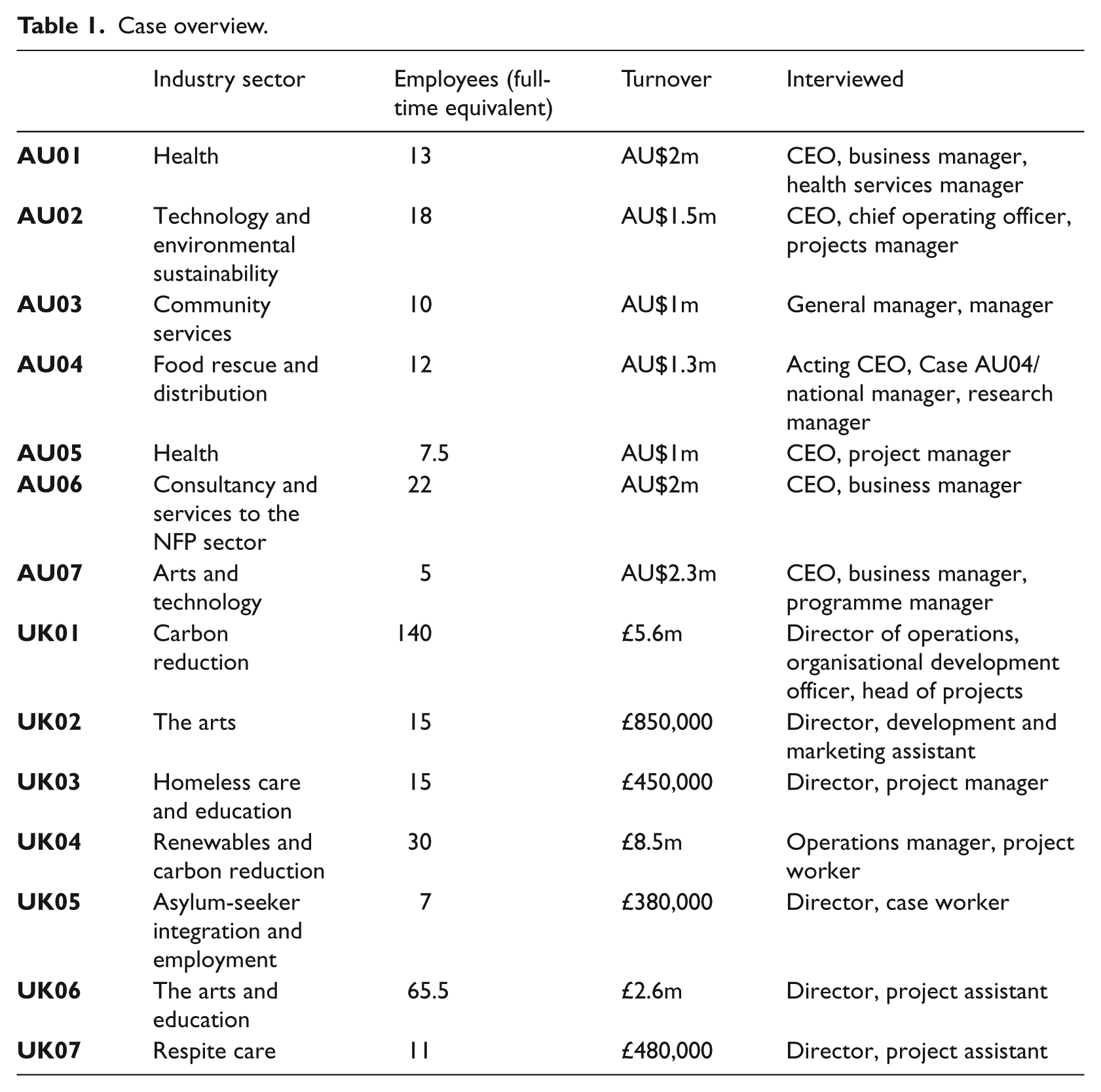
The article is structured as follows. The conceptual foundations of innovative behaviour in the social sector are outlined, with particular consideration paid to the changing nature of the social economy. Next, the concept of ACAP is outlined and Lewin et al.’s (2011) routine-based framework is exposited in more detail. The methodological section explains why a multiple case-study approach was utilised to explore the emerging phenomenon of social innovation, and a summary of participant organisations is presented in tabulated form. Findings from the empirical fieldwork are then discussed within Lewin et al.’s (2011) multidimensional routine-based model of ACAP, before the concluding section summarises the findings, raises managerial implications and poses questions requiring further investigation.
Theoretical framework
Innovation in the social sector
The social sector has long held a reputation for being more languid than its commercial counterpart. In most prosperous developed nations, generous welfare provision and far-reaching state functions have woven a robust safety net, protecting citizens from ill-health and unemployment. As society has fragmented after the Second World War (Byrne, 1995; Mohan, 2000), social problems have proliferated while undifferentiated welfare solutions have either failed to address problems adequately, or otherwise have become unsustainable (Clark and Newman, 1997). In response to this, a paradigm shift is under way, enacting profound changes in the structure of the social economy, specifically by elevating the importance of innovation and entrepreneurship within the sector (Austin et al., 2006). First, market-based approaches have been introduced – albeit with varying levels of resistance – and now greater competition exists between organisations within the sector (Weerawardena et al., 2010). As organisations are no longer able to rely solely on grant funding, often they are required to ‘earn’ portions of their income, and therefore must maintain a competitive edge through continuous development of their innovative capabilities (Weerawardena and Mort, 2006). For example, recently in the UK, 66 percent of social enterprises earned income from trading with the general public; for 37 percent, this was their main source of income (Social Enterprise UK, 2011). This has contributed to a blurring of traditional boundaries between the main economic sectors, and is manifest in both social ventures and profit-seeking corporations competitively bidding to fulfil government contracts (Cram, 2012; Curtis, 2010). Second, we have witnessed the emergence of bottom-up approaches to community welfare and regeneration, driven by localism policy measures such as the UK’s ‘Big Society’ (Alcock, 2010) and new institutions such as the Office of Social Innovation and Civic Participation in the USA. In recent years there have been many well-documented examples of communities being transformed by catalytic ‘social entrepreneurs’, who disrupt established systems by channelling private sector dynamism towards addressing complex social problems (Alvord et al., 2004; Bornstein, 2004; Waddock and Post, 1991). While much of the literature has focused on the positive outcomes of social innovation, a growing body of literature is exploring the difficulties that socially innovative organisations face in adapting to the new economic and political reality. Di Domenico et al. (2009) highlight the strains that exist in interorganisational collaborations between corporate and social enterprise ventures, while Smith et al. (2010) describe the identity tensions that social organisations face as they adapt to changing environments. Although this stream of research is gradually maturing, a need remains to explore the internal dynamics of socially innovative organisations with a wider and more sophisticated array of theoretical tools.
Absorptive capacity, organisational routines and sense-making
Since Cohen and Levinthal (1989, 1990) published their seminal articles on ACAP more than 20 years ago, the concept has been widely used to explain the relationship between knowledge, learning and innovation. Defined as ‘the ability of a firm to recognize the value of new, external information, assimilate it, and apply it to commercial ends’ (Cohen and Levinthal, 1990: 128), ACAP helps to answer fundamental questions relating to the speed, frequency and magnitude of innovation (Lane et al., 2006). It is path-dependent, developing through a lengthy process of research and knowledge accumulation (Jiménez-Barrionuevo et al., 2011; Lewin et al., 2011). As concurrent developments in the innovation domain such as ‘open innovation’ increasingly elevate the role of externally sourced knowledge (Chesbrough, 2003), so ACAP – a firm’s ability to absorb this knowledge and successfully exploit it – becomes a key capability of innovating firms.
Building on the early work of Cohen and Levinthal (1990, 1989), Zahra and George (2002) propose a model situated within the dynamic capabilities literature. Noting a lack of consistency in the way in which the ACAP concept is defined and operationalised in extant research, they propose that it is a ‘set of organisational routines and processes by which firms acquire, assimilate, transform, and exploit knowledge’ (2002: 186). Their model includes four dimensions underpinning ACAP capabilities: knowledge acquisition, knowledge assimilation, knowledge transformation and knowledge exploitation. They go on to distinguish further between potential absorptive capacity, which corresponds with external search and assimilation activities, and realised absorptive capacity, which corresponds with the latter two dimensions: transformation and exploitation.
A notable criticism, applicable to a significant proportion of ACAP research, has been a narrow focus on data collection within research and development (R&D)-intensive domains (Lewin et al., 2011; Spithoven et al., 2011). Lane et al. (2006) speculate that this bias is a consequence of early studies being operationalised predominantly within hi-tech settings, and suggest that this has been reinforced by a steady flow of ensuing research. It is proposed that despite widespread acceptance of ACAP as a multidimensional construct (Fabrizio, 2009; McKelvie et al., 2007), antecedent research often operationalises only a single dimension of the concept, normally utilising indirect proxies that measure knowledge content and which represent R&D intensity (Lane et al., 2006; Spithoven et al., 2011). As ACAP is intangible and therefore difficult to measure, these proxies, which commonly involve metrics such as patent filing and R&D expenditure (e.g. George et al., 2001), have been unquestionably useful in isolating the relationship between investments in the development and maintenance of knowledge stock, and innovation capabilities. However, some have recently questioned whether in fact this research even represents ACAP at all, since it fails to capture the full breadth and complexity of the concept (Lane et al., 2006).
Thus there is a clear gap between empirical research and the theoretical foundations of ACAP (Lane et al., 2006; McKelvie et al., 2007). Attempting to overcome this, Lewin et al. (2011) have returned to Zahra and George (2002) and Lewin and Massini’s (2003) theories as inspiration for a routine-based conceptualisation of ACAP. They propose that since ACAP is a dynamic capability, it comprises individual and combined routines which, when enacted, build and maintain organisational ACAP. Organisational routines have been used by evolutionary economists (Nelson and Winters, 1982) to explain firm adaptation, innovation and change, and they are considered to be the building blocks of organisational capabilities (Dosi et al., 2000; Winter, 2003). There is a growing interest in exploring these routines and capabilities further (Abell et al., 2008; Felin and Foss, 2009) to account for their origination and evolution. For example, Teece has explored the microfoundations of dynamic capabilities by examining the ‘distinct skills, processes, procedures, organisational structures, decision rules, and disciplines’ (2007: 1319) that underpin organisational capabilities. Lewin et al. consider ACAP metaroutines and practised routines to be the microfoundations of ACAP capabilities, and propose examples of routines to include ‘decision rules, standard operating programs, procedures, norms, habits’ (2011: 84).
Therefore, Lewin et al.’s (2011) approach to ACAP is distinctive and important for two reasons. First, since routines and their microfoundations can be empirically observed, they allow researchers to operationalise fully the construct of ACAP. Second, unlike the utilisation of indirect proxy measures which, as discussed previously, are somewhat crude analytical instruments, routines can be observed within a larger framework that captures each of the individual dimensions of ACAP, the interplay between each dimension and any complementarities that exist between routines.
Lewin et al. (2011) separate these routines into ‘internal’ and ‘external’ activities, identifying five internal foundational metaroutines:
facilitating variation;
managing internal selection regimes;
sharing knowledge and superior practices across the organisation;
reflecting, updating and replication; and
managing adaptive tension.
They also identify three external metaroutines:
identifying and recognising the value of externally generated knowledge;
learning from and with partners, suppliers, customers, competitors and consultants; and
transferring knowledge back to the organisation.
These underpinning metaroutines are expressed through various practised routines: for example, a brainstorming session would represent an enactment of the facilitating variation metaroutine (Lewin et al., 2011).
The final strand to the framework of the present study is provided by Weick (1979, 1995) and others (Gioia and Chittipeddi, 1991; Weber and Glynn, 2006), who advance the notion of sense-making in organisations to explain processes of interpretation, organising and action. Weick theorises that meaning and understanding are socially constructed, and therefore reality is ‘an ongoing accomplishment that emerges from efforts to create order and make retrospective sense of what occurs’ (1993: 635). This concept becomes valuable to both innovation and organisational scholars, as it provides a model to explain how the micro-practices of an organisation shape its ability to deal with ambiguity, change and resource constraints. For example, when an organisation is confronted with a ‘disruptive ambiguity’ or some other unfamiliar situation, individuals go through processes of enactment (noticing and bracketing), before selection processes reduce the number of potential narrative stories to explain the experience, and finally the retention process that selects the most plausible story; this then goes on to form the basis for ongoing action and interpretation within the organisation (Weick et al., 2005). Weick et al.’s (2005) theory provides a complementary model of organisational change that offers insight into how forces shape the evolution of ACAP routines to meet changing environmental conditions.
The holistic nature of the framework of the present study provides a distinct advantage for scholars wishing to learn more about innovative capabilities in under-researched contexts such as the NFP sector. Generally, understanding of ACAP is gleaned from highly structured environments such as R&D laboratories or other well-defined innovation projects, where proxies such as patent volume provide an indication of capability strength. However, arguably a broader approach is needed to explore ACAP outside of these settings, principally as social organisations are less likely to have either the financial or human capital of their hi-tech equivalents; and additionally, as the innovation process is ‘messier’ and harder to disaggregate. Unlike formal R&D departments, innovation processes and capability building in NFPs often happen in an unstructured (yet routinised) manner across the organisation, both consciously and unconsciously. Therefore, Lewin et al.’s (2011) framework allows for the microfoundations of ACAP to be uncovered in a context where little is known in general about knowledge, learning and innovation; and specifically in situations when it is not known where the foundations of innovative capabilities lie.
Method
Research objective
This article addresses two specific research needs. First, there is now increasing momentum behind further exploration and operationalisation of the ACAP construct beyond traditional hi-tech and R&D intensive settings (Lane et al., 2006). Spithoven et al. (2011) argue that, despite lacking formal R&D departments and often disposing of low-levels of ACAP, SMEs in traditional sectors require scholarly attention. This is supported by McAdam et al. (2011), who base their ACAP study on SMEs, and also by Lane et al. (2006) who challenge the ‘limiting assumption’ that ACAP is only relevant in the R&D context, and hence call for empirical investigation of all dimensions of ACAP in non-R&D settings. Second, the authors found no evidence of the ACAP construct being used to examine innovation within the social sector, or in relation to social enterprise and social entrepreneurship. Therefore, it is proposed that this article provides a first step towards understanding the microfoundations of ACAP capabilities in socially entrepreneurial organisations, and thus delivers an insight into the processes of social innovation.
Procedure
Owing to the aforementioned lack of prior empirical research explaining how ACAP is developed in non-R&D organisations, an exploratory multiple case-study approach was adopted for this article. We focus on small NFP ventures undertaking socially innovative activities as part of their regular ongoing business. The cases are drawn from the UK and Australia, both countries that share a cultural closeness and have a long and rich history of non-profit enterprise and social innovation.
Research setting. In the UK, the germination of contemporary social innovation can be traced back to the private hospitals of Victorian England and the entrepreneurial philanthropy of industrialists such as Robert Owen (Shaw and Carter, 2007) and Andrew Carnegie (Harvey et al., 2011). In Australia, Caroline Chisholm, the ‘emigrant’s friend’ (Iltis, 1966), provides a similar archetype for present-day civic action in the country. The primary basis for selecting these two countries is the more recent disparity in levels of financial and policy support afforded to social enterprises and other forms of NFP organisation. In the UK, the Blair government first emphasised the need for a more enterprising social sector as early as 1997 (Thompson, 2002), adopting Anthony Gidden’s ‘third way’ as the party’s philosophical anchor. Marking a radical departure from the traditional left-wing politics of the Labour Party, this led to the introduction of greater market forces in the third sector and sought to revitalise local communities through the decentralisation of power and decision-making. This was reinforced by the formation of a cabinet office for the third sector and a new legal form, the Community Interest Company, which catered specifically for the new hybrid forms of organisation that emerged during the period (Low, 2006). In contrast, specific data about the state of the social enterprise sector in Australia are meagre. However, one recent report estimates that there are around 20,000 social enterprises (FASES, 2010), yet despite this, Australian policymakers have been less responsive to the needs of the sector, with no specific legal forms for social enterprises and less institutional support for NFP organisations in general. Although the situation is changing rapidly, infrastructure for socially entrepreneurial organisations and the wider social innovation ecosystem is notably weaker in Australia than in the UK.
Research process. Case study research is appropriate for investigating a complex and under-explored phenomenon in its specific context (Eisenhardt, 1989; Eisenhardt and Graebner, 2007; Yin, 1994). Perceived as more robust than single case studies, multiple case studies allow for the observation and analysis of a phenomenon in multiple settings, which supports the development of replication logic where individual cases are considered to be independent experiments (Eisenhardt, 1989; Eisenhardt and Graebner, 2007; Yin, 1994). Case studies have been applied by scholars to better understand NFP social ventures (Haugh, 2007; Kistruck and Beamish, 2010; Weerawardena and Mort, 2006), as well as to provide insights into ACAP (Lane and Lubatkin, 1998; Szulanski, 1996).
Applying the principle of gradual selection, a purposive approach of theoretical sampling was adopted (Teddlie and Yu, 2007) to examine small NFP social ventures undertaking different types of socially innovative activities. These activities include services designed specifically for the designated constituents of the organisation, as well as activities designed to generate an ongoing revenue stream to ensure the organisation’s financial sustainability. Case variance was sought based on industry sector in order to gain a broader understanding of the ACAP processes undertaken by NFP social ventures (Kistruck and Beamish, 2010). In response to requests for scholars to state explicitly the selection criteria for inclusion (Lyon and Sepulveda, 2009), organisations were chosen on the following basis:
the organisation has a social objective or mission (Di Domenico et al., 2010; Haugh, 2007);
the legal status of the organisation prohibits profit distribution to individuals or shareholders (Considine, 2003; Morris et al., 2011);
the organisation is not a government department (Bull and Crompton, 2006; Haugh, 2005; Leadbeater, 1997); and
the organisation generates a total annual income of less than €10 million a year from a variety of sources, including income from grants, donations, bequests, trading activities and other sources (European Commission, 2003; National Council for Voluntary Organisations (NCVO), 2008; Weerawardena et al., 2010).
Sample and data collection
We examined existing databases of non-profit (Pro Bono Australia Pty Ltd, 2011) and social enterprise (Barraket et al., 2010) organisations in Australia and the UK (Office of the Scottish Charity Regulator, 2011; Social Enterprise London, 2011; Social Enterprise Scotland, 2011). The websites and annual reports of the organisations were screened to identify whether any new initiatives had been launched, and organisations were invited by email to participate in the study. Of the Australian NFP social ventures contacted, 42 percent participated in the study, and 36 percent of UK NFP social ventures participated. A total of 14 organisations, seven in each country, took part in this research, an appropriate sample size to generate rich narrative data for providing insights related specifically to the research question (Teddlie and Yu, 2007). The organisations in the sample were relatively small, with employee numbers ranging from five to 140. The size of these organisations represents a departure from previous ACAP and organisational routine studies, where predominantly the focus has been on larger organisations. However, as Zhang et al. note, ‘learning processes in small firms are complex’ (2006: 314), and therefore research is required to identify how routines develop and evolve under these organisational conditions.
A total of 30 semi-structured in-depth interviews lasting approximately 60–90 minutes (McCracken, 1988) were conducted with the chief executive officer, director, lead entrepreneur and/or relevant senior managers, owing to their comprehensive knowledge of organisational attributes such as strategy and operations (Miller and Toulouse, 1986). The perspectives of multiple participants reduce an overreliance on single participants, and adds richness to the data collected (Kumar et al., 1993). In addition, relevant documentation, including project notes, strategic plans and other documentation were gathered and reviewed in order to improve the construct validity of the patterns that emerged through data analysis and triangulation (Yin, 1994). Where possible, interviews were conducted on the organisation’s premises and observational notes were taken and later analysed.
Data analysis
Reliability was achieved using an interview protocol that outlined the philosophies, procedures and questions (Eisenhardt, 1989). Drawing on Lewin et al.’s (2011) description of five internal and three external metaroutines for ACAP, open-ended questions with appropriate prompts were employed to explore the presence and manifestation of these metaroutines within the social context. By focusing on either one or two recently deployed innovations in the organisation, with which the interview participants were very familiar, the in-depth discussion elucidated key insights. As the same innovations were explored in detail with multiple participants providing different perspectives, rich narrative data was collected.
Interviews were audio-recorded and transcribed verbatim to assist with the data analysis using NVivo qualitative data analysis software (version 9, 2010). Each researcher independently coded responses to the open-ended questions and relevant prompts for each metaroutine in categories (nodes) in order to identify insights not readily available from either empirical research or existing theory. This independent cross-case analysis, both within and across countries, was undertaken to enhance understanding of how ACAP metaroutines manifest in the social context, and to increase an ability to generalise due to the diversity of sectors included (Eisenhardt, 1989) (Table 1).
Case overview.
Findings
Findings from the data analysis are discussed within each dimension of Lewin et al’s (2011) routine-based model of ACAP. Significant ACAP practised routines are drawn from across the case studies to illustrate how the capability is developed through daily operational activity in socially innovative NFP ventures. A selection of organisational ACAP routines practised in each venture is presented in Tables 2 and 3.
Practised ACAP routines, UK.

Practised ACAP routines, australia.

Internal absorptive capacity routines
Facilitating variation. In order to innovate, ventures must support and encourage the emergence of new ideas from within the organisation. The NFP setting provides a unique context for examining the facilitation of new ideas, primarily as the internal dynamics of social ventures often differ significantly from their commercial equivalents. For example, across all of the case studies there was no financial incentive to encourage employee participation in the innovation process. The approach was characterised best by the director in Case UK05, who said ‘a pat on the back’ was all that could be expected for any staff input. However, other organisations did find methods of rewarding staff: We are a very family-friendly organisation. Staff have got young kids, and so we are able to be flexible with our working times and leave, and giving time off in lieu for work that they’ve done after hours to reach a certain threshold. (CEO, Case AU01)
Within NFP ventures, there is a notable prevalence of routines designed to foster an open and egalitarian environment. These range from open office configurations to flat organisational structures: I mean it’s quite … in some respects in terms of the staff I think it’s very typical of the third sector, because it’s a very collegiate atmosphere. My desk’s out there, I don’t sit in an office behind a wall. I’m available and I’ll make the tea as much as anybody. There’s not really a hierarchy. (Director, Case UK05)
The empowerment of staff was a pivotal driver in facilitating variation in the ventures: We operate a policy of empowerment of employees, as an organisation. Everybody has a say and everybody has a voice. (Operations manager, Case UK04)
This empowerment was supported through practised routines such as regular staff meetings, idea suggestion boxes, in-house seminars, encouraging staff to attend conferences reflecting their own interests and employees’ ability to take autonomous ‘thinking time’: ‘people have the freedom to come up with ideas and to do a little bit of research and have a bit of freedom in their job’ (Acting CEO, Case AU04).
A further distinct factor that facilitated variation within socially innovative NFPs was a high turnover of volunteer workers and close partnership arrangements with other organisations. Often, NFPs are able to attract the pro-bono support of skilled and highly knowledgeable workers, either on an informal casual volunteer basis or through more formal secondments (e.g. Case UK01). This is important for facilitating variation, as these individuals often come from different knowledge domains (particularly those operating in the private sector), and hence there is potential to increase the NFP’s combinative capability (Kogut and Zander, 1992).
Managing internal selection regimes
Internal selection regimes refer to the decision-making processes that facilitate the allocation of resources to exploit new knowledge. Many NFPs are driven to varying extents by non-market considerations, and thus importance is attached to pursuing opportunities that exist within certain context-specific funding frameworks. In several of the NFP social ventures, the lead entrepreneur or chief executive officer regularly updated and internalised these external funding criteria, and as a result were able to make quick, intuitive decisions when presented with a new idea by employees: I believe it’s about having discussions with people to float ideas and get feedback, but at the end of the day, I think its about your intuition as to what has the potential to work and what doesn’t. (General manager, Case AU03)
The organisation’s social mission also acts as a heuristic to help make resource allocation decisions. Often, opportunities that are not within the core organisational social mission are filtered out: ‘it must fit with our mission or it’s not going to happen, it’s the most important criteria obviously’ (CEO, Case AU06). While the majority of the participant organisations had mixed income streams, receiving funding from trading arms, charitable donations, grants and contracts, it was recognised by some managers within the socially innovative NFPs that funding requirements restricted the ventures’ ability to allocate money to more risky projects (Case UK03, CEO, Case UK06, Case AU04). The diverse stakeholder map also led to NFP social ventures consulting widely before deciding to pursue an idea: So that would be the cycle for us: that we come up with the idea, I’ll write it up, sit with some of the relevant managers, see what they think about it, sound out some funders, try and get a bit of pilot money, get the client to buy in, and then try it. (Director, Case UK06)
The charitable status of most of the organisations placed additional legal responsibilities on the governance role of the board in each venture. In most instances, the board was consulted before time and resources were allocated to pursuing significant new opportunities. In addition to providing this governance role, often the board was a source of important technical or contextual expertise that could be mined in order to appraise critically and refine ideas: ‘We’ve got some really good business people on the board, and they ask those hard business questions’ (Case AU06).
Some of the larger, rapidly growing organisations were attempting to professionalise their resource allocation processes, specifically by adopting more systematic techniques: We did the whole evaluation spreadsheet. We tried to decide on our criteria and then we allocated money to go off and research this project. (Head of projects, Case UK01)
This tension between informal routines and the implementation of more formal routines in organisations going though an expansion phase was commonplace, as was friction between traditional third-sector practices and the increasingly business-like approaches being adopted. One firm in particular (Case UK04) bridged this gap by successfully using a Dragon’s Den-style competition to solicit and appraise ideas from staff across the organisation.
Sharing knowledge and superior practices across the organisation
The ‘sharing knowledge and superior practices’ metaroutine underpins the mechanisms and processes that regulate the transfer of information across the organisation. Given that all of the participant ventures were small (a median of 14 employees), the management of knowledge was generally less complex and bureaucratic than it otherwise would be in a large multinational corporation (Wong and Aspinwall, 2004). As a result, most knowledge sharing was ad hoc and informal (e.g. over a cup of coffee, talking to someone at their desk). Formal routines for sharing included regular staff meetings, email digests of internal and external developments and frequently updated bulletin boards. These are viewed as important coordinating mechanisms for that ensuring staff were not working in parallel within the organisation, and that valuable linkage opportunities were not missed: Recently, one of the staff members flagged up information flows and communication, and how we could do that. I’m saying, ‘I didn’t even know that you were doing this’ because I was involved with something with the housing association that would have benefited this other staff member, had she known that I had a contact. So we’ve set up information boards now – bulletin boards … people can see what other people are doing, even if it’s only a couple of sentences. (Operations manager, Case UK04)
This problem of ‘silo thinking’ was highlighted by the director of operations in Case UK01, who identified that there was insufficient information sharing between heads of department within the organisation, and as a result communication processes were implemented to overcome this.
Several organisations participated in a form of ‘peer-training’, whereby one member of staff skilled in a particular area would train others within the venture: Yeah, we do send staff on some training … what we tend to do is if there’s something coming up, we’ll send one member of staff to a conference or seminar, and then it’s their job to come back and then run a development session with everybody else to keep them up to speed. (Director, Case UK05)
The staff empowerment also facilitated knowledge sharing: Sometimes people walk into my office and say, ‘We had a meeting about this this morning and now we’re ready to talk to you about it’ – and I think that’s great, because they have taken the initiative. (Acting CEO, Case AU04)
Other participant organisations employed information technology in order to bridge geographical distances. This included using video-conferencing technology to maintain contact with satellite offices, and the use of Twitter and other micro-blogging programs to transmit internal and external developments to staff and other interested external parties.
This metaroutine had two significant functions for NFP organisations in the present study. First, it provided the means for organisations to link knowledge from different domains, strengthening the NFP’s role as a mediator between technical and user knowledge flows. Second, formal and informal routines that exist to share knowledge internally strengthened the communication channels that are a fundamental part of the organisational sense-making process. These open communication flows were important for reconciling competing constructions of reality that existed within the organisations, particularly between fieldworkers who expressed a stronger service-user perspective, and managerial and technical experts who embodied a more business and operational reality. Routines supporting communication and socialisation of knowledge facilitated ‘selection processes’ (Weick et al., 2005), where the construction of collectively valid meaning was negotiated, in turn providing a basis for action in the form of developing new innovations.
Reflecting, updating and replication
Organisations must reflect on past experiences in order to update their frames of reference for interpreting current and future changes to the environment. It was found that the socially innovative NFP ventures were highly reflective organisations, owing in large part to reporting responsibilities attached to certain forms of grant funding, or otherwise to ensure compliance with industry governance when working with vulnerable groups. The preparation of these reports established systems of information collection and analysis that codified knowledge at regular intervals (for example, Case AU02 and Case UK07 regularly update their client and project databases and produce reports from extracted data). In addition, there were attempts to encourage engaged reflection at all levels of the organisation: We’re trying to capture an evaluation of how we’re trying to achieve our objectives throughout the year and reporting: that it’s not just something that goes to the board; it’s about sharing that with managers and staff, so that people will feel part of it. (Director of operations, Case UK01)
In a more informal manner, other ventures established and encouraged a self-reflective ethos: I mean there’s not a structure, there’s not a bit of paper … but there is a constant … one of the principles is around excellence and always challenging and being self-critical. I know what you’ve done and what’s worked and what’s not worked, and why. So it’s sort of infused into everything we’re doing on a day-to-day basis. (Director, Case UK06)
The idiosyncratic dynamics of socially innovative NFPs, previously discussed in the facilitating variation section, play a role in encouraging reflection. The mission-driven nature of the ventures, coupled with routines that support staff empowerment, facilitate honest and open reflection on the organisation: I think we all reflect on the organisation: something came up yesterday, about some potential new funding and what we should be doing with this. Even the emails were all very self-reflective. ‘We’re doing this, but we need to do this. We could be doing this better.’ Nobody is afraid to speak up, that’s the thing. (Operations manager, Case UK04)
In many other cases, reflection was done in conjunction with the user, other key stakeholders or the board (e.g. AU07). This provided an efficient and effective mechanism for transferring ‘sticky’ tacit knowledge directly into the organisation.
Managing adaptive tension
The managing adaptive tension metaroutine sits between internal and external metaroutines, and provides a comparative stimulus that drives internal change within an organisation. If competitors within a selected comparison group are viewed as performing more effectively, then the focal organisation either must imitate or improve upon their competitor’s routines to remain competitive (Cyert and March, 1963). The selection of an appropriate comparison group was challenging for some NFP ventures owing to acute ambiguities over their own organisational identity, stemming particularly from the dual social and economic motives that characterise socially entrepreneurial ventures. Several organisations (e.g. UK07, a respite centre) viewed themselves as more ‘social’, and hence focused primarily on social comparison groups. Others found themselves competing for contracts with commercial organisations, which motivated managers to focus on emulating these practices (e.g. UK04, AU01). This transpired to be a source of anxiety on occasions when the organisation failed to replicate and integrate these more ‘professional’ practices successfully. For example, Case UK01, an organisation engaged in carbon reduction activities, unsuccessfully attempted to introduce a more systematic means of project management to ‘keep up’ with larger private competitors previously identified as delivering industry leading quality: ‘So we’d really tried really hard to work through this process but it didn’t really work. It didn’t really work’ (head of projects, Case UK01).
Finally, some organisations (UK02) were unable to fully resolve identity issues relating to changes in the social economy, leading to a struggle at times to relate meaningfully with other organisations (either commercial or social). Although not specifically observed in the present study, this individualism can result in organisations becoming self-referential (Lewin et al., 2011; Massini et al., 2005), with a likely outcome that the firm will lose its ability to maintain innovative performance in the long term.
External metaroutines
Identifying and recognising value of externally generated knowledge
The external environment is a critically important source of knowledge for the innovation process (Chesbrough, 2003; Laursen and Salter, 2006). Therefore, in order to innovate, firms must develop the means of identifying and recognising knowledge located outside of the firm’s boundaries. In socially innovative NFP ventures, a significant focus rests on tailoring innovations to a particular community or special interest group. Consequently, valuable knowledge can be locally bound and contextual, lacking specific meaning to those without intimate knowledge of the user, their circumstances or their environment. In order to identify this knowledge, many of the participant organisations developed staff roles that involve working on a regular basis with key stakeholder groups. For example, Case UK04 hires project workers who engage on a daily basis with the groups that the organisation supports. They maintain a network of community contacts that supply information about ongoing developments in the local area, which feeds directly into the innovation process. Others such as Case UK05 have hired an employee engagement officer, who is responsible for working with the business community to ensure that the programmes it develops meet the needs of employers. These boundary-spanning roles successfully embed the socially innovative NFP ventures within their local community, and create a free-flowing channel between stakeholders and innovators. The individual in this role has sufficient understanding of the external environment, allowing them to transfer relevant knowledge back into the organisation in a meaningful way. Additionally, many participant organisations utilised user surveys or public meetings to probe the external environment regularly: We’ve got a service-user involvement group, so we will consult with the service users to see what they actually feel is the gap in services, and if they identify some sort of a gap and we feel we could do something with it and there’s a need for it, we would apply for funding to try and bridge that gap. (Director, Case UK07)
Many of the socially innovative NFP ventures valued the importance of updating stocks of technical knowledge to complement this user knowledge. Several invested in sending employees to conferences where they were able to learn from technical experts, while others provided freedom for employees to scan the external environment: ‘People are free to subscribe to whatever websites and updates that they want to receive’ (Case UK01).
Learning from and with partners, suppliers, customers, competitors and consultants
Increasingly, organisations are opening up their innovation process to learn and co-develop products and services with external knowledge sources (Elmquist et al., 2009; Gassmann et al., 2010). This is a vital resource for socially innovative NFP ventures, primarily as they often lack the funding or resources to develop internal knowledge creation capabilities to sufficiently advanced levels. This is a double-edged sword: on the one hand, it creates a dependence on establishing and maintaining external relationships; yet on the other, it frees up the organisation to be more reactive to opportunities, as it is not locked into a particular knowledge source. This was a strategy adopted by most participant organisations which, after analysing client knowledge and devising a broad innovation plan, would select partners with whom they could co-develop and deliver the innovation. These formalised relationships were underpinned by routines that encouraged the flow of knowledge between organisations: ‘It was done in cooperation with, eventually [college X], and they were very helpful with this – in fact one of their people is on our board now’ (Case UK03).
Again, the sourcing of knowledge from technical, user and other professional groups stresses that innovative NFP social ventures have a binding or mediating role in the social innovation ecosystem, by recombining knowledge from diverse sources to develop new innovations.
Transferring knowledge back to the organisation
This final metaroutine is positioned at the interface between internal and external metaroutines, and involves bringing external knowledge into the organisation and linking it with in-house capabilities. This routinely happened in an informal manner, with staff sharing their experiences with colleagues over coffee. At other times information was disseminated via email or social media: They got feedback from the community groups that we’d worked with, so they came back and I think they spoke to their managers, and then put information in an email which was then distributed to various people around the organisation. (Head of projects, Case UK01)
Other examples illustrate the more complex processes underpinning knowledge absorption and sharing within the organisation: So there’s this information that I obtain in an informal way to begin with, people’s feedback – I would talk to the emergency relief workers, people who are running breakfast here, and then also get feedback about the stat[istic]s. So then, [the process was] holding a formal forum to discuss those issues and getting recommendations from that forum, and then taking that to our board of management and those people approving us to enter into negotiations with the council and other organisations. (General manager, Case AU03)
Discussion
The configuration of ACAP routines
As the study’s findings illustrate, a particular strength of NFP social ventures is their ability to successfully acquire, assimilate, transform and exploit user knowledge. User knowledge is considered to be a vital part of the innovation process (von Hippel, 1988, 2001), and so comprises a fundamental input to the social innovation process (Howaldt and Schwarz, 2011; Mulgan, 2006). Therefore, the locally-embedded, communitarian nature of many NFP social ventures (Goldsmith et al., 2010; Haugh, 2007) requires that user knowledge and other contextual information is considered carefully, in order that innovations effectively meet the needs of their intended beneficiaries.
We propose that NFP social ventures provide an important function of mediating between otherwise incompatible ‘user’ and ‘technological’ knowledge domains. For example, multinational engineering companies which manufacture wind turbines are unlikely to grasp fully the distinctive social needs of isolated Scottish island communities; similarly, these local communities are unlikely to be aware of the possibilities for community development available through advances in renewable energy technology (as in the case of Case UK04). Thus the NFP social venture plays a critical role as a mediator between these domains, making sense of the environmental flux and providing a space for combining and transforming different knowledge flows for the benefit of a particular community. The metaroutines ‘sharing knowledge and superior practices across the organisation’, ‘learning from and with partners, suppliers, customers, competitors and consultants’, and ‘transferring knowledge back to the organisation’ are critical to this process, as they provide the mechanisms for acquiring knowledge and socialising it within the organisation, where it is recombined with other flows of knowledge. Each organisation in the present study uniquely configured organisational ACAP routines to achieve complementarities that enhanced this mediating function. For example, UK01 found valuable synergies between routines that transfer knowledge into the organisation (field worker debrief, idea box, staff secondments to other organisations) and routines for transforming and exploiting the knowledge (innovation ‘sandpits’, prototyping, partnerships with technical experts and consultants). Lewin et al. (2011) also propose that complementarities exist where a practised routine can be mapped onto multiple metaroutines. We found a common example of this in the sample to be routines supporting staff empowerment, job autonomy and message boards that simultaneously facilitated variation and shared knowledge and superior practices across the organisation. Similarly, variations of practised routines such as regular staff meetings, open plan workspaces, email digests and reflective working practices cumulatively supported overall sense-making processes within the organisations.
Part of the reason that NFP social ventures are integral to the process of social innovation is that they possess the organisational legitimacy to work with vulnerable or otherwise disenfranchised groups (Dart, 2004; Low, 2006), thereby gaining access to knowledge that commercial or (in some cases) public sector authorities cannot. (For example, UK03 works with vulnerable individuals who are wary of the police force and social workers.) This research shows that NFP social ventures carefully configure routines to extract this knowledge, often relying on fieldworkers who develop high levels of trust through daily interaction with user groups in order to transfer ‘sticky’ tacit knowledge back into the organisation (Levin and Cross, 2004; Szulanski et al., 2004). In some instances (e.g. Case UK05), organisations engaged prior or current service-users to work for them in the hope of improving the acquisition, assimilation and transformation capabilities of the venture. Moreover, organisations were found to exercise flexibility in the practised routines that they used to extract user-knowledge, and were highly adaptable to different situations (for example, in Case UK03, community forums were used in some circumstances, although for more vulnerable groups one-to-one sessions were employed).
We found a paradox within social venture ACAP routines which may have a negative effect on the overall levels of innovation exhibited. A central feature of NFP social ventures are routines that foster internal knowledge sharing and cooperation (e.g. the metaroutine ‘sharing knowledge and superior practices across the organisation’). There is also a prevalence of flat, decentralised organisational structures and high levels of staff empowerment (as illustrated in the ‘facilitating variation’ metaroutine). These informal, lateral relations are conditions which, antecedent research (Tsai, 2002) suggests, are favourable for supporting increased levels of ACAP; however, we find that factors unique to the social sector may prevent this potential from being fully realised. First, resource constraints and the primacy of the social mission limit the volume and scope of projects which can be taken forward (e.g. case UK02, Case UK07). This results in promising ideas being abandoned or ‘given’ to other social organisations that may be in a position to exploit the knowledge (as in the case of AU04). Another barrier to the exploitation of knowledge is internal selection regimes that tend towards risk aversion and alignment with narrow funder requirements: We’re a charity now, so the risk that we can take is much more tempered because it’s public money. There’s just a whole number of different rules and a different attitude to risk within the charitable world. (Director, Case UK06)
Finally, the multi-stakeholder environment may reduce NFP social ventures’ ability to act quickly and decisively on new knowledge as user-groups, partners and the board must be consulted on most issues. These findings support Austin et al. (2006) and Kanter and Summers’ (1987) proposition that the presence of a greater number and variety of stakeholders within social sector ventures increases the complexity of managing relationships.
International comparison
Our investigation of ACAP in 14 small NFP social ventures in Australia and the UK suggests that despite national variances in structural support for socially innovative organisations, there are relatively few differences in the way that ACAP is developed by organisations. In both countries organisations generally adopt flat hierarchical structures, and place emphasis on empowering staff and volunteers to participate in the innovation process. In all cases, the organisation’s social mission was identified as a key criterion in determining which new ideas should be progressed or cast aside. In the sample, UK participants placed more significance on the need to professionalise internal operations and to enhance relations with key stakeholders. Meanwhile, the Australian participants stressed the importance of routines underpinning research activities and innovation piloting processes. This marginal difference in focus may be a function of differing levels of maturity in each of the respective social economies; policies in the UK, such as the Public Services (Social Value) Act 2012, are opening up more public contracting opportunities for NFP organisations and therefore, in anticipation of these changes, organisations are making themselves more ‘bid ready’ through the professionalisation of their organisational ACAP routines.
A more significant comparison to be made in the present study was between the smaller and larger organisations. We focused on small NFP social ventures, with number of employees ranging from five full-time employee equivalents, excluding volunteers and interns (AU07), to 140 full-time employee equivalents (UK01). Smaller organisations found less need to establish formal routines, as employees managed to link internal and external knowledge easily by being in close daily contact with each other. Larger organisations (e.g. UK01 and UK04) identified problems associated with ‘silo thinking’ in their organisations and actively sought to improve internal knowledge flows through mechanisms such as job rotation, email digests and online discussion boards. However, larger firms benefited by having the capacity to source knowledge from a wider and more diverse number of sources, therefore increasing the potential for radical innovation (Laursen and Salter, 2006)
Conclusion
This article provides a first insight into the innovative capabilities of socially innovative NFP ventures by utilising the multidimensional construct of ACAP and organisational routines. Social organisations comprise one of the most dynamic sectors of the economy (Social Enterprise UK, 2011), yet theoretical understanding of the innovation process or innovative capabilities in this particular context remains limited. This article makes several contributions to our understanding of both innovative social organisations and the theoretical construct of ACAP, while heeding calls (Martin and Osberg, 2007) to differentiate social entrepreneurship and social innovation from more conventional forms of entrepreneurial and innovative behaviour. We find that socially innovative NFP ventures play an important mediating role between ‘sticky’ context-specific user knowledge, and complex forms of technological knowledge. As a result of this, organisational ACAP routine configuration is balanced between extracting user knowledge and acquiring technical knowledge. In line with the open innovation approach currently pervading the commercial innovation literature, socially innovative NFP ventures exploit externally created knowledge and often rely on co-developing innovations with more technically proficient partners. Therefore, it is found that because of resource limitations, these organisations develop routines that will generate just enough ACAP to recognise valuable external knowledge, although they will not necessarily develop enough technical knowledge to execute innovations on their own.
The diverse stakeholder map (Austin et al., 2006), mission-driven goals (Peredo and McLean, 2006) and other organisational antecedents that characterise social organisations are shown to play an important role in the way that ACAP is developed and exploited. This research has illustrated the importance of empowerment and openness, for both allowing the freedom to probe the external environment for new knowledge and sharing knowledge internally; however, this is tempered by risk-aversion and bureaucracy when allocating resources to new innovative projects.
Limitations of the study
As with the majority of empirical ACAP studies, the present article can be criticised for taking a somewhat static approach to analysis. In line with Volberda et al. (2010), we recognise the necessity for longitudinal studies that will capture the dynamic evolution of ACAP in this context. We also accept the limitations of the sample size and sample characteristics. As the socially innovative NFP ventures were drawn from diverse, unrelated industries, the relative knowledge intensity of each particular venture was not considered. Finally, the present study concentrates primarily on how ACAP metaroutines were practised and configured in order to acquire and assimilate certain sources of knowledge. A further study could explore how different organisational ACAP routine configurations lead to superior innovative performance.
This study departs from existing work on social innovation and social entrepreneurship in that it attempts to understand how organisations pursuing social goals are able to innovate, rather than why they do so. As such, we believe that closer alignment with the long-established technological innovation paradigm (and its established theoretical tools) can provide further insight into the processes of social innovation – if only to demonstrate that social innovation cannot be wholly explained by established theories of innovation. This will help draw some conceptual boundaries around some of the terms being used to describe this form of innovative and entrepreneurial behaviour, and will build legitimacy for the evolving research field of social innovation.
Footnotes
Funding
This research received no specific grant from any funding agency in the public, commercial of not-for-profit sectors.