



Abstract
This article explores the extent to which the views of micro-firm owner-managers regarding growth and lifestyle issues affect their entrepreneurial behaviour. Semi-directed interviews were conducted with 79 owner-managers to inform a typology that consists of four owner-manager views associated with success, subsistence, hedonism and paternalism. This study investigates the differences in the behaviours associated with these four profiles. The representatives of only two types (success and paternalism) ‘want’ to grow; conversely, owner-managers of the other two types (hedonism and subsistence) do not. The findings show that micro-firm owner-managers are driven by varied and sometimes profoundly divergent views which will have substantial effects on a firm’s strategies and development.
Introduction
The recent shift from a managed economy towards an entrepreneurial economy (Audretsch and Thurik, 2000) is reflected in the increasing number of small and medium-sized enterprises (SMEs) in the economy. Whilst there is a well established debate regarding this phenomena, relatively little attention has been afforded to the contribution of micro-firms – defined as firms with fewer than 10 employees; such firms constitute the majority of the sector, demonstrating a high degree of heterogeneity. Such heterogeneity in the world of micro-firms requires the creation of new typologies, given that existing typologies rarely acknowledge this context. For example, the growth-related motives and behaviours of entrepreneurs are central to SME typologies, although many micro-firm owner-managers have no desire for growth (Marcketti et al., 2006). Moreover, in micro-firms, there is typically ‘one person in control shaping the organization and its future’ (Wennekers and Thurik, 1999: 29), and as ‘the owner-manager is the most influential employee’ (Brigham et al., 2007: 30), the current study was conducted with the aim of creating a typology around this person.
Semi-directed face-to-face interviews were conducted with the owner-managers of 79 French micro-firms; the data analysis derived from these interviews generated 21 distinct themes. On the basis of this analysis, distinct profiles were created to frame owner-manager views 1 regarding non-financial and lifestyle motivations. Specific criteria related to growth and non-financial and lifestyle motivations were considered in order to enable the identification of four distinct owner-manager views associated with success, subsistence, hedonism and paternalism. Assuming that these views result in type-specific behaviour, the discriminating behavioural dimensions of each profile were identified, which enabled the creation of a novel typology of micro-firm owner-managers that reflect fundamental non-financial and lifestyle motivations.
To demonstrate how this typology was constructed, this article is structured as follows: first, the related literature is reviewed. The regional context for the study is then presented; we then outline the two methods for creating the typology and dimensions are described, in addition to the data. Next, the typology and relevant behavioural dimensions are presented, and implications for policy and practice are discussed. Finally, conclusions and implications are drawn.
Literature review
Wennekers and Thurik (1999) reviewed the empirical evidence indicating that economic activity is shifting from large firms towards smaller firms, and formulated three relevant directions for research:
the determinants of entrepreneurship, such as culture and institutional conditions;
the effects of entrepreneurship on economic growth; and
the development of typologies at the micro level (Wennekers and Thurik, 1999).
The present article addresses the need for micro-level typologies. Previously, Ucbasaran et al. (2001) assessed the research on entrepreneurial types, and noted the need for a greater understanding of micro-firm types to clarify the effects on processes, strategies, behaviour and new venture success. They suggest that there is insufficient data in the literature and called for additional studies specifically focused on identifying different types of entrepreneurs. This present study reviews the research outcomes reported in top-tier entrepreneurship journals with a particular focus on small firms and the types of entrepreneurs or owner-managers. Against this background, three streams of literature were identified:
studies showing a continuing interest in the economic effects of small business entrepreneurship;
individual-level studies focused on entrepreneurial types or typology building, based on motivational or behavioural criteria; and
a growing body of research examining the relationship between individual life issues and entrepreneurial behaviour.
Small businesses and growth
The first stream of literature addresses small business entrepreneurship and growth issues. Empirical evidence of the increasingly important role of small firms is abundant in the literature (e.g. van Stel and Storey, 2004; Storey, 2011; Westhead and Wright, 2011]). However, although many recent studies confirm the importance of the small business sector for the world economy, researchers also agree that most new jobs come from relatively few small businesses, thus indicating the complexity of the relationship between small firms and economic growth (Mueller et al., 2008).
Generally, growth is regarded as necessary for small firms and thus, should be nurtured (Morrison et al., 2003), but the growth process is complex and diverse. For example, Sadler-Smith et al. (2003) established a link between entrepreneurial style and high-growth firms; while others have noted that growth often depends on an entrepreneur’s specific vision, with Filion (1991) suggesting that successful entrepreneurs are those who develop a visionary process spanning three levels: emerging, central and secondary visions. In addition, it has been noted that this strategic vision is associated with intuitive and charismatic leadership (Cossette, 2001). More recently, Vickers and Lyon (2012) proposed that growth can be associated with a sustainability agenda for ‘environmentally motivated’ social entrepreneurs.
Finally, the theoretical and conceptual contributions from this stream have added knowledge to the growing body of literature on small businesses that was reviewed for this study. Torrès and Julien (2005) challenged the ‘small-business specificity paradigm’ and suggested two distinct paths to guide future discussions surrounding the ‘classical school’ and the ‘critical stance’ approach. Storey (2011) stimulated the debate (Westhead and Wright, 2011) by presenting a novel theory to explain temporal variations in small-firm growth.
Types of entrepreneurs and typologies
A second stream of literature addresses types of entrepreneurs (e.g. novice, serial, portfolio) or specific industry contexts (e.g. social entrepreneurship, high-technology sectors, family businesses). Typologies are useful tools for understanding entrepreneurship, as they provide structures for organising diversity, assist in identifying patterns in a complex phenomenon, and produce knowledge to enhance prediction of entrepreneurial behaviour and performance (Landström, 2010). The early literature on the development of typologies resulted in fundamental distinctions and stimulated more detailed research on entrepreneur profiles (Collins and Moore, 1970; Filley and Aldag, 1978; Marmuse, 1992; Smith, 1967; Weber, 1988). Miles and Snow (1978) and Weber (1988) focused on entrepreneurs’ behaviours with respect to innovation; Laufer (1975) and Marchesnay (1992, 1998) presented more precise typologies of small-scale owner-managers by analysing their management methods. Other typologies targeted specific entrepreneurs or specific (industry) contexts (Table 1).
Typologies of SME owner-managers and entrepreneurs.
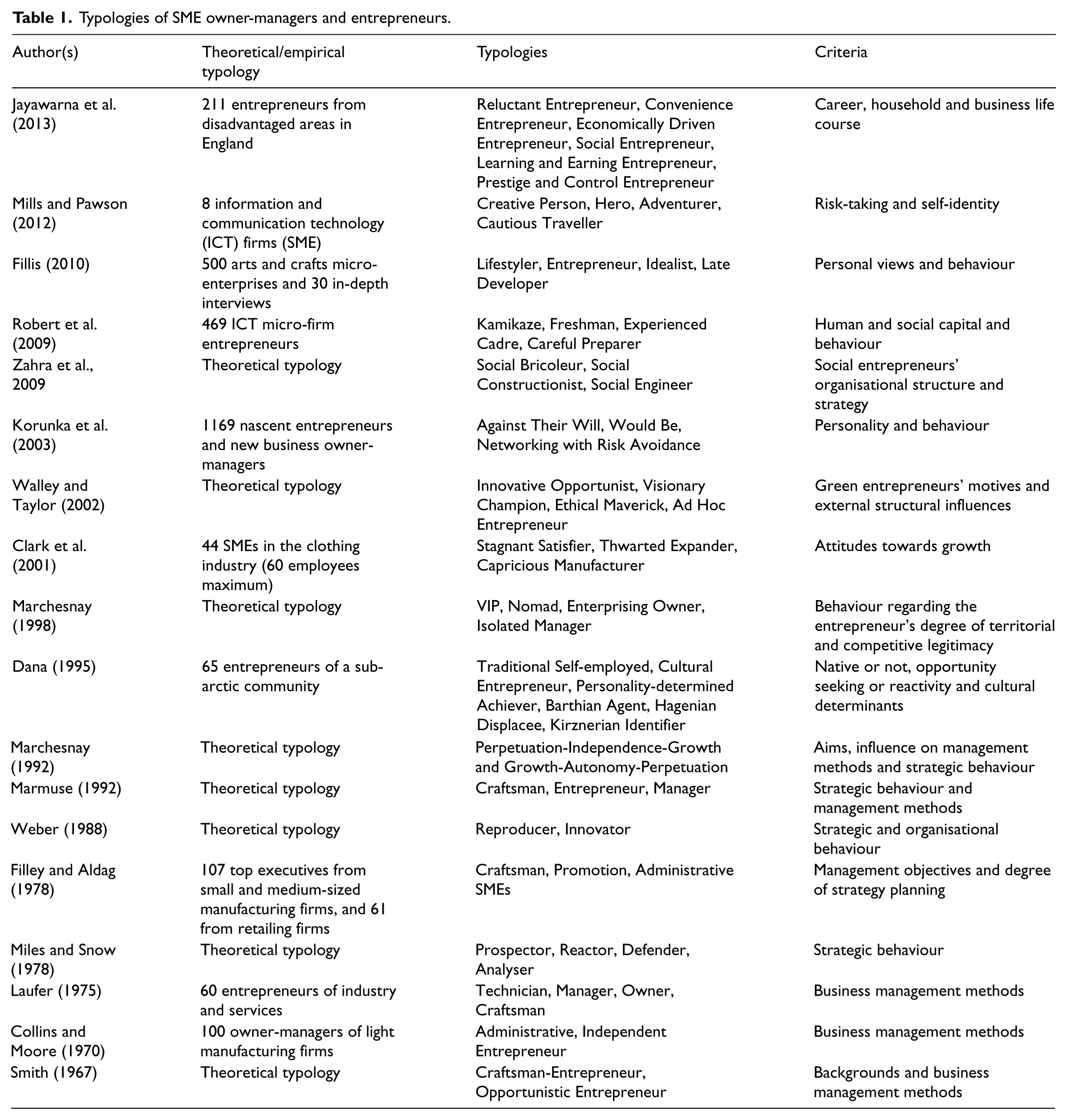
Fillis (2010) proposes a typology of arts and crafts micro-firms based on philosophy, the willingness or reluctance to grow and risk-taking. He distinguished between the idealist (the risk-taker, insofar as the craft is concerned, who refuses any business or marketing philosophy); the lifestyler (the risk avoider who is reluctant to grow); the entrepreneur (the risk-taker who embraces a business philosophy); and the late developer (the risk-avoider with no business philosophy). Dana (1995) developed a typology of micro-entrepreneurs and identified six profiles according to experience, culture and behaviour in relation to opportunities. Zahra et al. (2009) studied the social entrepreneur (‘social bricoleur’, ‘social constructionist’ and ‘social engineer’) through motives, organisational structure and strategy. Robert et al. (2009) presented findings similar to those of Korunka et al. (2003), and identified four types of high-tech, micro-firm entrepreneurs (unprepared, risk-taking ‘kamikazes’, inexperienced ‘freshmen’, cadres with industry experience, and careful preparers). Integrating motivation, risk taking and self-identity, Mills and Pawson (2012) analysed the narratives of nascent entrepreneurs and presented evidence of the alignment of self-identity and strategic behaviour (‘creative person’, ‘hero’, ‘adventurer’ and ‘cautious traveller’). These examples of recent developments have added new insights to the knowledge stemming from prior typologies that are based on management methods, decision-making processes or strategic behaviour. Moreover, gender differences have been reported in several of these studies (e.g., Carter et al., 2003) and have thus, prompted country-specific research on the motives or behaviour of women entrepreneurs (e.g., Iakovidou et al., 2009; Smith-Hunter and Leone, 2010a, 2010b).
Overall, most of the typologies presented in this section address the role of the personal views of entrepreneurs; after reviewing them, we conclude that the importance of personality-related discriminatory factors tends to increase as firm size decreases. Hence, in a micro-firm context, a stronger tendency towards entrepreneurial alignment is observed (Mills and Pawson, 2012), which implies that the owner-manager view frequently results in a specific entrepreneurial project (and subsequent entrepreneurial behaviour). We term this ‘life issues’, and address such in the following section.
Life issues and entrepreneurship
A third and recent line of thinking focuses on life issues in order to explain entrepreneurial behaviour and firm success. Ruvio and Shoham (2011) suggested that motivation is reflected in aspirations or perspectives, which in turn influence entrepreneurs’ strategic orientations. More recently, Hahn et al. (2012) showed that affective well-being positively influences the entrepreneur’s initiative and proactivity. In this stream of literature we observe a tendency to emphasise motivation and views. For example, Fonrouge (2002) showed that many entrepreneurs are linked to their businesses through a ‘dialogical’ relationship. An entrepreneurial project is the result of the owner-manager’s life project. In this sense, the project is part of a life plan: the concrete means for achieving the entrepreneur’s personal objectives. Kisfalvi (2002) suggested that the strategy-making processes of such entrepreneurs primarily reflect their particular set of life issues. This suggestion is particularly relevant for family firms, in which entrepreneurial behaviour and family issues frequently are deeply embedded (Dyer and Handler, 1994). For example, Birley (2001, 2002) analysed the attitudes of owner-managers and their successors towards the family business and distinguished ‘family-in’ and ‘family-out’ firms, according to the personal views and family perceptions of the actors.
Small business owners tend to assess entrepreneurial success through both financial and lifestyle criteria, although the latter appear to be more important (Walker and Brown, 2004). Owner-managers, whose priority is personal satisfaction, fulfilment and enhanced quality of life rather than growth or profitability, are referred to as ‘lifestyle entrepreneurs’ (Henricks, 2003; Tregear, 2005). These entrepreneurs start their businesses in areas that reflect their desired living environment, develop businesses closely related to areas of personal interest, and keep their businesses small (Marcketti et al., 2006). As emphasised previously, micro-firm owner-managers do not necessarily favour growth, and the concept of ‘success’ that is defined by subjective criteria appears to be more appropriate. Rather than objective expectations of success, nascent entrepreneurs, for example, show considerable reliance on subjective (and often biased) perceptions, which emphasises the growing importance of perceptual variables to measure entrepreneurial behaviour (Arenius and Minniti, 2005; Grilo and Thurik, 2008).
The personal characteristics of micro-firm owner-managers affect their behaviour. If personality and decisions indeed influence the managerial and strategic priorities (growth, success, performance) of owner-managers, then there is an obvious need to study the upstream processes of those decisions (i.e. how goals are established), given that such processes follow directly from the views of such managers. Building on the literature that suggests alignment between life issues and behaviour, this article focuses on the personal views of entrepreneurs. Although the literature presents evidence for small and medium-sized firms, this topic is under-studied in the micro-firm context.
The French micro-firm sector
The ‘French exception’ – which implies that France is a weakly entrepreneurial country – has been explained by its cultural norms and work ethics, both of which emerged in a unique historical context (Landes, 1995[1949]; Lasch and Yami, 2008). France is widely known today for the powerful presence of the state in its economy, a large public sector and an environment dominated by corporate firms. However, a review of recent evidence suggests that the assumption of French reluctance to engage with entrepreneurship should be questioned. We observe a strong increase in the annual number of new enterprises since 2000, with total numbers and firm birth rates in 2008 comparable to those of its neighbours, such as Germany, Italy, Spain and the UK (Eurostat, 2011). New tax incentives and simplified administration for micro-entrepreneurs have caused the number of new enterprises to grow rapidly from 331,000 in 2009 to 550,000 in 2011 (KPMG and Confédération Générale des Petites et Moyennes Entreprises (CGPME), 2012). In addition, France has a rather distinctive small firm environment, as 95.4 percent of the firms are micro-firms, which is above the EU27 average of 92 percent (Eurostat, 2011). Close to 20 percent of the salaried employment in France is in micro-firms, compared with the European Union (EU) average of close to 30 percent (Eurostat, 2011; see Appendix 1, Table A1), and small and medium-sized firms are underrepresented compared with other European countries (4.4% vs. 8% EU27), such as Germany and its Mittelstand (Souquet, 1998).
Method
A qualitative research protocol was selected, based on open-ended, face-to-face interviews (Miles and Huberman, 1994) in order to conduct an in-depth investigation of the views of micro-firm owner-managers.
Sample and sample size
The sample consists of micro-firms that have been established in the Languedoc-Roussillon region of southern France. Of the 22 French regions, Languedoc-Roussillon ranks first in terms of population growth, migration, new firm birth and employment growth, and is characterised further by both high unemployment and low per-capita income (Appendix 1, Tables A2, A3). Such high population growth has resulted in a dynamic but fragile regional economy, with one of the highest regional firm birth rates and one of the lowest firm survival rates in France. Most firms begin as, and remain, micro-firms, and this paradoxical situation makes the region an interesting environment in which to investigate micro-firm owner-managers.
Although a homogeneous sample is better for identifying relationships and building theory while avoiding atypical input (Fortin, 1996), a sample with many dissimilar components is useful when the aim is to extend existing results with strong internal validity. Cook and Campbell (1979) proposed an intermediate solution: using samples composed of deliberately different components to increase the external validity of the results. The principle of inference is as follows: as heterogeneity exerts a negative influence on the significance of the effect, if the relationship appears significant despite this disadvantage, then the results may be generalised. Thus, a wide variety of firms can compensate (to a certain degree) for a small sample size. For this reason, a sample was selected for the present study with a high degree of variety: the firm size ranges from one to 10 employees, and the firms operate in many industries, most of which are generally considered traditional: trade, crafts, services and industry (Appendix 2, Table A4a).
The sample size is critical in qualitative research, as a minimal size requirement is observed to ensure the internal validity of the research and to provide a satisfactory level of confidence in the results. According to Yin (1994), size can be determined by replication or saturation. The present study determined the sample size using the saturation principle: theoretical saturation is reached when no further information to enrich the theory is found. The saturation principle is difficult to implement in practice, because it is impossible to determine the cut-off point in advance, and because researchers can never be completely certain that more information would not further enhance the research. As Cook and Campbell (1979) suggested, it is the responsibility of researchers to determine whether they have reached saturation; the process of adding observations is terminated when the most recently analysed units of observation are found to contribute no new information. The present sample was formed through the random prospecting of telephone and email contacts using an iterative approach. Unlike the standard probability-based approach, the field for generalising the results was not defined in the initial step, but at the end of the process. Thus, the sample was built gradually through successive iterations, with each component selected by reasoned choice (Fortin, 1996). Using this method and the saturation principle, the process was halted after 79 iterations.
Data collection
Seventy-nine semi-directed, face-to-face, open-ended interviews were conducted with micro-firm owner-managers, with the objective of gathering discursive data reflecting the conscious or unconscious ‘mental universe’ of the owner-manager (Miles and Huberman, 1994). In addition, secondary data were collected from websites, firm brochures and catalogues.
The pre-structured interview guide was divided into 21 themes: the history of each firm, the personal history of each owner-manager, gender, age, aspirations for personal life. For the company, the study explored motivations for firm creation, activity, three-year turnover, customers, perception of the firm’s business sector and competitors, decision-making processes, corporate and business strategies, resources and competencies (for the owner-managers and the staff), missing resources and competencies (for the owner-managers and the staff), coordination mode, intentions for development or growth, and participation in a social or professional network. The interviews were tape-recorded to ensure that the collected data were exhaustive and reliable. The interviews were transcribed within 24 to 72 hours, and the entire interview corpus comprised 1127 pages.
Data analysis
The data analysis was conducted in two stages. The first stage was to identify the profiles of the micro-firm owner-managers. In this stage, three themes of the interview guide were used: the personal history of the owner-managers; aspirations for the owner-manager’s personal life and for the company; and the motivations for firm creation. The data were analysed in three steps via a discourse analysis based on a thematic content analysis (Miles and Huberman, 1994), which can classify data into categories or ‘ideal types’. 2
First, the gross database was analysed through thematic coding. This analysis consisted of determining the units of meaning (words, sentences or phrases related to one of the three pre-determined themes) and counting the respective occurrences (to measure the weight of each in the discourse). The occurrences were noted in ‘intrasite matrices’ (i.e. firm-by-firm matrices) that included personal observations and certain particularly striking or illustrative remarks by the interviewees.
Second, all of the intrasite matrices were synthesised into ‘intersite matrices’ (double-entry tables for each theme, with the three themes in the columns and the 79 firms in the rows). The aim was to compare the owner-managers’ discourses concerning each theme and to identify the constants and differences.
Third, ‘meta-matrices’, or crossed tables, were established for each theme, in which all managers’ responses were simplified using keywords and classified as variables. After identifying similar phrases, common themes and differences and even conflicts in certain statements, it was possible to establish four subgroups by isolating the common features and differences. When contradictions appeared in discourse, a rational comparison of the numbers of occurrences was conducted to choose the subgroup.
The second stage was to characterise each owner-manager profile to show the alignment between the views and behaviours of the owner-managers. To perform this task, 18 other themes within the interview guide were used and the four groups analysed by following the same process as in the first stage. For each profile, thematic content analysis was performed by encoding the units of meaning, counting unit occurrences, and constructing intrasite and intersite matrices. To determine each group’s characteristics, a threshold was established above which a given characteristic would be eligible for assignment to the group, according to the general practice in qualitative studies. In other words, if three-quarters of the firms in each group shared a common characteristic, then that feature was considered representative of the group. Then, the discriminatory characteristics of each profile was identified: growth orientation, strategy, risk-taking or risk aversion, workforce, skills and networks. The next section provides a detailed summary of the results.
Results
Stage 1: The owner-manager typology
The discourse analysis yielded four lexical groups. 3 The first group concerns the concept of success (24 firms) in either business or social terms (climbing the ranks in society). In this group, the following terms were found: ‘success’, ‘profit’, ‘profitability’, ‘business’, ‘winning’, ‘market’, ‘margin’, ‘offer’, ‘opportunities’, ‘growth’, ‘development’, ‘image’ and ‘moving forward’.
The second group involves the concept of subsistence (17 firms). The main words or expressions to emerge in this group were ‘eat’, ‘price’, ‘risk’, ‘cost’, ‘cope’, ‘come through’, ‘autonomy’, ‘difficult’, ‘value’ and occasionally ‘cheapening myself’.
The third group concerns the idea of hedonism (25 firms). This group included regular occurrences of the terms ‘passion’, ‘pleasure’, ‘enjoyment’, ‘quality’, ‘quality of life’, ‘challenge’, ‘novelty’, ‘new’, ‘starting over’, ‘creation’, ‘create’, ‘laughing’, ‘fun’, ‘happiness’ and ‘enhancement’.
The fourth group is close to the concept of family (13 firms). In this category, terms were identified such as ‘love’, ‘family’, ‘children’, ‘passing on’, ‘risk’, ‘prudent’, ‘humility’, ‘youth’, ‘protect’ and ‘share’, in addition to the adjective ‘my’ when used to refer to employees, clients, the market and the firms. Thus, whereas there were many occurrences of ‘I’ in the first category, the use of ‘we’ dominated in the fourth group. We refer to this view as paternalism.
Stage 2: Characteristics of the four profiles
The data analysis in the first stage identified four micro-firm owner-manager views, and the second stage served to identify the behavioural characteristics corresponding to each of these views (Table 2).
Behaviours associated with the profiles.
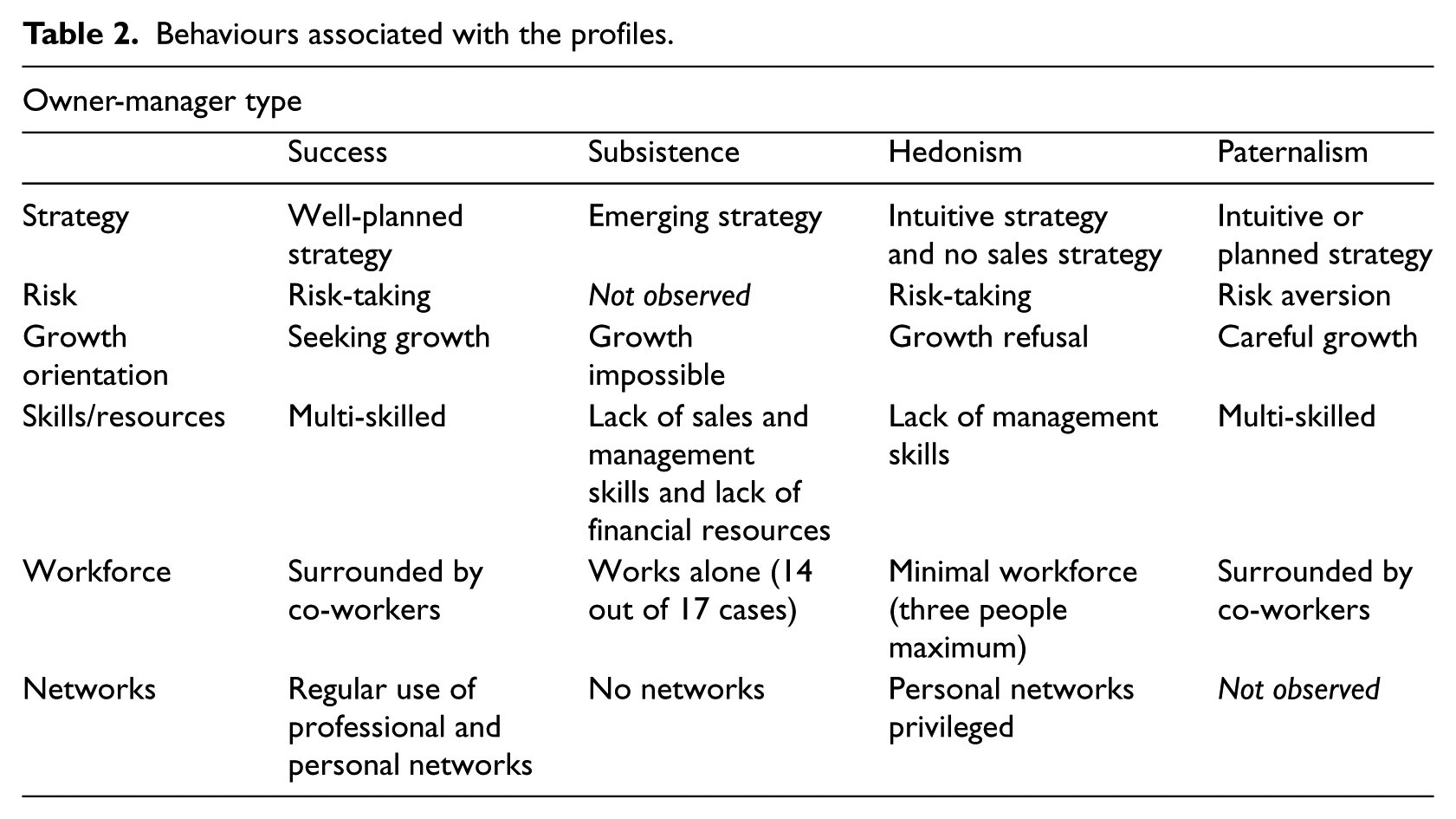
Success. The 24 owner-managers of this group showed units of meaning related to ‘success’. The success strategy was focused on the search for opportunities with the objective of climbing the social ladder or achieving economic and professional success; this type of owner-manager perceived and defined success as social and professional achievement (Reijonen and Komppula, 2007). The environment was full of opportunities, and these individuals considered all measures and means of seizing such opportunities, including networking, developing customer relations or seeking a market niche. For firms whose business was traditional, the owner-managers also considered pursuing the best location, advertising and sales prospecting, among other factors. These owner-managers tended to have growth ambitions. As Frank (SC9) stated in his interview: ‘I’d be perfectly willing to use external financing for my newspaper, whether as a loan or as an investment in the firm’s capital.’ At one extreme was Benjamin (SC4), who was primarily interested in profit: ‘That’s what a firm is! It’s always financial anyway; we’re never in it for the fun.’ Some owner-managers were less categorical in their pursuits, although growth and success were central to their strategies. For example, Yves (SC16), the owner of a real estate agency specialising in high-end and luxury properties, had chosen a strategy that involved destroying the competition: ‘I am not committed to helping a fellow agent getting started … I prefer to eliminate the competitors straight away.’ Certain owner-managers worked ‘alone against the world’, whereas others preferred to use networks and partnerships to achieve their objectives. For example, Mickaël (SC21) explained: ‘My vision of things is that you have to integrate into local life as a business manager. That’s why I get involved in all the managers’ societies, etc.’ In general, these managers had developed deliberate, considered strategies. They tended to seek growth and enjoyed being surrounded by co-workers. Business activity was monitored by regular balanced scorecard reports, and prospecting was widely used (by 20 of the 24 firms in this category). These managers prepared general offers as opposed to niche strategies, as they wished to respond to as many needs as possible and avoid over-specialisation.
Subsistence. The 17 owner-managers who were concerned with ‘survival’ had the most critical lack of resources. The owner-managers accepted every contract that arose, even if some projects ultimately earned them nothing because the time spent on these projects made them unprofitable. The priority of these owner-managers was ‘to put food on the table’, and typically they were unaided. Owning their own business enabled them to manage alone ‘with no need to justify to anyone else’, even if they made a poor living. The environment often was perceived as difficult, with these owner-managers feeling lonely and generally less effective than their competitors. However, this status appeared to be destined for inevitable change, with the manager either moving to another profile (because subsistence cannot be a long-term vision) or with the firm going out of business. Most of these managers declared that they had founded their businesses with insufficient start-up capital, and they further reported an ongoing lack of financial resources, low turnover-generating contracts as the top performance criterion, price reductions and a great deal of time dedicated to executing services. These firms were unprofitable, and the turnover was insufficient for growth. S7 (a seller of secondhand boats) illustrates this situation:
I pay out at least €300 [a week] on advertising – but that’s not enough. I haven’t got enough customers calling me, and it doesn’t bring in enough work. It’s not enough, but for the moment I can’t do any better. That’s the problem – I’m chasing after my own tail.
The owner-managers in this group generally lack sales skills (15 out of 17), such as S17, who sells advertising and printing articles:
Selling … that’s always been our weak spot, our failing. We’ve never been able to crack it. In fact, that’s why we sell over the internet, because it’s the only way to sell stuff without having to be a salesman … For us, the internet is a way of making up for our sales shortcomings because no one here goes out to meet customers.
These owner-managers developed strategies with no clearly expressed objectives (no ‘emerging’ strategies). The vast majority of them emphasised responsiveness, personalisation and the acceptance of any contract that arose. The top performance criterion was turnover, but the most typical characteristics of this group appeared to lie in their relationship with their environment. None of these firms had personal or business networks, and they all needed to improve their market profiles and positioning. Word-of-mouth recommendation was not working for them, or was working only marginally. In addition, these firms conducted no sales prospecting, and they preferred distance advertising by fax or internet (when they did actually advertise). This behaviour appears to correspond to the lack of sales skills observed in most owner-managers in this group.
Hedonism. The 25 hedonist owner-managers were characterised by word occurrences related to ‘enjoyment’ and ‘pleasure’. These owner-managers appeared to express a life philosophy and sought ways to live their passion; they felt driven by creativity and new experiences, and established increasingly ambitious challenges for themselves. These owner-managers accepted contracts without being certain whether they could complete the job, but they enjoyed the challenge and the constant self-re-evaluation involved. The environment was perceived as being full of opportunities, new challenges and the possibility of surpassing capacities. Two sub-categories were identified in this profile.
The firms of accomplished owner-managers were in good financial health. They previously had adopted a success view, subsequently had achieved their success and were now at liberty to do only what they liked to do; thus they could select their customers freely. Two examples are H23 and Leo (H18). H23 managed an architecture office and was an architect. He explained:
The people who do this job are often passionate about it: if you aren’t, you can’t do it properly – and creativity is exciting. So there’s a kind of excitement when a project comes in. The place becomes a hive of activity; everyone works on it, and we try to do something with it.
H18 (a fluid engineer) added the following:
What I’m interested in is doing things I’ve never done before … So far I’ve got lots of work, almost too much. My problem isn’t getting it all done, but doing what I find most interesting, which means being selective. That’s what’s really good about having your own business: being able to choose what you want to do.
This hedonist view was possible only after the original desire for success had been achieved (i.e. the goal of being socially and/or professionally successful had been met).
The ‘bohemians’ or artists were enthusiasts in the purest form. These individuals may have fallen short in terms of financial resources, but they were unconcerned with this problem as long as they could make a living from their passions. Lacking sales skills, these owner-managers were similar to the subsistence owner-managers in their need to accept certain ‘uninteresting’ contracts to ensure a minimum amount of stable income. This need was particularly apparent in Denis (H8), a glass artist:
I’m a glass sculptor. All the rest – glass furniture, trophies, advertising articles, decorations and all that – that’s so I can carry on sculpting glass, have a workshop, machines and all the equipment and be able to make sculptures, unique pieces … I’m not interested in creating a product and then working on how to market it. I prefer creating …. I’ve never been in sculpture to earn a living. Even though in the end, it’s worthwhile earning a living so you can carry on doing what you like.
Generally, hedonists operated on a word-of-mouth basis, without developing sales prospecting (18 of the 24 managers in this profile).
Paternalism. The 13 owner-managers with a paternalist view felt that they had a duty to their employees. The characteristic term from the data analysis was family. In eight of these cases, these owner-managers were at the head of a family firm. Six firms in this group, including the parquet floor installer Daniel (P5), were not family businesses; nevertheless, the owner-manager behaved like a father would with his children. He hoped to transfer the firm to one of his employees, and consistently worked with this goal in mind above all else. A similar view was taken by Audrey (P11), who made industrial supplies and lubricants and explained that she works primarily for her employees:
It’s mainly so they can earn more. Personally, I’ve got a husband with a job – if I don’t want to work I can stay at home, but really I do it because I like it, and for my young people, they’ve got their whole lives before them. I work for them too.
The paternalists had a relatively apprehensive view of their environment; it was considered rather hostile. There was a need to guard against the environment and to protect their firms and their employees by avoiding risks. Emotions dominated in the relationships between paternalists and their employees and clients:
What we have here is service; it’s very much like a family … Imagine the number of people who sometimes come just for a coffee or to read the newspaper. We have some people like that who drop in, come to say hello. (Audrey, P11)
Finally, whereas hedonists appeared to focus on themselves and their own search for enjoyment and satisfaction, paternalists appeared to be more focused on co-workers and their quality of life. Paternalists and hedonists had fairly similar strategies: they sought work primarily through word-of-mouth recommendations alone, and they did no advertising or sales prospecting. However, these owner-managers developed close personal relationships and were located near their customers.
Discussion
General contribution to the small-business literature
The results of this study contribute to the knowledge regarding micro-firm owner-managers, an area that remains under-researched, although micro-firms constitute the majority of the SME sector. This work responds to the need to develop specific micro-level typologies to enrich research (Wennekers and Thurik, 1999; Ucbasaran et al., 2001); it also confirms the usefulness of typologies. We found that personal views are of central importance in the micro-firm sector. These findings confirm the existence of an entrepreneurial ‘alignment’ (Mills and Pawson, 2012) between life issues and behaviour in the micro-firm sector (Henricks, 2003; Kisfalvi, 2002; Tregear, 2005), particularly concerning growth (Clark et al., 2001; Sadler-Smith et al., 2003).
Four types of micro-firm owner-managers’ views were identified: success, subsistence, hedonism and paternalism. Notably, the representatives of only two of these four types indicate that they want to grow. This finding challenges the assumption that growth is crucial, and therefore, must be encouraged (Morrison et al., 2003); it also confirms the complexity of the link between small firms and economic growth (Mueller et al., 2008). In particular, the relationship between individual views and non-growth behaviour is a key factor in explaining why many micro-firms have no desire for growth (Marcketti et al., 2006).
Contribution to prior typologies
Our review of existing SME typologies revealed a strong focus on behaviour and action (Table 1), whereas this typology focuses on the views of owner-managers that result in certain types of behaviour (Table 2). The four views in this typology provide a better understanding than those identified in previous SME typologies (Table 3). After investigating the differences in the behaviours of the four types, we argue that two owner-manager types are specific 4 to micro-firms (hedonism and subsistence), and two are not (success and paternalism).
Comparison of the typology with the prior literature.
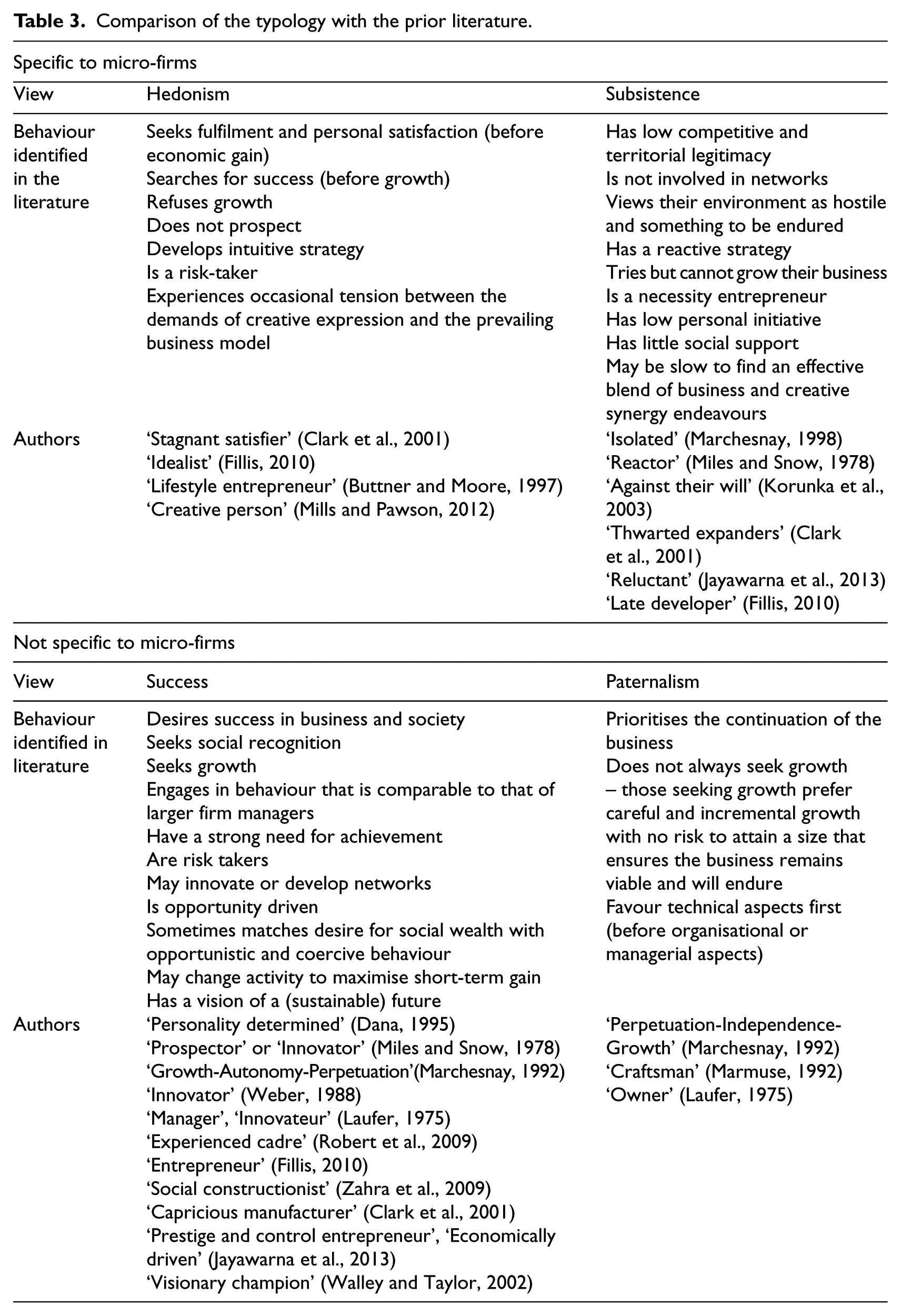
The two owner-manager types that we consider to be specific to the micro-firm sector are entirely different in terms of their views, behaviour and growth focus: hedonism and subsistence.
Hedonism. This group is divided into two sub-categories: the ‘accomplished’ (and formerly) success owner-manager, and a more ‘bohemian’ type, both of which value pleasure and passion over financial success and growth. Several studies have observed the value of using manager satisfaction or effectiveness as a variable in measuring the performance of small firms (Brigham et al., 2007; Hatfield and Pearce, 1994). To a certain extent, this type of entrepreneur is comparable to the lifestyle entrepreneur first proposed by Buttner and Moore (1997), and then developed in many studies, such as those of LeBrasseur et al. (2006) and Marcketti et al. (2006). For this owner-manager, starting a business is considered a life strategy rather than a business strategy. A hedonistic view can explain the non-growth behaviour of lifestyle entrepreneurs. For the ‘accomplished success’ subgroup, non-growth behaviour is explained by the past achievement of (financial) success that now enables such an owner-manager to be relatively free of financial constraints and to concentrate on what they like to do. Thus, the accomplished can be described as a former success type whose view has changed over time, whereas the bohemian has always prioritised artistic achievement over growth.
Subsistence. This view leads to isolation and reactive rather than proactive behaviour. Its representatives have certain features in common with Marchesnay’s ‘isolated manager’ (1998): with little competitive and territorial legitimacy, these owner-managers are not particularly involved in networks, and tend to perceive their environment as merely something to be endured. These individuals also resemble the ‘reactor’ discussed by Miles and Snow (1978), those working ‘against their will’ in Korunka et al. (2003), and the ‘thwarted expanders’ who attempt, but are unable, to grow their businesses (Clark et al., 2001). These owner-managers are necessity entrepreneurs, and some of them resemble ‘reluctant entrepreneurs’ (Jayawarna et al., 2013): their objective is less growth than performance, although a performance criterion such as turnover is not always relevant. We show that this type of entrepreneur is specific to micro-firms, as one of the distinctive criteria is a firm’s ability to pay its current employees and to possess the financial potential to recruit new employees. The subsistence view results in non-growth, as the objective of this type of owner-manager is to survive and avoid unemployment.
In summary, both types of views that are specific to micro-firms are entirely different with respect to non-growth behaviour: hedonists have made a choice not to grow, and subsistence owner-managers have an inability to grow. The two other types are not specific to micro-firms and can be found in SMEs: paternalism and success. The representatives of the first type want to grow to develop their patrimony, and individuals of the second type want to grow out of ambition.
Paternalism. This view leads the owner-manager to behave prudently, to be risk-averse and to adopt an attitude focused on the job in hand (Marchesnay’s ‘perpetuation-independence-growth’, 1992; Marmuse’s ‘craftsman’, 1992; and Laufer’s ‘owner’, 1975). Paternalists prefer careful, incremental and moderate growth with no significant risks, with the goal of reaching a size that ensures that their business remains viable. An interesting facet of the paternalist owner-managers in the present sample is their managerial behaviour towards employees. We observed an awareness of the objective of securing employment, a desire to advance their employees’ careers, and the possibility of passing on their firm to one of their workers. This profile does not appear to be specific to micro-firms, as it certainly describes many SMEs and family firms. The present typology explains such patrimonial behaviour through the paternalist view.
Success. Success owner-managers are driven by the desire to succeed in business and society. They generally seek growth, and their behaviour resembles that of the managers or entrepreneurs of larger businesses (Marmuse, 1992). However, we observe that success orientation only partially explains the behaviour in this group. A success-oriented view implies a desire for growth, but other characteristics can change the modalities for growing. For example, training, education, past career and personal characteristics may lead success owner-managers to behave as ‘innovators’ (Miles and Snow, 1978; Weber, 1988), ‘managers’ (Laufer, 1975) or ‘prospectors’ (Miles and Snow, 1978). This growth-seeking profile appears to have been the most widely studied in entrepreneurship research, and has been variously termed ‘growth-autonomy-perpetuation’ (Marchesnay, 1992); ‘enterprising owner’, ‘VIP’ and ‘nomad’ (Marchesnay, 1998); ‘innovator’ (Weber, 1988); ‘manager’ and ‘technician’ (Laufer, 1975); and ‘experienced cadre’ (Robert et al., 2009).
Conclusion
Implications for policy and practice
France is the second largest economy in the EU27. The findings in the French micro-firm sector may have implications for other European economies during periods of economic crisis and persistent unemployment. Small-firm entrepreneurship support generally focuses on competitiveness, survival and growth. This study examined firms in a region that represents many of Europe’s general concerns – a high number of micro-firms (that do not reach intermediate firm size until long after start-up), high unemployment and low firm survival – but are dynamic in terms of population growth and new firm formation. Thus, this sample provides a worthwhile case to study from the perspective of entrepreneurship support.
Certainly, the micro-firms in this sample would be difficult to understand from a generic, SME entrepreneurship support perspective. First, we note that 53.1 percent of the owner-managers in this sample do not want to grow (by choice: hedonism, or by constraint: subsistence). We consider these two types to be rather specific to the micro-firm sector. Hedonist owner-managers consider micro-firm size to be a good type of entrepreneurship. Although typically the lifestyle or hedonist entrepreneur is presented as a marginal or emerging profile typical of a hypermodern society (Marchesnay, 2008), we identified a fairly large proportion of hedonist managers in the sample (almost one-third). Hedonists and lifestylers create potentially important externalities and spillovers for other micro-firm types, as they are strongly involved in professional networks and inter-firm cooperation (Jaouen and Gundolf, 2009).
Subsistence owner-managers (representing 21.5 percent of this sample) are constrained by maintaining their businesses as micro-firms because they lack competencies, networks or financing. The subsistence profile focuses more on short-term income and less on long-term success and growth. These owner-managers find themselves locked in a vicious circle that renders profitability and growth difficult; among the four types, this profile is most in need of support. These entrepreneurs have potential for further development through entrepreneurship training (e.g. developing sales and management skills and defining business plans, strategies and marketing), institutional support (e.g. providing access to the institutional networks of regional governments and chambers of commerce), and specific financial aid (micro-finance). Hence, some subsistence owner-managers may even reach SME size and create substantial employment. If entrepreneurship training and support do not result in less precarious and more profitable self-employed subsistence owner-managers, policies may be created to enable such owner-managers to return to salaried employment.
The remaining two types of views – success and paternalism – are not specific to the micro-firm sector, and also can be found among SMEs. One important observation is that success owner-managers constitute only 30 percent of this sample, and paternalists represent 16.5 percent: from a policy perspective this finding indicates that fewer than half of the micro-firm owner-managers want to grow. Generic SME entrepreneurship support is more likely to be effective for them than for the hedonism and subsistence profiles. However, given the heterogeneity of the micro-firm sector, adaptations that can account for micro-firm specificities are certainly necessary. Owner-managers with a success view appear to be the archetypal entrepreneurs (e.g. those with well considered strategies, risk-taking propensity, growth orientation, networks). With respect to competitiveness, employment generation and small-firm growth, selective policies may find the success type to be an interesting candidate (i.e. pick the winners). However, paradoxically, although this type of view possesses good conditions for growth, some success-oriented owner-managers are still operating micro-firms several years after start-up. Thus, entrepreneurship policy should include measures to identify the barriers for micro-firms of this type that do not reach SME size or intermediate firm size. Nevertheless, the phenomenon of stagnating micro-firms may be explained at least partially by the small firm environment and/or regional industry and firm size structures. More longitudinal research is required to understand this issue, as it may be a typical European problem rather than specifically a French problem: EU labour laws are generally strict in the sense that they have little flexibility with regard to lay-offs.
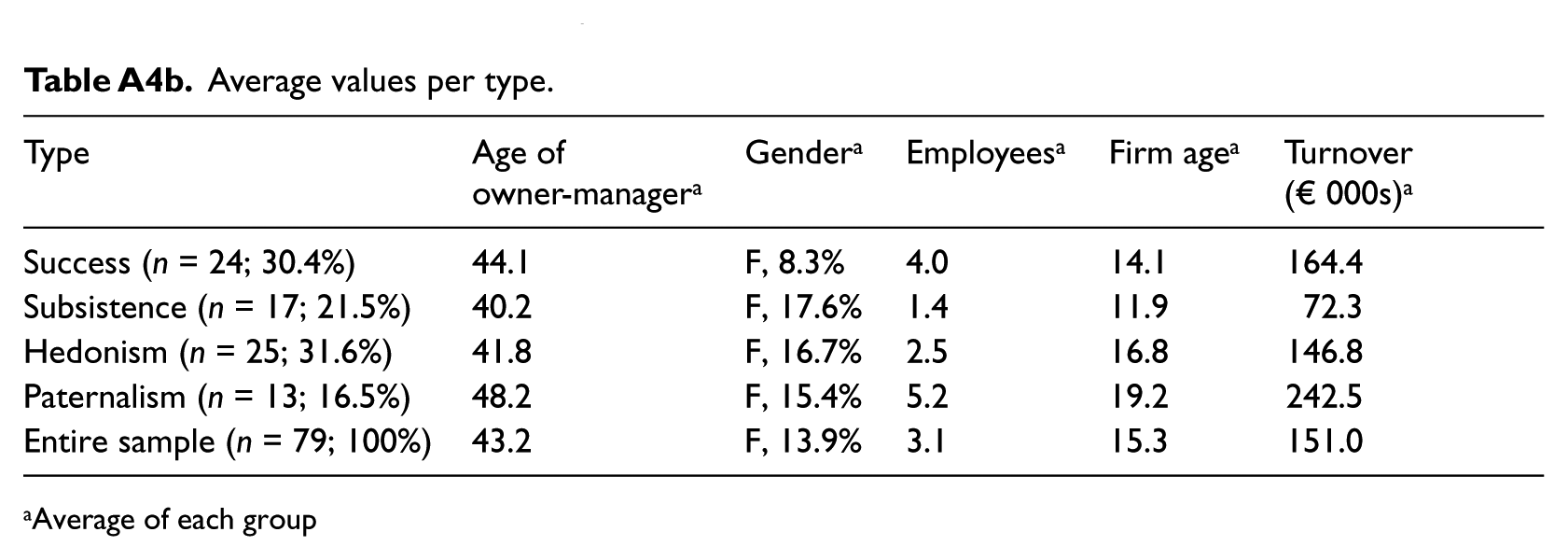
Finally, the firms of the paternalist owner-managers in this sample report the highest average numbers for employment and turnover (followed by the success type; Appendix 2, Table A4b). Paternalists may focus on the three criteria of performance, growth and individually defined success, but they pursue these objectives with restricted risk-taking and a concern for viability. Most of these owner-managers favour low-risk financing to develop and grow their businesses; they are relatively reluctant with respect to venture capital, risky investment and bank debt. These firms appear to be healthy and profitable, which makes them solid candidates for short-term bank loans, for example.
Concluding remarks
Micro-firms constitute the majority of the firms in the small business sector, and both the literature and practice indicate that micro-firms are increasingly important with respect to competitiveness, employment and growth. Micro-firms are far from homogeneous, and typologies are a useful means of gaining a better understanding of these firms and entrepreneurs. In micro-firms (to a greater extent than in SMEs), the owner-manager is the central person in control. For this reason, this study focused on this person in developing its micro-firm typology.
Existing typologies focus on SMEs and growth-related issues, and do not account for the specificities of micro-firms. Because many micro-firm owner-managers have no desire for growth and are driven by non-financial or personal motives, this study aimed to fill this gap in the literature, and thus, to examine how the personal views of owner-managers affect behaviour and growth. The main difference between the existing SME typologies and the classification in this study is that our classification relies on view-based positioning to explain entrepreneurial behaviour. Among the four types that were identified, the representatives of only two types of views want to grow (success and paternalism, the representatives of the other two types of views, have no desire for growth (hedonism and subsistence).
In the present sample, growth is not a necessary path to survival and success. The findings show that an understanding of micro-firm behaviour requires researchers to incorporate the idea that micro-firm owner-managers are driven by varied, and sometimes profoundly divergent, views – and that these views will have substantial effects on the strategies and development of specific firms. In this sense, this micro-firm typology contributes to various streams of the small business literature: growth orientation (success), necessity entrepreneurship (subsistence), lifestyle entrepreneurship (hedonism) and family firms (paternalism).
Limitations of the study
The work presented here is not free of limitations. Because this study is qualitative, further statistical support is needed to justify the generalisation of its findings. The interpretative approach here is based on so-called discourses to perceive what is important to owner-managers (Miles and Huberman, 1994). The main limitation of this approach is that such discourses can only be rationalised a posteriori. Thus, replication of this study in other regions or micro-firm sectors is required.
Footnotes
Appendix 1: French demography of small firms and the situation of the Languedoc-Roussillon region
Population and employment: Languedoc-Roussillon region.
| Region a | Population |
Employment |
||||||
|---|---|---|---|---|---|---|---|---|
| Population in 2010 | Evolution 1999–2010 | Growth rate b | Part of migration c | Employment change d | Unemployment rate 2008 | Unemployment rate 2012 | Average salary 2009* | |
| Languedoc-Roussillon | 263,6321 | 343,916 | 1.3 | 1.1 | 0.7 | 10.6 | 13.8 | 17,833 |
| France | 6,279,1013 | 4,294,400 | 0.5 | 0.2 | 0.3 | 7.4 | 9.9 | 20,249 |
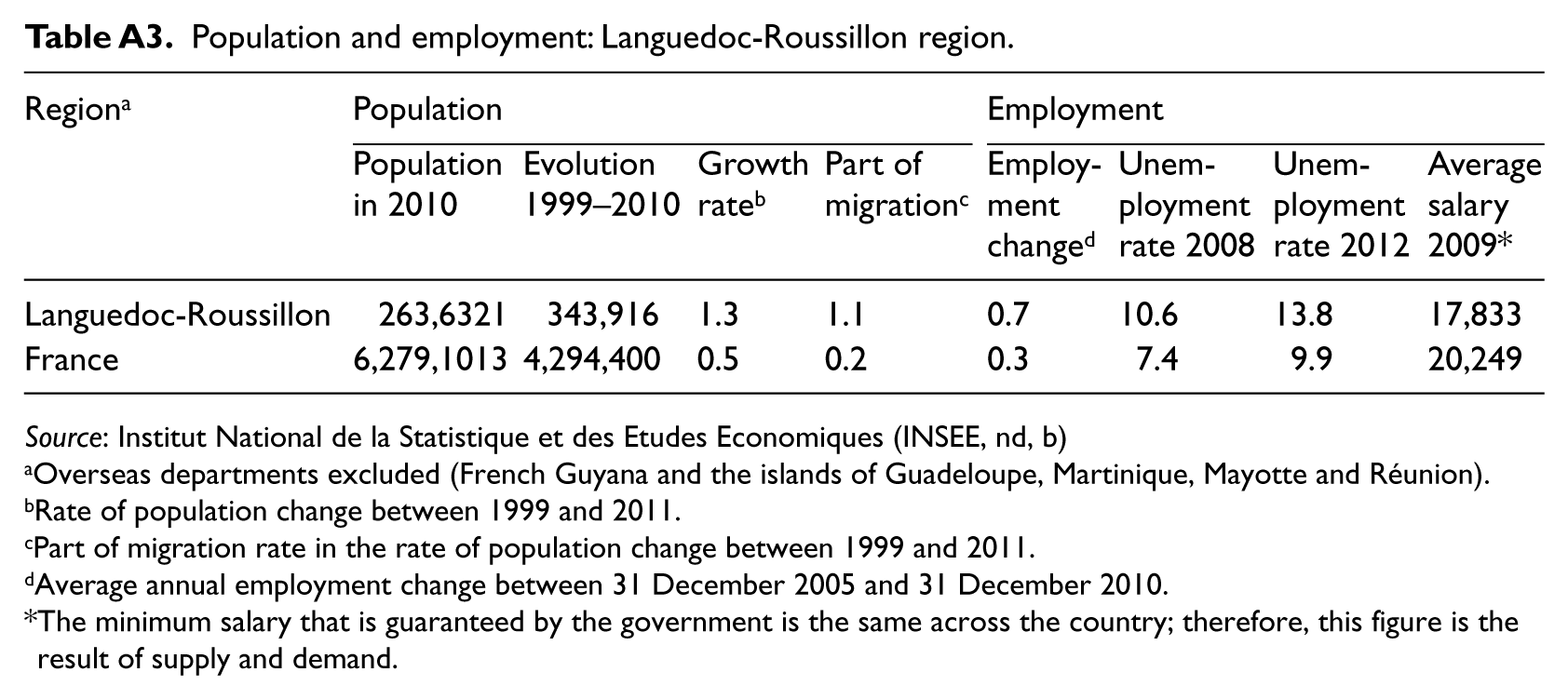
Source: Institut National de la Statistique et des Etudes Economiques (INSEE, nd, b)
Overseas departments excluded (French Guyana and the islands of Guadeloupe, Martinique, Mayotte and Réunion).
Rate of population change between 1999 and 2011.
Part of migration rate in the rate of population change between 1999 and 2011.
Average annual employment change between 31 December 2005 and 31 December 2010.
The minimum salary that is guaranteed by the government is the same across the country; therefore, this figure is the result of supply and demand.
Appendix 2: Sample description
Average values per type.
| Type | Age ofowner-manager a | Gender a | Employees a | Firm age a | Turnover (€ 000s) a |
|---|---|---|---|---|---|
| Success (n = 24; 30.4%) | 44.1 | F, 8.3% | 4.0 | 14.1 | 164.4 |
| Subsistence (n = 17; 21.5%) | 40.2 | F, 17.6% | 1.4 | 11.9 | 72.3 |
| Hedonism (n = 25; 31.6%) | 41.8 | F, 16.7% | 2.5 | 16.8 | 146.8 |
| Paternalism (n = 13; 16.5%) | 48.2 | F, 15.4% | 5.2 | 19.2 | 242.5 |
| Entire sample (n = 79; 100%) | 43.2 | F, 13.9% | 3.1 | 15.3 | 151.0 |
Average of each group
Acknowledgements
The authors would like to thank Roy Thurik for his many constructive comments.
Funding
The authors are in charge of the ‘Entrepreneurship and Innovation’ chair, which is part of LabEx ‘Entrepreneurship’ (University of Montpellier, France). This ‘laboratory of excellence’ is funded by the French government in recognition of high-level research initiatives in the human and natural sciences.