



Abstract
Context-aware services such as Global Positioning System (GPS) and Location Based Services (LBS) can be used to acquire information and services at any time from anywhere in various contexts. It is critical to study how user perceptions and intentions are affected in different decision-making processes. Based on the Technology Acceptance Model and Expectation Confirmation Theory, this research examines a two-stage theoretical model of consumer adoption of context-aware services by studying an example of an intelligent tourist guide Xi-Hu-Tong (West Lake tour). We focus on the formation mechanisms of user decisions in the initial adoption stage, and on feedback and evaluation mechanisms in the post-adoption stage. According to our data analysis using structural equation modeling, we find that relative advantage, motivational needs, and personal situations have significant impacts on user initial adoption intention. Additionally, usage experience has a significant impact on expectation confirmation and satisfaction. Usage experience also influences user satisfaction, reinforcing the emergence of post-adoption behaviors such as continuous usage and recommendations. Together, these results illustrate the dynamic process that encourages consumers who begin as potential users to eventually become loyal users.
Keywords
A user’s personal situation is the key factor that triggers the use of an intelligent tourist guide.
Introduction
The mobile Internet and ubiquitous computing have been developing rapidly around the world. According to a report issued by the China Internet Network Information Center (2014), the number of mobile Internet users has reached 419 million, accounting for 74.5 percent of the total Internet user population. This development has resulted in a number of new innovations in the mobile market, such as context-aware services, mobile commerce, mobile games, and mobile payments. Of these innovations, context-aware service is the most promising and profitable one, and as a result is now experiencing a rapid growth worldwide. Context-aware services automatically acquire sensible contexts from user environments and proactively provide information or services to these users, such as location-based services (LBS) and telemetric systems based on the Global Positioning System (GPS).
Context-aware services provide users with personalized information and services based on their context in a dynamic environment (Hong et al., 2009). In the past decade, many context-aware services such as intelligent museums, intelligent tourists, location-based services and mobile navigation have been proposed and widely applied (Yu et al., 2008; Cheverst et al., 2002; Gregory et al., 1997). Compared with traditional services, context-aware services can offer optimal information and services to users ubiquitously and immediately, freeing users from temporal and spatial limitations (Thaemin, 2005; Junglas and Watson, 2008). However, context-aware services have constraints, such as small screens, privacy disclosure, inaccurate information and connection failures. These constraints may negatively impede adoption decisions and affect user experience.
Extant research has paid much attention to the investigation of how mobile commerce performs with actual users and how the adoption behaviors of context-aware services are moderated by different variables, such as usefulness, ease of use, appearance, security, etc. (Kwon et al., 2007; Tianjiao et al., 2007, Wang et al. 2013). Most of these variables derive from the features of the mobile product, and researchers have tended to explore user acceptance behavior from the perceived features of product or service rather than from the situations and needs of consumers. On the other hand, cultivating user adoption is a dynamic process, which extends from initial adoption to eventual continuous usage. Context-aware services cannot succeed unless they are used continuously and naturally by users. Existing studies of mobile commerce have mainly considered the initial adoption of services and products based on static cross-sectional data, while less effort has gone into providing insight into the evolution of user perceptions. To a degree, this research endeavor attempts to bridge this gap. We propose a longitudinal model of adoption development, from the perspective of users rather than through an emphasis on technology. Specifically, we analyze the factors that influence user initial adoption; in the post-adoption stage, we focus on feedback and evaluation mechanisms, utilizing usage experience as the key to validating the model.
The rest of this paper is organized as follows. We present a literature review in the next section. Then we develop the research model and hypotheses. The next section reports the research methods, followed by data analysis and results, and discussion. The following section presents theoretical and managerial implications, with conclusions in the final section.
Literature review
Context-aware services
Through new technologies in ubiquitous computing, context-aware services aim to acquire and utilize context information from a device in order to provide services that are appropriate to the particular people, place, time, event, etc. Context-awareness or context-aware computing, through the use of context, provide task-relevant information or services to users (Gregory et al., 1999). More importantly, this awareness can improve the adaptation of services and applications that are appropriate for situational changes. With context-awareness, software not only deals with changes in the environment, but also improves the response of the software during certain operations (Hong and Schahram, 2009).
Nowadays, context-based services are well established. They turn our homes, offices, cars, cities, etc. into smart environments where highly adaptive services are dynamically deployed, updated, or replaced (Matthias et al., 2012). Location-based services (LBS) are deemed the killer application of context-aware services, because they identify a user’s location and deliver information geographically relevant to that position. Typical LBS include mobile navigation, location-based advertisements, emergency evacuation, and check-in services of mobile social networks (Zhou, 2011). The market research firm ABI estimated that the revenue of LBS would rise from US$515 million to US$13.3 billion in the next 5 years. Therefore, we chose an LBS-intelligent tourist guide as a case to test the validity of the model we developed.
An intelligent tourist guide is a typical application of LBS. It consists of a device and software that provides the tourist with information relevant to the tourist’s current location (Owaied et al., 2011). Such a system can automatically provide both wide general knowledge and specific references to history, geography, art, allusions and legends when tourists arrive at a specific place. Its accurate position, along with full and vivid explanations, make it possible for the public to schedule their trips more easily and at the same time avoid problems due to a lack of personal guides. This service has been widely implemented. Many indoor exhibitions, such as museums, have discontinued the use of personal tourist guides since tourists can use electronic intelligent guide devices by themselves when entering museums, and return the devices to the museums for reuse. This also reduces the noise level in museums. Today, many scenic sites have popularized this service in China, such as the Forbidden City Museum and the Summer Palace in Bejing, the West Lake in Hangzhou, etc.
Adoption and post-adoption beliefs
Existing studies about user acceptance behavior are mainly divided into two categories: initial adoption and post-adoption. Initial adoption means user acquisition that transforms potential users into actual users, whereas post-adoption means customer retention that transforms existing users into loyal users (Zhou, 2011).
The Technology Acceptance Model (TAM) is widely regarded as one of the most robust and influential models for explaining user acceptance behavior towards technology (Davis, 1989). Specifically, TAM posits that user IT acceptance is a function of two cognitive beliefs: perceived ease of use (PEOU) and perceived usefulness (PU). PU is the tendency of people to use or not to use a technology, based on whether they believe it will help them to perform their job better. PEOU is about how difficult a technology is perceived in its application and whether the rewards of application are outweighed by the efforts committed to using it (Davis, 1989). Apart from PU and PEOU, a number of external variables such as security, risk, self-efficacy, financial cost, social norms, etc. (Kwon et al., 2007; Tianjiao et al., 2007) have been introduced into TAM to gain a better understanding of user perceptions and actions. They can be used to improve the predictability of technology acceptance.
As a critical phase in the success of mobile service providers, user post-adoption perceptions and behaviors should also be studied. During the post-adoption phase, users have more direct knowledge about context-aware services, based on which they decide whether to continue or discontinue using an information technology (Zhou, 2011). The expectation confirmation model (ECM) suggests a reasonable mechanism of how user beliefs or behavior are changing as a result of using a technology, and it has been widely used to investigate IT continuance usage (Bhattacherjee, 2001, 2004; Hong and Tam, 2006). ECM posits that users will update their beliefs towards using the IT as they gain first-hand experience and user satisfaction with it while shaping their continuance intentions.
Research model and hypotheses
We propose a two-stage theoretical model to explore how user perceptions and intentions are affected by different decision-making processes. The initial adoption stage is applied to explain why customers choose this service (Figure 1), and the post-adoption stage addresses customer retention intentions (Figure 2). The hypotheses are developed as follows:
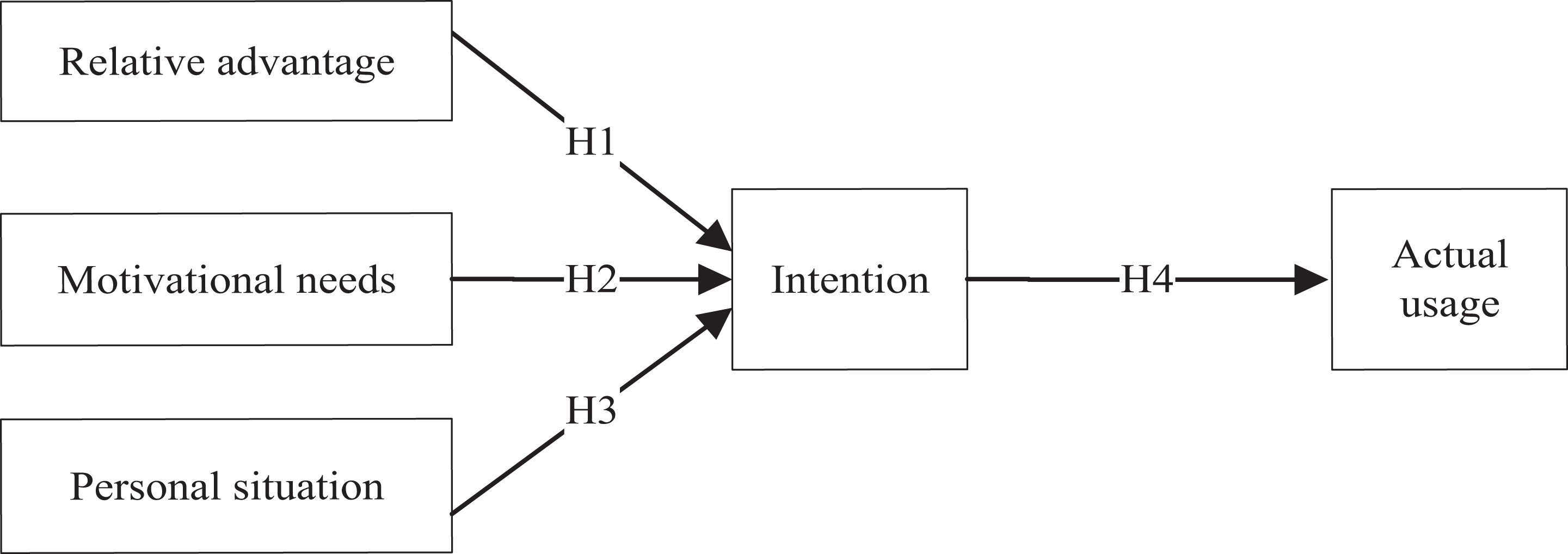
Initial adoption stage.
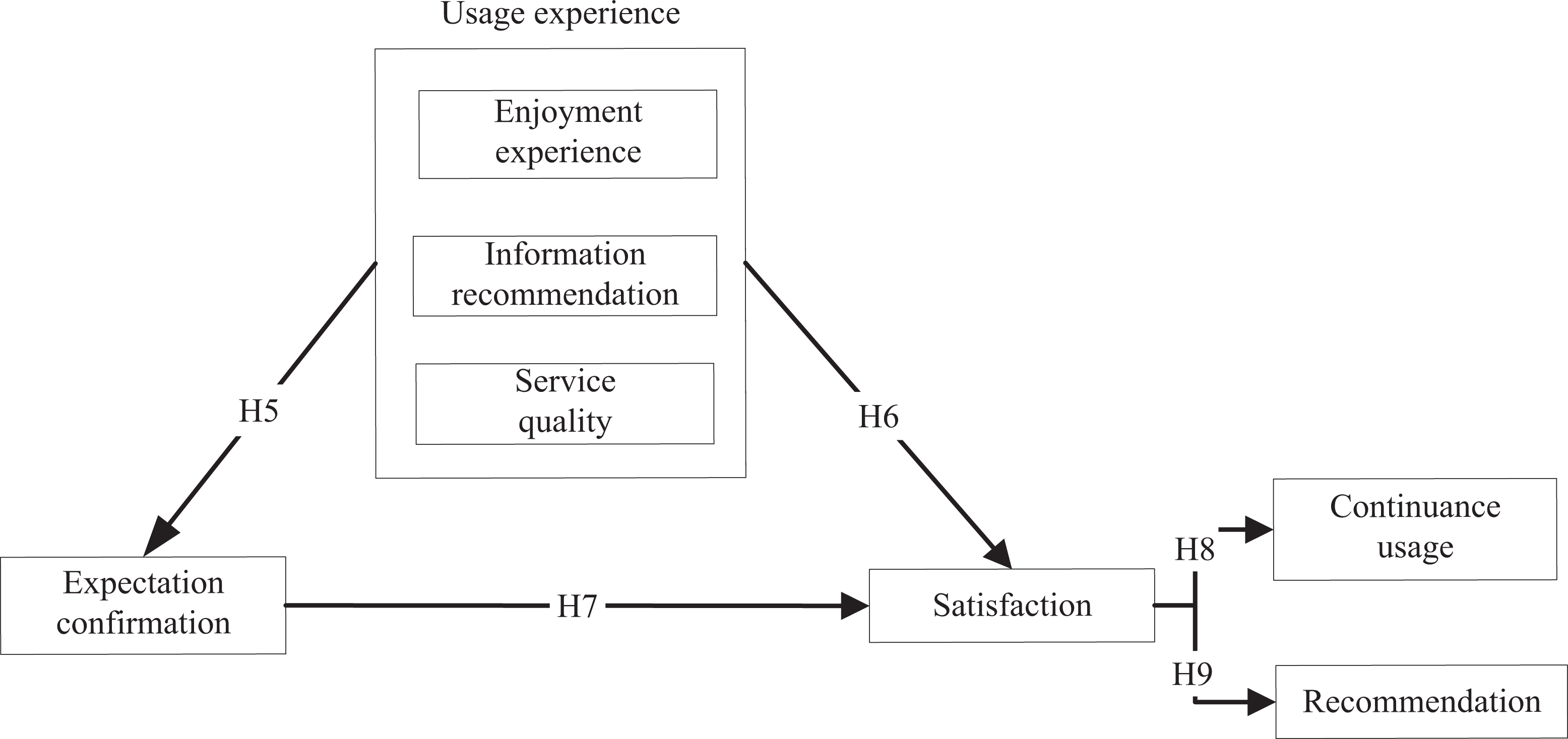
Post-adoption model.
Initial adoption stage
Relative advantage
When making an adoption decision, users would select an optimal solution from a range of alternatives by evaluating the advantages and disadvantages of each possible outcome in order to achieve their desired objective (Clive and Kevin, 2010). That is to say, relative advantage plays an important role in user adoption behavior. It has been found to be a significant factor affecting usage of various mobile services, such as mobile payments, short message services, mobile shopping, mobile Internet, and mobile ticketing (Lu et al., 2010; Hsi and Philip, 2009; Shin et al., 2010). Jung et al. (2009) found a particularly strong and significant relationship between relative advantage and behavioral intention when studying mobile TV adoption. Liu and Li (2011) defined relative advantage as the degree to which an individual believes that playing a mobile game would enhance his or her life quality, and this would positively influence attitude and intention to play mobile games in general.
Compared with other tourist assists, an intelligent tourist guide has many advantages. First of all, it is much cheaper and more flexible than hiring a tourist guide or joining a tour group. Secondly, buying and using a tourist book or map is inconvenient and time consuming, even though it may be less expensive. Lastly, the tourist information board at most tourist sites is the most direct way to acquire information, but it may not be available at every site. Hence, tourists would be likely to analyze these methods and assess the characteristics and relative advantages of an intelligent tourist guide for their own potential use. Thus, we propose: H1: Relative advantage is positively related to the intention to use context-aware services.
Motivational needs
Motivational needs refers to consumer motivation to use. User demand for the product or service is the premise of their adoption. Bouwman (2009) pointed out that personal requirements for investment are the most decisive factor that influences users to take specific actions. Lee (2013) examined the causal relationship between intrinsic-extrinsic motivators and decision performance in a ubiquitous decision-making environment, and found a significant effect. For intelligent tourist guides, if tourists only want to enjoy the attractions rather than know the related history, allusions or culture, they may not want to use an intelligent tourist guide. However, if tourists are interested in knowing more about the place, they would be more likely to accept this service. Thus, we propose: H2: Motivational needs positively influence intention to use context-aware services.
Personal situation
We define personal situation as “the very concrete environment in which a technology is going to be used” by a person. Heijden and Ogertschnig (2005) argued that it is important to have a fit between context and mobile information service. If a technology does not fit with the context of use, a user may not evaluate the service positively. In other words, a user would be more likely to use a mobile service when located in an appropriate situation. Xu and Yuan (2009) focused on GPS-based taxi-dispatching systems and provided empirical evidence that location, weather, time, mobility and urgency influence decisions on whether to take a GPS-based taxi service.
Context-aware services tend to be exposed to various social and use situations. We categorize the personal situations that may influence the intention to use an intelligent tourist guide as follows: Unfamiliarity: tourists come from elsewhere and they may know little about the tourist attraction. Budget or time limitations: tourists who have limited budget or time to hire a guide or visit a site may choose an intelligent tourist guide to save time and money. Being alone and not with an organized tourist group: such as a couple dating or on a honeymoon, a small group of friends or a single person; they might prefer traveling alone rather than hiring a tourist guide.
Thus, we propose: H3: Personal situations positively influence intentions to use context-aware services.
Intention
TAM postulates that beliefs affect attitude, which further influences intention, while intention, in turn, brings about direct behavior (Davis, 1989). Hence, we think tourists would choose to use the services when usage intention is established and in this process, their usage experience will be generated. H4: Intention positively influences the actual usage of context-aware services.
Post adoption stage
According to the ECM model previously mentioned, ECM proposes that user expectation confirmation and perceived usefulness determine their satisfaction (Bhattacherjee 2001). Expectation reflects user expectancy before they actually experience products and services, while user satisfaction and perceived usefulness are the consequences of actual usage experience evaluation. However, user expectation develops due to increased experience, and post-adoption expectation will be based on actual usage experience. Users develop initial expectations before using context-aware services and may have relatively high expectations toward these services. However, user cognition is generally based on second-hand information, such as industry reports, mass media communication and interpersonal communication. Such indirect information may be exaggerated or unrealistic, resulting in cognitions that are less reliable or stable (Wang et al., 2013). After they gain firsthand experience from actual usage, users would evaluate their experience. In this process, expectation serves as the comparison standard. If their usage experience is outweighed by their expectations, they will have a positive confirmation. In contrast, when usage experience is lower than expectation, this leads to negative confirmation and dissatisfaction. The greater the confirmation of expectation, the more likely it is that users would be satisfied with the product (Bhattacherjee, 2001). For context-aware services, users have relatively high expectations including enjoyment experience, information recommendation, and service quality. If the services can meet these expectations, users will feel they have a good usage experience and their expectation will be confirmed. In contrast, if users do not experience the expected level of services, their usage experience and expectation confirmation will decrease. H5: User experience of context-aware services would influence expectation confirmation. H6: User experience of context-aware services is positively related to satisfaction. H7: Expectation confirmation significantly affects user satisfaction.
In this paper, we consider that good experience of context-aware services can be measured by the following three factors: enjoyment experience, information recommendation, and service quality.
Enjoyment experience
Enjoyment experience can be defined as the extent to which an activity is perceived to be enjoyable. As a kind of intrinsic motivation, enjoyment has been found to be a significant predictor of various IT innovations (Liu and Li, 2011). Thong et al. (2006) found that perceived enjoyment significantly impacts the intention to continue the usage of certain IT services. Vander (2004) suggested that perceived usefulness lost its dominant predictive value when testing a Dutch movie website. However, perceived enjoyment was validated as the key driver of hedonic systems usage. Through context-aware services such as intelligent tourist guides, users can not only get the full explanation of attractions, but they can also enjoy a variety of supplementary services including music, video, games, etc.
Information recommendation
Context-aware services recommend valuable decision-making information to individuals by storing, maintaining, processing and managing information resources (Lee and Jung, 2012). The information quality here refers to the quality of outputs the context-aware services recommend, which is the critical factor influencing usage experience. However, poor information quality may undermine user experience if they need to spend much extra effort on scrutinizing information, which may increase their difficulty of operation (Zhou, 2013). Jung et al. (2009) noted that content quality affects mobile TV user experience. Donald and Harold (1987) defined four dimensions of information quality: accuracy, completeness, consistency and timeliness. Intelligent tourist guides provide users with information including navigation, scenic spot introductions, tour route recommendations, weather, the number of tourists visiting the site, etc. If these data are incorrect, out of date or delayed, user experience and satisfaction will be reduced.
Service quality
Service quality is one of the components of the IS success model. In the empirical study of Chang and Kirk (2000), service quality was measured as quick response, assurance, empathy, and follow-up service. Service quality can also be measured by the effectiveness of online support capabilities, such as answers to frequently asked questions, personalized customization of the site, and order tracking. Service quality has been shown to affect user satisfaction with mobile instant services and mobile value-added services (Deng et al., 2010). We summarize three quality categories for context-aware services: responsiveness: the reaction of context-aware services should be quick and without delay in any situation reliability: as context-aware services need to collect personal information, users would need security to protect their personal data when it is being used personalization: this applies to the diversity and accuracy of the personalized service.
Post-adoption behaviors
We divided post-adoption behaviour into two categories: continuous usage and recommendation. User IS continuance intention is determined primarily by their satisfaction with prior IS use (Bhattacherjee, 2001), and this relationship between satisfaction and continuance intention has also been established in other contexts. If users are not satisfied with context-aware services, they may discontinue their usage. Extant studies have found satisfaction is a strong determinant of continuance intention (Dan et al., 2009; Kuo et al., 2009). Compared to both traditional and online commerce, context-aware service user comments will spread more rapidly and widely with the help of mobile devices and networks. These comments may affect other users’ adoption and usage. Kim and Son (2009) noted that satisfaction affects service users’ usage intention and the spread of word-of-mouth. Thus, we expect that: H8: Satisfaction positively affects continuance usage. H9: Satisfaction positively affects recommendation.
Research methodology
Construct measurement and questionnaire design
There was a total of twelve factors measured in the two stage models. Each factor was measured with multiple items. These items were either adopted or adapted from the extant literature, except for items in the motivational needs construct, which were self-developed. The items measuring relative advantage, personal situation and enjoyment were adapted from the study by Liu and Li (2011). The items for intention and usage were adapted from the work of Lee (2005). Items of information recommendation and service quality were adapted from Hee et al. (2004). The scales of continuance usage, satisfaction and expectation confirmation were adapted from Bhattacherjee (2001) and the scale for recommendation was adopted from the study by Bougie et al. (2003). All the constructs were measured by using five-point Likert scales ranging from ‘strongly disagree’ to ‘strongly agree’. These items were first translated into Chinese by a researcher. Then another researcher translated them back into English to ensure consistency. The final items and their sources are listed in Appendix A and Appendix B.
Data collection
To evaluate the research model, empirical data were collected via survey questionnaires, then assessed by using structural equation model technology. The data for the study were collected from travelers around the West Lake, a famous tourist attraction in Hangzhou, China. To verify the models, we distributed two rounds of questionnaires. First, we randomly selected 600 travelers and introduced the functions of the intelligent guide, Xi-Hu-Tong, to them. Then we invited them to participate in our study and complete the first round of the survey questionnaire about initial adoption. As a survey participation incentive, we offered them a small gift. A total of 527 completed the first stage survey, representing a response rate of 87.8 percent. Based on our introduction of the service, a total of 250 rented the Xi-Hu-Tong intelligent guide. After their usage was complete, we invited them to complete the second survey questionnaire about post adoption, based on their usage experience. We dropped some responses that had too many missing values. As a result, we obtained 235 valid responses. Chi square tests revealed that the two groups did not have significant differences in terms of their gender, age and education. The frequency distribution of some demographic variables is presented in Table 1.
Sample demographics.

Data analysis and results
We validated the two stage models separately. The analysis of the data was conducted by SPSS 17.0 and AMOS 17.0. Firstly, the reliability and validity of the questionnaire was examined. Secondly, the hypotheses proposed in the research model were examined. Thirdly, the fitness of the research model was evaluated to ensure the accuracy of the model.
Construct reliability and validity
Firstly, we examined the measurement model to test reliability and validity. As shown in Table 2 and Table 3, almost all the standardized factor loadings satisfy the threshold of 0.7 (Fornell et al., 1982), the Cronbach’s alpha values range from 0.72 to 0.85, which are all above the 0.7 level (Rivard and Huff, 1988), indicating that the reliability of items was adequate.
Standardized loadings, AVE, CR and Alpha values (initial adoption).
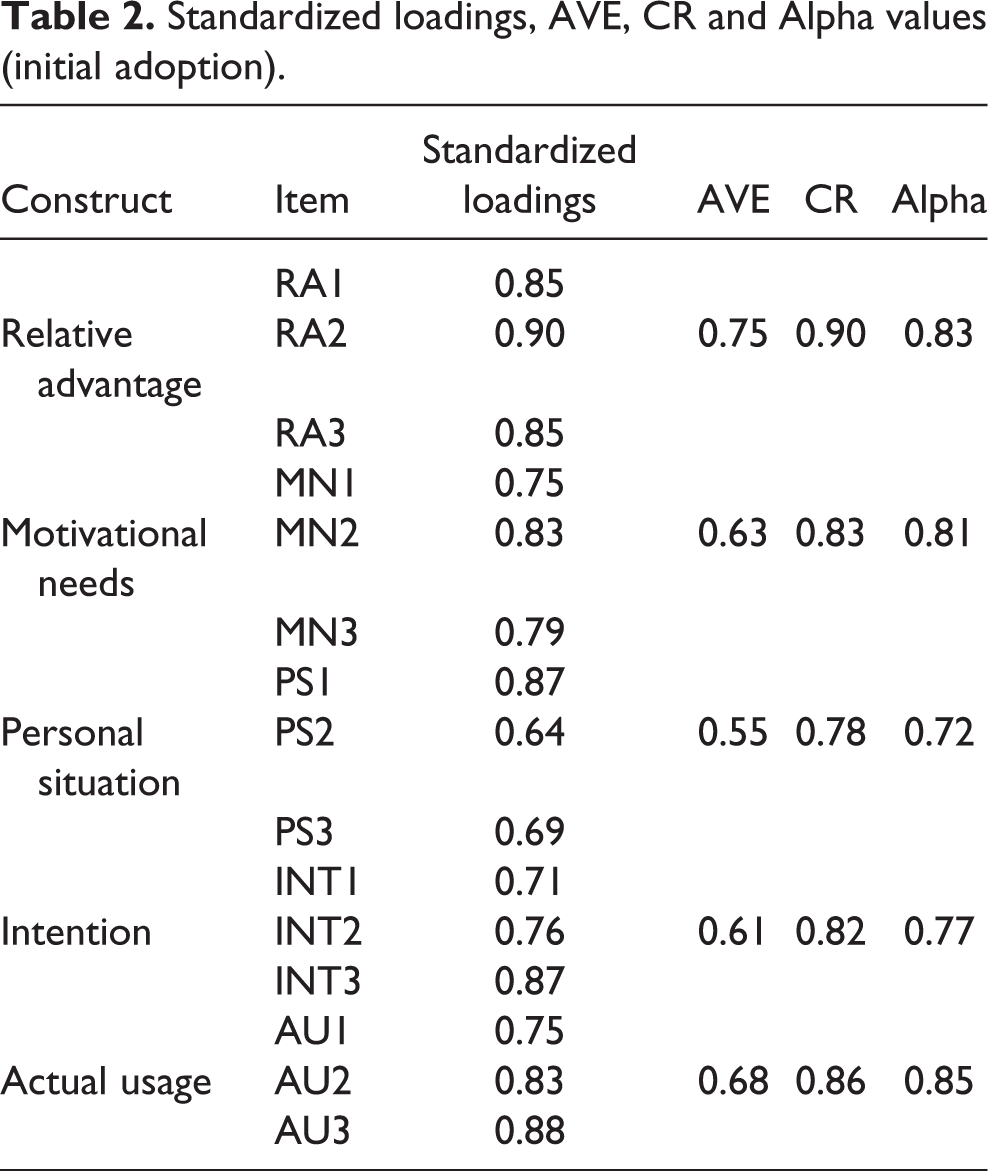
Standardized loadings, AVE, CR and Alpha values (post-adoption).

Additionally, composite reliabilities (CR) and average variance extracted (AVE) were assessed to ensure the convergent validity of the constructs. Convergent validity indicates the degree to which the measure of a construct that is theoretically related is also related to reality. The CR and AVE of all the constructs exceed the recommended thresholds of 0.7 and 0.5 respectively, which indicates good internal consistency.
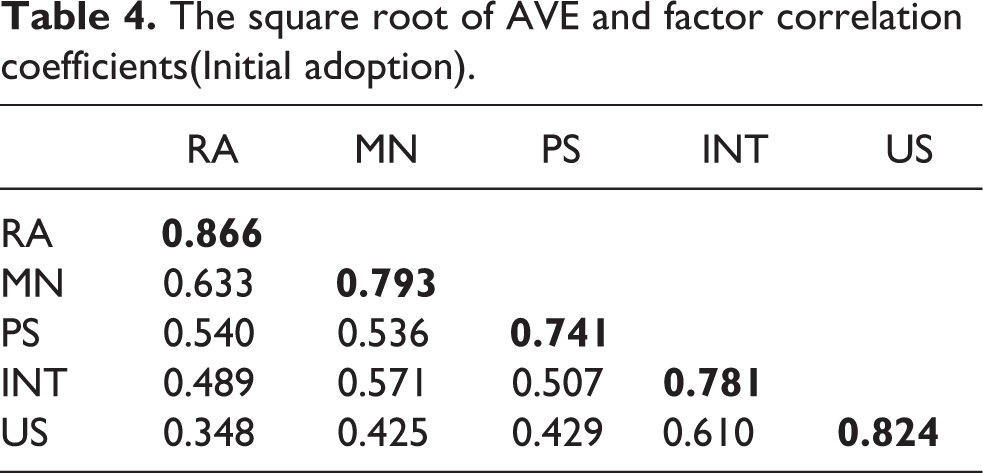
To examine discriminant validity, we compared the square root of AVE and factor correlation results. As listed in Table 4 and Table 5, the square roots of the AVE of all constructs are greater than the estimated correlation with the other constructs. This indicates that each construct is more closely related to its own measures than to those of other constructs. Therefore, discriminant validity is supported (Claes and David, 1981).
The square root of AVE and factor correlation coefficients(Initial adoption).
The square root of AVE and factor correlation coefficients (post-adoption).

Hypothesis testing and model assessment
After assuring acceptable psychometric properties in the measurement model, we assessed the structural model to determine its explanatory power. The significance of the hypothesized paths is shown in Figure 3 and Figure 4. Our initial model explained 36 percent of the intention to use the Xi-Hu-Tong package, and 47 percent of the total variability of actual usage. In the post-adoption stage, the model is very well validated, with variance explained on dependent variables in the model ranging from 35 percent for information recommendation to 61 percent for continuous usage.
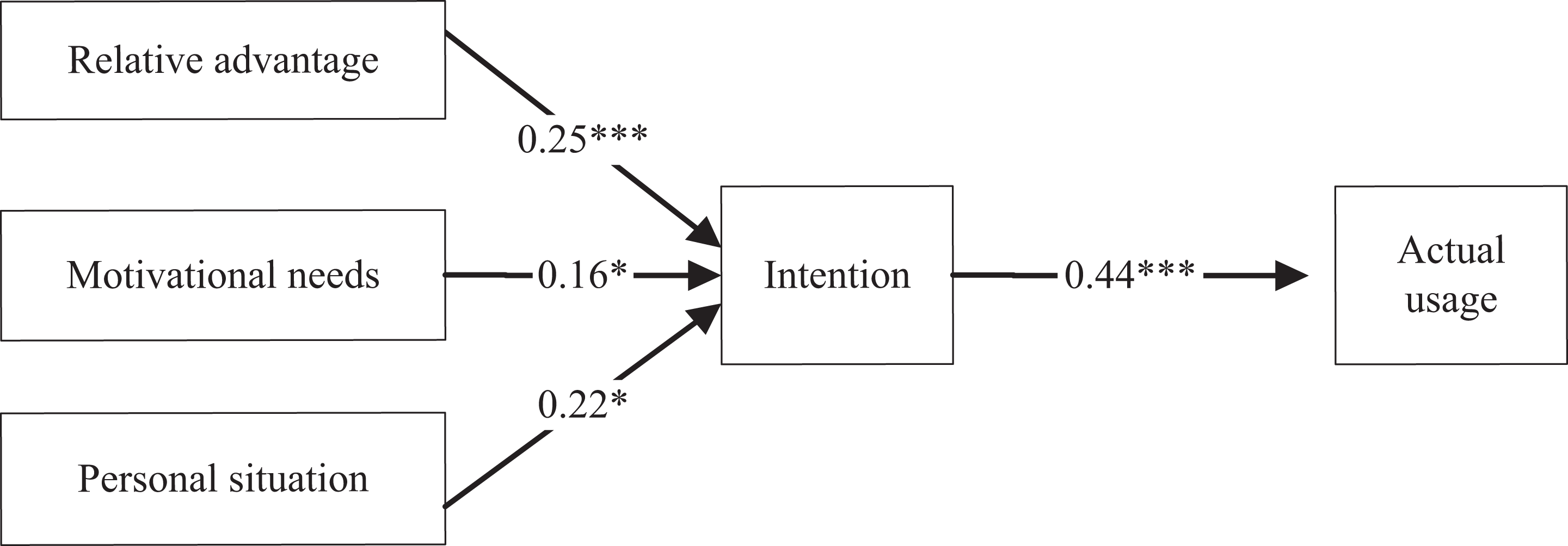
Path coefficients and their significance(initial adoption).
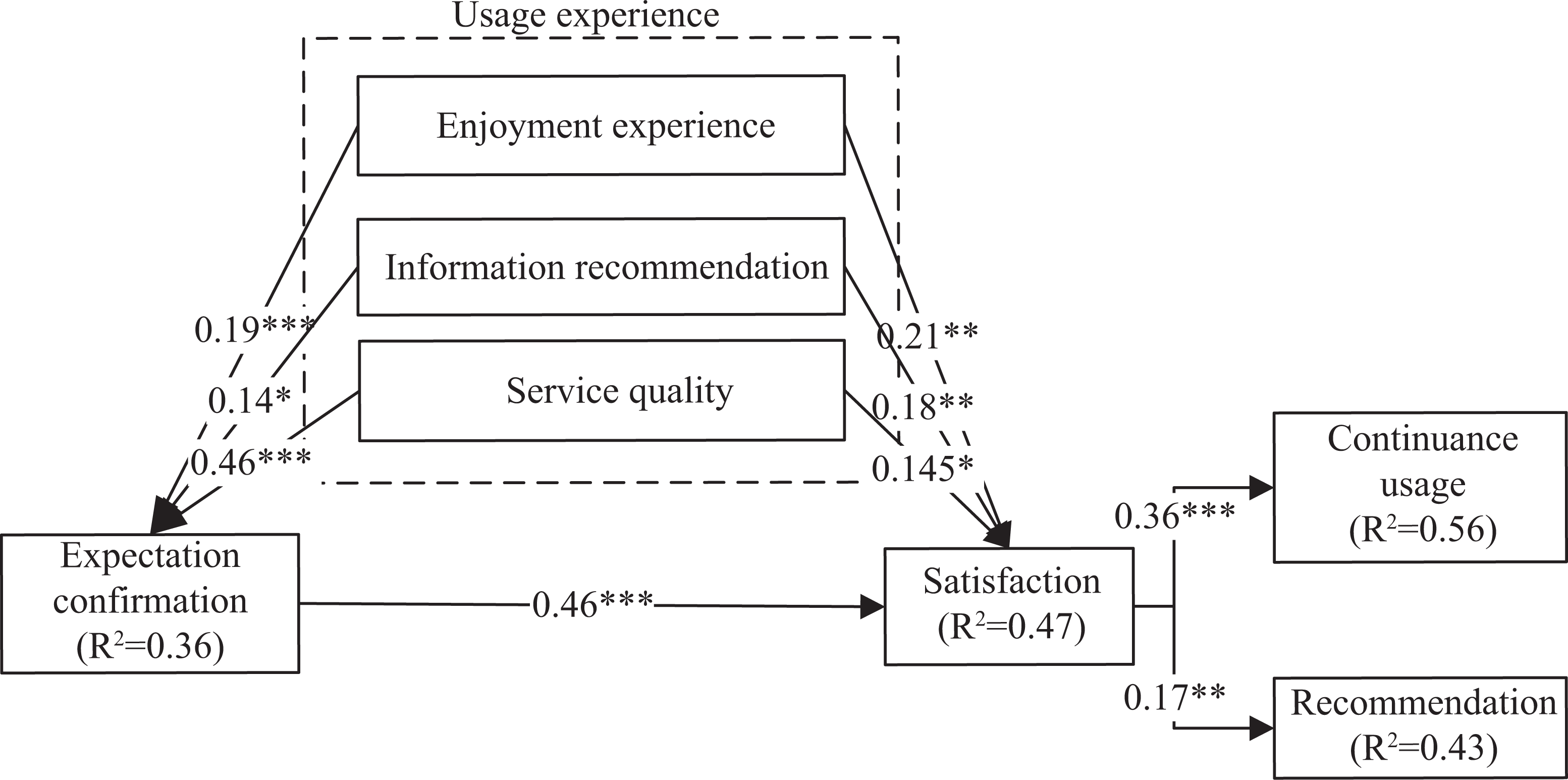
Path coefficients and their significance (post-adoption).
The actual values and recommended values of the model fit indices are listed in Table 6. The actual values were better than the recommended values, except for CFI, which is slightly lower. So we can assume that a good fit between the model and the survey data has been demonstrated in the research model.
The recommended and actual values of fit indices.

Note: chi2/df is the ratio between Chi-square and degrees of freedom, GFI is goodness of fit index, AGFI is the adjusted goodness of fit index, CFI is the comparative fit index, NFI is the normed fit index, NNFI is the non-normed fit index, RMSEA is the root mean square error of approximation
Discussion
As shown in Table 7, the research found that all the hypotheses we proposed are supported. Relative advantage, motivational needs, and personal situations have significant effects on user attitude, which further determined actual usage. Among the factors affecting intention, relative advantage has the largest effect, which is similar to findings on mobile TV (Jung et al., 2009). That is to say, the capability of Xi-Hu-Tong to improve user travel quality can lead to a positive intention and then contribute to their final usage. In addition, personal situation is also found to be the key factor that triggers the use of Xi-Hu-Tong. To some extent, it suggests that Xi-Hu-Tong may be the only way available for them in certain contexts, such as budget, time limit, or travel alone, so users in these situations would be more willing to use the package. This suggests that user decisions on the use of Xi-Hu-Tong are context-related.
Results of hypotheses testing.

Note: ***p < 0.001; **p <0.01; *p < 0.05.
Users would modify their beliefs based on whether Xi-Hu-Tong enables a feeling of enjoyment, and provides good information recommendations and high-quality service. The modifications are based on how their initial expectations are confirmed during their usage. Among the three use experience factors that influence satisfaction, service quality has the largest effect. If Xi-Hu-Tong cannot ensure a high level of service responsiveness, reliability and personalization, users may doubt that Xi-Hu-Tong can meet their requirements, thereby undermining their feeling of satisfaction. In addition to service quality, information recommendation is also a critical factor. This finding is in line with prior research by Jung et al. (2009). Inaccurate or out of date information recommended to the users will make them frustrated and annoyed, which will undermine their experience. If the Xi-Hu-Tong provider could present more rich and personalized information to users, such as recommending nearby restaurants to users during dining time, or showing nearby toilets and bus stops, this might help improve use experience. Additionally, the expectation confirmation significantly affects user satisfaction; this is consistent with the ECM.
Satisfaction has significant effects on continuous usage and recommendation. This result is consistent with Kim and Son (2009), who found that satisfaction has a significant effect on online services user word-of-mouth. Thus Xi-Hu-Tong providers need to build early adopter satisfaction because their evaluations will affect later adopters’ decisions. If these early adopters are satisfied with mobile services, they may recommend the services to other users, which shapes a positive word-of-mouth effect. Otherwise, it leads to a negative word-of-mouth effect.
Theoretical and managerial implications
This paper makes several contributions to theories on the subject of technology adoption. Firstly, we examined user adoption evolution through a dynamic process. Previous researchers in this field focused on users’ initial adoption or post-adoption, both of which are critical to IS success. However, researchers seldom considered these determinants together. This study, which we based on TAM and ECT, proposed a two stage adoption model that was supported by our analysis of longitudinal data. Thus, we provided a more comprehensive understanding of how technology adoption develops, particularly for context-aware services. Secondly, as noted earlier, extant research has mainly used TAM and ECT as a theoretical basis and identified the effects of instrumental beliefs such as perceived usefulness, perceived ease of use. This study has served to broaden our understanding of user adoption. In particular, we selected factors from the user’s perspective rather than perceptions about the product itself. This helped us to gain a comprehensive understanding of consumer behavior; the result indicates that relative advantage, motivated needs, and personal situations have significant effects on user intention to adopt context-aware services. Furthermore, this study takes usage experience in the theoretical framework into account. We capture the distinguishing features of the intelligent guide, including an emphasis on how user usage experience affects their confirmation and satisfaction, thus enriching extant research.
From a managerial perspective, the significant influence of personal situations suggests that it might be an effective strategy to market context-aware services such as intelligent tourist guides to typical situation users, such as singles or first-time visitors. The provider should also support multiple languages for foreigners. Our result also implies that service providers need to improve the enjoyment, information recommendations and service quality in order to facilitate user post-adoption usage of an intelligent guide. For example, the provider could add some hedonic functions, offer personalized and abundant travel tips, while not neglecting the role of service quality in enhancing user experience. Without a satisfactory experience, users may discontinue their usage of the intelligent guide.
Conclusion
Drawing on the TAM model and expectation confirmation theory, this research identified the factors affecting intention to adopt and to continue using an intelligent tourist guide. A theoretical framework based on user perspectives and consumer decision processes has been proposed and validated by a case involving the Xi-Hu-Tong intelligent tourist guide service. The results indicated that relative advantage, motivational needs, and personal situations affect users’ initial intention. We emphasized the consumers’ continuous usage decision-making process in our model. We found that post-adoption factors are different from initial intention beliefs and that usage experience has a great impact on post-adoption beliefs.
Limitations
As with all research, we acknowledge some limitations of this study. Firstly, because of the limitations of time and effort, we did not have open questions to collect people’s comments on the service. If these data were collected we might be better able to explain user behavior in this case. A further evaluation of actual use might also deepen our understanding of user behaviors. Secondly, the use of intelligent guides in China is developing rapidly but is still in its early stages. Our study may only reflect the adoption situation in China. Thus, more study is needed to determine if our model can be generalized to other countries that have also developed and used intelligent guides. Lastly, an inclusion of mediating factors, such as gender, age and educational background would possibly offer some fresh insights and provide new directions for future research.
Footnotes
Appendix A
Appendix B
Acknowledgment
This research is supported by National Natural Science Foundation of China (Grant No. 71471164, 71301070005), the Ministry of Education of Humanities and Social Sciences Project – Grant No. 13YJA630149) as well as Soft Science Key Research Project of Zhejiang Province (Grant No. 2013C25053) and Modern Business Centre of Zhejiang Gongshang University.