



Abstract
This article sheds some light on the usage and types of Information and Communication Technologies (ICTs) accessible to community members in four selected multipurpose community centers (telecentres) in KwaZulu-Natal, South Africa. The study was informed by the Diffusion of Innovations Theory. Through a survey, four telecentres were purposively selected. Questionnaires were used to collect data. The data was tabulated and presented using tables, frequencies, and percentiles. The results indicate that a variety of ICTs have been adopted in the telecentres to provide local communities with much-needed access to information and improved communication. The most popular recommendations from users included the need for sufficient and coherent government policies regulating the training of the local community to effectively use these ICTs. Government should ensure that adequate varieties and levels of ICT competence are offered to all citizens, and needs to find ways to gradually include ICT training in curricula at all levels, including primary education.
Keywords
Despite constraints and challenges, a wide range of ICTs have been adopted in telecentres.
Introduction and background
ICTs have been portrayed “as a kind of panacea for a multitude of the world’s problems” and as “an important catalyst that will strengthen developing countries’” position in the information society (Montealegre 1999:199). Most African countries have poor ICT infrastructure and the reasons for abject poverty in some countries include poor information facilities and access (Ojo 2005; Odat 2012; Mbatha and Lesame 2013). The introduction of telecentres in these countries in the 1990s was aimed solely at improving information accessibility. Despite South Africa being a leader in ICT infrastructure in the whole of Africa, some communities in South Africa still have poor ICT infrastructure, which, in essence, is denying them access to information.
Based on this background, the researcher conducted this study with the intention of establishing the availability and use of ICTs in selected telecentres in South Africa. Telecentres, as Ojo (2005) correctly observes, promote the use of ICTs for community development, provide information and communication services to communities, provide training in the use of computers, and teach varying methods of carrying out different activities by way of demonstrations and so on. No studies have hitherto been conducted in South Africa to establish how telecentres are used by local communities. There are only a few studies aimed at determining the challenges facing the telecentres and how the operators of the telecentres are trying to overcome these challenges. There is growing concern that poor people, especially in remote rural areas, have benefited very little from rapid economic growth. While the migration of the rural poor to urban areas has helped cater to urban requirements, it has accentuated urban poverty and migration-related social problems.
This article examines the use and types of ICTs accessible to community members in four selected telecentres in the municipalities of Nhlazuka, Mbazwana, Dududu, and Malangeni in KwaZulu-Natal. The following research questions were posed: What types of ICTs are available in telecentres? What is the citizens’ level of interaction with ICTs? What are the levels of computer skills among local community members? What is the purpose of using ICTs in telecentres? What are the challenges faced by citizens when using ICTs? What strategies could address the challenges faced by the citizens when using ICTs?
Multipurpose community telecentres provide the public with access to a variety of communication and information services. Many governments and organizations around the world encourage the effective use of these centres, which provide affordable ICT access, training for disadvantaged individuals, and access to resources and information for social development (Mbatha, 2009). Despite their advantages, the South African government has often experienced significant obstacles in establishing and maintaining these centres, mainly because of the high cost of connectivity, low digital literacy in some communities, and high maintenance costs (Mtega and Malekani, 2009; Mbatha, 2013). Community telecentres are diverse, often varying in the clientele they serve and the services they provide.
After outlining previous literature on ICTs and telecentres, the article describes the theoretical framework adopted to conduct the study, and then goes on to report the results, discuss the results and, finally, ends with concluding remarks and recommendations.
Literature review
Many researchers have emphasized the role played by telecentres in improving information flow and accessibility, satisfying information needs, promoting ICT services and bringing about socioeconomic development in the most marginalized communities (Colle and Roman 2001; Zolfani, Sedaghat and Zavadska 2012; Neville, 2012:321).
What is a telecentre?
Zolfani, Sedaghat and Zavadska (2012) describe a telecentre as a place where shared access to information and communication technology and IT-enabled services are available. Fillip and Foote (2007) note that telecentres are considered as potential instruments for addressing the asymmetric information problem and the digital divide, and therefore act as development enablers. ICT tools and services such as computers and the Internet are offering valuable benefits in terms of improved vertical and horizontal communications among rural people, development agencies and decision makers (Mtega and Malekani 2009; Singh and Raja 2010). This in turn improves the quality of decisions that affect rural communities and agricultural organizations. Mtega and Malekani (2009) note that telecentres have been thought of as an alternative means of bridging the information gap created as a result of developments in ICTs.
Telecentres have one major objective: to enhance information accessibility among rural and marginalized communities (Rose 1999). Mtega and Malekani (2009) observe that telecentres play informing roles through the provision of telephone and fax services, email, Internet and other information-related services. Benjamin (2000) states that telecentres originated in Europe and North America in the mid-1980s and later spread through the world. Telecentres in South Africa were initiated in 1999 as one of the primary vehicles for the implementation and development of ICT and to integrate government services into primarily rural communities (Government Communication and Information System, 2014). This was done to address historical, social and economic factors that limited access to information, services and participation by citizens, as they had to travel long distances to access these services (Government Communication and Information System, 2014). The main aim of these telecentres in South Africa is to empower the poor and disadvantaged through access to information, services and resources from government, non-governmental organizations (NGOs), parastatals, business, etc. enabling them to engage in government programmes for the improvement of their lives (Government Communication and Information System, 2014). The South African government’s vision for telecentres is to provide every South African citizen with access to information and services within their place of residence and in each local municipality by the end of 2014, with the purpose of improving the quality of their lives through integrated service delivery (Government Communication and Information System, 2014).
Information and Communication Technologies
Many ICT enthusiasts, such as Rowland (2006) and Mbatha and Ocholla (2011), define ICTs and have perceived them as key catalysts in current and future social and organizational revolutions. In the South African policy landscape, the abbreviation ‘ICT’ is widely used and it encompasses the convergence of various communication technologies, such as computers, telephone, broadcasting, multimedia and the Internet (Al-Zhrani, 2010:93). The South African government has placed a strong emphasis on ICT sector development through the implementation of a national ICT strategy, which proactively addresses ICT penetration, particularly for disadvantaged segments of society (Zawada et al. 2007). South Africa is a nation of diversity, with over 49 million people and a wide variety of cultures, languages and religious beliefs (South Africa Info 2014).
Technologically, South Africa’s history was mostly confined to agriculture and mining until World War II, when the Council for Scientific and Industrial Research (CSIR) was formed. According to Basson (1996:33), the CSIR is the largest research development and implementation organization in Africa, and became responsible in the ensuing years for creating research capacity and scientific and technological human resources on behalf of the nation. In the context of reconstruction and development, the CSIR is an important element of the nation’s science and technology infrastructure and supports industrial development. The CSIR also strengthens South African industry’s ability to compete internationally, provides technological support for small, medium and micro-enterprises, and supports technology decision-making.
Advances in microelectronics and telecommunications, in conjunction with the convergence of these technologies with new ICTs in the final quarter of the last century, have transformed the way the world works (Thioune, 2003:07). In 1996, only five African countries had Internet capability; today all are connected and Internet-enabled. This new age, variously labelled the computer, Internet or information age, commodifies knowledge, ensuring that the information- and knowledge-rich are also rich in more conventional ways. This has translated into a divide whose lines appear to trace earlier demarcations of rich and poor societies, and of developed and developing countries (Thioune, 2003; Singh and Raja, 2010; Mbatha, Ocholla and Le Roux, 2011).
Theoretical framework
An analysis of the research questions of the study suggested a theoretical framework that has components of technological innovation, adoption, diffusion and communication. The researcher carefully examined several theories in an attempt to find one that encompassed all these components. Roger’s Diffusion of Innovations Theory (DoI) was selected because it provides a sound theoretical framework for the diffusion and use of modern ICTs in the surveyed telecentres. This theory has been used as the theoretical basis for a number of information systems research projects (Clarke, 1999) and one of a few well-known theories that attempts to explain or map the acceptance of technology. In his now famous Diffusion of Innovations Theory, Rogers (1995) argued that one of the greatest pains accorded to human nature is the pain of a new idea. Thus, the fact that ICTs are available in telecentres does not necessarily mean that they are being used. For example, some inventions such as the cell phone “take the world by storm” while others (video conferencing) seem to fail. Others (such as the fax machine) lie dormant for decades, but when their “time comes”, their use spreads rapidly, even explosively.
Methodology
A quantitative approach was adopted to conduct the study and data was collected using a self-administered questionnaire. Because of the diversity and enormous number of telecentres in South Africa, the researcher limited the study to the KwaZulu-Natal (KZN) province, Purposive sampling was used to select four out of 14 rural-based telecentres in different local municipalities after the researcher had established that not all telecentres in province (KZN) were fully operational. The four telecentres selected were located in the municipalities of Nhlazuka, Mbazwana, Dududu, and Malangeni. The major criterion for the selection of these telecentres was that they had to be fully operational and service-intensive. Some of the telecentres had been converted to “one-stop, integrated community development centres” and are mandated by the government to make a crucial contribution to the expansion of infrastructure for access to information and services that citizens can use. The interest lies in understanding the use, and types of ICTs available in these telecentres.
Typical services found in these centres include: computer and Internet access, printing, photocopying, faxing, etc. Basically, services found in these centres include those from the Departments of Health, Home Affairs, Labour, and Social Development, the South African Social Security Agency, the Post Office, the South African Police Service, libraries, agricultural extension offices and municipal services, community development workers, and community-based organizations (Government Communication and Information System, 2014). Although it would have been interesting and useful to cover all telecentres in KZN, this would have required more time, resources and expertise, which were not available. The research project was funded by the researcher.
Convenience sampling was applied to select the respondents based on their availability during the day of data collection. The researcher and two research assistants asked community members who visited the centres during the research days to participate in the study. Data collection was conducted between September and December in 2013. Researchers asked centre managers to organize the research respondents by making sure that they were available during the data collection day.
Two hundred and sixteen (216) questionnaires were self-administered on the day of data collection, but only two hundred and seven (207; 86%) were completed and returned. Nine questionnaires were unusable as they were returned incomplete. The data collected was analysed using the Statistical Package for the Social Sciences. Questionnaires were viewed as a logical technique to study a population in telecentres that are dispersed across the whole province; the same questionnaire was e-mailed to all respondents who requested a soft copy. Questionnaires were also found to be cheaper and more cost effective compared to interviews, and permitted respondents to provide well thought-out responses and, where necessary, verified information that could be analysed to reveal the actual diffusion and adoption of ICTs in telecentres. Anonymity allowed the respondents to provide answers freely without feeling intimidated and prevented any influence on the answers or bias on the part of the researchers. The general disadvantages of self-administered questionnaires are that there is the possibility of a low response rate and questions might be left unanswered. In this case, contact persons (centre managers) were used in each telecentre to assist with feedback, and the questionnaire was designed to ensure that the questions were clear, straightforward and to the point.
The questionnaires consisted of both structured and non-structured questions. Their validity was enhanced by the fact that questions were derived from the research questions of the study. Each question was checked to determine whether it contributed to the research objectives. The reliability of the research instrument was enhanced by having both closed and open-ended questions using simple, direct and unbiased wording.
The questionnaire was pre-tested in the Tugela Ferry telecentre in northern KZN. The aim was to establish the questionnaire’s effectiveness, reliability and validity before the actual study. Most importantly, the pilot survey aimed at testing the subject matter of the current research, the population it was to cover, and the possible reactions to questions by the respondents. Results from the pilot study revealed that the initial questionnaire was too long, as respondents had to spend almost an hour trying to complete it. Consequently, the “no response” alternative appeared frequently throughout the results. It was necessary to redesign the questionnaire in order to make it less cumbersome for both the respondents and the researchers. Necessary steps were followed to obtain permission from the Government Communication and Information System (GCIS) prior to the pilot and main studies.
In terms of ethical considerations, informed consent was obtained from each participant in the study to ensure that they understood what they were doing and verify their willingness to participate. The respondents were informed of their rights, including the right of informed consent, protection from disclosure of information, and respect for their privacy. All respondents participated in the study voluntarily. With regard to protection from harm, the researcher ensured that the respondents were not at any risk by answering the questionnaire questions and would not be exposed to embarrassment, unusual stress, or any demeaning treatment. Anonymity and confidentiality were promised and maintained. The information provided was not made available to anyone not directly involved in the study, and cannot be traced back to individual respondents. The results were gathered in a professional manner without misrepresenting anyone and/or intentionally misleading the respondents about the nature of the study. The researcher ensured that all the results were presented honestly without fabricating any data to support any particular result.
Results
The results are reported under the following headings: demographic profile of respondents; types of ICTs accessible in telecentres under investigation; ICT usage in telecentres; level of ICT usage; time spent per day using ICTs; training needs of community members; hindrances when using ICTs; and recommendations for improving the use of ICTs in telecentres.
Demographic profile of respondents
Background information sought from the respondents included age, gender and highest educational attainment. These structured questions were asked in order to determine the relationships between demographic characteristics and the adoption and use of ICTs by the community members in the sampled telecentres. It was vital to assess gender proportionality in the study, as it is a widely held view that males dominate the use and access to ICTs. Table 1 presents the demographic profile of the respondents.
Demographic profile of the respondents (N = 207).
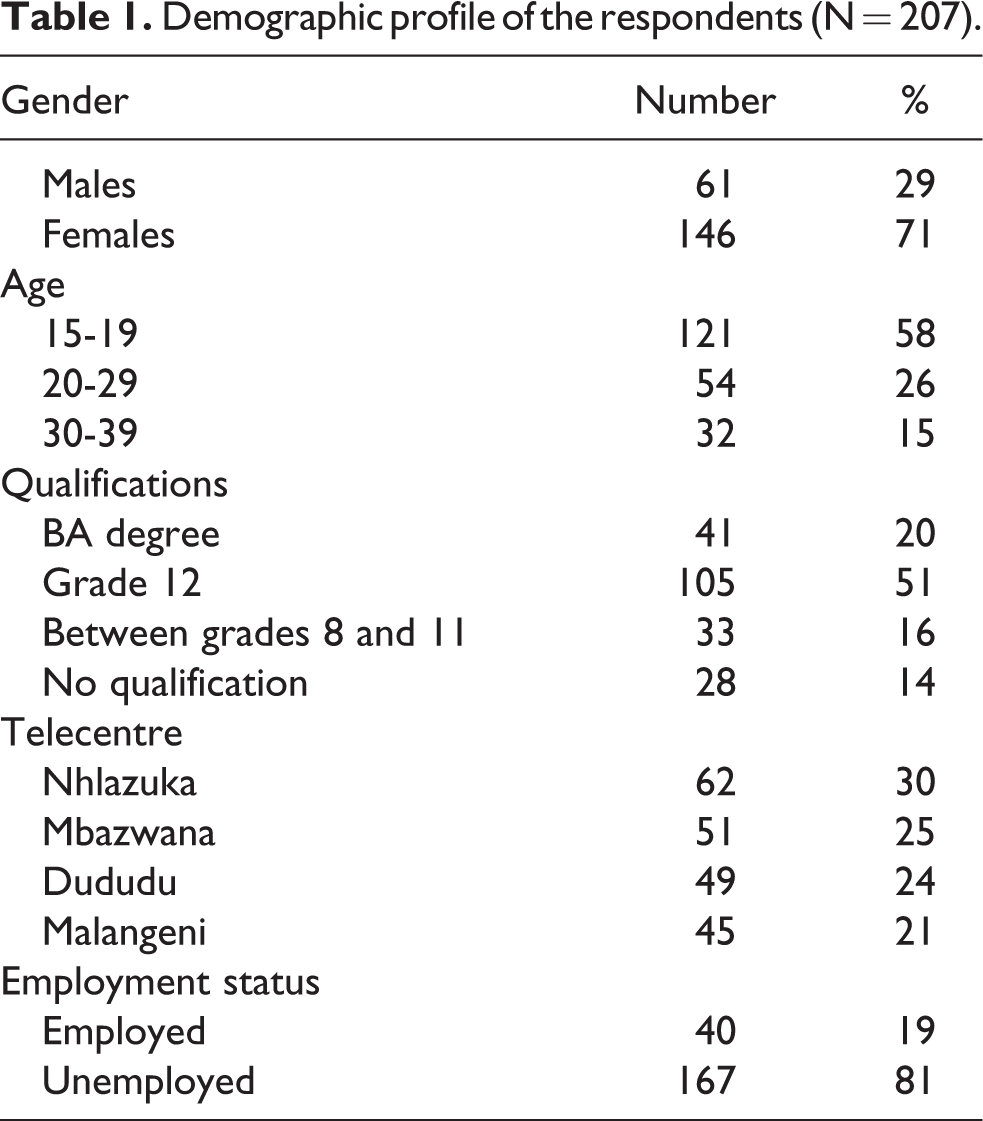
Although many studies have identified women and girls as disadvantaged in their uptake of ICTs (Mbatha, Ocholla, and Le Roux, 2011; Cullen, 2001), this study was dominated by females, who accounted for 71% of the respondents.
The majority of the respondents (58%) were below the age of 20. Respondents between the ages of 20 and 29 accounted for 26%. Only 15% of respondents were aged between 30 and 39. None of the respondents indicated their age as above 40 years. These results confirm that the telecentres were mostly used by relatively youthful members of the community. Mbatha, Ocholla and Le Roux (2011) noted that most people above the age of 40 years in developing countries are often conservative and slow in keeping up with ICT advances.
With regard to educational background, 51% of the respondents had Grade 12, followed by those who had bachelor’s degrees (20%), while 16% of the respondents were still in secondary school between Grades 8 and 11. The largest group of respondents, 62 (30%) were from the Nhlazuka telecentre, followed by those from the Mbazwana telecentre (51 respondents; 25%), the Dududu telecentre (49 respondents; 24%) and the Malangeni telecentre (45 respondents; 21%). The majority of respondents (81%) were unemployed.
Types of ICTs available in telecentres under investigation
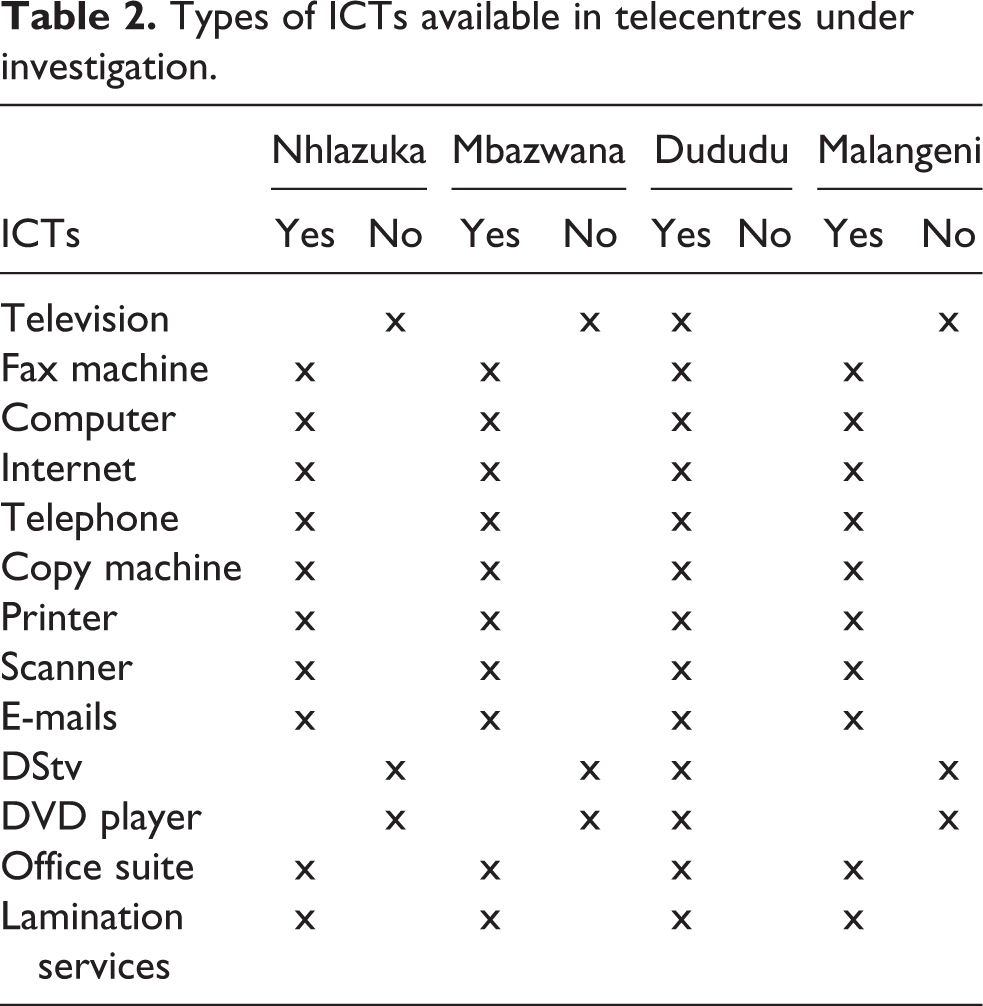
The study established that all four telecentres had fax machines, desktop computers, Internet access, telephones, copy machines, printers, scanners, email, and office suite software. Only the Dududu telecentre had Digital Satellite Television (DStv) decoder, television and digital versatile disc (DVD) player. Table 2 presents the results.
Types of ICTs available in telecentres under investigation.
Usage of ICTs in telecentres
The respondents were invited to respond to a closed-ended question regarding the purposes for which they used ICTs in their telecentres. They were provided with a list of possible types of use to choose from and asked to rate each one on a scale of 1 to 4 from ‘strongly disagree’ to ‘strongly agree’. The mean scores in Table 3 reflect the fact that all the respondents (mean: 4.00, 100%) strongly agreed that they used ICTs to communicate with friends and to surf the Internet, while all of them either agreed or strongly agreed that they used ICTs to access social networks (mean 3.96), to develop digital literacy (mean 3.94) or to access information (mean 3.85). The remaining mean scores in Table 3 show that, while some respondents disagreed that they used ICTs to do printing, to type CVs, to access educational information, to seek jobs online, to disseminate information or to type assignments, strong disagreement was, in addition, registered by respondents in respect of reading online news, doing lamination, retrieving information, conducting research, accessing government websites, working on spreadsheets, playing online games and computer games. To resolve some apparent discrepancies in these responses – for example, between accessing information and retrieving information – would need further investigation.
ICT usage in telecentres (N = 207).

Level of ICT usage
The respondents were asked to indicate their levels of interaction with ICT tools and services. They were provided with a list of ICT tools and services and asked to rate them on a Likert scale of 1 to 6, from 1 ‘never used it’, to 6 ‘very high”. Table 4 summarizes the responses.
The level of interaction with ICTs (N = 207).
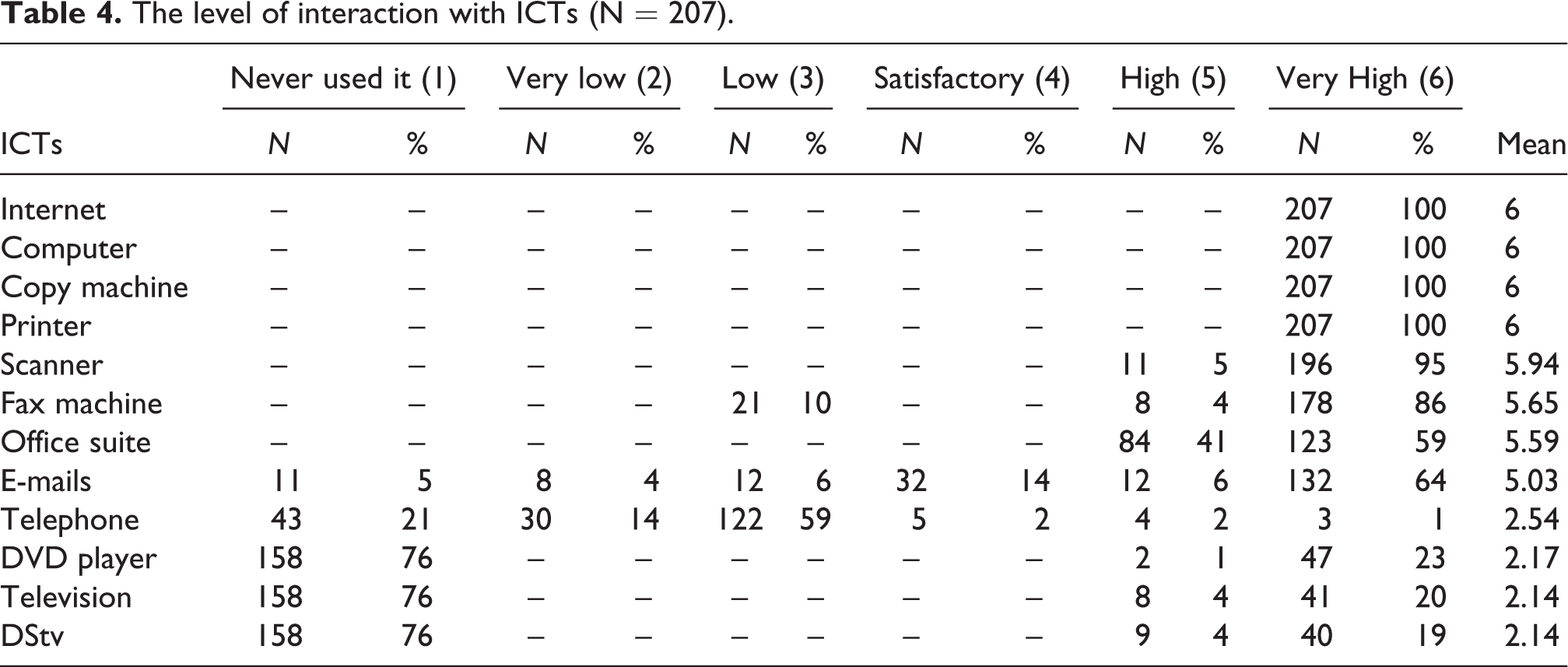
All the respondents (100%) indicated that their level of interaction with the Internet, computers, copy machines and printers, was very high (mean scores 6.00). while all of them also indicated that their use of scanners (mean 5.94) and office suites (mean 5.59) was either high or very high. Use of fax machines was recorded as low by 10% of respondents (mean 5.65), while 5 percent said they never used email. Only 3% of respondents said their use of the telephone (mean 2.54) was high or very high, while 21% said they never used it. Given that only one of the telecentres had DVD players, television and DStv, it is not surprising that 76% of respondents had never used these tools.
Time spent per day using ICTs (whenever they visited a telecentre)
The respondents were asked how much time they spent per day using ICTs in the telecentres. The working hours of the telecentres are from 8:00 a.m. to 16:00 p.m. The respondents were provided with a list of ICT tools and services and asked to rate them accordingly on a Likert scale of 1 to 4, where 1 meant that they never used the ICTs in question and 4 meant that they used the ICTs for 4-6 hours per day. Table 5 presents the results.
Time spent per day using ICTs (N = 207).
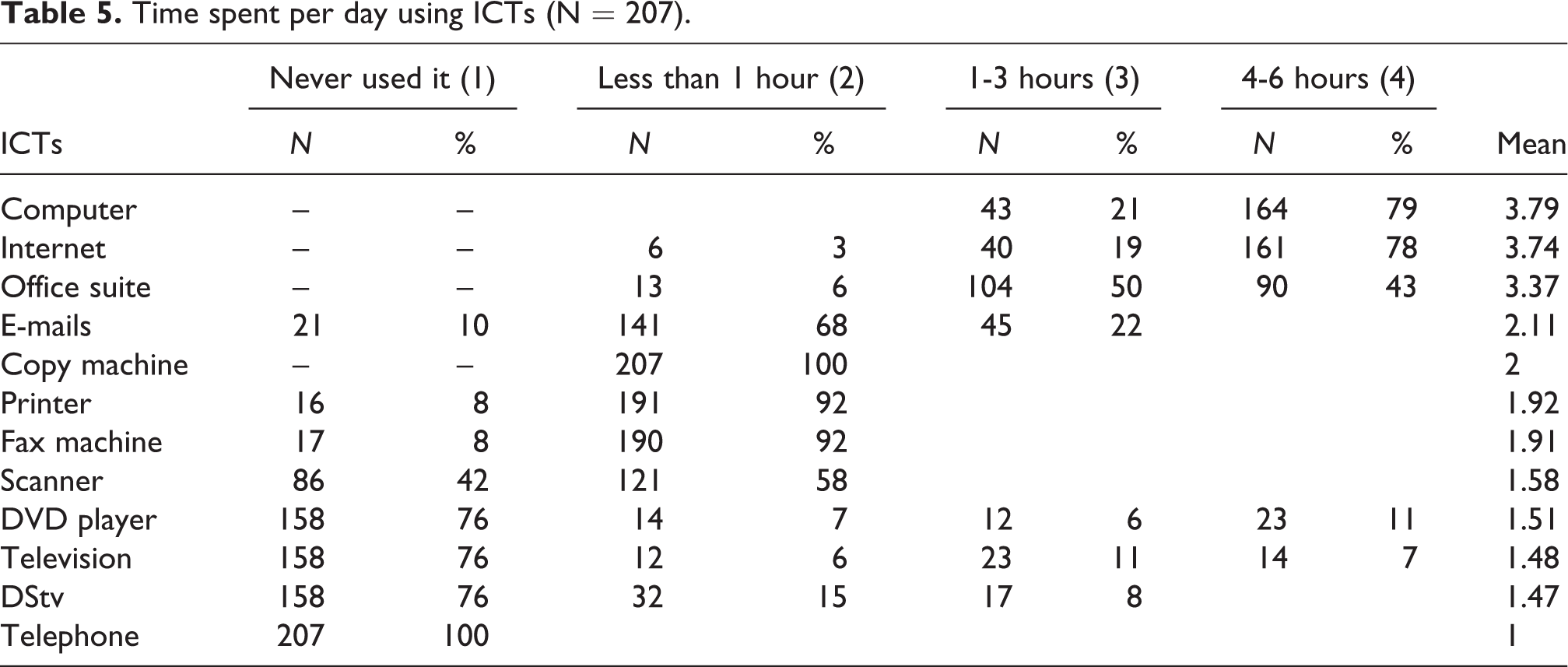
Table 5 shows that computers were never used for less than one hour per day, while the majority (79%) used them for 4 to 6 hours per day and the remaining 21% for 1 to 3 hours per day (mean score 3.79). Almost the same proportion (78%) spent 4 to 6 hours per day using the Internet (mean score 3.74), followed by those who spent 1 to 3 hours per day (19%), and 3% who spent less than an hour. Use of office suites ranked next overall (mean score 3.37), followed by emails (mean score 2.11) – although 10% of respondents said they never used email. This contrasts with the 5% who said they never used email when asked about their level of interaction with ICTs (Table 4). Copy machines, printers, fax machines and scanners were never used for more than one hour per day, though all the respondents (100%) said they used copy machines for less than an hour per day. Scanners were used for less than an hour per day by the majority (58%), while 42% said they had never used them – this despite the fact that, according to the results shown in Table 4, all the respondents said they had high or very high interaction with scanners. A similar discrepancy may be observed in respect of the use of telephones. While Table 4 depicts that only 21% of the respondents said they never used telephones at their telecentre, this is contrary to the results in Table 5, where all the respondents (100%) indicated that they had never used the telephone at their telecentres. Again, it is not surprising that the majority of respondents (76%) had never used DVD players, television or DStv in their telecentres, since these tools were only available in one centre. Further investigation is needed to resolve some of the discrepancies in the responses recorded in Tables 4 and 5.
Training needs of the community members
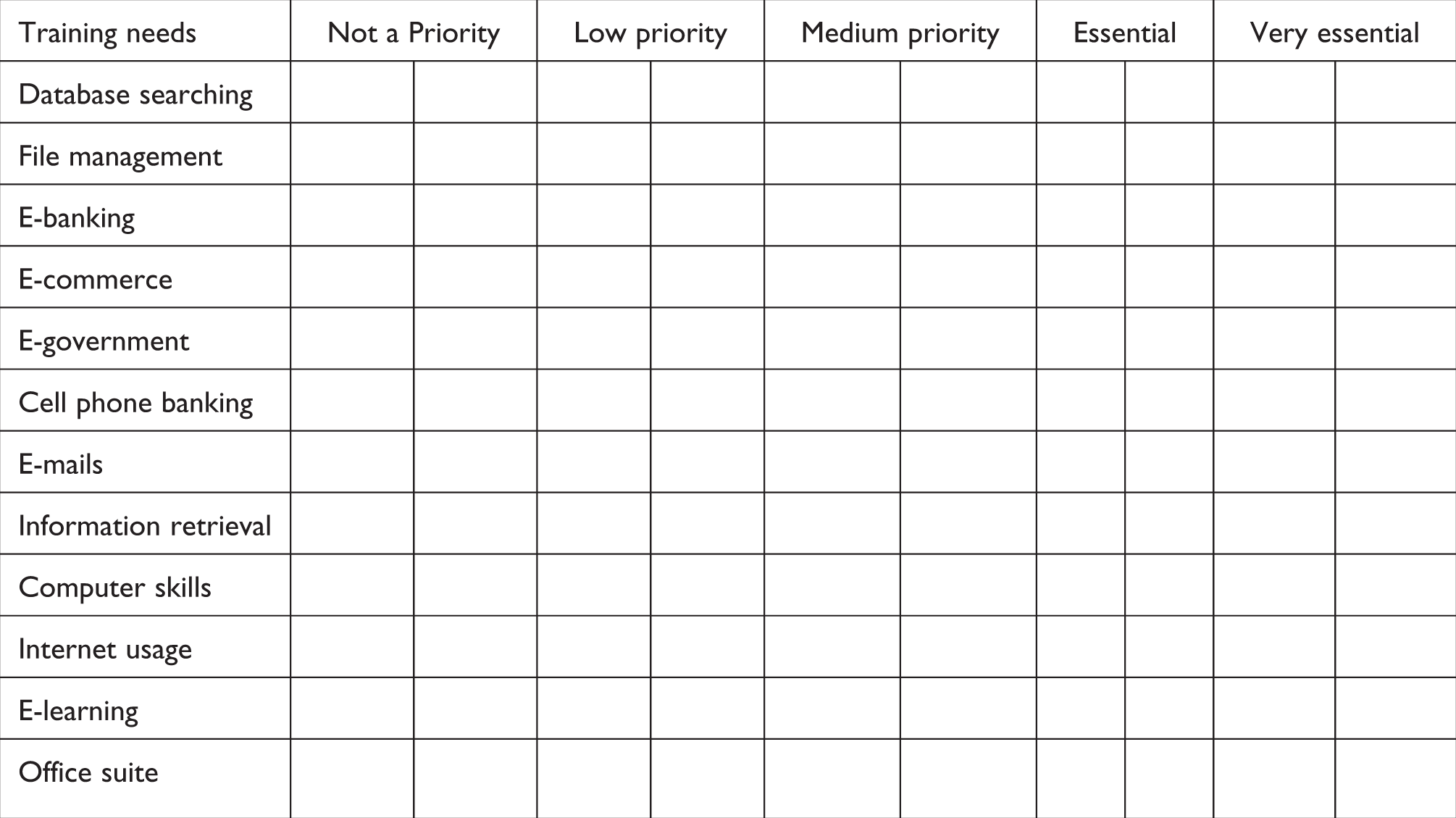
Respondents were requested to indicate the type of training that they would require to help them use ICTs more effectively. The respondents were provided with a list of possible training needs and were asked to rate each one of them on a Likert scale where 1 meant that training was not a priority at all, 2 meant that it was of low priority, 3 that training was of medium priority, 4 meant that it was essential, and 5 meant that training was felt to be very essential. Table 6 summarizes the results.
Training needs of the community members (N = 207).
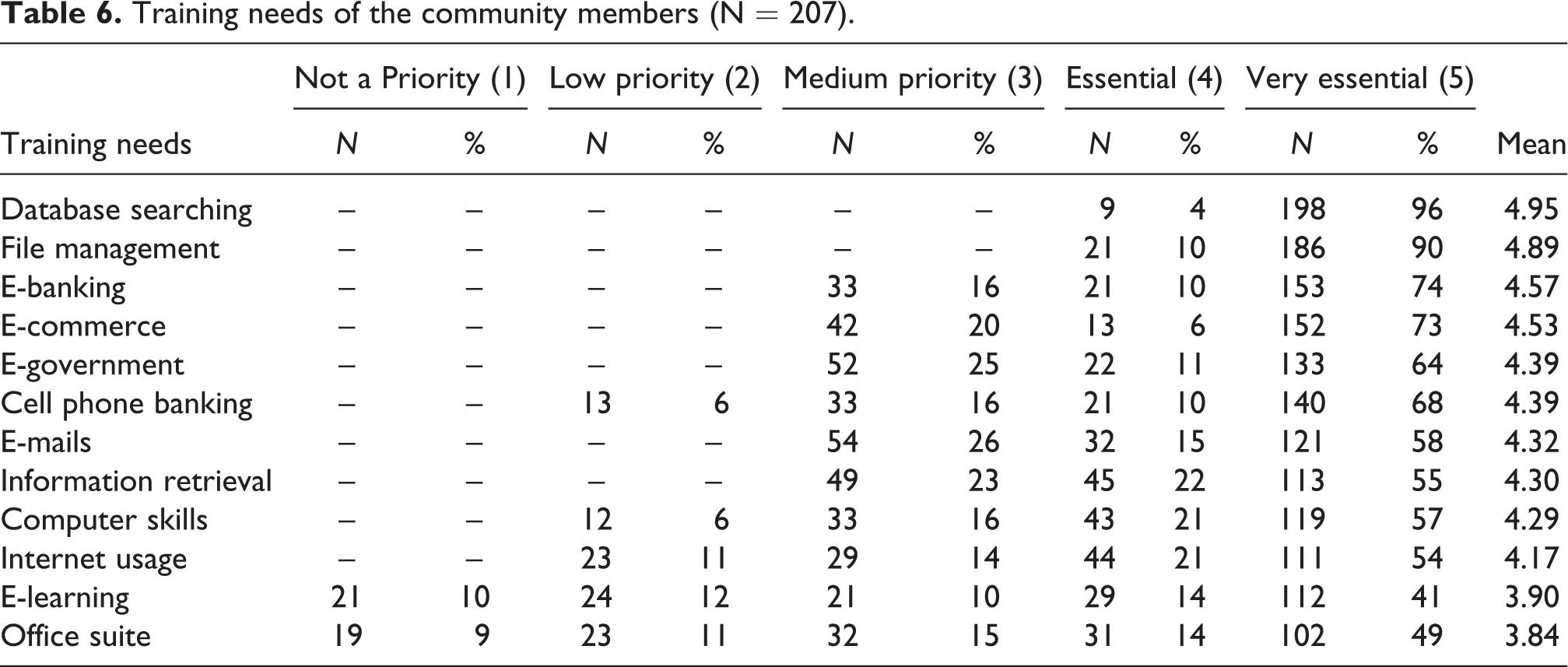
The mean scores shown in Table 6 indicate that training in database searching had the highest score (4.95), with 96% of respondents rating it as ‘very essential’ and the other 4% as ‘essential’. This was followed by training in file management (mean score 4.89), e-banking (4.57) and e-commerce (4.53), while e-government and cell phone banking received equal mean scores of 4.39. E-mail, information retrieval, computer skills and Internet usage all had mean scores of more than 4.00, while the lowest scoring training needs were for e-learning and office suites, which were the only two categories rated as ‘not a priority’ by some respondents.
Hindrances when using ICTs
The respondents were asked questions pertaining to the impediments to ICT usage in their respective telecentres. Using an open-ended questionnaire, appropriate multiple answers were requested. Most respondents were of the view that:
out-dated technology, more especially old computers, did not help community members to use some of ICTs and improve their computer skills
poor ICT infrastructure was a cause for concern
some computers were broken and the Internet was always offline
it took time for computers to be fixed when they are broken
sometimes the Internet connection was very slow
there was a serious lack of professional competence among the people who run the centres
some community members have a negative attitude towards ICTs
most community members are computer illiterate
community members do not seem to understand the benefits of using ICTs
there seemed to be no clear objectives on the part of the community regarding the use of ICTs.
Notwithstanding the efforts to increase and revolutionize ICTs within communities in South Africa, it is clear that ICT development has been hindered by a variety of constraints. Therefore, it is important to develop strategies that increase the uptake and utilization of ICTs by citizens.
Recommendations for improving the use of ICTs
The respondents were invited to discuss and indicate contextual conditions that need to be adapted in order to enhance the positive consequences of ICTs in communities where they belonged. Respondents generally felt that: resources should be provided to ensure that all equipment functions properly and optimally and that administrative functions are performed effectively all ICT tools and services should be available and in working order at all times government and donors should increase bandwidth and provide a speedy, reliable and consistent Internet connection faster modems should be made available in order to enhance Internet usage among community members network facilities and computers need to be upgraded government and donors should design and implement ICT policies regulating the training of staff with respect to the use of ICTs in the telecentres there must be a clear focus and objectives regarding the use of ICTs in communities there is a need for more ICT awareness in the communities
The most popular recommendation was the need for ICT policies that regulate the training of staff with respect to the use of ICTs in the telecentres. Another was the need for resources to be provided to ensure that all ICT tools and services, including the Internet, function properly and that administrative functions are performed effectively.
There is a critical need to resolve the challenges experienced by community members in order to increase the adoption of ICTs in communities. This requires the intervention and interaction of all stakeholders in the public sector and the ICT sector. Some communities remain underdeveloped with poor infrastructure because of the lack of an integrated ICT policy that could help create an enabling environment for improved social and economic welfare.
Discussion
Globally, most governments are pushing the agenda of universal access and South Africa is no exception. For citizens to be part of the information society, they must have access to relevant technology. In a telecentre, one can expect to see ICTs such as desktop computers connected to the Internet, fax machines, copy machines, and so forth. As Ojo (2005) correctly puts it, it is of the utmost importance to have fully functional telecentres, equipped with relevant ICTs. Generally, these ICTs tools and services are regarded as common and relevant tools in contributing to the agenda of information society (Nasi, Frosini, and Cristofoli, 2011; Naik, Joshi, and Basavaraj, 2012). In line with this view, this study established that the four ICTs mentioned above were available at all the targeted telecentres. Telecentres are mandated by governments to educate citizens and offer them ICT skills in the easiest and most practical way. It was against this background, that all four targeted telecentres were offering similar services to the rural communities of the aforementioned places.
Community members are expected to learn skills such as basic computer literacy, Internet surfing, e-mail, etc. These skills can be considered as fundamental for all community members, including the youth, who need them in this technological day and age. If community members and youth are armed with these skills, they can also have meaningful participation in the economic development of the country.
Many researchers tend to agree that the diffusion of Internet use over the last decade has been heavily influenced by one major force: personal computer use. Internet use is a good indicator of the information revolution (Mbatha, Ocholla, and Le Roux, 2011). This concurs with the Diffusion of Innovations Theory, which suggests that those innovations that are perceived to have a relative advantage will be adopted faster. After the respondents had identified the ICT tools that they had access to in the studied telecentres, it was necessary for this study to establish the purpose for which the respondents used those ICTs. The answer was that the ICTs were mostly used for communication purposes, information access and educational activities such as typing of assignments and curricula vitae. Since the majority of respondents were below the age of 20, it was not surprising to establish that they mostly used ICTs to facilitate communication and access to information. Nowadays social networks have proved to be catalysts when it comes to communication. The youth have embraced this new and innovative way of speeding up communication and this is what the information society is all about.
When it comes to the level of ICT usage, it is clear that respondents were mostly interacting with ICT tools such as desktop computers, the Internet, copy machines and printers, as these were frequently used. Some researchers and ICT enthusiasts, such as Neville (2012); Mbatha (2013); Tobin, Porumbescu and Lee (2013) strongly argue that the more time one spends per day using an ICT tool or service, the more one likes that ICT tool or service. Likewise, Mbatha, Ocholla and Le Roux (2011) argue that the time spent per day using ICTs is a strong measure of interaction. In fact, the daily time people spend on ICTs is a partial measure of the success of ICT tools. Similarly, Anderson, Brynin, Gershung and Raban (2007:79), in their study on ICTs in society, underscore that positive attitudes towards ICTs have a positive impact on both usage time and the depth of use. Interpreted in light of the Diffusion of Innovations Theory, the main reasons community members spend more time using ICTs such as computers, the Internet, printers, and copy machines are because these tools are not complex to use and therefore provide the citizens with a relative advantage when it comes to information access.
On the other hand, one may convincingly argue that it is not the time that one spends using ICTs that counts, but rather the positive consequences from the use of such technology. For example, someone may spend more than 10 hours per day surfing the Internet for social purposes only but another person may spend less than two hours on the Internet and achieve great things, such as applying for a job or even finding one, or retrieving educational information. It is important for community members to have the skills to use ICTs. It is pointless to provide people with technology if they cannot use it due to a lack of skills. Training is key in any system that is meant to improve the lives of the people. Most respondents to this survey indicated that they needed training on computer programs such as office suites. These are fundamental computer applications that anyone who wishes to be part of the information society should be able to use.
Although South Africa is not yet an information society, the government is trying by all means possible to ensure that all citizens have better access to ICTs. However, there are obstacles to the use of ICTs, as mentioned by the respondents, and they include out-dated equipment, poor ICT infrastructure and slow Internet connections. A lack of computer skills among the people who run these centres and among the users themselves were issues that the respondents felt needed to be addressed urgently. The most popular solutions to those challenges proposed by respondents were the need for ICT policies regulating the training of telecentre staff in the use of ICTs, and the need for resources to be provided to the telecentres to ensure that all ICT tools and services, including the Internet, function properly and that administrative functions are performed effectively.
Conclusion
The aim of the study was to establish the use and types of ICTs available in the telecentres in certain parts of KwaZulu-Natal. This study has demonstrated the importance of ICTs in the targeted telecentres and also the various interventions that are necessary to effectively propel citizens into the emerging information society. For this to be realized, a number of measures are needed that include, among others, the enactment of an enabling policy and legislative framework to cater for skills development, and the improvement of infrastructure such as telecommunication networks.
Despite the constraints and challenges in the application and use of ICTs in the telecentres, a wide range of ICTs have been adopted to help citizens improve their lives in one way or another. Based on the results of this study, a range of general recommendations for improving the use of ICTs in communities is provided below. These recommendations are aimed at stimulating thought and discussion about the path that the use of ICTs might take in the future of South African citizens. A sustainable ICT programme that contributes significantly to a country’s development stands to be achieved if the workforce is suitably trained and the educational system is able to continually supply skilled, innovative and entrepreneurial professionals. Government should continue to ensure that adequate varieties and levels of ICT competence are offered to the citizens.
Government needs to find ways to gradually include ICT training in curricula at all levels, including at primary school level. In the early stages of education, the focus could be on sensitizing students in order to show them the possibilities of ICTs and stimulate their interest. They will, after all, be the beneficiaries and architects of the future. A national coordinating structure would contribute towards designing the curricula of ICT content. A policy document not only acts as a blueprint for expected development and action, but also as a basis and framework for negotiations for collaboration and sharing services with other institutions, Internet Service Providers, and government departments. It is therefore imperative for the government to introduce an integrated ICT policy to manage ICTs in South Africa. The challenges faced with regard to ICTs may be contained when a policy exists because a policy may act as a blueprint in the diffusion and adoption of ICTs in society. ICT policies should clearly identify the needs that are likely to be met or addressed in a nation or institution through their introduction, and establish what may be achieved with the available resources. No clear standards or guidelines are provided as to what sort of ICT training is provided and should be provided to community members in order for them to confidently use ICTs. Further research in this area would be useful. The ICT sector is a dynamic field with new innovations emerging almost daily. National ICT policies should therefore be able to reflect this through regular updates and revisions. A further study is also necessary to determine the state of national level ICT policies that would guide the diffusion and adoption of ICTs in South Africa.
Footnotes
Questionnaire
| Training needs | Not a Priority | Low priority | Medium priority | Essential | Very essential | |||||
|---|---|---|---|---|---|---|---|---|---|---|
| Database searching | ||||||||||
| File management | ||||||||||
| E-banking | ||||||||||
| E-commerce | ||||||||||
| E-government | ||||||||||
| Cell phone banking | ||||||||||
| E-mails | ||||||||||
| Information retrieval | ||||||||||
| Computer skills | ||||||||||
| Internet usage | ||||||||||
| E-learning | ||||||||||
| Office suite | ||||||||||