




Abstract
The ubiquity of information and communication technologies (ICT) in all aspects of life has an important consequence in today’s world: shortage of skilled personnel in this area. Although the dotcom bubble in 2000 had an adverse effect in the requirement for ICT skills in industrialized countries, this is not applicable for many developing countries, where ICT skills are in high demand. Even though South Africa is one of these countries, ICT enrolments and graduations do not meet ICT skills demand. An important reason for the skills gap in this area is the negative perceptions of university students about ICT. It was found that there were substantial differences in the perceptions of ICT and non-ICT students about the ICT profession. Some of the differences are subjective, such as perceiving the ICT profession as boring, while some other are ungrounded, such as that ICT jobs are less secure and the unemployment rate is high. The findings may be pertinent not only for South Africa, but also other developing countries where negative perceptions about ICT hinder prospective students to enrol to computer-related programs.
Despite attempts to rectify the situation, the ICT skills gap in South Africa is increasing.
Introduction
As South Africa is the second largest economy in Africa, the country has a fairly advanced ICT infrastructure and penetration. Although not ideal, its ranking in ICT readiness indices, such as the ICT Development Index (International Telecommunication Union, 2013) and the World Economic Forum Networked Readiness Index (World Economic Forum, 2014), is higher than the rankings of many other developing countries. South Africa ranks 90th in the former and 70th in the latter. However, the progress of all countries in ICT is rapid in today’s world, and South Africa has to take measures to develop its ICT base further in an environment where all countries are striving to reap the benefits of ICT (Daniels, 2007; Kotzé and Van Der Merwe, 2009; Merkofer and Murphy, 2009). The most important aspect of ICT in any country is an educated workforce. Due to the importance of ICT, educating the workforce in this profession has become a priority area for all countries (Breytenbach and De Villiers, 2012; Kotzé and Van Der Merwe, 2009; Lanvin and Passman, 2008).
There is an acute shortage of skilled workforce in ICT in South Africa. This fact has been acknowledged by the South African government. ICT and other related fields are recognized as priority areas for skills development in the National Plan for Higher Education (Ministry of Education, 2001; Breytenbach and De Villiers, 2012; Daniels, 2007). Furthermore, the Plan asserts that future demand for a skilled workforce in ICT is likely to be high. As a consequence, “the Ministry is particularly keen to increase enrolments in the broad field of information and communications technology, which has been identified by Cabinet as a key focus for skills development.” To this end, the Plan aims to increase ICT enrolments “through the steering of funded student places.”
Calitz (2010) quotes the Minister of Education, Naledi Pandor, who stated in 2006 that the country had a shortfall of professionals with ICT skills, and argued that “all recent studies and surveys confirm what we already know about scarce skills – management, engineering and IT are key areas of shortage.” Pandor also organized a colloquium where members of the Department of Education, the formal and informal ICT education sector, the ICT industry and other employers of ICT graduates were invited to discuss the “significant ICT skills gap between the workplace demand and the current rate of production of the tertiary sector.” As a summary of the colloquium, the widely referred Birchwood Declaration (2007) was released (Kotzé and Van Der Merwe, 2009), which stresses the ICT skills gap and measures to be taken against it.
Unlike during previous decades where jobs were quite secure, an important aspect of today’s world is the volatility and insecurity of employment. Although the logical consequence of this job insecurity in the labour market is that students are attracted to jobs that are in demand, such as those in the field of ICT (Lanvin and Passman, 2008: 84), ICT education in South Africa does not seem to be particularly attractive to students despite the shortage of skills (Breytenbach and De Villiers, 2012). This is a rather peculiar situation that has potentially adverse effects, not only for the job prospects of individuals, but also for the workforce requirements of the country. This problem can be approached from both the supply and demand sides. On the supply side, the government, which runs an overwhelming number of universities, can take measures such as increasing the quality and quantity of ICT programs in the country. The demand side involves, firstly determining the underlying factors which lead to the students’ flawed perception of the unattractiveness of the ICT profession, and secondly starting an awareness campaign which addresses the problem areas.
The aim of the present research is to provide evidence of the shortage of ICT skills in South Africa and to show that the number of ICT graduates is low in relation to other fields of study. This study also investigates the underlying factors that determine the low attractiveness level of ICT professional education among university students in South Africa. This is a complex and important phenomenon which must be tackled by education policy makers in South Africa. Social cognitive career theory (SCCT) provides an in-depth understanding about the career choices of individuals and also aims to shed light into the problem of reluctance of potential ICT students, so that appropriate policies can be developed. To this end, the perceptions of South African university students studying both ICT and non-ICT programmes were compared for several parameters regarding ICT.
This paper is structured as follows: the following section discusses related research regarding the attitude of students in South Africa towards pursuing ICT careers. The next section elaborates the theoretical background of career choices in social settings. This is followed by a section on the ICT skills gap, which highlights the concerning shortage of ICT skills in all sectors of industry. The section on ICT enrolments in South Africa provides evidence that the number of graduates in the field of ICT in relation to other fields of study is low, despite the high demand for skilled ICT labour force. The methodology and sampling technique that was used is briefly explained, followed by an in-depth discussion of the findings. The last section summarizes and concludes the study and provides avenues for future research along with the limitations of the study.
Related research
The interest in ICT education and enrolments in South Africa must be analyzed against the backdrop of events in the outside world, particularly the West. The burst of the dotcom bubble in 2000 and the outsourcing of ICT jobs to countries where such services are cheaper are the major factors in declining ICT enrolments in the developed world (Carter, 2006). Slonim et al. (2008) report that in Canada Computer Science (CS) Bachelor’s enrolments fell from 22,500 in 2002 to 12,000 in 2006, and Frolick (2005) reports that Information Systems (IS) enrolments decreased by 15% to 75% in the US after the dotcom crash. Moore et al. (2009) acknowledge this phenomenon and discuss some measures to counter this trend at a US university.
There is a growing body of research on ICT education issues in South Africa. Hart (2002) investigated the awareness level of pupils at the school-leaving stage of the IS discipline as a field of study. Acknowledging the “prevailing shortage of IS graduates,” he analyzed gender differences along with subjects’ upbringing according to advantaged and disadvantaged backgrounds. He found that females and students with disadvantaged backgrounds were usually ignorant about the IS discipline. The IS entry requirements included mathematics at a suitable grade and he found this to be a serious problem for black students who had not attained the required level of mathematics (a heritage of the apartheid education system). The disparity also manifests itself in the school types. Although the requirements for mathematics are satisfied by a level as high as 95% in the affluent private-independent schools which have mainly white students, this figure is as low as 5% in some previously disadvantaged schools which have mainly black students.
Seymour et al. (2004) quote Kekana (2002) on the “unmet” demand for ICT services in South Africa. The authors conducted a survey targeting final-year students at high schools in the Western Cape, South Africa. The authors asked the respondents about their inclination to study IS and CS and their perceptions about these disciplines. Contrary to some previous research (e.g. Hart et al., 1999), they found that students from previously disadvantaged groups who had no prior exposure to computers had a growing interest in studying these disciplines. However, the high matric 1 grade requirement in mathematics was a significant barrier for them.
Jacobs and Sewry (2010) analyzed Grade 12 students’ perceptions about pursuing degrees in CS and IS in the Eastern Cape city of Grahamstown. The authors implemented the survey instrument and hypotheses of Seymour et al. (2004) with some minor adjustments. The results of both studies were mostly similar. Arguing that the subjects in this study were mostly from previously advantaged schools, the authors called for further studies which encompass a more representative sample of South African demographics.
Calitz (2010) also used some parts of the Seymour et al. (2004) survey instrument and hypotheses. The six hypotheses Calitz used focused on the overall objective of determining whether the students were interested in pursuing ICT careers and investigating their level of knowledge of the IS, CS and IT professions. His findings were mainly similar to the research findings of Seymour et al. (2004) and Jacobs and Sewry (2010): students from disadvantaged schools and students of colour (a heterogeneous South African ethnic group, with diverse ancestral links) were more inclined to study ICT, females were less inclined to study ICT and students generally did not have a clear idea about IS, CS and IT. This is particularly true for IS and IT.
The reluctance amongst students at higher education institutions in South Africa to pursue a career in ICT is confirmed by a survey that was done amongst students at the University of Pretoria in Gauteng (Breytenbach and De Villiers, 2012). A total of 4475 students enrolled at the university participated in the survey. The study revealed that only 371 out of the total number of participants were enrolled for ICT related courses and only 301 of the 4475 participants listed ICT as their dream career. Cohen and Parsotam (2010) investigated the IT career interests of 263 South African university students. To this end, the authors used social cognitive career theory where a number of variables were selected and their effects on student intentions to study ICT were examined. It was found that occupational self-efficacy, computing experience, computer anxiety, computer self-efficacy and perceived career rewards were important factors, but demographic factors such as gender and race had only indirect effects. The authors also found that there was very little interest for ICT-related study among the students.
Theoretical background
The SCCT is developed from Bandura’s (1986) general social cognitive theory and aims to understand the processes and outcomes where by individuals develop interests and make decisions about their educational and occupational pursuits (Lent et al., 1994). Lent and Brown (1996) argue that career literature emphasizes several concepts such as cognition, personal agency and empowerment and SCCT attempts to complement the other career development theories. The theory was originally based on three models, namely the development of study and career interests; the leading of those interests into study and career choices; and the performance and persistence people attain to realize their choices. A fourth model that aimed to explain satisfaction at study and work was later added (Lent and Brown, 2006). According to the SCCT, people develop enduring career interest when they perceive themselves as potentially competent and anticipate valued outcomes in a particular area. Thus, SCCT relies on the concept of self-efficacy which is the subjective evaluation of the self. Outcome expectations and personal goals are the two other core variables which the SCCT emphasizes. SCCT also acknowledges that there can be several restrictive factors on career choice such as income, discrimination and family dictate and it accommodates such factors.
ICT skills gap in South Africa
There have been several studies in South Africa which aimed to investigate the supply and demand of ICT jobs (Alexander et al., 2014; Breytenbach and De Villiers, 2012; Breytenbach and De Villiers, 2015; Merkofer and Murphy, 2009). All of these studies found that there was a shortage of skills in ICT.
Acknowledging the ICT skills gap, Breytenbach and De Villiers (2012) analyzed the ICT graduate shortage in South Africa from a neoclassical economics point of view. To this end, the authors investigated the demand and supply of scarce ICT skills and validated the existence of a shortage through labour market theory. They argue that human capital is increased through education which stimulates capital investment. This in turn leads to increased demand for ICT skills with a more price-elastic supply, which is translated as higher wages. In another research, Breytenbach and De Villiers (2015) investigated concerns and key concepts influencing IS graduate quality and quantity in South Africa. The authors also developed a framework that will assist IS departments in increasing the quality and quantity of their enrolments and graduates. As a result of using the framework with IS departments, they recommend that the industry should be involved in issues such as course and content creation; high school students, teachers and parents should be informed about IS; and a mobile application that facilitates information flow between them should be created. Alexander et al. (2014) argue that recent evidence of the extent of the ICT skills gap is most easily obtained from non-academic sources such as white papers and newspaper reports, as academic research into this area lags behind such reports.
The Johannesburg Centre for Software Engineering and ITWeb conducted a survey on the supply and demand of ICT skills in South Africa (Johannesburg Centre for Software Engineering, 2011). They found that although the growth rate of ICT employment in 2009 and 2010 was lower than their estimates, there was a strong demand for ICT skills and there were skills gaps in several key areas of ICT. Moreover, this was in spite of the recession in the South African economy. Although the effect of the shortage of ICT skills has been considerably reduced during the recessionary environment of the last few years, this trend was reversed in 2011, where two-thirds of organizations surveyed reported at least a major effect.
The Department of Labour commissioned a research project by Roodt and Paterson (2008), who estimated the number of ICT workers, including managers, that the South African economy needs between 2005 and 2015. The estimation included parameters such as existing workers, new graduates and skills loss due to death, retirement and emigration. The authors developed two scenarios and the skills shortage in one of them is 29,027 and 9,679 in the other (p.58).
It must also be noted that job skills statistics need to be cautiously applied in South Africa. In a joint study by the Institute for Employment Research and the Human Sciences Research Council, which was commissioned by the Department of Labour (Wilson et al., 2004), it is acknowledged that “there are very real concerns about the quality of data on occupational employment” and that this problem needs to be “carefully addressed in any attempt to produce a national-level set of projections” (p.9). Lotriet et al. (2010) draw attention to the data collection and methodological problems in the ICT skills shortages research in South Africa. The authors argue that since the field is changing fast, skill categories become obsolete in a short period of time and data collection procedures as well as data interpretation methods are flawed. These are legitimate arguments and reflect the extreme difficulty of determining the levels of e-skills supply and demand. Nevertheless, although the numbers usually do not agree, almost all industry and government sources complain about the ICT skills shortage. The arguments about temporarily unemployed ICT workers could be related to the extremely volatile nature of the ICT job market, which is a result of the high demand for ICT skills.
ICT enrolments in South Africa
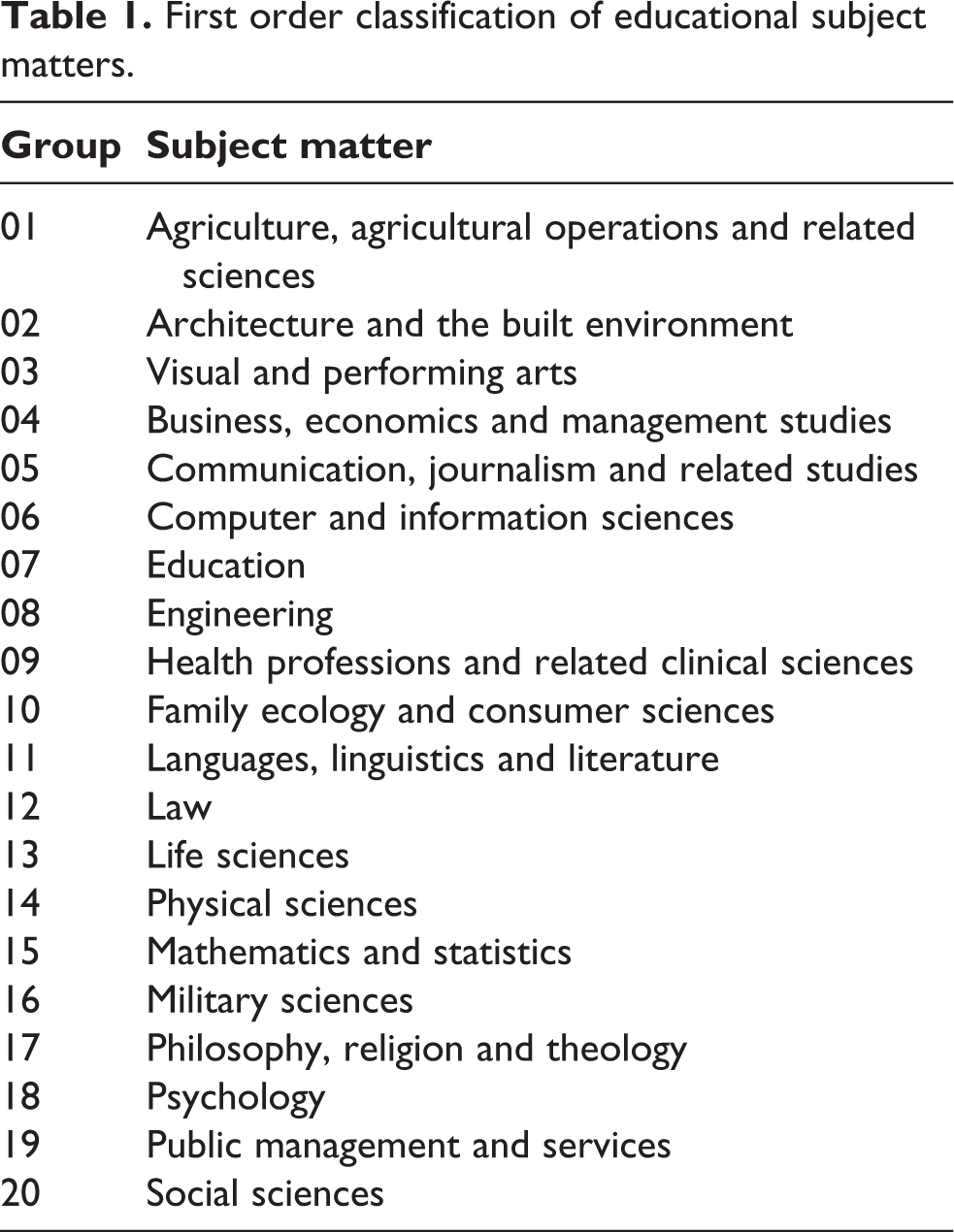
The Department of Education’s Higher Education Management and Information System database (HEMIS, n.d.) was used in this research to determine ICT enrolments and graduations in South Africa. To this end, 6 years’ worth of data spanning 2005–2010 was used. Although mergers and changes in the South African higher education system make HEMIS data difficult to interpret (Lotriet et al., 2010), these events mainly happened before 2005 and therefore have no effect on the data used in this study. HEMIS contains 20 education categories or “classification of educational subject matters (CESM)”. First-order CESMs contain broad topics such as Engineering, and second-order CESMs contain specific topics such as Mechanical Engineering. First-order CESMs are presented in Table 1.
First order classification of educational subject matters.
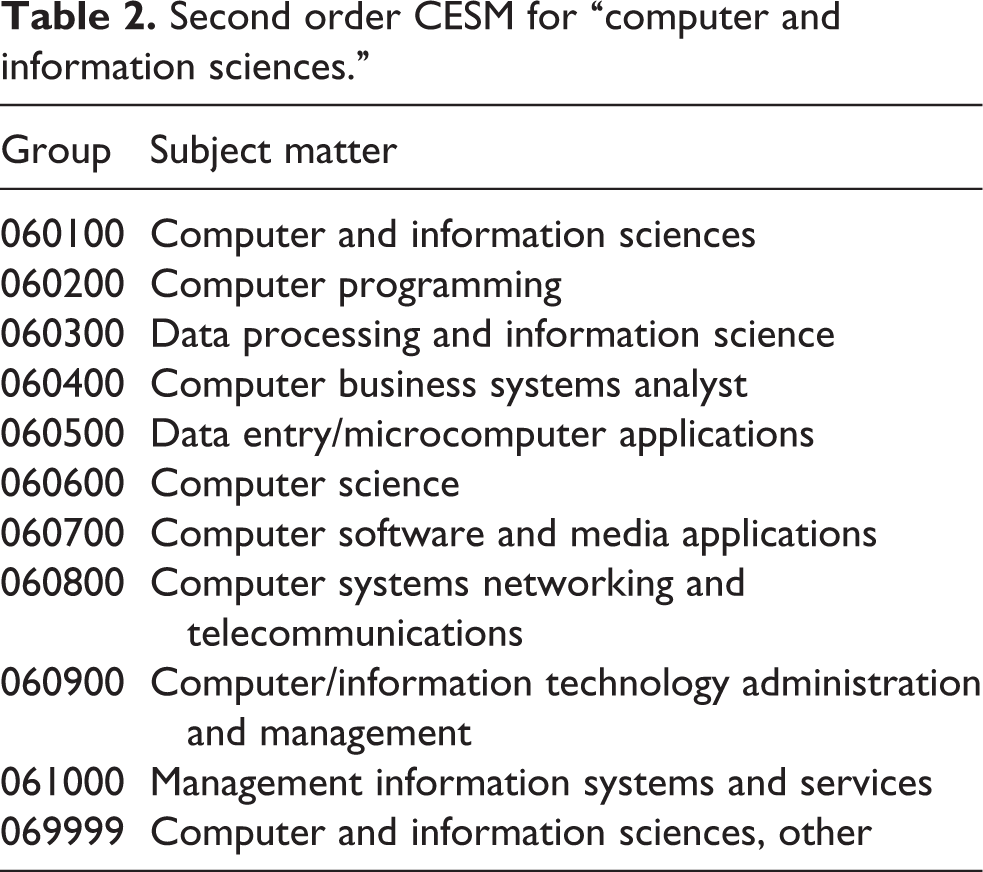
In the second-order classification, item 06 Computer and information sciences, has the elements shown in Table 2.
Second order CESM for “computer and information sciences.”
The HEMIS database also contains detailed data on student demographics such as gender and race, as well as different degrees awarded. The data for individual educational institutions are also available.
Considering all subjects, there has been a steady increase in total enrolments in South African universities over the last decade. This increase is also reflected in the graduation statistics. However, there has been a much smaller increase in both ICT enrolments and graduations. Figures 1 and 2 illustrate these facts. Figure 1 shows that enrolments in all subject matters increased by about 21.5% from 2005 to 2010, but that the increase in ICT enrolments was only 8.7%. Furthermore, unlike the continuous increase in all CESMs during this period, ICT enrolments experienced a slight decrease in 2006 and 2007.
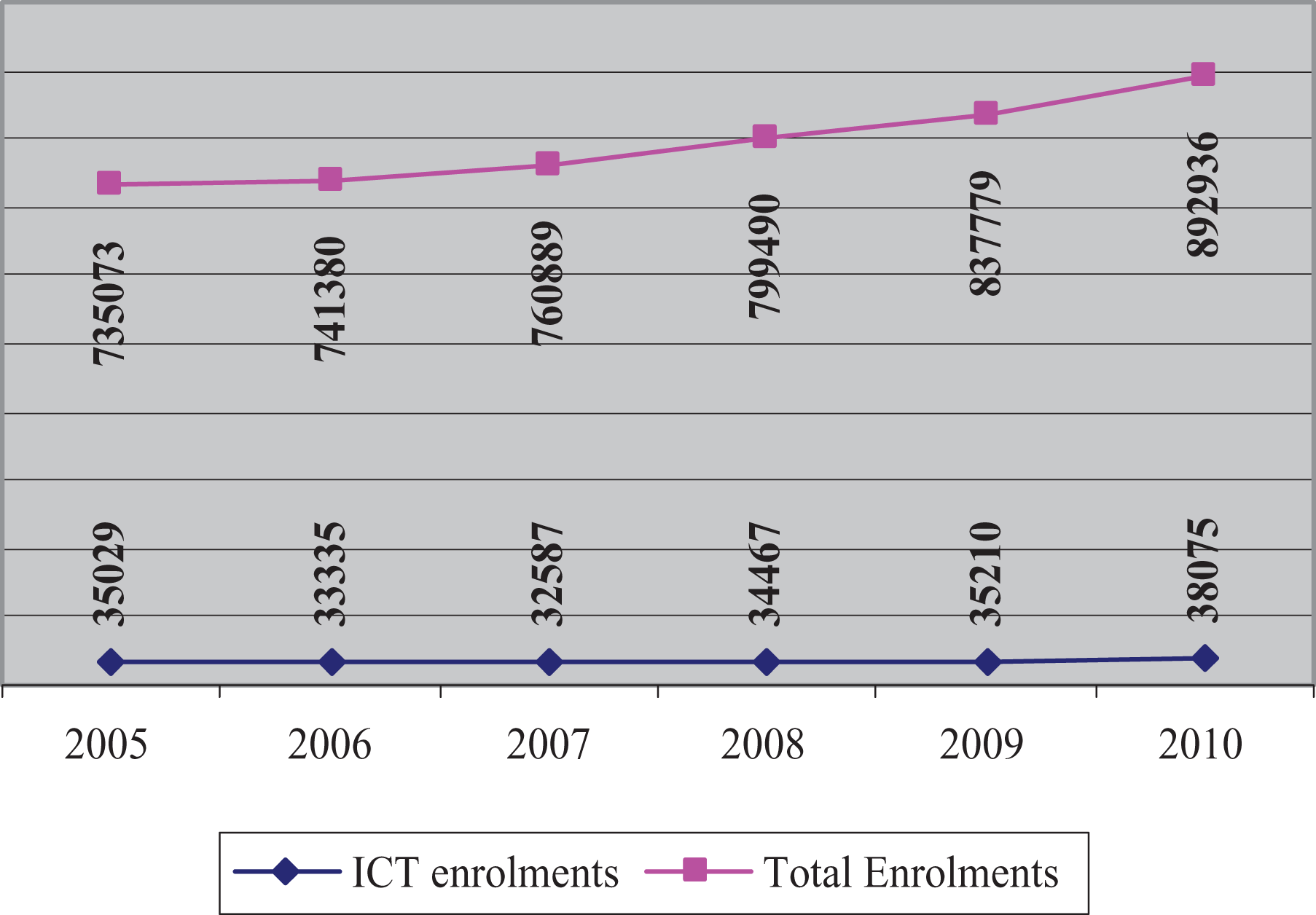
ICT enrolments compared to total enrolments.

ICT graduations compared to graduations in all subject matters.
The situation is even worse in graduations, which are shown in Figure 2. Although total graduations have a robust increase of 27.4% in the time frame analyzed, the increase in ICT graduations is only 3.4%.
As stated, the above figures encompass all degrees from ‘occasional’ to PhD, as shown in Table 3. Given that increasingly higher skills are required in the ICT job market, one may wonder what the trend is for higher degrees, excluding ‘occasional’ and certificate qualifications. The trend for those is almost the same as those depicted in Figures 1 and 2.
Degrees awarded in South Africa (HEMIS database).

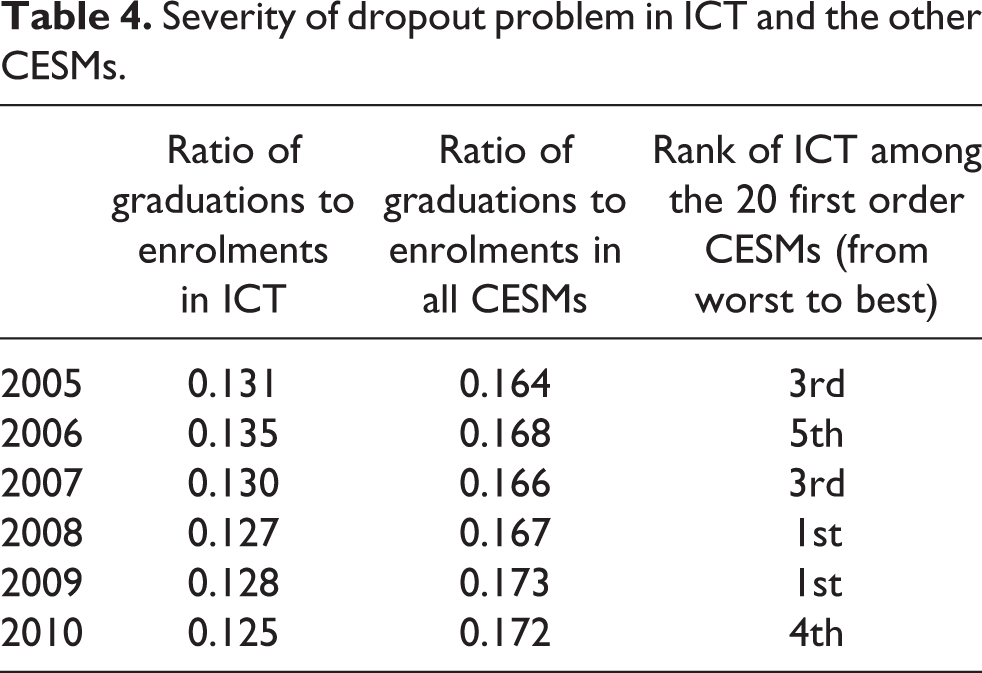
The ratio of graduations to enrolments in all subject areas is quite low in South Africa. This illustrates the magnitude of the dropout problem in South African universities (Council on Higher Education, 2000). Considering the data in Figures 1 and 2, ICT could be one of the worst suffering CESMs in terms of dropouts. Further analysis of the HEMIS data shown in Table 4 illustrates this. The second column in the table contains the ratios of graduations to enrolments in the first-order CESM of ICT. The third column contains the same ratio for the total of the 20 CESMs. The last column shows that ICT is one of the worst sufferers of the dropout problem among the first-order CESMs.
Severity of dropout problem in ICT and the other CESMs.
Problem in high school graduates
An important problem is the academic level of high school graduates in South Africa. Calitz (2010) reports that of the 565,744 students who passed the matric exam in 2007, only 85,000 were able to achieve university exemption, 25,000 passed with higher grade mathematics and a mere 8,000 earned grades to enter science, technology and engineering programmes. Furthermore, CAT (Computer Applications Technology) courses that teach office applications are offered in only 16% of high schools and only 5% of high schools offer relatively advanced IT courses. The situation is exacerbated by the fact that there are serious problems in the IT educational infrastructure, the academic adequacy of the teachers and the number of students who take the high school IT course, which are sharply declining (Calitz 2010, p.73–75).
Methodology and sampling
The sampling frame for this study consisted of the 28 public registered South African higher education institutions, comprising 17 universities and 11 universities of technology (Department of Higher Education and Training, n.d.). One sample, which included a traditional university in the Gauteng province – North-West University – was selected for in-depth study. Given time and cost constraints, a convenience sample of the Vaal Triangle Campus was chosen because of geographic proximity, thus making the research more manageable. Furthermore, the Vaal Triangle Campus is located close to several black townships and its student population generally reflects the race groups in South Africa, where about 80% are black and 10% are white. One group of participants, namely full-time undergraduate registered students, was selected by means of convenience sampling. The present research aimed to determine the perceptions of randomly chosen university students about computer-related disciplines. To this end, a non-probability convenience sample of 850 students from the sample group of students was requested to fill in the survey instrument developed for this study. The survey instrument was distributed during lectures which are attended by large numbers of students from all departments. This enabled students to be chosen at random from a wide range of ICT and non-ICT backgrounds, and 823 usable questionnaires were collected – a response rate of 96.8%. Since the comparison of ICT and non-ICT students is important in this research, questionnaires where ‘area of study’ was missing were disregarded.
The questionnaire consisted of 40 questions. Although some questions from the survey instruments of previous research (Seymour et al., 2004; Battig, 2010) were included, the questionnaire used in the present research contained several additional items about the perceptions of ICT and non-ICT students regarding ICT-related disciplines. Questions regarding the availability of computers at home, school classification and gender were taken from Seymour et al., (2004) and Battig (2010) provided questions about difficulty and respectability of the ICT profession, future job prospects and salary levels. The first section of the questionnaire required the participants to provide demographic data such as when they were born, their race, gender and nationality. The next section required them to provide information about their high school careers. In this section they were asked to indicate the type of school they had attended – whether private or public, the composition of the students at the school in terms of gender, the language of instruction used at the school and whether they had IT or CAT as subjects during their high school careers. This section also included questions about prior experience of computers and general knowledge about possible fields of study in ICT. The last section contained questions to gauge the core SCCT variables of self-efficacy, outcome expectations and personal goals. The participants were asked to indicate their perceptions of ICT professions on a 5-point Likert scale (1: strongly agree, 5: strongly disagree). They were required to state their perceptions of aspects such as long working hours, little interaction with people, insecurity of ICT jobs and remuneration of ICT professionals along with some objective facts such as the adequacy of computer facilities in their high schools (Table 7).
Before the survey instrument was given its final form, a pilot questionnaire was distributed among a group of 17 third-year IT students. They made some useful comments which were used to refine some questions and remove ambiguities.
Findings and discussion
This study shows that the ICT education problem in South Africa is fundamentally different from that in Western countries. It can be argued that there is ‘stagnation’ about ICT education in the former, where ICT enrolments and graduations keep the same inadequate level for many years. However, the situation in Western countries is more acute because of decreasing enrolments (Slonim et al., 2008; Frolick, 2005). Yet South Africa is a developing country and ‘stagnation’ in such a critical subject means falling behind.
Figure 3 shows the demographics of the participating group based on race and gender, their previous encounters with ICT at school, their family life and whether they had enrolled for an ICT-related qualification or not. Regarding the composition of the participating group based on race, the graph shows that it largely represents South African society with the exception of the whites, who are overrepresented to a certain extent. Regarding gender, males were in the minority – about one third. The overwhelming majority were South African citizens. The information on the school careers of the participants showed that about 60% of them had attended previously advantaged schools, about 27% had attended previously disadvantaged schools and only about 12% had attended private schools. Only 6.7% of the participants had IT as a high school subject, while a larger number – slightly more than 21% – had CAT in secondary school. About 70% of the participants indicated that they had a computer at home. However, only about 16% of them indicated that they had family members following a career in ICT.
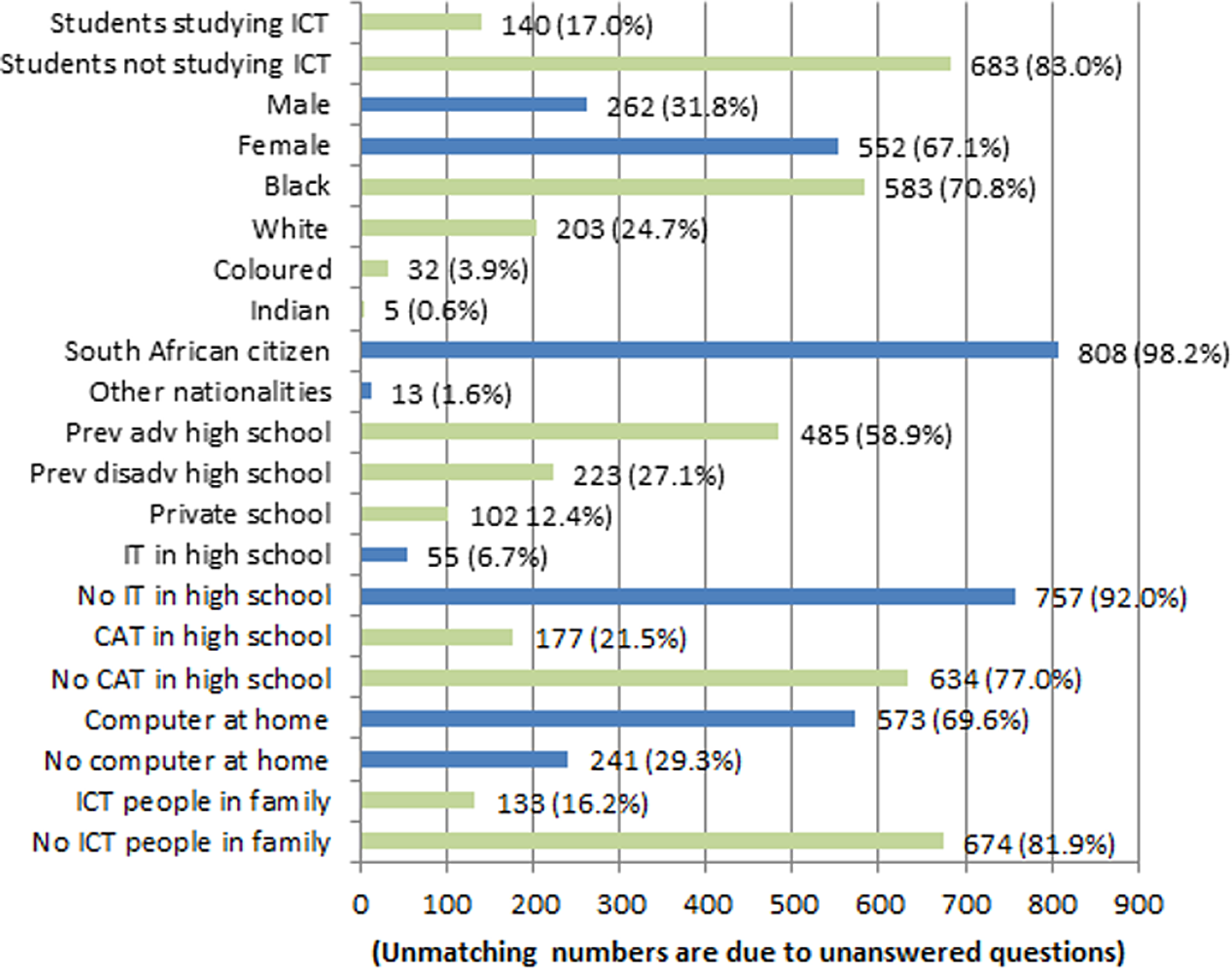
Demographics of participants.
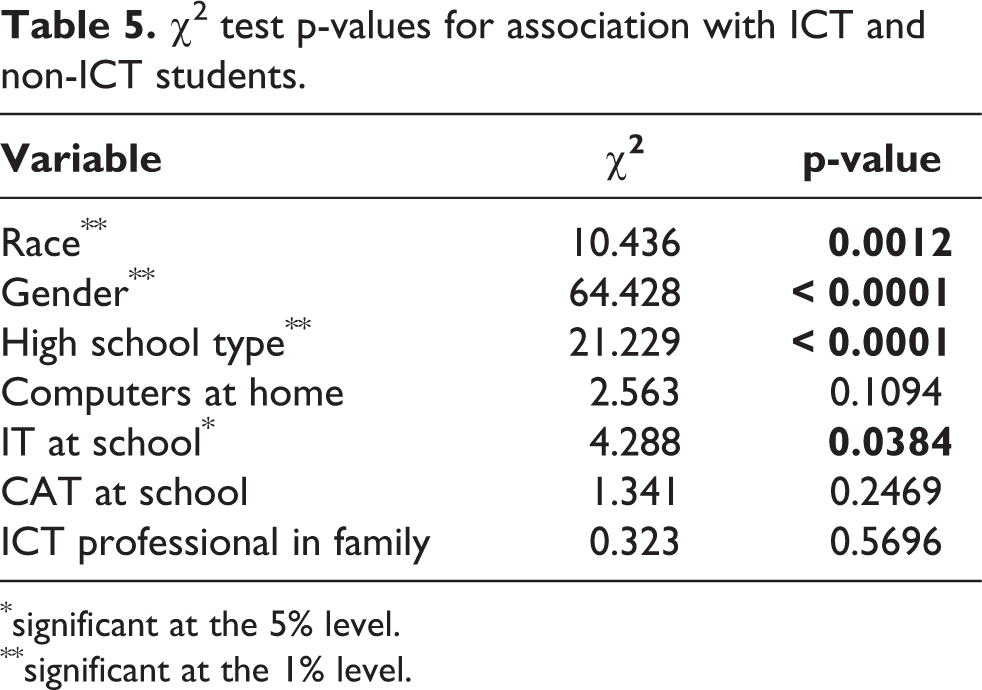
For responses to questions relating to racial grouping, gender, high school type, having computers at home, having had IT at school, having had CAT at school and having an ICT professional in the family, chi-squared (χ2) tests were performed to test the association with students who study ICT and students who do not.
To enable certain comparative statistical tests to be carried out with adequate sub-sample sizes, the race groups of white, coloured and Indian were combined as “other”. The measures of association are shown in Table 5. The variables are bold when significant (at alpha of 0.05 or less).
χ2 test p-values for association with ICT and non-ICT students.
*significant at the 5% level.
**significant at the 1% level.
There seems to be no significant difference between ICT students and non-ICT students in terms of computer ownership at home. This contradicts with Seymour et al. (2004) who found that “lack of Internet access and computer at home had a surprisingly positive impact” on choosing CS or IS. Likewise, having an ICT professional in the family does not seem to affect the decision to study ICT.
Race, gender and high school type are all significant at the 1% level and IT at school is significant at the 5% level. The percentages of students who study ICT and those who do not for each of these variables are displayed in Figures 4, 5, 6 and 7.

Association of race and studying ICT.

Association of type of school attended and studying ICT.
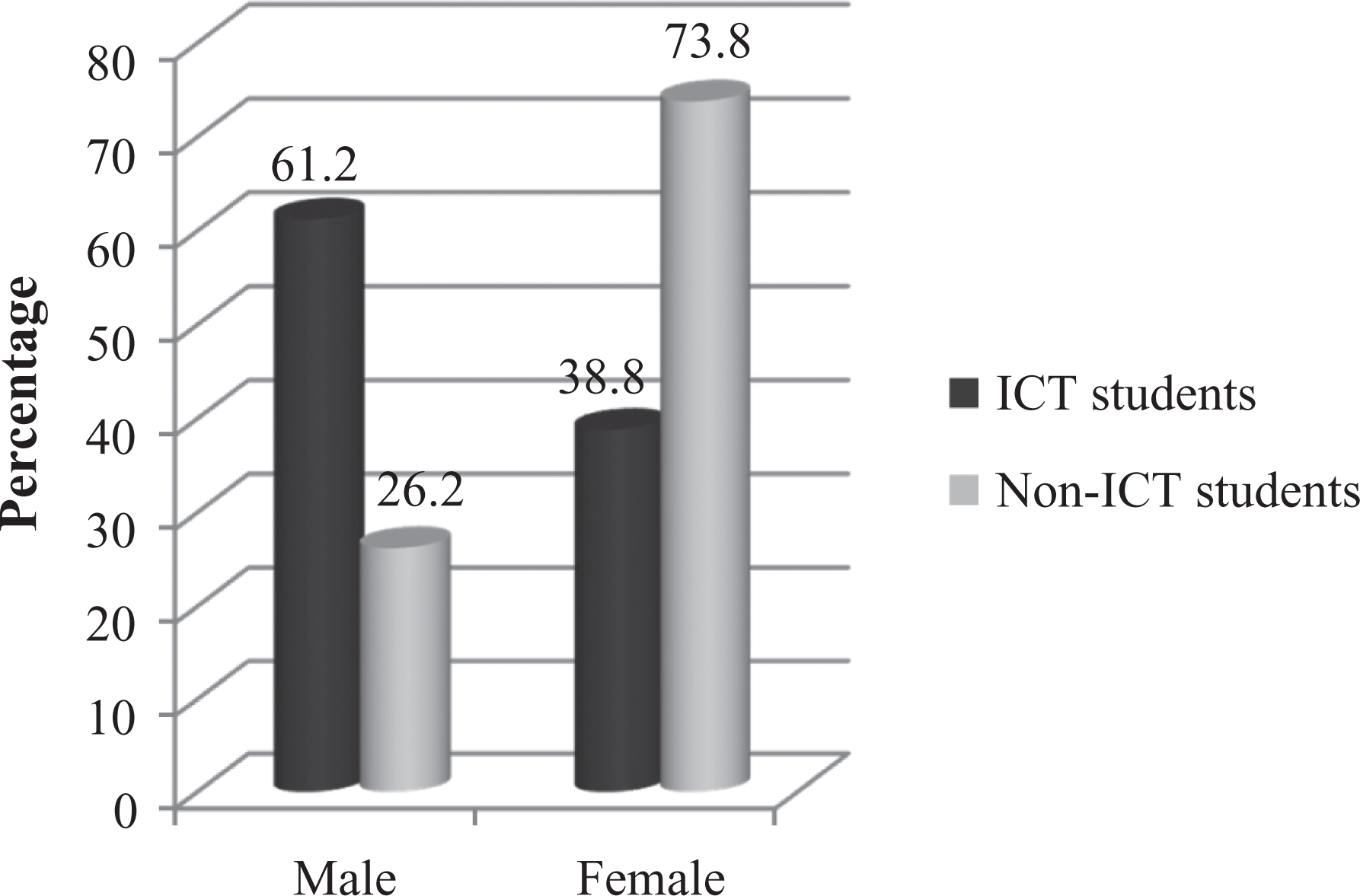
Association of gender and studying ICT.
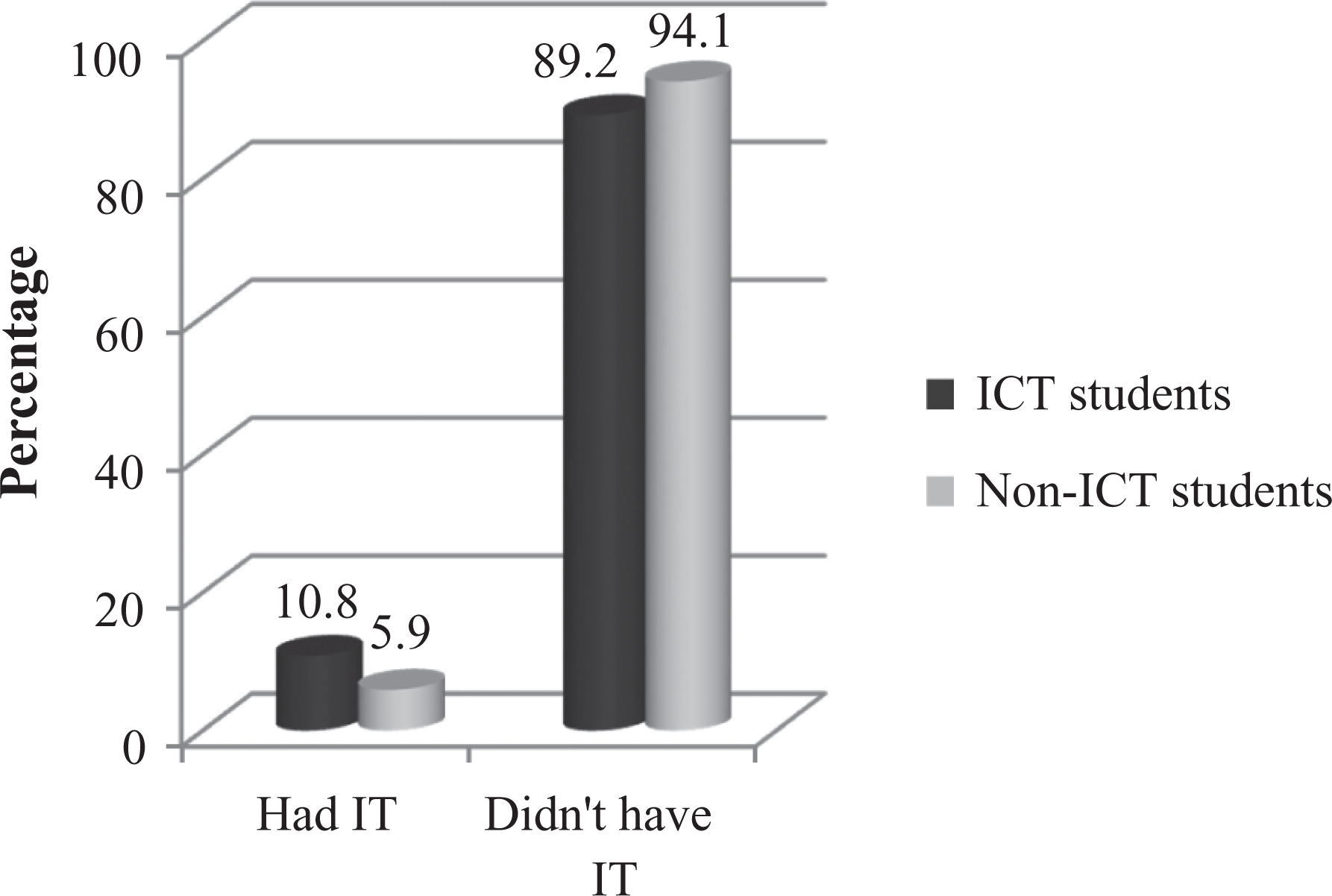
Association of having had IT at school and studying ICT.
The results show that black students have a strong tendency to study ICT and they comprise 82.1% of all ICT students. This is higher than the 68.5% of blacks that study courses other than ICT. However, for the other races the majority of students (31.5%) study other courses, while only 17.9% study ICT. These results are partially consistent with the findings of Seymour et al. (2004) and Jacobs and Sewry (2010), that black students were significantly more inclined to study CS, but that there was no such significance for IS.
Students from previously disadvantaged public high schools were overrepresented in ICT and students from previously advantaged schools were underrepresented in this area. Racial and high school groupings showed similarities in these three areas because black students were predominantly from previously disadvantaged schools and white students were predominantly from previously advantaged schools. Calitz (2010) had also found that students from disadvantaged schools are more inclined to study ICT than those from advantaged schools.
However, these results are contrary to the findings of Hart et al. (1999), who found that students from previously disadvantaged schools were less inclined to study ICT. It is worth noting that this research dates from before the burst of the dotcom bubble and the situation seems to have changed since then.
Figure 6 clearly shows that male students are more inclined to study ICT than females. This supports the findings of previous research including Calitz (2010) and Hart (2002). It is also in line with the findings of Bandura (1986), who asserted that females usually have lower self-efficacy for ICT-related disciplines. Correll (2001) extends this view to other disciplines and contends that self-assessment can be negatively biased, which results in self-under-valuation of the individual. As a result of a longitudinal study, the author reports that young American women undervalue their own competence in science and this discourages them to pursue related degrees.
The students who had IT at high school are overrepresented in ICT, but CAT results are converse. This is plausible, because as stated CAT involves teaching basic computer literacy, whereas more advanced computer knowledge such as programming is taught in the IT course.
Visibility of ICT disciplines among the students
One of the problems related to tertiary ICT education is the poor visibility of these programmes among the students. The present survey was conducted at the beginning of the academic year, and some of the respondents were new students while others were not. Table 6 shows the awareness of the respondents about CS, IS and IT. Older students comprised about one-third of the total respondents, and some of them were unaware of ICT programmes even after one or more years at the university.
Visibility of ICT among students (slight differences in group totals are due to missing answers).
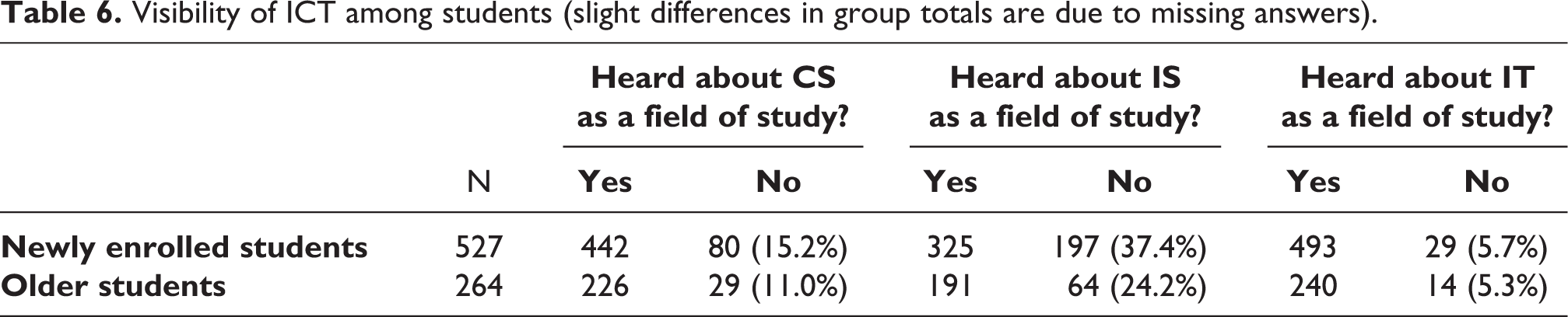
Table 6 shows that although IT was known to about 95% of the students, there was surprisingly less visibility of IS even among the older students. CS lies somewhere between the two. Hart (2002) and Seymour et al. (2004) had also found that there was a lack of knowledge among the students about IS and the situation has not changed much in more than a decade. This could possibly be related to the offering of CAT and IT as an introduction to CS in schools (Seymour et al., 2004; Jacobs and Sewry, 2010).
Perception of computer-related professions among students and objective facts
As stated, the third section in the questionnaire consisted of two parts, namely the subjective perceptions of the students and the objective facts (Table 7).
Perceptions of ICT-related professions among students and objective facts.
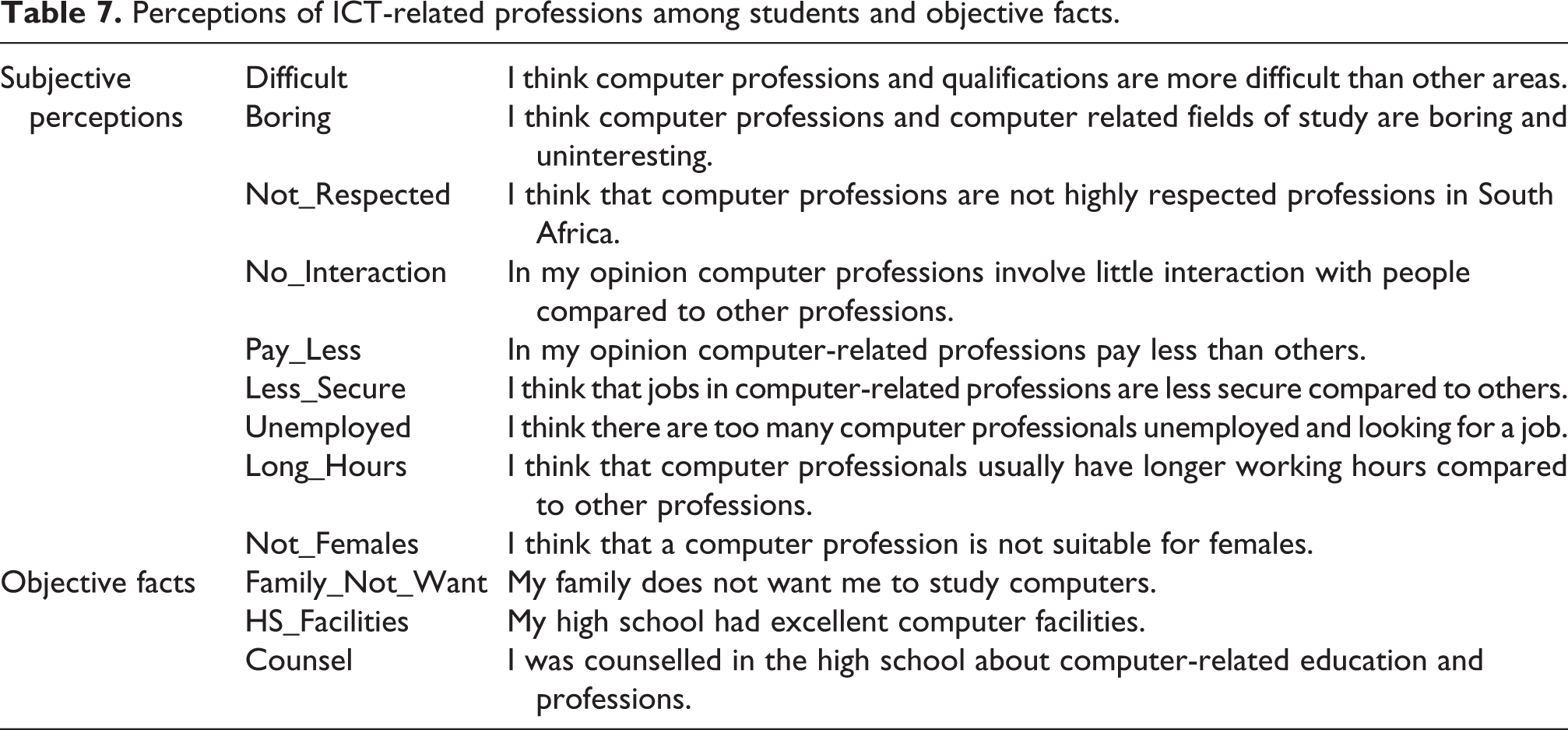
The SCCT postulates that career choice, interest development, job performance and satisfaction are affected by the complex interaction among the core variables of self-efficacy, outcome expectations and personal goals. According to the model, the individual and the environment mutually influence each other. The main tenet of the SCCT is the self-evaluation of an individual and subjective perceptions outlined in Table 7 constitute the variables of the model.
In SCCT terms, self-efficacy refers to “a dynamic set of beliefs that are linked to particular performance domains and activities” (Lent, 2005: 104) and the variable of self-efficacy is gauged by the questions “Difficult” and “Not Females.” Lent, Brown and Hackett (2002: 262) defined outcome expectations as “personal beliefs about the consequences or outcomes of performing particular behaviour” and they are gauged by the questions ‘Pay Less,’ ‘Not Respected,’ ‘Boring,’ ‘Long Hours’ and ‘No Interaction.’ According to Lent (2005), personal goals are the intentions to engage in certain activities and generate specific outcomes. The variable of personal goals is gauged by the questions ‘Unemployed’ and ‘Less Secure.’
The difference between the perceptions of ICT and non-ICT students is important in order to understand the nature of the flaws in ICT education. To this end, a series of non-parametric Mann-Whitney tests were carried out for the items shown in Table 7. The non-parametric tests were used rather than t-tests since the variables were not normally distributed and some were very skewed, making the t-test inappropriate (Wackerly et al., 2008:742). The normal approximations to the Mann-Whitney test results are shown in Table 8, where the bold values indicate significance (p < 0.05).
Mann-Whitney test results about the perceptions of ICT-related professions among students.
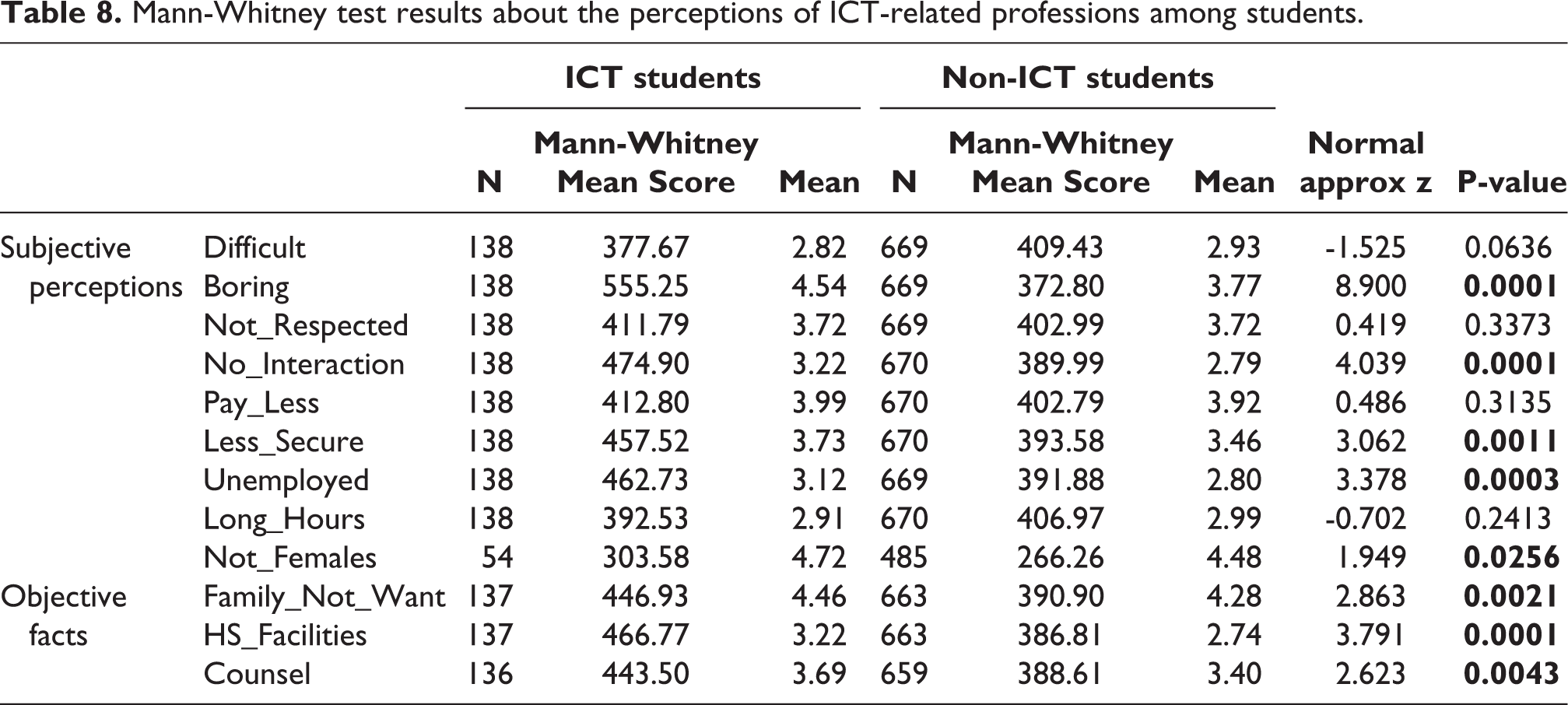
Table 8 shows that ICT students as well as non-ICT students regard computer-related qualifications as being of average difficulty (the median value for both groups is 3). Non-ICT students find computer-related study and professions boring compared to ICT students, and the difference among them on this issue is statistically significant. Neither of the two groups thinks that the computer-related professions are not highly respected professions in South Africa, and the median for this question is the same, namely 4, for both groups. This indicates the existence of a positive environment that the education policy makers can delve into. The non-ICT students find that ICT jobs have comparatively less interaction with other people than the ICT students, and the difference is significant. In terms of ICT salaries, both groups do not perceive much of a problem in this area, and this can be associated with the perception of respect for the ICT profession. In perceptions about job security and unemployment, non-ICT students are more pessimistic than the other group with statistically significant differences. These two factors are important in today’s world and they are not grounded on facts. In other words, in comparison with other professions, there is no indication in ICT of serious job insecurity and unemployment problems in South Africa. On the contrary, it could be safely argued that ICT jobs are more secure than others due to the shortage of skills in this area. Unemployment is an important problem in South Africa and this issue needs to be addressed by policy makers. There is no significant difference between the perceptions of both groups about long working hours. Due to the gender-oriented nature of the perception about the suitability of ICT for females, only females were taken as subjects. The results show that both groups ‘strongly disagree’ with the proposition about the unsuitability of ICT for females. However, the mean of the ICT students is higher than that of the other group and the difference is statistically significant.
The differences in all of the ‘objective facts’ items are statistically significant. Although both ICT and non-ICT students indicated that their families were usually not against the study of ICT, this is an even more trivial problem among ICT students, as the mean values show. This may be interpreted as family support for studying ICT being important. The students who had excellent computer facilities in high school tend not to study ICT at university. Although this seems unlikely at first sight, on consideration it is plausible because the students who had such facilities at high school are usually affluent whites and, as stated before, they tend not to study ICT. Therefore one may conclude that the factor of having excellent computer facilities in high school is negated by other factors. The last test is about ICT counselling in high school. The results indicate that the majority of the students have not been counselled in high school. This is consistent with Hart’s (2002) finding about the inadequacy of counselling in ICT-related disciplines. The mean for disagreement with this proposition is also higher in ICT students. This is somewhat unexpected and could be an indication of the ineffectiveness of the counselling mechanism.
It is worth noting that although there are significant differences between the ICT and non-ICT students for all objective facts, this is not true for subjective perceptions except for the self-efficacy group, namely ‘Difficult’ and ‘Not Females’. The difference in some of the questions related to the outcome expectations and personal goals variables are significant while some not. This can be a starting point for policy makers by concentrating on the issues where the difference is high. Developing programs for educating families and students about the nature of and the need for ICT jobs and counselling the high school counsellors can have the potential to provide positive outcome in short term.
Conclusion
Despite various attempts to rectify the situation, the ICT skills gap in South Africa is increasing. Nominally, ICT enrolments and graduations have shown a slight increase in the last few years. However, when compared to overall enrolments and graduations, which have shown decent growth, they have actually decreased. One of the chief reasons for this is the negative and usually ungrounded perceptions of students about the ICT-related professions. This is an important issue, and there is a growing body of research in this area which focuses mainly on the perceptions of high school students. This study attempts to gain deeper insight into the issue by investigating university students who can be assumed to be more knowledgeable than the high school students.
The growing interest of disadvantaged black students in the ICT-related disciplines and the reverse trend among other students is somewhat paradoxical. White students have closer links with Western countries such as the UK and the US where ICT enrolments have suffered, and it is possible that this might have affected their perceptions. However, conditions in these countries are not applicable to South Africa, and black students seem to have the ‘correct’ perception due to the fact that they have fewer links with the outside world.
The demographic part of the study significantly indicated that black students, males and students from previously disadvantaged schools were more inclined to study ICT, and that having IT at school affected the choice of studying ICT. Unfortunately the typical negative stereotypes of the ICT professions still play a significant role, as the majority of students indicated awareness of IT, CS and IS-related fields of study, with IT ranking the highest, and IS ranking the lowest in terms of awareness. The negative stereotypes of the ICT professions that were highlighted by this study include that they are boring, have little interaction with people, are less secure than other professions, and have high unemployment rate. This study shows that there are substantial numbers of ICT and non-ICT students who have ungrounded perceptions in these areas. Education policy makers in South Africa are well aware of the problem in ICT education and addressing the sources of these negative stereotypes and perceptions, such as parents, friends, educators and the media, will make a significant contribution towards addressing the ICT skills shortage, not only in South Africa, but globally as well.
The first step in rectifying these negative perceptions is to determine them. By comparing the perceptions of ICT and non-ICT students, valuable insights can be provided for policy makers in education, because these perceptions have a great influence on selecting an area of study. This study shows that there are significant differences in the perceptions of the ICT field between the ICT and non-ICT students, and that these perceptions need to be appropriately addressed by policy makers. To this end, an ICT awareness campaign can be started in South Africa.
We believe that the results of this study have important implications for theory and practice. The SCCT mainly focuses on individual, rather than communal behaviour. To our best knowledge, this paper is the first attempt to implement the SCCT to understand the nature of a national education problem and to develop measures against it. Additionally, most of the related research implements the method of studying intentions. However, the comparison of ICT and non-ICT students gives good insight into the issue of whether to study ICT or not, because it is grounded on a realized fact. In other words, rather than investigating the intentions that may be subject to change, this research is based on the already settled decision about what to study. We believe that this enables one to investigate the mature perceptions and avoid volatility.
Limitations and further research
This study is based on data obtained from one campus of one university in South Africa. To be able to generalize these findings to students of a wider background, similar research should be done on students studying at the other 16 universities and 11 universities of technology. It will be interesting to determine whether the same results apply to students all over South Africa, and to compare the perceptions of students attending universities with the perceptions of those attending universities of technology which are mainly education rather than research oriented.
Future research should also focus on developing interventions to address the negative stereotypes and on documenting their success, both in the South African as well as in the global context. Since such negative stereotypes are usually groundless, it is not difficult to overcome them. SCCT provides a solid theoretical background for developing tools and policies for such interventions and they need to be addressed by policy makers with the support of industry and researchers.