



Abstract
This paper attempts to explore the adoption of changes introduced by an IT-intervention in the context of a social welfare scheme. Using case study methodology, we have studied the changes introduced through the project ‘CORE PDS’ (Centralized Online Real-time Electronic Public Distribution System) in the Chhattisgarh Public Distribution System (PDS). CORE PDS was a far-sighted project aimed to integrate the retailers (Fair Price Shops, FPSs) with IT infrastructure. It simultaneously introduced two changes. One was an automated transaction processing system while another was the provision of portability for the beneficiaries. After 2 years of its implementation it was observed that despite the government’s diligent efforts, only the automated transaction processing system was adopted, while portability was discarded by the FPSs. We use the theoretical lenses of stakeholder theory and agency theory for identifying reasons for this partial failure. Our analysis suggests that information system (as monitoring and reporting mechanism), outcome uncertainty, risk aversion and goal conflict play critical roles in the adoption of changes. Changes with higher monitoring, lower outcome uncertainty and lower goal conflict are easily adopted, and on the other hand, lower monitoring, greater outcome uncertainty and higher goal conflict result in lower possibility of adoption.
Keywords
Introduction
With the widespread dissemination of information and communication technology (ICT), government and welfare organizations have started harnessing its potential in developmental affairs (Sangbuapuan and Guha, 2016; Watson and Mundy, 2001; Flak et al., 2008; Coe et al., 2001) and poverty eradication (Heeks, 2014; Masiero and Prakash, 2015). E-governance initiatives use ICTs, particularly computers and the Internet, for creating digital connections, so as to improve accountability, transform service delivery and support learning (Heeks, 2001). In this regard, the Government of India launched the National e-Governance Plan (NeGP) to harness the potential of ICT for improving accessibility of various government services to the common man, improve service delivery, at the same time ensuring efficiency, transparency and reliability at an affordable cost. E-government projects operate in a highly complex environment and are deeply embedded in social and organizational contexts (Dawes, 2008). This is especially true of public distribution services, that work in a socially intertwined environment and often have complicated widespread distribution networks. The deployment of ICT in such a context is usually driven by the government and such deployment faces pressure from multiple stakeholders (Allen et al., 2001).
The present work examines the adoption of an IT-intervention, CORE PDS, in the context of the Public Distribution System (PDS) in the Indian state of Chhattisgarh, which has received various awards for its innovative use of ICT in the distribution of welfare services 1,2 . PDS is a targeted public service scheme operating in India since 1951 to provide food security to economically poor families through the provision of monthly entitlements of food grains. The beneficiary families who fall below the poverty line are identified through ration cards – booklets issued by the state governments that contain the details of family and their economic status. At present, food grains under PDS are distributed to around 75% of the rural population and 50% of the urban population 3 through a network of 505,879 retail outlets known as Fair Price Shops (FPSs) across the country 4 . The state governments, in collaboration with the federal government of India, manage the PDS. The federal government carries out the procurement and milling of the unprocessed grains. The processed food grains are then allotted to the states (based on the number of below poverty line families) for distribution. The distribution of PDS commodities within the state is managed and controlled by the state governments. However, over the last decade the federal government has been promoting the states to take over the responsibility of the entire PDS supply chain (starting from procurement of food grains to milling and distribution) while receiving finances from the center. Despite having a history of over five decades, the operation of this bulky system is often criticized for lack of transparency, pilferage, leakage, poor service quality, and failure to reach the poor population (Ahluwalia, 1993; Kattumuri, 2011). ICT has been considered as a potential tool for performance improvement in PDS (Masiero, 2015; Prakash, 2015). Although technology in itself is not the source of efficiency, the way it is used and managed defines the improvement trajectory leading to different outcomes (Fawcett et al., 2011).
The project, christened as CORE (Centralized Online Real-time Electronic) PDS, was intended to integrate the end-point of service delivery (retailers) using point-of-sale (POS) devices so as to enable real-time monitoring of transactions in the Chhattisgarh PDS. It was also aimed to empower the beneficiaries by introducing the provision of choice. It was a widely promoted scheme, which due to its influence on the citizens was acknowledged by various ministers (including the Food and Civil Supplies and Consumer Protection Minister 5 and the Chief Minister of Chhattisgarh 6,7 ) in their political speeches. However, despite wide proclamation about the success of the scheme, the popular newspaper media viewed it with suspicion regarding its promised delivery. Media highlighted various incidences of denial of portability rights by the FPSs 8 , and dissatisfaction among the FPS salespeople due to infrastructural issues 9 , such as Internet and database connectivity. Joshi et al. (2016), in their study, also observed that the contribution of CORE PDS was limited, since it was not able to address the power imbalance between shop owners and beneficiaries.
E-government literature has examined such government initiated IT-implementation projects in different contexts, particularly, Government-to-Citizen (G2C) (Evans and Yen, 2005; Linders, 2012), and Government-to-Government (G2G) implementations (Pandey and Gupta, 2016; Walsham and Sahay, 1999). G2G studies mainly focus upon the evaluation of outcomes and the reasons behind failure (Nidumolu et al., 1996; Pandey and Gupta, 2016), the design process (Scholl, 2002) and transformation within government departments during implementation (Reinwald and Kraemmergaard, 2012). G2C studies, on the other hand, analyze the transformation process (Tan and Pan, 2003), implementation process (Caseley, 2004) and evaluation of e-government websites (Tan et al., 2013). While the results of G2C studies point to the lack of transparency and ulterior motives (Caseley, 2004), G2G studies present power dynamics as a major reason for failure of ICT interventions (Pandey and Gupta, 2016; Walsham and Sahay, 1999). Interestingly, the reasons of failure are not clear when agents (or middlemen) are the point of IT-intervention, a Government-to Business (G2B) situation. Drawing motivation from this gap in the literature, the present work intends to explore the implementation of IT-enabled change at the FPSs, who are contractual agents of the government for the delivery of welfare services to the poor, of the Chhattisgarh PDS.
This study, therefore, aims to examine the failure of CORE PDS in meeting desirable outcomes as suspected by the media. The specific research questions addressed in this study are: What are the key factors that influence the adoption of changes introduced by an IT-intervention? What are the areas that the government should focus upon in implementing such a massive reform?
The government, having power and authority over the partners of the public service delivery process, initiates most of the IT-enhancements in the developmental context such as PDS. Thus, the government acts as a powerful stakeholder during the development and implementation process. At the same time, the actors who experience the change intervention are involved in an agency relationship with the government. Therefore, we use the theoretical lens of stakeholder theory and agency theory to explore the reasons behind the failure of the CORE PDS project. Stakeholder theory helps in analysing the role of stakeholder pressure in influencing the adoption (Donaldson and Preston, 1995) of CORE PDS by the agents (FPSs). The theory examines stakeholder pressure in the implementation of a change in terms of power, urgency and legitimacy. However, even the powerful stakeholder cannot ensure the successful adoption of change due to incomplete information. Hence, to complement the explanation provided by stakeholder theory, we use agency theory, that helps us to understand the propensity of agents to manifest performance outcomes by taking advantage of the agency costs being faced by the principals due to lack of complete information, lack of monitoring, miscommunication and conflict (Eisenhardt, 1989).
The rest of the paper is organized as follows: The next section presents a literature review on use the of ICT by government, followed by a discussion on the theoretical anchors, namely, stakeholder theory and agency theory. In the research methodology section, we present the details of the research approach and the process followed for collecting data. Section four discusses our case - CORE PDS. This is followed by the analysis of the case using our theoretical anchors. Finally, we conclude and highlight the implications of this study.
Literature review
About two decades ago, governments started realigning their focus from administration to serving the citizenry. ICT played a major role (both as motivator and enabler) in such government transformation across the globe (Devadoss et al., 2003). Use of ICT led to gains in efficiency; improvement in the quality of service delivery; increase in the capacity of government; creation of networked communities; enabling transparency, anticorruption and accountability; and improved decision making (Ndou, 2004). Although governments have come a long way in utilizing ICT, from a static website for information sharing to a platform for disbursing direct citizen services, its full potential is yet to be achieved.
Literature on e-governance has witnessed limited research in the context of G2B implementation, as compared to G2C. Within this limited set, most of the studies on G2B are based on evaluation of e-government websites for the utility of businesses (Awan, 2008; Zhao et al., 2007), and willingness to adopt e-procurement platforms (Devadoss et al., 2003; Sambasivan et al., 2010). However, studies on e-governance projects involving grass root level service providers in the G2B context are very limited. The grass root level service providers in social welfare schemes are mainly community-based organizations, such as cooperative societies or self-help groups, which may not be classified as businesses in the strict sense of the term. But they serve the dual purpose of collective societal development as well as the financial well-being of its members. Due to their participation in income-generating activities for the members, they can be considered as business organizations with different structure and formalization (La Ferrara, 2002). Therefore, traditional theories exploring business dimensions can also be used for examining the adoption of IT-enabled changes at FPSs in CORE PDS, a G2B situation.
Theoretical background
Various studies on e-government initiatives have applied stakeholder theory (Chan and Pan, 2008; Kamal et al., 2011; Scholl, 2002), actor-network theory (Heeks and Stanforth, 2007; Walsham and Sahay, 1999), structuration theory (De and Ratan, 2009) and institutional theory (Luna-Reyes and Gil-García, 2011; Zheng et al., 2013). Since stakeholder theory clearly identifies the affected stakeholders and their role and interest in the success of any e-government initiative, it is widely used as a theoretical anchor in most of the studies. In this study also we use stakeholder theory to examine different stakeholders that are critical to the success of CORE PDS. However, stakeholder theory in itself is not sufficient to explain the reasons for the partial failure of the project because of the existence of an agency relationship between the government and FPSs. Hence, we also use the lens of Principal-Agent relationship of agency theory to understand the factors which impede the success of the present e-governance initiative. Although stakeholder theory and agency theory have been at odds with each other in their assumption and implications, researchers such as Shankman (1999) have argued that stakeholder theory is the logical conclusion of agency theory.
Stakeholder theory
Stakeholder theory suggests that the responsibility of a firm is not only limited to the generation of wealth for stockholders, but also to consider the interests and claims of various groups which are affected by its actions (Mitchell et al., 1997). It is one of the widely used theoretical lenses in e-governance research (Scholl, 2002; Kamal et al., 2011; Chan and Pan, 2008; Sæbø et al., 2011; Reinwald and Kraemmergaard, 2012). There are three distinct themes in stakeholder theory, namely, descriptive, instrumental and normative. The descriptive theme discusses the interaction among various stakeholders and classifies them based on their influence in the decisions of the firm. The instrumental theme suggests that positive performance is the implication of effective stakeholder management (Freeman, 1999), and the normative theme emphasizes the organization’s responsibility to acknowledge and consider the interests of all stakeholders (Ghobadian et al., 2009). Mitchell et al. (1997) examined stakeholders based on three attributes, namely power, legitimacy and urgency. Mitchell et al. (1997), based on the Weberian idea of power, state that the actor having power in a relationship would be able to carry out actions based on his/her own will, despite resistance. The second attribute, legitimacy, refers to the desirable, legal or moral obligations of an organization towards a stakeholder within socially accepted values (Ghobadian et al., 2009). The third attribute, urgency, refers to the degree to which immediate action is desirable for any stakeholder’s claim. Urgency has two bases, one is time-sensitivity, while the other is criticality, which relates to the importance of a stakeholder’s claim or relationship (Mitchell et al., 1997). Mitchell et al. (1997) defined different classes of stakeholders based on the absence or presence of these three attributes (Figure 1).
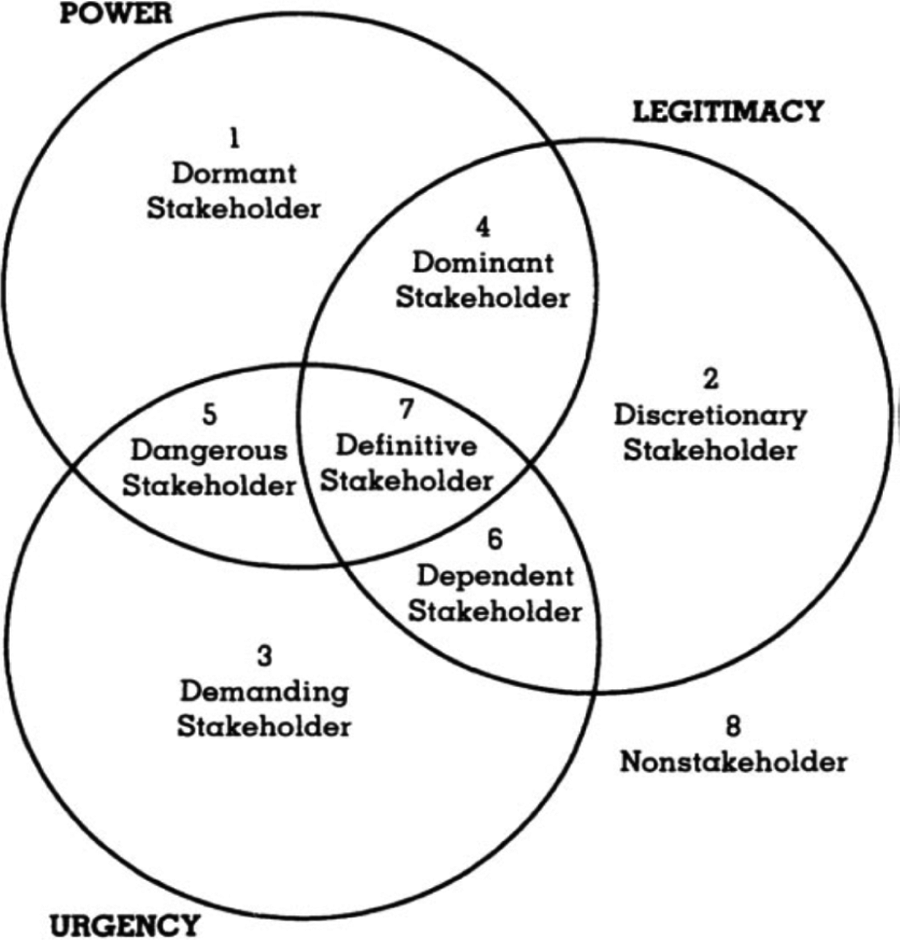
Stakeholder classes (Source: Mitchell et al., 1997).
The dormant, discretionary and demanding stakeholders who possess only one of the three attributes of power, legitimacy and urgency, will have low stakeholder salience. Thus, managers will pay little attention to them in a given context. However, the stakeholders possessing two of the three attributes enjoy moderate salience and hence managers will be more responsive towards their interest. Definitive stakeholders possess all three attributes and hence enjoy high stakeholder salience. Mostly, a dominant stakeholder becomes definitive when the urgency of their claim is high, which results in quick responsiveness to their claims by the managers (Mitchell et al., 1997). Such stakeholders, along with the dominant and dangerous ones, are critical for the success of a project. Any ignorance of the interests of these stakeholders would lead to unexpected consequences (Clarkson, 1995). Although stakeholder theory was developed for the private sector, researchers acknowledge its relevance in the context of e-governance (Sæbø et al., 2011; Chan and Pan, 2008; Kamal et al., 2011). Considering the importance of stakeholders in a G2B project, this study uses the lens of stakeholder theory to examine the roles and the power exerted by each player in the CORE PDS.
Agency theory
Agency theory is a much promoted theory in various fields, especially economics, political science, and organizational behaviour (Eisenhardt, 1989). This theory considers that the firm is at the centre of the nexus of agency relationships (Bakos and Kemerer, 1992) and each agency relationship is a unit of analysis (Eisenhardt, 1989). An agency relationship can be defined as a contract in which one party (a principal) delegates its work and some decision making authority to another party (agent) to perform on its behalf (Eisenhardt, 1989; Bakos and Kemerer, 1992; Jensen and Meckling, 1976) in the domain of a given problem (Ross, 1973). However, people have selfish motives within their bounded rationality and are risk averse, which often lead to conflict of interest and goal incongruence in any cooperative relationship (Kim and Kim, 2016). This forms the first basis of agency theory. Also, there exists an information asymmetry between the principal and the agents, due to which the principal finds it difficult to ensure that agents are acting appropriately (Eisenhardt, 1989; Bakos and Kemerer, 1992). This leads to the second basis of the theory, which considers information as an acquirable commodity that can be purchased. It means that the principal can monitor the appropriateness of agents’ behaviour by investing sufficiently in information systems (monitoring and reporting mechanisms). Agency theory historically is divided into two lines, namely positivist agency theory and principal-agent problem (Eisenhardt, 1989; Jensen, 1983). Although both the streams address the contracting problem and rely on similar assumptions (Jensen, 1983), yet they tend to answer different questions. Positivist agency theory focuses on identifying situations in which the principal and agent are likely to have conflicting goals and describes the governance mechanisms that limit the agent’s self-serving behaviour, whereas the principal-agent relationship focuses on determining an optimal contract (Eisenhardt, 1989), which are of two types, namely behavior-based contracts and outcome-based contracts. Eisenhardt (1989) presented 10 propositions, two referring to positivist agency theory and eight referring to principal-agent research. We have selected eight prepositions referring to the principal-agent research since they are more relevant for analysing the intricacies of the relationship between the government and FPSs (Table 1).
Dimensions of agency theory.
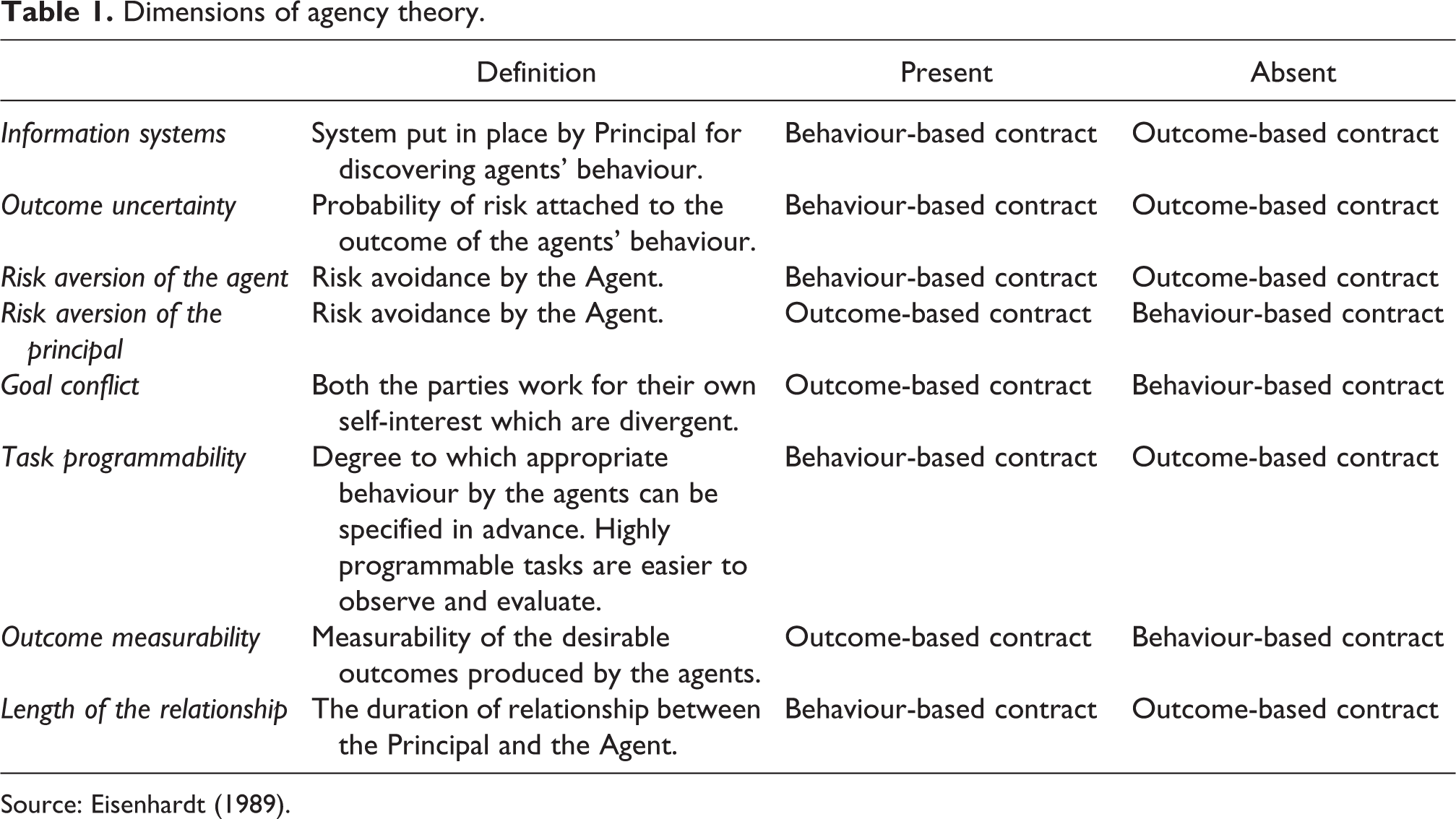
Source: Eisenhardt (1989).
Kriebel and Moore (1982) acknowledge the importance of agency theory in numerous avenues of information systems research, such as contracting for software development. Still, relatively fewer information systems studies use the lens of agency theory for analysis (Gurbaxani and Kemerer, 1989; Bhattacherjee, 1998). A similar trend has been observed in e-governance research, which is a conjuncture of information systems and policy research. While policy researchers tend to explore the potential of agency theory in e-governance research (Gauld, 2007; Pina et al., 2010), information systems researchers have paid little attention. Also, few studies have used the stakeholder and agency theory combination in various fields (Hill and Jones, 1992; Boatright, 2002).
Research methodology
PDS remains one of the most important developmental programs in Chhattisgarh state, where around 39.93% of the population lives below the poverty line 10 . The state receives financial support from the federal government to carry out the entire PDS operation (starting from procurement of food grains to milling and distribution) within the state. PDS provides a monthly entitlement of food grains to 5,812,254 beneficiary families in Chhattisgarh, comprising 4,926,954 rural households and 885,300 urban households 11 . Fair Price Shops (FPSs) are the retail outlets taking care of the responsibility of the widespread and remote distribution of this welfare service to the beneficiaries of the state. FPSs are owned and managed by various community-based organizations, such as village panchayats, cooperative societies, and women’s self-help groups. The state has been a pioneer in utilizing the potential of IT and has adopted aggressive policies to improve the efficiency and effectiveness of its PDS. The CORE PDS project was intended to introduce IT-enabled change at the FPSs, making these grass root level delivery participants the point of change intervention. These FPSs are located close to the beneficiaries and their salesmen are often less educated and lack professionalism. Therefore, this unique setting demands deeper investigation. In order to delve into the intricacies of the adoption of changes introduced through the CORE PDS, we have adopted a qualitative case study approach. Qualitative research would help in gaining deeper understanding of the phenomena under study.
The adoption of IT-intervention in Chhattisgarh PDS through the implementation of CORE PDS was analyzed using a combination of stakeholder theory and agency theory. First, we identify the stakeholders and their relative roles using stakeholder theory to understand the sources of pressures which could affect the adoption of intervention by the FPSs. Three important stakeholders were identified for this change intervention, namely, the government of Chhattisgarh, FPSs and the beneficiaries. Then we use the lens of agency theory to examine the factors that affect the response of FPS towards changes introduced through CORE PDS (Figure 2).
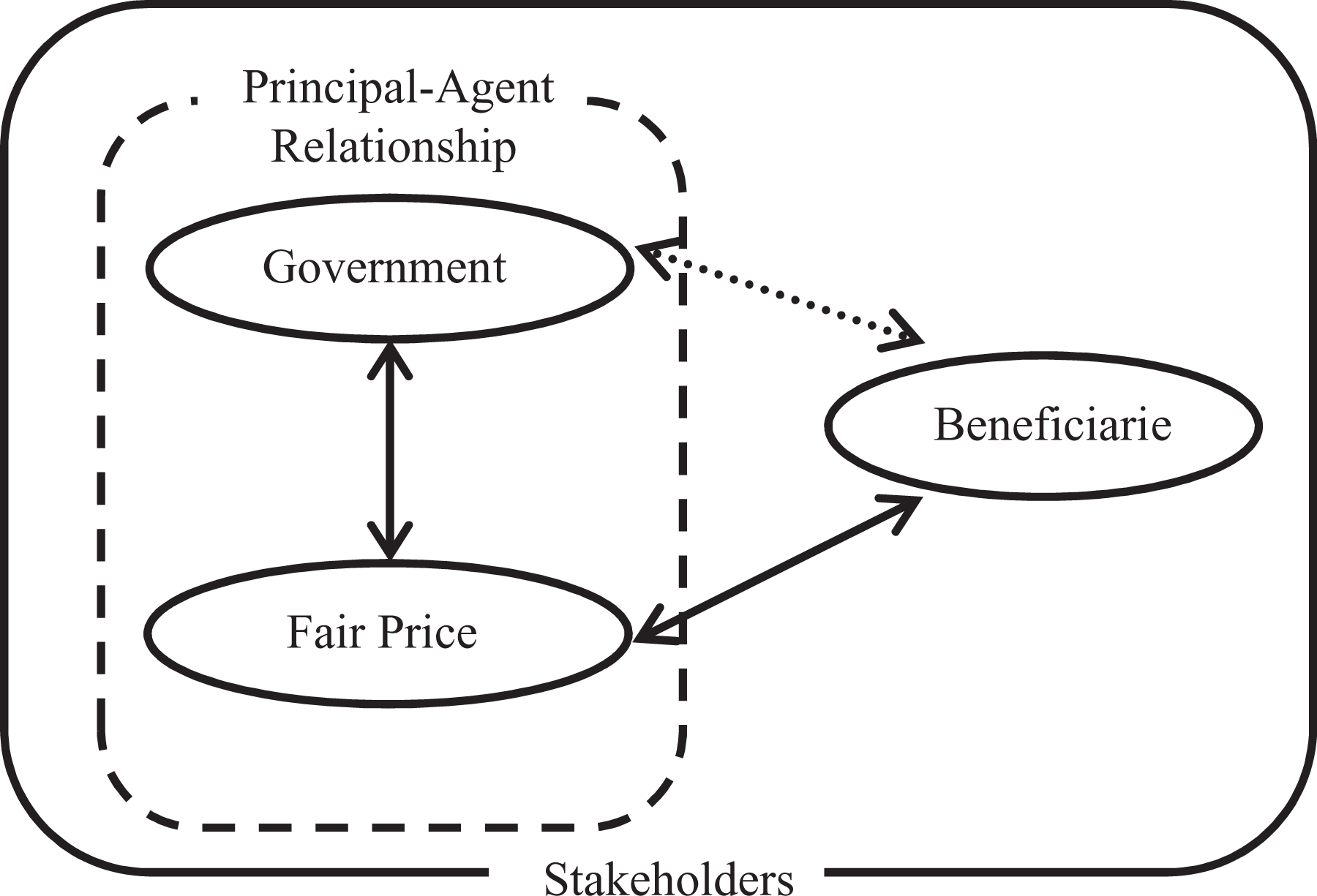
Research framework.
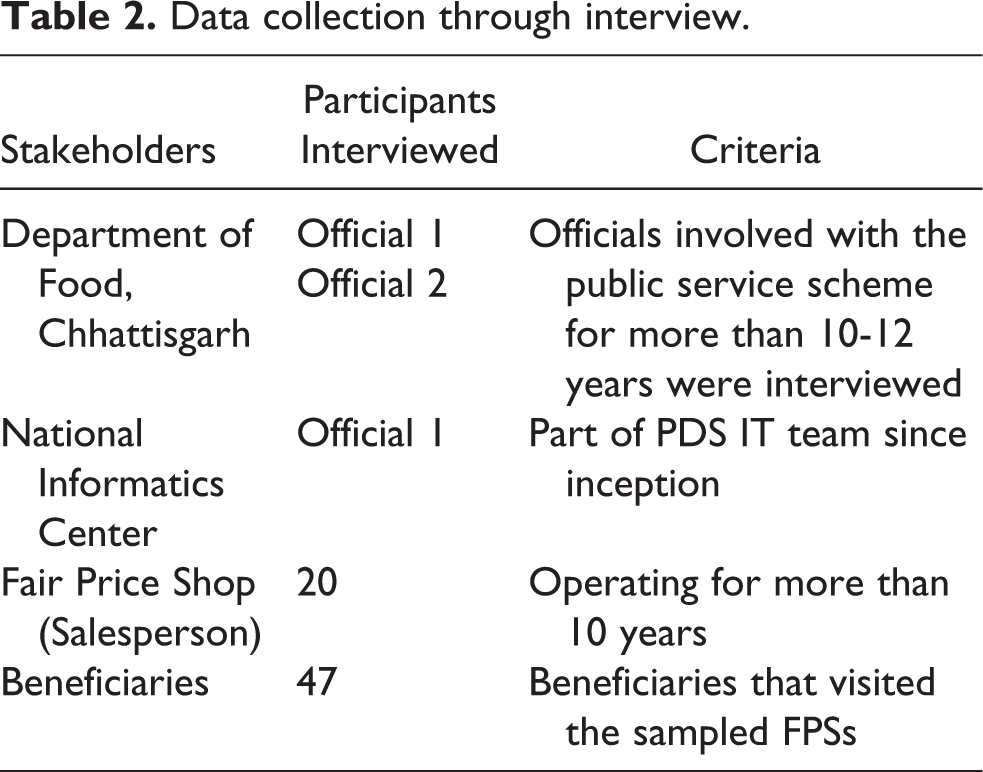
The data was collected through semi-structured interviews (Appendix I) of various stakeholders of CORE PDS, namely, FPS salesmen, the employees of the Department of Food (referred to as Government of Chhattisgarh), the National Informatics Center (NIC) (the development partner, a government entity), and the beneficiaries (Table 2). The interviews were conducted from November 2014 to July 2015. During interaction with FPSs and beneficiaries, a local language (Hindi) was used. However, the interaction with other stakeholders was performed in both Hindi and English based on the preferred language. We were interested in finding out the relational dynamics of the stakeholders, perceived benefits of CORE PDS and issues faced by the stakeholders during its deployment and use. The interviews with beneficiaries were helpful in validating the claims of FPS shopkeepers as well as that of the government. Apart from the interview, field notes were also taken based on the observations at the FPSs. The notes prepared during the interviews were refined after the visits, categorized and assessed for identifying the relevant themes and patterns.
Data collection through interview.
Public Distribution System of Chhattisgarh: CORE PDS
CORE PDS is an IT-enabled change intervention in Chhattisgarh PDS that aimed to improve the quality of service delivery by integrating the Fair Price Shops (FPSs) using ICT. This government-run scheme targets ‘Below Poverty Line’ (BPL) families who are the beneficiaries of PDS. These beneficiary families are identified by their ration cards issued by the government and each ration card is linked to a specific home FPS. A ration card contains all the details about the family, such as head of the family, name and age of all the members in the family, entitlement of the family, and home FPS. FPSs are state government licensed retail outlets, which receive PDS commodities from the government in order to distribute monthly entitlements to the BPL families at highly subsidized prices. In the Indian state of Chhattisgarh, FPSs are managed by public bodies, such as panchayats, cooperatives, forest production committees and women’s self-help groups (SHGs) (Joshi et al., 2016). Because of the provision of home FPSs, each FPS receives its monthly allocation of food grains based on the number of BPL families attached, and is responsible for distributing PDS commodities only to them (Masiero and Prakash, 2015). These FPSs earn through commission on per unit sale of PDS commodities given by the government. As stated earlier, although successful, PDS was seen with suspicion by media. The pre-defined market and lower margin (INR 0.45/kg of rice distribution) often resulted in irregular FPS operations (opening and closing of the shop and weeks off) and illicit diversion of commodities to the open market. According to some assessments (e.g. Jha and Ramaswami, 2010; Kotwal et al., 2011) only 10% of PDS funds reach out to the poor beneficiaries, whereas 43% is illegally diverted.
IT interventions were introduced in Chhattisgarh PDS in the year 2007, with ICT playing a key role. Various IT-enabled interventions included IT-enablement of the procurement process, IT integration of PDS supply chain, and automated allocation of PDS commodities to FPSs for distribution. The supply chain of PDS in Chhattisgarh is complex, dispersed and involves a number of entities (Figure 3).
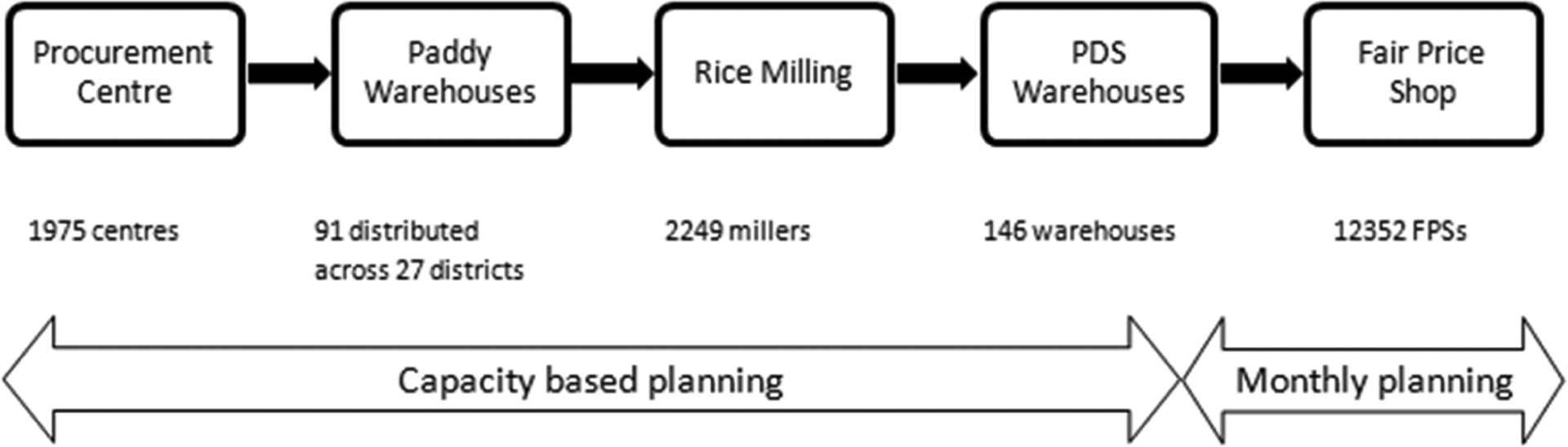
PDS supply chain.
The PDS of Chhattisgarh welcomed its new IT-intervention names ‘CORE PDS’ on 20 March 2012. In July 2012, CORE PDS went fully operational in Chhattisgarh’s capital, Raipur city. It integrated the FPSs using point of sale (POS) devices to enable real time monitoring of stock and transaction information. The project was expected to improve the monitoring and service delivery and check the diversions due to proxy issues. It also enabled the government to induce portability, providing the beneficiaries with the convenience of collecting their entitlement from any FPS. It was expected to induce a market mechanism in PDS, breaking the monopoly of FPSs and weeding out poor performers. The development and maintenance of the software infrastructure for POS device was handled by NIC, working under the federal government to promote the use of ICT in governance at the state and central levels. They also carried out regular training drives for FPS salesmen to operate the POS devices.
For enabling an FPS with CORE PDS, the government provided a POS device with General Packet Radio Service (GPRS) connectivity, consisting of 2 smart card readers, finger print scanner and thermal printer. To put this system into operation, the beneficiaries were also provided with Smart Ration Cards (SRC). The SRC is like an ATM card, having a chip that contains all the details about the ration card in electronic form and necessary details in printed form. In order to equip one FPS with CORE PDS, the government bears an expense of around INR 50,000 (USD $ 764.69 12 ).
The beneficiaries with SRC can visit any CORE PDS-enabled FPS to collect their monthly entitlement. Upon arrival, the FPS salesperson swipes the SRC on the POS to ensure the authenticity of the beneficiary, card type, and entitlement. The sales person then enters the quantity of commodities requested by the beneficiary in the POS device. This transaction is recorded in the backend database. After the success message is received, a printed receipt is generated and handed over to the beneficiary along with the requested quantity of commodities in exchange for cash. These transaction details are also displayed in the citizen portal 13 . Other functions available in the POS device are the provision of online stock receipts by the FPS, and various reports, such as left over inventory and sale of commodities between specified dates.
CORE PDS was promoted for IT innovation in the context of development, and the state government was claiming its success. However, various studies and media houses questioned the success of the project, as is the case in this study. It was observed that nearly all the FPSs in Raipur city were using POS devices for authenticating transactions with the beneficiaries. They were getting continued and quick (within 1 or 2 working days) assistance from the state government and NIC in case of any issue with the device and its operations. However, the portability scheme eventually lost track and remained no longer viable. Most FPSs deny the existence of portability for the beneficiaries. This simply means that they are not providing PDS commodities to any beneficiary who does not belong to their shop. A senior government official, on being asked about the response of FPSs on portability, answered; “The provision of portability is still there. Yes, we too are aware about this. Actually, this may be due to a data feeding scheme operating in parallel, in which the beneficiaries have to register at their home FPS. But as soon as this drive will be over (which would take around 3-4 months) it will again work.”
Lower incentives
CORE PDS exposed FPSs to a market based mechanism, hence it was a major change intervention for the FPSs. Also, during its implementation, FPSs were unhappy with the existing compensation policy, claiming it to be very low. Despite this, the government went ahead with the implementation without resolving the compensation issue. It was only after a year that the compensation issue was resolved by raising it from INR 30 per 100 kg of rice distribution to INR 45 per 100 kg. Even after the increased compensation, however, many FPSs were not happy: “The commission provided by the government is very low. I somehow manage to pay the shop’s rent and salary to the only employee at the shop….. On top of this, now we have to pay our Internet bills as well for operating CORE PDS. This is an additional burden.”
Lack of IT competence
Using POS devices required FPS salespeople to have knowledge about the use of technology, for which NIC was providing training and support. But most of the salespeople were poorly educated, having lower propensity to learn, and were reluctant to use new tools and technology. Most of the FPSs were dependent on only one employee having knowledge about the use of POS. Furthermore, the FPSs were using very few of the facilities available on POS devices. One FPS salesperson explained: “Every transaction is recorded through POS. It’s easier to swipe and record the transactions of those who have SRC. For those who do not have SRC, we enter the details manually. But we also maintain book records of the daily transactions [like they used to do before CORE PDS]…. Apart from this we only generate reports during the month ends for sales declaration and verification of stocks.”
Infrastructural issues and lack of confidence in the change introduced
Poor quality of Internet connectivity was not a surprise, especially in remote locations. To ensure uninterrupted distribution of PDS commodities, the possibility of limited offline transactions was made available. Despite this, nearly every FPS salesperson was concerned about how the distribution process was affected due to poor connectivity and slow Internet speed, leading to long queues. During the initial period of implementation, officials insisted upon manual bookkeeping of each transaction to avoid missing any transaction due to poor connectivity or rush. But because of the lack of confidence among FPSs, this practice is still followed. It helps the FPS salesperson in verifying the stock and transactions in the sales declaration at the end of the month. Additionally, FPSs were skeptical about inventory management after the introduction of the change. Previously, each FPS would receive its monthly allocation of PDS commodities for distribution based on the number of beneficiaries it served as ‘home FPS’. However, the provision of portability created doubts regarding inventory management, which was admitted by three of the respondents,fo example: “…If our stock will exhaust while serving beneficiaries which are not linked to us, what we will do when our beneficiaries will arrive for their entitlement?”
Poor awareness among the beneficiaries
The success of the portability feature was dependent upon its awareness and adoption by the beneficiaries. This was a difficult task since these power-devoid stakeholders of PDS were dependent on local authorities and other influential members for finance as well as knowledge. Lack of knowledge about the ongoing programs, process of logging complaints, and limited or no information regarding rights and duties were frequent issues observed in this stratum of society. This resulted in poor awareness and adoption of any innovation introduced by the government (such as portability). Moreover, beneficiaries and FPSs shared recurrent relationships, due to which FPSs were an important source of information for beneficiaries. Also, PDS was the beneficiaries’ important support for food. This provided FPSs with greater power in relation to the beneficiaries providing them the opportunity to control the implementation. According to one of the government officials: “Portability part of CORE PDS faced strong resistance from the FPSs as their monopoly was at stake. Although, because of coercive pressures no open protests were observed, but distribution operations were disrupted repeatedly due to improper handling of POS devices, or formation of informal cartels and collectively denying the market mechanism (by not offering PDS commodity to beneficiaries not linked to their shops). The government in order to deal with this resistance introduced ‘mobile FPSs’ [which are] vans equipped with POS devices and certain quantity of PDS commodity, which on production of SRC distribute the ration to the eligible card holders.”
Analysis and discussion
In order to analyze the adoption, we first discuss the kind of changes CORE PDS has brought. This would simplify our analysis on why some of the changes are still up and functional and others have been discarded.
IT-enablement at FPS
CORE PDS affects three stakeholders in the Chhattisgarh PDS, namely the Chhattisgarh government (represented by the Department of Food), FPSs and beneficiaries. The characteristics of these stakeholders and the relationship shared by them affect the outcome of this project. However, FPS serves as the critical point of intervention, which directly determines the success and failure of the scheme despite the governmental pressure. The project brings about two types of changes into the system:
Changes in operating procedure: Before the introduction of POS devices, FPSs provided subsidized food grains to the poor beneficiaries linked to their shop. A register was maintained containing the details of all the ration cards linked to the shop and their entitlements. Each month when a ration card holder made a visit to the FPS for claiming his/her entitlement, an entry was made in the ration card as well as in the FPS register and authentication was done using a sign or thumb impression of the beneficiary.
The introduction of POS devices through the CORE PDS project enhanced this process of authenticating and recording the transaction. Now the salespeople were required to authenticate the transaction in the POS device through SRC and then record the requested quantity before handling over the physical commodity. This change thus required knowledge and skill development in the FPS salesperson. The outcome of this change was an automated transaction recording (monitoring) system.
Change in power dynamics/portability: Along with automation, the option of portability for beneficiaries was introduced. Traditionally, each ration card holder was linked to a single FPS (home FPS) operating in his/her area of residence. Thus, a given beneficiary was forced to collect rations from a single FPS. This also meant that the FPSs had limited market size, that is, they could sell rations only to the list of beneficiaries associated with their shops.
But with the introduction of portability, the beneficiaries had the choice of collecting their entitlements from any FPS of the state. This was capable of hampering the monopoly of FPSs, and introducing outcome uncertainty due to the market mechanism. The outcome of this change can be assessed through the number of beneficiaries served by an FPS for whom it was not the home FPS. Owing to the real time recording of each transaction it was easier to capture this information.
Stakeholder theoretic view
CORE PDS, a government initiated project, has impacted three relationships, namely government-FPS, FPS-beneficiary and government-beneficiary. The success of the project largely depends upon the dynamics of these interactions. The government-beneficiary relationship was characterized by the distribution of SRC, the creation of awareness and empowering the beneficiaries. The government-FPS relationship was influenced by the introduction of the market mechanism. However, the FPS-beneficiary relationship was influenced by the changes in the other two relationships, as empowerment of beneficiaries through the provision of portability would increase their bargaining power over their home FPS and eventually weed out poor performers. In order to understand the adoption of CORE PDS it is necessary to assess the relative power of three stakeholders, namely the government (Department of Food), FPS and the beneficiaries (Table 3).
Stakeholder analysis of entities involved in CORE PDS.
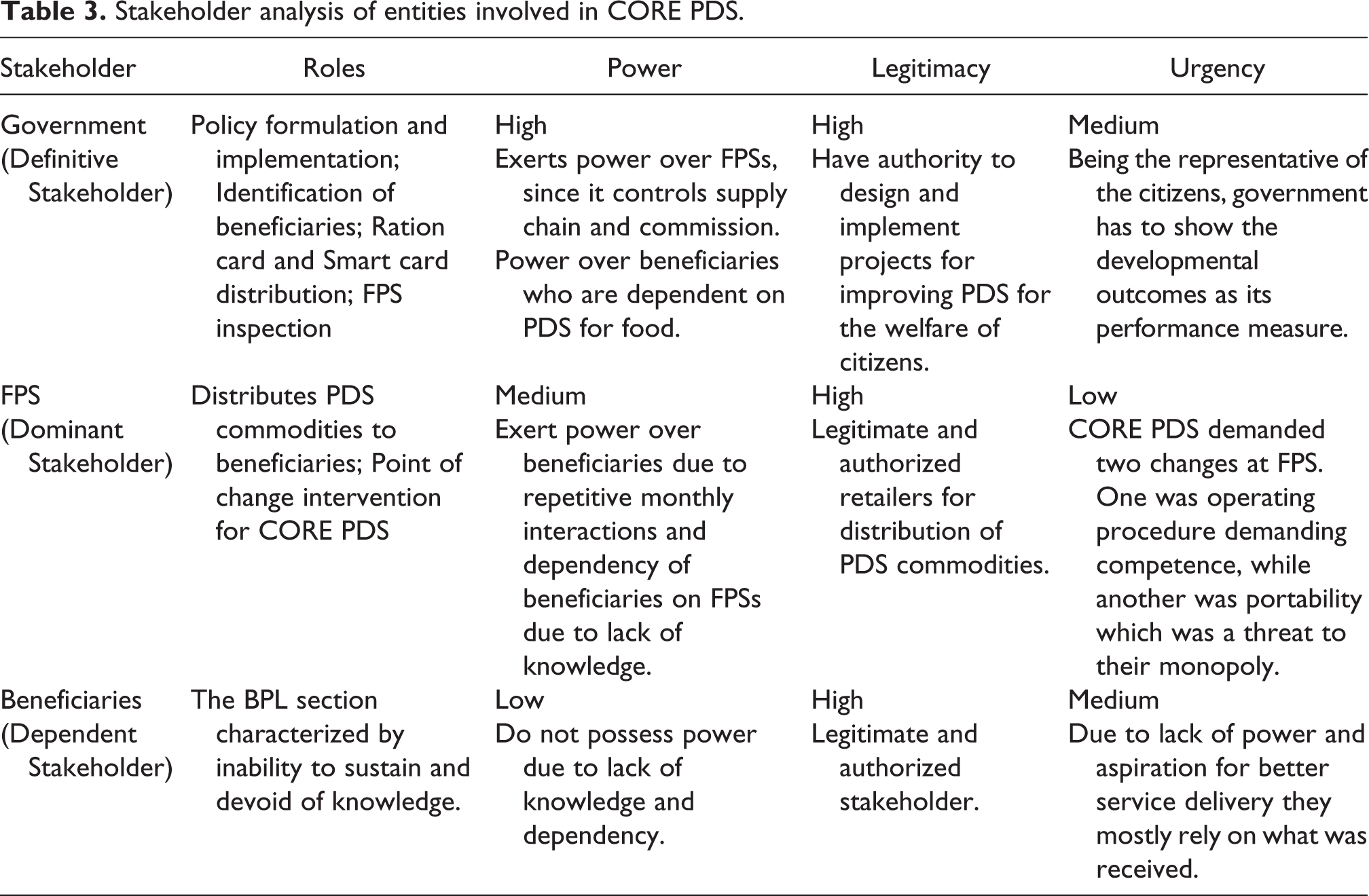
From the stakeholder analysis, it is clear that government, as a definitive stakeholder, is the most important stakeholder. It can enforce the implementation of CORE PDS as it has designed the project to be. But the FPSs as dominant stakeholders also have the ability to influence the pace of adoption of this change intervention. Also, the dependent nature of the beneficiaries provides FPSs with enough scope to thwart the implementation and outcome of CORE PDS. This implies that the government has power over the FPSs, which in turn have power over the beneficiaries. Thus, the government can control FPSs for the implementation of CORE PDS, and FPS can also influence the beneficiaries’ ability to use CORE PDS. This means that FPSs can influence the success of portability but not the change in the operating process. However, the analysis of stakeholder pressure does not provide sufficient explanation for the reasons behind the partial success of CORE PDS. That is why the change in operating procedure was adopted by the FPSs, and portability was discarded. In order to further explore these intricate aspects, we use the lens of agency theory for the government-FPS relationship, since the FPSs as agents can influence the success of the change intervention.
Agency theoretic view
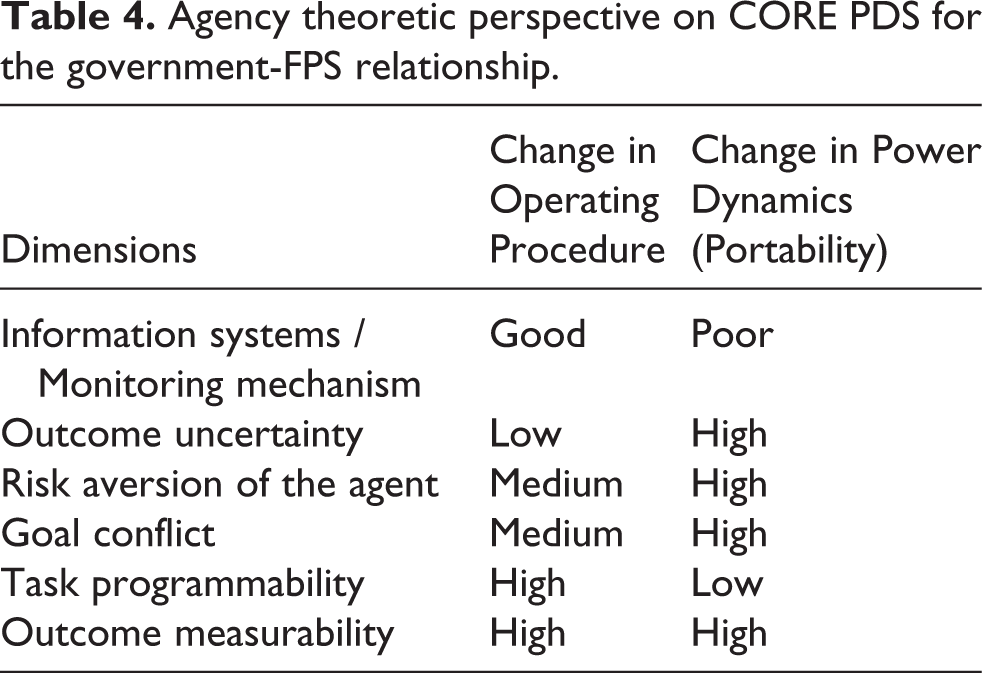
The perspective of agency theory has been used for analyzing the issues in the adoption of CORE PDS by FPS, namely the changes in the operating procedure and the introduction of portability. In the present setting, the government, as a controller of public welfare services, can be considered as the Principal. On the other hand, the FPSs can be considered as Agents, since they are licensed by the government for distributing the monthly quota of PDS commodities to the beneficiaries identified by government. In such a Principal-Agent arrangement, the risk of moral hazard can be observed during the implementation and adoption of CORE PDS. Table 4 presents the agency theoretic analysis of both the changes introduced by CORE PDS for the government-FPS relationship along the dimensions proposed by Eisenhardt (1989), followed by the explanation for each entry. Additionally, it should also be noted that Table 4 discusses only six dimensions out of the eight presented in Table 1. This is because two dimensions, namely ‘risk aversion of principal’ and ‘length of relationship’ are excluded. The stakeholder analysis in the preceding section highlights that the government’s (the principal’s) urgency to implement CORE PDS is medium, thus providing substantial evidences for lower risk aversion by government for both the changes of CORE PDS. Also, the length of relationship between the government and the FPSs is long for both the changes induced by the CORE PDS. Hence, these two dimensions of agency theory are not considered relevant for explaining the adoption of automated transaction processing and the failure of portability.
Agency theoretic perspective on CORE PDS for the government-FPS relationship.
Information system/monitoring mechanism
It is easy to detect whether the agents are operating as per the changed operating procedure, that is, if they are using POS devices for logging the transaction, as the use of POS devices enables real-time monitoring of transactions in the FPSs. Hence, the POS itself serves as a
Outcome ncertainty
If only the automation of the transaction process was enforced, it would only bring about the change in the operating procedure of FPSs. This could affect the time taken for the distribution of entitlements, but would not impact their outcome because beneficiaries would still collect their entitlements from their home FPS. This highlights
Agent’s risk aversion
Risk involves the notion of uncertainty about an occurrence as well as the consequence of an event or returns on an investment. The investment made by an entity in expectation of a return determines the risk taking ability. Agents are assumed to be more risk averse than principals because of their inability to diversify their employment (Eisenhardt, 1989). In the case of CORE PDS, the occurrence of the change was certain but the outcomes due to the change were uncertain for the FPSs. The change in operating procedure through POS devices did not demand any investment or affect the power of the FPS, because of the fixed market comprising the attached ration cards which were available to each FPS. However, the change did require investment by FPSs in developing IT competence. The FPSs had
Goal conflict
Goal conflict between the principal and the agents arises due to differences in goals. Resistance to change is one of the important factors that often lead to goal conflict in an otherwise stable relationship. Dent and Goldberg (1999) suggest loss of status, loss of pay, or loss of comfort as the reasons for change resistance. In the present case, the government has two-fold objectives through CORE PDS – improving transparency in service delivery and providing empowerment to beneficiaries so that they can chose their preferred FPS, due to which FPSs, as the point of change intervention, were witnessing change in the operating procedure and change in the power dynamics. In the implementation of CORE PDS, the enforcement of change in the operating procedure would experience
Task programmability
Programmability refers to the degree to which appropriate behaviour by the agent can be specified in advance. Highly programmed tasks reveal agents’ behaviour and the situation reverts to the complete information case (Eisenhardt, 1989). In the case of a change in operating procedure, task programmability is very
Outcome measurability
The measurability of outcome refers to the ease with which an outcome can be quantified (Eisenhardt, 1989). The outcome for the change in operating procedure is the authentication of transactions through the POS device. This can be easily verified and measured through records in the database as well as from the citizens’ portal, since all the transactions through POS are captured in real-time. Therefore, outcome measurability for the change in operating procedure is
After discussing each element from agency theory, we can observe that the first five elements, namely, information system, outcome uncertainty, agent’s risk aversion, goal conflict and task programmability explain why one change adoption was better as compared to the other although both were introduced using the same IT-intervention. A high level of monitoring and low level of risk aversion resulted in more pressure from the government on FPSs to adopt the changes in operating procedure in terms of using POS devices for transaction authentication. At the same time, FPSs witnessed low outcome uncertainty and relatively mediocre risk aversion and goal conflict resulting in seamless adoption of POS devices. On the other hand, for inducing portability in the system the government faced the challenge of low level of monitoring, whereas the FPSs, with greater goal conflicts, outcome uncertainty, and risk aversion, tended to avoid this implementation. Also, it was interesting to note that the initial resistances were in the form of discarding both the changes, since they were intertwined. Eventually, the one with stronger monitoring was adopted while the one with lesser control was discarded.
Conclusion
The paper aims to discuss and analyze the issue of adoption of IT-enabled changes in a welfare service delivery project, the Centralized Online Real-time Electronic Public Distribution System (CORE PDS) in the Indian state of Chhattisgarh. Case-based methodology is used, with a focus on the relationship between the government and FPSs. These FPSs, being community-based organizations, were supposed to carry out the dual responsibility of sustaining the financial stability of its members as well as collective societal well-being. But this also presented a challenge of limited competence and collective resistance towards change.
This case emphasizes the potential of IT, wherein a single IT-intervention enabled the Government of Chhattisgarh (Department of Food) to introduce two changes, namely, automating transaction authentication for distribution of monthly entitlements to poor beneficiaries and to introduce portability for the beneficiaries. Portability provided empowerment to the beneficiaries by giving them right to choose the FPS for collecting their entitlement, which previously could be collected only from their home FPS. But as rightly mentioned by Fawcett et al. (2011), technology being the same, the way we use it makes the difference. These two changes introduced in Chhattisgarh PDS, affected the pace of an ambitious project – CORE PDS. It was observed that automation or change in operating process was functional but suspicions about the success of portability existed. These suspicions were proven to be correct when field data was collected, leading us to question the success of CORE PDS.
In the present work we adopted the lens of stakeholder theory and agency theory to understand the reasons behind the partial failure of CORE PDS. Stakeholder theory first clarified the role and power dynamics of the three impacted stakeholders, namely government, Fair Price Shops (FPSs) and beneficiaries, in relation to the introduced change. The government, having both legitimacy and power, simultaneously introduced two changes through a single IT-intervention for the FPSs. Despite their powerful position, one change was adopted while the other was not. Although stakeholder analysis sheds light on the legitimacy and urgency of the implementation of CORE PDS for the stakeholder, it does not provide sufficient insights pertaining to its partial failure. Hence, both the changes introduced to CORE PDS were separately discussed, using the dimensions of agency theory proposed by Eisenhardt (1989) considering the government of Chhattisgarh as the Principal and FPSs as Agents.
The analysis suggest that the change in operating procedure for the automation of the transaction process had a high level of monitoring, lower outcome uncertainty and medium level of risk aversion and goal conflict. This resulted in seamless adoption of POS devices. On the other hand, the change pertaining to portability had poor monitoring, greater goal conflicts, and outcome uncertainty leading to greater risk aversion on the part of FPSs. Also, despite the possibility of increased income by serving more beneficiaries, the FPSs did not find the offered commission interesting enough to adopt the market mechanism. All these provided enough scope and motivation to FPSs to avoid the implementation of portability. However, it was interesting to note that initial resistance was in the form of discarding both the changes, as they were intertwined. Eventually, the one with stronger monitoring was adopted, and the one with lesser control was discarded.
The study also makes a few salient contributions to theory. It explores one of the untouched areas of e-governance research – G2B relationships – in the context of welfare service delivery. It highlights that IT-interventions in such settings are driven by control-based mechanisms, such that even the most powerful entity cannot ensure the feasibility of desirable outcomes. But the agents significantly impact the success of IT-interventions owing to their position in the delivery process. The change agents can ensure the possibility of desired developmental outcomes through judiciously designed monitoring systems and proper compensation structures. A monitoring system keeps a check on the pace of implementation, whereas the contractual structure reduces the possibility of moral hazards, thus aligning the goals of both principal and agent. This study thus emphasizes the importance of both control and collaboration mechanisms for the successful adoption of IT-intervention in developmental settings. Furthermore, the study presents a case from a developing economy, India, which held 138th rank in the ICT Development Index in the year 2016 14 , thus facing similar developmental challenges as Indonesia, Sri Lanka, and Pakistan.
This study also presents a few important implications for practice. The results of this study could provide insights into the implementation of innovation for disadvantaged communities. It emphasizes the role of point of change intervention for delivering the desired outcomes from the introduced change. The change implementers in such a setting should not rely only on stakeholder pressure for the adoption of changes; rather, they should take into account various factors, such as monitoring, task programmability and measurability of outcomes pertaining to the change. This study thus emphasizes role of agency relationships in control-based welfare service delivery and the importance of competent monitoring systems for keeping a check on agents’ behavior. Definition of outcomes, their measurability and having proper investment in unbiased and competent information systems for the monitoring of innovation would certainly make the initiative successful in terms of getting the desirable developmental outcomes. Additionally, collaboration mechanisms such as incentive alignment and risk, can also influence the poor adoption of change intervention among the agents.
The results of this study should be interpreted in the light of its limitations. The paper does not explore the full potential of agency theory, which helps identify and design relevant contracts that can reduce the moral hazard in the Principal–Agent relationship. The results of study could be generalized, if replicated in other welfare services, such as health care and public transportation. Further study of the impact of the mandated relationship, lacking negotiation on the part of FPSs and their approach to protecting or satisfying their self-interest, can also lead us to identify sources of inefficiencies and leakages in welfare service delivery. This can help in designing better interventions and ensuring their success in providing desirable outcomes.