




Abstract
This paper reports the results of the study which analysed OPAC users’ searching behaviour through the use of search queries. The study analysed how OPAC search queries can be used to assess the effectiveness of the information literacy programme offered by the University of Dar es Salaam. Data were collected unobtrusively and stored in the OPAC web server’s log file. OPAC search logs were qualitatively and quantitatively analysed to determine search patterns and search query formulation. Information literacy course contents were also qualitatively analysed and compared with users’ search activities. The results suggest that search query logs are essential and high quality evidence that can be used to inform information literacy pedagogical methods and course contents improvement. A comparison between OPAC users’ search behaviours and information lteracy course content identified some areas for readjusting the way information literacy instructions are delivered and improving OPAC search functionalities. The study has contributed to the conceptual understanding and the use of evidence to support evidence-informed practices (EIPs) in delivering information literacy courses.
Introduction
Since they were first widely used in the early 1970s, Online Public Access Catalogues (OPACs) have transformed the way information users search, retrieve and use information in libraries. Web OPACs have evolved from first generation to an expanded generation, reflecting changes in functionalities, technologies and interface (Nahotko, 2020). OPACs provide a bridge between users of information and available information sources. This is essential in facilitating discoverability, access and use of information for teaching and learning (Allen and Taylor, 2017). Information literacy (IL) skills are a pre-condition for effective use of OPAC. IL skills enable information users to formulate successful search strategies, locate information sources and use acquired information effectively and ethically. In assisting users to achieve such goals, libraries around the world provide IL instructions to equip users with necessary skills required to navigate and successfully retrieve required information.
In recognizing global changes of the information landscape, in 2001 the University of Dar es Salaam (UDSM) Library, in collaboration with the International Network for the Availability of Scientific Publications (INASP), started to offer IL training to librarians, faculty members and students. These trainings were delivered in the forms of workshops and seminars. The aims of these workshops and seminars were to introduce information users and information service providers to a wide range of electronic information resources such as scholarly journal databases, Internet sources of information and information gateways (Hepworth and Wema, 2006). The training also equipped users with the necessary skills on how to access, evaluate and use different electronic resources (INASP, 2004; Hepworth and Wema, 2006). In 2005 the University of Dar es Salaam Library introduced an IL programme to undergraduate and postgraduate students. The inception of the IL programme was part of the PhD study aimed at developing a programme and a framework for teaching IL in public university libraries in Tanzania (Wema and Hepworth, 2007). Since then, the IL programme has been implemented in the form of non-credit-based training courses to faculties, postgraduate and undergraduate students. Learners in the programme are equipped with the necessary IL skills for teaching and learning at the university and beyond academic life.
In attempting to ascertain the contributions of IL training to learners at UDSM, two studies were conducted: Wema and Hepworth, (2007) and Klomsri and Tedre, (2016). Wema and Hepworth, (2007) assessed the effectiveness of methods for teaching IL while Klomsri and Tedre, (2016) examined students’ levels of IL skills, perceptions and ways of improving pedagogical methods used to deliver IL training. Even though these studies laid a corner stone in understanding the effectiveness of IL training at UDSM, there is a need to take a different approach to see what IL skills users demonstrate when using one of the information retrieval systems, the OPAC. While the focus has been on understanding the effectiveness of IL training from the users’ perspective, it is imperative to address it also from the information searching and retrieval system perspective. The use of OPAC search logs as hard evidence not only provides a clue on how OPACs are used (Ndumbaro, 2018), but also high quality evidence to inform system improvements (Fresnido and Barsaga, 2019), understanding users’ search skills and challenges encountered when interacting with systems (Jansen, 2006 and Jansen, Taksa and Spink, 2009). Instead of evaluating IL based on instructors’ self-reporting teaching practices or learners’ feedback, it is imperative also to compare instructional materials and users’ searching activities. A critical review and analysis of these logs may also provide evidence on how best to make evidence-informed decisions on the improvement of the IL programme.
Despite the proliferation of studies on OPAC transaction log analysis (Niu, Zhang and Chen, 2014; Wu and Bi, 2017, Ndumbaro, 2018, Jansen, Taksa and Spink 2009), little research attention has been paid to how OPAC transaction logs can be used to support information professional practices through the lens of evidence-informed practices. More precisely, studies that compare IL instructional materials and OPAC users’ search activities are rare. This study therefore was motivated by the need to establish a correlation between OPAC users’ activities and information professional practices. The main objective of the study was to explore the patterns in which OPAC users at the University of Dar es Salaam Library interact with the system and how the evidence of such interactions can inform IL instructions. Two key research questions were addressed: What is the nature of interaction between OPAC users and the OPAC? How can such interactions inform decisions on improvement of IL course delivery methods?
Related literature
OPAC search log analysis
Transaction logs are valuable evidence used to assess how users interact with information retrieval systems and information contents. The logs also inform decisions on the best way to improve system design and user assistance. Analysis of search logs uncovers both user search behaviour and information retrieval system effectiveness in meeting users’ needs. By analysing transaction logs, information professionals gain insights about a number of issues, including information retrieval system performance (Jansen, 2006), the extent to which users succeed to retrieve records from the system, the patterns in which users interact with the system and problems that users encountered when using the system. Over many years studies on transaction logs have focused on aspects such as the use of logs to understand how collections such as serials or ebooks are accessed and used (Sullenger, 1997; Urbano, Zhang, Downey and Klingler, 2015). Studies have also focused on the impact of interface changes on the users’ search behaviours (Knievel, Wakimoto and Holladay, 2009), and search query formulation (Wu and Bi, 2017; Niu, Zhang and Chen, 2014). There is consensus on the iterative nature of the information searching process (Wu and Bi, 2017; Niu, Zhang and Chen, 2014). Analysis of search logs provides clues on how and why OPAC users formulate and reformulate search queries. Through studies, multiple reasons for reformulating search queries have been identified. These include improving search precision, correcting typographical or syntax errors (Niu, Zhang and Chen, 2014), clarifying information demand (Wu and Bi, 2017) and failure to retrieve relevant records.
Presdido and Barsaga (2019) analysed OPAC search logs with the intention to improve the user search interface. The results established that OPACs are hard to use partly because they lack a search engine-like interface (Fresnido and Barsaga 2019). Wu, Liang and Bi (2018) analysed OPAC users’ search behaviour in cross-device search practices. Results indicate a correlation between search device transitions and search topics, where searches for science and technology yield more device transitions than other subject domains (Wu, Liang and Bi, 2018). Recently, libraries have started using discovery information retrieval (IR) tools which offer more advanced and easy to use features compared to traditional OPACs. The use of these tools has attracted research attention (Niu, Zhang and Chen, 2014). Niu, Zhang and Chen (2014) demonstrate that keyword searching was the most dominant option among VuFind and Primo search discovery tools users, while faceted search was a less commonly used feature.
Information literacy in higher learning institutions
IL skills are essential means through which students and educators in higher learning institutions are prepared to be lifelong independent learners. As more academic libraries introduce and implement IL programmes for their users, research on information literacy proliferates (Lupton, 2008, Zhao, 2015). These studies have focused on drivers for implementing IL in universities (Lupton, 2008). Some of the notable drivers include inception of students-centred pedagogies, explosion of a wide range of forms and types of information sources, and recognition of IL as a generic skill in teaching and learning (Lupton, 2008). Studies of IL in higher learning have also focused on aspects such as needs assessment for establishing IL programs (Zhao, 2015) and evaluation of IL programs. Zhao (2015) conducted a survey of IL needs assessment for graduate students in order to inform the development of evidence-based IL instruction. The results indicated that the use of students’ self-reported IL needs is critical for developing IL courses which are relevant to learners. Oberlies, Buxton and Zeidman-Karpinski (2020) tested Teaching Squares (TS), the Teaching Practices Inventory (TPI) and the Classroom Observation Protocol (COP) to inform improvement of IL instructions offered to the undergraduate students. The tools were found to be effective in helping instructors to refine and develop IL instructions to learners.
In Tanzania, IL is one of the widely explored areas attracting a wide range of scholars (Klomsri and Tedre, 2016; Lwehabura, 2016, Hepworth and Wema, 2006; Mungwabi, 2019). Studies have focused on different areas such as IL programme evaluation (Hepworth and Wema, 2006; Wema and Hepworth; 2007; Klomsri and Tedre, 2016; Mungwabi, 2019); assessment of IL skills among learners (Lwehabura, 2016) and challenges and opportunities for implementing IL programmes (Lwehabura and Stilwell, 2008). Results from these studies indicate that in developing IL training programmes, educators should use a combination of a wide range of methods such as quizzes, reflective exercises, presentations and group reflections, diagnostic tests and lectures (Hepworth and Wema, 2006; Wema and Hepworth 2007).With regards to challenges in implementing IL, Lwehabura and Stilwell (2008) found that IL programmes in Tanzania face challenges of lack of partnership between librarians and faculty members and lack of training facilities and inadequate instructors. Hepworth and Wema (2006) also noted that lack of basic skills and competence in ICT knowledge, presentation skills, information retrieval skills, and bibliographical citation skills are among the barriers to effective delivery of IL courses at the University of Dar es Salaam. Klomsri and Tedre (2016) examined postgraduate students’ level of IL skills, perceptions and experiences of information problems. The authors observed that with the exception of information synthesis and information ethics, students with no IL-related training skills scored higher in all IL skills categories compared to those with IL training skills. The results further indicate that task definition and information seeking were the most successful skills, while locating and accessing information, information use, information ethics and information synthesis were the least successful (Klomsri and Tedre 2016). Klomsri and Tedre (2016) called for the university to improve the pedagogical method of IL training delivery and integrate IL in credit-based courses as a way of creating incentives to learners.
Evidence-informed practices
Evidence-Informed Practices (EIP) is a relatively new concept which has been recently used as an alternative term to Evidence-Based Practice (EBP). Nelson and Campbell (2017) opine that, despite wide acceptance, the use of the term EIP is still highly contentious and divides scholars. Central to this debate is not only the question of what is the difference between EBP and EIP, but also what constitutes evidence and whose evidence counts (Nelson and Campbell, 2017). A clear understanding of what constitutes EIP therefore requires, in the first place, establishing clarity on the concept of evidence. In trying to address the problem of lack of conceptual clarity on what constitute evidence, Nelson and Campbell (2017) offer a working definition of evidence to mean: “…a range of types and sources of knowledge and information, including professional expertise and judgment, as well as data and research”.
Nelson and Campbell’s (2017) view of evidence fits well in the context of Library and Information Science (LIS), where professionals obtain evidence from a wide range of sources such as information services and resources’ usage reports, user surveys, and service providers’ knowledge and experiences. In his editorial note, Koufogiannakis (2012) provides a list of attributes that define evidence from the LIS perspective. These include: local and context specific evidence such as users’ feedback, professional experiences, evaluation outcomes, usage statistics and personal observations. Koufogiannakis (2012) also acknowledges the importance of external evidence that comes from scientific knowledge. Booth and Brice (2004) also noted that it is essential for practitioners to integrate users’ reported, instructors observed, and research derived evidence to inform the development and implementation of different information services. Nelson and Campbell (2017) call for the need to use a wide range of evidence from, in and for practices. The view advocated by Nelson and Campbell (2017) is also shared by Nevo and Slonim-Nevo (2011), who argue that research results should not be left to override experiences, knowledge, value and contextual factors. Generally, researchers in EIP refute the minimalist view of evidence as suggested in EBP, to include results from qualitative and quantitative research. Within EIP the focus has been on contextualization of multiple sources of evidence and rejecting the notion that evidence has a hierarchy.
Evidence-informed practices in transaction logs analysis and Information literacy
A cursory literature search in LIS has shown that the term EIP is yet to attract much research in IL and Transaction Log Analysis (TLA). Similarly, researchers in LIS continue to focus on EBP and ignore the benefits of using a wide range of evidence to inform professional practices, as advocated in EIP. Much research attention has been on understanding how evidence from research results and practitioners’ experiences can be used to inform different practices such as studying IL teaching practices (Cobus-Kuo and Waller, 2016) and use of citation analysis methods to inform IL instructions (Carbery and Leahy, 2015).
Few studies have examined the existence of a reciprocal relationship between EIP and the use of OPAC search logs (Cheryl, 1983, Avery and Tracy, 2014). Cheryl (1983) examined usage of different OPAC features from three systems and identified the areas that require users’ training. Nelson (1992) assessed the educational needs of end users who use the USCInfo online system at the University of Southern California. Through transaction logs analysis, Nelson (1992) found low use of medical subject headings and hence called for new instruction methods to improve end users’ retrievals. Avery and Tracy (2014) use transaction logs to assess how students search for information during actual library instruction classrooms with the intention of finding the best practices for instruction. The results indicate that students were less successful in putting instruction elements in practice during independent searching. Nelson (1992) calls on the need to rethink teaching style to address the identified shortcomings.
Notably, there is a paucity of studies that focus on the analysis of OPAC search logs in comparison with IL instructional materials. A study by Kern-Simirenko (1983) analyzed library OPAC transaction logs with the intention of improving library instruction delivery methods and approaches. Janyk (2014) used records from Google analytics data both to assess users’ searching activities and to inform IL teaching practices and library services. Such a paucity of literature on the use of OPAC transaction logs to inform the planning, implementation and evaluation of IL course delivery is one of the research gaps addressed by the current study. Nonetheless, the results from these studies are pertinent to the current study as they laid a foundation upon which research gaps have been identified.
Theoretical framework
The study is underpinned by a multidimensional model of evidence-informed practices (Dill and Shera, 2012), which posits that evidence is multidimensional and originates from consumers’ knowledge, practitioners’ knowledge and research knowledge. The model further integrates four layers in which evidence can be applied: policy, practices, management and the planning process (Dill and Shera, 2012). What is novel in this model is that it acknowledges the importance of contextual factors in shaping the way evidence is identified and used to inform practices.
With regards to the current study the model has been used with some limitations. Only two dimensions, namely practitioners’ knowledge and consumers’ knowledge, have been incorporated to inform the study. Knowledge of OPAC users (consumers) has been assessed from the transaction logs perspective. Search logs have been used as knowledge and skills evidence that OPAC users have demonstrated when interacting with the OPAC. Transaction logs are hard evidence that reflect OPAC users’ thoughts and knowledge. On the other hand, the knowledge that practitioners deliver to users in terms of course contents is tangible evidence of the knowledge transferred from instructors to learners. Three out of four layers of evidence applications have been used to inform the study. These are: practices, management and planning. The rationale for their inclusion lies in the need to how understanding of users’ and practitioners’ knowledge can be used to inform IL instructional planning, practice and management.
Methods and procedures
The study analysed transaction logs of the UDSM Library Web OPAC. Analysis of users’ search behaviour to inform practices requires the collection of massive data for a relatively long period of time. The logs were automatically generated during transactions and stored in the ADLIB server. OPAC search logs were collected for one year consecutively, covering the period between January and December 2019. The following information was automatically collected and stored in the log file: searcher’s IP address, time when search was conducted, search term submitted, search options used and search limiters. The reasons for choosing the transaction log analysis method are threefold: first, the method allowed analysis of hard and authentic evidence on how users interact with the OPAC. Second, the method allows researchers to conduct unobtrusive data collection which eliminates researchers’ direct contact with users, which limits users’ reactivity. Third, the use of in-house OPAC search logs was relatively cheap as compared to other methods. Content analysis method was also employed. The method was used to review the IL course materials. The IL course contents reviewed have been used in teaching IL at UDSM library for over 15 years.
Three levels of analysis were involved. The first level of analysis involved qualitative and quantitative analysis of OPAC search logs. The analyses ascertained users’ search patterns and challenges that users encountered when using the system and identifying users’ geo-locations. An online IP look-up tool [https://www.ip-tracker.org ] was used to locate users. University-wide IP range was used to identify campus-wide clients’ IP addresses. The remaining IP addresses were looked up to establish their locations.
Secondly, IL course materials were analysed. The following aspects of the instructional materials were evaluated: learning objectives, learning outcomes and IL themes taught. IL themes covered the following IL thematic areas: information needs identification; accessing and identification of information sources; evaluation of information sources; integration and application of information and understanding economic, social and legal implication of information use.
The review of IL themes taught was limited to three aspects: translation of information needs into search queries, searching and locating information and sources and evaluation of information sought. The remaining aspects of the IL course components were excluded from the analysis as they are not part of the information retrieval processes. Unlike other information retrieval systems, most OPACs do not offer additional information beyond bibliographic records. Hence this makes it nearly impossible to understand how information has been used and how users understand ethical use of information. The third level of analysis involves a comparison of IL course contents with search patterns, particularly search query formulation. Analysis of types of skills and knowledge imparted to learners and users searching practices was intended to compare the types of skills transferred by instructors to users and how such knowledge and skills are applied when searching for information. The ultimate goal was to identify areas for improving the IL course contents and delivery method (see Figure 1).
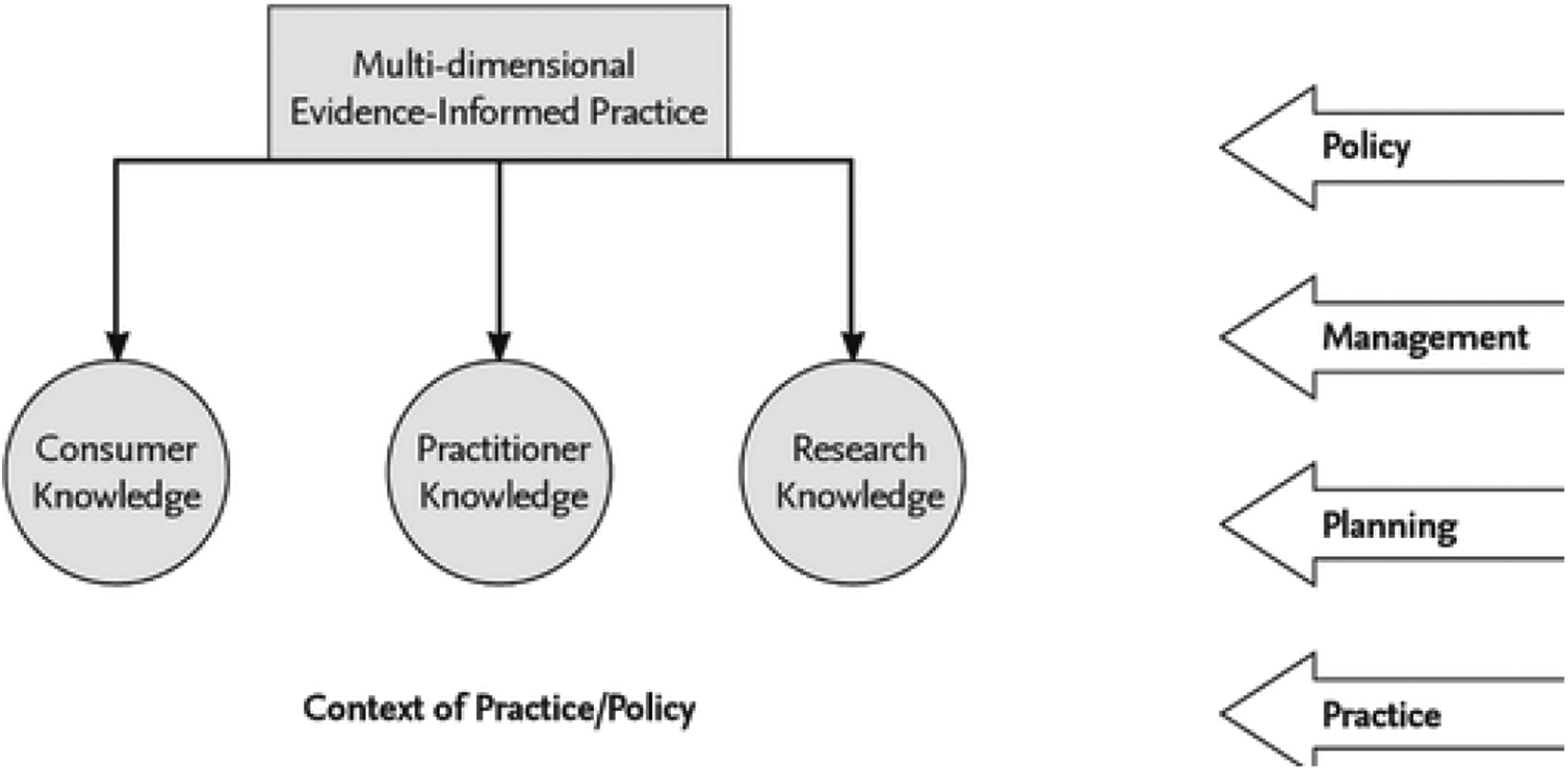
Multidimensional model of evidence-informed practices.
Research results
Search patterns
The analysis of search logs showed that there were 758,617searches conducted between January and December 2019. Out of 758,617 search hits a total of 181,523 search episodes were identified - an average of 4.17 search queries per session. A clear variation of search trends across the year was noted. November, January, April and May reported relatively higher numbers of searches, while March, June, July, August, and October recorded relatively low rates. Figure 3 illustrates the results on OPAC use across 12 months.
Clients’ IP addresses were used to determine searchers’ geo-locations. Information on searchers’ geo-locations is crucial in determining where OPAC users come from and what strategies should be used to assist them in the form of instructions and training. Curiously, the results show that despite the fact that most of the searches originated from within the UDSM campus, there were substantial numbers of searches conducted from outside the campus. Results on searchers’ geo-locations and search failure and success rates are presented in Figure 2 and Table 1.
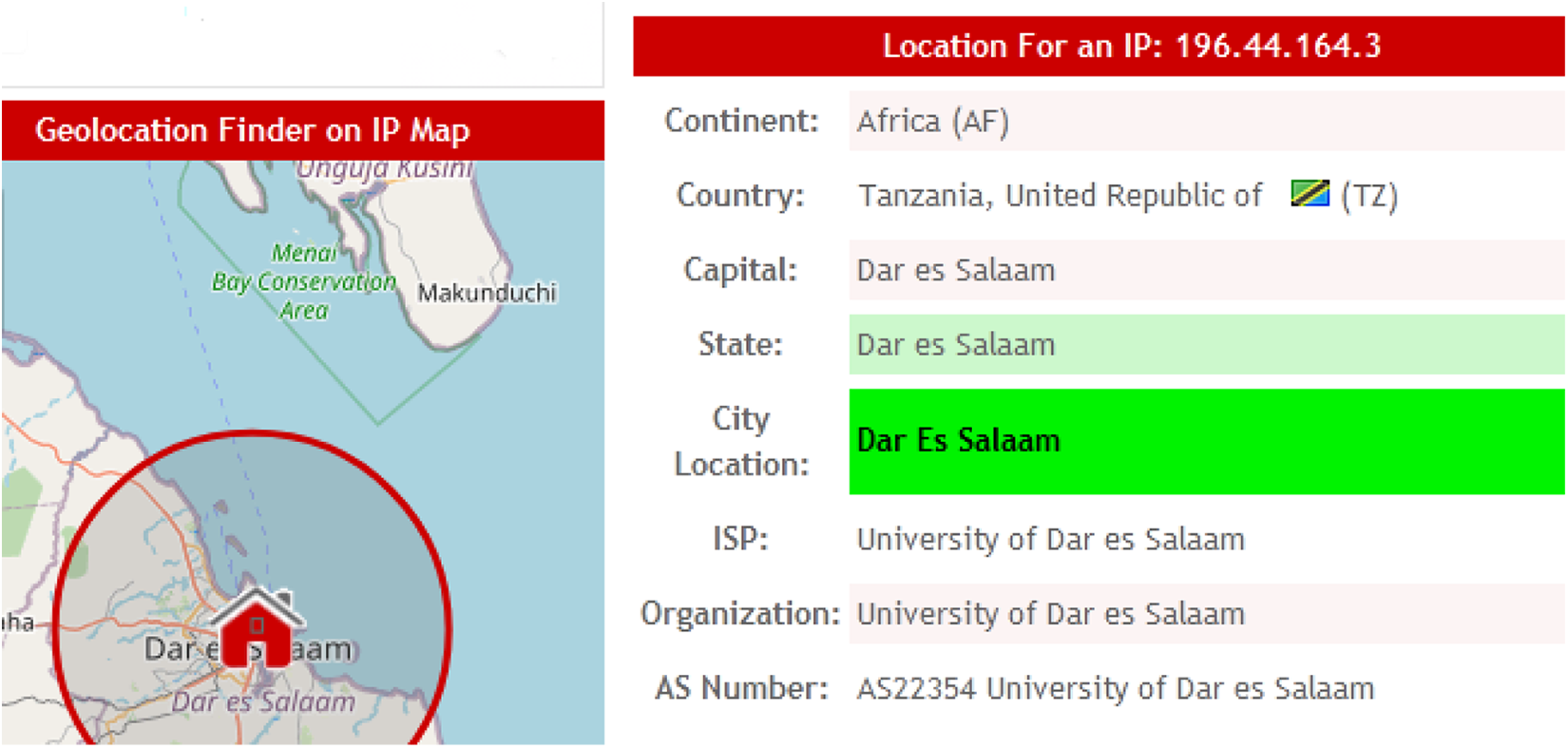
A sample of user’s geo-location details.
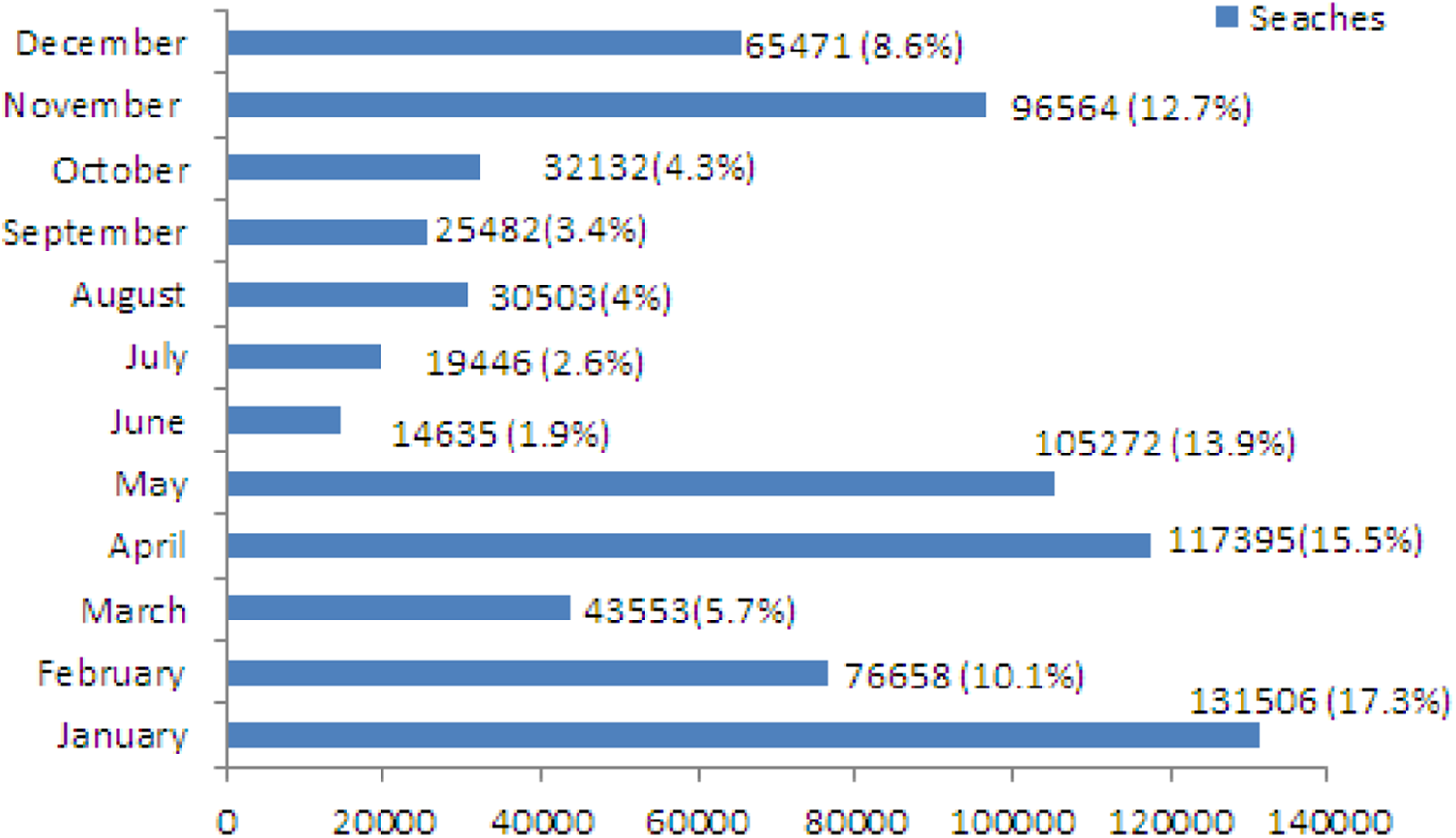
OPAC usage per year.
Users’ geo-locations and search failure rates n=758,617.

Source: ADLIB server, 2019.
The results suggest clear variations in searches with zero hits across users’ search locations. The likelihood that searches would return zero hits is relatively low for searches conducted by users outside the country. This is contrary to the expectation that campus OPAC users are more likely to be familiar with the OPAC interface and functionalities compared to those using the system from outside the country.
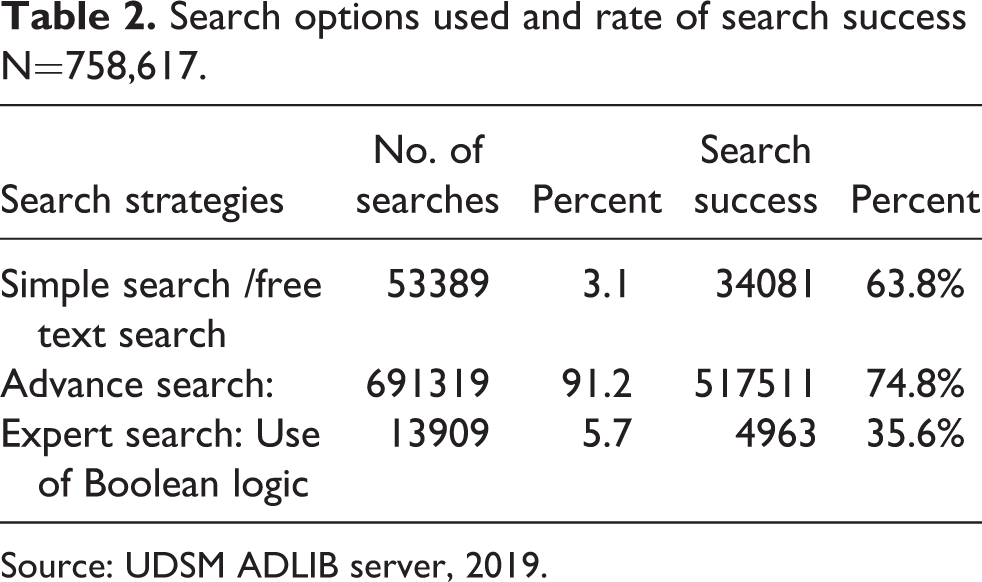
The OPAC search options include simple search, advanced search and expert search. Depending on the users’ search skills, familiarity with the OPAC and nature of the information sought, users may opt for any of the options. Search log analysis idenfies different strategies used by users searchig for bibliographic information. A further analysis was conducted to compare search options with rate of search success. The results are illustrated in Table 2:
Search options used and rate of search success N=758,617.
Source: UDSM ADLIB server, 2019.
The free text search option allows users to search for different fields such as statement of authority, title, subject term, year or publisher. It is apparent that OPAC users make little use of this search option. On the contrary, users prefer to use the advanced search option which is the system’s default search option. A comparison of search option usage patterns and success rates suggests that users face challenges in using the expert search option. An emerging important observation arise from these findings is that users are generally comfortable with the free text search and advance search options.
Search query formulation and reformulation patterns
Reformulated search query is a follow-up or modified query within a single search session. The content analysis of search query formulation and reformulation included all 181,523 search sessions. The results suggest that search query reformulation is a dominant search behaviour performed by users when searching for information in the OPAC. Search query reformulation involved adding new words to the original queries, changing the order in which words appear in the queries, forming synonyms, spelling corrections and removing some words. With regards to search query formulation and reformulation, the results suggest the existence of a simultaneous unrelated search query formulation strategy as well as a repeated search query reformulation strategy. The simultaneous search query pattern was characterised by the existence of multiple unrelated search queries within the search episode. Figure 4 illustrates sample search episode with simultaneous search query reformulation strategy.

Simultaneous search query formulation strategy.
With repeated search query formulation pattern, users repeatedly submit the same search queries while either maintaining the same search options or changing search options. A typical example of repeated search query reformulation is illustrated in Figure 5.

Repeated search query reformulation.
The content analysis of search sessions did not establish a direct relationship between precise and imprecise search query reformulation and information retrieval success. In some cases, an attempt to modify search queries by shifting from imprecise to precise search query, that is narrowing down scope of information needed, resulted in more search results. On the contrary, results also suggested that a shift from precise to imprecise search query reformulation could result in a high rate of search success. Figure 6 a shift from Query 1 “women right to health” to Query 4 “women” increased number of records retrieved to over 20 records. Likewise, a shift from Query 1 “continuous assessment” to Query 3 “assessment” resulted in more records.

Precise and imprecise search query reformulations.
A comparison of users’ search activities and IL course content and methods
The review of the course content has identified three main themes. These are introduction to IL, how to define information searching goal and information searching. The list of IL thematic areas taught is illustrated in Table 3.
List of IL themes and subthemes.

Source: UDSM Information Literacy instruction materials, 2020.
The introductory theme contains contents that deal with the importance and implication of having IL skills beyond academic life. The contents of IL Theme Two equip users with a set of skills on how to develop a blueprint for effective information seeking processes. The third theme is on the information seeking process (ISP). Within this theme the following aspects have been identified: defining information needs, sources identification, understanding how search tools work, construct search strategies, perform search, and get results. Skills imparted include search query formulation using a mind mapping tool, identification of search tools and evaluation of information sources.
When comparing with OPAC users’ search activities and patterns it is apparent that the skills imparted to users do not fully reflect what users experience when using OPAC. Instructional materials instruct users to develop a comprehensive list of narrow and broader associated search terms using a mind mapping approach. Analysis of search logs indicated that users reformulate search terms based on what has been retrieved in the original search. This makes search query formulation and reformulation to be an integral part of the actual searching and evaluation processes. It is evident here that there is a discrepancy between instruction on search query formulation and actual search activities. Learners are equipped with knowledge and skills on how to evaluate electronic information found on the Internet. The instructional materials do not include contents on how to evaluate bibliographic records retrieved from OPAC.
Analysis of users’ search patterns identified problems that users encountered when interacting with OPAC. The challenges were comparatively analysed with three aspects of information literacy: translating information needs into relevant search queries, selection of appropriate search options and search strategies, and reformulation of search queries. Users have demonstrated lack of skills on how to develop search strategies, that include developing relevant search concepts, appropriate use of Boolean logic and proper selection of search options and search fields. Notably, users face a wide range of challenges when attempting to translate their information needs into meaningful search queries. Frequent use of nearly synonymous search terms which have different contextual uses has been noted in a number of search sessions. Potentially, such search patterns yield different results from contents. Figure 7 illustrates an example of a search episode with multiple nearly synonymous search terms.

Synonymous search query with multiple contextual uses.
The terms ‘fake certificate’ and ‘forged certificate’ have been used as synonymous search queries while in reality the terms ‘fake’ and ‘forge’ have denotative and connotative meanings. The use of the two queries could result in different search results of different information content. Searchers have also demonstrated low understanding of the OPAC interface and functionalities. This is partly attributed to the fact that information literacy contents delivered to users do not precisely focus on imparting users with skills on how to choose from a variety of strategies. Logic operators and filters operators in accordance with the search queries are also essential (see Figure 8).

Challenges in proper use of search functionalities.
There is heavy reliance on the default advance search option, with a limited number of users who dare to change the default search option to expert search or simple search. The delivery of IL training to users should also focus on introducing to users the basic interface of the OPAC, including switching simple search to advance search and expert search performance. In all simple, advance, and expert search options, the use of long sentences with multiple search terms were also noted. Unlike search engines and other specialised databases, most first and second generation OPACs do not have functionalities that translates long search phrases into specific search syntax for successfully search.
Discussion and Conclusion
Variations in OPAC usage across the academic year have been noted in this study. Previous studies (Ndumbaro, 2018) have also reported a correlation between OPAC usage trends, university semester-based teaching and the learning calendar. Low usage of OPAC between June and October is partly attributed to the fact that during this period most of the users are on long vacations. Over 15% of the users who used OPAC during the study period were from outside the university campus, with over 5% coming from outside the country. This suggests that the UDSM Library should introduce online information literacy tutorials and integrate them to the OPAC interface. This will facilitate user self-directed learning and hence improve users’ searching experiences.
Analysis of OPAC search queries provides an important clue to how well users translate their information needs into meaningful concepts understood by the system. Search query reformulation has been noted as the most dominant information searching and retrieval activity. Search logs show evidence of search query alterations and modifications even when searches returned results. This suggests that users might have multiple information needs or searchers were not satisfied with the results obtained. The diversity and complexity of information needs clearly determine the length of search session, the number of actions performed by the searcher and the varieties of search queries submitted to the system. Two major query reformulation patterns have been identified: simultaneous query reformulation and repeated query reformulation patterns. Within these two patterns, multiple search query reformulation strategies were identified. These include adding new words to the original queries, changing the order in which words appear in the queries, forming synonyms, spelling corrections and removing some words within the same search session. Niu, Zhang and Chen (2014) also found that when resubmitting search queries, users perform parallel query reformulation, narrow query reformulation and broadening query reformulation.
Previous studies (Nelson, 1992, Avery and Tracy, 2014) have used transaction logs to improve information literacy instruction. The current study noted that users face challenges when submitting their results using the expert search option. Only 35.6% of the search queries submitted through the expert search option retrieved records. Likewise, the use of free text search option proved to be relatively problematic. Kumar (2011) associated this challenge with users experience in using search engines. This calls for not only improving OPAC features, but also training users on the differences between search engines and OPAC in terms of features and functionalities. The results have shown that users faced challenges in formulating and reformulating search queries. The UDSM Library OPAC does not provide users with aided search query formulation functionality. On the contrary, users are required to submit to the system queries that represent their information needs. This has resulted in difficulties for users in reformulating and refining search queries. While migrating to a new information retrieval system such as discovery tools could address the shortcomings of the current system, providing training on effective formulation and reformulation of search queries could be a long-term solution.
Two major inconsistencies between IL course contents and mode and delivery on one hand and OPAC users’ search experiences on the other were noted. First, IL instructions emphasize the use of mind mapping as part of critical thinking when defining problem and formulating search terms. Unlike mind mapping, which focuses on association between or among ideas, concept mapping allow users to understand and establish relationships among related concepts. Training in concept mapping will equip OPAC users with skills in effective formulation and reformulation of search terms. Second, the review of instructional contents has revealed that evaluation is taught as a single stage in the information seeking process. Additionally, the focus has been only on evaluating electronic information sources retrieved from the Internet. With search tools such as the OPAC, evaluation is an omnipresent process. OPAC users should be taught how to evaluate formulated and reformulated search terms, search techniques, searching process and search results.
In line with a multidimensional model of evidence-informed practices, the results have shown that transaction logs contain valuable information about the skills and knowledge that OPAC users demonstrated when accessing and using the OPAC. The use of a wide array of evidence, being research results of transaction logs in informing professional practices, is critical to improving the way information professionals provide IL instruction to trainees. The results have shed some new insights on how users interact with an online information search system and how such interactions can be used to inform improvement of IL training. We contribute to this domain by shedding new insights on what constitutes evidence in EIP research, particularly expanding sources of evidence to include digital footprints left by users when they search information using an Online Public Access Catalogue. In terms of professional practice, this study has contributed new knowledge on how the application of OPAC search logs can be used to improve information literacy training.
