



Abstract
This study, grounded in the Job Demands-Resources theory, explores the relationship between digital competencies (DC) and innovative work behavior (IWB), introducing e-work self-efficacy (e-SE), e-work boundary strategy (e-BS), and organizational commitment (OC) during organizational isolation to examine their internal influencing mechanisms. The study conducted two-stage online questionnaire survey to obtain a final sample of 369 remote workers in China. Hypotheses were tested with triple mediation model. The findings reveal a compound multiple mediation effect among the variables, specifically demonstrating that (1) DC positively predicts IWB, e-SE, OC, and e-BS; (2) e-SE positively predicts OC and e-BS; (3) OC positively predicts IWB; (4) e-BS positively predicts IWB. (5) In the mediation model, the direct effect of DC on IWB is significant; (6) e-SE, OC, and e-BS play a significant mediating role in the relationship between DC and IWB; (7) e-SE, OC play a significant chained mediating role in the relationship between DC and IWB; (8) e-SE, e-BS play a significant chained mediating role in the relationship between DC and IWB. This study explores the relationship between DC and IWB, shedding light on its underlying mechanisms. By delving into the behaviors of remote work employees, this research offers more effective management strategies and practical recommendations for businesses and organizations, including tailored approaches to enhance remote employee engagement, productivity, and overall well-being. Additionally, the findings will present new perspectives and research avenues for academic studies, contributing to the advancement of theoretical understanding of employee behavior in remote work settings within the digital economy era.
Keywords
Introduction
In the era of the digital economy, the online space has created abundant job opportunities for employees, leading to a transformation from “on-site to online” work forms, reshaping spatial practices in human resources management in the digital context. The development of the Internet, mobile devices, and various digital resources has made remote work possible, allowing a large number of employees to engage in work through online platforms without being restricted by specific time and space, providing them with mobility and flexibility. According to the “52nd China Internet Development Statistics Report” as of June 2023, there are 507 million online office users in China, accounting for 47.1% of the overall Internet users (China Internet Network Information Center, 2023). Concurrently, an increasing number of companies have established positions and departments for remote work. In February 2022, Ctrip pioneered the 3 + 2 hybrid office model, advocating for employees to work on-site for three days a week and freely choose their working location for two days. Thus, remote work has become a popular form of employment.
On the other hand, with the rapid development of emerging technologies and the digital economy, innovation has become a critical factor influencing corporate development. More and more employees are required to demonstrate autonomy and actively engage in innovative activities. However, the complex external environment and the internal resource structure of enterprises limit innovation behavior to a certain extent. Remote work has altered traditional office environments and forms of work tasks. The development of the Internet and the maturity of the digital tools market have created an external environment that both companies and employees need to adapt to quickly. Therefore, it is essential to explore the relationship between employees’ digital work competencies and literacy and their innovation behavior. In previous research, studies on innovative work behavior have mainly revolved around traditional organizational characteristics (organizational support, hardware and software environments, etc.) (Young, 2012), leadership styles (transformational, humble, etc.), individual characteristics (personality, occupational calling, subjective well-being, etc.). However, there is less focus on organizational aspects, especially changes in work environment characteristics, and limited research on the relationship between digital work environment, competencies, and innovative work behavior.
Especially, China is undergoing a rapid digital transformation, with both enterprises and employees facing the pressure to adapt to new technologies and work methods. Special attention to remote workers can include training and support to improve their digital competencies, helping them better adapt to and leverage new technologies, thus fostering innovation and competitiveness within enterprises. Also, traditional Chinese culture emphasizes the importance of collectivism and interpersonal relationships. Employees’ organizational commitment significantly impact their job satisfaction and performance. Remote work can diminish direct interactions between employees, their organization, and colleagues, leading to a decline in organizational identity. Special attention to remote workers can enhance their sense of belonging and identity through innovative management practices and technological means, thereby improving job performance. Moreover, in Chinese society, employees often face the dual challenges of family responsibilities and work pressure. Providing effective boundary management strategies and support systems can help employees better balance their work and family lives, enhancing overall well-being and job engagement. In a conclusion, considering the unique characteristics of the Chinese work environment and culture, it is vital to give special attention to Chinese remote workers.
Therefore, this study, based on the Job Demands-Resources theory (JD-R), proposes that work resources can enhance employee work motivation and have a positive effect (Schaufeli, 2017), in which work resources can be understood as digital work competencies. Moreover, with the increase in work resources brought about by remote work, employees’ efficacy is enhanced, activating their e-work self-efficacy. Simultaneously, to dynamically adapt to changes in work resources, employees might spontaneously align themselves with the work through the JD-R model, reshaping work to provide possibilities for innovation (Petrou et al., 2012). Additionally, due to the absence of fixed time and space, employees’ e-work boundary strategy might vary. Remote work may result in employees being isolated from the organizational context resulting in a lack of face-to-face interaction with leaders and colleagues, thereby influencing employees’ perception of organizational commitment during organizational isolation. In summary, this study will further investigate the compound mediation effects of e-work self-efficacy, e-work boundary strategy, and organizational commitment during organizational isolation in the relationship between digital work competencies and innovative work behavior.
Theoretical foundation and literature review
Theoretical foundation: job demands-resources theory
The Job Demands–Resources (JD-R) theory is a unified theory of job design that integrates various perspectives on stress and motivation in the work place (Bakker and Demerouti, 2017; Van Veldhoven et al., 2020). Specifically, the theory explains how job demands and resources affect employee well-being (including burnout and work engagement), influencing job performance. It also explores how employees use proactive and passive work behaviors to influence job demands and resources (Bakker and Demerouti, 2017, 2014). Previous research has frequently utilized the JD-R theory to validate models concerning employee needs, motivation, and performance(Bakker et al., 2023). It synthesizes various job characteristics to study how individual characteristics in terms of physiological, social, or psychological aspects in the work and organizational environment can affect employee well-being and indirectly influence job performance.
The Job Characteristics Theory (Hackman and Oldham, 1976) proposed five specific job characteristics, including skill variety, task identity, task significance, autonomy, and feedback. Based on this, the JD-R theory integrates different job characteristics, indicating that burnout and work engagement can arise from various job characteristics. It posits that all job characteristics can be modeled using two similar dimensions, namely job demands and job resources (Demerouti et al., 2001). In previous research, job demands were defined as physiological, psychological, social, or organizational characteristics required by the job itself, requiring continuous physiological, cognitive, or emotional effort from employees, and thus related to the individual physiological and/or psychological costs (Demerouti et al., 2001). For example, while emotional and physical demands are crucial for nurses and police officers, cognitive demands are more critical for software developers and scientists. In contrast, job resources are defined as benefits in physiological, psychological, social, or organizational aspects that employees can obtain during the work process. These aspects play a role in achieving work goals, moderating the impact of job demands, and stimulating employee learning and personal growth (Bakker and Demerouti, 2017).
In summary, the JD-R theory can be applied to research on different types of job characteristics, suggesting that job demands and resources directly impact employee behavior and performance (Bakker et al., 2023). According to the JD-R model, job characteristics can be categorized into job demands and job resources. Specifically, job demands refer to the material, psychological, organizational, or social requirements in the job that require individuals to continuously expend cognitive or emotional effort. Job demands usually lead to depletion of individual resources. On the other hand, job resources refer to the benefits in physiological, psychological, social, or organizational aspects that individuals can obtain during work, helping them cope better with their work.
The Job Demands-Resources (JD-R) theory provides a robust theoretical framework for explaining the relationship between digital competencies and innovative work behavior. According to this theory, job demands and job resources are two critical factors influencing employees’ work behavior and psychological states. Job demands refer to various tasks, pressures, and requirements that need to be addressed in the work, while job resources encompass conditions and resources that support employees in completing work tasks, such as technical support and information-sharing platforms. Past research has indicated that both job demands and job resources have direct and indirect effects on employees’ innovative work behavior. For example, studies have found that an increase in job demands may lead to more stress and challenges for employees, thereby affecting their innovation capacity and behavior (Bakker and Demerouti, 2007; Demerouti et al., 2001). Conversely, the abundance of job resources can enhance employees’ innovation capacity, assisting them in coping with job demands effectively and facilitating the occurrence of innovative work behavior (Bakker and Demerouti, 2007; Xanthopoulou et al., 2007). As a form of job resource, digital competencies is not only an inherent personal ability but can also be continuously improved during the work process, assisting employees in better task completion during remote work, reducing cognitive and time demands, and thereby potentially fostering innovative behavior and personal growth. Therefore, the innovation work behavior of employees in remote work may be related to their digital competencies.
The JD-R theory also introduces the concept of mediator variables, suggesting that job demands and job resources influence employees’ work behavior and psychological states through these mediator variables. When exploring the relationship between digital competencies and innovative work behavior, organizational commitment under isolation, e-work self efficacy and e-work boundary strategy can be considered as mediator variables, which play a crucial role in the influence of job demands and job resources on innovative work behavior, further elucidating the mechanism between digital competencies and innovative work behavior.
Blanc et al. (2001) found that organizational identification mediated the relationship between job resources and work engagement, highlighting its importance in explaining how resources influence individual behavior. Similarly, Bandura (1997) emphasized the role of self-efficacy beliefs in shaping individuals’ responses to environmental demands, indicating its relevance as a mediator within the JD-R theory framework. Furthermore, researchers have found that employees with higher self-efficacy are likely to receive higher performance feedback (Xanthopoulou et al., 2009). Additionally, research by Kossek and Lautsch (2012) explored the impact of boundary management strategies on job outcomes, demonstrating their potential as mediators in the relationship between job demands/resources and behavior.
Relationship between competence and benefits: the impact of digital competencies on innovative work behavior
Currently, the Internet has become an integral aspect of both personal and professional life, and with the increasing adoption of digital work as a preferred mode of work by many employees, research on the closely related digital competencies has gained prominence. In the digital age, the Internet, electronic devices, and various digital software have become indispensable tools for employees. Proficiency and mastery of these tools (such as Zoom for virtual meetings, Teams for social communication, and professional software like PS and CAD) can impact their work outcomes. It is essential to note that differences in digital competencies can affect their work efficiency, output, and personal growth, including the influence on innovative work behavior in the workplace. Innovative work behavior is crucial for both individual and organizational development.
In previous research, researchers often used the terms Digital Competency and Digital Literacy interchangeably, but they have distinct differences. Digital literacy refers to an individual's appropriate use of digital tools and facilities to identify, access, manage, integrate, evaluate, analyze, and synthesize digital resources. It also includes awareness, attitudes, and abilities for constructing new knowledge, creating media expressions, and communicating with others (Martin and Grudziecki, 2006). On the other hand, digital competency refers to a set of skills for effectively utilizing technology in everyday life (Hubschmid-Vierheilig et al., 2020; Petrova et al., 2019). It encompasses knowledge, awareness, and attitudes towards the values of information and communication technology, as well as the ability to handle the latest technology and digital information (Ferrari and Punie, 2013). Thus, in this study, Digital Competencies are defined as fundamental knowledge, skills, and abilities that enable individuals to efficiently and successfully complete tasks related to digital media in their work.
Furthermore, the level of digital competencies often corresponds to different work behaviors and outcomes. Innovative work behavior is a significant outcome of work effectiveness, and thus, we posit a direct connection between the two. Innovative work behavior refers to individuals intentionally generating, promoting, and implementing creative ideas within the work context, either in a team or organization (Janssen, 2003). Moreover, research by Shin et al. (2017) found that the relationship between innovative work behavior and external demands is influenced by employees’ intrinsic qualities, such as their interests. Innovative work behavior is highly internally correlated. Bughin et al. (2018) pointed out that the enhancement of digital work capabilities helps employees adapt more flexibly to work challenges, thereby promoting innovation. Additionally, research by Götz et al. (2020) found that improving digital competencies can facilitate the implementation of innovative projects, thereby achieving organizational innovation goals. Moreover, Wang et al. (2019) demonstrated that employees with good digital competencies are more likely to collaborate, share information, and resources in a digital work environment, thus fostering innovation sharing and interaction. Additionally, a review of existing literature on digital competencies, job autonomy, and innovative work behavior suggests a strong positive correlation between digital competencies and innovative work behavior. This relationship is complex and may be influenced by individual and organizational factors (Huu, 2023). These research findings suggest a significant positive relationship between digital competencies and innovative work behavior, with the enhancement of digital competencies facilitating the occurrence of innovation and driving the implementation of innovative projects. Besides, according to the JD-R theory, as a form of work resource, digital competencies are advantageous for employees to engage in positive work behavior innovative behavior at work.
Based on this, the following hypothesis is proposed:
Isolation resulting from spatial migration: the mediating role of organizational commitment of e-work workers
Organizational commitment is a sense of belonging, where individuals perceive the organization as an integral aspect of their self-identity. In the context of remote work, employees engaged in online work do not need to physically commute to a specific office space, transitioning from traditional settings and organizational structures to an online environment. While this reduces commuting time and increases work flexibility, it also introduces some structural challenges. For instance, online remote work leads to reduced face-to-face communication among colleagues and leaders, creating a sense of distance among company employees (Gajendran and Harrison, 2007). The lack of actual physical presence results in limited direct interaction between colleagues and between employees and the organization, giving rise to a sense of organizational isolation. On the other hand, the experience of organizational isolation can lead to lower levels of perceived respect, and perceived respect, in turn, influences changes in organizational commitment. The extent of digitalization within an organization positively influences employees’ organizational commitment (Amadi and Konya, 2020). Additionally, employees’ digital literacy and digital competencies also positively predict their organizational commitment (Sari et al., 2023). Therefore, this study suggests that for employees isolated from the organization due to remote online work, their organizational commitment may positively predicted by their digital competencies.
According to the Job Demands-Resources model, when remote online work lacks direct supervision, organizational commitment becomes a crucial resource in motivating remote employees. It aligns the interests of employees with the interests of the organization, facilitating organizational citizenship behavior among employees, which is a method to encourage remote employees to act in the best interests of the organization (Hui et al., 2015). Organizational citizenship behavior is defined as individual behavior that is discretionary, not directly or explicitly recognized by the formal reward system, and that in the aggregate promotes the effective functioning of the organization (Organ, 1988). It typically describes all positive and constructive actions and behaviors of employees that are not part of the formal job description but are defined as any actions that support colleagues and benefit the entire organization, done at the employee's own discretion. Employees who identify strongly with the organization feel a sense of pride and responsibility towards its reputation. In the context of organizational isolation or lack of direct supervision, this contributes to employees engaging in organizational citizenship behavior that benefits the collective welfare of the organization. Examples include taking ownership, fostering cooperation, exerting extra effort, and demonstrating exceptional job performance (Gajendran et al., 2015). Building on this, we argue that innovative work behavior, as a form of organizational citizenship behavior that benefits organizational well-being, is also influenced by organizational commitment in the context of organizational isolation during remote online work. Therefore, we propose that organizational commitment positively influences innovative work behavior, particularly in the context of organizational isolation during remote online work.
Based on this, we propose the following hypothesis:
Freedom and rules: the mediating role of e-work boundary strategy
While remote online work offers significant flexibility, it still faces boundary management issues due to a high degree of autonomy. According to Boundary Theory, work and non-work are two distinct domains, and employees create physical, time, and psychological boundaries to manage and simplify their roles in these domains. It suggests that individuals have different preferences for the separation of work and non-work boundaries, with those preferring higher separation tending to compartmentalize work and non-work roles, while those with lower separation preferences tend to integrate work and non-work roles (Clark, 2000). Current research on work and non-work boundaries predominantly primarily focuses on offline contexts, and with the development of the internet and the widespread adoption of remote online work, digital technology challenges the boundaries between work and personal life in new ways. For employees who rely solely on internet-based remote work, the boundaries between work and non-work increasingly blurred and may even vanish.
In Boundary Management Theory, boundary strategies are typically categorized into four types: Time Strategies, Physical Strategies, Communication Strategies, and Behavioral Strategies (Kreiner et al., 2009). These boundary strategies enable employees to safeguard the boundaries between their work and personal life, thereby preventing or minimizing unwanted intrusions from one domain into another. For remote online workers, where the distinction between work and non-work boundaries is less clear, these strategies serve as crucial work resources to manage the boundaries between work and personal life (Basile and Beauregard, 2016; Fonner and Stache, 2012).
Digital competencies, as the ability of employees to adapt to digital work environments, encompasses various aspects such as technical skills, digital communication abilities, and information management skills. These competencies enable employees to handle work tasks more flexibly and utilize digital tools and platforms more effectively. The positive predictive relationship between digital competencies and employees’ boundary strategies has been widely recognized and validated in previous academic research. Studies have shown that digital competencies has a significant positive impact on employees’ adoption of boundary strategies, with employees possessing higher digital work capability more likely to adopt various boundary strategies to manage the boundaries between work and life (Jones and Behling, 2017). For instance, they may be more inclined to flexibly arrange work time and location, handle information and communication more effectively at work, and achieve a better work-life balance (Smith and Hislop, 2015).
Boundary management strategies can assist employees in better distinguishing between work and personal life, thereby reducing work-life interference, enhancing work efficiency, and fostering innovation (Kossek and Lautsch, 2018). In remote work settings, employees need to manage information acquisition and dissemination, and effective boundary management strategies can help them handle information more efficiently, facilitating the occurrence of innovative work behavior (Golden et al., 2008). In remote work environments, social support and collaboration are crucial factors for promoting innovation. Boundary management strategies can influence employees’ social interactions with colleagues, thereby impacting their innovative work behavior (Raghuram et al., 2019). Employees in remote work settings need to address emotional needs and work pressure, and good boundary management strategies can help them better manage emotional issues, maintain work enthusiasm, and foster innovation (Kreiner et al., 2009).
Therefore, this study believes that for remote online workers in digital work, their digital work boundary strategies are important work resources used to maintain boundaries between work and personal life. Moreover, in a study on the innovation behavior of nursing staff in Pakistan (Yasir and Majid, 2019), nursing staff's boundary management ability was positively correlated with innovation behavior scores, and work-family enrichment mediated the relationship between boundary management and innovation behavior. Based on this, there can be a positive predictive relationship between remote online workers’ digital work boundary strategies and their innovative work behavior.
Building on this, the study proposes the following hypothesis:
Identity and strategies in the digital era: the mediating mechanisms of e-work self-efficacy, organizational commitment during organizational isolation, and e-work boundary strategy in the relationship between digital competencies and innovative work behavior
Remote work, facilitated by the internet, breaks down geographical barriers but also results in organizational and interpersonal isolation due to the virtual nature of online work. Self-efficacy is the belief in one's ability to mobilize motivation, cognitive resources, and action plans to meet specific situational demands, essentially, the belief in one's capability to complete tasks (Bandura, 1978). Staples et al. (1999) introduced the concept of self-efficacy for remote work, which refers to employees’ beliefs or judgments about their ability to effectively perform work tasks in a remote environment. In this study, we focus on e-work self-efficacy and its connection with employees’ innovative work behavior.
In the context of remote work, researchers propose using e-skills as a dimension to measure employees’ e-work self-efficacy (Tramontano et al., 2021). They suggest that e-skills reflect employees’ ability to manage workloads and tasks using digital technology, forming the foundation for remote work practices, virtual tools (such as virtual meetings), and their effective use, all of which are related to digital competencies. Tramontano et al.(2021) found that employees with stronger e-skills have higher e-work self-efficacy. Thus, based on Tramontano et al.'s findings, we argue that there is a positive and direct relationship between digital competencies and digital self-efficacy.
High self-efficacy is generally considered a positive factor in the work environment, it is associated with job satisfaction, job and academic performance, and better physical and mental health (Cherian and Jacob, 2013). Individuals with higher self-efficacy levels are more effective in handling difficulties and persisting in the face of failure (Gist and Mitchell, 1992). As a personal characteristic, self-efficacy has a positive impact on an individual's productivity, the quality of group interactions, and the level of collaboration (Virtaneva et al., 2021). Staples et al.(1999) found that remote work experience and training, demonstration by colleagues engaged in remote work, and physical environment could inspire employees’ self-efficacy for remote work. Simultaneously, employees’ self-efficacy for remote work could positively influence various aspects such as job performance, job satisfaction, organizational commitment. Moreover, leader-member exchange on innovative work behavior of employees motivated by creative self-efficacy (Atitumpong and Badir, 2018). Therefore, we propose that e-work self-efficacy positively predicts organizational commitment and innovative work behavior during organizational isolation.
Research has found a direct positive relationship between e-work self-efficacy and e-work boundary strategies. This suggests that individuals with higher levels of e-work self-efficacy are more likely to adopt more effective boundary management strategies. For instance, a study found that employees with higher levels of e-work self-efficacy are more likely to adopt proactive e-work boundary strategies, such as better scheduling of work and personal time, and improved work-life balance (Smith and Hislop, 2015). Furthermore, other research has found that e-work self-efficacy indirectly influences innovative work behavior through its impact on boundary management strategies. This indicates that e-work self-efficacy may influence employees’ innovative work behavior through its effect on boundary management strategies. For example, employees with higher e-work self-efficacy may be more capable of effectively managing work boundaries, thereby facilitating the occurrence of innovative work behavior (Kossek and Lautsch, 2018). Thus, we posit that employees with strong e-work self-efficacy possess better capabilities for managing personal-work or work-life boundaries during remote online work, i.e., they have stronger e-work boundary strategy.
Based on this, the study proposes the following hypothesis:
The theoretical model of this study is depicted in Figure 1.
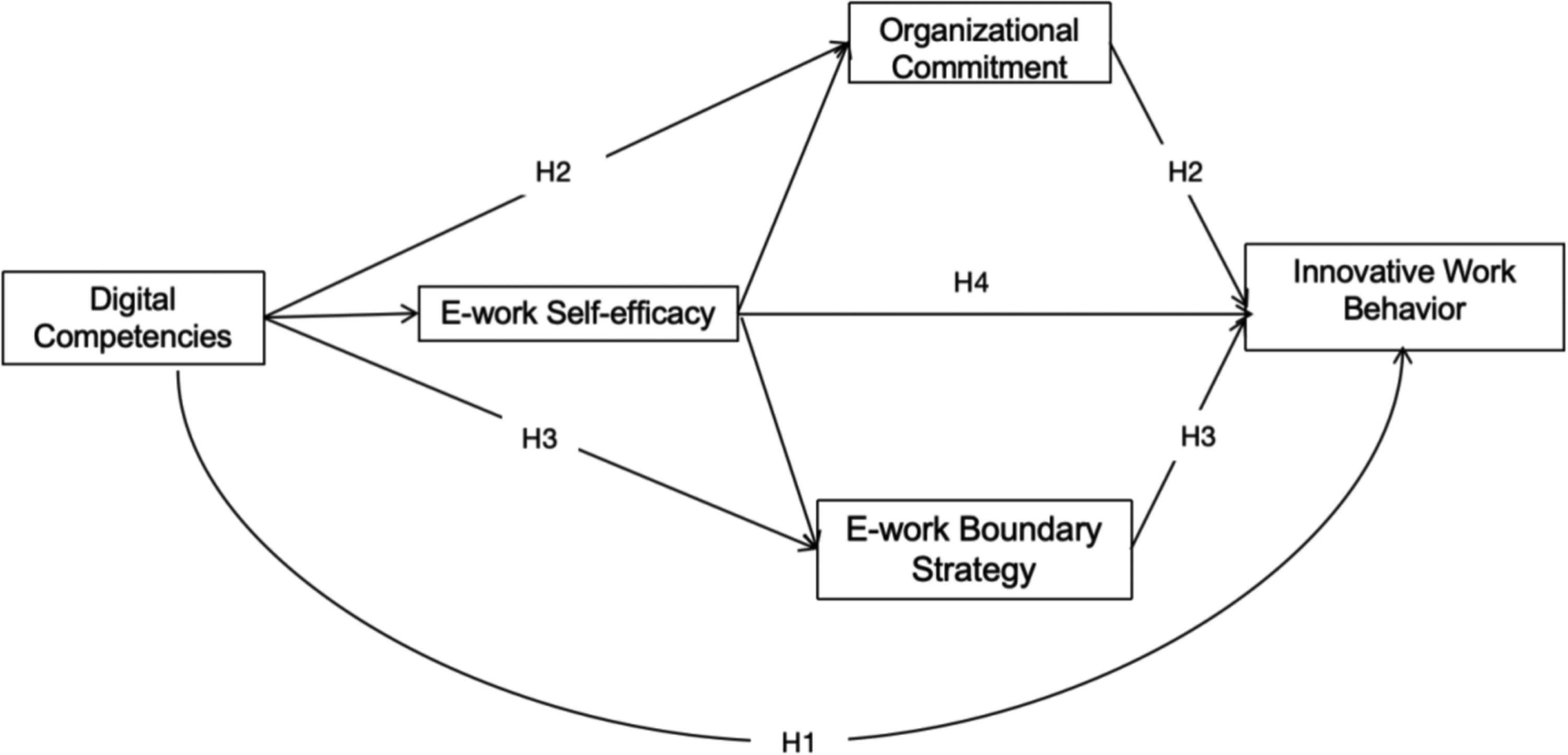
Research hypothesis model diagram.
Research design
Method and data collection
In our study the theoretical framework and prior research findings within the relevant field were systematically reviewed through a literature review to establish the theoretical and hypothesis foundation. In the quantitative research phase, empirical data were collected through a questionnaire survey method. A questionnaire was designed and implemented to gather empirical data, which were then analyzed using multiple regression analysis and hypothesis testing. We conducted analyses using SPSS 26.0, specifically, to test the triple mediation model we used the Model 81 within the PROCESS macro.
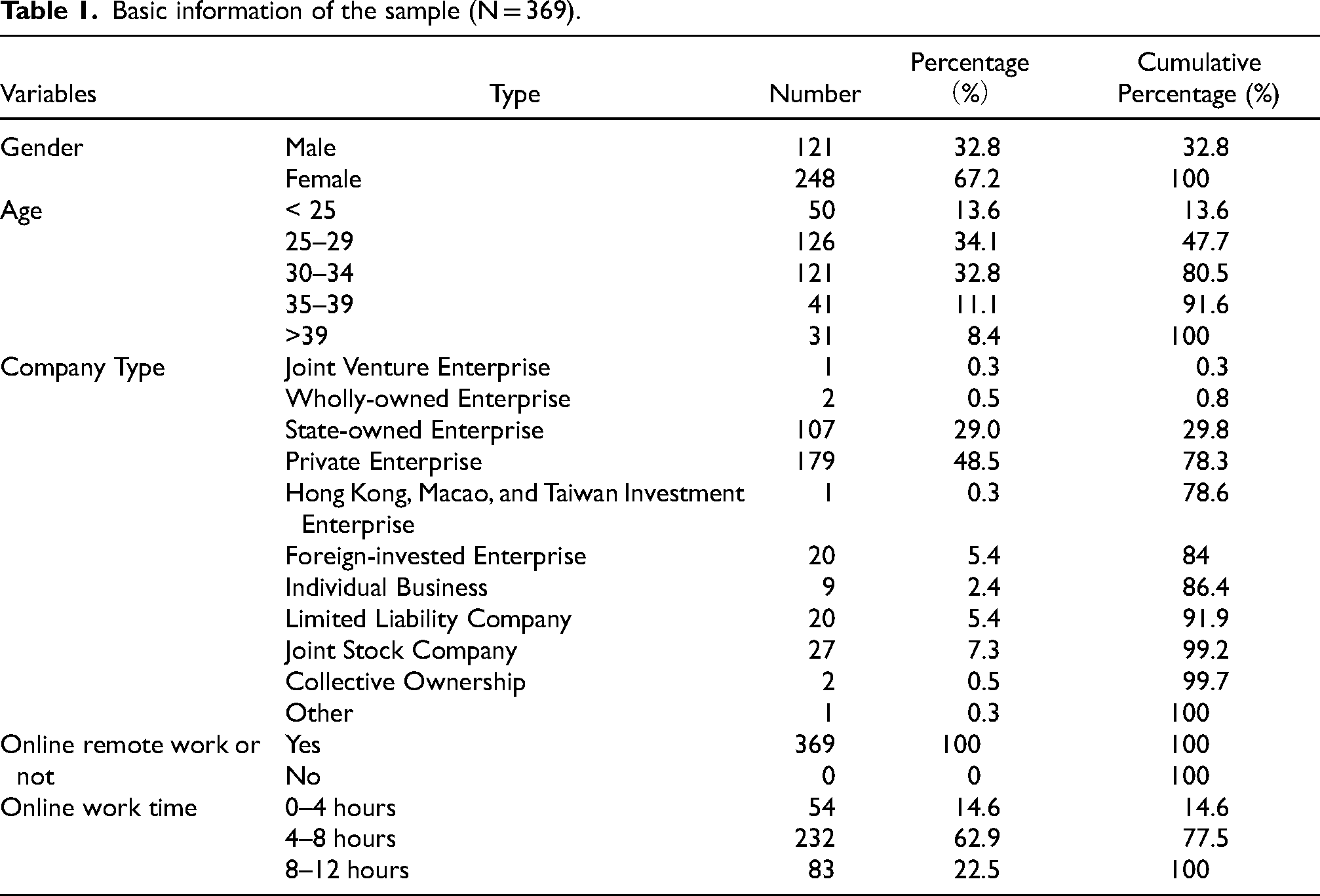
For the questionnaire survey method, the study utilizes a online questionnaire, inviting random participants from different provinces and cities across the country through the Credamo platform. To ensure the collected samples meet the conditions of being employed within the organization and working remotely via the Internet, a two-stage sampling method was employed, conducting a pre-survey before the formal distribution of the questionnaire. With the convenience sampling, the first stage, conducted on September 18, 2023, included 4 questions, which are remote work status, company affiliation, gender and age. A total of 530 questionnaires were distributed in this stage, and only samples both meeting the criteria of ‘engaged in remote work’ and ‘affiliated with a company’ were retained. 500 respondents meet the conditions and were used as the subjects for the next phase of the questionnaire. The second stage, conducted on September 24, 2023, included questions about company type, remote work duration, and items related to digital competencies, e-work self-efficacy, organizational commitment, e-work boundary strategy, and innovative work behavior, totaling 68 questions. Questionnaires were specifically distributed to the 500 respondents seletcted from the previous stage and 369 complete and valid samples collected. The demographic information of the valid samples is summarized in Table 1. The gender distribution of participants is 32.8% male and 67.2% female. Participants aged 35 and below account for 80.5% of the total. Private enterprises (48.5%) and state-owned enterprises (29%) are the main types of affiliated companies. The majority of participants (62.9%) spend 4 to 8 hours working online per day.
Basic information of the sample (N = 369).
Measurement tools
This study employs well-established scales with good reliability and validity. The core variables, including e-work self-efficacy, organizational commitment, e-work boundary strategies, and innovative work behavior, are measured using a Likert 5-point response scale (5 = strongly agree, 4 = agree, 3 = neither agree nor disagree, 2 = disagree, 1 = strongly disagree).
Digital competencies
Adopted from The Digital Competence Questionnaire by Al Khateeb (Al Khateeb, 2017), this scale consists of 19 items, such as ‘Regarding information processing in remote online work’ and ‘Regarding communication in remote online work’. A higher score indicates stronger digital competencies. In this study, the Cronbach's α coefficient for this scale is 0.851.
E-Work self-efficacy
Developed by Tramontano et al. (Tramontano et al., 2021), this scale comprises 15 items, such as ‘When working remotely online, you can effectively manage your time, even if you have to balance personal and professional commitments’ and ‘When working remotely online, you are not worried that colleagues doubt whether you are really working’. A higher score indicates stronger e-work self-efficacy. In this study, the Cronbach's α coefficient for this scale is 0.788.
Organizational commitment in organizational isolation
Compiled by Mowday et al. (Mowday et al., 1979), this scale includes 15 items, such as ‘You are willing to make a great effort beyond normal expectations to help this organization succeed’ and ‘You praise this as a good organization to your friends’. Items 3, 7, 9, 11, 12, and 15 are reverse-scored. A higher score indicates stronger organizational commitment. In this study, the Cronbach's α coefficient for this scale is 0.893.
E-Work boundary strategy
Developed by Haun et al. (Haun et al., 2022), this scale consists of 8 items, such as ‘When working remotely online, you set fixed times for work and personal life’ and ‘When working remotely online, you communicate with colleagues/supervisors both when working and not working’. Items 5 and 7 are reverse-scored. A higher score indicates stronger e-work boundary strategy. In this study, the Cronbach's α coefficient for this scale is 0.502.
Innovative work behavior
Compiled by Janssen (Janssen, 2000), this scale includes 9 items, such as ‘You look for new methods, technologies, or tools in your work’ and ‘You come up with new solutions for difficult problems in your work’. A higher score indicates stronger innovative work behavior. In this study, the Cronbach's α coefficient for this scale is 0.859.
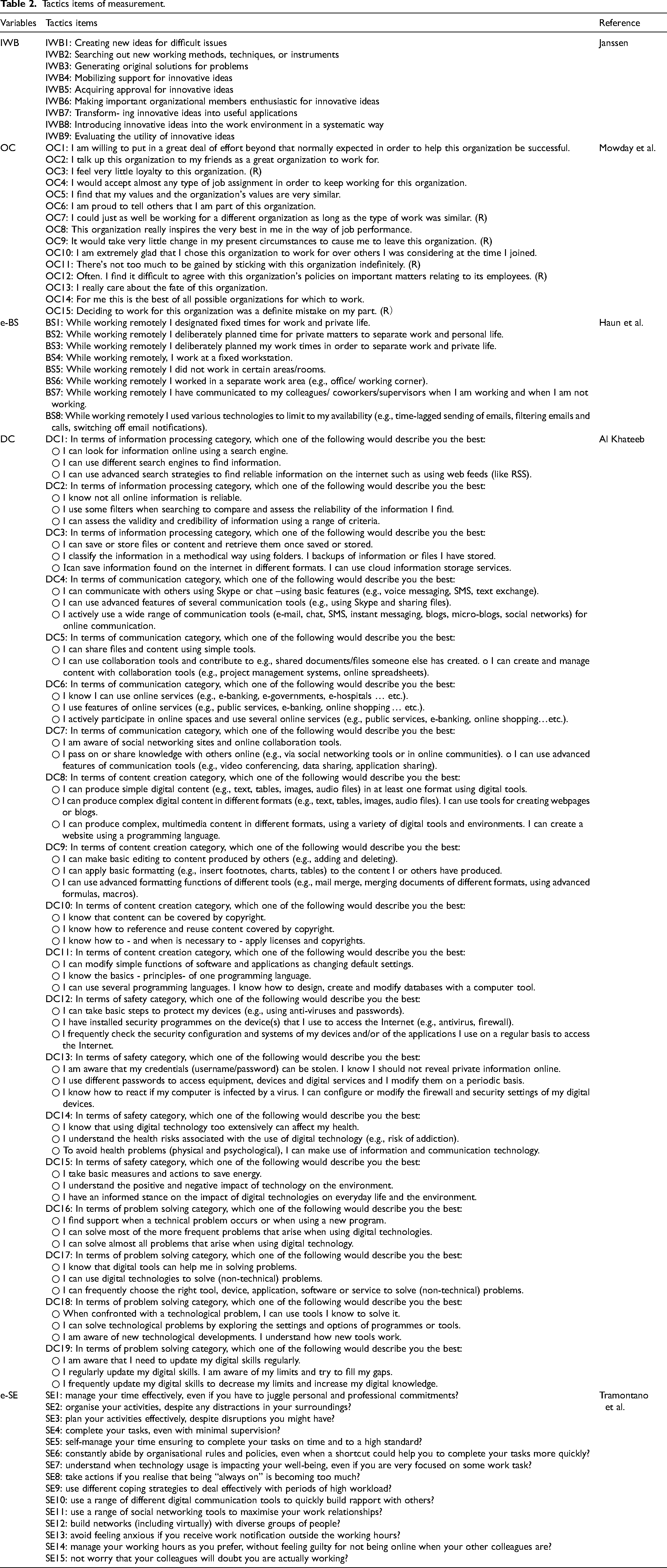
The tactics items of each measurement are as follows (Table 2):
Tactics items of measurement.
Control variables
Based on previous research on innovative work behavior, this study considers gender, age, company type, and internet working hours as control variables. Gender is a dummy variable, with females coded as 1 and males as 2. Age is categorized into 5 groups: 1 for below 25 years, 2 for 25–30 years, 3 for 30–35 years, 4 for 35–40 years, and 5 for 40 years and above. Company type is classified into 11 levels: 1 for joint ventures, 2 for sole proprietorship, 3 for state-owned enterprises, 4 for private enterprises, 5 for Hong Kong, Macao, and Taiwan investment enterprises, 6 for foreign-invested enterprises, 7 for individual industrial and commercial households, 8 for limited liability companies, 9 for joint-stock companies, 10 for stock cooperative companies, 11 for collectively-owned enterprises, and 12 for others. Internet working hours are divided into 3 categories: 1 for 0–4 hours, 2 for 4–8 hours, and 3 for 8–12 hours.
Research results
Common method bias test
All data were analyzed using SPSS 26.0, employing the PROCESS macro for path analysis. The Harman single-factor test was utilized to examine common method bias. The results revealed that, without rotation, 18 factors were generated, with the first factor explaining 21.857% of the variance. This is below the critical threshold of 40%, indicating the absence of substantial common method bias in this study.
Discriminant validity of variables
Regarding validity, mature measurement scales were employed for variables like organizational commitment and innovative work behavior to ensure sound content validity. For the measures of digital competencies, e-work boundary strategy, and e-work self-efficacy, which are relatively recent, validity tests were conducted. The KMO (Kaiser-Meyer-Olkin) values for the digital competencies measurement scale was 0.886, indicating suitability for factor analysis. The Bartlett's test of sphericity was significant at the 0.1% level, and five factors had eigenvalues greater than 1, with cumulative explained variance reaching 46.341%. For the e-work self-efficacy measurement scale, the KMO value was 0.827, the Bartlett's test was significant at the 0.1% level, and five factors had eigenvalues greater than 1, with cumulative explained variance reaching 55.854%. The KMO value for the e-work boundary strategy measurement scale was 0.652, the Bartlett's test was significant at the 0.1% level, and three factors had eigenvalues greater than 1, with cumulative explained variance reaching 62.651%.
Descriptive statistics and correlation analysis
SPSS 26.0 was used for descriptive statistical analysis. Table 3 indicates significant pairwise correlations among the key variables: digital competencies, e-work self-efficacy, organizational commitment, e-work boundary strategy, and innovative work behavior. Specifically, digital competencies demonstrated positive correlations with e-work self-efficacy (r = 0.505, p < .01), organizational commitment (r = 0.244, p < .01), e-work boundary strategy (r = 0.355, p < .01), and innovative work behavior (r = 0.538, p < .01). Innovative work behavior exhibited significant positive correlations with e-work self-efficacy (r = 0.625, p < .01), organizational commitment (r = 0.423, p < .01), and e-work boundary strategy (r = 0.463, p < .01). Moreover, e-work self-efficacy, organizational commitment, and e-work boundary strategy showed significant positive correlations with each other (p < .01). These results provide a solid foundation for validating the hypotheses presented earlier.
Descriptive statistics of relevant variables (N = 369).
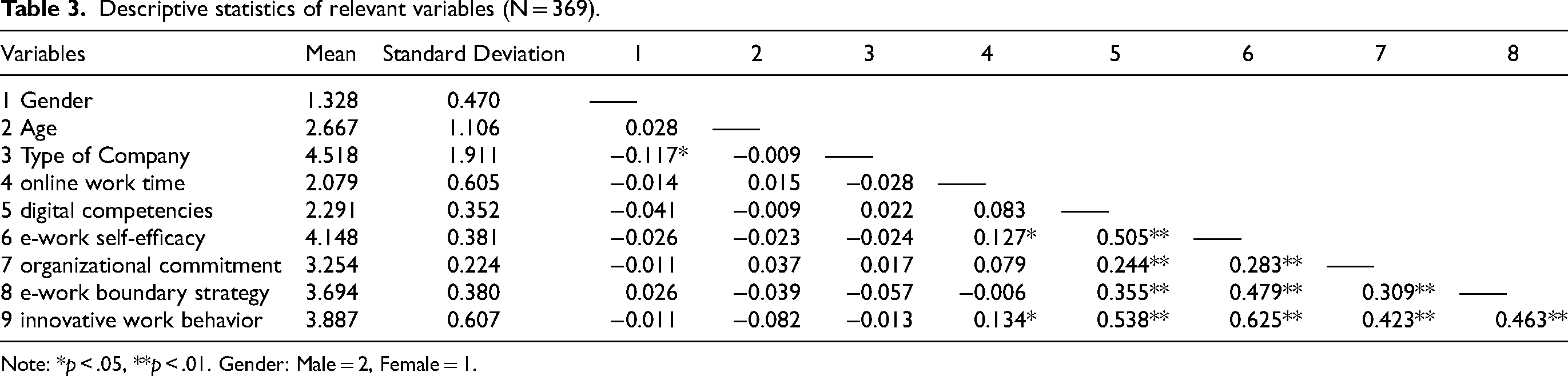
Note: *p < .05, **p < .01. Gender: Male = 2, Female = 1.
Correlation analysis results
Based on the results of correlation analysis, with gender, age, and company type as control variables, digital competencies are considered as the predictor variable, innovative work behavior as the outcome variable, and e-work self-efficacy, organizational commitment, and e-work boundary strategy as mediating variables. The SPSS PROCESS macro Model 81, developed by Hayes (2017), was employed to conduct a test for the composite multiple mediation effects. Model 81 enables the simultaneous examination of multiple mediating variables’ direct and indirect effects, as well as handles complex path relationships, which allows for a detailed investigation into how digital competencies indirectly affect innovative work behavior through multiple mediators. The regression analysis results are presented in Table 4. Digital competencies positively predict innovative work behavior (b = 0.430, t = 5.848, 95% CI = [0.285, 0.574]), e-work self-efficacy (b = 0.539, t = 11.005, 95% CI = [0.442, 0.635]), organizational commitment (b = 0.085, t = 2.313, 95% CI = [0.13, 0.158]), and e-work boundary strategy (b = 0.170, t = 2.995, 95% CI = [0.058, 0.282]). E-work self-efficacy positively predicts organizational commitment (b = 0.124, t = 3.636, 95% CI = [0.057, 0.192]) and e-work boundary strategy (b = 0.406, t = 7.711, 95% CI = [0.303, 0.510]). Organizational commitment positively predicts innovative work behavior (b = 0.588, t = 5.588, 95% CI = [0.381, 0.795]). E-work boundary strategy positively predicts innovative work behavior (b = 0.204, t = 2.979, 95% CI = [0.069, 0.338]).
Regression analysis of variable relationships in the composite multiple mediation model.
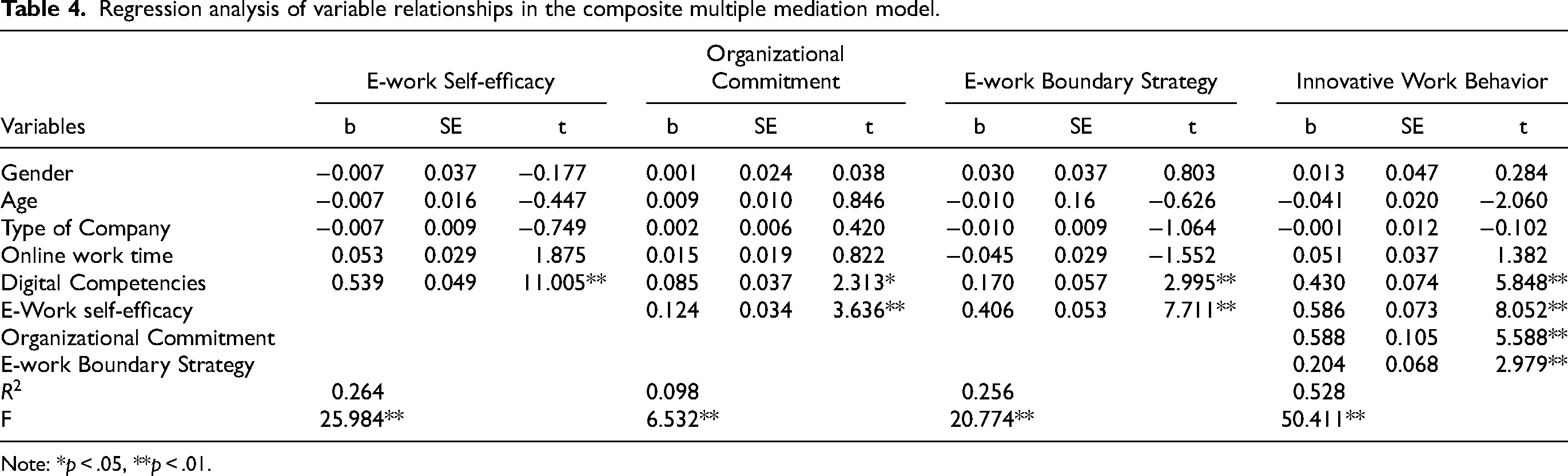
Note: *p < .05, **p < .01.
The results of the mediating effects analysis are presented in Table 5. The direct effect of digital competencies on innovative work behavior is significant (95% CI = [0.285, 1.286]), accounting for 47.05% of the total effect, thus confirming Hypothesis 1. The mediating effects of organizational commitment and e-work boundary strategy in the relationship between digital competencies and innovative work behavior are significant (95% CI = [0.000, 0.111]; 95% CI = [0.005, 0.075]), contributing 5.5% and 3.8% to the total effect, respectively, supporting Hypotheses 2 and 3. Additionally, the chain mediating effects of e-work self-efficacy and organizational commitment in the relationship between digital competencies and innovative work behavior are significant (95% CI = [0.013, 0.072]), accounting for 4.3% of the total effect. Similarly, the chain mediating effects of e-work self-efficacy and e-work boundary strategy are also significant (95% CI = [0.009, 0.090]), contributing 4.9% to the total effect. Therefore, the composite multiple mediating model involving e-work self-efficacy, organizational commitment, and e-work boundary strategy (Hypothesis 4) is supported.
Bootstrap analysis for mediation effects.
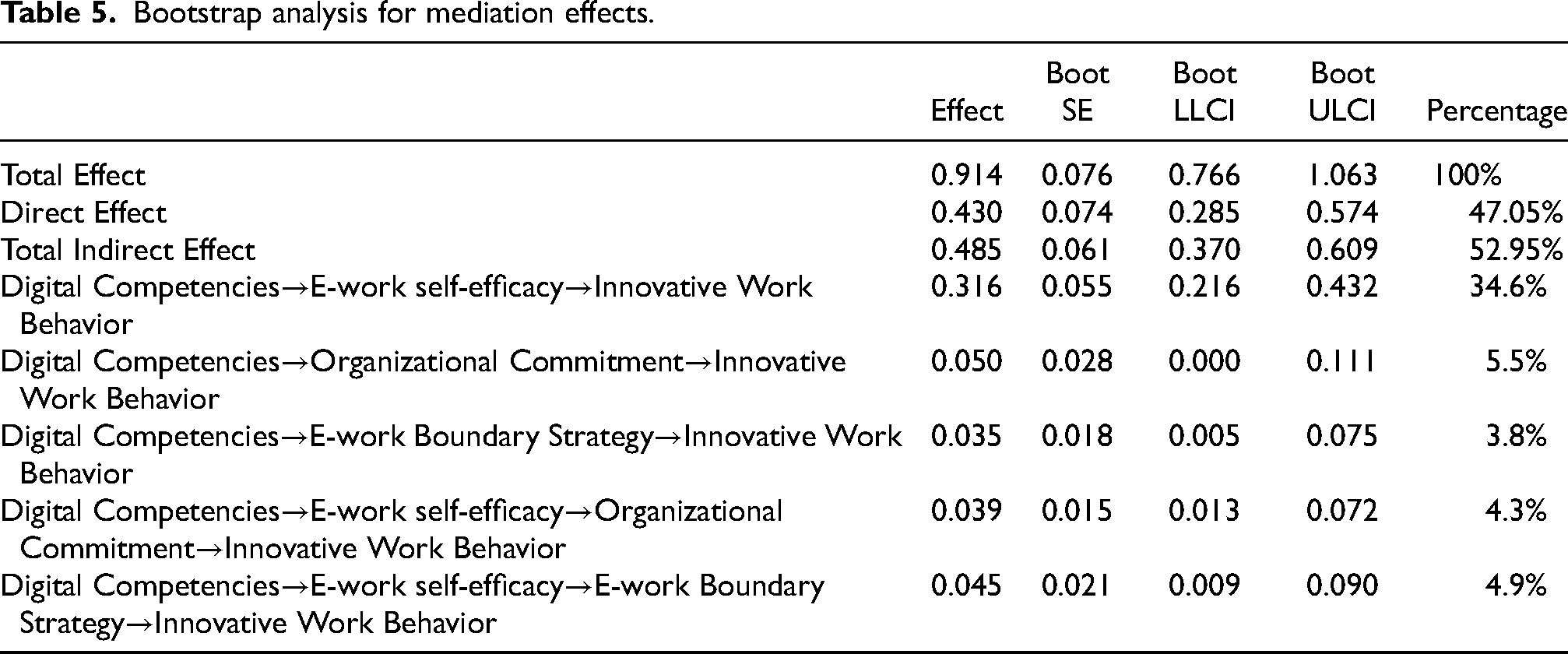
The proposed path model for the study is illustrated in Figure 2.
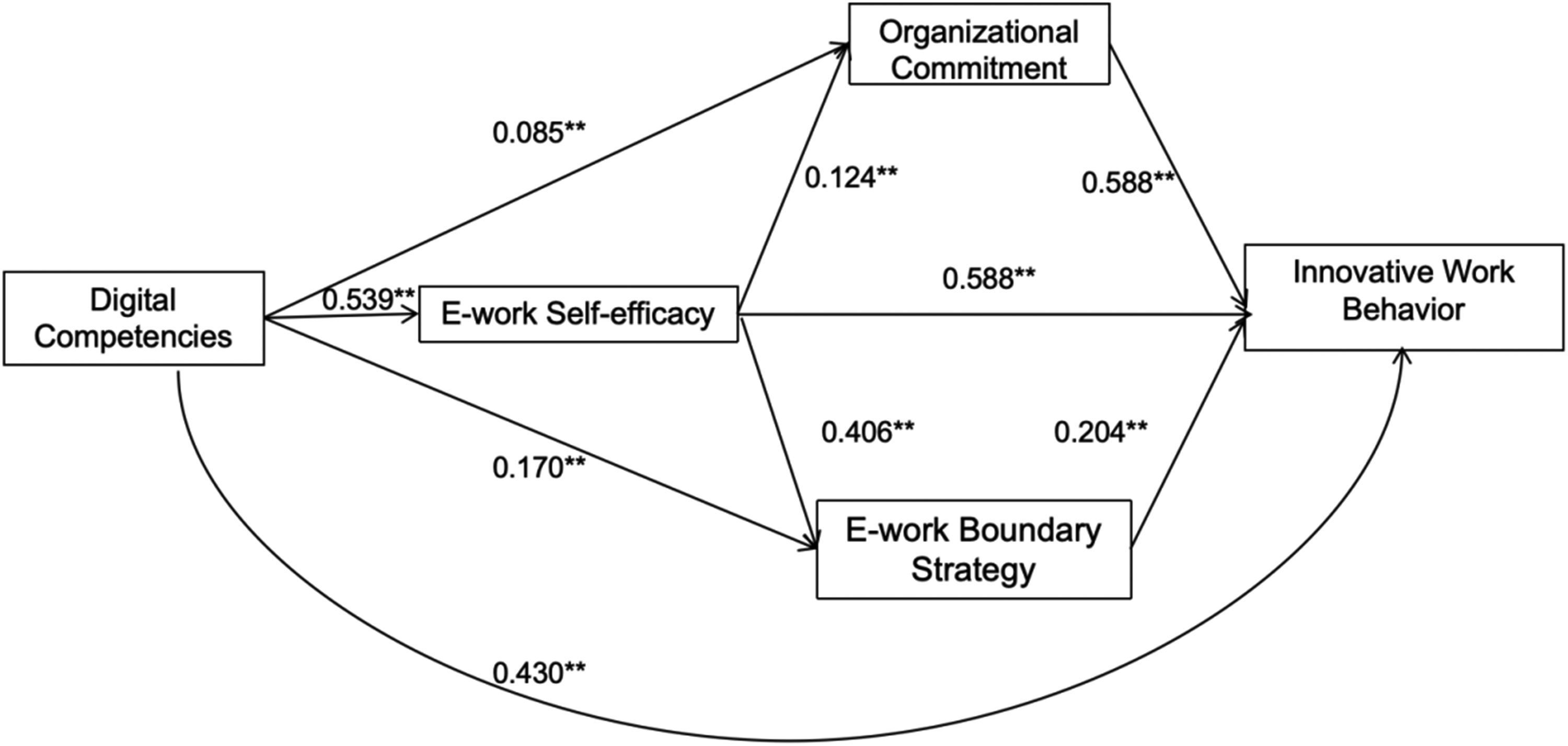
The relationship between digital competencies and innovative work behavior: composite multiple mediation of e-work self-efficacy, organizational commitment, and e-work boundary strategy. Note: **p < .01.
Conclusion and discussion
This study, based on the Job Demands-Resources Theory, investigates the relationship between remote online digital competencies and innovative work behavior. Additionally, it introduces three variables—e-work self-efficacy, e-work boundary strategy, and organizational commitment during organizational isolation—to explore their roles as internal mechanisms. Through empirical analysis of survey data, the following conclusions are drawn:
Digital competencies positively predict innovative work behavior. Data analysis reveals that digital competencies, as a work resource, significantly and directly impact on innovative work behavior in a positive manner. This direct effect constitutes 47.05% of the total effect of digital competencies on innovative work behavior. The remaining indirect effects, such as mediation and compound mediation effects, contribute to elucidating the internal mechanisms of digital competencies on innovative work behavior. Organizational commitment during organizational isolation mediates the relationship between digital competencies and innovative work behavior. During remote online work, digital competencies indirectly influences innovative work behavior through employees’ organizational commitment in the context of organizational isolation. Employees with high digital competencies exhibit stronger organizational commitment, leading to more innovative work behavior. E-work boundary strategy mediates the relationship between digital competencies and innovative work behavior. Digital competencies indirectly affect innovative work behavior through the mediation of e-work boundary strategy. Employees with strong digital competencies are more likely to utilize e-work boundary strategies to manage ambiguity or conflicts between work and non-work boundaries in remote online work, thereby fostering innovative work behavior. E-work self-efficacy, e-work boundary strategy, and organizational commitment during organizational isolation jointly mediate the relationship between digital competencies and innovative work behavior. Digital competencies positively predict e-work self-efficacy, e-work boundary strategy, and organizational commitment during organizational isolation. E-work self-efficacy positively predicts organizational commitment and e-work boundary strategy. The chain mediation effects of e-work self-efficacy, organizational commitment, and e-work boundary strategy significantly mediate the relationship between digital competencies and innovative work behavior. In summary, e-work self-efficacy, e-work boundary strategy, and organizational commitment jointly exhibit a compound multiple mediation effect in the internal impact mechanisms of digital competencies on innovative work behavior.
Research contributions
This study makes a dual contribution to both academic and practical realms. First, academically, the research builds upon the Job Demands-Resources Theory, providing a practical interpretation in the context of remote work. It introduces a hypothetical model for the relationship between digital competencies and innovative work behavior, incorporating variables such as e-work self-efficacy, e-work boundary strategy, and organizational commitment during organizational isolation to examine their internal impact mechanisms. This study adds empirical evidence to the theory. Second, on a practical level, the research findings offer actionable insights for enterprises, leaders, HR professionals, and employees. Enhancing digital competencies may lead to changes in employees’ e-work self-efficacy, e-work boundary strategy, and organizational commitment during organizational isolation, directly or indirectly influencing employees’ innovative work behavior. This provides guidance for individual employee growth and the long-term development of relevant enterprises. Enterprises and organizations can promote employees’ innovative behavior in remote working environments by enhancing their digital competencies through training and development initiatives. Leaders can leverage these findings to design corresponding management strategies, such as providing more resources and creating inclusive work environments to incentivize innovative activities among employees. Human resource departments can formulate targeted talent development plans and performance evaluation mechanisms based on research results to cultivate and incentivize employees’ innovation capabilities. For individual employees, understanding the relationship between digital competencies and innovative behavior can help them better address the challenges of remote work environments, enhance their own innovation capabilities, and thereby achieve personal growth and career development.
Limitations of the study and future research prospects
Despite its contributions, the study has several limitations. First, in exploring the internal mechanisms influencing the relationship between digital competencies and innovative work behavior, factors such as leadership styles, organizational culture may play a role. Future research could investigate additional influencing factors. Secondly, this study has not yet conducted an in-depth study on the differences between different types of enterprises and different types of work in remote work. In fact, different types of enterprises and work environments may have different effects on the relationship between digital competencies and innovative work behavior. Future research can analyze different industries and enterprise types to explore their moderating effects on the relationship between them, so as to provide more specific and personalized management suggestions. Third, this study mainly uses self-report questionnaire surveys to collect data, which has certain limitations and biases. Future research can adopt a variety of research designs, such as longitudinal design, diachronic research and experimental research, to verify the causal relationship between digital competencies and innovative work behavior, so as to enhance the reliability and persuasiveness of the research results. Fourth, only using cross-sectional data without observing over a longer time dimension may affect further exploration of the relationship between variables. Future research can use long-term tracking methods to conduct a more in-depth study of the long-term impact of digital competencies and innovative work behavior. Through observation and analysis across time, we can have a more comprehensive understanding of how the development of digital competencies affects the sustainability and stability of innovative work behavior. Especially in the face of an ever-changing digital work environment, the study of long-term effects will help reveal the sustained impact of digital competencies on innovative work behavior and provide theoretical support for organizations to formulate long-term human resource management strategies. Fifthly, the Cronbach's alpha coefficient for the scale e-work boundary strategy is 0.502, which is below the standard value typically considered to indicate good reliability. Although the scale by Haun et al. is based on the well-established Boundary Management Strategy Scale by Binnewies and colleagues and has been thoroughly validated for reliability and validity in their study, the variable in question has been less frequently utilized in Chinese samples. In the future research could be focusing on developing a new scale for this variable to enhance its applicability in Chinese samples. Finally, this study did not take into account the impact of cultural differences on digital competencies and innovative work behavior. In different cultural backgrounds, employees may have different understandings and application methods of digital competencies, which may affect the performance of their innovative behavior. Future research can explore the relationship between the variables in different cultural backgrounds to better understand the moderating effect of cultural differences on this relationship.
Footnotes
Acknowledgement
We would like to thank all the individuals who participated in this study.
Data availability statement
The data that support the findings of this study are available from the corresponding author, Xuan Chen, upon reasonable request.
Declaration of Conflicting Interests
The author(s) declared no potential conflicts of interest with respect to the research, authorship, and/or publication of this article.
Funding
The author(s) disclosed receipt of the following financial support for the research, authorship and/or publication of this article: China Hubei Province Soft Science Key Project (2021EDA005): Research on the Cultivation and Development System Construction of Enterprise Innovation Subjects in Hubei Province, China.
