



Abstract
This study redefines information power and informational justice as information competencies drawing upon information-related theories. Furthermore, it investigates their impact on information sharing and logistics performance within inter-firm relationships in the supply chain context. To analyze their correlations and causal relationships, a survey was conducted with employees working in departments associated with supply chain management (SCM) in South Korea. A total of 300 copies of the questionnaire were used in statistical analysis, and a structural equation model was used for hypothesis testing. The findings indicate that both information power and informational justice exert a significant positive influence on information sharing. Moreover, information sharing significantly enhances logistics performance, serving as an outcome variable. This study integrates concepts related to information into a single framework called information competencies, while also redefining the role of information sharing. Inputs for academic scalability and practical implications for supply chain participants are discussed.
Keywords
Introduction
Today, firms have been making various efforts to continue generating outcomes and grow to the next level. The key methods implemented for this growth include cost reduction, foreign direct investment, R&D investment, and supply chain transfer to secure procurement stability. However, the efficacy of these approaches has been challenged by various global issues including supply chain restructuring, trade disputes, wars, and health crises. Thus, firms need new growth engines rather than financial or management methods for sustainable growth.
Logistics emerges as a pivotal domain where firms can unearth fresh growth opportunities. Parker (1962) highlighted logistics as the ultimate frontier for cost efficiencies and underscored its integral role in marketing strategies. Moreover, renowned management expert Peter Drucker, often regarded as the “Father of Management,” famously characterized logistics as the economy's dark continent in an article for Fortune magazine, and argued that it is an area that can infinitely generate outcomes by enabling the discovery of new growth engines and resolving inefficiencies.
Contrary to the emphasis on logistics in the past, in more recent times, the importance of logistics has been somewhat disregarded compared to other parts of a firm's business operations. However, the importance of logistics is being highlighted once again due to the aforementioned recent global issues, and efforts and research are essential to generate actual outcomes through logistics. Many researchers argue that information sharing is the key to logistics (Adnani et al., 2023; Olorunniwo and Li, 2010). The importance and necessity of information sharing have grown along with the extending physical length of supply chains and the advancements in information technology (IT). The importance of information sharing and logistics has been emphasized and proven through various studies, mainly through the bullwhip effect (Gao et al., 2023).
However, efforts to mitigate the bullwhip effect through information sharing have traditionally centered on waste prevention. Yet, the current juncture calls for a shift toward contemplating growth and development rather than solely focusing on waste prevention through information sharing. Consequently, this study acknowledges that information sharing is a prerequisite for improving logistics performance, and also assumes that there is a need for information competencies within the supply chain. These competencies aim to ensure the provision of quality information by preventing information distortion and asymmetry. This study proves the path before leading to information sharing and logistics performance, which may actually contribute to the maximization of logistics performance.
This study posited that information power and informational justice serve as the foundational variables for initiating quality information sharing. French and Raven (1959) initially delineated five bases of power, with information power later incorporated by Collins and Raven (1969). Numerous researchers contend that power is the cornerstone of interpersonal relationships and interest groups (Hunt and Nenvin, 1974; Zhao et al., 2008). Given that information power epitomizes the essence of the information age, it suffices as a starting point of information sharing. Additionally, informational justice can be deemed a prerequisite for mitigating information asymmetry.
This study sets a new direction for improving performance in the information age by prioritizing logistics performance through the bolstering of information competencies in the entire supply chain rather than solely focusing on information sharing to mitigate waste. Moreover, it underscores the academic significance and implications of redefining logistics not solely as transportation but as integral supply chain competencies. Finally, this study offers practical and policy implications, considering that supply chain operations are increasingly recognized as a reflection of a country's political and diplomatic capacity in contemporary discourse.
Theoretical background
Information power
Power refers to the ability to control or influence the behavior of others, a ubiquitous phenomenon inherent in human interactions and group dynamics, often perceptible instinctively. The concept of power was first academically defined by French and Raven (1959). Their seminal work delineated five primary bases of power: coercive, reward, legitimate, referent, and expert power. Information power was later added due to the technological development and constant changes in the business environment (Collins and Raven, 1969).
Among the numerous researchers who studied the composition of power, El-Ansary and Stern (1972) were the first to examine its role among supply chain participants. They highlighted power as both an antecedent and a consequence of relationships among firms in the supply chain or their performance, thereby charting a novel research trajectory concerning the nature of power dynamics. Within this framework, the concept of information power posits that ownership and control of information may affect the behaviors of individuals and groups, potentially conferring an advantage in their relationship. Such an advantage may exert a positive or negative influence on others, and may wield even greater impact when synergized with other forms of power (Lee and Woo, 2019; Raven, 2008). Particularly in current times, when the reorganization of supply chains is actively taking place and new contracts and supply chain participants are increasing, the importance of such theories becomes even more prominent.
For academic constructs concerning information and their applicability within the supply chain domain, established theories such as the bullwhip effect, highlighting the significance of information sharing, and informational justice pertaining to equitable distribution of information are widely recognized. However, information power holds considerable academic and practical research significance, as both behavioral science factors and supply chain performance can be studied at the same time, and various pointers regarding directions and scalability can be suggested.
Informational justice
The theory of justice pertains to perceiving fairness not solely based on the rewards one receives but also in acknowledging the fairness of the comparison ratio with others (Piza and Sytsma, 2024). Justice, in this context, may exhibit ideological inclinations as individuals may perceive fairness differently, leading to potential discrepancies between personal beliefs and the perception of others. This concept of justice has been extensively explored across various academic disciplines and holds relevance within the realm of production management in business studies. Ethics and justice serve as essential components fostering smooth collaboration among firms within the supply chain (Lee et al., 2020). Justice, expounded upon by attribution theory and referent cognitive theory, encompasses detailed components such as distributive justice, procedural justice, and interactional justice (Colquitt et al., 2001). Interactional justice, further subdivided into interpersonal justice and informational justice, is particularly pertinent in this study. The examination herein focuses solely on informational justice, as this concept considers justice not just in structural aspects but also in interpersonal relationships.
Meanwhile, Colquitt et al. (2001) defined informational justice as the transaction partner's honest provision of legitimate reasons and valid information regarding decision making. In this context, legitimacy is equated with informational justice as it necessitates the provision of adequate information tailored to the decision-making process of the transaction partner (Ellis et al., 2009). Additionally, Kernan and Hanges (2002) argued that informational justice is justice related to receiving detailed and accurate information from the other party regarding the procedures of performing tasks. Informational justice also plays a critical role within the supply chain, which is because the feeling of unfairness can be reduced to some extent if adequate reasons are provided in the decision-making process (Lee et al., 2020). Furthermore, more accurate and higher-level explanations delivered may change the level of satisfaction with the results; therefore, ensuring informational justice is an important task in the relationship between firms in the supply chain.
Information sharing
Supply chain management (SCM) is the process of managing the activities of individual firms holistically to work as a unified entity, operating under the assumption that supply chain participants are interconnected (Mentzer et al., 2001). In today's competitive business environment, activities such as information sharing, collaborative engagement with transaction partners, and integrated procedures play pivotal roles in achieving competitive advantage. The primary objective of SCM is to reduce overall costs in the supply chain while simultaneously meeting the demands of end consumers. Information sharing is indispensable for achieving this goal, as it facilitates accurate demand forecasting and enables effective collaboration with transaction partners. Thus, in addition to sharing information regarding inventory levels of transaction partners within the supply chain, it is beneficial to exchange information related to quality, production capacity, and order status to establish an efficient supply chain (Yu et al., 2001).
Li and Lin (2006) defined information sharing as the act of exchanging core and exclusive information with transaction partners within the supply chain. Several previous studies have emphasized the importance of information sharing within SCM. This is attributable to the various benefits engendered by seamless information sharing, including lead time reduction and unnecessary inventory (Kembro and Selviaridis, 2015). It can also improve customer service levels and further strengthen collaboration with transaction partners. Yu et al. (2001) claimed that efficient information sharing is the most ideal solution to reduce the bullwhip effect, which is one of the problems that occur chronically within the supply chain. Lastly, if supply chain uncertainty intensifies as it does today, information sharing holds value not only as it enables the pursuit of efficiency but also as it helps prevent wastage and serves as a revenue model (Park, 2013). Thus, it is necessary for firms in the supply chain to perceive the need for information sharing in order to improve supply chain performance or logistics performance.
Logistics performance
There are various elements constituting the supply chain, and logistics can be considered the most significant core. This is because it is necessary to integrate the logistics processes of all firms in the supply chain in order to meet the needs of end consumers (Stank et al., 2005). Ding et al. (2023) defined logistics as the act of adequately moving goods or services, and claimed that it is ideal to utilize resources efficiently in this process to maximize their utility. Thus, logistics can be explained as a corporate strategy that includes inbound and outbound logistics with suppliers and customers in addition to internal logistics within the firm (Mentzer et al., 2004). This shows that it is difficult for firms to improve logistics performance independently, and that this is only possible through smooth collaboration with transaction partners and consumers in the supply chain.
The importance of logistics has long been emphasized (Parker, 1962). However, with the recent emergence of global logistics uncertainties caused by events such as wars, the COVID-19 pandemic, and supply chain reorganization, we have come to realize its academic, practical, and policy importance (Lee and Ha, 2023). To reflect this importance, a wide range of aspects that can best reflect logistics performance were utilized in the selection of variables.
In a study exploring the relationship between information sharing and supply chain performance, Fawcett et al. (2007) used logistics cost, lead time, and order completion rate to measure logistics performance. Harrison and New (2002) used order completion, inventory turnover, lead time, and logistics costs in their study. In addition, Keebler and Plank (2009) measured logistics performance using the variables timeliness of delivery, average order cycle time, and return rate. As such, various items that measure logistics performance can be used depending on the purpose of research, and this study used total logistics cost, lead time, order completion rate, inventory turnover, and logistics operation skills based on previous studies.
Hypothesis setting and research model
Information power and information sharing
The concept of information power was first proposed in 1959, a decade subsequent to the inception of the foundational bases of power. While the initial five bases of power are natural and fundamental forms of power arising from human relations or group dynamics, information power emerges as a novel form of power stemming from shifts in management methodologies and technological advancements. Information power denotes a firm's ability to manage and leverage information, alongside the authority to regulate its dissemination (Baik et al., 2018). In essence, information not only signifies access to and control over information within an organization, but also serves as a potential source of power. However, information power within the supply chain does not simply indicate authoritative power resulting from information monopolies. Information power within the supply chain must be expanded and interpreted as one of the information competencies in the supply chain that is valuable to collect and process information that is difficult for competitors to know and share it in the most efficient way (Marchand et al., 2000).
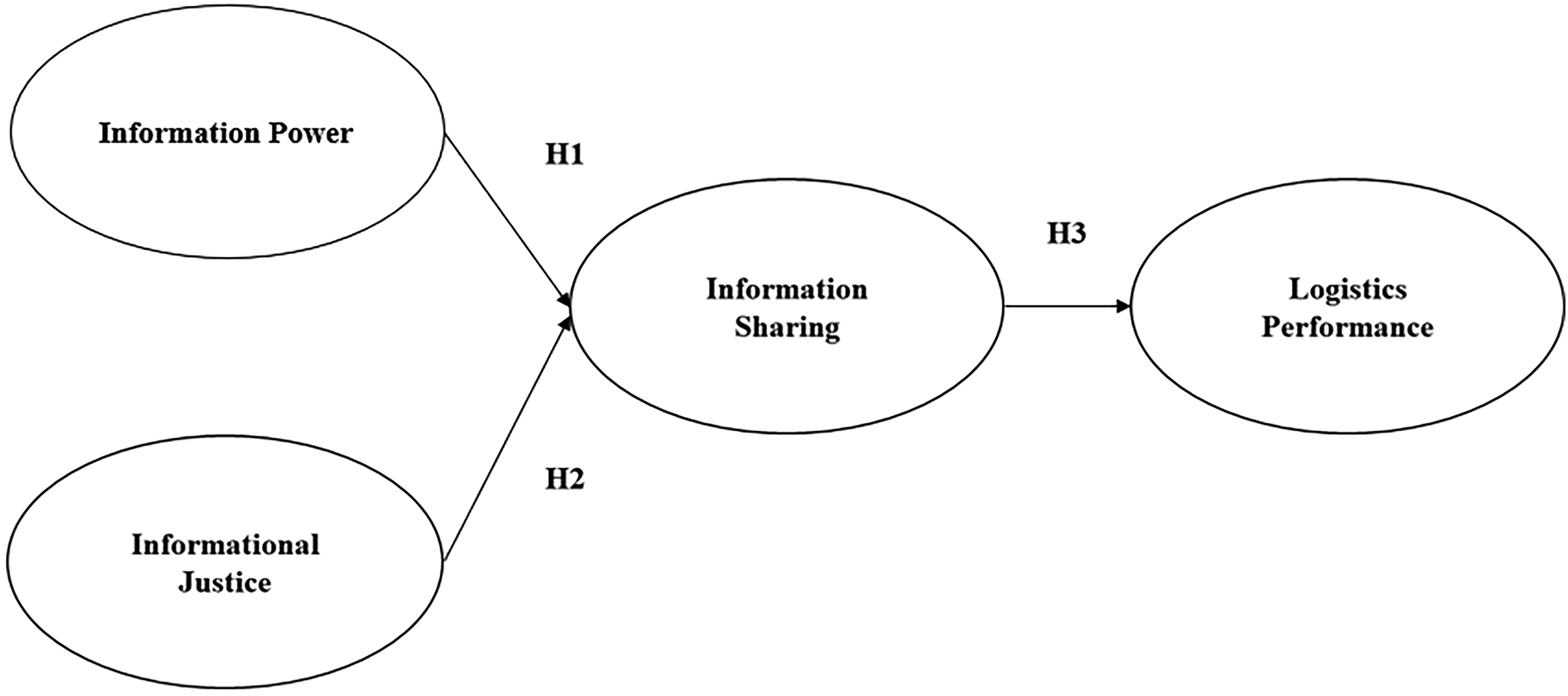
Meanwhile, in a broader context, information sharing in the general sense has the meaning of delivery or notification (Li and Lin, 2006). However, the significance of information sharing is currently rising to the level that it has expanded into a concept for the performance of the entire supply chain, not just for preventing waste. In other words, it is desirable to consider information as the paramount value perceived by all participants in the supply chain, rather than merely as a form of power within future supply chain dynamics. Thus, this study posited that organizations endowed with information power would actively engage in sharing accurate and high-quality information, laying the groundwork for positive performance outcomes. Consequently, the following hypothesis was established: Hypothesis 1: Information power exerts a statistically significant positive influence on information sharing within the supply chain.
Informational justice and information sharing
Justice is largely classified into distributive justice, procedural justice, and interactional justice, with interactional justice further delineated into interpersonal justice and informational justice. Initially, justice was limited to the processing and distribution of results, but it has been developed further to incorporate the aspect of exchange when interactional justice was suggested. This evolution has positioned justice as a pivotal factor in corporate management (Colquitt et al., 2001).
In distributive justice and procedural justice, fairness can be assessed based on tangible outcomes, even if certain aspects of the process are overlooked. However, since it is difficult to physically convert the information obtained and retrieve the results generated in the context of informational justice, it is critical that competitors or partners receive the same information in a timely manner from the beginning. Thus, informational justice requires transparency and reliability compared to other forms of justice, and can be regarded as a concept that is particularly important and advanced in business environments (Piza and Sytsma, 2024; Scott et al., 2007).
Informational justice is determined based on criteria such as the timeliness of information delivery and the absence of distortion or asymmetry in the information provided. Delays, distortions, or asymmetries in information not only yield inaccurate results but deprive opportunities to attain optimal outcomes. This is a different concept from the previously mentioned supply chain capability, and it refers to the fairness of the process and outcome of resource allocation. In other words, informational justice can be defined as the system of an organization's resource allocation and the transparency of the organization.
The outcomes of informational justice may manifest in information sharing and subsequent supply chain performance. In other words, if proper explanations and understanding among members are assured regarding the resource allocation process and results within the supply chain, the utilization of allocated resources and the degree of information sharing can be further enhanced. Therefore, this study established the following hypothesis: Hypothesis 2: Informational justice exerts a statistically significant positive impact on information sharing within the supply chain.
Information sharing and logistics performance
Competencies and initiatives that drive information sharing constitute effective strategies to reduce the uncertainties in supply and demand within the supply chain (Ouyang, 2007). This information sharing not only provides strategic/operational benefits but also serves as a premise for future performance.
There are three primary mechanisms through which information sharing influences performance. First, information sharing mitigates mutual uncertainties, allowing firms to tailor production to meet actual demand based on accurate forecasts (Cachon and Fisher, 2000). In other words, information sharing is essential for ensuring the efficiency of the production management system. Moreover, information sharing enhances efficiency in inventory management and facilitates optimal production quantities, consequently reducing financial wastage (Lin et al., 2002). Finally, information sharing can also be a critical catalyst for future performance.
As such, information is a key strategic asset for firms. This includes know-how, clients, production plans, market analyses, and best practices that have been accumulated over a long period of time. Sharing them with supply chain participants will help gain a chance to improve all areas of production, procurement, and sales, while also eliciting loyalty from supply chain participants. Thus, information sharing can be a key factor that improves the future performance of the supply chain (Alzoubi and Yanamandra, 2020).
Therefore, this study posits that information sharing is a fundamental asset conducive to logistics performance, leading to the formulation of the following hypothesis. Hypothesis 3: Information sharing exerts a statistically significant positive impact on logistics performance.
Figure 1 presents the hypotheses formulated in this study in a diagram.
Research model.
Empirical analysis
Sample selection and data collection
The sample for the empirical analysis in this study was set as employees working in SCM-related departments in South Korea. Prior to distributing the questionnaire, advice on the measurement items was sought from two employees engaged in SCM-related tasks and two professors specializing in production management during the month of January 2024 to confirm the validity of the research content. The final survey items were selected after making revisions based on their advice. Data were collected through a survey agency during the month of March 2024. A total of 1800 copies of the questionnaire were distributed, and 300 completed copies were ultimately used for statistical analysis, excluding the ones with consistent responses in a single score and the ones with some responses omitted.
Research method and operational definition of variables
The hypotheses of this study were tested through structural equation modeling. Structural equation modeling, also referred to as covariance structure analysis, is a technique used to analyze the interrelations between constructs using the covariance between measurement variables. Structural equation modeling has been used in the social sciences, including business administration, with many advantages noted unique to this approach. Accordingly, this study also examined the relationships between variables using SPSS 18.0 and AMOS 18.0.
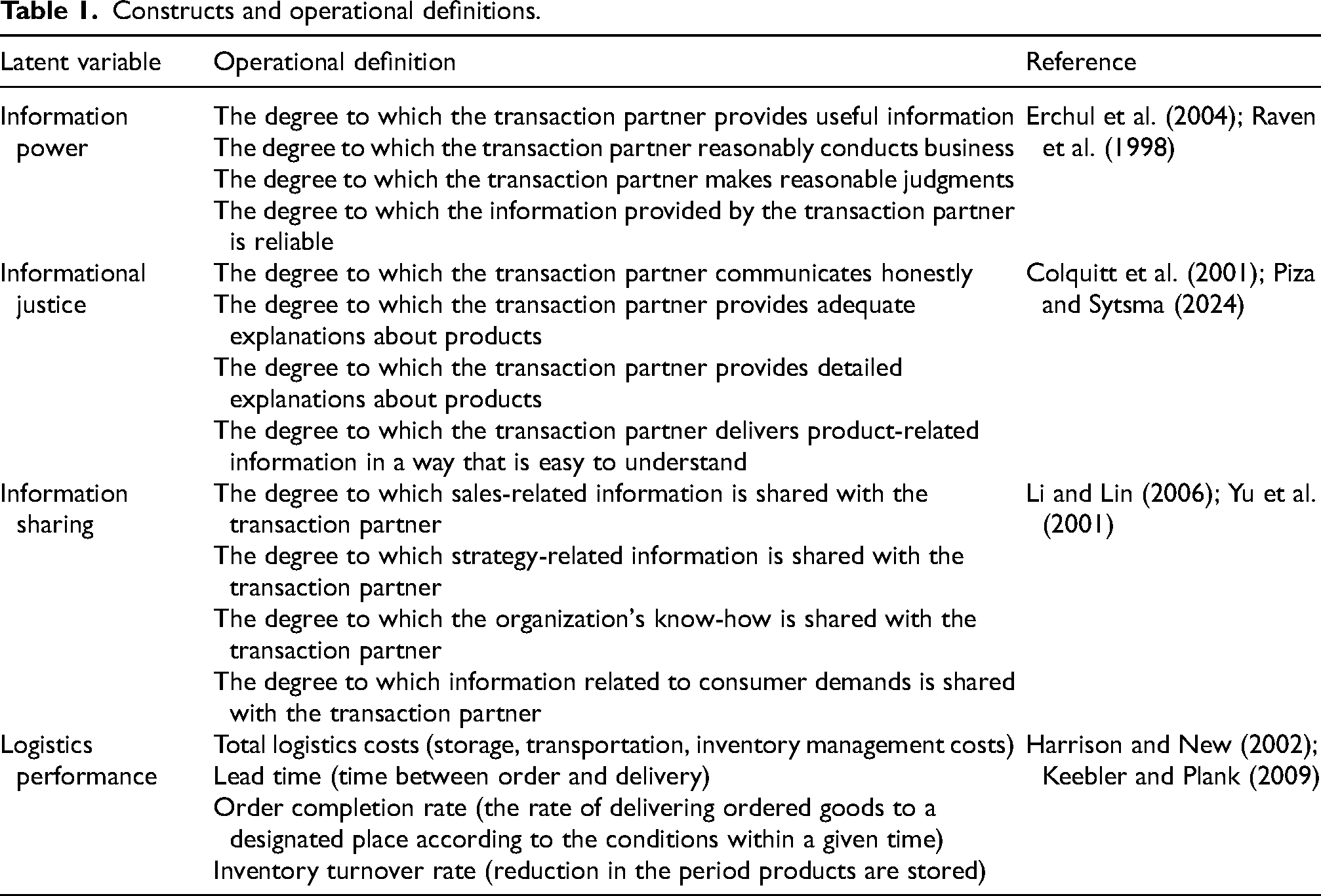
This study measured information power, informational justice, information sharing, and logistics performance using four variables each. All survey items were rated on a 7-point Likert scale (1 point: Strongly disagree, 4 points: Neutral, 7 points: Strongly agree). Table 1 shows the measurement items used in this study.
Constructs and operational definitions.
Review of reliability and validity
Reliability analysis confirms the accurate and consistent measurement of constructs and is thus essential for interpreting the study results. There are several methods to measure reliability, and a typical method involves calculating the Cronbach's alpha value. The criteria for interpreting Cronbach's alpha vary between studies, but in the social sciences, it is generally considered reliable if it is 0.7 or higher (Hair et al., 2010). In this study, the constructs exhibited Cronbach's alpha values as follows: information power = 0.747, informational justice = 0.733, information sharing = 0.727, logistics performance = 0.750. The results confirmed the accuracy of the measurement tool.
Validity determines whether the constructs to be measured are accurately represented in the tool, constituting a crucial aspect to be considered alongside reliability during analysis. First, confirmatory factor analysis was conducted to accept the theoretical model. Moreover, the fit of the measurement model was CMIN/DF = 2.608, GFI = 0.914, CFI = 0.914, TLI = 0.889, and RMSEA = 0.065, generally meeting the criteria recommended by Hair et al. (2010). Meanwhile, construct validity validates whether the measurement tool adequately represents abstract constructs that are challenging to explain through content validity. This study tested convergent validity and discriminant validity to ensure construct validity. The construct reliability value was first calculated to test convergent validity; generally, reliability is confirmed if the value is 0.7 or higher (Hair et al., 2010). In this study, the values were as follows: information power = 0.818, informational justice = 0.792, information sharing = 0.770, and logistics performance = 0.843. Next, to identify whether the constructs to be measured are different, the squared correlation coefficients between factors and average variance extracted (AVE) were compared. Table 2 below shows the results of the discriminant validity test.
Results of the discriminant validity test.
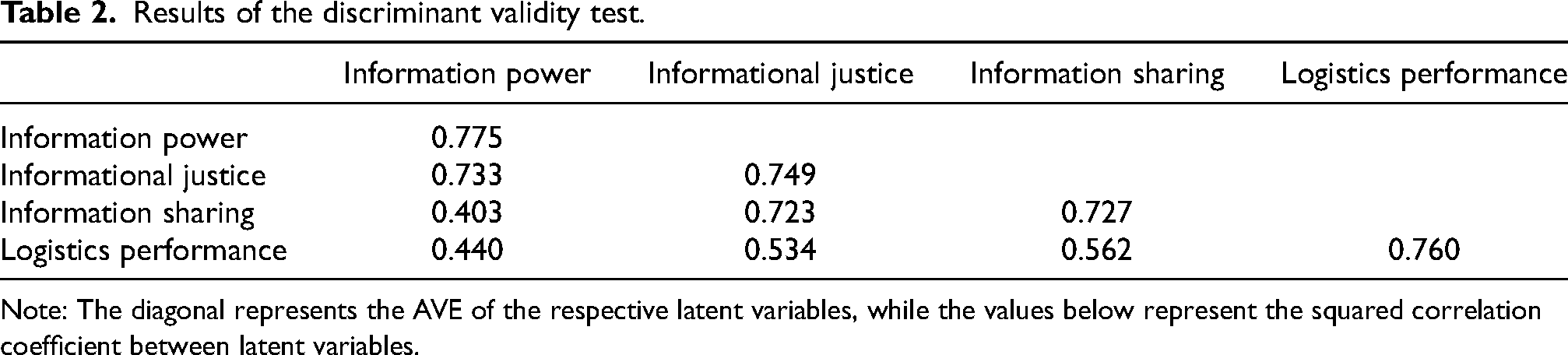
Note: The diagonal represents the AVE of the respective latent variables, while the values below represent the squared correlation coefficient between latent variables.
Hypothesis testing
This study examined the fit of the structural model prior to the path analysis. The fit indices of the measurement model, including CMIN/DF = 2.131, GFI = 0.926, CFI = 0.934, TLI = 0.917, and RMSEA = 0.053, generally conformed to the criteria recommended by Hair et al. (2010). Subsequently, the structural equation model was analyzed, and all hypotheses were accepted. Table 3 presents the results of the path analysis based on the structural equation model.
Hypothesis testing results.
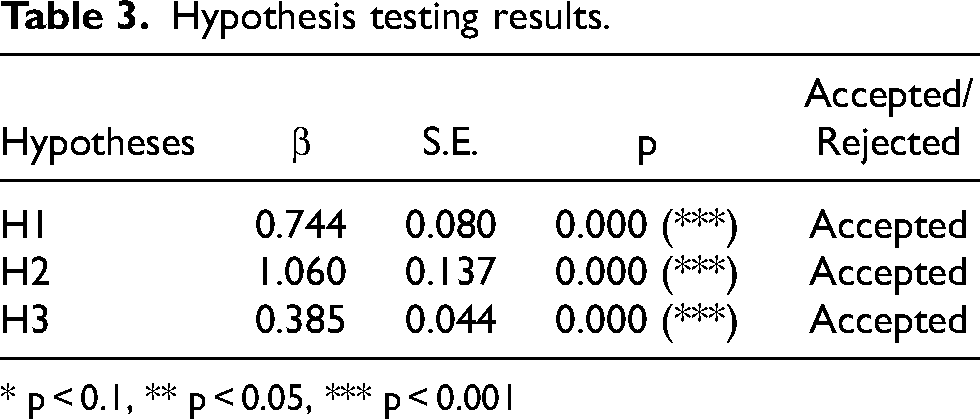
* p < 0.1, ** p < 0.05, *** p < 0.001
Conclusion
Summary of research findings
The main results of hypothesis testing are outlined as follows. First, information power demonstrated a significant positive effect on information sharing. Information power encompasses the capacity to manage, utilize, and control information. While information may signify access to and control of information within an organization, information power within a supply chain is not solely characterized by coercion. Rather, by interacting with other factors, it can lead to useful strategies or actions to gain an advantage in a fierce business environment. Therefore, practitioners within the supply chain will need a proper understanding of information power for efficient information sharing.
Second, informational justice demonstrated a statistically significant positive impact on information sharing. Supply chains today are being reconstructed due to various external factors and environments, and in these circumstances, it is critical to receive accurate and necessary information in a timely manner. Thus, firms building a supply chain must make proper judgments about the timing of information delivery and strive to avoid distortions in the process. Failing to secure justice related to information will have a negative effect on the act of information sharing and ultimately on corporate performance.
Third, information sharing had a significant positive effect on logistics performance. Many previous studies have revealed that information sharing is one of several ways to minimize uncertainties that may occur within the supply chain. Moreover, effective information sharing enables efficient inventory management in addition to improving productivity. Therefore, to improve performance, firms must perceive the importance of information sharing despite the risks of information leakage.
This study tried to investigate the impact of information power and informational justice on information sharing and logistics performance within SCM. The findings of the hypothesis testing provide valuable insights into the dynamics of information sharing and its implications for supply chain efficiency. Specifically, this study emphasizes the importance of information power, informational justice, and information sharing in the context of SCM. Employees engaged in SCM-related departments must strive to cultivate a proper understanding of information power, ensure informational justice, and actively engage in information sharing to optimize logistics performance. By aligning these key elements, firms can navigate the challenges of the modern supply chain environment.
Research implications
The findings of this study have significant implications for both theory and practice in the field of SCM. By exploring the role of informational justice and its impact on information sharing and logistics performance, this research contributes to a more nuanced understanding of how information-related factors such as information power influence supply chain outcomes. The results challenge conventional wisdom and provide new insights that can guide future research efforts.
Furthermore, the study has the following implications. First, this study provides academic implications in that it redefines the role of information sharing. In prior literature, information sharing has predominantly been viewed as a tool for waste prevention that helps reduce or prevent the bullwhip effect. However, this study has significance as it redefines this construct, highlighting its role in providing information that generates outcomes. Moreover, information power and informational justice have been identified as a starting point for information sharing, which also points to potential academic scalability by revealing the source of newly defined information.
Second, this study integrated existing theories related to information and defined them as information competencies. Informational justice refers to the information distribution system and transparency, and information power refers to information control and distribution decisions. Although they are all meaningful constructs based on the respective theories, this study has significance in that it integrated existing theories related to information into information competencies of the entire supply chain system. Thus, redefining information competencies of the supply chain system can be a process that encompasses the elements of information ownership, control, distribution, transparency, and sharing.
Third, redefining information competencies and information sharing, as suggested in this study, provides practical implications and emphasizes the need for change in information management methods. Many firms thus far have perceived the importance of information sharing. However, the concept and influence of information sharing has changed along with the changes inside and outside supply chains. The meanings of information sharing, source, and information competencies presented in this study highlight the need for firms to invest in information competencies and educate supply chain participants.
Limitations and further research directions
While this study has several implications, it has some limitations that must be noted. Interactional justice can be further classified into interpersonal justice and informational justice. Only informational justice was selected as a variable since this study was focused on information. However, since informational justice is a variable that expects transparency of information managers, it is also necessary to examine interpersonal justice. Thus, by also examining interpersonal justice, it will be possible to macroscopically understand the meaning of justice as another factor related to information power as well as an antecedent of information sharing.
Second, this study used only logistics performance as the outcome variable. However, there may be several variables such as financial performance and sustainability that can be anticipated as outcomes of information sharing in the supply chain. Therefore, this study can be extended by using and analyzing performance variables other than logistics performance in further research.
Finally, this study adopted information competencies and information sharing as the variables; information, as defined in this study, referred to accurate and high-quality information. However, in an actual supply chain, the quantity and quality of information change depending on the timing of information delivery or the ability to collect and analyze information. By separating the quantity and quality of information to simulate performance, it will be possible to shed new light on the role and necessity of information.
Footnotes
Declaration of conflicting interests
The authors declared no potential conflicts of interest with respect to the research, authorship, and/or publication of this article.
Funding
The authors received no financial support for the research, authorship, and/or publication of this article.
